

Journal Menu
► ▼ Journal Menu-
- Antibiotics Home
- Aims & Scope
- Editorial Board
- Reviewer Board
- Topical Advisory Panel
- Early Career Editorial Board
- Instructions for Authors
- Special Issues
- Topics
- Sections & Collections
- Article Processing Charge
- Indexing & Archiving
- Editor’s Choice Articles
- Most Cited & Viewed
- Journal Statistics
- Journal History
- Journal Awards
- Society Collaborations
- Conferences
- Editorial Office
Journal Browser
► ▼ Journal BrowserNeed Help?
Announcements
29 September 2026
Tu Youyou Award—Final Call for Nominations
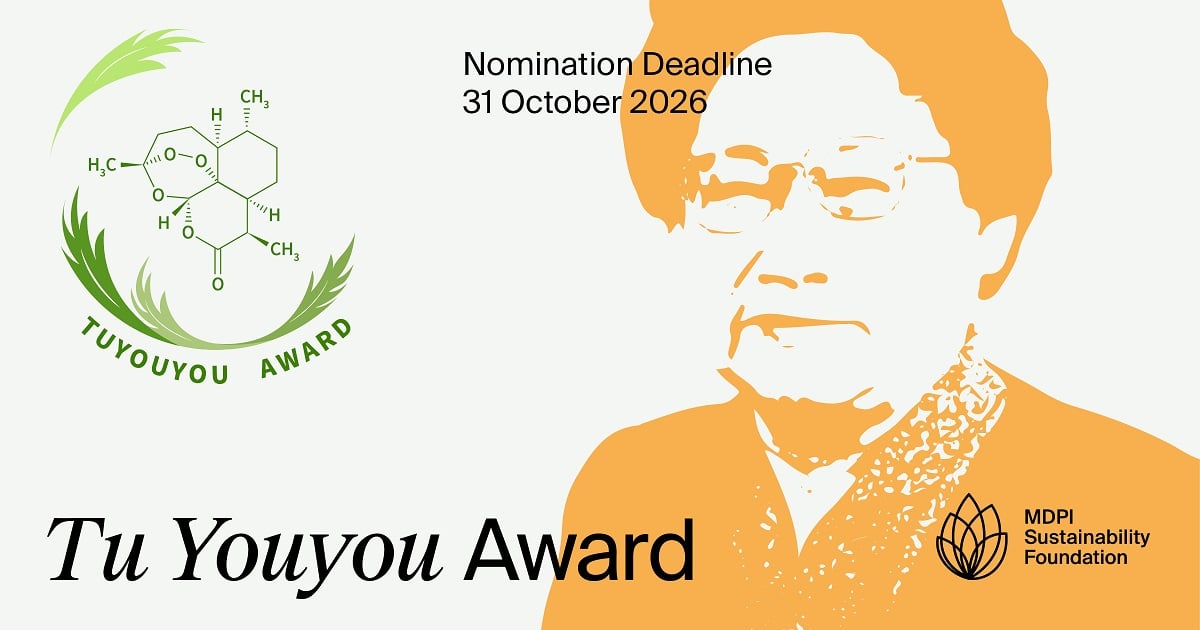
The nomination deadline for the Tu Youyou Award is approaching. Researchers are encouraged to submit nominations by 31 October 2026 (UTC-12).
The Tu Youyou Award recognizes outstanding researchers whose work has made significant contributions to natural products chemistry and medicinal chemistry, advancing scientific innovation and human health. It is named after Nobel laureate Tu Youyou, whose discovery of artemisinin has saved millions of lives.
The current award committee is chaired by Prof. Dr. William Gerwick, a Distinguished Professor at the University of California San Diego, USA, and a renowned expert in marine natural products chemistry and pharmacology. Under his leadership, the committee will evaluate nominations and recognize impactful research achievements in the related fields.
Prize:
- CHF 100,000
- A medal
- A certificate
The monetary prize will be shared equally should there be multiple recipients.
Who may be nominated?
- Scientists with outstanding achievements and contributions in the fields of natural products chemistry and medicinal chemistry.
Nominees must be individuals; team or group nominations are not permitted. Nominations are valid only for the current award cycle.
Who may submit a nomination?
- The director of the nominee’s host research institution or a recognized scientist within the field.
Self-nominations will not be considered.
Nomination materials:
- A biographical sketch
- A detailed description of the nominee’s contributions
- 5–10 representative academic publications
- A list of academic honors, awards, and funded projects
- A nomination letter signed by two nominators
How to submit?
Submit your nomination by 31 October 2026 via: https://tuyouyouprize.org/nomination/form.
For further information, please visit the Tu Youyou Award website. For any inquiries, please contact the Tu Youyou Award Team at tuyouyouaward@mdpi.com.
2 July 2026
Meet Us Virtually at The 5th International Electronic Conference on Antibiotics (ECA 2027), 23–25 June 2027

We cordially invite you to attend the following event organized by the MDPI journal Antibiotics (ISSN 2079-6382, Impact Factor: 5.5, CiteScore: 10.2). The conference will take place online from 23–25 June 2027.
Conference Name:
The 5th International Electronic Conference on Antibiotics—Global Threats and Opportunities: Shaping the Next Generation of Antimicrobials
Conference Chairs:
- Prof. Dr. Manuel Simões, University of Porto, Portugal;
- Dr. Marc Maresca, Centrale Marseille, France.
Topics of interest:
S1. Antimicrobial Stewardship and Clinical Optimization;
S2. One Health and AMR Ecology;
S3. Antibiotic Resistance Mechanisms and Epidemiological Characteristics;
S4. Conventional Methods and AI-Powered Strategies in Antimicrobial Development;
S5. Biofilm Biology and Antimicrobial Tolerance;
S6. Global Perspectives on Antimicrobial Resistance Intervention.
Important dates:
Deadline for abstract submission: 23 February 2027;
Early Bird Registration Deadline: 30 April 2027;
Deadline for registration: 17 June 2027.
Best Oral Presentation Award and Best Poster Award:
- For the Best Oral Presentation Award, the winners will receive a certificate and CHF 300 each;
- For the Best Poster Award, the winners will receive a certificate and CHF 200 each.
Guide for authors:
To submit your abstract, please click the following link: https://sciforum.net/user/submission/create/1947.
To register for the event, please click the following link: https://sciforum.net/event/ECA2027?section=#registration.
For details regarding abstract submission, poster and slide submission, and publication opportunities, please refer to the “Instructions for Authors” section on the following website: https://sciforum.net/event/ECA2027?section=#Publication_Opportunity.
For any enquiries regarding this event, please contact us at eca@mdpi.com.
We look forward to seeing you at ECA 2027.
1 October 2026
Interview with Dr. Sin-Guang Chen—Antibiotics Exceptional Reviewer 2026

We recently invited Dr. Sin-Guang Chen, a reviewer featured on the Antibiotics Exceptional Reviewers List 2026, to share his perspective on peer review.
Name: Dr. Sin-Guang Chen
Affiliation: The University of Hong Kong, Hong Kong SAR, China
1. Congratulations on being selected for the Exceptional Reviewer List for the second quarter of 2026! Could you briefly introduce yourself and your current research focus?
Thank you very much. I am very honored to be selected for the Exceptional Reviewer List for the second quarter of 2026.
My name is Sin-Guang Chen. I am currently a Postdoctoral Fellow at the Centre for Oncology and Immunology and an Honorary Research Associate in the School of Biomedical Sciences at The University of Hong Kong.
My research background is multidisciplinary and spans biomedical sciences, molecular and cellular biology, infectious diseases, natural products, and disease models. My current interests are mainly related to cancer biology and the development and application of advanced experimental models for studying human diseases. I am particularly interested in using biologically relevant model systems to better understand disease mechanisms and identify potential therapeutic vulnerabilities.
Because my research experience has involved several different areas of biomedical science, I also enjoy reviewing manuscripts across related disciplines. I find that peer review provides an opportunity to evaluate individual studies, and to learn about new developments outside my immediate research focus.
2. What motivates you to serve as a reviewer for Antibiotics, and what do you find most rewarding about the peer-review process?
I see peer review as an important part of academic responsibility. Scientific research depends not only on generating new findings, but also on careful evaluation of whether the methods, analyses, and conclusions are sufficiently supported.
I am motivated to review when I feel that my scientific background can help evaluate a manuscript and provide constructive feedback. For me, reviewing is not simply about identifying weaknesses or recommending acceptance or rejection. A good review should help authors improve their work and help editors make an informed decision.
The most rewarding part is seeing that constructive comments can improve the scientific clarity of a manuscript. Sometimes a study has an interesting idea but the conclusions are stronger than the available evidence. In other cases, the experiments are useful but important methodological details are unclear. Helping authors address these issues can make the final publication more rigorous and useful to readers.
3. How do you balance encouraging innovation with ensuring methodological rigor in peer review?
I think innovation and rigor should not be viewed as competing priorities. In my opinion, truly valuable innovation should eventually be supported by evidence that is appropriate for the strength of the claim.
When reviewing an innovative study, I try not to reject an idea simply because it is unconventional or because every question has not yet been answered. Instead, I ask whether the authors have provided sufficient evidence for the conclusions they actually make.
One principle that I consider particularly important is proportionality between evidence and claims. For example, preliminary or associative findings can still be valuable if they are presented appropriately. However, stronger mechanistic or causal conclusions require stronger evidence.
I also try to distinguish between major limitations and limitations that can be acknowledged. Not every imperfection is a fatal flaw. A constructive review should identify which issues are essential for the scientific validity of the study and which issues mainly affect interpretation, generalizability, or future directions.
4. What are your key tips for writing a high-quality review report? What makes a review truly outstanding?
My first suggestion is to read the manuscript as a complete scientific argument rather than reviewing individual experiments in isolation. I usually ask: What is the main question? What evidence is provided? Do the data support the conclusions? Are there alternative explanations?
A high-quality review should be specific and evidence-based. General comments such as “the study is weak” are usually less helpful than explaining exactly which experiment, analysis, or interpretation needs attention and why.
Second, I think reviewers should prioritize their comments. The most important issues should be clearly identified. If a concern can substantially change the validity of the main conclusion, it should not be hidden among minor comments.
Third, the tone should remain constructive and respectful. Authors may disagree with a reviewer, but they should still be able to understand the scientific reasoning behind the comment.
Finally, an outstanding review should distinguish between what the data demonstrate and what the authors infer. In biomedical research, conclusions can sometimes become stronger than the experiments justify. Helping authors align their conclusions with the available evidence is, in my view, one of the most valuable contributions a reviewer can make.
5. What has your experience been like as a reviewer for Antibiotics? What kind of support would you like to see from MDPI and the journal?
My experience with Antibiotics as a reviewer has been positive. I appreciate the opportunity to contribute my expertise to the evaluation of manuscripts and to provide detailed scientific feedback.
One aspect I value is a clear and organized review process. For reviewers, clear communication regarding the manuscript, deadlines, revision process, and editorial decisions is important because it allows us to focus on the scientific evaluation.
Looking forward, I think continued support for reviewers would be valuable. This can include clear guidance on reviewing expectations, recognition of reviewers’ contributions, and feedback when appropriate. Peer review requires significant time and intellectual effort, so recognition such as the Exceptional Reviewer award is encouraging and appreciated.
More broadly, I think journals can support high-quality peer review by emphasizing scientific rigor, transparency, and constructive communication among authors, reviewers, and editors.
6. Based on your rich reviewing experience, could you please share the common problems that authors face? What suggestions do you have for authors to make their manuscripts more readable and engaging?
One common problem is that the main conclusion is sometimes stronger than the evidence presented. Authors may have interesting results, but they should clearly distinguish between what has been directly demonstrated and what remains a hypothesis or possible interpretation.
Another common issue is insufficient methodological detail. Reproducibility depends on readers understanding how experiments and analyses were performed. Important information should not be omitted simply because it seems familiar to the authors.
I also frequently see manuscripts in which the scientific story is difficult to follow because the introduction, results, and discussion are not sufficiently connected. Authors can improve readability by clearly explaining the research question at the beginning and ensuring that each major experiment contributes to answering that question.
For writing, I would suggest keeping the central message clear. A manuscript does not necessarily become more convincing by including every available result. A well-organized scientific narrative with clear figures, appropriate controls, and conclusions proportional to the evidence is often more engaging and easier to evaluate.
I would also encourage authors to view reviewer comments as part of the scientific process. Even when authors disagree with a comment, carefully considering the underlying concern can help clarify the manuscript and improve its communication.
7. What are your views on the open access publishing model, and what role do you think it plays in advancing scientific research?
I believe that open access can play an important role in making scientific knowledge more widely available. Researchers, clinicians, students, and institutions do not all have equal access to subscription-based journals, and open access can help reduce barriers to reading and using scientific findings.
For biomedical research in particular, wider accessibility can facilitate interdisciplinary collaboration and allow findings to reach researchers working in different fields or regions.
At the same time, accessibility should always be accompanied by rigorous editorial and peer-review standards. Open access and scientific quality should reinforce each other. Making research freely available is most valuable when readers can also have confidence that the work has been evaluated carefully and presented transparently.
Therefore, I see open access as an important component of scientific communication, but its value ultimately depends on maintaining strong standards of methodology, transparency, and peer review.
30 September 2026
2026 Nobel Prize—Where Breakthroughs Meet Open Sciences
Each October, the Nobel Prizes turn the world’s attention toward the discoveries that have redrawn the boundaries of science. They are science’s most prestigious recognition, and increasingly its most interdisciplinary. Recent laureates have been honored for work spanning quantum dots, machine learning, and molecular medicine, fields that rarely stay within a single discipline’s borders for long.
Open access has a growing role in that story. To date, more than 40 Nobel laureates have published their research in MDPI journals—a body of work spanning genetics, physics, chemistry, and medicine. Publishing openly means a laureate’s findings reach not only fellow scientists, but the students, clinicians, policymakers, and curious readers who would otherwise meet that work only secondhand, if at all. Open access doesn’t just carry Nobel-level research, it amplifies the voice behind it, letting the discovery speak directly to everyone it stands to affect.
This is also where MDPI’s breadth becomes an advantage. With over 500 journals covering the full spectrum of scientific inquiry, our platform mirrors the reality of modern discovery—where breakthroughs increasingly emerge at the intersection of fields, not within the walls of one. It’s this structure that lets us support interdisciplinary work from first submission to global publication, connecting researchers across borders and disciplines alike.
As this year’s laureates are announced, we’ll continue spotlighting where Nobel Prize–winning research intersects with the work of our authors, editors, and reviewers—celebrating both the achievements being recognized and the open access model that helps ensure they reach the widest possible audience.
Explore selected works by Nobel laureates within the MDPI portfolio below, and join us in celebrating the global impact of their ideas.

Put your scientific intuition to the test and join MDPI’s 2026 Nobel Prize Prediction Challenge! As we honor three decades of open research, we invite you to cast your votes for the next trailblazing laureates in chemistry, physics, and physiology or medicine. Predict the pioneer minds shaping tomorrow’s scientific legacy for a chance to win 100 CHF voucher of MDPI Video Service.
Deadline: 4 October 2026 | 18:00 CEST
Winner announcement: 16 October 2026


Discover high-impact research driving tomorrow’s breakthroughs. Browse our open access selections in Chemistry & Materials Science, Medicine & Pharmacology, and Physical Sciences, featuring key studies aligned with this year’s top Nobel prize-contending topics.
|
|
|
|


Join our distinguished Editors-in-Chief and Section Editors-in-Chief for an exclusive live discussion on this year’s Nobel Prize announcements. Our expert panel will break down the winning breakthroughs, explore their global impact, and discuss the future trajectories of open science across Chemistry, Physics, and Medicine. Don’t miss this opportunity to engage with leading voices in research.
|
|
2026 Nobel Medicine & Pharmacology Roundtable
|
|
|
2026 Nobel Physics Roundtable
|
|
|
2026 Nobel Chemistry & Materials Roundtable
|
|
|
2026 Nobel Chemistry & Materials Roundtable Session #2
|


MDPI remains committed to ensuring that the breakthroughs of today—and tomorrow—are shared, debated, and built upon by the global research community. Explore science, join the conversation, and be part of the next chapter.
30 September 2026
Interview with Prof. Lyudmila Boyanova—Antibiotics Exceptional Reviewer 2026

We recently invited Prof. Lyudmila Boyanova, a reviewer featured on the Antibiotics Exceptional Reviewers List 2026, to share some of her perspectives on peer review.
Name: Prof. Lyudmila Boyanova
Affiliation: Medical University of Sofia, Bulgaria
1. Congratulations on being selected for the Exceptional Reviewer List for the second quarter of 2026! Could you briefly introduce yourself and your current research focus?
Thank you very much. I am a professor at the Department of Medical Microbiology, Faculty of Medicine, Medical University of Sofia, and our laboratory primarily works with clinically significant anaerobic bacteria and microaerophiles such as Helicobacter pylori. We are currently investigating the activity of newer antibiotics against these bacteria in light of rising bacterial resistance and multidrug resistance.
2. What motivates you to serve as a reviewer for Antibiotics, and what do you find most rewarding about the peer-review process?
I am motivated above all by my interest in approaches to counteracting the growing bacterial resistance to antibiotics, which poses a serious challenge to patient therapy. Furthermore, I consider it a moral obligation to share insights based on the literature and my personal experience to improve the related publications.
3. How do you balance encouraging innovation with ensuring methodological rigor in peer review?
Potential innovations in the field of antibiotic practice or policy are highly valuable if the relevant studies are conducted in accordance with the fundamental rules and principles of diagnostic work and are explained in sufficient detail. Furthermore, it is important to note that pilot data must subsequently be confirmed in further studies, including clinical trials.
4. What are your key tips for writing a high-quality review report? What makes a review truly outstanding?
It is important for the reviewer to contribute to the improvement not only of the submitted manuscript but also of the authors’ future work as a whole. This means adopting a helpful and constructive approach, even when it is necessary to be critical.
5. How has your experience been with Antibiotics as a reviewer? What kind of support would you like to see from MDPI and the journal?
I am satisfied with my role as a reviewer for the journal. It would be beneficial for the reviewers of MDPI journals to always receive formal recognition through ORCID and Scopus.
6. Based on your rich reviewing experience, could you please share the common problems that authors face? What suggestions do you have for authors to make their manuscripts more readable and engaging?
In some cases, when authors present a biased (one-sided) discussion and cite references that support their approach, they need to critically examine all possible shortcomings and alternative approaches and compare them with their own. The limitations of the study should always be thoroughly described. The conclusion should clearly highlight what new insights the manuscript can contribute to the existing knowledge on the topic. This is sometimes overlooked.
7. What are your views on the open access publishing model, and what role do you think it plays in advancing scientific research?
I would like reviewers to have more opportunities to publish for free whenever possible.
30 September 2026
MDPI INSIGHTS: The CEO’s Letter #39 - Peer Review Week, Chief Publishing Officer, Tu Youyou Award, OASPA & AI

Welcome to the MDPI Insights: The CEO's Letter.
In these monthly letters, I will showcase two key aspects of our work at MDPI: our commitment to empowering researchers and our determination to facilitating open scientific exchange.
Opening Thoughts

Recognizing the People Behind Peer Review
September marked Peer Review Week 2026, this year focused on “Peer Review Capacity: Volume, Speed, and Quality.” The theme reflects a challenge across scholarly publishing: research output and submissions continue to grow, while the time and expertise researchers can dedicate to reviewing are finite.
At MDPI, more than 200,000 reviewers contribute their expertise each year. Their work is fundamental to maintaining the quality and integrity of the research we publish, and Peer Review Week gave us an opportunity not only to thank them, but also to reflect on how we can better support their contribution.

This year, we highlighted three commitments that guide our approach: protecting reviewers’ time and judgment, ensuring high-quality and efficient processes, and recognizing and rewarding reviewers for their contribution. We also shared results from our 2026 Voice of the Community surveys. Among 1,627 reviewer respondents, 86% rated their experience with MDPI as “Good” or “Excellent,” 88% said manuscripts matched their expertise, and 92% found our reviewer instructions clear and helpful. From the author perspective, 95% of 16,795 respondents agreed that reviewers’ comments helped improve their manuscripts.

Recognition is an important part of this relationship too. Through our Top 1000 Reviewers program, 743 scholars accepted awards this year, with a combined CHF 526,500 returned directly to the reviewer community through cash awards and APC vouchers. During Peer Review Week, we also created opportunities for reviewers to share their own experiences through webinars, including The Reviewer’s Perspective: Navigating Volume, Speed, and Quality in Peer Review and our UK Reviewer Club.

Peer review ultimately depends on people choosing to give their time and expertise to the work of other researchers. As publishing continues to evolve, including through new technologies and increasing research volumes, we should not lose sight of that human contribution. Thank you to all the reviewers who work with MDPI, and to our colleagues who support them every day.
Read more about Peer Review Week 2026 here.
Inside MDPI

Welcoming Dr. Constanze Schelhorn as MDPI’s Chief Publishing Officer
This month, we announced the appointment of Dr. Constanze Schelhorn as MDPI’s Chief Publishing Officer (CPO). The appointment marks an important step for MDPI and the latest chapter in a journey within the organization that now spans a decade.

Stefan Tochev (CEO, MDPI) with Constanze at STM, Frankfurt, Germany, October 2025.
Constanze joined MDPI in June 2016 and has taken on several different responsibilities across editorial, indexing, and publishing over the years.
Since 2023, she has held leadership roles as Head of Indexing and later Head of Publishing, before taking on the role of Chief Publishing Officer.
I’ve had the opportunity to work with Constanze over many of those years and to see her take on increasingly important responsibilities.
What I’ve always appreciated is the growth mindset and expertise she brings to her work, together with a commitment to quality.
She understands how MDPI works and how the publishing environment is evolving to meet the expectations of the academic communities we serve.
Looking Ahead
Publishing has changed considerably over the past decade, and that change is only accelerating. Research integrity, artificial intelligence, editorial standards, indexing requirements, new publishing models, and changing expectations from researchers and institutions are just some of the areas we are navigating.

Stefan Tochev (CEO, MDPI) with Constanze and Prof. Dr. Manoj Gupta, Editor-in-Chief of MDPI journal Technologies, in Singapore, January 2025.
MDPI has changed considerably too. As we celebrate our 30th anniversary this year, our journal portfolio now includes more than 540 titles, and the scale of our work brings greater opportunities and responsibilities.
Continuing to develop our publishing practices and ensuring that we respond to changes in academic publishing will remain important priorities for us.
Constanze’s experience across several areas of MDPI puts her in a position to help us do that.
As CPO, she will help provide strategic direction across our publishing functions while working with colleagues throughout the organization. She will also represent MDPI with external stakeholders, including industry organizations and indexing partners, ensuring that we remain engaged in the conversations shaping the future of publishing.
“Please join me in congratulating Constanze on her appointment”
Growing Together
There is another aspect of this appointment that I think is worth recognizing about MDPI. I appreciate seeing people develop alongside the organization. Constanze’s journey from joining MDPI in 2016 to becoming our Chief Publishing Officer ten years later is a good example of what can happen when experience, knowledge, and responsibility build over time.
Our 30th anniversary naturally gives us an opportunity to look back at how far MDPI has come. But it should also make us think about the people who will shape where we go next. I’m pleased that Constanze will be one of those people.
Please join me in congratulating Constanze on her appointment as we look forward to continuing to work with her in this new role and seeing what we can accomplish together.

P.S. A fun fact about Constanze: she loves climbing. So, if she’s visiting your city and you’re wondering how to make her feel at home, point her towards the nearest climbing gym.
Here’s a photo from a climbing session during our visit to the Singapore office in January 2025.
Impactful Research

A Decade of the Tu Youyou Award: Celebrating Scientific Excellence
Few examples demonstrate the potential impact of scientific research as clearly as Professor Tu Youyou's discovery of artemisinin. Her team’s work contributed to the development of artemisinin-based combination therapies for malaria, which the World Health Organization (WHO) recommends as the main treatment for P. falciparum malaria.
Behind that achievement is also a remarkable scientific journey: drawing on knowledge from traditional Chinese medicine, Professor Tu and her team investigated hundreds of extracts before identifying artemisinin and helping transform the treatment of malaria.
This legacy is at the heart of the Tu Youyou Award, established by MDPI in 2016 to recognize outstanding achievements in natural products chemistry and medicinal chemistry.
“Professor Tu Youyou's scientific journey is an extraordinary example”
Ten Years of the Tu Youyou Award
This year marks a decade since the award was established. Over that time, six scholars have been recognized as Tu Youyou laureates for their contributions to research and innovation.
The connection between MDPI and Professor Tu Youyou’s work goes back even further. In 2009, MDPI Founder and President, Dr. Shu-Kun Lin, launched a Special Issue in MDPI journal Molecules commemorating Professor Tu’s 80th birthday, several years before the establishment of the award.
Below is a photo of Professor Tu Youyou with MDPI Founder and President Dr. Shu-Kun Lin during an MDPI visit to congratulate Professor Tu on receiving the 2015 Nobel Prize in Physiology or Medicine.

The 2026 Tu Youyou Award continues this tradition, awarding CHF 100,000, together with a medal and certificate, to recognize the achievements in natural products chemistry and medicinal chemistry.
Scientific Excellence and Impact
Professor Dr. William Gerwick, Chair of the 2026 Tu Youyou Award Committee, recently reflected on what distinguishes the award: “This award is truly special in that it recognizes scientific excellence as well as impact.”
I think this combination is important. Research advances our understanding, but its influence can extend much further: inspiring new discoveries, informing new treatments, addressing societal challenges, and ultimately improving people’s lives.
Professor Tu Youyou's scientific journey is an extraordinary example. Her work combined rigorous scientific investigation with a problem of enormous human importance, ultimately contributing to treatments that have transformed the fight against malaria.
Recognizing researchers who continue this tradition allows us to celebrate both scientific achievement and the broader contribution research can make to society.
Nominations Open Until 31 October
Nominations for the 2026 Tu Youyou Award are now open to scientists with outstanding achievements and contributions in natural products chemistry and medicinal chemistry. Nominations may be submitted by directors of nominees’ host research institutions or scientists within the field. Self-nominations are not accepted.
The nomination deadline is 31 October 2026, with the announcement of the winner planned for March 2027.
Learn More
Coming Together for Science

OASPA 2026: Conversations Shaping the Future of Open Access
From 21–23 September, I attended the 2026 Conference of the Open Access Scholarly Publishing Association (OASPA) in Zagreb, Croatia.
MDPI has been a Platinum Sponsor of the OASPA conference for several years, supporting an event that brings together the open access (OA) community to discuss some of the opportunities and challenges shaping publishing. This year, MDPI also sponsored the conference reception at the City Museum of Zagreb.

The program covered topics from sustainable publishing and research assessment to open infrastructure, new models for OA agreements, and, of course, the growing influence of artificial intelligence (AI). For me, though, the value of conferences like OASPA goes beyond the program. It’s about hearing different perspectives from across publishing, reconnecting with familiar faces, building new relationships, and having conversations that sometimes lead somewhere unexpected.

Stefan Tochev (CEO, MDPI) at the OASPA conference in Zagreb, Croatia.
Open Access in the Age of AI
One discussion I particularly enjoyed was the opening-day panel, “Does open access still matter in a Gen AI world?” As AI continues to become an interface through which people discover and interact with research, making knowledge openly available remains important. But questions around trust, provenance, governance, and responsibility are becoming more difficult to separate from the OA conversation.
Who is responsible for ensuring that AI-generated or AI-mediated information can be trusted? What responsibilities sit with publishers, researchers, institutions, infrastructure providers, and AI companies? And, perhaps most importantly, how do we work together rather than trying to address these challenges in isolation?
There are no simple answers, but hearing these discussions highlighted the fact that many of us across publishing are working with similar questions. Creating spaces where we can explore them together is valuable.
“Who is responsible for ensuring that AI-generated or AI-mediated information can be trusted?”
Conversations That Lead Somewhere
The conference also reminded me of the value of simply meeting people. I had a great conversation with César Pallares from Consortia Colombia about the publishing ecosystem in Colombia and the possibility of exploring a consortium agreement with MDPI in Colombia. César was very open to continuing the conversation, and I’ve already connected this opportunity with colleagues from our Institutional Open Access Program (IOAP) team.
I also caught up with Yvonne Campfens, Executive Director of OA Switchboard, who has recently taken on the role of Director for the Academic Publishing in Europe (APE) conference. We look forward to continuing to support APE as part of MDPI’s broader commitment to academic and publishing-industry events.

And, of course, it was good to connect with familiar faces from previous OASPA conferences and meet new ones. These conversations happen over coffee, between sessions, at receptions, or sometimes while walking through a city. Not every conversation needs to result in a project or partnership. Sometimes the value is simply understanding another perspective, sharing what we’re working on, or beginning a relationship that develops over time.
Thank you to the OASPA team, speakers, moderators, participants, and fellow sponsors for creating that space in Zagreb. I’m pleased that MDPI could once again support the conference and, more importantly, be part of the conversations taking place there. I look forward to seeing where some of them lead.
Closing Thoughts

AI Is Making Science More Accessible. How Do We Keep It Trustworthy?
Artificial Intelligence (AI) is changing how people find, understand, and interact with scientific research.
For decades, one of the biggest barriers to engaging with scientific research was access. Open Access (OA) has helped change that, with around 61% of global journal articles, reviews, and conference papers published in 2025 now openly accessible. AI is now beginning to lower another barrier: understanding. Researchers can quickly navigate large volumes of literature, patients can ask for complex medical research to be explained in plain language, and policymakers can more easily explore findings outside their own areas of expertise.

But easier access and understanding don’t automatically make scientific information easier to trust.
This is the topic explored by our Scientific Communications Lead, Dr. Giulia Stefenelli, in her recent article for Research Information, Scientific literacy must keep pace with artificial intelligence.
A recent study cited in the article found that when GPT-4o was tested without external retrieval and asked to cite recent scientific literature, it fabricated citations in 78–90% of cases. By contrast, OpenScholar, a specialized AI system that retrieves information from millions of OA papers, achieved citation accuracy comparable to human experts.
One line about the gap between AI content generation and verification particularly stood out to me: “Generation is becoming cheap, but verification is not.” While AI can reproduce the appearance of credible scientific information, verifying the underlying data, references, methods, and conclusions still requires time, expertise, and access to the evidence.
“The important question is whether the underlying research can be trusted”
Detection Is Not Verification
Giulia’s distinction between AI detection and research verification is particularly relevant to scholarly publishing. A manuscript can contain AI-assisted language and report sound research. Equally, something written entirely by a person can contain fabricated data, inappropriate methods, or unsupported conclusions. The important question isn’t only “Was AI used?” but whether the underlying research can be trusted.
For publishers, this makes strong editorial processes, expert peer review, research integrity checks, transparency, and human accountability increasingly important.
A Shared Responsibility
Giulia argues that publishers cannot address this challenge alone. Researchers, institutions, publishers, technology providers, and readers all have a role to play in how scientific information is created, evaluated, communicated, and understood.
As AI continues to develop, our understanding of scientific literacy must develop alongside it. Making knowledge accessible and helping people understand it are important. The next question is: how do we make it easier for people to examine where information comes from and decide how much confidence it deserves?
You can read the full article on Research Information. It is a great example of the expertise within MDPI contributing to conversations about the future of scientific publishing and communications. Technology can help us address some of these challenges, but ultimately people must remain accountable for the decisions that shape the scientific record.
Chief Executive Officer
MDPI AG
29 September 2026
Meet Us at the 70th Annual Meeting of the Japanese Society for Medical Mycology, 21–22 November 2026, Tokyo, Japan

Conference: The 70th Annual Meeting of the Japanese Society for Medical Mycology
Date: 21–22 November 2026
Location: Tokyo, Japan
MDPI will be attending the 70th Annual Meeting of the Japanese Society for Medical Mycology as an exhibitor, welcoming researchers and professionals to visit our booth and exchange the latest scientific insights in medical mycology.
The 70th Annual Meeting of the Japanese Society for Medical Mycology will explore the theme “One Health and the Health of the Planet as Viewed from Mycoses”. The scientific program will cover a broad range of topics across basic, clinical, and multidisciplinary mycology, including fungal classification and identification, infection control, biochemistry and molecular biology, superficial and deep mycoses, diagnosis and treatment, prevention, and hospital-acquired infections, as well as major fungal pathogens such as Candida, Cryptococcus, Aspergillus, and Mucor.
Join us in Tokyo, Japan, from 21 to 22 November 2026, for an engaging scientific program bringing together researchers and professionals in medical mycology. We look forward to meeting you in Tokyo!
The following open access journals will be represented:
- Journal of Fungi (JoF);
- Acta Microbiologica Hellenica (AMH);
- Microorganisms;
- Taxonomy;
- Pathogens;
- Antibiotics.
If you are planning to attend this conference, please do not hesitate to start an online conversation with us. Our delegates look forward to meeting you in person and answering any questions that you may have. For more information, please visit the official website via https://2026.jsmm.org/.
29 September 2026
Nobel Prize in Physiology or Medicine—Where Breakthroughs Meet Open Sciences

Since 1901, the Nobel Prizes have celebrated the moments when human curiosity breaks new ground — achievements that so often start small: an unexpected result, a question nobody else thought to ask, an idea pursued long before its value was clear. More than a tribute to individual achievement, the Nobel Prize honors the patience and imagination that quietly rewrite what we know, and expand what's possible for generations to come.

Join us for an upcoming webinar as our experts revisit the groundbreaking research of past laureates in physiology or medicine and examine the trends currently shaping the field. This session will offer a deeper understanding of how past breakthroughs continue to influence the direction of modern research.

Keynote Speakers:
 |
 |
 |
 |
| Dr. Andre van Zundert Section Editor-in-Chief of Healthcare The University of Queensland, Australia |
Prof. Dr. Süleyman Ergün Editor-in-Chief of Organoids University of Würzburg, Würzburg, Germany |
Prof. Dr. Jens Coorssen Editor-in-Chief of Proteomes Institute for Globally Distributed Open Research and Education (IGDORE), Canada |
Prof. Dr. Patricia Schofield Section Editor-in-Chief of Geriatrics University of Plymouth, UK |

“Research Progress on Downstream Mechanisms of Glucose Metabolic Reprogramming and Its Role in the Occurrence and Progression of Type 2 Diabetes Mellitus”
by Chan Wu, Maoying Wei, Aijing Li, Qingyi Zhu, Jingyi Guo, Anning Sun, Xin Gu, Yincheng Li and Yanbing Gong
Biomedicines 2026, 14(7), 1427; https://doi.org/10.3390/biomedicines14071427
“Metformin as an Innate Immune Modulator: Metabolic and Epigenetic Reprogramming of Innate Immune Cells and Therapeutic Implications”
by Yunfeng Shi and Sheng Xia
Curr. Issues Mol. Biol. 2026, 48(6), 642; https://doi.org/10.3390/cimb48060642
“Glucagon‑like Peptide‑1 Receptor Agonists in Rheumatoid Arthritis: A Scoping Review of Metabolic, Anti‑Inflammatory, and Cardioprotective Effects”
by Simona Buonanno, Carla Gaggiano, Caterina Baldi, Luca Cantarini, Bruno Frediani and Stefano Gentileschi
J. Pers. Med. 2026, 16(6), 284; https://doi.org/10.3390/jpm16060284
“Metabolism and Metabolic Reprogramming in Laryngeal Squamous Cell Carcinoma”
by Barbara Verro, Roberta Oliveri, Giovanni Pratelli, Marianna Lauricella, Diana Di Liberto, Anna De Blasio, Daniela Carlisi and Carmelo Saraniti
Biomedicines 2026, 14(5), 959; https://doi.org/10.3390/biomedicines14050959
“Microbiota–Gut–Brain Axis Disruption, Neuroinflammation, and Potential Antioxidant‑Based Treatments in Metabolic Diseases”
by Jazmín Carro‑Rodríguez, Gabriela Ibáñez‑Cervantes, Noemí Cárdenas‑Rodríguez, Iván Ignacio‑Mejía, Exsal Manuel Albores‑Méndez, Blanca Rosalba Pardo‑Pacheco, Verónica Fernández‑Sánchez, Ana María Balboa‑Verduzco, Cecilia Adame, Eleazar Lara‑Padilla et al.
Antioxidants 2026, 15(4), 522; https://doi.org/10.3390/antiox15040522
“Integrating Untargeted Metabolomics and Transcriptomics in Mice with Pulmonary Tuberculosis to Reveal Changes in Linoleic Acid and Its Metabolism in Lung Monocyte‑Derived Macrophages”
by Yuxia Sha, Xiaoman Zhao, Hongying Zhu, Ye Li, Meilin Shao, Shenggang Ding and Haoquan Zhou
Pathogens 2026, 15(3), 254; https://doi.org/10.3390/pathogens15030254
“Integrated Multi‑Omics Analysis Reveals Dysregulated Lipid Metabolism as a Novel Mechanism in Androgenetic Alopecia”
by Xiao‑Shuang Yang, Liyang Duan, Yu‑Jie Miao, Zhongfa Lu and Ru Dai
Biomedicines 2026, 14(1), 160; https://doi.org/10.3390/biomedicines14010160
“Insulin Resistance in Bipolar Disorder: A Real‑World Cross‑Sectional Study”
by Andrea Aguglia, Matteo Meinero, Valentina Aprile, Tommaso Cerisola, Giuditta Mazzarello, Angelo Oggianu, Alessandra Costanza, Mario Amore, Andrea Amerio and Gianluca Serafini
J. Pers. Med. 2026, 16(1), 47; https://doi.org/10.3390/jpm16010047
Special Issues:
| “Bone Metabolism and Skeletal Health in Diabetes” Guest Editor: Dr. Shivani Srivastava Deadline for manuscript submissions: 20 January 2027 |
“New Insights into Lipid Metabolism in Health and Disease” Guest Editor: Dr. Arleta Drozd Deadline for manuscript submissions: 28 February 2027 |
 |
 |

“Modeling Context‑Dependent Tumor Metabolism in 3D Systems: Implications for Functional Precision Oncology”
by Maria Virginia Giolito, Olivier Feron and Cyril Corbet
Organoids 2026, 5(3), 22; https://doi.org/10.3390/organoids5030022
“Genetic Interruption of PD‑1/PD‑L1 as an Alternative Means for Immune Checkpoint Blockade in Cancer: A Review”
by Dan Li, Jiao Lu, Qianru Li, Huan Deng and Songwei Tan
Pharmaceutics 2026, 18(6), 752; https://doi.org/10.3390/pharmaceutics18060752
“Treatment‑Related Myelodysplastic Syndrome and Acute Myeloid Leukemia Associated with CAR T‑Cell Therapies: A Real‑World FAERS Pharmacovigilance Study”
by Connor Frey
Lymphatics 2026, 4(2), 21; https://doi.org/10.3390/lymphatics4020021
“Hidden Targets in Cancer Immunotherapy: The Potential of “Dark Matter” Neoantigens”
by Francois Xavier Rwandamuriye, Alec J. Redwood, Jenette Creaney and Bruce W. S. Robinson
Vaccines 2026, 14(1), 104; https://doi.org/10.3390/vaccines14010104
“Emerging Cell‑Based Therapies for Systemic Sclerosis: From Stem Cells to CAR‑T Cells”
by Vitaly Chasov, Sabir Mukhametshin, Elvina Gilyazova, Damir Davletshin, Mariya Tikhomirova, Iuliia Topchu, Aygul Valiullina, Marcella Prete and Emil Bulatov
Curr. Issues Mol. Biol. 2026, 48(1), 76; https://doi.org/10.3390/cimb48010076
“Microbial Modulation: Unraveling the Influence of Gut Microbiota on Macrophage Polarization in Tumor Microenvironments”
by Jonathan Trejo, Hayes Koegeboehn, Farah Faizuddin, Ryan Logan, Michel Toutoungy, Aadil Sheikh, Tamer E. Fandy, Sergio Saucedo, Victor M. Vasquez, Jr., Thien Nguyen et al.
Cells 2026, 15(2), 136; https://doi.org/10.3390/cells15020136
“Adipose Stromal Cell‑Derived Cancer‑Associated Fibroblasts Promote Pancreatic Adenocarcinoma Progression Through SFRP4 Signaling”
by Joseph Rupert, Lingyi Cai, Alexes C. Daquinag, Dimitris Anastassiou and Mikhail G. Kolonin
Cancers 2026, 18(2), 233; https://doi.org/10.3390/cancers18020233
“BTK Inhibition in Hematology: From CLL/SLL to Emerging Applications Across B‑Cell and Immune Disorders”
by Andrea Duminuco, Paola De Luca, Gaia Stanzione, Laura Anastasia Caruso, Giulio Lavenia, Salvatore Scarso, Bruno Garibaldi, Fanny Erika Palumbo, Calogero Vetro and Giuseppe Alberto Palumbo
Biomolecules 2026, 16(1), 123; https://doi.org/10.3390/biom16010123
Special Issues:
| “Cancer Immunotherapy: Molecular Research and Application” Guest Editors: Dr. Joaquin Marco-Brualla and Prof. Dr. Alberto Anel Deadline for manuscript submissions: 15 December 2026 |
“Mechanisms and Innovations in Natural Killer Cell-Based Immunotherapy” Guest Editor: Dr. Dipnarine Maharaj Deadline for manuscript submissions: 28 February 2027 |
 |
 |

“Sulbactam–Durlobactam for Carbapenem-Resistant Acinetobacter baumannii–calcoaceticus Complex”
by Francesco Nappi
Pathogens 2026, 15(4), 449; https://doi.org/10.3390/pathogens15040449
“Reduced Left Ventricular Ejection Fraction as a Marker of Vulnerability to Healthcare-Associated Infections in Coronary Care Unit Patients: A Single-Centre Cohort Study”
by Daniela-Mirela Vîrtosu, Angela Dragomir, Simina Crișan, Silvia Luca, Oana Pătru, Ruxandra-Maria Băghină, Mihai-Andrei Lazăr, Alina-Ramona Cozlac, Stela Iurciuc and Constantin-Tudor Luca
J. Clin. Med. 2026, 15(5), 1789; https://doi.org/10.3390/jcm15051789
“Dissecting Cell Death Pathways in Influenza A virus Infection: Comparative Insights from Human Models”
by Ngoc Mai Khoi Nguyen, Alison C. West, Rebecca L. Ambrose and Michelle D. Tate
Viruses 2026, 18(2), 246; https://doi.org/10.3390/v18020246
“Effect of Hantavirus Infection on the Rodent Lung Microbiome: Specific Regulatory Roles of Host Species and Virus Types”
by Yaru Xiong, Zhihui Dai, Fangling He, Rongjiao Liu, Juan Wang, Zhifei Zhan, Huayun Jia, Shengbao Chen and Liang Cai
Microorganisms 2026, 14(1), 244; https://doi.org/10.3390/microorganisms14010244
“Vaccination Against Respiratory Infections in Adults with Cancer: A Concise Guide for Clinicians”
by Kay Choong See
Vaccines 2026, 14(1), 105; https://doi.org/10.3390/vaccines14010105
“Pathogen Evasion of Humoral Innate Immunity: Coping with C-Reactive Protein and Serum Amyloid A”
by Weichen Gong, Xuefei Cheng, Julio Villena and Haruki Kitazawa
Int. J. Mol. Sci. 2026, 27(2), 1072; https://doi.org/10.3390/ijms27021072
“Antioxidant and Anti-Inflammatory Activities of Probiotic Strains”
by Olga Adriana Caliman-Sturdza, Josiana A. Vaz, Ancuta Veronica Lupaescu, Andrei Lobiuc, Codruta Bran and Roxana Elena Gheorghita
Int. J. Mol. Sci. 2026, 27(2), 1079; https://doi.org/10.3390/ijms27021079
“Reinfection-Driven Accumulation of SARS-CoV-2 Antibodies: A 36-Month Longitudinal Study in Austrian Blood Donors”
by Orkan Kartal, Alexandra Domnica Hoeggerl, Wanda Lauth, Lisa Weidner, Natalie Badstuber, Christoph Grabmer, Christof Jungbauer, Verena Nunhofer, Heidrun Neureiter, Nina Held et al.
Diagnostics 2026, 16(2), 195; https://doi.org/10.3390/diagnostics16020195
Special Issue:
| “Diagnosis, Immunopathogenesis and Control of Bacterial Infections—2nd Edition” Guest Editor: Prof. Dr. Neil Foster Submission Deadline: 20 December 2026 |
 |

“Targeting Neutrophil Extracellular Traps in Neuroinflammation: A Therapeutic Perspective on Neurodegenerative Diseases”
by Iolanda Masalskiene Costa, Alexandre Kanashiro, Giovanna Siqueira Favi Barros, Ana Julia Monteiro, Caio Santos Bonilha, Giovane Galdino and Flavio Protasio Veras
Brain Sci. 2026, 16(8), 792; https://doi.org/10.3390/brainsci16080792
“Therapeutic Advances in Major NBIA Disorders: Current Strategies and Translational Challenges”
by Floriana Cascone, Gemma Gasparini, Valeria Tiranti and Ivano Di Meo
Neurol. Int. 2026, 18(7), 133; https://doi.org/10.3390/neurolint18070133
“Targeting PD-1/PD-L1-MAPK1 Signaling by a Novel Synergistic Combination of Rivastigmine and Epigallocatechin in Alzheimer’s Disease: An Integrated In Silico Approach”
by Bhaswati Das and Marakanam Srinivasan Umashankar
Sci. Pharm. 2026, 94(3), 57; https://doi.org/10.3390/scipharm94030057
“Epstein–Barr Virus and Multiple Sclerosis: A Narrative Review on Prevention and the Concept of an Infection-Driven Disease”
by Lou Marie Salomé Schleicher, Dorotea Zivalj, Hadid Joseph Farzad Diamee, Jan Finderle, Antea Krsek and Lara Baticic
Biomedicines 2026, 14(5), 962; https://doi.org/10.3390/biomedicines14050962
“Contextual Regulation of the Kynurenine Pathway and Its Relevance for Personalized Psychiatry”
by Stephen Murata, Gregory Oxenkrug and Angelos Halaris
J. Pers. Med. 2026, 16(2), 118; https://doi.org/10.3390/jpm16020118
“Dysregulation of Immune Mediators and Synaptic Plasticity in Central Nervous System Disorders”
by Paola Imbriani, Clara D’Ambra, Roberta De Mori, Marta Ionta, Alessandro Renna and Paola Bonsi
Cells 2026, 15(2), 201; https://doi.org/10.3390/cells15020201
“Oral Dysbiosis and Neuroinflammation: Implications for Alzheimer’s, Parkinson’s and Mood Disorders”
by Laura Carolina Zavala-Medina, Joan Sebastian Salas-Leiva, Carlos Esteban Villegas-Mercado, Juan Antonio Arreguín-Cano, Uriel Soto-Barreras, Sandra Aidé Santana-Delgado, Ana Delia Larrinua-Pacheco, María Fernanda García-Vega and Mercedes Bermúdez
Microorganisms 2026, 14(1), 143; https://doi.org/10.3390/microorganisms14010143
Special Issues:
| “Inflammation at the Nexus of Neurodegeneration: Cellular Mechanisms, Biomarkers and Therapeutic Targets” Guest Editor: Dr. Kirstan A. Vessey Deadline for manuscript submissions: 15 December 2026 |
“Advances in Neuropharmacology and Brain Injury Therapeutics” Guest Editors: Dr. Bruce X.W. Wong and Dr. Kaelyn Tan Deadline for manuscript submissions: 25 March 2027 |
 |
 |
15 September 2026
Meet Us at the 2026 Fall International Convention of The Pharmaceutical Society of Korea (PSK 2026), 21–23 October 2026, Suwon, Republic of Korea

Conference: 2026 Fall International Convention of The Pharmaceutical Society of Korea (PSK 2026)
Date: 21–23 October 2026
Location: Suwon, Republic of Korea
The 80th Anniversary of the International Conference of the Pharmaceutical Society of Korea (PSK 2026) is a major international conference in the field of pharmaceutical sciences, bringing together researchers, clinicians, educators, and industry professionals from Korea and around the world to share the latest advances in pharmaceutical research and innovation. The conference promotes scientific exchange and interdisciplinary collaboration through keynote lectures, international collaborative symposia, educational sessions, industry sessions, and poster presentations.
Held under the theme “Expanding Global Sustainability through Innovation in Pharmaceutical Sciences”, PSK 2026 will provide a platform for researchers and professionals to explore emerging developments across pharmaceutical sciences, drug discovery, precision medicine, biopharmaceuticals, natural products, and other related fields. The conference will also emphasize global partnerships and international collaboration through joint symposia with academic societies across Asia.
Visit the MDPI booth at PSK 2026 to connect with our team, discover journals across the pharmaceutical sciences, and explore opportunities for collaboration and publication.
The following open access journals will be represented at the conference:
- Antibiotics;
- Molecules;
- Drugs and Drug Candidates (DDC);
- Journal of Nanotheranostics (JNT);
- Pharmaceuticals;
- Pharmacoepidemiology;
- Pharmacy;
- Psychoactives;
- Sci. Pharm.;
- Medicines;
- Future Pharmacology;
- Journal of Pharmaceutical and BioTech Industry (JPBI);
- Marine Drugs;
- Pharmaceutics.
We look forward to meeting researchers and engaging with the pharmaceutical sciences community at PSK 2026. For more information about the conference, please visit the official website: PSK 2026.
2 September 2026
Antibiotics Webinar | Recent Advances in Natural Products Discovery and Biosynthesis, 23 September 2026

A message from the webinar Chair:
Dear colleagues, distinguished guests, and friends,
It is my great pleasure and honor to welcome you to this webinar. I thank each of you for taking the time to join us in tackling one of the most daunting threats of our time: antimicrobial resistance, which has quietly but steadily eroded the foundations of modern medicine. Decades of antibiotic overuse, combined with a persistent gap in innovation, have left our therapeutic cupboard increasingly bare. Multidrug‑resistant pathogens do not respect borders, and they evolve faster than we can respond. The gravity of the situation cannot be overstated. Yet, in the face of this crisis, I see remarkable reasons for hope. We are witnessing a scientific awakening driven by the convergence of powerful technologies, which are not merely incremental improvements, but are fundamentally changing how we discover, understand, design, and deploy new antibiotics.
This webinar brings together some of the most brilliant minds from across disciplines. Their pioneering work illustrates how technological integration and global collaboration are reshaping anti‑infective innovation. The solutions we need will not come from a single lab or country, but from open dialogue and collective action. I would like to extend my sincere gratitude to our speakers for sharing their insights. Let us seize this opportunity to learn, connect, and inspire one another.
Date: 23 September 2026 at 2:00 p.m. CST Asia | 3:00 p.m. JST | 8:00 a.m. CEST
Landing page: https://sciforum.net/event/ANTIBIOTICS-11
Register now for free!

Program:
|
Speaker |
Presentation Title |
Time in CST Asia |
Time in JST |
Time in CEST |
|
Prof. Yaojun Tong and Dr. Yaojie Gao |
Chair Introduction |
2:00–2:10 p.m. |
3:00–3:10 p.m. |
8:00–8:10 a.m. |
|
Prof. Wen Liu |
Recent Insights into Protein-Protein Recognition: A Recurring Theme in RiPP Biosynthesis |
2:10–2:30 p.m. |
3:10–3:30 p.m. |
8:10–8:30 a.m. |
|
|
Q&A Session |
2:30–2:40 p.m. |
3:30–3:40 p.m. |
8:30–8:40 a.m. |
|
Prof. Yuchen Zhang |
Discovery and Development of Biocatalysts for Peptide Lipidation |
2:40–3:00 p.m. |
3:40–4:00 p.m. |
8:40–9:00 a.m. |
|
|
Q&A Session |
3:00–3:10 p.m. |
4:00–4:10 p.m. |
9:00–9:10 a.m. |
|
Prof. Takayoshi Awakawa |
Biosynthesis of β-NAD Derived Natural Products |
3:10–3:30 p.m. |
4:10–4:30 p.m. |
9:10–9:30 a.m. |
|
|
Q&A Session |
3:30–3:40 p.m. |
4:30–4:40 p.m. |
9:30–9:40 a.m. |
|
Prof. Min Xu |
A Streptomyces Megacluster Encodes Synergistic Biotin-Targeting Antibiotics |
3:40–4:00 p.m. |
4:40–5:00 p.m. |
9:40–10:00 a.m. |
|
|
Q&A Session |
4:00–4:10 p.m. |
5:00–5:10 p.m. |
10:00–10:10 a.m. |
|
Prof. Yaojun Tong and Dr. Yaojie Gao |
Closing of Webinar |
4:10–4:15 p.m. |
5:10–5:15 p.m. |
10:10–10:15 a.m. |
After registering, you will receive a confirmation email containing information on how to join the workshop. Registrations with academic institutional email addresses will be prioritized.
Unable to attend? Register anyway and we’ll let you know when the recording is available to watch.
Webinar Chairs and Keynote Speakers:
- Prof. Dr. Yaojun Tong, Shanghai Jiao Tong University, Shanghai, China;
- Dr. Yaojie Gao, Shanghai Jiao Tong University, Shanghai, China;
- Prof. Wen Liu, Shanghai Jiao Tong University, Shanghai, China;
- Prof. Yuchen Zhang, Huazhong Agricultural University, Wuhan, China;
- Prof. Takayoshi Awakawa, RIKEN Center for Sustainable Resource Science, Wako, Japan;
- Prof. Min Xu, Chinese Academy of Sciences, Tianjin, China.
Relevant Special Issue:
“Synthetic Biology Brings New Opportunity for Antibiotics Discovery, 2nd Edition”
Guest Editors: Yaojie Gao, Yaojun Tong, Zixin Deng, Lixin Zhang and Shuangjun Lin
Deadline for manuscript submissions: 30 November 2026
