
Skip to Content

Computation

Computation is a peer-reviewed journal of computational science and engineering published monthly online by MDPI. 

Quartile Ranking JCR - Q2 (Mathematics, Interdisciplinary Applications)

All Articles (1,619)

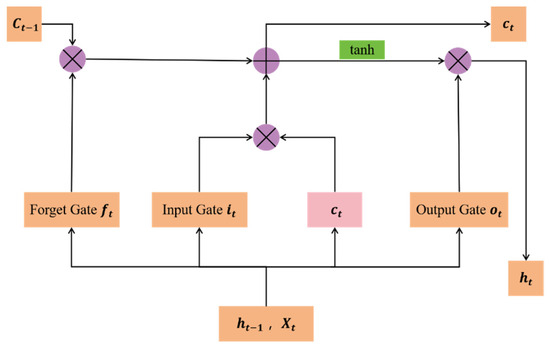
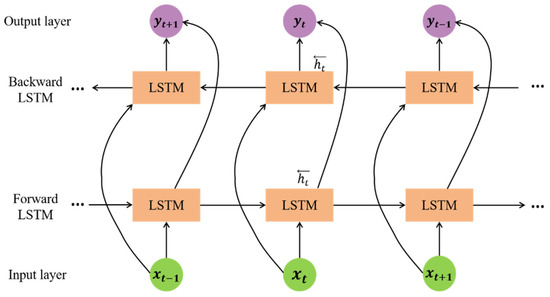
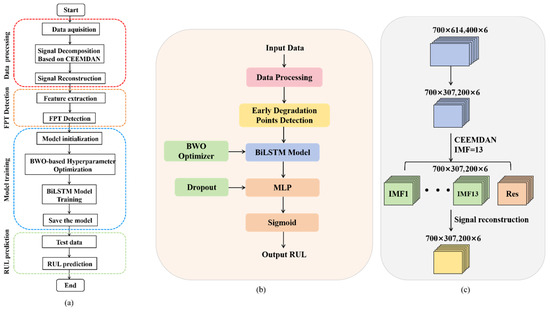
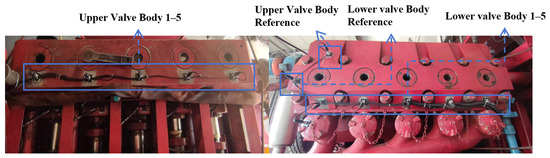
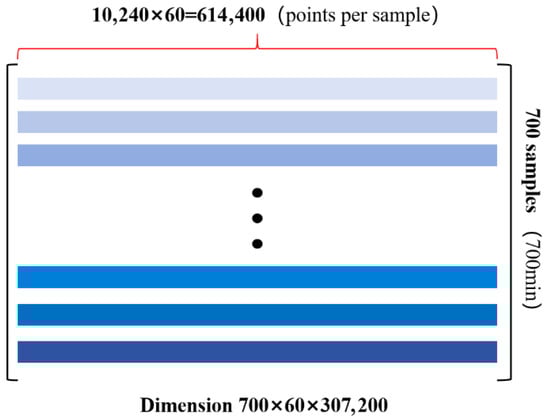
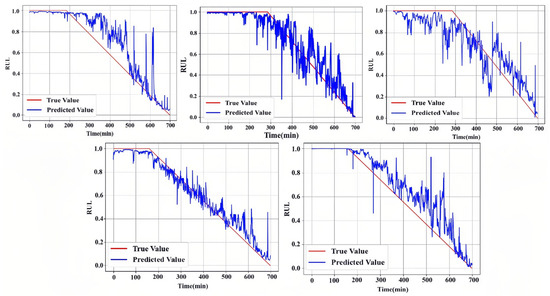
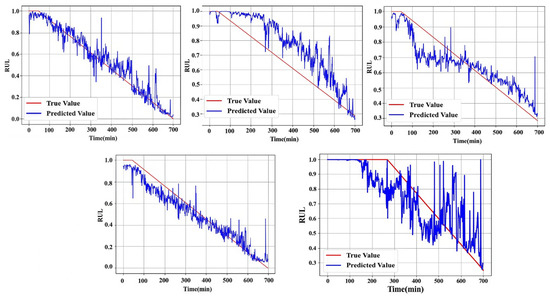
The triplex reciprocating drilling pump is a critical piece of equipment in drilling platforms, and the operational condition of its core component—the valve body—directly affects the pump’s performance and the stability of the entire system. Therefore, accurate prediction of the valve body’s Remaining Useful Life (RUL) is of great significance for ensuring the safe operation of drilling pumps and enabling predictive maintenance. However, achieving this goal involves two major challenges: (1) The complex degradation process of the valve body, which involves strong impact loads, nonlinear wear, and coupling effects between fluid and mechanical systems, makes it difficult to establish a stable degradation model and achieve accurate RUL prediction. (2) There is a lack of publicly available real-world datasets for research purposes. To address these challenges, we propose CEEMDAN-BWO-optimized Bidirectional LSTM for Remaining Useful Life prediction (CB2-RUL). The method first applies Complete Ensemble Empirical Mode Decomposition with Adaptive Noise (CEEMDAN) to the raw vibration signals for decomposition and denoising, thereby improving signal stationarity and enhancing feature representation. Next, the Black Widow Optimization (BWO) algorithm is employed to automatically tune key hyperparameters of a Bidirectional Long Short-Term Memory (BiLSTM) network. Finally, the optimized BiLSTM captures the temporal evolution patterns of valve-body degradation and produces high-accuracy RUL estimates. Finally, to verify the effectiveness of the proposed approach, we constructed a real-world dataset named VB-Lifecycle, which comprises ten valve bodies from different positions within the equipment and spans the complete lifecycle from pristine condition to failure. Extensive experiments conducted on the VB-Lifecycle dataset demonstrate that the proposed method provides accurate RUL prediction for valve bodies.

23 February 2026

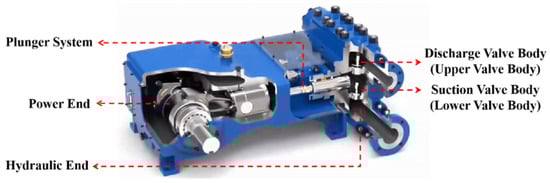
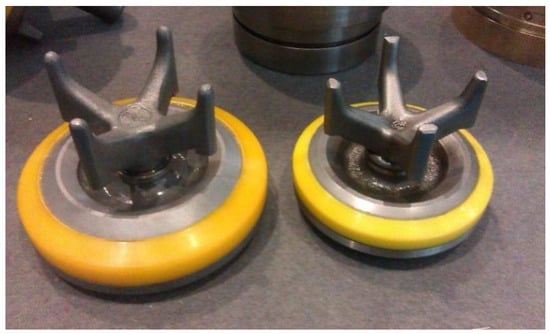
Cross-sectional schematic of the fluid end in a fracturing truck pump.

Improving the Accuracy of Infectious Disease Forecasts Based on Comparing Neural Network Architectures

  • Oleksandr Kovaliv,
  • Yuriy Kondratenko and
  • Dmytro Chumachenko
  • + 2 authors

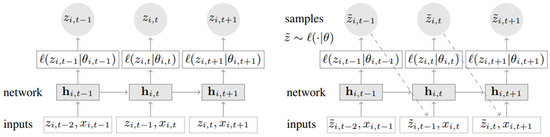
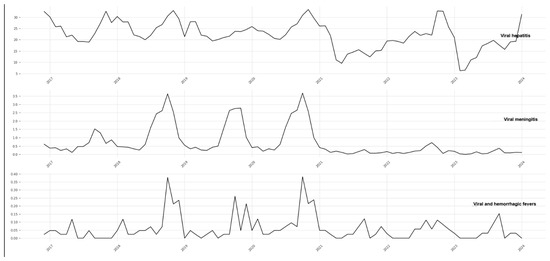
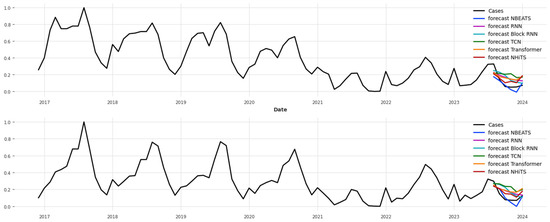
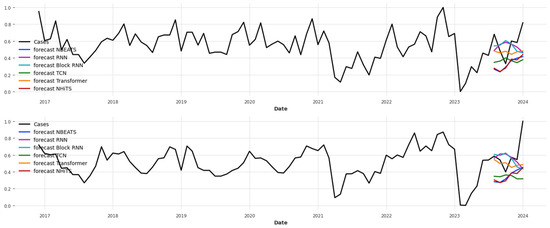
This paper aims to improve the accuracy of infectious disease forecasting using machine learning methods. The main results of this work are an analysis of infectious diseases spread in Ukraine during the time span from December 2016 to January 2024 and a performance comparison of different neural network architectures in the scope of time series forecasting. The following steps were taken: analysis of current forecasting methods, selection of neural network architectures, dataset preprocessing, and model testing. The developed system can be an effective tool for rational management decisions to ensure the epidemiological well-being and biosecurity of the population.

21 February 2026
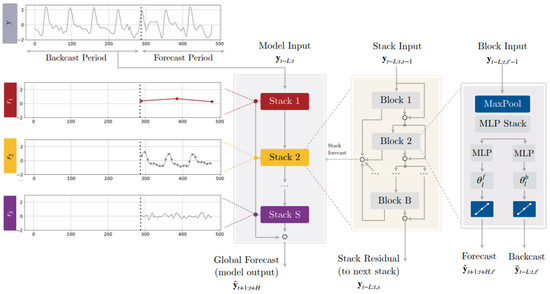
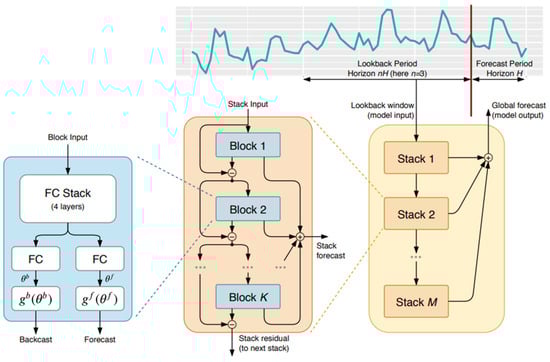
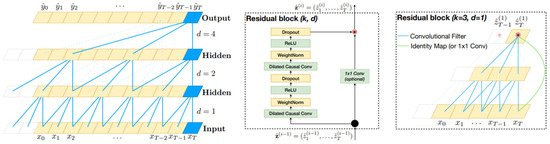
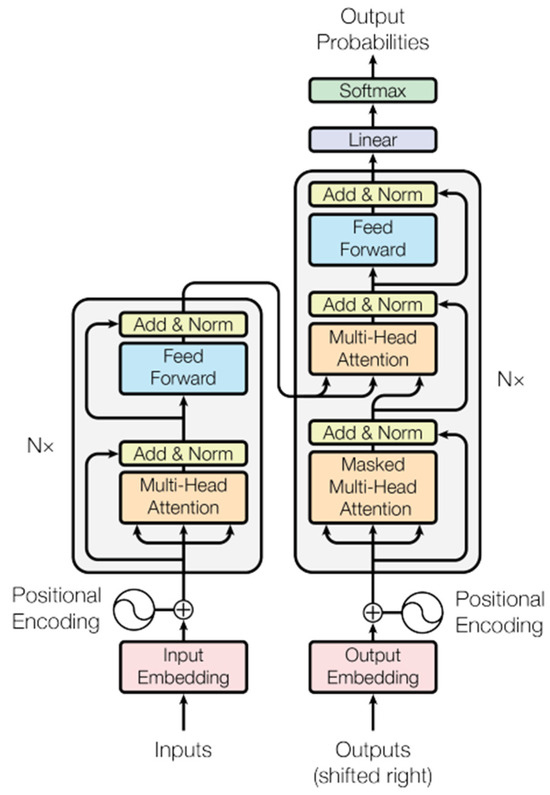
N-BEATS architecture.

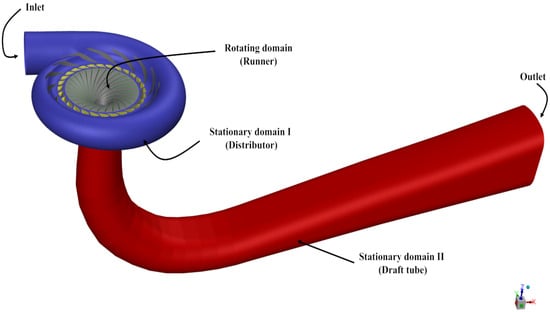
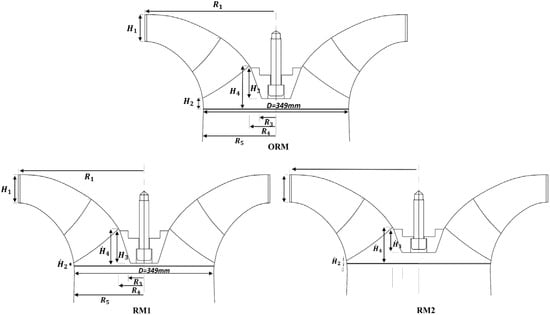
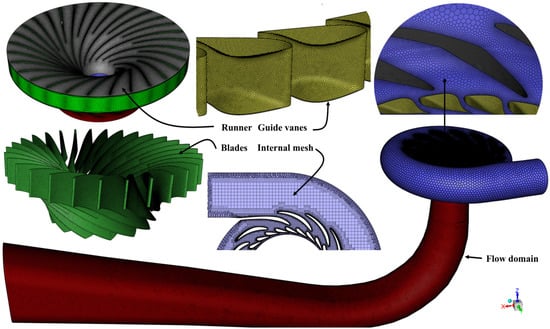
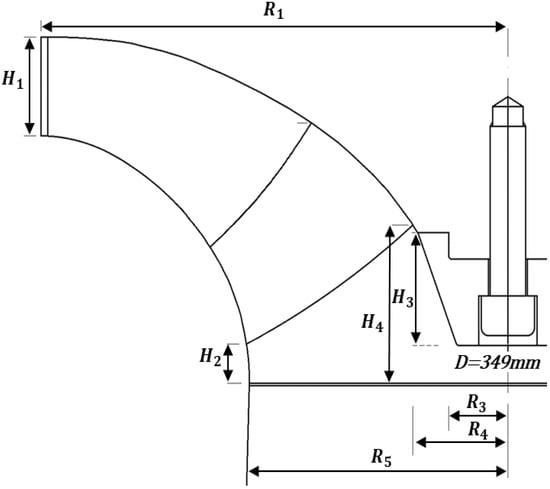
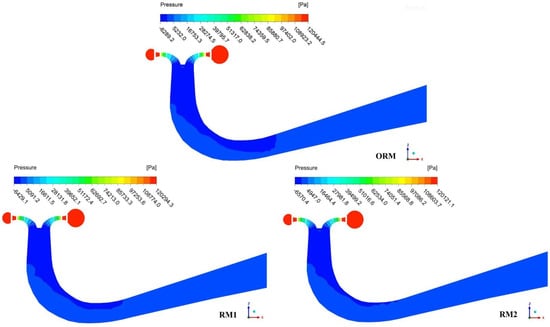
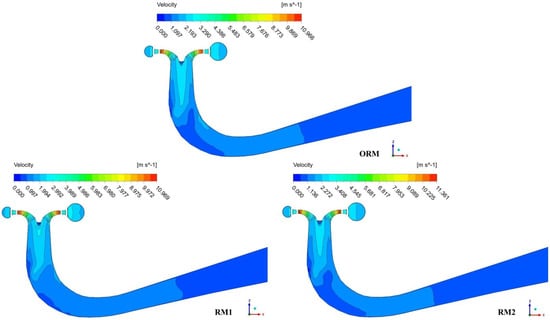
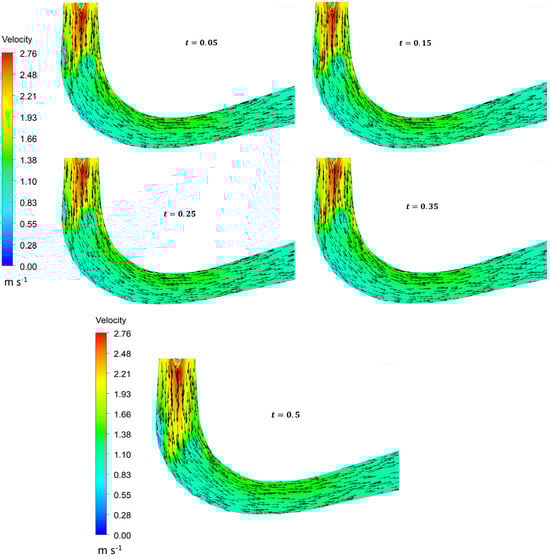
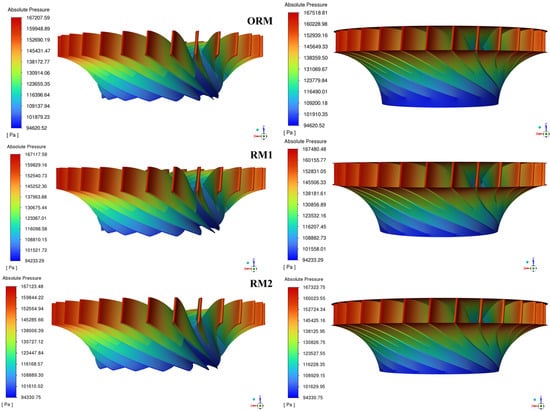
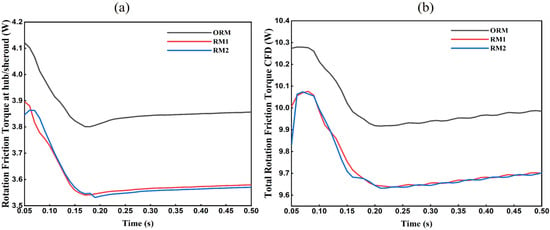
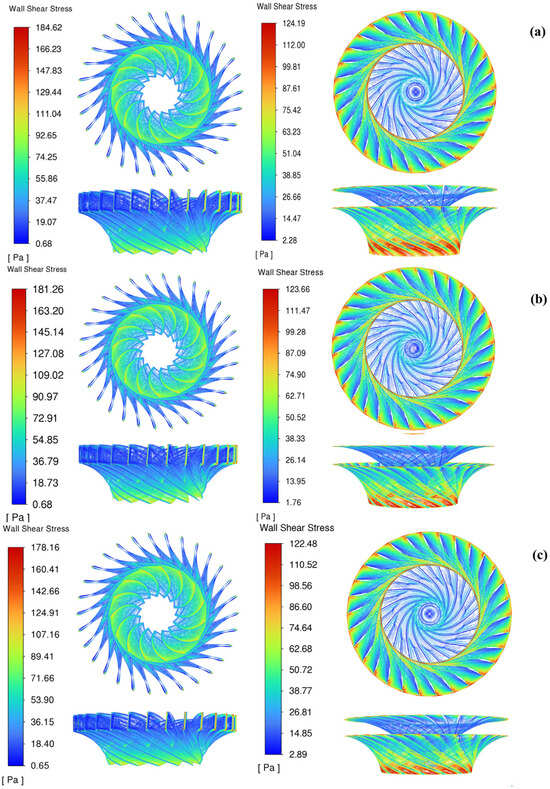
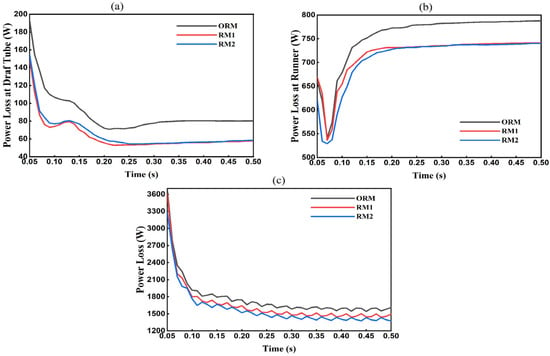
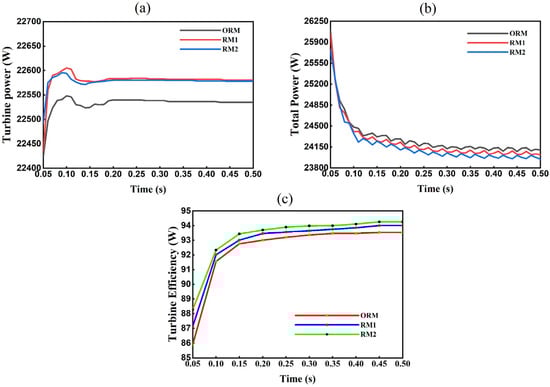
Francis turbines are renowned for their high efficiency and adaptability across a wide range of head and discharge conditions. However, internal mechanical friction losses (IMFLs), resulting from rotational frictional resistance between the rotating runner and the surrounding fluid, remain a significant obstacle to further performance optimisation. This study introduced a CFD-derived integral friction torque framework, validated through theoretical analysis, that enables the spatially resolved quantification of IMFLs in Francis turbine runners. Building on this framework, a comprehensive computational approach was established to quantify IMFLs in a Francis turbine runner using a CFD-derived integral torque method combined with a theoretical verification model. Three runner configurations were analysed: the original runner model (ORM), a modified runner (RM1) with selective exit height reduction, and a modified runner (RM2) with uniform exit height reduction. Transient simulations were conducted at the best efficiency point (BEP) using the shear stress transport (SST) k–ω turbulence model and a sliding mesh approach. The numerical results were verified using the theoretical model and systematically evaluated to assess IMFL mechanisms and runner performance. The findings demonstrate that variations in runner geometry significantly influence internal frictional resistance and turbine efficiency. Compared with ORM, both RM1 and RM2 reduced the rotational friction torque, with RM2 exhibiting the greatest improvement: a 2.83% reduction in total friction resistance torque, a 14.74% reduction in total power losses, and a 1% absolute increase in efficiency. These improvements are primarily attributed to reduced wall shear stress and a more uniform pressure distribution across the runner surface.
19 February 2026

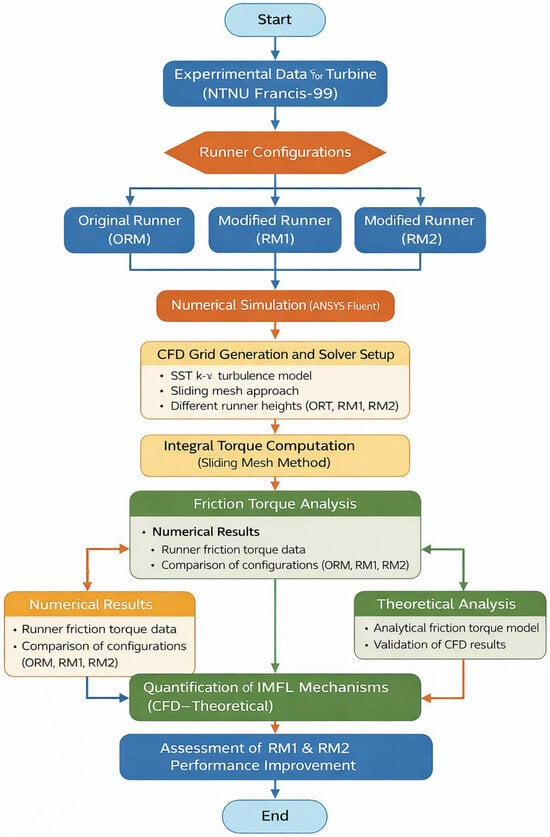
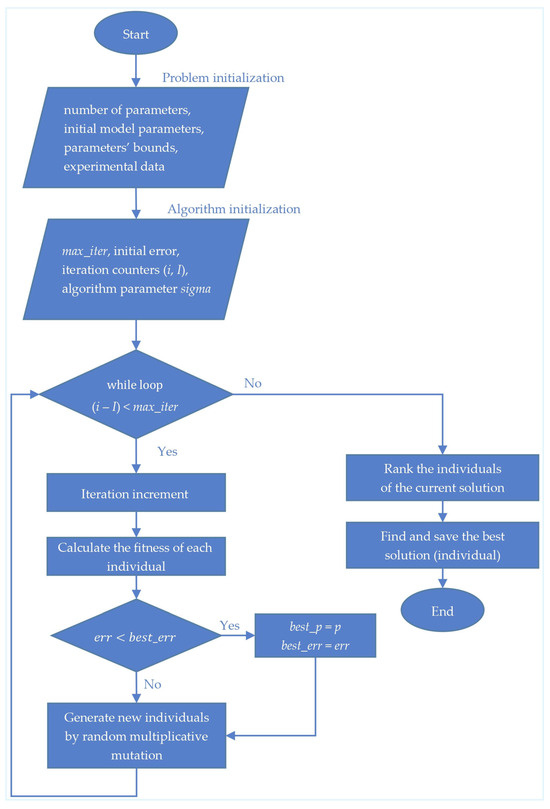
Methodological workflow of the numerical and theoretical IMFL evaluation framework.
  • Communication
  • Open Access

TOTEMS: Histogram of Evolutionarily Conserved Amino Acids

  • Michael J. Fajardo,
  • Adam G. Marsh and
  • John R. Jungck

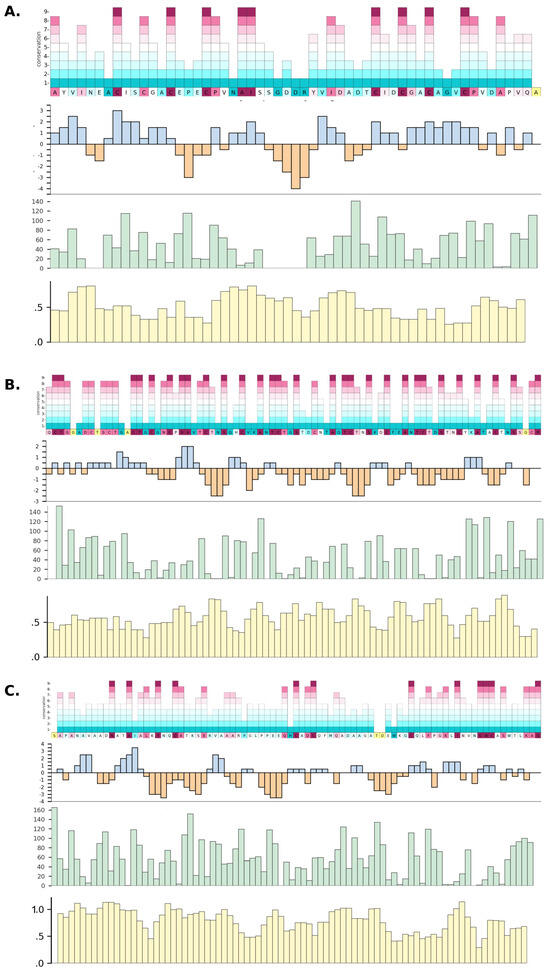
We have developed a tool that allows us to easily visualize evolutionary variation via complementary multiple sequence alignments and frequency-based stacked Sequence Logos. This tool, TOTEMS (hisTogram of evOluTionarily consErved aMino acidS), visualizes conserved regions in a multiple sequence alignment within regions of a three-dimensional structure that share similar degrees of evolutionary conservation as revealed in ConSurf output data. Unlike Sequence Logos that illustrate the relative frequency of individual amino acid residues (as in MSAViewer), or moving window averages that focus on properties such as hydrophobicity or electrical charge (as in CATH), TOTEMS can help users discriminate degrees of evolutionary conservation in adjacent positions within a three-dimensional structure. Thus, we offer a tool that serves to complement pre-existing visualization applications such as ConSurf, MSAViewer, and CATH. TOTEMS and its source code are freely available.

18 February 2026

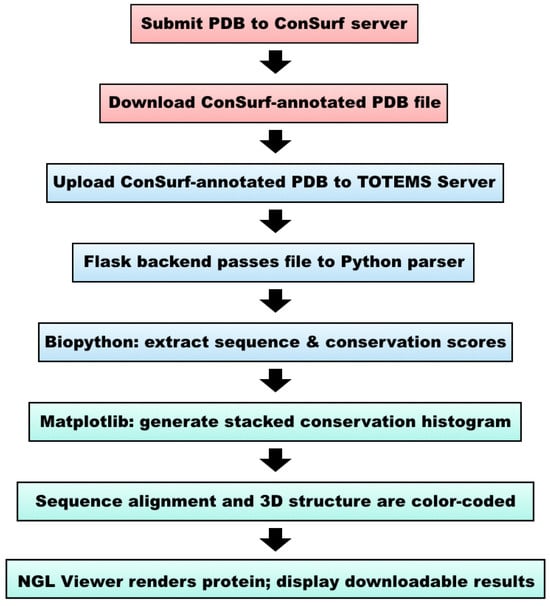
Workflow of the TOTEMS pipeline. A protein structure annotated with residue-specific evolutionary conservation scores generated by ConSurf is submitted by the user. The ConSurf-annotated PDB file is uploaded to the TOTEMS web server, where a Flask-based backend passes the file to the core Python application for parsing. Biopython is used to extract the amino acid sequence and associated conservation scores, which are rendered as a stacked conservation histogram using Matplotlib. In parallel, the sequence alignment and three-dimensional protein structure are color-coded using the same ConSurf-based conservation scheme. The final output, including the conservation histogram, interactive molecular visualization rendered with the NGL Viewer, and downloadable results, is presented to the user.

News & Conferences

Issues

Open for Submission

Editor's Choice

Reprints of Collections

Computational Methods in Structural Engineering
Reprint

Computational Methods in Structural Engineering

Editors: Manolis Georgioudakis, Vagelis Plevris, Mahdi Kioumarsi
Computational Methods in Wind Engineering
Reprint

Computational Methods in Wind Engineering

Editors: Ali Cemal Benim

Get Alerted

Add your email address to receive forthcoming issues of this journal.

XFacebookLinkedIn
Computation - ISSN 2079-3197