Skip to Content

Cryptography

Cryptography is an international, scientific, peer-reviewed, open access journal on cryptography published bimonthly online by MDPI.

Quartile Ranking JCR - Q2 (Computer Science, Theory and Methods)

Get Alerted

Add your email address to receive forthcoming issues of this journal.

All Articles (453)

A Robust Image Encryption Framework Using Deep Feature Extraction and AES Key Optimization

  • Sahara A. S. Almola,
  • Hameed A. Younis and
  • Raidah S. Khudeyer

This article presents a novel framework for encrypting color images to enhance digital data security using deep learning and artificial intelligence techniques. The system employs a two-model neural architecture: the first, a Convolutional Neural Network (CNN), verifies sender authenticity during user authentication, while the second extracts unique fingerprint features. These features are converted into high-entropy encryption keys using Particle Swarm Optimization (PSO), minimizing key similarity and ensuring that no key is reused or transmitted. Keys are generated in real time simultaneously at both the sender and receiver ends, preventing interception or leakage and providing maximum confidentiality. Encrypted images are secured using the Advanced Encryption Standard (AES-256) with keys uniquely bound to each user’s biometric identity, ensuring personalized privacy. Evaluation using security and encryption metrics yielded strong results: entropy of 7.9991, correlation coefficient below 0.00001, NPCR of 99.66%, UACI of 33.9069%, and key space of 2256. Although the final encryption employs an AES-256 key (key space of 2256), this key is derived from a much larger deep-key space of 28192 generated by multi-layer neural feature extraction and optimized via PSO, thereby significantly enhancing the overall cryptographic strength. The system also demonstrated robustness against common attacks, including noise and cropping, while maintaining recoverable original content. Furthermore, the neural models achieved classification accuracy exceeding 99.83% with an error rate below 0.05%, confirming the framework’s reliability and practical applicability. This approach provides a secure, dynamic, and efficient image encryption paradigm, combining biometric authentication and AI-based feature extraction for advanced cybersecurity applications.

2 March 2026
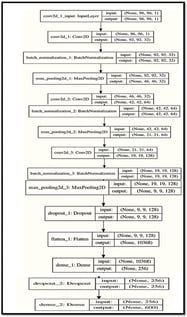
Components of CNN models used.

Deepfake technology can produce highly realistic manipulated media which pose as significant cybersecurity threats, including fraud, misinformation, and privacy violations. This research proposes a deepfake prevention approach based on symmetric and asymmetric ciphers. Post-quantum asymmetric ciphers were utilized to perform digital signature operations, which offer essential security services, including integrity, authentication, and non-repudiation. Symmetric ciphers were also employed to provide confidentiality and authentication. Unlike classical ciphers that are vulnerable to quantum attacks, this study adopts quantum-resilient ciphers to offer long-term security. The proposed approach enables entities to digitally sign media content before public release on other platforms. End users can subsequently verify the authenticity of content using the public keys of the media creators. To identify the most efficient ciphers to perform cryptography operations required for deepfake prevention, the study explores the implementation of quantum-resilient symmetric and asymmetric ciphers standardized by NIST, including Dilithium, Falcon, SPHINCS+, and Ascon-80pq. Additionally, this research provides comprehensive comparisons between the various classical and post-quantum ciphers in both categories: symmetric and asymmetric. Experimental results revealed that Dilithium-5 and Falcon-512 algorithms outperform other post-quantum ciphers, with a time delay of 2.50 and 251 ms, respectively, for digital signature operations. The Falcon-512 algorithm also demonstrates superior resource efficiency, making it a cost-effective choice for digital signature operations. With respect to symmetric ciphers, Ascon-80pq achieved the lowest time consumption, taking just 0.015 ms to perform encryption and decryption operations. Also, it is a significant option for constrained devices, since it consumes fewer resources compared to standard symmetric ciphers, such as AES. Through comprehensive evaluations and comparisons of various symmetric and asymmetric ciphers, this study serves as a blueprint to identify the most efficient ciphers to perform the cryptography operations necessary for deepfake prevention.

26 February 2026

Strong Non-Transferability from Randomizable Universal Designated Verifier Signatures

  • Magdalena Bertram,
  • Benjamin Zengin and
  • Marian Margraf
  • + 1 author

In the context of digital certification systems, the demand for privacy-preserving authentication is increasingly vital, particularly for critical applications that involve sensitive personal data. Traditional digital signatures provide a robust means of implementing such systems. However, they raise significant privacy concerns due to their public verifiability, which allows verifiers to prove the authenticity of the received sensitive data to third parties. Universal designated verifier signature (UDVS) schemes address these privacy risks by offering non-transferability, ensuring that only the specified verifier can confirm the validity of the designated verifier signature (DVS). However, despite their advantages, existing UDVS models exhibit vulnerabilities that may allow tracking of the user’s authentications among cooperating verifiers and enable third parties to be convinced of the authenticity of sensitive user data by retrieving DVSs from different, non-cooperating verifiers. This paper presents a strategy to achieve strong non-transferability, which effectively addresses these vulnerabilities, by being the first to extend the concept of randomizability to UDVS schemes and their security properties. Our findings demonstrate that a randomizable UDVS scheme can serve as a solid foundation for constructing strong non-transferable UDVS schemes. Finally, we propose an efficient, strong, non-transferable UDVS scheme as an instantiation of our strategy, utilizing state-of-the-art Type 3 pairings, significantly improving upon previous constructions.

18 February 2026

Communication is defined as the process of transferring data and exchanging information between interconnected systems. Due to the increasing reliance on digital infrastructures by the military, financial, and healthcare sectors, it is important to ensure the confidential, authentication, and tamper-proof nature of communications. In addition, the increasing need for secure communications in the fields of network security and cryptography have led to the development of numerous systems. The basic requirement of these systems is that under the same key, identical plaintexts do not result in identical ciphertexts. The most significant contribution to this requirement has came from block cipher modes. There are many traditional modes of operation such as the Electronic Code Book (ECB) compromises between simplicity and security. Probabilistic Modes such as the Cipher Block Chaining Mode (CBC) provide a method to randomize data so that the potential for pattern analysis is eliminated, while Deterministic Modes such as ECB enable potential access to the patterns within the plaintexts. Conversely, since the randomization is in the Probabilistic Mode, there is no access to the patterns; however, the sequentiality of the blocks creates dependence and increases the computing overhead. To address these issues, a novel block cipher mode that provides the highest level of security and the most effective method for performing encryption and decryption will be proposed in this paper. It is anticipated that the improved security features and efficient encryption and decryption procedures will significantly improve confidentiality. The methods proposed will utilize compact key structures, parallel processing, a header generation based on multiple random values, and a Key-derived S Box. The experimental results show that SEBCM is more effective than CBC with respect to speed in both encryption and decryption.

13 February 2026

News & Conferences

Issues

Open for Submission

Editor's Choice

XFacebookLinkedIn
Cryptography - ISSN 2410-387X