Journal Description
Earth
Earth
is an international, peer-reviewed, open access journal on earth science published bimonthly online by MDPI.
- Open Access— free for readers, with article processing charges (APC) paid by authors or their institutions.
- High Visibility: indexed within ESCI (Web of Science), Scopus, GeoRef, AGRIS, and other databases.
- Rapid Publication: manuscripts are peer-reviewed and a first decision is provided to authors approximately 21.3 days after submission; acceptance to publication is undertaken in 2.9 days (median values for papers published in this journal in the second half of 2025).
- Journal Rank: JCR - Q2 (Geosciences, Multidisciplinary) / CiteScore - Q1 (Earth and Planetary Sciences (miscellaneous))
- Recognition of Reviewers: APC discount vouchers, optional signed peer review, and reviewer names published annually in the journal.
- Journal Cluster of Geospatial and Earth Sciences: Remote Sensing, Geosciences, Quaternary, Earth, Geographies, Geomatics and Fossil Studies.
Impact Factor:
3.4 (2024);
5-Year Impact Factor:
3.0 (2024)
Latest Articles
Integrated Assessment of Coastal Groundwater Vulnerability in Western Kingdom of Saudi Arabia Using the DRASTIC Model and Machine Learning Algorithms
Earth 2026, 7(3), 97; https://doi.org/10.3390/earth7030097 (registering DOI) - 4 Jun 2026
Abstract
►
Show Figures
Groundwater resources in the Kingdom of Saudi Arabia (KSA) are important for meeting the needs of human communities, agriculture, and industry. In Western KSA, groundwater from coastal aquifers is an essential resource that complements desalinated seawater. Therefore, ensuring the quality and contamination of
[...] Read more.
Groundwater resources in the Kingdom of Saudi Arabia (KSA) are important for meeting the needs of human communities, agriculture, and industry. In Western KSA, groundwater from coastal aquifers is an essential resource that complements desalinated seawater. Therefore, ensuring the quality and contamination of groundwater has emerged as a critical priority for preserving water security. The aim of this research is to evaluate the groundwater quality and its vulnerability to contamination within the Wadi Marawani Basin. To achieve this aim, water quality indices (WQIs), the DRASTIC model, and machine learning (ML) algorithms were employed alongside a Geographic Information System (GIS). The results of the chemical analysis of 64 water samples were used in these assessments. Furthermore, several input parameters were evaluated using the DRASTIC model to estimate the DRASTIC index (DI) and generate a groundwater vulnerability map. Three ML algorithms—specifically, a Multilayer Perceptron (MLP), a Random Forest (RF), and a Decision Tree (DT)—were utilized to forecast WQIs such as the total dissolved solids (TDS) and sodium adsorption ratio (SAR), in addition to the DRASTIC index (DI). The results revealed that around 36% of the samples were classified as fresh water (<1000 mg/L). The SAR ranged from 1.10 to 32.50, indicating that most samples were suitable for irrigation. Approximately 22% of the basin was classified as demonstrating high vulnerability, whereas about 78% demonstrated low-to-moderate vulnerability. Assessment of the ML models showed high predictive accuracy for the TDS, SAR, and DI. The MLP-Vul. model attained an R2 value of 1.00 and RMSE value of 0.01, the RF-Vul. model achieved an R2 of 0.94 and RMSE of 3.17, and the DT-Vul. model attained an R2 of 0.92 and RMSE of 3.57. Although there was a minor increase in RMSE across all models during the testing phase, their predictive performance remained clear.
Full article
Open AccessArticle
Riverine Ecosystem Contamination and Ecological Risk Assessment Following Cyanide Leakage from In Situ Rare Earth Mining in Northern Laos
by
Somchith Phetmany, Bounmy Keohavong, Bounlue Douangdy, Xaythavone Bounyasone and Xuewei Hu
Earth 2026, 7(3), 96; https://doi.org/10.3390/earth7030096 - 3 Jun 2026
Abstract
►▼
Show Figures
In situ leaching is increasingly used for rare earth element (REE) extraction because of its operational efficiency; however, acidic and chemically reactive leaching solutions may generate substantial environmental risks in riverine systems. This study evaluated water contamination and screening-level ecological risk following a
[...] Read more.
In situ leaching is increasingly used for rare earth element (REE) extraction because of its operational efficiency; however, acidic and chemically reactive leaching solutions may generate substantial environmental risks in riverine systems. This study evaluated water contamination and screening-level ecological risk following a cyanide leakage incident associated with a pilot REE mining operation in Houaphanh Province, northern Lao PDR. Surface water samples were collected from 12 downstream monitoring locations between February and April 2024. Physicochemical parameters, free cyanide (CN−), and dissolved metals, including arsenic (As), lead (Pb), copper (Cu), manganese (Mn), aluminum (Al), zinc (Zn), and iron (Fe), were analyzed using portable multiparameter probes, colorimetric cyanide determination, and ICP-OES. Contamination severity was interpreted using Pollution Index (PI) and Hazard Quotient (HQ) indicators based on Lao national standards and international guideline values. Results showed severe downstream contamination, with free cyanide and several dissolved metals substantially exceeding permissible thresholds. Observed elevated concentrations of As (30.29 mg/L), Pb (10.38 mg/L), Cu (14.97 mg/L), and CN− (0.51 mg/L) indicated elevated ecological risk conditions, while acidic pH conditions may have enhanced metal mobilization and downstream transport. Descriptive spatial observations indicated apparent downstream contaminant dispersion within affected downstream river communities reliant on river water for domestic use, irrigation, and fisheries. Field observations additionally documented fish mortality, reduced irrigation usability, and deterioration of river water quality conditions in affected downstream communities. The findings suggest the potential vulnerability of Mekong-connected river systems to chemically intensive REE extraction activities and highlight the importance of preventive environmental governance, continuous monitoring, and operational risk management in emerging rare earth mining regions.
Full article

Figure 1
Open AccessArticle
Delineation of Floodplain Wetland Extent and Land Use/Land Cover Changes in the uMngeni Catchment (2000–2024) Using Landsat Data
by
Abusiswe Rigala, Mbulisi Sibanda and Timothy Dube
Earth 2026, 7(3), 95; https://doi.org/10.3390/earth7030095 - 2 Jun 2026
Abstract
►▼
Show Figures
Wetlands are among the planet’s most productive ecosystems, yet they are increasingly imperiled by intersecting global challenges, particularly agricultural expansion, food security demands, and climate change. 1 This study investigated the spatial extent of floodplain wetlands and assesses Land Use/Land Cover (LULC) dynamics
[...] Read more.
Wetlands are among the planet’s most productive ecosystems, yet they are increasingly imperiled by intersecting global challenges, particularly agricultural expansion, food security demands, and climate change. 1 This study investigated the spatial extent of floodplain wetlands and assesses Land Use/Land Cover (LULC) dynamics in the uMngeni catchment using multi-temporal Landsat imagery for the years 2000, 2010, 2020, and 2024. 2 Seven key land cover classes were classified, which included agriculture, bare land, built-up areas, forest, grassland, wetlands, and water bodies, using the Random Forest (RF) classification incorporating spectral indices (NDVI, NDWI) and topographic variables (slope and aspect) on Google Earth Engine (GEE). The overall accuracies for the respective years were 88.98% (2000), 91.23% (2010), 84.21% (2020), and 86.55% (2024), with corresponding Kappa coefficients of 0.82, 0.84, 0.78 and 0.80. 3 The findings show a significant 37% decline in wetland area from 2000 (2978 ha) to 2024 (1874 ha), with the most pronounced loss (46%) occurring between 2000 and 2010. Built-up areas increased by 38% over the same period, while agriculture peaked in 2010 (9312 ha) before declining to 7632 ha by 2024. The dominant transitions involved wetlands and grasslands being replaced by urban land and bare surfaces, particularly along the floodplain edges. 4 These patterns reflect intensifying human pressure on wetland ecosystems. Targeted interventions, such as enforcing buffer zones, regulating land use near water bodies, and restoring degraded wetlands, are critical to conserving ecosystem services and achieving sustainability outcomes aligned with the Sustainable Development Goals.
Full article

Figure 1
Open AccessArticle
Enhanced Pedotransfer Functions Through Optuna-Optimized Extreme Gradient Boosting: Application to Soil Water Retention Modeling
by
Sanaz Monavvar Sabegh, Davoud Zarehaghi, Saeed Samadianfard, Mohammad Taghi Sattari and Sajjad Ahmad
Earth 2026, 7(3), 94; https://doi.org/10.3390/earth7030094 - 2 Jun 2026
Abstract
►▼
Show Figures
Soil water retention curves (SWRCs) are fundamental inputs for simulating vadose-zone processes, yet their direct measurement is labor-intensive and often impractical across large spatial domains. Pedotransfer functions (PTFs), therefore, provide an essential alternative for estimating SWRCs from readily measured soil properties. This study
[...] Read more.
Soil water retention curves (SWRCs) are fundamental inputs for simulating vadose-zone processes, yet their direct measurement is labor-intensive and often impractical across large spatial domains. Pedotransfer functions (PTFs), therefore, provide an essential alternative for estimating SWRCs from readily measured soil properties. This study developed machine learning-based PTFs to estimate SWRCs using the UNSODA 2.0 database. An extreme gradient boosting (XGB) model was implemented and optimized using two Bayesian hyperparameter tuning frameworks, Hyperopt and Optuna, across eleven input scenarios incorporating combinations of textural, structural, and compositional soil attributes. Model performance was assessed using RMSE, R2, and Kling–Gupta efficiency (KGE). To prevent data leakage from the hierarchical structure of the UNSODA 2.0 database, a nested grouped cross-validation framework was employed, ensuring an unbiased assessment of model generalization performance across independent soil samples. The Optuna-tuned XGB model trained on the full feature set achieved the highest accuracy, with a test RMSE of 0.0183, R2 of 0.9815, and KGE of 0.9825, outperforming both the baseline and Hyperopt-optimized models. Feature importance and SHAP analyses indicated that soil texture dominated the estimations, while porosity, bulk density, and organic matter provided complementary improvements and particle density contributed marginally. These findings demonstrate that advanced hyperparameter optimization enhances the accuracy and interpretability of XGB-based PTFs, offering a robust framework for improved estimation of SWRCs in hydrological and soil-management applications.
Full article

Figure 1
Open AccessArticle
Sustainability Perceptions and the NIMBY Effect: A Case Study in a Community Exposed to Mineral Resource Extraction
by
Pedro S. Santos, Anabela Veiga and Sandra Mourato
Earth 2026, 7(3), 93; https://doi.org/10.3390/earth7030093 (registering DOI) - 1 Jun 2026
Abstract
►▼
Show Figures
The mineral resources sector has faced intense social and environmental scrutiny in recent years, often driven by a perceived lack of information and transparency regarding projects. Due to a perceived lack of information and transparency regarding projects, local communities have increasingly opposed them,
[...] Read more.
The mineral resources sector has faced intense social and environmental scrutiny in recent years, often driven by a perceived lack of information and transparency regarding projects. Due to a perceived lack of information and transparency regarding projects, local communities have increasingly opposed them, leading to the revision of the Portuguese Decree-Law Nº. 30/2021, which now mandates public clarification sessions for communities in affected territories. This study reviews the state of the art concerning socio-environmental conflicts and analyses the role of social awareness within the context of Corporate Social Responsibility (CSR). A survey was conducted in the parish of Alqueidão da Serra (Central Portugal), a community historically exposed to stone extraction, to assess perceptions of sustainability and the sector’s impact. The methodology combined the literature review with a statistical analysis of the population’s views. Results indicate that the community recognises both the economic relevance and necessity of the sector, while simultaneously expressing concerns regarding local impacts. In this context, an exploratory Not In My Back Yard (NIMBY) tendency is identified in 45 ± 6% of the population, with women showing a greater propensity. The study concludes that socio-environmental issues are the primary drivers of conflict. These findings support recommendations for enhanced population sensitivity studies and structured public clarification sessions to mitigate conflict.
Full article

Figure 1
Open AccessArticle
Seasonal Variability of Climatic Parameters and Impacts on Food Crop Yields in the Western Plateau Region of Togo
by
Biré Kemedou Pélagie Kolou, Koko Zébéto Houédakor, Kossi Komi, Vidjinnagni Vinasse Ametooyona Azagoun, Kossiwa Zinsou-Klassou and Jérôme Chenal
Earth 2026, 7(3), 92; https://doi.org/10.3390/earth7030092 - 31 May 2026
Abstract
►▼
Show Figures
Togolese agriculture is vulnerable to climate variability. In this context, this study aims to analyze the seasonal variability of climatic parameters and its effects on food production in the western Plateaux region. To achieve this, climatic data (from stations in Agou-Gare, Adéta, Amou,
[...] Read more.
Togolese agriculture is vulnerable to climate variability. In this context, this study aims to analyze the seasonal variability of climatic parameters and its effects on food production in the western Plateaux region. To achieve this, climatic data (from stations in Agou-Gare, Adéta, Amou, Badou, Kouma Konda, and Atakpamé) and agricultural data (yields, production, and areas of maize, rice, cowpea, cassava, and yam) from 1991 to 2020 were processed using RStudio 4.4.0. A methodology integrating both daily rainfall and changes in available soil water (ASW) was used to determine the rainy seasons and their durations. Seasonal rainfall totals were used to analyze spatial variability. Finally, an ordinary least squares (OLS) regression model with a threshold of 10% was used to assess the effect of climate parameters on food production. The results reveal a transition from a bimodal rainfall regime to a monomodal regime, characterised by a dry season of 4–5 months and a rainy season of 7–8 months. This transition is accompanied by an increase in temperatures ranging from 24.69 °C to 34.7 °C. The results also reveal an uncertain start to the long rainy season (early or late), an extension of the short season and dry spells lasting between 11 and 34 days that affect crops. Finally, spatial variability in precipitation remains significant during the long rainy season. Agroclimatic analysis reveals that maximum temperature positively influences cowpea yields (p = 0.0079) but negatively influences cassava (p = 0.00013) and rice (p = 0.050) yields. These results could inform the development of effective adaptation strategies tailored to this environment, helping to maintain and increase food production in the context of climate change.
Full article

Figure 1
Open AccessArticle
Spatio-Temporal Analysis of Urban Floods in Mumbai, India, Using Sentinel-1 SAR Data
by
Kiran Jalem, Gouranga Pal, Sagar Kumar Swain and K. K. Basheer Ahammed
Earth 2026, 7(3), 91; https://doi.org/10.3390/earth7030091 - 31 May 2026
Abstract
Urban flooding in coastal megacities remains a critical challenge, with recurrent inundation driven by extreme rainfall, inadequate drainage, and topographic vulnerability. This study investigated the spatio-temporal dynamics of flooding in Mumbai between 2018 and 2025 using Sentinel-1 SAR data (VV and VH polarizations)
[...] Read more.
Urban flooding in coastal megacities remains a critical challenge, with recurrent inundation driven by extreme rainfall, inadequate drainage, and topographic vulnerability. This study investigated the spatio-temporal dynamics of flooding in Mumbai between 2018 and 2025 using Sentinel-1 SAR data (VV and VH polarizations) along with automated thresholding and unsupervised classification techniques. The VV polarization consistently detected a larger flood extent than VH, with maximum inundation reaching 152 km2 in 2024, compared to 67 km2 with VH, highlighting VV’s superior sensitivity to surface water. Ward-wise analysis revealed that Chembur West (16.47 km2), Matunga (12.33 km2), and Ghatkopar (5.43 km2) were the most flood-prone areas, while Colaba and Marine Lines experienced lower exposure due to higher elevation and better drainage infrastructure. Annual flood variation corresponded with intense rainfall events, particularly those exceeding 300 mm/day in 2020, 2023, and 2024. Validation with Brihanmumbai Municipal Corporation (BMC) reported flood data confirmed a strong spatial agreement with SAR-derived flood zones, supporting the reliability of the geospatial model. The integration of remote sensing, rainfall data, and ward-level analysis offers a scalable framework for urban flood risk mapping. These findings emphasize the need for resilient drainage planning, green infrastructure, and real-time flood monitoring systems.
Full article
(This article belongs to the Topic The Hydrosphere in Crisis: Human Impact, Climate Change, and Pathways to Resilience, 2nd Edition)
►▼
Show Figures

Figure 1
Open AccessArticle
Probabilistic Clustering of Atmospheric Moisture Regimes for Irrigation Scheduling in Tropical Fruit Cultivation
by
Pattharaporn Thongnim and Sueppong Mueanchamnong
Earth 2026, 7(3), 90; https://doi.org/10.3390/earth7030090 - 31 May 2026
Abstract
►▼
Show Figures
Vapor Pressure Deficit (VPD) is a critical determinant of atmospheric evaporative demand and plant water stress in tropical agricultural systems. This study applied a Gaussian Mixture Model (GMM) and K-Means clustering to 36,528 hourly meteorological observations collected from Eastern Thailand between
[...] Read more.
Vapor Pressure Deficit (VPD) is a critical determinant of atmospheric evaporative demand and plant water stress in tropical agricultural systems. This study applied a Gaussian Mixture Model (GMM) and K-Means clustering to 36,528 hourly meteorological observations collected from Eastern Thailand between August 2021 and September 2025, with the objective of identifying distinct atmospheric moisture regimes relevant to precision irrigation management in durian cultivation. Two input configurations were evaluated: a multivariate feature space comprising air temperature, relative humidity, wind speed, solar radiation, and VPD; and a univariate input consisting of VPD alone. Model selection for GMM was guided by the Akaike Information Criterion (AIC) and Bayesian Information Criterion (BIC), while K-Means performance was assessed using the Elbow method, Silhouette Coefficient, Calinski–Harabasz Index, and Davies–Bouldin Index. For the multivariate input, GMM identified K = 7 as the optimal number of clusters, supported by the largest single-step reduction in both AIC and BIC at this transition point. For the univariate VPD input, K = 5 was selected as the most parsimonious and agriculturally interpretable solution. The seven clusters derived from the multivariate GMM were organized into four atmospheric moisture regimes, such as very low, moderate, high, and very high evaporative demand, capturing the full spectrum of diurnal and seasonal VPD variability characteristic of Eastern Thailand. The results demonstrate that GMM-based probabilistic clustering applied to multivariate meteorological inputs provides a more comprehensive characterization of atmospheric moisture dynamics than univariate or geometric clustering approaches, offering a practical framework for tiered irrigation scheduling and drought stress early warning systems in tropical fruit cultivation.
Full article

Figure 1
Open AccessArticle
Assessment of Soil Loss by Water Erosion at a Large Basin Scale: A Case Study of the Cheliff Basin, Algeria
by
Mohammed Achite, Pandurang Choudhari, Abderrezak Kamel Toubal, Priyanshu Nathawat, Nehal Elshaboury, Nikola M. Milentijević and Tommaso Caloiero
Earth 2026, 7(3), 89; https://doi.org/10.3390/earth7030089 - 30 May 2026
Abstract
Water erosion is the main driver of soil loss in semi-arid mountainous regions, particularly in Algeria. Identifying the spatial distribution of erosion is a crucial first step, providing decision-makers with essential information to develop effective mitigation strategies. The main objective of this study
[...] Read more.
Water erosion is the main driver of soil loss in semi-arid mountainous regions, particularly in Algeria. Identifying the spatial distribution of erosion is a crucial first step, providing decision-makers with essential information to develop effective mitigation strategies. The main objective of this study is to apply the Revised Universal Soil Loss Equation (RUSLE) to estimate soil loss and rank the sub-basins of the Wadi Cheliff Basin (43,750 km2). Different geographical and non-spatial data sets have been employed to develop different thematic layers of the RUSLE factors, such as rainfall erosivity factor (R), soil erodibility factor (K), topographic factor (LS), crop management factor (C), and support practice factor (P). The RUSLE empirical model indicated strong spatial variability of soil loss across the Wadi Cheliff Basin, with estimated values ranging from 0 to 50 t ha−1 yr−1 during October 2017–May 2018. Higher erosion rates (20–50 t ha−1 yr−1) were concentrated in the northern part of the basin near the Mediterranean coast, primarily due to high rainfall erosivity (800–977 MJ mm ha−1 h−1 yr−1) and steep slopes (LS up to 29.48). In contrast, the southern part of the basin exhibited lower soil loss (0–10 t ha−1 yr−1), associated with lower rainfall and gentler slopes. Areas affected by extreme erosion (>50 t ha−1 yr−1) were very limited, representing only 0.02% in October 2017 and 0.40% in May 2018. Maximum soil loss values (224.00 t ha−1 yr−1 in October 2017 and 204.10 t ha−1 yr−1 in May 2018) indicate that high-intensity erosion is limited to specific localized hotspots, rather than being broadly distributed across the basin. Information on soil erosion patterns at the sub-basin level can guide the planning of effective conservation practices. Such information is helpful for the implementation of erosion control practices and improving overall environmental management in the basin.
Full article
(This article belongs to the Special Issue Sustainable Landscapes: Integrating Physical Geography, Ecotourism, and Nature Conservation)
►▼
Show Figures

Figure 1
Open AccessArticle
Machine Learning-Based Estimation of Daily Reference Evapotranspiration in Vojvodina, Serbia
by
Milica Stajić, Dejan Mirčetić, Atila Bezdan, Radovan Savić, Sanja Antić, Nikola Santrač, Andrea Salvai, Milena Lakićević and Boško Blagojević
Earth 2026, 7(3), 88; https://doi.org/10.3390/earth7030088 - 26 May 2026
Abstract
Reference evapotranspiration (ET0) is most commonly estimated using the FAO-56 Penman–Monteith (PM) equation. However, its application is often limited by the lack of required meteorological parameters. Due to their flexibility, ability to operate with limited input, and high accuracy in estimating
[...] Read more.
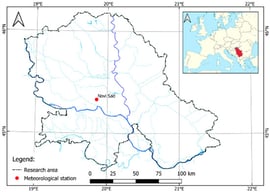
Reference evapotranspiration (ET0) is most commonly estimated using the FAO-56 Penman–Monteith (PM) equation. However, its application is often limited by the lack of required meteorological parameters. Due to their flexibility, ability to operate with limited input, and high accuracy in estimating ET0, machine learning models have become increasingly relevant in scientific research, offering a practical alternative under limited data conditions. In this study, artificial neural networks (ANNs) were applied to estimate daily ET0 using meteorological data from the Novi Sad station in Vojvodina (Serbia). The dataset consisted of eight meteorological variables relevant to evapotranspiration processes. Analysis showed that some variables had a stronger influence on ET0 prediction than others. To evaluate their combined effect, a series of ANN models with different input combinations were developed and tested. The random forests, gradient boosting and k-nearest neighbors models were used as a benchmark, and model performance was evaluated using R2, NSE, RMSE, and MAE. The highest accuracy was achieved when all variables were included, providing the model with maximum information. The best performance was obtained using a two-hidden-layer architecture with 32 and 16 neurons, resulting in R2 = 0.97, NSE = 97.07%, RMSE = 0.23 mm/day, and MAE = 0.21 mm/day. The results showed that a limited number of input variables can be used to estimate ET0 with high accuracy, achieving an R2 value of 0.95 using only three input variables. Therefore, the findings of this study may contribute to more accurate and cost-effective irrigation scheduling and water balance estimation, providing practical benefits for agricultural water management and farmers in Serbia.
Full article
(This article belongs to the Special Issue Feature Papers for AI and Big Data in Earth Science)
►▼
Show Figures

Figure 1
Open AccessArticle
SAR-Based Flood Extent Mapping with a Lightweight Siamese U-Net and Differential Attention Mechanism
by
Ahmet Kaçmaz and Ugur Alganci
Earth 2026, 7(3), 87; https://doi.org/10.3390/earth7030087 - 25 May 2026
Abstract
Floods are among the most catastrophic natural disasters globally, causing significant damage to both life and infrastructure. Consequently, immediate and accurate assessment of inundated areas is critical for effective emergency response. While optical remote sensing is typically used for flood assessment, it is
[...] Read more.
Floods are among the most catastrophic natural disasters globally, causing significant damage to both life and infrastructure. Consequently, immediate and accurate assessment of inundated areas is critical for effective emergency response. While optical remote sensing is typically used for flood assessment, it is often ineffective during active flood events due to persistent cloud cover and precipitation. To address this, this research develops a deep learning method utilizing Synthetic Aperture Radar (SAR), which offers all-weather, 24 h imaging capabilities. Specifically, an attention-based differential Siamese U-Net was developed to detect temporal changes in bi-temporal SAR imagery (e.g., Sentinel-1) acquired before and after flood events. The method was evaluated on the S1GFloods dataset, comprising 5360 bi-temporal Sentinel-1 SAR image pairs across 46 flood incidents on six continents. Experimental results demonstrate a flood Intersection over Union (IoU) of 92.43%, an F1 score of 96.07%, and a recall of 97.64%. These metrics rank the proposed approach third overall among top-performing methods on this dataset. Notably, the high recall rate indicates the model is particularly beneficial for emergency response, as it minimizes the number of undetected flooded areas. Despite utilizing a CNN-based architecture that is less complex than Vision Transformer models, this method achieves results comparable to the state-of-the-art DAM-Net, with a performance difference of only 0.77%.
Full article
(This article belongs to the Topic Machine Learning and Big Data Analytics for Natural Disaster Reduction and Resilience)
►▼
Show Figures

Figure 1
Open AccessArticle
Spatial Dynamics and Drivers of Carbon–Pollution Synergy in the Middle Reaches of the Yangtze River Urban Agglomeration
by
Shun Chen and Ping Jiang
Earth 2026, 7(3), 86; https://doi.org/10.3390/earth7030086 - 23 May 2026
Abstract
►▼
Show Figures
Reducing carbon emissions while improving air quality is a central challenge for rapidly urbanizing regions. Focusing on 31 prefecture-level cities in the Middle Reaches of the Yangtze River Urban Agglomeration, this study examines carbon–pollution synergy (CPS), spatial dynamics, and the driving factors of
[...] Read more.
Reducing carbon emissions while improving air quality is a central challenge for rapidly urbanizing regions. Focusing on 31 prefecture-level cities in the Middle Reaches of the Yangtze River Urban Agglomeration, this study examines carbon–pollution synergy (CPS), spatial dynamics, and the driving factors of CO2 and representative air pollutants from 2013 to 2023. Spatial autocorrelation analysis, a revised four-factor Logarithmic Mean Divisia Index (LMDI) decomposition, and a factor-based CPS assessment were used to identify spatial clustering, compare driver heterogeneity, and evaluate coordination between CO2 and primary pollutants. To improve methodological consistency, the LMDI decomposition and CPS assessment focus on the primary pollutants SO2, CO, and NO2, whereas PM2.5 and O3 are retained in the spatial analysis and discussion because they are strongly affected by secondary formation, atmospheric transport, and meteorological conditions. The results show that CO2 and the selected pollutants exhibit significant but pollutant-specific spatial clustering. High CO2 values remain concentrated in the core cities of Wuhan, Changsha, and Nanchang, PM2.5 shows a persistent north–south gradient, and SO2 hotspots shift from traditional industrial cores toward peripheral areas receiving industrial relocation. The revised LMDI results show that economic development is the most stable positive driver of CO2 and the primary pollutants, whereas the energy-consumption factor generally suppresses emissions. The recalculated population-scale factor fluctuates around 1, indicating a comparatively limited and stage-dependent contribution once the other factors are controlled for. CPS analysis further indicates that coordinated reduction is most robust under the energy-consumption factor and, for conventional combustion-related pollutants, also under the energy-structure factor. Overall, the region has a clear basis for CPS governance, but effective implementation requires pollutant-specific and region-specific control strategies rather than a uniform co-mitigation pathway.
Full article

Figure 1
Open AccessArticle
Estimating the Impact of Agricultural Land-Use–Land-Cover Change on Riverbank Stability and Critical Inland Navigation Areas of the Danube River
by
Maxim Arseni, Valentina-Andreea Calmuc, Madalina Calmuc, Laureana Odajiu, Silvius Stanciu and Puiu Lucian Georgescu
Earth 2026, 7(3), 85; https://doi.org/10.3390/earth7030085 - 22 May 2026
Abstract
►▼
Show Figures
Intensive agriculture, deforestation, and frequent land-use changes contribute to increased soil erosion and sediment transport from both arable and non-arable lands into minor river channels. These factors directly and indirectly influence riverbank erosion and, in turn, sediment transport in rivers. Evidence on anthropogenic
[...] Read more.
Intensive agriculture, deforestation, and frequent land-use changes contribute to increased soil erosion and sediment transport from both arable and non-arable lands into minor river channels. These factors directly and indirectly influence riverbank erosion and, in turn, sediment transport in rivers. Evidence on anthropogenic land-use/land-cover (LU-LC) change impact remains limited in both quantitative and spatial terms within the Danube River Basin. The study area includes research results from 17 locations concerning satellite-derived LU-LC changes along the Romanian sector of the Danube River, as well as validation results with particular highlighting on the Corabia area, Romania. According to results derived from combining LU-LC products based on Copernicus satellite data (comparing the years 2000 and 2018) and validated in the field through UAV flights conducted in 2025, the conversion of riparian vegetation into cultivated or uncultivated land accelerates bank failure. This is particularly evident where agricultural areas are located in the immediate vicinity of riverbanks. Such bank failures can be attributed to a reduction in root cohesion and a decrease in soil–bank structural stability. As a consequence, sediment delivery to the river channel increases via overland flow. The workflow proposed in this study offers a transferable and adaptable solution for areas with similar characteristics for a multitemporal approach regarding the influence of agricultural lands especially on sediment transport and riverbank erosion.
Full article

Figure 1
Open AccessArticle
Groundwater and Its Ecological Effects in an Alpine Endorheic Region: Implications for Sustainable Management
by
Zhen Zhao, Xianghui Cao, Guangxiong Qin, Yuejun Zheng, Kifayatullah Khan and Wenpeng Li
Earth 2026, 7(3), 84; https://doi.org/10.3390/earth7030084 - 22 May 2026
Abstract
►▼
Show Figures
Groundwater is one of the key factors affecting the changes and evolution of surface processes in arid regions, determining the direction and scope of the evolution of surface eco-hydrological processes. To achieve sustainable water resource management in arid areas, this study aims to
[...] Read more.
Groundwater is one of the key factors affecting the changes and evolution of surface processes in arid regions, determining the direction and scope of the evolution of surface eco-hydrological processes. To achieve sustainable water resource management in arid areas, this study aims to systematically explore the dynamic changes in groundwater level and their ecological effects on the basis of multi-source remote sensing data by multivariate statistical methods. The results show that groundwater levels in the Bayin River Basin increased from 2895.35 m in 2005 to 2906.75 m in 2022 at a rate of 6.7 m/decade, driven by increased runoff and irrigation. Conversely, groundwater levels in urbanized areas near Delingha City slightly decreased by approximately 0.3 m/decade, with a general west-to-east declining spatial gradient. These changes have generated cascading ecological effects. Overall, rising groundwater has coincided with increased vegetation index, wetland extent, and soil moisture. Annual average NDVI rose from 0.18 in 2000 to 0.23 in 2022, an increase of 27.7%, and wetland area expanded from 349.25 km2 in 2005 to 355.25 km2 in 2022. Soil moisture content showed an insignificant upward trend form 0.14% in 2003 to 0.15% in 2022, with the slope of 0.01%/yr. However, soil salinization has exhibited an aggravating trend, with salinization index (SI) values of 0.25, 0.26, and 0.31 in 2000, 2010, and 2020, respectively. Affected by human activities and geological constraints, the ecological effects associated with groundwater level changes display pronounced regional heterogeneity. This study provides a solid basis for regional water resource regulation and further quantification of water conveyance benefits.
Full article

Figure 1
Open AccessCorrection
Correction: Bachtiar et al. Spatial Variation in Transport-Related Particulate Matter Fractions Across Urban Districts in Padang, Indonesia: Evidence from Nano Sampler-Based Measurements. Earth 2026, 7, 50
by
Vera Surtia Bachtiar, Purnawan Purnawan, Reri Afrianita, Yega Serlina, Haldi Reivan Thamrin, Zulva Shabri and Assyifa Raudina
Earth 2026, 7(3), 83; https://doi.org/10.3390/earth7030083 - 22 May 2026
Abstract
►▼
Show Figures
The correction concerns Figure 1 of the published article [...]
Full article

Figure 1
Open AccessArticle
Assessing the Impact of Urban Spatial Pattern Changes on Heat Mitigation by Green and Blue-Green Infrastructure Using the InVEST Model
by
Carla Iruri-Ramos, Karla Vilca-Campana, Lorenzo Carrasco-Valencia, Andrea Chanove-Manrique, María Rosa Cervera Sardá and Berly Cárdenas-Pillco
Earth 2026, 7(3), 82; https://doi.org/10.3390/earth7030082 - 19 May 2026
Abstract
Green and blue-green infrastructures are key for reducing the effects of urban heat islands driven by rapid city expansion. However, the spatial relationship between land-cover patterns and air-temperature distribution, plus the combined cooling effects of green and blue spaces, remains insufficiently explored. This
[...] Read more.
Green and blue-green infrastructures are key for reducing the effects of urban heat islands driven by rapid city expansion. However, the spatial relationship between land-cover patterns and air-temperature distribution, plus the combined cooling effects of green and blue spaces, remains insufficiently explored. This study applies the InVEST Urban Cooling Model to analyze the spatiotemporal changes in land use and their impact on the heat-mitigation service provided by green and blue spaces in the city of Arequipa, Peru, between 2006 and 2024. Furthermore, land-use change is projected for 2030 using the CA-Markov model and the InVEST Scenario Generator tool. These projections enabled the evaluation of two heat-mitigation scenarios by modifying the spatial distribution of green, blue-green, and urbanized areas. The findings indicate that urbanized areas doubled over the measurement period. The greatest loss of agricultural land and tree-covered areas occurred between 2020 and 2024, with a decline of up to 5%. Correspondingly, the percentage of low heat mitigation index areas (0.1–0.2 and ≤0.1) increased by 3.8%, reaching a total increase of up to 6.7%. Scenario simulations showed that reducing both green and blue-green infrastructure had similar impacts on the heat-mitigation index, providing valuable insights for urban planning and environmental management.
Full article
(This article belongs to the Special Issue Climate-Sensitive Urban Design for Heatwave Mitigation)
►▼
Show Figures

Graphical abstract
Open AccessArticle
Assessing Existing and Potential Future Vulnerability to Water Resources Changing Conditions Using Dynamic Composite Indices in Latin America
by
Christos A. Karavitis, Constantina Vasilakou, Dimitrios E. Tsesmelis, Nikolaos A. Skondras, Panagiotis D. Oikonomou, Kleomenis Kalogeropoulos, Panagiotis A. Balabanis, Rodrigo Maia, Enrique Playán, Nery Zapata, Jorge Gironás, Luiz Gabriel Azevedo, Monica Porto, Manuel Vanegas, Santiago Maria Reyna, Dionysis Assimacopoulos, João Pedro Pêgo, Andreas Tsatsaris, Garyfalia Economou, Stavros Alexandris, Vassilia Fassouli, Konstantinos Chatzithomas, Iordanis Moustakidis and Pantelis E. Barouchasadd
Show full author list
remove
Hide full author list
Earth 2026, 7(3), 81; https://doi.org/10.3390/earth7030081 - 18 May 2026
Abstract
Integrated water resources management uses decision-making and planning techniques in developing long-term strategies to ensure the sustainability of water resources and the resulting water security of future generations. Policy formulation through such integrated planning interlinks with indicators serving as an information channel to
[...] Read more.
Integrated water resources management uses decision-making and planning techniques in developing long-term strategies to ensure the sustainability of water resources and the resulting water security of future generations. Policy formulation through such integrated planning interlinks with indicators serving as an information channel to decision-makers. The present effort aims to develop a specific methodology using technical, environmental, and social indicators, formulating composite indices to identify vulnerability to changing water conditions. Thus, a set of indices developed through a multiyear research effort in Latin America, namely Drought Vulnerability Index (DVI), Water Stress Vulnerability Index (WSTVI), Water Scarcity Vulnerability Index (WSCVI), and Water Changing Conditions Vulnerability Index (WCCVI). Time series analysis covered the years 1991–2020, whereas the reference period was 1961–2020. Climate and water resources information is mainly obtained from ERA5-Land reanalysis; social, economic, infrastructure, and institutional data derived from harmonized sources (COROADO Project-EU, FAO, The World Bank, WHO/UNICEF JMP). Statistical tests and Principal Component Analysis (PCA) identified the indicators included in the equations for each index. Expert knowledge played an important role in the development as data were collected according to known local specificities and global trends, as well as scientific criteria and methodological rigor regarding the proposed new indices. Finally, application of such a framework for spatially explicit analysis indicated higher levels of vulnerability to changing water conditions in the northern part of Mexico, the Andes, Bolivia, Paraguay, and Central America, and lower levels in Chile, Brazil, Uruguay, and Argentina. This application demonstrates that the produced composite indices may be implemented with matching success all over Latin America and, therefore, in diversified natural, technical, environmental, social and economic conditions.
Full article
Open AccessArticle
Ecological Greening in Mu Us Sandy Land: Agricultural Expansion Impacts Assessed by Arid RSEI
by
Ling Nan, Qiaorui Ba, Chengyong Wu and Xiangxiang Hu
Earth 2026, 7(3), 80; https://doi.org/10.3390/earth7030080 - 14 May 2026
Abstract
►▼
Show Figures
Satellite-observed greening in arid regions is often interpreted as ecological restoration success, yet this assessment may conflate natural recovery with agricultural expansion. We developed an Arid Remote Sensing Ecological Index (ARSEI) incorporating a Comprehensive Salinity Index (CSI) to address systematic biases in the
[...] Read more.
Satellite-observed greening in arid regions is often interpreted as ecological restoration success, yet this assessment may conflate natural recovery with agricultural expansion. We developed an Arid Remote Sensing Ecological Index (ARSEI) incorporating a Comprehensive Salinity Index (CSI) to address systematic biases in the traditional RSEI when applied to irrigated drylands. ARSEI scores were validated against MODIS Net Primary Production (NPP) ( at the regional scale), confirming its reliability in capturing ecosystem productivity, while CSI effectively maps the upper-bound of surface salinization potential dictated by intrinsic soil properties. Applied to China’s Mu Us Sandy Land (2000–2024), the ARSEI reveals that 2327 km2 of sandy land—54% of current cropland—was converted to agriculture, creating “assessment-induced false greening” signals. While the traditional RSEI increased monotonically (+135%), the ARSEI shows a nuanced pattern with plateau (2010–2015) and decline (2015–2020) phases, reflecting salinization risks masked by high crop NDVI. Optimal Parameters-Based Geographical Detector analysis demonstrates that Land Cover × Precipitation interactions (q = 0.28) drive spatial heterogeneity through irrigation-mediated water redistribution. The ARSEI provides a dialectical evaluation framework: acknowledging agricultural greening’s economic benefits while monitoring subsurface degradation risks. This study offers a critical methodological advance for sustainable land assessment in global drylands undergoing agricultural intensification.
Full article

Figure 1
Open AccessArticle
Possibilities of Implementing Solar Sludge Drying Facilities in Existing Wastewater Treatment Plants in the Canary Islands
by
Emilio Megías and Manuel García-Román
Earth 2026, 7(3), 79; https://doi.org/10.3390/earth7030079 - 12 May 2026
Abstract
►▼
Show Figures
Following the completion of the installation and commissioning of a solar sludge drying system serving the largest wastewater treatment plant on the island of Tenerife, a study has been carried out on the possibilities of implementing this type of infrastructure in other important
[...] Read more.
Following the completion of the installation and commissioning of a solar sludge drying system serving the largest wastewater treatment plant on the island of Tenerife, a study has been carried out on the possibilities of implementing this type of infrastructure in other important plants in the Canary Archipelago. To this end and given the favorable climatic conditions found in the Canary Islands for this type of facility, the availability of land and possible impacts on surrounding areas have been studied. There are potential implementations on the islands. Thanks to these facilities, the volume of sludge to be transported to disposal or reuse areas is drastically reduced. The major drawback of these systems is the significant amount of land required, which is not always available on densely populated islands with rugged terrain.
Full article

Figure 1
Open AccessArticle
Seismic Shake-e 2.1 App to Contribute to Mitigating the Seismic Risk
by
Armando Aguilar-Meléndez, Josep De la Puente, Marisol Monterrubio-Velasco, Alejandro García-Elías, Jesús Huerta-Chua and Armando Aguilar-Campos
Earth 2026, 7(3), 78; https://doi.org/10.3390/earth7030078 - 11 May 2026
Abstract
Seismic Shake-e is a free app that provides valuable data and tools related to earthquakes, covering the stages before, during, and after seismic events. In this text, we describe the main features of the Seismic Shake-e 2.1 (SSe) app, the considerations that guided
[...] Read more.
Seismic Shake-e is a free app that provides valuable data and tools related to earthquakes, covering the stages before, during, and after seismic events. In this text, we describe the main features of the Seismic Shake-e 2.1 (SSe) app, the considerations that guided its development, examples of its use, and the challenges for future versions. Version 1.0 of this app was awarded as one of the winners of EOVALUE: Call for Innovative Apps in environmental and social fields, a project by the Joint Research Centre (JRC), the European Commission’s science and knowledge service. SSe recognizes two user levels: basic and intermediate/advanced. There are six modules for each level. The main topics of these modules for both user types are: (1) Accelerometer Networks (AN), (2) Seismograms Analyzer-e (SAe), (3) Seismic Design of Buildings (SDB), (4) Earthquake Preparedness (EP), (5) Earthquake Early Warning Systems (EEWS) & Tsunami Warning Systems (TWS), and (6) Earthquake Emergency Response & Recovery. The two key modules are AN and SAe: the first explains how to obtain seismic records, and the second provides tools for their analysis. We include some applications of SSe, along with their results and discussion. We also list the advantages of the main modules and discuss potential future developments and improvements. The uniqueness of this work is that we highlight the software’s essential features and demonstrate its applications.
Full article
(This article belongs to the Special Issue Feature Papers for AI and Big Data in Earth Science)
►▼
Show Figures

Figure 1
Journal Menu
► ▼ Journal Menu-
- Earth Home
- Aims & Scope
- Editorial Board
- Reviewer Board
- Topical Advisory Panel
- Early Career Editorial Board
- Instructions for Authors
- Special Issues
- Topics
- Sections
- Article Processing Charge
- Indexing & Archiving
- Editor’s Choice Articles
- Most Cited & Viewed
- Journal Statistics
- Journal History
- Journal Awards
- Conferences
- Editorial Office
Journal Browser
► ▼ Journal BrowserHighly Accessed Articles
Latest Books
E-Mail Alert
News
Topics
Topic in
Atmosphere, Economies, Energies, Land, Sustainability, Earth, World
Digital Intelligence Leads Environmental Regulation: A New Paradigm for Green Sustainable Development
Topic Editors: Da Gao, Kun DuanDeadline: 20 June 2026
Topic in
Earth, Land, RSEE, Smart Cities, Economies, World, Geographies
Australasian Cities at the Crossroads: Navigating Legacy, Innovation & Sustainability
Topic Editors: Mirko Guaralda, Alessio Russo, Sara Alidoust, Sébastien DarchenDeadline: 30 June 2026
Topic in
Atmosphere, Earth, Encyclopedia, Entropy, Fractal Fract, MAKE, Meteorology
Revisiting Butterfly Effect, Multiscale Dynamics, and Predictability Using Ai-Enhanced Modeling Framework (AEMF) and Chaos Theory
Topic Editors: Bo-Wen Shen, Roger A. Pielke Sr., Xubin ZengDeadline: 31 July 2026
Topic in
Agronomy, Hydrology, Remote Sensing, Water, Limnological Review, Earth
Remote Sensing Research and Application of Agricultural Drought and Water Management
Topic Editors: Songhao Shang, Khalil Ur RahmanDeadline: 30 November 2026
Conferences
Special Issues
Special Issue in
Earth
Special Issue Series: Young Investigators in Earth Science
Guest Editor: Charles JonesDeadline: 31 July 2026
Special Issue in
Earth
Integrated Coastal Resilience and Risk Management Under Climate Change
Guest Editors: Komali Kantamaneni, Upaka RathnayakeDeadline: 31 August 2026
Special Issue in
Earth
Smart and Precision Farming for Climate-Resilient Water and Land Management
Guest Editors: Dimitrios E. Tsesmelis, Pantelis E. Barouchas, Georgios Bourantas, Kleomenis KalogeropoulosDeadline: 1 October 2026
Special Issue in
Earth
Sustainable Landscapes: Integrating Physical Geography, Ecotourism, and Nature Conservation
Guest Editors: Sanja Obradović Strålman, Nikola Milentijević, Ioannis CharalampopoulosDeadline: 31 October 2026