




-
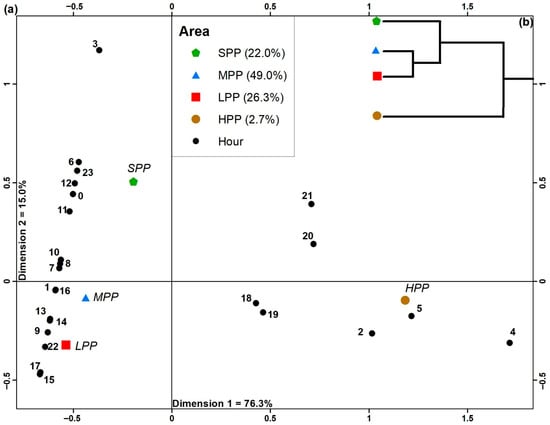
A Reappraisal of the Principle of Maximum Power -
Buried Treasures, Hidden Thresholds: Integrating Cave and Landscape Drivers to Guide Conservation of Amazon Ferruginous Cave Biodiversity -
Evaluating Biodiversity Metrics for Detecting Climate-Driven Ecological Change -
Ecological Correspondence Between Morphological Variation and Germplasm Movement Zones of Cedrela odorata L. in Southeastern Mexico
Journal Description
Ecologies
Ecologies
is an international, peer-reviewed, open access journal on all aspects of ecology published quarterly online by MDPI.
- Open Access— free for readers, with article processing charges (APC) paid by authors or their institutions.
- High Visibility: indexed within ESCI (Web of Science), Scopus, EBSCO, and other databases.
- Rapid Publication: manuscripts are peer-reviewed and a first decision is provided to authors approximately 23 days after submission; acceptance to publication is undertaken in 5.5 days (median values for papers published in this journal in the second half of 2025).
- Recognition of Reviewers: APC discount vouchers, optional signed peer review, and reviewer names published annually in the journal.
- Journal Cluster of Ecosystem and Resource Management: Forests, Diversity, Fire, Conservation, Ecologies, Biosphere and Wild.
Impact Factor:
1.9 (2024);
5-Year Impact Factor:
1.8 (2024)
Latest Articles
Testing Climatic Stability–Endemism Relationships Using Western Balkan Endemic Beetles’ Localities and Paleoclimate Reconstructions
Ecologies 2026, 7(2), 38; https://doi.org/10.3390/ecologies7020038 (registering DOI) - 26 Apr 2026
Abstract
An association between long-term climatic stability and endemism has been suggested, but it has been tested in plants and vertebrates rather than invertebrates. Using high-resolution paleoclimate reconstructions (CHELSA-TraCE21k; 21,000 BP–present), we tested whether non-cave localities of endemic beetles in the western Balkans are
[...] Read more.
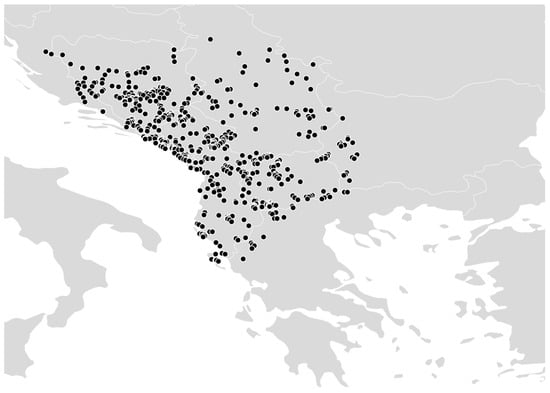
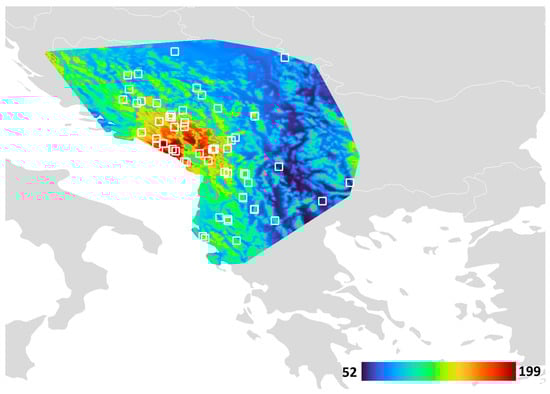
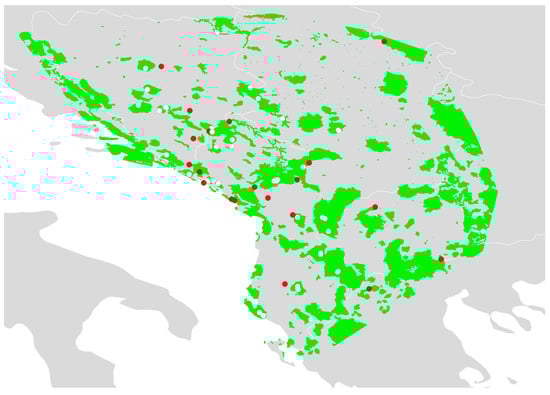
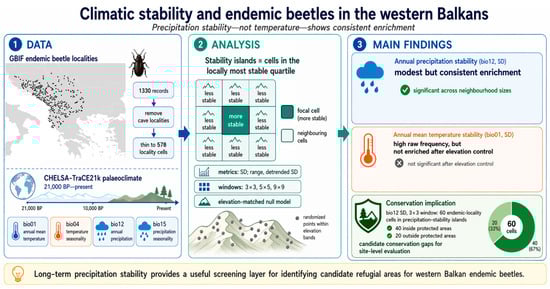
An association between long-term climatic stability and endemism has been suggested, but it has been tested in plants and vertebrates rather than invertebrates. Using high-resolution paleoclimate reconstructions (CHELSA-TraCE21k; 21,000 BP–present), we tested whether non-cave localities of endemic beetles in the western Balkans are non-randomly associated with local climatic stability. For four bioclimatic variables, we quantified temporal variability using three metrics (SD, range, detrended SD) and defined stability islands as cells in the most stable quartile relative to their neighbourhood at three spatial scales (3 × 3, 5 × 5, 9 × 9). We tested whether 578 endemic-locality cells were enriched in stability islands, against elevation-matched null models. Annual mean temperature produced the highest raw frequency of endemic localities in stability islands, but this pattern was not significant after elevation control. In contrast, endemic localities showed a modest but consistent enrichment in annual precipitation stability islands (observed 9.7–10.7% vs. null 7.3–8.5%; p = 0.01–0.03) across neighbourhood sizes. At the 3 × 3 scale, 60 endemic localities fell within precipitation-stability islands; of them, 20 were outside current protected areas—indicating conservation gaps where minor boundary revisions could enable protection of endemic beetles’ habitats in precipitation-stable sites.
Full article
(This article belongs to the Special Issue Advances in Community Ecology: Interactions, Dynamics, and Diversity)
►
Show Figures
Open AccessCommunication
An Account of the Ecology of the Parasitic Plant Cistanche phelypaea (L.) Cout. (Orobanchaceae) in the Canary Islands and Implications for Its Conservation
by
Matías Hernández-González, Henry Cerbone and Chris J. Thorogood
Ecologies 2026, 7(2), 37; https://doi.org/10.3390/ecologies7020037 (registering DOI) - 25 Apr 2026
Abstract
►▼
Show Figures
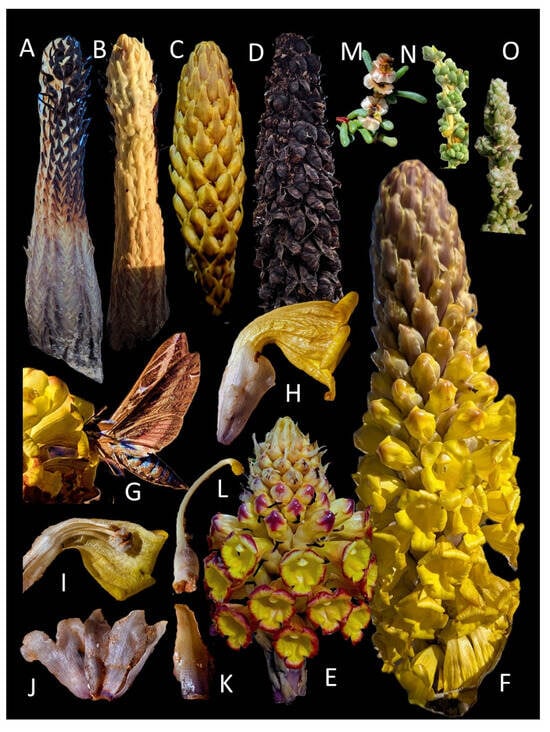
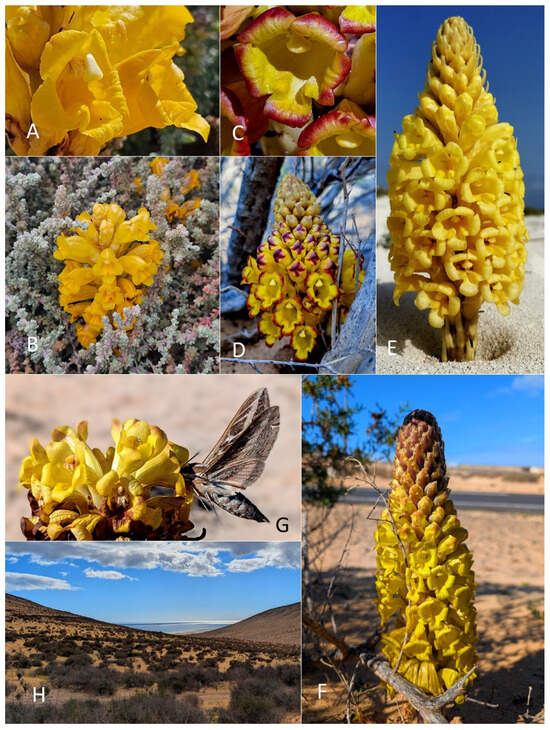
Parasitic plants are ecologically important because they can exert a profound influence on the surrounding ecosystem. Yet the ecology and host specificity of most parasitic plant species remain poorly known or undocumented. Cistanche phelypaea is a local and elusive parasitic plant in the
[...] Read more.
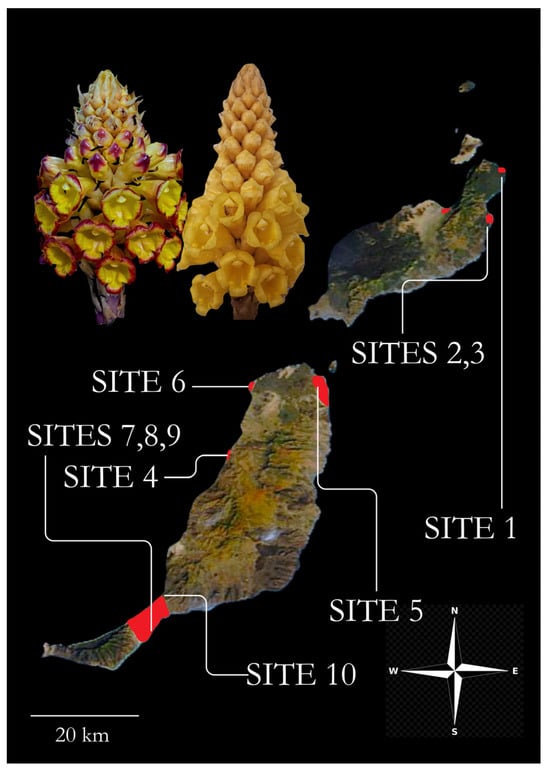
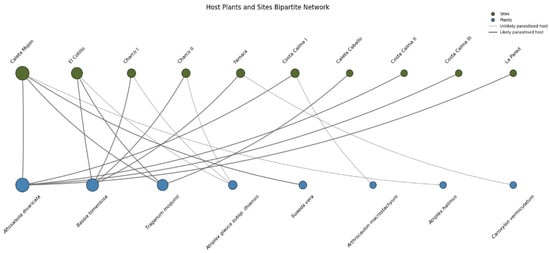
Parasitic plants are ecologically important because they can exert a profound influence on the surrounding ecosystem. Yet the ecology and host specificity of most parasitic plant species remain poorly known or undocumented. Cistanche phelypaea is a local and elusive parasitic plant in the Canary Islands. We carried out the first qualitative assessment of this plant’s ecology on the islands by examining 10 subpopulations over a 7-year period. We examined aspects of the plant’s ecology, distribution, and specificity for eight potential host species. Our observations suggest that four species are hosts: Afrosalsola divaricata, Bassia tomentosa, Suaeda vera, and Traganum moquinii, all of which are shrubby Amaranthaceae; however, host specificity varies across the plant’s range. Afrosalsola divaricata was inferred to be the predominant host and was parasitised wherever it co-occurred with the parasite (50% of sites). Cases of inferred parasitism on more than one host species at a given site were rare. Eight of the ten subpopulations occur in areas of high footfall or close to urbanisation; some disturbance, if managed sensitively, appears to favour recruitment and population dynamics. Based on our observations, we suggest that the integration of species distribution models (SDMs) with targeted surveys would be a promising route for scaling up from site-level observations to island-wide inference. We lay the groundwork for practical recommendations informed by such surveys; together with our long-term observations on host range, this offers a template for parasitic plant conservation more broadly.
Full article

Figure 1
Open AccessArticle
Environmental Drivers of Zooplankton Communities in the Tropical Low-Latitude Northwestern Pacific Ocean
by
Rouxin Sun, Yanghang Chen, Yanyan Yang, Xiuwu Sun, Peng Xiang, Chunguang Wang, Bingpeng Xing and Yanguo Wang
Ecologies 2026, 7(2), 36; https://doi.org/10.3390/ecologies7020036 - 16 Apr 2026
Abstract
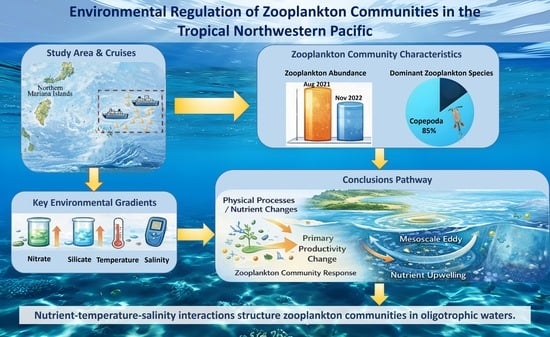
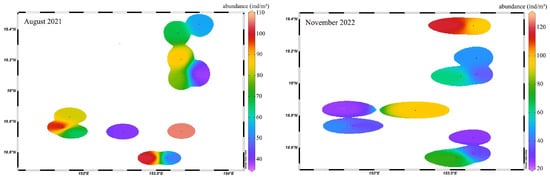
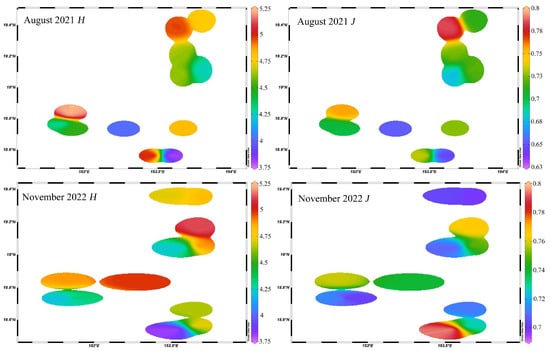
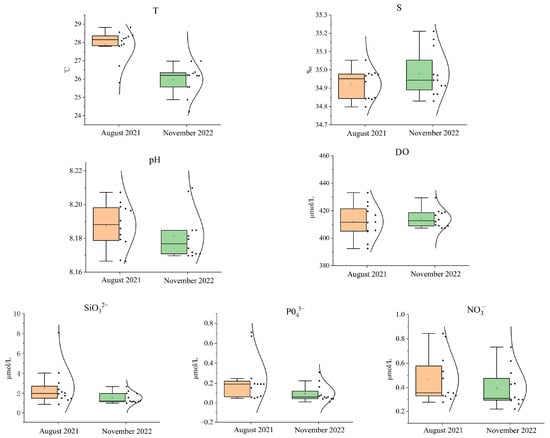
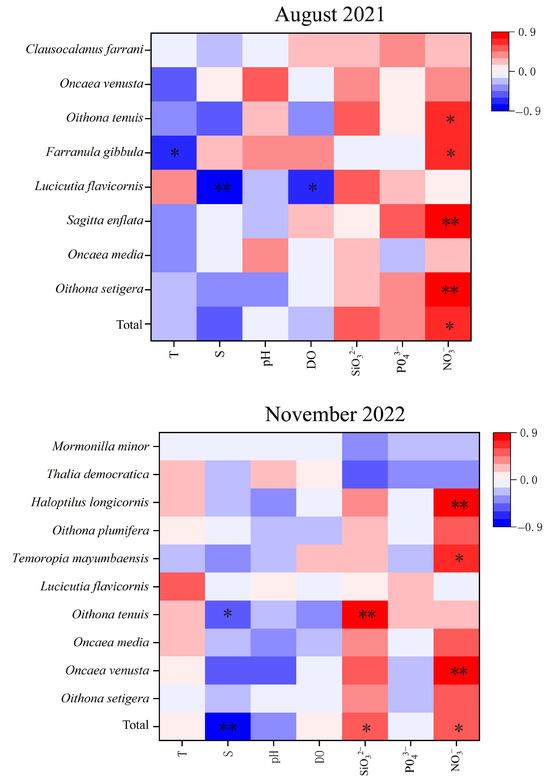
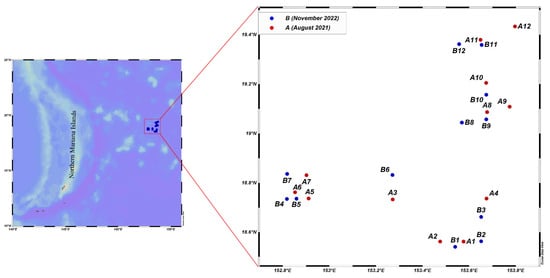
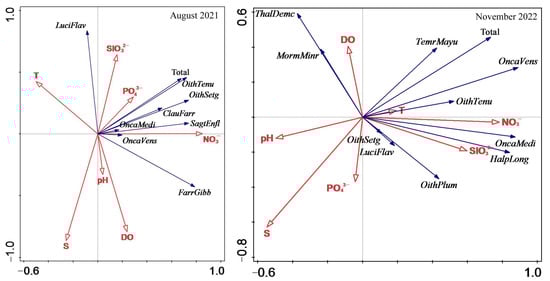
This study investigates the spatiotemporal dynamics of zooplankton communities in the tropical low-latitude Northwestern Pacific Ocean based on field surveys conducted in August 2021 and November 2022. Redundancy analysis identified nitrate, silicate, temperature, and salinity as the primary factors influencing community structure. The
[...] Read more.
This study investigates the spatiotemporal dynamics of zooplankton communities in the tropical low-latitude Northwestern Pacific Ocean based on field surveys conducted in August 2021 and November 2022. Redundancy analysis identified nitrate, silicate, temperature, and salinity as the primary factors influencing community structure. The distribution of dominant zooplankton groups exhibited close correlations with key environmental gradients, showing distinct habitat preferences corresponding to different hydrographic conditions. Zooplankton abundance in August 2021 was significantly higher than that in November 2022, which is presumably attributed to eddy-induced nutrient upwelling and enhanced primary productivity. Comparisons with adjacent marine regions reveal general consistency in overall zooplankton abundance and community species composition, while the observed seasonal discrepancies are closely associated with local unique hydrographic characteristics. These results highlight the role of nutrient–temperature–salinity interactions in structuring zooplankton communities and underscore their sensitivity to environmental variability. The findings provide a scientific basis for understanding pelagic ecosystem dynamics in oligotrophic waters and for developing management strategies under changing climate and oceanographic conditions.
Full article
(This article belongs to the Special Issue Advances in Community Ecology: Interactions, Dynamics, and Diversity)
►▼
Show Figures

Graphical abstract
Open AccessArticle
Plant Community Characteristics During Natural Succession in Restored Wetlands of the Lower Tumen River
by
Yu-Qi Liu, Jia-Yuan Zhang, Mei-Xin Xia, Zi-Yu Tian, Zhen Wang and Guanglan Cao
Ecologies 2026, 7(2), 35; https://doi.org/10.3390/ecologies7020035 - 16 Apr 2026
Abstract
Wetlands are ecosystems with critical functions. However, the accelerated progression of global urbanization and human activities, including agricultural encroachment, has resulted in a notable decline in wetland areas and the degradation of wetland quality worldwide. Consequently, wetland restoration has become a central focus
[...] Read more.
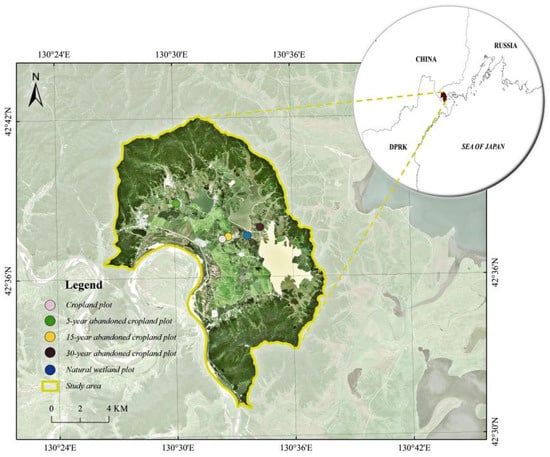
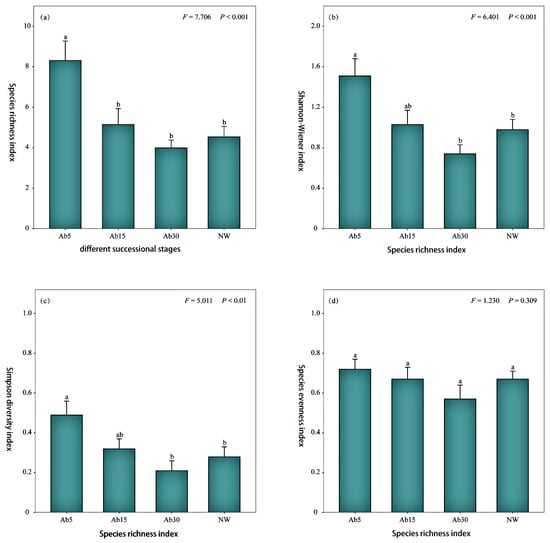
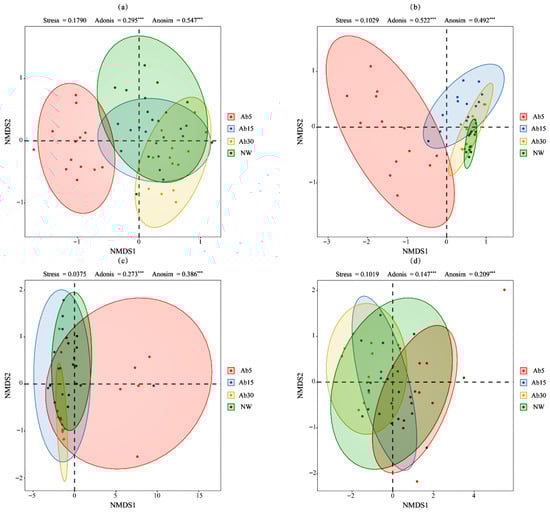
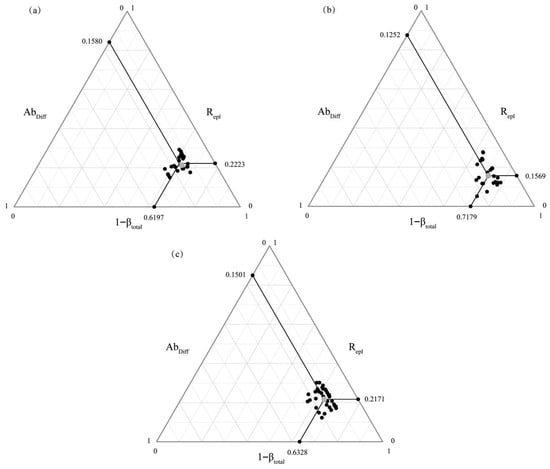
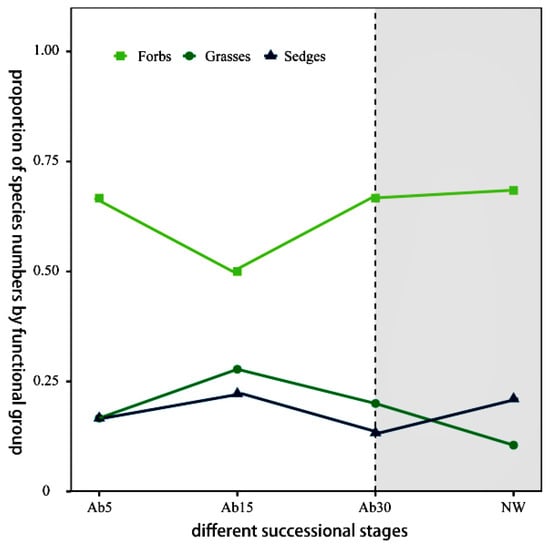
Wetlands are ecosystems with critical functions. However, the accelerated progression of global urbanization and human activities, including agricultural encroachment, has resulted in a notable decline in wetland areas and the degradation of wetland quality worldwide. Consequently, wetland restoration has become a central focus of wetland research. Plant community characteristics are among the simplest and most frequently used indicators for evaluating wetland restoration progress and are a crucial factor in maintaining the health and stability of wetland ecosystems. Therefore, this study aimed to investigate the plant community characteristics of restored wetlands with different durations of abandonment in the lower Tumen River Basin, which is expected to provide guidance for promoting the restoration of abandoned farmlands in this region. We hypothesize that species diversity decreases with increasing abandonment age, plant community composition converges toward that of natural wetlands over time, and beta diversity declines due to increasing biotic homogenization during succession. We established a chronosequence of abandoned wetlands in the lower Tumen River Basin, with sites abandoned for approximately 5, 15, and 30 years. And we use natural wetlands and paddy fields as references. With natural succession, the dominant plant species in the restored wetlands transitioned from annuals/biennials to perennials. The aboveground biomass initially increased and subsequently decreased. A gradual decline in species diversity was observed along with a further reduction in beta diversity, and the species turnover component consistently exceeded the richness difference component. The pronounced biotic homogenization among communities indicates that achieving a stable state comparable to that of natural wetlands may require considerably more time or may not be attainable solely through natural succession.
Full article
(This article belongs to the Special Issue Wetlands: Ecology and Conservation)
►▼
Show Figures

Figure 1
Open AccessArticle
Activity Patterns of Black Bears (Ursus americanus) and Their Relationship with the Enhanced Vegetation Index (EVI) in the El Cielo Biosphere Reserve, Tamaulipas, Mexico
by
Jesse R. Wong-Smer, Jorge V. Horta-Vega, Crystian S. Venegas-Barrera, Rogelio Carrera-Treviño, Yuriana Gómez-Ortiz and Leroy Soria-Díaz
Ecologies 2026, 7(2), 34; https://doi.org/10.3390/ecologies7020034 - 9 Apr 2026
Abstract
►▼
Show Figures
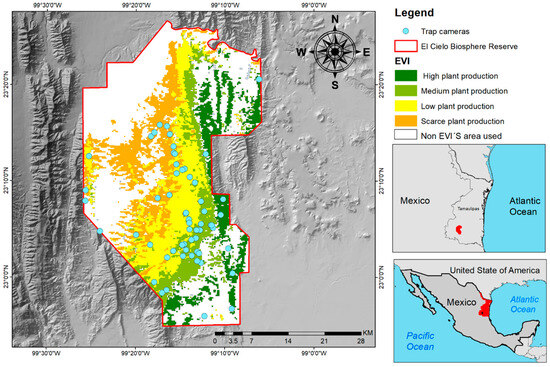
The daily activity patterns of wild animal species are driven by environmental conditions and plant productivity although the degree of dependence varies according to their ecological niche. Bear ecology is intrinsically linked to seasonal vegetative availability. As omnivores with high metabolic demands, these
[...] Read more.
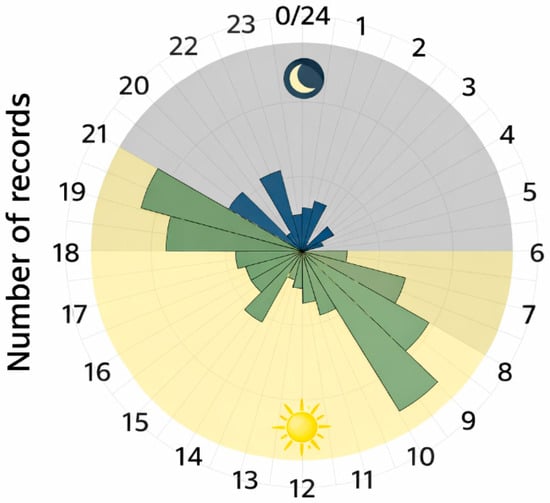
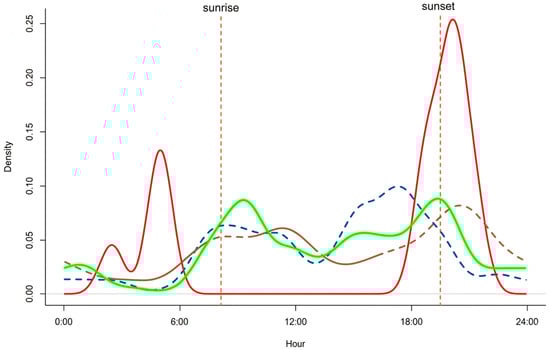
The daily activity patterns of wild animal species are driven by environmental conditions and plant productivity although the degree of dependence varies according to their ecological niche. Bear ecology is intrinsically linked to seasonal vegetative availability. As omnivores with high metabolic demands, these species rely heavily on botanical resources including fruits, seeds, and roots. Consequently, differences in primary productivity across the landscape influence how individuals distribute their circadian activity patterns. The Enhanced Vegetation Index (EVI) is a tool that quantifies the quality and vigor of vegetation. Relating the EVI to activity patterns allows us to understand how vegetation dynamics and conditions influence the use of time at different times of the day. This study analyzes the daily activity pattern of the American black bear (Ursus americanus) in the El Cielo Biosphere Reserve (ECBR) using camera traps and its association with spatial variations in the Enhanced Vegetation Index (EVI). The results show that the daily activity pattern of the American black bear in the ECBR exhibits a diurnal–crepuscular tendency. In areas with high primary productivity and higher temperatures, activity occurs before sunrise and at sunset, with low activity during the rest of the day. In contrast, in areas with less vegetation and lower temperatures, activity occurs throughout the day. This suggests that, in the ECBR, the activity pattern of black bears could be modulated by temperature variations related to changes in vegetation productivity.
Full article

Figure 1
Open AccessArticle
Filial Effects of Ephemeral Cycad Seedlings Contribute Nitrogen to the Parents’ Rhizosphere
by
Thomas E. Marler
Ecologies 2026, 7(2), 33; https://doi.org/10.3390/ecologies7020033 - 3 Apr 2026
Abstract
►▼
Show Figures
Most cycad seeds germinate under the parent plant, and seedlings die before recruitment to the juvenile stage. Decomposition of the senesced organs releases the nutrients to influence nutrient cycling. The aim of this study was to quantify the soil nitrogen that accumulates from
[...] Read more.
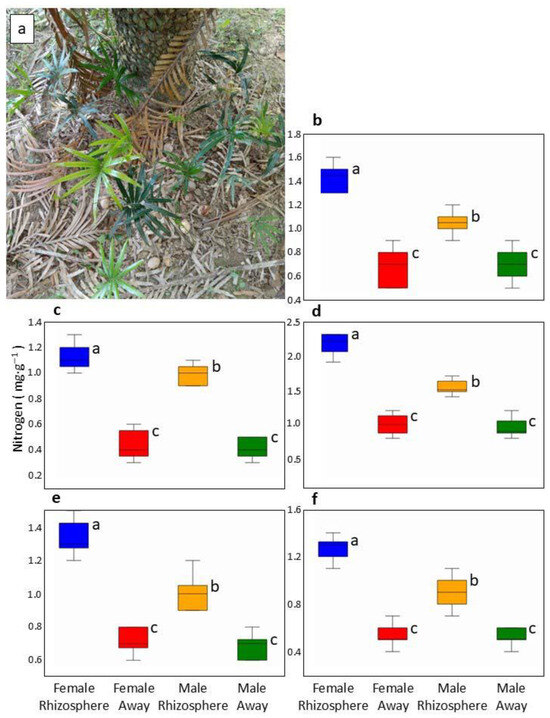
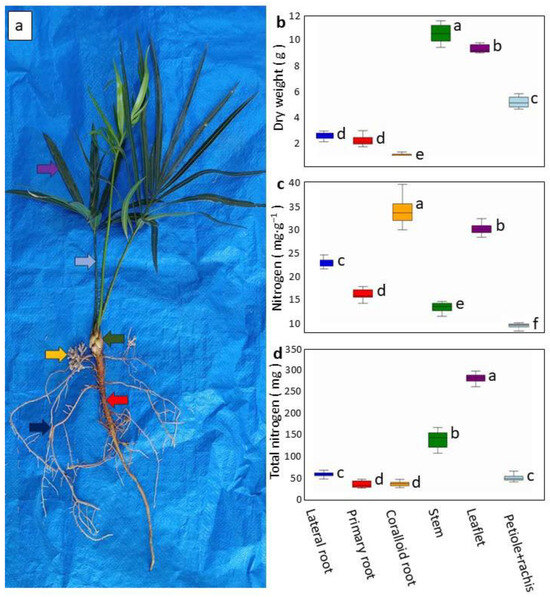
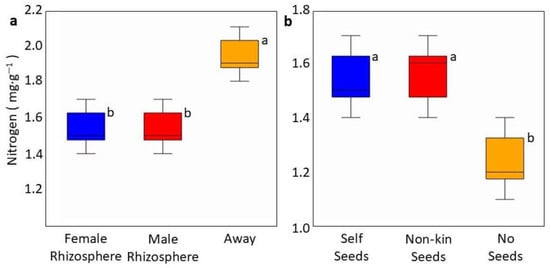
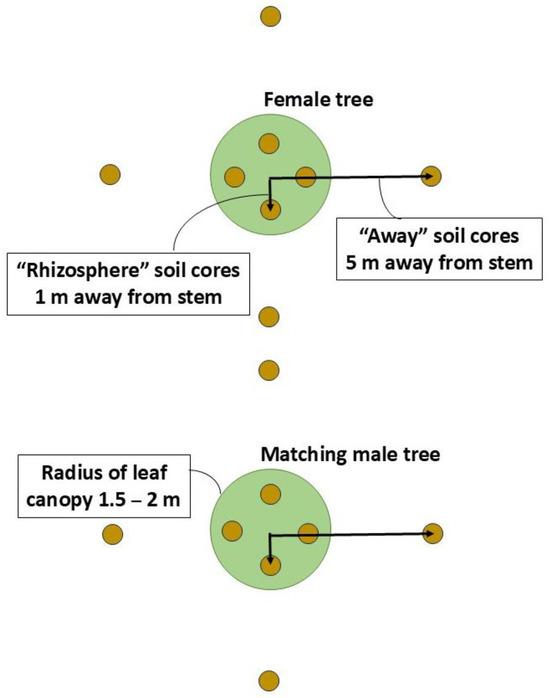
Most cycad seeds germinate under the parent plant, and seedlings die before recruitment to the juvenile stage. Decomposition of the senesced organs releases the nutrients to influence nutrient cycling. The aim of this study was to quantify the soil nitrogen that accumulates from seedling turnover. Soil cores were collected beneath male and female trees of four Cycas species in five Philippine habitats from 2019 through 2025, with matching cores collected 5 m from the trees. Five to nine replications were employed depending on the habitat. One seedling was excavated beneath each tree in one location. Total nitrogen concentration was determined by dry combustion in soil and plant tissues, and total nitrogen content was calculated for seedlings. The soils beneath female trees contained more nitrogen than beneath male trees or away from cycad trees in every habitat. The highest nitrogen concentration within seedlings occurred in coralloid roots, but leaflets contained the most nitrogen pool, indicating rapid release of nitrogen during decomposition of the senesced seedling. No differences in rhizosphere nitrogen occurred in a 2017–2025 ex situ experiment using Cycas edentata, where seeds were sown beneath female and male trees. A second 2018–2025 experiment revealed that female trees provisioned with self-seeds did not differ in rhizosphere nitrogen compared with non-kin seeds. Nitrogen fixed by cyanobacteria endosymbionts of cycad seedlings and programmed seedling mortality combine to influence nitrogen cycling in soils beneath female trees over time.
Full article

Figure 1
Open AccessArticle
Accelerating Warming in Armenia (South Caucasus) Shifts the Climate–Growth Relationships of Fagus orientalis L.
by
Anush Stepanyan, Areg Karapetyan, Zhanna Fafuryan, Gnel Poghosyan, Yulay Yanbaev and Aleksey Kulagin
Ecologies 2026, 7(2), 32; https://doi.org/10.3390/ecologies7020032 - 30 Mar 2026
Abstract
►▼
Show Figures
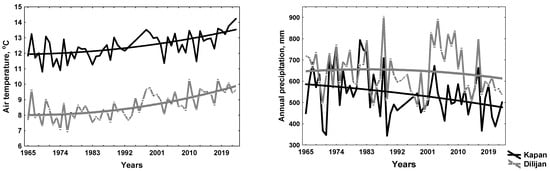
The radial growth of the tree stem reflects tree responses to climate change. This study examines the response of Fagus orientalis to more than half a century of climate dynamics in Armenia using a dendrochronological approach. Two forest stands were analyzed: one geographically
[...] Read more.
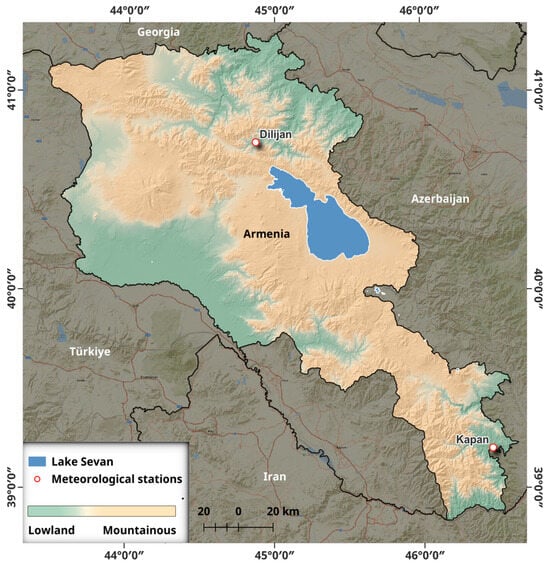
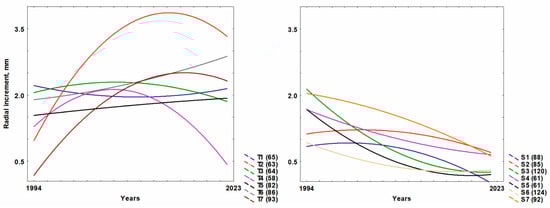
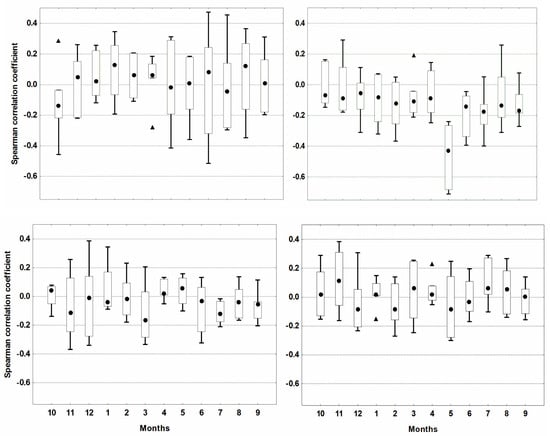
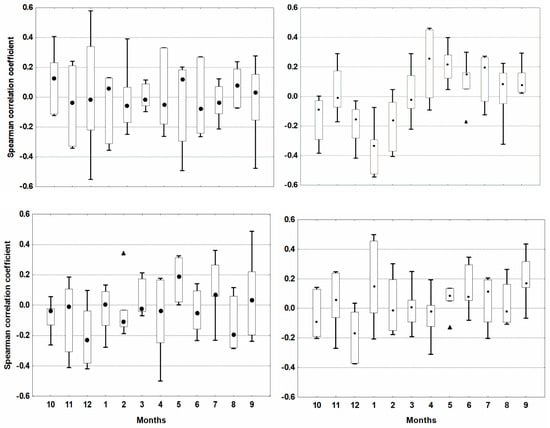
The radial growth of the tree stem reflects tree responses to climate change. This study examines the response of Fagus orientalis to more than half a century of climate dynamics in Armenia using a dendrochronological approach. Two forest stands were analyzed: one geographically isolated stand in the arid southern part of the country and one stand in the mesic northern mountainous region, where the main beech forests are distributed. The study period was divided into two phases (1965–1993 and 1994–2023). Climate dynamics were assessed by the months of the biological year, from October of the previous year to the end of September of the current growing season. Substantial warming trends were detected at both stands, except in November, December, and April, and in July in the northern part of Armenia. Between periods, the mean ring width increased from 1.67 mm to 2.14 mm at the northern stand, while decreasing from 1.95 mm to 0.89 mm at the southern stand. Despite climate warming and declining precipitation, some study trees exhibited increased (northern) or stable (both stands) radial growth. Comparison of the two periods revealed pronounced ecological and tree-specific variability in climate–growth relationships, including shifts in correlation strength and sign reversals. These patterns were primarily driven by climate sensitivity rather than age-related effects. The results provide valuable insights for conserving the southern stand and may support assisted migration strategies for F. orientalis toward the southern margin of the F. sylvatica distribution range.
Full article

Figure 1
Open AccessReview
Diversity of Culturable Sulfate-Reducing Bacterial Consortia and Species Capable of Hydrocarbon Degradation Isolated from Marine Environments
by
Alena I. Eskova and Irina V. Isaeva
Ecologies 2026, 7(2), 31; https://doi.org/10.3390/ecologies7020031 - 27 Mar 2026
Abstract
►▼
Show Figures
This review examines the role of sulfate-reducing bacteria in the anaerobic degradation of hydrocarbons in marine sediments, where they contribute to the mineralization of organic matter under anoxic conditions. The metabolic diversity of these microorganisms is described, including their ability to degrade various
[...] Read more.
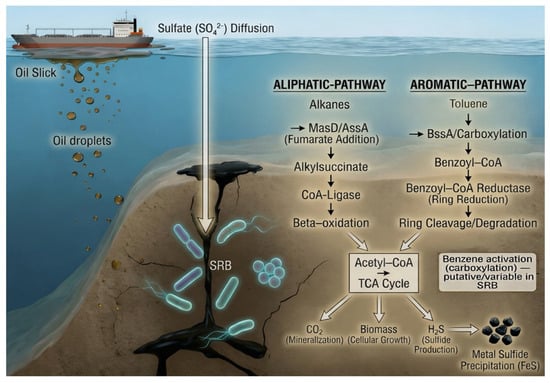
This review examines the role of sulfate-reducing bacteria in the anaerobic degradation of hydrocarbons in marine sediments, where they contribute to the mineralization of organic matter under anoxic conditions. The metabolic diversity of these microorganisms is described, including their ability to degrade various classes of hydrocarbons such as short-chain (C2–C5), medium-chain (C6–C12), and long-chain (C13–C20+) alkanes, alkenes, and aromatic compounds like naphthalene and phenanthrene. The primary mechanisms involved in the initial activation of these hydrocarbons—fumarate addition and carboxylation—are discussed, along with key enzymes, including alkylsuccinate synthase and benzylsuccinate synthase. Syntrophic interactions are also considered, particularly in which archaea initiate the oxidation of short-chain alkanes (e.g., ethane and butane), with sulfate-reducing bacteria serving as terminal electron acceptors via sulfate reduction. The potential application of these anaerobic processes in bioremediation strategies for oil-contaminated marine sediments is discussed. This microbially mediated degradation may offer a complementary approach to aerobic methods, particularly in oxygen-limited environments. Understanding the activity of sulfate-reducing bacteria activity is relevant to several areas: the development of remediation techniques for anoxic zones, the assessment of methane emissions from marine sediments, the management of microbiologically influenced corrosion, and potential biotechnological applications. Current research directions include the study of syntrophic microbial consortia and the exploration of bioelectrochemical systems.
Full article

Figure 1
Open AccessArticle
Ecological Correspondence Between Morphological Variation and Germplasm Movement Zones of Cedrela odorata L. in Southeastern Mexico
by
Manuel Lorenzo Nuñez-Piedra, Manuel Jesús Cach-Pérez, Gabriela Castellanos-Morales, Marivel Domínguez-Domínguez and Pablo Martínez-Zurimendi
Ecologies 2026, 7(2), 30; https://doi.org/10.3390/ecologies7020030 - 27 Mar 2026
Abstract
►▼
Show Figures
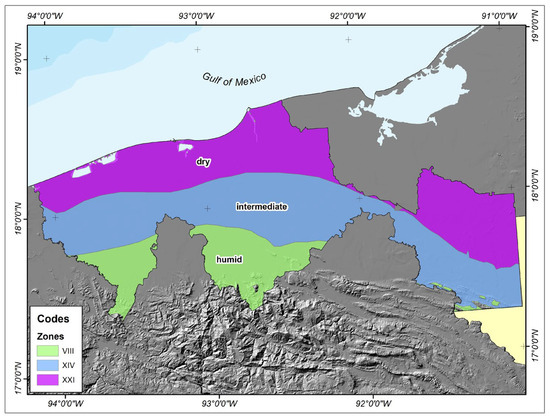
This study analyzed seven foliar traits of Cedrela odorata L. (Meliaceae) in 87 individuals across three germplasm movement zones in Tabasco, Mexico (VIII: humid; XIV: intermediate; XXI: dry) to assess differentiation and climatic relationships. Leaf length, area, petiolule length, leaflet number, rachis length,
[...] Read more.
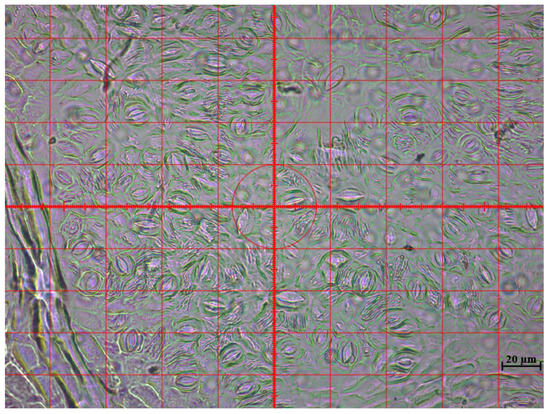
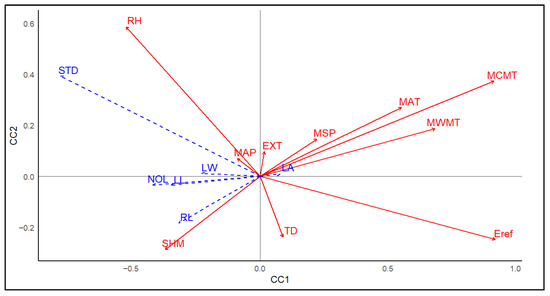
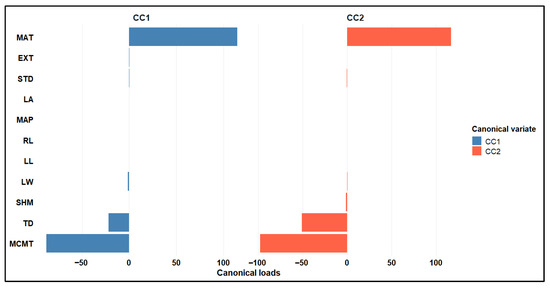
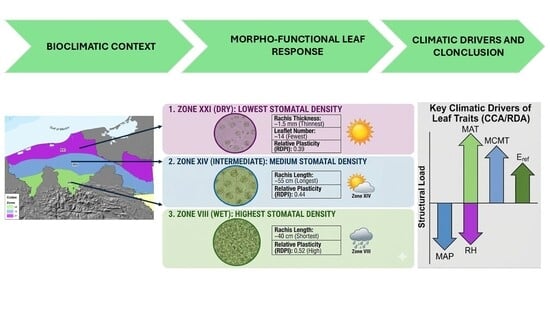
This study analyzed seven foliar traits of Cedrela odorata L. (Meliaceae) in 87 individuals across three germplasm movement zones in Tabasco, Mexico (VIII: humid; XIV: intermediate; XXI: dry) to assess differentiation and climatic relationships. Leaf length, area, petiolule length, leaflet number, rachis length, width, and stomatal density were measured. Univariate tests, canonical correlation analysis, redundancy analysis, and a relative phenotypic plasticity index were applied. Significant morphological differentiation was found: zone XIV exhibited the largest leaves and longest rachises, zone VIII the highest stomatal density, and zone XXI smaller, more subdivided leaves. The first canonical axis (r = 0.846, p < 0.001) associated long and wide leaves with warm, humid conditions, while the second (r = 0.810, p < 0.001) linked stomatal density and width to temperature minimum. Climate explained 55.7% of morphological variation, primarily through water and temperature gradients. High plasticity in leaf area, rachis length, and stomatal density suggests adaptive flexibility, yet consistent inter-zonal differences indicate local adaptation. These results demonstrate a strong correspondence with Tabasco’s germplasm movement zones and providing morphological evidence to support reforestation and germplasm management strategies under variable climatic conditions.
Full article

Graphical abstract
Open AccessReview
A Reappraisal of the Principle of Maximum Power
by
Alberto Gianinetti
Ecologies 2026, 7(1), 29; https://doi.org/10.3390/ecologies7010029 - 17 Mar 2026
Abstract
►▼
Show Figures
Living organisms continuously capture and transform free energy to survive and grow. The Maximum Power Principle (MPP) states that life evolves to maximize power—the rate of energy acquisition and conversion into useful forms—within prevailing constraints. Constraints include trophic interactions and competition, and they
[...] Read more.
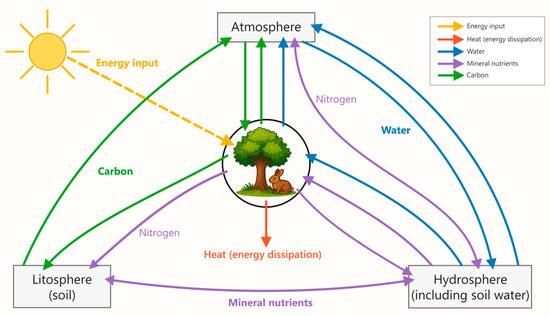
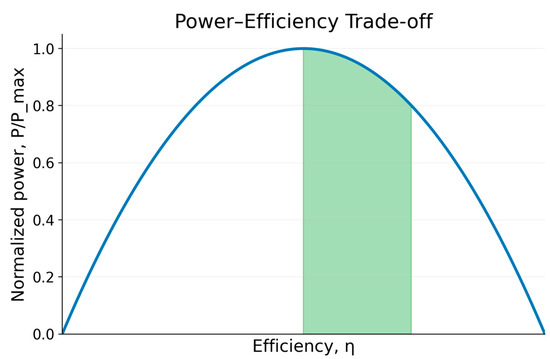
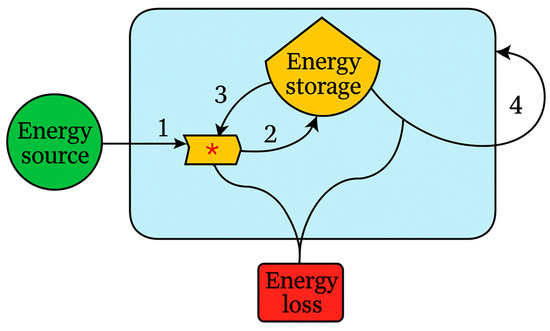
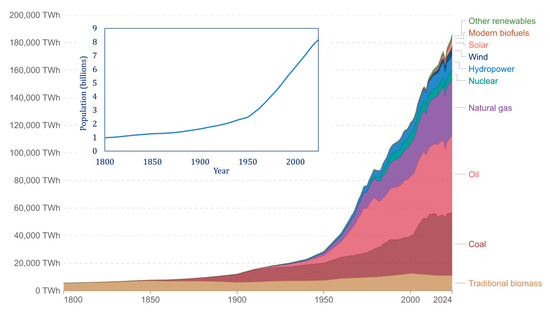
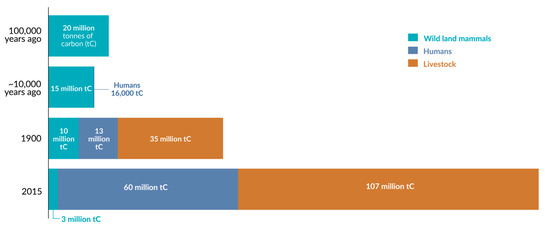
Living organisms continuously capture and transform free energy to survive and grow. The Maximum Power Principle (MPP) states that life evolves to maximize power—the rate of energy acquisition and conversion into useful forms—within prevailing constraints. Constraints include trophic interactions and competition, and they determine the outcome of the MPP. Biosystems that accumulate free energy faster will prevail transiently, but those that do so in a stable way will dominate in the long run. Accumulation of free energy is often approximately measurable as biomass that is useful to improve adaptation, competition, and ecological stability. Biosystems that allocate energy to long-term stable biomass—such as forests investing in wood—dominate because they secure long-term resource capture, competitive advantage, and resilience. Species and ecosystems represent different scales at which the MPP applies. In the long run, the MPP must align across scales, because a species can achieve stable growth and maximize power (i.e., accumulate free energy/useful biomass) only if the ecosystem the species lives in also maximizes its power. If a species reduces the stability and power of its ecosystem, it undermines its own long-term power-acquisition capability. This feedback harmonizes the MPP across scales over evolutionary times. Humans have evolved peculiar traits that have made them able to remove this control loop, amplifying species-level power. This enabled us to grow into a large population supported by anthropic systems that have strongly reduced the biosphere’s stability and power, resulting in a scale conflict in the MPP. Outlined in this way, the MPP provides a useful framework for understanding evolution, ecosystem development, and anthropogenic impacts.
Full article

Figure 1
Open AccessArticle
Spatio-Temporal Distribution and Ecology of Recent Freshwater Ostracoda (Crustacea) from the Danube Floodplain in Banat and Podunavlje Regions of Serbia
by
Jovo Pokrajac and Tamara Karan-Žnidaršič
Ecologies 2026, 7(1), 28; https://doi.org/10.3390/ecologies7010028 - 12 Mar 2026
Abstract
Freshwater ostracods have considerable potential as indicators of environmental conditions, yet their ecology remains poorly documented in many large river floodplains of Southeast Europe. This study examines samples collected from ten aquatic habitats located along the Danube floodplain in Serbia’s Banat and Podunavlje
[...] Read more.
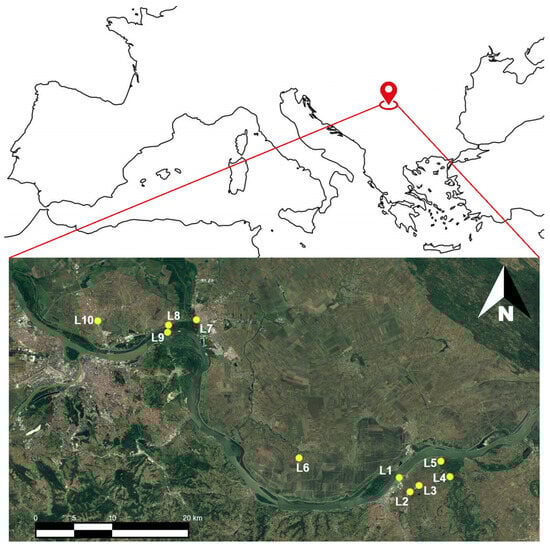
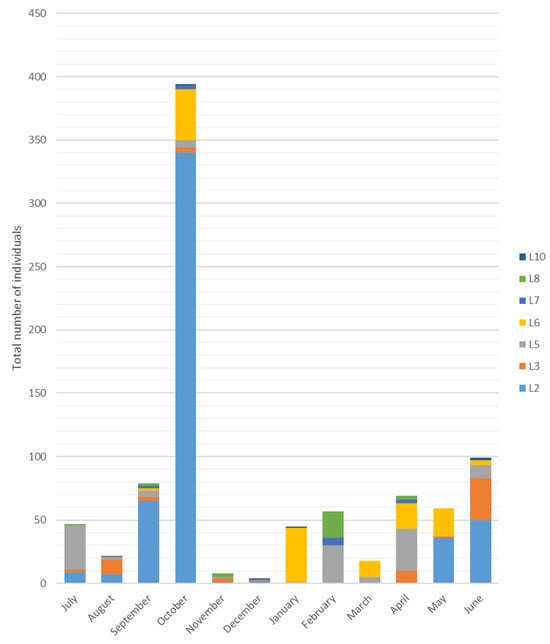
Freshwater ostracods have considerable potential as indicators of environmental conditions, yet their ecology remains poorly documented in many large river floodplains of Southeast Europe. This study examines samples collected from ten aquatic habitats located along the Danube floodplain in Serbia’s Banat and Podunavlje regions. Monthly sampling was conducted over a twelve-month period (July 2023–June 2024), with concurrent measurements of water temperature, pH, dissolved oxygen, electrical conductivity, and turbidity. Ostracods were recorded at seven sites, yielding 19 taxa belonging to 13 genera and four families within all three non-marine superfamilies of Podocopida. Eight recorded taxa represent new additions to the Serbian fauna. Species richness was highest in semi-isolated floodplain habitats. Canonical correspondence analysis (CCA) showed that seasonal environmental variation, especially water temperature, turbidity, and conductivity, strongly structured assemblages. Hierarchical cluster analysis (UPGMA) grouped samples primarily by species composition, with seasonality exerting a strong secondary influence. Seasonal patterns revealed pronounced interspecific differences in temporal persistence and ecological tolerance of recorded species. Findings highlight the Danube floodplain’s role as a dispersal corridor, while also revealing that the river itself acts as a partial barrier, restricting faunal exchange to widespread, tolerant species. The results emphasize the importance of habitat heterogeneity and year-round sampling and support the integration of ostracods into long-term floodplain monitoring programs.
Full article
(This article belongs to the Special Issue Advances in Community Ecology: Interactions, Dynamics, and Diversity)
►▼
Show Figures

Figure 1
Open AccessArticle
Conservation Significance of Forest Remnants for Urban Biodiversity: Parks as a Refuge for the Wood Cricket, Nemobius sylvestris (Insecta: Orthoptera: Trigonidiidae)
by
Ionuț-Ștefan Iorgu, Ioan Tăușan, Carmenica-Rahela Oloeriu, Alexandra-Florina Popa and Elena Iulia Iorgu
Ecologies 2026, 7(1), 27; https://doi.org/10.3390/ecologies7010027 - 5 Mar 2026
Abstract
►▼
Show Figures
Urban parks derived from historical forest fragments represent important refugia for biodiversity in rapidly expanding cities. The wood cricket, Nemobius sylvestris, was surprisingly found in a park in the northern part of Bucharest, Romania, an area under exponential residential development. The species
[...] Read more.
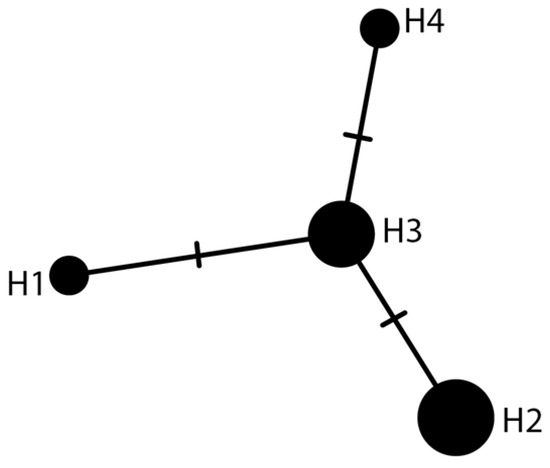
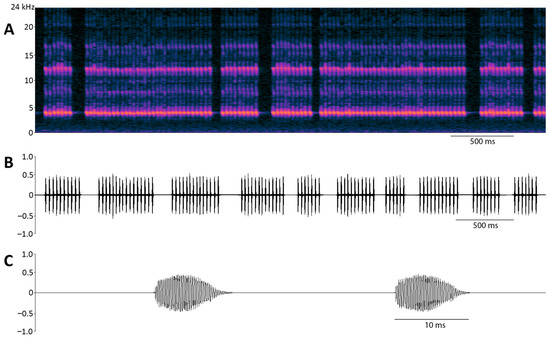
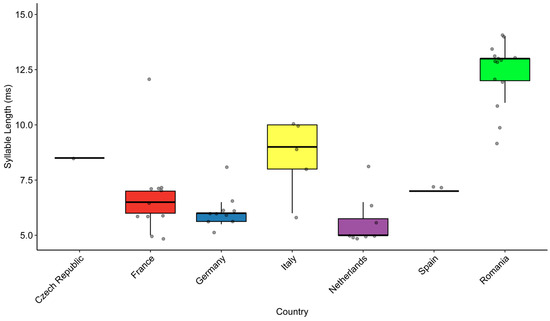
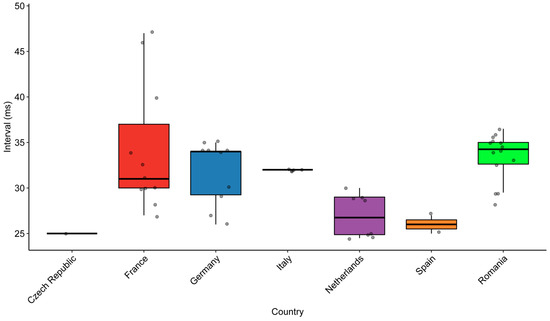
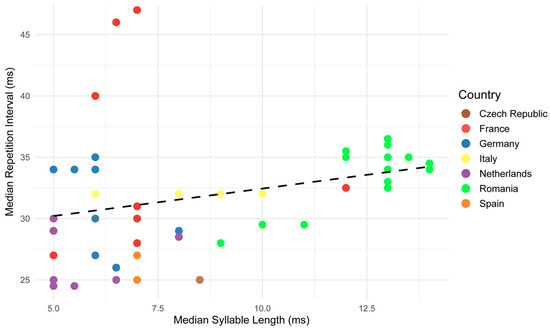
Urban parks derived from historical forest fragments represent important refugia for biodiversity in rapidly expanding cities. The wood cricket, Nemobius sylvestris, was surprisingly found in a park in the northern part of Bucharest, Romania, an area under exponential residential development. The species was confirmed by calling song analysis and molecularly confirmed through DNA-barcoding. The acoustic analysis revealed substantial geographic variation in the signals of N.sylvestris across its European range, with the Romanian population exhibiting the most distinctive acoustic characteristics. A median joining network was constructed using available COI sequences from public databases, showing moderate genetic variability within European samples. This flightless, woodland-specialist cricket is highly sensitive to habitat fragmentation and its persistence in this urban park demonstrates the conservation value of retaining semi-natural forest structure within city green spaces. Our findings highlight the importance of urban parks as biodiversity refugia, particularly for habitat specialists with limited dispersal abilities. This discovery underscores the need for the integrative conservation management of urban forest remnants, emphasizing the retention of natural structural elements such as leaf litter and heterogeneous canopy cover to support diverse invertebrate communities.
Full article

Figure 1
Open AccessArticle
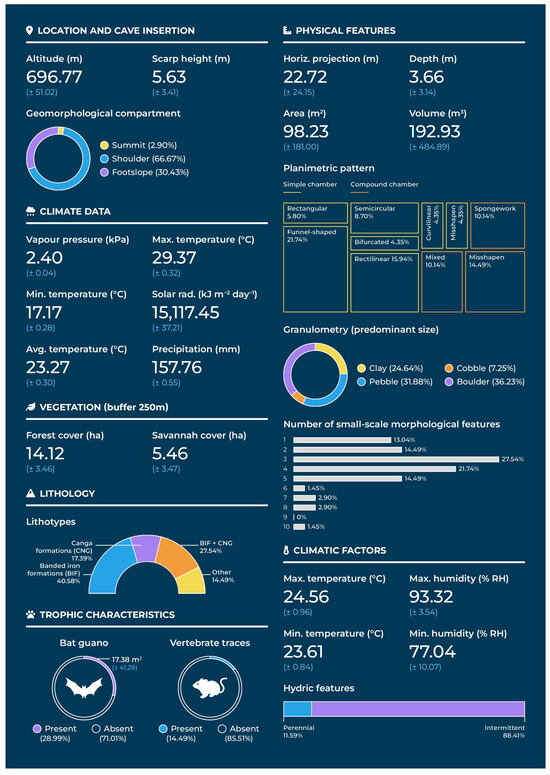
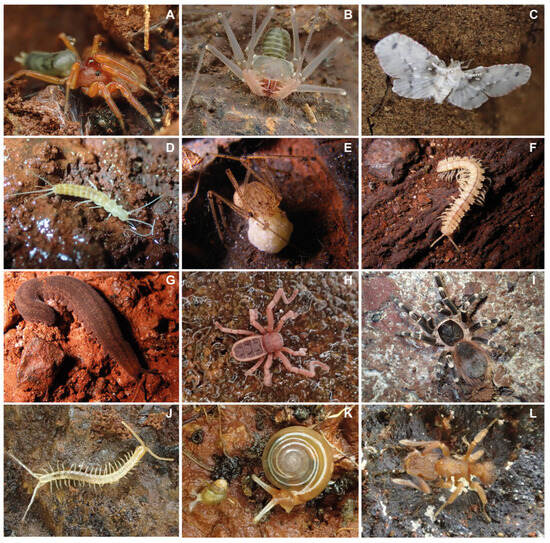
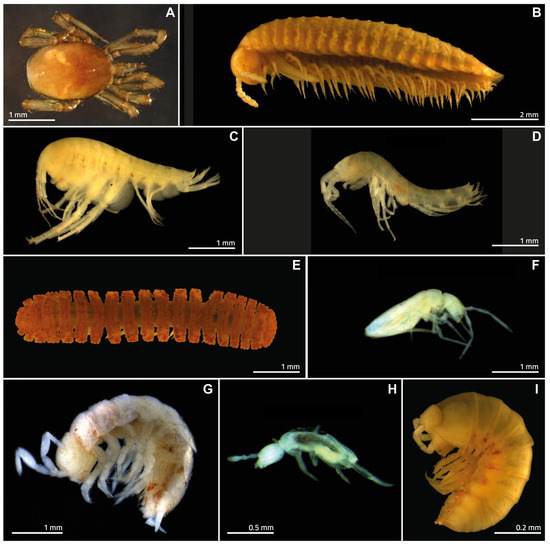
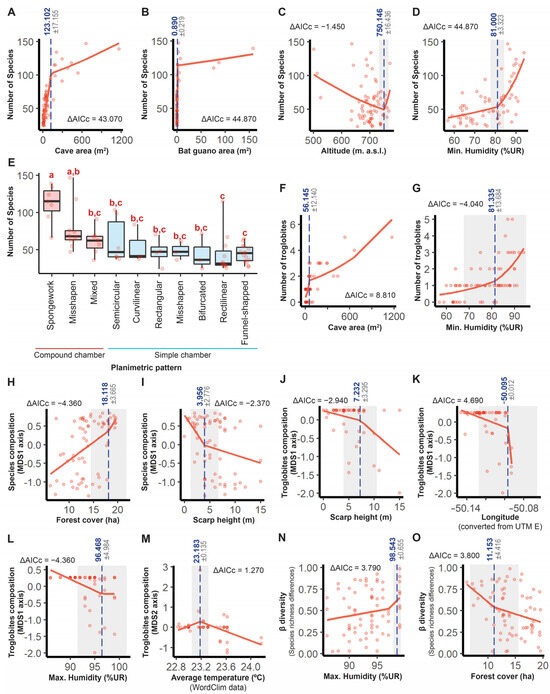
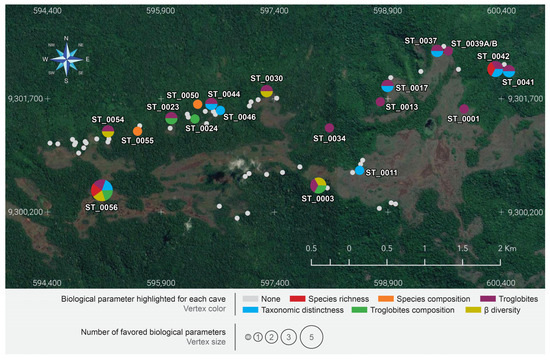
Buried Treasures, Hidden Thresholds: Integrating Cave and Landscape Drivers to Guide Conservation of Amazon Ferruginous Cave Biodiversity
by
Marcus Paulo Alves de Oliveira, Ataliba Henrique Fraga Coelho, Luís Beethoven Piló and Rodrigo Lopes Ferreira
Ecologies 2026, 7(1), 26; https://doi.org/10.3390/ecologies7010026 - 4 Mar 2026
Abstract
Iron-ore extraction plays a central role in the global economy, but several major mining areas overlap with ecologically unique ferruginous landscapes in the Brazilian Amazon, including caves that harbor endemic and highly specialized invertebrate fauna. Reconciling mineral exploitation with biodiversity conservation requires objective
[...] Read more.
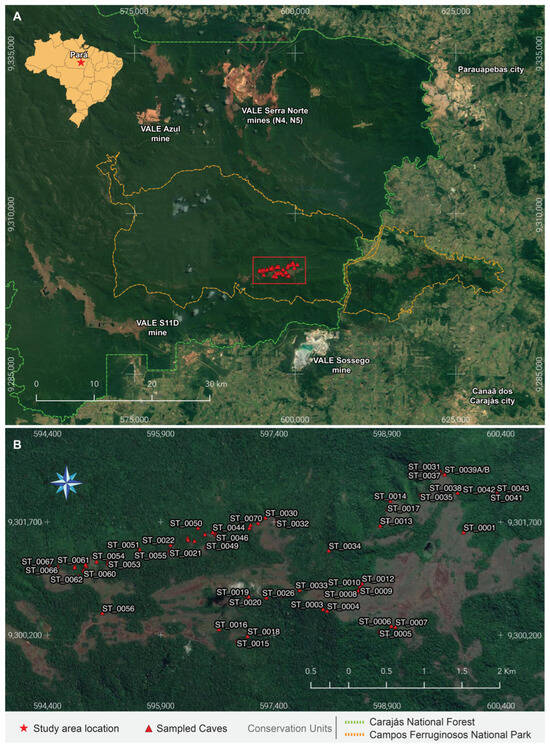
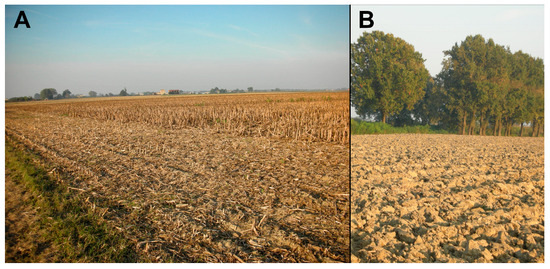
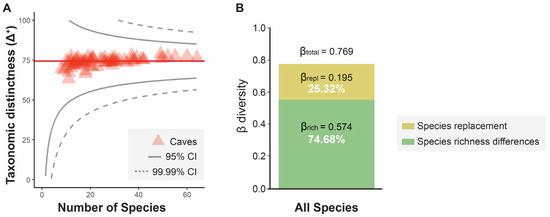
Iron-ore extraction plays a central role in the global economy, but several major mining areas overlap with ecologically unique ferruginous landscapes in the Brazilian Amazon, including caves that harbor endemic and highly specialized invertebrate fauna. Reconciling mineral exploitation with biodiversity conservation requires objective ecological criteria capable of supporting evidence-based decision-making. In this study, we evaluated how cave attributes and surrounding landscape features jointly structure invertebrate communities in pristine ferruginous caves of the Amazon and assessed their relative importance and environmental thresholds. Invertebrates were sampled in 69 iron-ore caves during dry and wet seasons, and 28 environmental variables related to cave morphology, microclimate, trophic resources, lithology, vegetation cover, and external climate were measured in subterranean habitats and adjacent landscapes. Our results demonstrate a clear scale-dependent pattern: cave attributes primarily regulated species richness, troglobitic richness, taxonomic distinctness, and seasonal beta diversity, whereas landscape features exerted stronger control over species composition, including troglobitic assemblages. Threshold analyses identified specific combinations of cave and landscape attributes associated with biologically pristine communities. These findings highlight that assessments of ferruginous cave biodiversity must integrate landscape-scale metrics, be conducted in unaltered environments, and prioritize networks of caves rather than isolated sites. This integrative framework provides robust ecological support for conservation planning and the sustainable management of iron-ore cave systems in the Amazon.
Full article
(This article belongs to the Special Issue Advances in Community Ecology: Interactions, Dynamics, and Diversity)
►▼
Show Figures

Figure 1
Open AccessArticle
Mortality and Natural Regeneration of Mangroves in the Eastern Gulf of California: A Comparison Between Strong and Weak ENSO Events
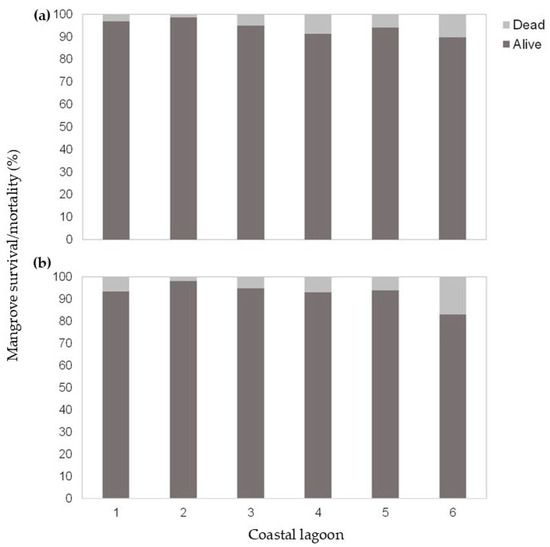
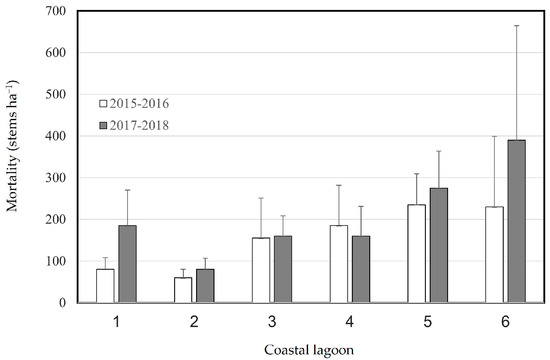
by
Lidia Rodríguez-Arredondo, Olivia Millán-Aguilar, Miguel Ángel Hurtado-Oliva and Marlenne Manzano-Sarabia
Ecologies 2026, 7(1), 25; https://doi.org/10.3390/ecologies7010025 - 2 Mar 2026
Abstract
►▼
Show Figures
Mangrove wetlands in northwestern Mexico have been highlighted due to their ecological relevance and ecosystem services. This study evaluated the mortality and natural regeneration of mangroves located in six coastal lagoons in Sinaloa, considering five plots each (400 m2), during a
[...] Read more.
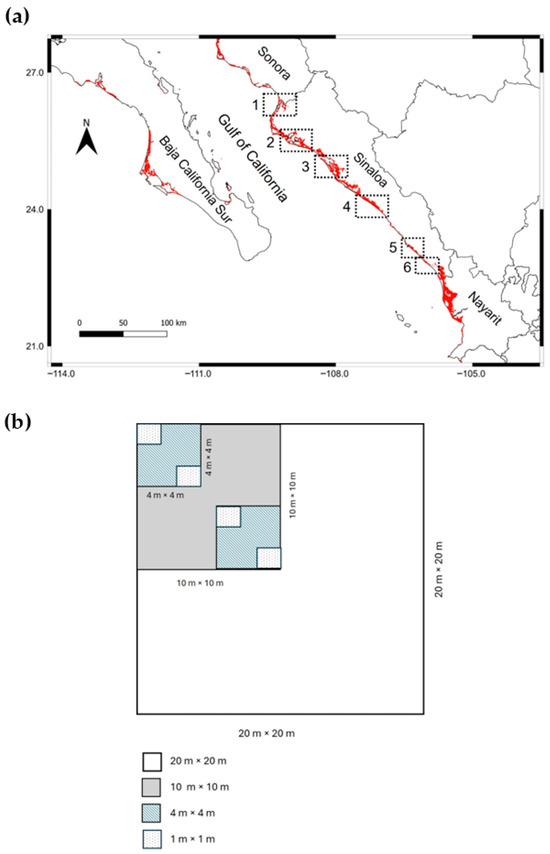
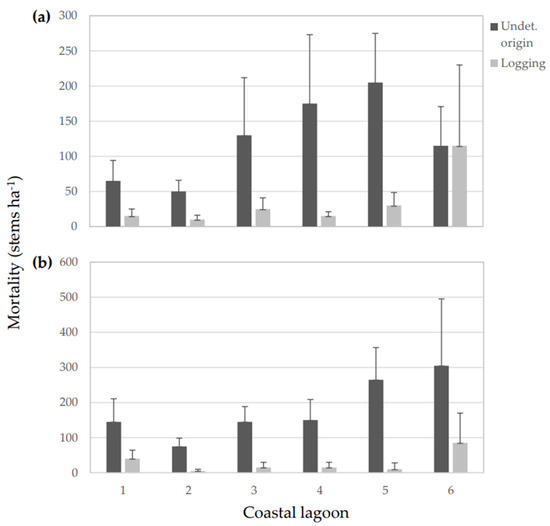
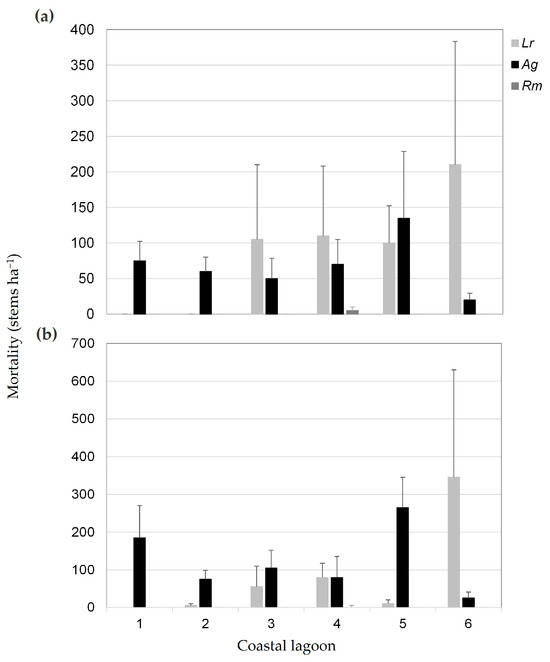
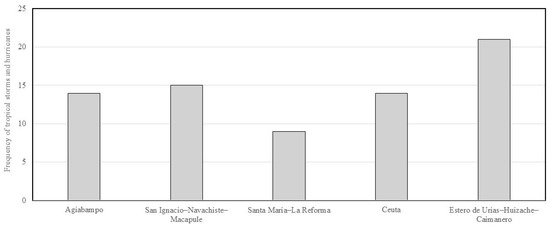
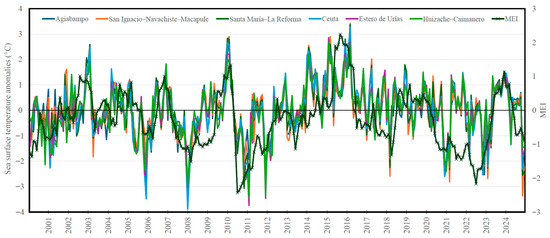
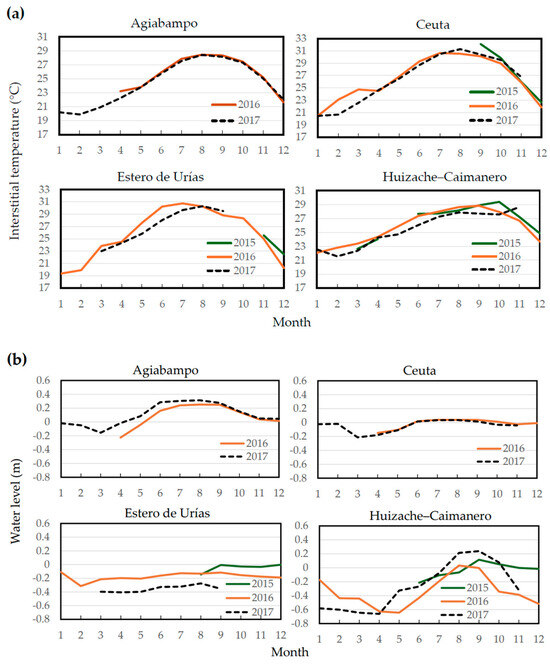
Mangrove wetlands in northwestern Mexico have been highlighted due to their ecological relevance and ecosystem services. This study evaluated the mortality and natural regeneration of mangroves located in six coastal lagoons in Sinaloa, considering five plots each (400 m2), during a warm–strong (2015–2016) and cold–weak (2017–2018) El Niño–Southern Oscillation. The highest mean mortality was recorded in Huizache–Caimanero—the southern coastal lagoon—during the second stage (390 stems ha−1; 22% corresponding to logging). While an increasing latitudinal (north–south) mortality trend was observed, differences between sites and stages were not statistically significant. Natural recovery was also observed due to higher abundance of seedlings, e.g., the largest increase from one stage to another was recorded in Santa María–La Reforma. Mortality and seedling regeneration are discussed in this study, particularly in relation to anthropogenic stressors, logging, and climate variability.
Full article

Figure 1
Open AccessArticle
Evaluating Biodiversity Metrics for Detecting Climate-Driven Ecological Change
by
Attila Haris, Zsolt Józan, Attila Balázs, George Japoshvili, György Csóka and Anikó Hirka
Ecologies 2026, 7(1), 24; https://doi.org/10.3390/ecologies7010024 - 22 Feb 2026
Abstract
►▼
Show Figures
To investigate the long-term effects of climate change on biological communities, our primary aim was to identify the most reliable indicators among available biodiversity, dominance, and evenness indices. We examined three distinct response types to climate change, represented by three taxonomic groups: Aculeata
[...] Read more.
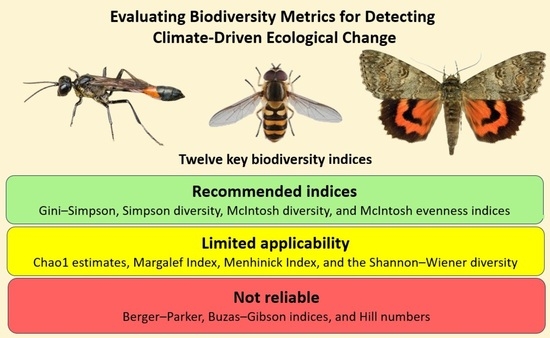
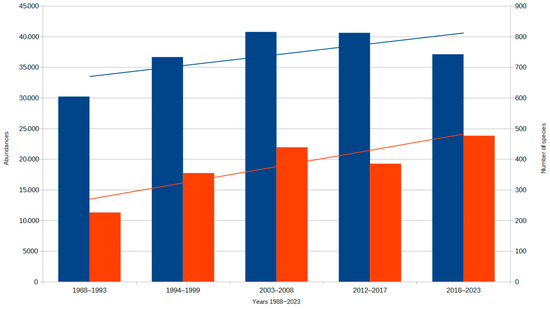
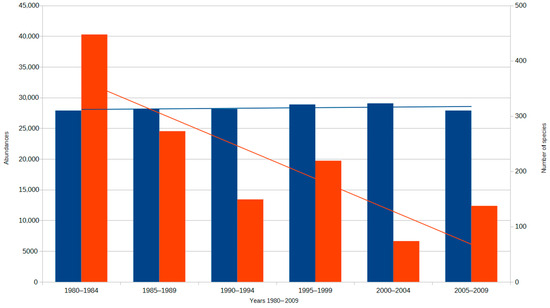
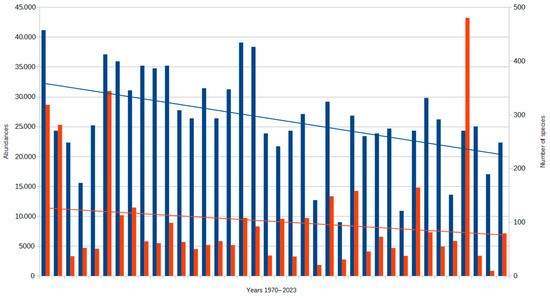
To investigate the long-term effects of climate change on biological communities, our primary aim was to identify the most reliable indicators among available biodiversity, dominance, and evenness indices. We examined three distinct response types to climate change, represented by three taxonomic groups: Aculeata (Hymenoptera), Syrphidae (Diptera), and nocturnal macrolepidoptera (Lepidoptera). Using faunistic datasets derived from our own 3–5 decades of field surveys, we calculated 12 key indices with the vegan package in R 4.2.1. The robustness of these indices was assessed through 1000-fold bootstrap simulations and pairwise correlation analyses. Our results revealed that the Gini–Simpson, Simpson diversity, McIntosh diversity, and McIntosh evenness indices consistently demonstrated high temporal stability and strong correlations across all three climate response types. Therefore, we recommend these indices as primary climate indicators. In contrast, Chao1 estimates, Margalef Index, Menhinick Index, and the Shannon–Wiener diversity index are suitable only for analyzing specific response patterns. Meanwhile, the Berger–Parker, Buzas–Gibson indices, and Hill numbers showed high variability or limited ecological responsiveness, making them unreliable for tracking climate change impacts. Our findings underscore that selecting biodiversity indices must be tailored to the research question and the characteristics of the ecosystem in order to ensure valid and informative ecological analysis.
Full article

Graphical abstract
Open AccessArticle
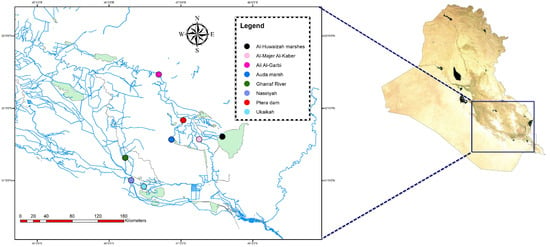
Diversity, Environmental Drivers, and Niche Overlap of Native and Invasive Gastropods in Southern Iraq’s Freshwater Ecosystems
by
Murtada Naser, Amaal Yasser, Antoni Vivó-Pons, Burçin Aşkım Gümüş and Patricio R. De los Ríos-Escalante
Ecologies 2026, 7(1), 22; https://doi.org/10.3390/ecologies7010022 - 21 Feb 2026
Abstract
►▼
Show Figures
This study assesses the diversity, distribution, and ecological interactions of freshwater gastropod communities across eight sites in southern Iraq, spanning marshes, rivers, and canal systems within the Tigris-Euphrates basin. Diversity indices (Shannon–Wiener H′ and Pielou’s evenness J) were calculated to evaluate community structure,
[...] Read more.
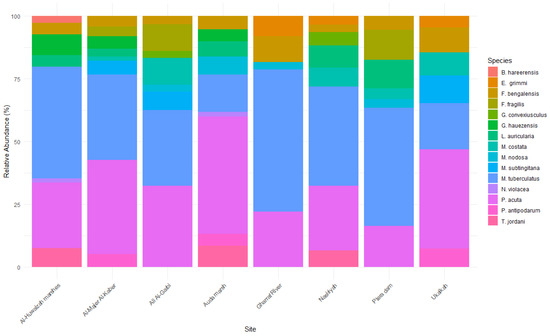
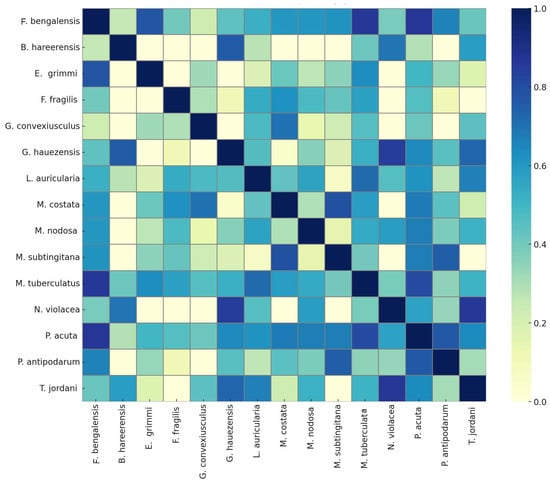
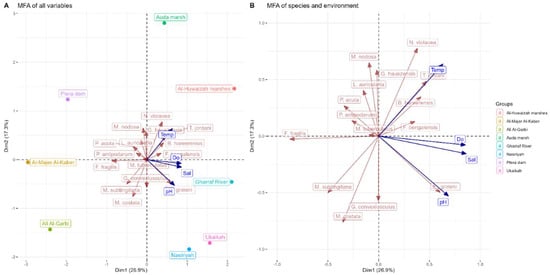
This study assesses the diversity, distribution, and ecological interactions of freshwater gastropod communities across eight sites in southern Iraq, spanning marshes, rivers, and canal systems within the Tigris-Euphrates basin. Diversity indices (Shannon–Wiener H′ and Pielou’s evenness J) were calculated to evaluate community structure, and a revised stacked bar chart of relative abundances revealed widespread dominance by species such as Melanoides tuberculata and Physella acuta, which frequently exceeded 50% of local assemblages. While P. acuta is an established invasive species, M. tuberculata is now considered native or long-established in the region. Species interactions were examined using Pianka’s niche overlap index, and null model testing (999 permutations) revealed only a few statistically significant overlaps (p < 0.05), suggesting that species co-occurrence is shaped more by environmental filtering than direct competition. To directly examine the influence of environmental drivers on species composition, Multiple Factor Analysis (MFA) was performed. MFA revealed patterns of association between dissolved oxygen, salinity, and species assemblages, suggesting these abiotic factors may influence community structure. To our knowledge, this study is the first in Iraq to use null models, constrained ordination, and MFA to investigate community assembly of freshwater gastropods, ultimately producing novel insights regarding the interactions between environmental stressors and aquatic biodiversity patterns. The results of this study highlight the need for long-term ecological monitoring and conservation in marshland habitats important for the resiliency of native species.
Full article

Figure 1
Open AccessArticle
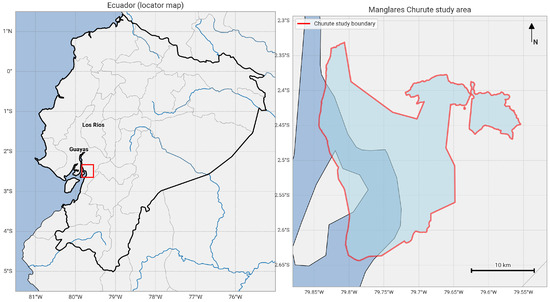
Remote-Sensing Carbon Stock Dynamics and Carbon-Market Valuation in Ecuador’s Churute Mangrove Ecological Reserve (2015–2021)
by
Diego Portalanza, Emily Valle, Manuel Cepeda, Liliam Garzón, Juan Carlos Guevara, Diego Arcos, Carlos Ortega and José Ricardo Macías-Barberán
Ecologies 2026, 7(1), 23; https://doi.org/10.3390/ecologies7010023 - 20 Feb 2026
Abstract
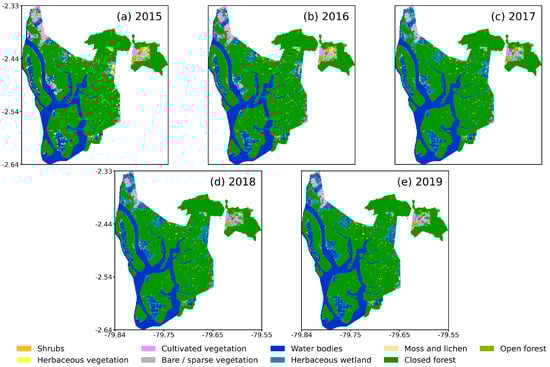
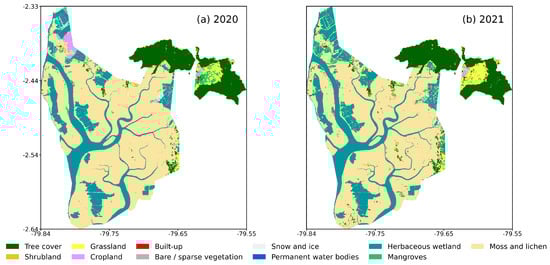
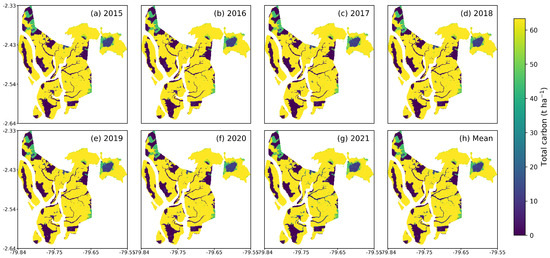
Mangrove ecosystems are recognized as highly efficient blue-carbon reservoirs, yet their monitoring requires scalable, transparent methods suitable for climate-finance and greenhouse-gas accounting applications. This study quantifies interannual carbon-stock dynamics and derives a carbon-market valuation indicator for Ecuador’s Churute Mangrove Ecological Reserve (2015–2021) using
[...] Read more.
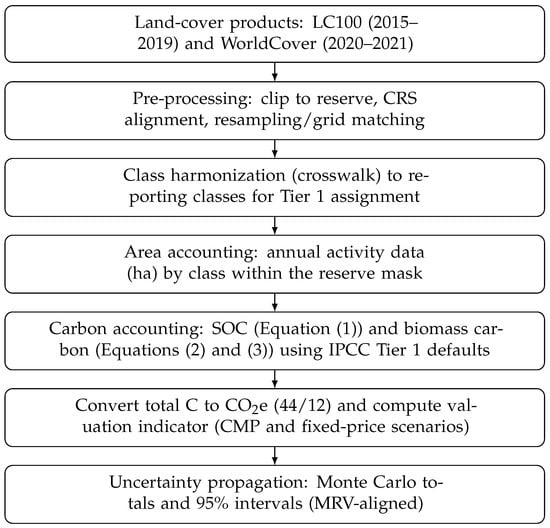
Mangrove ecosystems are recognized as highly efficient blue-carbon reservoirs, yet their monitoring requires scalable, transparent methods suitable for climate-finance and greenhouse-gas accounting applications. This study quantifies interannual carbon-stock dynamics and derives a carbon-market valuation indicator for Ecuador’s Churute Mangrove Ecological Reserve (2015–2021) using publicly available remote-sensing land-cover products. Annual activity data were derived from Copernicus Global Land Service LC100 (100 m, 2015–2019) and ESA WorldCover (10 m, 2020–2021), harmonized to a common reporting scheme, and combined with IPCC Tier 1 default coefficients for biomass and soil organic carbon in tropical wetlands. Total carbon stocks averaged 1.67 million t C across the period, remaining stable within the internally consistent LC100 phase (2015–2019), with trend statistics treated as descriptive given the short annual series, while a pronounced drop in 2020 primarily reflected methodological discontinuities between products rather than ecological change. Converted to CO2e equivalents (mean 6.1 million t CO2e), illustrative market values fluctuated between USD 18 and 123 million annually, driven predominantly by carbon-price variability. This remote-sensing-based, MRV-aligned approach provides a conservative baseline for protected-area blue-carbon accounting, highlighting the need for homogeneous high-resolution time series to distinguish real dynamics from classification artifacts in future assessments.
Full article
(This article belongs to the Special Issue Plant Communities: Identification, Monitoring and Evaluation of Temporal Dynamics)
►▼
Show Figures

Figure 1
Open AccessArticle
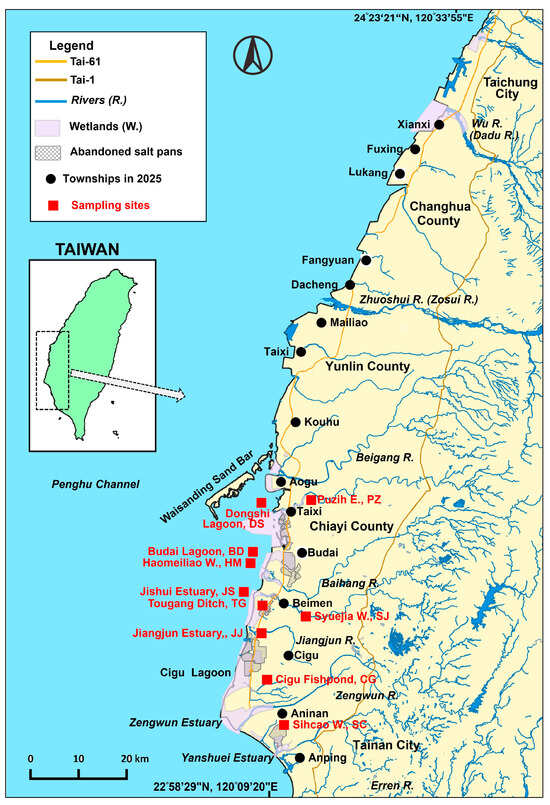
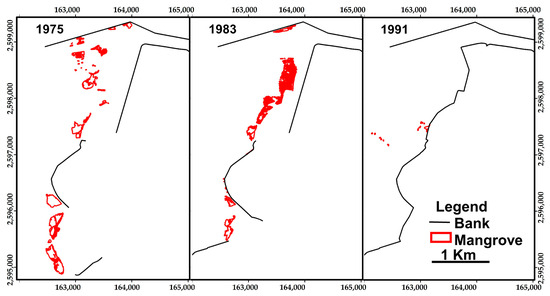
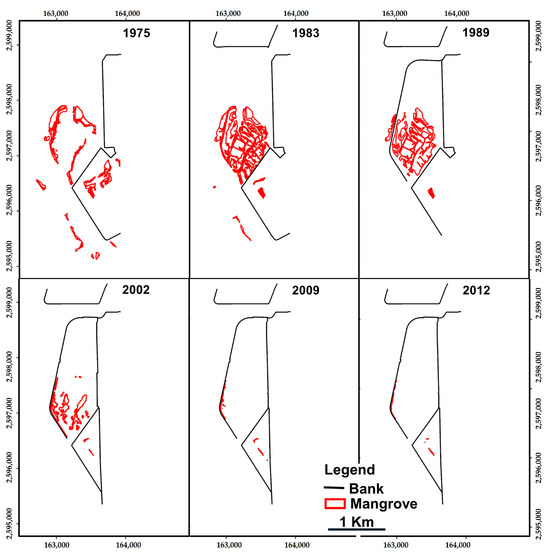
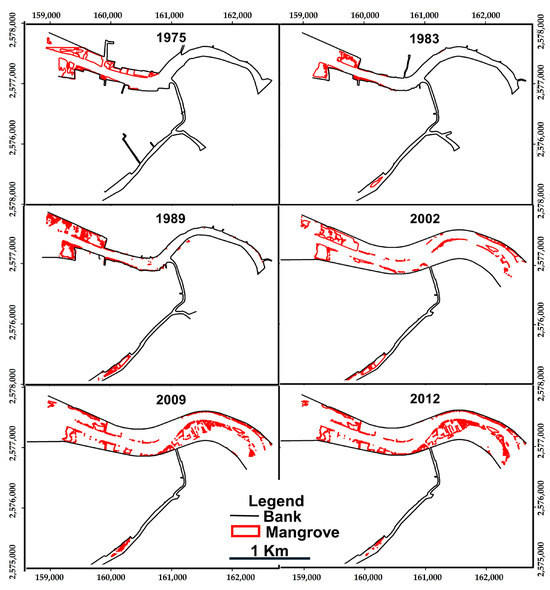
Rapid Estimation of Mangrove Area and Carbon Sequestration in Land Subsidence Regions of Coastal Taiwan
by
Feng-Jiau Lin, Shu-Hui Chang, Cheng-Wei Lin, Kuan-Feng Huang, Hsiao-Yun Chang and Yih-Tsong Ueng
Ecologies 2026, 7(1), 21; https://doi.org/10.3390/ecologies7010021 - 13 Feb 2026
Abstract
►▼
Show Figures
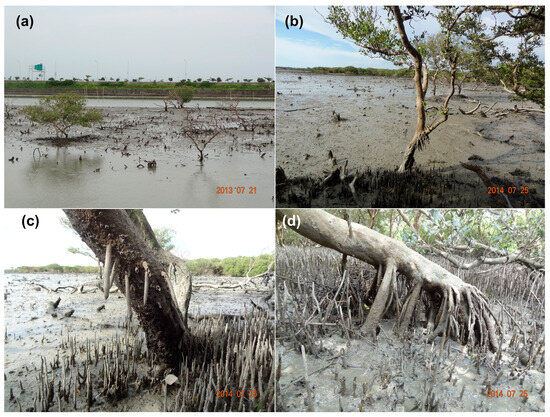
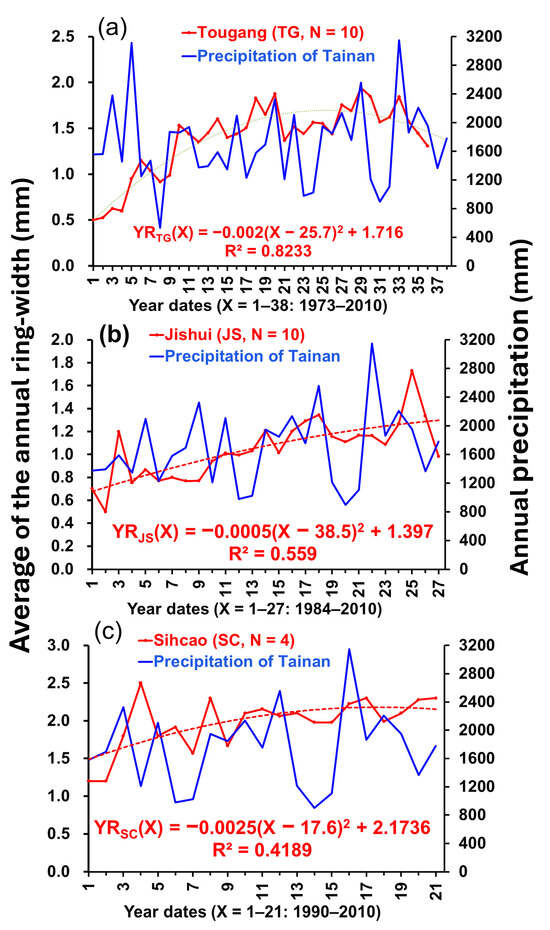
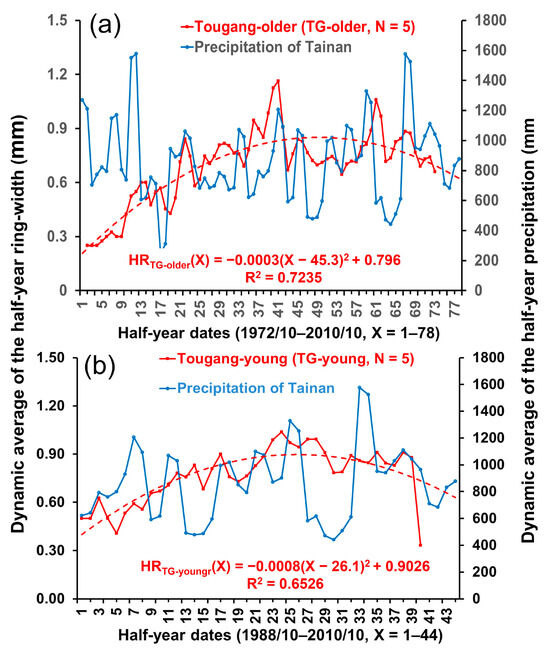
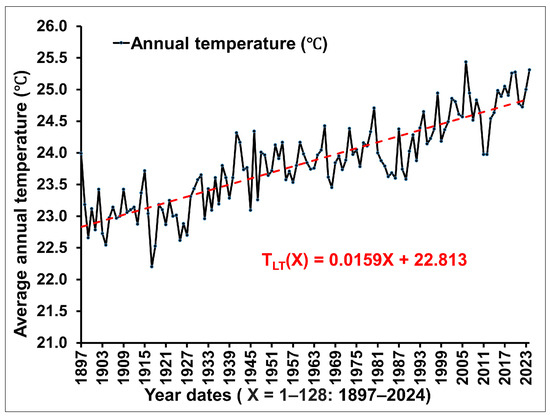
Mangrove ecosystems along Taiwan’s southwest coast have been increasingly stressed by climate change, subsidence, and sea level rise. Between 1897 and 2024, the mean annual temperature rose by 2.0 °C, and rainfall declined by 56.5 mm. Severe subsidence occurred in Taixi Township, Yunlin
[...] Read more.
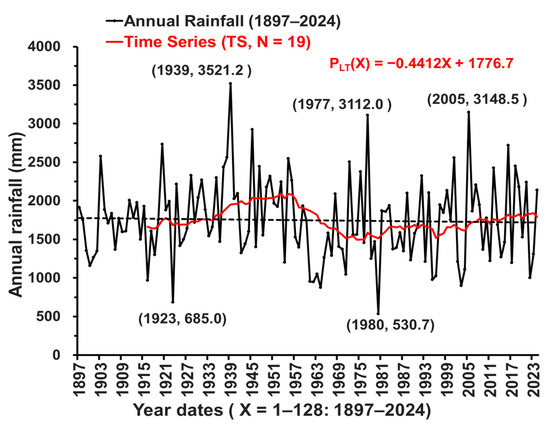
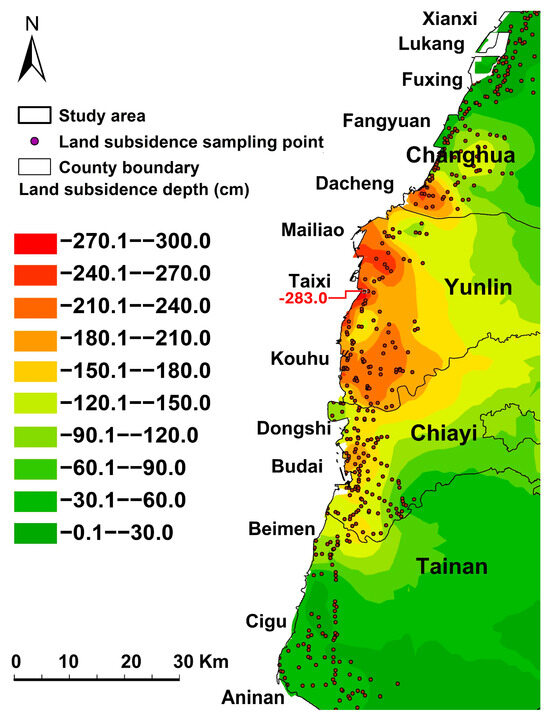
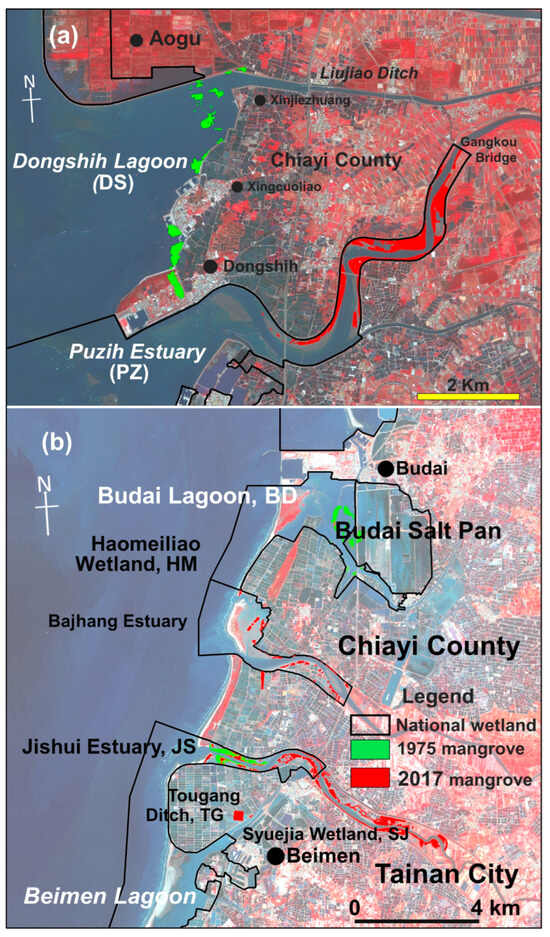
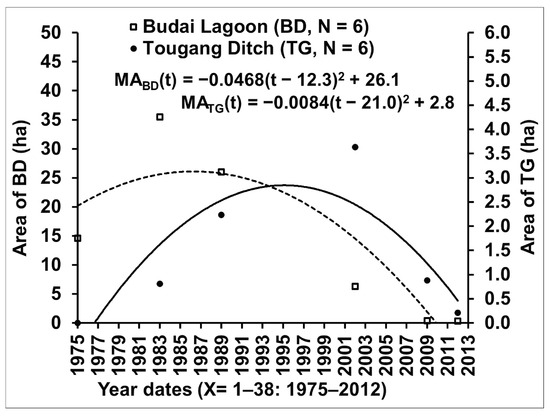
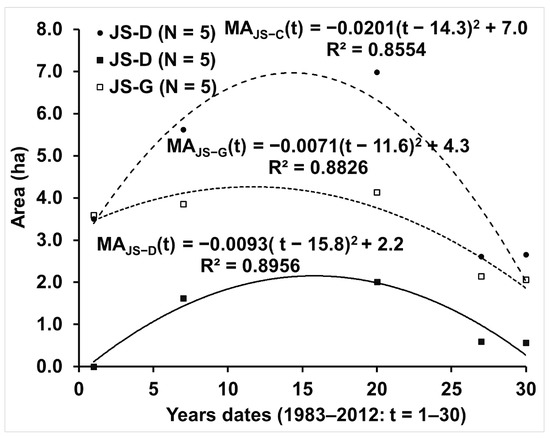
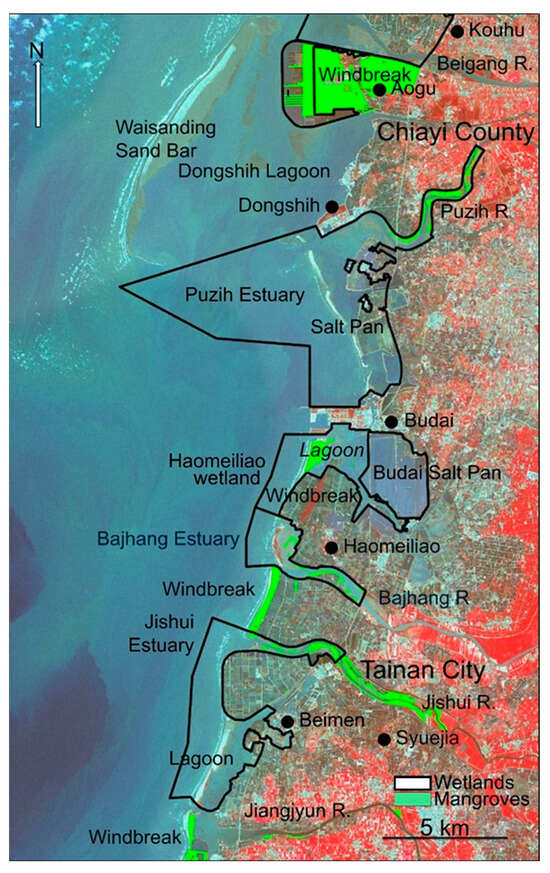
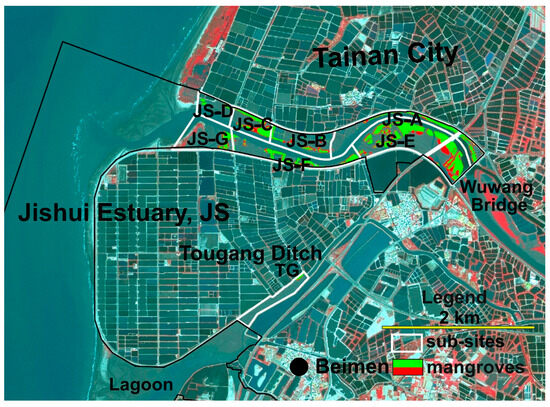
Mangrove ecosystems along Taiwan’s southwest coast have been increasingly stressed by climate change, subsidence, and sea level rise. Between 1897 and 2024, the mean annual temperature rose by 2.0 °C, and rainfall declined by 56.5 mm. Severe subsidence occurred in Taixi Township, Yunlin County (−283.0 cm, 1975–2023), where the gray/white mangrove (Avicennia marina) exhibited reduced growth and mortality. Long-term mangrove area (MA) was reconstructed using quadratic polynomials: Tougang Ditch, MATG(t) = −0.0084(t − 21.0)2 + 2.8 peaking in 1995 (R2 = 0.7274), and Budai Lagoon, MABD(t) = −0.0468(t − 12.3)2 + 26.1 peaking in 1986 (R2 = 0.782). Both sites yielded moderate fits indicating partial but less reliable reconstruction. In contrast, Jishui Estuary subsites displayed distinct maxima with stronger fits (R2 > 0.85): JS-C, MAJS-C(t) = −0.0201(t − 14.3)2 + 7.0 peaking in 1996; JS-D, MAJS-D(t) = −0.0093(t − 15.8)2 + 2.2 peaking in 1998; and JS-G, and MAJS-G(t) = −0.0077(t − 11.6)2 + 4.3 peaking in 1994. SPOT-6 satellite imagery (22 February 2025) identified 281.9 ha of mangrove and windbreak forests in Chiayi County and 896.3 ha in Tainan City. By integrating climate records, subsidence data, sea level rise, polynomial modeling, and satellite observations, this study provides a robust framework for anticipating mangrove trajectories, assessing carbon sink potential, and refining carbon credit estimates in vulnerable coastal landscapes.
Full article

Figure 1
Open AccessArticle
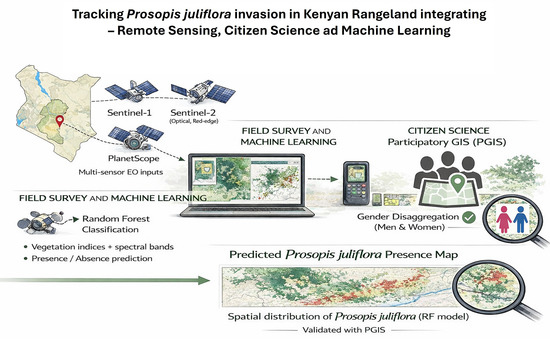
Tracking Rangeland Degradation from Prosopis juliflora Invasion in Kenya: A Multi-Source Approach Combining Remote Sensing, Machine Learning, and Citizen Science
by
Fredah Cherotich, Diba Galgallo, Ram Dhulipala, Anthony Whitbread and Ambica Paliwal
Ecologies 2026, 7(1), 20; https://doi.org/10.3390/ecologies7010020 - 13 Feb 2026
Abstract
The invasion of Prosopis juliflora poses a growing threat to dryland ecosystems and pastoral livelihoods across East Africa. This study presents an integrative approach that combines satellite remote sensing, machine learning, and citizen science to detect and map the spatial extent and socio-ecological
[...] Read more.
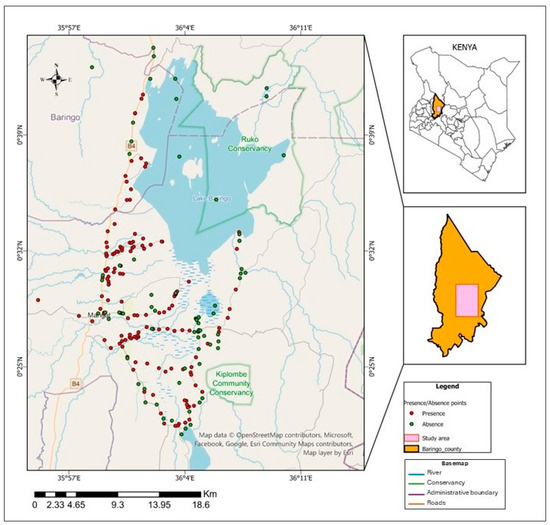
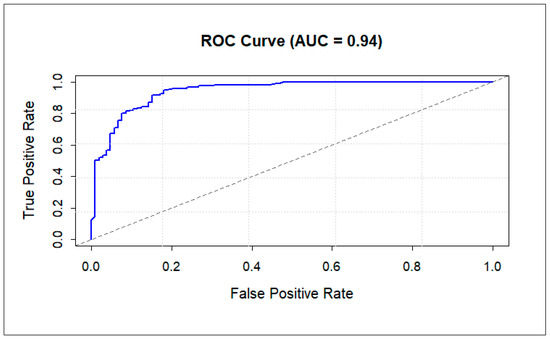
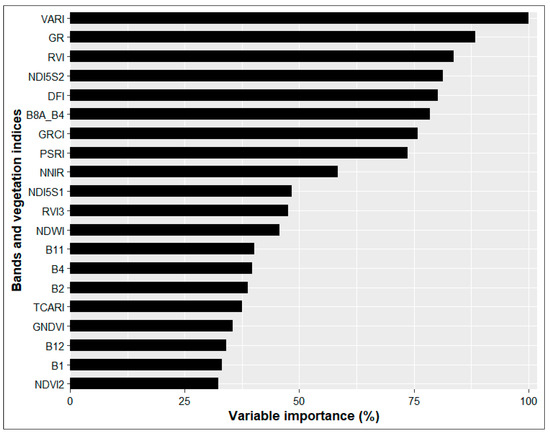
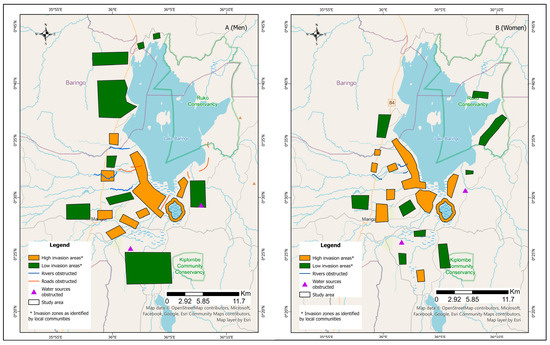
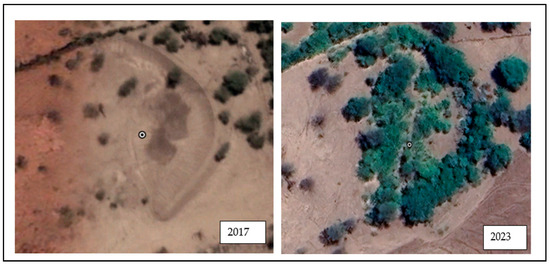
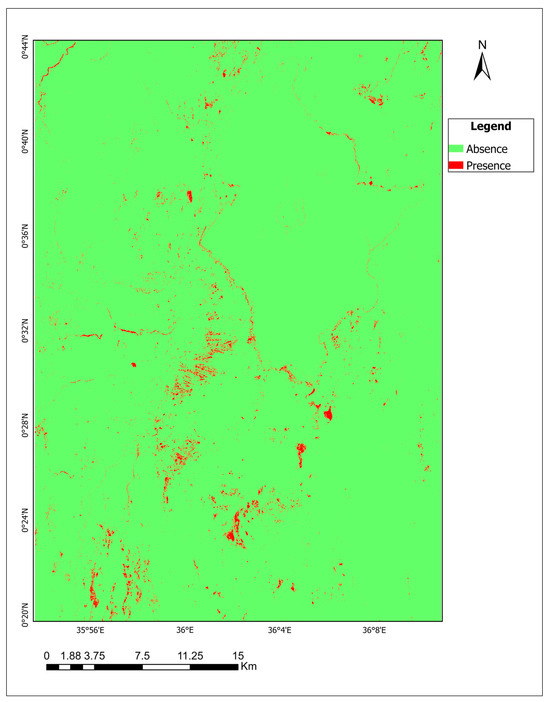
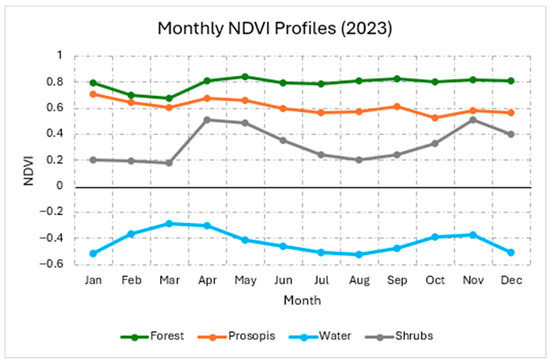
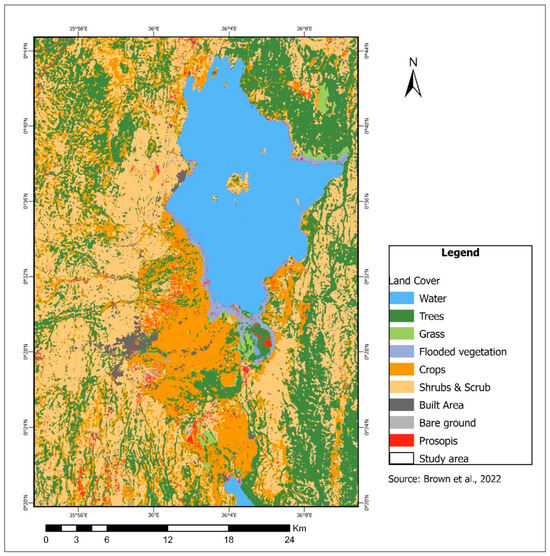
The invasion of Prosopis juliflora poses a growing threat to dryland ecosystems and pastoral livelihoods across East Africa. This study presents an integrative approach that combines satellite remote sensing, machine learning, and citizen science to detect and map the spatial extent and socio-ecological impacts of Prosopis juliflora in Baringo County, Kenya. We evaluated the performance of three satellite platforms, Sentinel-1, Sentinel-2, and PlanetScope, using a Random Forest classifier trained on field collected presence–absence data and vegetation indices. Sentinel-2 outperformed the other sensors, achieving a classification accuracy of 90.65%, with key variables including the Visible Atmospherically Resistant Index (VARI), the Ratio Vegetation Index (RVI), and red-edge bands emerging as the most important predictors. Through Participatory GIS (PGIS), a citizen-science based approach, we engaged gender-disaggregated community groups to capture local perceptions of invasion hotspots and blocked access to grazing routes and water sources, enhancing contextual understanding and validating model outputs. The comparison of satellite-derived maps and PGIS outputs revealed strong spatial congruence, particularly along water bodies, roads, and croplands. Our findings demonstrate the potential of combining Earth observation and citizen science to generate actionable knowledge for managing invasive species in data scarce dryland environments. This hybrid framework supports inclusive and spatially targeted interventions for rangeland restoration and ecosystem resilience.
Full article
(This article belongs to the Special Issue Plant Communities: Identification, Monitoring and Evaluation of Temporal Dynamics)
►▼
Show Figures

Graphical abstract
Open AccessArticle
Bioindicators Enhance Stream Assessment: Physicochemical Parameters’ Effect on Salamander Abundance
by
Camryn Lachica, Althea Hotaling Hagan, Kyle Barrett, Debabrata Sahoo, Calvin Sawyer and Jeremy Pike
Ecologies 2026, 7(1), 19; https://doi.org/10.3390/ecologies7010019 - 9 Feb 2026
Abstract
►▼
Show Figures
Ecological restoration has emerged as a critical tool for addressing ecosystem degradation worldwide. The Stream Quantification Tool (SQT) represents a significant advancement in stream restoration methodology, providing a standardized framework for quantifying stream functions and evaluating project outcomes. We investigated relationships between salamander
[...] Read more.
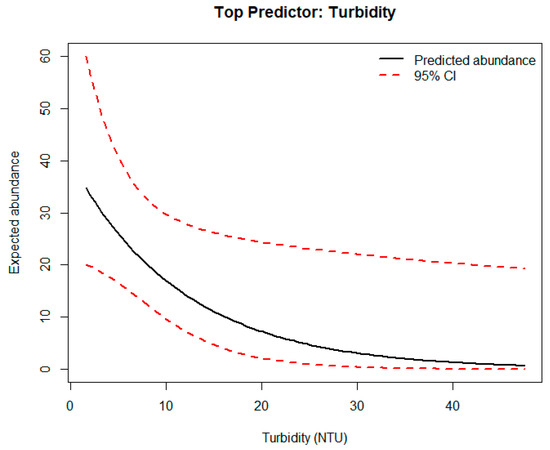
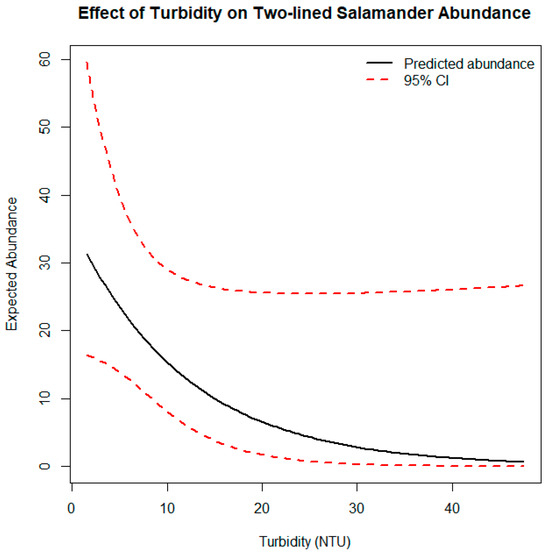
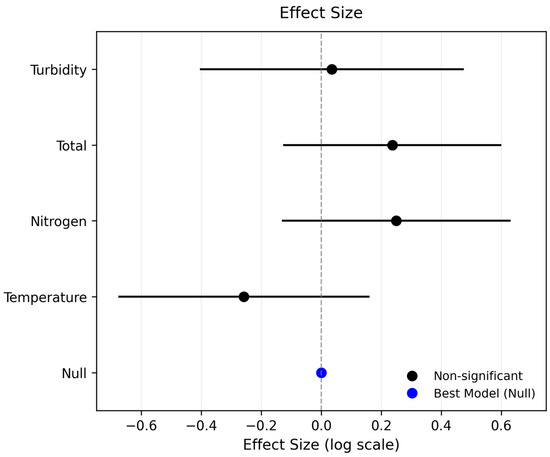
Ecological restoration has emerged as a critical tool for addressing ecosystem degradation worldwide. The Stream Quantification Tool (SQT) represents a significant advancement in stream restoration methodology, providing a standardized framework for quantifying stream functions and evaluating project outcomes. We investigated relationships between salamander abundance and physicochemical parameters from the SQT (nitrogen, turbidity, temperature, and composite SQT physicochemical score) across 16 streams in the upstate region of South Carolina. Stream salamanders can be reliable bioindicators due to their philopatric nature, longevity, and stable populations, making them valuable for assessing stream restoration effectiveness. Six salamander species (n = 394 individuals) were identified across 14 streams where salamanders were present. N-mixture models were used to analyze abundance patterns while accounting for imperfect detection. Turbidity was the strongest negative predictor of salamander abundance, followed by nitrogen. Removal of an agriculturally impacted stream with elevated turbidity substantially altered model rankings, making the null model top-ranked, followed by nitrogen, composite physicochemical score, and temperature. These findings demonstrate turbidity’s critical role in salamander abundance. Management practices should prioritize erosion and sediment control solutions for salamander conservation. For SQT biological monitoring, we recommend focusing on turbidity and nitrogen as key parameters affecting salamander abundance in stream assessments.
Full article

Figure 1
Highly Accessed Articles
Latest Books
E-Mail Alert
News
Topics
Topic in
Animals, Biology, Conservation, Diversity, Ecologies, Forests, Land
Conservation at the Crossroads: Forest Ecology, Wildlife Dynamics, and Emerging Challenges for Ecosystem Resilience
Topic Editors: Yiannis G. Zevgolis, Triantaphyllos Akriotis, Anastasia Christopoulou, Panayiotis G. Dimitrakopoulos, Dimitra-Lida Rammou, Dionisios YoulatosDeadline: 31 July 2026
Topic in
Agronomy, Diversity, Ecologies, Grasses, Sustainability
Effective Strategies for Rangeland Conservation and Sustainable Management
Topic Editors: Apostolos P. Kyriazopoulos, Tong Li, Huakun Zhou, Jing Zhang, Lan LiDeadline: 29 March 2027
Topic in
IJGI, Land, Remote Sensing, Systems, Urban Science, Forests, Buildings, Ecologies
Sustainable Development and Coordinated Governance of Urban and Rural Areas Under the Guidance of Ecological Wisdom—3rd Edition
Topic Editors: Jun Yang, Liang Zhou, Zhi Qiao, Wei Sun, Xiangming XiaoDeadline: 31 December 2027
Conferences
Special Issues
Special Issue in
Ecologies
Plant Communities: Identification, Monitoring and Evaluation of Temporal Dynamics
Guest Editor: Ram C. SharmaDeadline: 30 April 2026
Special Issue in
Ecologies
Monitoring and Ecological Assessment of River Biodiversity
Guest Editors: Sen Ding, Xiaoxuan LiDeadline: 30 July 2026
Special Issue in
Ecologies
Coping with a Changing Environment: Stress Physiology, Phenotypic Plasticity and Ecological Adaptations in Amphibians and Reptiles
Guest Editor: Jelena Gavrić-ČamparDeadline: 1 September 2026
Special Issue in
Ecologies
Advances in Community Ecology: Interactions, Dynamics, and Diversity
Guest Editor: Giorgos KokkorisDeadline: 31 October 2026