
You are currently viewing a new version of our website. To view the old version click .

Entropy

Entropy is an international and interdisciplinary peer-reviewed open access journal of entropy and information studies, published monthly online by MDPI.
The International Society for the Study of Information (IS4SI) and Spanish Society of Biomedical Engineering (SEIB) are affiliated with Entropy and their members receive a discount on the article processing charge.
Indexed in PubMed | Quartile Ranking JCR - Q2 (Physics, Multidisciplinary)

All Articles (14,196)

Simultaneous ascending auctions find extensive applications in spectrum licensing and advertising space allocation. However, existing quantum sealed-bid auction protocols suffer from dual limitations: they cannot support multi-item simultaneous bidding scenarios, and their reliance on complex quantum resources along with requiring full quantum operational capabilities from bidders fails to accommodate practical constraints of quantum resource-limited users. To address these challenges, this paper proposes a multi-party semi-quantum simultaneous ascending auction protocol based on single-particle states. The protocol employs a trusted honest third party (HTP) responsible for quantum state generation, distribution, and security verification. Bidders determine their groups through quantum measurements and privately encode their bid vectors. Upon successful HTP authentication, each bidder obtains a unique identity code. During the bidding phase, HTP dynamically updates quantum sequences, allowing bidders to submit bids for multiple items by performing only simple unitary operations. HTP announces the highest bid for each item in real time and iteratively generates auction sequences until no new highest bid emerges, thereby achieving simultaneous ascending auctions for multiple items. It acts as a quantum-secured signaling layer, ensuring unconditional security for bid transmission and identity verification while maintaining classical auction logic. Quantum circuit simulations validate the protocol’s feasibility with current technology while satisfying critical security requirements, including anonymity, verifiability, non-repudiation, and privacy preservation. It provides a scalable semi-quantum auction solution for resource-constrained scenarios.

28 December 2025

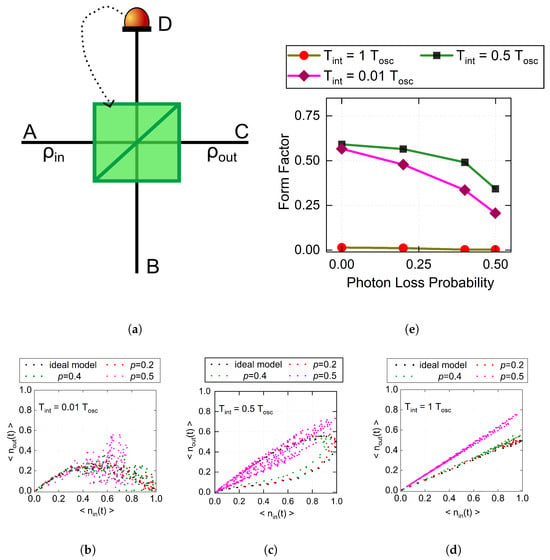
Workflow of identity encoding distribution and verification at HTP. (Lateral diagrams correspond to Step 4 and 5).

We propose a unified mathematical framework showing that the representational universality of modern foundational models arises from a shared finite latent domain. Building on the Finite Ring Continuum (FRC) framework, we model all modalities as epistemic projections of a common latent set ZUt, where Ut is a symmetry-complete finite-field shell. Using the uniqueness of minimal adequate representations, we prove the Universal Subspace Theorem, establishing that independently trained embeddings coincide, up to bijection, as coordinate charts on the same latent structure. This result explains cross-modal alignment, transferability, and semantic coherence as consequences of finite relational geometry rather than architectural similarity. The framework links representation learning, sufficiency theory, and FRC algebra, providing a principled foundation for universal latent structure in multimodal models.

28 December 2025

In natural systems, astrophysics, biological physics, and social physics, 1/f fluctuations are observed across a wide range of systems. Focusing on the case of music, we propose and verify a physical mechanism for generating these fluctuations. This mechanism is based on amplitude modulation (AM) and demodulation (DM), where the 1/f spectral law appears not in the raw waveform but in its demodulated amplitude envelope. Two distinct yet complementary processes generate the required AM: (i) stochastic synchronization among oscillators, modeled via an extended Kuramoto framework that captures perpetual synchronization–desynchronization cycles, and (ii) frequency-selective resonance, modeled by spectral accumulation of eigenmodes in acoustic or structural environments. Numerical simulations demonstrate that both mechanisms, acting alone or in combination, robustly generate 1/f spectra spanning several digits when demodulation is applied and that the classical Kuramoto critical point is not essential for its emergence. While this analysis focuses on 1/f fluctuations in musical performance and acoustics, we also note that 1/f fluctuations inherent in musical scores may be similarly described by the AM/DM mechanism.

27 December 2025

The link between information and energy introduces the observer and their knowledge into the understanding of a fundamental quantity in physics. Two approaches compete to account for this link—Brillouin’s negentropy law of information and Landauer’s law on data erasure—which are often confused. The first, based on Clausius’ inequality and Shannon’s mathematical results, is very robust, whereas the second, based on the simple idea that information requires a material embodiment (data bits), is now perceived as more physical and therefore prevails. In this paper, we show that Landauer’s idea results from a confusion between information (a global emergent concept) and data (a local material object). This confusion leads to many inconsistencies and is incompatible with thermodynamics and information theory. The reason it prevails is interpreted as being due to a frequent tendency of materialism towards reductionism, neglecting emergence and seeking to eliminate the role of the observer. A paradoxical trend, considering that it is often accompanied by the materialist idea that all scientific knowledge, nevertheless, originates from observation. Information and entropy are actually emergent quantities introduced in the theory by convention.

27 December 2025

News & Conferences

Issues

Open for Submission

Editor's Choice

Reprints of Collections

Semantic Information Theory
Reprint

Semantic Information Theory

Editors: Meixia Tao, Kai Niu, Youlong Wu
The Entropy Production—as Cornerstone in Applied Nonequilibrium Thermodynamics
Reprint

The Entropy Production—as Cornerstone in Applied Nonequilibrium Thermodynamics

Dedicated to Professor Signe Kjelstrup on the Occasion of Her 75th Birthday
Editors: Dick Bedeaux, Fernando Bresme, Alex Hansen

Get Alerted

Add your email address to receive forthcoming issues of this journal.

XFacebookLinkedIn
Entropy - ISSN 1099-4300