Skip Content
You are currently on the new version of our website. Access the old version .
  • 47 days
    Time to First Decision

Knowledge

Knowledge is an international, peer-reviewed, open access journal on knowledge and knowledge-related technologies published quarterly online by MDPI.

All Articles (157)

Complexity science studies systems in which properties and behaviors emerge at meso- and macroscales that are difficult to predict and model by observing the properties and behaviors exhibited by the system’s components at smaller scales. The set of relationships that exist among post-secondary school curricula and job markets is one example of such a system. Prior work has undertaken the challenge of modeling this system for several purposes, one of which has been to develop retrieval and ranking algorithms in the education–career domain. A particular emergent property that is closely bound up with this prior work, and that is the focus of the present work, is the salience of a course with respect to a specific objective. The specific objective that we are interested in here is career usefulness, which means that our overall task is to rank order courses based on their usefulness in helping a student to obtain and perform a specific job. One aspect of this overall task that remains understudied concerns how it can best be performed in an interpretable manner and whether existing interpretable methods that may be applied to it, such as text-based similarity measures and document-ranking functions, represent workable solutions or whether an approach involving more detailed modeling of the underlying complex system may prove more effective. The purpose of this article is to answer this question, and, in order to do this, most of this article’s content is devoted to the latter kind of approach, because the former kind is described in detail in the existing literature. The specific approach of the latter kind that we investigate is based on, first, developing a heterogeneous knowledge graph model of the overall complex system, and, second, developing a procedure that quantifies salience using the strength of the skill-dependency chains that link a course to a specified job. To evaluate our methods, we perform a human subjects study in which we leverage the domain expertise of fifty participants. The results of the study demonstrate that the latter approach produces career-motivated course recommendations, as well as accompanying explanations, which systematically exceed those produced by the former approach, in terms of both their quality and usability.

9 February 2026
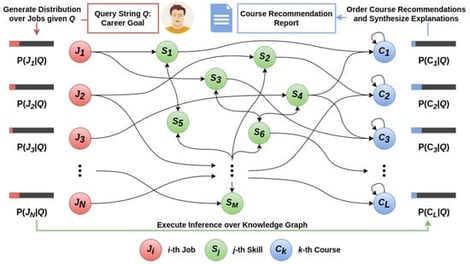
Education–career network and course recommendation procedure. To obtain a ranked list of career-motivated course recommendations, first, a user inputs search terms that describe their career goal, which we call search query Q. A document-ranking function is then applied to Q to generate a probability distribution over a set of candidate job advertisements J. This is followed by a random walk simulation from the jobs in J, across a network of skills S, toward a set of course syllabi C. The courses in C are ordered for recommendation by their probabilities of being the terminal step in the walk.

The paper sought to examine the role of collaboration in sustaining citizen science activities and projects in academic libraries. The study applied a quantitative approach and a survey design to assess knowledge and understanding of citizen science by academic librarians to advance research relevant to SDGs. A standardised questionnaire was distributed to 185 academic librarians affiliated with the Higher Education and Libraries Interest Group (HELIG). The survey yielded a response rate of 34% since only 63 academic librarians volunteered to participate in the completion of the questionnaire. Data was analysed using SPSS version 29. Findings revealed that citizen science is a new concept in academic libraries in South Africa. To advance the use of citizen science in contributing towards SDGs, academic librarians need to raise awareness, foster collaborations, and initiate advocacy efforts to promote and support citizen science activities. The research further revealed that a work-integrated learning and community engagement department should be established within the library to advocate for citizen science activities. There is a need to visit schools to introduce citizen science at the grassroots level to increase the visibility of the field and to lay a foundation for scientific literacy at an early stage. Although the research setting was in academic libraries, for future research, it will be beneficial to conduct such a study in a public library setting to achieve varying perspectives from the community members where the concept of citizen science emanates.

21 January 2026

Knowledge Management Framework [11].

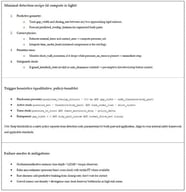
The deployment of autonomous systems in human environments demands sophisticated mechanisms for recognizing and preventing harm. This paper proposes an innovative discovery method for identifying harm-relevant features through the systematic analysis of thick harm verbs—semantically and pragmatically rich linguistic concepts like “puncture”, “crush”, or “poison” that encode both the mechanics and normative evaluations of specific harm types. By analyzing thick harm verbs to extract the information they encode, we can systematically identify the objects, properties, mechanisms, and contextual conditions that autonomous systems need to track to recognize and prevent harm. We demonstrate how this discovery method can be implemented with the support of large language models as analytical assistance tools, showing how human analysts can operationalize the framework with current technology. The resulting feature specifications discovered through this method provide foundations for constructing harm ontologies that bridge abstract ethical principles and concrete system requirements, addressing a critical gap in autonomous systems design while maintaining explanatory transparency essential for safe deployment in human environments.

4 January 2026

Crush-risk monitor specification.

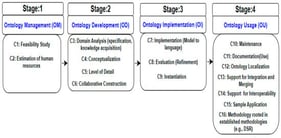
This research focuses on ontology-driven conversational agents (CAs) that harness large language models (LLMs) and their mediating role in performing collective tasks and facilitating knowledge-sharing capabilities among multiple healthcare stakeholders. The research addresses how CAs can promote a therapeutic working alliance and foster trustful human–AI collaboration between emergency department (ED) stakeholders, thereby supporting collaborative tasks with healthcare professionals (HPs). The research contributes to developing a service-oriented human–AI collaborative framework (SHAICF) to promote co-creation and collaborative learning among patients, CAs, and HPs, and improve information flow procedures within the ED. The research incorporates agile heavy-weight ontology engineering methodology (OEM) rooted in the design science research method (DSRM) to construct an ontological metadata model (PEDology), which underpins the development of semantic artifacts. A customized OEM is used to address the issues mentioned earlier. The shared ontological model framework helps developers to build AI-based information systems (ISs) integrated with LLMs’ capabilities to comprehend, interpret, and respond to complex healthcare queries by leveraging the structured knowledge embedded within ontologies such as PEDology. As a result, LLMs facilitate on-demand health-related services regarding patients and HPs and assist in improving information provision, quality care, and patient workflows within the ED.

26 December 2025

Shareable ontology engineering development process.

News & Conferences

Issues

Open for Submission

Editor's Choice

Get Alerted

Add your email address to receive forthcoming issues of this journal.

XFacebookLinkedIn
Knowledge - ISSN 2673-9585