
Journal Description
Particles
Particles
is an international, open access, peer-reviewed journal covering all aspects of nuclear physics, particle physics and astrophysics science, and is published quarterly online by MDPI.
- Open Access— free for readers, with article processing charges (APC) paid by authors or their institutions.
- High Visibility: indexed within Scopus, ESCI (Web of Science), Inspec, CAPlus / SciFinder, and other databases.
- Journal Rank: JCR - Q2 (Astronomy and Astrophysics) / CiteScore - Q2 (Nuclear and High Energy Physics)
- Rapid Publication: manuscripts are peer-reviewed and a first decision is provided to authors approximately 22 days after submission; acceptance to publication is undertaken in 3.6 days (median values for papers published in this journal in the second half of 2025).
- Recognition of Reviewers: reviewers who provide timely, thorough peer-review reports receive vouchers entitling them to a discount on the APC of their next publication in any MDPI journal, in appreciation of the work done.
Impact Factor:
2.3 (2024);
5-Year Impact Factor:
1.8 (2024)
Latest Articles
β Decay of 20Na
Particles 2026, 9(2), 40; https://doi.org/10.3390/particles9020040 - 17 Apr 2026
Abstract
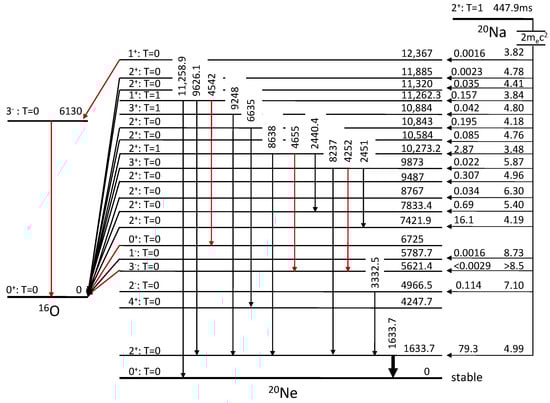
20Na is a well-known -delayed emitter, owing to the large decay energy of 20Na above the α + 16O threshold in the daughter nucleus 20Ne. In this work, the decay property of 20
[...] Read more.
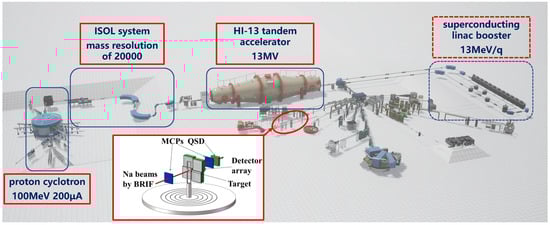
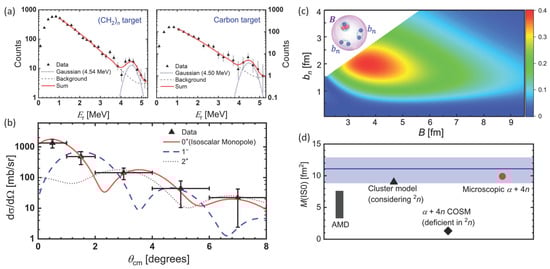
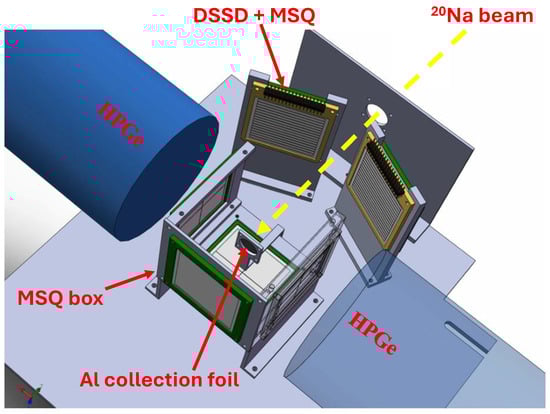
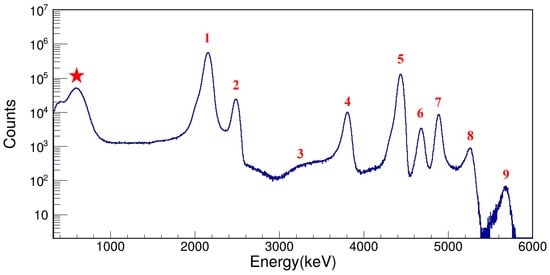
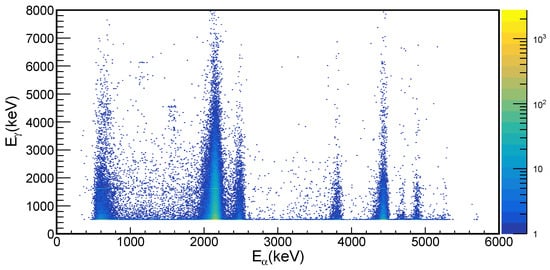
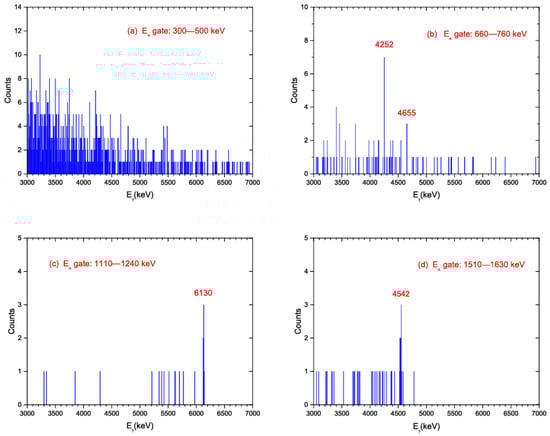
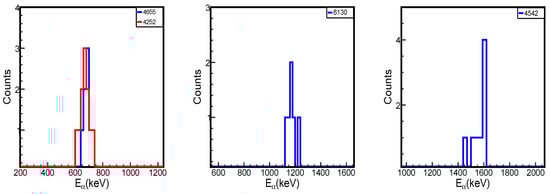
20Na is a well-known -delayed emitter, owing to the large decay energy of 20Na above the α + 16O threshold in the daughter nucleus 20Ne. In this work, the decay property of 20Na is investigated in detail via the β-γ β-α and β-γ-α coincidence spectroscopy. As the day-one experiment of the Beijing Rare Isotope Facility (BRIF), the intense 20Na beam was produced using the Isotope Separator On Line (ISOL) technique through the 100 MeV proton bombarding a stack of MgO as a thick target. Specific interest was focused on the exotic decay mode of 20Na; the previously reported low-energy α lines at 713 and 846 keV were confirmed, and several weak β-γ-α decay sequences were clearly identified for the first time, thanks to the strong resolving power of α-γ coincidence spectroscopy. The decay properties of 20Na are compared to the shell model calculation, which agree reasonably well with the allowed β transition strengths and subsequent electro-magnetic transitions with the use of the sd shell-model space with the USDB interaction.
Full article
(This article belongs to the Special Issue Selected Papers from the International Symposium Commemorating the 40th Anniversary of Halo Nuclei)
►
Show Figures
Open AccessArticle
Leading Low-Temperature Correction to the Heisenberg–Euler Lagrangian
by
Felix Karbstein
Particles 2026, 9(2), 39; https://doi.org/10.3390/particles9020039 - 15 Apr 2026
Abstract
In this article, we show that the well-known leading low-temperature correction to the Heisenberg–Euler Lagrangian in a constant electromagnetic field arising at two loops can be efficiently extracted from its one-loop zero-temperature analogue. Resorting to the real-time formalism of equilibrium quantum field theory
[...] Read more.
In this article, we show that the well-known leading low-temperature correction to the Heisenberg–Euler Lagrangian in a constant electromagnetic field arising at two loops can be efficiently extracted from its one-loop zero-temperature analogue. Resorting to the real-time formalism of equilibrium quantum field theory that explicitly separates out the zero-temperature contribution from the finite-temperature corrections, the determination becomes essentially trivial. In essence, it only requires taking derivatives of the Heisenberg–Euler Lagrangian at one loop and zero temperature for the field strength. As a bonus, we then effectively dress the low-temperature contribution at two loops by one-particle reducible tadpole structures. This generates a subset of higher-loop contributions to the Heisenberg–Euler Lagrangian in the limit of low temperatures. We extract their leading strong-field behavior at a given loop order, and finally resum these to all loop orders.
Full article
(This article belongs to the Special Issue Particles and Plasmas in Strong Fields)
Open AccessReview
Recent Developments in and Applications of the Relativistic Chiral Nuclear Force
by
Li-Sheng Geng, Jun-Xu Lu, Qing-Yu Zhai, Zhi-Wei Liu and Shi-Hang Shen
Particles 2026, 9(2), 38; https://doi.org/10.3390/particles9020038 - 4 Apr 2026
Abstract
The nuclear force is central to our understanding of complex nuclear phenomena and to the applications of nuclear techniques. The non-perturbative nature of low-energy strong interaction and color confinement have provided an ab initio understanding of nuclear force, a challenge for almost a
[...] Read more.
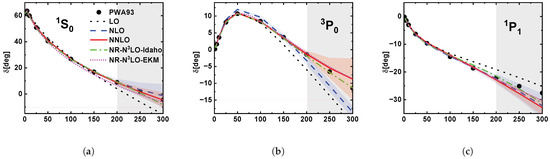
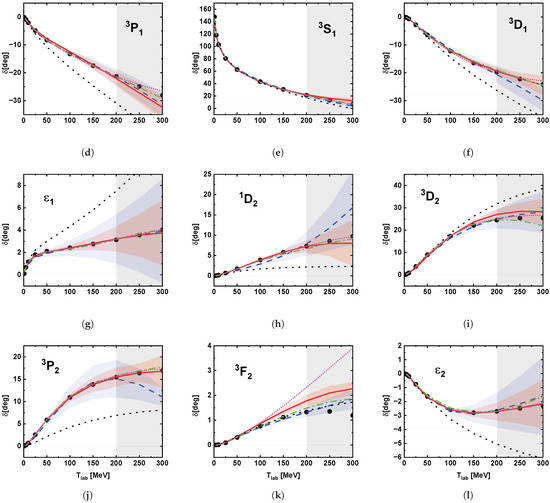
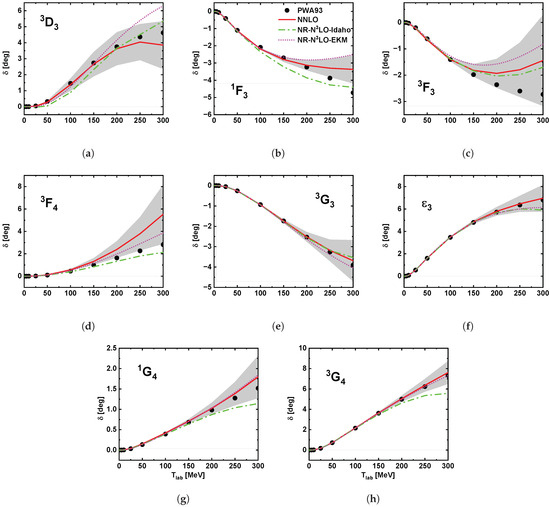
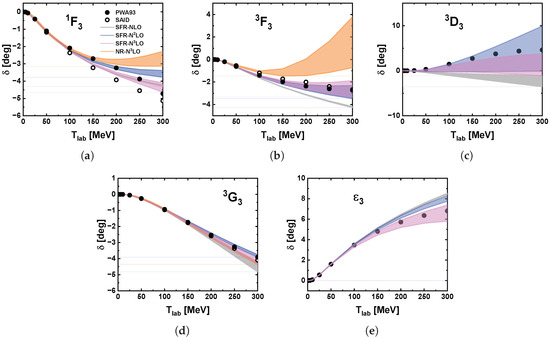
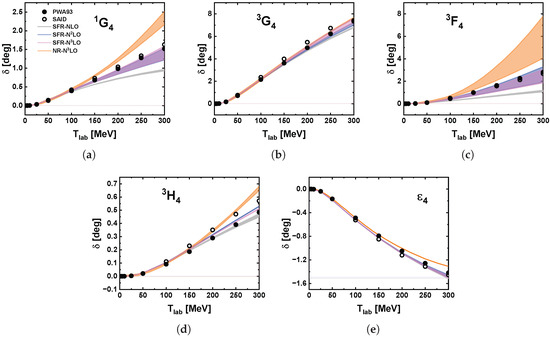
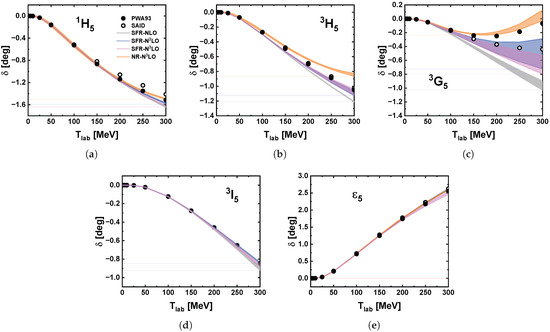
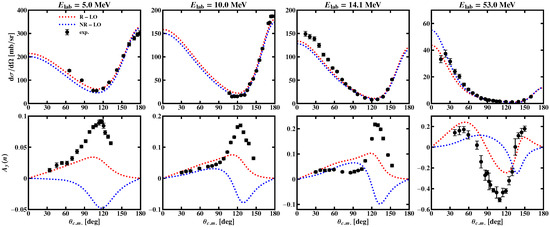
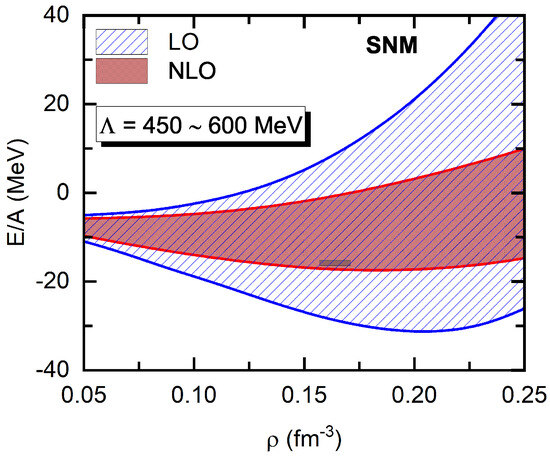
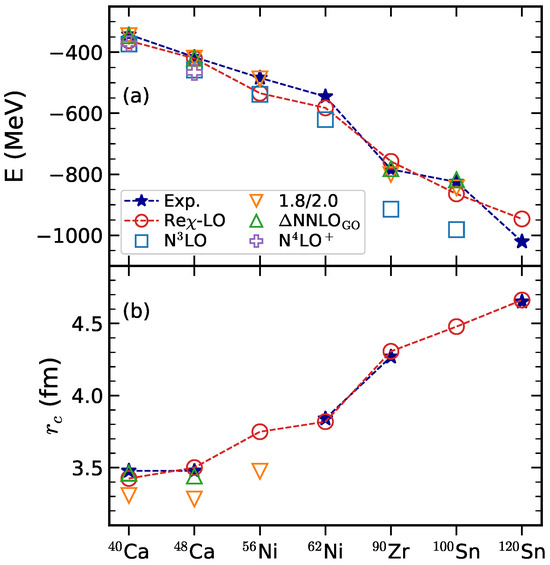
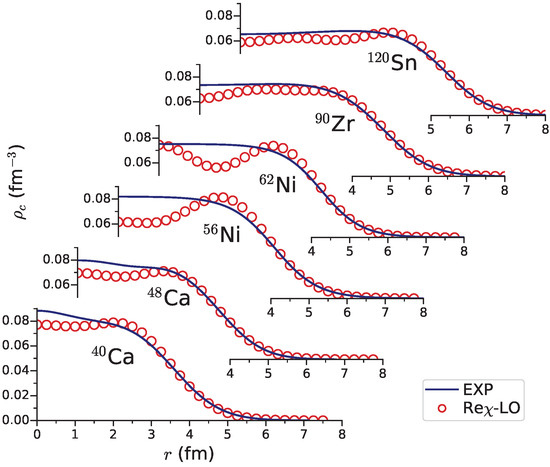
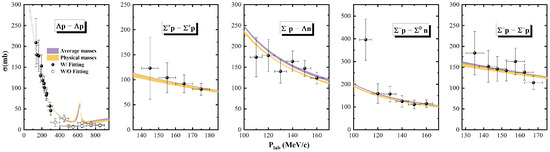
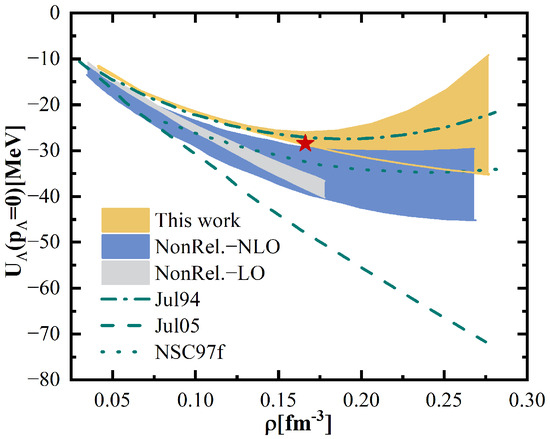
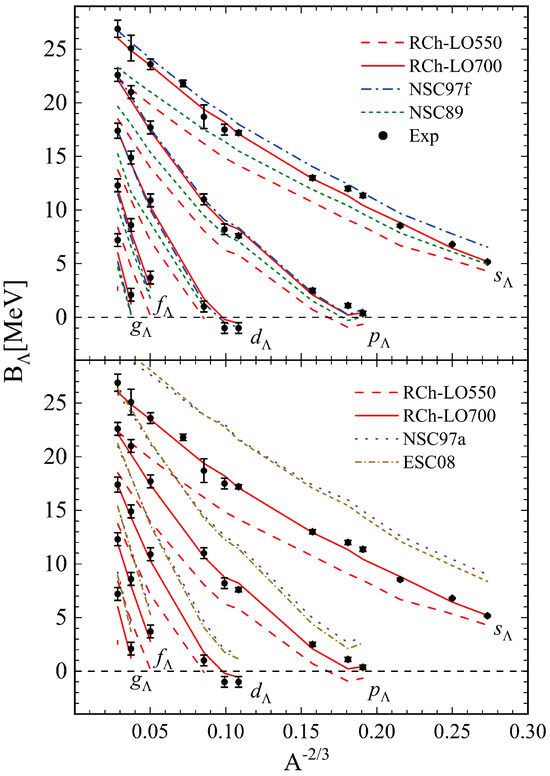
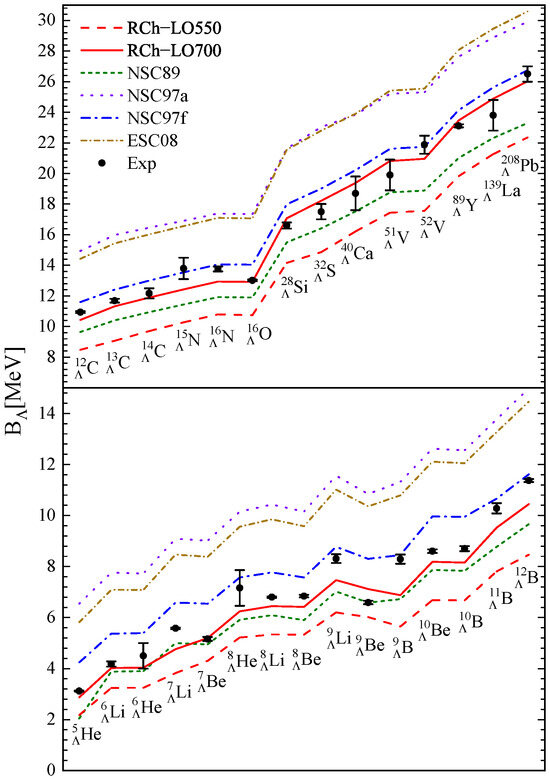
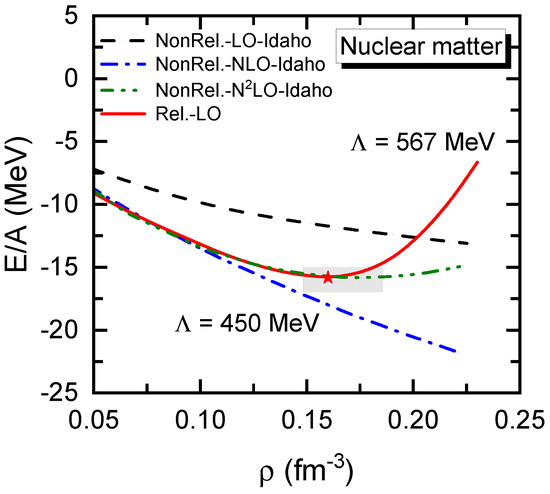
The nuclear force is central to our understanding of complex nuclear phenomena and to the applications of nuclear techniques. The non-perturbative nature of low-energy strong interaction and color confinement have provided an ab initio understanding of nuclear force, a challenge for almost a century, since the pioneering work of Yukawa. Since 1990, chiral effective field theory (ChEFT) has become the de facto standard for describing nuclear interactions; most prior studies employed heavy-baryon chiral perturbation theory. Only recently, there have been successful attempts to construct a chiral nuclear force employing covariant baryon chiral perturbation theory. In this work, we review recent developments and applications of relativistic chiral nuclear forces. We first elaborate on the necessity of relativistic/covariant theories, then present the construction of the first high-precision relativistic chiral nuclear force up to next-to-next-to-leading order (NNLO), and discuss the ongoing progress in higher-order nucleon–nucleon (NN) and n-d scattering, as well as their applications in nuclear matter, finite nuclei, and hypernuclear systems. Finally, we summarize the achievements and outline the future outlook of this research field.
Full article
(This article belongs to the Special Issue Selected Papers from the International Symposium Commemorating the 40th Anniversary of Halo Nuclei)
►▼
Show Figures

Figure 1
Open AccessArticle
Emergent Higgs Field and the Schwarzschild Black Hole
by
Dragana Pilipović
Particles 2026, 9(2), 37; https://doi.org/10.3390/particles9020037 - 3 Apr 2026
Abstract
The derivations presented in this paper suggest an intimate relationship between geometry and the electroweak sector at the Planck scale. A Lorentz-invariant maximally symmetric stochastically perturbed spacetime transformed to spherical coordinates reveals an emergent Schwarzschild metric, entirely a statistical structure of stochastic spacetime.
[...] Read more.
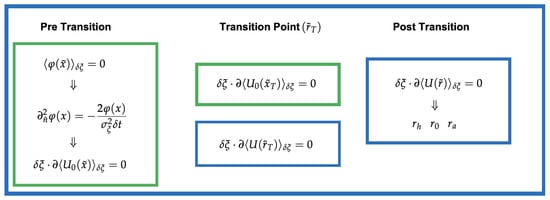
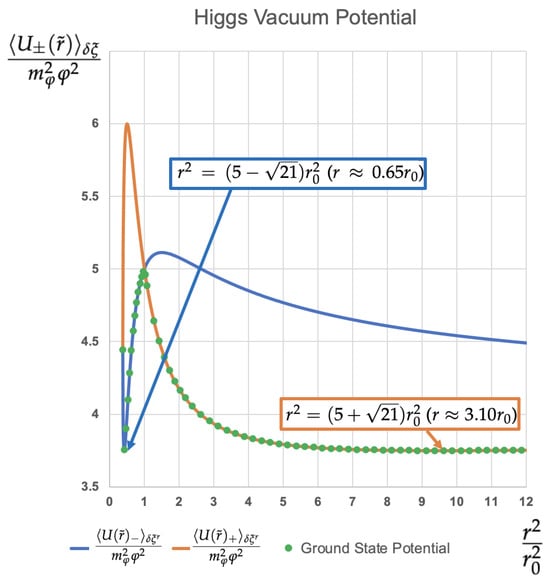
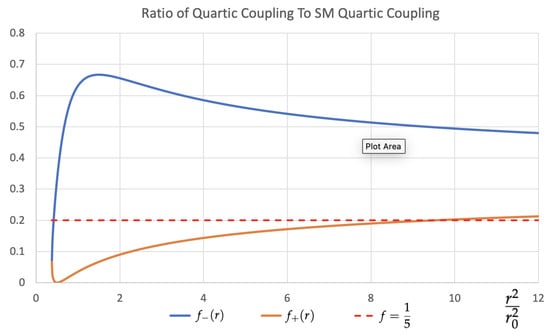
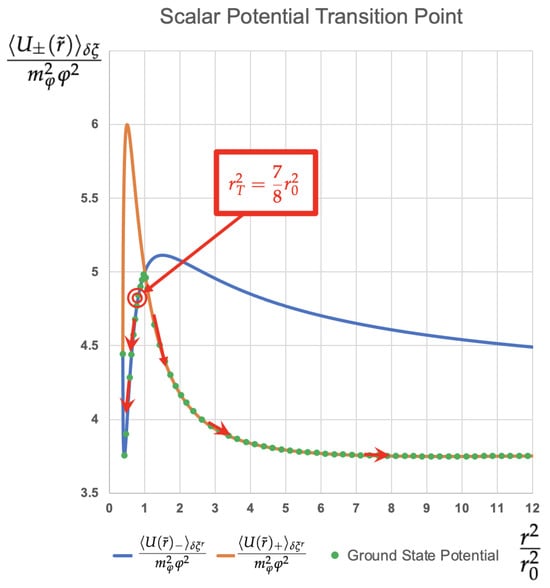
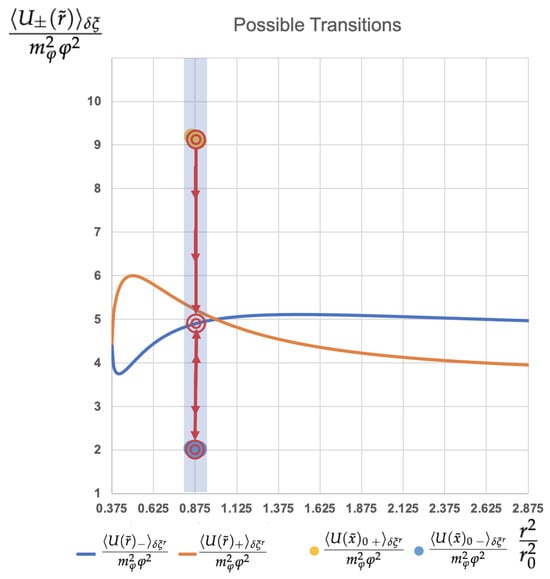
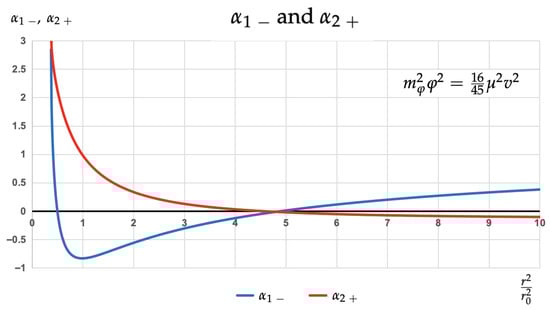
The derivations presented in this paper suggest an intimate relationship between geometry and the electroweak sector at the Planck scale. A Lorentz-invariant maximally symmetric stochastically perturbed spacetime transformed to spherical coordinates reveals an emergent Schwarzschild metric, entirely a statistical structure of stochastic spacetime. Similarly, the transition from a maximally symmetric universe with a complex scalar doublet , comprising four independent real scalar fields with a zero vacuum expectation value (VEV), to spherical coordinates at the Planck scale reveals the spontaneously broken electroweak (EW) sector. Working in the unitarity gauge, the resulting EW potential can be simultaneously mapped in space at the Planck scale and across the EW sector. In space, the resulting EW potential includes a deep well within the Schwarzschild sphere and a shallow well just outside corresponding to an accretion disk. The same potential mapped in the EW space provides an entire family of possible sombrero hat potentials with fourth-order coupling specific to a point in space. At the minimum points of the potential in space, inside the Schwarzschild sphere and at the accretion disk, the corresponding to the Standard Model (SM) fourth-order coupling is instead derived as . The factor of is a simple consequence of the conservation of the EW VEV and the fact that the SM formulation of the EW potential does not account for situations where the perturbations in dominate. A more general formulation of the EW potential restores the SM quartic coupling and preserves in space. An emergent Higgs field inside the Schwarzschild black hole is found to directly relate to the stochastic spacetime fields normalized by the Schwarzschild radius. The corresponding Higgs vacuum has both a ground and excited state and the possibility of both positive and negative vacuum entropy. Finally, the scalar-field VEV degeneracy in EW space of the metastable Higgs vacuum appears instead differentiated in space with possible probability, tunneling, and entropy implications.
Full article
(This article belongs to the Section Phenomenology and Physics Beyond the Standard Model)
►▼
Show Figures

Figure 1

Open AccessArticle
Description of 29F and 31F Within the Deformed Relativistic Hartree–Bogoliubov Theory in Continuum
by
Kaiyuan Zhang, Ling Li, Jie Yan, Guixiang Ye, Xinhui Wu, Jia-Lin An, Shi-Sheng Zhang, Cong Pan and Xiang-Xiang Sun
Particles 2026, 9(2), 36; https://doi.org/10.3390/particles9020036 - 2 Apr 2026
Abstract
The experimental exploration of halo nuclei over the past four decades has established ground-state halo phenomena in about twenty nuclei, providing important benchmarks for modern nuclear theories. The deformed relativistic Hartree–Bogoliubov theory in continuum (DRHBc) has been successfully applied to describe known halo
[...] Read more.
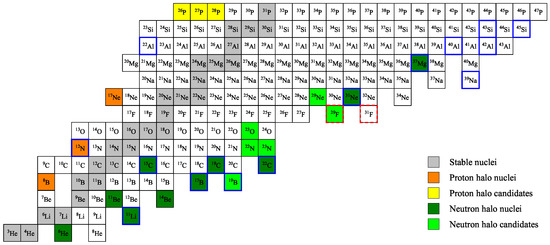
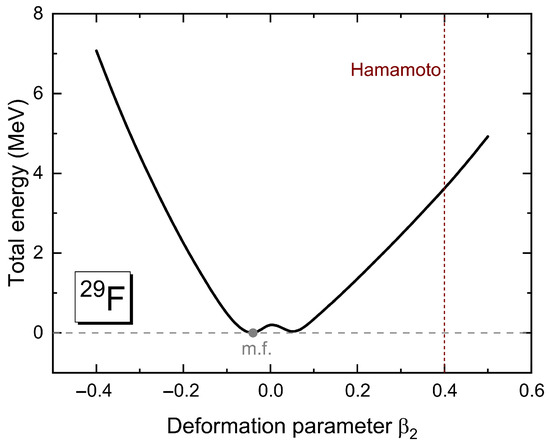
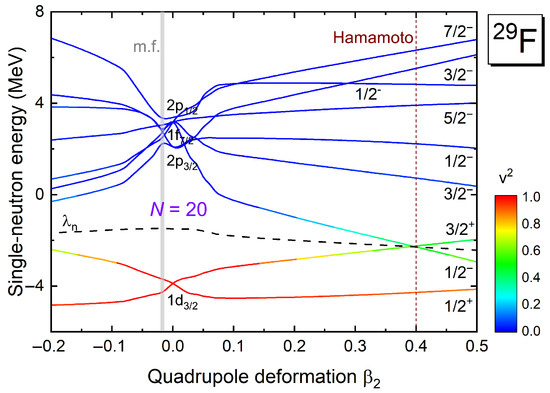
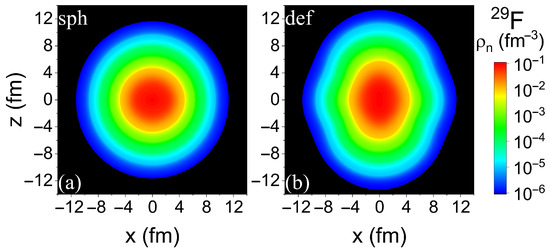
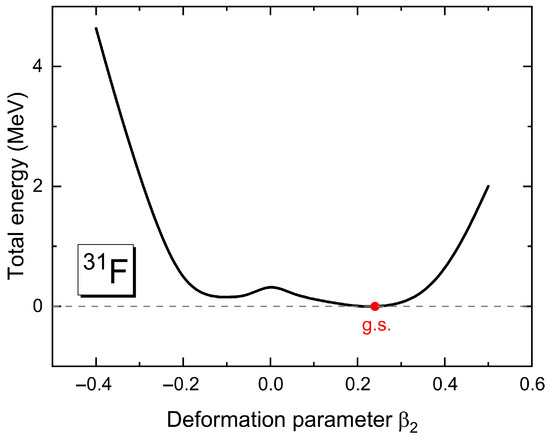
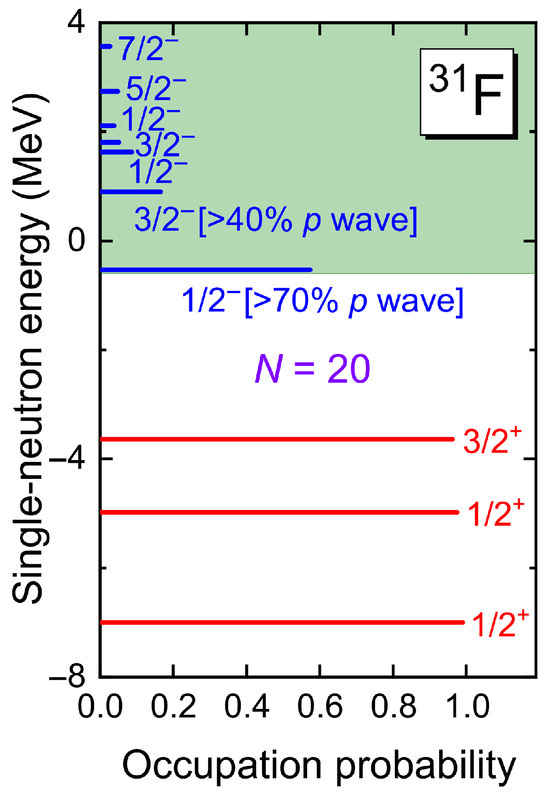
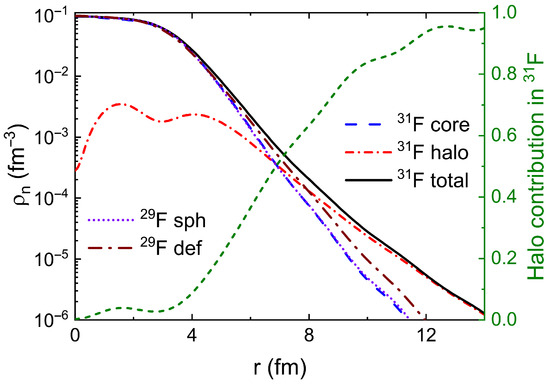
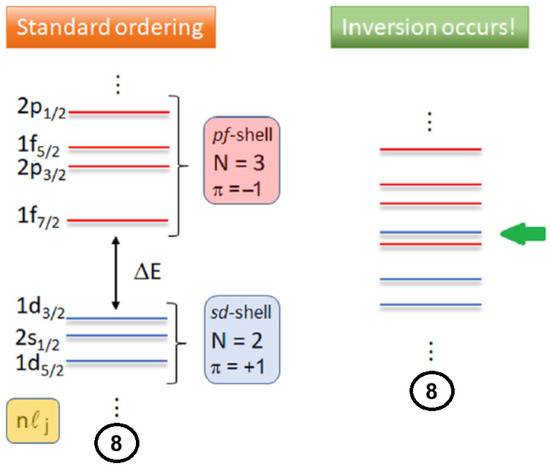
The experimental exploration of halo nuclei over the past four decades has established ground-state halo phenomena in about twenty nuclei, providing important benchmarks for modern nuclear theories. The deformed relativistic Hartree–Bogoliubov theory in continuum (DRHBc) has been successfully applied to describe known halo nuclei and to predict new candidates during the last dozen years. In this work, the possible two-neutron halo nuclei and are investigated within the DRHBc framework. In the spherical limit, an inversion between the and orbitals is obtained relative to the conventional single-particle ordering, which plays a crucial role in the formation of deformed halos in these nuclei. Assuming a prolate deformation with , as suggested in previous studies, a deformed two-neutron halo in is reproduced. For , a well-deformed ground state with and a more pronounced two-neutron halo emerge self-consistently.
Full article
(This article belongs to the Special Issue Selected Papers from the International Symposium Commemorating the 40th Anniversary of Halo Nuclei)
►▼
Show Figures

Figure 1
Open AccessArticle
Searching for Stable States in the TDD1 Systems Based on a Chiral Quark Model
by
Yuheng Wu, Linkai Li, Yuheng Xing, Xinxing Wu and Yue Tan
Particles 2026, 9(2), 35; https://doi.org/10.3390/particles9020035 - 2 Apr 2026
Abstract
Experimentally, the state was first discovered, and subsequently, its partner state , with the same quark content and quantum number was also observed.
[...] Read more.
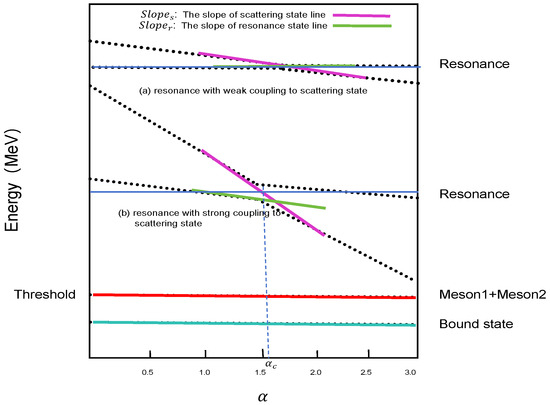
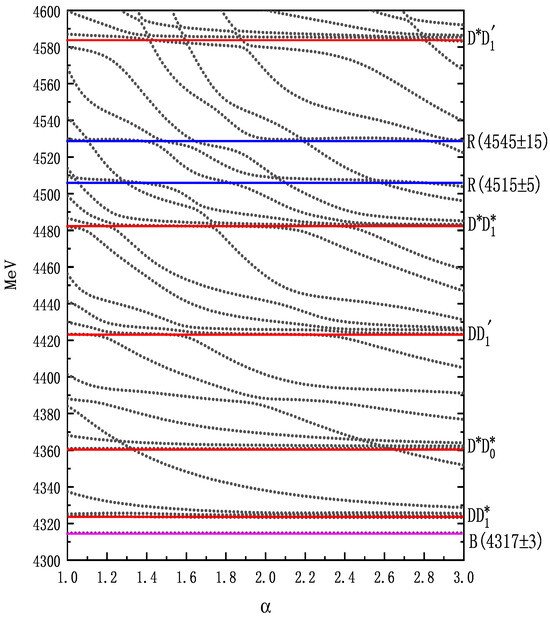
Experimentally, the state was first discovered, and subsequently, its partner state , with the same quark content and quantum number was also observed. Inspired by this pattern, we systematically investigate the newly discovered state and its possible partner, the system with the same quark content . Within the framework of the chiral quark model, we perform a comprehensive study of the bound and resonance states of using the Gaussian expansion method (GEM). Two quark configurations, the molecular structure and the diquark structure, are considered in our calculations. Our results indicate the existence of a shallow bound state dominated by the channel, which is analogous to the experimentally observed , as well as two compact resonant states with narrow widths around 4.5 GeV. To avoid the influence of model parameters on the results, we additionally fitted a new set of parameters and obtained consistent conclusions. According to our calculation results, although the color-octet and diquark configurations have relatively high energies, the channel-coupling effects induced by them play a crucial role in the formation of these stable states. We strongly encourage experimental efforts to search for the stable states predicted in the system.
Full article
(This article belongs to the Special Issue Strong QCD and Hadron Structure)
►▼
Show Figures

Figure 1

Open AccessReview
Current Status and Future Prospects of the LHCf Experiment
by
Oscar Adriani, Eugenio Berti, Pietro Betti, Lorenzo Bonechi, Massimo Bongi, Raffaello D’Alessandro, Sebastiano Detti, Elena Gensini, Elena Geraci, Maurice Haguenauer, Vlera Hajdini, Cigdem Issever, Yoshitaka Itow, Katsuaki Kasahara, Haruka Kobayashi, Clara Leitgeb, Yutaka Matsubara, Hiroaki Menjo, Yasushi Muraki, Andrea Paccagnella, Paolo Papini, Giuseppe Piparo, Sergio Bruno Ricciarini, Takashi Sako, Nobuyuki Sakurai, Monica Scaringella, Yuki Shimizu, Tadashi Tamura, Alessio Tiberio, Shoji Torii, Alessia Tricomi, Bill Turner and Kenji Yoshidaadd
Show full author list
remove
Hide full author list
Particles 2026, 9(2), 34; https://doi.org/10.3390/particles9020034 - 2 Apr 2026
Abstract
The Large Hadron Collider forward (LHCf) experiment studies the production of neutral particles in the very forward region of high-energy hadronic collisions at the LHC. These measurements provide essential calibration data for hadronic interaction models used in simulations of extensive air showers initiated
[...] Read more.
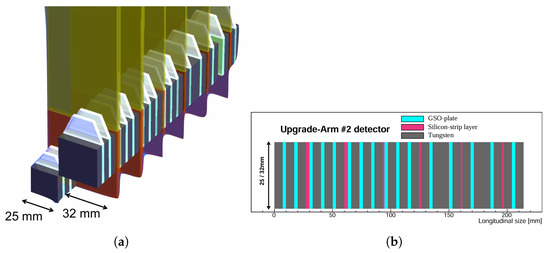
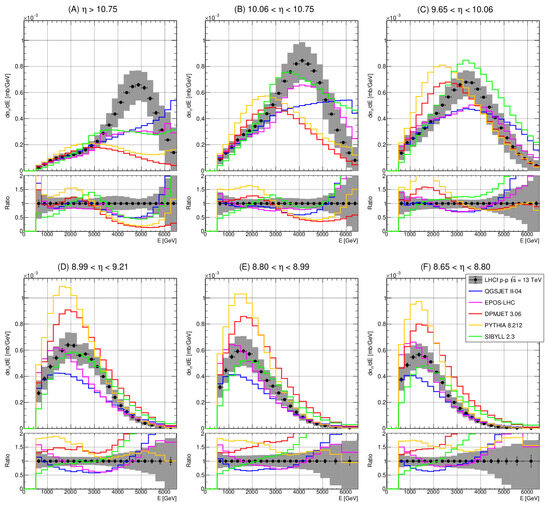
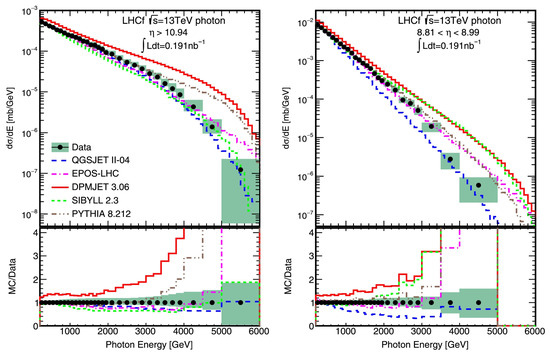
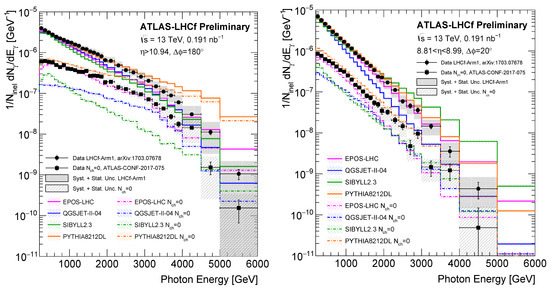
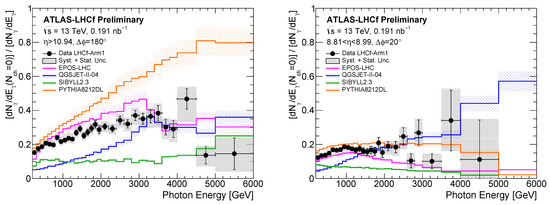
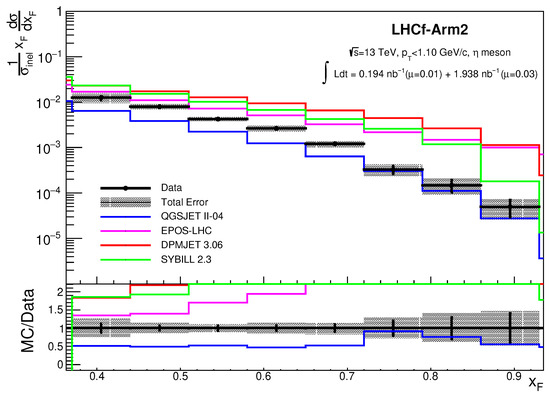
The Large Hadron Collider forward (LHCf) experiment studies the production of neutral particles in the very forward region of high-energy hadronic collisions at the LHC. These measurements provide essential calibration data for hadronic interaction models used in simulations of extensive air showers initiated by ultra-high-energy cosmic rays. The LHCf experiment measures forward-produced neutral particles, such as neutrons, photons, , and mesons, which play a key role in the development of extensive air showers. Proton–proton collisions at the LHC reach center-of-mass energies up to 13.6 TeV, corresponding in the fixed-target frame to cosmic-ray interactions at energies close to 1017 eV in the Earth’s atmosphere. LHCf has collected data in proton–proton collisions at several energies, as well as in proton–lead collisions, enabling detailed comparisons between experimental results and predictions of hadronic interaction models. This contribution reviews the most significant LHCf results, with emphasis on Run II proton–proton data at , including measurements of forward neutron, photon, and meson production. Finally, future prospects are discussed, focusing on ongoing analyses of Run III proton–proton data at and on the final LHCf operation in proton-oxygen collisions at , which best reproduces cosmic-ray interactions with nuclei of the Earth’s atmosphere.
Full article
(This article belongs to the Special Issue Selected Papers from the 14th International Conference on New Frontiers in Physics (ICNFP 2025))
►▼
Show Figures

Figure 1

Open AccessPerspective
Complexity: What Is It?
by
Constantino Tsallis
Particles 2026, 9(2), 33; https://doi.org/10.3390/particles9020033 - 2 Apr 2026
Abstract
On the basis of the correlations of distant—in time and/or in space—elements of a many-element system, we propose the hard core of a mathematical definition of what may be referred to as complexity. This definition consistently leads to the concept of degree of
[...] Read more.
On the basis of the correlations of distant—in time and/or in space—elements of a many-element system, we propose the hard core of a mathematical definition of what may be referred to as complexity. This definition consistently leads to the concept of degree of complexity.
Full article
(This article belongs to the Special Issue Particles and Plasmas in Strong Fields)
Open AccessReview
Progress on the Proton Decays of A ∼ 20 Nuclei Around the Proton Drip Line
by
Lei Ni, Yu Jin, Hui Hua and Zhihuan Li
Particles 2026, 9(2), 32; https://doi.org/10.3390/particles9020032 - 1 Apr 2026
Abstract
Experimental studies on the spontaneous nucleon emission in nuclei around the drip line enable us to explore new isotopes or resonant states, and to reveal exotic structures and decay properties of nuclei located far from the stability line; consequently, they are of
[...] Read more.
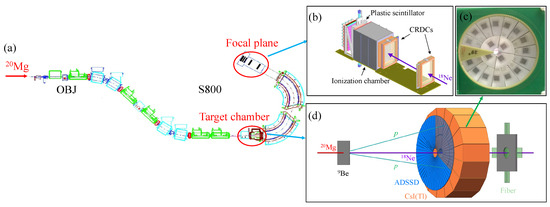
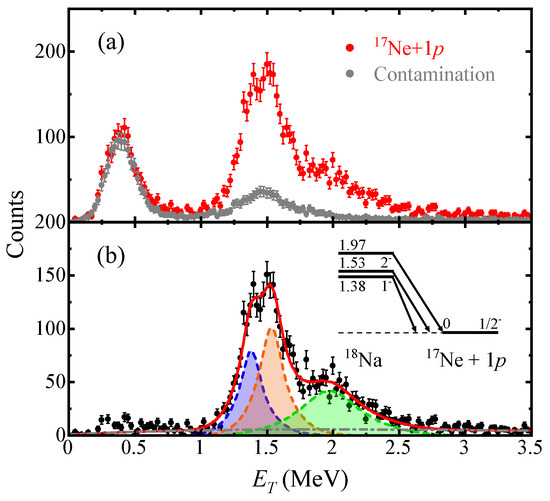
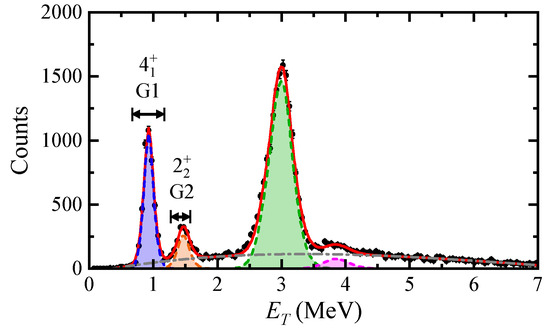
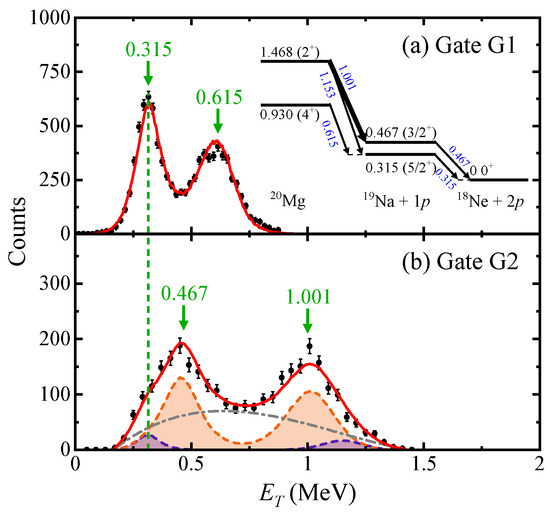
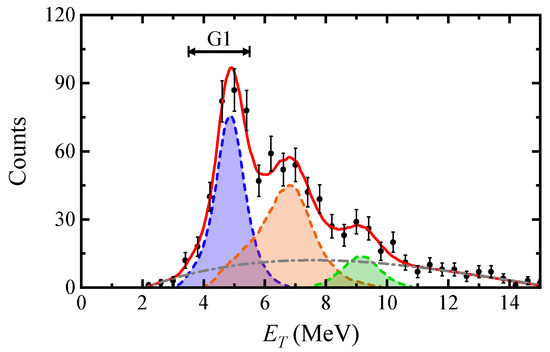
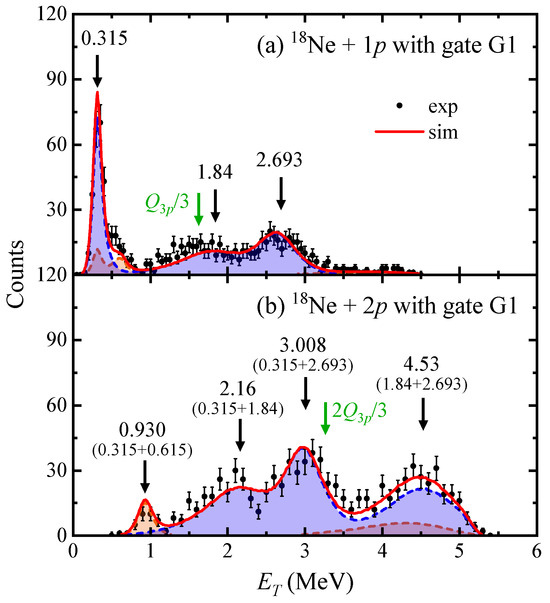
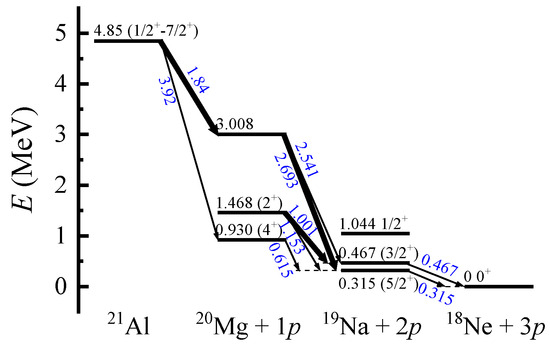
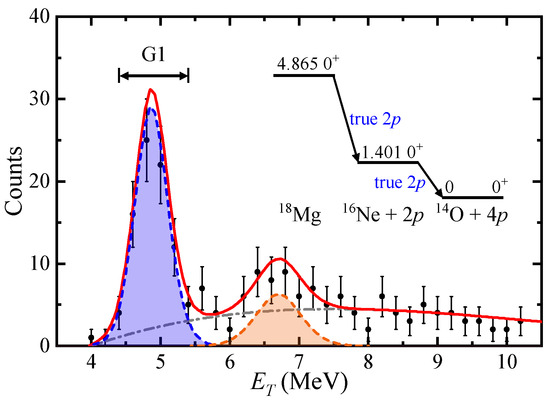
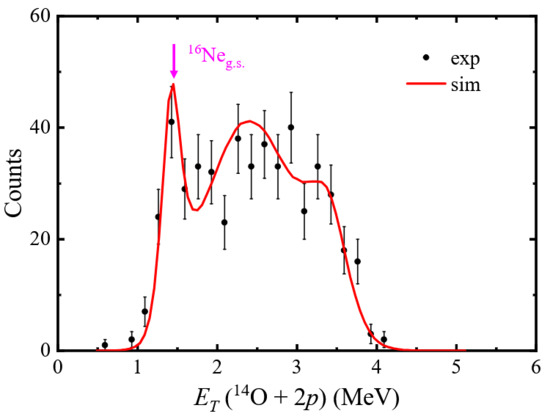
Experimental studies on the spontaneous nucleon emission in nuclei around the drip line enable us to explore new isotopes or resonant states, and to reveal exotic structures and decay properties of nuclei located far from the stability line; consequently, they are of critical importance for probing limits of nuclear stability and understanding nucleon–nucleon interactions under extreme conditions of isospin asymmetry. With the radioactive isotope beam 20Mg provided by the National Superconducting Cyclotron Laboratory at Michigan State University, we studied the proton decays of nuclei around the proton drip line at mass region. Complete-kinematics measurements were performed for proton decays of one-proton resonant states in 18Na, two-proton resonant states in 20Mg, three-proton resonant states in 21Al, and four-proton resonant states in 18Mg, yielding decay energy spectra for all four nuclei. With the invariant mass method, the ground state of 18Na was firmly identified, clarifying previous ambiguities of its position. The isotope 18Mg, which is located two neutrons beyond the proton drip line, was experimentally observed for the first time. Multi-body correlation analysis of emitted protons from 20Mg, 21Al, and 18Mg, combined with Monte Carlo simulations, reveals that the identified resonant states in 20Mg and 21Al predominantly decay via two and three sequential steps of emission, respectively, whereas the 18Mg ground state decays mainly through a two-step cascade of prompt emission.
Full article
(This article belongs to the Special Issue Selected Papers from the International Symposium Commemorating the 40th Anniversary of Halo Nuclei)
►▼
Show Figures

Figure 1
Open AccessArticle
Concept of Isomer Beam Production with Heavy-Ion Storage Rings
by
Takayuki Yamaguchi, Yoshitaka Yamaguchi, Tetsuya Ohnishi, Daisuke Nagae and Yury A. Litvinov
Particles 2026, 9(2), 31; https://doi.org/10.3390/particles9020031 - 29 Mar 2026
Abstract
Heavy radioactive ion beams produced by in-flight techniques often involve long-lived excited states (isomers). This presents a challenge for reaction studies because none of the existing fragment separators worldwide can resolve isomers in-flight. Here, we propose a novel scheme to produce tagged cocktail
[...] Read more.
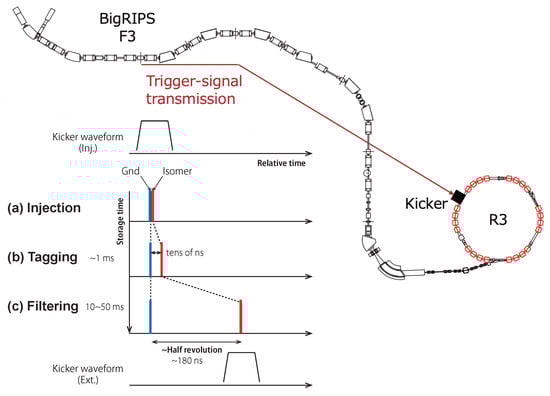
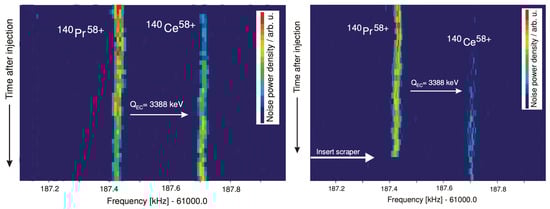
Heavy radioactive ion beams produced by in-flight techniques often involve long-lived excited states (isomers). This presents a challenge for reaction studies because none of the existing fragment separators worldwide can resolve isomers in-flight. Here, we propose a novel scheme to produce tagged cocktail beams or pure isomer beams using an ion storage ring. The mass resolving powers of storage rings enable us to identify and separate ions of the isomeric state from the corresponding ground state in a secondary beam. For short-lived isomers, the Rare-RI Ring (R3) facility at the RI Beam Factory (RIBF) will be available, while for long-lived isomers the Experimental Storage Ring (ESR) at the GSI/FAIR facility will be utilized. Isomers often have spins and deformations significantly different from the ground states. Studying isomer structures will provide unique insight into their specific interactions, opening a new frontier in reaction studies with radioactive ion beams in the coming years.
Full article
(This article belongs to the Special Issue Selected Papers from the International Symposium Commemorating the 40th Anniversary of Halo Nuclei)
►▼
Show Figures

Figure 1
Open AccessArticle
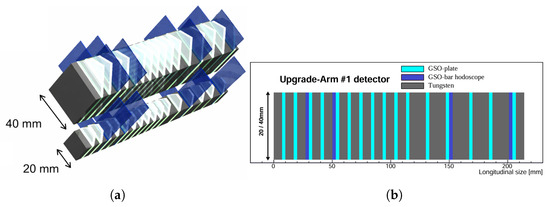
Instruments for Focal Plane X-Ray Polarimetry in the Next Decade
by
Fabio Muleri, Stefano Cesare, Enrico Costa, Walter Cugno, Klaus Desch, Alessandro Di Marco, Sergio Fabiani, Riccardo Ferrazzoli, Markus Gruber, Daniel Heuchel, Saba Imtiaz, Jochen Kaminski, Dawoon Edwin Kim, Alessandro Lacerenza, Carlo Lefevre, Hemanth Manikantan, Vladislavs Plesanovs, John Rankin, Ajay Ratheesh, Alda Rubini and Paolo Soffittaadd
Show full author list
remove
Hide full author list
Particles 2026, 9(2), 30; https://doi.org/10.3390/particles9020030 - 24 Mar 2026
Abstract
The successful detection of X-ray polarization from many celestial sources belonging to different classes by the IXPE mission has opened a new window in X-ray astronomy. While an impressive number of scientific topics have already been addressed by IXPE, many of them would
[...] Read more.
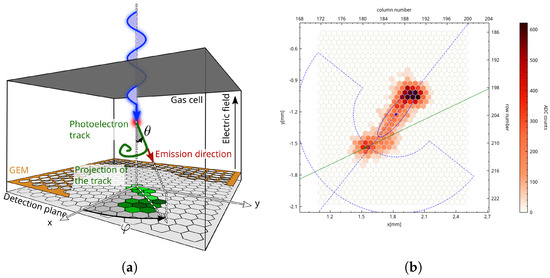
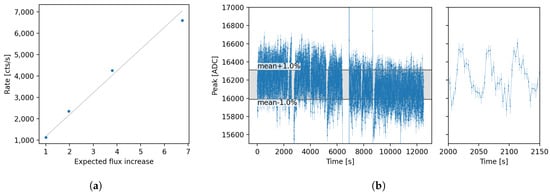
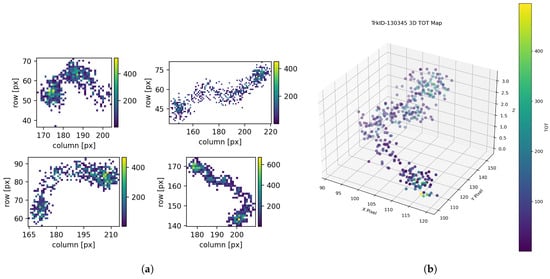
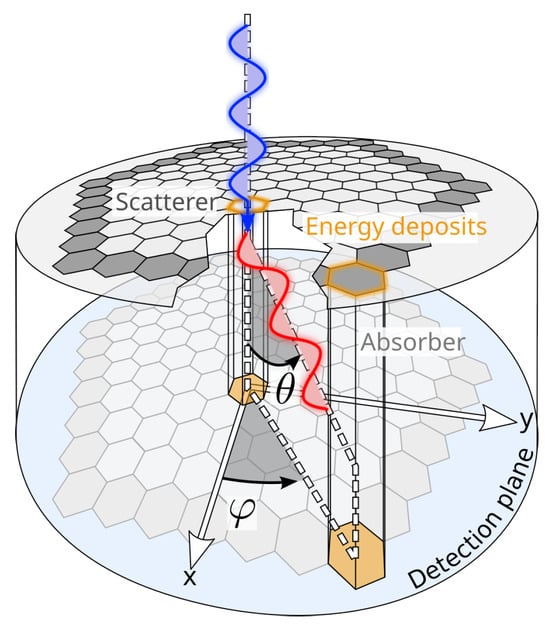
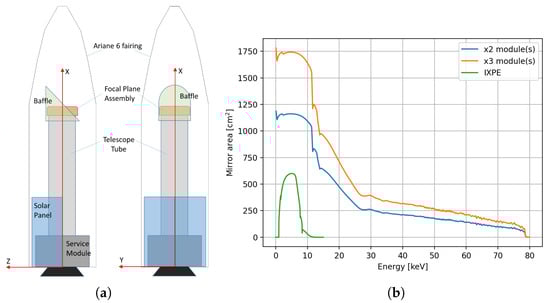
The successful detection of X-ray polarization from many celestial sources belonging to different classes by the IXPE mission has opened a new window in X-ray astronomy. While an impressive number of scientific topics have already been addressed by IXPE, many of them would benefit from a new class of instrumentation that could be launched on a relatively short time scale. In this contribution, we present the development activities of a focal-plane polarimeter whose goal is to extend the energy range of IXPE up to tens of keV, with better sensitivity and lower background. Our design is based on the use of multilayer mirrors and stacked instrumentation, comprising either a low- or medium-energy imaging photoelectric polarimeter and an active Compton polarimeter. Such an approach relies on hardware with flight heritage and—although still under development for the specific application in X-ray polarimetry—it has the potential to answer compelling scientific questions and to soon become competitive from the point of view of feasibility for space applications.
Full article
(This article belongs to the Special Issue Advances in Space AstroParticle Physics: Frontier Technologies for Particle Measurements in Space, 2025 Edition)
►▼
Show Figures

Figure 1

Open AccessArticle
Magnetodynamic Characteristics of QGP Energy Dissipation in RMHD Framework with Relativistic Heavy-Ion Collisions
by
Huang-Jing Zheng and Sheng-Qin Feng
Particles 2026, 9(1), 29; https://doi.org/10.3390/particles9010029 - 19 Mar 2026
Abstract
►▼
Show Figures
Relativistic heavy-ion collisions generate ultra-strong magnetic fields that interact with the quark–gluon plasma (QGP), a key focus of high-energy physics research. This study investigates QGP energy density evolution under time-dependent magnetic fields within a (1 + 1)D relativistic magnetohydrodynamic (RMHD) framework integrated with
[...] Read more.
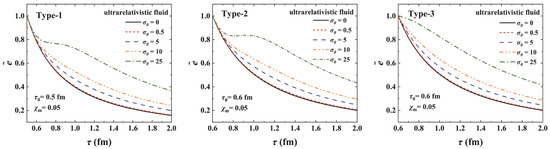
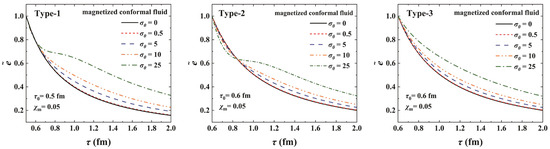
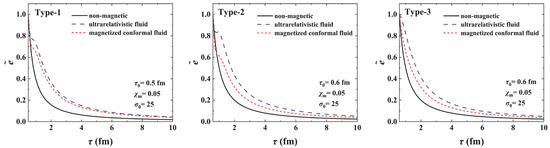
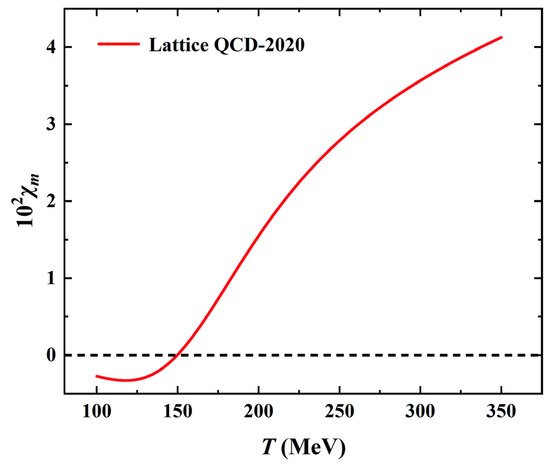
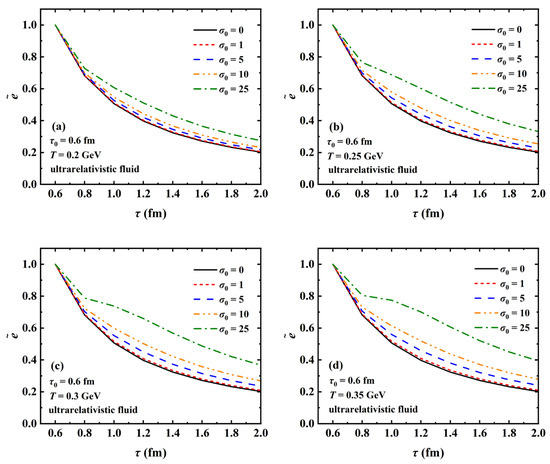
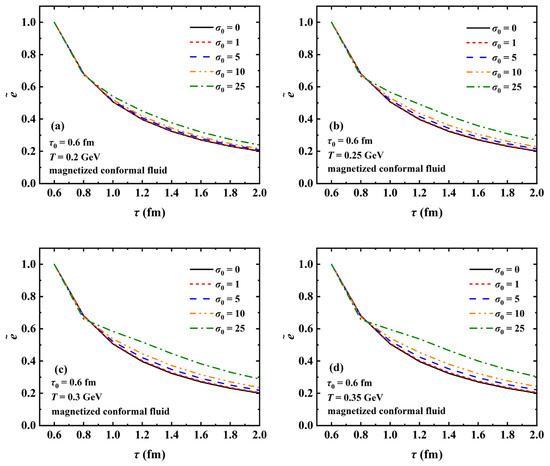
Relativistic heavy-ion collisions generate ultra-strong magnetic fields that interact with the quark–gluon plasma (QGP), a key focus of high-energy physics research. This study investigates QGP energy density evolution under time-dependent magnetic fields within a (1 + 1)D relativistic magnetohydrodynamic (RMHD) framework integrated with Bjorken flow. Three magnetic field temporal evolution models (Type-1, Type-2, Type-3) are analyzed for two different equations of state: (1) (simplified ultra-relativistic), and (2) (magnetized conformal), incorporating a temperature-dependent magnetic susceptibility derived from lattice QCD. Results show that stronger magnetic fields consistently suppress QGP energy density decay, with suppression magnitude dependent on the magnetic field’s temporal profile. Ultra-relativistic fluids exhibit slowed energy decay due to magnetic pressure counteracting hydrodynamic expansion. In contrast, magnetized conformal fluids display faster energy dissipation under identical conditions, arising from the synergistic effect of enhanced magnetic fluid coupling, increased energy dissipation during interaction, and QGP’s perfect fluid expansion at elevated temperatures. Temperature-dependent magnetic susceptibility reveals a transition from diamagnetic (confined phase) to paramagnetic (deconfined QGP phase) behavior, introducing a feedback mechanism that strengthens energy retention at higher temperatures. This work clarifies the interplay between magnetic field dynamics, QCD phase structure, and hydrodynamic expansion, providing key observational signatures for distinguishing fluid types in heavy-ion collisions and advancing realistic modeling of magnetized QGP.
Full article

Figure 1
Open AccessArticle
Nanofusion: Plasmons Help to Accelerate Protons
by
Tamás Biró
Particles 2026, 9(1), 28; https://doi.org/10.3390/particles9010028 - 19 Mar 2026
Abstract
We report on laser fusion research with nanotechnology-improved targets embedded in special polymers. The results of the last three years are reviewed here, including laser matter interaction craters, laser infrared breakdown spectroscopy, and Raman spectroscopy results, as well as a selected Thomson parabola
[...] Read more.
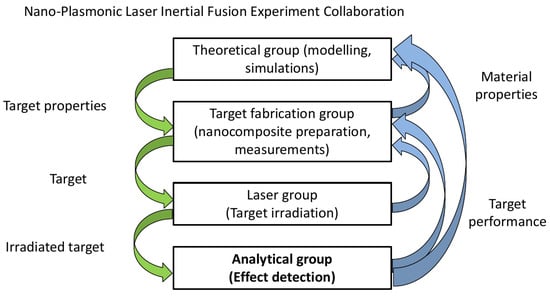
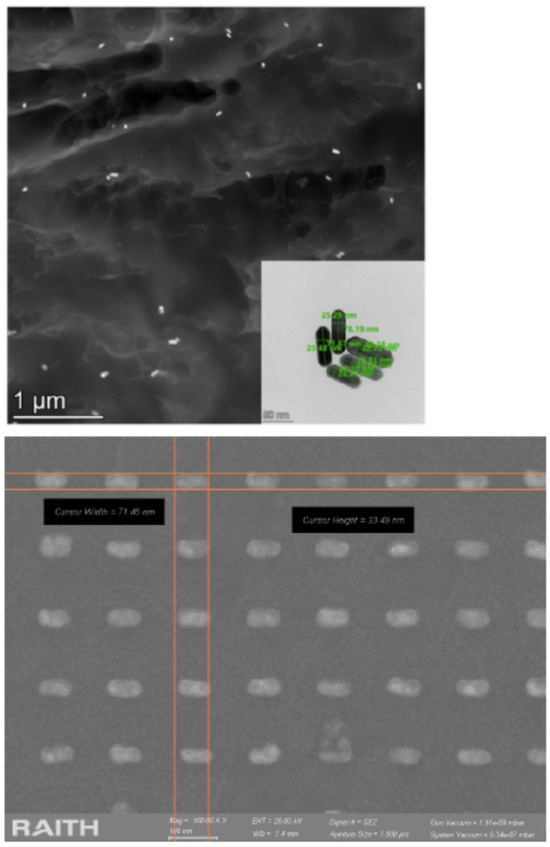
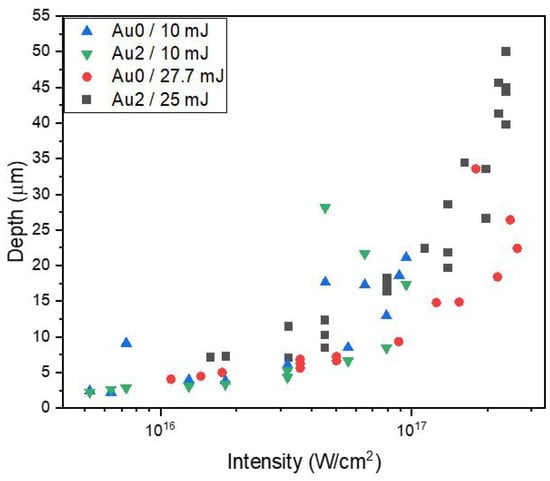
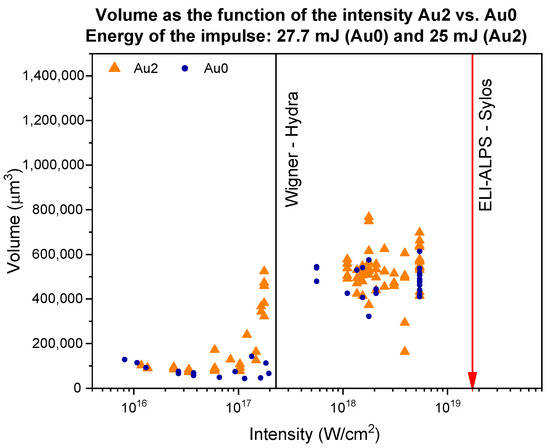
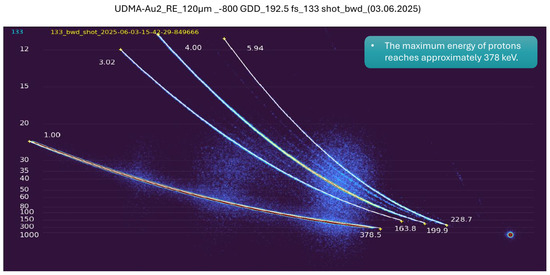
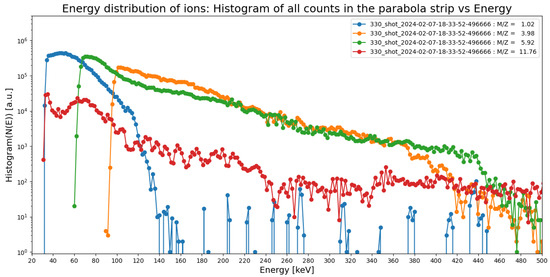
We report on laser fusion research with nanotechnology-improved targets embedded in special polymers. The results of the last three years are reviewed here, including laser matter interaction craters, laser infrared breakdown spectroscopy, and Raman spectroscopy results, as well as a selected Thomson parabola image showing protons accelerated up to 300 keV. In this paper, we focus on proton acceleration and plasmonic enhancement mechanisms rather than on the direct demonstration of sustained fusion reactions.
Full article
(This article belongs to the Special Issue Particles and Plasmas in Strong Fields)
►▼
Show Figures

Figure 1
Open AccessReview
Halos and Multineutron Correlations in Light Neutron-Rich Nuclei
by
Zheyang Lin and Zaihong Yang
Particles 2026, 9(1), 27; https://doi.org/10.3390/particles9010027 - 16 Mar 2026
Abstract
This review summarizes recent experimental progress in the structure and correlations of light neutron-rich nuclei. We first highlight achievements based on quasi-free scattering reactions in inverse kinematics at the Radioactive Isotope Beam Factory (RIBF), including investigations of the single-particle composition of halo systems—for
[...] Read more.
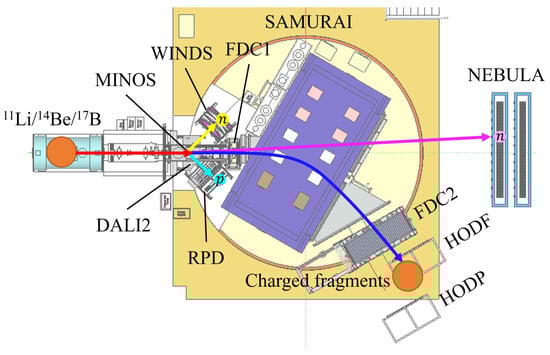
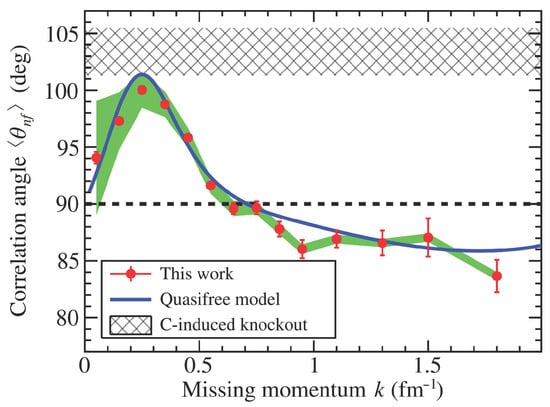
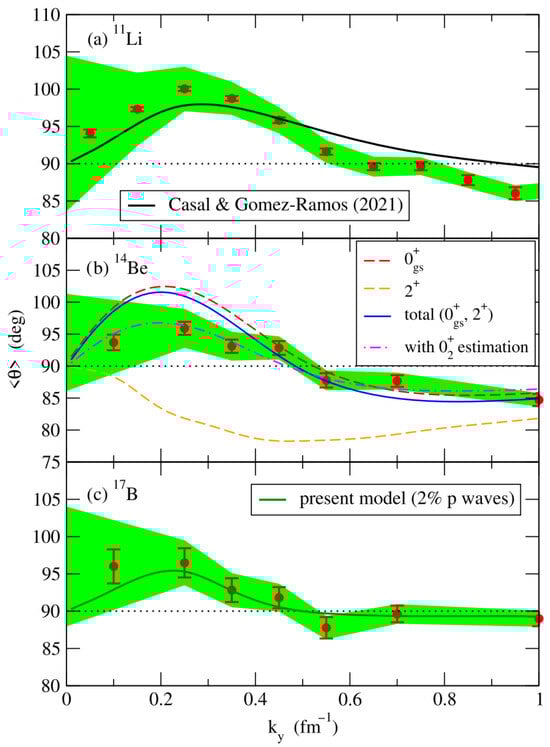
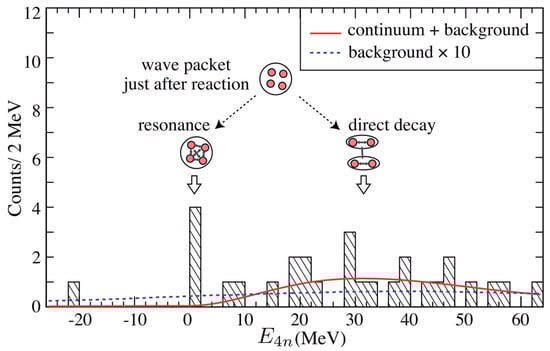
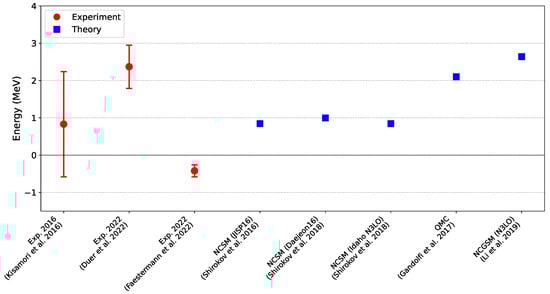
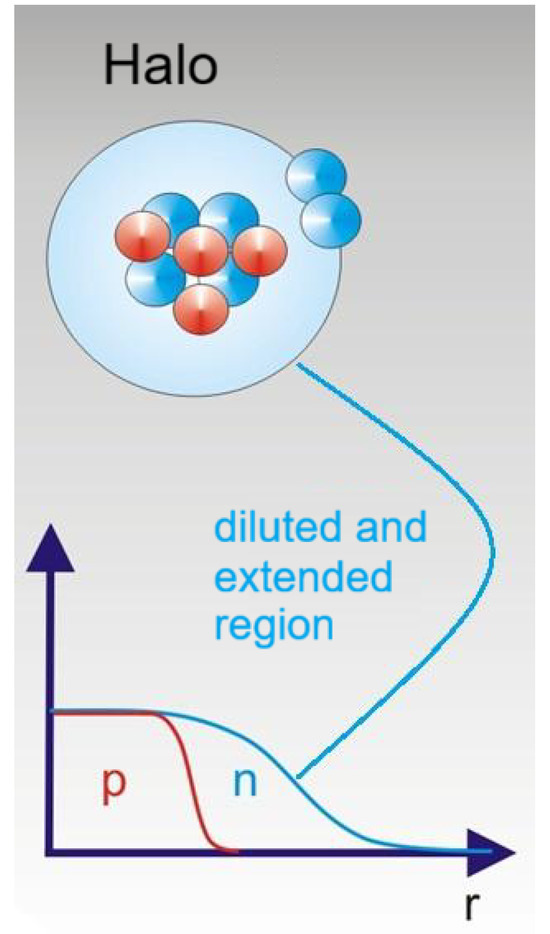
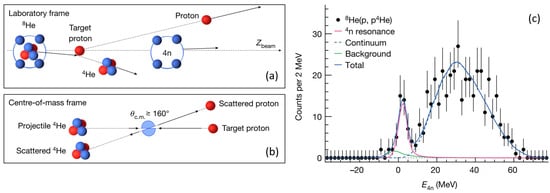
This review summarizes recent experimental progress in the structure and correlations of light neutron-rich nuclei. We first highlight achievements based on quasi-free scattering reactions in inverse kinematics at the Radioactive Isotope Beam Factory (RIBF), including investigations of the single-particle composition of halo systems—for example, revealing the minimal s-wave component in the “weak-halo” nucleus 17B—and the mapping of universal, surface-localized dineutron correlations in Borromean nuclei such as 11Li, 14Be and 17B. We then discuss recent advances in the study of multineutron correlations and cluster states, addressing both experimental challenges and major breakthroughs. These include the observation of a candidate resonance, the absence of a resonant state in the system, the characterization of direct two-neutron decay in 16Be, and evidence for a condensate-like cluster structure in the state. Finally, we discuss prospects for extending such investigations to heavier halo candidates and more complex multineutron systems, and outline the development of next-generation neutron detector arrays that will drive future progress in this field.
Full article
(This article belongs to the Special Issue Selected Papers from the International Symposium Commemorating the 40th Anniversary of Halo Nuclei)
►▼
Show Figures

Figure 1
Open AccessArticle
Measurement of Elastic Scattering Angular Distributions for Proton-Rich Nuclei 21,22Na on Double-Magic Nucleus 40Ca
by
Yuwen Chen, Wei Nan, Bing Guo, Chengjian Lin, Bing Tang, Danyang Pang, Lei Yang, Dongxi Wang, Guo Yang, Yangping Shen, Qiwen Fan, Yiwen Bao, Lei Cao, Lihua Chen, Baoqun Cui, Yueming Hu, Qinghua Huang, Huiming Jia, Chaoxin Kan, Kangning Li, Yaoqian Li, Yunju Li, Zhihong Li, Gang Lian, Junhui Liao, Zhenwei Liu, Tianpeng Luo, Nanru Ma, Ruigang Ma, Xie Ma, Yingjun Ma, Guofang Song, Lei Wang, Xiaofei Wang, Youbao Wang, Yuheng Wang, Peiwei Wen, Shengquan Yan, Feng Yang, Sheng Zeng, Yifan Zhang, Tianjue Zhang and Weiping Liuadd
Show full author list
remove
Hide full author list
Particles 2026, 9(1), 26; https://doi.org/10.3390/particles9010026 - 13 Mar 2026
Abstract
Present and future rare isotope accelerator facilities provide new opportunities to explore the structure of unstable nuclei. We report the measurements of the elastic scattering angular distributions of 21Na and 22Na on the doubly magic 40Ca above the Coulomb barrier
[...] Read more.
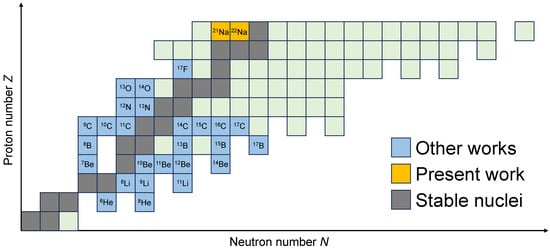
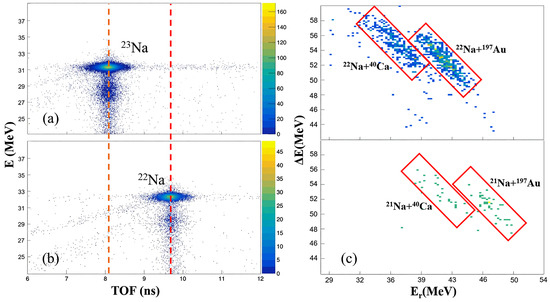
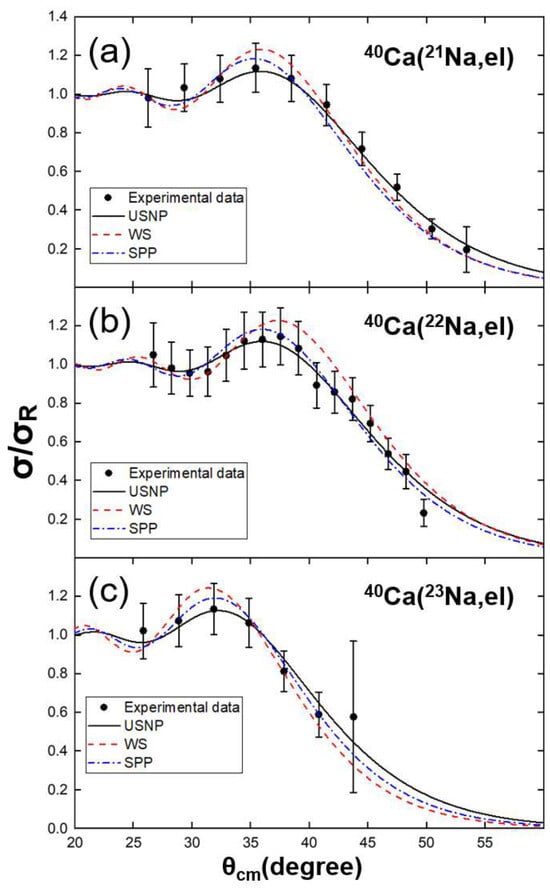
Present and future rare isotope accelerator facilities provide new opportunities to explore the structure of unstable nuclei. We report the measurements of the elastic scattering angular distributions of 21Na and 22Na on the doubly magic 40Ca above the Coulomb barrier energies, using high-purity post-accelerated ISOL beams from Beijing Radioactive Ion Beam Facility (BRIF). Angular distributions were measured with a silicon detector telescope array, and relative cross sections were determined with a CaF2 target on Au backing. The data were well reproduced by optical model calculations with Woods–Saxon and USNP potentials, the latter giving better agreement. These results confirm the stable operation and performance of the BRIF ISOL production and post-acceleration system, demonstrate its capability to provide radioactive beams of useful intensity and purity for future investigations of reaction dynamics and astrophysically relevant processes involving proton-rich nuclei, and simultaneously extend proton-rich elastic scattering studies to heavier systems.
Full article
(This article belongs to the Special Issue Selected Papers from the International Symposium Commemorating the 40th Anniversary of Halo Nuclei)
►▼
Show Figures

Figure 1
Open AccessArticle
Ab Initio Study on the Halo Structure in 11Be
by
Shihang Shen, Serdar Elhatisari, Dean Lee, Ulf-G. Meißner and Zhengxue Ren
Particles 2026, 9(1), 25; https://doi.org/10.3390/particles9010025 - 10 Mar 2026
Abstract
We present an ab initio study on the one-neutron halo nucleus 11Be using nuclear lattice effective field theory with high-fidelity chiral interactions at N3LO. By employing the wavefunction matching method to mitigate the sign problem and the pinhole algorithm to sample many-body
[...] Read more.
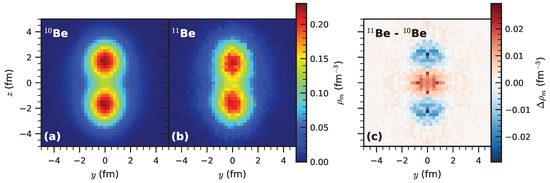
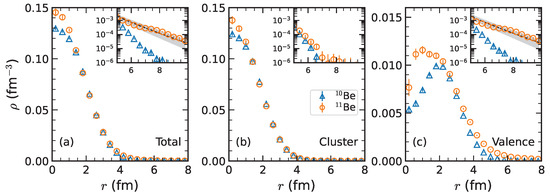
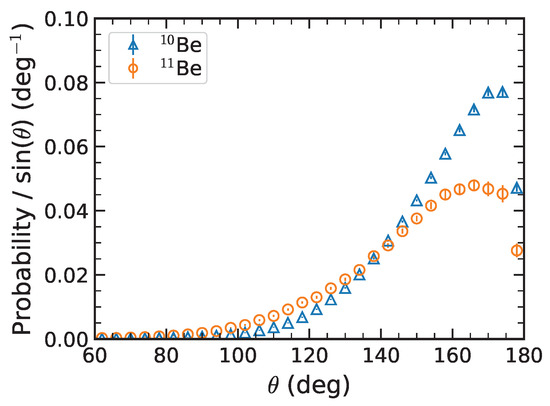
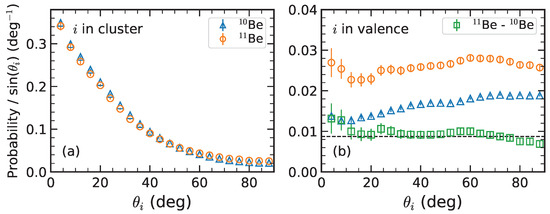
We present an ab initio study on the one-neutron halo nucleus 11Be using nuclear lattice effective field theory with high-fidelity chiral interactions at N3LO. By employing the wavefunction matching method to mitigate the sign problem and the pinhole algorithm to sample many-body correlations, we successfully reproduce the ground-state parity inversion and the extended matter radius characteristic of the halo structure. We analyze the intrinsic density distributions and geometric shapes of 11Be in comparison with the core nucleus 10Be. Our results reveal a prominent two-cluster structure in both nuclei and the occupation of the molecular orbital by the valence neutron in 11Be. It enhances the prolate deformation as well as the diffuse neutron tail, distinct from the -orbital occupation observed in the 10Be ground state.
Full article
(This article belongs to the Special Issue Selected Papers from the International Symposium Commemorating the 40th Anniversary of Halo Nuclei)
►▼
Show Figures

Figure 1
Open AccessArticle
Performance of the ATLAS Muon Spectrometer Detectors During Run 3 Data-Taking
by
Arisa Wada
Particles 2026, 9(1), 24; https://doi.org/10.3390/particles9010024 - 10 Mar 2026
Abstract
With the conclusion of proton–proton collision data-taking in 2025, the ATLAS experiment has now integrated a luminosity exceeding 300 during the Run 3 period, which began in July 2022 following Long Shutdown 2 (LS2). During LS2, a series of detector
[...] Read more.
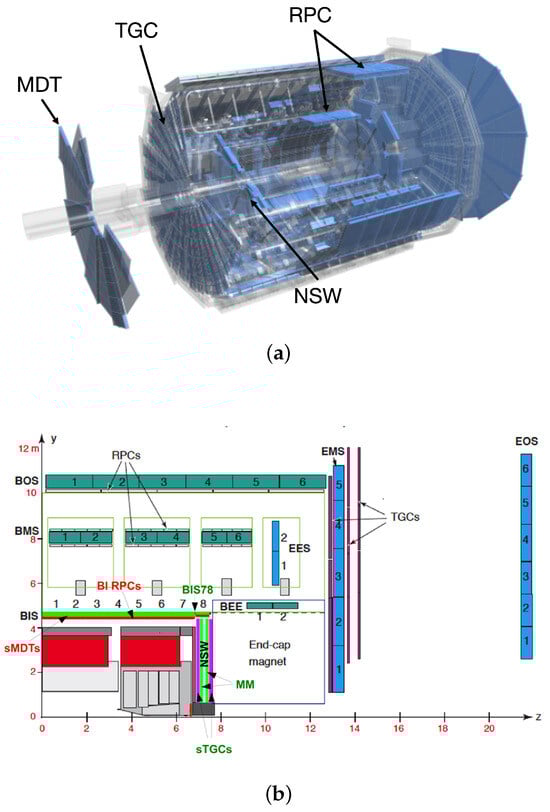
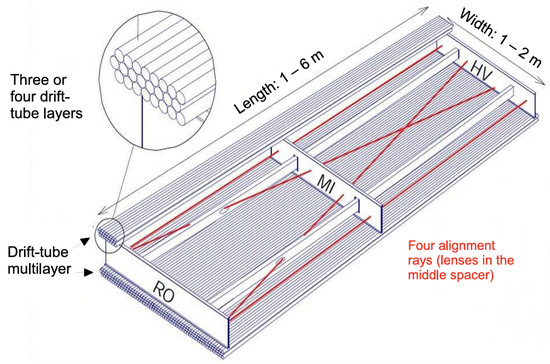
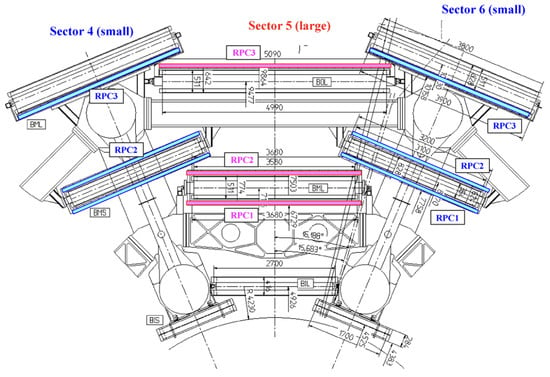
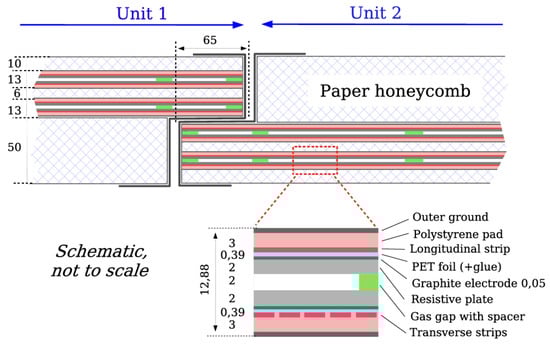
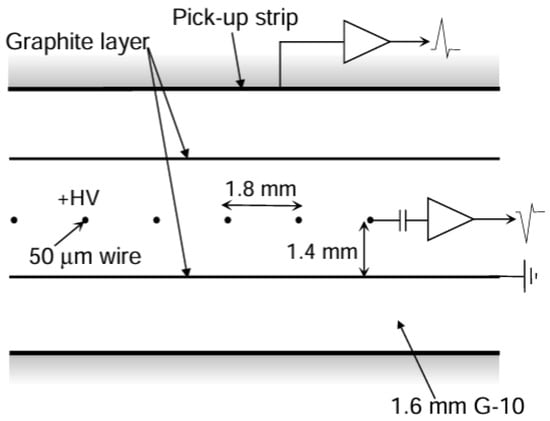
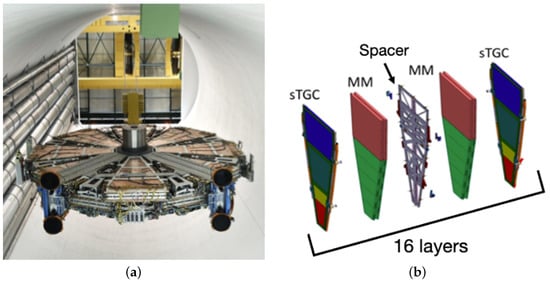
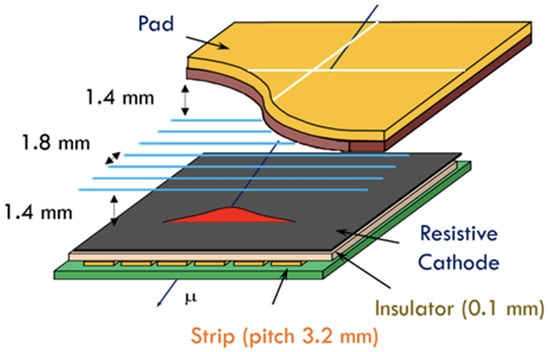
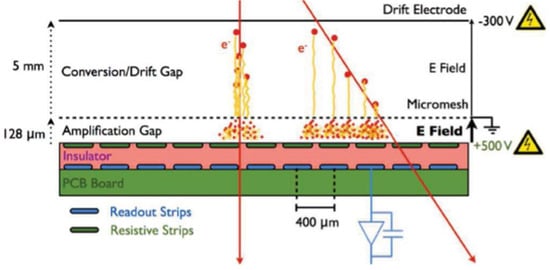
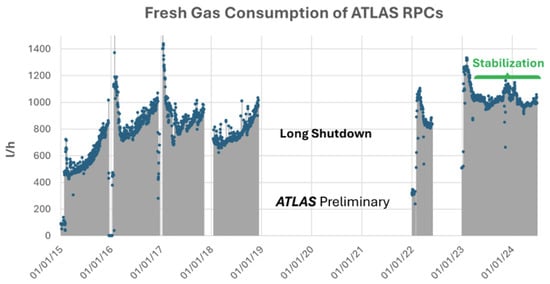
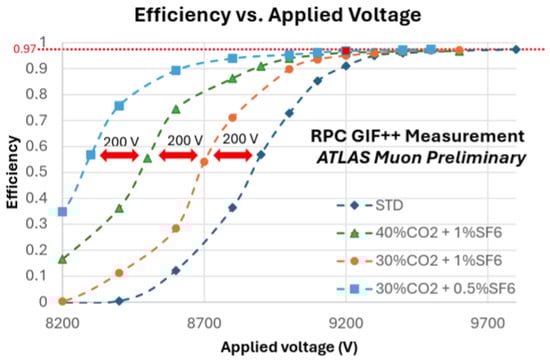
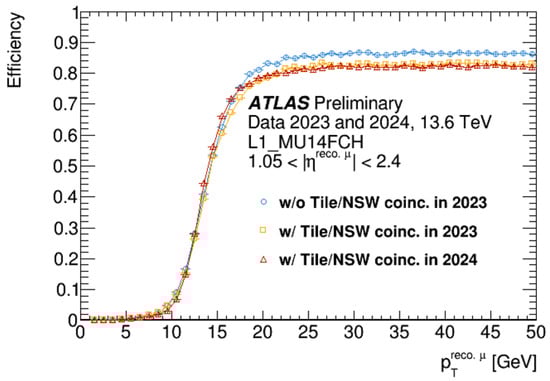
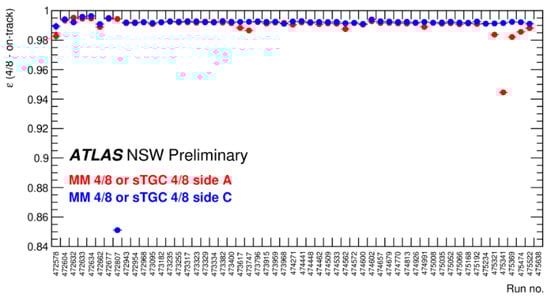
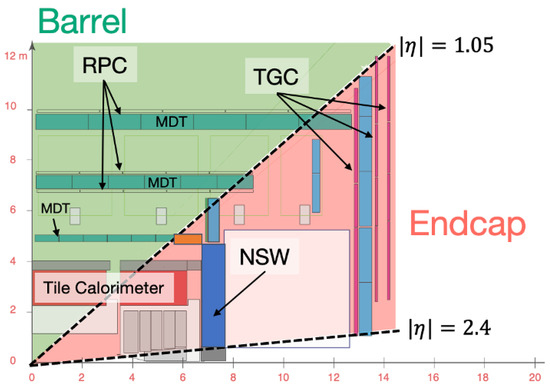
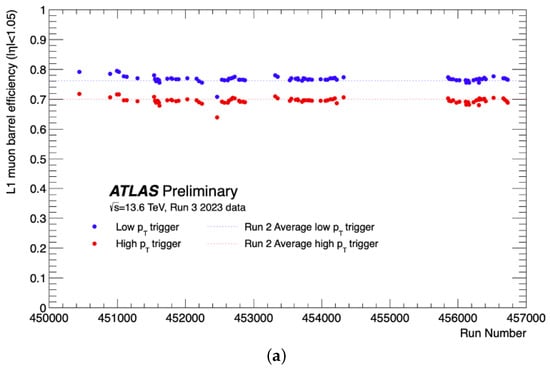
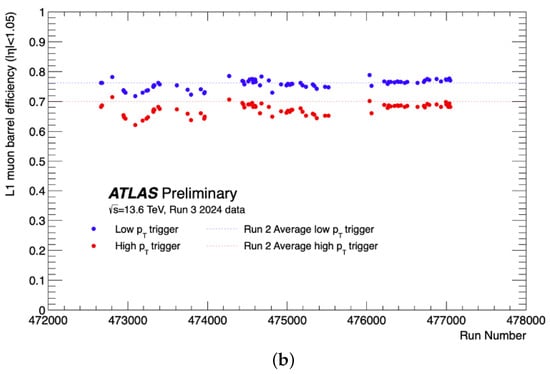
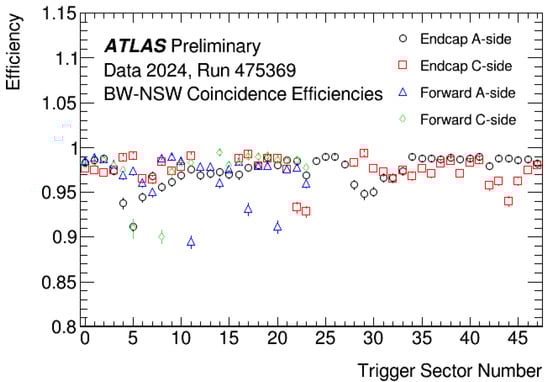
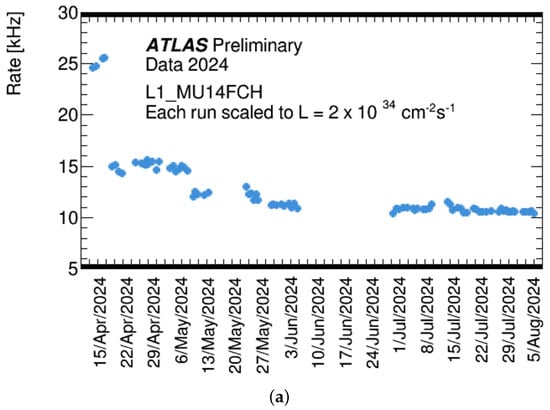
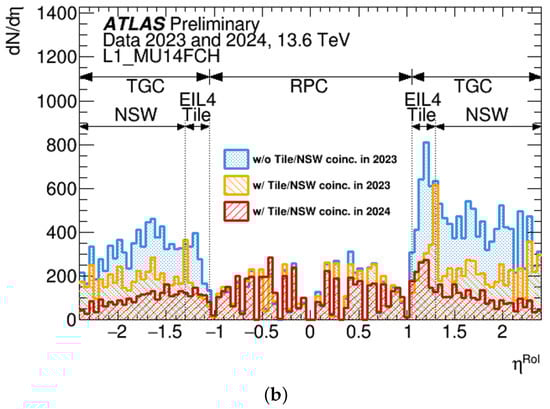
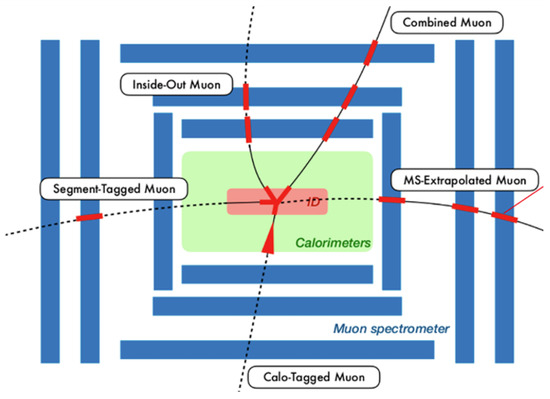
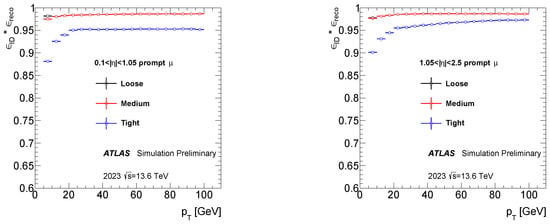
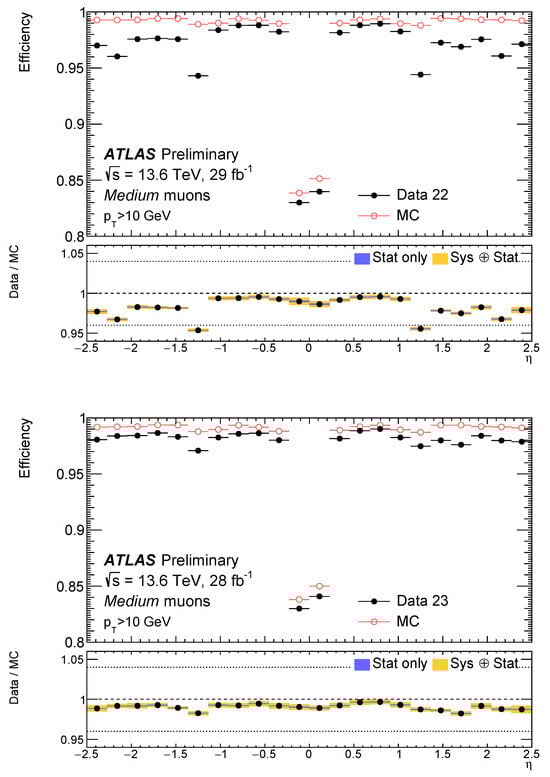
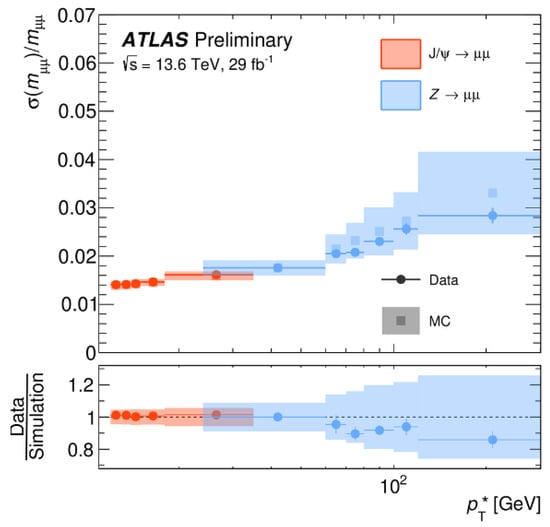
With the conclusion of proton–proton collision data-taking in 2025, the ATLAS experiment has now integrated a luminosity exceeding 300 during the Run 3 period, which began in July 2022 following Long Shutdown 2 (LS2). During LS2, a series of detector upgrades were implemented, including the installation of the New Small Wheel (NSW) in the innermost stations of the Muon Spectrometer end-caps. The ATLAS Muon Spectrometer, the largest muon system ever built at a collider, now comprises both established gaseous detectors—Monitored Drift Tubes, Thin Gap Chambers, and Resistive Plate Chambers—and newer detectors like Micromegas and small-strip TGCs in the NSW. These new systems are now in stable operation following an extensive phase of construction and commissioning, providing enhanced muon tracking and trigger capabilities. This presentation covers the performance of the muon system, focusing on the stability of the established detectors over time, their ability to handle increasing luminosity and associated irradiation levels, and studies on detector aging. Emphasis will be placed on the NSW upgrade, including the strategies adopted for alignment, track reconstruction, and trigger. The performance results presented in this contribution are based on Run 3 data collected up to 2024.
Full article
(This article belongs to the Special Issue Selected Papers from the 14th International Conference on New Frontiers in Physics (ICNFP 2025))
►▼
Show Figures

Figure 1
Open AccessReview
Fully Heavy Pentaquarks with Jethad: A High-Energy Viewpoint
by
Francesco Giovanni Celiberto
Particles 2026, 9(1), 23; https://doi.org/10.3390/particles9010023 - 3 Mar 2026
Abstract
We examine the leading-power fragmentation of fully heavy pentaquarks in high-energy hadronic collisions. To this end, we complete the release of the hadron structure-oriented PQ5Q1.0 fragmentation functions by discussing the set and delivering the one. These functions
[...] Read more.
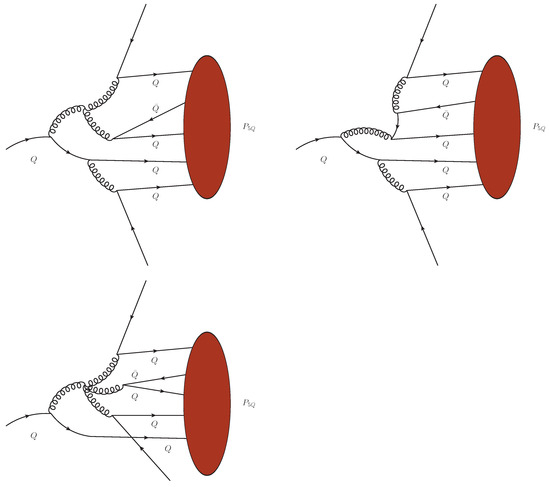
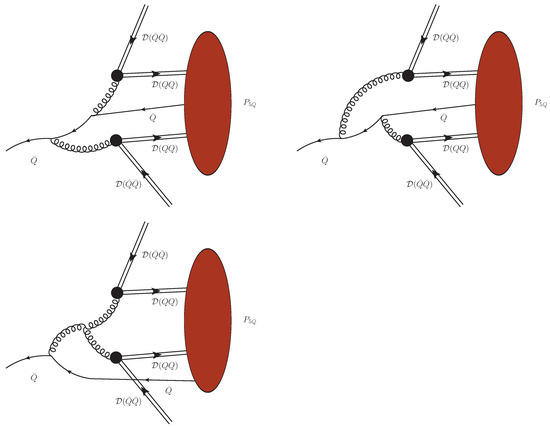
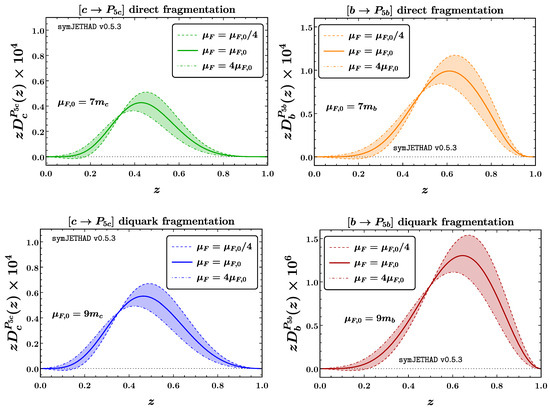
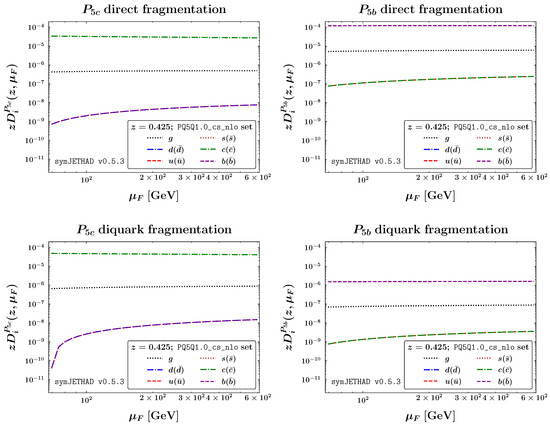
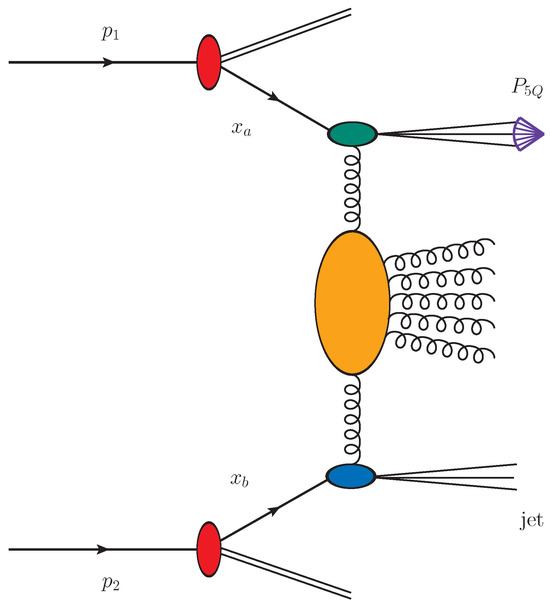
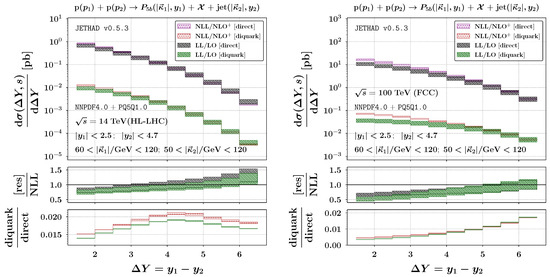
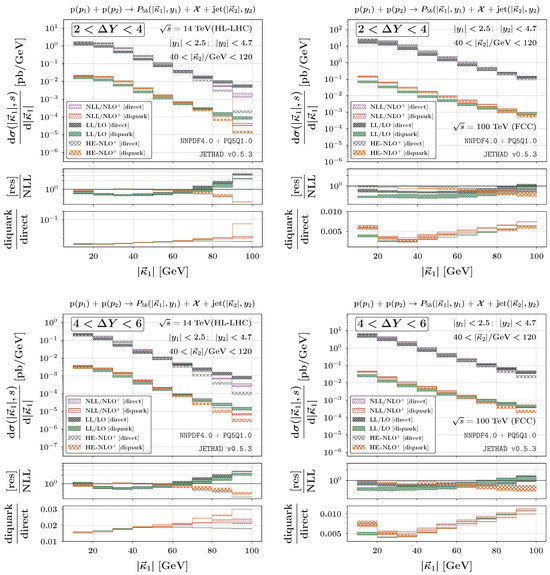
We examine the leading-power fragmentation of fully heavy pentaquarks in high-energy hadronic collisions. To this end, we complete the release of the hadron structure-oriented PQ5Q1.0 fragmentation functions by discussing the set and delivering the one. These functions incorporate an improved computation of the initial-scale input for the constituent heavy-quark fragmentation channel, making them particularly suitable for describing both the direct formation of a compact multicharm state and the hadronization from a diquark–antiquark–diquark configuration. For phenomenological applications, we employ the data-validated (sym)Jethad framework to compute and analyze NLL/NLO+ semi-inclusive production rates of pentaquark-plus-jet systems at the upcoming HL-LHC and the future FCC. This study marks a further step toward connecting hadronic structure, precision QCD, and the emerging physics of exotic matter.
Full article
(This article belongs to the Section Computational and Mathematical Physics, AI and Machine Learning)
►▼
Show Figures

Figure 1
Open AccessArticle
Emergence of the Geometric Contribution to the Superfluid Density in the Inner Crust of Neutron Stars
by
Giorgio Almirante
Particles 2026, 9(1), 22; https://doi.org/10.3390/particles9010022 - 2 Mar 2026
Abstract
The geometric contribution to superfluid density has been found to be of great importance in the inner crust of neutron stars. In this work we clarify how this contribution arises in the context of a band theory for neutrons. Specifically, we derive the
[...] Read more.
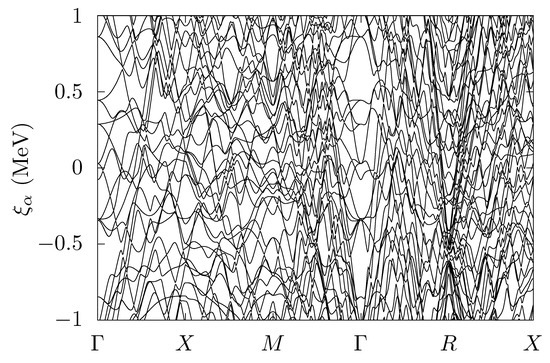
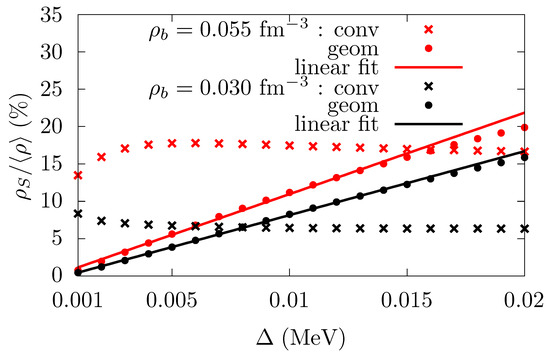
The geometric contribution to superfluid density has been found to be of great importance in the inner crust of neutron stars. In this work we clarify how this contribution arises in the context of a band theory for neutrons. Specifically, we derive the dependence of the superfluid density on the magnitude of the pairing gap when the system has many bands cutting the Fermi energy, as is the case for neutrons in the inner crust. Also, in the perturbation theory framework, we find that it is essential to account for corrections to (Bogoliubov) quasi-particle states in order to obtain the geometric contribution. Accounting only for the corrections to (Hartree–Fock) single-particle states leads to the conventional contribution only.
Full article
(This article belongs to the Special Issue Selected Papers from “The Modern Physics of Compact Stars and Relativistic Gravity 2025”)
►▼
Show Figures

Figure 1
Open AccessBrief Report
Halo Phenomena in Light- to Medium-Mass Nuclei with Three-Body Models
by
Lorenzo Fortunato
Particles 2026, 9(1), 21; https://doi.org/10.3390/particles9010021 - 2 Mar 2026
Abstract
Short-lived nuclear systems with light to medium masses are showing halo phenomena in regions of the nuclear chart that were still unexplored when halo nuclei were discovered 40 years ago. We study these exotic systems with three-body models, including nucleon–nucleon correlations, with the
[...] Read more.
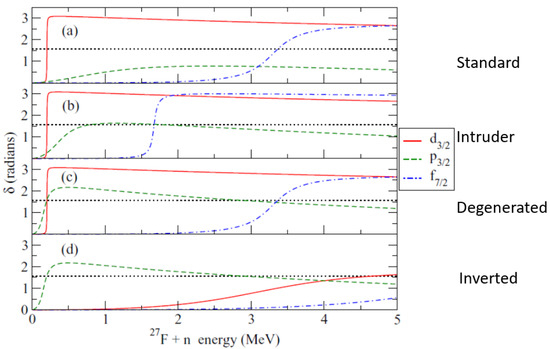
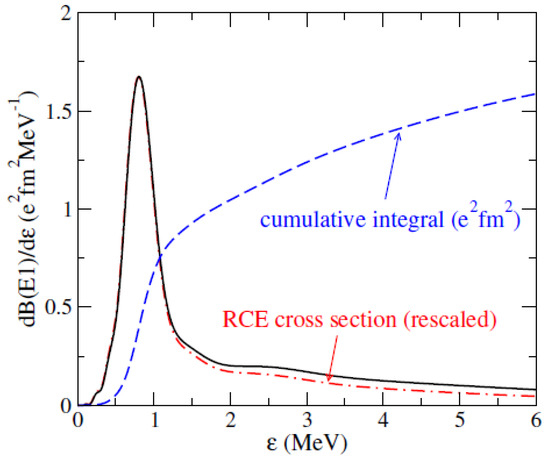
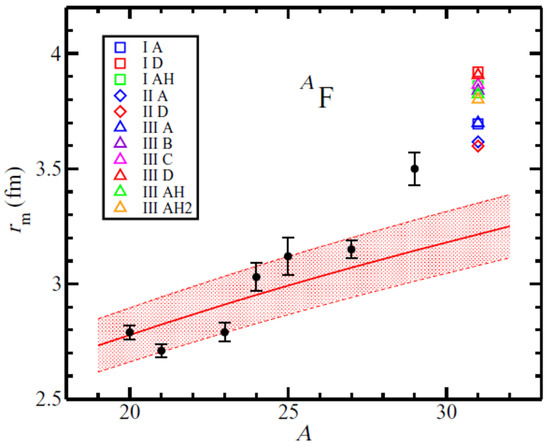
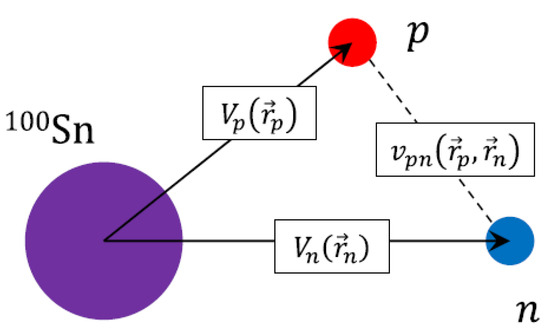
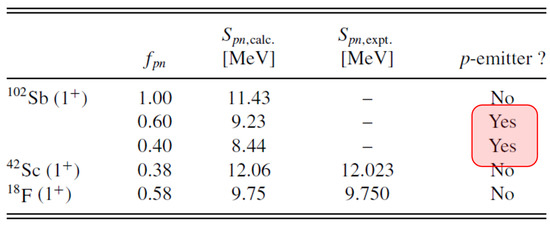
Short-lived nuclear systems with light to medium masses are showing halo phenomena in regions of the nuclear chart that were still unexplored when halo nuclei were discovered 40 years ago. We study these exotic systems with three-body models, including nucleon–nucleon correlations, with the aim of reproducing measurable properties like radii and electromagnetic transition strengths. On the nucleon-rich side, drip-line fluorine isotopes are showing clear signs of a halo structure. Recently, we proposed that is a moderate two-neutron halo nucleus with a large radius and a strong B(E1) response to the continuum. The three-body model places it at the borders of the island of inversion, which is corroborated by new data. According to our models, the next interesting isotope, , also has large spatial extension due to p-wave components and enhanced B(E1) response, pointing to a speculative halo structure. On the proton-rich side, we have studied the system, composed of a core plus a proton–neutron-correlated subsystem. We find that the weakening of the proton–neutron correlations with respect to the bare deuteron indicates that this is a one-proton emitter. We propose that the presence of a resonant state and its decay might provide a crucial benchmark for this system.
Full article
(This article belongs to the Special Issue Selected Papers from the International Symposium Commemorating the 40th Anniversary of Halo Nuclei)
►▼
Show Figures

Figure 1
Highly Accessed Articles
Latest Books
E-Mail Alert
News
Topics
Topic in
Symmetry, Galaxies, Universe, Particles, Astronomy
Dark Matter, Dark Energy and Cosmological Anisotropy
Topic Editors: Kazuharu Bamba, Panayiotis Stavrinos, Ivan De MartinoDeadline: 31 December 2026
Special Issues
Special Issue in
Particles
Selected Papers from the 14th International Conference on New Frontiers in Physics (ICNFP 2025)
Guest Editors: Larissa Bravina, Sonia Kabana, Armen SedrakianDeadline: 31 May 2026
Special Issue in
Particles
Strong QCD and Hadron Structure
Guest Editors: Zhu-Fang Cui, Craig RobertsDeadline: 30 June 2026
Special Issue in
Particles
Selected Papers from XXVIII Workshop “What Comes Beyond the Standard Models?”: New Trends in Particle Cosmology
Guest Editor: Maxim Y. KhlopovDeadline: 30 June 2026
Special Issue in
Particles
AI and Machine Learning in Dark Matter Searches: From Anomaly Detection to Detector Optimization
Guest Editors: Ankush Reddy Kanuganti, Ashik Ikbal SheikhDeadline: 30 June 2026
Topical Collections
Topical Collection in
Particles
Dark Matter and New Physics of Hidden Particles
Collection Editors: Valery E. Lyubovitskij, Dmitry V. Kirpichnikov, Alexey S. Zhevlakov