

Skip to Content

Physics

Physics is an international, peer-reviewed, open access journal which presents latest researches on all aspects of physics.
It publishes original research articles, review articles, communications with no restriction on the length of the papers. Physics is published quarterly online by MDPI.
Quartile Ranking JCR - Q2 (Physics, Multidisciplinary)

Get Alerted

Add your email address to receive forthcoming issues of this journal.

All Articles (500)

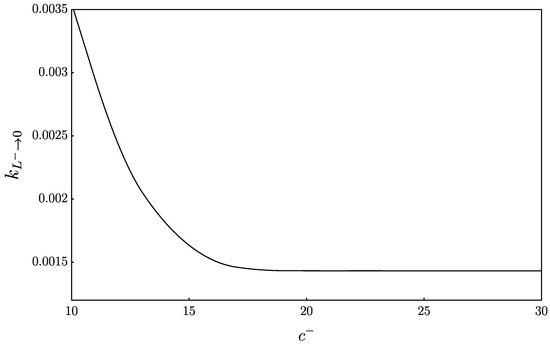
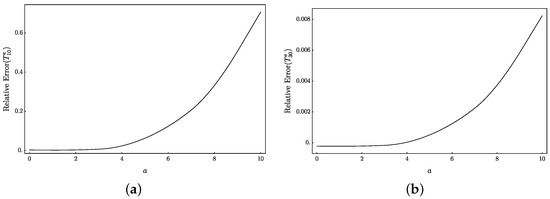
The paper develops a coarse-grained framework for computing mean extinction times in multi-metastable systems modeled as one-step continuous-time Markov chains with an absorbing state. At the microscopic level, backward equations on finite corridors are solved to obtain closed-form series for committors, mean first-passage times, and intrawell (basin) waiting times. A renewal–reward construction then yields effective interwell transition rates written as a success probability divided by a mean cycle duration, providing an interpretable effective rate constant. These rates define a reduced Markov chain on the wells together with extinction; mean extinction times follow from a linear system, and the associated fundamental matrix quantifies pre-extinction residence times in each coarse state. This framework makes explicit how multiple escape pathways and intrawell dwell times contribute to extinction statistics in finite systems. The method is illustrated on a double-well landscape with an extinction state, using a reversible potential-to-rates mapping for the numerical example. Comparisons of alternative intrawell models and validation against exact one-step computations demonstrate accuracy at finite system sizes, including regimes where diffusion approximations are unreliable. The resulting formulas require only local rate data, remain numerically stable under strong bias, and extend directly to multiple wells and flexible boundary conditions.

2 March 2026

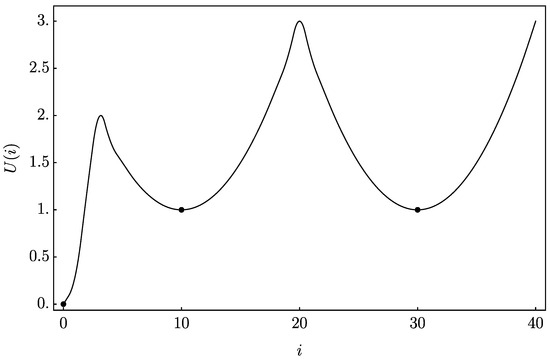
The potential 
  
    U
    (
    i
    )
  
 (36) as a function of i where the solid circles (•) indicate metastable wells at 
  
    i
    =
    10
    ,
    30
  
 and the absorbing extinction state at 
  
    i
    =
    0
  
.

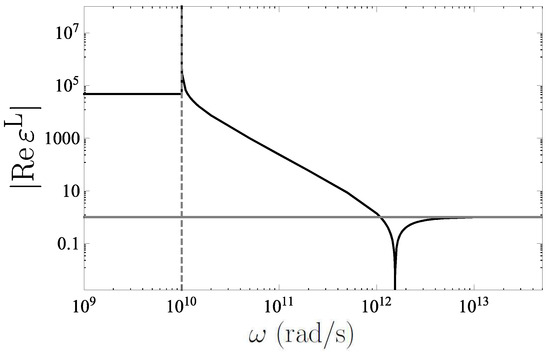
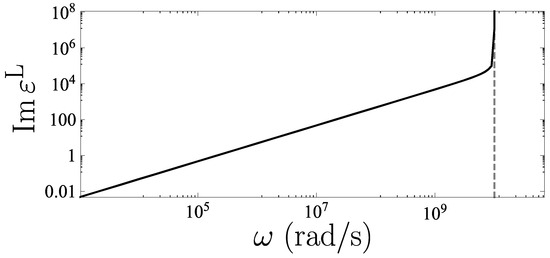
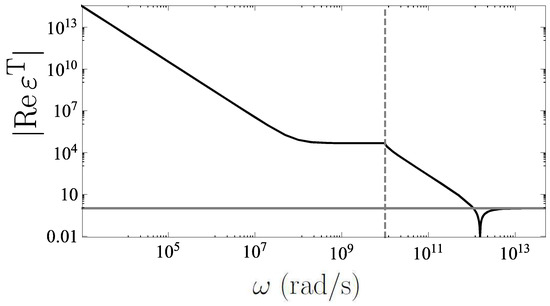
The turning point that sparked the initiation of quantum theory was the Planck–Einstein postulate that the energy of a monochromatic radiation field is quantized in terms of photons, and this was followed by the development of the principles of quantum mechanics. Although some conceptual issues remain to be resolved, quantum mechanics is regarded as a well-established discipline which may lead to the unraveling of the nature of matter in general. Today, the influence of quantum mechanics is evident in its applications, with remarkable technological advances involving diverse aspects of the physical world. What appears to need particular attention, however, (after a hundred years have elapsed since the birth of quantum mechanics) is the impact that the concept of the ‘quantum’ has had beyond traditional quantum mechanics. The paper describes how the ‘quantum’ concept has influenced and continues to influence developments in physical systems, which are essentially classical, in that they are basically governed, entirely, or in part, by non-quantum laws, but in which, the physics is distinguished by its own special quantum—the photon analogue. The paper illustrates this by considering, as prototype examples, bulk plasmons and phonons. The study outlines the systematic quantization of plasmons and phonons, both of the polariton (transverse) forms and their longitudinal forms, and discusseshow these interact with quantum systems such as electrons, atoms, and condensed matter. It is demonstarted using one case, namely, involving longitudinal plasmons, how utilizing quantum concepts and techniques facilitate their interaction with matter, as in electron energy loss spectroscopy.
3 March 2026

Dark Energy from Entanglements with Mirror Universe

  • Merab Gogberashvili and
  • Tinatin Tsiskaridze

We investigate a possible resolution of the dark energy problem within a pair-universe framework, in which the universe emerges as an entangled pair of time-reversed sectors. In this setting, a global zero-energy condition allows vacuum energy contributions from the two sectors to cancel, alleviating the need for extreme fine-tuning. We propose that the observed dark energy does not originate from vacuum fluctuations but instead arises as an effective entanglement energy between the visible universe and its mirror counterpart. Treating the cosmological constant as an integration constant fixed by boundary conditions rather than a fundamental parameter, we show that the cosmological equations can be formulated without explicitly introducing vacuum energy. By imposing physically motivated boundary conditions at the cosmological event horizon, we obtain an integration constant consistent with the observed dark energy density. The parallel mirror world scenario thus provides a unified framework that may simultaneously explain the origins of dark energy and dark matter.

2 March 2026

The problem of controlling plasma is one of the most essential challenges in the creation of experimental facilities for thermonuclear fusion. In this study, a mathematical model of a two-component Vlasov–Poisson plasma is used to study the stability of spatial dynamic equilibria in this plasma. Applying the direct Lyapunov method, we obtain results that demonstrate that three-dimensional (3D) dynamic equilibrium states of the Vlasov–Poisson plasma are absolutely unstable with respect to small spatial perturbations. The sufficient conditions for linear practical instability are obtained for the 3D dynamic equilibria of a two-component Vlasov–Poisson plasma. An a priori exponential lower estimate is constructed, and initial data are found for small spatial perturbations that grow with time. Finally, analytical examples are presented for exact stationary solutions to the mathematical model of Vlasov–Poisson plasma and the growing small 3D perturbations superimposed on these solutions.

2 March 2026

News & Conferences

Issues

Open for Submission

Editor's Choice

Reprints of Collections

Teaching and Learning Quantum Theory and Particle Physics
Reprint

Teaching and Learning Quantum Theory and Particle Physics

Editors: Oliver Passon, Gesche Pospiech, Thomas Zügge
In Honor of Professor Serge Galam for His 70th Birthday and Forty Years of Sociophysics
Reprint

In Honor of Professor Serge Galam for His 70th Birthday and Forty Years of Sociophysics

Editors: André Martins, Taksu Cheon, Xijin Tang, Bastien Chopard, Soumyajyoti Biswas
XFacebookLinkedIn
Physics - ISSN 2624-8174