Journal Description
Proceedings
Proceedings
is an open access journal dedicated to publishing findings resulting from conferences, workshops, and similar events. The conference organizers and proceedings editors are responsible for managing the peer-review process and selecting papers for conference proceedings.
Latest Articles
Reimagining Opera for the Digital Generation: The Opera out of Opera Project as a Model for Youth-Centred Audience Development
Proceedings 2026, 139(1), 23; https://doi.org/10.3390/proceedings2026139023 - 19 May 2026
Abstract
Opera Out of Opera 2 (OOO2) is a Creative Europe cooperation project that experiments with digital, participatory strategies to reconnect opera with younger audiences and to reshape professional capacity for conservatory students. Rather than treating opera as a fixed repertoire to be transmitted,
[...] Read more.
Opera Out of Opera 2 (OOO2) is a Creative Europe cooperation project that experiments with digital, participatory strategies to reconnect opera with younger audiences and to reshape professional capacity for conservatory students. Rather than treating opera as a fixed repertoire to be transmitted, the project frames it as a site of co-creation, where youth and emerging professionals share agency in how the art form is presented, mediated and discussed. This article has two related aims. First, it examines how OOO2’s digital-first Audience Engagement Strategy (AES) may contribute to audience development among 18–25-year-olds, focusing on reach, participation patterns and perceived accessibility. Second, it investigates how participation in the project appears to affect conservatory students’ entrepreneurial self-efficacy and their understanding of their potential social role as musicians. Methodologically, the study combines a participatory action research (PAR) framework with an embedded single-case design. Quantitative data include pre- and post-intervention questionnaires with 132 higher music education students. An audience survey completed by 1256 spectators, complemented by social media and web analytics, is also embedded. Qualitative material derives from semi-structured interviews (n = 30), focus groups with project stakeholders and direct observation of workshops, rehearsals and performances. Results indicate a marked digital reach among younger audience and suggest that shorter formats, informal settings and second-screen mediation can lower perceived barriers to opera attendance for first-time or occasional spectators. Among students, mean scores for entrepreneurial self-efficacy increased from 3.2 (SD = 0.8) to 4.1 (SD = 0.7), corresponding to a large effect size (Cohen’s d = 1.20, p < 0.01), a pattern broadly consistent with research on self-efficacy and capacity creation in music and arts-based entrepreneurship education. The discussion connects these findings with a bibliometric mapping of audience development in opera, conducted on 147 Scopus-indexed documents, and argues that OOO2 occupies a still under-theorized intersection between youth-centred cultural participation and entrepreneurial capacity-building in higher music education. While the single-case design and the use of self-constructed survey items limit generalizability, the project may offer a useful reference point for institutions seeking to rethink opera’s approach as a digitally mediated, socially engaged and educationally meaningful practice.
Full article
Open AccessProceeding Paper
Exit Literacy: Educating the Gaze Between Iconic Overload and Critical Imagination
by
Luca Bianchin and Silvia Capodivacca
Proceedings 2026, 139(1), 22; https://doi.org/10.3390/proceedings2026139022 - 19 May 2026
Abstract
The algorithmic overproduction of images that increasingly characterizes our media environment reveals a radically new relationship with visual representation. What emerges is not merely an inability to distinguish an iconographic model from its real referent, nor simply the dissolution of the boundary between
[...] Read more.
The algorithmic overproduction of images that increasingly characterizes our media environment reveals a radically new relationship with visual representation. What emerges is not merely an inability to distinguish an iconographic model from its real referent, nor simply the dissolution of the boundary between true and false, reality and simulacrum (Baudrillard), but rather a growing indifference toward such distinctions. The incapacity to discern between “real” and “fabricated” images no longer appears problematic; the very categories of true and false tend to collapse into one another, resulting in the abandonment of interpretative engagement. After analyzing this phenomenon, the article proposes a pedagogical framework designed to respond to such a condition. It argues that neither image decoding (visual literacy) nor creative production alone are sufficient. What is required is a form of training in imagination, enacted through an ethics of the gaze and a digital archeology; through practices of digital estrangement; as well as through exercises in embodiment and sensory re-anchoring. The ultimate goal is to develop tools that shift the relationship with images from consumptive to interrogative—fostering what we call Exit Literacy: the capacity not only to read the world, but to desire to exit its passively offered version, reclaiming an active role in critique and meaning-making.
Full article
Open AccessProceeding Paper
Photovoice and Augmented Reality: New Perspectives for the Self-Representation of Sexuality in Disabled Identities
by
Alice Rizzi, Martina Rossi, Giusi Antonia Toto and Marco di Furia
Proceedings 2026, 139(1), 21; https://doi.org/10.3390/proceedings2026139021 - 15 May 2026
Abstract
The representation of the sexuality of people with disabilities in contemporary media is often characterized by stereotypes, omissions, and heteronormative narratives that deny the complexity and richness of their emotional experiences. This essay explores the potential of photovoice-based methodology as a tool of
[...] Read more.
The representation of the sexuality of people with disabilities in contemporary media is often characterized by stereotypes, omissions, and heteronormative narratives that deny the complexity and richness of their emotional experiences. This essay explores the potential of photovoice-based methodology as a tool of visual empowerment to foster processes of authentic and self-aware self-representation through the immersive dynamic that this methodology can activate. Through an interdisciplinary theoretical approach that combines special pedagogy with recent research on digital media and immersive technologies, the study seeks to understand whether virtual spaces can be configured as protected environments in which people with disabilities have the opportunity to explore and communicate their sexual identity. Photovoice thus becomes a tool of narrative resistance that overcomes barriers and counters mediatized representations, often conveyed through dynamics of ableist cyberbullying and online discrimination. The contribution highlights how the combination of participatory visual storytelling and immersive environments can generate new forms of inclusive media literacy, promoting a Visual Education that recognizes and values the diversity of human experiences. Particular attention is devoted to the educational potential of these tools in the training of educators and social workers, as well as in raising awareness within the broader community. The paper proposes a theoretical and methodological framework for the implementation of visual self-representation projects capable of transforming social perceptions of disability and promoting a culture of authentic and respectful inclusion.
Full article
Open AccessProceeding Paper
Digital Mirrors: How Visual Content on Social Media Shapes Empowerment and Approval
by
Rita Carmela Fabiola Imperatrice, Lucia Melchiorre, Domenico Lorusso and Giusi Antonia Toto
Proceedings 2026, 139(1), 20; https://doi.org/10.3390/proceedings2026139020 - 13 May 2026
Abstract
Social media represents an ambivalent space for identity construction. While fostering expression, aesthetic filters and idealized models drive homogenization and social comparison. This study explores the tension between authenticity and standardization in visual content production. Focusing on lower secondary school teachers in Foggia,
[...] Read more.
Social media represents an ambivalent space for identity construction. While fostering expression, aesthetic filters and idealized models drive homogenization and social comparison. This study explores the tension between authenticity and standardization in visual content production. Focusing on lower secondary school teachers in Foggia, the qualitative research investigates how educators interpret digital manipulation and its impact on self-perception. Through semi-structured interviews and thematic analysis, the study maps discursive strategies regarding visual identity. These findings emphasize the need for teacher training in visual education, providing an empirical basis for pedagogical reflections on promoting a critical and conscious use of digital tools.
Full article
Open AccessProceeding Paper
DigComp and Its Limits: New Human Resource Management Constructs for Generative AI Skills
by
Ioannis Zervas and Emmanouil Stiakakis
Proceedings 2026, 144(1), 1; https://doi.org/10.3390/proceedings2026144001 - 12 May 2026
Abstract
►▼
Show Figures
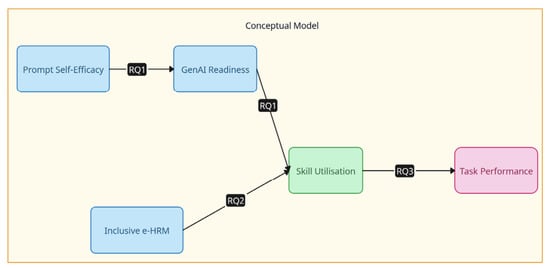
The rapid diffusion of generative artificial intelligence (GenAI) is reshaping how skills are enacted and evaluated in knowledge-intensive work. This study examines how emerging GenAI-related competences and inclusive digital HRM practices influence skill utilisation and task performance. Drawing on survey data from 420
[...] Read more.
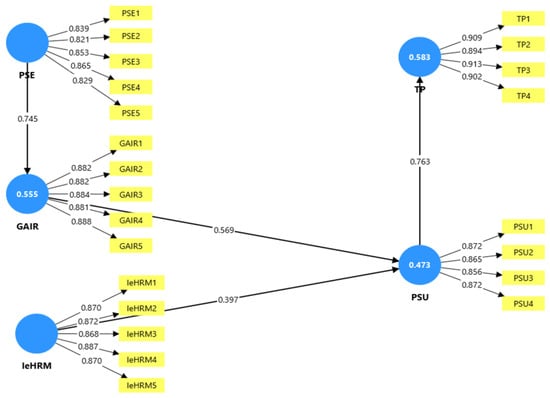
The rapid diffusion of generative artificial intelligence (GenAI) is reshaping how skills are enacted and evaluated in knowledge-intensive work. This study examines how emerging GenAI-related competences and inclusive digital HRM practices influence skill utilisation and task performance. Drawing on survey data from 420 knowledge workers in Greece and Italy, the study introduces Prompt Self-Efficacy and GenAI Readiness as complementary constructs to existing digital competence frameworks. Using PLS-SEM, the findings show that individual confidence and employees’ perceived inclusive e-HRM practices affect performance primarily through Perceived Skill Utilisation. The results highlight the importance of enabling conditions that translate GenAI competences into effective work outcomes.
Full article

Figure 1
Open AccessEditorial
Statement of Peer Review
by
Katerina Melfou
Proceedings 2026, 134(1), 68; https://doi.org/10.3390/proceedings2026134068 - 7 May 2026
Abstract
In submitting conference proceedings to Proceedings, the Volume Editors would like to certify to the publisher that all papers published in this volume have been subjected to peer review by the designated expert referees, and were administered by the Volume Editors strictly
[...] Read more.
In submitting conference proceedings to Proceedings, the Volume Editors would like to certify to the publisher that all papers published in this volume have been subjected to peer review by the designated expert referees, and were administered by the Volume Editors strictly following the policies announced on the conference website [...]
Full article
(This article belongs to the Proceedings of The 18th International Conference of the Hellenic Association of Agricultural Economists)
Open AccessEditorial
Preface of the 18th International Conference of the Hellenic Association of Agricultural Economists
by
Katerina Melfou
Proceedings 2026, 134(1), 67; https://doi.org/10.3390/proceedings2026134067 - 7 May 2026
Abstract
Global developments in the economic, social, and political domains severely affect the primary sector at all levels (local, regional, national, supra-national) [...]
Full article
(This article belongs to the Proceedings of The 18th International Conference of the Hellenic Association of Agricultural Economists)
►▼
Show Figures

Figure 1
Open AccessProceeding Paper
Images, Learning and the Construction of Information
by
Salvatore Mancarella
Proceedings 2026, 139(1), 19; https://doi.org/10.3390/proceedings2026139019 - 7 May 2026
Abstract
Visual learning is not merely a form of visual memory—the ability to associate an object of learning with its spatial and temporal context—or simply an explanatory aid or instrumental support, as is often assumed. The kind of visual learning addressed here aligns, more
[...] Read more.
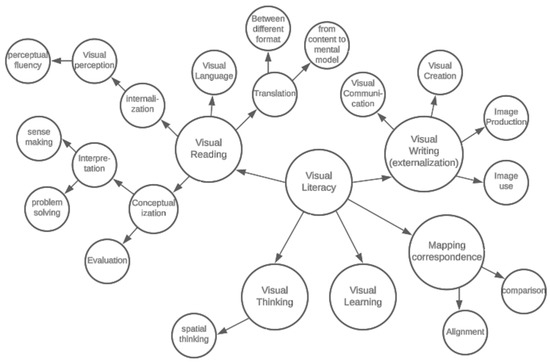
Visual learning is not merely a form of visual memory—the ability to associate an object of learning with its spatial and temporal context—or simply an explanatory aid or instrumental support, as is often assumed. The kind of visual learning addressed here aligns, more broadly, with the notion of visual thinking as conceived in the 1960s by Rudolf Arnheim, the German psychologist and art historian, for whom art and expressive forms help us understand the world, generate active and creative comprehension, and organize one’s interpretative universe. The aim, therefore, is not to describe didactic practices that employ images, maps, videos, or simulations, but to go beyond the apparent familiarity of the topic and ask: When and how does the visual dimension foster learning? And, above all, what role does the image play within the educational process? Historically, the visual has been assigned an instrumental function—or so it was believed. Yet one might doubt that this fully captures the experiences of Leonardo, Giotto, or Michelangelo. Can we truly think that sketches or elaborated images have ever been mere mnemonic aids? In both art and education, images do far more than illustrate or serve as tools for remembering, orienting, or recognizing. Especially today, in the presence of technological interference, the visual covers broader horizons: it is used to generate information, explain complex concepts, and produce new experiences—and possibly even new forms of knowledge. In a world saturated with images, there emerges a growing risk of simplification and trivialization: images abound, yet meaning often escapes us. We distrust images, and perhaps we have never truly learned how to read them. Here lies a crucial anthropological fracture: between the mnemonic and the constructive functions of the visual, genuine visual literacy is often missing. A broad methodological approach is therefore needed—one that, through theoretical, historical, and pedagogical analyses, can problematize the educational use of images beyond their mere instrumental dimension. Such reflection must draw from aesthetic and philosophical traditions while acknowledging technological influences and maintaining a clear focus on the specific contexts of contemporary teaching and learning.
Full article
Open AccessProceeding Paper
Educating the Gaze in the Age of Saturation: Visual Education, Generative AI, and Critical Learning Strategies
by
Maura Gancitano and Andrea Colamedici
Proceedings 2026, 139(1), 18; https://doi.org/10.3390/proceedings2026139018 - 6 May 2026
Abstract
The cognitive environment in which students are immersed today is characterised by high exposure to images and content generated, selected and modulated by algorithmic systems. Visual education, therefore, runs the risk of becoming an accessory function of the system, serving to capture attention
[...] Read more.
The cognitive environment in which students are immersed today is characterised by high exposure to images and content generated, selected and modulated by algorithmic systems. Visual education, therefore, runs the risk of becoming an accessory function of the system, serving to capture attention rather than to develop a critical eye; but visual education can also be used to question narrative linearity, destabilise established representations, and activate reflective processes. Artificial intelligence is a cognitive agent, and its use in visual teaching can help to deconstruct interpretative automatisms and open up spaces for more attentive and conscious learning.
Full article
Open AccessProceeding Paper
Educating Emotional Recognition in Visual Education: A Convolutional Model for Professional Psychologists
by
Alessandro De Santis, Francesco Antonio Santangelo and Antonino Tarantino
Proceedings 2026, 139(1), 17; https://doi.org/10.3390/proceedings2026139017 - 6 May 2026
Abstract
►▼
Show Figures
The digital transformation of mental health practice increasingly requires psychologists to integrate technological literacy with emotional and cognitive skills. This study presents a pilot project combining Visual Education and Artificial Intelligence (AI) through a Computer Vision model for emotional recognition. A convolutional neural
[...] Read more.
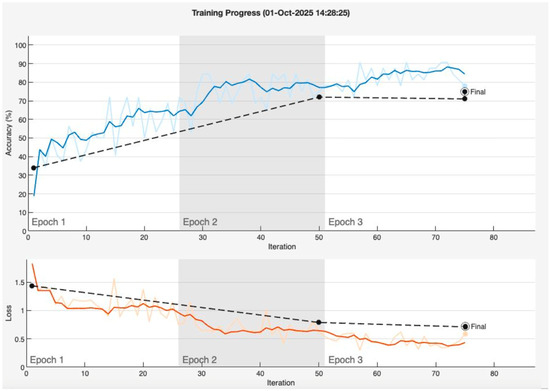
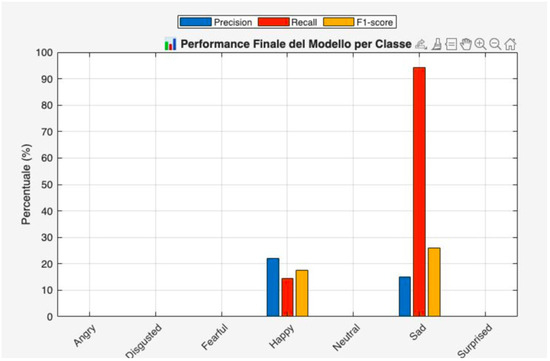
The digital transformation of mental health practice increasingly requires psychologists to integrate technological literacy with emotional and cognitive skills. This study presents a pilot project combining Visual Education and Artificial Intelligence (AI) through a Computer Vision model for emotional recognition. A convolutional neural network (CNN), based on MobileNetV2, was trained to identify facial emotions and tested for educational use within a serious game for psychologists’ professional development. Using transfer learning, the model achieved an accuracy of about 75% under controlled conditions but only 15.54% on a biased dataset. These results reveal both the potential and limitations of AI in emotional learning. The findings are discussed in relation to visual literacy, digital mental health, and AI ethics, illustrating how computational bias can become a pedagogical tool for psychology professionals.
Full article

Figure 1
Open AccessProceeding Paper
PhotoVoice and Visual Narrative: A Pedagogical Perspective on Inclusion and Intellectual Disability
by
Letizia Pistone, Daniela Pasqualetto and Alessandra Lo Piccolo
Proceedings 2026, 139(1), 16; https://doi.org/10.3390/proceedings2026139016 - 5 May 2026
Abstract
The growing interest in visual methodologies within the educational field reflects the need to rethink teaching–learning processes from a participatory, multimodal, and inclusive perspective. Among these approaches, PhotoVoice emerges as a research–action and training strategy that combines photography and autobiographical narration, activating accessible
[...] Read more.
The growing interest in visual methodologies within the educational field reflects the need to rethink teaching–learning processes from a participatory, multimodal, and inclusive perspective. Among these approaches, PhotoVoice emerges as a research–action and training strategy that combines photography and autobiographical narration, activating accessible expressive practices centred on subjectivity and lived experience. This contribution presents a theoretical–methodological analysis grounded in pedagogical and visual research literature, aiming to outline an operational framework for the educational application of PhotoVoice in inclusive pathways addressed to individuals with intellectual disabilities. Framed within the paradigm of Visual Education and a pedagogy oriented toward recognition and relationality, PhotoVoice is examined as a pedagogical device capable of fostering symbolic mediation, identity construction, and narrative agency. The photographic image, conceived as an embodied, situated, and relational language, enables access to forms of knowledge often excluded from dominant verbal codes, restoring visibility and epistemic dignity to marginalised subjectivities. The paper delineates key operational phases of the method and identifies core educational objectives, including the strengthening of narrative agency, self-determination, and reflective participation. From this perspective, visual narration is configured as a situated pedagogical practice integrating aesthetics, ethics, and social transformation, capable of generating equitable and meaning-generative learning environments. Within this framework, PhotoVoice shifts inclusion from an abstract principle to a concrete educational process, enabling participants to narrate, interpret, and actively reshape their own learning contexts.
Full article
Open AccessProceeding Paper
Definitions, Taxonomies and Functions of Visual Thinking as an Educational Ecosystem: A Scoping Review
by
Maria Vittoria Battaglia and Francesco Maria Melchiori
Proceedings 2026, 139(1), 15; https://doi.org/10.3390/proceedings2026139015 - 5 May 2026
Abstract
►▼
Show Figures
The scoping review examines how pedagogy can incorporate visual language and imagination as integral components of the learning process. Sixty-four studies were analysed following PRISMA-like guidelines to identify definitions, taxonomies, pedagogical functions and skills required by visual thinking. The results highlight the cognitive,
[...] Read more.
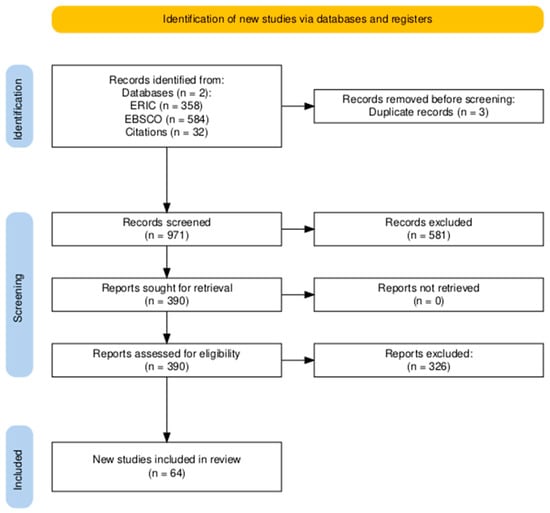
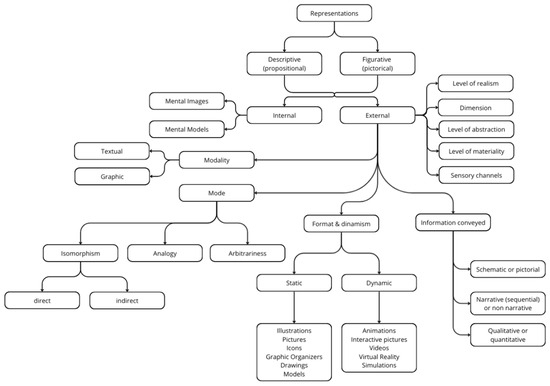
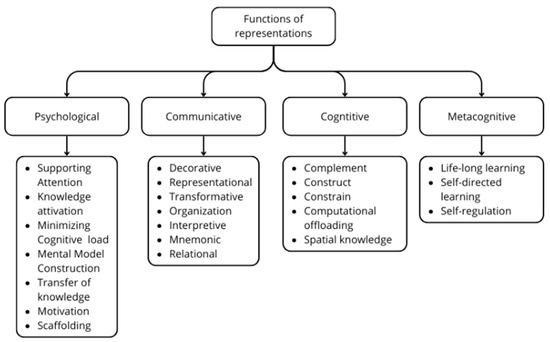
The scoping review examines how pedagogy can incorporate visual language and imagination as integral components of the learning process. Sixty-four studies were analysed following PRISMA-like guidelines to identify definitions, taxonomies, pedagogical functions and skills required by visual thinking. The results highlight the cognitive, communicative and motivational role of visual tools and the active contribution of students in the construction of meaning through images. The study proposes an integrated definition of visualisation as an analytical, generative and socially situated process of meaning creation through visual and symbolic forms, offering a conceptual basis for the development of multimodal and creative educational practices.
Full article

Figure 1
Open AccessProceeding Paper
Prototypes of Democratic Resilience: Virtuous Isomorphism and Applied Research Laboratories in Cooperation Partnerships
by
Alessia Sciamanna and Michele Corleto
Proceedings 2026, 139(1), 14; https://doi.org/10.3390/proceedings2026139014 - 5 May 2026
Abstract
►▼
Show Figures
In a media ecosystem marked by misinformation and disinformation, democratic resilience requires new strategies for digital and media literacy and participation. In the proposed model, the University, through transnational Cooperation Partnerships, activates applied research laboratories that generate high-social-impact communication prototypes. The European case
[...] Read more.
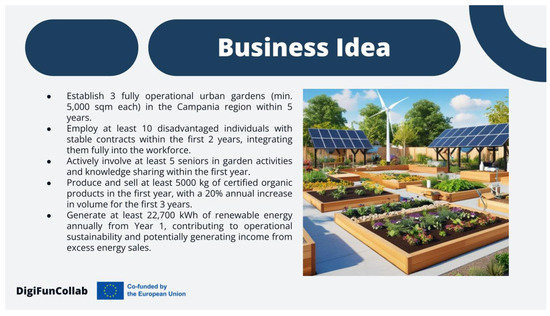
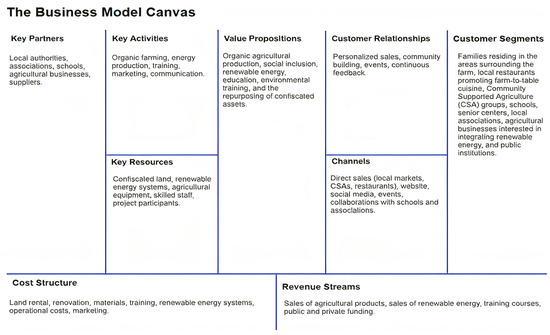
In a media ecosystem marked by misinformation and disinformation, democratic resilience requires new strategies for digital and media literacy and participation. In the proposed model, the University, through transnational Cooperation Partnerships, activates applied research laboratories that generate high-social-impact communication prototypes. The European case studies Respectnet and DigiFunCollab demonstrate that the conscious use of digital media, transforming students from passive users into conscious creators, reduces vulnerability to cognitive biases, filter bubbles, and echo chambers, thereby limiting manipulation in democratic processes and stimulating civic participation. The imitative diffusion of such practices generates virtuous circles of collective learning. The theoretical framework combines institutional isomorphism, reinterpreted as a virtuous isomorphism of best practices, with democratic resilience and the UNESCO MIL and DigComp 2.2 frameworks. The methodology adopts a mixed-methods design with a quantitative prevalence. The qualitative phase includes focus groups with national stakeholders and a national report (regulatory analysis, training needs, SWOT on social entrepreneurship) preliminary to course design. The quantitative phase involves monitoring training pathways (online course and project work) and a final questionnaire. Indicators include the number of participants, certifications, projects developed, and engagement levels. By systematically implementing this approach, the Academy fuels multi-stakeholder institutional dialogue. Knowledge transfer creates communicative culture and strengthens the democratic capacity of communities. This approach confirms the role of Visual Education as a tool to integrate the University’s three missions, thus structurally reinforcing democratic resilience.
Full article

Figure 1
Open AccessProceeding Paper
The Prompt as a Philosophical Educational Tool: Generating an Image Through AI
by
Luca Romano
Proceedings 2026, 139(1), 13; https://doi.org/10.3390/proceedings2026139013 - 5 May 2026
Abstract
►▼
Show Figures
This article aims to highlight the close connection between prompt engineering and philosophy, with particular attention to how AI can be used in educational and teaching contexts. The study of philosophy, traditionally oriented toward the analysis of language, logic, and critical thinking, makes
[...] Read more.
This article aims to highlight the close connection between prompt engineering and philosophy, with particular attention to how AI can be used in educational and teaching contexts. The study of philosophy, traditionally oriented toward the analysis of language, logic, and critical thinking, makes it possible to produce and refine prompts that are more precise and effective in the creation and modification of images through major chatbots and large language models (LLMs – ChatPGT-5, Gemini 2.5). By bringing into the school educational context the theories proposed and supported by the scientific literature on the didactics of philosophy and AI education, this contribution will exemplify a phenomenological analysis of the image as developed by Sartre. It will show how refining the description of an image, typical of the phenomenological method, can lead to a more accurate and appropriate prompt, which is useful for generating increasingly sophisticated images. This approach can guide students toward formulating more effective image-oriented prompts.
Full article

Figure 1

Open AccessEditorial
Preface of the 6th International Congress on Health Innovation—INOVATEC 2025
by
Andreanne Vasconcelos, Amílcar Damazo and José Roberto Leite
Proceedings 2026, 137(1), 154; https://doi.org/10.3390/proceedings2026137154 - 28 Apr 2026
Abstract
The 6th International Congress on Health Innovation—INOVATEC 2025—was held from 21 to 23 November 2025 in Brasília, Federal District, Brazil, with the theme “Disruptive innovations for inclusive, borderless health” (inovatecdf [...]
Full article
(This article belongs to the Proceedings of The 6th International Congress on Health Innovation—INOVATEC 2025)
►▼
Show Figures

Figure 1
Open AccessEditorial
Statement of Peer Review
by
Andreanne Vasconcelos, Amílcar Damazo and José Roberto Leite
Proceedings 2026, 137(1), 153; https://doi.org/10.3390/proceedings2026137153 - 28 Apr 2026
Abstract
In submitting conference proceedings to Proceedings, the Volume Editors of the proceedings would like to certify to the publisher that all papers published in this volume have been subjected to peer review by the designated expert referees and were administered by the
[...] Read more.
In submitting conference proceedings to Proceedings, the Volume Editors of the proceedings would like to certify to the publisher that all papers published in this volume have been subjected to peer review by the designated expert referees and were administered by the Volume Editors, strictly following the policies announced on the conference website (https://inovatecdf [...]
Full article
(This article belongs to the Proceedings of The 6th International Congress on Health Innovation—INOVATEC 2025)
Open AccessProceeding Paper
Temporal Anchors and Cognitive Scaffolding: A Content Analysis of Complex Narrative Structures
by
Dimitrios Tachmatzidis
Proceedings 2026, 141(1), 1; https://doi.org/10.3390/proceedings2026141001 - 28 Apr 2026
Abstract
This exploratory study examines how complex non-linear television narratives support viewers’ cognitive processing through embedded compensatory mechanisms. Using Season 1 of the Netflix series Dark as a case study, we conducted a quantitative content analysis examining temporal structure across 10 episodes. The series
[...] Read more.
This exploratory study examines how complex non-linear television narratives support viewers’ cognitive processing through embedded compensatory mechanisms. Using Season 1 of the Netflix series Dark as a case study, we conducted a quantitative content analysis examining temporal structure across 10 episodes. The series presents interconnected timelines (1953, 1986, 2019), creating substantial cognitive demands for viewers. Statistical analyses revealed a significant negative correlation (r = −0.745, p < 0.05) between spatial fragmentation (number of locations) and scene duration, suggesting systematic compensatory editing strategies. Despite high temporal complexity, the narrative maintains a hierarchical timeline structure with 2019 serving as the primary temporal anchor (59% of screen time). These preliminary findings suggest that complex storytelling incorporates built-in cognitive scaffolding mechanisms that may facilitate comprehension despite exceeding traditional working memory constraints. The study contributes to understanding how narrative design can support distributed cognition and has implications for theories of cognitive load and multimedia learning.
Full article
Open AccessAbstract
Preclinical Evaluation of the Biodistribution of AuPLU/AlClPc (Gold–Pluronic Associated with Phthalocyanine) in a Novel Murine Model of Gestational Breast Cancer
by
Lara S. Almeida, Lohara S. de Lima Barboza, Giovanna Torres, Luísa Vieira, Aline B. S. Santos, Maria A. G. Soler and Laise R. Andrade
Proceedings 2026, 137(1), 152; https://doi.org/10.3390/proceedings2026137152 - 27 Apr 2026
Abstract
Introduction: Breast cancer during pregnancy (GBC) is a rare and challenging condition due to the limited availability of safe and effective therapies for both mother and fetus [...]
Full article
(This article belongs to the Proceedings of The 6th International Congress on Health Innovation—INOVATEC 2025)
Open AccessProceeding Paper
Reflective Practice and Performance Art in the Training of Support Teachers
by
Donatella Visceglia
Proceedings 2026, 139(1), 11; https://doi.org/10.3390/proceedings2026139011 - 24 Apr 2026
Abstract
This contribution explores the role of reflective practice and performative methodologies in the professional development of support teachers, framing reflectivity as a complex and articulated form of thinking that goes beyond intuitive reflection. Drawing on theories of transformative learning and practice-based research, the
[...] Read more.
This contribution explores the role of reflective practice and performative methodologies in the professional development of support teachers, framing reflectivity as a complex and articulated form of thinking that goes beyond intuitive reflection. Drawing on theories of transformative learning and practice-based research, the paper argues that performative approaches—grounded in embodied, emotional, and narrative experience—can effectively foster teachers’ critical awareness, professional identity construction, and capacity for inclusive educational action. The study presents a teacher training experience implemented within the Specialization Course for Support Teaching Activities at Link Campus University, involving a 20-h workshop attended by 200 lower secondary school teachers. Centered on performance art practices, the workshop aimed to promote reflective processes related to themes of exclusion and inclusion through bodily engagement, collective meaning-making, and non-verbal communication. Participants were actively involved in designing and performing activities, thus positioning themselves as protagonists of their own learning trajectories. Data collected through pre- and post-intervention questionnaires highlight participants’ positive perceptions of the experience and its transferability to school contexts. Findings suggest that performative methodologies support emotional sharing, enhance group cohesion, and contribute to the creation of a supportive classroom climate, while also strengthening teachers’ reflective and transformative capacities. The paper concludes by emphasizing the pedagogical value of performative practices as tools for fostering inclusive, reflective, and experience-based teacher education.
Full article
Open AccessProceeding Paper
Disruptive Technologies and Workforce Transformation: The Mediating Role of HR Strategy
by
Ioannis Zervas and Emmanouil Stiakakis
Proceedings 2026, 140(1), 1; https://doi.org/10.3390/proceedings2026140001 - 24 Apr 2026
Abstract
This study examines how disruptive technologies reshape workforce skill requirements and organizational responses. As tools such as Artificial Intelligence, the Internet of Things, and cloud infrastructures become embedded in everyday operations, employees increasingly confront evolving competence demands. Drawing on data from 622 employees
[...] Read more.
This study examines how disruptive technologies reshape workforce skill requirements and organizational responses. As tools such as Artificial Intelligence, the Internet of Things, and cloud infrastructures become embedded in everyday operations, employees increasingly confront evolving competence demands. Drawing on data from 622 employees across Greece, Spain, and Italy, the study proposes and tests a structural model linking disruptive technology exposure with perceived skill gaps, organizational readiness, strategic HR alignment, and skill update intention. The findings show that disruptive technology exposure is positively associated with perceived skill gaps, which in turn relate to organizational readiness, strategic HR alignment, and stronger skill update intention. These results highlight the importance of coordinated organizational and HR mechanisms in supporting continuous learning.
Full article
(This article belongs to the Proceedings of The 1st International Online Conference on Administrative Sciences (IOCAS 2026))
►▼
Show Figures

Figure 1
Highly Accessed Articles
Latest Books
E-Mail Alert
News
Topics