Journal Description
Publications
Publications
is an international, peer-reviewed, open access journal on scholarly publishing, published quarterly online by MDPI.
- Open Access— free for readers, with article processing charges (APC) paid by authors or their institutions.
- High Visibility: indexed within Scopus, ESCI (Web of Science), RePEc, dblp, and other databases.
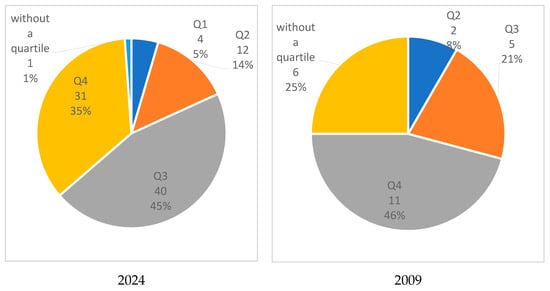
- Journal Rank: JCR - Q2 (Information Science and Library Science) / CiteScore - Q1 (Communication)
- Open Peer-Review: authors have the option for all reviewer comments and editorial decisions to be published along with the final paper. For more, see: Editorial, Paper with Review Comments.
- Rapid Publication: manuscripts are peer-reviewed and a first decision is provided to authors approximately 27.4 days after submission; acceptance to publication is undertaken in 4.8 days (median values for papers published in this journal in the second half of 2025).
- Recognition of Reviewers: reviewers who provide timely, thorough peer-review reports receive vouchers entitling them to a discount on the APC of their next publication in any MDPI journal, in appreciation of the work done.
Impact Factor:
2.5 (2024);
5-Year Impact Factor:
3.7 (2024)
Latest Articles
Manuscript Reviews Performed by a Health Sciences Researcher: A Reviewer’s Reflection on the Process and Outcomes
Publications 2026, 14(2), 37; https://doi.org/10.3390/publications14020037 - 2 Jun 2026
Abstract
►
Show Figures
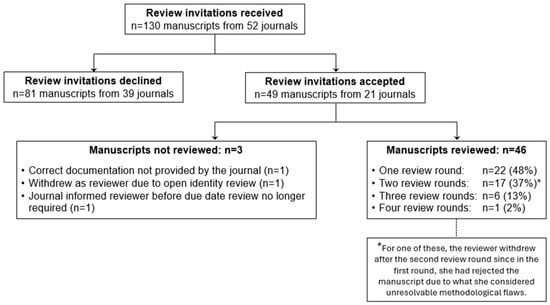
Finding willing peer reviewers is challenging. This viewpoint describes a health sciences reviewer’s experience regarding the decision to decline or accept review invitations, and the review process and outcome in terms of journal communication and duration. This audit included all manuscript review invitations
[...] Read more.
Finding willing peer reviewers is challenging. This viewpoint describes a health sciences reviewer’s experience regarding the decision to decline or accept review invitations, and the review process and outcome in terms of journal communication and duration. This audit included all manuscript review invitations received by the researcher in 2022–2024. Information was noted from emails received from the journals. Of 130 review invitations received, 49 (38%) were accepted. The most common reason for declining review invitations (23/81; 28%) was that the researcher, a biostatistician, did not regard herself as having the necessary clinical background. Of the 49 accepted invitations, reviews were submitted for 46 manuscripts (94%), with 24 manuscripts (52%) requiring more than one review round. The reviewer was informed of the journal decision after each review round for 22 (48%) reviewed manuscripts. However, the final journal decision regarding acceptance or rejection of the manuscript was received for only 14 (30%) reviewed manuscripts. Journals provided comments of other reviewers for 44% (n = 20/46) of reviewed manuscripts. To align with International Committee of Medical Journal Editors recommendations, journals should provide feedback to reviewers regarding other reviewers’ comments and the final journal decision. Journal information regarding the usual number of review rounds and duration may influence potential reviewers’ willingness to participate.
Full article
Open AccessOpinion
Literature Search Query in Academic Databases: Artificial Intelligence Think Tank Guideline for Literature Reviews
by
Shahryar Sorooshian
Publications 2026, 14(2), 36; https://doi.org/10.3390/publications14020036 - 1 Jun 2026
Abstract
Literature reviews are essential for synthesizing existing knowledge, mapping research domains, identifying intellectual structures, and highlighting research gaps within a field. However, many literature reviews are incomplete because database search strategies are not adequately specified or validated. Search strategies are frequently underreported and
[...] Read more.
Literature reviews are essential for synthesizing existing knowledge, mapping research domains, identifying intellectual structures, and highlighting research gaps within a field. However, many literature reviews are incomplete because database search strategies are not adequately specified or validated. Search strategies are frequently underreported and undermotivated across the systematic review literature and bibliometrics, while query formulation remains time-consuming, error-prone, and particularly difficult in interdisciplinary or rapidly evolving topics. This article fills that void by developing a guideline for designing a professional topic query in existing academic databases and emphasizing search design as the front-end validity problem in bibliometric research. The article uses the Artificial Intelligence Think Tank framework as a methodological engine and applies it to bibliometric retrieval engineering via structured interaction with generative AI systems and human experts. The paper assists scholars performing bibliometric studies, scientometric analyses, systematic literature reviews, scoping reviews, and hybrid evidence-synthesis projects.
Full article
(This article belongs to the Special Issue AI in Academic Metrics and Impact Analysis)
Open AccessArticle
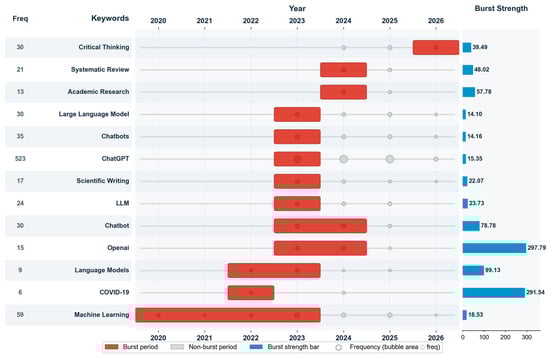
Scientific Production in Global Mental Health: A Meta-Research Study of Income-Stratified Trends, Gaps, and Health Metrics Impact
by
David A. Hernandez-Paez, Mónica Acuña-Rodriguez, Kevin Fernando Montoya-Quintero and Jhon Victor Vidal-Durango
Publications 2026, 14(2), 35; https://doi.org/10.3390/publications14020035 - 1 Jun 2026
Abstract
►▼
Show Figures
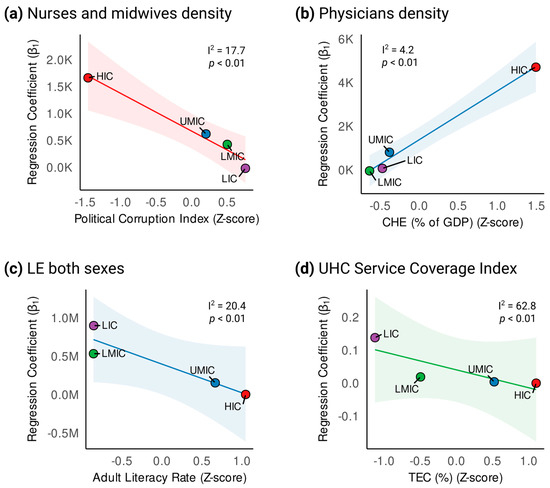
Aligning mental health research with territorial health needs remains a critical goal, yet the global distribution, coherence, and impact of scientific output across income groups remain poorly understood. We conducted a meta-research study combining scientometric analyses with longitudinal data on 60 health and
[...] Read more.
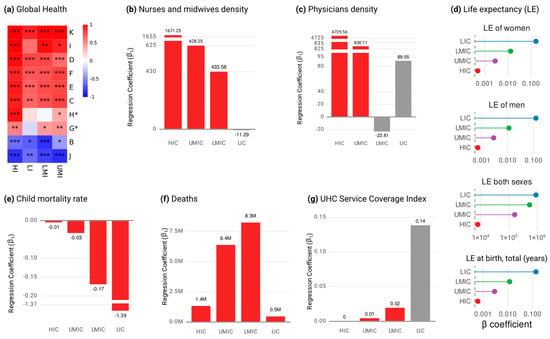
Aligning mental health research with territorial health needs remains a critical goal, yet the global distribution, coherence, and impact of scientific output across income groups remain poorly understood. We conducted a meta-research study combining scientometric analyses with longitudinal data on 60 health and development indicators. Over 386,000 peer-reviewed publications were retrieved from five major databases. Linear regressions, meta-analyses, and meta-regressions were performed, stratified by World Bank income classification. We find that high-income countries (HICs) accounted for 67% of publications, exhibiting the highest research density but the lowest potential marginal health returns. In contrast, low-income countries (LICs) showed the strongest associations between research volume and improvements in life expectancy (β = 0.13; p < 0.01) and child mortality (β = −1.38; p < 0.01). Structural moderators such as governance quality, health expenditure, and education explained up to 48% of between-group variance. In conclusion, the global landscape of mental health research remains unequal. While scientific production is concentrated in HICs, its population-level association is greatest in LICs. These findings underscore the need to redirect investments and enhance research coherence with health needs, particularly through governance safeguards and capacity building in underrepresented regions.
Full article

Figure 1
Open AccessArticle
An Open-Source Reproducible Preprocessing Pipeline for Merging Bibliometric Data from Multiple Databases
by
Kasaraneni Purna Prakash, Kasaraneni HimaJyothi, Salini Rosaline, Yellapragada Venkata Pavan Kumar, Gogulamudi Pradeep Reddy and Naveen Mukkapati
Publications 2026, 14(2), 34; https://doi.org/10.3390/publications14020034 - 1 Jun 2026
Abstract
►▼
Show Figures
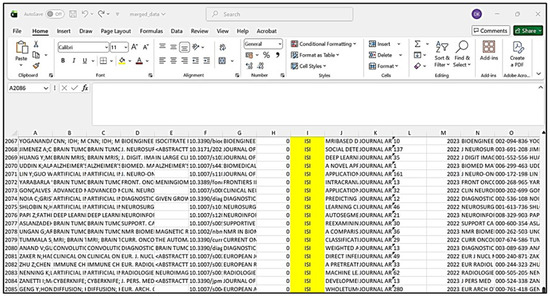
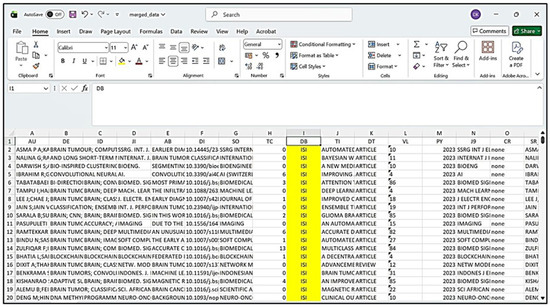
Bibliometric data from various databases are crucial for exploring research trends through a bibliometric analysis. Usually, deduplicating records and merging several citation index databases for bibliometric research is tedious, particularly when dealing with larger datasets. Although several manual and automatic merging processes are
[...] Read more.
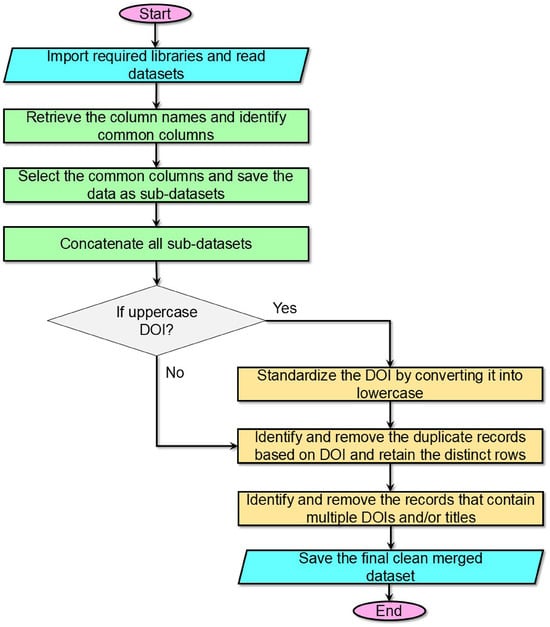
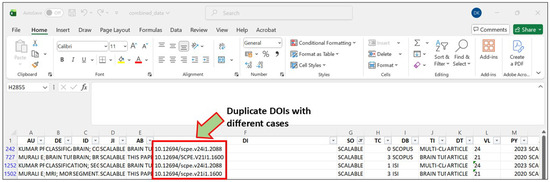
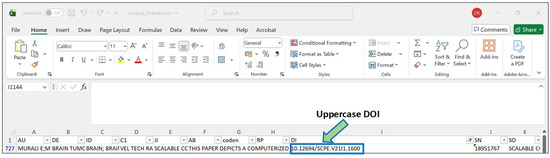
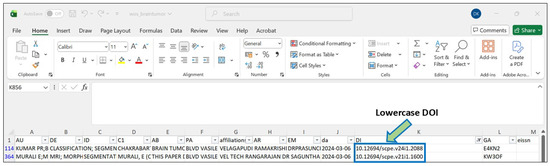
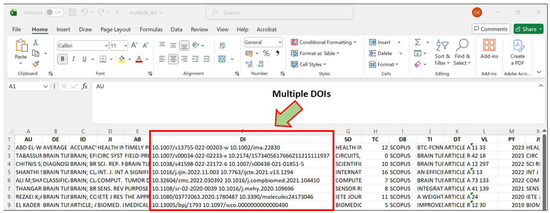
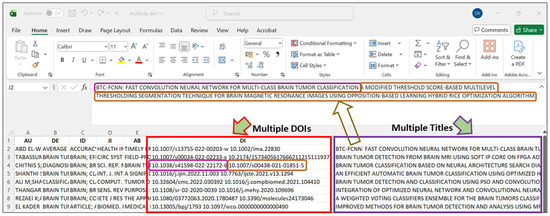
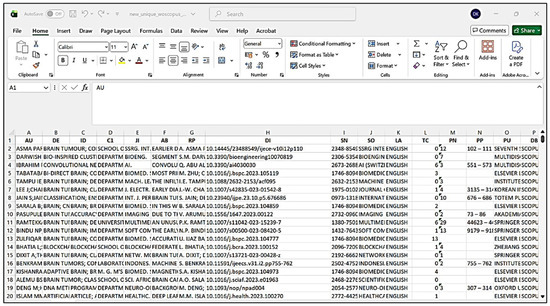
Bibliometric data from various databases are crucial for exploring research trends through a bibliometric analysis. Usually, deduplicating records and merging several citation index databases for bibliometric research is tedious, particularly when dealing with larger datasets. Although several manual and automatic merging processes are available in the academic literature, some key issues were identified during the implementation of existing merging processes. To address such issues, this paper proposes an open-source preprocessing pipeline developed using R programming for a simple merging of bibliometric data collected from multiple databases. This open-source reproducible preprocessing pipeline precompiles and deduplicates records based on a Digital Object Identifier (DOI). To implement this proposed research work, bibliometric data are considered from Scopus, Web of Science and Lens databases. The key outcomes of this research work are identifying multiple DOIs and Titles, standardizing the DOIs, and deduplicating records to obtain a merged dataset without noisy data. This enables researchers to conduct an effective bibliometric analysis.
Full article

Figure 1

Open AccessArticle
Experimenting with Grant Peer Review: A Mixed Methods Case Study of the Effects on Time Use and the Quality of Reviewing
by
Peter van den Besselaar and Charlie Mom
Publications 2026, 14(2), 33; https://doi.org/10.3390/publications14020033 - 27 May 2026
Abstract
►▼
Show Figures
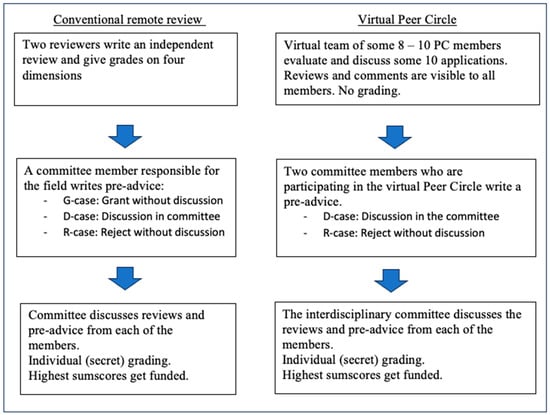
Rejection of review invitations due to time constraints is putting pressure on the peer review system, showing that less time-consuming ways of reviewing are needed. This paper presents the results of a field experiment with a new format for grant peer review and
[...] Read more.
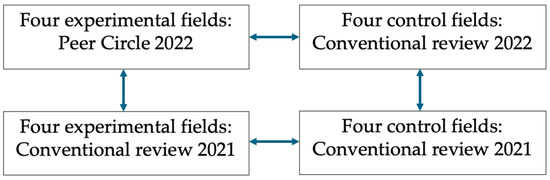
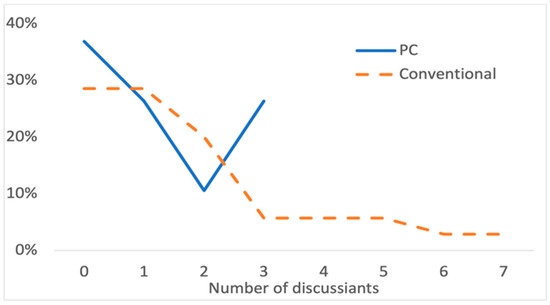
Rejection of review invitations due to time constraints is putting pressure on the peer review system, showing that less time-consuming ways of reviewing are needed. This paper presents the results of a field experiment with a new format for grant peer review and answers the question of whether this new format is less time-consuming while still providing high-quality reviews. In the new approach, the Peer Circle (PC), a team of reviewers collectively evaluates several grant applications. The PC was applied to four fields and compared with four similar fields using conventional peer review. Qualitative and quantitative methods have been used to analyze heterogeneous data such as interviews with and a survey of the peer reviewers; text analysis of the review reports; and statistical analysis of bibliometric applicant data. The comparison suggests that the PC saves time and enlarges the reviewer population considerably. Most reviewers felt that the quality of the PC evaluations was at least as good as that of the conventional evaluations, if not better. Given these findings, the experiment is now continued on a much larger scale. Apart from that, the theoretical implication is that the way of organizing peer review has an important effect on the functioning of the system.
Full article

Figure 1
Open AccessArticle
Novelty First Policy-Based Intelligent Review Framework (IRF) for the Evaluation of Research Proposals
by
Hiran H. Lathabai, Raghu Raman and Prema Nedungadi
Publications 2026, 14(2), 32; https://doi.org/10.3390/publications14020032 - 15 May 2026
Abstract
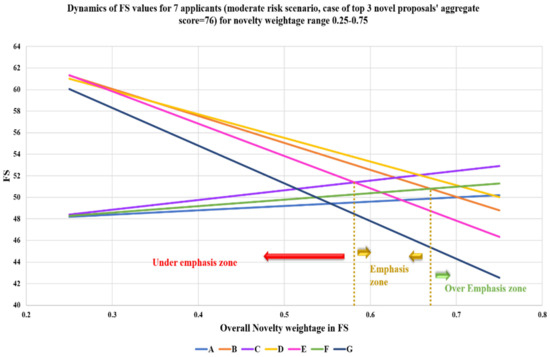
Despite its many limitations, peer review is the most preferred research assessment scheme for research proposal assessment at the individual level. Although scientometric assessment offers effective assessment frameworks, certain limitations, including the proven and potential misuse of scientometric indicators, hinder its wide adoption.
[...] Read more.
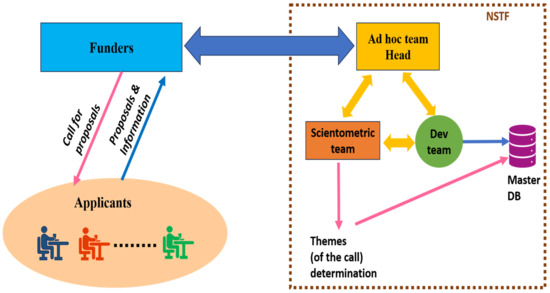
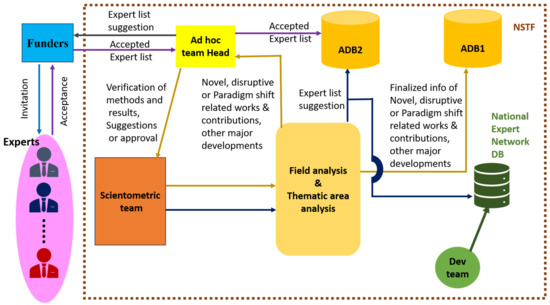
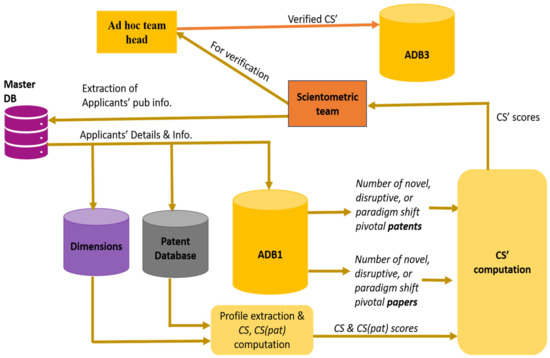
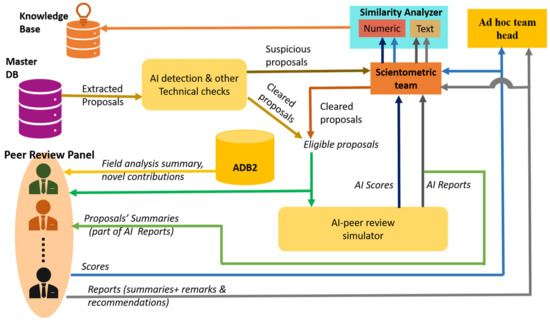
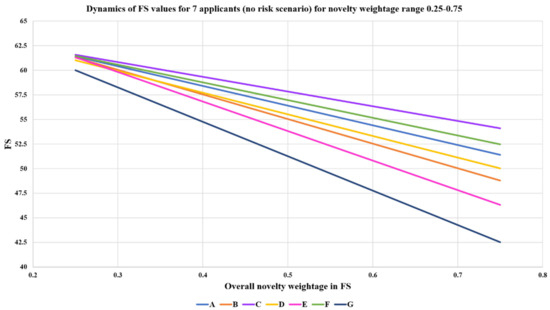
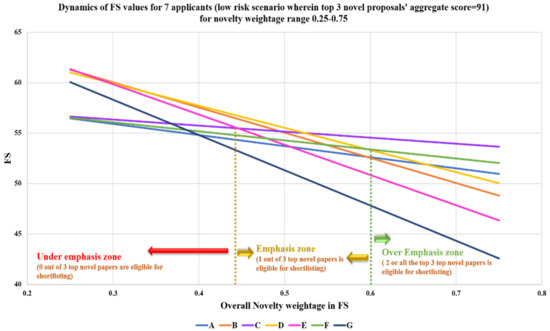
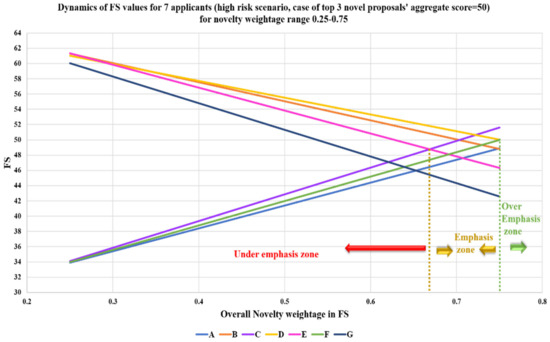
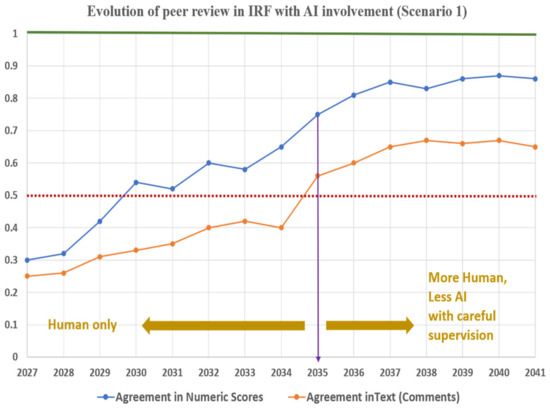
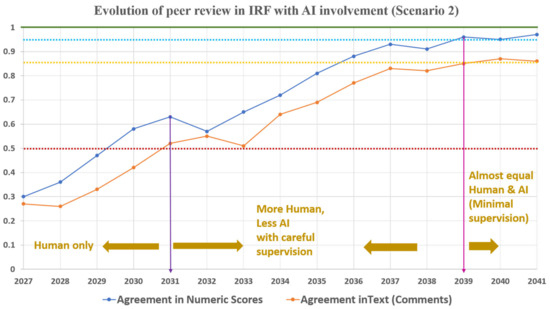
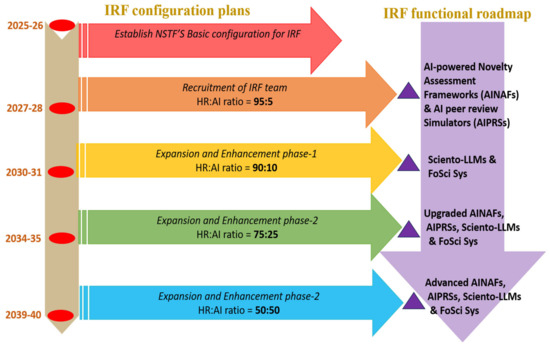
Despite its many limitations, peer review is the most preferred research assessment scheme for research proposal assessment at the individual level. Although scientometric assessment offers effective assessment frameworks, certain limitations, including the proven and potential misuse of scientometric indicators, hinder its wide adoption. Informed peer review is viewed as an effective way of harnessing the advantages of peer review and scientometric/quantitative assessment wherein one may complement the limitations of the other. Informed peer review frameworks are still prone to many inherent challenges in scientometric assessment and peer review. The importance of intelligent review frameworks that can be more advanced and effective than informed review frameworks lies there. With the advent of AI and generative AI (GenAI), a plethora of opportunities are available to convert informed peer review frameworks to intelligent review frameworks but not without challenges and concerns. In this work, we discuss the possible opportunities for effective AI intervention in an existing informed peer review framework to transform it into an intelligent review framework. Although the selected existing informed peer review framework emphasized the ‘novelty first’ policy, it did not provide any means or guidelines to execute it. The proposed conceptual ‘intelligent review framework’ addresses this very well by exploring the effective use of AI/ML techniques for the process and is envisioned to have the flexibility to adapt to future technological developments in AI, GenAI, etc. Possible challenges and a roadmap for possible evolution with anticipated technological changes, etc., are also discussed.
Full article
(This article belongs to the Special Issue AI in Academic Metrics and Impact Analysis)
►▼
Show Figures

Figure 1
Open AccessSystematic Review
Applying Bibliometrics and a RoBERTa Transformer in the Circular Bioeconomy: A PRISMA 2020 Systematic Review
by
Gary Christiam Farfán-Chilicaus, Alexander Fernando Haro-Sarango, Angela Fremiot Rodriguez-Armas, César Augusto Herrera-Asmat, Silvia Mabel Cachay-Salcedo, Rosa Amable Salcedo-Dávalos, Violeta Claros-Aguilar de Larrea and Emma Verónica Ramos-Farroñán
Publications 2026, 14(2), 31; https://doi.org/10.3390/publications14020031 - 13 May 2026
Abstract
►▼
Show Figures
This exploratory methodological study demonstrates an integrated workflow that combines systematic evidence collection Preferred Reporting Items for Systematic reviews and Meta-Analyses (PRISMA 2020), bibliometric mapping, and Transformer-based natural language processing (RoBERTa) to generate multi-layer insights from Circular Economy-related scholarship, using circular bioeconomy literature
[...] Read more.
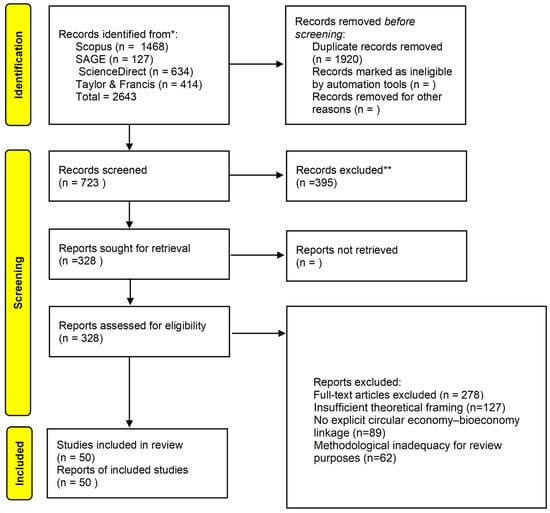
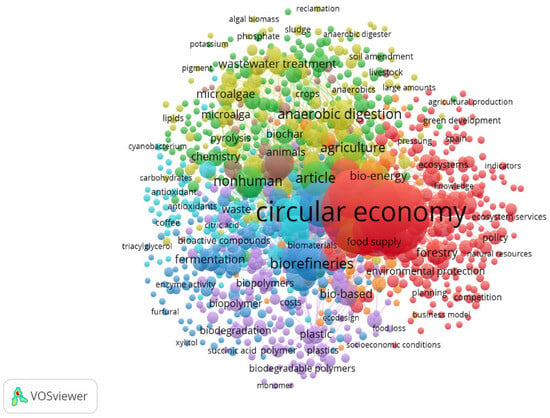
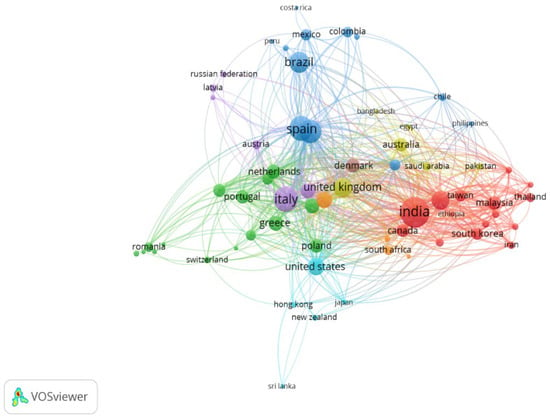
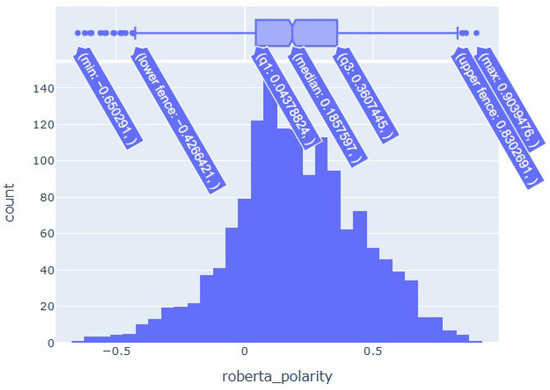
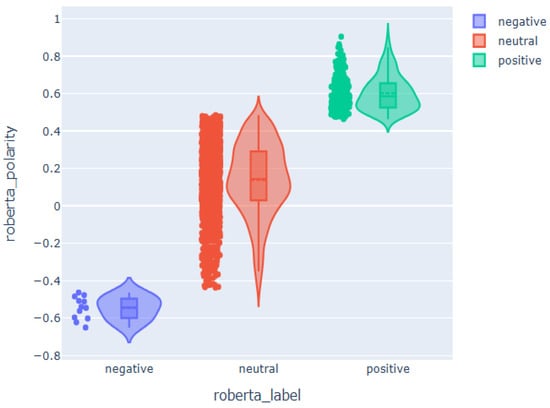
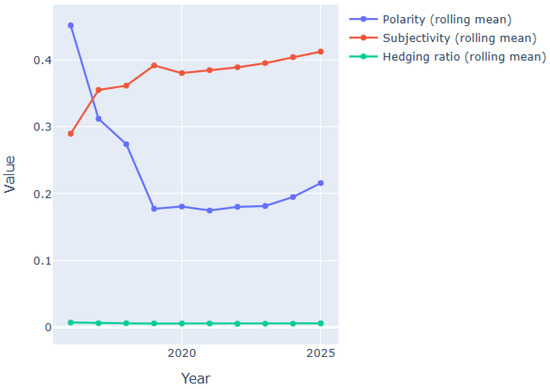
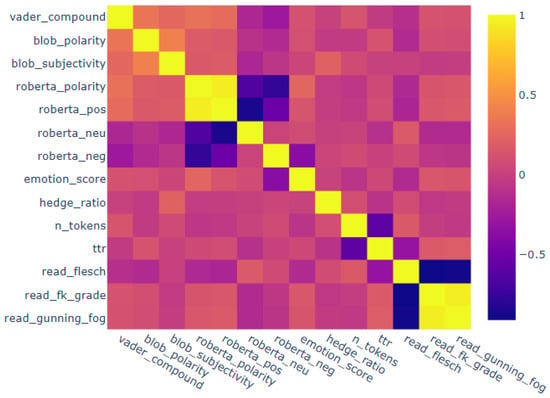
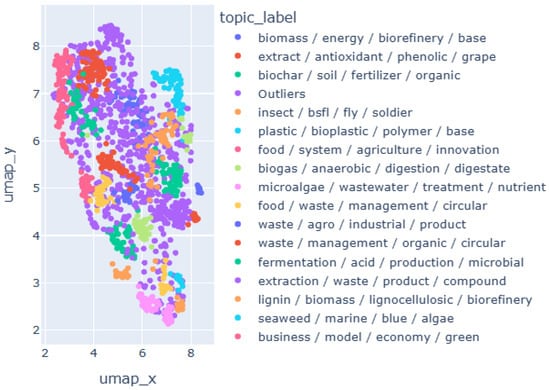
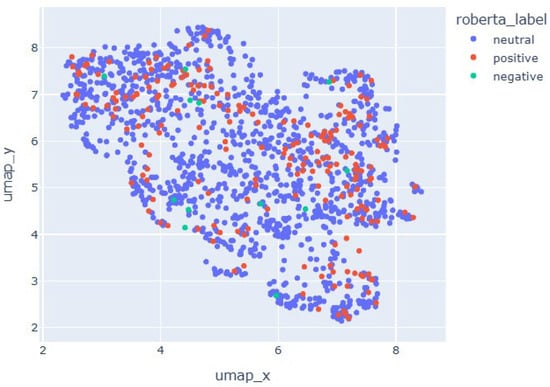
This exploratory methodological study demonstrates an integrated workflow that combines systematic evidence collection Preferred Reporting Items for Systematic reviews and Meta-Analyses (PRISMA 2020), bibliometric mapping, and Transformer-based natural language processing (RoBERTa) to generate multi-layer insights from Circular Economy-related scholarship, using circular bioeconomy literature as a domain case (2017–2025). Searches across Scopus, ScienceDirect, Taylor & Francis, and SAGE retrieved 2643 records; after deduplication and screening, 50 studies were included (mean quality 13.2/16; 68% high quality). Bibliometric mapping (VOSviewer; Scopus subset n = 1468) revealed three thematic clusters that converge with five conceptual framings extracted via qualitative synthesis, providing cross-method validation of the pipeline’s structural and interpretive outputs. The NLP layer identified a predominantly positive discursive valence in the English-language title–abstract–keyword corpus derived from Scopus records, with declining polarity and increasing subjectivity over time. Because these estimates were obtained from composite bibliographic text fields rather than full-text discussion sections, they should be interpreted as indicators of narrative framing rather than as direct evidence of epistemic bias or empirical overstatement. Within that scope, the joint reading of polarity, subjectivity, hedging, and measurement gaps suggests a possible mismatch between acknowledged evaluative limitations and the caution used to communicate them.
Full article

Figure 1
Open AccessReview
Methods, Challenges, and Future Directions in Annotation and Indexing of Classical Chinese Medical Texts: A Narrative Review
by
Sizhe Liu, Ying Zhou, Yongmei Song and Cong Chen
Publications 2026, 14(2), 30; https://doi.org/10.3390/publications14020030 - 11 May 2026
Abstract
Annotation and indexing of classical Chinese medical texts enable the extraction of core information, facilitating structured annotation and standardised indexing. These processes provide essential support for knowledge retrieval, digital utilisation, and in-depth analysis of these texts. Recent advances in digital technologies have opened
[...] Read more.
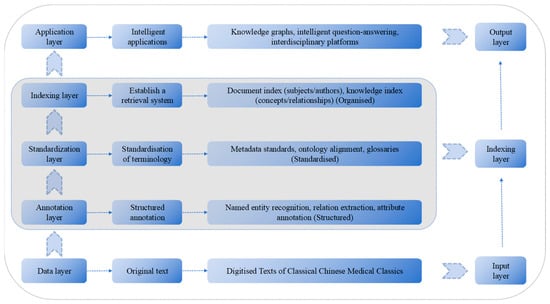
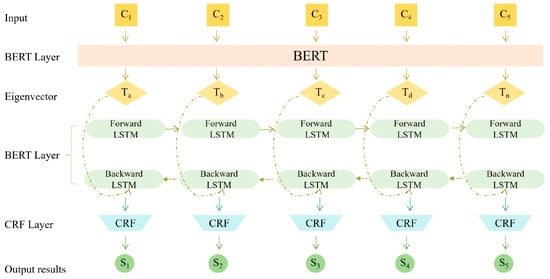
Annotation and indexing of classical Chinese medical texts enable the extraction of core information, facilitating structured annotation and standardised indexing. These processes provide essential support for knowledge retrieval, digital utilisation, and in-depth analysis of these texts. Recent advances in digital technologies have opened new possibilities for annotation and indexing, offering transformative approaches to address challenges arising from the abstract, concise, and complex nature of classical Chinese medical literature. However, existing research has largely overlooked the intrinsic interconnection and synergistic mechanisms between annotation and indexing within the workflow. This study examines annotation and indexing as an integrated whole, reviewing the current state of research, identifying existing challenges, and proposing future directions. The findings reveal that major challenges in the annotation and indexing of classical Chinese medical texts centre on four key areas: cultural connotation, rule formulation, result dissemination, and technical algorithms. Addressing these issues requires a systematic approach, including the development of a cultural heritage framework for Traditional Chinese Medicine, the establishment of standardised annotation and indexing principles, the construction of high-quality corpora, the optimisation of data circulation mechanisms, and the refinement of intelligent algorithms. Advancing the annotation and indexing of classical Chinese medical texts not only promotes their efficient circulation and secondary utilisation but also lays a solid foundation for the large-scale mining of Traditional Chinese Medicine knowledge, its modern transmission, and cross-disciplinary intelligent applications, thereby driving the innovative development of the field.
Full article
(This article belongs to the Special Issue Digital Humanities and Ancient Manuscripts)
►▼
Show Figures

Figure 1
Open AccessEssay
Reassessing the Role of Google Scholar in PRISMA-Informed Systematic Reviews Through a Critical Analysis of Influential Research Identifying Its Limitations and Empirical Evidence
by
Carol Nash
Publications 2026, 14(2), 29; https://doi.org/10.3390/publications14020029 - 4 May 2026
Abstract
There is contested use of Google Scholar as a primary database for PRISMA (Preferred Reporting Items for Systematic Reviews and Meta-analyses) reviews. However, well-cited articles identify Google Scholar as insufficiently reliable and evaluate its use as supplementary. Subsequent systematic review searches have accepted
[...] Read more.
There is contested use of Google Scholar as a primary database for PRISMA (Preferred Reporting Items for Systematic Reviews and Meta-analyses) reviews. However, well-cited articles identify Google Scholar as insufficiently reliable and evaluate its use as supplementary. Subsequent systematic review searches have accepted this relegation of Google Scholar to supplementary status, citing these articles as the reason. This study questions this acceptance by (1) revealing the type of difficulties with Google Scholar identified in these well-cited publications compared with PRISMA guidelines, and (2) examining several PRISMA scoping review primary database searches performed by this author since 2023 for the adequacy of Google Scholar results compared with them. The results reveal that the reasons for considering Google Scholar a supplementary database regarding PRISMA status are not convincing, as they are unrelated to PRISMA guidelines for systematic reviews. Google Scholar returned the greatest number of included studies for the majority of post-2023 scoping reviews conducted by this author. These results demonstrate that the accepted advice to authors that Google Scholar should be a supplementary database is unsupported. Based on the results of this research, the suggestion is to accept Google Scholar as a primary database, comparable in all relevant ways to other primary databases for a PRISMA-style review.
Full article
Open AccessArticle
Economic Journals of the BRICS Countries: Assessment of Academic Influence
by
Irina D. Turgel and Olga A. Chernova
Publications 2026, 14(2), 28; https://doi.org/10.3390/publications14020028 - 1 May 2026
Abstract
►▼
Show Figures
The BRICS countries are playing an increasingly significant role in shaping a multipolar model of global science. This study aims to assess the academic influence of economic journals published in BRICS countries from the following key perspectives: academic standing, relevance, influence sustainability, internationalization,
[...] Read more.
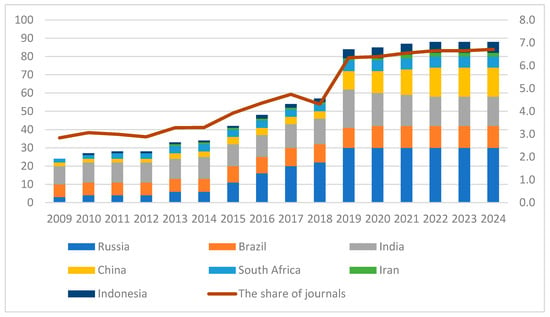
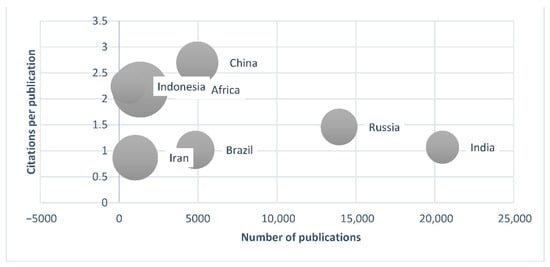
The BRICS countries are playing an increasingly significant role in shaping a multipolar model of global science. This study aims to assess the academic influence of economic journals published in BRICS countries from the following key perspectives: academic standing, relevance, influence sustainability, internationalization, and external institutional recognition (lack of isolation). The methods of bibliometric, comparative, and cluster analysis were used. The study revealed that the BRICS countries have significantly increased their presence in the Scopus database. However, their scientific publishing landscape is highly heterogeneous. Russia and India exhibit the highest publication volumes among the BRICS countries, albeit with relatively low citation rates and a low level of internationalization. Meanwhile, Chinese, South African, and Indonesian journals have the highest citation rates and strongest integration into the global discourse. Cluster analysis identified five groups of journals with a range of academic influence levels, from peripheral contributors to international leaders. Additionally, country-specific features of their distribution were determined. The present research provides insights into the pivotal role of national journals in overcoming peripherality and strengthening the academic influence of nationwide science. The research methodology can be used to develop strategies that promote nations to become part of the global research community.
Full article

Figure 1

Open AccessArticle
The Attention Mismatch: Mapping the Structural Academic Governance Deficit in the Age of Generative AI
by
Zhenning Guo, Haoran Mao and Fang Zhang
Publications 2026, 14(2), 27; https://doi.org/10.3390/publications14020027 - 17 Apr 2026
Abstract
With the rapid advancement in Generative Artificial Intelligence (GenAI), AI-generated content (AIGC) lacking human cognitive oversight is increasingly permeating open web environments and academic communication systems. This study integrates longitudinal retraction data (Retraction Watch Database, 1990–2026), web-scale analyses of AI-content penetration (Common Crawl,
[...] Read more.
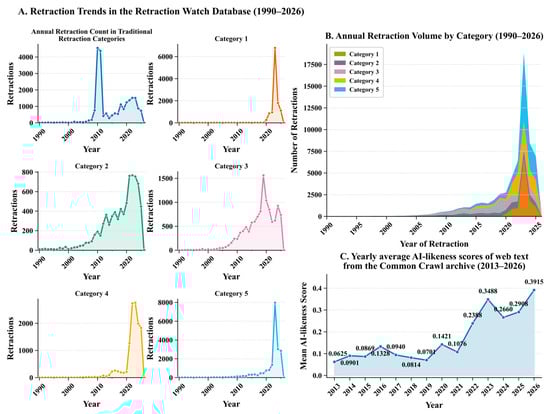
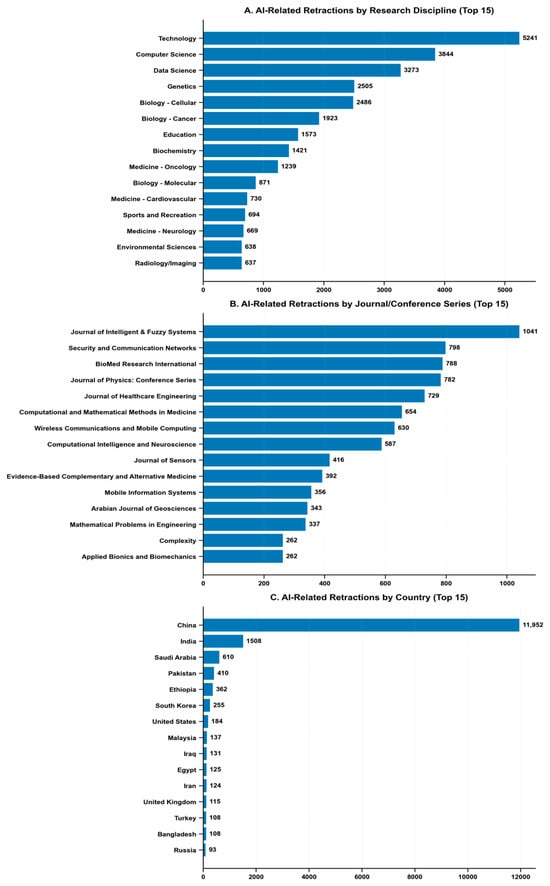
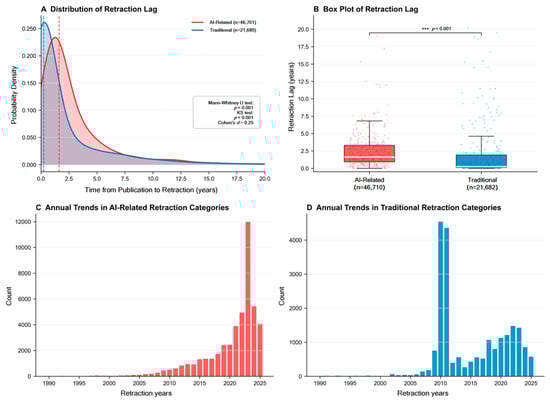
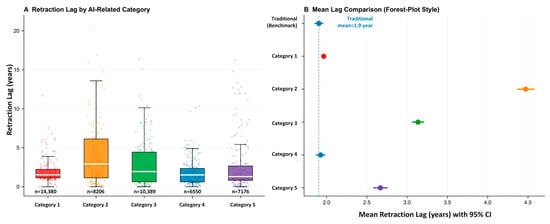
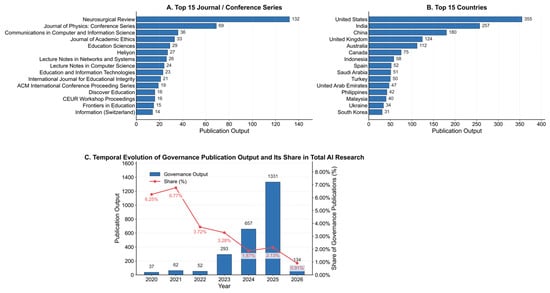
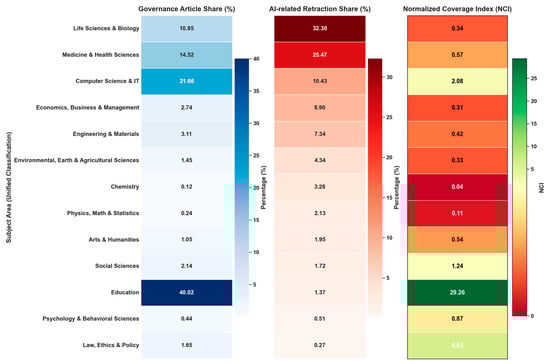
With the rapid advancement in Generative Artificial Intelligence (GenAI), AI-generated content (AIGC) lacking human cognitive oversight is increasingly permeating open web environments and academic communication systems. This study integrates longitudinal retraction data (Retraction Watch Database, 1990–2026), web-scale analyses of AI-content penetration (Common Crawl, 2013–2026), and bibliometric mapping of governance scholarship (Web of Science Core Collection, Scopus, Google Scholar, 2020–2026) to diagnose the cross-level misalignment between synthetic-content diffusion, AI-related misconduct pressure, and governance attention. On this basis, it proposes a Normalized Coverage Index (NCI) to measure the relative relationship between scholarly attention to AI-related academic misconduct governance and the level of misconduct pressure observed through retraction data across disciplines. The results reveal pronounced asymmetries at the disciplinary level. Fields such as chemistry (0.04), physics, mathematics & statistics (0.11), and life sciences & biology (0.34) exhibit clear governance gaps, whereas Education shows a comparatively excessive level of attention (NCI = 29.26). Since 2022, AIGC has expanded rapidly across open web corpora, accompanied by a sharp rise in AI-related retractions, which also exhibit a longer detection lag than traditional forms of misconduct (2.77 years vs. 1.91 years). Although the volume of academic governance-related research has grown rapidly, its proportion within the broader body of AI-related research has declined, suggesting that scholarly attention to governance has not kept pace with technological diffusion. Consequently, a structural misalignment in governance—closely tied to the allocation of attention—has emerged within the academic system in the era of GenAI. This misalignment may pose potential risks to the robustness of the knowledge production system. Addressing it requires rebuilding epistemic infrastructure through provenance transparency, auditable workflows, and governance-aware seed corpora aligned with empirically concentrated risks.
Full article
(This article belongs to the Special Issue Large Language Models Across the Lifecycle of Scholarly Publishing)
►▼
Show Figures

Figure 1
Open AccessReview
An Integrated Framework for Publishable Sport Science Research
by
Spyridon Plakias
Publications 2026, 14(2), 26; https://doi.org/10.3390/publications14020026 - 16 Apr 2026
Abstract
►▼
Show Figures
The rapid growth of scientific publications in sport science has intensified competition for publication and increased the importance of methodological rigor, transparent reporting, and effective scientific communication. Despite the availability of general guidance on scientific writing, recommendations specifically tailored to the context of
[...] Read more.
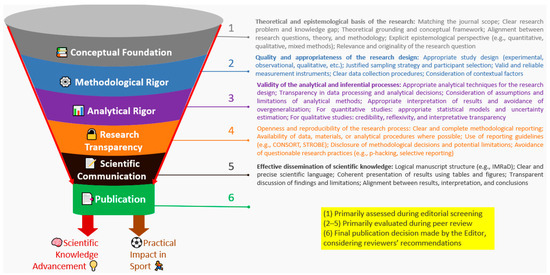
The rapid growth of scientific publications in sport science has intensified competition for publication and increased the importance of methodological rigor, transparent reporting, and effective scientific communication. Despite the availability of general guidance on scientific writing, recommendations specifically tailored to the context of sport science publishing remain fragmented. The aim of this narrative review was to synthesize methodological, conceptual, and editorial perspectives in order to identify the key factors that influence the quality and publishability of sport science research. The review examines major dimensions of research quality, including theoretical grounding, methodological rigor, statistical inference, open science practices, and the structure of scientific manuscripts. In addition, common weaknesses that frequently lead to manuscript rejection, such as limited scientific contribution, methodological flaws, statistical misinterpretation, and inadequate scientific writing, are discussed. Building on this synthesis, the article proposes an integrated conceptual framework that conceptualizes publishable sport science research as a progressive process moving from conceptual foundations to methodological and analytical rigor, research transparency, and effective scientific communication. The framework, presented as a funnel, illustrates how these interconnected dimensions ultimately contribute to two complementary outcomes: the advancement of scientific knowledge and the practical application of research findings in sport contexts. By providing a structured overview of these elements, the proposed framework aims to support researchers in designing more rigorous studies, improving manuscript quality, and strengthening the impact of sport science research.
Full article

Figure 1
Open AccessSystematic Review
Evolving Roles of Information Professionals in the Artificial Intelligence Era: A Systematic Literature Review
by
Dyah Puspitasari Srirahayu, Dian Ekowati, Tiara Kusumaningtiyas, Esti Putri Anugrah, Alifian Sukma, Misita Anwar and Hanis Diyana Kamarudin
Publications 2026, 14(2), 25; https://doi.org/10.3390/publications14020025 - 16 Apr 2026
Abstract
The rapid advancement of artificial intelligence (AI) is reshaping the landscape of library and information science, significantly altering the roles and responsibilities of information professionals. This paper aims to examine the transformations of information professional roles in the era of artificial intelligence. This
[...] Read more.
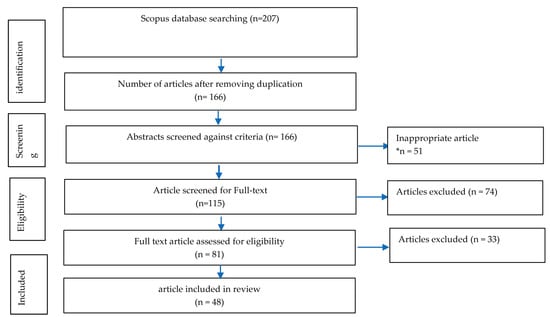
The rapid advancement of artificial intelligence (AI) is reshaping the landscape of library and information science, significantly altering the roles and responsibilities of information professionals. This paper aims to examine the transformations of information professional roles in the era of artificial intelligence. This study conducted a systematic literature review (SLR) emulating the PRISMA 2020 protocol. Titles and abstracts were screened based on predefined inclusion criteria, including English full-text journal articles, review papers, and conference papers indexed in Scopus addressing the roles and competencies of information professionals in the era of artificial intelligence. The study employed a conceptual and review analysis of documents to examine the use of AI and its impact on the roles of information professionals. We investigated the positive and negative effects of AI on the roles of information professionals, as well as the evolving role of information professionals in routine process automation. AI’s presence and transformation of virtually all the information professionals’ roles are profound, with pertinent challenges. The impact of AI on the roles of information professionals are both positive and negative, while the roles of information professionals have undergone significant changes in the AI era. This paper presents a unique perspective on the evolving roles of information professionals in the era of artificial intelligence. It offers original insights into how AI is reshaping the profession, highlighting the profound impacts and transformations that are redefining traditional practices and skill sets.
Full article
(This article belongs to the Special Issue AI in Open Access)
►▼
Show Figures

Figure 1
Open AccessArticle
The Coverage of Non-Traditional Research Outputs in Repositories and Current Research Information Systems: An Exploratory Study at the University of Bologna
by
Alberto Ciarrocca, Ivan Heibi, Ahmadreza Nazari, Anna Nicoletti, Martina Pensalfini, Silvio Peroni, Lucrezia Pograri, Pietro Tisci and Sergei Slinkin
Publications 2026, 14(2), 24; https://doi.org/10.3390/publications14020024 - 15 Apr 2026
Abstract
►▼
Show Figures
The diversification of research outcomes produced within scholarly communication practices has led to a growing production of non-traditional research outputs (NTROs) such as datasets, software, databases, exhibitions, and multimedia materials, which are often poorly tracked by institutional systems. This study presents an exploratory
[...] Read more.
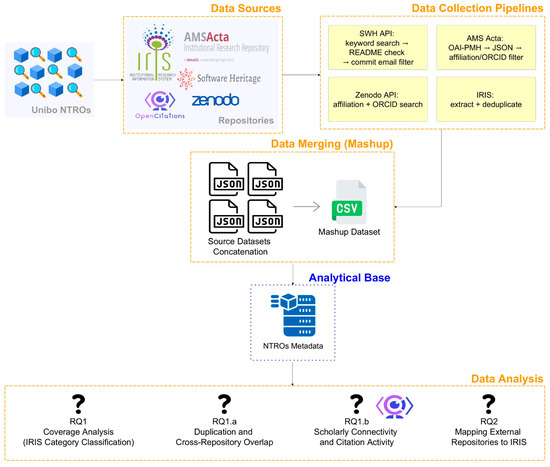
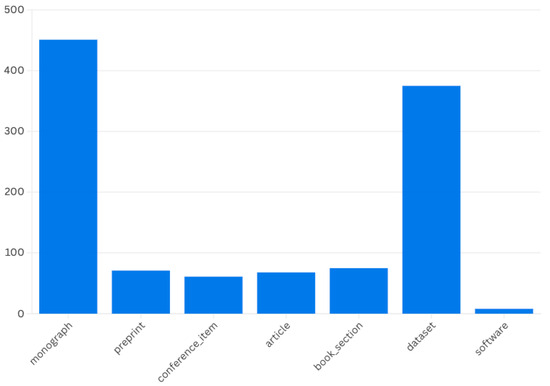
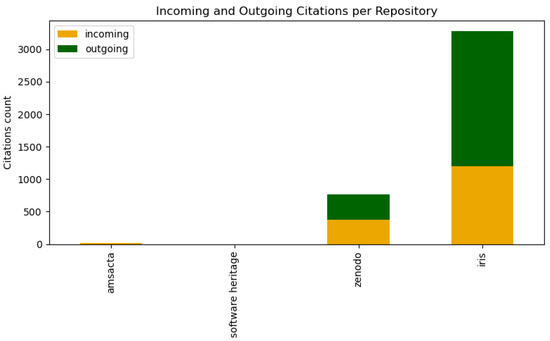
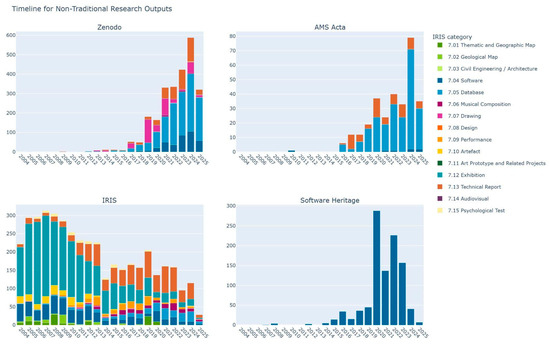
The diversification of research outcomes produced within scholarly communication practices has led to a growing production of non-traditional research outputs (NTROs) such as datasets, software, databases, exhibitions, and multimedia materials, which are often poorly tracked by institutional systems. This study presents an exploratory study about knowledge production at the University of Bologna (UNIBO). This prominent national research institution offers a compelling case study to assess coverage, cross-repository overlap, and citation activity of NTROs across repositories. By harvesting and integrating metadata from the University of Bologna’s institutional CRIS system, the institutional repository AMS Acta, the general-purpose repository Zenodo, the disciplinary archive Software Heritage, and OpenCitations to gather citation information, we analyse the availability of UNIBO-affiliated NTROs and show that, while the UNIBO CRIS platform (i.e., IRIS) remains the primary registry for information on NTROs, a substantial number of them are hosted exclusively in external repositories. These findings highlight structural gaps in tracking NTROs in UNIBO IRIS and underline the need for improved interoperability and coordinated Open Science strategies and policies, at least at the local level, to ensure recognition of diverse research outputs.
Full article

Figure 1

Open AccessFeature PaperArticle
On the Vulnerability of Citation Metrics in the Era of Generative Artificial Intelligence
by
Kay Smarsly
Publications 2026, 14(2), 23; https://doi.org/10.3390/publications14020023 - 11 Apr 2026
Abstract
Large language model (LLM) chatbots, as a widely used form of generative artificial intelligence, have reduced the marginal cost of producing publication-style manuscripts and have expanded feasible routes for manipulating citation metrics within the publishing ecosystem. Citation-based indicators (e.g., the h-index, the i10-index,
[...] Read more.
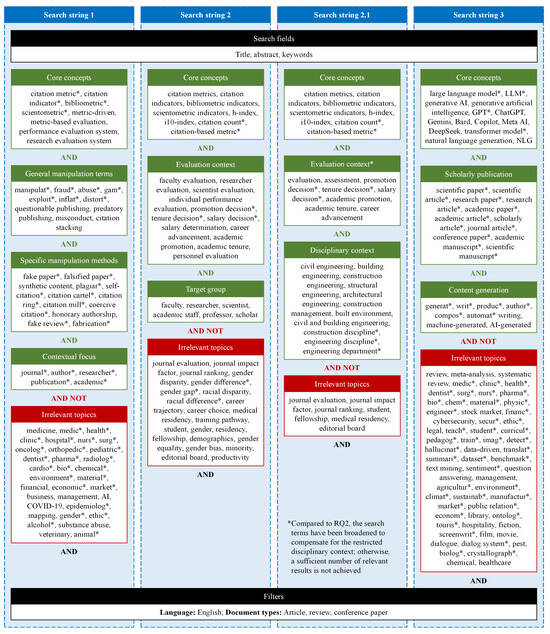
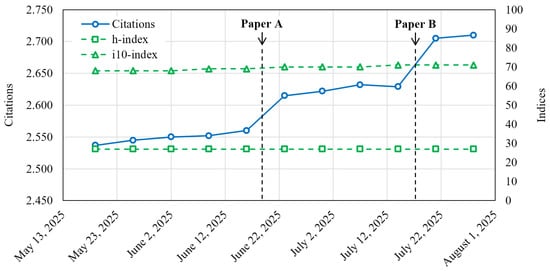
Large language model (LLM) chatbots, as a widely used form of generative artificial intelligence, have reduced the marginal cost of producing publication-style manuscripts and have expanded feasible routes for manipulating citation metrics within the publishing ecosystem. Citation-based indicators (e.g., the h-index, the i10-index, and total citation counts) remain embedded in research evaluation and are sensitive to indexing practices of bibliographic databases, with Google Scholar providing broad coverage combined with comparatively limited curation. In this study, a systematic literature review is conducted to synthesize reported mechanisms of citation-metric manipulation and to examine limitations of citation-metric use, including evidence reported in civil engineering. A Google Scholar proof-of-concept case study examines whether the indexing of LLM-assisted, non-peer-reviewed documents with concentrated references to a target author is associated with changes in author-level citation metrics under platform-specific conditions. After indexing, a stepwise increase in author-level metrics is observed, demonstrating the feasibility of citation-metric manipulation under the platform-specific conditions. Finally, this paper discusses the implications for research integrity and citation manipulation in the era of generative artificial intelligence. It also presents recommendations for researchers, academic institutions and evaluation committees, publishers and editors, bibliographic database providers, and funding institutions and policymakers.
Full article
(This article belongs to the Special Issue AI in Academic Metrics and Impact Analysis)
►▼
Show Figures

Figure 1
Open AccessArticle
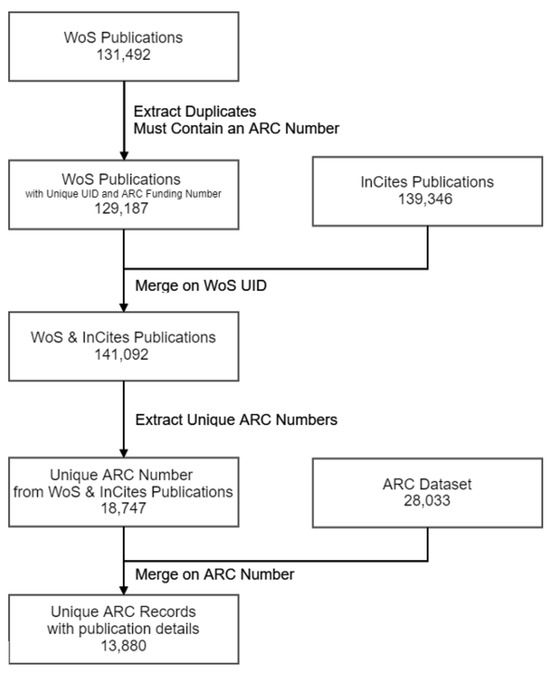
Quantitative Assessment of Scholarly Output and ROI in ARC-Funded Australian Research
by
Karen Blackmore, Xin Gu and Shaleeza Sohail
Publications 2026, 14(2), 22; https://doi.org/10.3390/publications14020022 - 1 Apr 2026
Abstract
►▼
Show Figures
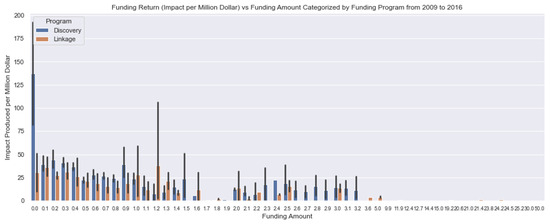
Government funding programs administered by the Australian Research Council (ARC) aim to advance national research priorities while generating scholarly and socio-economic impact. This study employs a descriptive bibliometric benchmarking approach to examine the relationship between funding levels and scholarly output for publications explicitly
[...] Read more.
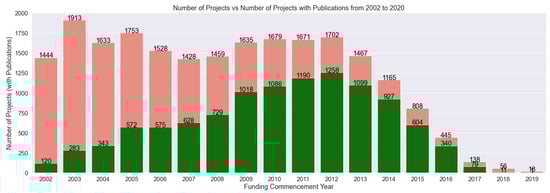
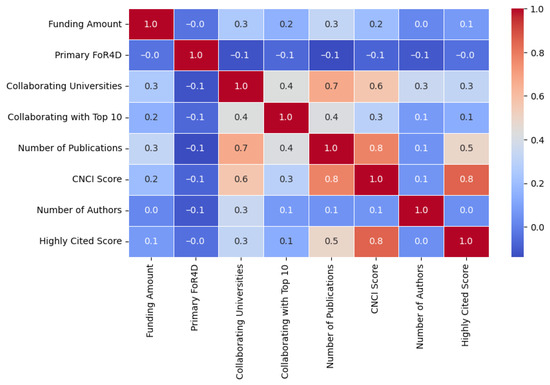
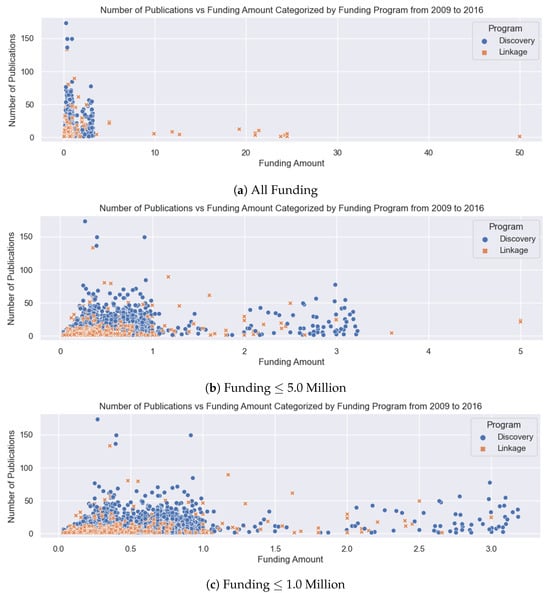
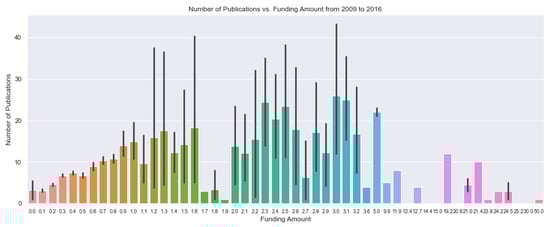
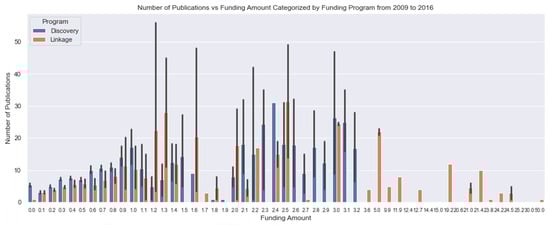
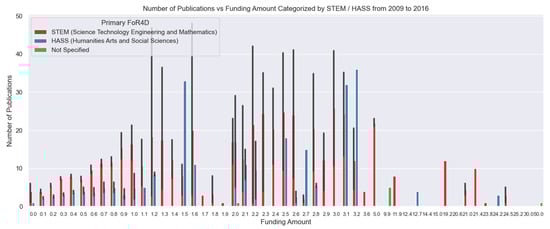
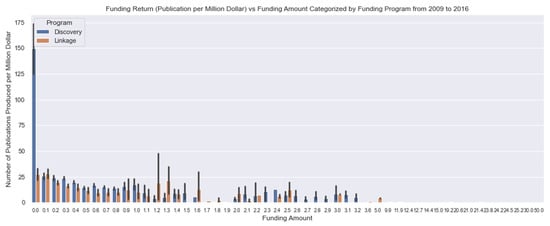
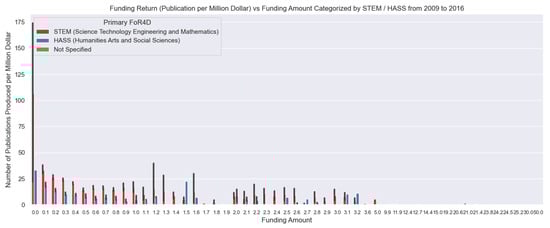
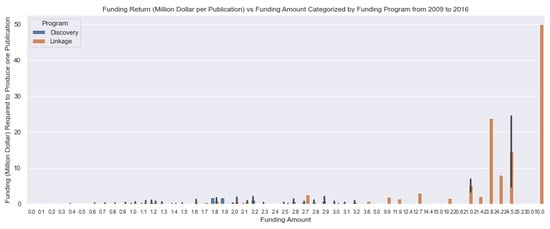
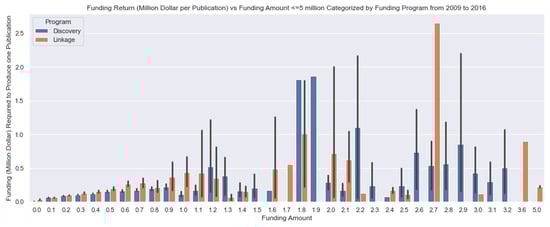
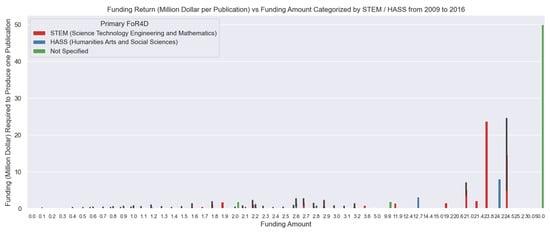
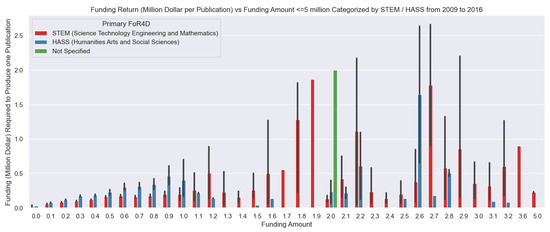
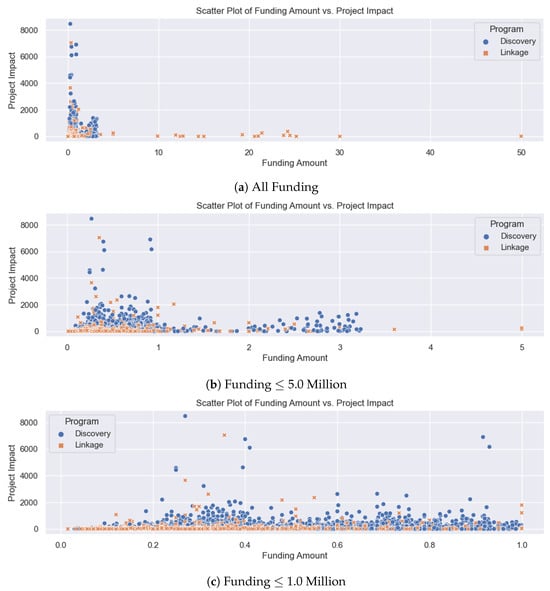
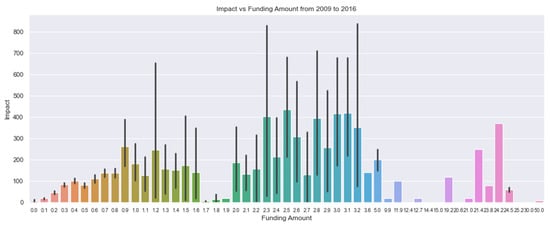
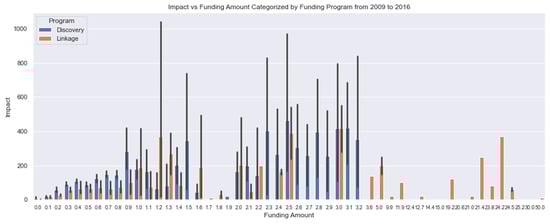
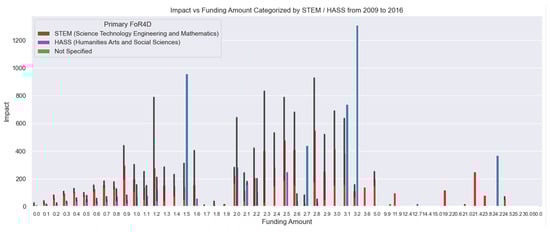
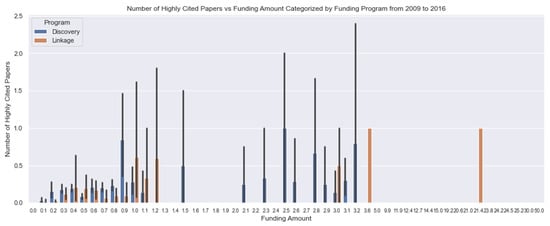
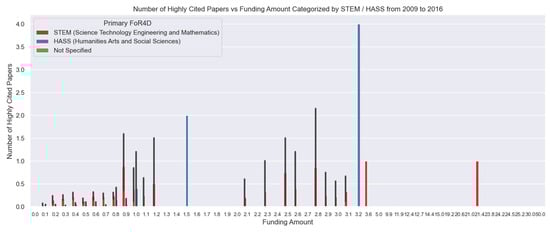
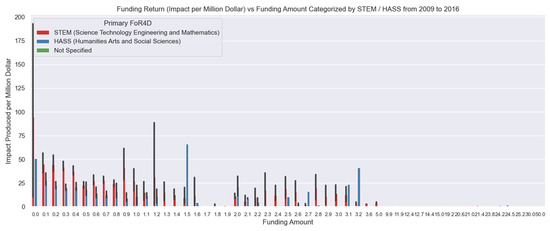
Government funding programs administered by the Australian Research Council (ARC) aim to advance national research priorities while generating scholarly and socio-economic impact. This study employs a descriptive bibliometric benchmarking approach to examine the relationship between funding levels and scholarly output for publications explicitly acknowledging ARC support. Using project-level funding data linked with journal articles published between 2009 and 2016, we analyze 10,565 ARC-funded projects receiving a total of AUD 4.6 billion and producing 54,639 journal publications. On average, each project received approximately AUD 437,720 and generated five publications, corresponding to a cost of about AUD 84,700 per article. We compare research productivity, citation impact, and return on investment across ARC Discovery and Linkage programs, as well as between STEM and HASS disciplines. The results reveal no strong correlation between funding amount and either publication volume or citation impact across ARC programs. STEM projects generally exhibit higher returns on investment and citation impact; however, a subset of HASS projects achieves exceptionally high efficiency relative to funding received. Notably, projects funded below AUD 100,000 demonstrate the highest return on investment in terms of both publication productivity and normalized citation impact. These findings suggest that smaller grants can yield disproportionately high scholarly returns, offering important implications for research funding allocation, efficiency evaluation, and performance assessment in public research systems.
Full article

Figure 1
Open AccessViewpoint
When AI Writes the Letters: Recognizing Synthetic Authorship Patterns in Medical Publishing
by
Elise Lupon and Grégoire Micicoi
Publications 2026, 14(2), 21; https://doi.org/10.3390/publications14020021 - 25 Mar 2026
Cited by 1
Abstract
The rapid integration of generative artificial intelligence into scientific publishing is reshaping how academic text can be produced, revised, and scaled. While transparent and limited use of AI for language support may be acceptable, a new structural vulnerability may be emerging in medical
[...] Read more.
The rapid integration of generative artificial intelligence into scientific publishing is reshaping how academic text can be produced, revised, and scaled. While transparent and limited use of AI for language support may be acceptable, a new structural vulnerability may be emerging in medical publishing: the large-scale production of short, plausible, and weakly individualized correspondence across multiple specialties. In this viewpoint, we describe and conceptualize a pattern that may be termed synthetic authorship, defined not as undisclosed AI use alone, but as a reproducible mode of scholarly output structurally facilitated by automation. We focus particularly on letters to the editor, a format that combines brevity, rapid editorial handling, and formal indexation, and may therefore be especially exposed to this phenomenon. Based on recurring patterns observed in PubMed-indexed literature, including unusually high publication velocity, abrupt thematic dispersion, and stylistic uniformity across unrelated domains, we argue that such outputs may challenge the authenticity, epistemic value, and editorial function of scientific correspondence. We do not present empirical proof of misconduct, but rather outline a conceptual framework for understanding this emerging risk and propose proportionate editorial safeguards, including cross-domain pattern detection and contextual assessment of authorship coherence. As AI lowers the threshold for generating domain-plausible commentary at scale, scientific publishing must adapt its integrity frameworks accordingly. In this context, vigilance toward synthetic authorship may become an essential component of editorial responsibility and post-publication quality control.
Full article
(This article belongs to the Special Issue Large Language Models Across the Lifecycle of Scholarly Publishing)
Open AccessReview
Research on Diamond Open Access in the Long Shadow of Science Policy
by
Niels Taubert
Publications 2026, 14(1), 20; https://doi.org/10.3390/publications14010020 - 19 Mar 2026
Abstract
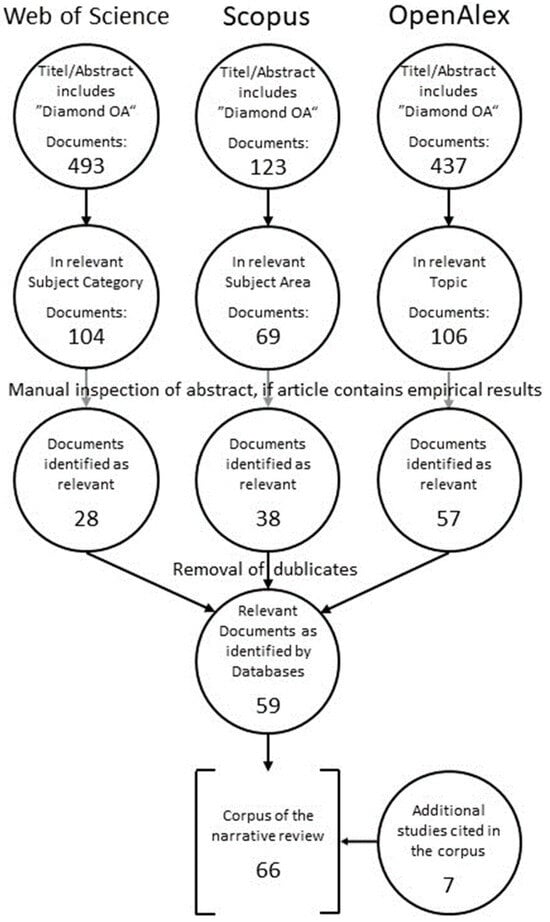
This review paper reviews research literature on Diamond Open Access (DOA) journals—sometimes also called Platinum Open Access—that was produced after this journal segment started to become a priority in European research policy around 2020. It contextualizes the current science policy debate, critically examines
[...] Read more.
This review paper reviews research literature on Diamond Open Access (DOA) journals—sometimes also called Platinum Open Access—that was produced after this journal segment started to become a priority in European research policy around 2020. It contextualizes the current science policy debate, critically examines different understandings of DOA, and reviews studies on the role of such journals in scholarly communication. Most existing research consists of quantitative studies focusing on aspects such as the number of DOA journals, their publication output, the diversity of the landscape in terms of subject areas, languages, publishing entities, indexing in major databases, awareness and perception among scholars, cost analyses, as well as insights into the internal operations of DOA journals. The review shows that research on DOA journals is partly influenced by the science policy discourse in at least two ways: first, through the normativity inherent in that discourse, and second, through the temporality of policy-driven research of practical relevance, which leaves important aspects of the phenomenon understudied. Moreover, research on the DOA journal landscape has implications beyond understanding this particular journal segment, as it also challenges established views of the global system of scholarly communication.
Full article
(This article belongs to the Special Issue Diamond Open Access)
►▼
Show Figures

Figure 1
Open AccessArticle
Research on Large Language Model-Based Bibliographic Cataloging Agent in the CNMARC Context
by
Zhuoxi Tan, Xin Yang, Qinyu Chen and Tao Chen
Publications 2026, 14(1), 19; https://doi.org/10.3390/publications14010019 - 18 Mar 2026
Abstract
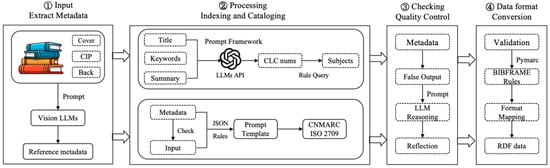
To address the efficiency and cost limitations of traditional manual cataloging, this study proposes a large language model-driven automated cataloging workflow in which the Metadata Extraction Agent (MEA), Description Cataloging Agent (DCA), Subject Analysis & Indexing Agent (SAIA), and Quality Control Agent (QCA)
[...] Read more.
To address the efficiency and cost limitations of traditional manual cataloging, this study proposes a large language model-driven automated cataloging workflow in which the Metadata Extraction Agent (MEA), Description Cataloging Agent (DCA), Subject Analysis & Indexing Agent (SAIA), and Quality Control Agent (QCA) collaborate to perform cataloging tasks. Experiments are conducted using a dataset of over 33,000 CNMARC bibliographic records from a University Library, together with data from the Chinese Library Classification (5th edition). Meanwhile, the agent-based workflow framework directly employs large language models without additional enhancement techniques, thereby providing a useful experimental benchmark for evaluating future AI-assisted cataloging systems. The results show that the framework performs well in metadata recognition, bibliographic description, and macro-level classification tasks, and can relatively stably generate standardized records. However, limitations remain in fine-grained semantic indexing and the interpretation of complex contexts. Therefore, in light of the capability limitations revealed by the experimental results, the study argues that fully automated end-to-end cataloging relying solely on generative AI is not yet entirely feasible. Future improvements should integrate techniques such as retrieval-augmented generation, supervised fine-tuning, and structured reasoning prompts, while establishing traceable mechanisms to enhance the reliability of intelligent cataloging.
Full article
(This article belongs to the Special Issue Overview on Today’s AI Tools for Authors)
►▼
Show Figures

Figure 1
Open AccessArticle
Research with Epistemology: Are We Really Following the Scientific Method?
by
Diego Lara-Haro, Alexander Haro-Sarango, Patricia López-Fraga and Angel Esquivel-Valverde
Publications 2026, 14(1), 18; https://doi.org/10.3390/publications14010018 - 7 Mar 2026
Cited by 1
Abstract
►▼
Show Figures
Epistemology underpins the scientific method by clarifying what counts as knowledge, which forms of evidence are admissible, and how procedures can legitimately support conclusions. Under accelerated publishing conditions, these assumptions are often left implicit, which can weaken the inferential coherence of peer-reviewed manuscripts.
[...] Read more.
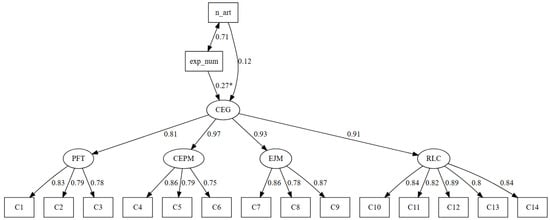
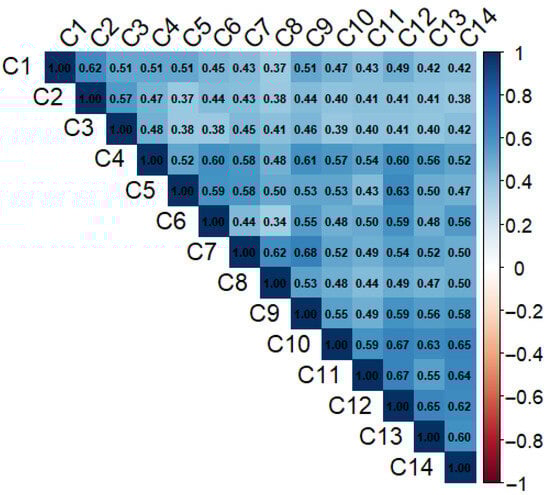
Epistemology underpins the scientific method by clarifying what counts as knowledge, which forms of evidence are admissible, and how procedures can legitimately support conclusions. Under accelerated publishing conditions, these assumptions are often left implicit, which can weaken the inferential coherence of peer-reviewed manuscripts. This study aimed to model reviewers’ perceived epistemological deficiencies as a multidimensional construct with an overarching global component. A 14-item instrument covering four latent domains was administered to 183 peer reviewers from a Latin American academic network. A second-order structural equation model was estimated using SEM with DWLS (lavaan). The model showed excellent fit (CFI ≈ 1.00; RMSEA = 0.000; SRMR = 0.033) and strong factor loadings, indicating a coherent global factor alongside distinct domain-specific components. Reviewers’ accumulated experience was positively associated with the global factor (β = 0.047; p = 0.013), whereas the recent volume of reviews was not statistically significant (p = 0.254). These results suggest that epistemological scrutiny may reflect more stable evaluative competencies than short-term reviewing activity. The instrument can inform editorial rubrics and reviewer training aimed at strengthening problem–theory–method coherence and reflexive methodological justification. Because the measure captures perceptions within a single regional network, further validation across disciplines and cultural contexts is recommended.
Full article

Figure 1
Highly Accessed Articles
Latest Books
E-Mail Alert
News
Topics
Topic in
AI, Algorithms, BDCC, Computers, Data, Future Internet, Informatics, Information, MAKE, Publications, Smart Cities
Learning to Live with Gen-AI
Topic Editors: Antony Bryant, Paolo Bellavista, Kenji Suzuki, Horacio Saggion, Roberto Montemanni, Andreas Holzinger, Min ChenDeadline: 31 August 2026
Topic in
Data, Encyclopedia, Publications, Systems
Applications of Open Data in Different Disciplines
Topic Editors: Fábio Duarte, Letícia Peret Antunes HardtDeadline: 31 March 2027
Special Issues
Special Issue in
Publications
Digital Humanities and Ancient Manuscripts
Guest Editor: Tong WeiDeadline: 31 August 2026
Special Issue in
Publications
Designing the Future of the Knowledge Hub in a AI-Supported Ecosystem, in 2040
Guest Editors: Anne-Katharina Weilenmann, Houqiang YuDeadline: 30 September 2026
Special Issue in
Publications
Overview on Today’s AI Tools for Authors
Guest Editors: Tao Chen, Qiang Zhang, Muzhe HanDeadline: 30 September 2026