
Skip to Content

Quantum Reports

Quantum Reports is an international, peer-reviewed, open access journal on quantum science.
It publishes original research articles and review articles in all quantum subfields, from basic quantum theory to a broad array of applications. Quantum Reports is published quarterly online by MDPI.

All Articles (330)

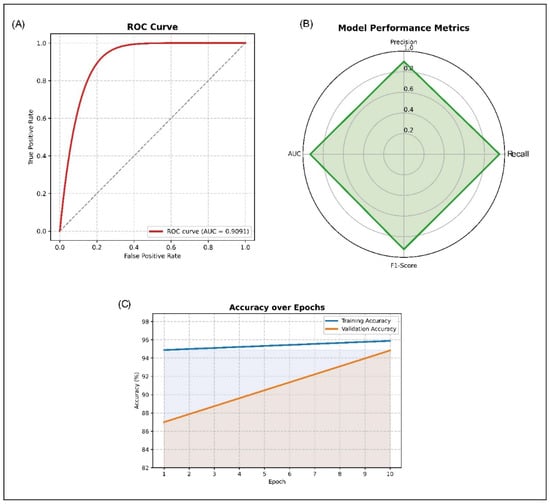
Accurate and early detection of bone cancer is critical for improving patient outcomes, yet conventional radiographic interpretation remains limited by subjectivity and variability. Conventional AI models often struggle with complex multi-modal noise distributions, non-convex and topologically entangled latent manifolds, extreme class imbalance in rare oncological conditions, and heterogeneous data fusion constraints. To address these challenges, we present a Quantum-Inspired Classical Convolutional Neural Network (QC-CNN) inspired by quantum analogies for automated bone cancer detection in radiographic images. The proposed architecture integrates classical convolutional layers for hierarchical feature extraction with a classical variational layer motivated by high-dimensional Hilbert space analogies for enhanced pattern discrimination. A curated and annotated dataset of bone X-ray images was utilized, partitioned into training, validation, and independent test cohorts. The QC-CNN was optimized using stochastic gradient descent (SGD) with adaptive learning rate scheduling, and regularization strategies were applied to mitigate overfitting. Quantitative evaluation demonstrated superior diagnostic performance, achieving high accuracy, precision, recall, F1-score, and area under the receiver operating characteristic curve (AUC). Results highlight the ability of classical CNN with quantum-inspired design to capture non-linear correlations and subtle radiographic biomarkers that classical CNNs may overlook. This study establishes QC-CNN as a promising framework for quantum-analogy motivated medical image analysis, providing evidence of its utility in oncology and underscoring its potential for translation into clinical decision-support systems for early bone cancer diagnosis. All computations in the present study are performed using classical algorithms, with quantum-inspired concepts serving as a conceptual framework for model design and motivating future extensions.

25 February 2026

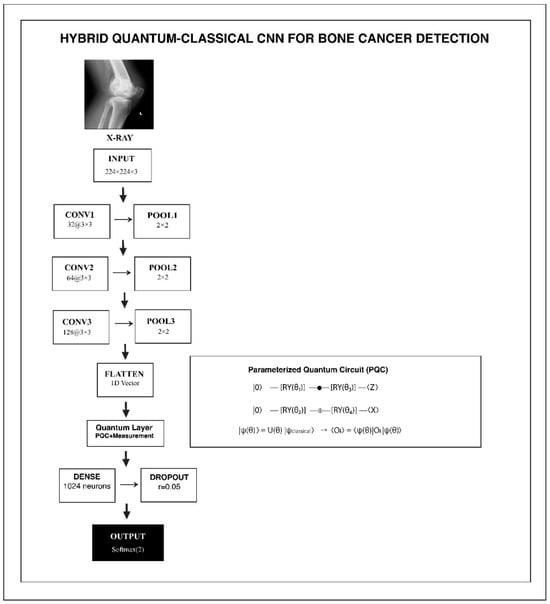
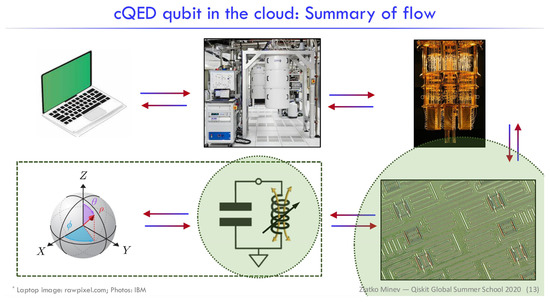
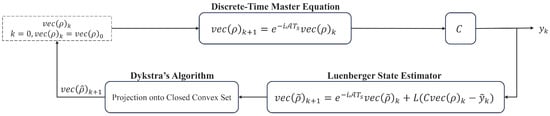
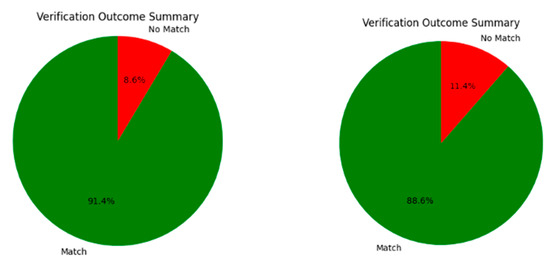
The model processes input X-ray images (224 × 224 × 3) through three convolutional and pooling layers, followed by flattening. A parameterized quantum circuit (PQC) layer integrates quantum operations with classical features, after which a dense layer (1024 neurons) and dropout (r = 0.05) lead to the final Softmax output for binary classification (cancerous vs. non-cancerous).

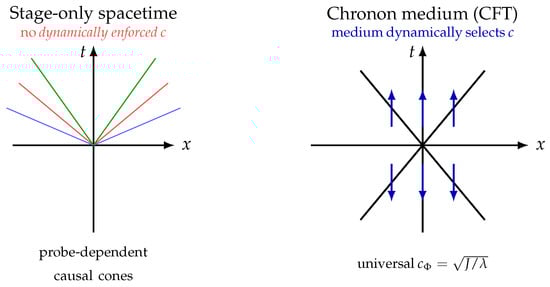
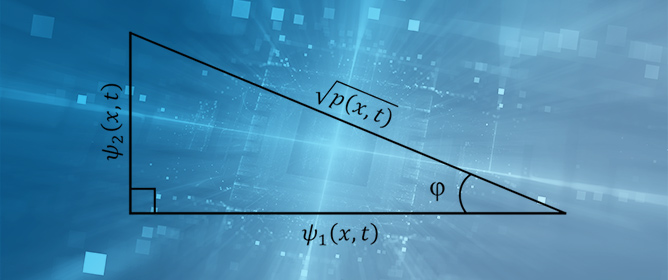
The Stueckelberg wave equation is transformed into a quantum telegraph equation and a set of stationary states is obtained as unitary solutions. As it has been shown previously that this PDE relates to the Dirac operator, and on the other hand it is a linearized Hamilton–Jacobi–Bellman PDE, from which the Schrödinger equation can be deduced in a nonrelativistic limit, it is clear that it is the key equation in relativistic quantum mechanics. We give a Bayesian interpretation for the measurement problem. The stationary solution is understood as a maximum entropy prior distribution and measurement is understood as a Bayesian update. We discuss the interpretation of the single electron experiments in the light of finite speed propagation of the transition probability field and how it relates to the interpretation of quantum mechanics more broadly.

22 February 2026

Enhancement of the Shift in the Photonic Spin Hall Effect and Its Application for Cancer Cell Detection

  • Alka Verma,
  • Devanshi Katiyar and
  • Yogendra Kumar Prajapati
  • + 2 authors

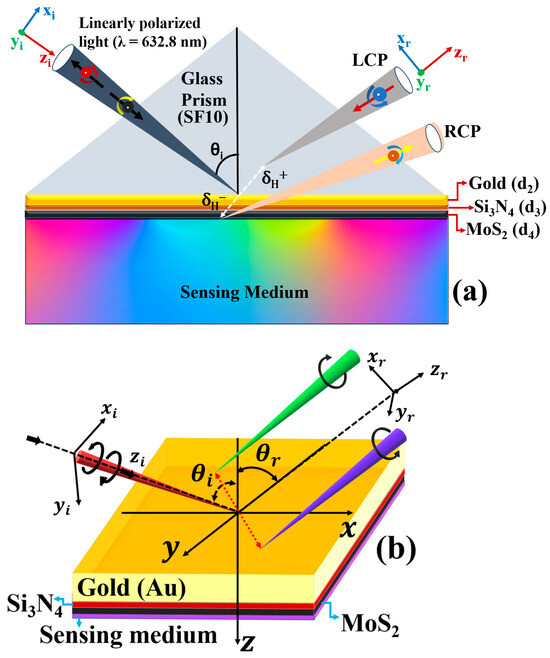
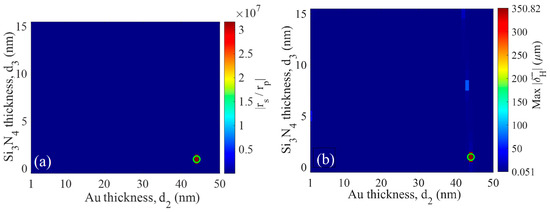
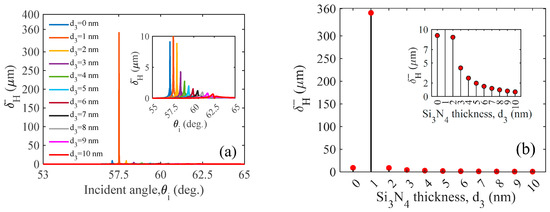
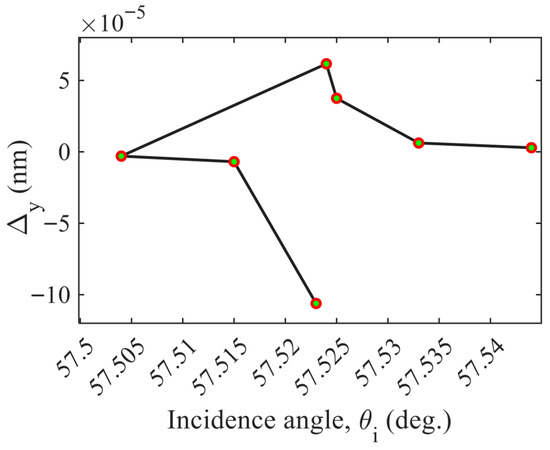
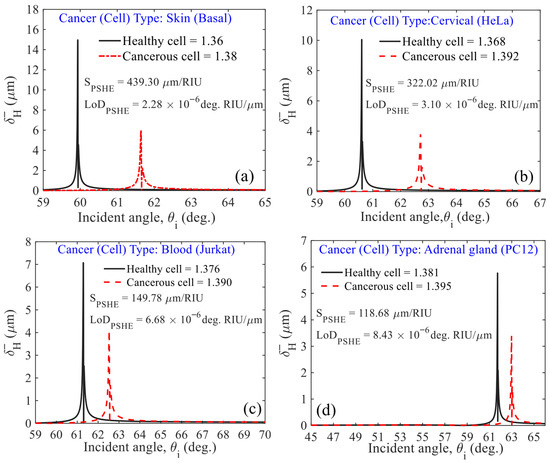
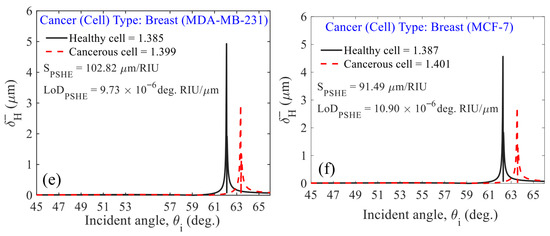
The photonic spin Hall effect (PSHE) originates from the spin–orbit interaction (SOI) of light. The literature indicates that the transverse spin-dependent shift, δH (SDS), from the PSHE is weak (in the nanometer range) and difficult to measure directly. This study utilizes a plasmonic structure to improve the δH in the PSHE. The obtained results of this study demonstrate that the inclusion of silicon nitride (Si3N4) significantly enhances the δH relative to its absence; however, plasmonic material is present in both cases. The enhanced shifts exhibit a significant dependence on the resonance angle (θr) and the thickness of layers of the PSHE structure to attain the maximum increase in δH of 350.82 µm at the plasmonic resonance condition. A systematic analysis of the centroid positions of the reflected beam indicates a distinct and constant separation of opposing spin components. Further, the improved δH is utilized in cancer cell detection, as changes in the refractive index (RI) of cells facilitate the identification of cancer cells from healthy to cancerous. All examined cell types demonstrate that cancerous cells had a greater δH than normal cells, owing to their elevated effective RI. These results illustrate that the proposed plasmonic-assisted PSHE structure offers significant enhancement and a high sensitivity of 439.30 µm/RIU for label-free detection of cancer cells.

17 February 2026

A Probability Model for the Bell Experiment

  • Kees van Hee,
  • Kees van Berkel and
  • Jan de Graaf

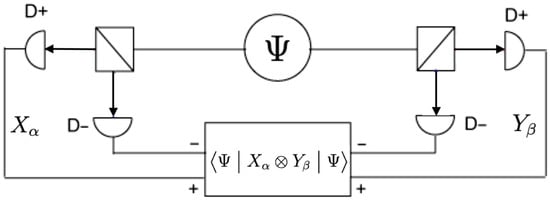
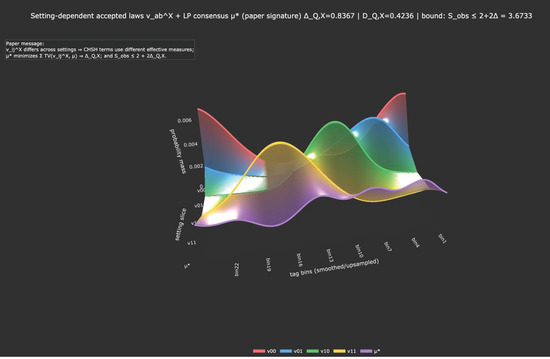
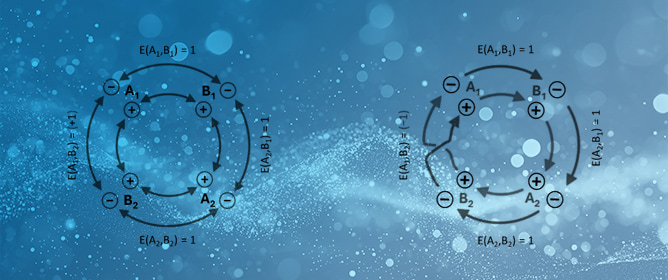
The Bell inequality constrains the outcomes of measurements on pairs of distant entangled particles. The Bell contradiction states that the Bell inequality is inconsistent with the calculated outcomes of these quantum experiments. This contradiction led many to question the underlying assumptions, viz. so-called realism and locality. The probability model underlying the Bell inequality is generally left implicit. We propose an explicit probability model for the CHSH version of the Bell experiment. This model has only two simultaneously observable detector settings per measurement, and therefore does not assume realism. The quantum expectation now becomes a conditional expectation, given the two detector settings. This probability model is in full agreement with both quantum mechanics and experiments. As a result, the model satisfies the Bell inequality; there are no so-called violations. We extend this model to include a hidden variable. This extended model is not Bell-separable. This non-separability implies that the model is non-deterministic or non-local (or both).

14 February 2026

News & Conferences

Issues

Open for Submission

Editor's Choice

Get Alerted

Add your email address to receive forthcoming issues of this journal.

XFacebookLinkedIn
Quantum Rep. - ISSN 2624-960X