



Journal Menu
► ▼ Journal Menu-
- Viruses Home
- Aims & Scope
- Editorial Board
- Reviewer Board
- Topical Advisory Panel
- Instructions for Authors
- Special Issues
- Topics
- Sections & Collections
- Article Processing Charge
- Indexing & Archiving
- Editor’s Choice Articles
- Most Cited & Viewed
- Journal Statistics
- Journal History
- Journal Awards
- Society Collaborations
- Conferences
- Editorial Office
Journal Browser
► ▼ Journal BrowserNeed Help?
Announcements
21 August 2026
Meet Us at the 19th Congress of the International Union of Microbiological Societies (IUMS2026), 4–6 November 2026, Lisbon, Portugal
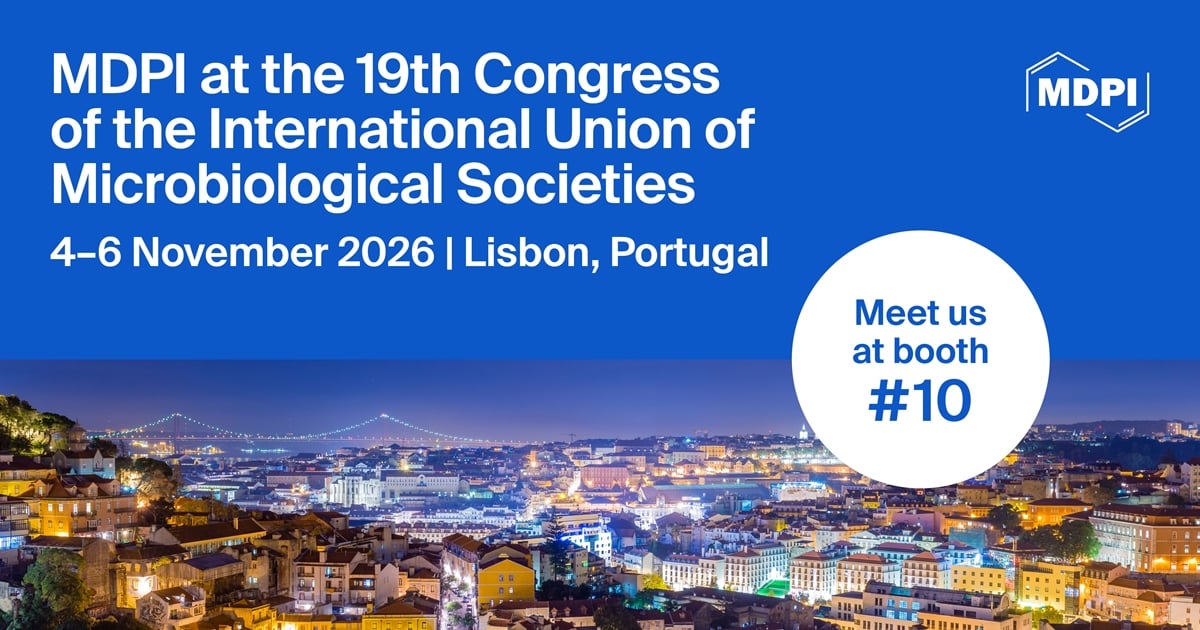
Conference: The 19th Congress of the International Union of Microbiological Societies
Organization: Kenes Group
Date: 4–6 November 2026
Place: Lisbon, Portugal
Based on the success of the last IUMS meeting held in Florence in 2024, IUMS2026 is expected to be an excellent opportunity to continue the discussion of the latest advancements in microbiology, bringing together scientists working on bacteriology, virology, and mycology worldwide.
Key topics will include microbial genetics, molecular and synthetic biology, gene regulation, proteomics, and applied microbiology in fields such as biotechnology, clinical and medical sciences, industrial applications, and environmental sustainability—with a strong emphasis on the preservation of ecosystems and oceans. Special attention will be paid to how Artificial Intelligence (AI) can affect any aspect of microbiology.
Beyond scientific advancements, this meeting aims to highlight the crucial role of microbes in sustaining life on Earth. Microorganisms are fundamental to global health, food security, energy production, industry, carbon sequestration, agriculture, ecosystem restoration, and scientific progress.
Additionally, the 2026 IUMS meeting will be focused on “Beyond the Microscope: AI & Innovation in Microbiology” to discuss the growing impact of AI on microbiology research and practice. Networking and collaboration opportunities, new partnerships and multidisciplinary co-creation links will be promoted. In addition, efforts will be dedicated to engaging microbiologists worldwide, ensuring participation from both low- and high-income countries.
The following open access journals will be represented:
- Pathogens;
- Microorganisms;
- Viruses;
- JoF;
- Microbiology Research;
- IJMS;
- Parasitologia;
- Life;
- SynBio;
- Applied Microbiology;
- Toxins.
If you plan on attending this conference, please feel free to stop by our booth, #10. Our delegates look forward to meeting you in person and answering any questions you may have.
For more information about the conference, please visit the following link:
https://iums2026.com/.
18 August 2026
Viruses | Highly Cited Papers Published in 2025 in the “Bacterial Viruses” Section

1. “Factors Affecting Phage–Bacteria Coevolution Dynamics”
by Ghadeer Jdeed, Bogdana Kravchuk and Nina V. Tikunova
Viruses 2025, 17(2), 235; https://doi.org/10.3390/v17020235
Available online: https://www.mdpi.com/1999-4915/17/2/235
2. “Phage Therapy: Combating Evolution of Bacterial Resistance to Phages”
by Stephen T. Abedon
Viruses 2025, 17(8), 1094; https://doi.org/10.3390/v17081094
Available online: https://www.mdpi.com/1999-4915/17/8/1094
3. “Bacteriophages as Agents for Plant Disease Control: Where Are We After a Century?”
by Manoj Choudhary, Ibukunoluwa A. Bankole, Sophia T. McDuffee, Apekshya Parajuli, Mousami Poudel, Botond Balogh, Mathews L. Paret and Jeffrey B. Jones
Viruses 2025, 17(8), 1033; https://doi.org/10.3390/v17081033
Available online: https://www.mdpi.com/1999-4915/17/8/1033
4. “Dual Nature of Bacteriophages: Friends or Foes in Minimally Processed Food Products—A Comprehensive Review”
by Michał Wójcicki, Barbara Sokołowska, Andrzej Górski and Ewa Jończyk-Matysiak
Viruses 2025, 17(6), 778; https://doi.org/10.3390/v17060778
Available online: https://www.mdpi.com/1999-4915/17/6/778
5. “Armed Phages: A New Weapon in the Battle Against Antimicrobial Resistance”
by Cleo Anastassopoulou, Deny Tsakri, Antonios-Periklis Panagiotopoulos, Chrysa Saldari, Antonia P. Sagona and Athanasios Tsakris
Viruses 2025, 17(7), 911; https://doi.org/10.3390/v17070911
Available online: https://www.mdpi.com/1999-4915/17/7/911
6. “Phage Endolysins as an Alternative Biocontrol Strategy for Pathogenic and Spoilage Microorganisms in the Food Industry”
by Maryoris E. Soto Lopez, Fernando Mendoza-Corvis, Jose Jorge Salgado-Behaine, Ana M. Hernandez-Arteaga, Víctor González-Peña, Andrés M. Burgos-Rivero, Derrick Cortessi, Pedro M. P. Vidigal and Omar Pérez-Sierra
Viruses 2025, 17(4), 564; https://doi.org/10.3390/v17040564
Available online: https://www.mdpi.com/1999-4915/17/4/564
7. “Phage-Based Control of Listeria innocua in the Food Industry: A Strategy for Preventing Listeria monocytogenes Persistence in Biofilms”
by Anna Zawiasa, Marcin Schmidt and Agnieszka Olejnik-Schmidt
Viruses 2025, 17(4), 482; https://doi.org/10.3390/v17040482
Available online: https://www.mdpi.com/1999-4915/17/4/482
8. “Biocontrol of Phage Resistance in Pseudomonas Infections: Insights into Directed Breaking of Spontaneous Evolutionary Selection in Phage Therapy”
by Jumpei Fujiki, Daigo Yokoyama, Haruka Yamamoto, Nana Kimura, Manaho Shimizu, Hinatsu Kobayashi, Keisuke Nakamura and Hidetomo Iwano
Viruses 2025, 17(8), 1080; https://doi.org/10.3390/v17081080
Available online: https://www.mdpi.com/1999-4915/17/8/1080
9. “The Role of Quorum Sensing in Phage Lifecycle Decision: A Switch Between Lytic and Lysogenic Pathways”
by Junjie Shang, Kehan Wang, Qian Zhou and Yunlin Wei
Viruses 2025, 17(3), 317; https://doi.org/10.3390/v17030317
Available online: https://www.mdpi.com/1999-4915/17/3/317
10. “Selected Mechanisms of Action of Bacteriophages in Bacterial Infections in Animals”
by Renata Urban-Chmiel and Ewelina Pyzik
Viruses 2025, 17(1), 101; https://doi.org/10.3390/v17010101
Available online: https://www.mdpi.com/1999-4915/17/1/101
11. “Bacteriophage and Phage-Encoded Depolymerase Exhibit Antibacterial Activity Against K9-Type Acinetobacter baumannii in Mouse Sepsis and Burn Skin Infection Models”
by Alexander I. Borzilov, Nikolay V. Volozhantsev, Olga V. Korobova, Lyubov V. Kolupaeva, Evgenia S. Pereskokova, Tatiana I. Kombarova, Mikhail M. Shneider, Konstantin A. Miroshnikov, Ivan A. Dyatlov and Anastasia V. Popova
Viruses 2025, 17(1), 70; https://doi.org/10.3390/v17010070
Available online: https://www.mdpi.com/1999-4915/17/1/70
12. “Pseudomonas Phage Lydia and the Evolution of the Mesyanzhinovviridae Family”
by Konstantin Troshin, Nina Sykilinda, Sofia Shuraleva, Anna Tokmakova, Nikolay Tkachenko, Lidia Kurochkina, Konstantin Miroshnikov, Natalia Suzina, Ekaterina Brzhozovskaya, Kristina Petrova et al.
Viruses 2025, 17(3), 369; https://doi.org/10.3390/v17030369
Available online: https://www.mdpi.com/1999-4915/17/3/369
13. “Phage Therapy as a Rescue Treatment for Recurrent Pseudomonas aeruginosa Bentall Infection”
by Victor Eiferman, Pierre-Adrien Vion and Alexandre Bleibtreu
Viruses 2025, 17(1), 123; https://doi.org/10.3390/v17010123
Available online: https://www.mdpi.com/1999-4915/17/1/123
Related Special Issues:
“Phage Ecology and Evolution in Animal Health”
Guest Editor: Dr. Antony T. Vincent
Submission deadline: 31 January 2027
“Phage Cocktails: Promising Approaches Against Infections, 2nd Edition”
Guest Editor: Prof. Dr. Jin Woo Jun
Submission deadline: 30 April 2027
18 August 2026
Viruses | Issue Cover Articles in the First Half of 2026


1. “Screening of the Pandemic Response Box Library Identified CRM1/XPO1 as an Anti-Mammarenavirus Druggable Target”
by Chukwudi A. Ofodile, Beatrice Cubitt, Ngozi Onyemelukwe, Chetachi B. Okwuanaso, Haydar Witwit and Juan C. de la Torre
Viruses 2026, 18(1), 103; https://doi.org/10.3390/v18010103
Available online: https://www.mdpi.com/1999-4915/18/1/103
Cover Story: Several MaAv can cause severe, often fatal hemorrhagic fevers in humans following zoonotic transmissions. Lassa and Junín viruses remain major regional public health threats, while the globally distributed lymphocytic choriomeningitis virus is an underappreciated human pathogen of clinical significance. Despite this burden, no MaAv FDA-approved vaccines or antivirals exist. We screened the Pandemic Response Box and identified three potent inhibitors of MaAv replication: the Tat protein antagonist Ro-24-7429, a pirolazamide-based DHODH inhibitor, and verdinexor, a selective inhibitor of nuclear export targeting XPO1/CRM1. Notably, verdinexor displayed striking antiviral synergy in combination with Ro-24-7429 or the picolinamide-based DHODH inhibitor. Our findings highlight host-directed nuclear export inhibition as a promising strategy for combination therapy against pathogenic MaAv.

2. “Prolyl tRNA Synthetase Is Required for Mammarenavirus Multiplication”
by Haydar Witwit, Pablo Aparicio Ibanez, Ruifeng Zhou, Nathaniel Jackson, Ruby Escobedo, Beatrice Cubitt, Roaa Khafaji, Rachel Y. Sattler, Luis Martinez-Sobrido and Juan Carlos de la Torre
Viruses 2026, 18(2), 202; https://doi.org/10.3390/v18020202
Available online: https://www.mdpi.com/1999-4915/18/2/202
Cover Story: Mammarenaviruses include highly deadly pathogens such as Lassa and Junín viruses, for which no FDA‑approved vaccines or antivirals exist. We show that the host enzyme prolyl tRNA synthetase (PRS), a domain of the bifunctional glutamyl‑prolyl tRNA synthetase (EPRS1), is essential for mammarenavirus multiplication. The PRS inhibitor halofuginone potently inhibits mammarenavirus multiplication in infected cells by disrupting prolyl-tRNA charging, depriving proline-rich viral proteins, and severely impairing viral assembly and budding. These results support PRS as a druggable target for the development of host-direct antivirals to combat human pathogenic mammarenaviruses.

3. “Host Cell Central Carbon Metabolism and Cellular NAD+ Pool Regulate Efficient Replication of Vesicular Stomatitis Virus”
by Kush K. Pandey, Bikash R. Sahoo, D. S. McVey and Asit K. Pattnaik
Viruses 2026, 18(3), 326; https://doi.org/10.3390/v18030326
Available online: https://www.mdpi.com/1999-4915/18/3/326
Cover Story: Vesicular stomatitis virus (VSV) is a promising oncolytic virus whose replication is tightly linked to host cell metabolism. In cancer cells, such as glioblastoma, metabolic pathways including glycolysis, the pentose phosphate pathway (PPP), and glutaminolysis are extensively rewired to support growth and survival. Here, we demonstrate that VSV replication critically depends on glycolytic flux, glutamine metabolism, and intracellular NAD+ availability. Pharmacological inhibition of these pathways suppresses viral replication, while restoration of NAD+ rescues viral growth. Notably, depletion of G6PD enhances replication, revealing complex metabolic regulation. These findings highlight a redox-centric framework governing VSV replication and provide insights for optimizing oncolytic virotherapy through metabolic targeting.

4. “The 4.4 Å Capsid Structure of the Giant Melbournevirus Belonging to the Marseilleviridae Family”
by Raymond N. Burton-Smith, Chantal Abergel, Kenta Okamoto and Kazuyoshi Murata
Viruses 2026, 18(4), 433; https://doi.org/10.3390/v18040433
Available online: https://www.mdpi.com/1999-4915/18/4/433
Cover Story: Giant viruses have complex capsids. The cryo-EM structure of Melbournevirus reveals its organization and assembly. Using advanced reconstruction, the capsid reached 4.9 Å (global) and 4.42 Å (local) resolution, showing that large (~250 nm) viruses can be resolved with limited data. The major capsid protein (MCP) forms a conserved double jelly roll trimers with a unique cup-like structure binding a cap protein. Five-fold vertices contain a pentameric penton base, with underlying densities linking to internal membranes. A minor capsid protein network (Glue, Zipper, Cement, Lattice) stabilizes the shell, while Scaffold proteins connect to membranes and may replace tape-measure proteins in controlling size. MCP trimers follow a “golf club” motif, aiding curvature. Overall, conserved MCP architecture coexists with flexible assembly strategies.

5. “Identification of Cyclin L1 as a Host Factor Regulating Hepatitis B Virus Replication”
by Collins Oduor Owino, Balakrishnan Chakrapani Narmada, Gian Yi Lin, Pauline Poh Kim Aw, Nivrithi Ganesh, Jovi Tan Siying, Marie-Laure Plissonnier, Thangavelu Thangavelu Matan, Niranjan Shirgaonkar, Pablo Bifani et al.
Viruses 2026, 18(5), 545; https://doi.org/10.3390/v18050545
Available online: https://www.mdpi.com/1999-4915/18/5/545
Cover Story: Chronic hepatitis b (CHB) remains a global health challenge, especially in areas with high prevalence. HBV, like other viruses, depends on human host factors and processes to establish an efficient infection. Identifying host cellular factors that support or restrict HBV infection is essential for understanding the molecular basis of CHB infection and developing host-targeting therapies. Here, we identify cyclin L1 (CCNL1) as a host susceptibility factor for HBV. Knockdown of CCNL1 reduces HBV transcripts and decreases binding of the total RNAPII, phospho-RNAPII Ser2/Ser5, and histone marks (H3ac and H3K27ac) on cccDNA, resulting in impaired viral cccDNA-dependent transcription. Moreover, CCNL1 expression is elevated in chronic hepatitis b patients’ livers compared to those with resolved infection, underscoring its association with CHB.

6. “Mapping the TAR vRNA Interaction with HIV-1 Integrase”
by Jian Sun, Rahul Yadav, Tolga Catmakas, Luke Fisher, Nicholas C. Fitzkee and Jacques J. Kessl
Viruses 2026, 18(6), 657; https://doi.org/10.3390/v18060657
Available online: https://www.mdpi.com/1999-4915/18/6/657
Cover Story: The Integrase protein (IN) of Human Immunodeficiency Virus type 1 (HIV-1) inserts the reverse-transcribed viral DNA (vDNA) into the host chromosome. Previous observations have shown that IN not only directs vDNA integration but also contributes to the maturation step during viral egress. We and others have previously reported a strong interaction between the viral RNA (vRNA) and HIV-1 IN required for correct virion morphology. In this study, we conducted a comprehensive mapping of this IN–vRNA interaction using both vRNA crosslinking and NMR methodologies. These approaches identified functionally essential contact points between the vRNA and IN.
5 August 2026
MDPI INSIGHTS: The CEO’s Letter #37 – Canada Summit, Sciforum Relaunch, 30 Years of Impactful Research & ISPRS 2026

Welcome to the MDPI Insights: The CEO's Letter.
In these monthly letters, I will showcase two key aspects of our work at MDPI: our commitment to empowering researchers and our determination to facilitating open scientific exchange.
Opening Thoughts

Reflections from the MDPI Canada Summit 2026 in Toronto (9–10 July)
As part of this year’s MDPI Summit events, we were delighted to host Editors-in-Chief (EiCs) and Editorial Board Members (EBMs) in Toronto for the MDPI Canada Summit 2026 this July.
Across the two days, we presented on topics including research integrity, editorial leadership, artificial intelligence, peer review, and the evolving role of the EiC. More importantly, the Summit created space for feedback and conversations with the academic community: these engagements continue play and important role in shaping how MDPI develops its journals and services.
Why Canada?
Canada has become one of the world’s leading Open Access (OA) nations. In 2025, 68% of Canadian research publications were published OA, with more than 73,000 OA articles produced during the year. Over the past five years alone, Canadian researchers have published more than 526,000 scholarly articles, showing both the scale and quality of Canadian research.
MDPI Toronto Office

“Canada has become one of the world’s leading Open Access nations”
Since opening in 2019, our Toronto office has grown to more than 85 colleagues supporting editorial operations, research integrity, marketing, societies, conferences, indexing, author services, and many other functions across North America. It was great to spend time with the team, see first-hand the energy and enthusiasm they bring to their work, and recognize the significant role they play in building relationships with the Canadian research community and delivering events such as this Summit.
MDPI and Canada
Today, Canada is an important part of the MDPI community:
- More than 53,800 articles from Canadian institutions published with MDPI since 1996
- More than 5,800 MDPI publications from Canadian researchers in 2025
- Nearly 1,900 Canadian Editorial Board Members, including 24 Editors-in-Chief; 49 Section Editors-in-Chief
- More than 30 Institutional Open Access Partnerships (IOAP) with universities across Canada

“The academic community is at the center of everything we do”
These numbers reflect the long-term partnerships with researchers, reviewers, editors, and institutions who continue to place their trust in MDPI.
Summit Program
Throughout the Summit, we presented and discussed topics against the following agenda:
- MDPI at 30: Introduction, Reflections and the Road Ahead – Stefan Tochev (CEO)
- Engagement with Academic Community and Society Partnerships – Karen Irwin (Associate Editorial Engagement Manager) and Carla Aloè (Head of Societies and Acquisition)
- Latest Developments in the Editorial Process – Summer Huggard (Operations Manager)
- Research Integrity and Publication Ethics – Renato Merki (Research Integrity Specialist)
- AI and Technology in Publishing – Dr. Barnaby Crook (Regional Engagement Editor)
- Panel Discussion – Bob Vrooman (Head of Business Development / Operations Manager, USA), Summer Huggard, Renato Merki, and myself

These presentations reinforce something we often say at MDPI: The academic community is at the center of everything we do. Each session concluded with a Q&A, allowing for discussions throughout the Summit to engage directly with our EiCs and EBMs.
Further Reading
I also had the opportunity to be interviewed by University Affairs about the evolving landscape of scholarly publishing, Open Access, and the importance of engaging with the research community. If you’re interested, you can read the interview in:
- English: University Affairs – MDPI Toronto Summit 2026: Bringing Together Leaders to Shape the Future of Scholarly Publishing
- Français: Affaires universitaires – Sommet MDPI de Toronto 2026
Thank You
As OA continues to grow around the world, events such as the MDPI Canada Summit remind us of the importance of meeting with our academic community in person. Listening to feedback, exchanging ideas, and building relationships are essential to ensuring that MDPI continues to evolve alongside the researchers, editors, reviewers, and institutions we serve.

Impactful Research

Five Journals, Five Different Stories of Success
Each year, the release of the Journal Citation Reports (JCR) provides an opportunity to look at the progress of our journal portfolio and, more importantly, the achievements of the research communities behind it.
A recent MDPI Blog article from Tommy Lax (Content Specialist, MDPI) highlights five journals whose 2025 Journal Impact Factor results show that success can take many forms – from achieving a first Impact Factor, to steady long-term growth, to leadership within highly competitive disciplines.
The featured journals include:
- Machine Learning & Knowledge Extraction (MAKE) – Among the 330 MDPI journals which received an Impact Factor in 2025, MAKE (ISSN 2504-4990) holds the accolade of having the highest rating of 8.4. The journal, which provides an advanced forum for the study of machine learning and its applications, is placed in Q1 for three subject categories: Computer science, artificial intelligence; Computer science, interdisciplinary applications; and Engineering, electrical & electronic.
- Antioxidants – Continuing its strong position across multiple scientific disciplines, Antioxidants (ISSN 2076-3921) was awarded an exceptional Impact Factor of 8.2. In addition, the journal was placed in Q1 in three subject categories: Biochemistry & molecular biology; Chemistry, medicinal; and Food science & technology.
- Biomass – This year, Biomass (ISSN 2673-8783) was recognized in the JCR for the first time, with a strong debut Impact Factor of 6.7. What makes this achievement even more impressive is the journal’s placement in Q1 of the category Engineering, chemical.
- Analytica – Remaining with the theme of growth, Analytica (ISSN 2673-4532), which provides an advanced forum for all aspects of fundamental and applied analytical chemistry, recorded one of the largest year-on-year increases in Journal Impact Factor, with a 7.4 – an astounding 3.8-point increase from its 2024 rating of 3.6.
- Batteries – Indexed in SCIE, Batteries (ISSN 2313-0105) received an updated Impact Factor of 6.3 this year, representing an increase of 1.5 versus last year, demonstrating consistent growth and increasing visibility over several years.
While citation metrics provide one perspective on journal performance, they tell only part of the story. Every milestone reflects the dedication of Editors-in-Chief, Editorial Board Members, reviewers, authors, and colleagues across MDPI who work together to uphold rigorous editorial standards and support high-quality research.
As a signatory of the Declaration on Research Assessment (DORA), MDPI supports a balanced approach to research evaluation. Journal-level metrics should be viewed alongside article-level indicators and the broader scientific and societal impact of published research.
Thank you to everyone whose commitment continues to strengthen our journals and advance Open Access across the global research community.
Inside MDPI

Building Better Tools for the Research Community: The Relaunch of Sciforum
Innovation at MDPI extends beyond journals. Over the past decade, we have continued to invest in products that support researchers, conference organizers, editors, reviewers, and institutions throughout the research lifecycle. As part of this ongoing investment, our Product and Engineering teams have been modernizing several of MDPI’s digital platforms. One important milestone in that journey is the relaunch of Sciforum, our conference management platform.
Read More: Sciforum Relaunch: Empowering Science through Seamless Event Management
Rather than simply updating an existing system, our product and engineering teams have rebuilt Sciforum, using a modern architecture designed to improve the user experience, support future growth, and continue to strengthen our position in the conference management market.
“Scalable technology is essential to delivering a high-quality experience”
Why We Rebuilt Sciforum
Technology must continue evolving alongside the needs of our users. The previous platform had served MDPI well for many years but had become difficult to extend and maintain. The new platform introduces a modular architecture that enables faster development, more flexibility, and a scalable foundation for future work.
Major improvements include:
- Simplified submission workflows
- Role-based dashboards
- A modern website builder
- Flexible pricing options
- Permanent data hosting
- A scalable architecture for future development

Supporting Our Conference Community
Sciforum is more than a software platform: it supports researchers, conference organizers, reviewers, speakers, and attendees by helping them organize, participate in, and share scientific meetings more efficiently. As MDPI continues to expand its conference activities worldwide, investing in modern, scalable technology is essential to delivering a high-quality experience for both our external partners and our internal teams.
Looking Ahead
The relaunch represents the beginning Sciforum’s next chapter. Planned improvements include: the Program Builder, Communication Hub, expanded payment options, Zoom integration, and a mobile application. These will continue to enhance the platform over the coming months.
Coming Together for Science

Highlights from ISPRS Congress 2026 – Toronto, Canada
In early July, I had the pleasure of attending the XXV ISPRS Congress in Toronto, one of the world’s leading gatherings for the geospatial and remote sensing research community. It was a great opportunity to meet researchers, editors, society leaders, and collaborators, while gaining insights into some of the latest developments in geospatial science and technology.
Over several days, I had the privilege of presenting the Jack Dangermond Award; speaking about MDPI’s approach to AI in publishing and our 30-year journey in Open Access publishing; participating in Editorial Board meetings; and engaging with members of the ISPRS community.
Below is a summary of these activities:
Celebrating excellence in research
One of the highlights of the week was presenting the Jack Dangermond Award for the best paper published in the ISPRS International Journal of Geo-Information (IJGI). Sponsored by MDPI and ESRI, the award recognizes an outstanding paper published over a four-year period and includes an ISPRS certificate together with a USD 10,000 prize.

Awards such as these remind us that journals are much more than publication platforms: they celebrate research that advances knowledge, inspires future work, and delivers meaningful impact for both science and society.
Presentations at ISPRS
I also had the pleasure to give two presentations during the congress:

1. The AI Revolution in Publishing: Challenges, Innovations, and MDPI’s Vision
The development of AI continues to transform scholarly publishing. During this session, I shared how MDPI is integrating AI responsibly, not to replace editorial judgement or peer review, but to support our staff by improving efficiency while maintaining scientific quality and research integrity.
2. MDPI: 30 Years of Open Access Publishing
I also had the opportunity to share MDP’s 30-year journey from a small publishing initiative to becoming a global Open Access publisher serving millions of researchers worldwide. As part of this session, my colleague Carla Aloè (Head of Societies and Acquisitions) introduced the ISPRS International Journal of Geo-Information (IJGI), sharing its development and contribution to the geospatial research community.

Meeting with Our Editorial Boards
Another rewarding aspect of the congress was meeting with the Editorial Boards of two of our journals:
- Remote Sensing
- ISPRS International Journal of Geo-Information
These discussions went beyond journal metrics. We heard ideas about editorial quality and emerging research areas, and we discussed reviewer engagement, diversity within editorial boards, and how journals can continue serving their communities for the future. These conversations are a great way to connect directly to the scientists who help shape our journals.


“One of our core missions has always been to make high-quality research openly accessible”
Partnerships matter
Scientific publishing is built on collaboration. Throughout the congress, our team welcomed researchers to the MDPI booth, met with authors and editors, and discussed opportunities for collaboration across our journals and society partnerships.
Special thanks to our MDPI colleagues who were present throughout the ISPRS congress supporting our Editorial Board meetings and the MDPI booth: Andy Tran, Carla Aloè, Carlo Cunanan, Diana Ribeiro Tosato, and Elena Duan.

Thank you to ISPRS for organizing this congress, to the researchers who shared their work, to our Editorial Board members, and to MDPI colleagues whose dedication continues to shape the journals and communities we support.
Closing Thoughts

Insights Into 30 Years of Impactful MDPI Research
As we celebrate 30 years of MDPI, it’s worth reflecting on the impact that the research we publish has on society. One of our core missions has always been to make high-quality research openly accessible so that it can inform new discoveries, public policy, education and innovation around the world.
A recent article on the MDPI Blog highlights several examples of MDPI publications that have gone beyond academic citations to help inform governments, international organizations and public policy discussions.
Research Creating Real-World Impact
The MDPI blog article features research that has contributed to topics including:
- protecting the Amazon rainforest through satellite mapping
- understanding climate change and urban heat inequality
- encouraging more young women to pursue STEM careers
- tackling obesity through healthier food environments
- shaping sustainable urban planning through the “15-minute city” concept
These examples remind us that publishing research is not only about producing articles: it is about helping knowledge reach the people who can use it to improve lives and address global challenges.
Thirty Years of Open Access
MDPI’s 30th Anniversary is also an opportunity to recognize the collective contribution of everyone across MDPI. Every manuscript processed, every review coordinated, every system developed, every conference organized, every partnership established and every article published contributes to a much larger purpose: helping scientific knowledge move further and faster.
You can explore the full article here: 30 Years of Impactful MDPI Research
You can also visit our 30th Anniversary page to learn more about MDPI’s journey over the past three decades.
Chief Executive Officer
MDPI AG
31 July 2026
Viruses | Highly Cited Papers Published in 2025 in the “Human Virology and Viral Diseases” Section

1. “A Comprehensive Review of the Neglected and Emerging Oropouche Virus”
by Fengwei Bai, Prince M. D. Denyoh, Cassandra Urquhart, Sabin Shrestha and Donald A. Yee
Viruses 2025, 17(3), 439; https://doi.org/10.3390/v17030439
Available online: https://www.mdpi.com/1999-4915/17/3/439
2. “A Comprehensive Review of Antiviral Therapy for Hepatitis C: The Long Journey from Interferon to Pan-Genotypic Direct-Acting Antivirals (DAAs)”
by Lorenza Di Marco, Simona Cannova, Emanuele Ferrigno, Giuseppe Landro, Rosario Nonni, Claudia La Mantia, Fabio Cartabellotta, Vincenza Calvaruso and Vito Di Marco
Viruses 2025, 17(2), 163; https://doi.org/10.3390/v17020163
Available online: https://www.mdpi.com/1999-4915/17/2/163
3. “Human T-Lymphotropic Virus (HTLV): Epidemiology, Genetic, Pathogenesis, and Future Challenges”
by Francesco Branda, Chiara Romano, Grazia Pavia, Viola Bilotta, Chiara Locci, Ilenia Azzena, Ilaria Deplano, Noemi Pascale, Maria Perra, Marta Giovanetti et al.
Viruses 2025, 17(5), 664; https://doi.org/10.3390/v17050664
Available online: https://www.mdpi.com/1999-4915/17/5/664
4. “Torque Teno Virus: Lights and Shades”
by Paola Brani, Hafza Zahira Manzoor, Pietro Giorgio Spezia, Andrea Vigezzi, Giuseppe Ietto, Daniela Dalla Gasperina, Claudia Minosse, Annalisa Bosi, Cristina Giaroni, Giulio Carcano et al.
Viruses 2025, 17(3), 334; https://doi.org/10.3390/v17030334
Available online: https://www.mdpi.com/1999-4915/17/3/334
5. “Repurposing Drugs for Synergistic Combination Therapies to Counteract Monkeypox Virus Tecovirimat Resistance”
by Haydar Witwit, Beatrice Cubitt, Roaa Khafaji, Esteban M. Castro, Miguel Goicoechea, Maria M. Lorenzo, Rafael Blasco, Luis Martinez-Sobrido and Juan C. de la Torre
Viruses 2025, 17(1), 92; https://doi.org/10.3390/v17010092
Available online: https://www.mdpi.com/1999-4915/17/1/92
6. “Oropouche Virus (OROV): Expanding Threats, Shifting Patterns, and the Urgent Need for Collaborative Research in Latin America”
by André Ricardo Ribas Freitas, David A. Schwartz, Antônio Silva Lima Neto, Rosana Rodrigues, Luciano Pamplona Goes Cavalcanti and Pedro María Alarcón-Elbal
Viruses 2025, 17(3), 353; https://doi.org/10.3390/v17030353
Available online: https://www.mdpi.com/1999-4915/17/3/353
7. “Progress in Pseudotyping Lentiviral Vectors Towards Cell-Specific Gene Delivery In Vivo”
by Ariana Arduini, Harshita Katiyar and Chen Liang
Viruses 2025, 17(6), 802; https://doi.org/10.3390/v17060802
Available online: https://www.mdpi.com/1999-4915/17/6/802
8. “Congenital Oropouche in Humans: Clinical Characterization of a Possible New Teratogenic Syndrome”
by Bethânia de Freitas Rodrigues Ribeiro, André Rodrigues Façanha Barreto, André Pessoa, Raimunda do Socorro da Silva Azevedo, Flávia de Freitas Rodrigues, Bruna da Cruz Beyruth Borges, Natália Pimentel Moreno Mantilla, Davi Dantas Muniz, Jannifer Oliveira Chiang, Lucas Rosa Fraga et al.
Viruses 2025, 17(3), 397; https://doi.org/10.3390/v17030397
Available online: https://www.mdpi.com/1999-4915/17/3/397
9. “Hepatitis C Virus: Epidemiological Challenges and Global Strategies for Elimination”
by Daniela Toma, Lucreția Anghel, Diana Patraș and Anamaria Ciubară
Viruses 2025, 17(8), 1069; https://doi.org/10.3390/v17081069
Available online: https://www.mdpi.com/1999-4915/17/8/1069
10. “Herpesvirus Infections After Chimeric Antigen Receptor T-Cell Therapy and Bispecific Antibodies: A Review”
by Joseph Sassine, Emily A. Siegrist and Roy F. Chemaly
Viruses 2025, 17(1), 133; https://doi.org/10.3390/v17010133
Available online: https://www.mdpi.com/1999-4915/17/1/133
11. “Phytomedical Properties of Carica papaya for Boosting Human Immunity Against Viral Infections”
by Rashmi Srivastava, Neeshma Jaiswal, Harsha Kharkwal, Neeraj Kumar Dubey and Rakesh Srivastava
Viruses 2025, 17(2), 271; https://doi.org/10.3390/v17020271
Available online: https://www.mdpi.com/1999-4915/17/2/271
12. “Advances in Epstein–Barr Virus Detection: From Traditional Methods to Modern Technologies”
by Yidan Sun, Shuyu Ling, Dani Tang, Meimei Yang and Chao Shen
Viruses 2025, 17(8), 1026; https://doi.org/10.3390/v17081026
Available online: https://www.mdpi.com/1999-4915/17/8/1026
13. “Case Series of Adverse Pregnancy Outcomes Associated with Oropouche Virus Infection”
by Daniele Barbosa de Almeida Medeiros, Juarez Antônio Simões Quaresma, Raimunda do Socorro da Silva Azevedo, Ana Cecilia Ribeiro Cruz, Sandro Patroca da Silva, Arnaldo Jorge Martins Filho, Bruno Tardelli Diniz Nunes, Lucas Rafael Santana Pinheiro, Jorge Rodrigues de Sousa, Jannifer Oliveira Chiang et al.
Viruses 2025, 17(6), 816; https://doi.org/10.3390/v17060816
Available online: https://www.mdpi.com/1999-4915/17/6/816
14. “Microglia Exhibit a Unique Intact HIV Reservoir in Human Postmortem Brain Tissue”
by Marieke M. Nühn, Stephanie B. H. Gumbs, Pauline J. Schipper, Irene Drosou, Lavina Gharu, Ninée V. E. J. Buchholtz, Gijsje J. L. J. Snijders, Frederieke A. J. Gigase, Annemarie M. J. Wensing, Jori Symons et al.
Viruses 2025, 17(4), 467; https://doi.org/10.3390/v17040467
Available online: https://www.mdpi.com/1999-4915/17/4/467
15. “Investigating Mpox Strain Dynamics Using Computational and Data-Driven Approaches”
by Isaiah Oke Idisi, Kayode Oshinubi, Vigbe Benson Sewanu, Mukhtar Muhammed Yahaya, Oluwafemi Samson Olagbami and Helen Olaronke Edogbanya
Viruses 2025, 17(2), 154; https://doi.org/10.3390/v17020154
Available online: https://www.mdpi.com/1999-4915/17/2/154
16. “Disseminated Varicella-Zoster Virus Infection with Internal Organ Involvement: A Scoping Review of 156 Cases”
by Aleksandar Timotijevic, Pratyusha Kodela, Vladislav Glušac, Sara Bokonjic, Bojan Joksimovic, Juan Vera Gomez, David Ladin and Igor Dumic
Viruses 2025, 17(8), 1135; https://doi.org/10.3390/v17081135
Available online: https://www.mdpi.com/1999-4915/17/8/1135
27 July 2026
Viruses | Selected Papers on Viral Hepatitis

1. “Prevalence and Modes of Transmission of Hepatitis C Virus Infection: A Historical Worldwide Review”
by Tommaso Stroffolini and Giacomo Stroffolini
Viruses 2024, 16(7), 1115; https://doi.org/10.3390/v16071115
Available online: https://www.mdpi.com/1999-4915/16/7/1115
2. “Hepatitis B Virus Infection: A Mini Review”
by Diana Asema Asandem, Selorm Philip Segbefia, Kwadwo Asamoah Kusi and Joseph Humphrey Kofi Bonney
Viruses 2024, 16(5), 724; https://doi.org/10.3390/v16050724
Available online: https://www.mdpi.com/1999-4915/16/5/724
3. “Hepatitis B Viral Protein HBx: Roles in Viral Replication and Hepatocarcinogenesis”
by Dong Li, Yassir Hamadalnil and Thomas Tu
Viruses 2024, 16(9), 1361; https://doi.org/10.3390/v16091361
Available online: https://www.mdpi.com/1999-4915/16/9/1361
4. “Burden, Outcome, and Comorbidities of Extrahepatic Manifestations in Hepatitis B Virus Infections”
by Busara Songtanin, Nattanicha Chaisrimaneepan, Roberto Mendóza and Kenneth Nugent
Viruses 2024, 16(4), 618; https://doi.org/10.3390/v16040618
Available online: https://www.mdpi.com/1999-4915/16/4/618
5. “Mechanisms of Hepatitis B Virus cccDNA and Minichromosome Formation and HBV Gene Transcription”
by Andoni Gómez-Moreno and Alexander Ploss
Viruses 2024, 16(4), 609; https://doi.org/10.3390/v16040609
Available online: https://www.mdpi.com/1999-4915/16/4/609
6. “A Comprehensive Review of Antiviral Therapy for Hepatitis C: The Long Journey from Interferon to Pan-Genotypic Direct-Acting Antivirals (DAAs)”
by Lorenza Di Marco, Simona Cannova, Emanuele Ferrigno, Giuseppe Landro, Rosario Nonni, Claudia La Mantia, Fabio Cartabellotta, Vincenza Calvaruso and Vito Di Marco
Viruses 2025, 17(2), 163; https://doi.org/10.3390/v17020163
Available online: https://www.mdpi.com/1999-4915/17/2/163
7. “Asian Perspective on Hepatitis B Virus and Hepatitis C Virus Elimination”
by Apichat Kaewdech, Phunchai Charatcharoenwitthaya and Teerha Piratvisuth
Viruses 2025, 17(1), 34; https://doi.org/10.3390/v17010034
Available online: https://www.mdpi.com/1999-4915/17/1/34
8. “Acute Hepatitis C: Current Status and Future Perspectives”
by Massimo Fasano, Francesco Ieva, Marianna Ciarallo, Bruno Caccianotti and Teresa Antonia Santantonio
Viruses 2024, 16(11), 1739; https://doi.org/10.3390/v16111739
Available online: https://www.mdpi.com/1999-4915/16/11/1739
9. “Effects of HCV Clearance with Direct-Acting Antivirals (DAAs) on Liver Stiffness, Liver Fibrosis Stage and Metabolic/Cellular Parameters”
by Joana Ferreira, Manuel Bicho and Fátima Serejo
Viruses 2024, 16(3), 371; https://doi.org/10.3390/v16030371
Available online: https://www.mdpi.com/1999-4915/16/3/371
10. “Hepatitis C Virus: Epidemiological Challenges and Global Strategies for Elimination”
by Daniela Toma, Lucreția Anghel, Diana Patraș and Anamaria Ciubară
Viruses 2025, 17(8), 1069; https://doi.org/10.3390/v17081069
Available online: https://www.mdpi.com/1999-4915/17/8/1069
11. “The Full-Genome Analysis and Generation of an Infectious cDNA Clone of a Genotype 6 Hepatitis E Virus Variant Obtained from a Japanese Wild Boar: In Vitro Cultivation in Human Cell Lines”
by Putu Prathiwi Primadharsini, Masaharu Takahashi, Tsutomu Nishizawa, Yukihiro Sato, Shigeo Nagashima, Kazumoto Murata and Hiroaki Okamoto
Viruses 2024, 16(6), 842; https://doi.org/10.3390/v16060842
Available online: https://www.mdpi.com/1999-4915/16/6/842
12. “The Impact of Smoking on Long-Term Protection Following Hepatitis B Vaccination: A 24-Year Cohort Study”
by Marco Fonzo, Andrea Palmisano, Andrea Trevisan and Chiara Bertoncello
Viruses 2024, 16(7), 1137; https://doi.org/10.3390/v16071137
Available online: https://www.mdpi.com/1999-4915/16/7/1137
13. “Preclinical Antiviral and Safety Profiling of the HBV RNA Destabilizer AB-161”
by Angela M. Lam, Ravi R. Dugyala, Muhammed Sheraz, Fei Liu, Emily P. Thi, Ingrid E. Graves, Andrea Cuconati, Holly Micolochick Steuer, Andrzej Ardzinski, Nathan Overholt et al.
Viruses 2024, 16(3), 323; https://doi.org/10.3390/v16030323
Available online: https://www.mdpi.com/1999-4915/16/3/323
14. “Hepatocellular Carcinoma Incidences and Risk Factors in Hepatitis C Patients: Interferon versus Direct-Acting Agents”
by Yu-Ting Kao, Yen-Chun Liu, Ya-Ting Cheng, Yu-Wen Wen, Yi-Chung Hsieh, Cheng-Er Hsu, Chung-Wei Su, Jennifer Chia-Hung Tai, Yi-Cheng Chen, Wen-Juei Jeng et al.
Viruses 2024, 16(9), 1485; https://doi.org/10.3390/v16091485
Available online: https://www.mdpi.com/1999-4915/16/9/1485
15. “Exosomes as Conduits: Facilitating Hepatitis B Virus-Independent Hepatitis D Virus Transmission and Propagation in Hepatocytes”
by Marwa Khabir, Matthieu Blanchet, Léna Angelo, Hamza Loucif, Julien van Grevenynghe, Terence Ndonyi Bukong and Patrick Labonté
Viruses 2024, 16(6), 825; https://doi.org/10.3390/v16060825
Available online: https://www.mdpi.com/1999-4915/16/6/825
Related Special Issues:
“Hepatitis E: Molecular Virology, Pathogenesis, and Treatment, 3rd Edition”
Guest Editor: Prof. Dr. Hiroaki Okamoto
Submission deadline: 31 December 2026
“2nd Edition: How to Adjust the Action Steps for Achieving the Global Hepatitis Virus (HBV/HCV/HDV) Elimination Targets?”
Guest Editor: Prof. Dr. Ferruccio Bonino
Submission deadline: 30 November 2026
25 July 2026
World Hepatitis Day—“Hepatitis: Let’s Break It Down!”, 28 July 2026

Observed annually on 28 July, World Hepatitis Day raises awareness of viral hepatitis and the need for stronger global action to eliminate the disease. The 2026 theme, “Hepatitis: Let’s Break It Down!”, is a call to remove the barriers that stand between people and the services that can save their lives.
Reflecting this mission, MDPI journals in Medicine & Pharmacology support research and collaboration in infectious diseases, public health, therapeutics, and healthcare accessibility, contributing to global efforts towards the elimination of hepatitis.

 |
 |
 |
 |
 |


| Session 1 | Session 2 |
| Date: 28 July 2026 Time: 11:00 a.m. (CEST) Webinar ID: 871 1085 3319 Webpage: https://sciforum.net/event/MWHDW2026-1 Free to register here. |
Date: 28 July 2026 Time: 2:00 p.m. (CEST) Webinar ID: 876 3519 3616 Webpage: https://sciforum.net/event/MWHDW2026-2 Free to register here. |

“Hepatitis C Virus Opportunistic Screening in South-Eastern Tuscany Residents Admitted to the University Hospital in Siena”
by Cristina Stasi, Tommaso Marzotti, Filippo Nassi, Giovanna Giugliano, Sabrina Pacini, Silvia Rentini, Riccardo Accioli, Raffaele Macchiarelli, Luigi Gennari, Pietro Enea Lazzerini et al.
Livers 2025, 5(3), 30; https://doi.org/10.3390/livers5030030
“Hepatocellular Carcinoma in Delta Hepatitis Versus HBV Monoinfection: Spot the Differences”
by Razvan Cerban, Mirela Chitul, Speranta Iacob, Daria Gheorghe, Diana Georgiana Stan and Liana Gheorghe
Livers 2025, 5(2), 23; https://doi.org/10.3390/livers5020023
“Serious Bacterial Infections and Hepatitis C Virus Among People Who Inject Drugs: A Syndemic or Intertwined Epidemics?”
by Thomas J. Stopka, Robin M. Nance, L. Sarah Mixson, Hunter Spencer, Judith I. Tsui, Judith M. Leahy, Mai T. Pho, Jean DeJace, Judith Feinberg, April M. Young et al.
Trop. Med. Infect. Dis. 2025, 10(1), 17; https://doi.org/10.3390/tropicalmed10010017
“Seroprevalence of Hepatitis E Virus Among Schistosomiasis mansoni Patients Residing in Endemic Zone in Brazil”
by Cristiane Tiburtino de Oliveira Gomes, Carolline Araujo Mariz, Andrea Dória Batista, Clarice Neuenschwander Lins de Morais, Lílian Araújo, Ana Virgínia Matos Sá Barreto, Michele Soares Gomes-Gouvêa, Ana Lúcia Domingues and Edmundo Pessoa Lopes
Trop. Med. Infect. Dis. 2024, 9(12), 310; https://doi.org/10.3390/tropicalmed9120310
“Intrinsic Immune Response of HBV/HDV-Infected Cells and Corresponding Innate (Like) Immune Cell Activation”
by Christopher Groth, Svea Wupper, Gnimah Eva Gnouamozi, Katrin Böttcher and Adelheid Cerwenka
Livers 2024, 4(4), 562-593; https://doi.org/10.3390/livers4040040
“Serological Status of Vaccine and Hepatitis B Virus Exposure Among Children Under 5 and Aged 15–17 Years in Kampala, Uganda”
by Fahad Muwanda, Edward Kiyonga, Joan Nambafu, Agnes Turyamubona, Hussein Mukasa Kafeero, Edgar Kigozi, Harriet Mupere Babikako, Enock Wekiya, Gerald Mboowa, David Patrick Kateete et al.
Livers 2024, 4(4), 550-561; https://doi.org/10.3390/livers4040039
“Investigating the Hepatitis E Virus (HEV) Diversity in Rat Reservoirs from Northern Italy”
by Luca De Sabato, Marina Monini, Roberta Galuppi, Filippo Maria Dini, Giovanni Ianiro, Gabriele Vaccari, Fabio Ostanello and Ilaria Di Bartolo
Pathogens 2024, 13(8), 633; https://doi.org/10.3390/pathogens13080633
“Mechanisms of Hepatitis B Virus cccDNA and Minichromosome Formation and HBV Gene Transcription”
by Andoni Gómez-Moreno and Alexander Ploss
Viruses 2024, 16(4), 609; https://doi.org/10.3390/v16040609
“A Zoonotic Strain of Rocahepevirus ratti Hepatitis E Virus Does Not Replicate Efficiently within Human Placental JEG-3 Cells”
by Kush Kumar Yadav, Jacob D. Hofstetter and Scott P. Kenney
Zoonotic Dis. 2024, 4(2), 123-134; https://doi.org/10.3390/zoonoticdis4020012
“Results of Response-Guided Therapy with Pegylated Interferon Alpha 2a in Chronic Hepatitis B and D”
by George S. Gherlan, Stefan D. Lazar, Augustina Culinescu, Dana Smadu, Andreea R. Vatafu, Corneliu P. Popescu, Simin A. Florescu, Emanoil Ceausu and Petre I. Calistru
Trop. Med. Infect. Dis. 2024, 9(4), 73; https://doi.org/10.3390/tropicalmed9040073
“The Epidemiology of Chronic Hepatitis C: Where We Are Now”
by Cristina Stasi, Caterina Milli, Fabio Voller and Caterina Silvestri
Livers 2024, 4(2), 172-181; https://doi.org/10.3390/livers4020013

| “Molecular Mechanisms and Clinical Management of HIV–Hepatitis Virus Coinfections” Guest Editors: Dr. Ana Maria Tudor and Dr. Anna Rosa Garbuglia Submission deadline: 15 September 2026 |
“Hepatitis B Virus—Mechanisms of Persistence and Progress Towards a Cure” |
 |
 |
|
“Hepatitis E: Virus, Disease and Vaccine” |
“The Surveillance, Prevention, and Treatment of Viral Hepatitis: Looking Forward to Global Elimination” |
 |
 |
21 July 2026
MDPI Webinar | World Hepatitis Day, 28 July 2026

MDPI is excited to announce a special webinar in celebration of World Hepatitis Day on 28 July 2026. This event aims to share the latest insights and innovations driving progress towards a future free from viral hepatitis.
Date: 28 July at 2:00 p.m. CEST | 8:00 a.m. EDT | 8:00 p.m. CST (Asia)
Webinar ID: 876 3519 3616
Webinar webpage: https://sciforum.net/event/MWHDW2026-2
Register now for free!

Program:
| Speaker | Presentation Title | Time in CEST | Time in EDT | Time in CST (Asia) |
| MDPI Introduction | 2:00–2:10 p.m. | 8:00–8:10 a.m. | 8:00–8:10 p.m. | |
| Dr. Wenyu Lin | HBV Induces Liver Fibrosis Through the Pyruvate-PPARα-dependent Pathway | 2:10–2:30 p.m. | 8:10–8:30 a.m. | 8:10–8:30 p.m. |
| Q&A Session | 2:30–2:50 p.m. | 8:30–8:50 a.m. | 8:30–8:50 p.m. | |
| Webinar Closing | 2:50–3:00 p.m. | 8:50–9:00 a.m. | 8:50–9:00 p.m. |
After registering, you will receive a confirmation email containing information on how to join the webinar. Registrations with academic and institutional email addresses will be prioritized.
Unable to attend? Register anyway, and we will let you know when the recording is available to watch.
Keynote Speaker:
- Dr. Wenyu Lin, Massachusetts General Hospital, Harvard Medical School, USA.
21 July 2026
MDPI Webinar | World Hepatitis Day, 28 July 2026

MDPI is excited to announce a special webinar in celebration of World Hepatitis Day on 28 July 2026. This event aims to share the latest insights and innovations driving progress towards a future free from viral hepatitis.
Date: 28 July at 11:00 a.m. CEST | 5:00 a.m. EDT| 5:00 p.m. CST Asia
Webinar ID: 871 1085 3319
Website: https://sciforum.net/event/MWHDW2026-1
Register now for free!

Program:
| Speaker | Presentation Title | Time in CEST | Time in EDT | Time in CST (Asia) |
| MDPI Introduction | 11:00–11:10 a.m. | 5:00–5:10 a.m. | 5:00–5:10p.m. | |
| Prof. Dr. Ferruccio Bonino | A Functional Cure for Hepatitis B Virus (HBV) Infection: A Turning Point for the Elimination of a Persistent Major Global Burden | 11:10–11:30 a.m. | 5:10–5:30 a.m. | 5:10–5:30 p.m. |
| Prof. Dr. Rosimar Neris Martins-Feitosa | Importance of Investigating Coinfection by Human T-Lymphotropic Viruses 1 and 2 in Individuals Infected with Hepatitis C Virus (HCV) or Hepatitis B Virus (HBV) | 11:30–11:50 a.m. | 5:30–5:50 a.m. | 5:30–5:50 p.m. |
| Q&A Session | 11:50 a.m.–12:10 p.m. | 5:50–6:10 a.m. | 5:50–6:10 p.m. | |
| Webinar Closing | 12:10–12:20 p.m. | 6:10–6:20 a.m. | 6:10–6:20 p.m. |
After registering, you will receive a confirmation email containing information on how to join the webinar. Registrations with academic and institutional email addresses will be prioritized.
Unable to attend? Register anyway, and we will let you know when the recording is available to watch.
Keynote Speakers:
- Prof. Dr. Ferruccio Bonino, Clinical Physiology Institute, National Research Council (IFC-CNR), Italy;
- Prof. Dr. Rosimar Neris Martins-Feitosa, Institute of Biological Sciences, Federal University of Pará, Brazil.
10 July 2026
Viruses | Highly Cited Papers Published in 2025 in the “General Virology” Section

1. “Self-Amplifying RNA: Advantages and Challenges of a Versatile Platform for Vaccine Development”
by Thomas Vallet and Marco Vignuzzi
Viruses 2025, 17(4), 566; https://doi.org/10.3390/v17040566
Available online: https://www.mdpi.com/1999-4915/17/4/566
2. “Adeno-Associated Virus Vectors: Principles, Practices, and Prospects in Gene Therapy”
by Limor Zwi-Dantsis, Saira Mohamed, Giulia Massaro and Emad Moeendarbary
Viruses 2025, 17(2), 239; https://doi.org/10.3390/v17020239
Available online: https://www.mdpi.com/1999-4915/17/2/239
3. “Unraveling the Kaposi Sarcoma-Associated Herpesvirus (KSHV) Lifecycle: An Overview of Latency, Lytic Replication, and KSHV-Associated Diseases”
by Victor A. Losay and Blossom Damania
Viruses 2025, 17(2), 177; https://doi.org/10.3390/v17020177
Available online: https://www.mdpi.com/1999-4915/17/2/177
4. “Machine Learning and Artificial Intelligence for Infectious Disease Surveillance, Diagnosis, and Prognosis”
by Brandon C. J. Cheah, Creuza Rachel Vicente and Kuan Rong Chan
Viruses 2025, 17(7), 882; https://doi.org/10.3390/v17070882
Available online: https://www.mdpi.com/1999-4915/17/7/882
5. “Human Metapneumovirus: A Narrative Review on Emerging Strategies for Prevention and Treatment”
by Nicola Principi, Valentina Fainardi and Susanna Esposito
Viruses 2025, 17(8), 1140; https://doi.org/10.3390/v17081140
Available online: https://www.mdpi.com/1999-4915/17/8/1140
6. “Multi-Province Outbreak of Acute Gastroenteritis Linked to Potential Novel Lineage of GII.17 Norovirus in Argentina in 2024”
by Karina A. Gomes, Juan I. Degiuseppe, Paula M. Morón, Karina A. Rivero, Christian Barrios Matthieur, Carolina Paladino, Facundo G. Cuba, María S. Haim, Tomás J. Poklépovich Caride and Juan A. Stupka
Viruses 2025, 17(2), 223; https://doi.org/10.3390/v17020223
Available online: https://www.mdpi.com/1999-4915/17/2/223
7. “Regulation and Deregulation of Viral Gene Expression During High-Risk HPV Infection”
by Konstanze Schichl and John Doorbar
Viruses 2025, 17(7), 937; https://doi.org/10.3390/v17070937
Available online: https://www.mdpi.com/1999-4915/17/7/937
8. “Insight into the Life Cycle of Enterovirus-A71”
by Qi Liu and Jian-Er Long
Viruses 2025, 17(2), 181; https://doi.org/10.3390/v17020181
Available online: https://www.mdpi.com/1999-4915/17/2/181
9. “Trends in the Mortality, Deaths, and Aetiologies of Lower Respiratory Infections Among 204 Countries from 1991 to 2021: An Updated Systematic Study”
by Meichen Li, Min Liu and Jue Liu
Viruses 2025, 17(7), 892; https://doi.org/10.3390/v17070892
Available online: https://www.mdpi.com/1999-4915/17/7/892
10. “A Beautiful Bind: Phage Display and the Search for Cell-Selective Peptides”
by Babak Bakhshinejad and Saeedeh Ghiasvand
Viruses 2025, 17(7), 975; https://doi.org/10.3390/v17070975
Available online: https://www.mdpi.com/1999-4915/17/7/975
11. “Structural and Practical Identifiability of Phenomenological Growth Models for Epidemic Forecasting”
by Yuganthi R. Liyanage, Gerardo Chowell, Gleb Pogudin and Necibe Tuncer
Viruses 2025, 17(4), 496; https://doi.org/10.3390/v17040496
Available online: https://www.mdpi.com/1999-4915/17/4/496
12. “Complete Genome Classification System of Rotavirus alphagastroenteritidis: An Updated Analysis”
by Ricardo Gabriel Díaz Alarcón, Karina Salvatierra, Emiliano Gómez Quintero, Domingo Javier Liotta, Viviana Parreño and Samuel Orlando Miño
Viruses 2025, 17(2), 211; https://doi.org/10.3390/v17020211
Available online: https://www.mdpi.com/1999-4915/17/2/211
by Xin Zhang, Keesiang Lim, Yujia Qiu, Masaharu Hazawa and Richard W. Wong
Viruses 2025, 17(2), 151; https://doi.org/10.3390/v17020151
Available online: https://www.mdpi.com/1999-4915/17/2/151
