1. Introduction
The glymphatic system, which consists of glial cells and perivascular space, is believed to play a crucial role in the clearance of metabolic waste from the central nervous system (CNS) and maintaining neural health [
1,
2,
3,
4,
5,
6]. Ref. [
2] systematically expounds on the glymphatic system’s role as a macroscopic waste clearance system in the brain, detailing its operational principles and physiopathological significance. The flow of cerebrospinal fluid (CSF) through the perivascular spaces (PVS) of the brain and optic nerve is essential for clearing waste products like amyloid-
, which have been linked to neurodegenerative diseases such as Alzheimer’s and cerebral amyloid angiopathy [
1,
7,
8]. Recent studies have demonstrated that CSF enters the brain along arterial PVS and drives the clearance of solutes from the interstitial fluid (ISF) at downstream locations [
9,
10], providing insight into the general ‘blood brain barrier’. This glymphatic mechanism has also been implicated in the clearance of potassium, a process critical for maintaining ionic homeostasis in the CNS [
5].
Importantly, ref. [
2] emphasizes the marked sleep–wake dependency of glymphatic function, providing a mechanistic explanation for the fundamental biological role of sleep in clearing metabolic waste from the brain. During sleep, the extracellular space (ECS) in the brain expands significantly, enhancing the efficiency of CSF flow and waste clearance [
11,
12,
13]. This sleep-dependent enlargement of the ECS facilitates the convective movement of fluid through the perivascular spaces, allowing for more effective removal of metabolic waste products, including amyloid-
and potassium ions. Disruptions in sleep have been shown to impair glymphatic function, potentially contributing to the accumulation of toxic metabolites and the progression of neurodegenerative diseases [
5,
11]. These findings underscore the critical role of sleep in maintaining CNS homeostasis and highlight the importance of understanding the interplay between sleep, ECS dynamics, and glymphatic function.
Most of the current investigations focused on mechanical factors such as hydrostatic pressure gradient and astrocytic endfoot movement due to arterial pulsations and volume changes as the driving forces of fluid flow in this glymphatic system [
3,
14]. More recently, machine learning (ML) techniques have also been applied to explore the flow within the perivascular spaces [
15,
16], with a detailed review available in [
17]. However, these new ML techniques do not provide mechanistic insights.
On the other hand, it is well known [
18,
19] that osmosis is a major inescapable factor in generating fluid movement in biological tissues [
20]. Flow in biological systems is controlled by the structure and properties of membranes in organs and tissues as they modulate the unavoidable physical process of osmosis [
21]. It is, therefore, natural to ask whether osmotic force plays an important role in producing fluid flow in the glymphatic system.
Our general perspective is that the location, density and type of ion channels, water channels, and active transport systems in the brain provide electro-osmotic glymphatic transport that is up- and downregulated during sleep to clear waste from the brain. The biological structure modulates the physical forces of electro-osmosis that always exist and a prime example is the kidney. The lens of the eye is another tissue that depends on an electro-osmotic pump to maintain its biological function, as studied in great detail experimentally and theoretically; see references in [
22,
23,
24,
25].
This perspective on glymphatic flow needs to be tested before it is accepted as reality, but having an explicit working hypothesis makes testing easier to focus and more effective. It helps that we postulate a mechanism of electro-osmosis that occurs throughout animals and plants. A brain is a complex organ and many processes occur simultaneously, and it is important and necessary to choose a model that is relatively simple but shares similar features of the brain. In particular, we wish to explore the role played by osmosis in fluid flow and solute transport via the perivascular space as a well-defined component of “the blood brain barrier”.
The optic nerve, part of the CNS, is structurally similar to the brain. It is surrounded by glial cells and includes narrow extracellular spaces [
26]. It consists of four primary regions: the intraocular nerve head, intraorbital region, intracanalicular region, and intracranial region [
27]. This study focuses on the intraorbital region, which is most of the optic nerve. The optic nerve is involved in waste clearance, with CSF entering via perivascular spaces around blood vessels and interacting with the glial cells that line these spaces [
28]. The optic nerve forms an isolated system that can be studied experimentally as a physiological preparation [
29,
30].
Therefore, the optic nerve offers an ideal setting for understanding the dynamics of fluid flow and ionic transport in the central nervous system, as a simplified version of part of the “blood brain barrier”, under normal and pathological conditions that is accessible to experimental investigation [
31].
A previous study by Zhu et al. [
20] revealed that glial cells, particularly astrocytes, play a significant role in maintaining ionic homeostasis, namely potassium clearance in the optic nerve. During neural activity, potassium ions accumulate in the extracellular space, and their efficient clearance is necessary to maintain normal neuronal function and prevent excitotoxicity. The accumulation of potassium may play a role in signal processing on a timescale of hundreds of milliseconds to seconds. Glial cells form an interconnected network via connexin-based gap junctions, which allows them to act as a syncytium, facilitating the redistribution and clearance of potassium from the extracellular space [
32]. However, the role of perivascular space as a part of the glymphatic system was not considered. In this paper, we extend our previous work and aim to explore the entire glymphatic system that consists of perivascular space and glial cells, which regulate fluid movement between the two through aquaporin-4 (AQP4) channels located in the glial endfeet facing the perivascular space [
33,
34]. Our model integrates key glial function and dynamics of the perivascular space, particularly their roles in coupled fluid transport and ion transport through convective, diffusive, and electrochemical transport mechanisms [
24].
Our model also considers the interaction between the optic nerve and its surrounding CSF, which flows through the perivascular spaces and subarachnoid space (SAS). This fluid serves as both a source of nutrients and a pathway for waste clearance [
35]. CSF flows directly from the SAS into the arterial perivascular spaces (PVS-A) before flowing into the brain parenchyma via AQP4 channels, mixing with ECS, and then entering the venuous perivascular spaces (PVS-V) for drainage via a convective flow. Fluid from the SAS can then drain into the meningeal lymphatic vessels (MLV) surrounding the superior sagittal sinus [
26]. Our model differentiates between the extracellular and perivascular spaces, and includes direct communication between CSF and PVS-A. It enables use to explore the nature of interaction among glial cells, perivascular and extracellular spaces in greater details than previous models.
By carrying out a parametric study of the equilibrium state as well as a study of dynamics during neural firing, we show that the optic nerve’s glymphatic system, mediated by glial cells and perivascular fluid dynamics, plays an essential role in maintaining ionic homeostasis via a mechanism of ion transport–fluid flow coupling. Our mathematical model provides a comprehensive framework to analyze this coupling processes, offering new insights into the interplay between fluid flow, ionic transport, and glial function in the optic nerve. Our model’s adaptability allows for its application to diverse structures, including the brain with distinct channel and transporter distributions across the multiple compartments, extending its utility beyond the optic nerve.
Our main finding is an intricate coupling among neural activities and various components of the glymphatic system: (i) when neurons are at rest, fluid flow in the glymphatic system is mainly in the radial direction, driven by the hydrostatic pressure difference (higher in PVS-A and lower in PVS-V); and (ii) when neurons fire, it induces a local perturbation to the ionic homeostasis and accumulation of potassium in ECS, which leads to changes in glial membrane potential and ionic flux flow, and creates an osmotic pressure that drives fluid into the glia from ECS, which in turn causes fluid exchange between glial and perivascular space in the endfoot regions. The direction of the fluid, that exits PVS-A and enters PVS-V from glia, enhances fluid flow in the glymphatic system. In addition, the glia endfeet volume expands near PVS-A and shrinks near PVS-V due to the fluid entering glia from PVS-A and exiting glia to PVS-V, which reduces/increases endfoot gaps in PVS-A/PVS-V regions, reducing ECS to PVS-A fluid flow while enhancing ECS-PVS-V fluid flow.
The remainder of this article is structured as follows:
Section 2 presents the mathematical model for microcirculation in the optic nerve.
Section 3 explores fluid dynamics in the resting state and under stimulus-induced conditions. In
Section 4, we conduct a parametric study on permeability variations, examining how pathophysiological changes affect glymphatic function.
Section 5 investigates the role of the glymphatic system in metabolic waste clearance, highlighting how glymphatic system enhances clearance efficiency. Finally,
Section 6 provides concluding remarks, including the limitations and future directions.
2. Mathematical Model of Microcirculation of the Optic Nerve
The optic nerve is a complex structure consisting of multiple compartments responsible for ionic and fluid homeostasis.
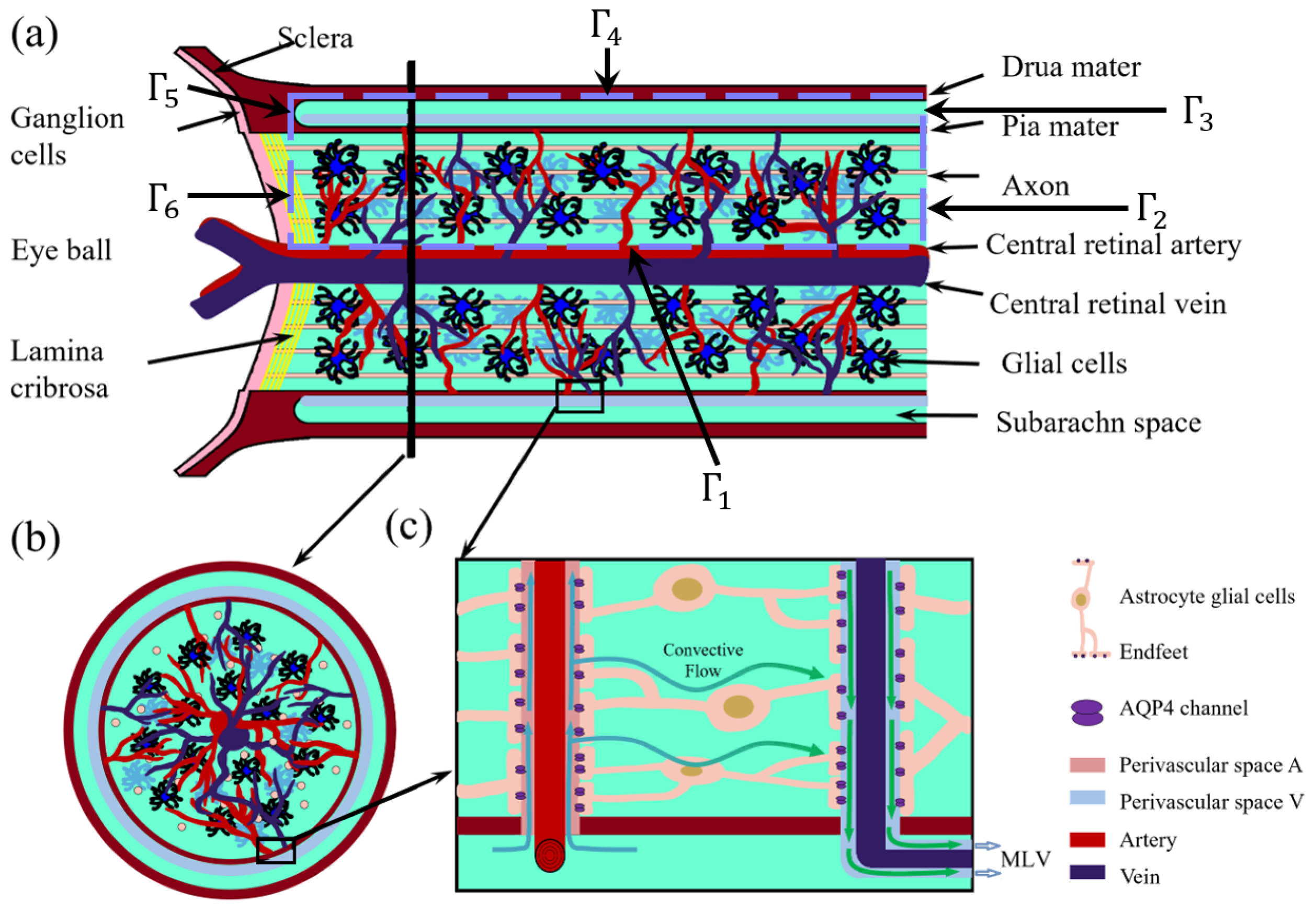
Figure 1 illustrates the computational domain considered in this study. The domain, denoted as
, consists of two main regions: the subarachnoid space (SAS),
, and the optic nerve,
. Thus, we define
where the SAS region (
) is filled with cerebrospinal fluid (CSF) and enclosed by the dura mater (
) and pia mater (
).
The optic nerve microenvironment comprises multiple interconnected compartments, each playing a role in fluid and ion transport. Based on the six-domain microcirculation model introduced in [
20], we define the optic nerve domain as
where
is axon compartment;
is glial cell compartment;
denotes extracellular space (ECS);
denotes perivascular space surrounding arteries (PVS-A);
denotes perivascular space surrounding veins (PVS-V); and
denotes perivascular space surrounding capillaries (PVS-C).
The boundaries of the computational domain are defined as follows:
is the central retinal blood vessel wall;
are distal ends of the optic nerve, connecting to the optic canal [
37];
denotes the dura mater connected to the sclera, assumed to be impermeable [
27]; and
denotes the left boundary near Lamina cribrosa, where the optic nerve head exits the eye through perforations [
38], as shown in
Figure 1.
The model is derived from conservation laws governing ion and fluid transport across cellular membranes and extracellular compartments. For each domain
, where
, we impose the general conservation equation:
where
is the volume fraction of compartment
l,
is the concentration of a given solute,
is the flux within the compartment, and
S represents the source term due to transdomain transport (e.g., active pumps, passive leak channels).
We adopt the following assumptions to ensure computational feasibility and physiological relevance:
Axial symmetry: The model assumes axial symmetry to reduce computational complexity while preserving essential transport dynamics. To clarify, the model is fundamentally three-dimensional. The axial symmetry assumed in our current implementation simplifies the numerical computation without altering the underlying physics. Importantly, the model formulation itself does not rely on symmetry assumptions and can be extended to fully three-dimensional, non-axisymmetric geometries to accommodate spatial heterogeneity or more anatomically realistic structures.
Ion selection: Only the three dominant ions involved in neural activity , and are considered.
Charge neutrality: Each compartment satisfies electroneutrality [
39]:
Here, represents the protein density in axons and glial cells, which are permanently negatively charged but expressed as positive values for computational purposes. These proteins are assumed to be uniformly distributed at resting state with valences and . The volume fractions and refer to their respective compartments, with and denoting their resting-state values.
Anisotropy in axons, isotropy in other compartments: Axons are anisotropic, meaning ion and fluid transport occurs primarily along the axial direction due to their cylindrical structure and electrical isolation. Other compartments (e.g., glial cells and ECS) are isotropic, allowing for both axial and radial diffusion and flow. Glial cells form a syncytium via connexins, facilitating intercellular ion and fluid exchange.
Compartmental interactions: The interactions between different compartments, as illustrated in
Figure 2, occur primarily through ion concentration gradients, electrical potentials, and trans-domain transport. There is no direct interaction between the axonal and glial compartments; instead, their communication is mediated through changes in the extracellular space (ECS) [
40].
2.1. Fluid Circulation
In this subsection, we present the fluid circulation model. First, due to the conservation law, the volume fraction of each compartment
satisfy
where
is the fluid velocity across the membrane/interface between
and
compartments with surface volume ratio
, and
is the fluid velocity inside the
compartment.
In this paper, we define a membrane boundary condition to describe the fluid or ion communication in the interface that connects the optic nerve and the retina or the optic canal or orbital. We assume this fluid or ion communication depends on the difference in pressure or ion concentration between the two sides of this connect interface , where is the interface velocity, and and are hydrostatic pressure on both sides of the interface, respectively.
2.2. Ion Transport
The conservation of ion species implies the following system of partial differential equations to describe the dynamics of ions in each region, for
in domain
:
and in the
region,
In our model, the transcompartmental ion flux
between compartments
l and
k consists of both passive channel-mediated fluxes and active pump-mediated fluxes:
where
denotes the passive ion flux driven by electrochemical potential gradients, and
denotes the active ion flux driven by metabolic energy consumption (e.g., ATP hydrolysis by the sodium–potassium pump). For more details, see
Appendix A.2.
From a thermodynamic perspective, the passive fluxes
are dissipative and result in positive local entropy production. The rate of entropy production due to passive transport can be expressed as
where
is the electrochemical potential difference of ion
i across the interface between compartment
l and
k and
are the conductance of ion
i.
In contrast, the active fluxes typically transport ions against their electrochemical gradients, thereby locally reducing entropy. However, these processes are powered by external energy sources—such as ATP hydrolysis—which produce heat and increase entropy in the surrounding environment. Thus, while active transport may locally decrease entropy within the modeled compartments, the global entropy of the system (including energy sources and sinks) still increases, in accordance with the second law of thermodynamics. Although we do not explicitly model ATP dynamics in the present study, the inclusion of active fluxes highlights the system’s irreversible nature and the importance of energy input in maintaining non-equilibrium ion distributions.
2.3. Electric Potential
By multiplying Equations (
14)–(
19) with
, respectively, summing up, and using charge neutrality Equation (
4) and ion flux equation, we have the following system for the electric potential in
:
which describe the spatial distributions of electric potentials in six compartments.
In the subarachnoid space
, the governing equation for cerebrospinal fluid electric potential reduces to
3. Fluid Circulation in the Optic Nerve
Fluid homeostasis in the central nervous system (CNS) is maintained by the coordinated movement of four primary fluid types: intracellular fluid (ICF) (60–68%), interstitial/extracellular fluid (ISF/ECS) (12–20%), blood (10%), and cerebrospinal fluid (CSF) (10%) [
2]. This section examines fluid microcirculation in the optic nerve, both under resting conditions and in response to neuronal stimuli.
This study primarily focuses on fluid dynamics. Results related to ionic transport are included only where they directly influence osmotic pressure, electric potential gradients, or fluid flow mechanisms. A detailed analysis of ionic dynamics will be presented in a separate study.
The model is solved using the Finite Volume Method on a uniform mesh with axial symmetry, with equal discretization in the radial and axial directions, i.e.,
and the time step is fixed at
in dimensionless units. As a convergence criterion, the simulation is considered to reach steady state when the maximum variation of all variables between two successive time steps falls below
. To further ensure numerical stability, we adopt conservative flux formulations and implicit time stepping. All variables are monitored to remain within physiologically meaningful ranges throughout the simulation. The computational model was developed and executed in MATLAB. The resting-state equilibrium was determined iteratively by setting a fixed volume fraction for each compartment [
29]:
These equilibrium values serve as the initial conditions for subsequent simulations.
3.1. Resting-State Fluid Circulation
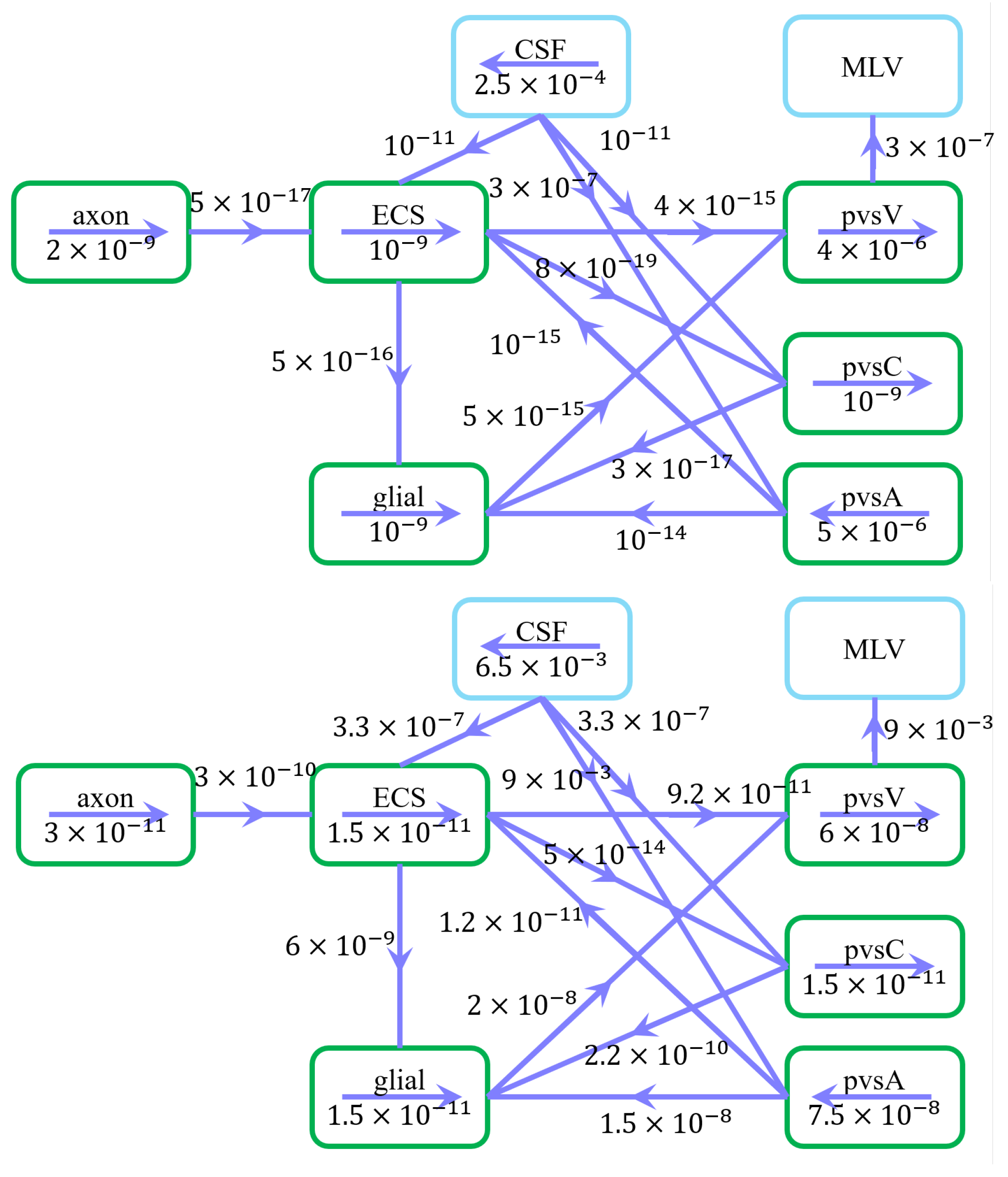
Figure 3 illustrates the velocity distribution across compartments in the resting state. Green arrows indicate flow direction, while numerical values represent average velocity magnitudes (
).
Under a pressure gradient of
, CSF enters the subarachnoid space (SAS) from the intracranial region, with an average velocity of 250
m/s in the z-direction, consistent with previous studies [
41]. CSF is then transported into the extracellular space (ECS) and perivascular spaces (PVS-A and PVS-C) through astrocytic endfoot aquaporin-4 (AQP4) channels and paracellular gaps, subsequently flowing through the optic nerve and glial compartments. Eventually, the fluid converges in the PVS-V and drains into the cervical lymphatic system [
42].
Fluid flow within perivascular spaces is governed by pressure gradients and compartmental interactions:
Flow in PVS-A aligns with the central retinal artery, while flow in PVS-V follows the central retinal vein.
Fluid in PVS-C dynamically adjusts through exchange with adjacent compartments, primarily influenced by PVS-V due to the pressure gradient at boundary .
CSF exits the optic nerve at boundary , with additional clearance via the cervical lymphatic system at .
The spatially averaged velocity in PVS-A under a
pressure gradient is 5
m/s, directed from the intracanalicular space to the intraorbital region. Conversely, in PVS-V, under a
pressure gradient, the velocity is 4
m/s, flowing from the intraorbital region toward the intracanalicular space. These results agree well with previous experimental and computational studies [
15,
43].
These findings emphasize the critical role of perivascular flow, glial-mediated transport, and osmotic gradients in regulating fluid homeostasis and metabolic waste clearance, reinforcing the glymphatic system’s function in the optic nerve. We emphasize that the interplay of biological structure, biophysical transporters and channels, and inescapable physical forces, is fundamentally the same as occurs in many cells, tissues, and organs in animals [
20,
21].
3.2. Stimulus-Induced Fluid Circulation
To understand fluid dynamics during and after neural activation, we investigate the glymphatic system’s role, including glial cells and perivascular spaces, in generating stimulus-driven flow patterns. Neuronal activity disturbs the equilibrium state, inducing ionic redistribution and osmotic pressure gradients, which in turn drive fluid movement across compartments. Neuronal activity varies during the sleep cycle and that surely induces glymphatic flow. The variation in the frequency and location of action potentials during the sleep cycle is certain to produce ionic redistribution and osmotic pressure gradients, which in turn drive fluid movement across compartments [
13]. It is worthwhile to speculate that action potentials might produce other effects, e.g., dreams, beyond fluid flow.
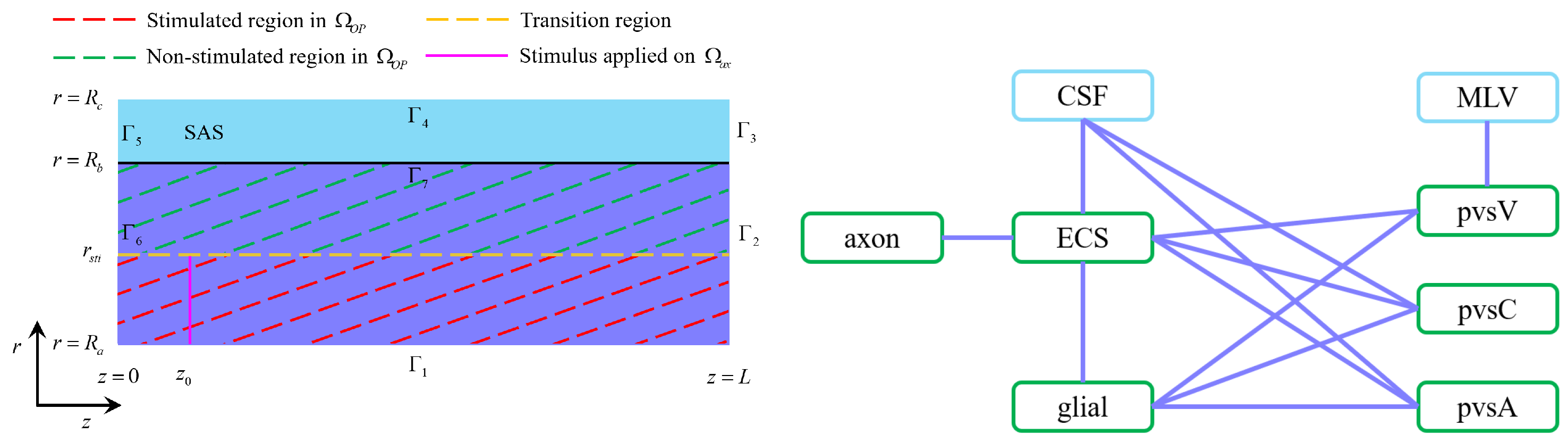
Figure 2 delineates stimulated and non-stimulated regions within the optic nerve (
). The stimulus, applied at
, mimics physiological neural activation. The applied current has a frequency of
(
) with a duration of
and a strength of
for
.
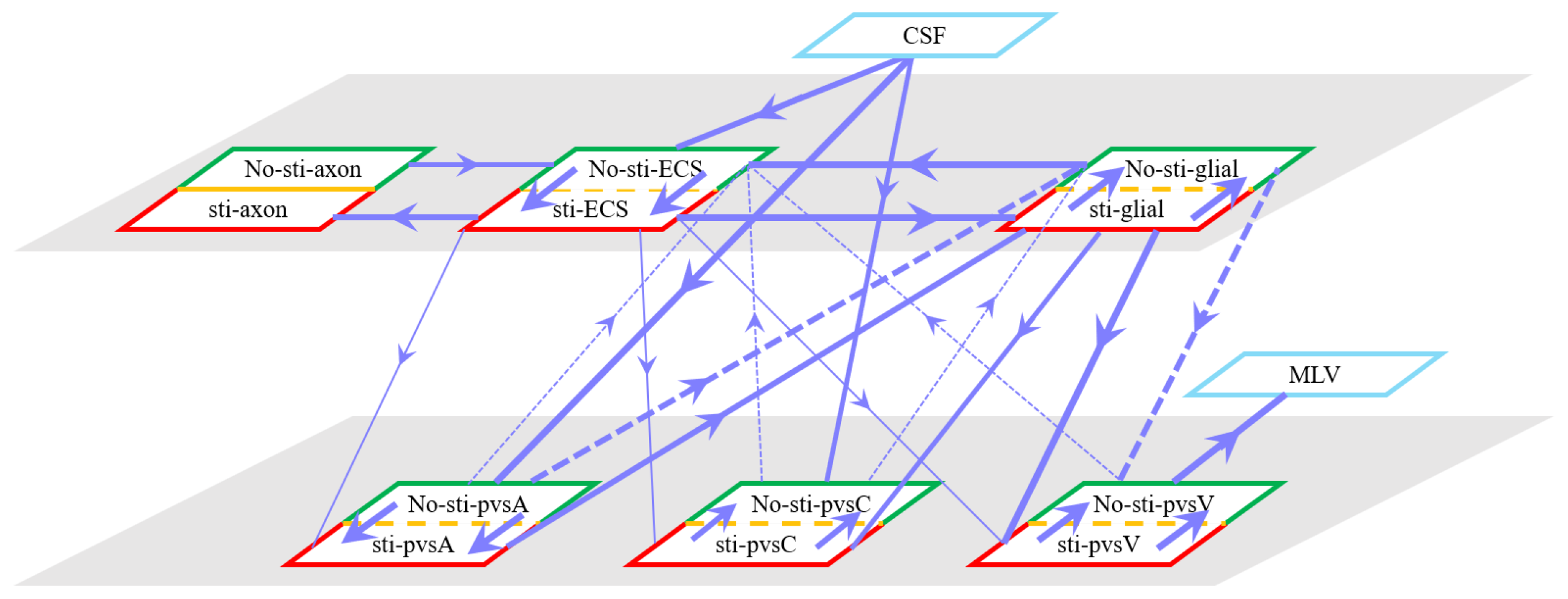
Figure 4 summarizes fluid movement across compartments, with two primary driving forces:
Fluid circulation in the optic nerve is dynamically regulated by hydrostatic and osmotic pressure gradients, responding to neuronal activity through ion-driven osmotic effects. The glymphatic system facilitates waste clearance and volume regulation, ensuring homeostasis between stimulated and non-stimulated regions. These findings highlight the interconnected nature of CSF, glial, and perivascular flow, offering insights into the optic nerve’s role in CNS fluid dynamics: interactions dominate as in most electro-osmotic systems. The structures of the nervous system link these flows; the physics of flow in the CSF, glia, and perivascular spaces depend on the interacting concentrations of the same salts. Everything interacts with everything else in such systems. Simplified models may suffice in special cases, but it is nearly impossible to define those special cases without a study of the full system, starting with conservation laws and biological structure [
21].
4. Parametric Study Under Pathophysiological Conditions
Aquaporin (AQP) water channels, particularly Aquaporin-4 (AQP4), are highly expressed on astrocytes and play a crucial role in maintaining homeostasis in the central nervous system (CNS). AQP4 expression is often dysregulated, leading to impaired glymphatic function and the accumulation of toxic metabolites [
44]. In addition, changes in perivascular space permeability, which can result from metabolic waste blockage or structural alterations, further disrupt fluid dynamics and waste clearance [
8]. These pathological changes highlight the importance of understanding how variations in AQP4 expression and perivascular space permeability impact glymphatic function.
In this section, we conduct a parametric study to investigate the effects of varying the trans-domain hydrostatic permeability of the glial membrane (reflecting AQP4 expression levels) and the intracompartment permeability of the perivascular space on fluid dynamics in the optic nerve. By systematically varying these parameters, we aim to quantify their effects on fluid circulation, perivascular clearance, and pressure gradients, providing insights into the pathophysiological mechanisms underlying impaired glymphatic function.
4.1. Expression of Aquaporin (AQP) Water Channels
In our simulations, the hydrostatic permeability of the glial membrane, , for , was varied by factors of , , and to assess the impact of impaired AQP4 water channels on the glial membrane.
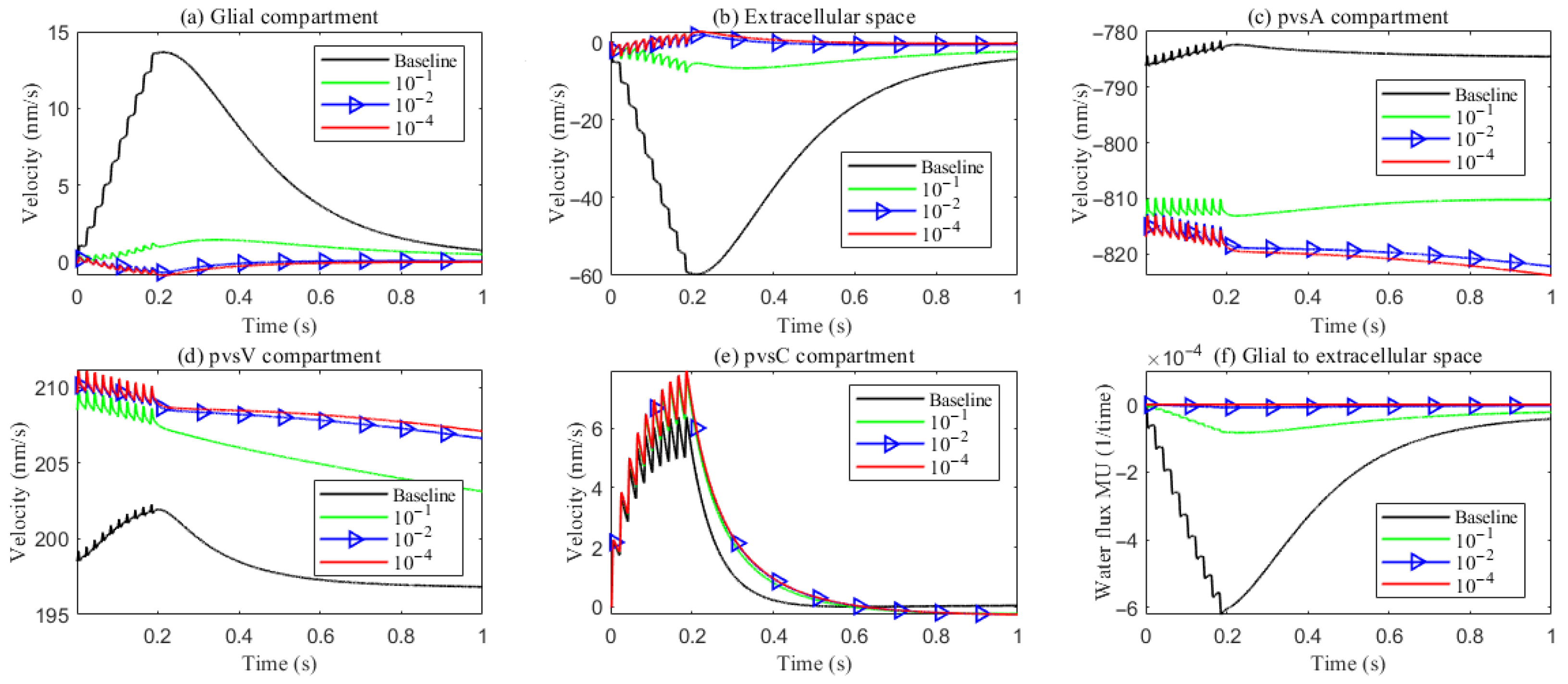
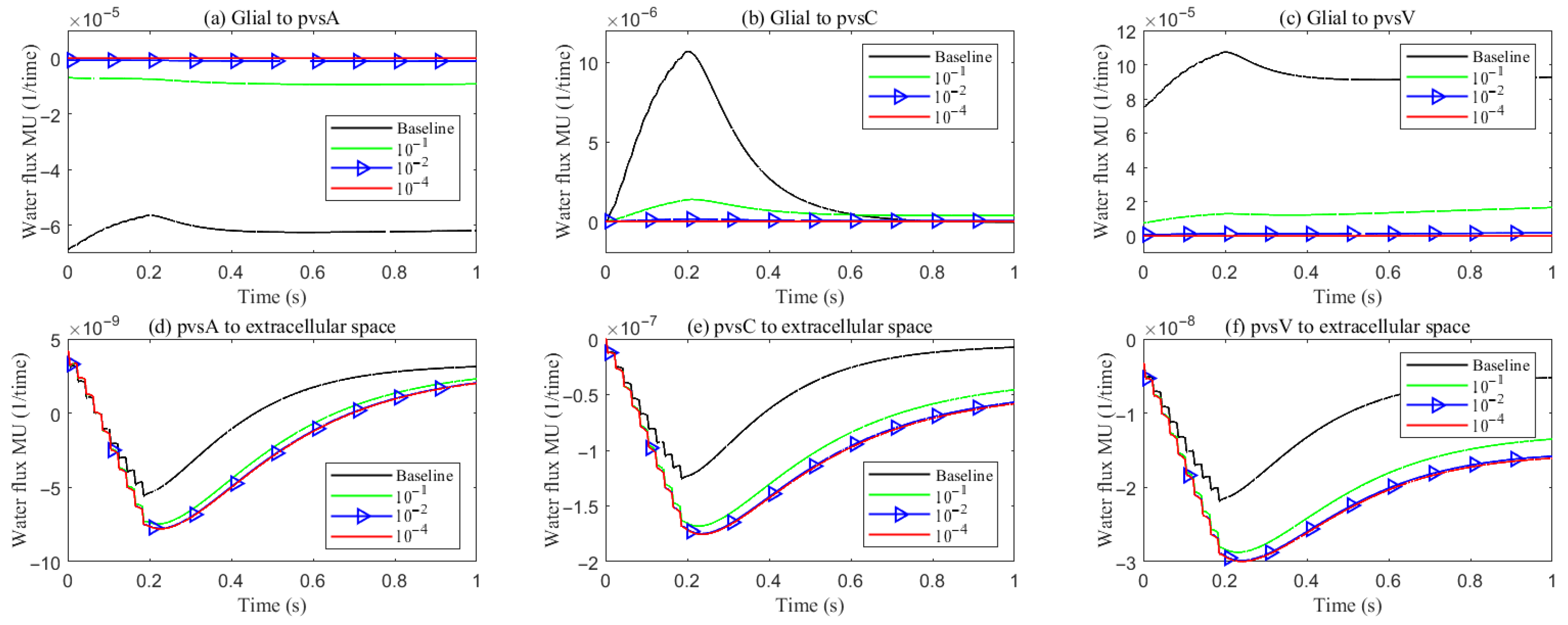
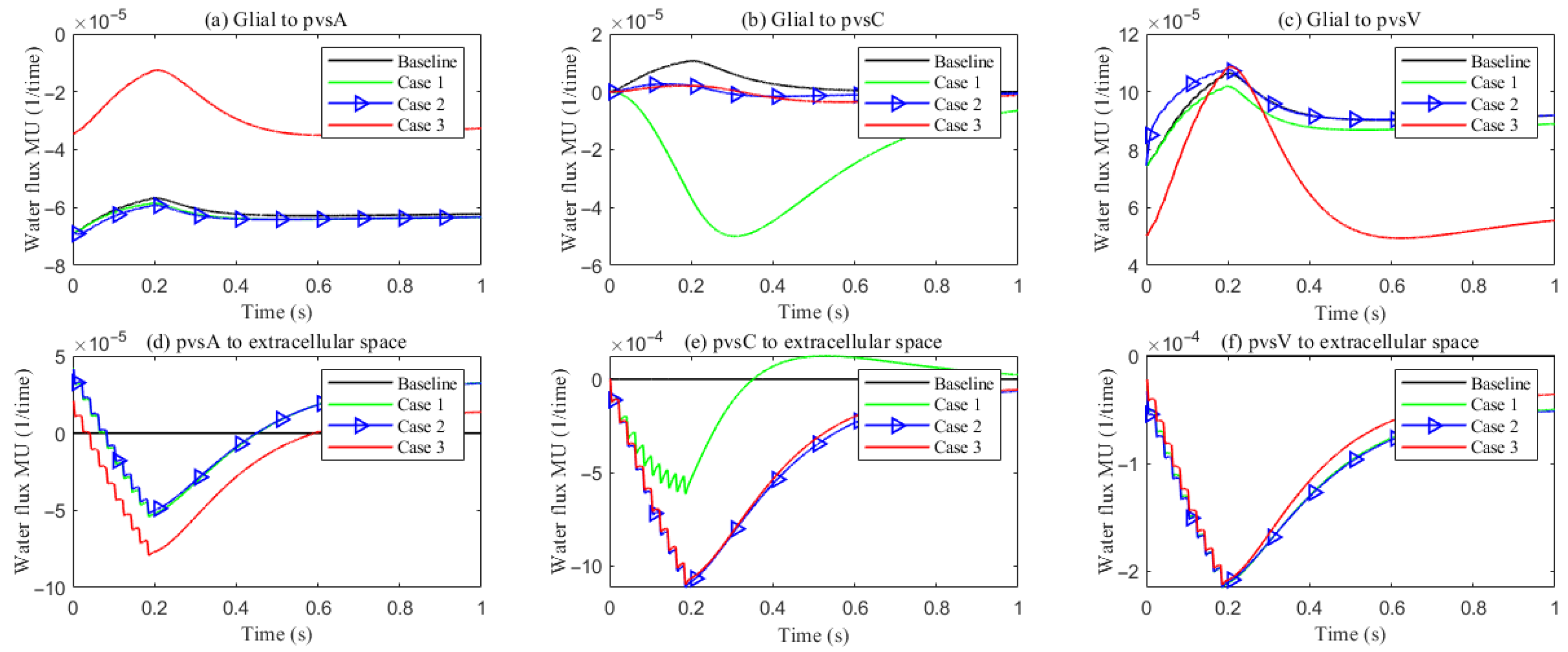
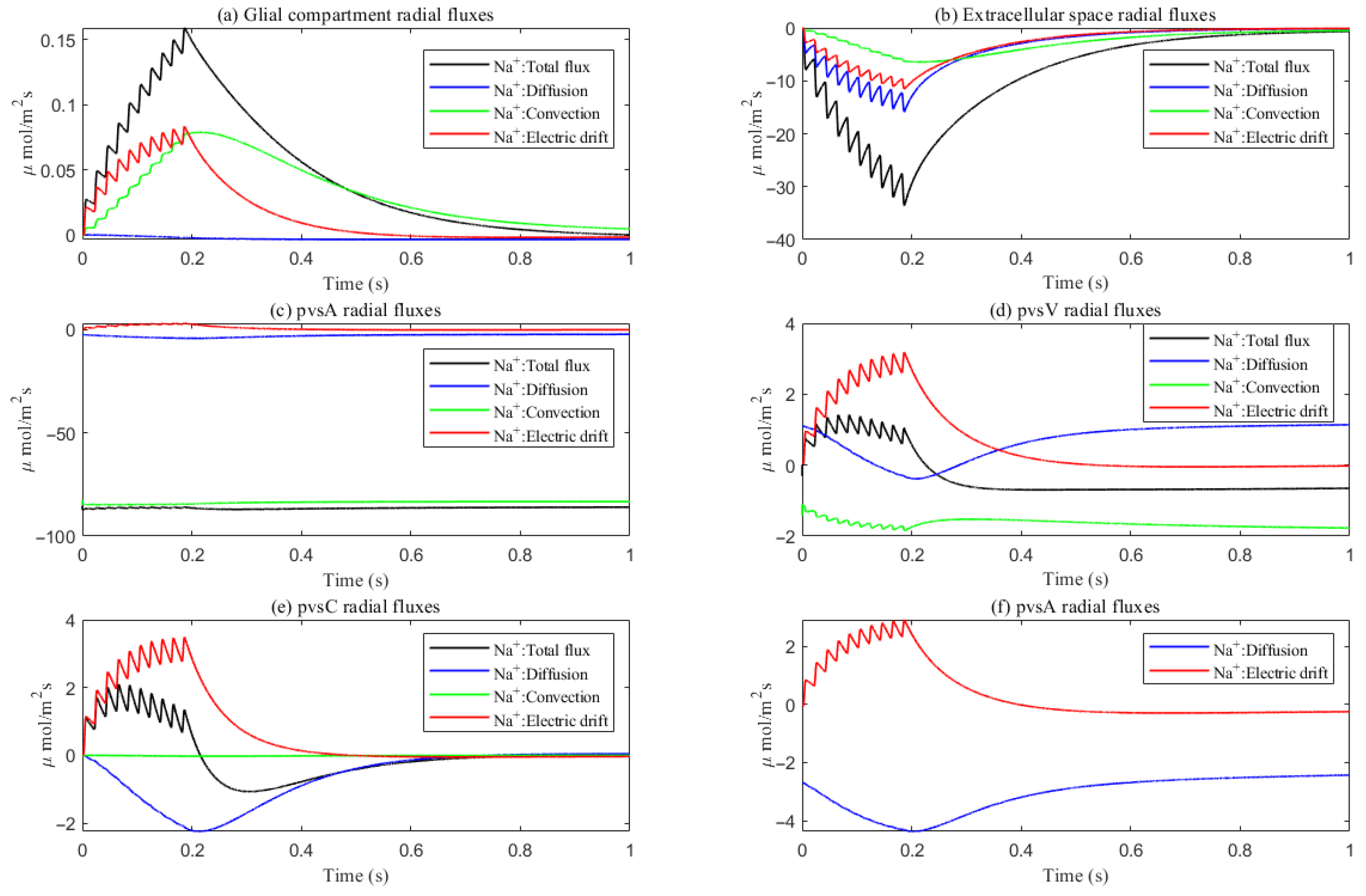
As hydrostatic permeability decreases, the fluid trans-domain velocity across the glial membrane in the stimulated region is reduced, which leads to a decrease in total flux (see
Figure 6f and
Figure 7a–c). Consequently, the radial fluid velocity within both the glial compartment and the ECS declines (see
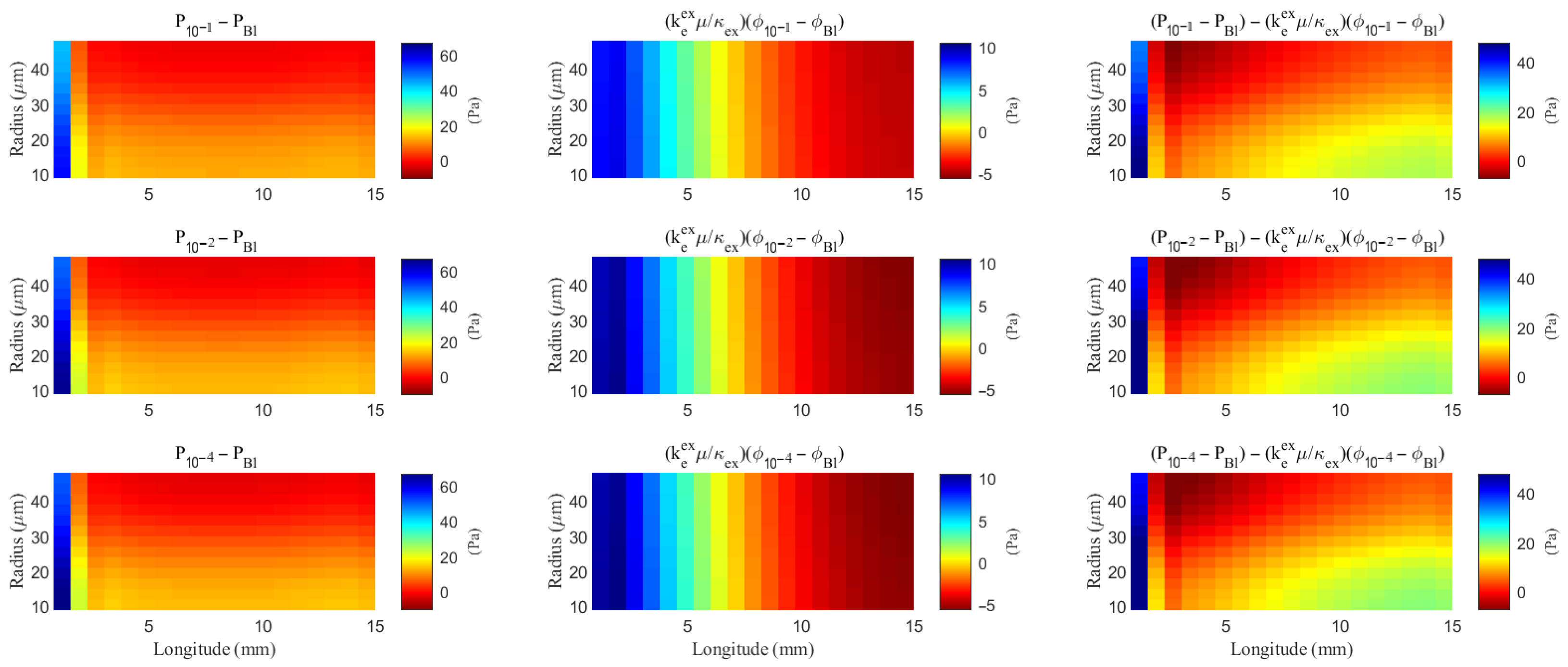
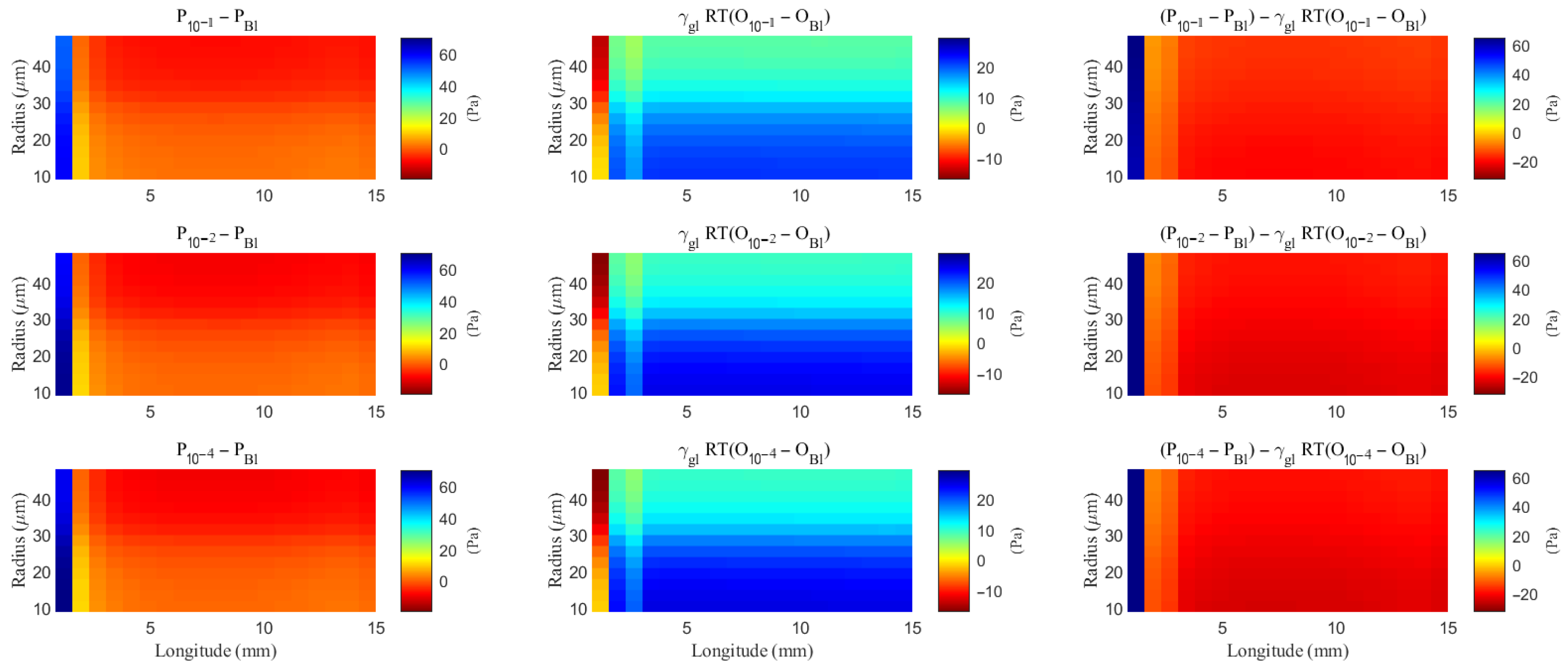
Figure 6a,b). This results in a buildup of pressure in the stimulated region in both compartments (see
Figure 8 and
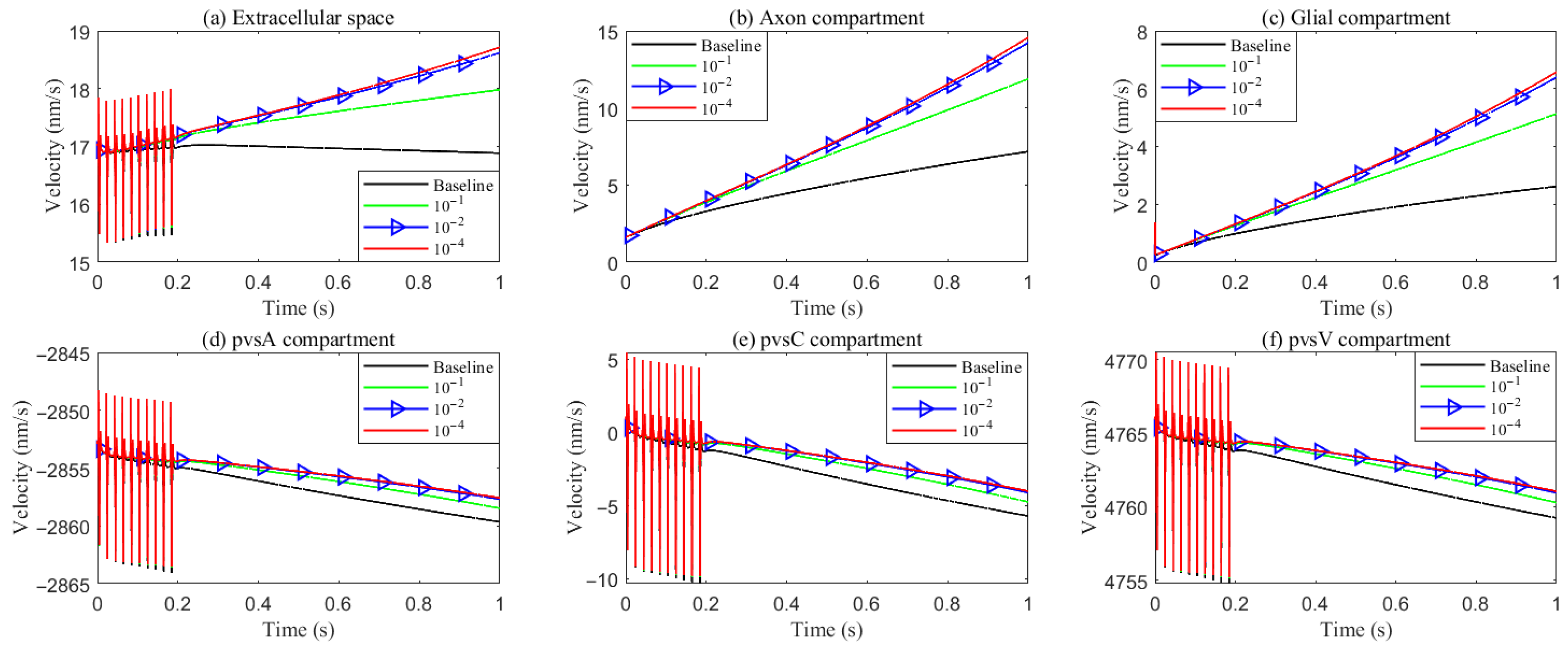
Figure 9), which increases longitudinal fluid velocity (see
Figure 10a,c). The restriction in radial flux also reduces convection within the glial compartment and ECS.
Under baseline conditions, fluid recirculates from the non-stimulated region back into the stimulated region (see
Figure 4), carrying sodium (
) ions along with it (see
Figure A1 in the
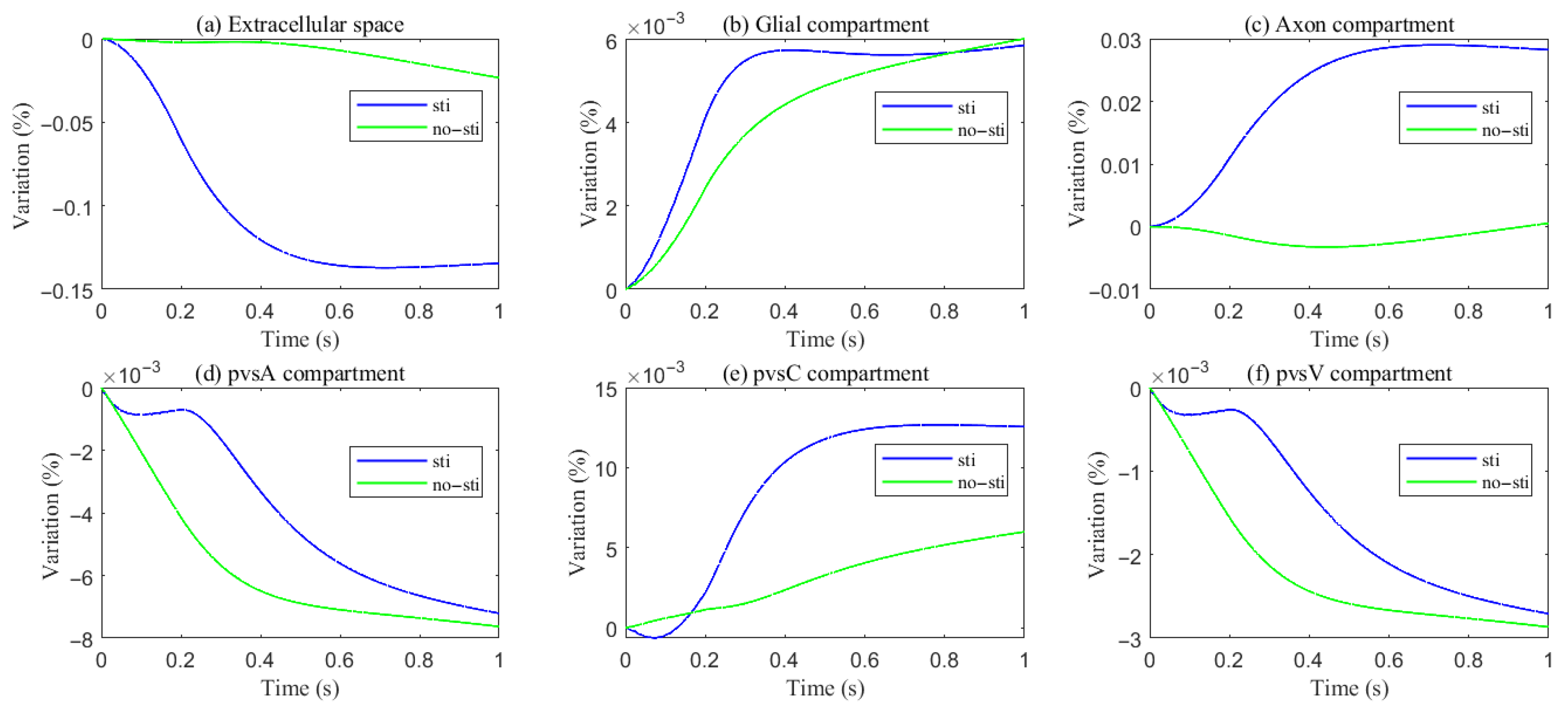
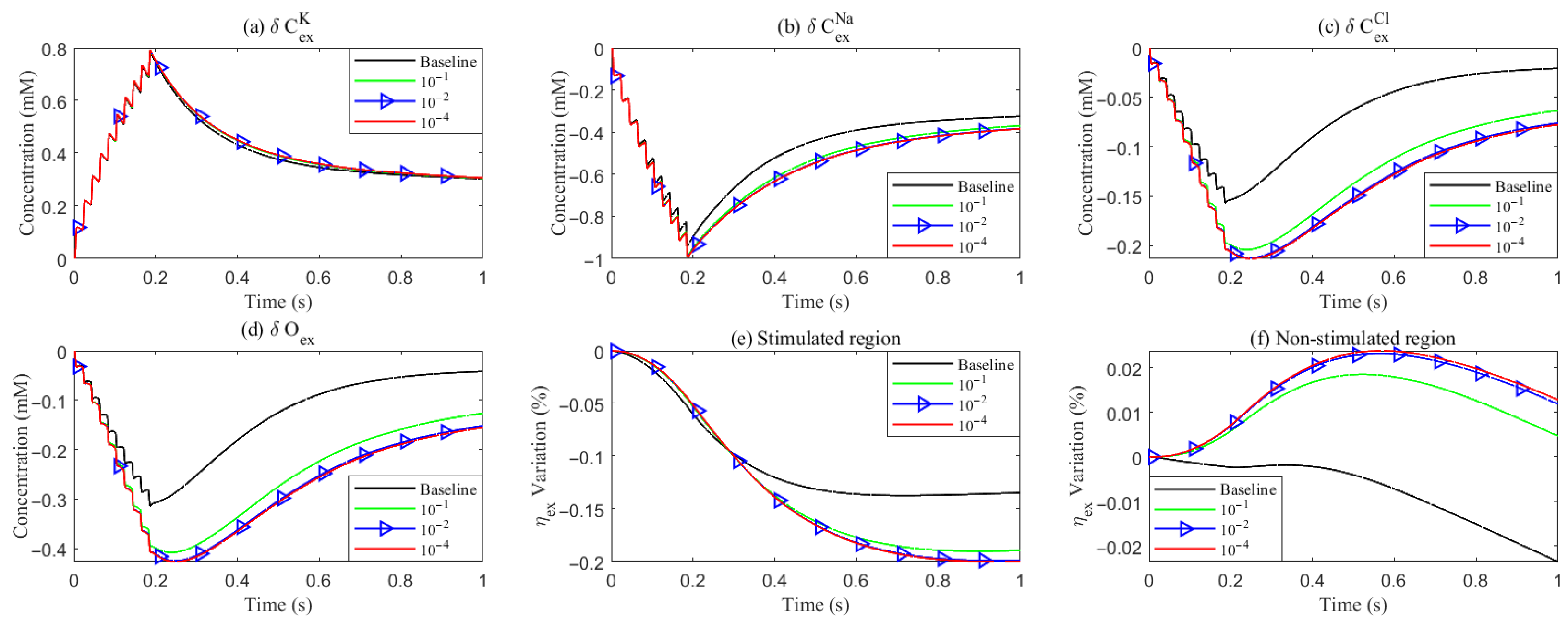
Appendix B). However, as hydrostatic permeability decreases, the rising pressure in the stimulated region further restricts this fluid return, leading to a reduction in radial fluid velocity. Consequently, the volume of the stimulated region decreases (see
Figure 11e), accompanied by a decline in sodium (
) and chloride (
) concentrations (see
Figure 11b,c). This reduction in ionic concentrations lowers the osmotic pressure in the ECS following the stimulus. Meanwhile, the buildup of hydrostatic pressure increases trans-domain fluid velocities across perivascular space membranes (see
Figure 7d–f), as fluid is primarily transported through the gaps between astrocytic endfeet rather than via AQP4 water channels.
4.2. Functions of the Perivascular Space
In our previous studies [
20,
24], the extracellular space and the perivascular spaces were treated as equivalent, without distinguishing between them. In this subsection, we examine the effect of perivascular space on the flow by varying the transmebrane and intracompartment permeability.
Baseline model: Uses the parameters from
Section 3.
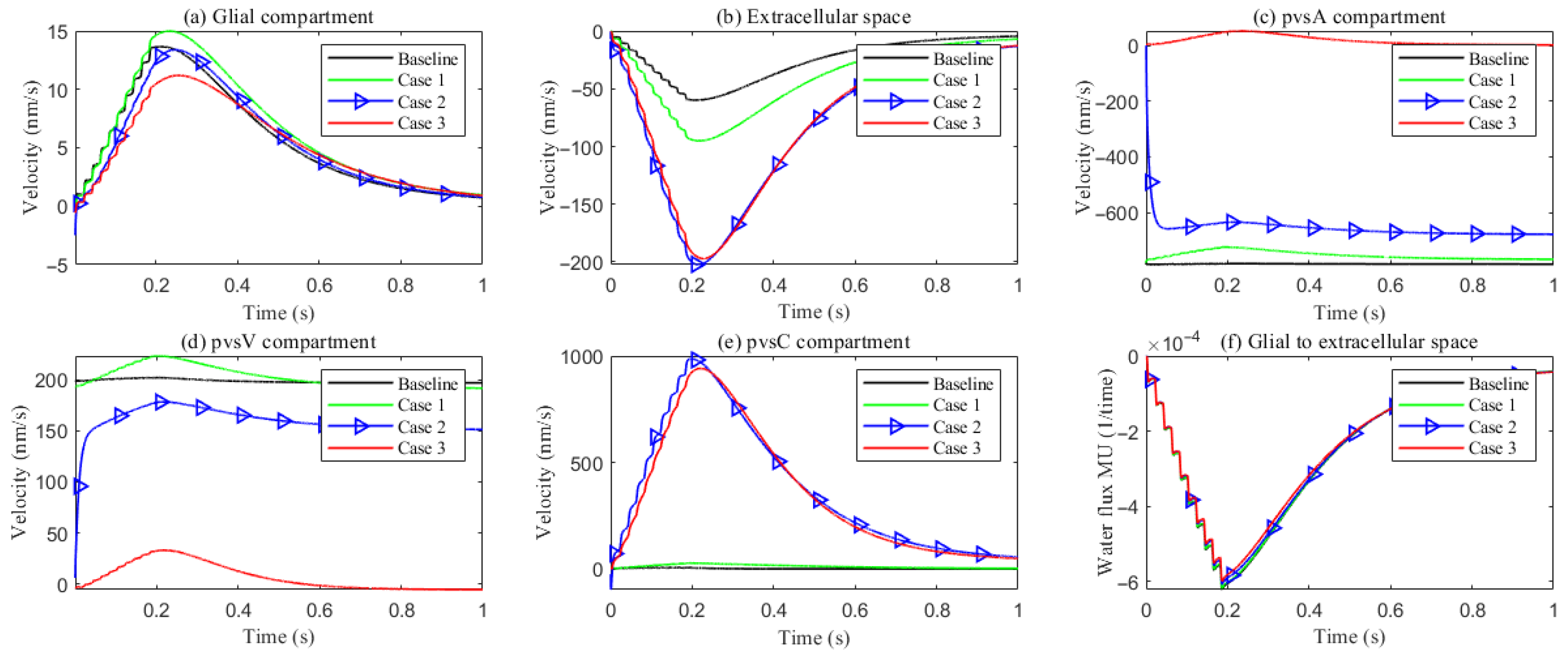
Case 1: Increases the trans-domain exchange coefficient between the extracellular space and the perivascular spaces by a factor of , based on the baseline parameters.
Case 2: Adjusts the permeability within the perivascular spaces to match that of the extracellular space, while keeping the other parameters consistent with the baseline model.
Case 3: Based on Case 2, sets the communication parameters between the cerebrospinal fluid and the perivascular spaces to match those of the extracellular space in the pia mater, with and .
Figure 12 summarizes the trans-domain fluid fluxes in the stimulated region for the four parameter cases. The directions of (i) ECS→PVS exchange, (ii) glia→PVS-V, and (iii) PVS-A→glia are preserved across all cases; the only qualitative change occurs at the glia–PVS-C interface. Because the left, right, and bottom boundaries of PVS-C are no-flux, trans-domain exchange is the dominant pathway for volume adjustment within this compartment. In Case 1 (enhanced ECS↔PVS exchange with relatively low intracompartmental permeability of PVS-C), flux proceeds primarily from the ECS into PVS-C, which then drives net transfer from PVS-C into the glial compartment. By contrast, in Cases 2 and 3, the increased intracompartmental connectivity of PVS-C accelerates radial transport (
Figure 13e) and reverses the effective trans-domain direction: fluid exits the glial compartment and is conveyed toward the venous perivascular network.
Figure 13 reports the space-averaged radial velocities in each compartment for the four parameter cases.
Extracellular space (ECS). Relative to the baseline, increasing the ECS↔PVS trans-domain exchange coefficient (Case 1) drives more fluid from the ECS into PVS A/C/V within the stimulated region (
Figure 12d–f), thereby elevating the ECS radial velocity. In Cases 2 and 3, the time courses of the ECS↔PVS A/V trans-domain fluxes remain similar to Case 1; however, the higher intracompartment permeability of PVS C facilitates lateral transport within PVS C, increasing the net ECS→PVS C transfer (
Figure 12e) and further augmenting the ECS radial velocity.
Perivascular space A (PVS-A). Enhancing the trans-domain exchange coefficient increases inflow into PVS-A but diverts volume through the membrane rather than within-plane, which reduces the radial velocity in Case 1. In Case 2, a reduction in the inner permeability of PVS-A further suppresses radial velocity relative to Case 1. In Case 3, weakened coupling between CSF and PVS-A yields very low radial velocity and promotes longitudinal redirection of fluid from the stimulated toward the non-stimulated region during stimulation.
Perivascular spaces C and V (PVS-C/V). In Case 3, a similar pattern emerges: diminished intracompartment connectivity and boundary coupling lower radial velocities, with flow preferentially redirected along the longitudinal axis rather than radially within the compartments.
5. Metabolic Waste Clearance Mechanisms
With the deepening understanding of neurodegenerative diseases, studies have revealed that the accumulation of metabolic waste in the visual system is involved in neuronal degenerative changes, such as Alzheimer’s disease [
45,
46], glaucoma, and optic atrophy. The progression of these diseases is often accompanied by the failure of metabolic clearance mechanisms. The perivascular spaces play a crucial role not only in maintaining water and ion balance in the visual system but also in the clearance of metabolic waste [
47,
48]. Dysfunction of these spaces may lead to the accumulation of metabolic waste and toxic substances in the extracellular space, further impairing neuronal health and exacerbating the pathological process. Study of the perivascular space seems an essential component of studying the brain blood barrier, and our study brings mathematical and physical specifity to that component of the overall biology and pathophysiology. Understanding the production and clearance mechanisms of metabolic waste in the visual system, as well as their relationship with diseases, will not only help uncover the pathological mechanisms of neurodegenerative diseases but also provide important clues for the development of targeted therapeutic strategies.
5.1. Model for Neutral Species
Compared to traditional ion homeostasis, the clearance of metabolic waste in the optic system involves water flow, as well as ion migration and diffusion. All occur in a complex structure with spatially non-uniform distribution of pumps and channels. The clearance of metabolic waste from the blood stream is done by similar mechanisms in the kidney. It is natural to imagine that the same physical mechanisms are used in the clearance of waste in the optic nerve, and indeed the membrane. Indeed, these mechanisms are fundamental properties of ionic solutions in all situations and so must exist in the brain and optic nerve. The question is not whether they exist but rather how evolution exploits them.
In this study, we consider a simplified model [
20,
24,
49] in which metabolic waste primarily enters the optic system. It lasts for 1 s from the left end, the ocular lens, and is cleared through two major extracellular pathways: (1) diffusion and convective transport within the extracellular space (ECS), and (2) drainage through gaps between glial endfeet into the PVS [
3,
28].
Given the structural and functional constraints of the optic nerve microenvironment, our model explicitly accounts for the accumulation of metabolic waste in the extracellular space, where it undergoes diffusion, convection driven by bulk fluid flow, and clearance through the perivascular space. Solutes cannot pass through AQP4 channels and are therefore transported via advection along with solvent movement. When specific transport mechanisms for certain solutes, particularly critical metabolic waste, are discovered in the future, they can be readily incorporated into an extended version of our model once sufficiently characterized by biophysical measurements, including on isolated systems and preparations.
By integrating the known mechanisms, we simulate the microcirculation of metabolic waste as follows.
The flux of metabolic waste across the interface consists of two components (
): one is the diffusive flux across the interface
, determined by the concentration difference of metabolic waste on both sides of the interface between different components; the other is the solute flow accompanying water movement across the interface
.
where
represents the permeability of metabolic waste exchange across the interface. Metabolic waste enters through the left boundary of the extracellular space at a constant flux, and the boundary conditions for the entire system are as follows:
where
denotes the concentration of metabolic waste outside the optic nerve region.
5.2. Size-Dependent Clearance Mechanisms
The predominant clearance pathway of a metabolite in neural tissue is dictated by the effective size (and resulting transport coefficients) of the solutes. In this work, we consider two operational classes: (i) small solutes, typified by amyloid- monomers (A, ∼4 kDa), and (ii) moderate species, including tau monomers (∼37–46 kDa)). This stratification aligns transport physics with biological structure and anatomy: the narrow extracellular space (ECS) supports rapid diffusion of small solutes, whereas larger assemblies, whose diffusivity is orders of magnitude lower, rely on PVS convection driven by glymphatic flow. The central nervous system requires all waste to be cleared if it is to function. It appears that evolution has discovered how to use different mechanisms expressed and realized in just one fundamental tissue structure.
For small solutes, we assign a higher ECS diffusivity and modest ECS-PVS exchange, capturing diffusion-dominated clearance. For moderate species, we assign a markedly reduced and strengthen the ECS-PVS exchange terms that couple to PVS convection, reflecting their reliance on directed glymphatic flow. This parameterization preserves a common framework while allowing the dominant physics to shift with molecular size.
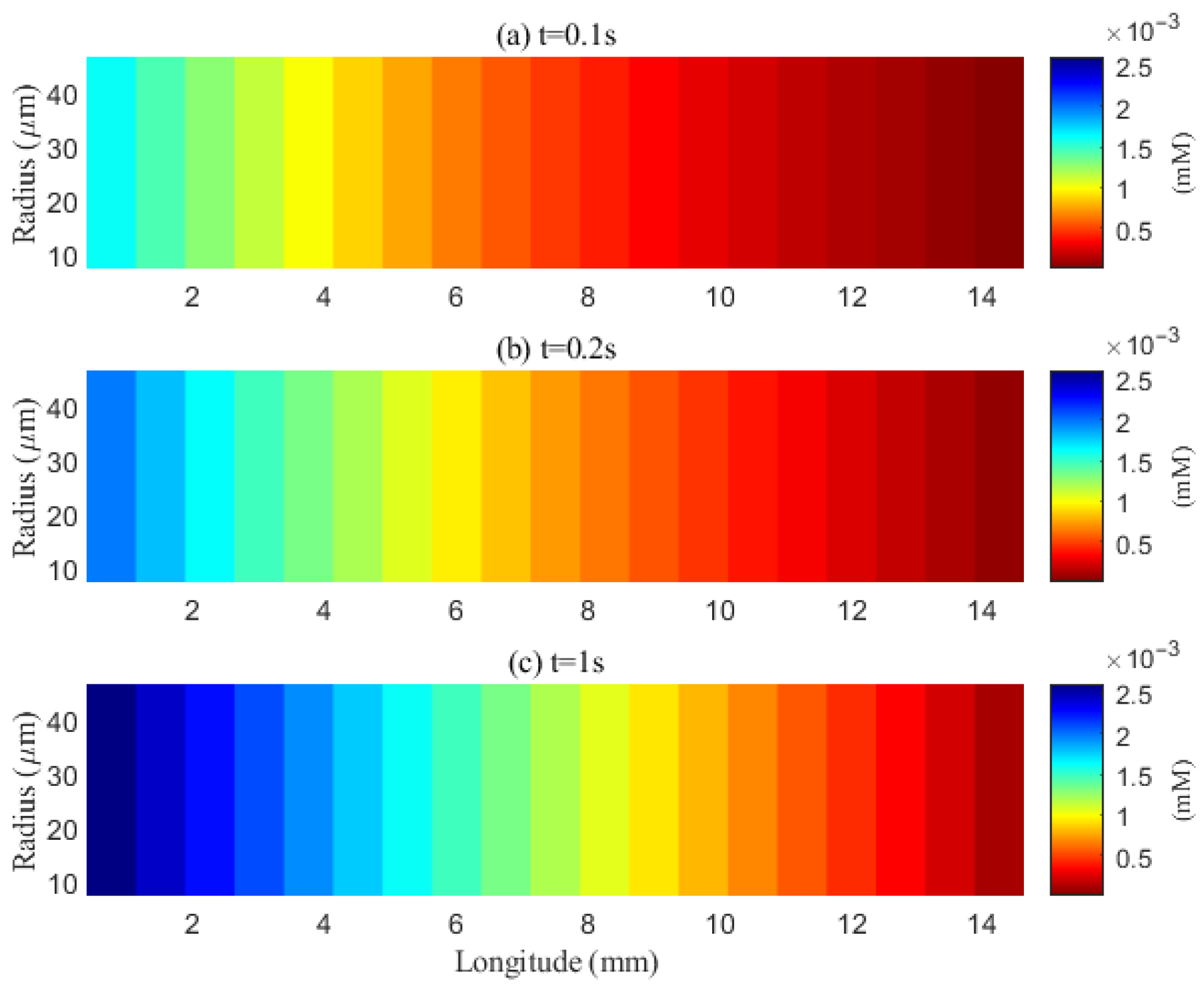
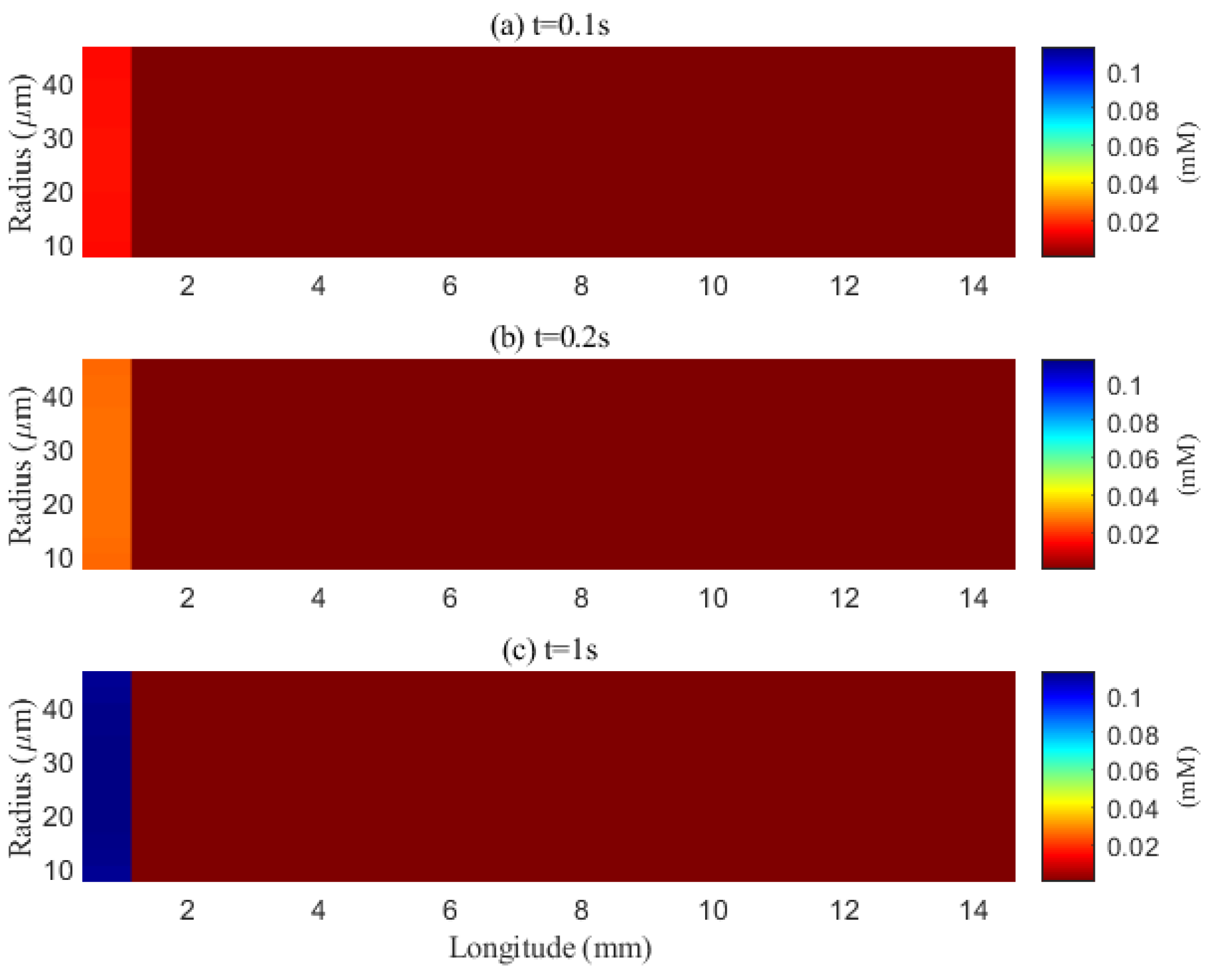
The simulated spatial distributions in
Figure 14 and
Figure 15 highlight dependence of clearance on the size of solutes. For A
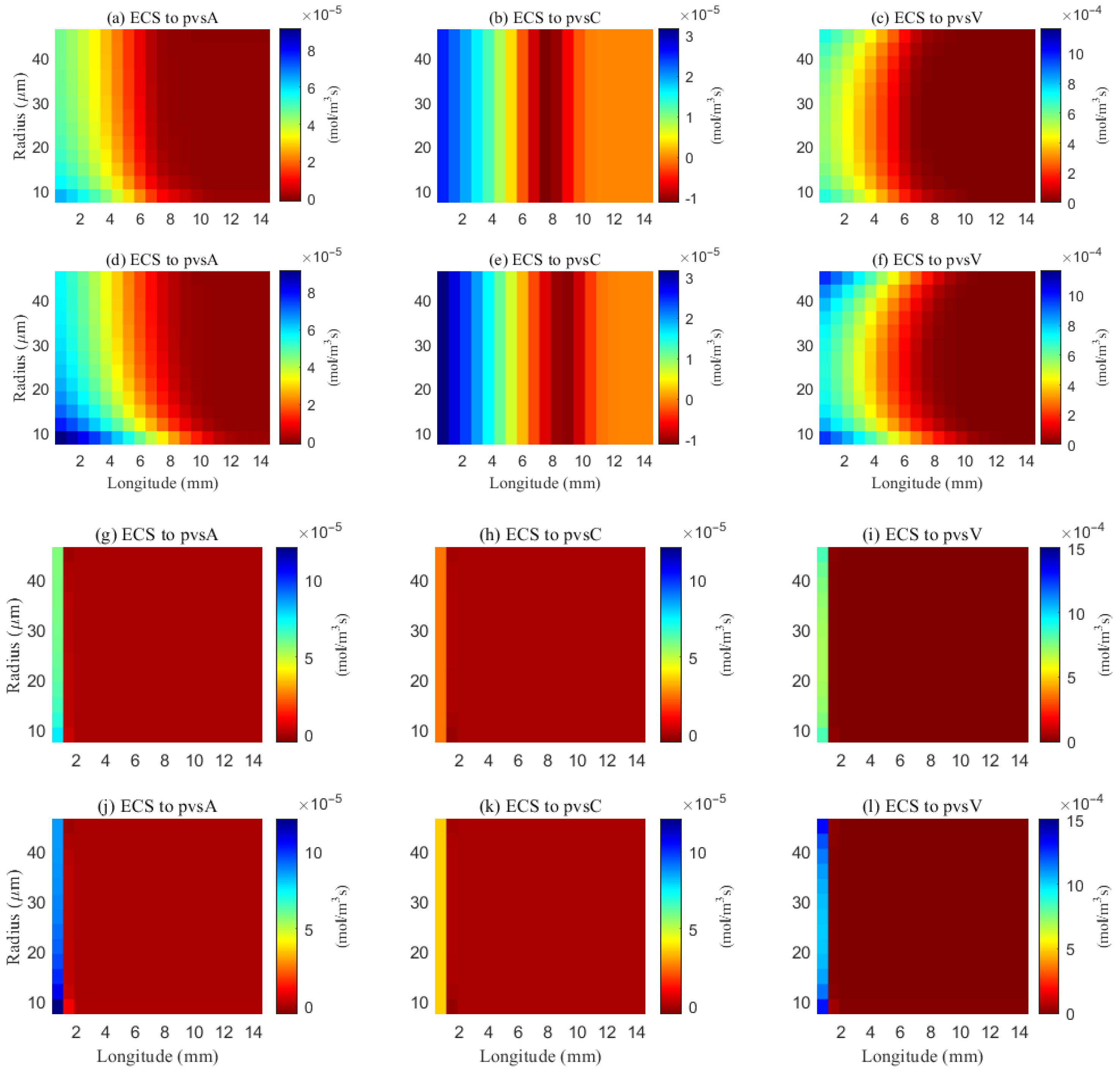
(small class), ECS concentration gradients dissipate rapidly as soon as they enter the computational domain. The resulting broad spread within the ECS enlarges the effective contact area with the PVS, promoting exchange along much of the interface (
Figure 16a–f). By contrast, for tau monomers (moderate class), ECS diffusion alone is insufficient: concentration profiles decay slowly, and effective removal requires trans-endfoot transfer into the PVS followed by convective transport. Consequently, appreciable ECS–PVS trans-domain flux is confined to a narrow zone near the left entry (
Figure 16g–l).
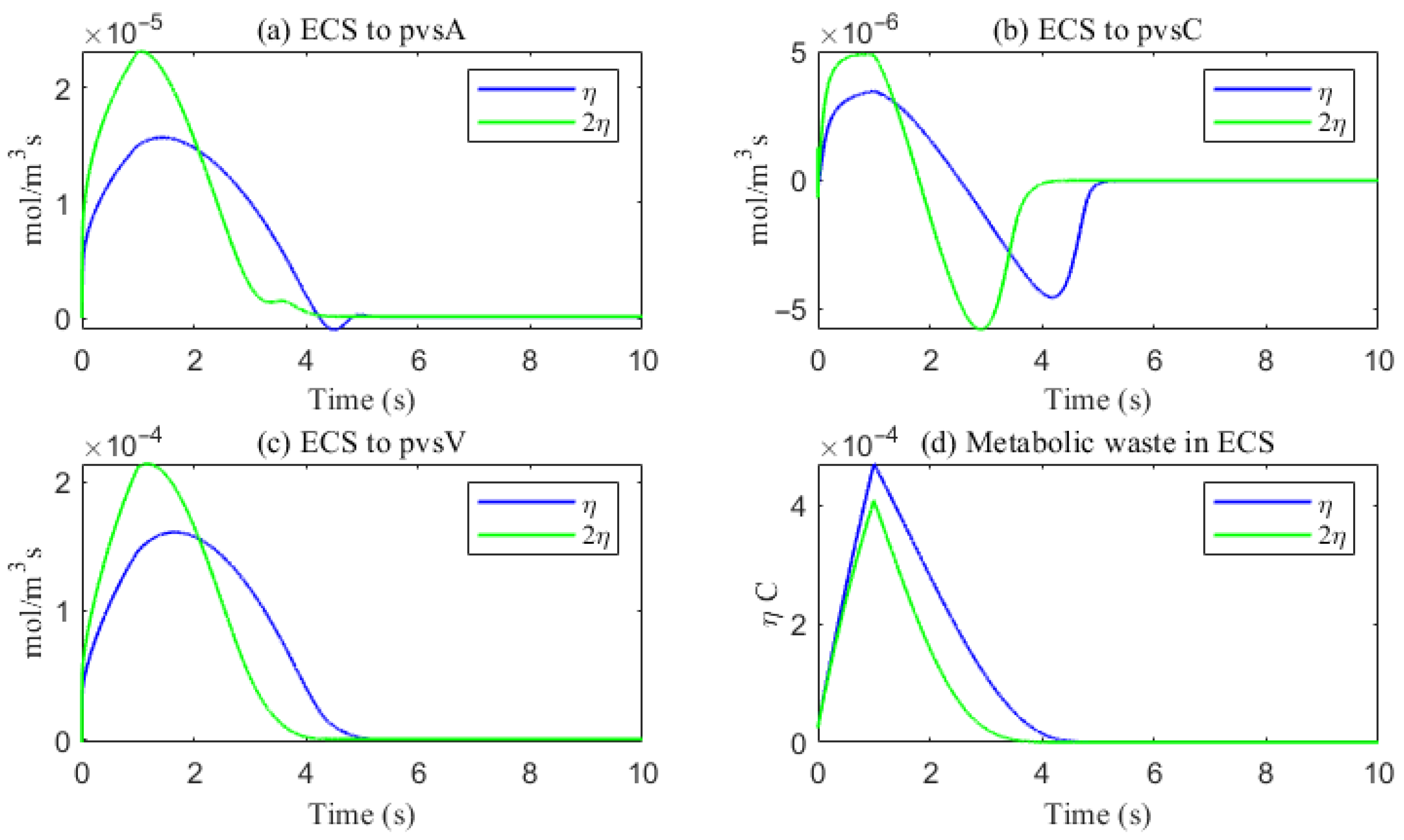
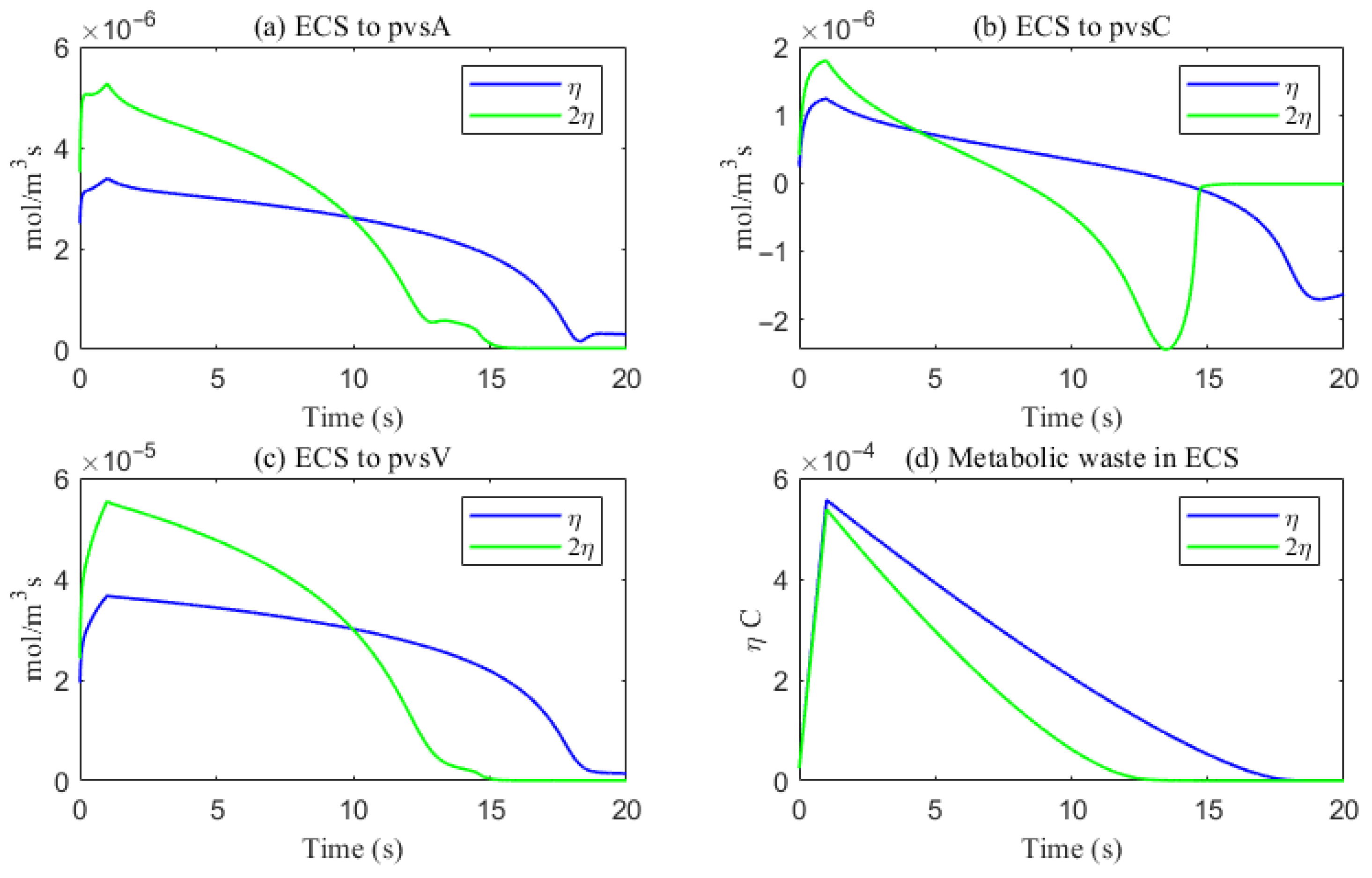
The space-averaged dynamics are summarized in
Figure 17 and
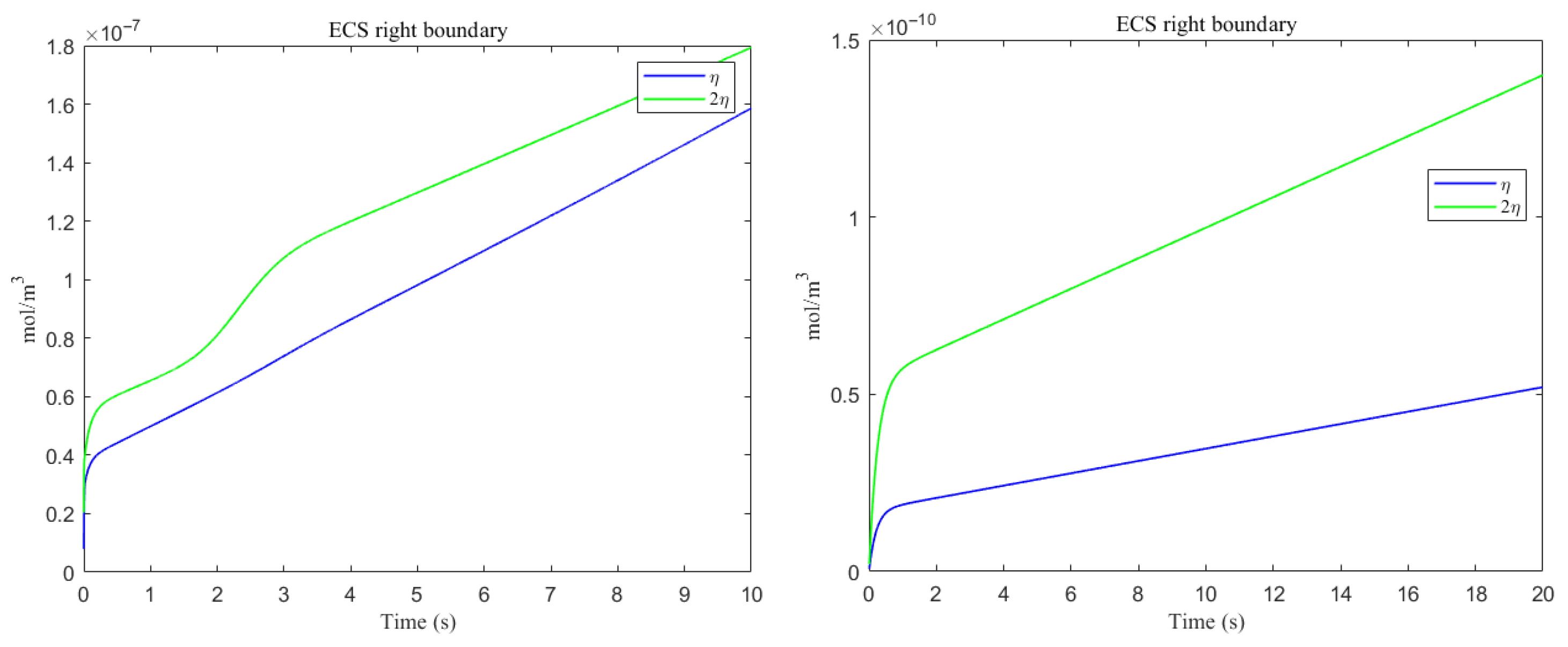
Figure 18, and the net efflux through the right ECS boundary is shown in
Figure 19. In
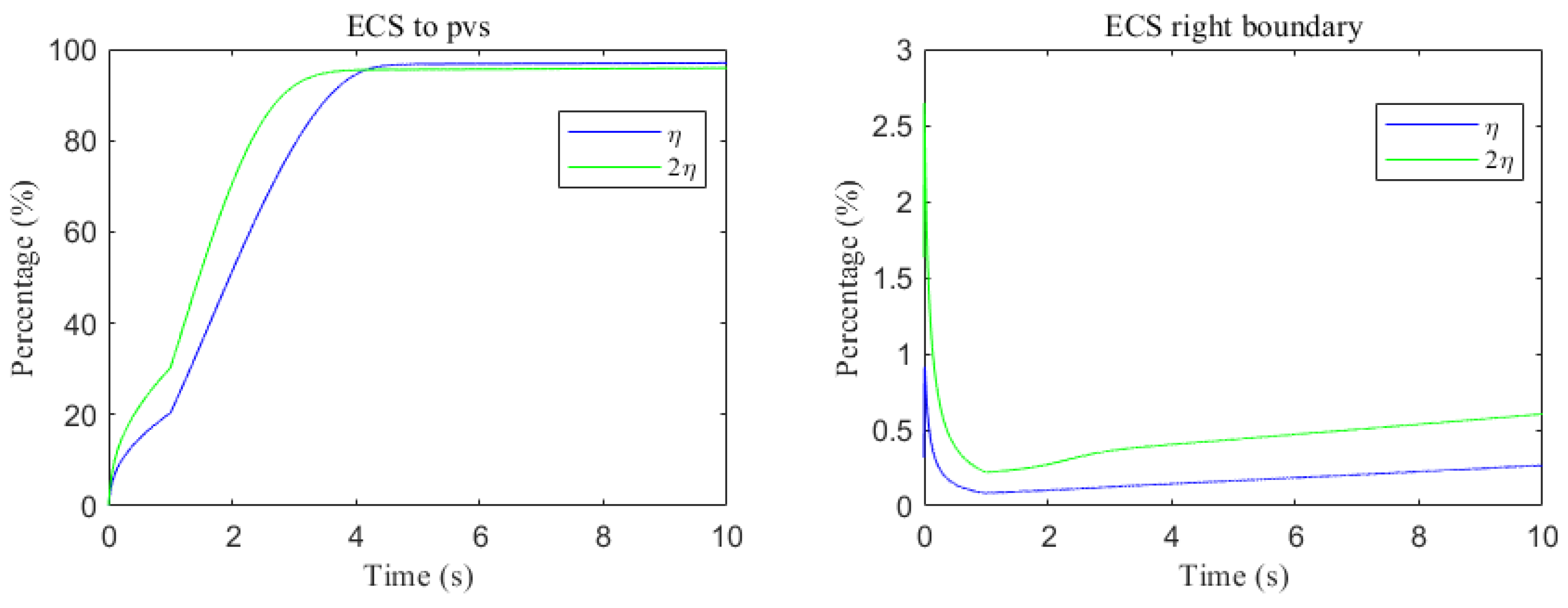
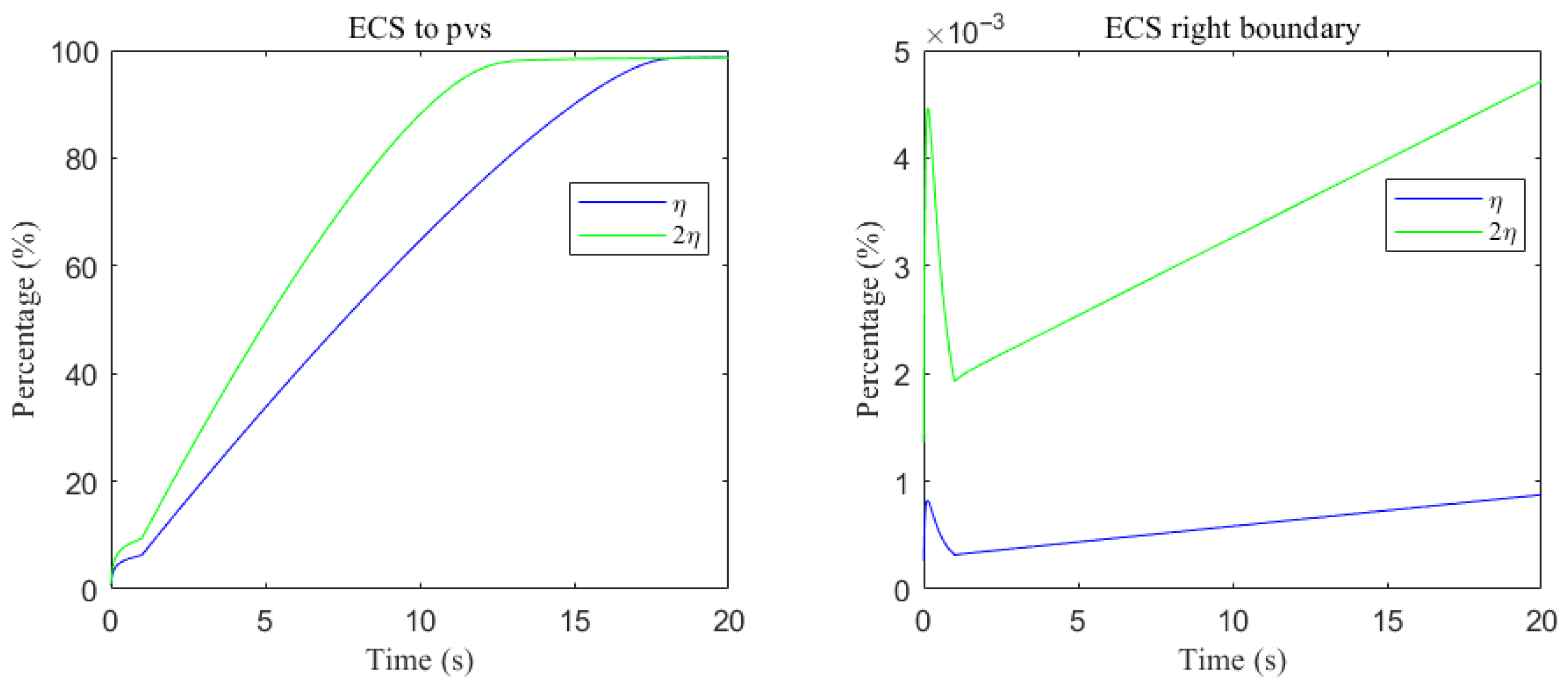
Figure 20 and
Figure 21, we report the fraction of material cleared through the PVS and through the right ECS boundary, normalized by the total mass remaining in the domain. For small molecules, more than
of the cumulative clearance occurs via the PVS within
, whereas for moderate molecules the same threshold requires more than
. These results establish that (i) moderate molecules clear more slowly than small molecules, and (ii) PVS-mediated export is the dominant route for both classes, thus showing the important role of PVS-mediated export in the blood brain barrier. Notably, for small molecules the rapid ECS diffusion enlarges the ECS–PVS contact region and thereby enhances PVS clearance efficiency. Thus, even under identical boundary conditions, the dominant clearance pathway bifurcates with solute size, consistent with experimental observations [
50].
5.3. Sleep and Wakefulness
Sleep exerts a powerful influence on CNS metabolic homeostasis by enhancing the clearance of neurotoxic solutes [
11,
51]. A hallmark physiological change during sleep is the expansion of the extracellular space (ECS), which strengthens cerebrospinal fluid–interstitial fluid (CSF–ISF) exchange and increases the advective–diffusive transport capacity of the tissue. In parallel, glial (especially astrocytic) volume decreases, accommodating the enlarged ECS and improving intercompartment communication across astrocytic endfeet. Together, these shifts establish a fluid-dynamic milieu that favors solute removal.
To represent sleep in our model, we prescribe an increase in the ECS volume fraction [
52]. Enlarging the ECS reduces geometric confinement, raises the effective mobility of interstitial fluid and small solutes, and widens the paracellular gaps between astrocytic endfeet, thereby increasing the effective contact area and exchange rate between ECS and PVS, particularly toward the PVS-V. Later versions of our model might allow changes in volume of compartments and thus seek the electro-osmotic causes for the volume changes, as well as compute them.
The impact of sleep is strongly dependent on the size of solutes. For small solutes (e.g., A
), sleep-like ECS expansion markedly increases trans-domain flux across the ECS–PVS boundary and accelerates depletion from the ECS, as reflected in the spatial and temporal profiles in
Figure 14 and
Figure 17. In contrast, for moderate solutes (e.g., tau monomers), ECS diffusion remains slow and concentrations tend to accumulate near the left inflow region; although ECS enlargement modestly enhances exchange locally at the entry, the trans-domain flux is negligible across most of the domain (
Figure 16g–l), yielding only a tempered improvement in net clearance (
Figure 18d).
Clearance fractions and timescales further underscore this selectivity dependent on solute size. The cumulative proportion of material exported via PVS versus the right ECS boundary (normalized by the in-domain mass) is shown in
Figure 20 and
Figure 21. For small solutes, more than
of the clearance is accomplished through PVS within
under sleep-like conditions. For moderate solutes, the same PVS-dominated threshold is reached more slowly; increasing the ECS reduces the characteristic clearance time from approximately
to
, indicating a meaningful benefit, although comparatively smaller. Overall, sleep shifts the transport landscape toward more efficient glymphatic export, with the greatest gains realized for rapidly diffusing solutes and a more modest, yet measurable, improvement for larger species that depend on PVS-guided convection following trans-endfoot transfer.
5.4. Volume-Dependent Regulation of Trans-Domain Fluxes
In
Section 3.2, we provided a detailed examination of the specific processes of fluid circulation in the visual neural system during stimulation. As illustrated in
Figure 4, fluid moves from the PVS-A into glial cells through the glial cell membrane, then from the glial cells into the PVS-V, and finally drains out of the brain via the MLV.
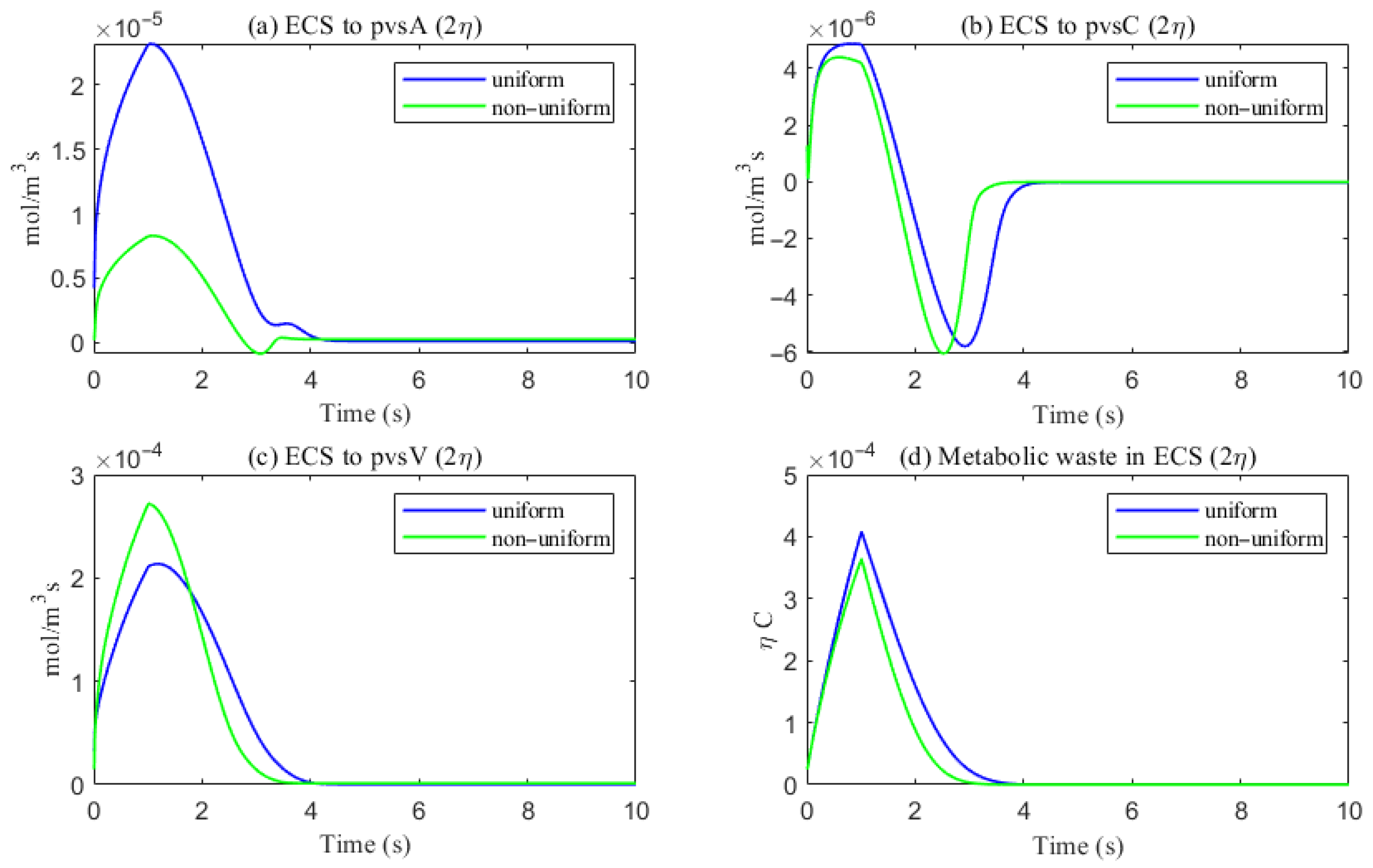
In this system, driven by osmotic–hydrostatic pressure differences, fluid enters the glial cells through AQP4 channels located on the astrocytic endfeet, causing the endfeet to swell. This swelling compresses the gaps between adjacent endfeet, thereby reducing the permeability between the PVS-A and the ECS. Subsequently, fluid flows out from the intracellular space into the PVS-V, leading to the retraction of the endfeet. The expansion of the gaps between adjacent endfeet enhances the permeability between the ECS and the PVS-V. This dynamic process more closely approximates real biological conditions. To investigate the impact of this mechanism on the clearance efficiency of metabolic waste in the system, in this section, we study it by simply varying the permeability coefficients between the PVS-A, PVS-V, and the ECS. A more accurate mathematical model describing this dynamic change will be elaborated in our future research. In this section, we consider the clearance process of metabolic waste in the system during sleep in the previous section as the uniform case. For the non-uniform case, we simulated the expansion and contraction of endfoot gaps by modifying the permeability of PVS-A and ECS, and PVS-V and ECS, to represent glial cell swelling and contraction, respectively. For uniform case, and , (). For non-uniform case, , and .
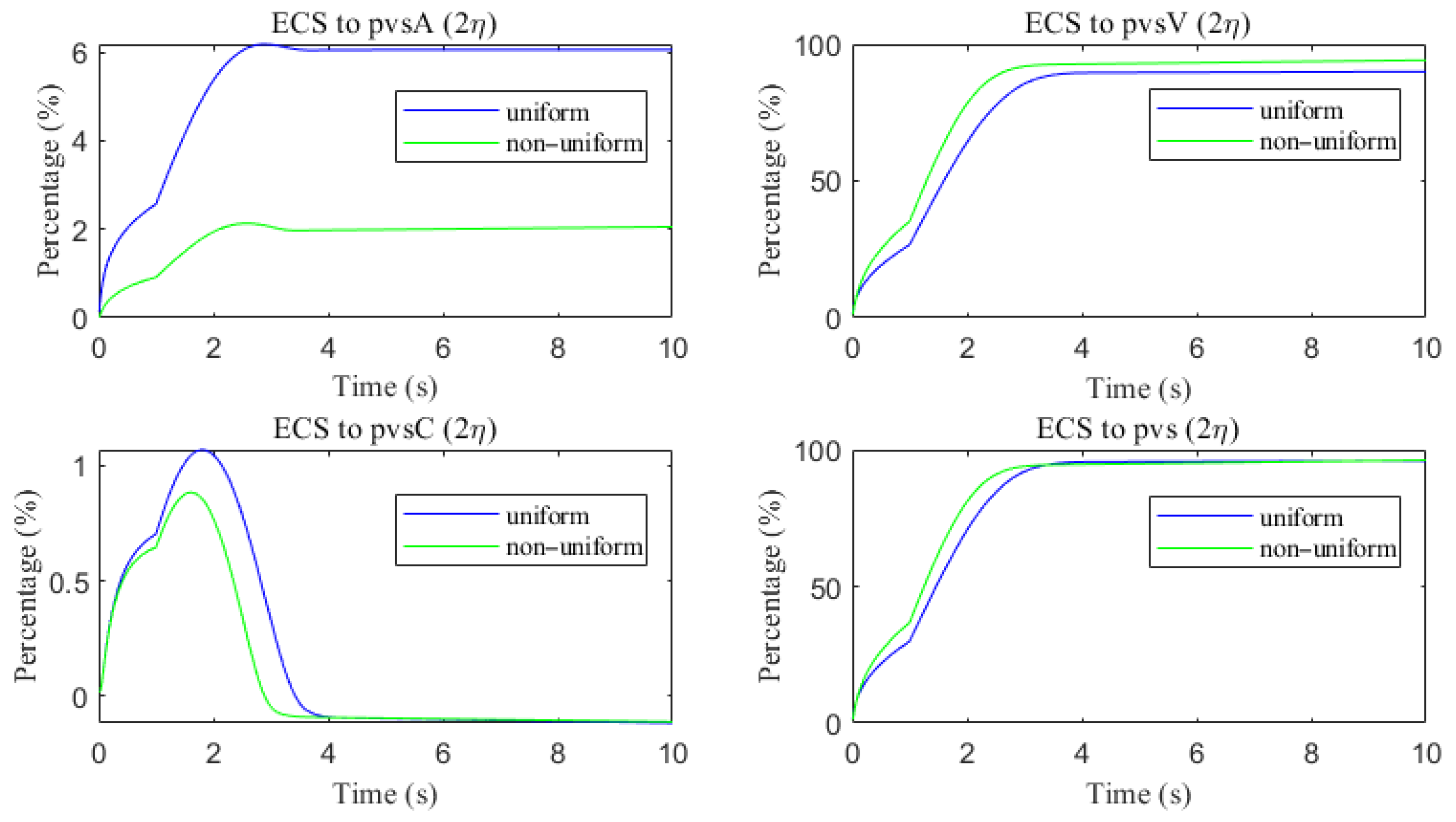
As shown in
Figure 22, a comparison of metabolic waste clearance efficiency between the uniform and non-uniform cases reveals that more metabolic waste is cleared through the PVS-V pathway (
Figure 22c), correspondingly reducing the amount cleared via the PVS-A pathway (
Figure 22a). Overall, the non-uniform case demonstrates higher total clearance efficiency, as illustrated in
Figure 22d.
Figure 23 shows the clearance percentage of
through the perivascular sapces. The PVS-V represents an important pathway for metabolic waste clearance.
6. Discussions and Conclusions
We developed a multidomain mechanistic model of optic nerve microcirculation that couples hydrostatic and osmotic fluid transport with electro-diffusive solute dynamics across axons, glia, extracellular space (ECS), and perivascular spaces (arterial, venous, and capillary: PVS-A/V/C). The model builds upon well-established electro-osmotic transport mechanisms observed in both animal and plant systems. It reproduces key features of glymphatic circulation, including cerebrospinal fluid (CSF) inflow from the subarachnoid space, trans-endfoot exchange into ECS and glia, and reconvergence within the venous PVS for clearance. Additionally, it captures transient responses to local ion stimuli, during which osmotic forces dynamically reshape intercompartmental flow profiles.
Our analysis highlights two key throughput modulators: AQP4-mediated fluid permeability and PVS permeability. Parameter sweeps show that reducing AQP4 expression suppresses radial exchange, elevates local pressure, and impairs solute clearance—particularly for species reliant on PVS-V drainage. Conversely, enhancing PVS permeability restores convective outflow and improves glymphatic efficiency. These findings quantitatively reinforce the importance of astrocytic water channel regulation and perivascular patency in CNS waste clearance.
We further examined solute-specific clearance kinetics and found that clearance route preference does not shift categorically by molecular size, but rather shows a continuum of coupling behavior. PVS-mediated export remains dominant for both small and moderate solutes, but the mechanisms differ. Small molecules such as A monomers diffuse rapidly in ECS and thus interact with a broader PVS interface, leading to faster clearance. In contrast, moderate and larger solutes such as tau monomers or small oligomers, with limited ECS diffusivity, rely more heavily on local trans-endfoot transfer before being carried by PVS-V convection. This reconciles experimental findings that report both PVS dominance and size-dependent transport timescales.
Our model also provides mechanistic insight into the sleep–wake effect. Simulations incorporating ECS volume expansion during sleep demonstrate enhanced transcompartmental exchange and faster clearance for small solutes, while moderate-size species show only modest improvement, due to their persistent diffusional limitations. These results support the hypothesis that glymphatic function is optimized during sleep and is size-selective in its benefits.
While this study is primarily mechanistic and exploratory, we believe the model offers a foundational framework for investigating fluid transport dysfunctions in the optic nerve under pathological conditions. For example, altered aquaporin-4 (AQP4) polarization, impaired perivascular drainage, or glial barrier disruption are implicated in diseases such as glaucoma and neuromyelitis optica. By systematically varying transport parameters and initial conditions, the model enables controlled in silico experiments that can guide hypotheses about clearance failure, edema formation, or therapeutic interventions. Although direct clinical applications require further experimental validation and disease-specific refinement, our approach provides a modular and extensible platform that can be calibrated using imaging or histological data in future translational studies.
Several limitations of this work should be acknowledged. The modeled transport repertoire includes only a subset of known ion channels and transporters, and biochemical processing—such as receptor-mediated uptake or enzymatic degradation—is not explicitly modeled. Aggregation kinetics, inflammation, and oxidative stress are excluded, and the current geometry is idealized for the optic nerve. Additionally, our representation of sleep is intentionally simplified: ECS volume expansion is imposed as a parameter rather than derived from coupled osmotic–mechanical feedback. These modeling choices improve tractability but limit quantitative generalization and mechanistic completeness in specific physiological or pathological scenarios.
Future work will integrate aggregation kinetics (LLPS, primary/secondary nucleation, fragmentation) with transport to link residence time to misfolding risk; incorporate cellular uptake pathways and BBB export explicitly; and couple the optic-nerve microcirculation to meningeal lymphatic dynamics and venous pressure regulation. Moving toward subject-specific three-dimensional geometries with data-driven calibration and uncertainty quantification (e.g., machine learning-assisted inference) should strengthen translational relevance to glaucoma, cerebral amyloid angiopathy, and Alzheimer’s disease, and guide interventions targeting AQP4 polarization, PVS patency, and sleep-dependent enhancement of clearance.
From a thermodynamic perspective, entropy production analysis offers a valuable framework for understanding energy dissipation and transport efficiency within the system. While passive transport processes inherently lead to an increase in system entropy, our model also incorporates active transport mechanisms—such as sodium–potassium pumps and pressure-driven flows—that introduce external energy input and thus break time-reversal symmetry. As a result, the system is not reversible. Nevertheless, analyzing the spatial and temporal distribution of entropy production remains essential for elucidating the driving forces and efficiency of energy and mass transport in neuroglia systems. We plan to incorporate this perspective more explicitly in future work.
Although we do not explicitly analyze hysteresis in this study, it is an important feature of many nonlinear biological systems and may emerge under cyclic or repeated stimuli. The presence of active regulation and nonlinear coupling between compartments suggests that memory-dependent behaviors are plausible. In future work, we will investigate both local entropy production and input–output hysteresis under dynamic conditions to better characterize the irreversible and history-dependent nature of neuroglia fluid transport.