Article

Tunable Non-Enzymatic Glucose Electrochemical Sensing Based on the Ni/Co Bimetallic MOFs

1
School of Pharmacy, Hubei University of Science and Technology, Xianning 437100, China
2
Hubei Key Laboratory of Radiation Chemistry and Functional Materials, Hubei University of Science and Technology, Xianning 437100, China
*
Authors to whom correspondence should be addressed.
Molecules 2023, 28(15), 5649; https://doi.org/10.3390/molecules28155649

Submission received: 30 June 2023 / Revised: 19 July 2023 / Accepted: 24 July 2023 / Published: 26 July 2023
(This article belongs to the Special Issue Metal Organic Frameworks (MOFs) for Sensing Applications)

Abstract

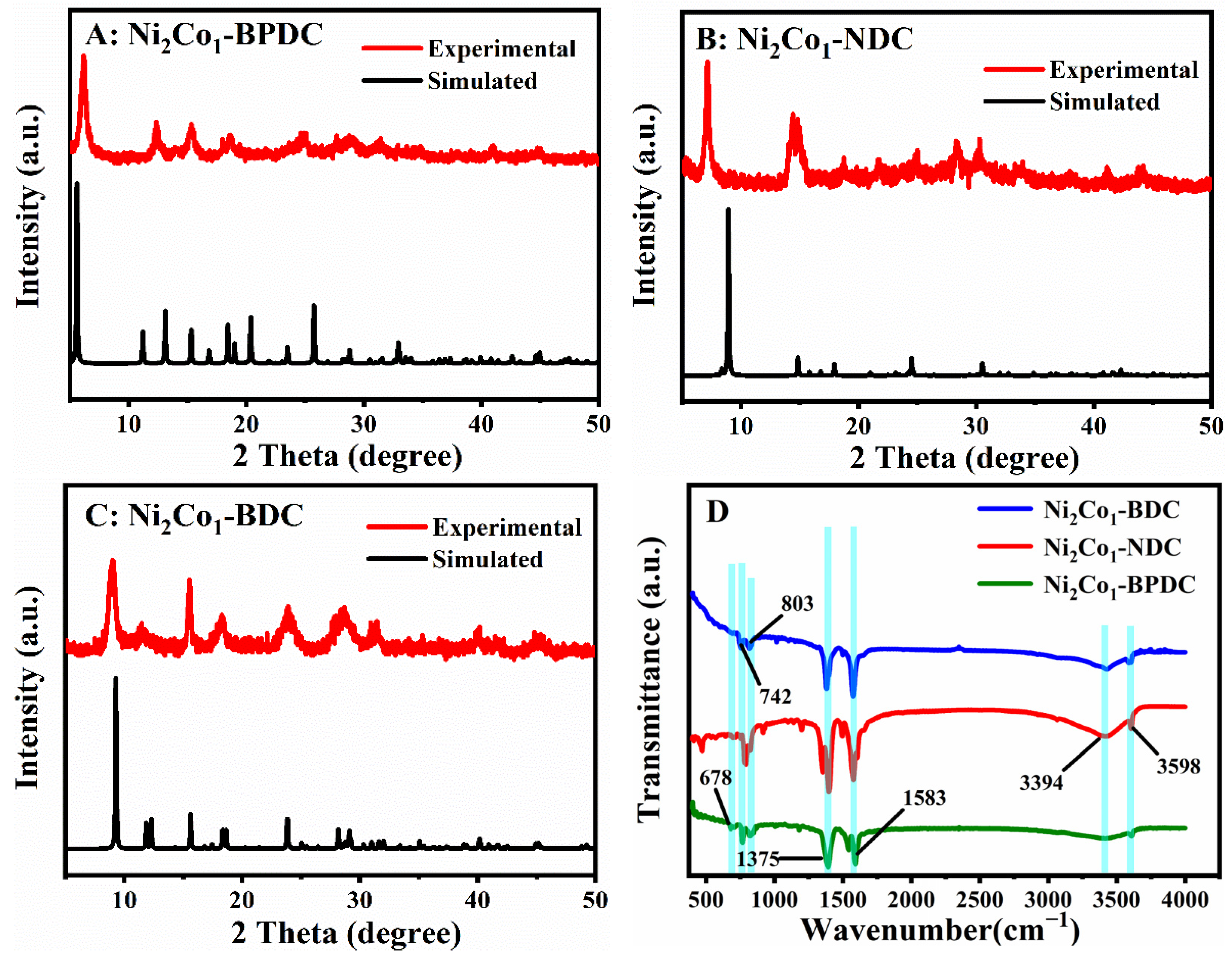
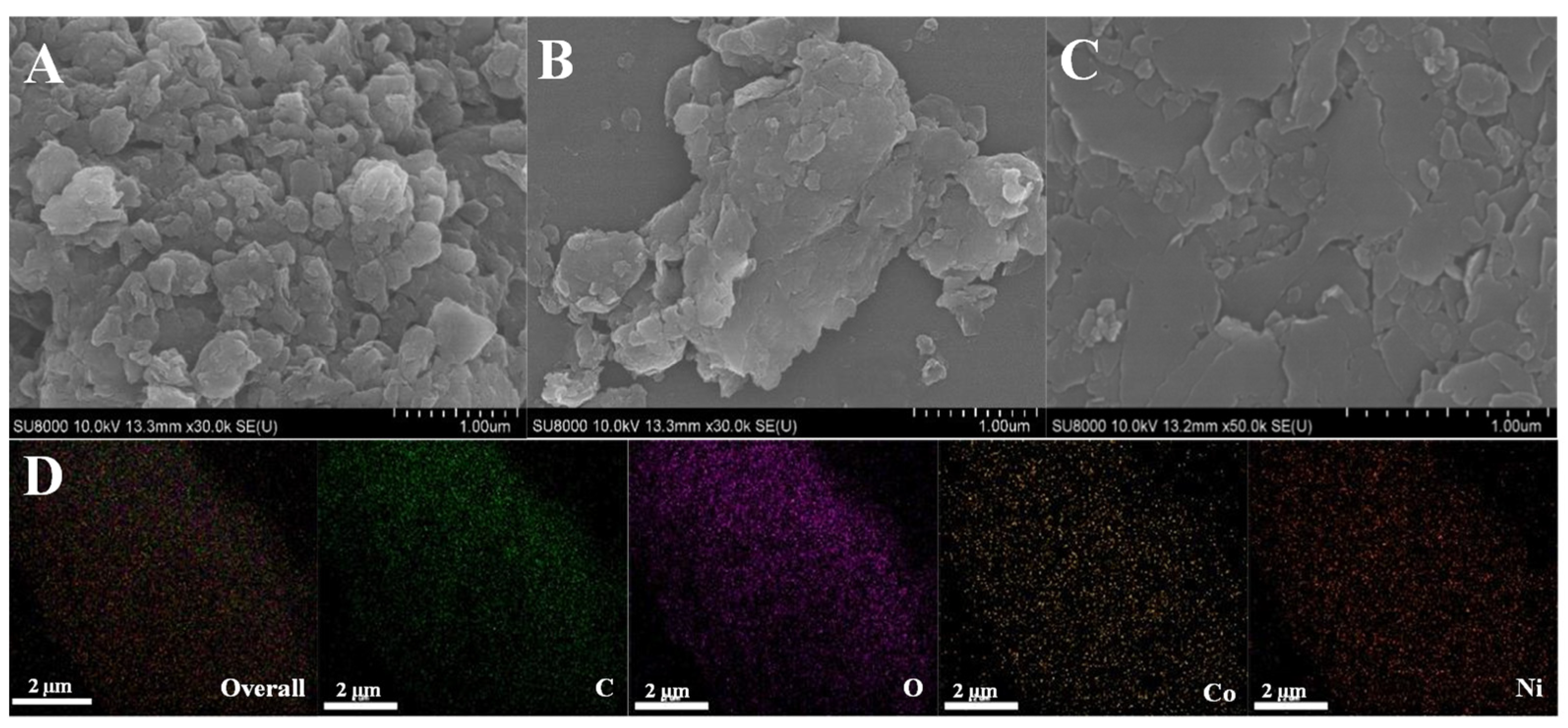
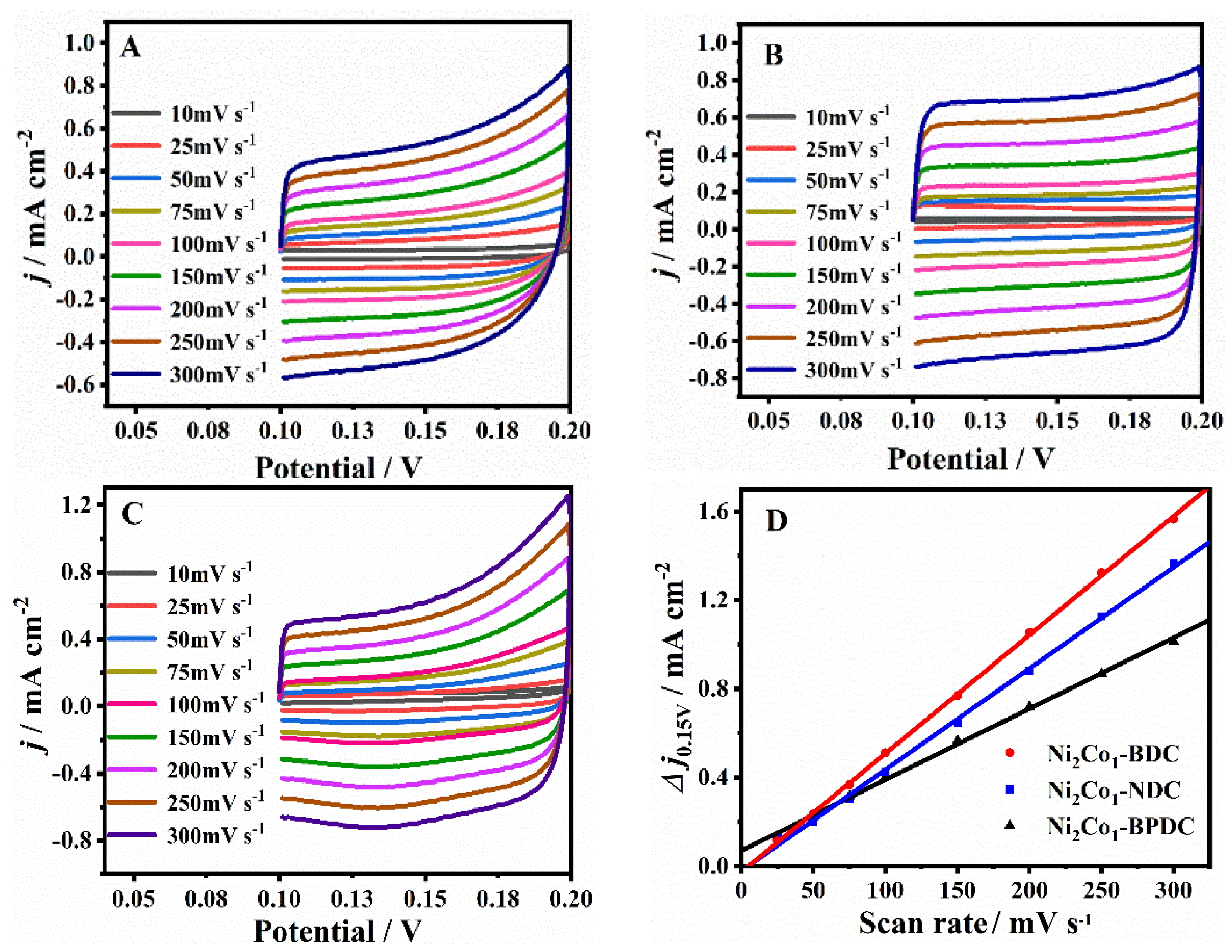
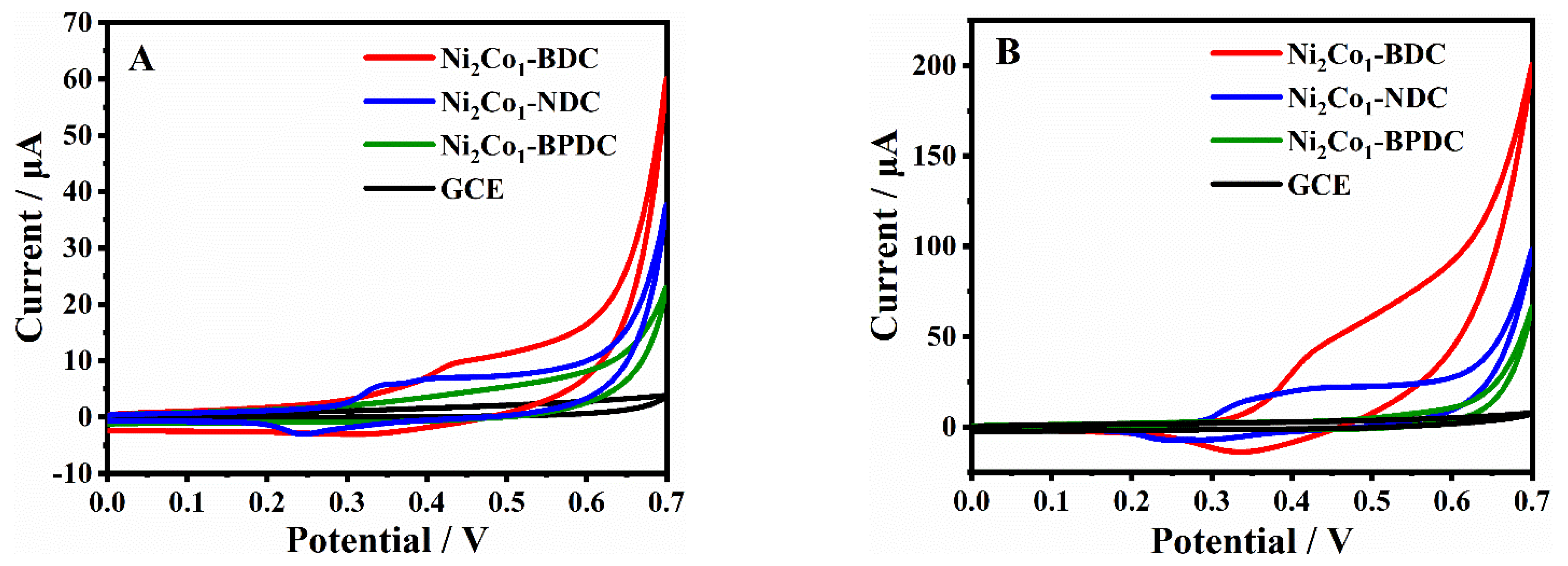
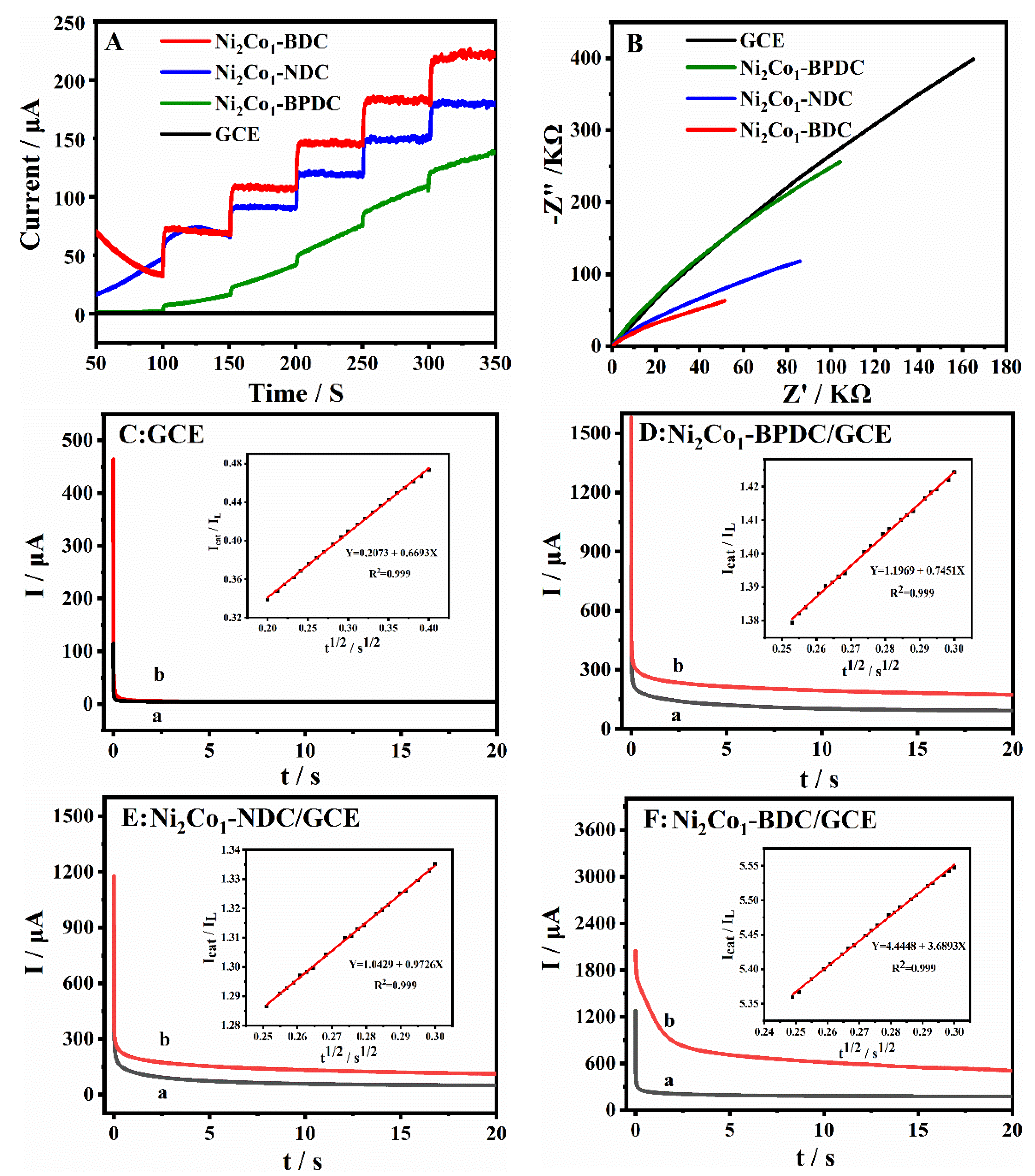
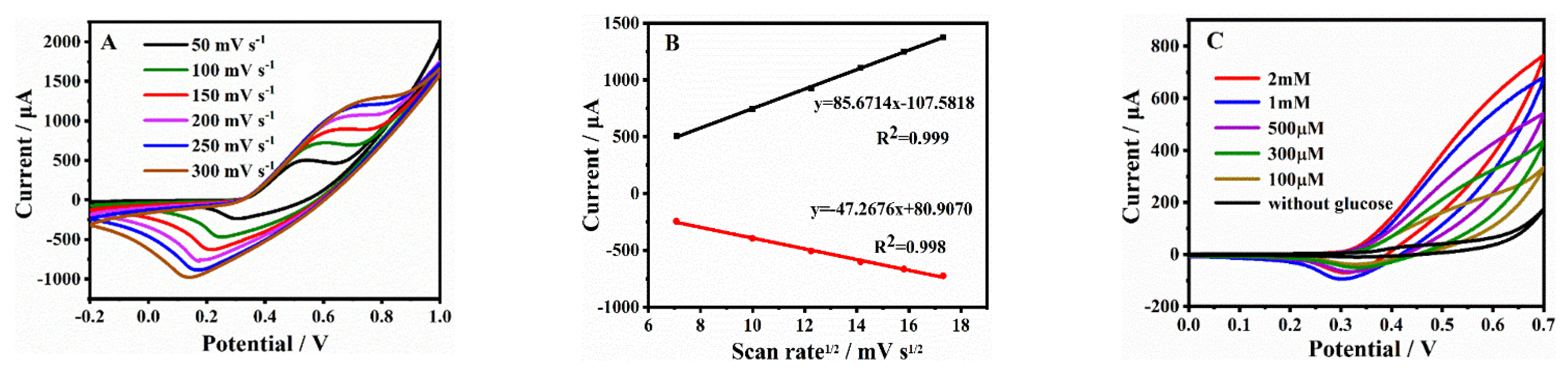
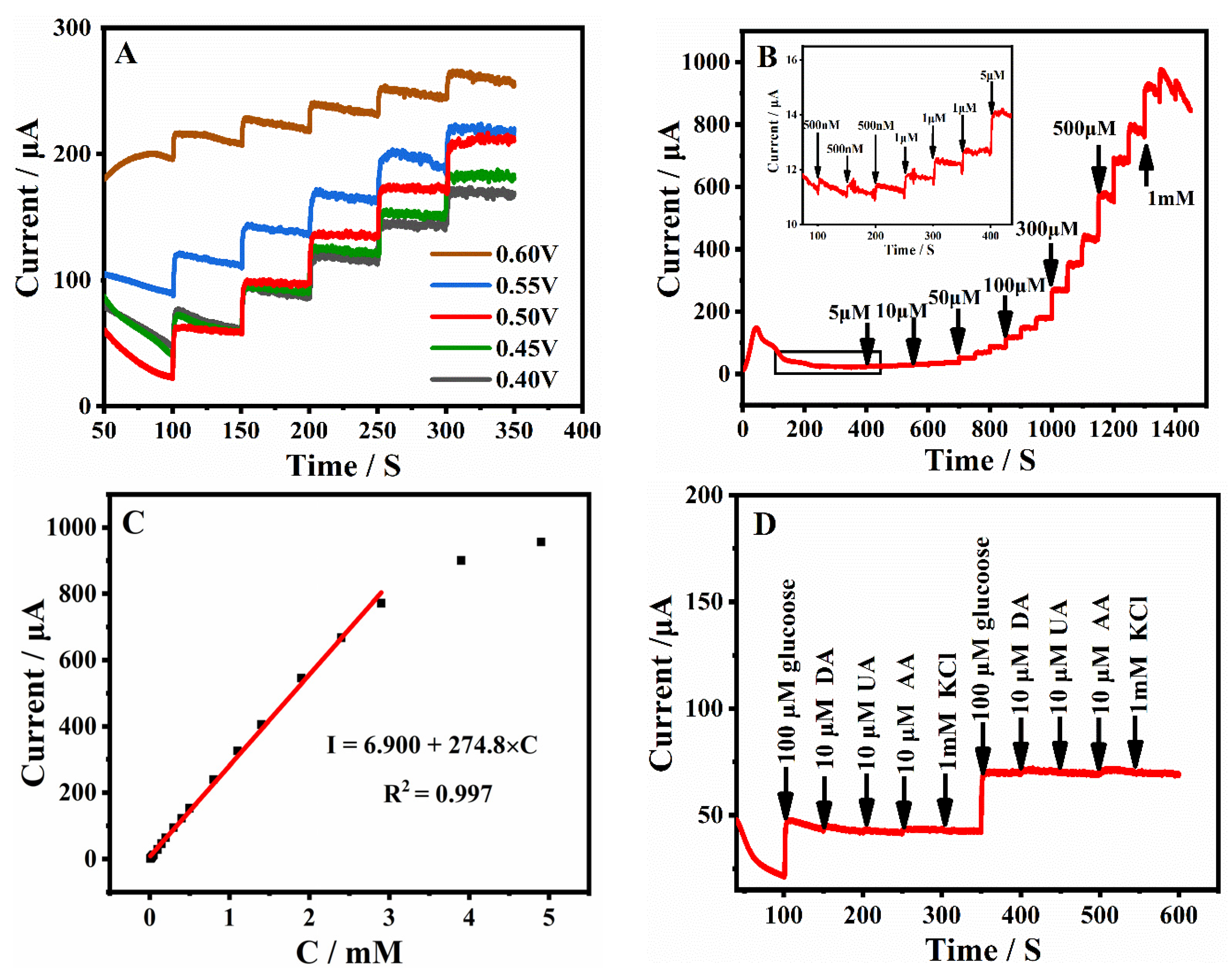
Constructing high-performance glucose sensors is of great significance for the prevention and diagnosis of diabetes, and the key is to develop new sensitive materials. In this paper, a series of Ni2Co1-L MOFs (L = H2BPDC: 4,4′-biphenyldicarboxylic acid; H2NDC: 2,6-naphthalenedicarboxylic acid; H2BDC: 1,4-benzenedicarboxylic acid) were synthesized by a room temperature stirring method. The effects of metal centers and ligands on the structure, compositions, electrochemical properties of the obtained Ni2Co1-L MOFs were characterized, indicating the successful preparation of layered MOFs with different sizes, stacking degrees, electrochemical active areas, numbers of exposed active sites, and glucose catalytic activity. Among them, Ni2Co1-BDC exhibits a relatively thin and homogeneous plate-like morphology, and the Ni2Co1-BDC modified glassy carbon electrode (Ni2Co1-BDC/GCE) has the highest electrochemical performance. Furthermore, the mechanism of the enhanced glucose oxidation signal was investigated. It was shown that glucose has a higher electron transfer capacity and a larger apparent catalytic rate constant on the Ni2Co1-BDC/GCE surface. Therefore, tunable non-enzymatic glucose electrochemical sensing was carried out by regulating the metal centers and ligands. As a result, a high-sensitivity enzyme-free glucose sensing platform was successfully constructed based on the Ni2Co1-BDC/GCE, which has a wide linear range of 0.5–2899.5 μM, a low detection limit of 0.29 μM (S/N = 3), and a high sensitivity of 3925.3 μA mM−1 cm−2. Much more importantly, it was also successfully applied to the determination of glucose in human serum with satisfactory results, demonstrating its potential for glucose detection in real samples.
Keywords: 2D MOFs; metal centers; ligands; tunable electrochemistry; glucose sensing 2D MOFs; metal centers; ligands; tunable electrochemistry; glucose sensing