Effects of Intravenous or Inhalation Anesthesia on Blood Glucose in Patients with Type 2 Diabetes Mellitus: A PRISMA-Compliant Systematic Review and Meta-Analysis


 , , ,
, , ,  and
and
Abstract
1. Introduction
2. Materials and Methods
2.1. Search Methods
2.2. Eligibility Criteria
2.3. Selection of Studies and Assessment of Risk of Bias
2.4. Data Extraction
2.5. Statistical Analysis
2.6. Grading of Quality of Evidence
3. Results
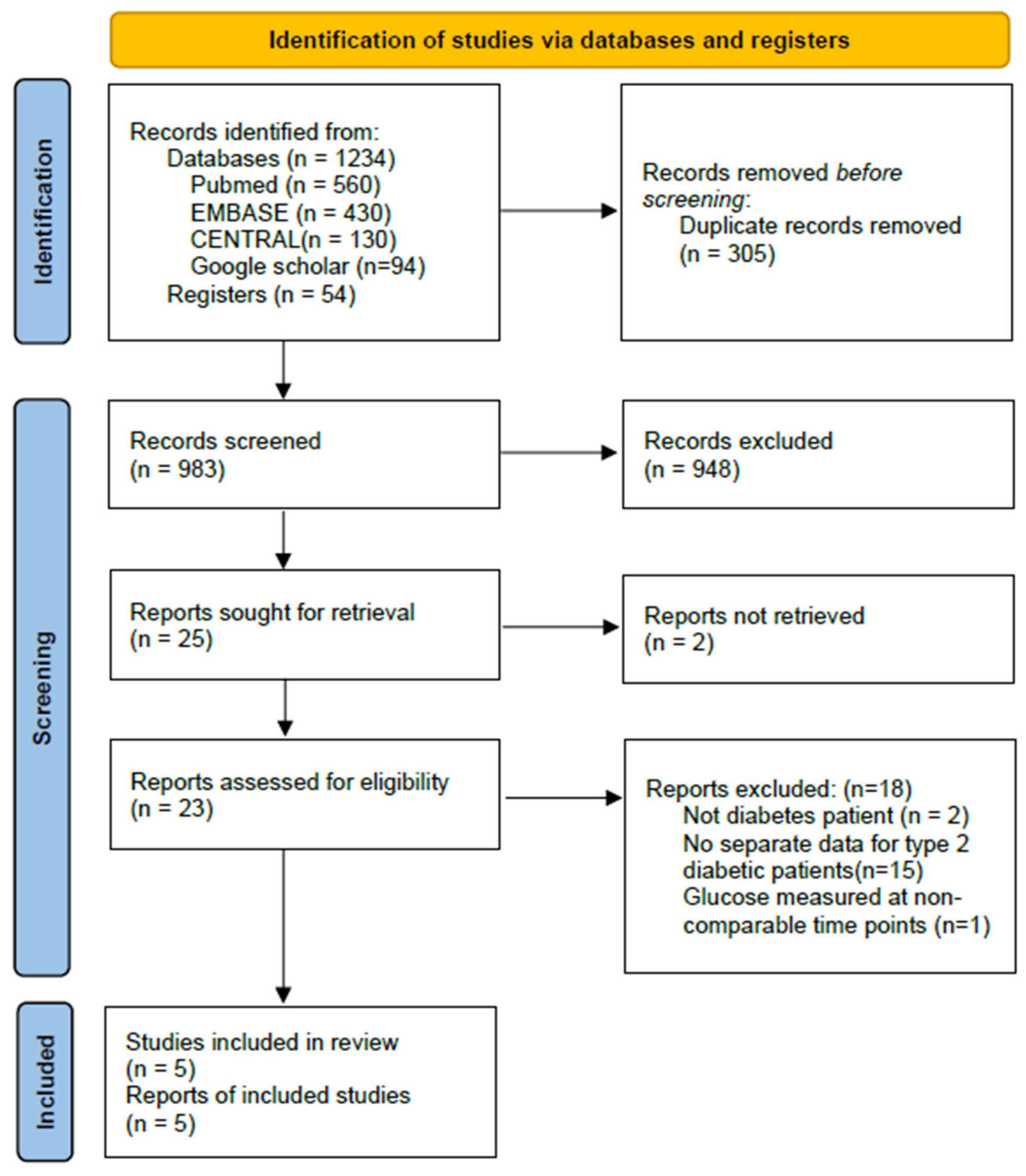
3.1. Results of the Search
3.2. Baseline Characteristics of Included Studies
3.3. Risk of Bias Assessment
3.4. Results of the Meta-Analysis
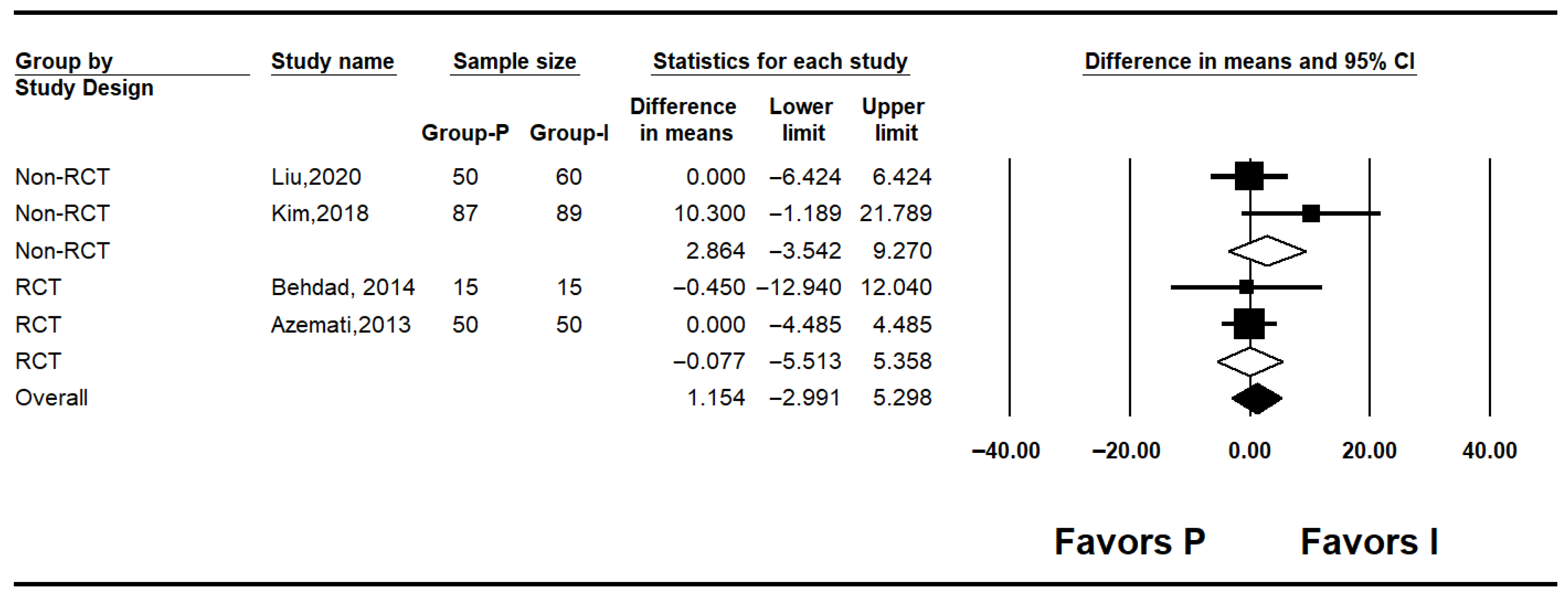
3.4.1. Baseline Blood Glucose Levels
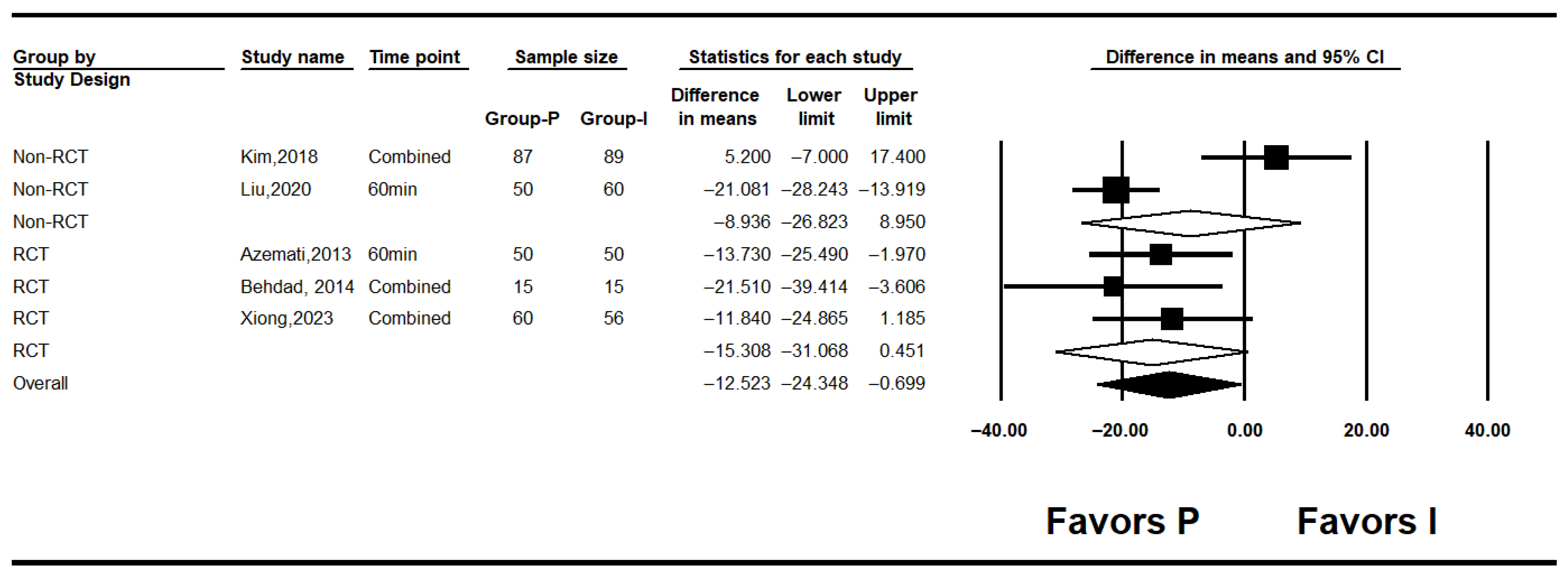
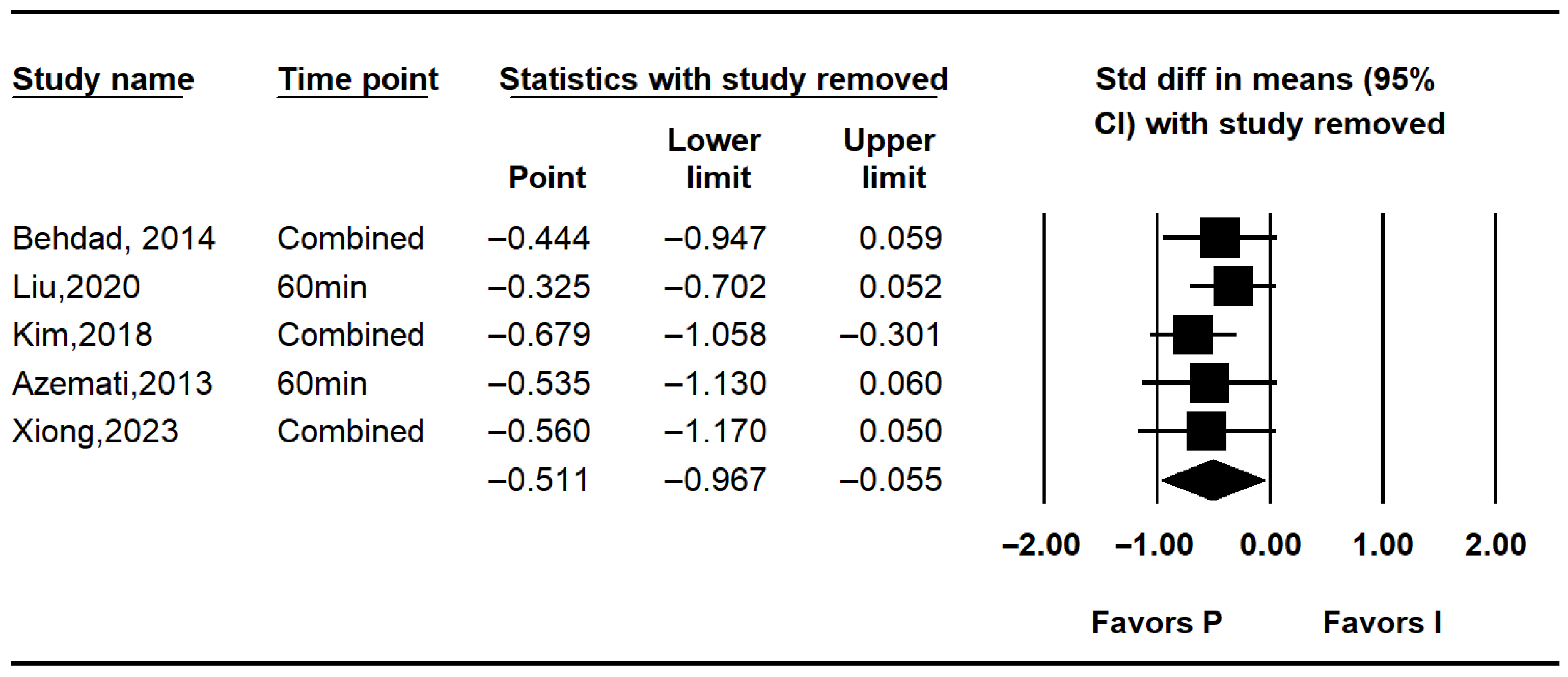
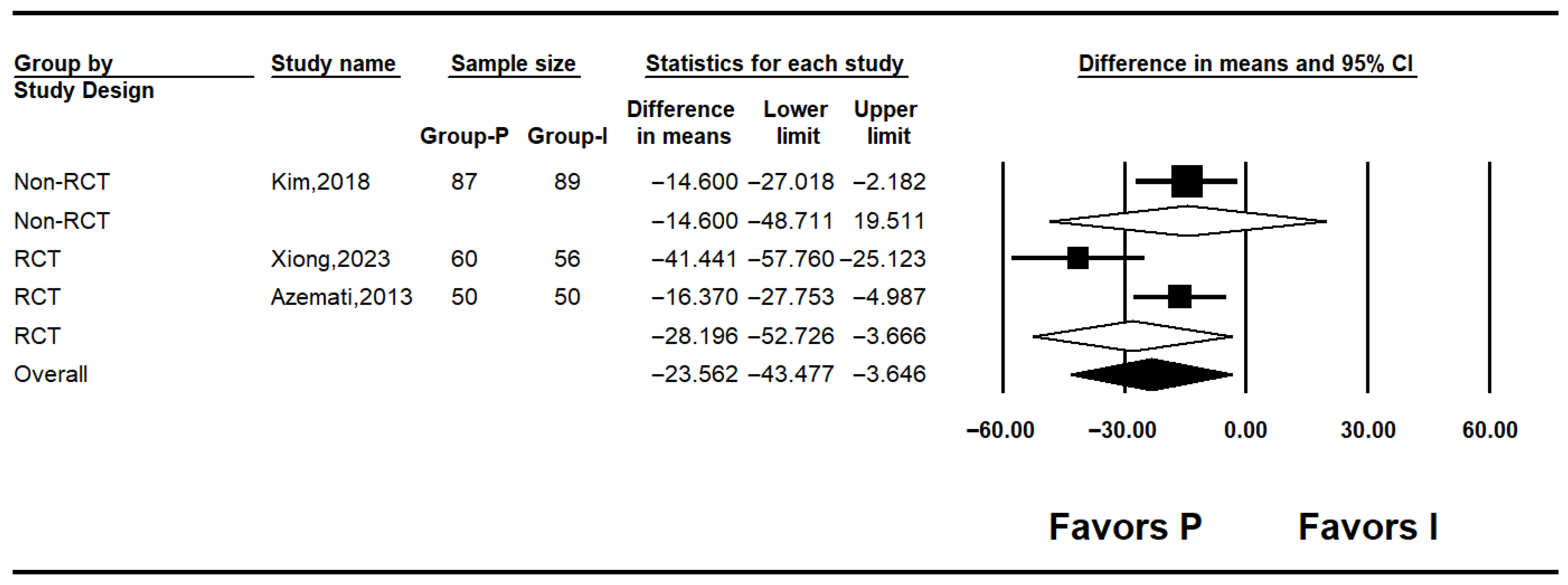
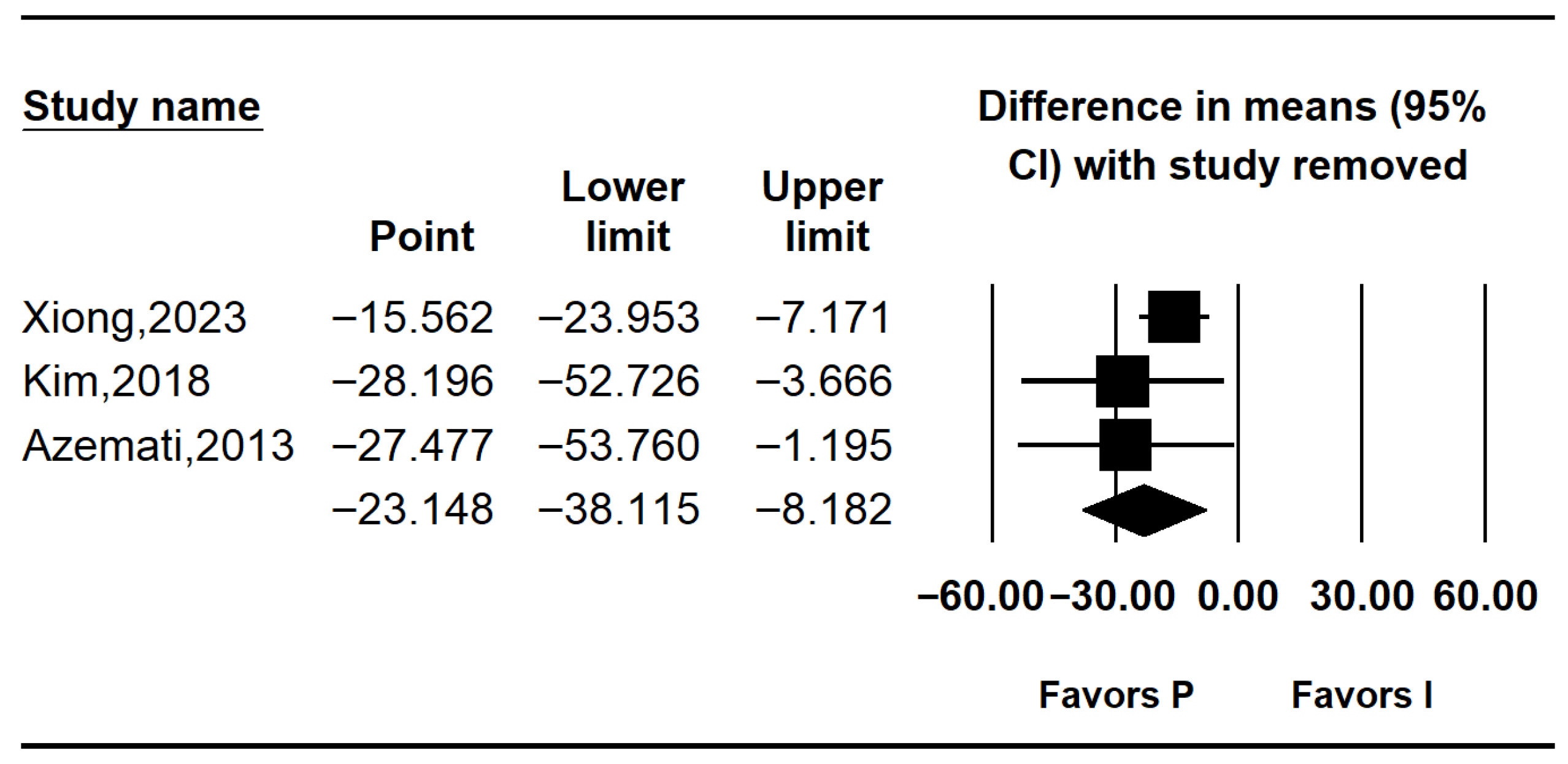
3.4.2. Intraoperative Blood Glucose Levels
3.4.3. Postoperative Blood Glucose Levels
3.5. Quality of the Evidence
4. Discussion
5. Conclusions
Author Contributions
Funding
Institutional Review Board Statement
Informed Consent Statement
Data Availability Statement
Acknowledgments
Conflicts of Interest
Abbreviations
| PM2.5 | Particulate matter |
| NHI | National Health Insurance |
| ORs | Odds ratios |
| CIs | Confidence intervals |
References
- Wang, L.; Gao, P.; Zhang, M.; Huang, Z.; Zhang, D.; Deng, Q.; Li, Y.; Zhao, Z.; Qin, X.; Jin, D.; et al. Prevalence and Ethnic Pattern of Diabetes and Prediabetes in China in 2013. JAMA 2017, 317, 2515–2523. [Google Scholar] [CrossRef] [PubMed]
- Underwood, P.; Askari, R.; Hurwitz, S.; Chamarthi, B.; Garg, R. Preoperative A1C and clinical outcomes in patients with diabetes undergoing major noncardiac surgical procedures. Diabetes Care 2014, 37, 611–616. [Google Scholar] [CrossRef] [PubMed]
- Subramaniam, B.; Lerner, A.; Novack, V.; Khabbaz, K.; Paryente-Wiesmann, M.; Hess, P.; Talmor, D. Increased glycemic variability in patients with elevated preoperative HbA1C predicts adverse outcomes following coronary artery bypass grafting surgery. Anesth. Analg. 2014, 118, 277–287. [Google Scholar] [CrossRef] [PubMed]
- Yeh, C.C.; Liao, C.C.; Chang, Y.C.; Jeng, L.B.; Yang, H.R.; Shih, C.C.; Chen, T.L. Adverse outcomes after noncardiac surgery in patients with diabetes: A nationwide population-based retrospective cohort study. Diabetes Care 2013, 36, 3216–3221. [Google Scholar] [CrossRef]
- Drayton, D.J.; Birch, R.J.; D’SOuza-Ferrer, C.; Ayres, M.; Howell, S.J.; Ajjan, R.A. Diabetes mellitus and perioperative outcomes: A scoping review of the literature. Br. J. Anaesth. 2022, 128, 817–828. [Google Scholar] [CrossRef]
- Shanks, A.M.; Woodrum, D.T.; Kumar, S.S.; Campbell, D.A., Jr.; Kheterpal, S. Intraoperative hyperglycemia is independently associated with infectious complications after non-cardiac surgery. BMC Anesth. 2018, 18, 90. [Google Scholar] [CrossRef]
- Behdad, S.; Mortazavizadeh, A.; Ayatollahi, V.; Khadiv, Z.; Khalilzadeh, S. The Effects of Propofol and Isoflurane on Blood Glucose during Abdominal Hysterectomy in Diabetic Patients. Diabetes Metab. J. 2014, 38, 311–316. [Google Scholar] [CrossRef]
- Tan, D.J.H.; Yaow, C.Y.L.; Mok, H.T.; Ng, C.H.; Tai, C.H.; Tham, H.Y.; Foo, F.J.; Chong, C.S. The influence of diabetes on postoperative complications following colorectal surgery. Tech. Coloproctol. 2021, 25, 267–278. [Google Scholar] [CrossRef]
- Crowley, K.; Scanaill, P.Ó.; Hermanides, J.; Buggy, D.J. Current practice in the perioperative management of patients with diabetes mellitus: A narrative review. Br. J. Anaesth. 2023, 131, 242–252. [Google Scholar] [CrossRef]
- Kim, H.; Han, J.; Jung, S.M.; Park, S.J.; Kwon, N.K. Comparison of sevoflurane and propofol anesthesia on the incidence of hyperglycemia in patients with type 2 diabetes undergoing lung surgery. Yeungnam Univ. J. Med. 2018, 35, 54–62. [Google Scholar] [CrossRef]
- Marik, P.E.; Bellomo, R. Stress hyperglycemia: An essential survival response! Crit. Care 2013, 17, 305. [Google Scholar] [CrossRef]
- Van Cromphaut, S.J. Hyperglycaemia as part of the stress response: The underlying mechanisms. Best. Pract. Res. Clin. Anaesthesiol. 2009, 23, 375–386. [Google Scholar] [CrossRef] [PubMed]
- Tanaka, K.; Kawano, T.; Tomino, T.; Kawano, H.; Okada, T.; Oshita, S.; Takahashi, A.; Nakaya, Y. Mechanisms of impaired glucose tolerance and insulin secretion during isoflurane anesthesia. Anesthesiology 2009, 111, 1044–1051. [Google Scholar] [CrossRef] [PubMed]
- Kitamura, T.; Ogawa, M.; Kawamura, G.; Sato, K.; Yamada, Y. The effects of sevoflurane and propofol on glucose metabolism under aerobic conditions in fed rats. Anesth. Analg. 2009, 109, 1479–1485. [Google Scholar] [CrossRef] [PubMed]
- Zuurbier, C.J.; Keijzers, P.J.M.; Koeman, A.; Van Wezel, H.B.; Hollmann, M.W. Anesthesia’s effects on plasma glucose and insulin and cardiac hexokinase at similar hemodynamics and without major surgical stress in fed rats. Anesth. Analg. 2008, 106, 135–142. [Google Scholar] [CrossRef]
- Tharp, W.G.; Breidenstein, M.W.; Friend, A.F.; Bender, S.P.; Raftery, D. The neuroendocrine stress response compensates for suppression of insulin secretion by volatile anesthetic agents: An observational study. Physiol. Rep. 2023, 11, e15603. [Google Scholar] [CrossRef]
- Cok, O.Y.; Ozkose, Z.; Pasaoglu, H.; Yardim, S. Glucose response during craniotomy: Propofol-remifentanil versus isoflurane-remifentanil. Minerva Anestesiol. 2011, 77, 1141–1148. [Google Scholar]
- Ihn, C.; Joo, J.; Choi, J.; Kim, D.; Jeon, Y.; Kim, Y.; Jung, H.; Kwon, S. Comparison of stress hormone response, interleukin-6 and anaesthetic characteristics of two anaesthetic techniques: Volatile induction and maintenance of anaesthesia using sevoflurane versus total intravenous anaesthesia using propofol and remifentanil. J. Int. Med. Res. 2009, 37, 1760–1771. [Google Scholar] [CrossRef]
- Shamseer, L.; Moher, D.; Clarke, M.; Ghersi, D.; Liberati, A.; Petticrew, M.; Shekelle, P.; Stewart, L.A.; PRISMA-P Group. Preferred reporting items for systematic review and meta-analysis protocols (PRISMA-P) 2015: Elaboration and explanation. BMJ 2015, 350, g7647. [Google Scholar] [CrossRef]
- Higgins, J.P.; Sterne, J.A.; Savovic, J.; Page, M.J.; Hróbjartsson, A.; Boutron, I.; Reeves, B.; Eldridge, S. A revised tool for assessing risk of bias in randomized trials. Cochrane Database Syst. Rev 2016, 10, 29–31. [Google Scholar]
- Choi, G.J.; Kang, H. Heterogeneity in meta-analyses: An unavoidable challenge worth exploring. Korean J. Anesth. 2025, 78, 301–314. [Google Scholar] [CrossRef] [PubMed]
- Kang, H. Statistical Considerations in Meta-Analysis. Hanyang Med. Rev. 2015, 35, 23–32. [Google Scholar] [CrossRef]
- Naing, C.; Aung, K.; Mak, J.W. Reporting ‘number needed to treat’ in meta-analyses: A cross-sectional study. J. Evid. Based Med. 2012, 5, 232–237. [Google Scholar] [CrossRef]
- Atkins, D.; Best, D.; Briss, P.A.; Eccles, M.; Falck-Ytter, Y.; Flottorp, S.; Guyatt, G.H.; Harbour, R.T.; Haugh, M.C.; Henry, D.; et al. Grading quality of evidence and strength of recommendations. BMJ 2004, 328, 1490. [Google Scholar] [CrossRef] [PubMed]
- Azemati, S.; Savai, M.; Khosravi, M.B.; Allahyari, E.; Jahanmiri, F. Combination of remifentanil with isoflurane or propofol: Effect on the surgical stress response. Acta Anaesthesiol. Belg. 2013, 64, 25–31. [Google Scholar]
- Xiong, X.; He, Y.; Zhou, C.; Zheng, Q.; Chen, C.; Liang, P. Impact of total intravenous anesthesia and total inhalation anesthesia as the anesthesia maintenance approaches on blood glucose level and postoperative complications in patients with type 2 diabetes mellitus: A double-blind, randomized controlled trial. BMC Anesth. 2023, 23, 267. [Google Scholar] [CrossRef]
- Liu, J.; Yang, L. Effects of propofol and sevoflurane on blood glucose, hemodynamics, and inflammatory factors of patients with type 2 diabetes mellitus and gastric cancer. Oncol. Lett. 2020, 19, 1187–1194. [Google Scholar] [CrossRef]
- Kitamura, T.; Kawamura, G.; Ogawa, M.; Yamada, Y. Comparison of the changes in blood glucose levels during anesthetic management using sevoflurane and propofol. Masui 2009, 58, 81–84. [Google Scholar]
- Wu, Y.; Zhang, L.; Yin, G.; Liu, Y.; Chen, L. Stress Response to Propofol versus Isoflurane Anesthesia in Patients Undergoing Gastric Surgery. J. Coll. Physicians Surg. Pak. 2019, 29, 201–204. [Google Scholar] [CrossRef]
- Tanaka, T.; Nabatame, H.; Tanifuji, Y. Insulin secretion and glucose utilization are impaired under general anesthesia with sevoflurane as well as isoflurane in a concentration-independent manner. J. Anesth. 2005, 19, 277–281. [Google Scholar] [CrossRef]
- Lattermann, R.; Schricker, T.; Wachter, U.; Georgieff, M.; Goertz, A. Understanding the mechanisms by which isoflurane modifies the hyperglycemic response to surgery. Anesth. Analg. 2001, 93, 121–127. [Google Scholar] [CrossRef]
- Akavipat, P.; Polsayom, N.; Pannak, S.; Punkla, W. Blood glucose level in neurosurgery. Is it different between isoflurane and desflurane anesthesia? Acta Med. Indones. 2009, 41, 121–125. [Google Scholar]
- Werzowa, J.; Pacini, G.; Hecking, M.; Fidler, C.; Haidinger, M.; Brath, H.; Thomas, A.; Säemann, M.D.; Tura, A. Comparison of glycemic control and variability in patients with type 2 and posttransplantation diabetes mellitus. J. Diabetes Complicat. 2015, 29, 1211–1216. [Google Scholar] [CrossRef]
- Tanaka, K.; Kawano, T.; Tsutsumi, Y.M.; Kinoshita, M.; Kakuta, N.; Hirose, K.; Kimura, M.; Oshita, S. Differential effects of propofol and isoflurane on glucose utilization and insulin secretion. Life Sci. 2011, 88, 96–103. [Google Scholar] [CrossRef]
- Kim, S.P.; Broussard, J.L.; Kolka, C.M. Isoflurane and Sevoflurane Induce Severe Hepatic Insulin Resistance in a Canine Model. PLoS ONE 2016, 11, e0163275. [Google Scholar] [CrossRef]
- Duncan, A.E. Hyperglycemia and perioperative glucose management. Curr. Pharm. Des. 2012, 18, 6195–6203. [Google Scholar] [CrossRef]
- Committee ADAPP. 16. Diabetes Care in the Hospital: Standards of Care in Diabetes-2025. Diabetes Care 2025, 48, S321–S334. [Google Scholar] [CrossRef]



| Author and Year | Type of Surgery | Study Design | Intervention Group | Control Group | ||
|---|---|---|---|---|---|---|
| Type of Anesthesia | Sample Size (n) | Type of Anesthesia | Sample Size (n) | |||
| Azemati, 2013 [25] | Gynecologic laparoscopy | RCT | Propofol + remifentanil | 50 | Isoflurane + remifentanil | 50 |
| Behdad, 2014 [7] | Abdominal hysterectomy | RCT | Propofol | 15 | Sevoflurane | 15 |
| Xiong, 2023 [26] | General | RCT | Propofol | 56 | Desflurane | 60 |
| Kim, 2018 [10] | Thoracic | Non-RCT | Propofol | 89 | Sevoflurane | 87 |
| Liu, 2020 [27] | Gastrointestinal | Non-RCT | Propofol | 60 | Sevoflurane | 50 |
| Risk of Bias Assessment of Randomized Controlled Trials Using RoB 2.0 | ||||||
|---|---|---|---|---|---|---|
| Study | Domain | |||||
| Randomization process | Deviations from intended interventions | Missing outcome data | Measurement of the outcome | Selection of the reported result | Overall Bias | |
| Azemati, 2013 [25] | Some concerns * | Low risk | Low risk | Low risk | Low risk | Some concerns |
| Behdad, 2014 [7] | Some concerns * | Low risk | Low risk | Low risk | Low risk | Some concerns |
| Xiong, 2023 [26] | Low risk | Low risk | Low risk | Low risk | Low risk | Low risk |
| Risk of Bias Assessment of Non-Randomized Studies Using RoBANS | ||||||
| Study | Domain | |||||
| Selection of participants | Confounding variables | Intervention measurement | Blinding of outcome assessment | Incomplete outcome data | Selective outcome reporting | |
| Kim, 2018 [10] | Low risk | Low risk | Low risk | Low risk | Low risk | Low risk |
| Liu, 2020 [27] | Unclear | Low risk | Low risk | Low risk | Low risk | Low risk |
| No of Studies | No of Patients | Quality Assessment | Quality | |||||
|---|---|---|---|---|---|---|---|---|
| ROB | Inconsistency | Indirectness | Imprecision | Publication Bias | ||||
| Baseline Blood Glucose Levels | 4 | 416 | Not serious | Not serious | Not serious | Serious † | NA | ⨁⨁⨁◯ Moderate |
| Intraoperative Blood Glucose Levels | 5 | 532 | Not serious | Serious * | Not serious | Serious † | NA | ⨁⨁◯◯ Low |
| Postoperative Blood Glucose Levels | 3 | 392 | Not serious | Serious * | Not serious | Serious † | NA | ⨁⨁◯◯ Low |
Disclaimer/Publisher’s Note: The statements, opinions and data contained in all publications are solely those of the individual author(s) and contributor(s) and not of MDPI and/or the editor(s). MDPI and/or the editor(s) disclaim responsibility for any injury to people or property resulting from any ideas, methods, instructions or products referred to in the content. |
© 2026 by the authors. Published by MDPI on behalf of the Lithuanian University of Health Sciences. Licensee MDPI, Basel, Switzerland. This article is an open access article distributed under the terms and conditions of the Creative Commons Attribution (CC BY) license.
Share and Cite
Yoon, S.M.; Kang, H.; Choi, Y.J.; Kim, S.H.; Jeong, S.; Jin, S. Effects of Intravenous or Inhalation Anesthesia on Blood Glucose in Patients with Type 2 Diabetes Mellitus: A PRISMA-Compliant Systematic Review and Meta-Analysis. Medicina 2026, 62, 128. https://doi.org/10.3390/medicina62010128
Yoon SM, Kang H, Choi YJ, Kim SH, Jeong S, Jin S. Effects of Intravenous or Inhalation Anesthesia on Blood Glucose in Patients with Type 2 Diabetes Mellitus: A PRISMA-Compliant Systematic Review and Meta-Analysis. Medicina. 2026; 62(1):128. https://doi.org/10.3390/medicina62010128
Chicago/Turabian StyleYoon, Sang Min, Hyun Kang, Yoon Ji Choi, Sang Hun Kim, Seongtae Jeong, and Sejong Jin. 2026. "Effects of Intravenous or Inhalation Anesthesia on Blood Glucose in Patients with Type 2 Diabetes Mellitus: A PRISMA-Compliant Systematic Review and Meta-Analysis" Medicina 62, no. 1: 128. https://doi.org/10.3390/medicina62010128
APA StyleYoon, S. M., Kang, H., Choi, Y. J., Kim, S. H., Jeong, S., & Jin, S. (2026). Effects of Intravenous or Inhalation Anesthesia on Blood Glucose in Patients with Type 2 Diabetes Mellitus: A PRISMA-Compliant Systematic Review and Meta-Analysis. Medicina, 62(1), 128. https://doi.org/10.3390/medicina62010128