


Abstract
Background: The aim of the present review was to assess the histological and histomorphometrical data from the paper published by our Laboratory on peri-implant bone in dental implants in different loading conditions. Methods: The papers published in different implant loading conditions, in dental implants retrieved from humans, and in the Hard Tissues Research Center of the University of Chieti-Pescara, Italy, were screened on MEDLINE/PubMed, Embase, Scopus, and other electronic databases until 31 December 2018. Only articles that reported the histological and histomorphometrical values of the Bone-Implant Contact (BIC) were selected. Results: The system selection provided a total of 155 papers. The manuscripts included for the narrative review were 57. These papers provided histological and histomorphometrical data. Conclusions: The bone remodeling around dental implants was found to be a dynamic process; loading changed the microstructure of the peri-implant bone; and implants were found to provide a successful function, over several decades, with different range of degrees of BIC in vivo (varying from a little more than 30% to a little more than 90%). Loaded implants presented a 10%–12% higher BIC values when compared to submerged, unloaded implants, and rougher surfaces had, on average, about a 10% higher BIC than machined surfaces.
1. Introduction
A Retrieval Bank for Implants and Biomaterials has been active since the late 80s in the Hard Tissues Research Center of the University of Chieti-Pescara in Italy. Specimens of human retrieved implants, due to different causes, have been continuously received over the last three decades, numbering now several thousands. A retrieval bank has, probably, a great scientific and clinical relevance for researchers, clinicians, and patients. The histological and histomorphometrical evaluation of such a large number of specimens could help in answering some very important questions, i.e., understanding the causative mechanisms of failing and failed implants, the relationship between implant loading and the presence or absence of mineralized tissues at the interface, and the minimum amount of bone-to-implant contact necessary to get the clinical result of osseointegration.
Bone remodeling is a prerequisite for osseointegrated dental implants to support functional loading in the long term [1,2,3,4,5,6,7,8,9,10]. Moreover, the functional loading of dental implant represents a key factor for bone development and maturation [11,12]. The continuous modification of the bone tissue around dental implant under loading results in a sequela of physiological and dynamic adaptations that involve the regional anatomy at macro- and microscopic levels [13,14,15], influencing also the response of the marginal peri-implant tissues components and collagen fibers orientation [16,17,18].
The histological characterization of osseointegration is important for a deeper understanding of bone bonding to the implant surface [19] and their capability to maintain the crestal bone level [20]. On the contrary, osseointegration can be determined only with histology, showing a bone to implant intimate contact [12]. Moreover, the evaluation, in humans, of the in vivo short- and long-term behavior of the bone tissue around dental implants in loaded and unloaded conditions could represent a substantial help in improving the long term prognosis of dental implants [11]. The value of bone-to-implant contact (BIC) plays a pivotal role in long-standing implant survival and success [7]. In a systematic review of the literature pertaining to the amount of BIC reported in retrieved dental human implants, it was found that conventionally loaded implants had a higher BIC than unloaded and immediately loaded implants, that the BIC of implants retrieved from the mandible was about 25% higher than those removed from the maxilla, that the BIC was 10% higher in the anterior when compared with the posterior mandible, and that the BIC was 25%–30% approximately higher in the anterior maxilla [7]. The received retrieved implant specimens were removed for different causes: implant fractures, psychological reasons, change of prosthetic restauration, autopsy cases, hygienic problems, and prosthetic failures. Other human samples were part of larger histological studies. The possibility to evaluate human specimens with an intact bone-implant interface could help in better understanding, e.g., of the relationship between immediate loading and the peri-implant bone response.
The aim of this narrative review was to evaluate the effect of different loading conditions, their histological/histomorphometrical evidences, and BIC findings on retrieved implants in partial or complete oral rehabilitation procedures over a 3-decade time period. The primary outcome was the percentage of bone-implant contact (BIC). A comparison was done about the different BIC values of retrieved implants.
2. Materials and Methods
A retrospective evaluation of all publications produced in our Laboratory in the last 3 decades was performed (M.T.), where the papers dealing with the loading of retrieved human implants were selected for the present narrative review.
2.1. Search Strategy
The listed PICO question, that stay for Problem/Patient/Population, Intervention /Indicator, Comparison, Outcome, was used in the present systematic search strategy: “In histological human studies, what was the outcome of retrieved loaded implants compared to unloaded retrieved implants?”.
A narrative literature review was performed on MEDLINE/PubMed, Embase, Scopus, and electronic databases through the keywords “Piattelli A AND Dental Implant AND Loading” as the search paradigm with no restrictions regarding publication date. The end of the search date was 31 December 2018. The study pool was then restricted only to histological studies in which BIC values were reported.
2.2. Inclusion Criteria
In vivo studies assessing the outcome of histological evaluation of human dental implant loading were included. On the contrary, in vitro studies, animal studies, reviews, and studies with only clinical and radiological evaluation were excluded. Moreover, no limitations about the type of prosthetic connection were applied to the search.
2.3. Selection of the Studies
The search data and papers selection were performed independently by two expert reviewers (M.T. and G.I.) providing a special designed electronic data form, which ensured systematic recording of data. For not available abstracts, the paper full text was obtained and evaluated. The publications not conforming to the study selection criteria were excluded. Moreover, the full text of all eligible articles was obtained and checked for inclusion criteria. For the excluded research articles, a report was performed about the reasons for exclusion.
2.4. Data Extraction
The study data from included articles were extracted, collected, and evaluated. The statistical analysis was not performed due to the methodological variabilities and the different intervention sites of the studies included into the investigation.
3. Results
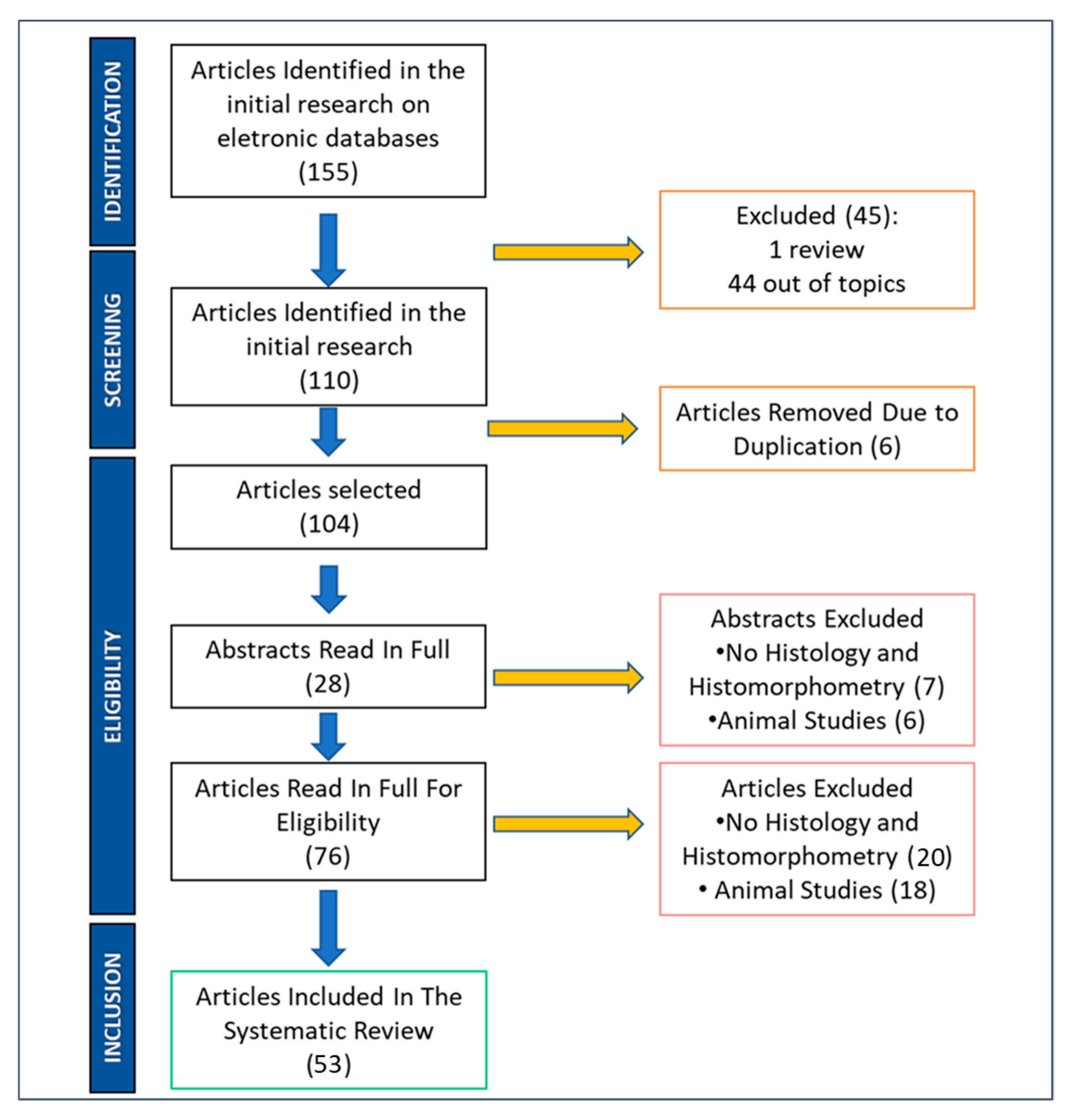
The electronic search procedure is presented in Figure 1, where the database analyses generated a total of 155 manuscripts. In this way, a title and abstract evaluation was performed in order to restrict the research field. In total, 45 articles were excluded: 1 was a review, 44 were non-pertinent to the topic, and 6 papers were removed due to duplication.
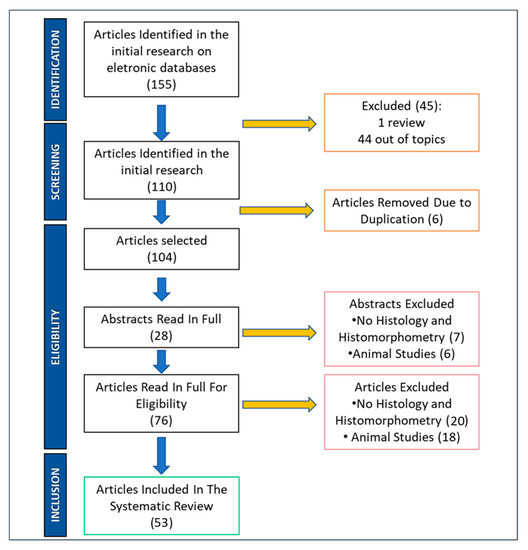
Figure 1.
PRISMA Flow chart diagram of the study design and manuscript-selection process.
Moreover, a total of 23 papers were excluded because no histological and histomorphometrical analysis were performed, and a total of 24 papers were excluded because they were a nonhuman study.
At the end of the procedure, 53 articles satisfied the inclusion criteria and were included in this narrative review analysis for a total of 482 implants and 420 patients (Table 1). A total of 402 loaded and 80 unloaded implants were evaluated in the present review for a total of 1099 months of permanence in the oral cavity (mean: 2.28 months per implant) and a total of 982 months of cumulative loading period (mean: 2.03 months per implant).

Table 1.
Summary of the research studies characteristics evaluated in the investigation: The implant loading protocol and the total loading time were presented in the table.
The main characteristics of the loading protocol, implant characteristics, study outcome, and follow-up time have been summarized in Table 1. The time of service of the evaluated implants was between 4 weeks and 30 years, with a mean of 7–8 years. The reasons for retrieval were abutment fracture and other prosthetic problems in about 65% of the samples; implant fracture in about 25%; and change of prosthetic programs, hygienic problems, esthetic and orthodontic reasons, an psychological causes in about the remaining 10%. The retrieved implants were supporting a bridge in about 80% of the cases, while single implants supporting single crowns accounted for about 20% of the specimens.
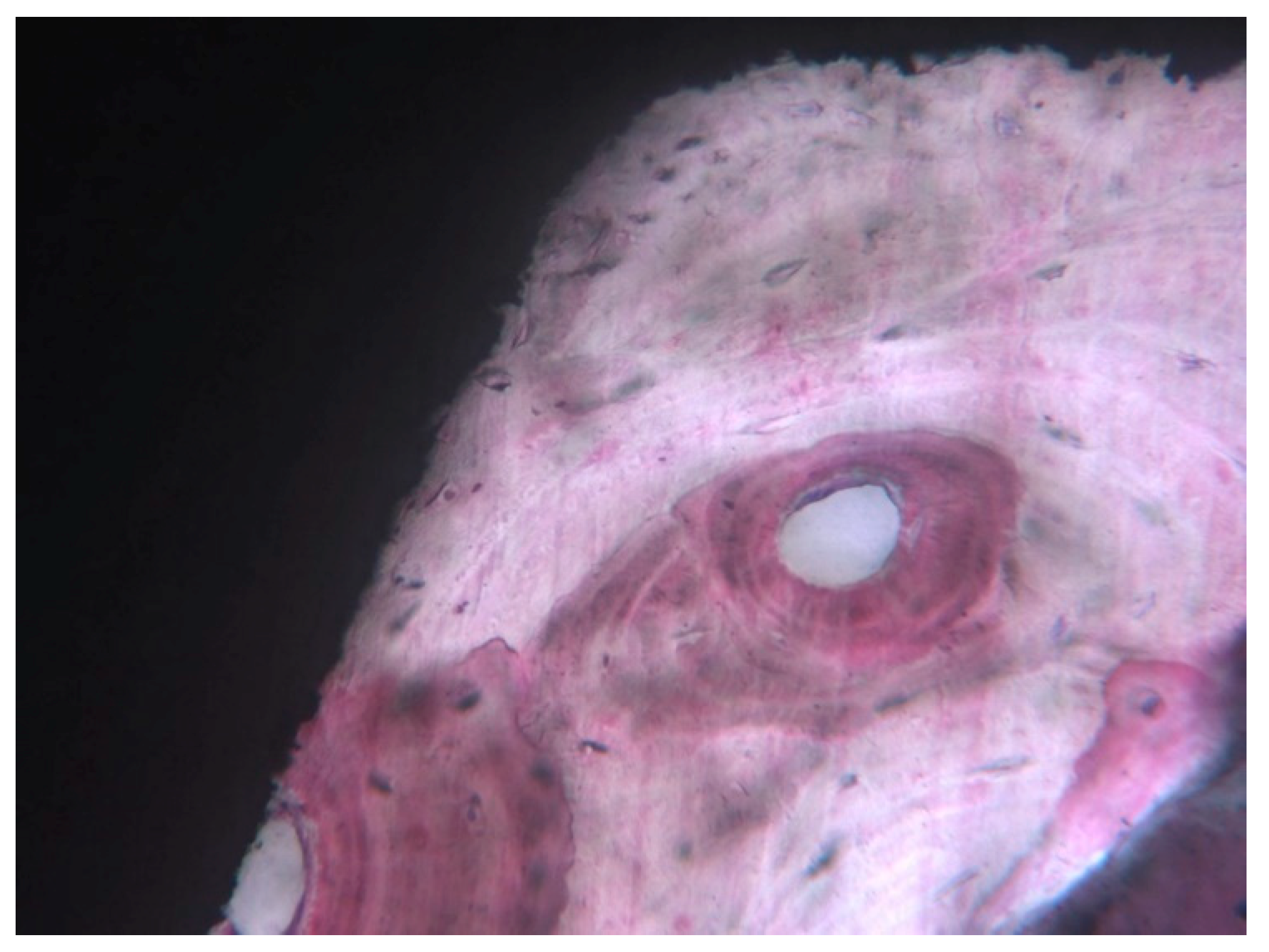
Most of the present histological studies on human specimens, retrieved for different causes, found compact, lamellar bone with many Haversian systems and osteons near the implant surface with a very high BIC (60%–90%) [22,23,24,25,26,27,28,29,30,31,32,33,34,35,36,37,39,40,41,42,43,44,48,49,51,53,54,55,57,59,60,65,66,67,68,69,70,72,73,74]. In a few implants, a lower BIC value, between 30% and 40%, was found. No differences were found in the BIC values in the implants retrieved for different causes. Mainly, loaded implants presented a 10%–12% higher BIC when compared with not loaded, submerged implants. A higher BIC, about 10%–12%, was reported for immediately loaded implants [38,45,46,65] (Figure 2).
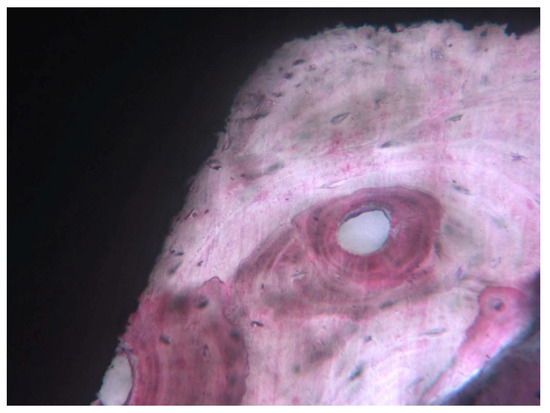
Figure 2.
At high magnification, lamellar bone with Haversian canals were present inside the threads, in close proximity to the interface. Implant retrieved for fracture after 20 years of service: The implant supported a bridge. Courtesy of Dr. Carlo Mangano (toluidine blue and acid fuchsin staining, magnification 200×).
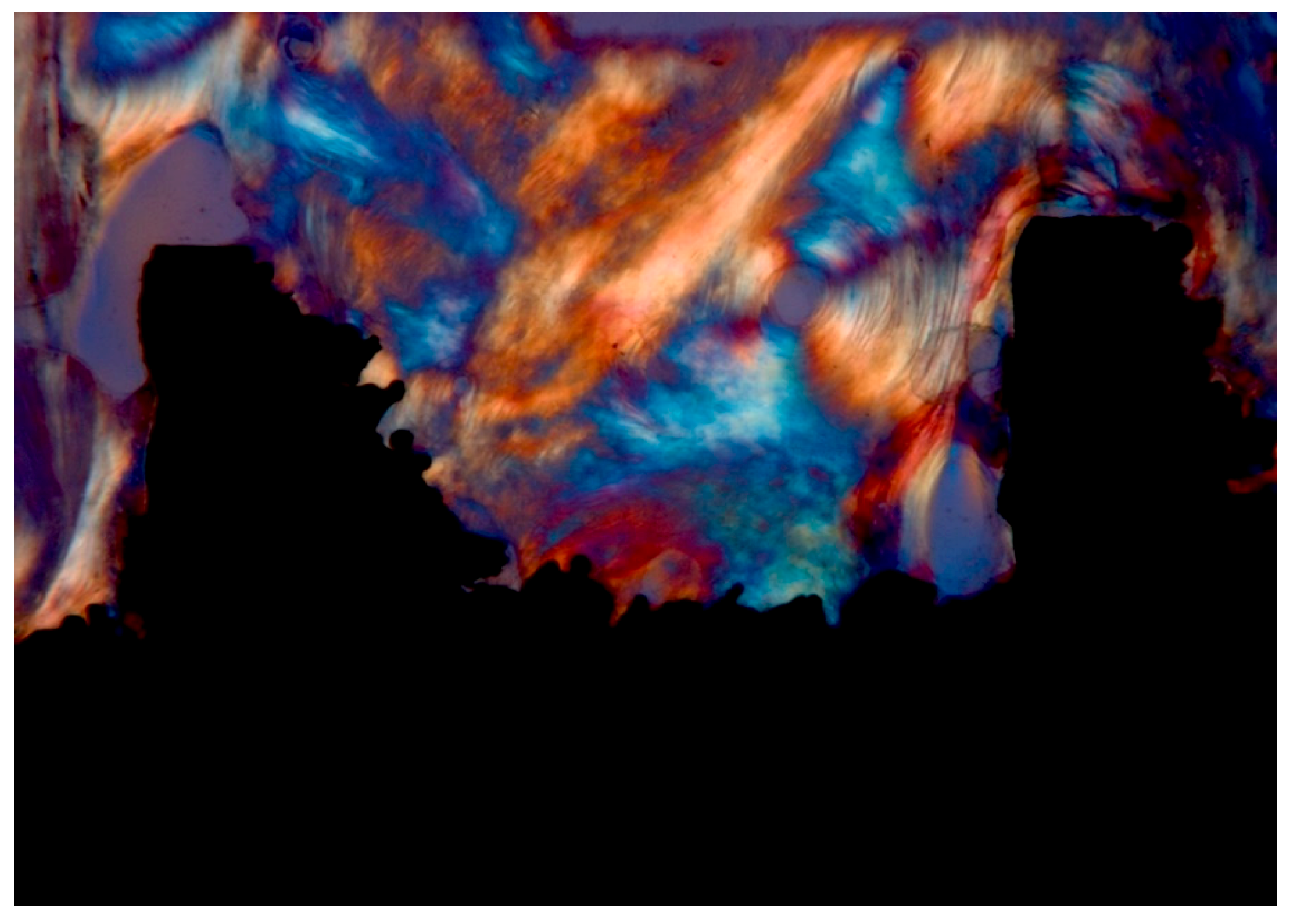
In loaded implants, transverse collagen fibers of the bone tissue were more abundant, while in unloaded implants, these collagen fibers of the bone tissue tended to run in a more longitudinal way (Figure 3).
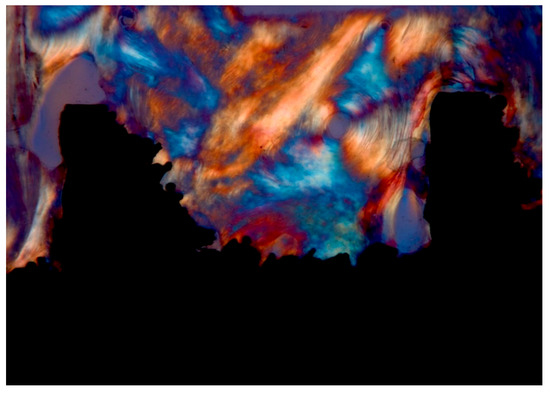
Figure 3.
Transverse collagen fibers near an implant thread, under Compensated polarized light (CPL) microscopy: An osteon was present inside a thread. Implant retrieved for fracture after 8 years loading period: Single implant. Courtesy of Dr. Carlo Mangano. (toluidine blue and acid fuchsin staining, magnification 40×).
Bone was particularly thickened around the top of the threads [73]. The main portion of these retrieved implants presented a rough surface (Figure 4), mostly sandblasted, sandblasted and acid-etched, or acid-etched surface.
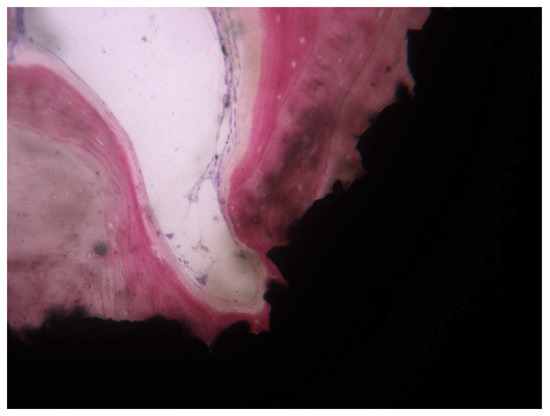
Figure 4.
Compact, mature, and lamellar bone was in tight contact with the implant surface and adapted to all its microirregularities.Implant retrieved for esthetic reasons after 4 years loading time: The implant supported a bridge. Courtesy of Prof. Giovanna Iezzi and Prof. Adriano Piattelli (toluidine blue and acid fuchsin staining, magnification 100×).
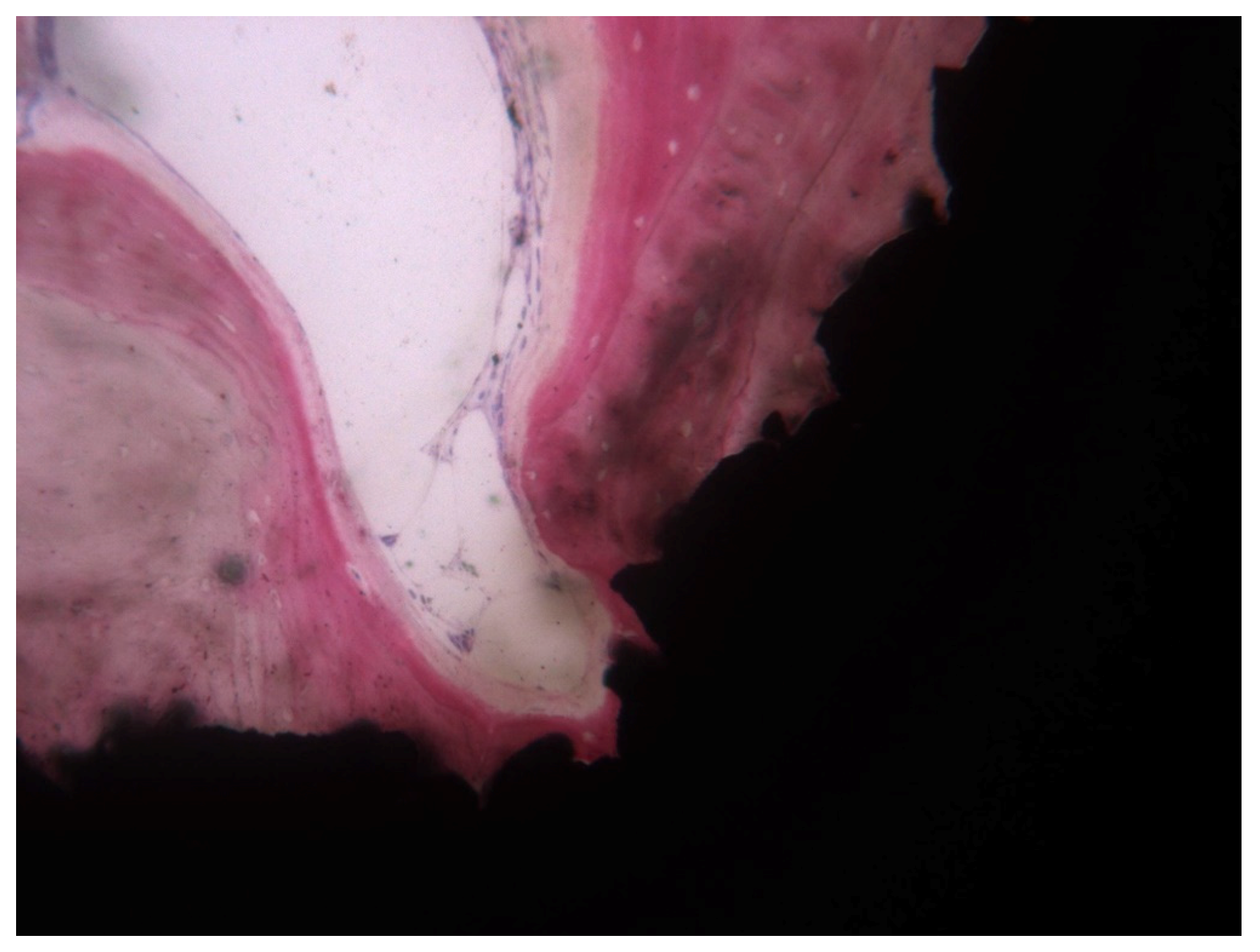
Only rarely were present machined surfaces. Rougher surfaces had, on average, about a 10% higher BIC than machined surfaces. Multiple remodeled regions representing many remodeling cycles over the years were found (Figure 5).
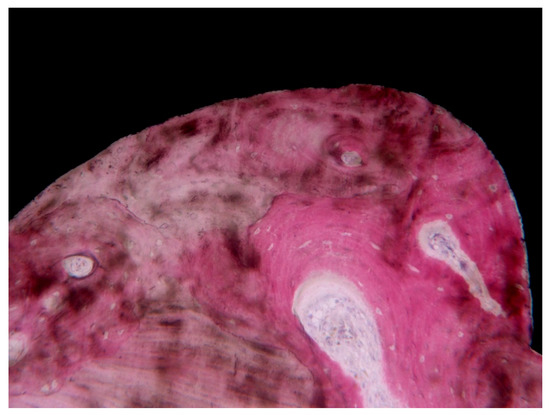
Figure 5.
Bone remodeling areas and marrow spaces were present near the implant surface: No gaps were evident at the interface. A rim of osteoblasts making new osteoid matrix on the implant surface was evidenced. Implant was retrieved for a change in the prosthetic design after 22 years. The implant supported a bridge. Courtesy of Dr. Carlo Mangano (toluidine blue and acid fuchsin staining, magnification 100×).
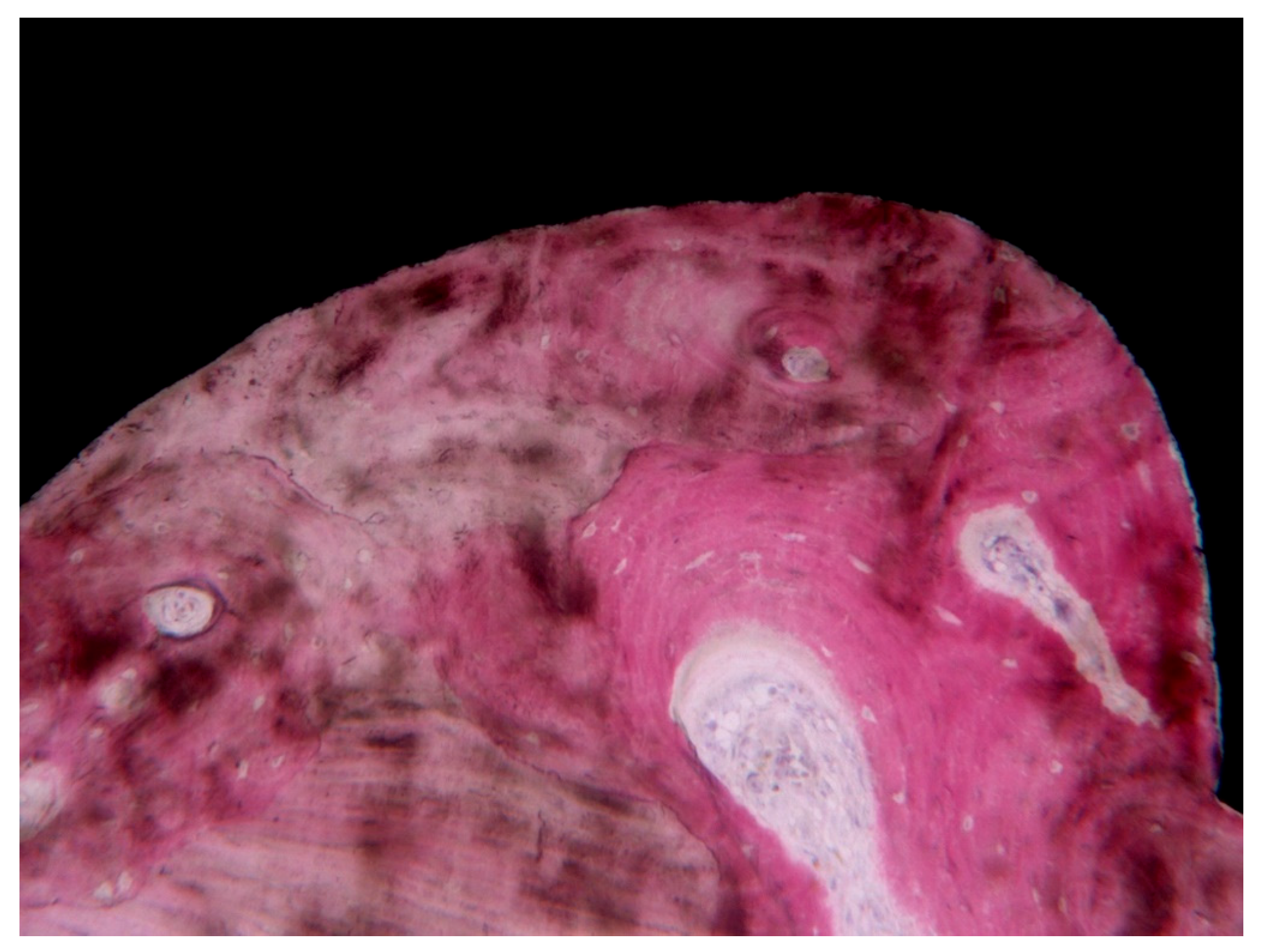
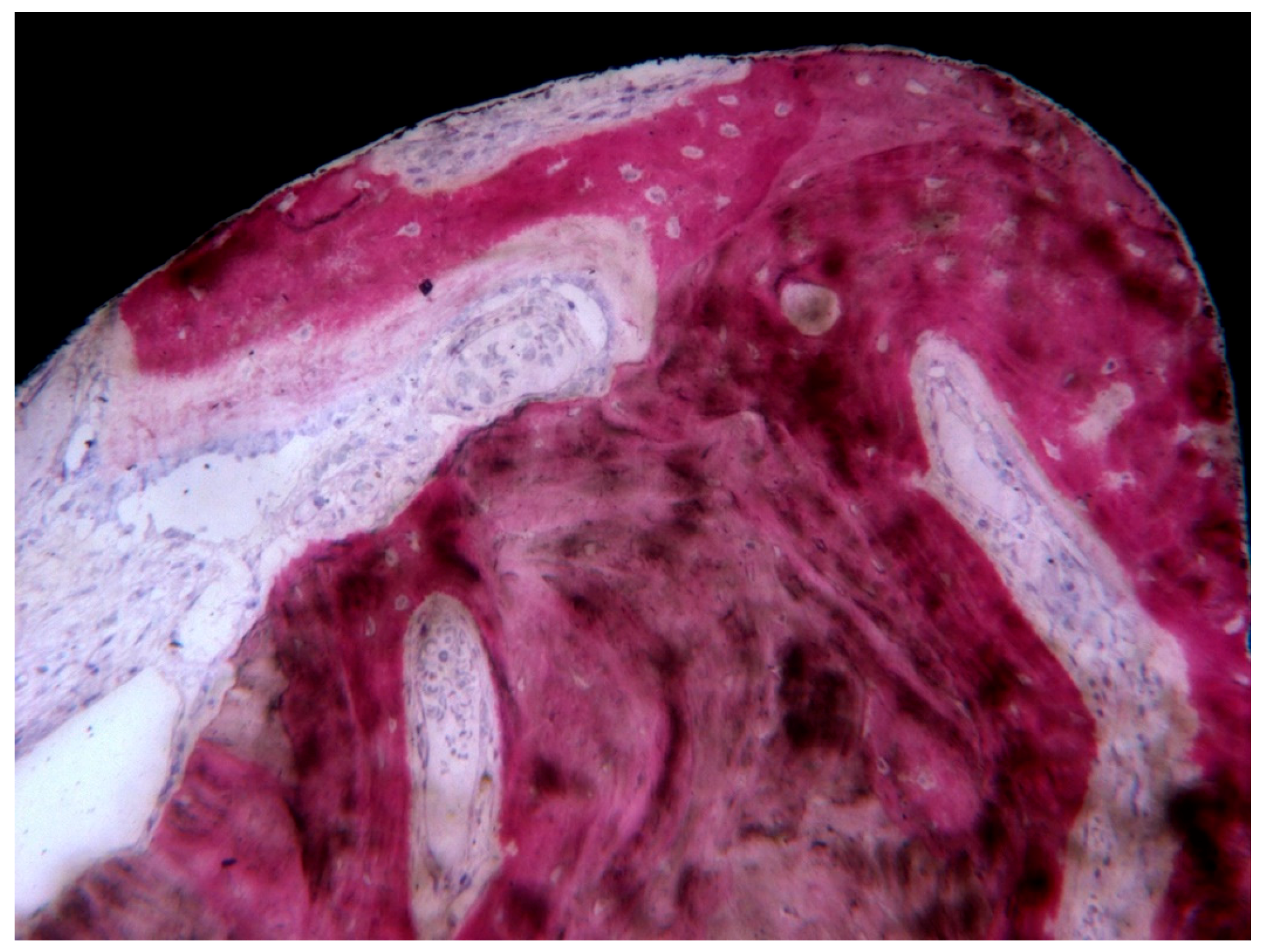
Bone tissue tended to adapt to loading to increase its biomechanics (Figure 6).
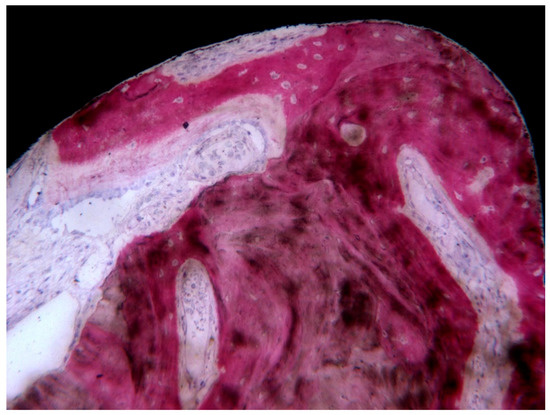
Figure 6.
Many remodeling areas were detected. Ongoing apposition and resorption phenomena were present inside the threads. Implant was retrieved for abutment fracture after 20 years of service. The implant supported a bridge. Courtesy of Dr. Marco Degidi (toluidine blue and acid fuchsin, magnification 100×).
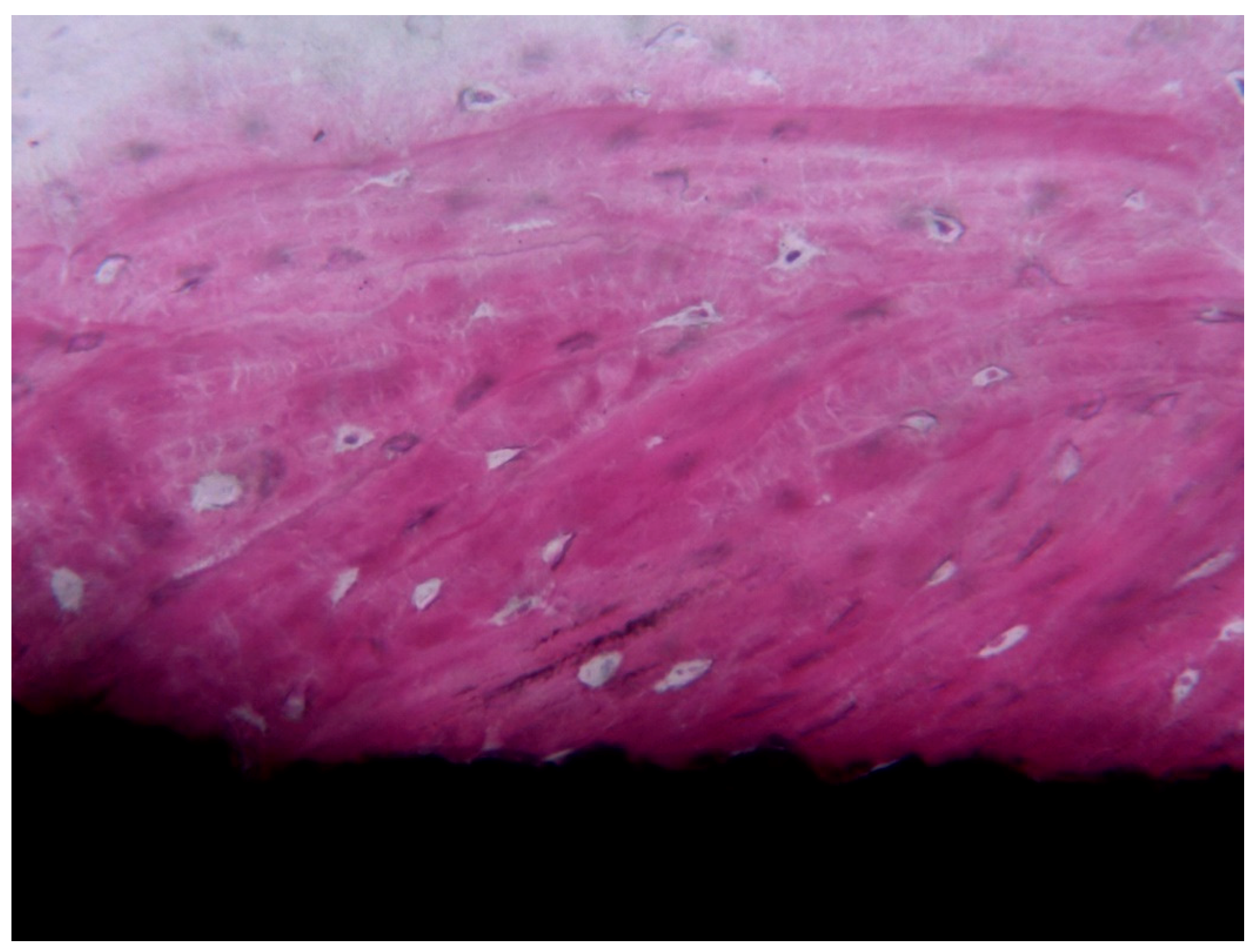
The osteocyte number was significantly higher in implants subjected to loading when compared to submerged, unloaded implants (Figure 7).
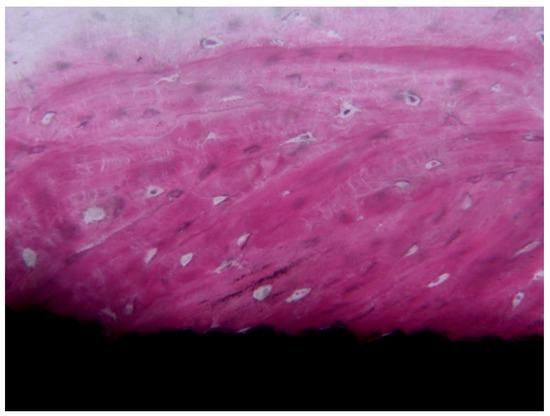
Figure 7.
At higher magnification, many osteocytes were observed at the level of peri-implant bone, close to the implant surface. Implant was retrieved for abutment fracture after 7 years of service. The implant supported a bridge. Courtesy of Dr. Marco Degidi (toluidine blue and acid fuchsin staining, magnification 200×).
4. Discussion
Retrieval and histological analysis of dental implants for fracture or other reasons (such as orthodontic, psychological, esthetic, and hygienic reasons) is able to produce important data to evaluate the healing events and the interface characteristics after different time periods. The analysis of retrieved human implants is, probably, the best way to obtain an improved comprehension of the sequelae events at the level of the implant interface [68]. It is very important to document and subsequently report all these scientific observations because they play a unique role for a deeper understanding.
The reasons to assess some parameters compared to others have been introduced, tested, answered, or discussed, mainly trying to understand the causative mechanisms of failing and failed implants (the reasons for failures have been described), the relationship between implant loading, and the amount of bone at the interface (the loaded implants had a 10%–12% higher amount of BIC than unloaded implants), the minimum amount of bone-to-implant contact (BIC) needed to obtain and maintain implant stability over the long term (from a little more than 30% to a little more than 90%, and this meant that even implants with a low quantity of mineralized bone at the interface were stable and successful over the long-term), the relationship between immediate loading and peri-implant bone response (a higher BIC, 10%–12%, was found in immediately loaded implants), and the importance of the osseous tissue collagen fibers arrangement (these fibers are more able to withstand compressive loads).
Degidi et al. [65,66] reported that immediate loading did not cause untoward or adverse effects on the formation of mineralized tissues at the interface. Degidi et al. [58] reported, moreover, that loading was able to stimulate the bone remodeling at the interface; that a higher percentage of lamellar bone was found in loaded implants; that the percentage of tetracycline bone labeling was higher at the interface of loaded implants; and that a higher number of osteoblasts and osteoclasts was found in loaded implants. Traini et al. [30,56,62] reported that the implant loading seemed to determine differences in the distribution of the collagen fibers of the bone tissue in the peri-implant bone: in loaded implants, transverse collagen fibers were more abundant, while in unloaded implants, these fibers run more longitudinally. These transverse collagen fibers were mainly located at the lower flank of the threads, where compressive loads exerted their effects. Transverse collagen fibers of the bone tissue were principally located in the lower flank of the threads, where compressive loads exerted their effects.
Transverse collagen fibers have been described as the fibers most able to resist to compressive loads, and, this fact can explain their higher quantity in loaded than unloaded implants. Traini et al. [52] also found that a lower mineral density was present in the bone around unloaded implants. Guida et al. observed that immediate loading did not impair the formation of mineralized bone at the interface even in immediate post-extraction implants [50]. Barros et al. found that a higher number of osteocytes was found in the peri-implant bone around immediately loaded implants, and this fact could be related to the functional adaptation required by the loading stimulus and to the role played by osteocytes in the maintenance of the bone matrix [47]. The loading forces direction could have determined a higher mineralization of the osseous tissue located in the coronal side of the threads when compared to that in an apical location [21]. When comparing loaded and not loaded implants, different results have been provided about BIC, with higher, lower, and similar values [61,62]. In the present review, loaded implants had a 10%–12% higher BIC values when compared to submerged implants. In fact, the loading forces produced an adaptation response of the bone tissue structure [61,62]. Still unknown are the BIC values necessary for the clinical stability of an implant [3,28,57], and different values have been reported from 25% to 50% [10]. Over the years, many different types of implants have been proposed and used, such as blades, screws, and root-form implants. The screw implant has a large biomechanical retention, and a higher capability of transferring compressive forces to the peri-implant osseous tissue, producing lower shear stresses at the interface [50,65]. Macro-retention offered by the implant thread could lower the risk of implant micromovements in immediately loaded implants, improving the initial primary stability [49]. Furthermore, the threads are able to increase the surface area of the implant. A high quantity of mineralized tissue was found in an immediately loaded screw, retrieved after several years of function [48]. An osseointegrated, clinically stable, successful implant was associated with bone-to-implant contacts of at least 25% [28,29].
The limitations of the present study are well known to the authors, mainly a risk of bias due to the fact that the data came from a single institution. Most certainly, a different approach, i.e., a systematic review of the literature on this topic could have had a different scientific strength. However, it was still thought useful to conduct this study in such a way because the presented data have been accumulated over a very long time period and the histological specimens evaluated and reported were received, over the years, from several different clinicians and from several centers in different countries. Furthermore, the histological data obtained from all these specimens have shown to be very consistent. Human retrieved dental implants allowed an analysis of the short- and long-term response of bone and suffrage the effectiveness of in vitro and of animal researches. Loading of the implant changed the microstructure of the peri-implant bone, and immediate loading did not create problems to the formation of new bone at the level of implant interface and provided, probably, a positive effect on the peri-implant tissues.
Osseointegration represents a highly dynamic physiological process, and the peri-implant bone tissue increased its structure and organization over the years; these increased levels of organization are reflected by multiple remodeled areas of the bone, representing the numerous remodeling cycles over the years of functional loading. Remodeling, very well-organized, mineralized, lamellar bone was found at the interface of retrieved implants even after three decades of loading.
In all well-integrated retrieved implants, excellent bone to implant contact was found, with mineralized, mature, lamellar bone in close and tight contact with the implant surface at all regions of the implant perimeter with no sign of migration of the epithelium or formation of connective tissue. In the specimens evaluated in the present review, the bone-implant-contact percentage varied greatly from 32%–37% to more than 90%–95%. These values are quite similar to those reported by Coelho et al. [3] and Coelho et al. [11], who reported, respectively, percentages varying from about 20% to 84% (with a mean of 62%) and of 35%–95% (mean 65%). This fact meant that implants might have a successful function over a wide range of degrees of osseointegration. Moreover, implants characterized by a low bone-to-implant contact quantity were clinically stable, well-integrated, and able to provide loading conditions and functions over the years.
5. Conclusions
In conclusion, mineralized bone was not found in unloaded implants at the base of the threads and, in loaded implants, at their tip. Osteocytes (the mechanosensors in bone) were found in peri-implant bone, with a significantly higher number in implants subjected to loading when compared to submerged implants. Moreover, the number and thickness of bone trabeculae were significantly higher in loaded implants. In the present review, implants were shown to be stable and successful over a wide range of degrees of osseointegration (from 30% to 90%); loaded implants had a 10–12% higher BIC values when compared to submerged implants; and finally, rougher surfaces had, on average, about a 10% higher BIC than machined surfaces.
Author Contributions
Study design, A.P.; investigation, M.T. and G.I.; validation A.P., G.I., C.M., and M.D.; writing—original draft, A.P. and M.T.; reviewing—original draft, A.P. and M.T. All authors have read and agreed to the published version of the manuscript.
Funding
The manuscript authors declare no external funding for the present research investigation.
Conflicts of Interest
The authors declared no conflict of interests for the present study.
References
- Shah, F.A.; Nilson, B.; Brånemark, R.; Thomsen, P.; Palmquist, A. The bone-implant interface-nanoscale analysis of clinically retrieved dental implants. Nanomedicine 2014, 10, 1729–1737. [Google Scholar] [CrossRef]
- Schüpbach, P.; Glauser, R.; Rocci, A.; Martignoni, M.; Sennerby, L.; Lundgren, A.; Gottlow, J. The human bone-oxidized titanium implant interface: A light microscopic, scanning electron microscopic, back-scatter scanning electron microscopic, and energy-dispersive x-ray study of clinically retrieved dental implants. Clin. Implant. Dent. Relat. Res. 2005, 7 (Suppl. 1), S36–S43. [Google Scholar]
- Coelho, P.G.; Marin, C.; Granato, R.; Suzuki, M. Histomorphologic analysis of 30 plateau root form implants retrieved after 8 to 13 years in function. A human retrieval study. J. Biomed. Mater. Res. Part B Appl. Biomater. 2009, 91, 975–979. [Google Scholar] [CrossRef] [PubMed]
- Tarnow, D.P.; Chu, S.J. Human histologic verification of osseointegration of an immediate implant placed into a fresh extraction socket with excessive gap distance without primary flap closure, graft, or membrane: A case report. Int. J. Periodontics Restor. Dent. 2011, 31, 515–521. [Google Scholar] [PubMed]
- Nevins, M.; Nevins, M.L.; Schupbach, P.; Fiorellini, J.; Lin, Z.; Kim, D.M. The impact of bone compression on bone-to-implant contact of an osseointegrated implant: A canine study. Int. J. Periodontics Restor. Dent. 2012, 32, 637–645. [Google Scholar] [PubMed]
- Kim, J.-C.; Lee, J.; Kim, S.; Koo, K.-T.; Kim, H.-Y.; Yeo, I.-S.L. Influence of implant-abutment connection structure on peri-implant bone level in a second molar: A 1-year randomized controlled trial. J. Adv. Prosthodont. 2019, 11, 147–154. [Google Scholar] [CrossRef]
- Sağirkaya, E.; Kucukekenci, A.S.; Karasoy, D.; Akça, K.; Eckert, S.E.; Çehreli, M.C. Comparative assessments, meta-analysis, and recommended guidelines for reporting studies on histomorphometric bone-implant contact in humans. Int. J. Oral. Maxillofac. Implants 2013, 28, 1243–1253. [Google Scholar]
- Berketa, J.W.; James, H.; Langlois, N.E.I.; Richards, L.C. A study of osseointegrated dental implants following cremation. Aust. Dent. J. 2014, 59, 149–155. [Google Scholar] [CrossRef]
- Shemtov-Yona, K.; Rittel, D. On the mechanical integrity of retrieved dental implants. J. Mech. Behav. Biomed. Mater. 2015, 49, 290–299. [Google Scholar] [CrossRef]
- Albrektsson, T.; Eriksson, A.R.; Friberg, B.; Lekholm, U.; Lindahl, L.; Nevins, M.; Oikarinen, V.; Roos, J.; Sennerby, L.; Astrand, P. Histologic investigations on 33 retrieved Nobelpharma implants. Clin. Mater. 1993, 12, 1–9. [Google Scholar] [CrossRef]
- Coelho, P.G.; Bonfante, E.A.; Marin, C.; Granato, R.; Giro, G.; Suzuki, M. A human retrieval study of plasma-sprayed hydroxyapatite-coated plateau root form implants after 2 months to 13 years in function. J. Long. Term. Eff. Med. Implants 2010, 20, 335–342. [Google Scholar] [CrossRef] [PubMed]
- Abbott, J.R.; Marino, V.; Bartold, P.M. Human cadaveric histomorphological and metallurgical analysis of dental implants following 12.5 years of service. Clin. Oral. Implants Res. 2014, 25, 266–271. [Google Scholar] [CrossRef] [PubMed]
- Romanos, G.E.; Toh, C.G.; Siar, C.H.; Wicht, H.; Yacoob, H.; Nentwig, G.-H. Bone-implant interface around titanium implants under different loading conditions: A histomorphometrical analysis in the Macaca fascicularis monkey. J. Periodontol. 2003, 74, 1483–1490. [Google Scholar] [CrossRef] [PubMed]
- Podaropoulos, L.; Veis, A.A.; Trisi, P.; Papadimitriou, S.; Alexandridis, C.; Kalyvas, D. Bone reactions around dental implants subjected to progressive static load: An experimental study in dogs. Clin. Oral. Implants Res. 2016, 27, 910–917. [Google Scholar] [CrossRef]
- Joos, U.; Büchter, A.; Wiesmann, H.-P.; Meyer, U. Strain driven fast osseointegration of implants. Head. Face Med. 2005, 1, 6. [Google Scholar] [CrossRef]
- Delgado-Ruiz, R.A.; Abboud, M.; Romanos, G.; Aguilar-Salvatierra, A.; Gomez-Moreno, G.; Calvo-Guirado, J.L. Peri-implant bone organization surrounding zirconia-microgrooved surfaces circularly polarized light and confocal laser scanning microscopy study. Clin. Oral. Implants Res. 2015, 26, 1328–1337. [Google Scholar] [CrossRef]
- Neugebauer, J.; Traini, T.; Thams, U.; Piattelli, A.; Zöller, J.E. Peri-implant bone organization under immediate loading state. Circularly polarized light analyses: A minipig study. J. Periodontol. 2006, 77, 152–160. [Google Scholar] [CrossRef]
- Baldassarri, M.; Bonfante, E.; Suzuki, M.; Marin, C.; Granato, R.; Tovar, N.; Coelho, P.G. Mechanical properties of human bone surrounding plateau root form implants retrieved after 0.3-24 years of function. J. Biomed. Mater. Res. Part B Appl. Biomater. 2012, 100, 2015–2021. [Google Scholar] [CrossRef]
- Palmquist, A.; Grandfield, K.; Norlindh, B.; Mattsson, T.; Brånemark, R.; Thomsen, P. Bone-titanium oxide interface in humans revealed by transmission electron microscopy and electron tomography. J. R. Soc. Interface 2012, 9, 396–400. [Google Scholar] [CrossRef]
- Nevins, M.; Camelo, M.; Koo, S.; Lazzara, R.J.; Kim, D.M. Human histologic assessment of a platform-switched osseointegrated dental implant. Int. J. Periodontics Restor. Dent. 2014, 34 (Suppl. 3), s71–s73. [Google Scholar]
- Gandolfi, M.G.; Zamparini, F.; Iezzi, G.; Degidi, M.; Botticelli, D.; Piattelli, A.; Prati, C. Microchemical and Micromorphologic ESEM-EDX Analysis of Bone Mineralization at the Thread Interface in Human Dental Implants Retrieved for Mechanical Complications After 2 Months to 17 Years. Int. J. Periodontics Restor. Dent. 2018, 38, 431–441. [Google Scholar] [CrossRef] [PubMed]
- Botticelli, D.; Perrotti, V.; Piattelli, A.; Iezzi, G. Four Stable and Functioning Dental Implants Retrieved for Fracture After 14 and 17 Years from the Same Patient: A Histologic and Histomorphometric Report. Int. J. Periodontics Restor. Dent. 2019, 39, 83–88. [Google Scholar] [CrossRef] [PubMed]
- Yonezawa, D.; Piattelli, A.; Favero, R.; Ferri, M.; Iezzi, G.; Botticelli, D. Bone Healing at Functionally Loaded and Unloaded Screw-Shaped Implants Supporting Single Crowns: A Histomorphometric Study in Humans. Int. J. Oral Maxillofac Implants 2018, 33, 181–187. [Google Scholar] [CrossRef] [PubMed]
- Mangano, F.G.; Pires, J.T.; Shibli, J.A.; Mijiritsky, E.; Iezzi, G.; Piattelli, A.; Mangano, C. Early Bone Response to Dual Acid-Etched and Machined Dental Implants Placed in the Posterior Maxilla: A Histologic and Histomorphometric Human Study. Implant Dent. 2017, 26, 24–29. [Google Scholar] [CrossRef] [PubMed]
- Mangano, C.; Shibli, J.A.; Pires, J.T.; Luongo, G.; Piattelli, A.; Iezzi, G. Early Bone Formation around Immediately Loaded Transitional Implants Inserted in the Human Posterior Maxilla: The Effects of Fixture Design and Surface. Biomed. Res. Int. 2017, 2017, 4152506. [Google Scholar] [CrossRef] [PubMed]
- Mangano, F.; Mangano, C.; Piattelli, A.; Iezzi, G. Histological Evidence of the Osseointegration of Fractured Direct Metal Laser Sintering Implants Retrieved after 5 Years of Function. Biomed. Res. Int. 2017, 2017, 9732136. [Google Scholar] [CrossRef]
- Mangano, F.G.; Iezzi, G.; Shibli, J.A.; Pires, J.T.; Luongo, G.; Piattelli, A.; Mangano, C. Early bone formation around immediately loaded implants with nanostructured calcium-incorporated and machined surface: A randomized, controlled histologic and histomorphometric study in the human posterior maxilla. Clin. Oral. Investig. 2017, 21, 2603–2611. [Google Scholar] [CrossRef]
- Iezzi, G.; Piattelli, A.; Mangano, C.; Degidi, M.; Testori, T.; Vantaggiato, G.; Fiera, E.; Frosecchi, M.; Floris, P.; Perroni, R.; et al. Periimplant Bone Response in Human-Retrieved, Clinically Stable, Successful, and Functioning Dental Implants After a Long-Term Loading Period: A Report of 17 Cases From 4 to 20 Years. Implant Dent. 2016, 25, 380–386. [Google Scholar] [CrossRef]
- Mangano, C.; Piattelli, A.; Mortellaro, C.; Mangano, F.; Perrotti, V.; Iezzi, G. Evaluation of Peri-Implant Bone Response in Implants Retrieved for Fracture After More Than 20 Years of Loading: A Case Series. J. Oral. Implantol. 2015, 41, 414–418. [Google Scholar] [CrossRef]
- Traini, T.; Mangano, C.; Perrotti, V.; Caputi, S.; Coelho, P.; Piattelli, A.; Iezzi, G. Human bone reactions around implants with adverse interfacial bone strain over 20 years. J. Biomed. Mater. Res. Part B Appl. Biomater. 2014, 102, 1342–1352. [Google Scholar] [CrossRef]
- Piattelli, A.; Artese, L.; Penitente, E.; Iaculli, F.; Degidi, M.; Mangano, C.; Shibli, J.A.; Coelho, P.G.; Perrotti, V.; Iezzi, G. Osteocyte density in the peri-implant bone of implants retrieved after different time periods (4 weeks to 27 years). J. Biomed. Mater. Res. Part B Appl. Biomater. 2014, 102, 239–243. [Google Scholar] [CrossRef] [PubMed]
- Iezzi, G.; Piattelli, A.; Mangano, C.; Shibli, J.A.; Vantaggiato, G.; Frosecchi, M.; Di Chiara, C.; Perrotti, V. Peri-implant bone tissues around retrieved human implants after time periods longer than 5 years: A retrospective histologic and histomorphometric evaluation of 8 cases. Odontology 2014, 102, 116–121. [Google Scholar] [CrossRef] [PubMed]
- Mangano, C.; Piattelli, A.; Mangano, F.; Rustichelli, F.; Shibli, J.A.; Iezzi, G.; Giuliani, A. Histological and synchrotron radiation-based computed microtomography study of 2 human-retrieved direct laser metal formed titanium implants. Implant Dent. 2013, 22, 175–181. [Google Scholar] [CrossRef] [PubMed]
- Mangano, C.; Perrotti, V.; Raspanti, M.; Mangano, F.; Luongo, G.; Piattelli, A.; Iezzi, G. Human dental implants with a sandblasted, acid-etched surface retrieved after 5 and 10 years: A light and scanning electron microscopy evaluation of two cases. Int. J. Oral. Maxillofac. Implants 2013, 28, 917–920. [Google Scholar] [CrossRef] [PubMed][Green Version]
- Iezzi, G.; Degidi, M.; Shibli, J.A.; Vantaggiato, G.; Piattelli, A.; Perrotti, V. Bone response to dental implants after a 3- to 10-year loading period: A histologic and histomorphometric report of four cases. Int. J. Periodontics Restor. Dent. 2013, 33, 755–761. [Google Scholar] [CrossRef]
- Iezzi, G.; Degidi, M.; Piattelli, A.; Shibli, J.A.; Perrotti, V. A histological and histomorphometrical evaluation of retrieved human implants with a wettable, highly hydrophilic, hierarchically microstructured surface: A retrospective analysis of 14 implants. Implant Dent. 2013, 22, 138–142. [Google Scholar] [CrossRef]
- Degidi, M.; Daprile, G.; Nardi, D.; Piattelli, A. Buccal bone plate in immediately placed and restored implant with Bio-Oss(®) collagen graft: A 1-year follow-up study. Clin. Oral. Implants Res. 2013, 24, 1201–1205. [Google Scholar] [CrossRef]
- Shibli, J.A.; Mangano, C.; Mangano, F.; Rodrigues, J.A.; Cassoni, A.; Bechara, K.; Ferreia, J.D.B.; Dottore, A.M.; Iezzi, G.; Piattelli, A. Bone-to-implant contact around immediately loaded direct laser metal-forming transitional implants in human posterior maxilla. J. Periodontol. 2013, 84, 732–737. [Google Scholar] [CrossRef]
- Mangano, C.; Mangano, F.G.; Shibli, J.A.; Ricci, M.; Perrotti, V.; d’Avila, S.; Piattelli, A. Immediate loading of mandibular overdentures supported by unsplinted direct laser metal-forming implants: Results from a 1-year prospective study. J. Periodontol. 2012, 83, 70–78. [Google Scholar] [CrossRef]
- Iezzi, G.; Vantaggiato, G.; Shibli, J.A.; Fiera, E.; Falco, A.; Piattelli, A.; Perrotti, V. Machined and sandblasted human dental implants retrieved after 5 years: A histologic and histomorphometric analysis of three cases. Quintessence Int. 2012, 43, 287–292. [Google Scholar]
- Degidi, M.; Perrotti, V.; Piattelli, A.; Iezzi, G. Mineralized bone-implant contact and implant stability quotient in 16 human implants retrieved after early healing periods: A histologic and histomorphometric evaluation. Int. J. Oral. Maxillofac. Implants 2010, 25, 45–48. [Google Scholar] [PubMed]
- Shibli, J.A.; Mangano, C.; D’avila, S.; Piattelli, A.; Pecora, G.E.; Mangano, F.; Onuma, T.; Cardoso, L.A.; Ferrari, D.S.; Aguiar, K.C.; et al. Influence of direct laser fabrication implant topography on type IV bone: A histomorphometric study in humans. J. Biomed. Mater. Res. A 2010, 93, 607–614. [Google Scholar] [CrossRef] [PubMed]
- Mangano, C.; Piattelli, A.; d’Avila, S.; Iezzi, G.; Mangano, F.; Onuma, T.; Shibli, J.A. Early human bone response to laser metal sintering surface topography: A histologic report. J. Oral. Implantol. 2010, 36, 91–96. [Google Scholar] [CrossRef] [PubMed]
- Shibli, J.A.; Grassi, S.; Piattelli, A.; Pecora, G.E.; Ferrari, D.S.; Onuma, T.; d’Avila, S.; Coelho, P.G.; Barros, R.; Iezzi, G. Histomorphometric evaluation of bioceramic molecular impregnated and dual acid-etched implant surfaces in the human posterior maxilla. Clin. Implant Dent. Relat. Res. 2010, 12, 281–288. [Google Scholar] [CrossRef] [PubMed]
- Degidi, M.; Piattelli, A.; Shibli, J.A.; Perrotti, V.; Iezzi, G. Early bone formation around immediately restored implants with and without occlusal contact: A human histologic and histomorphometric evaluation. Case report. Int. J. Oral. Maxillofac. Implants 2009, 24, 734–739. [Google Scholar]
- Degidi, M.; Piattelli, A.; Shibli, J.A.; Perrotti, V.; Iezzi, G. Bone formation around immediately loaded and submerged dental implants with a modified sandblasted and acid-etched surface after 4 and 8 weeks: A human histologic and histomorphometric analysis. Int. J. Oral. Maxillofac. Implants 2009, 24, 896–901. [Google Scholar]
- Barros, R.R.M.; Degidi, M.; Novaes, A.B.; Piattelli, A.; Shibli, J.A.; Iezzi, G. Osteocyte density in the peri-implant bone of immediately loaded and submerged dental implants. J. Periodontol. 2009, 80, 499–504. [Google Scholar] [CrossRef]
- Iezzi, G.; Pecora, G.; Scarano, A.; Perrotti, V.; Piattelli, A. Immediately loaded screw implant retrieved after a 12-year loading period: A histologic and histomorphometric case report. J. Osseointegr. 2009, 1, 54–59. [Google Scholar]
- Vantaggiato, G.; Iezzi, G.; Fiera, E.; Perrotti, V.; Piattelli, A. Histologic and histomorphometric report of three immediately loaded screw implants retrieved from man after a three-year loading period. Implant Dent. 2008, 17, 192–199. [Google Scholar] [CrossRef]
- Guida, L.; Iezzi, G.; Annunziata, M.; Salierno, A.; Iuorio, G.; Costigliola, G.; Piattelli, A. Immediate placement and loading of dental implants: A human histologic case report. J. Periodontol. 2008, 79, 575–581. [Google Scholar] [CrossRef]
- Degidi, M.; Iezzi, G.; Scarano, A.; Piattelli, A. Immediately loaded titanium implant with a tissue-stabilizing/maintaining design (’beyond platform switch’) retrieved from man after 4 weeks: A histological and histomorphometrical evaluation. A case report. Clin. Oral. Implants Res. 2008, 19, 276–282. [Google Scholar] [CrossRef] [PubMed]
- Traini, T.; Degidi, M.; Iezzi, G.; Artese, L.; Piattelli, A. Comparative evaluation of the peri-implant bone tissue mineral density around unloaded titanium dental implants. J. Dent. 2007, 35, 84–92. [Google Scholar] [CrossRef] [PubMed]
- Iezzi, G.; Pecora, G.; Scarano, A.; Perrotti, V.; Piattelli, A. Histologic evaluation of 3 retrieved immediately loaded implants after a 4-month period. Implant Dent. 2006, 15, 305–312. [Google Scholar] [CrossRef] [PubMed]
- Di Stefano, D.; Iezzi, G.; Scarano, A.; Perrotti, V.; Piattelli, A. Immediately loaded blade implant retrieved from a after a 20-year loading period: A histologic and histomorphometric case report. J. Oral. Implantol. 2006, 32, 171–176. [Google Scholar] [CrossRef]
- Traini, T.; De Paoli, S.; Caputi, S.; Iezzi, G.; Piattelli, A. Collagen fiber orientation near a fractured dental implant after a 5-year loading period: Case report. Implant Dent. 2006, 15, 70–76. [Google Scholar] [CrossRef]
- Traini, T.; Pecora, G.; Iezzi, G.; Piattelli, A. Preferred collagen fiber orientation human peri-implant bone after a short- and long-term loading period: A case report. J. Oral. Implantol. 2006, 32, 177–181. [Google Scholar] [CrossRef]
- Romanos, G.E.; Testori, T.; Degidi, M.; Piattelli, A. Histologic and histomorphometric findings from retrieved, immediately occlusally loaded implants in humans. J. Periodontol. 2005, 76, 1823–1832. [Google Scholar] [CrossRef]
- Degidi, M.; Scarano, A.; Iezzi, G.; Piattelli, A. Histologic analysis of an immediately loaded implant retrieved after 2 months. J. Oral. Implantol. 2005, 31, 247–254. [Google Scholar] [CrossRef]
- Iezzi, G.; Degidi, M.; Scarano, A.; Perrotti, V.; Piattelli, A. Bone response to submerged, unloaded implants inserted in poor bone sites: A histological and histomorphometrical study of 8 titanium implants retrieved from man. J. Oral. Implantol. 2005, 31, 225–233. [Google Scholar] [CrossRef]
- Degidi, M.; Scarano, A.; Iezzi, G.; Piattelli, A. Histologic and histomorphometric analysis of an immediately loaded implant retrieved from man after 14 months of loading. J. Long. Term Eff. Med. Implants 2005, 15, 489–498. [Google Scholar] [CrossRef]
- Traini, T.; Degidi, M.; Strocchi, R.; Caputi, S.; Piattelli, A. Collagen fiber orientation near dental implants in human bone: Do their organization reflect differences in loading? J. Biomed. Mater. Res. Part B Appl. Biomater. 2005, 74, 538–546. [Google Scholar] [CrossRef] [PubMed]
- Traini, T.; Degidi, M.; Caputi, S.; Strocchi, R.; Di Iorio, D.; Piattelli, A. Collagen fiber orientation in human peri-implant bone around immediately loaded and unloaded titanium dental implants. J. Periodontol. 2005, 76, 83–89. [Google Scholar] [CrossRef] [PubMed]
- Degidi, M.; Scarano, A.; Piattelli, M.; Perrotti, V.; Piattelli, A. Bone remodeling in immediately loaded and unloaded titanium dental implants: A histologic and histomorphometric study in humans. J. Oral. Implantol. 2005, 31, 18–24. [Google Scholar] [CrossRef] [PubMed]
- Degidi, M.; Petrone, G.; Lezzi, G.; Piattelli, A. Histologic evaluation of 2 human immediately loaded and 1 titanium implants inserted in the posterior mandible and submerged retrieved after 6 months. J. Oral. Implantol. 2003, 29, 223–229. [Google Scholar] [CrossRef]
- Degidi, M.; Scarano, A.; Petrone, G.; Piattelli, A. Histologic analysis of clinically retrieved immediately loaded titanium implants: A report of 11 cases. Clin. Implant Dent. Relat. Res. 2003, 5, 89–93. [Google Scholar] [CrossRef]
- Degidi, M.; Scarano, A.; Iezzi, G.; Piattelli, A. Periimplant bone in immediately loaded titanium implants: Histologic and histomorphometric evaluation in human. A report of two cases. Clin. Implant Dent. Relat. Res. 2003, 5, 170–175. [Google Scholar] [CrossRef]
- Degidi, M.; Petrone, G.; Iezzi, G.; Piattelli, A. Histologic evaluation of a human immediately loaded titanium implant with a porous anodized surface. Clin. Implant Dent. Relat. Res. 2002, 4, 110–114. [Google Scholar] [CrossRef]
- Testori, T.; Szmukler-Moncler, S.; Francetti, L.; Del Fabbro, M.; Scarano, A.; Piattelli, A.; Weinstein, R.L. Immediate loading of Osseotite implants: A case report and histologic analysis after 4 months of occlusal loading. Int. J. Periodontics Restor. Dent. 2001, 21, 451–459. [Google Scholar]
- Piattelli, A.; Scarano, A.; Piattelli, M.; Bertolai, R.; Panzoni, E. Histologic aspects of the bone and soft tissues surrounding three titanium non-submerged plasma-sprayed implants retrieved at autopsy: A case report. J. Periodontol. 1997, 68, 694–700. [Google Scholar] [CrossRef]
- Piattelli, A.; Degidi, M.; Marchetti, C.; Scarano, A. Histologic analysis of the interface of a titanium implant retrieved from a nonvascularized mandibular block graft after a 10-month loading period. Int. J. Oral. Maxillofac. Implants 1997, 12, 840–843. [Google Scholar]
- Piattelli, A.; Paolantonio, M.; Corigliano, M.; Scarano, A. Immediate loading of titanium plasma-sprayed screw-shaped implants in man: A clinical and histological report of two cases. J. Periodontol. 1997, 68, 591–597. [Google Scholar] [CrossRef] [PubMed]
- Piattelli, A.; Corigliano, M.; Scarano, A. Microscopical observations of the osseous responses in early loaded human titanium implants: A report of two cases. Biomaterials 1996, 17, 1333–1337. [Google Scholar] [CrossRef]
- Piattelli, A.; Trisi, P.; Romasco, N.; Emanuelli, M. Histologic analysis of a screw implant retrieved from man: Influence of early loading and primary stability. J. Oral. Implantol. 1993, 19, 303–306. [Google Scholar] [PubMed]
- Trisi, P.; Quaranta, M.; Emanuelli, M.; Piattelli, A. A light microscopy, scanning electron microscopy, and laser scanning microscopy analysis of retrieved blade implants after 7 to 20 years of clinical function. A report of 3 cases. J. Periodontol. 1993, 64, 374–378. [Google Scholar] [CrossRef] [PubMed]
© 2020 by the authors. Licensee MDPI, Basel, Switzerland. This article is an open access article distributed under the terms and conditions of the Creative Commons Attribution (CC BY) license (http://creativecommons.org/licenses/by/4.0/).