


Abstract
Teachers belong to a high-demand occupational group and experience work-related challenges and discretely diverse emotional turmoils of varying intensity while teaching and interacting with students. These experiences often result in high stress levels that contribute to burnout and, consequently, a breach of teachers’ occupational wellbeing. Promoting positive teacher wellbeing substantially influences teaching quality, with a flow-on effect on student wellbeing and academic development. This literature review utilised a framework to systematically explore the factors that impact the occupational wellbeing of kindergarten, primary, and secondary schoolteachers. Thirty-eight (38) studies from an initial 3766 peer-reviewed articles sourced from various databases (CINAHL, Emcare, PychINFO, Scopus, ERIC, and PsycARTICLES) were utilized for this systematic review. Four major factors were identified, including personal capabilities, socioemotional competence, personal responses to work conditions, and professional relationships. Findings highlight the importance of teachers’ occupational wellbeing in dealing with numerous challenges and competing demands, with the need for a high level of self-efficacy for instruction and behavioural management being critically significant. Teachers require adequate organisational support to successfully carry out their roles with stronger resilience and efficient job execution. Teachers also need to have social–emotional competence to be able to create a high-quality classroom environment and a conducive atmosphere that supports healthy teacher–student relationships, reduces stress and increases the occupational wellbeing of teachers. Collaborating with other relevant stakeholders such as parents, colleagues, and a school’s leadership team is critical for creating a positive work environment. A good workplace has the potential to contribute to teachers’ occupational wellbeing and provide a supportive platform for student learning and engagement. This review clearly points to the beneficial effects of prioritising teachers’ occupational wellbeing and its intentional inclusion in the professional development plan of practising teachers. Finally, while primary school teachers and secondary school teachers share many similarities in terms of the challenges they face, there are also some differences in how these challenges impact their wellbeing, and these warrant further investigation.
1. Introduction
The teaching profession can be incredibly rewarding and fulfilling [1,2], but teachers deal with many challenges and demands that can affect their occupational wellbeing and influence their ability to create a supportive learning environment for students [3,4]. Occupational wellbeing refers to the ability to achieve balance between work and leisure in a way that promotes health and a sense of personal satisfaction, which, for most people, is also financially rewarding and satisfying [5,6]. However, maintaining the occupational wellbeing of today’s working professionals is a real challenge [7]. Research has shown that teachers experience higher stress than many other professions [8,9]. Since teachers help to shape the future of students [10,11] and teacher wellbeing affects the classroom environment [12], occupational wellbeing should not be overlooked or taken for granted [11]. Teacher wellbeing has been defined as “an individual sense of personal professional fulfilment, satisfaction, purposefulness and happiness, constructed in a collaborative process with colleagues and students” [13].
The 21st century teacher’s role is increasingly challenging and complex [14], with teachers frequently reporting poorer mental health compared with workers in other professions [15,16]. The teaching profession exposes teachers to a variety of discrete emotions of different intensity [17,18,19,20,21]. The profession has been acknowledged as being very demanding, challenging, and stressful at all levels of teaching [3,22]. This is partly because governments across the world regularly implement reforms directed at transforming and improving education [23] with a magnitude and rapidity that often affect the occupational, emotional, and physical wellbeing of teachers [24]. The resultant pressures and challenges impact the quality of teaching, leading to decreased job satisfaction, increased emotional exhaustion, and decreased occupational wellbeing of teachers [25].
It is, therefore, not surprising that, globally, teachers are increasingly reporting elevated levels of occupational stress [26,27], exhaustion, anxiety, and burnout [28] as well as extremely demanding work intensification burdens [29]. This generates excessive workload and places undue pressure on teachers’ work–life balance, which in turn leads to a decline in morale and job satisfaction [29,30]. Jepson and Forrest (2006) [31] argued that teachers who experience stress in their work environments are more likely to feel a lower sense of occupational commitment. Primary school teachers have reported moderate-to-high levels of stress at work [3,26] and being more susceptible to high emotional exhaustion [32]. Additionally, teachers have been reported to work for 43 h per week on average [33]. Such excessive administrative work has been considered as a major source of stress, with higher levels of perceived stress amongst female teachers [34,35]. Globally, there are concerns that only a few people are considering teaching as a career option and many teachers exit the profession within a few years of starting their career [8]. Although there are differences in teacher attrition rate in different countries, the average rate of loss to the teaching profession is around 40–50% over the five years post-entry into the profession in many countries [36]. Brill and McCartney [37] noted that 33% of teachers in the United States leave their schools in the first three years, and 46% after five years.
Recent research has suggested that teachers’ stress and burnout is increasing at an alarming rate and, consequently, affecting overall satisfaction and professional engagement [38,39]. Teachers with high self-efficacy beliefs consider themselves well-equipped to cope with the stressful job demands and employ the use of available resources efficiently [40,41]. High levels of teacher self-efficacy result in increased positive emotions [42] and enhanced wellbeing [43,44,45,46]. In a Spanish study of 413 primary and secondary school teachers, Bermejo-Toro et al. [41] reported that teachers perceived self-efficacy and coping skills as critical to their wellbeing. On the other hand, low teacher efficacy often results in poor management of stress with the resultant exhibition of non-coping behaviours [47]. Low teacher efficacy has also been associated with higher levels of stress and burnout [48]. Consequently, low self-efficacy triggers increased work-related stress and depression [42,49].
There have been calls for actions to be taken to improve teacher wellbeing [39]. In their review of the literature on teacher wellbeing, McCallum and colleagues [8] reported that teacher wellbeing is important for the future of education because teachers are the most important contributors to student achievement, success, and satisfaction in the school environment. The authors emphasised the importance of focusing on teacher wellbeing to ensure creation of healthy learning environments [8]. The overarching research question for this systematic review was: What are the factors that impact teachers’ occupational wellbeing in the classroom? Specifically, this systematic literature review aimed to (1) investigate the factors that impact on teachers’ occupational wellbeing from kindergarten to secondary school educational levels, (2) identify existing knowledge gaps, and (3) make appropriate recommendations for future research.
2. Materials and Methods
This systematic review was conducted and reported in accordance with the Preferred Systematic Reviews and Meta-Analyses (PRISMA) Statement [50].
2.1. Inclusion and Exclusion Criteria
The inclusion criteria for this review were: (1) peer-reviewed articles written in English (2) conducted in the last 20 years (between 2002 and 2022), (3) related to the teaching profession from kindergarten to secondary level (4) focused on teacher occupational wellbeing within the school environment. Studies were excluded if they did not report the above characteristics or were literature reviews.
2.2. Search Strategy
Electronic databases including Medline, CINAHL, Emcare, PyschInfo, Scopus, Eric, and PsycARTICLES were searched from March 2022 to November 2022 for peer-reviewed articles that met the inclusion criteria. MeSH subject heading, subject heading terms, phrase searching, and truncation were used to aid searching. The Polyglot Search Translator [51], within the Systematic Review Accelerator software package (developed by Bond University, Gold Coast, Australia: https://bond.edu.au/iebh/systematic-review-accelerator-sra (accessed on 10 May 2023)), was used to properly align the search terms for each database. The reference list of the articles that met the inclusion criteria were hand-searched for additional relevant articles. Appendix A portrays the applied search terms.
2.3. Data Extraction and Synthesis
In this study, two authors (JCN and BMA) identified and independently screened titles and abstracts of retrieved articles. Articles that did not meet inclusion criteria were excluded while full text of potentially eligible articles were screened for inclusion. Disagreements were resolved in a consensus meeting.
A data extraction form was developed and used to collect relevant information from all the included studies. Descriptive data including author details, year of publication, study aims, design, location, and participant details were extracted from each of the selected studies. Each article was analysed for statements and concepts related to teachers’ work and wellbeing. Significant factors that impact teacher wellbeing, as either enablers or barriers, were identified and classified into four groups based on the Teacher Wellbeing Framework by McCallum et al. [8]. These included (1) teachers’ personal capabilities, which relate to resilience, authenticity, and self-efficacy, i.e., positive adaptations and self-judgments about their ability to positively influence student outcomes; (2) socioemotional competence, which relates to the identification, processing, and regulation of emotions; (3) personal responses to work conditions, which are characterised by emotional fatigue, disengagement, irritability, and apathy resulting from the work environment; and (4) professional relationships, which relate to student misbehaviour, issues with parents, support or lack thereof from management and leadership, and challenging situations that arise with colleagues. This framework was used to guide the review process and aid in better understanding of knowledge gaps.
2.4. Risk of Bias Assessment
The Quality Assessment Tool for Studies with Diverse Designs (QATSDD), which allows researchers to compare studies with different research designs [52], was used to critically assess the quality of the included articles. The QATSDD tool utilises 16 indicators for evaluation and each of the indicators is measured on a 4-point Likert scale that ranges from 0 to 3 (0 = not at all, 1 = very slightly, 2 = moderately, 3 = complete; n/a = not applicable). The obtained scores were summed up and expressed as a percentage of the maximum possible score to assess the quality of the included studies. The indicators included: (1) explicit theoretical framework; (2) statement of aims/objectives in main report; (3) clear description of research setting; (4) evidence of sample size considered in terms of analysis; (5) representative sample of target group of a reasonable size; (6) description of procedure for data collection; (7) rationale for choice of data collection tool(s); (8) detailed recruitment data; (9) statistical assessment of reliability and validity of measurement tool(s) (quantitative studies only); (10) fit between research question and method of data collection (quantitative studies only); (11) fit between research question and format and content of data collection tool (qualitative studies only); (12) fit between research question and method of analysis (quantitative studies only); (13) good justification for analytic method selected; (14) assessment of reliability of analytic process (qualitative studies only); (15) evidence of user involvement in design; (16) strengths and limitations critically discussed. In order to aid interpretation, the scores obtained for all indicators within each article were summed up and converted into percentages. Articles with scores over 80% were classified as high quality, scores from 50% to 80% were classified as medium quality, while articles below 50% were classified as low quality.
3. Results
3.1. Article Selection
The initial search yielded 3766 peer-reviewed articles that were imported into Endnote. After duplicates were removed and hand-searched articles (20 in number) were added, 3566 articles were found to be potentially relevant to the research topic. After screening the potentially relevant articles, 247 articles were retrieved. Based on abstracts and titles screening, the number was reduced to 221. Full texts were explored for eligibility and 38 studies were included for the review. The PRISMA flowchart of the literature search is presented in Figure 1.
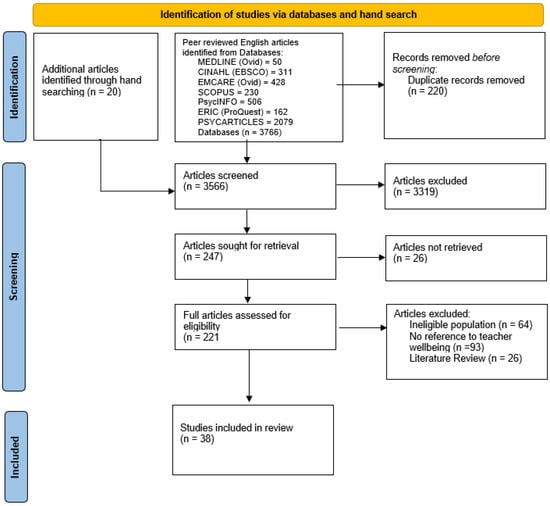
Figure 1.
PRISMA flowchart of the systematic literature search.
3.2. Characteristics of the Reviewed Articles
Table 1 presents the summary characteristics of the included studies. The studies originated from 21 different countries: Australia (n = 5), Belgium (n = 1), Canada (n = 2), China (n = 2), Croatia (n = 4), Czech Republic (n = 1), Finland (n = 3), Germany (n = 2), Ghana (n = 1), Ireland (n = 1), Israel (n = 1), Italy (n = 1), Malaysia (n = 1), the Netherlands (n = 1), Poland (n = 1), Romania (n = 1), Spain (n = 1), the United Kingdom (n = 3), and the United States (n = 3). There were also combined studies between countries: Italy and Switzerland (n = 3), Syria and Germany (n = 1). Total number of participants was 22,675 with a range from 5 to 3010. Participants’ ages ranged from 20 to over 60 years and they were predominantly females (n = 17,359). In relation to school type, there were 750 participants from pre-primary (kindergarten); 10,736 from primary; 7827 from secondary; 97 from special education schools; and 413 from vocational schools. The school type of 2852 participants was not stated. Of the 38 reviewed articles, 20 of them focused on primary school teachers.

Table 1.
Characteristics of the reviewed studies.
The research designs included quantitative (n = 31), mixed-method (n = 1), and qualitative (n = 6) variants. Diverse validated tools/scales were used in the quantitative studies to measure factors that affect teachers’ occupational wellbeing, while semi-structured interview questions were used for qualitative studies. Each of the quantitative studies evaluated multiple factors and discussed them as such. Out of the 38 studies reviewed, 31 used measurement instruments, and the three most used instruments were the Maslach Burnout Inventory—Educators Survey (MBI-ES), Teacher Self-Efficacy Scale, and the Work Engagement Scale. Moreover, 17 studies used frameworks, and the most frequently used framework was The Job Demands–Resources Model (JD–R Model).
3.3. Teachers’ Perceptions of Factors That Impact Their Occupational Wellbeing
As shown in Table 2, four overarching factors that affect teachers’ occupational wellbeing and either positively or negatively impact their professional aptitude were identified: (1) personal teacher capabilities; (2) socioemotional intelligence; (3) personal responses to workload and work conditions; and (4) professional relationships. Elements of personal capabilities included resilience, self-efficacy, autonomy, and coping strategies. Emotional intelligence components included emotional competence, training opportunities, and other supportive work relationships, while personal responses to workload and work conditions included burnout, fatigue, exhaustion, stress, unrealistic expectations, stress, bureaucracy, and exclusion from decisions. Other relational factors that were perceived to influence teachers’ wellbeing included student misbehaviour, misunderstandings with parents and colleagues, and perceived lack of support from the school management system.
Table 2.
Teacher perceptions of personal capabilities, socioemotional competence, work conditions, and professional relationships.
3.3.1. Personal Teacher Capabilities
Teachers’ perceptions of self-efficacy, resilience, authenticity, and coping strategies were discussed in 23 studies [7,23,41,42,43,44,45,46,48,53,54,55,56,57,58,60,61,63,64,67,70,73,74]. Across all teaching levels, high self-efficacy resulted in quality teaching, positive emotions [42], and low burnout amongst primary school teachers [70]. It served as a protective resource for high school teachers [48] and enhanced occupational wellbeing for all teachers [41,43,44,45,46,55,58,64,73]. Positive emotions were highly associated with self-efficacy and wellbeing, as teachers with high self-efficacy were able to provide higher quality instruction and had greater power in promoting students’ motivational, affective, and cognitive outcomes [44,52]. This implies that teacher self-efficacy enhanced positive emotion. On the other hand, negative emotions led to strong intentions to quit the job amongst primary and secondary school teachers [7]. High resilience led to lower levels of psychopathological symptoms and burnout in primary and secondary school teachers [54], and improved leadership, communication, and workplace wellbeing for secondary school teachers [57]. Adaptive coping strategies [7,67], social support [41,56], exercise, and meditation [60] were used to maintain wellbeing. Some teachers used depersonalisation as a form of defensive coping mechanism [61]. Furthermore, low self-efficacy preceded burnout, particularly among younger teachers [48].
3.3.2. Socioemotional Competence
Teachers’ perception of their emotional competence, supportive relationships, and training opportunities were discussed in 17 studies [7,14,33,38,42,44,45,46,53,55,56,58,64,68,69,73,74].
Positive teacher emotions enhanced self-efficacy [42,44] and wellbeing [53], while negative emotions led to strong quitting intentions [7]. Difficulty in regulating emotions resulted in stress [33] but could be improved through training [46]. Teachers reported decreased socioemotional competence during the COVID-19 pandemic [74]. During the pandemic, teachers felt increasingly uncertain, overwhelmed, and stressed, which was due to having to combine work and family life in isolation and with limited support [74]. Nonetheless, a positive teacher–student relationship fostered occupational wellbeing [45,55,58,64,73,74]. Teachers preferred interacting with students directly [58]. Teacher wellbeing was affected by stressful experiences of student misbehaviour [14]. When teachers struggled with regulating their emotions, it led to greater stress [33,38,56]. Social, emotional and academic functioning of special education students improved because of teachers’ training [46]. Mindfulness training did not help with socioemotional competence [68]. Difficulty in regulating teacher emotions resulted in stress for some primary and secondary school students [33] but could be improved through training [46]. Mindfulness training improved primary and secondary school teachers’ competence in behavioural management [68], while being positive led to more cooperative behaviour and better learning outcomes [69].
3.3.3. Personal Responses to Work Conditions
Teachers’ personal responses to work conditions were discussed in 25 studies [3,14,22,23,33,38,43,45,54,56,58,59,60,61,62,64,65,66,67,69,70,71,72,73,74]. Teachers at all levels reported high workload [22,23,43,45,58,60,71,72] and classroom demands [45,60,71], which resulted in stress, burnout [22,72], and mental health/wellbeing problems [60]. Reduced workload led to a decrease in psychosomatic complaints and fatigue and fostered better health outcomes [58]. Many teachers found their job very stressful [23,33,64] due to lack of support [23] and classroom challenges [3]. Teachers also reported stress due to anxiety, depression, and unrealistic expectations during the COVID-19 pandemic due to remote teaching [45,59,74]. For example, school leadership wanted teachers to provide meaningful lessons and assessment/feedback virtually to students within normal working hours with no overtime granted. Teachers felt the expectation was unrealistic because administrators wanted more with limited resources [74].
Autonomy was noted as being critical to occupational wellbeing because it increased teacher motivation and job satisfaction, particularly when combined with reflective practice [43,60,63]. Increased bureaucratic processes and unclear role expectations decreased autonomy for primary and secondary school teachers [23]. Despite high self-efficacy, where role expectations were unclear, teachers reported low levels of autonomy, felt emotionally exhausted, undervalued, unappreciated, deficient, and inadequate [23,45]. Additionally, during the COVID-19 pandemic, teacher experiences indicated reduced autonomy and flexibility, which impacted their occupational wellbeing [74].
Teacher emotional exhaustion was as a result of teaching and intense interactions with students [3,42,54], emotional intensity and dissatisfaction with levels of support [38,56], low occupational wellbeing [73], work intensification [62], and inability to effectively manage professional and family roles [69]. There was less emotional stress and exhaustion as a result of training [46]. High physical exertion, job demands, [22,61], and mental health symptoms [66] resulted in teacher burnout. To prevent burnout, teachers needed to be optimistic and receive social support [65,70]. Work environment affected perceived stress, physical and mental wellbeing, and job satisfaction [14,33,66,74]. High job demands and stress led to high somatic complaints or ill health [22,61] while reduced job demands resulted in less fatigue and psychosomatic complaints [58].
Teacher job satisfaction increased and was related to wellbeing, motivation [55,64,69], lower burnout [70], and low somatic complaint [67]. Teachers reported high job satisfaction as a result of availability of resources [64,69], positive emotions [14], social support [64,69,70], and face-to-face class interactions [58]. Less job satisfaction and motivation were mainly due to anxiety and depressive symptoms [66], and nonteaching-related workload [62]. Work motivation played an important role in teachers’ wellbeing [63] and was related to job satisfaction and commitment [55]. The availability of job resources fostered wellbeing [71], mental health [69], and increased commitment [22]. A decrease in job resources resulted in a decrease in job satisfaction at all teacher levels [58].
Overall, primary classroom teachers were the most concerned about the issue of competing demands on their time [60]. Kindergarten teachers struggled to maintain a balance between personal and professional responsibilities [43]. Primary school teachers, especially, found their jobs extremely stressful [31,33] compared to secondary school teachers, who reported moderate levels of stress [31]. Coaching reduced stress for secondary school teachers [57]. Higher stress from workload led to demotivation [64]. In an Australian study of 749 teachers, primary and secondary school teachers indicated burnout experiences [33]. Male teachers experienced more and stronger emotional burnout [70] than female teachers [38,56]. Female teachers experienced stronger physical burnout [70]. Burnout led to negative emotions, deterioration in mental health, and psychopathological symptoms [54]. Generally, teachers, irrespective of their country, were similar in their perception of factors that affected their burnout, stress levels and personal accomplishment. However, there were significant differences in relation to satisfaction with professional support from colleagues and the organisation. For example, Belgian teachers reported higher physical exertion, job demands, and somatic complaints, but lower job control, social support, and personal accomplishment than teachers from other European countries [61]. However, older teachers reported higher somatic complaints than their younger colleagues [67].
3.3.4. Professional Relationships
Twenty-one (21) studies [3,7,14,22,33,38,43,46,48,53,54,55,58,59,61,62,66,68,69,71,73] addressed organisational commitment, job resources, and students’ behaviour. The studies argued that it is critical for organisations to implement working policies for all teachers in all school types [38,43] and to provide intervention training workshops to teachers. Training programmes on how to use reappraisal strategy [53], regulate emotion [59], improve teaching skills [48], connect well with students [14], improve coping strategies [7], manage workload and reduce stress [33], use redesigned strategies [46], and handling of digital tools [58] were needed. The studies also suggested that organisational strategies and support [38,43] were required for teachers, especially teachers with family care responsibilities [58]. This was necessary to reduce burnout and dissatisfaction with the profession [62], meet teachers’ mental health needs [66], and enhance all teachers’ occupational [22,46,54,73] and psychological wellbeing [55,69]. Job resources increased teacher wellbeing [71], commitment [22], and mental health [69]. Fewer job resources resulted to a decrease in job satisfaction and more challenges [58]. However, insufficient emotional resources led to depersonalization [61]. Managing disruptive student behaviour was stressful for primary school teachers [3] and affected their wellbeing [14]. Positive moods resulted in more cooperative behaviours from students in primary and secondary schools [69]. Training improved primary and secondary school teachers’ competence in behaviour management [46,68]. Comparison of responses by country indicated that lack of support from colleagues resulted in burnout, in some settings, while organisational identification had a stronger impact on burnout among others [65].
3.4. Quality Appraisal of the Reviewed Journal Articles
As portrayed in Table 3, the QATSDD assessment indicated that about 89.5% (n = 34) of the included studies were of medium quality [3,7,14,22,23,31,33,38,39,41,43,44,48,53,54,55,56,57,58,59,60,61,62,63,65,66,67,68,69,70,71,72,73,74] and none (n = 0) were of low quality. Individual scores ranged from 52.4% to 81%. The top-quality studies were four in number. Three of the high-quality studies were quantitative while one [45] was a mixed-methods study. They were judged to be explicit in their methodology while most of the medium-quality studies were quantitative. Some of the weaknesses identified from the medium-quality studies included: lack of explicit theoretical framework, inadequate sample sizes, poor justification for analytical method selected, inadequate evidence of user involvement and poor/absence of critical discussion of strengths and limitations of study. The four top-quality studies [42,45,46,64] utilised theoretical frameworks to substantiate their research and provide in-depth understanding of the phenomenon [75].
Table 3.
Quality appraisal of the reviewed studies.
4. Discussion
Teachers at all levels face enormous challenges daily in a profession that is considered highly stressful when compared to other professions [22,41,74]. This systematic review of 38 studies explored and synthesised the perceptions of kindergarten to secondary school teachers about the factors that impact their occupational wellbeing. Four categories of factors were found to be positively or negatively associated with teachers’ occupational wellbeing.
The reviewed studies suggest that personal capabilities such as self-efficacy, resilience, coping strategies, and autonomy are critical to the occupational wellbeing of teachers [41,64]. Teachers with high self-efficacy were found to be associated with quality teaching, positive emotions, and low burnout levels [76,77], which corroborates the findings of Nuallaong [49]. This means that the higher a teacher’s self-efficacy, the lower the burnout risk and the better the teacher is in enhancing students’ learning [78]. Similarly, high resilience was found to lead to lower levels of psychopathological symptoms and burnout among teachers. Adaptive coping strategies, social support, exercise, and meditation were also found to be helpful in maintaining teacher wellbeing. The importance of autonomy in promoting teacher motivation and job satisfaction was also highlighted [45,55,73]. However, bureaucratic processes and unclear role expectations were noted to decrease autonomy, which negatively impacted teacher wellbeing [23]. This highlights the need for clarity and transparency in role expectations and bureaucratic processes to promote autonomy among teachers. The COVID-19 pandemic also impacted teacher autonomy and flexibility, leading to reduced occupational wellbeing [73]. This finding highlights the need for supportive measures to help teachers navigate challenging situations and maintain their wellbeing.
Teachers’ socioemotional competencies, including their emotional competence, supportive relationships, and training opportunities, are also critical components of their occupational wellbeing. The review highlights the importance of positive teacher–student relationships in fostering occupational wellbeing. Teachers who interacted positively with their students reported better occupational wellbeing. However, negative experiences of student misbehaviour were associated with decreased teacher wellbeing. For example, it was reported that primary school teachers’ active response to emotional job demands led to improvement in their relationships with students [44]. On the other hand, if teachers experienced difficulties in regulating and controlling their emotions while working with students, it led to stress [33]. This may be due to the fact that being positive leads to more cooperative behaviour from students and better learning outcomes [69,79]. Additionally, building teacher–student relationships assisted the teacher in better understanding a student’s challenging behaviour, thus enabling the teacher to show greater concern and empathy [80]. This emphasises that teachers’ ability to regulate their emotions plays a crucial role in how they respond to student misbehaviour, highlighting the importance of emotional competence in promoting positive teacher–student relationships. Furthermore, the review emphasizes the importance of training opportunities for teachers to improve their socioemotional competencies. For instance, social, emotional, and academic functioning of special education students improved as a result of teachers’ training [46]. Mindfulness training was found to improve primary and secondary school teachers’ competence in behavioural management, while being positive led to more cooperative behaviour and better learning outcomes [68].
This review also revealed that teachers face numerous challenges in their work environment, including high workload, stress, burnout, exhaustion, and fatigue. Teachers at all levels reported high workloads [22,23,43,45,58,60,71,72]. The high workload and classroom demand were found to result in stress, burnout, and mental health problems. Teachers also experienced stress due to anxiety, depression, and unrealistic expectations regarding remote teaching. Emotional exhaustion was found to be a result of teaching and intense interactions with students, emotional intensity, dissatisfaction with levels of support, low occupational wellbeing, work intensification, and inability to effectively manage professional and family roles. The work environment affected the perceived stress, physical and mental wellbeing, and job satisfaction of teachers [81]. Primary classroom teachers were concerned about competing demands on their time. Availability of job resources fostered wellbeing, mental health, and increased commitment. Decrease in job resources resulted in a decrease in job satisfaction at all teacher levels. Primary school teachers found their jobs extremely stressful compared to secondary school teachers, who reported moderate levels of stress. Coaching reduced stress for secondary school teachers. Higher stress from workload led to demotivation.
To prevent burnout, teachers need to be optimistic, receive social support, and have high job satisfaction. The availability of resources, positive emotions, social support, and face-to-face class interactions were found to increase job satisfaction. Teachers who reported high job satisfaction also had high wellbeing and motivation. On the other hand, anxiety and depressive symptoms and nonteaching-related workload were found to decrease job satisfaction and motivation. Kindergarten teachers struggled to maintain a balance between personal and professional responsibilities [43]. Male teachers experienced more and stronger emotional burnout [38,56], while female teachers were found to experience stronger physical burnout [70]. More experienced primary and special education teachers had lower levels of burnout symptoms [72]. Forlin [82] had earlier suggested that years of service and participation in training programmes reduced stress for teachers. The review findings suggest that systematic support, in the form of intervention programmes, resources, workshops, implementation of work policies, and good relationship with management, is required as a means of improving mental health and wellbeing [58,64,73].
Furthermore, teachers’ wellbeing and job satisfaction are significantly impacted by their professional relationships with students and colleagues. Positive moods and behaviours were found to result in more cooperative student behaviour in primary and secondary schools. The reviewed studies suggested that training programmes focusing on various aspects of teaching, such as regulating emotions, improving teaching skills, and connecting well with students, can improve teachers’ wellbeing, job satisfaction, and commitment to their profession. Organisational support, including policies and intervention training workshops, was also deemed crucial for reducing burnout and dissatisfaction with the profession. This would be most beneficial to kindergarten and primary school teachers, who rely more on social support than others [65]. Moreover, job resources such as emotional support, adequate workload management, and coping strategies were found to positively impact teacher wellbeing, commitment, and mental health [66]. Support from the leadership has also been shown to reduce the risk of burnout and increase job satisfaction in teachers [83]. Similar findings from the literature consider social support a major job resource for teachers [41], having a significant impact on wellbeing [84,85]. Therefore, organisations should provide teachers with sufficient resources to enhance their wellbeing and mental health. Additionally, the studies indicated that disruptive student behaviour was a significant source of stress for teachers, particularly in primary schools [3,14]. Therefore, training in behaviour management and support from colleagues and school leaders may be necessary to help teachers manage such situations effectively.
4.1. Implications for Practice
This systematic review unequivocally portrays the teaching profession as being highly stressful. The implication for teaching practice is that a strengthening of organisational support—with professional workshops, intervention and training programmes to enhance teaching skills, occupational wellbeing, and mental health of teachers—is necessary [45,53,56]. There is also the need for a review of teaching workload aimed at stress reduction intervention programmes. Enhancement of teacher socioemotional competence is required, as is the provision of systematic support for the vulnerable. Collaborating with more experienced teachers as a shared responsibility is necessary, and so is the development of coping skills that might help reduce stress [14,39,60].
Based on the findings of the reviewed studies, there are some differences in the well-being of primary school teachers and secondary school teachers. Regarding personal capabilities, primary school teachers may require more energy and patience to handle younger children, which can be exhausting and require a high degree of emotional labour, while secondary school teachers may need more content knowledge and teaching skills to teach their specific subjects [42,54]. This suggests that the personal capabilities needed for each group of teachers may differ. In terms of socioemotional competence, both primary and secondary school teachers need to be skilled in managing their emotions and connecting well with students. However, primary school teachers may face more challenges in managing disruptive behaviour from young children, which can negatively impact their wellbeing [3,14]. On the other hand, secondary school teachers may need to deal with more complex social dynamics and interpersonal conflicts among students. When it comes to personal response to work conditions, primary school teachers may experience higher levels of workload and stress due to the constant need for attention and supervision of young children [74]. In contrast, secondary school teachers may have more autonomy in managing their workload but may also experience pressure to maintain high academic standards and prepare students for exams. Finally, in terms of professional relationships, both primary and secondary school teachers benefit from organisational support and resources, but primary school teachers may require more support due to the nature of their work with young children [65]. Additionally, secondary school teachers may face more pressure to maintain positive relationships with students and parents while also balancing their teaching responsibilities. Furthermore, teachers’ occupational wellbeing can be influenced by differences between countries and continents. Generally, there were significant differences in relation to satisfaction with professional support from colleagues and the organisation. It is important to note that individual countries within and across continents can have variations in their educational systems and teacher-related factors. Additionally, education landscapes and policies are dynamic and always evolving, which makes comparisons of teacher wellbeing factors between countries and continents quite challenging.
4.2. Future Research Considerations
Overall, while there are some similarities in the wellbeing challenges faced by primary and secondary school teachers, there are also some notable differences that can impact their wellbeing in unique ways. This highlights the need for targeted interventions and support for each group of teachers. Future research should particularly target primary school teachers whose occupational wellbeing seems to be more negatively impacted due the nature of their job and requirement for more social support. There is the need for further and comprehensive investigation into primary school teachers’ wellbeing using relevant frameworks to better understand their occupational wellbeing and the underlying associated variables within classroom settings, particularly in the areas of teacher workload, related burnout, and stress, as well as the benefits of socioemotional competence in creating a good quality classroom environment. Teacher wellbeing is also influenced by other contextual characteristics, such as school ownership (public or private), teacher career stage and subject specialisation. However, information on these variables was not provided in most of the articles reviewed in this study, pointing to the need for further research in this area.
4.3. Strengths and Limitations
Despite the carefully concerted effort to systematically search the literature, some studies might have been overlooked due to the inclusion and exclusion criteria used. The review was limited to only peer-reviewed papers written in English and published in the last 20 years. There is a likelihood that other relevant articles may have been missed. However, some of the strengths of this systematic review include an increased understanding of teachers’ occupational wellbeing and identified knowledge gaps in teacher training and support mechanisms required for managing the 21st century classroom and maintaining occupational wellbeing.
5. Conclusions
This systematic literature review explored the factors that impact teacher occupational wellbeing. It was evident that teaching as a profession is very stressful and emotionally exhausting, potentially leading to burnout and a negative impact on teachers’ occupational wellbeing. The current global political and educational agendas seem to prioritise child safety and student wellbeing, but teacher wellbeing and supportive school environments within educational settings should also be prioritised.
Effective management of classroom-related stressors using coping strategies, meaningful collaboration, and supportive colleagues are of immense assistance to teachers. Administrators within school settings are in ideal positions to support teacher occupational wellbeing. Support from experienced colleagues can help teachers to work effectively in improving student learning and wellbeing and to remain in the profession. When schools take steps to ensure the wellbeing and mental health of teachers in the classroom, teachers thrive and demonstrate resilience in the face of challenges that come with the teaching profession. In conclusion, this systematic review shows that teacher wellbeing is influenced by many factors including the school environment, work-related stress, and student–teacher relationships. The findings from this study also clearly indicated that primary school teachers were the most stressed; hence, future research should explore ways, means, and changes to their workload and stress, and ultimately seek ways of improving primary school teacher wellbeing.
Author Contributions
All authors conceived this systematic literature review. J.C.N. and B.S.M.-A. identified and independently screened retrieved articles. J.C.N. developed the first draft of the manuscript. A.E.O.M.-A. and B.S.M.-A. advised on data interpretation. All authors have read and agreed to the published version of the manuscript.
Funding
This research did not receive any specific grant from funding agencies in the public, commercial, or not-for-profit sectors.
Institutional Review Board Statement
Not applicable.
Informed Consent Statement
Not applicable.
Data Availability Statement
Data sharing is not applicable to this article.
Conflicts of Interest
The authors declare no conflict of interest.
Appendix A. Search Terms
The following search terms were applied:
Wellb* OR “Mental Health” OR “Stress Management” OR “Wellness” OR “Physical Health” OR “Sense of Community” OR “Coping” OR “Health Conditions” OR “Pain” OR “Health Needs” OR “Health” OR “Daily Living Skills” OR “Fatigue” OR “Stress Variables” OR “Social Health” OR “Occupational Diseases” OR “Employee Well Being” OR “Emotional Health” OR “Occupational Health” OR “Occupational Burnout” OR “Professional Burnout” OR Adaptation Psychological” OR “Occupational Stress” OR “Work-Life Balance” OR “Health Status” OR “Headache” OR “Mental Fatigue” OR “Quality of Life” OR “Burnout Professional” OR “Wellness” OR “Coping Support” OR “Stress Occupational” OR “Stress Management” OR “Psychological Well-Being” OR “Well-Being” OR “Adaptation Occupational” OR “Social Determinants of Health” OR “Activities of Daily Living” OR “Behavior and Behavior Mechanisms” OR “Psychological Well-Being” “Professional Well-Being” OR “Wellbeing” OR “Physical Well-being” OR “Economic Well-being” OR “Social Well-being” OR “Community” OR “Coping Behavior” OR “Attribution (psychology)” OR “Daily Life Activity” OR “Physiological Stress” OR “Work Engagement” OR “Emotional Stability” OR “Adaptive Behavior” OR “Psychological Adjustment”;
Satisfact* OR “Success” OR “Occupational Aspiration” OR “Job Enrichment” OR “Improvement” OR “Positive Attitudes” OR “Role Satisfaction” OR “Work Environment” OR “Job Satisfaction” OR “Job Satisfactions” OR “Work Satisfaction” OR “Work Satisfactions” OR “Employee Engagement” OR “Staff Engagement” OR “Workforce Engagement” OR “Workplace Engagement” OR “Worker Participation” OR “Workplace” OR “Professional Autonomy” OR “ Optimism” OR “Workload” OR “Achievement” OR “Attitude” OR “Employee Attitudes” OR “Professional Competence” OR “Quality Improvement” OR “Job Security” OR “Quality of Working Life” OR “Adaptation, Occupational” OR “Satisfaction” OR “Work Environment” OR “Employee” OR “Psychological Aspect” OR “Aspiration”;
Occupat* OR “Employment” OR “Occupational Attitudes” OR “Professional Role” OR “Emotional Adjustment” OR “Occupational Health Psychology” OR “Frontline Employees” OR “Social Connectedness” OR “Job Demands” OR “Job stress” OR “Job related stress” OR “Professional stress” OR “Work related stress” OR “Workplace abuse” OR “Workplace Bullying” OR “Workplace Stresses” OR “Work Stress” OR “Tiredness” OR “Occupations” OR “Employment” OR “Emotional Adjustment” OR “Occupational Health” OR “Emotions” OR “Employment” OR “Emotional Adjustment” OR “Employee Attitudes” OR “Occupational Health” OR “Occupation” OR “Education” OR “Workforce” OR “Professional Standard” OR “Employee” OR “Work Engagement” OR “Mental Stress” OR “Social Adaptation” OR “Work” OR “Role Stress”;
Workl* OR “Working hours” OR “Environmental Stress” OR “Responsibility” OR “Work Related Illnesses” OR “Occupational Stress” OR “Stress” OR “Emotional Exhaustion” OR “Burnout” OR “Job Performance” OR “Coping Style” OR “Workaholism” OR “Working Conditions” OR “Perceived Stress” OR “Teamwork” OR “Social Skills” OR “Strategies” OR “Social Interaction” OR “Autonomy” OR “Stress Reactions” OR “Social Support” OR “Social Networks” OR “Work Attitudes” OR “Work Experience” OR “Supervisor Supervisee Relationship” OR “Values” OR “Adjustment (to Environment)” OR “Anxiety” OR “Work Performance” OR “Social Networking” OR “Motivation” OR “Interprofessional Relations” OR “Critical Incident Stress” OR “Teamwork” OR “Accountability” OR “Working Time” OR “Emotional Stress”;
Teach* OR “Teaching (Occupation)” OR “Employment Experience” OR “Teachers” OR “Teaching Conditions” OR “Labor Turnover” OR “Classroom Communication” OR “Persistence” OR “Teacher Supply and Demand” OR “Teacher role” OR “Interprofessional Relationship” OR “Elementary School Teacher” OR “Elementary School Teachers” OR “School Teacher” OR “Teaching” OR “Primary School” OR “School Teachers” OR Time Manag* OR “Self motivation” OR “Self management” OR “Resilience” OR “Effectiveness” OR “Competence” OR “Correlation” OR “Reliability” OR “Occupational Aspiration” OR “Teacher motivation” OR “Teacher persistence” OR “Communication” OR “Hardiness” OR “Self-efficacy” OR “Interpersonal Relations” OR “Employer-Employee Relations” OR “Personnel Turnover” OR “Education” OR “Interpersonal Communication” OR “Skill” OR “Organizational Resilience” OR “Time Management” OR “Self Concept” OR “Turnover Time” OR “Professional Practice” OR “Communication” OR “Self-Management”.
References
- Billingsley, B.; Bettini, E. Special Education Teacher Attrition and Retention: A Review of the Literature. Rev. Educ. Res. 2019, 89, 697–744. [Google Scholar] [CrossRef]
- Wong, V.W.; Ruble, L.A.; Yu, Y.; McGrew, J.H. Too Stressed to Teach? Teaching Quality, Student Engagement, and IEP Outcomes. Except. Child. 2017, 83, 412–427. [Google Scholar] [CrossRef] [PubMed]
- Chaudhuri, S.; Muhonen, H.; Pakarinen, E.; Lerkkanen, M.-K. Teachers’ Focus of Attention in First-grade Classrooms: Exploring Teachers Experiencing Less and More Stress Using Mobile Eye-tracking. Scand. J. Educ. Res. 2021, 66, 1076–1092. [Google Scholar] [CrossRef]
- Zakaria, Z.; Don, Y.; Yaakob, M.F.M. Teachers’ well-being from the social psychological perspective. Int. J. Eval. Res. Educ. 2021, 10, 641–647. Available online: https://elibrary.jcu.edu.au/login?url=https://www.proquest.com/scholarly-journals/teachers-well-being-social-psychological/docview/2550817389/se-2?accountid=16285 (accessed on 12 May 2022). [CrossRef]
- Demirel, H. An Investigation of the Relationship between Job and Life Satisfaction among Teachers. Procedia Soc. Behav. Sci. 2014, 116, 4925–4931. [Google Scholar] [CrossRef]
- Song, H.; Gu, Q.; Zhang, Z. An exploratory study of teachers’ subjective wellbeing: Understanding the links between teachers’ income satisfaction, altruism, self-efficacy and work satisfaction. Teach. Teach. Theory Pract. 2020, 26, 3–31. [Google Scholar] [CrossRef]
- Wang, H.; Lee, S.Y.; Hall, N.C. Coping profiles among teachers: Implications for emotions, job satisfaction, burnout, and quitting intentions. Contemp. Educ. Psychol. 2022, 68, 102030. [Google Scholar] [CrossRef]
- McCallum, F.; Price, D.; Graham, A.; Morrison, A. Teacher Wellbeing: A Review of the Literature; AIS: Sydney, Australia, 2017; Available online: https://apo.org.au/node/201816 (accessed on 10 March 2022).
- Herman, K.C.; Prewett, S.L.; Eddy, C.L.; Savala, A.; Reinke, W.M. Profiles of middle school teacher stress and coping: Concurrent and prospective correlates. J. Sch. Psychol. 2019, 78, 54–68. [Google Scholar] [CrossRef]
- Heffernan, A.; Longmuir, F.; Bright, D.; Kim, M. Perceptions of Teachers and Teaching in Australia; Monash University. Available online: https://www.monash.edu/thank-your-teacher/docs/Perceptions-of-Teachers-and-Teaching-in-Australia-report-Nov-2019.pdf (accessed on 19 June 2022).
- Allies, S. Supporting Teacher Wellbeing: A Practical Guide for Primary Teachers and School Leaders; Routledge: London, UK, 2020. [Google Scholar] [CrossRef]
- Jennings, P.A. Early Childhood Teachers’ Well-Being, Mindfulness, and Self-Compassion in Relation to Classroom Quality and Attitudes Towards Challenging Students. Mindfulness 2014, 6, 732–743. [Google Scholar] [CrossRef]
- Acton, R.; Glasgow, P. Teacher Wellbeing in Neoliberal Contexts: A Review of the Literature. Aust. J. Teach. Educ. 2015, 40, 99–114. [Google Scholar] [CrossRef]
- Sidek, Z.; Surat, S.; Kutty, F.M. Student misbehaviour in classrooms at secondary schools and the relationship with teacher job well-being. Int. J. Psychosoc. Rehabil. 2020, 24, 5373–5380. [Google Scholar] [CrossRef]
- Kidger, J.; Brockman, R.; Tilling, K.; Campbell, R.; Ford, T.; Araya, R.; King, M.; Gunnell, D. Teachers’ wellbeing and depressive symptoms, and associated risk factors: A large cross sectional study in English secondary schools. J. Affect. Disord. 2016, 192, 76–82. [Google Scholar] [CrossRef] [PubMed]
- McLean, L.; Abry, T.; Taylor, M.; Jimenez, M.; Granger, K. Teachers’ mental health and perceptions of school climate across the transition from training to teaching. Teach. Teach. Educ. 2017, 65, 230–240. [Google Scholar] [CrossRef]
- Meyer, D.K.; Turner, J.C. Scaffolding Emotions in Classrooms. In Emotion in Education; Schutz, P.A., Pekrun, R., Eds.; Academic Press: Burlington, MA, USA, 2007; pp. 243–259. [Google Scholar] [CrossRef]
- Schutz, P.A.; Cross, D.I.; Hong, J.Y.; Osbon, J.N. Teacher Identities, Beliefs, and Goals Related to Emotions in the Classroom. In Emotion in Education; Schutz, P.A., Pekrun, R., Eds.; Academic Press: Burlington, MA, USA, 2007; pp. 223–243. [Google Scholar] [CrossRef]
- Spilt, J.L.; Koomen, H.M.Y.; Thijs, J.T. Teacher Wellbeing: The Importance of Teacher–Student Relationships. Educ. Psychol. Rev. 2011, 23, 457–477. [Google Scholar] [CrossRef]
- Frenzel, A.C. Teacher emotions. In International Handbook of Emotions in Education; Pekrun, R., Linnenbrink, E.A., Eds.; Routledge: New York, NY, USA, 2014; pp. 494–519. [Google Scholar]
- Burić, I.; Slišković, A.; Macuka, I. A mixed-method approach to the assessment of teachers’ emotions: Development and validation of the Teacher Emotion Questionnaire. Educ. Psychol. 2018, 38, 325–349. [Google Scholar] [CrossRef]
- Hakanen, J.J.; Bakker, A.B.; Schaufeli, W.B. Burnout and work engagement among teachers. J. Sch. Psychol. 2006, 43, 495–513. [Google Scholar] [CrossRef]
- Skinner, B.; Leavey, G.; Rothi, D. Managerialism and teacher professional identity: Impact on well-being among teachers in the UK. Educ. Rev. 2019, 73, 1–16. [Google Scholar] [CrossRef]
- Lanner, M. Contributing Factors to Teacher Satisfaction for Jewish Day School Educators. Ph.D. Thesis, Yeshiva University, New York, NY, USA, 2010. [Google Scholar]
- Collie, R.J.; Shapka, J.D.; Perry, N.E.; Martin, A.J. Teachers’ beliefs about social-emotional learning: Identifying teacher profiles and their relations with job stress and satisfaction. Learn. Instr. 2015, 39, 148–157. [Google Scholar] [CrossRef]
- Herman, K.C.; Hickmon-Rosa, J.; Reinke, W.M. Empirically Derived Profiles of Teacher Stress, Burnout, Self-Efficacy, and Coping and Associated Student Outcomes. J. Posit. Behav. Interv. 2017, 20, 90–100. [Google Scholar] [CrossRef]
- Bottiani, J.H.; Duran, C.A.; Pas, E.T.; Bradshaw, C.P. Teacher stress and burnout in urban middle schools: Associations with job demands, resources, and effective classroom practices. J. Sch. Psychol. 2019, 77, 36–51. [Google Scholar] [CrossRef]
- Turner, A.P.; Wegener, S.T.; Williams, R.M.; Ehde, D.M.; Norvell, D.C.; Yanez, N.D.; Czerniecki, J.M.; Vetpals Study Group. Self-Management to Improve Function After Amputation: A Randomized Controlled Trial of the VETPALS Intervention. Arch. Phys. Med. Rehabil. 2021, 102, 1274–1282. [Google Scholar] [CrossRef] [PubMed]
- Prichard, S. No time to smell the roses: When work is all there is. Independ. Educ. 2006, 36, 18–19. [Google Scholar]
- Sharifah, S.; Suhaida, A.K.; Soaib, A. Workload of technical secondary school teachers: Management and administration’s perceptions. Malays. Online J. Educ. Manag. 2014, 2, 21–35. [Google Scholar]
- Jepson, E.; Forrest, S. Individual contributory factors in teacher stress: The role of achievement striving and occupational commitment. Br. J. Educ. Psychol. 2006, 76, 183–197. [Google Scholar] [CrossRef]
- Vercambre, M.-N.; Brosselin, P.; Gilbert, F.; Nerrière, E.; Kovess-Masféty, V. Individual and contextual covariates of burnout: A cross-sectional nationwide study of French teachers. BMC Public Health 2009, 9, 333. [Google Scholar] [CrossRef] [PubMed]
- Carroll, A.; Forrest, K.; Sanders-O’connor, E.; Flynn, L.; Bower, J.M.; Fynes-Clinton, S.; York, A.; Ziaei, M. Teacher stress and burnout in Australia: Examining the role of intrapersonal and environmental factors. Soc. Psychol. Educ. 2022, 25, 441–469. [Google Scholar] [CrossRef]
- OECD. TALIS 2018 Results (Volume II): Teachers and School Leaders as Valued Professionals; OECD Publishing: Paris, France, 2020. [Google Scholar] [CrossRef]
- Thomson, S. TALIS: Stress levels among Australian teachers. Available online: https://www.teachermagazine.com/au_en/articles/talis-stress-levels-among-australian-teachers (accessed on 11 June 2022).
- Gallant, A.; Riley, P. Early career teacher attrition: New thoughts on an intractable problem. Teach. Dev. 2014, 18, 562–580. [Google Scholar] [CrossRef]
- Brill, S.; McCartney, A. Stopping the Revolving Door: Increasing Teacher Retention. Politics Policy 2008, 36, 750–774. [Google Scholar] [CrossRef]
- Stapleton, P.; Garby, S.; Sabot, D. Psychological distress and coping styles in teachers: A preliminary study. Aust. J. Educ. 2020, 64, 127–146. [Google Scholar] [CrossRef]
- Turner, K.; Thielking, M.; Prochazka, N. Teacher wellbeing and social support: A phenomenological study. Educ. Res. 2022, 64, 77–94. [Google Scholar] [CrossRef]
- Vera, M.; Salanova, M.; Lorente, L. The predicting role of self-efficacy in the job demands-resources model: A longitudinal study. Estud. Psicol. 2012, 33, 167–178. [Google Scholar] [CrossRef]
- Bermejo-Toro, L.; Prieto-Ursúa, M.; Hernández, V. Towards a model of teacher well-being: Personal and job resources involved in teacher burnout and engagement. Educ. Psychol. (Dorchester-Thames) 2016, 36, 481–501. [Google Scholar] [CrossRef]
- Burić, I.; Slišković, A.; Sorić, I. Teachers’ Emotions and Self-Efficacy: A Test of Reciprocal Relation. Front. Psychol. 2020, 11, 1650. [Google Scholar] [CrossRef] [PubMed]
- Kilgallon, P.; Maloney, C.; Lock, G. Early Childhood Teachers’ Sustainment in the Classroom. Aust. J. Teach. Educ. 2008, 33, 41–54. [Google Scholar] [CrossRef]
- Huang, S.; Yin, H.; Lv, L. Job characteristics and teacher well-being: The mediation of teacher self-monitoring and teacher self-efficacy. Educ. Psychol. 2019, 39, 313–331. [Google Scholar] [CrossRef]
- Chan, M.-K.; Sharkey, J.D.; Lawrie, S.I.; Arch, D.A.N.; Nylund-Gibson, K. Elementary school teacher well-being and supportive measures amid COVID-19: An exploratory study. Sch. Psychol. 2021, 36, 533–545. [Google Scholar] [CrossRef]
- Kennedy, Y.; Flynn, N.; O’brien, E.; Greene, G. Exploring the impact of Incredible Years Teacher Classroom Management training on teacher psychological outcomes. Educ. Psychol. Pract. 2021, 37, 150–168. [Google Scholar] [CrossRef]
- Tschannen-Moran, M.; Hoy, A.W. Teacher efficacy: Capturing an elusive construct. Teach. Teach. Educ. 2001, 17, 783–805. [Google Scholar] [CrossRef]
- Schwarzer, R.; Hallum, S. Perceived Teacher Self-Efficacy as a Predictor of Job Stress and Burnout: Mediation Analyses: Health and well-being. Appl. Psychol. 2008, 57, 152–171. [Google Scholar] [CrossRef]
- Nuallaong, W. Burnout Symptoms and Cycles of Burnout: The Comparison with Psychiatric Disorders and Aspects of Approaches. In Burnout for Experts; Bährer-Kohler, S., Ed.; Springer: Boston, MA, USA, 2012; pp. 47–72. [Google Scholar] [CrossRef]
- Page, M.J.; McKenzie, J.E.; Bossuyt, P.M.; Boutron, I.; Hoffmann, T.C.; Mulrow, C.D.; Shamseer, L.; Tetzlaff, J.M.; Akl, E.A.; Brennan, S.E.; et al. The PRISMA 2020 statement: An updated guideline for reporting systematic reviews. Int. J. Surg. 2021, 88, 105906. [Google Scholar] [CrossRef]
- Clark, J.M.; Sanders, S.; Carter, M.; Honeyman, D.; Cleo, G.; Auld, Y.; Booth, D.; Condron, P.; Dalais, C.; Bateup, S.; et al. Improving the translation of search strategies using the Polyglot Search Translator: A randomized controlled trial. J. Med. Libr. Assoc. 2020, 108, 195–207. [Google Scholar] [CrossRef] [PubMed]
- Sirriyeh, R.; Lawton, R.; Gardner, P.; Armitage, G. Reviewing studies with diverse designs: The development and evaluation of a new tool. J. Eval. Clin. Pract. 2012, 18, 746–752. [Google Scholar] [CrossRef] [PubMed]
- Burić, I.; Kim, L.E.; Hodis, F. Emotional labor profiles among teachers: Associations with positive affective, motivational, and well-being factors. J. Educ. Psychol. 2021, 113, 1227–1243. [Google Scholar] [CrossRef]
- Burić, I.; Slišković, A.; Penezić, Z. Understanding teacher well-being: A cross-lagged analysis of burnout, negative student-related emotions, psychopathological symptoms, and resilience. Educ. Psychol. 2019, 39, 1136–1155. [Google Scholar] [CrossRef]
- Collie, R.J.; Shapka, J.D.; Perry, N.E.; Martin, A.J. Teachers’ psychological functioning in the workplace: Exploring the roles of contextual beliefs, need satisfaction, and personal characteristics. J. Educ. Psychol. 2016, 108, 788–799. [Google Scholar] [CrossRef]
- Fiorilli, C.; Gabola, P.; Pepe, A.; Meylan, N.; Curchod-Ruedi, D.; Albanese, O.; Doudin, P.-A. The effect of teachers’ emotional intensity and social support on burnout syndrome. A comparison between Italy and Switzerland. Eur. Rev. Appl. Psychol. 2015, 65, 275–283. [Google Scholar] [CrossRef]
- Grant, A.M.; Green, L.S.; Rynsaardt, J. Developmental coaching for high school teachers: Executive coaching goes to school. Consult. Psychol. J. Pract. Res. 2010, 62, 151–168. [Google Scholar] [CrossRef]
- Hilger, K.J.E.; Scheibe, S.; Frenzel, A.C.; Keller, M.M. Exceptional circumstances: Changes in teachers’ work characteristics and well-being during COVID-19 lockdown. Sch. Psychol. 2021, 36, 516–532. [Google Scholar] [CrossRef]
- Jakubowski, T.D.; Sitko-Dominik, M.M. Teachers’ mental health during the first two waves of the COVID-19 pandemic in Poland. PLoS ONE 2021, 16, e0257252. [Google Scholar] [CrossRef]
- Kim, L.E.; Oxley, L.; Asbury, K. “My brain feels like a browser with 100 tabs open”: A longitudinal study of teachers’ mental health and well-being during the COVID-19 pandemic. Br. J. Educ. Psychol. 2021, 92, 299–318. [Google Scholar] [CrossRef]
- Kittel, F.; Leynen, F. A Study of Work Stressors and Wellness/health Outcomes among Belgian School Teachers. Psychol. Health 2003, 18, 501–510. [Google Scholar] [CrossRef]
- Lawrence, D.F.; Loi, N.M.; Gudex, B.W. Understanding the relationship between work intensification and burnout in secondary teachers: Theory Pract. Teach. Teach. 2019, 25, 189–199. [Google Scholar] [CrossRef]
- Nie, Y.; Chua, B.L.; Yeung, A.S.; Ryan, R.M.; Chan, W.Y. The importance of autonomy support and the mediating role of work motivation for well-being: Testing self-determination theory in a Chinese work organisation. Int. J. Psychol. 2014, 50, 245–255. [Google Scholar] [CrossRef] [PubMed]
- Ortan, F.; Simut, C.; Simut, R. Self-Efficacy, Job Satisfaction and Teacher Well-Being in the K-12 Educational System. Int. J. Environ. Res. Public Health 2021, 18, 12763. [Google Scholar] [CrossRef] [PubMed]
- Parrello, S.; Ambrosetti, A.; Iorio, I.; Castelli, L. School Burnout, Relational, and Organizational Factors. Front. Psychol. 2019, 10, 1695. [Google Scholar] [CrossRef]
- Peele, M.; Wolf, S. Depressive and anxiety symptoms in early childhood education teachers: Relations to professional well-being and absenteeism. Early Child. Res. Q. 2021, 55, 275–283. [Google Scholar] [CrossRef]
- Rasku, A.; Kinnunen, U. Job Conditions and Wellness among Finnish Upper Secondary School Teachers. Psychol. Health 2003, 18, 441–456. [Google Scholar] [CrossRef]
- Roeser, R.W.; Mashburn, A.J.; Skinner, E.A.; Choles, J.R.; Taylor, C.; Rickert, N.P.; Pinela, C.; Robbeloth, J.; Saxton, E.; Weiss, E.; et al. Mindfulness training improves middle school teachers’ occupational health, well-being, and interactions with students in their most stressful classrooms. J. Educ. Psychol. 2022, 114, 408–425. [Google Scholar] [CrossRef]
- Simbula, S. Daily fluctuations in teachers’ well-being: A diary study using the Job Demands–Resources model. Anxiety Stress. Coping 2010, 23, 563–584. [Google Scholar] [CrossRef]
- Smetackova, I.; Viktorova, I.; Pavlas Martanova, V.; Pachova, A.; Francova, V.; Stech, S. Teachers between Job Satisfaction and Burnout Syndrome: What Makes Difference in Czech Elementary Schools. Front. Psychol. 2019, 10, 2287. [Google Scholar] [CrossRef]
- Tadić, M.; Bakker, A.B.; Oerlemans, W.G.M. Challenge versus hindrance job demands and well-being: A diary study on the moderating role of job resources. J. Occup. Organ. Psychol. 2014, 88, 702–725. [Google Scholar] [CrossRef]
- Ullrich, A.; Lambert, R.G.; McCarthy, C.J. Relationship of German elementary teachers’ occupational experience, stress, and coping resources to burnout symptoms. Int. J. Stress Manag. 2012, 19, 333–342. [Google Scholar] [CrossRef]
- Van Horn, J.E.; Taris, T.W.; Schaufeli, W.B.; Schreurs, P.J.G. The structure of occupational well-being: A study among Dutch teachers. J. Occup. Organ. Psychol. 2004, 77, 365–375. [Google Scholar] [CrossRef]
- Walter, H.L.; Fox, H.B. Understanding Teacher Well-Being during the COVID-19 Pandemic Over Time: A Qualitative Longitudinal Study. J. Organ. Psychol. 2021, 21, 36–50. [Google Scholar] [CrossRef]
- Long, H.; Rodgers, C.R. Re-conceptualize mixed methods research: Introducing a new conceptual framework. Qual. Quant. 2016, 51, 2813–2829. [Google Scholar] [CrossRef]
- Zee, M.; Koomen, H.M.Y. Teacher Self-Efficacy and Its Effects on Classroom Processes, Student Academic Adjustment, and Teacher Well-Being: A synthesis of 40 years of research. Rev. Educ. Res. 2016, 86, 981–1015. [Google Scholar] [CrossRef]
- Buric, I.; Kim, L. Teacher self-efficacy, instructional quality, and student motivational beliefs: An analysis using multilevel structural equation modeling. Learn. Instr. 2020, 66, 101302. [Google Scholar] [CrossRef]
- Friedman, I.A. Self-Efficacy and Burnout in Teaching: The Importance of Interpersonal-Relations Efficacy. Soc. Psychol. Educ. Int. J. 2003, 6, 191–215. [Google Scholar] [CrossRef]
- Lopez, C.; Corcoran, T. Relationships with special needs students: Exploring primary teachers’ descriptions. Int. J. Incl. Educ. 2014, 18, 1304–1320. [Google Scholar] [CrossRef]
- Jennings, P.A.; Greenberg, M.T. The Prosocial Classroom: Teacher Social and Emotional Competence in Relation to Student and Classroom Outcomes. Rev. Educ. Res. 2009, 79, 491–525. [Google Scholar] [CrossRef]
- Rogach, O.V.; Ryabova, T.M.; Frolova, E.V. Social Factors of Mental Well-Being Violation Among High School Teachers. Eur. J. Contemp. Educ. 2017, 6, 787–796. [Google Scholar] [CrossRef]
- Forlin, C. Inclusion: Identifying potential stressors for regular class teachers. Educ. Res. 2001, 43, 235–245. [Google Scholar] [CrossRef]
- Bakker, A.B.; Bal, M.P. Weekly work engagement and performance: A study among starting teachers. J. Occup. Organ. Psychol. 2010, 83, 189–206. [Google Scholar] [CrossRef]
- Skaalvik, E.M.; Skaalvik, S. Does school context matter? Relations with teacher burnout and job satisfaction. Teach. Teach. Educ. 2009, 25, 518–524. [Google Scholar] [CrossRef]
- OECD. TALIS 2013 Results: An International Perspective on Teaching and Learning; TALIS, OECD Publishing: Paris, France, 2014. [Google Scholar] [CrossRef]
Disclaimer/Publisher’s Note: The statements, opinions and data contained in all publications are solely those of the individual author(s) and contributor(s) and not of MDPI and/or the editor(s). MDPI and/or the editor(s) disclaim responsibility for any injury to people or property resulting from any ideas, methods, instructions or products referred to in the content. |
© 2023 by the authors. Licensee MDPI, Basel, Switzerland. This article is an open access article distributed under the terms and conditions of the Creative Commons Attribution (CC BY) license (https://creativecommons.org/licenses/by/4.0/).