Article

Experimental and Numerical Analysis of the Effect of Vortex Generator Height on Vortex Characteristics and Airfoil Aerodynamic Performance


1
Institute of Engineering Thermophysics, Chinese Academy of Sciences, Beijing 100190, China
2
Key Laboratory of Wind Energy Utilization, Chinese Academy of Sciences, Beijing 100190, China
3
Dalian National Laboratory for Clean Energy, CAS, Beijing 100190, China
4
Graduate School, University of Chinese Academy of Sciences, Beijing 100049, China
5
College of Energy, Power and Mechanical Engineering, North China Electric Power University, Beijing 102206, China
*
Author to whom correspondence should be addressed.
Energies 2019, 12(5), 959; https://doi.org/10.3390/en12050959
Submission received: 29 January 2019 / Revised: 7 March 2019 / Accepted: 7 March 2019 / Published: 12 March 2019
(This article belongs to the Special Issue Recent Advances in Aerodynamics of Wind Turbines)

Abstract

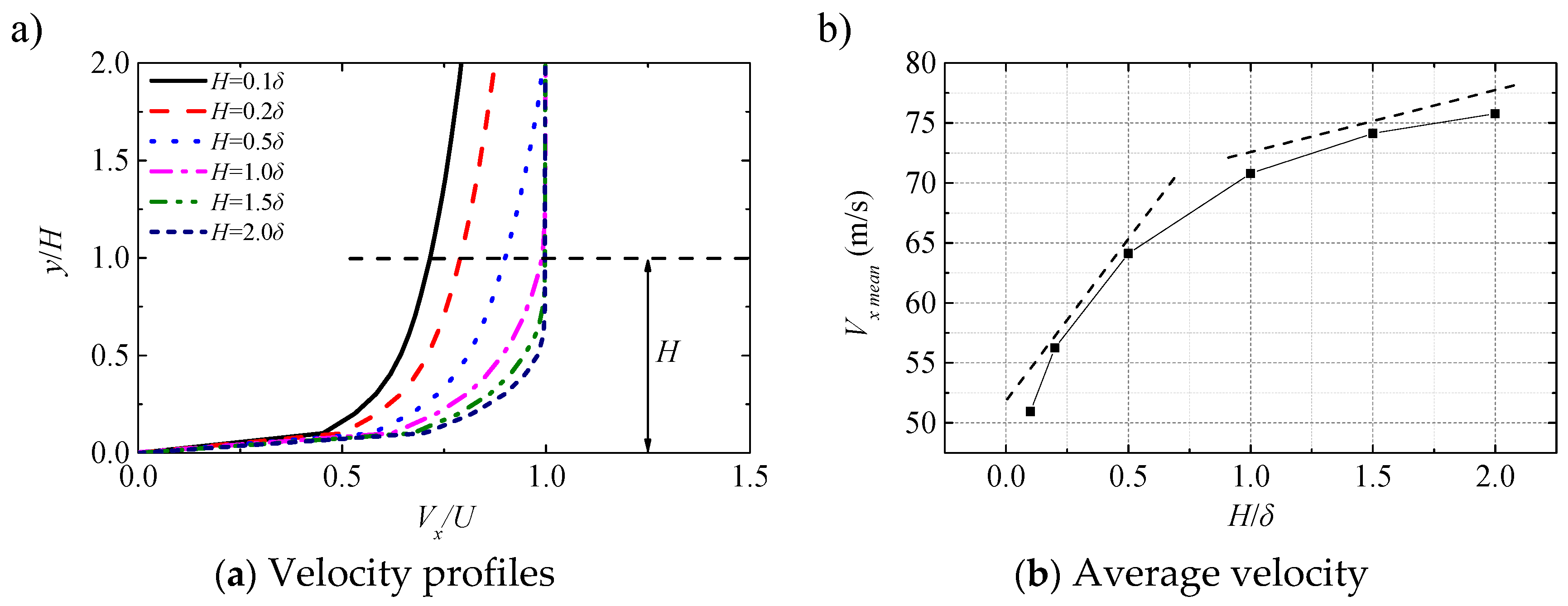
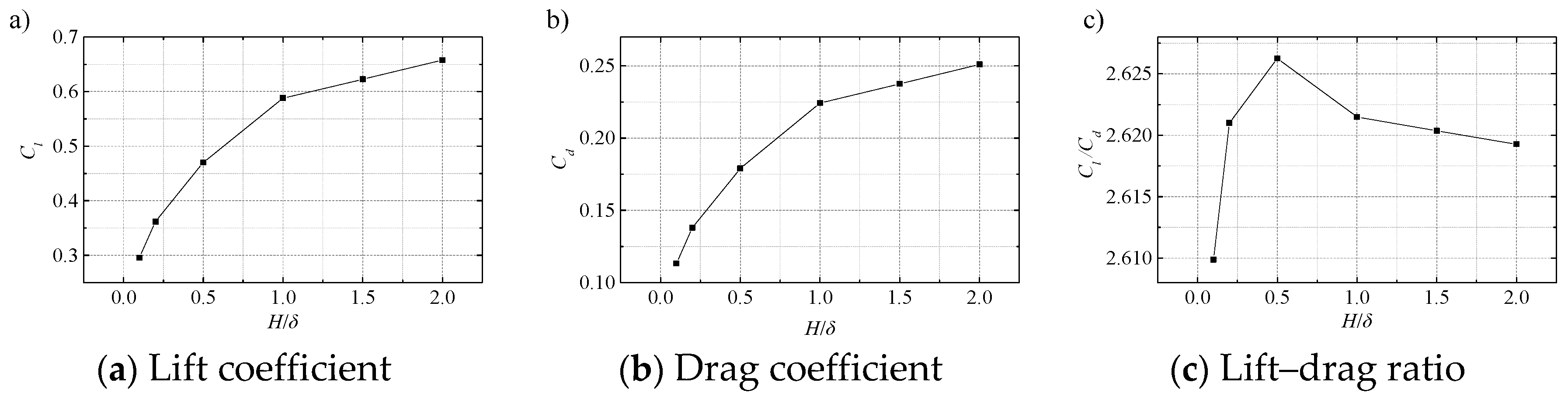
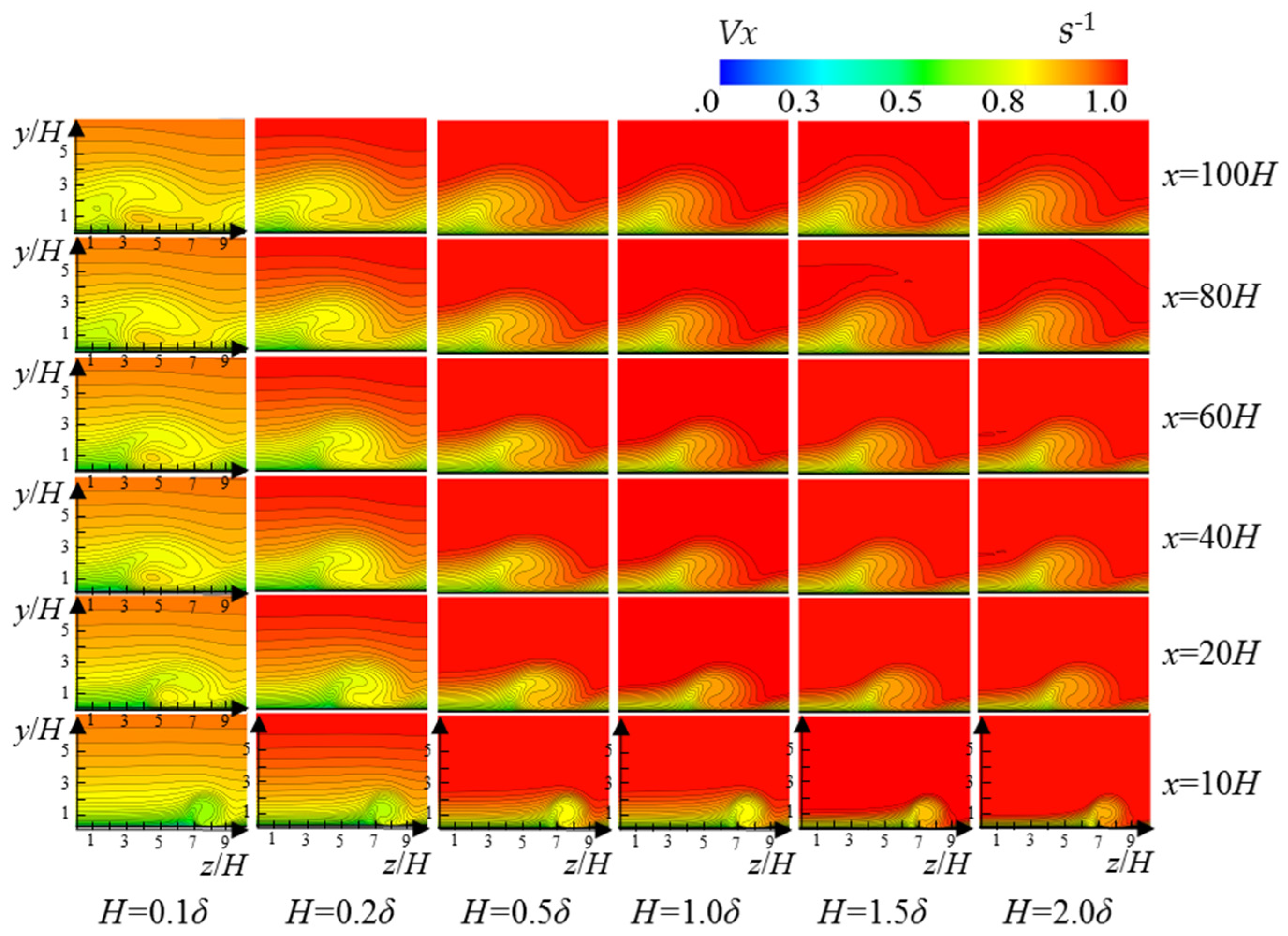
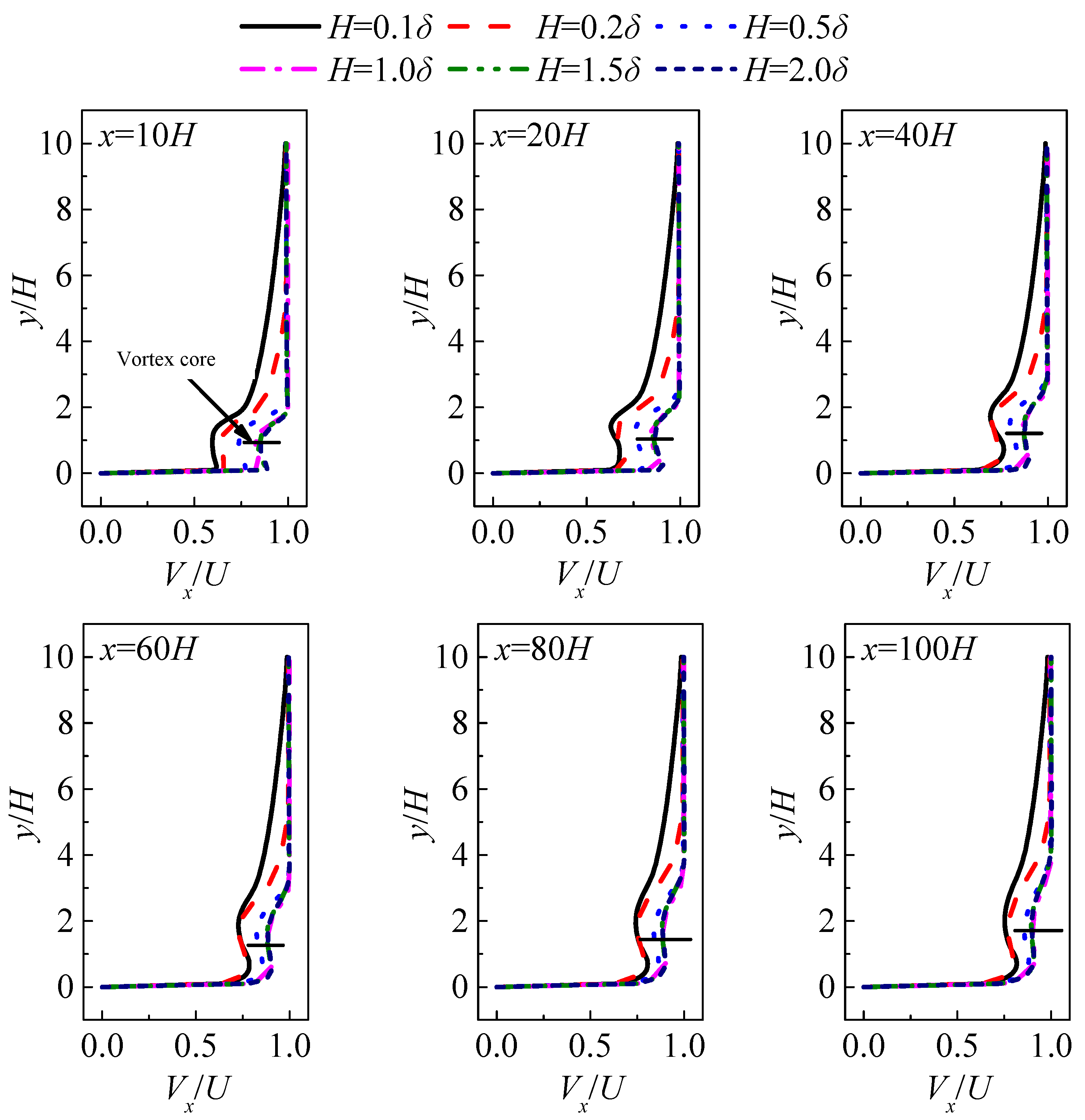
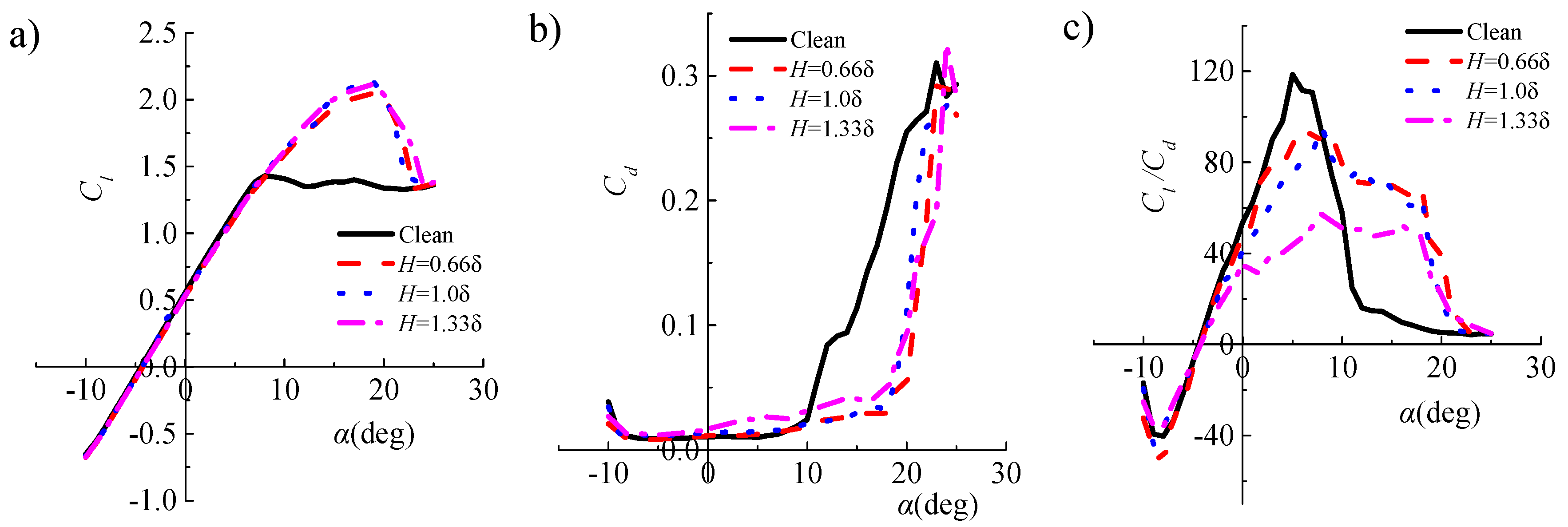
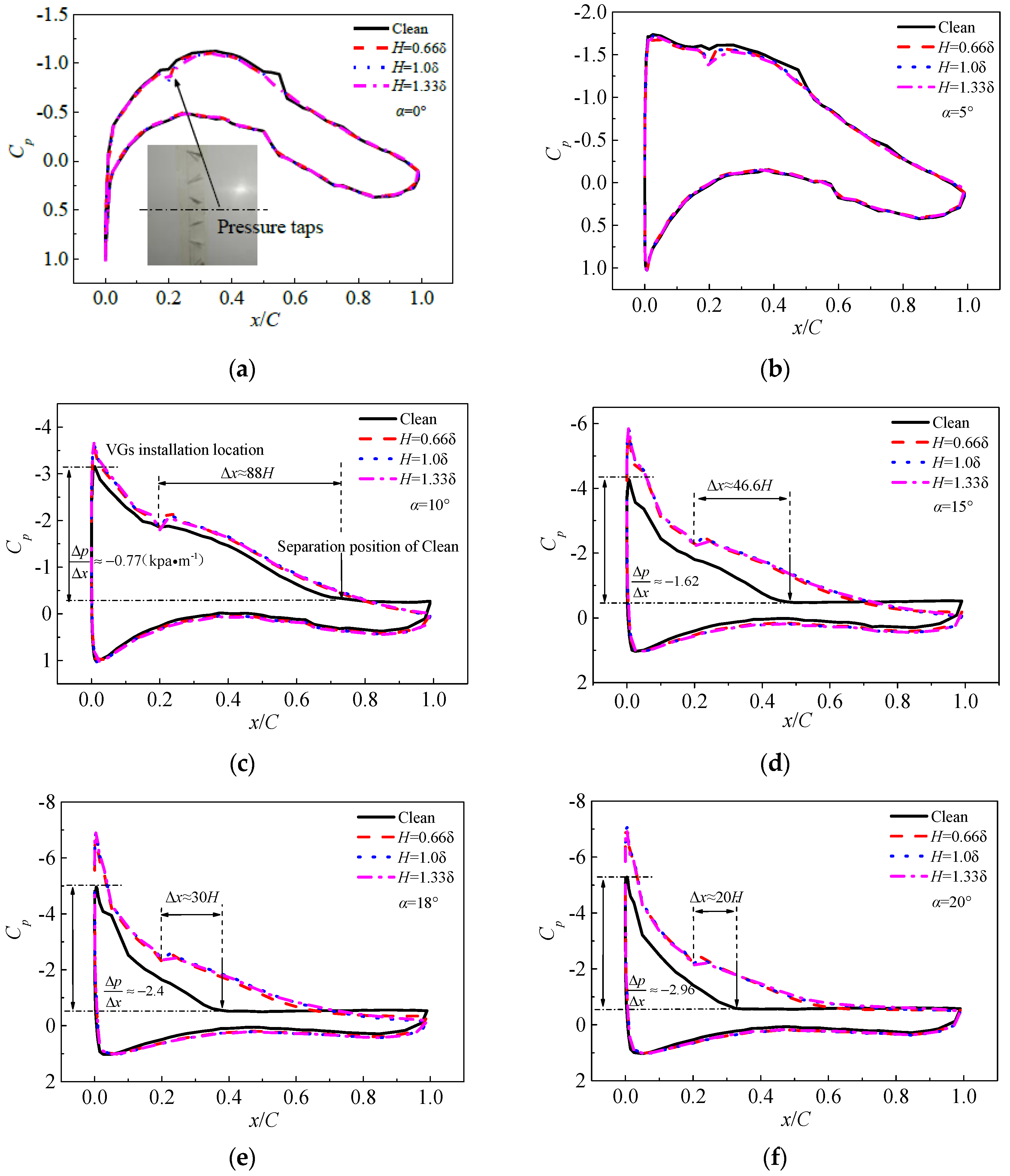
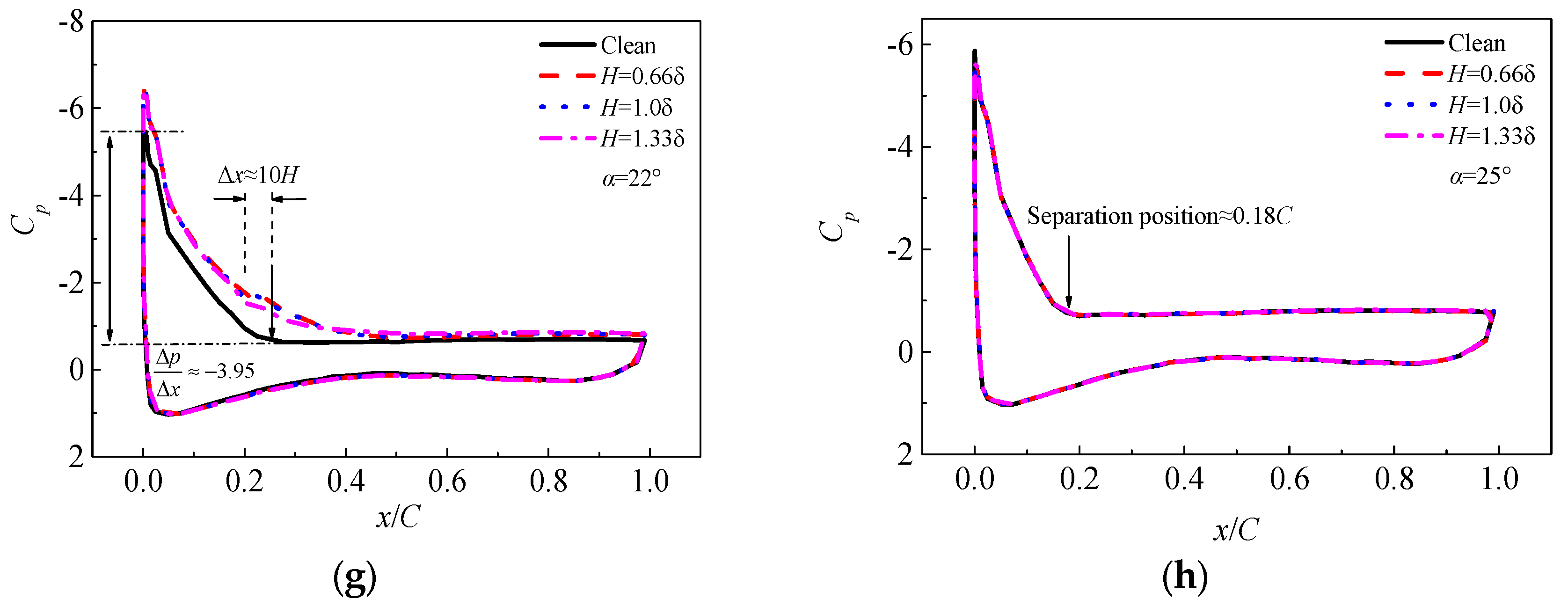
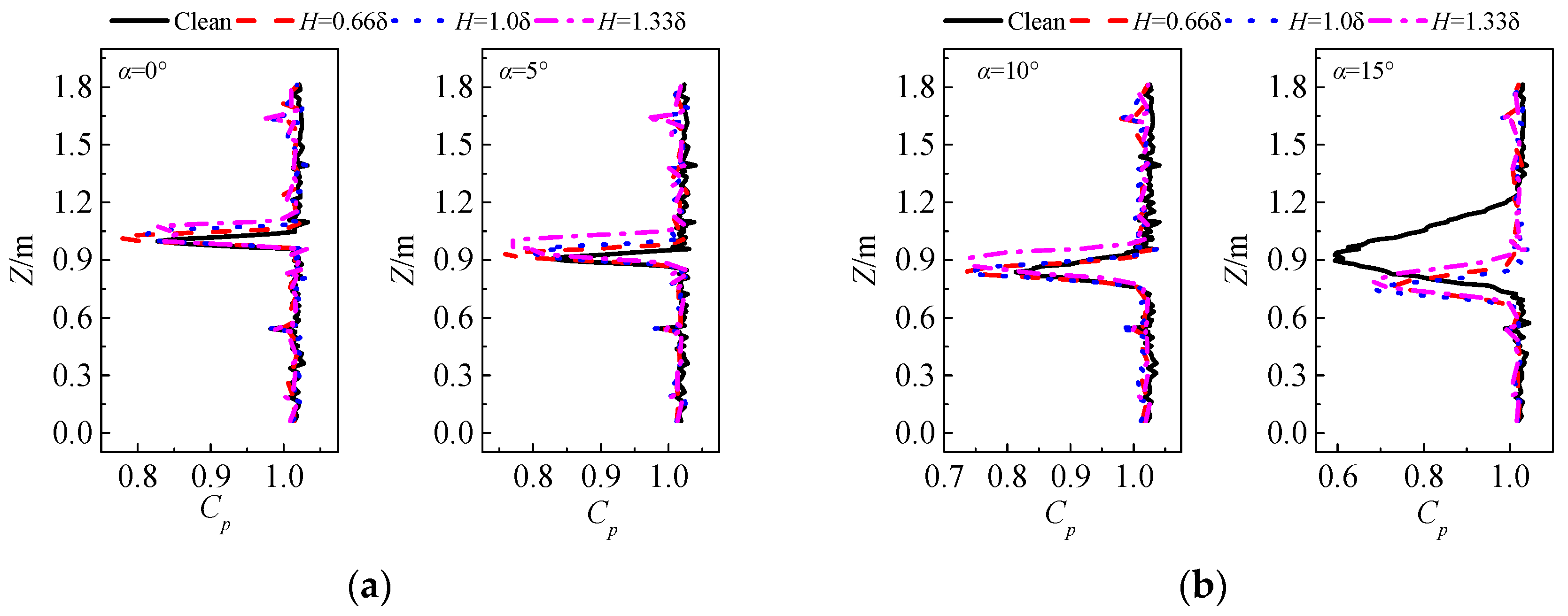
To explore the effect of the height of vortex generators (VGs) on the control effect of boundary-layer flow, the vortex characteristics of a plate and the aerodynamic characteristics of an airfoil for VGs were studied by both wind tunnel experiments and numerical methods. Firstly, the ratio of VG height (H) to boundary layer thickness (δ) was studied on a flat plate boundary layer; the values of H are 0.1δ, 0.2δ, 0.5δ, 1.0δ, 1.5δ, and 2.0δ. Results show that the concentrated vortex intensity and VG height present a logarithmic relationship, and vortex intensity is proportional to the average kinetic energy of the fluid in the height range of the VG. Secondly, the effects of height on the aerodynamic performance of airfoils were studied in a wind tunnel using three VGs with H = 0.66δ, 1.0δ, and 1.33δ. The stall angle of the airfoil with and without VGs is 18° and 8°, respectively, so the VGs increase the stall angle by 10°. The maximum lift coefficient of the airfoil with VGs increases by 48.7% compared with the airfoil without VGs, and the drag coefficient of the airfoil with VGs is 84.9% lower than that of the airfoil without VGs at an angle of attack of 18°. The maximum lift–drag ratio of the airfoil with VGs is lower than that of the airfoil without VGs, so the VGs do not affect the maximum lift–drag ratio of the airfoil. However, a VG does increase the angle of attack of the best lift–drag ratio.
Keywords: vortex generators; wind turbine; airfoil; aerodynamic performance vortex generators; wind turbine; airfoil; aerodynamic performance