Article

Assessing the Potential of Implementing a Solar-Based Distributed Energy System for a University Using the Campus Bus Stops

by
David Morillón Gálvez
1,†,
Iván García Kerdan
2,*,† and
Germán Carmona-Paredes
1
1
Instituto de Ingeniería, Universidad Nacional Autónoma de México, Mexico City 04510, Mexico
2
Tecnologico de Monterrey, School of Engineering and Sciences, Av. Carlos Lazo 100, Santa Fe, La Loma, Mexico City 01389, Mexico
*
Author to whom correspondence should be addressed.
These authors contributed equally to this work.
Energies 2022, 15(10), 3660; https://doi.org/10.3390/en15103660
Submission received: 25 March 2022 / Revised: 30 April 2022 / Accepted: 13 May 2022 / Published: 17 May 2022
(This article belongs to the Topic Distributed Energy Systems and Resources)

Abstract

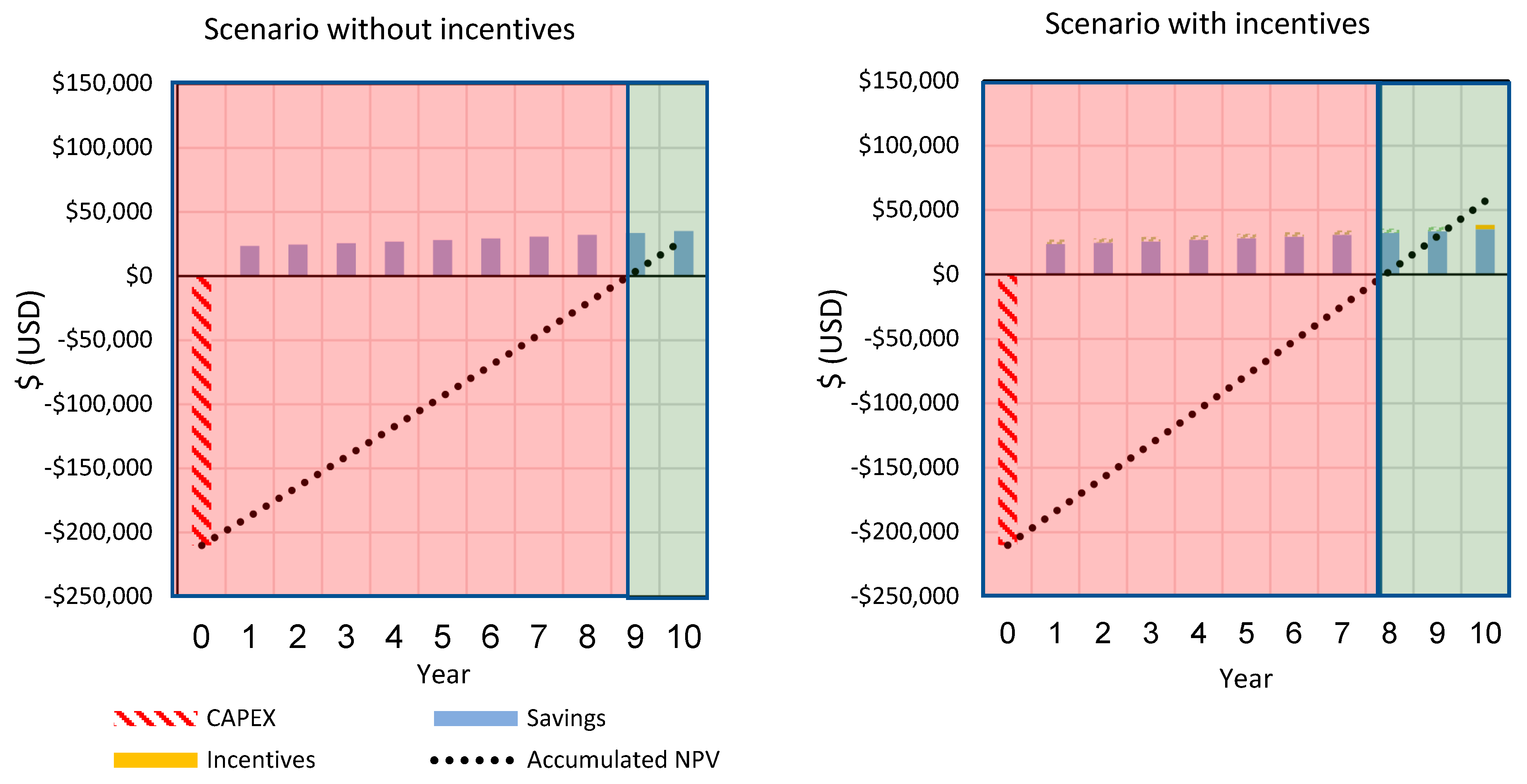
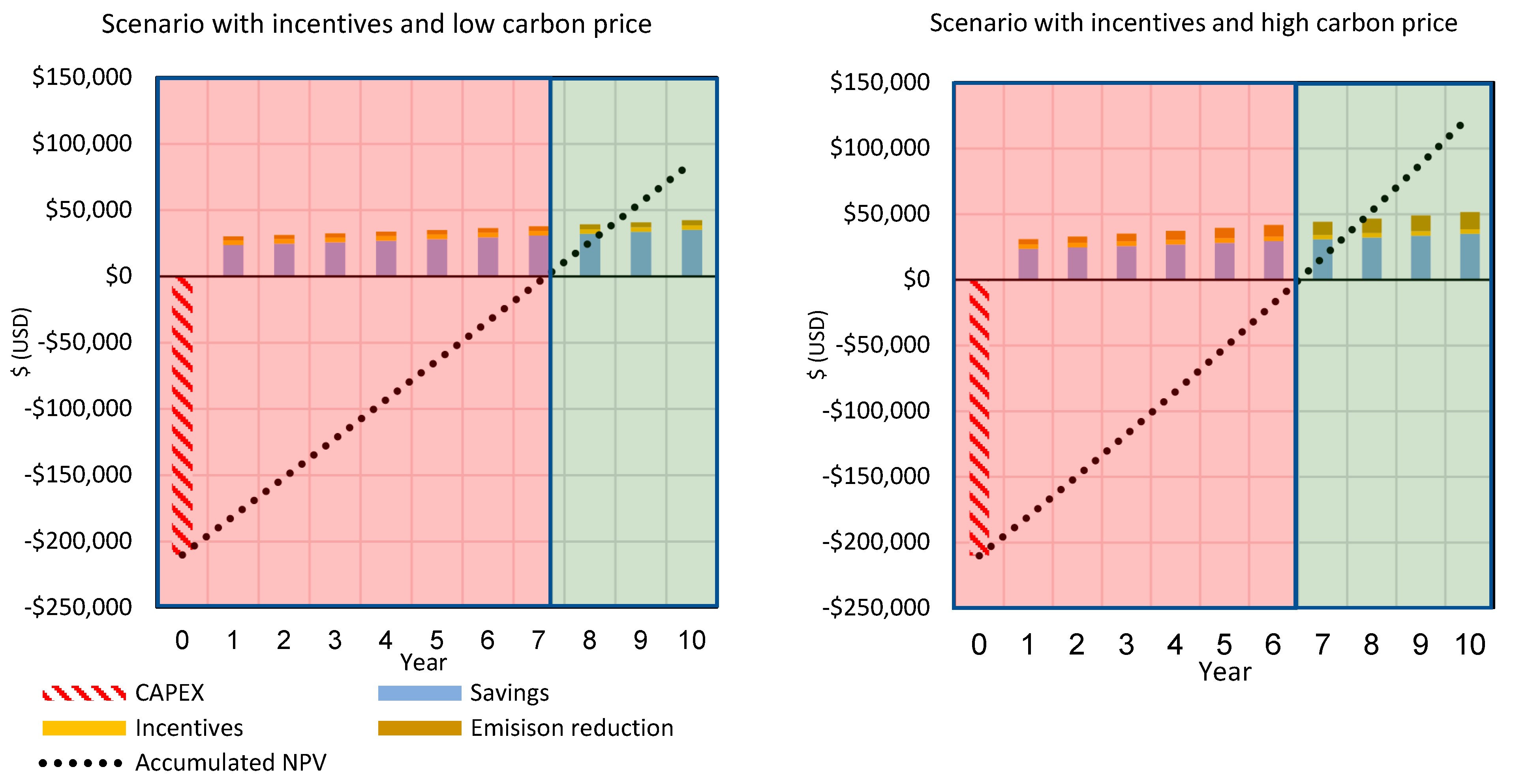
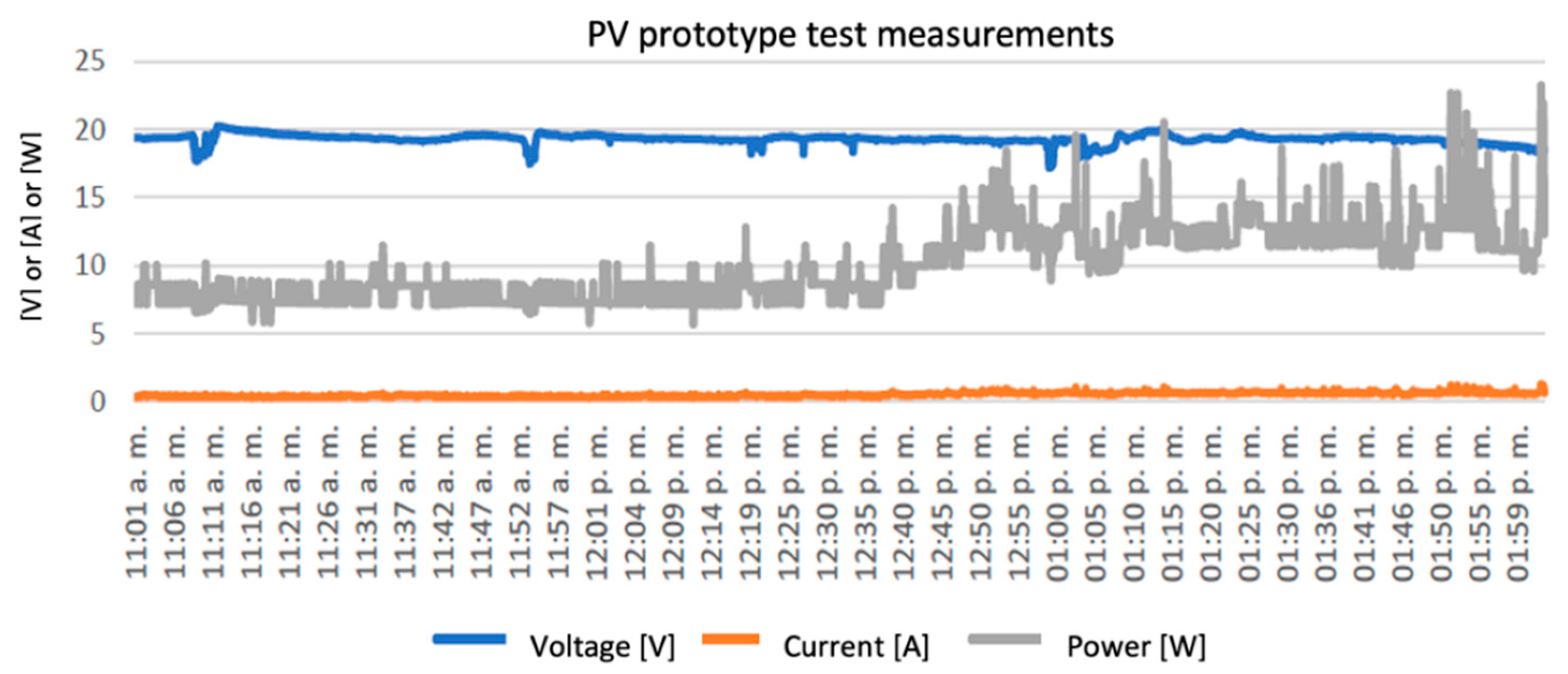
Large educational facilities hold great potential for the implementation of solar-based distributed energy systems. The aim of this paper is to present a prototype and an assessment of a solar-based bus shelter photovoltaic system intended to be implemented at a campus scale that serves as an energy-distributed system. The National Autonomous University of Mexico (UNAM), a campus with an area of 7.3 km2 and bus stops’ roof area availability of around 1100 m2 was selected as a case study. The proposed system, apart from considering on-site generation, also considers an increase in end-use services such as the installation of television screens for information, charging docks, surveillance cameras, internet service, and lighting. For the assessment, a load facility survey and an estimation of the baseline energy use was conducted based on two demand use conditions, corresponding to 12 and 24 h for different archetypical stations. It was found that the baseline annual energy consumption for all the bus stops represents from 55–111 MWh. In this paper, an initial prototype of a solar-based bus shelter PV system is presented, and an assessment is carried out to understand its potential application at a large scale. The analysis shows that energy use in the retrofitted stations would rise to 167 MWh/year; however, apart from covering on-site demand, the system has the capacity to generate an additional 175 MWh, feeding nearby university buildings. It is calculated that the system could save around 130 t CO2e annually. The economic analysis shows that the project has a discounted payback (DPB) of almost 9 years and an internal rate of return (IRR) of 5.9%; however, in scenarios where renewable generation and carbon incentives are applied, this improves the project’s DPB to 6 years and the IRR to 13%.
Keywords: solar energy; decarbonisation; distributed energy system; energy retrofit; university solar energy; decarbonisation; distributed energy system; energy retrofit; university