1. Introduction
The hydrogen fuel cell vehicle (HFCV) is one of the most promising solutions for sustainable transportation, which offers zero emissions and high efficiency. When using hydrogen gas and oxygen to generate electricity through a chemical reaction, hydrogen fuel cell vehicles are only emitting water vapor, which supports the environmentally friendly usage of vehicles [
1,
2]
These attributes position HFCVs as viable alternatives to conventional internal combustion engines and battery electric vehicles (BEVs), particularly for medium and heavy-duty applications. The HFCV consists of main components, such as a fuel cell stack, hydrogen system storage, electric motors and battery [
3]. Optimizing the efficiency of each component is essential for achieving an effective and well-integrated system configuration [
4].
The fuel cell stack is the main component of the system, where hydrogen reacts with oxygen to generate electricity [
5]. Recent advancements in catalyst technologies have significantly enhanced the performance and durability of fuel cells based on the research studies of Agrawal et al. (2024) and Madheswaran et al. (2021) [
6,
7]. Meanwhile, the hydrogen storage system in research studies of Züttel et al. (2010), which is essential for onboard energy supply, has seen notable progress in compressed gas, liquid hydrogen, and solid-state storage technologies [
8].
Additionally, the battery in hybrid FCEVs plays a crucial role in providing supplementary power during peak loads and capturing regenerative energy. Studies comparing lithium-ion batteries and hydrogen fuel cells of Syré et al. (2024) emphasize the technical, economic, and environmental trade-offs of these systems [
9]. Finally, the electric motor converts the generated electricity into mechanical energy to drive the vehicles, with continuous innovations in motor efficiency and power density significantly improving vehicles’ performance [
9].
However, in the case of automobiles, they do not operate under conditions optimized for maximum efficiency. Instead, the load changes rapidly over time, and the system’s installation conditions and exposure environment also vary constantly. Therefore, an optimal configuration that takes these factors into account is necessary [
10].
In particular, the efficiency of ancillary (electric) systems, such as heating, ventilation, and air conditioning (HVAC), significantly influences the overall energy consumption and driving range of HFCVs [
11]. Optimizing an HVAC system is important, given that climate control demands account for a sustainable portion of auxiliary energy usage, especially under extreme seasonal conditions [
12].
The formation of fuel cell powertrains in long-distance heavy-duty vehicles brings particular challenges due to the necessity of sustaining thermal efficiency across lengthy distances and prolonged operating times [
13]. Pardhi et al. (2022) performed a review of fuel cell powertrains for long-range heavy-duty vehicles, recognizing the significance of thermal management solutions to enhance fuel cell efficiency and optimize energy use [
14]. Their research highlights the function of HVAC systems in sustaining the ideal temperature of the vehicle’s essential components, emphasizing the effect of advanced thermal management techniques on the overall efficiency of the vehicle.
In urban driving situations, HVAC systems significantly influence the vehicle’s energy efficiency, especially during extreme weather conditions. Wu et al. (2022) examined the effect of air conditioning systems on the functionality of fuel cell vehicles using a realistic model to evaluate energy consumption in actual urban settings [
15]. The analysis of this paper shows the substantial impact of HVAC energy requirements in urban driving cycles and illustrates the necessity of system optimization to minimize energy losses in congested city areas [
16]. As urban regions frequently experience varying temperatures and high traffic congestion, these results indicate that HVAC systems should be structured to adjust to dynamic conditions while reducing their effect on fuel cell efficiency [
17].
Furthermore, Mansour and Raeesi (2024) investigated the performance evaluation of both fuel cell and electric vehicles, incorporating elements such as fuel cell degradation, battery life, and HVAC energy demands into the wider energy management framework of HFCVs, particularly to address the degradation of fuel cells and the aging of battery systems [
18]. In Xuan Meng’s study, it is explained that fuel cells experience a gradual decline in performance during long-term operation. This degradation is caused by various complex factors, including the deterioration of electrode materials, catalyst loss, mechanical damage to the membrane electrode assembly, and fluctuations in operating conditions. The study emphasizes that such performance degradation affects the efficiency and output power of fuel cells and also shortens their service life, increasing maintenance and replacement costs [
19]. By considering variables above, the authors suggest strategies to enhance the overall durability and performance of fuel cell vehicles, providing important insights into the long-term energy efficiency of HVAC systems across different driving conditions.
In the context of hybrid powertrains, Sefkat and Ozel (2022) conducted an experimental and numerical study of energy and thermal management systems for hydrogen, developing integrated thermal management systems to enhance energy efficiency, with a particular emphasis on the role of HVAC in maintaining the temperature of both the fuel cell and the battery [
2,
20]. The study demonstrates how hybrid configurations can provide energy savings while optimizing thermal management through more efficient HVAC operation [
21]. Complementing this focus on efficiency, recent research has highlighted the impact of operational conditions on fuel cell longevity. Specifically, the remaining useful life of PEMFCs is affected by both reversible and irreversible losses, which evolve under variable loading and thermal conditions. These findings suggest that effective HVAC and thermal management strategies are crucial not only for energy efficiency but also for preserving long-term fuel cell durability [
13,
20,
21].
The use of heat pump air conditioning systems in hydrogen fuel cell vehicles offers promising opportunities to improve HVAC energy efficiency, especially in colder climates. Qu et al. (2024) studied the application of integrated thermal management systems based on heat pump air conditioning, showing that this approach can significantly reduce the energy consumption associated with traditional HVAC systems [
22]. By utilizing waste heat from the fuel cell, heat pump systems enable more efficient heating and cooling, which is critical for reducing the overall energy burden on the vehicle.
A comprehensive study by Hollweck et al. (2018) examined the energy consumption of hydrogen fuel cell vehicles (HFCVs) across different European weather conditions and driving behaviors [
23]. The work highlights the difference in HVAC energy demands under diverse seasonal and operational conditions, which provides important insights on how driving behavior and environmental factors influence energy performance. This study emphasizes the necessity of evaluating HVAC efficiency across different driving scenarios to optimize HFCV performance throughout the years.
Despite the advancements of different authors regarding this topic, there a still a need for a comprehensive evaluation of HVAC systems in HFCVs across diverse seasonal and operational conditions. The present study addresses this gap by analyzing the energy dynamics of HVAC systems in hydrogen fuel cell buses under various driving cycles.
The objectives of this research are the following:
- (a)
Show the energy consumption of HVAC systems in HFCVs under varying seasonal conditions and driving cycles;
- (b)
Evaluate the influence of HVAC operation on overall vehicles’ efficiency and range;
- (c)
Propose strategies to enhance HVAC performance without compromising passenger comfort.
By providing a detailed analysis of HVAC energy dynamics, this study aims to contribute to the development of operational guidelines that support the adoption and efficiency optimization of hydrogen-powered vehicles in diverse climatic and driving environments.
3. Simulation Setup and Parameters
The fuel cell electrical bus (FCEB) model is simulated under various environmental and operational conditions. The simulation setup was selected based on actual Hyundai Universe bus parameters, which include actual operating conditions, bus specifications, battery parameters and fuel cell characteristics.
Simulation conditions are used to define the specifications and variables within the simulation model for the HFCB model. The weight of the bus is a critical factor for determining overall energy consumption, as it influences both propulsion power requirements and HVAC energy demand. As shown in the
Table 1 the chosen weight of 11 tons represents the typical weight of a fully loaded city bus, including the chassis, engine, powertrain and standard passenger weight load. The weight of the bus was chosen based on the average weight of standard city buses based on Hyundai Universe bus parameters [
35]. A heavier bus requires more power for acceleration and hill climbing, which in turn increases the hydrogen consumption of the fuel cell system [
36].
Battery specifications such as voltage and capacity are essential in modeling the interaction between the fuel cell and the battery in supplying power for both propulsion and auxiliary loads. The selection battery voltage of 642 V ensures compatibility with the powertrain system, while a capacity of 72 Ah allows for sufficient energy storage to support peak load demands. The battery acts as a buffer to stabilize power fluctuations, particularly when HVAC loads vary due to external temperature conditions. The initial state of charge (SOC) is set at 80%, ensuring that the battery starts at a standard operational level before simulation begins [
37]. This value corresponds to a typical SOC range observed in fuel cell electric buses under normal driving conditions, where the battery is maintained between 60% and 80% to balance energy availability and longevity. In addition, the battery management strategy incorporates current- and voltage-limiting controls to prevent overcharging when the SOC is high. When the SOC exceeds a predefined threshold, the charging current is reduced, and the fuel cell output is regulated to maintain safe operating limits, thereby ensuring battery protection and a consistent system performance [
38].
The fuel cell system, which provides primary energy for the bus, is modeled based on stack configuration and performance characteristics. The cross-sectional area of 4500 cm2 and a number of cells in the range of 200–500 determine the fuel cell’s ability to generate power efficiently. A large cross-section area facilitates battery hydrogen and oxygen diffusion, improving fuel cell efficiency. The total capacity of the fuel cell is considered to be up to 180 kWh, ensuring that the system can handle extended operation times under various driving conditions and HVAC loads.
To assess the impact of HVAC energy consumption on the efficiency of FCEBs, simulation was conducted under varying HVAC loads as shown in the
Table 2, levels (50% and 100%), considering two extreme ambient temperature conditions: −7 °C and 35 °C. These temperature settings were selected to represent harsh winter and summer conditions, where HVAC energy demand is highest. These specific temperature conditions align with the SAE Executive Standard Committee rules, which establish a standardized testing environment for evaluating vehicle performance under extreme climatic conditions [
39].
Additionally, the humidity values used in the simulation were based on the average summer and winter humidity levels recorded in Korea for 2023 [
40]. This ensures that the study accurately reflects real-world climatic conditions, enhancing the reliability of the findings.
In cold weather conditions (−7 °C), the heating load is significantly increased to maintain passenger comfort inside the bus. Since fuel cell buses do not generate heat like conventional internal combustion engines, the HVAC system must rely on electric heaters to maintain the desired cabin temperature. This led to higher electricity consumption, reducing overall fuel cell efficiency and increasing hydrogen consumption [
41].
In hot weather conditions (35 °C), the cooling load dominates the HVAC energy demand. Air conditioning systems require substantial power to lower the cabin temperature, especially when the bus operates in direct sunlight of high humidity conditions. The ambient humidity values of 60% (winter) and 74% (summer) were chosen to reflect real-world conditions, affecting both passenger comfort and the efficiency of the air conditioning system. Higher humidity levels increase the workload of dehumidification systems, adding to the total HVAC power consumption [
42].
The HVAC operates under two load conditions: 50% and 100%. The 50% load condition represents moderate heating or cooling demand, such as during mild weather or partial passenger occupancy. The 100% load condition simulates extreme weather scenarios where maximum HVAC operation is necessary to maintain comfort, leading to the highest impact on fuel cell energy consumption.
Driving Conditions
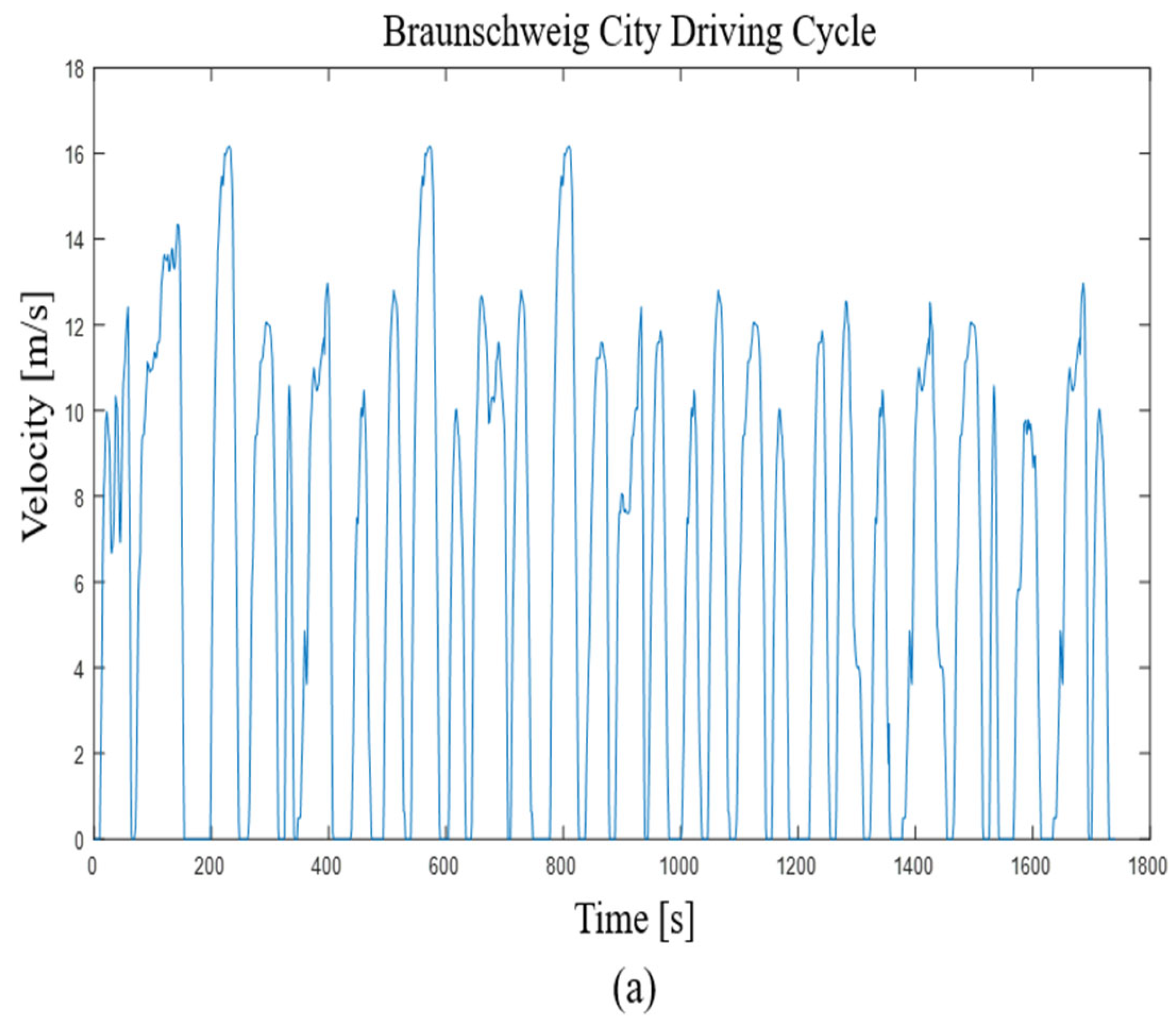
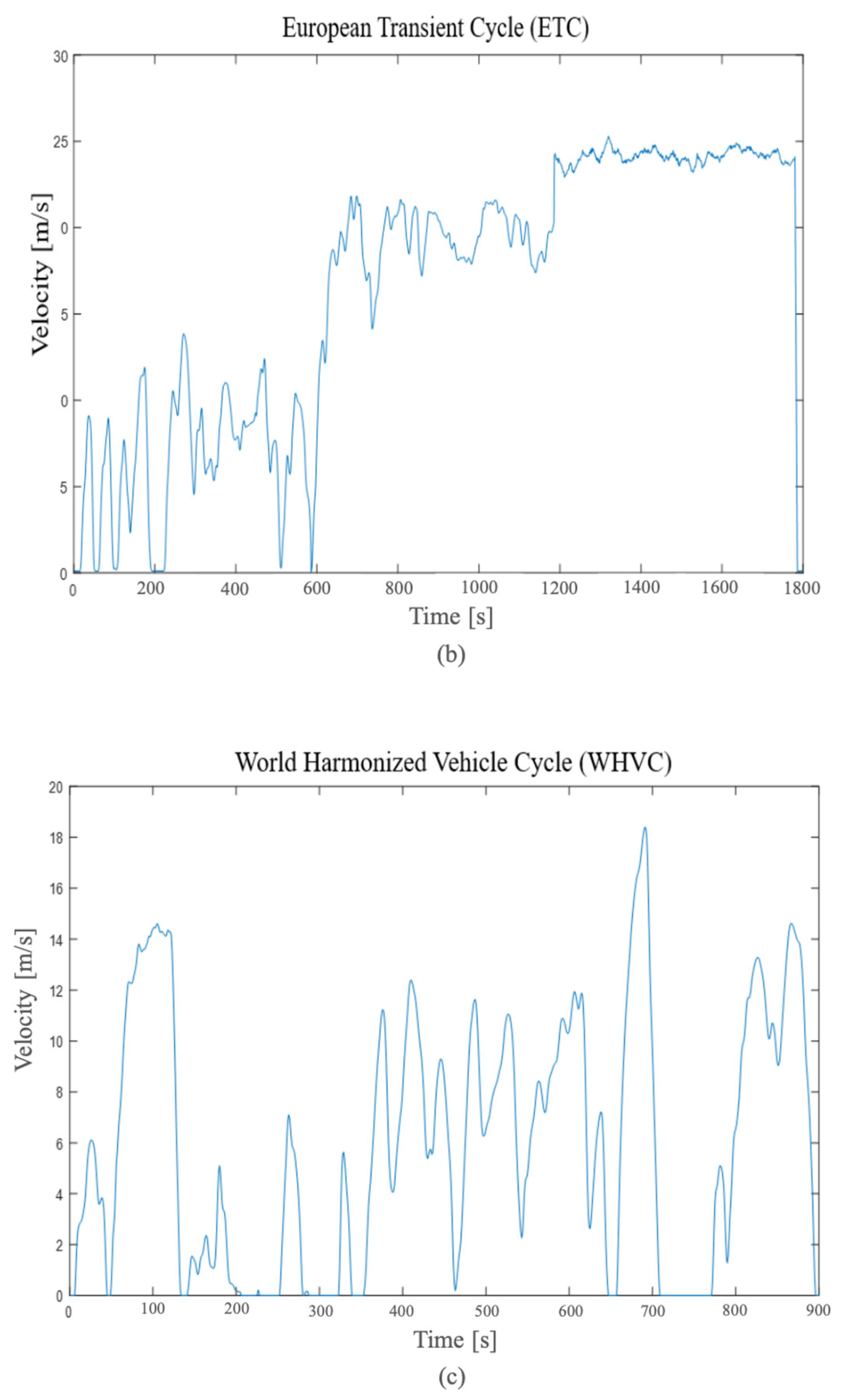
In the analysis of the effects of HVAC loads on fuel cell efficiency and bus performance, the simulation considers three distinct driving conditions as shown in the
Figure 1. These driving cycles were selected based on their ability to represent real-world urban, highway, and mixed driving conditions.
Each driving cycle plays a critical role in evaluating energy consumption and efficiency, as different driving behaviors influence power demand, regenerative braking potential, and HVAC load variability [
43].
The Braunschweig cycle represents an urban driving pattern with frequent stops, acceleration, and deceleration. It is characterized by low average speeds and short-distance travel, making it ideal for analyzing stop-and-go traffic conditions. The HVAC system in this cycle is highly influenced by frequent door openings, which cause temperature fluctuations inside the cabin, requiring additional HVAC power to restore thermal comfort.
The World Harmonized Vehicle Cycle (WHVC) is designed to simulate highway driving conditions with higher average speeds and fewer stops compared to urban driving. Highway driving typically results in a more stable HVAC energy demand, as the cabin temperature remains relatively constant due to fewer interruptions from door openings.
Figure 1.
(
a) The Braunsehweig Cycle, (
b) European Transient Cycle (ETC) driving conditions, and (
c) World Harmonized Vehicle Cycle (WHVC) [
44].
Figure 1.
(
a) The Braunsehweig Cycle, (
b) European Transient Cycle (ETC) driving conditions, and (
c) World Harmonized Vehicle Cycle (WHVC) [
44].
However, higher speeds increase aerodynamic drag, indirectly affecting overall energy efficiency.
The European Transient Cycle (ETC) represents mixed driving conditions, incorporating elements of urban, rural, and highway driving. The variability in acceleration and deceleration patterns makes it a comprehensive test scenario for evaluating overall bus efficiency under diverse real-world conditions. The HVAC system in this cycle experiences moderate fluctuations, as both stop-and-go and continuous driving conditions are present.
The key parameters of these cycles further demonstrate their suitability for real-world bus operation: the Braunschweig, WHVC, and ETC cycles have total distances of 5.63 km, 15.63 km, and 15 km, respectively, all with a total duration of 700 s. Their corresponding average speeds are 9.58 m/s for Braunschweig, 16.33 m/s for WHVC, and 16.67 m/s for ETC. These metrics confirm that the selected cycles adequately capture typical operational conditions for hydrogen fuel cell buses across urban, mixed, and highway environments [
45].
By incorporating these driving cycles, the simulation ensures that the results reflect real-world operating conditions for hydrogen fuel cell buses. The analysis of these conditions provides insights into how different driving behaviors impact fuel cell energy consumption, battery utilization, and HVAC power demand.
Each driving condition significantly influences HVAC operation and energy consumption. In urban settings, frequent stops cause temperature variations inside the cabin, leading to an increased HVAC workload and restored comfort levels. In highway settings, while HVAC loads remain stable, high-speed operation increases vehicle resistance and affects overall efficiency. The mixed driving cycle provides a balanced representation of energy demands across different operating environments, making it a crucial part of the study.
These driving cycles were carefully selected to analyze fuel cell consumption efficiency and overall vehicle reliability under different HVAC conditions. By simulating these diverse scenarios, this study aims to optimize HVAC operation strategies and improve energy management in hydrogen fuel cell buses.
This detailed simulation setup and driving cycle evaluation form the foundation for analyzing the impact of HVAC energy consumption on FCEB efficiency, leading to data-driven recommendations for improved fuel cell bus operation and energy management strategies.
4. Results and Discussion
4.1. HVAC Power for Summer Temperature in Different Driving Conditions
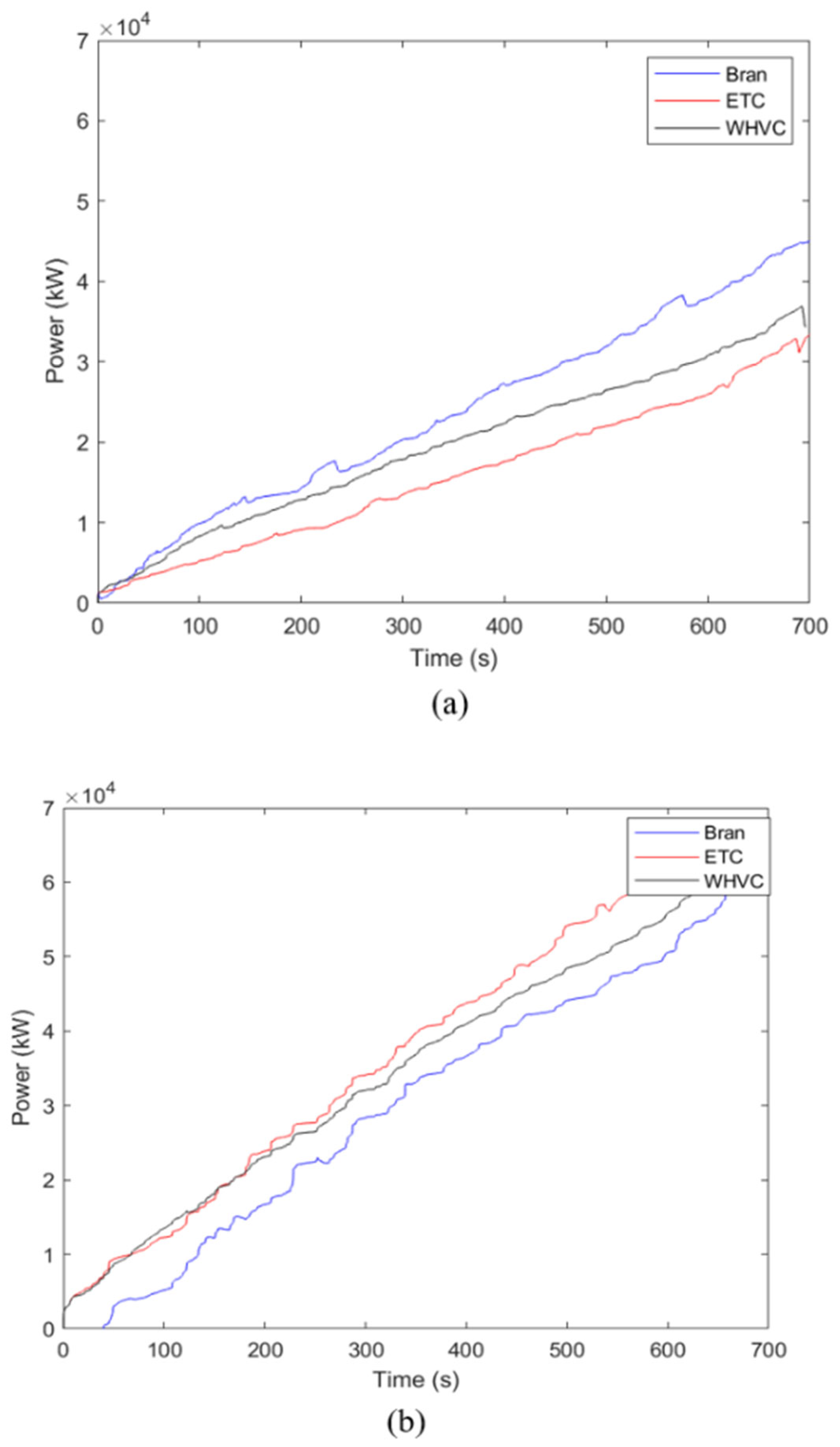
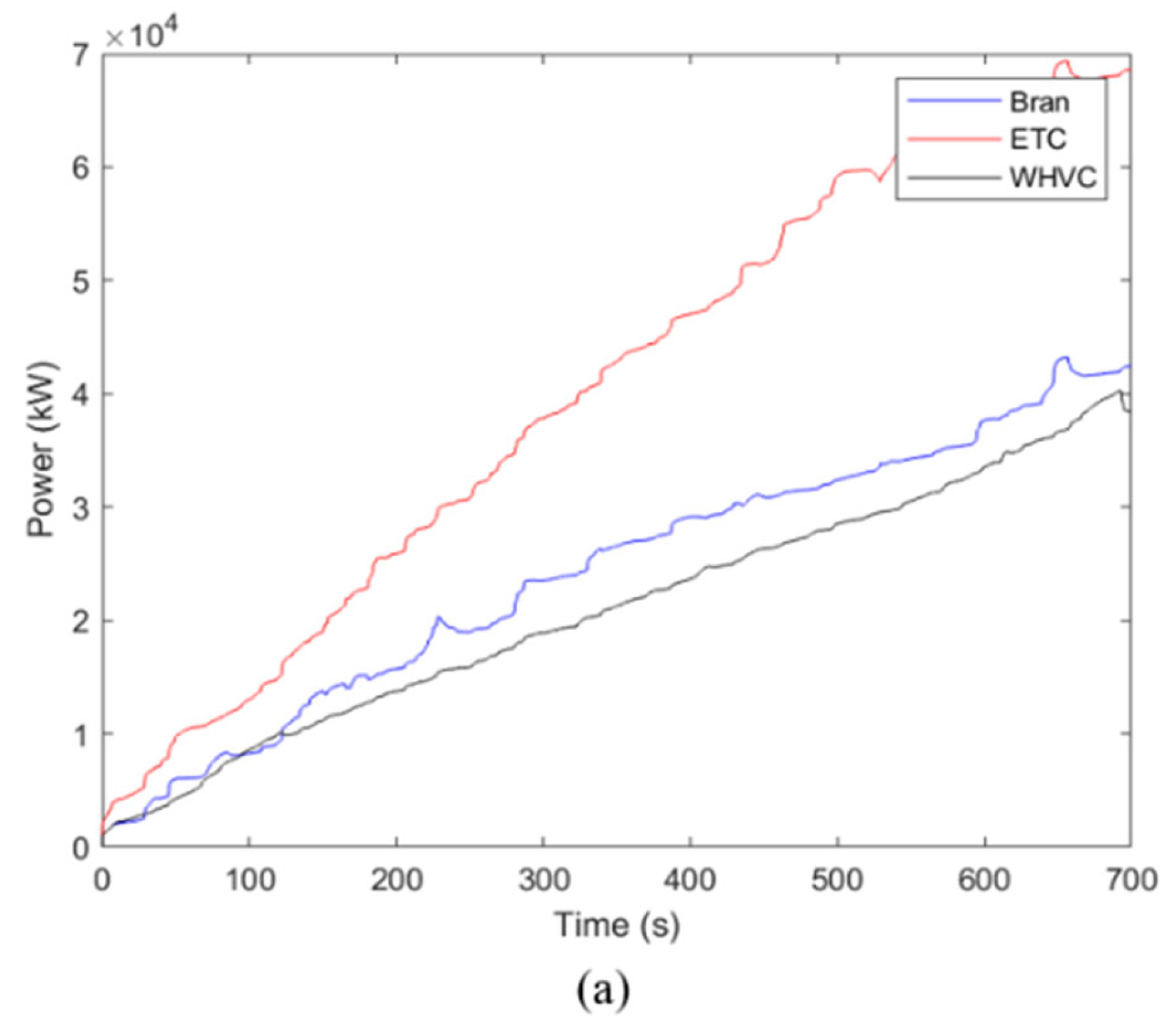
Figure 2 illustrates the cumulative HVAC power consumption over time under summer conditions of 35 °C and relative humidity of 74%, comparing three driving conditions: Braunschweig (Bran), the Worldwide Harmonized Vehicle Cycle (WHVC), and the European Transient Cycle (ETC). Each subplot corresponds to a different HVAC operational mode: full HVAC load with recirculation on (HL100 Ron), full HVAC load with recirculation off (HL100 Roff), partial HVAC load with recirculation on (HL50 Ron) and partial HVAC load with recirculation off (HL50 Roff).
Across all HVAC modes, the ETC cycle consistently shows the highest cumulative HVAC power consumption. Under the HL100 Ron condition, the ETC cycle averages 36.93 kW, which is the highest among all tested combinations. This is attributed to the cycle’s characteristics—higher average speeds and more frequent acceleration event—which result in greater cabin cooling demands due to increased thermal loads from external air and mechanical system usage.
In contrast, the recirculation mode (HL100 Roff and HL50 Roff) generally show reduced power consumption, particularly under a partial load. Under the HL50 Roff condition, ETC HVAC power drops to 12.82 kW, compared to 20.45 kW with recirculation on in HL50 Ron, highlighting the impact of disabling recirculation in reduced energy draw under lighter HVAC demand. This reduction reflects the decreased energy demand when recirculation is disabled, as the system no longer consumes additional electrical power to circulate cabin air, resulting in more efficient operation and lower overall HVAC power consumption.
Braunschweig consistently yields the lowest HVAC power demand, especially in HL50 Roff mode, averaging only 15.62 kW, due to its stop-and-go nature and lower average speeds, which reduce the external thermal load and air exchange.
WHVC exhibits moderate power demand across most modes, for instance, 19.42 kW in HL100 Roff and 11.13 kW in HL50 Roff, reflecting its smoother, more uniform driving profile. In HL50 Ron, the average HVAC power drops across all cycles compared to HL100 Ron, showing a clear trend: ETC (20.45 kW) > Bran (24.37 kW) > WHVC (19.42 kW).
These quantitative results confirm that both the HVAC load level and the recirculation setting have significant impacts on energy consumption, with higher loads and recirculation ON settings leading to an increased HVAC power demand. Among the cycles, ETC possesses the most HVAC-intensive conditions, while Braunschweig offers the most energy-efficient HVAC performance in urban-like settings.
4.2. Fuel Cell and Battery Power Distribution in the Summer Season
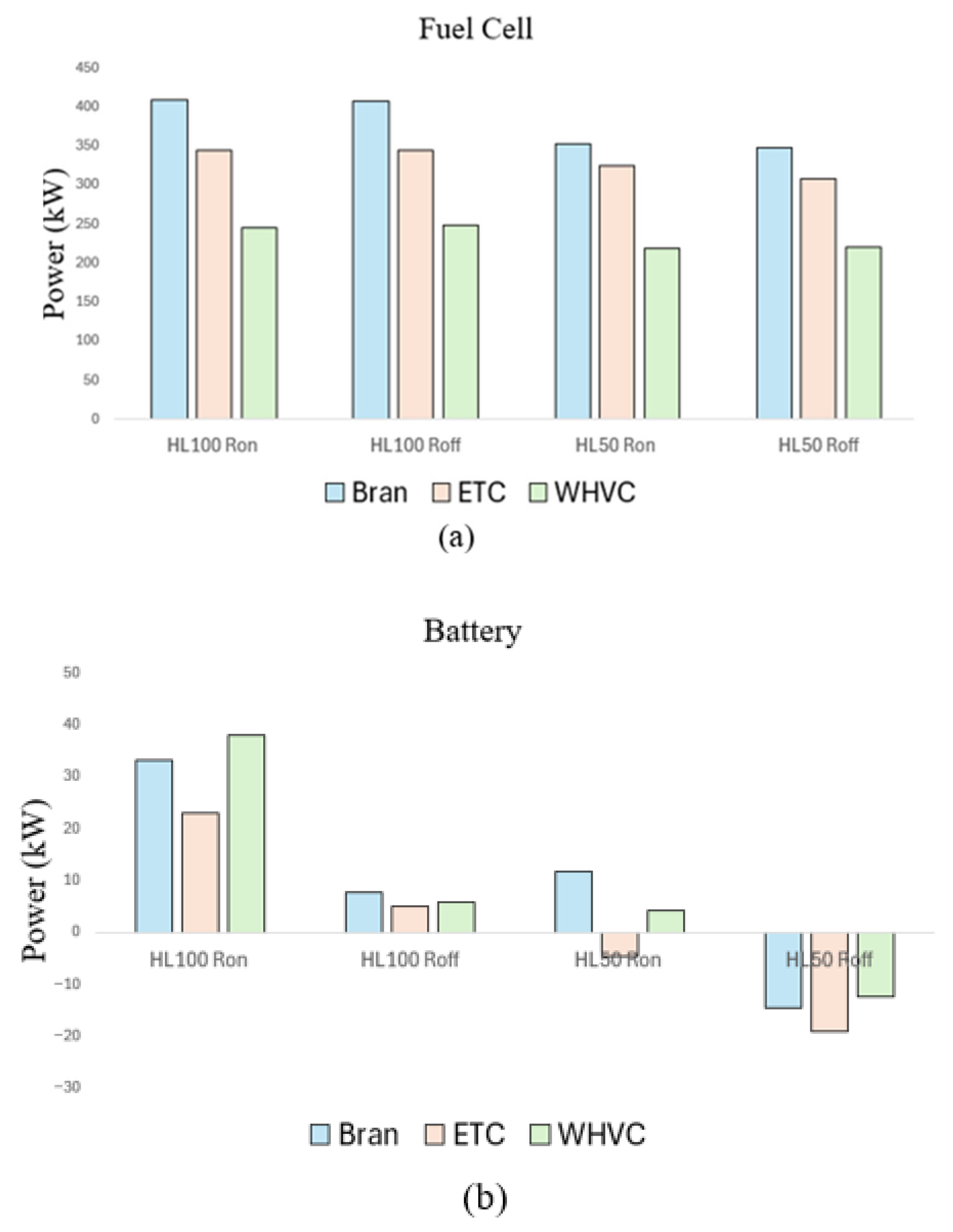
Figure 3 presents the average power contributions from the fuel cell and battery under different HVAC operating modes at a summer temperature of 35 °C and 74% relative humidity. The fuel cell power demand and battery power demand are shown for each driving cycle, across four HVAC conditions: HL100 Ron, HL100 Roff, HL50 Ron, HL50 Roff. The fuel cell serves as the main energy provider. Its output is strongly influenced by HVAC load levels and drive cycle characteristics. Under a full HVAC load with recirculation on (HL100 Ron), the fuel cell delivers the highest output across all cycles: Braunschweig: 410 kW, ETC: 344 kW, WHVC: 245 kW. This reflects the combined effect of high propulsion demand and HVAC cooling requirements, particularly under the Braunschweig cycle. When HVAC load is reduced by half (HL50 Ron), the fuel cell power decreases significantly: Braunschweig: 353 kW, ETC: 325 kW, WHVC: 218 kW. This reduction highlights the sensitivity of fuel cell power to HVAC loads. Additionally, disabling air recirculation (Roff) results in further slight reductions in fuel cell output across all scenarios due to increased fresh air intake, which raises the HVAC power consumption slightly but lowers recirculation fan demand.
The battery shows a more dynamic response to load variations. Under HL100 Ron, battery power is positive in all cycles, meaning it assists the fuel cell during high-load moments: WHVC: +38 kW, Braunschweig: +33 kW, ETC: +23 kW. This indicates that the battery helps handle transient peaks in propulsion and HVAC load. However, as HVAC demand drops to half (HL50 Roff), battery power turns negative, indicating net charging behavior: WHVC: −12 kW, Braunschweig: −14 kW, ETC: −19 kW. This shift reflects the fuel cell’s ability to meet vehicle demands without battery support, allowing surplus energy to be redirected to recharge the battery. This is especially true during deceleration phases where regenerative braking plays a role. The change is more evident in the ETC and Braunschweig cycles due to their more aggressive speed profiles.
4.3. HVAC Power for Winter Temperature in Different Driving Conditions
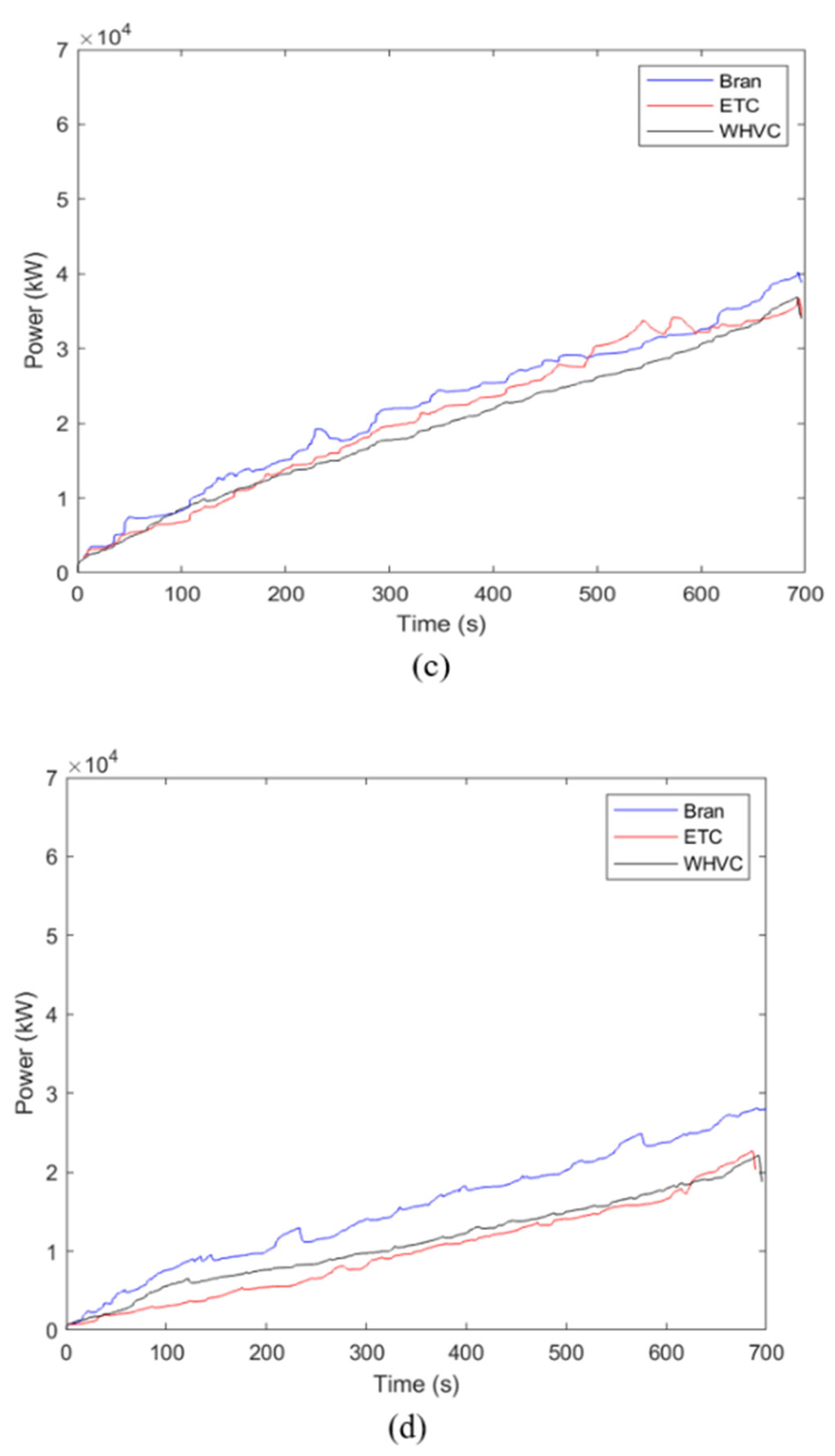
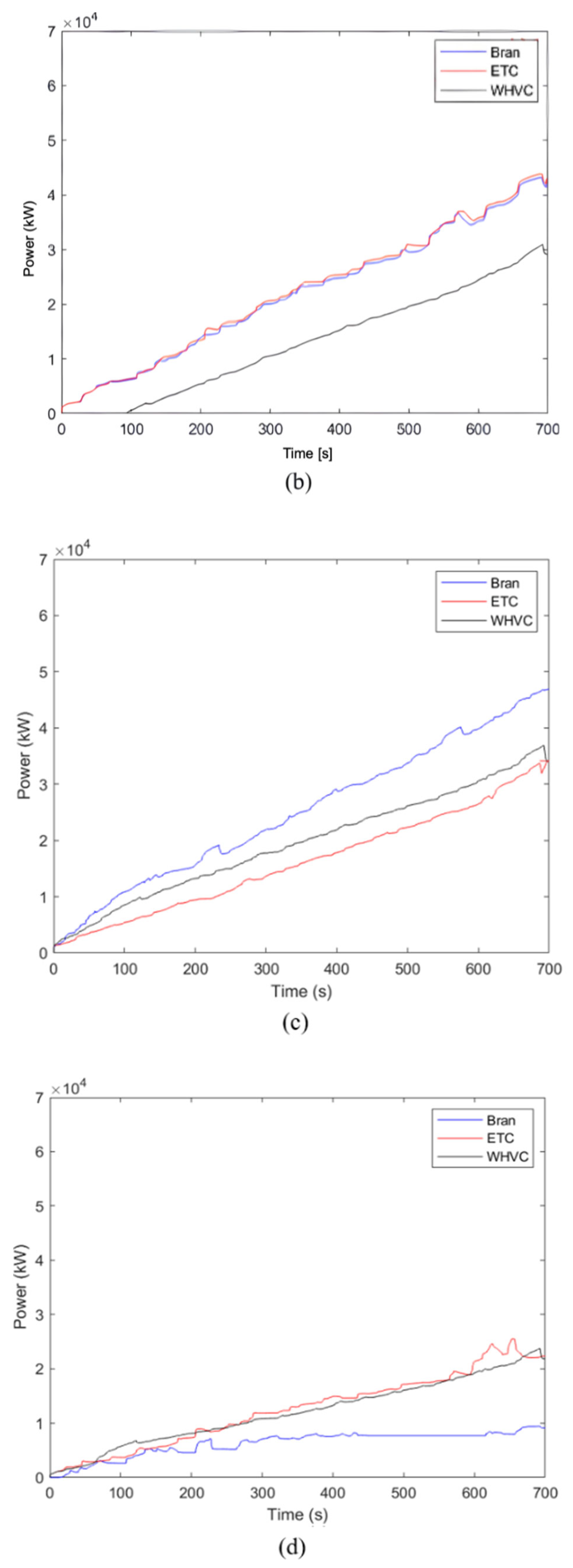
Figure 4 presents HVAC power consumption under winter ambient conditions across three driving cycles. Under full HVAC operation, the ETC cycle shows the highest power demand, averaging 38.02 kW. This is attributed to its dynamic nature, characterized by frequent acceleration and speed changes, which create repeated fluctuations in the cabin thermal load, thereby requiring more energy to maintain thermal comfort. [
35] The Braunschweig cycle flows with the average HVAC power of 26.03 kW. Being an urban cycle with stop-and-go movement, it allows greater temperature fluctuations due to idle periods, leading to elevated heating requirements. The WHVC, representing highway driving, records the lowest HVAC power at 19.40 kW. This is likely due to the relatively stable driving profile of highways, where heat loss is more gradual and cabin temperature can be maintained with lower energy input.
In the summer condition of 35 °C, the fuel cell efficiency is slightly reduced due to increased ohmic losses from partial membrane dehydration, particularly under high HVAC loads and transient driving conditions like ETC and Braunschweig. This effect contributes to higher fuel cell power demand during peak cooling periods and explains why the battery assists during rapid load changes. Considering this temperature effect helps interpret the observed variations in fuel cell and battery contributions across different HVAC modes and driving cycles.
When the HVAC system is turned off, power consumption decreases across all cycles, though it does not reach zero due to residual consumption by blowers and control electronics. In this mode, ETC still has the highest power of 25 kW, followed by Braunschweig 23 kW and WHVC 12 kW. The difference between the full on and off modes is most pronounced in ETC, reflecting its high dependence on active thermal regulation. WHVC shows the smallest drop, indicating that its lower heating needs are less sensitive to HVAC operational changes.
Under partial heating with HL50 Ron, the average HVAC power naturally drops, Braunschweig falls to 15.49 kW, ETC falls to 24.96 kW, and WHVC remains relatively high at 19.54 kW. Interestingly, WHVC’s HVAC power under a half load is nearly identical to its full load condition, suggesting that at highway speeds, a baseline heating level is required to counteract continuous air exchange and maintain comfort, regardless of the load setting.
In the HL50 Roff scenario, the HVAC power drops even further. Braunschweig reaches the lowest average of 6.85 kW, while ETC and WHVC reduce to 12.28 kW and 11.21 kW respectively. This indicates that combining a lower heating load with external air intake leads to significant reductions in HVAC energy use, especially in stop-and-go urban driving, where recirculated warm air can more effectively maintain thermal comfort. A heating energy-attribution analysis was conducted at −7 °C to assess the contribution of the fuel cell thermal loop. Part of the cabin heating is supplied by fuel cell waste heat, while the remainder is provided by the electric auxiliary heater, particularly during low-load segments. This explains the higher HVAC demand in the ETC cycle, where transient loads increase heat loss. The literature shows that heat pump systems at −7 °C can significantly reduce electric-heating energy, offering improved overall hydrogen efficiency for fuel cell buses [
45].
4.4. Fuel Cell and Battery Power Distribution in the Winter Season
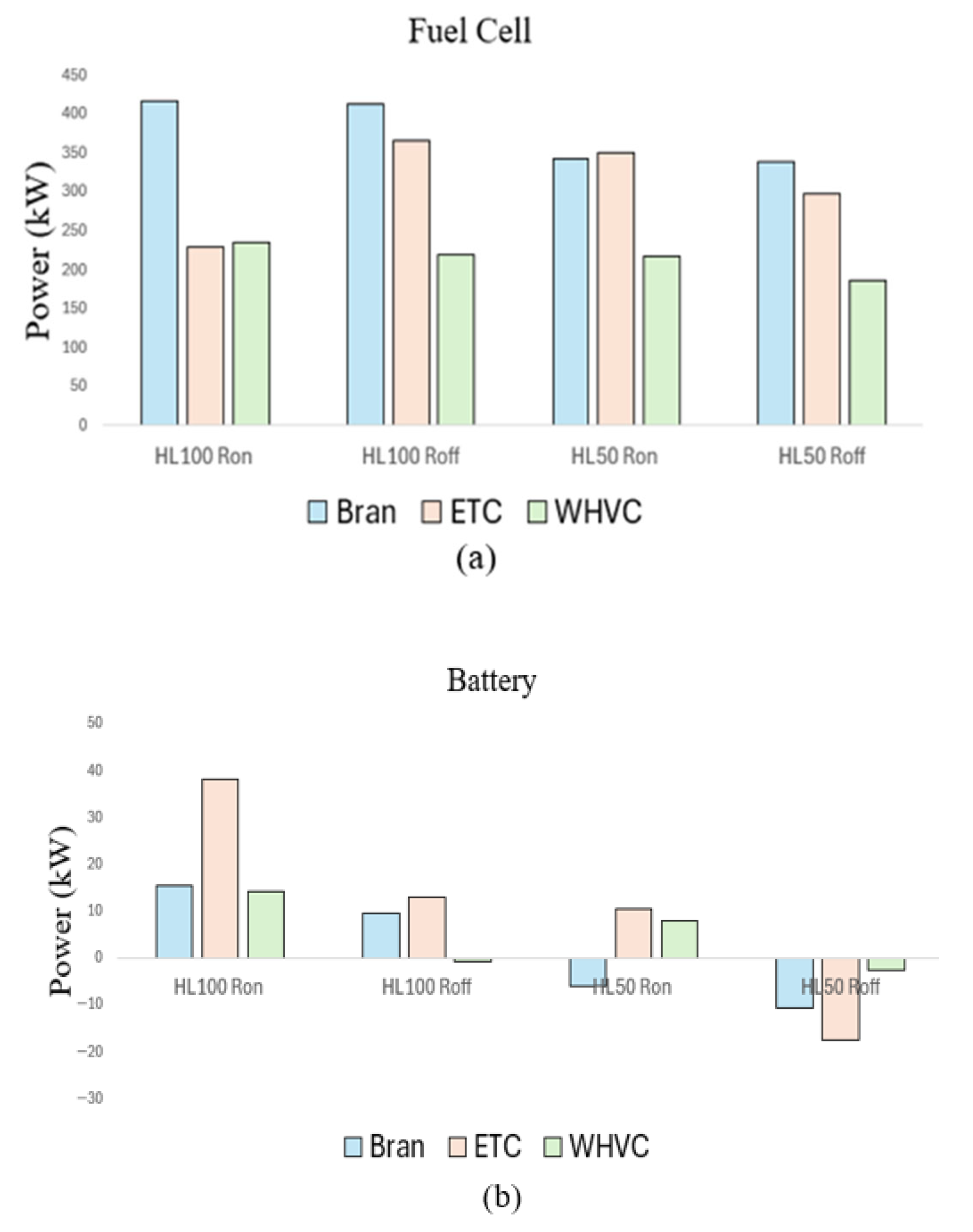
Figure 5 presents power distribution in the winter season across three driving cycles. Fuel cell power is highest in the Braunschweig cycle under all HVAC conditions, peaking at approximately 400 kW in the HL100 Ron mode. This reflects the greater overall energy demand in urban driving with frequent acceleration and stops, which necessitate a consistent energy input from the fuel cell.
The ETC cycle shows moderate fuel cell power, with values ranging from 360 kW to 300 kW, while WHVC shows the lowest fuel cell contribution overall, ranging from 220 kW to 190 kW. The consistently lower values for WHVC are attributed to smoother driving profiles with fewer transients and more efficient cruising conditions, leading to reduced energy consumption.
The influence of the HVAC load on fuel cell power is clear; full HVAC operation results in the highest power draw, while the HL50 Roff scenario shows the lowest value across all drive cycles. This is consistent with the observation that greater HVAC demands increase the overall vehicle energy requirement, thereby increasing fuel cell output.
Meanwhile, battery power shows more variability and even includes negative values in some scenarios, indicating regenerative braking [
38]. Under HL100 Ron, the battery supplements the fuel cell across all driving cycles, especially in the ETC cycle, likely due to its high transient behavior and fluctuating power needs. Braunschweig and WHVC show lower contributions, aligning with their smoother variable speed profiles. In HL100 Roff mode, battery power is reduced in all cycles, which corresponds to the lower auxiliary demand from the HVAC system. At HL50 Ron, the battery still provides modest support, though less than in the fully active HVAC mode. In the HL50 Roff condition, negative power values appear for Braunschweig and ETC, particularly pronounced in the ETC cycle as 25 kW, suggesting substantial regenerative braking or unused regenerative energy being stored in the battery during a low HVAC load and deceleration phases.
At high ambient temperatures (
Table 3), HVAC operation is critical for maintaining thermal comfort. With HL100 Ron, cabin temperatures are effectively reduced to around 19–21 °C across all drive cycles, with corresponding low humidity levels of 23–26%. This confirms a strong HVAC cooling performance. When HVAC is off, cabin temperature climbs significantly to 30–32 °C, and humidity rises to uncomfortable levels of 59–67%, especially in the WHVC cycle, where the long cruise phases reduce cabin airflow exchange. At HL50 Ron and HL50 Roff, temperature control is moderately effective. Cabin temperatures range from 19 to 23 °C and humidity from 31 to 51%, indicating a partial cooling performance. Braunschweig shows slightly better cooling than WHVC due to its frequent acceleration/deceleration patterns encouraging more HVAC compressor activity.
In contrast, in
Table 4, winter operation focuses on heating and dehumidification. However, under HL100 Ron operation, the cabin temperatures remain relatively low, between 3 °C and 5 °C across all cycles, suggesting insufficient heating performance. Despite this limited thermal comfort, relative humidity is not effectively controlled either, with values ranging between 44% and 51%, which indicates minimal moisture removal. Surprisingly, with the HL100 Roff, cabin temperatures are significantly higher—reaching 19 °C in Braunschweig, 21 °C in ETC, and 17 °C in WHVC. This counterintuitive result suggests passive heat accumulation or possibly heats gains from external sources or internal components. In this mode, relative humidity rises to 100% in all cases, indicating a complete lack of dehumidification. At HL50 Ron and HL50 Roff, partial heating is observed, with cabin temperatures ranging from 12 °C (Braunschweig) to 20 °C (ETC), and mixed humidity control. The WHVC cycle shows the lowest cabin temperature of just 6 °C for HL50 Roff, with moderate humidity at 56%, pointing to a poor heating performance under steady-state conditions. This reinforces that WHVC, characterized by constant-speed cruising and fewer regenerative events, offers the least effective climate control. Overall, humidity regulation proves more difficult than temperature control during winter. High RH levels persist even under active HVAC operation, which could lead to occupant discomfort and an increased risk of condensation or window fogging. WHVC consistently exhibits the least favorable outcomes, emphasizing the challenge of maintaining comfort in highway-dominant cycles.
5. Conclusions
This study comprehensively evaluated the effects of seasonal temperature, driving conditions, and HVAC load levels on the thermal comfort and energy demand of a hydrogen fuel cell bus. The findings under both summer and winter conditions reveal several key insights.
First, the HVAC load has a significant impact on overall power consumption. Full HVAC operation with HL100 Ron leads to a substantial increase in energy demand, with the ETC cycle exhibiting the highest consumption due to its aggressive acceleration patterns. Under partial HVAC operation (HL50 Roff), power consumption drops markedly—though often at the expense of cabin thermal comfort.
While cabin temperature control is generally effective, humidity regulation remains a challenge. The HVAC system maintains cabin temperatures within acceptable comfort ranges during full-load operation. However, relative humidity frequently remains high, particularly in winter, even when heating is active. This suggests a limitation in dehumidification performance, possibly caused by excessive air recirculation or insufficient moisture extraction.
Moreover, the driving cycle characteristics influence the HVAC performance. The WHVC cycle consistently demonstrates a lower HVAC power demand but also exhibits poorer humidity control, especially in cold conditions. This can be attributed to its prolonged steady-state cruising, which limits compressor cycling and reduces opportunities for regenerative braking—ultimately diminishing the system’s ability to respond dynamically to thermal and humidity needs.