Review

Emerging HVAC Technologies and Best Practices for Energy-Efficient, Low-Carbon Buildings: A Review


Department of Civil Engineering, Faculty of Engineering and Computer Science, University of Victoria, 3800 Finnerty Rd., Victoria, BC V8P 5C2, Canada
*
Authors to whom correspondence should be addressed.
Energies 2026, 19(5), 1296; https://doi.org/10.3390/en19051296
Submission received: 30 January 2026 / Revised: 24 February 2026 / Accepted: 3 March 2026 / Published: 5 March 2026
(This article belongs to the Special Issue Advanced Heating and Cooling Technologies for Sustainable Buildings)

Abstract

This review paper discusses the technological advancements and innovative strategies of heating, ventilation, and air conditioning (HVAC) systems for buildings. Buildings are a major contributor to energy consumption and greenhouse gas (GHG) emissions, representing about 35% of global final energy use and 26% of energy-related GHG emissions. In Canada, the building sector accounts for roughly 31% of energy demand and 18% of total GHG emissions, with HVAC systems responsible for 40–50% of this energy use. The current challenges, emerging trends, and future prospects for HVAC and related technologies are systematically reviewed to promote sustainability, affordability, and resilience in buildings. The literature scanning begins with an overview of the prevailing energy scenario in buildings, HVAC technologies, and other regulatory and policies. The paper thoroughly examines the critical role of HVAC systems in reducing energy consumption, minimizing environmental impact, improving building affordability and enhancing occupant health and productivity. It discusses emergent technological opportunities, energy efficiency measures, sensors, smart controllers, Internet of Things (IoT) and AI-based technologies. The paper highlights the barriers to adopting new technologies and strategies. It provides an evolving topography of HVAC technologies, their current state and emerging directions to tackle environmental challenges, including net zero energy and zero carbon building goals. The review suggests that while there are promising advancements in HVAC technology, further research and practical demonstrations of innovative solutions are necessary to maintain the momentum in building modernization efforts.

1. Introduction

Buildings consume about one-third of global energy, making them the second-largest energy users after the industrial sector, and they are responsible for approximately one-fourth of global greenhouse gas emissions [1]. Contemporary buildings are more energy-efficient, designed and constructed with stringent building codes [2], and typically consume less energy per unit of floor area. However, energy consumption in the building sector is growing due to population growth, improved living standards, and rapid urbanization [3].
Housing affordability has emerged as a critical challenge in Canada, with a growing number of households struggling to access affordable homes. A substantial mismatch persists between housing supply and demand. To address this shortfall, the Canada Mortgage and Housing Corporation (CMHC) has estimated that approximately 3.5 million additional homes must be built by 2030 to restore housing affordability [4]. Addressing this affordability crisis requires more than increasing housing supply; it also demands the integration of innovative design strategies and advanced building technologies [5]. The adoption of energy-efficient systems and on-site renewable energy can improve housing affordability over the lifecycle by reducing operating expenditures, stabilizing energy costs, enhancing building durability, and increasing long-term asset value. Although advanced HVAC technologies have been widely evaluated for energy performance and emissions reduction, the literature rarely integrates their lifecycle economic impacts with housing affordability outcomes in an integrated framework [6].
Greenhouse gas (GHG) emissions from the building sector in Canada continue to rise, diverging from the emission reduction targets established under the Pan-Canadian Framework [7]. This upward trend is largely driven by the expansion of building floor area, the prevalence of aging and energy-inefficient building stock, and the continued dependence on natural gas for space and water heating.
Heating, ventilation, and air conditioning (HVAC) systems are among the most significant energy consumers in buildings, typically accounting for approximately 40–50% of total building energy use [8]. These systems are designed to maintain indoor thermal comfort, humidity, and indoor air quality (IAQ). In addition, HVAC systems incorporate humidification, dehumidification, and air filtration components to regulate indoor humidity and maintain acceptable IAQ [9]. The current literature often focuses on HVAC-related outcomes like energy efficiency, emissions reduction, and IAQ in isolation. However, these factors are deeply interconnected in the context of real-world building operations. Furthermore, HVAC system design and operational complexity vary widely depending on building function, size, orientation, geographic location, climate conditions, technologies, regulatory requirements, and government policies [10]. A comprehensive assessment requires a systems-oriented perspective that captures these dynamic interactions rather than treating them as discrete variables.
Climate change is significantly affecting the performance requirements of HVAC systems in Canada, which is experiencing warming approximately twice the global average. This trend is leading to more frequent extreme heat events and longer cooling seasons. Recent heat waves have highlighted vulnerabilities in buildings that were originally designed with a focus on heating rather than cooling. Despite these challenges, issues such as overheating, increased cooling demand, and climate resilience are often overlooked in HVAC assessments that primarily consider colder climates. This creates a disconnect between the realities of a changing climate, the available technological solutions, and the guidance for system design.
Contemporary buildings increasingly integrate sensors and digital technologies to continuously monitor parameters, such as temperature, humidity, and pollutant concentrations, with the aim of enhancing occupant well-being. A range of occupancy sensing technologies has also been developed to capture occupant presence and activities within buildings [11]. Occupancy-based control leverages this information to dynamically adjust HVAC operating schedules and setpoints in response to actual usage patterns, improving energy efficiency while maintaining comfort. Although the effectiveness of sensing and control technologies is well established [12], their adoption remains limited. Existing literature offers only partial understanding of the technical, financial, operational, and regulatory barriers that limit the practical adoption of these technologies.
Regulatory and policy frameworks are undergoing significant changes, driven by federal and provincial initiatives focused on sustainability, such as net-zero energy-ready building codes, electrification policies, performance-based standards, and financial incentives. These developments are fundamentally altering the selection and operation of HVAC systems. However, existing research often fails to integrate policy and technology, leading to a narrow understanding of how codes, incentives, and standards impact the adoption and effectiveness of new HVAC technologies and strategies.
This review examines evolving HVAC technologies, strategies, and policies to improve building energy efficiency, including renewable energy integration and smart, digitally enabled systems, while critically assessing the barriers to their widespread adoption. It analyzes the regulatory and policy landscape and its influence on sustainability objectives, particularly the pursuit of net-zero energy buildings (NZEBs), alongside the challenge of maintaining housing affordability. Drawing on a broad range of credible sources, including peer-reviewed literature, technical reports, and government publications, the paper seeks to understand what HVAC technologies exist, how effectively they perform with evolving climate, why they remain underutilized, and how policy and regulatory frameworks can accelerate their deployment, with a strong emphasis on energy efficiency, GHG emissions reduction, occupant health, and housing affordability in the Canadian context. The paper addresses the lack of comprehensive, integrated knowledge linking HVAC technological performance, lifecycle economic impacts, climate adaptation, regulatory influences, and housing affordability, especially within the Canadian context.

2. Methodology

This literature review adopts a structured and thorough approach to collect, evaluate, and synthesize information on HVAC systems, with a particular focus on energy use, GHG emissions, and IAQ. The study is guided by the following research questions: What are the prevailing trends in HVAC system design and performance? In what ways do HVAC systems and emerging technologies improve energy efficiency? What obstacles hinder the adoption of innovative HVAC solutions? How do regulatory frameworks impact sustainability objectives within the building sector?
A detailed literature search was performed using multiple databases, emphasizing publications from 2010 onward, including Google Scholar, Scopus, Web of Science, and specialized journals in building science, energy efficiency, and environmental sustainability. The search employed keywords such as “HVAC systems,” “energy consumption,” “GHG emissions,” “IAQ,” “energy efficiency technologies,” “renewable energy and buildings,” and “building regulations.” This strategy allowed for the identification of a wide range of relevant studies, reports, and case studies, with particular attention to contexts applicable to Canada. Selection criteria prioritized peer-reviewed articles, technical reports from established institutions, government documents, and assessments from recognized organizations, including Natural Resources Canada (NRCan), the National Research Council (NRC) of Canada, the International Standards Organization (ISO), CMHC, and the American Society of Heating, Refrigeration and Air Conditioning Engineers (ASHRAE). By drawing on this diverse body of work, the review provides a comprehensive perspective on current challenges and opportunities in the field. Key findings were synthesized, highlighting knowledge gaps and suggesting directions for future research. Figure 1 shows a structured literature review methodology that illustrates the sequential process of research question formulation, database search, screening and eligibility assessment, and synthesis for evaluating HVAC systems in relation to energy use, GHG emissions, and IAQ.

Novelty and Contribution of This Review

Multiple studies have focused on building energy efficiency, IAQ, or HVAC system performance as separate entities. However, this paper takes an integrative approach, deliberately connecting multiple dimensions of a problem—technical, economic, social, environmental, and policy—rather than addressing them separately. By establishing explicit connections between the design and operation of HVAC systems and both environmental indicators and human-centered outcomes, this review delivers a comprehensive evaluation of building energy systems that surpasses the traditional isolated analyses commonly found in existing literature.
The integrative analytical perspective was operationalized through a structured cross-dimensional synthesis framework. Each included study was coded across five predefined domains: technological performance, environmental impact, health implications, economic feasibility, social impact, and regulatory alignment. A synthesis matrix was constructed to identify interdependencies, trade-offs, and policy-mediated initiatives. This structured mapping enabled systematic comparison and facilitated the identification of multi-objective challenges within HVAC systems in buildings. The integration was therefore not conceptual alone, but analytically grounded in cross-domain evidence synthesis.
The paper examines advanced and emerging HVAC-related technologies, including smart sensors, occupancy-based control strategies, and renewable energy integration, that are often treated separately or receive limited attention in conventional HVAC reviews. By evaluating their practical potential and real-world implementation challenges, the study identifies critical gaps between technological capability and on-the-ground adoption. This paper also discusses policy, regulatory, and market barriers that shape HVAC system selection and deployment. Particular attention is given to the implications of HVAC technologies for sustainability objectives and housing affordability, a pressing concern in Canada. By connecting technical innovation with policy frameworks and socio-economic outcomes, the paper offers insights relevant to researchers, policymakers, and industry practitioners seeking to advance low-carbon, healthy, and affordable buildings.

3. Buildings Energy Usage, HVAC Systems and Challenges

3.1. Building Energy Consumptions

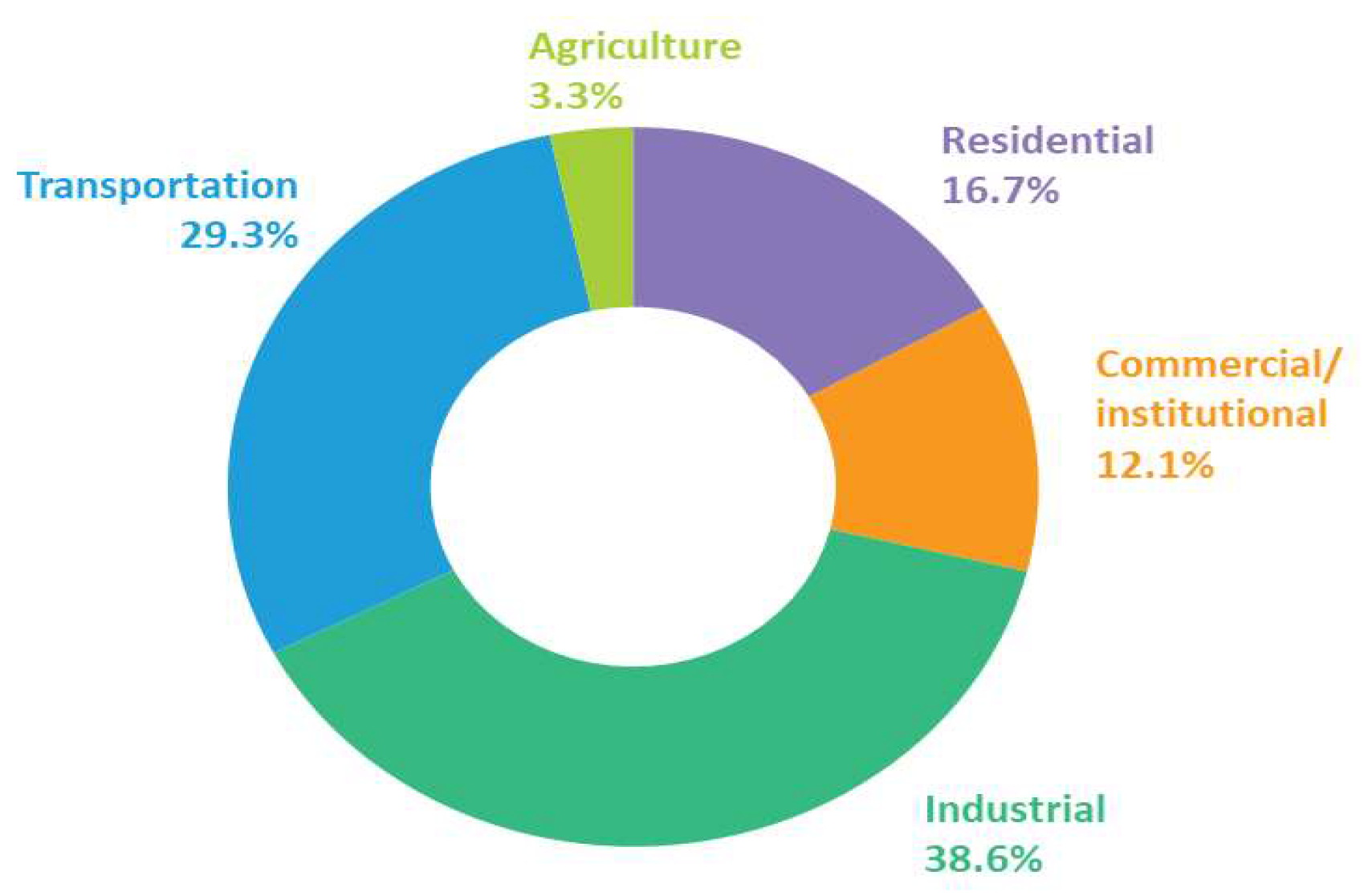
The distribution of energy usage in major sectors of Canada’s economy is shown in Figure 2 [13]. In 2018, Canada’s total end-use energy demand reached 11,059 PJ (petajoules). This demand was primarily driven by the industrial sector, which accounts for 38.6% of the total energy consumption in the country. The transportation sector contributes 29.3% of the overall energy demand. Approximately 16.7% of the energy goes to residential energy, including the household’s heating, cooling, appliances, and lighting. The contribution of commercial and institutional (C&I) buildings is 12.1%, which includes businesses, retail, and institutional facilities operations. The agricultural sector’s contribution to overall energy demand is only 3.3%. This implies that the building sector alone is responsible for about 28.8% of the end-use energy in Canada.
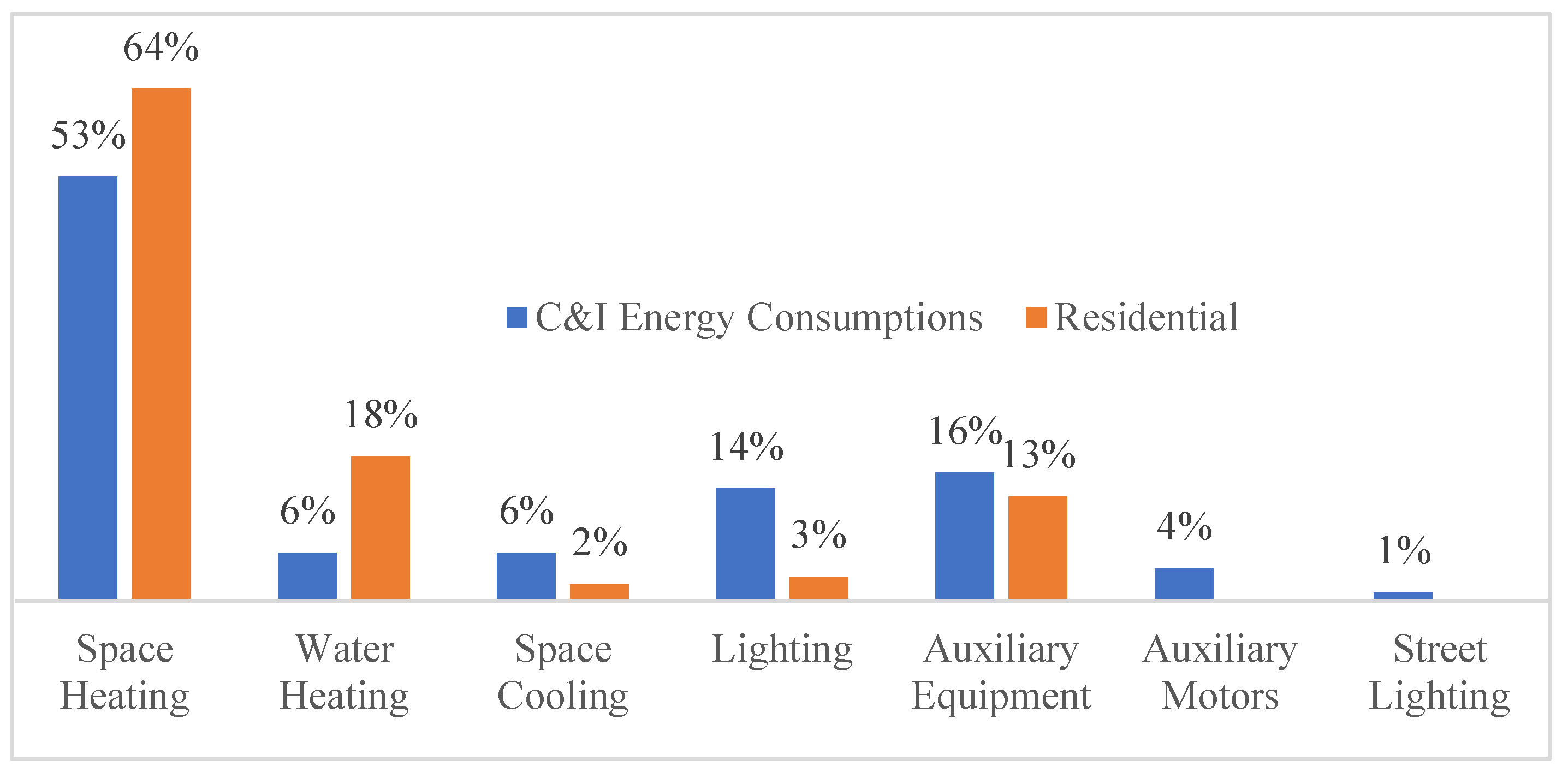
Figure 3 shows the distribution of end-use energy consumption of C&I and residential buildings in Canada [13]. Energy consumption patterns are primarily influenced by heating needs. In the C&I sectors, space heating accounts for the largest portion of end-use energy (53%). In contrast, the residential sector shows an even greater concentration, with space and water heating together making up more than 80% of total energy use. Therefore, enhancing the efficiency of heating systems, particularly for space heating, is a highly effective approach to reducing overall energy consumption and associated emissions in residential buildings.

3.2. IAQ and Occupant Health

In cold Canadian conditions, where people spend over 90% of their time indoors, the quality of the indoor thermal environment is a significant concern for health, productivity, and well-being [14]. Airborne micro-particles, which constitute over 90% of particulate matter present in indoor air, pose a significant risk to occupant health and productivity. Conventional HVAC air filtration systems are often ineffective at capturing these fine and ultrafine particulates [15], allowing them to penetrate indoor environments. Prolonged exposure to such pollutants has been linked to adverse health outcomes, including eye, nose, and throat irritation, headaches, dizziness, fatigue, and reduced cognitive performance. These effects underscore the critical role of advanced HVAC filtration and ventilation strategies in maintaining indoor environmental quality [16].
Furthermore, when humidity levels are inadequate, it can lead to problems such as the growth of mould or cause dryness that irritates the skin, eyes, and respiratory system. Outdated or inefficient ventilation systems may struggle to effectively remove fine particles, allergens, and pollutants, further deteriorating IAQ. The presence of dirty air filters, clogged evaporator and condenser coils, and dust and bacteria buildup in the air distribution system can significantly compromise air quality, increasing the risk of allergies and respiratory infections [16]. To ensure the health and productivity of occupants, it is essential to maintain acceptable AQI with a quality ventilation system and utilize high-quality filtration systems with appropriate sensor technology (more in the subsequent sections).

3.3. Building GHG Emissions

Canada is making progress; however, the built environment remains the third-largest source of emissions, accounting for approximately 18% of the nation’s GHG emissions [5]. In addition to the operational emissions, approximately 4% of Canada’s total GHG emissions are embedded in the construction materials and supply chains for retrofitting buildings. Clean Energy Canada estimates that most of these embedded emissions came from the production, transportation, and demolition of construction materials used in both public and private constructions.
Canada’s buildings GHG emissions per capita are higher than those of the USA and the European Union (Table 1). In 2020, Canada’s building-related GHG emissions per capita were almost double those of the European Union (EU) and approximately 19% higher than those in the USA [5]. While Canada is making progress in reducing its GHG emissions, the reduction per capita since 1990 is only 17%. In comparison, the USA saw a drop of 29%, while EU experienced a decrease of 34% over the same period [5]. This disparity highlights the critical role of HVAC systems in Canada’s building emissions profile, as space heating, cooling, and ventilation account for a substantial share of building energy use. The continued reliance on carbon-intensive natural gas-based heating systems, combined with cold-climate operational demands and slower adoption of high-efficiency and low-carbon HVAC technologies, remains a key barrier to achieving deeper emissions cuts.

3.4. Building HVAC Systems

HVAC systems can be classified in several ways, with the primary distinction being between centralized (ducted) systems and decentralized (ductless) systems [17]. Centralized HVAC systems are located away from building working areas in a control room/roof and deliver the conditioned air/water by ductwork piping system. These heat/cool distribution systems are air-to-air, air-to-water, and water-to-water. Whereas localized HVAC systems can be inside or adjacent to a conditioned zone, and ductwork is not required for these systems. Table 2 summarizes commonly used HVAC systems, outlining their operating principles and key challenges.

3.5. HVAC System Performance, Operational, and Upgrade Challenges

HVAC is the most functional equipment in building systems and frequently encounters performance, technical, and operational challenges. The most common issues include inadequate heating or cooling, poor air quality, uneven temperature distribution, low fuel conversion efficiency, humidity imbalance, short or long cycling, noise problems, refrigerant leaks, thermostat malfunctions, ductwork leaks/moist, sensor failures, electrical faults, drainage issues, and manual controls [18,19].

3.5.1. Key Barriers to Achieving System Efficiency

The energy efficiency, or coefficient of performance (COP) for heat pumps [20], of HVAC systems is a key parameter in reducing energy costs and GHG emissions. Factors that impact system efficiency include improper design, inadequate maintenance, obsolete equipment, poor building insulation, inefficient operational practices, and minimal or no use of building automation technologies [21]. Improperly sized HVAC systems frequently experience excessive compressor cycling, leading to significant energy wastage and increased wear and tear. Consequently, this results in elevated operational and maintenance costs. Poorly designed and maintained air distribution systems cause air-leaks and uneven temperature distribution, impacting overall system efficiency. Refrigerant leaks reduce cooling capacity, forcing the system to work harder [22]. An inefficient control increases energy use, such as constantly running fans and higher than the desired temperature [23].
In addition, outdated systems, particularly those without variable-speed drives and energy-efficient upgrades, consume more power than modern high-efficiency options, significantly impacting performance [24]. Poor building envelope performance, including inadequate insulation, air infiltration, and inefficient window/door selections, increases the heating and cooling loads and impacts HVAC efficiency. Moreover, excessive or insufficient ventilation can affect IAQ while wasting energy. Without proper maintenance, such as failing to clean filters/coils/ducts at regular intervals, leads to restricted airflow, increased strain on the compressor, and decreased system efficiency.

3.5.2. Climate-Driven Challenges for HVAC Systems

The climate change crisis has impacted many people’s lives in different ways, especially in the older population. Canada is warming at roughly twice the global average rate, leading to more extreme heat, extreme cold, longer cooling season, and other climate changes impacting ecosystems, infrastructure, and human health [25]. This concern is growing in Canada due to the country’s increasing warming trend and growing elderly population. British Columbia (BC) residents will not forget the summer of 2021, when the western heat dome saw the deadliest hot weather event in Canada, resulting in 619 heat-related deaths in a week from 25 June to 1 July [26]. During this period, western Canada experienced temperatures up to 20 °C above normal. Many old buildings are not fully compatible with the unpredictable weather events. HVAC systems are among the most critical building systems for mitigating the impacts of extreme heat events and safeguarding occupant well-being. BC’s extreme heat events in 2021 exposed the many buildings’ inadequacies in handling such climate events.
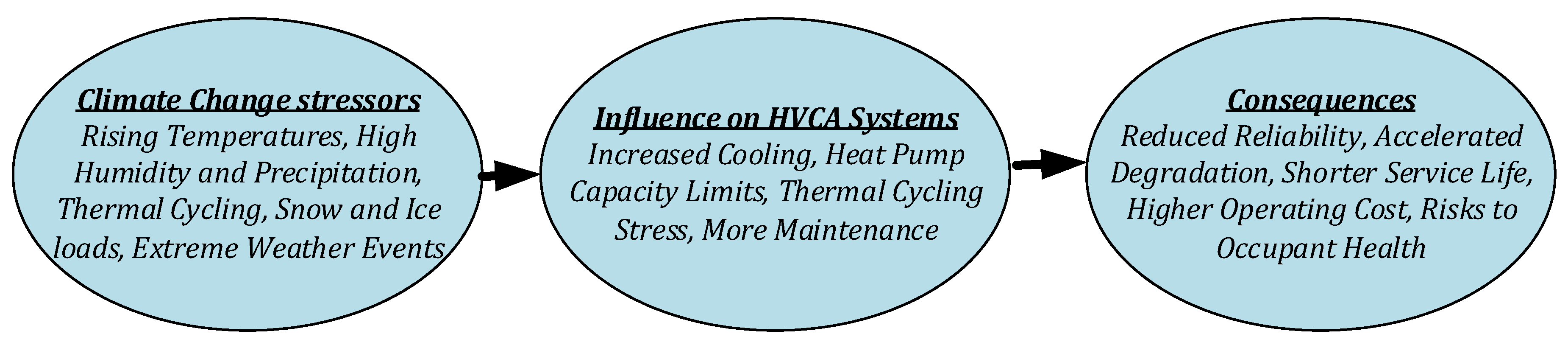
As climate temperatures rise, the demand for cooling increases, forcing air conditioning systems to work harder to manage extreme climate events. In addition, many older buildings often have inadequate [27] or no air conditioning capacity at all [28]. For instance, in BC, approximately 55% of households currently do not have air conditioning to cope with these extreme heat events. This situation results in higher operational costs, increased greenhouse gas (GHG) emissions, greater strain on electrical grids, accelerated system wear and tear, and a heightened risk of compromised occupant well-being during extreme events. Additionally, the humidity levels associated with extreme heat further impact the capacity and efficiency of HVAC systems [29]. Elevated humidity increases the need for dehumidification, adding an extra burden to the system’s performance. As a result, older and undersized systems may struggle to manage these climate-induced challenges effectively. Figure 4 summarizes how climate change stressors, such as rising temperatures, high humidity, and extreme weather events, influence HVAC system performance, leading to increased cooling demand, thermal cycling, and maintenance needs, which, in turn, result in higher operating costs, accelerated system degradation, and potential risks to occupant health.
To effectively manage extreme heat events, buildings can implement climate-adaptive cooling strategies. These include highly efficient systems, such as inverter-driven heat pumps and variable refrigerant flow (VRF) systems. Additionally, passive measures like improved insulation, strategic shading, reflective or green roofs, and natural ventilation can be employed [30]. By integrating these approaches, buildings can reduce peak cooling loads, enhance indoor comfort, and increase resilience to heatwaves [31,32]. Advanced controls, such as model predictive control [31], optimize HVAC performance during extreme weather, lowering electricity demand.

3.5.3. Challenges and Benefits of Building Retrofitting

Building retrofitting involves upgrading existing systems with more advanced technologies and practices to improve energy and environmental performance and reduce operational costs [33]. The building’s HVAC upgrades minimize energy use and carbon emissions, make buildings more livable, and extend building lifespan. As mentioned, some of the old buildings in Canada were not designed with future large-scale structural changes and upgrades in mind [34]; the successful implementation of retrofit measures is often constrained by technical limitations, high upfront capital costs, and regulatory and policy barriers, all of which must be effectively addressed to enable large-scale upgrade adoption in older buildings [21].
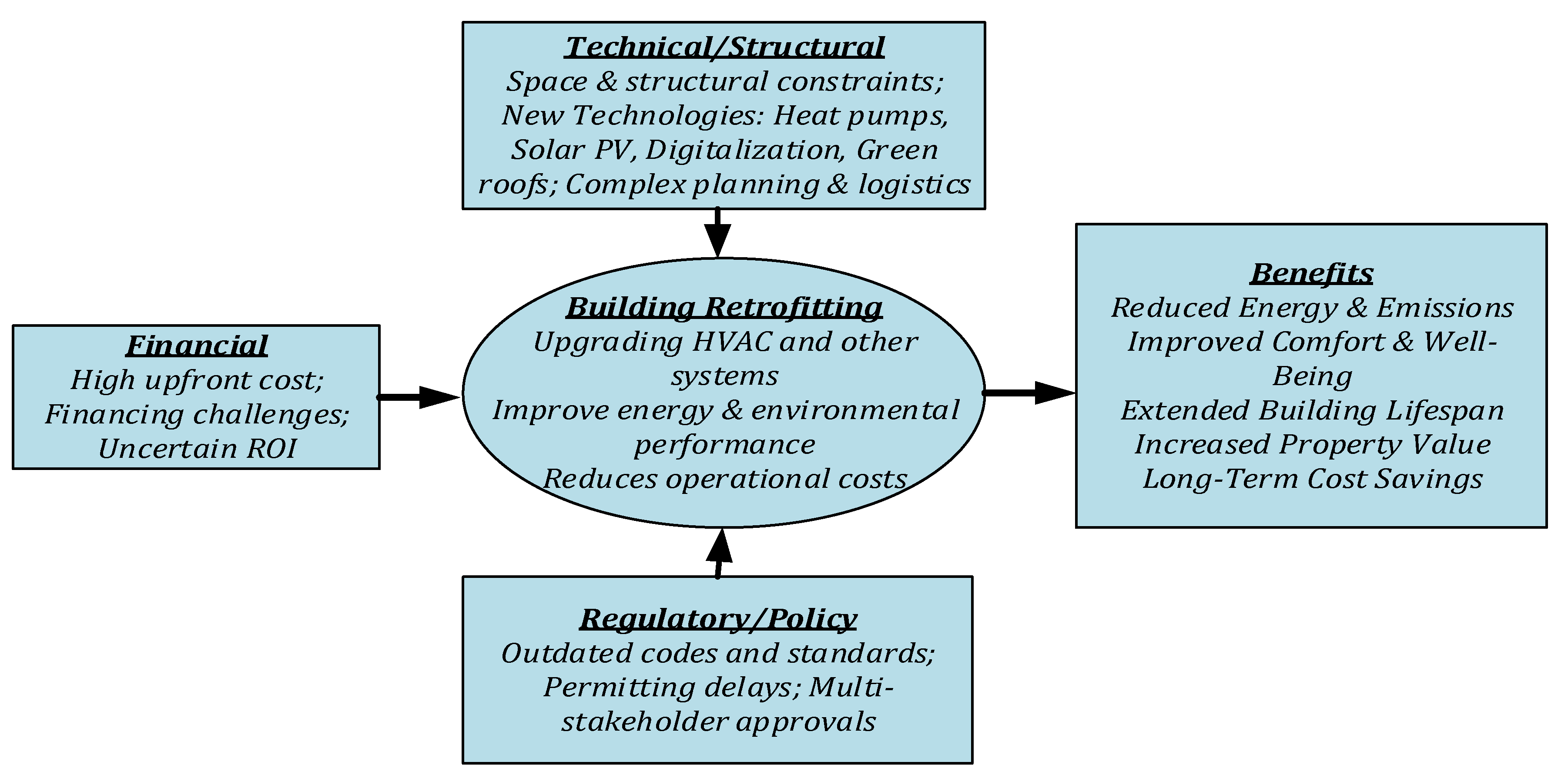
Many buildings present technological challenges due to structural and space constraints [35], limiting their ability to include new technology. For instance, installing green roofs and/or solar panels can significantly enhance a building’s energy and environmental performance; however, these changes often add considerable weight to the structure/roof [36,37]. This increased load may require thorough, expensive assessments to ensure the building’s integrity, and in some cases, it may necessitate extensive roof renovations or replacements. Additionally, the limited space in some buildings can impede the installation of new HVAC systems, renewable energy technologies, and envelope upgrades [38]. However, these challenges can be partly or fully addressed with detailed planning, and retrofits can be safely completed without compromising the building’s structural integrity and longevity. Figure 5 illustrates the key challenges and benefits associated with building retrofitting. Technical and structural constraints, financial barriers, and regulatory or policy hurdles can impact retrofit projects, while successful implementation of upgraded HVAC systems and energy-efficient technologies leads to reduced energy use and emissions, improved occupant comfort, long-term cost savings, and increased property value.
As mentioned, building retrofitting projects with better systems and technologies require a significant upfront investment. These expenditures can be expensive, especially for building owners with limited budgets and no government rebates. Securing financing at reasonable terms for such projects can also be difficult, as lenders may be reluctant to fund long-term retrofitting projects due to perceived risks and uncertainty surrounding the return on investment (ROI) and inconsistent policy support [39]. This uncertainty can deter building owners and investors from committing to retrofitting projects, particularly if they are unsure about recouping their investment within a reasonable timeframe. There is a critical need for a user-friendly financial assessment tool that enables stakeholders to quickly evaluate the potential benefits of retrofits.
In addition, building standards and codes often fail to adequately account for key retrofit considerations, including upfront costs, heating system efficiency, technology selection, and the performance of the building envelope [40]. Compliance with such energy standards can be complex and restrictive, limiting the range of feasible retrofit solutions to meet prescriptive requirements [41]. Despite all the above challenges, the advantages of sustainable retrofitting are a necessary and ongoing requirement to keep reducing environmental impact and cost savings, increase property value, and enhance occupant well-being.

4. Advanced HVAC Solutions for Building Energy Efficiency

4.1. Emerging Technologies and System

Modern HVAC systems are increasingly equipped with a variety of sensors—the Internet of Things (IoT), cloud computing, and advanced controllers—enabling real-time performance monitoring, predictive maintenance, and responsive operation under dynamic indoor and outdoor conditions [42]. Data analytics and machine learning further support optimized energy use, fault detection [43], and climate-adaptive operation, ensuring both occupant well-being and system efficiency [32].
Advanced heating systems such as VRF with multi-stage heat pumps provide precise temperature and desired capacity controls to traditional HVAC systems [44]. Smart controls, including programmable thermostats and building automation systems, optimize energy use by adjusting heating and cooling based on indoor activities and weather conditions [45]. Energy recovery ventilator (ERV) and heat recovery ventilator (HRV) [46], variable drive fans, and demand-controlled ventilation (DCV) enhance IAQ while reducing energy consumption [47]. Renewable energy sources, such as building-integrated photovoltaics (BIPV) further improve envelope efficiency and sustainability [48]. Retrofitting existing HVAC systems, adopting energy efficiency measures and promoting building operators/managers/owners training [49] are some of the developing opportunities to maximize savings and performance. Building energy standards should be established that prioritize cost and GHG emissions instead of focusing on energy consumption [50]. Building energy standards should include heating system type and minimum efficiency levels [51].
Additionally, waste heat recovery systems [52] in buildings improve HVAC performance, reduce energy consumption, and enhance efficiency by capturing and reusing wasted energy from the ventilation system [46], gray water [53], and building exhaust systems [54]. HRV and ERV systems transfer heat and moisture between outgoing and incoming air, reducing heating and cooling loads while maintaining high IAQ. Heat exchangers recover waste heat from exhaust streams to preheat incoming fresh air, thereby reducing overall energy demand. These heat recovery strategies lower operational costs, extend HVAC equipment lifespan, and enhance sustainability by reducing a building’s carbon footprint. Furthermore, the development of advanced analytical and decision-support tools can help building owners quantitatively assess the energy, emissions, and cost-effectiveness impacts of these measures, enabling informed investment decisions. Table 3 compares key building technologies across energy, cost, IAQ, carbon reduction, and support for NZEB. VRF + HP and BIPV lead in energy savings and carbon reduction, HRV/ERV excels in IAQ, while IoT with MPC offers moderate benefits across all metrics. Overall, each technology supports NZEB goals to varying degrees.
Table 4 summarizes emerging HVAC technologies suitable for cold-climate buildings, highlighting their operational principles, typical performance metrics, and integration strategies [55,56,57,58,59,60,61]. ASHP deliver efficient heating solutions at moderate temperatures, with GSHPs demonstrating consistent performance even under extreme cold conditions, though at a higher initial investment. BIPV systems and thermal energy storage facilitate on-site electricity utilization and enable demand-side load shifting. A hybrid dual-fuel system and artificial intelligence-driven predictive maintenance helps optimize costs, emissions, and overall system reliability. DCV enhances energy efficiency by modulating airflow in accordance with occupancy levels. It is essential, however, to maintain careful oversight regarding control complexity, sensor precision, and the seamless integration of these technologies. The selection of a particular technology depends on a thorough cost–benefit and environmental performance analysis in the local context.

4.2. Opportunities with Heat Pump Systems

About 80% of Canadians live in homes connected to a relatively clean electric grid, with an average annual emissions factor of 50 gCO2e/kWh or less [50]. In BC, nearly 98% of homes are powered by hydroelectricity [62]. Using electric heating systems in buildings where clean electricity is easy to access is essential for reaching sustainability goals. People in B.C. are increasingly opting for heat pumps to warm their homes. In just five years, from 2017 to 2022, the number of homes using heat pumps jumped by about 80%, rising from around 142,000 to 254,000 [63]. Additionally, in 2022 and 2023, for the first time, more heat pumps were brought into the province for homes than traditional natural gas furnaces. This trend shows a big shift in how people are choosing heating systems to warm their homes. Electric heat pumps are gaining traction due to supportive government policy and evolving regulatory requirements. When the electricity comes from clean energy sources, transitioning to heat pumps can have a significantly larger effect on reducing energy consumption and emissions [64,65].
ASHP is a promising and rapidly growing heat pump system in Canada [65]. However, the economic challenge of ASHPs with the present natural gas price structure is that their operating costs are higher than those of conventional furnaces/boilers systems typically used in most Canadian buildings. In the coldest months, ASHPs may require auxiliary heating to meet demand in some parts of Canada. On the other hand, ground source heat pumps (GSHP) offer a reliable option for consistent year-round performance, particularly suited to Canadian conditions [66]. Despite GSHP performance effectiveness, the high costs linked to drilling and trenching can make these systems costly for many buildings.
Additionally, many system integrators in Canada offer dual-fuel switching heating systems (natural gas furnaces with ASHP) equipped with fuel-switching controllers [67]. Hybrid systems with dual-fuel switching controllers are designed to optimize energy use by switching between fuel sources, such as electricity and natural gas. These dual-fuel source controllers include decision-making factors such as temperature, cost, emission factors, and component efficiency, which can help save operating costs in some buildings and reduce emissions [68].

4.3. Advanced HVAC Automation and Control

Historically, HVAC systems relied on simple on/off control strategies, such as conventional thermostats, which are inadequate for managing the dynamic thermal loads and varying weather conditions of modern buildings. These limitations often result in temperature fluctuations, inefficient system operation, increased energy consumption, higher operational costs, and elevated GHG emissions [67]. In contrast, modern HVAC systems increasingly integrate advanced sensors and IoT technologies to enable real-time data acquisition, continuous system monitoring, and remote operation [69]. IoT-enabled controllers support predictive performance analysis and early fault detection, enabling proactive scheduling of maintenance activities before system failures occur. This shift from reactive to predictive operation improves energy efficiency, system reliability, and equipment lifespan while enhancing occupant comfort and supporting decarbonization goals.
Beyond hardware innovations, optimal control strategies such as reinforcement learning [70] significantly enhance HVAC system performance. These strategies balance energy consumption, thermal comfort, IAQ, and costs through reward-based optimization. By dynamically adjusting operations based on weather, occupancy, and energy tariffs, reinforcement learning effectively implements the proposed integrative framework. This approach is particularly valuable in cold climates, where fluctuating thermal loads and peak demand require adaptive control strategies.

4.4. Challenges in Implementing Energy-Efficient HVAC Upgrades

The adoption of energy-efficient HVAC upgrades in buildings has encountered several challenges, including high upfront costs, outdated regulatory compliance requirements, short-term gains vs. long-term investments, limited awareness, and inconsistent policy support [71,72,73]. As mentioned earlier, one significant hurdle to implementing technological upgrades is the high upfront costs. System upgrades can take years to make an investment profitable, even though these changes make buildings more energy-efficient and livable. For instance, in Canada, upgrading to cold-climate heat pumps can cost between $8000 and $20,000 for an entire home. Even though homeowners can also take advantage of various incentives, including federal grants and interest-free loans [74], which help reduce the overall expenses. Still, these upgrades involve high initial costs, though the upgrade can yield annual energy savings of $1500 to $4500, particularly for households transitioning from oil heating [75]. While Canadian data on simple payback periods for residential heat pump upgrades is encouraging, actual payback periods can vary significantly depending on factors such as region, local energy prices, existing heating systems, fuel-sources, and available incentives.
Many strategies have been suggested to overcome barriers to HVAC system upgrades [76,77,78], including tax credits, rebates, and low-interest financing options, some of these are already implemented in Canada. Increasing workforce training programs and launching public awareness campaigns help building owners and professionals to understand the benefits and opportunities of advanced HVAC systems. Strengthening building standards, simplifying permitting requirements, enforcing technological upgrades, and providing incentives/tax rebates can encourage broader adoption of building efficiency measures [1,5]. More precise data on cost savings, efficiency improvements, and payback periods can help decision-makers make informed investment decisions.
Fostering collaboration among universities, industry stakeholders, regulatory agencies, HVAC contractors, and building owners is essential for advancing energy-efficient solutions [78]. Universities contribute technology upgrades and training, industries apply the technologies, regulators establish standards, contractors implement solutions, and building owners make investment decisions. Developing a skilled workforce requires a strategic approach to training curricula in community colleges and trade schools, with emphasis on energy auditing, HVAC performance optimization, envelope efficiency, and smart building technologies.

4.5. HVAC Technologies for Future High-Performance Buildings

The demand for sustainable buildings is growing to address climate obligations and to make buildings self-sufficient in their energy needs. In the last couple of decades, the HVAC industry has witnessed a wave of innovations and emerging trends to improve energy efficiency, cost-effectiveness, and environmental sustainability in buildings [79,80,81]. The key trends include data-driven modeling and performance prediction [82], predictive maintenance [83], digitalization of controls [84], renewable energy integration [85], minimizing or eliminating dependence on grid power, low-cost energy solutions, demand flexibility [86], and integration of thermal/electric storage [87,88]. The most promising trend is the heat pumps and harnessing renewable energy to electrified buildings.
Another emerging trend in HVAC systems is the use of motion sensors and digital technologies [89]. These artificial intelligence (AI)/machine learning (ML)-based technological solutions facilitate real-time monitoring and control of building conditions and align performance with factors like occupancy, humidity, air quality, carbon monoxide level, and weather. Smart sensors [89] are adept at changing the building’s indoor and outdoor parameters and adjusting the performance of HVAC systems accordingly. On the other hand, IoT [90,91] capability allows seamless communication between HVAC components and building energy management systems, enabling and communicating the changes to the stakeholders to observe the real-time building performance. An integrated predictive maintenance algorithm [72] is a proactive strategy for servicing the HVAC systems based on a continued equipment supervision strategy.
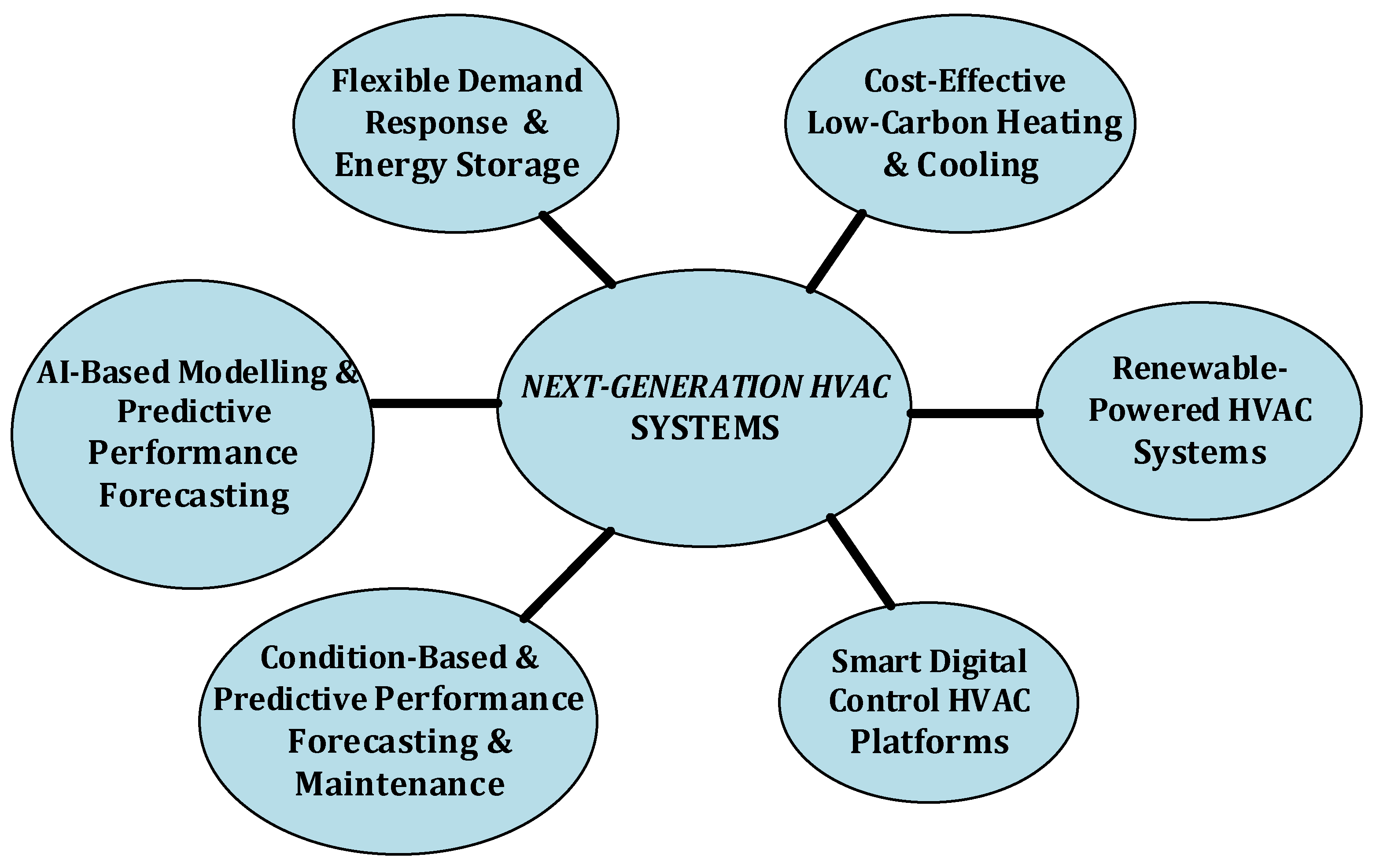
The schematic presented in Figure 6 highlights the integrated role of emerging HVAC technologies in shaping future high-performance and sustainable buildings [81]. By combining smart digital control platforms, data-driven performance modeling, predictive maintenance, renewable energy integration, demand flexibility, and cost-effective low-carbon heating and cooling solutions, next-generation HVAC systems enable buildings to transition from passive energy consumers to active, intelligent energy systems. The integration of demand response and energy storage supports grid stability while lowering operating costs, making advanced HVAC systems more economically attractive.

5. Future Outlook

As mentioned in previous sections, energy-efficient strategies and emerging technologies offer significant opportunities for sustainable building progress. These advancements are fueled by technological innovation, the adoption of solar PV systems, the expansion of digital and data-driven technologies, evolving regulatory requirements, supportive policy initiatives, and improved collaboration between industry and research institutions.
Future trends [92] will be driven by using advanced sensors, actuators, IoT and cloud computing and complementary technologies, where IoT devices collect and transmit data, and cloud computing provides the infrastructure to store, process, and analyze this data, enabling remote management and data-driven insights and controls. These IoT based devices can optimize building energy performance based on occupancy and weather conditions.
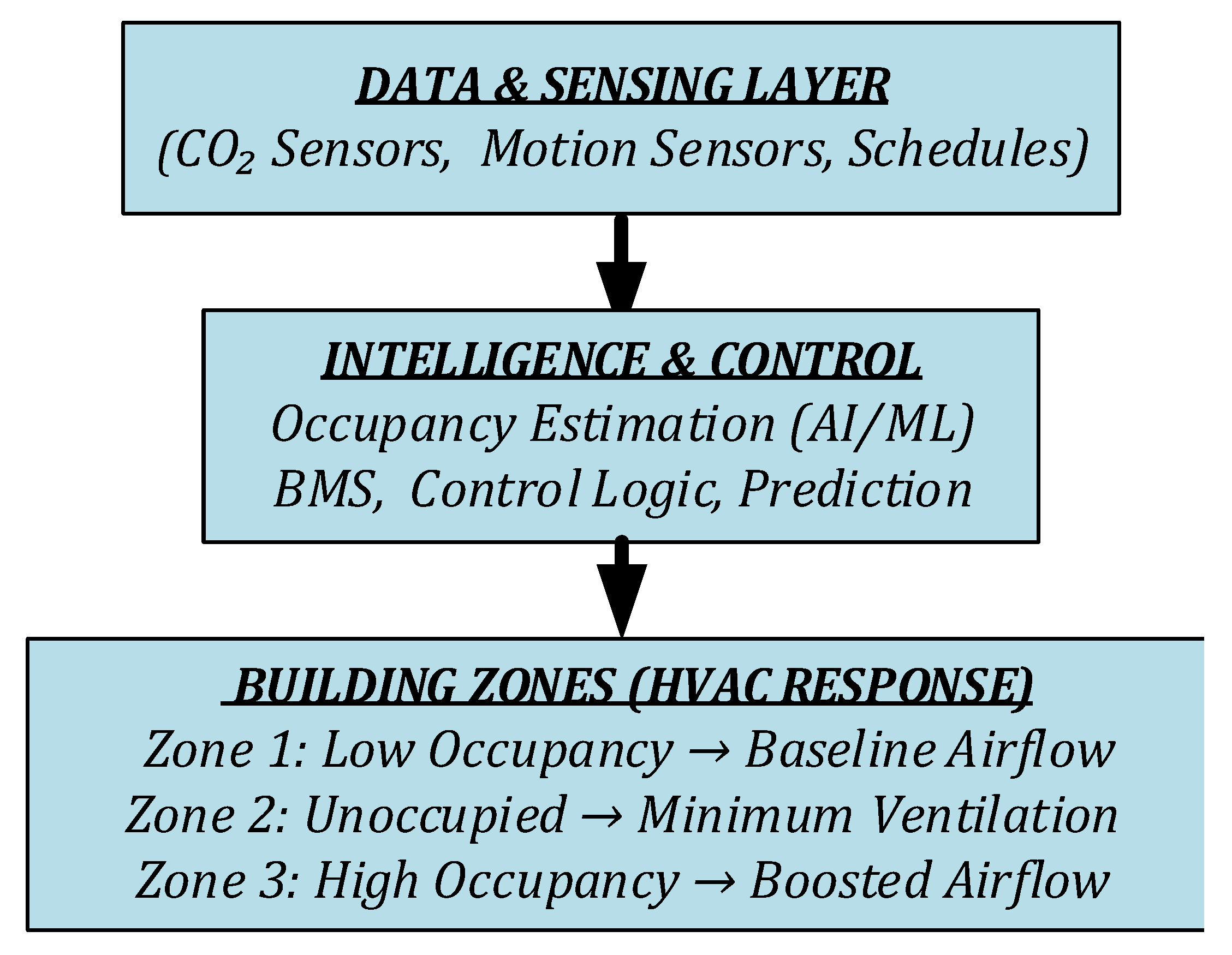
Additionally, AI/ML algorithms analyze massive data to identify patterns and make predictive adjustments, ensuring optimal energy use, comfort, and system maintenance [93]. Figure 7 conceptualizes these emerging trends of next-generation HVAC systems. In this scenario, environmental and occupancy-related data collected by sensors are processed by an intelligent control layer that integrates occupancy estimation algorithms with the building management system (BMS). Based on the estimated occupancy levels, the HVAC system dynamically adjusts ventilation rates across different building zones to optimize performance.
Another promising development is an exponential growth in the acceptance of renewable energy technologies, especially solar PV. Solar PV can generate electricity to power HVAC and other systems in the home; BIPV can generate electricity and replace the building envelope material [94,95]. Solar thermal collectors can preheat air/water/glycol for heating applications [96]. Geothermal source heat pumps can be used at stable ground temperatures to provide efficient heating and cooling, minimizing or eliminating dependence on grid electricity [97]. Wind energy can supplement power generation, particularly in areas with consistent wind speeds [98]. Smart controls [99] and IoT-based [84] energy management systems can optimize HVAC performance with renewable systems by adjusting loads based on energy availability. Researchers at Western University in Ontario have created a highly efficient home system that integrates solar PV, a heat pump, and a thermal battery [100]. Results from this living lab indicate a 45% reduction in electricity bills and a 55% decrease in carbon emissions, showcasing the benefits of combining solar energy with efficient heating and energy storage.
Thermal energy storage (TES) presents a promising solution to minimize the heating/cooling capacity/load of HVAC systems [101]. One significant advantage of TES is its ability to reduce electricity generation capacity by shifting excess generation load during low-demand periods. It helps to increase the effectiveness of generation capacity and grid stability during high-demand periods [102], allowing for installing smaller HVAC units to meet a building’s heating and cooling needs. Seasonal TES has been successful in many countries, often implemented alongside district heating systems. Large-scale seasonal TES is frequently combined with solar thermal collection systems and used with district heating [103]. An example of successful seasonal solar thermal energy storage is the Drake Landing Solar Community (DLSC) in Okotoks, Alberta, Canada [103]. This project reduces DLSC space heating bills by 90% using a seasonal underground solar storage system with active solar thermal generation.
Collaboration between HVAC manufacturers, system integrators, university/college researchers, policymakers, and energy providers will be vital to developing integrated, sustainable solutions that meet the evolving needs of buildings and climate [104]. Continued research into materials, technologies, and system designs and performance evaluation will drive innovation in energy-efficient HVAC systems and supporting technologies [105]. The development of new materials, such as mass timber [106], with enhanced thermal properties and sustainability credentials will enable the construction of more energy-efficient building envelopes. Future advancements in energy-efficient technologies are expected to influence green building certification frameworks, such as LEED, BREEAM, and other green building rating systems [107], by driving stricter requirements for energy performance, system efficiency, and building envelope design. As energy-efficient HVAC technologies become more mainstream and cost-effective, building codes and standards may need to evolve to mandate or incentivize the adoption of these technologies and materials in both new construction and retrofit projects.

5.1. NZEBs, HVAC Systems, and Case Study

NZEBs aim to balance their annual energy consumption with the energy they generate on-site from renewable sources. Achieving this balance involves a comprehensive strategy that includes passive solar design, robust building envelopes, energy-efficient systems, and the use of active renewable energy technologies [107]. In addition, NZEBs rely on energy-efficient design, advanced materials, HVAC system performance, and digitalization. New approaches are emerging in these buildings in Canada and worldwide to minimize energy use (kWh/m2), enhance occupant comfort, and reduce environmental impact. Suggestions for improving both existing and new constructions as NZEB and NZEB-ready include using smart insulation materials [108], incorporating solar passive design [109], using triple-glazed windows, incorporating thermal energy storage within the walls and roofs of buildings and using state-of-the-art HVAC with heat recovery systems [110,111]. Applying smart occupancy and motion sensors and extensive use of AI/ML technologies to analyze the building’s changing indoor/outdoor conditions.
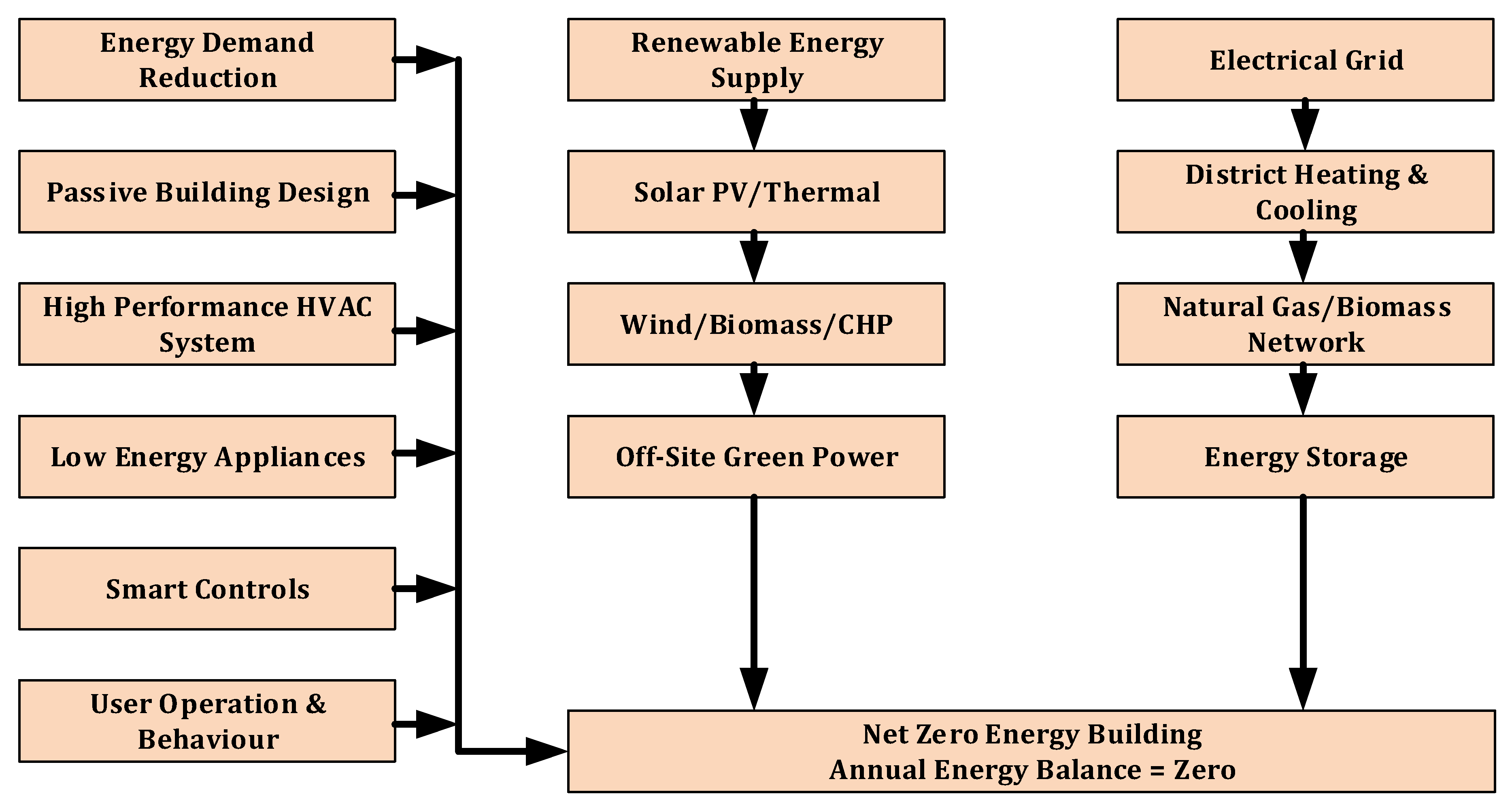
A study by [112] explored pathways for buildings to become NZEB (Figure 8). The study provides a comprehensive review of residential NZEBs, highlighting their potential to significantly reduce energy consumption and GHG emissions. By integrating energy infrastructure, such as grid interaction, district heating, and energy storage, with renewable energy sources like solar (both PV and thermal), wind, and biomass, NZEBs can meet or exceed annual energy needs with onsite renewables. The study emphasizes technological advancements and the necessity for flexible design strategies that adapt to local climate conditions, building codes, resources, and costs to support the wider development of residential NZEBs.
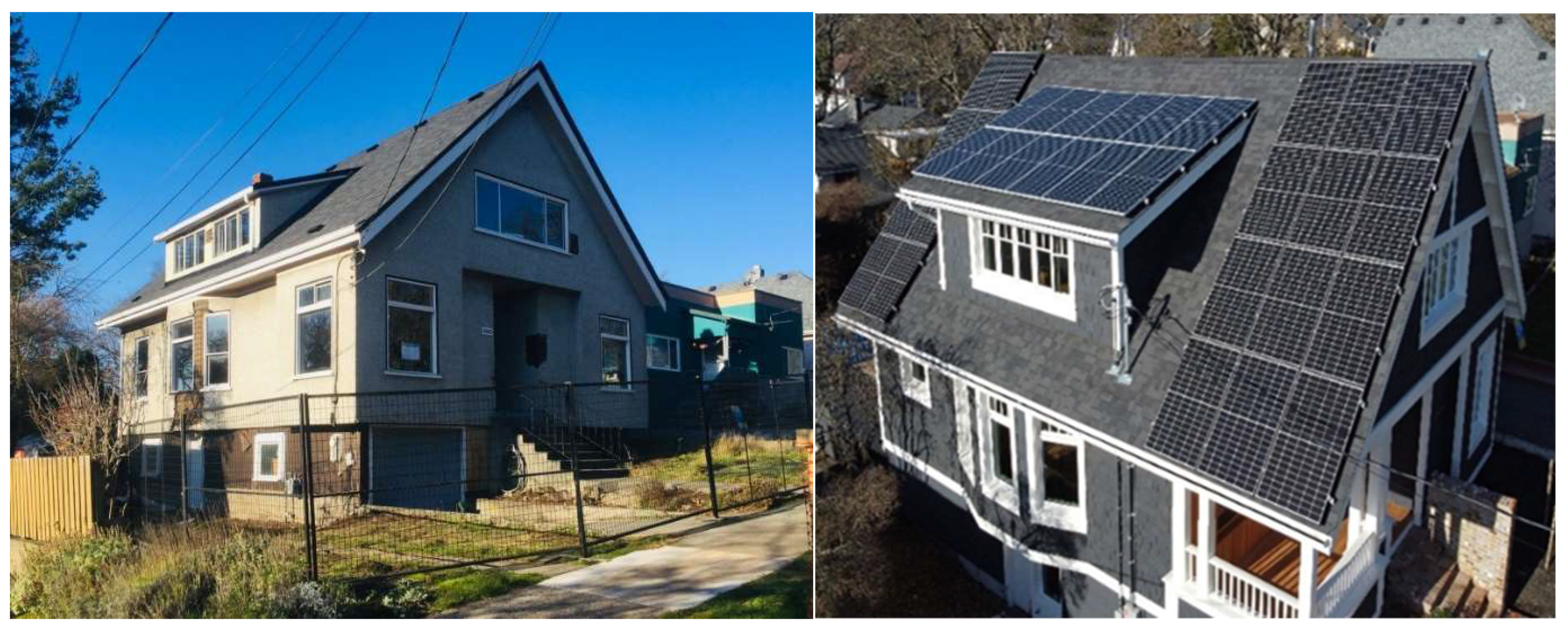
One prominent residential project in Canada is the Fernwood Net-Zero Energy Retrofit (Figure 9), a deep renovation of a 1912 Edwardian-Victorian heritage residence in Victoria, BC (Climate Zone 4), completed in 2021 [113]. This 404.1 m2 project transformed a historically significant home into a net-positive energy building, generating approximately 101.7% of its annual energy demand through a 13.5 kW PV system while eliminating on-site fossil fuel use. Key interventions included high-performance envelope retrofits with vapor-permeable air barriers and mineral wool insulation, roof insulation upgrades, and the replacement of the oil heating system with an ASHP, an HRV, and a heat-pump water heater. The retrofit achieved an estimated annual reduction of 18.44 tCO2e, significantly improved thermal comfort and IAQ, and is projected to extend the building’s lifespan by up to 100 years.
In its first year, the home saved over 100% in energy and exported $311 in excess electricity, though some upgrades cost up to twice the initial estimates. Initially, the Fernwood retrofit budget was based on standard retrofit assumptions and expected envelope upgrades. However, once construction began, the actual costs rose significantly above their projections. This increase was primarily due to underestimating the labor requirements, especially for installing exterior insulation over uneven existing stucco walls. The complexity of aligning the new cladding systems greatly increased both installation time and costs beyond the initial estimates. Additional factors contributing to the cost increase included unforeseen site conditions typical of older homes, the need for structural and seismic upgrades, and minor but unanticipated utility-related charges. Despite the cost escalation, the project serves as a demonstrative model for deep energy retrofits of older Canadian homes and illustrates a potentially scalable pathway for decarbonizing aging residential housing stock.

5.2. Regulatory and Policy Initiatives

HVAC system installation, operation, and upgrades are governed by a combination of regulatory standards and policy initiatives to ensure safety, efficiency, and environmental regulations. Building standards, including ASHRAE standards, the National Building Code of Canada (NBC), and the National Energy Code for Buildings (NECB), regulate HVAC system design, installation, ventilation, fire safety, operation, maintenance, and retrofit practices, while ASHRAE Standard 90.1 establishes minimum energy performance requirements for buildings in both the U.S. and Canada [114,115]. Occupational health and IAQ requirements are addressed through guidelines from the Occupational Safety and Health Administration (OSHA) and the Environmental Protection Agency (EPA) [116,117].
Canada’s federal government is working toward the implementation of net-zero energy-ready (NZER) building codes by 2030, ensuring that new buildings are highly energy-efficient and require minimal energy for HVAC operations [118]. Furthermore, Canada has aligned its regulatory approach with international energy efficiency standards, with proposed Amendment 18 introducing more stringent minimum efficiency requirements for appliances and HVAC equipment in 2027 and 2030 [119].
Complementing these regulatory measures, Canada has implemented several policy initiatives to accelerate the adoption of high-efficiency HVAC technologies. Programs such as the Canada Greener Homes Grant and the Canada Greener Homes Loan provide financial incentives and interest-free financing for residential energy retrofits [74]. The Oil to Heat Pump Affordability Program supports the transition from oil-based heating to efficient heat pumps, particularly in eastern Canada, while the Green and Inclusive Community Buildings Program funds energy-efficient retrofits for public infrastructure [75].
Table 5 summarizes the major features of Canada’s HVAC policy landscape in recent years, including financial incentives and numerous provincial rebates to enhance adoption and upgrade building systems with newer technologies and practices. However, challenges persist, including coverage gaps, administrative complexities, and regional or fuel-type inequities. To address these limitations and optimize energy savings, emission reductions, and equitable access, more regionally tailored enhancements and a cohesive, outcome-focused policy design are necessary.

5.3. Future Research Opportunities

The ongoing challenges and opportunities in building energy systems highlight the need for focused strategies to enhance their design, analysis, cost-effectiveness, and operation. As climatic conditions continue to change and urbanization progresses, there is a pressing demand for further research and ongoing support aimed at improving building efficiency, livability, and resilience. Key areas of further exploration include effective integration of renewable energy sources and solar passive concept [126] into existing HVAC systems, which can significantly boost efficiency and cost-effectiveness, and reduce carbon emissions across various building types. The advancements in the IoT also present avenues for enhancing HVAC performance and optimizing energy usage, while addressing security implications inherent in these integrations [127,128].
Furthermore, innovative solutions are essential for overcoming the barriers of retrofitting older buildings with contemporary HVAC technologies, and conducting thorough cost–benefit analyses of these retrofits are crucial [72,73]. Moreover, investigating the direct link between advanced HVAC systems, such as multi-stage heat pump systems, and occupant health benefits is necessary, in conjunction with the development of specific metrics to evaluate improvements in AQI [129].
In addition, establishing effective policy frameworks will encourage the adoption of energy-efficient HVAC technologies and practices, particularly in regions facing unique climatic challenges. Understanding occupant behavior’s impact [130], such as occupancy, on energy-efficient systems and promoting user engagement with advanced technologies will maximize energy savings. In addition, assessing the life cycle environmental impact of new HVAC technologies in real-world scenarios and fostering community and local government support for low-carbon solutions are key for their development and acceptance. Research on these questions can advance HVAC technologies, fostering sustainable, health-conscious building environments.

6. Conclusions

This review provides a comprehensive synthesis of emerging HVAC technologies and other strategies, and their role in advancing low-carbon, energy-efficient, and climate-resilient buildings. The primary contribution of this review lies in the development of an integrated analytical framework that connects HVAC system design, operational performance, policy instruments, climate stressors, indoor environmental quality, and housing affordability within a unified systems perspective. Unlike conventional reviews that treat energy efficiency, IAQ, digitalization, and electrification separately, this study demonstrates their interdependencies. It highlights how technological, regulatory, and socio-economic variables collectively shape real-world outcomes.
The review highlights essential climate-adaptive technology parameters for optimizing performance in Canadian conditions. Key aspects include the effectiveness of cold-climate heat pumps, strategies for hybrid fuel-switching, and the implementation of grid-interactive controls. It also emphasizes the importance of occupancy-driven ventilation techniques and the integration of thermal energy storage systems. By synthesizing technological performance, retrofit constraints, and policy mechanisms, the paper bridges the gap between innovation and practical deployment in both new and existing buildings.
The findings show that electrification through heat pumps, smart digital controls, renewable energy integration, and thermal storage systems represent the most promising pathway toward net-zero energy buildings and deep decarbonization of the buildings. Nonetheless, challenges to adoption, such as high capital costs, complex retrofitting of old buildings, strict regulations, and fragmented markets, persist and hinder large-scale implementation.

Future Research Areas

  • Optimization of cold-climate Air Source Heat Pumps (ASHPs) integrated with appropriate thermal energy storage to enhance the COP, reduces auxiliary heating demand, and alleviate peak electrical loads during extreme winter conditions.
  • Hybrid dual-fuel switching system optimization algorithms, incorporating dynamic electricity pricing, real-time carbon intensity factors, and weather forecasting to enable intelligent fuel switching in grid-interactive buildings.
  • AI-based predictive maintenance frameworks for HVAC systems using real-time sensor data, digital twins, and fault detection diagnostics to extend equipment lifespan, reduce downtime, and improve lifecycle cost performance.
  • Innovative financing models for commercial and multi-unit residential retrofits, including performance-based contracting, green bonds, on-bill financing, and risk-sharing mechanisms that reduce capital barriers and improve ROI certainty.
  • Integrated techno-economic-environmental modeling tools that simultaneously evaluate energy performance, carbon reduction, lifecycle costs, and occupant health metrics to support evidence-based policy and investment decisions.
  • Cybersecurity and data governance frameworks for IoT-enabled HVAC systems to address emerging risks associated with building digitalization.
  • Quantification of health co-benefits associated with advanced ventilation and filtration technologies, including measurable IAQ indicators linked to productivity and healthcare cost reductions.
Advancing research in specific areas is essential to moving beyond incremental efficiency gains and achieving a fundamental transformation of building energy systems. To create resilient, low-carbon, and affordable housing, it is crucial to coordinate technological advances, align policies, innovate in financing, and enhance workforce skills.

Author Contributions

R.K.: Conceptualization, methodology, writing manuscript, reviewing, editing, final submission; T.F.: generated the research idea, provided overall project supervision; P.M.: led project administration, allocated resources, identified the review goals and scope, the final draft review and approval; A.D.: team member involved in inspecting the details of the paper; M.P.: team member involved in examining the details of the paper. All authors have read and agreed to the published version of the manuscript.

Funding

This work was supported by the Housing, Infrastructure and Communities Canada (HICC) of Govt. of Canada, BC Housing, BC Hydro, and Technical Safety BC. (Grant No. Not Applicable).

Data Availability Statement

No data was used for the research described in the article.

Acknowledgments

This paper is part of the BPiBS (Best Practices in Building Systems) project research, funded by HICC, BC Housing, BC Hydro, and Technical Safety BC. The authors thank the researchers, organizations, and government departments for their contributions and the work/data cited in this paper. The authors acknowledge using AI tools (ChatGPT-5.2) for language editing.

Conflicts of Interest

The authors declare no conflicts of interest.

Abbreviations

AIArtificial Intelligence
ASHPAir Source Heat Pump
BCBritish Columbia
BIPVBuilding-Integrated Photovoltaic
C&ICommercial and Institutional
CMHCCanada Mortgage and Housing Corporation
DLSCDrake Landing Solar Community
EPAEnvironmental Protection Agency
ERVEnergy Recovery Ventilator
GHGGreenhouse Gas
GSHPGround Source Heat Pump
HRVHeat Recovery Ventilator
HVACHeating, Ventilation, and Air Conditioning
IEAInternational Energy Agency
IAQIndoor Air Quality
IoTInternet of Things
MLMachine Learning
MPCModel Predictive Controller
NRCNational Research Council
NRCanNatural Resources Canada
NZEBNet Zero Energy Building
NBCNational Building Code
NECBNational Energy Code for Buildings
PVPhotovoltaic
RTURoof Top Unit
ROIReturns on Investment
TESThermal Energy Storage
VRFVariable Refrigerant Flow

References

  1. IEA. Buildings. Available online: https://www.iea.org/energy-system/buildings (accessed on 19 January 2026).
  2. National Research Council of Canada. National Building Code of Canada 2020. Available online: https://nrc.canada.ca/en/certifications-evaluations-standards/codes-canada/codes-canada-publications/national-building-code-canada-2020 (accessed on 19 January 2026).
  3. González-Torres, M.; Pérez-Lombard, L.; Coronel, J.F.; Maestre, I.R.; Yan, D. A review on buildings energy information: Trends, end-uses, fuels and drivers. Energy Rep. 2022, 8, 626–637. [Google Scholar] [CrossRef]
  4. CMHC. Estimating How Much Housing We’ll Need by 2030. Available online: https://www.cmhc-schl.gc.ca/blog/2023/estimating-how-much-housing-we-need-by-2030 (accessed on 19 January 2026).
  5. Natural Resources Canada, Building Energy Efficiency. The Canada Green Buildings Strategy: Transforming Canada’s Buildings Sector for a Net-Zero and Resilient Future. Available online: https://natural-resources.canada.ca/energy-efficiency/building-energy-efficiency/canada-green-buildings-strategy-transforming-canada-s-buildings-sector-net-zero-resilient-future (accessed on 19 January 2026).
  6. Sharbaf, S.A.; Schneider-Marin, P. Cost-benefit analysis of sustainable upgrades in existing buildings: A critical review. Energy Build. 2025, 328, 115142. [Google Scholar] [CrossRef]
  7. Govt. of Canada, Environment and Natural Resources. 2030 Emissions Reduction Plan—Sector-by-Sector Overview. Available online: https://www.canada.ca/en/services/environment/weather/climatechange/climate-plan/climate-plan-overview/emissions-reduction-2030/sector-overview.html (accessed on 19 January 2026).
  8. Ryu, D.; Yoo, W. Ventilation-dominated energy savings in large commercial buildings: Multi-measure assessment revealing HVAC optimization priorities for hot-humid climates. Case Stud. Therm. Eng. 2025, 74, 107034. [Google Scholar] [CrossRef]
  9. US Environmental Protection Agency (EPA). Heating, Ventilation and Air-Conditioning Systems, Part of Indoor Air Quality Design Tools for Schools. Available online: https://www.epa.gov/iaq-schools/heating-ventilation-and-air-conditioning-systems-part-indoor-air-quality-design-tools (accessed on 19 January 2026).
  10. ANSI/ASHRAE/IES Standard 90.1-2019; Energy Standard for Buildings Except Low-Rise Residential Buildings. American Society of Heating: Peachtree Corners, GA, USA, 2022. Available online: https://www.ashrae.org/file%20library/technical%20resources/standards%20and%20guidelines/standards%20addenda/90_1_2019_t_20220812.pdf (accessed on 19 January 2026).
  11. Esrafilian-Najafabadi, M.; Haghighat, F. Occupancy-based HVAC control systems in buildings: A state-of-the-art review. Build. Environ. 2021, 197, 107810. [Google Scholar] [CrossRef]
  12. Pang, Z.; O’Neill, Z.; Chen, Y.; Zhang, J.; Cheng, H.; Dong, B. Adopting occupancy-based HVAC controls in commercial building energy codes: Analysis of cost-effectiveness and decarbonization potential. Appl. Energy 2023, 349, 121594. [Google Scholar] [CrossRef]
  13. Natural Resources Canada. Energy Efficiency Trends in Canada. Available online: https://oee.nrcan.gc.ca/publications/statistics/trends/2018/totalsectors.cfm (accessed on 19 January 2026).
  14. Liu, G.; Chen, H.; Yuan, Y.; Song, C. Indoor thermal environment and human health: A systematic review. Renew. Sustain. Energy Rev. 2024, 191, 114164. [Google Scholar] [CrossRef]
  15. Camfil, PM1 Fine Dust Hazard to Health. Available online: https://www.camfil.com/damdocuments/26717/26545/pm1---fine-dust---hazard-to-health_us-version.pdf (accessed on 19 January 2026).
  16. Kumar, P.; Singh, A.; Arora, T.; Singh, S.; Singh, R. Critical review on emerging health effects associated with the indoor air quality and its sustainable management. Sci. Total Environ. 2023, 872, 162163. [Google Scholar] [CrossRef]
  17. Seyam, S. Types of HVAC systems. In Building Services and Building Information Modelling; IntechOpen: London, UK, 2018; Available online: https://www.intechopen.com/chapters/62059 (accessed on 19 January 2026).
  18. ASHRAE. ASHRAE Handbook—HVAC Systems and Equipment; ASHRAE: Atlanta, GA, USA, 2020; Available online: https://www.ashrae.org/about/news/2020/2020-ashrae-handbook-focuses-on-systems-and-equipment (accessed on 19 January 2026).
  19. Katipamula, S.; Brambley, M.R. Methods for fault detection, diagnostics, and prognostics for building systems—A review, Part I. HVACR Res. 2005, 11, 3–25. [Google Scholar] [CrossRef]
  20. Żelazna, A.; Pawłowski, A. Review of the Role of Heat Pumps in Decarbonization of the Building Sector. Energies 2025, 18, 3255. [Google Scholar] [CrossRef]
  21. Tejani, A.K. Integrating Energy-Efficient HVAC Systems into Historical Buildings: Challenges and Solutions for Balancing Preservation and Modernization. ESP J. Eng. Technol. Adv. 2021, 1, 83–97. [Google Scholar] [CrossRef]
  22. Jeong, Y.; Lee, S.; Menegazzo, D.; Lombardo, G.; Bobbo, S.; Fedele, L.; Kim, M.S. Combined effect of refrigerant amount reduction and composition change on heat pump system performance during refrigerant mixture leakage. Appl. Therm. Eng. 2025, 258, 124691. [Google Scholar] [CrossRef]
  23. Pérez-Lombard, L.; Ortiz, J.; Pout, C. A review on buildings energy consumption information. Energy Build. 2008, 40, 394–398. [Google Scholar] [CrossRef]
  24. Rashid, F.L.; Al-Obaidi, M.A.; Al Maimuri, N.M.L.; Ameen, A.; Agyekum, E.B.; Chibani, A.; Kezzar, M. Mechanical Ventilation Strategies in Buildings: A Comprehensive Review of Climate Management, Indoor Air Quality, and Energy Efficiency. Buildings 2025, 15, 2579. [Google Scholar] [CrossRef]
  25. Canadian Climate Institute. Fact Sheet: Climate Change and Heat Waves. 2021. Available online: https://climateinstitute.ca/news/fact-sheet-heat-waves/ (accessed on 19 January 2026).
  26. Government of Canada. Surviving the Heat: The Impacts of the 2021 Western Heat Dome in Canada. 2021. Available online: https://science.gc.ca/site/science/en/blogs/science-health/surviving-heat-impacts-2021-western-heat-dome-canada (accessed on 19 January 2026).
  27. Ebi, K.L.; Vanos, J.; Baldwin, J.W.; Bell, J.E.; Hondula, D.M.; Errett, N.A.; Hayes, K.; Reid, C.E.; Saha, S.; Spector, J.; et al. Extreme Weather and Climate Change: Population Health and Health System Implications. Annu. Rev. Public Health 2021, 42, 293–315. [Google Scholar] [CrossRef]
  28. Statistics Canada, A Heated Discussion: Who Uses Air Conditioning in Canada in 2025? 2025. Available online: https://www150.statcan.gc.ca/n1/daily-quotidien/250708/dq250708a-eng.htm (accessed on 19 January 2026).
  29. Yudhi, F.; Alhamid, M.I.; Putra, N.; Lubis, A. A study on temperature, relative humidity, and energy consumption in long-distance trains air conditioning systems in Indonesia. Case Stud. Therm. Eng. 2025, 71, 106122. [Google Scholar] [CrossRef]
  30. Lee, S.H.; Hong, T.; Le, M.; Medina, L.; Xu, Y.; Robinson, A.; Piette, M.A. Assessment of energy and thermal resilience performance to inform climate mitigation of multifamily buildings in disadvantaged communities. Sustain. Cities Soc. 2024, 104, 105319. [Google Scholar] [CrossRef]
  31. Drgoňa, J.; Arroyo, J.; Figueroa, I.C.; Blum, D.; Arendt, K.; Kim, D.; Ollé, E.P.; Oravec, J.; Wetter, M.; Vrabie, D.L.; et al. All you need to know about model predictive control for buildings. Annu. Rev. Control 2020, 50, 190–232. [Google Scholar] [CrossRef]
  32. Kenny, G.P.; Tetzlaff, E.J.; Journeay, W.S.; Henderson, S.B.; O’cOnnor, F.K. Indoor overheating: A review of vulnerabilities, causes, and strategies to prevent adverse human health outcomes during extreme heat events. Temperature 2024, 11, 203–246. [Google Scholar] [CrossRef]
  33. Schroderus, S.; Kuurola, P.; Kempe, M.; Fedorik, F.; Leivo, V.; Haverinen-Shaughnessy, U. Impacts of building energy retrofits on energy consumption, indoor environment, and hygrothermal performance in future climate scenarios. Energy Build. 2025, 347, 116413. [Google Scholar] [CrossRef]
  34. Canada Green Building Council (CaGBC). Retrofits for the Future: Unlocking the Potential of Canada’s Existing Buildings, (n.d.). Available online: https://www.cagbc.org/why-green-building/retrofits-for-the-future/ (accessed on 19 January 2026).
  35. Vakiloroaya, V.; Samali, B.; Fakhar, A.; Pishghadam, K. A review of different strategies for HVAC energy saving. Energy Convers. Manag. 2014, 77, 738–754. [Google Scholar] [CrossRef]
  36. Pardo-Bosch, F.; Cervera, C.; Ysa, T. Key aspects of building retrofitting: Strategizing sustainable cities. J. Environ. Manag. 2019, 248, 109247. [Google Scholar] [CrossRef]
  37. Wójcik-Madej, J.; Sowińska-Świerkosz, B.; Luque, G.P.; Michalik-Śnieżek, M. Retrofitting existing buildings by the use of modular green roofs. Build. Environ. 2025, 287, 113900. [Google Scholar] [CrossRef]
  38. Abu Dabous, S.; Hosny, F. A review of building envelope retrofitting methods for improving energy efficiency, aesthetic, and indoor environmental quality. Energy Nexus 2025, 18, 100407. [Google Scholar] [CrossRef]
  39. Lai, Y.; Papadopoulos, S.; Fuerst, F.; Pivo, G.; Sagi, J.; Kontokosta, C.E. Building retrofit hurdle rates and risk aversion in energy efficiency investments. Appl. Energy 2022, 306, 118048. [Google Scholar] [CrossRef]
  40. Nair, G.; Verde, L.; Olofsson, T. A Review on Technical Challenges and Possibilities on Energy Efficient Retrofit Measures in Heritage Buildings. Energies 2022, 15, 7472. [Google Scholar] [CrossRef]
  41. US EPA Energy Star Program, Guidelines on High-Efficiency HVAC Systems and Building Performance, (n.d.). Available online: www.energystar.gov (accessed on 19 January 2026).
  42. Bae, Y.; Bhattacharya, S.; Cui, B.; Lee, S.; Li, Y.; Zhang, L.; Im, P.; Adetola, V.; Vrabie, D.; Leach, M.; et al. Sensor impacts on building and HVAC controls: A critical review for building energy performance. Adv. Appl. Energy 2021, 4, 100068. [Google Scholar] [CrossRef]
  43. Almazam, K.; Humaidan, O.; Shannan, N.M.; Bashir, F.M.; Gammoudi, T.; Dodo, Y.A. Innovative Energy Efficiency in HVAC Systems with an Integrated Machine Learning and Model Predictive Control Technique: A Prospective Toward Sustainable Buildings. Sustainability 2025, 17, 2916. [Google Scholar] [CrossRef]
  44. Liu, S.; Yu, T.; Wang, B.; Lyu, H.; Gao, R.; Shi, W. A novel heat recovery VRF system: Principle and cooling performance analysis. Build. Environ. 2024, 266, 112105. [Google Scholar] [CrossRef]
  45. Sivasankari, N.; Rathika, P. IoT driven building automation systems: A review on energy efficiency, occupant comfort, and sustainability. J. Build. Eng. 2025, 104, 112347. [Google Scholar] [CrossRef]
  46. Xu, Q.; Riffat, S.; Zhang, S. Review of heat recovery technologies for building applications. Energies 2019, 12, 1285. [Google Scholar] [CrossRef]
  47. Chenari, B.; Saadatian, S.; da Silva, M.G. Experimental Assessment of Demand-Controlled Ventilation Strategies for Energy Efficiency and Indoor Air Quality in Office Spaces. Air 2025, 3, 17. [Google Scholar] [CrossRef]
  48. Hasan, J.; Fung, A.S.; Horvat, M. A comparative evaluation on the case for the implementation of building integrated photovoltaic/thermal (BIPV/T) air based systems on a typical mid-rise commercial building in Canadian cities. J. Build. Eng. 2021, 44, 103325. [Google Scholar] [CrossRef]
  49. Natural Resources Canada. Training on Energy and GHG Management, (n.d.). Available online: https://ressources-naturelles.canada.ca/efficacite-energetique/ (accessed on 19 January 2026).
  50. Wilbur, B.; Fung, A.S.; Kumar, R. Thermal System and Net-Zero-Carbon Least-Cost Design Optimization of New Detached Houses in Canada. Buildings 2024, 14, 2870. [Google Scholar] [CrossRef]
  51. ACEEE. Advanced Building Energy Codes: Minimum HVAC and System Efficiency Requirements, (n.d.). Available online: https://www.aceee.org/content/advanced-building-energy-codes (accessed on 19 January 2026).
  52. Liu, H.; Du, Z.; Xue, T.; Jiang, T. Enhancing smart building performance with waste heat recovery: Supply-side management, demand reduction, and peak shaving via advanced control systems. Energy Build. 2024, 327, 115070. [Google Scholar] [CrossRef]
  53. Tanha, K.; Fung, A.S.; Kumar, R. Performance of two domestic solar water heaters with drain water heat recovery units: Simulation and experimental investigation. Appl. Therm. Eng. 2015, 90, 444–459. [Google Scholar] [CrossRef]
  54. Kowalski, P.; Szałański, P.; Cepiński, W. Waste Heat Recovery by Air-to-Water Heat Pump from Exhausting Ventilating Air for Heating of Multi-Family Residential Buildings. Energies 2021, 14, 7985. [Google Scholar] [CrossRef]
  55. Natural Resources Canada. Heating and Cooling with a Heat Pump. Government of Canada. Available online: https://natural-resources.canada.ca/energy-efficiency/energy-star/heating-cooling-heat-pump (accessed on 14 February 2026).
  56. Abdel-Salam, M.R.; Zaidi, A.; Cable, M. Field study of heating performance of three ground-source heat pumps in Canadian single-family houses. Energy Build. 2021, 247, 110959. [Google Scholar] [CrossRef]
  57. Vuong, E.; Fung, A.S.; Kumar, R. Performance enhancement of a building-integrated photovoltaic/thermal system coupled with an air source heat pump. Energies 2024, 18, 12. [Google Scholar] [CrossRef]
  58. Hirmiz, R.; Teamah, H.; Lightstone, M.; Cotton, J. Cotton, Performance of heat pump integrated latent thermal energy storage for load shifting. Energy Build. 2019, 190, 103–118. [Google Scholar] [CrossRef]
  59. Li, Z.; Gluesenkamp, K.; Shen, B.; Kowalski, S. Benefits of dual fuel heat pump grid-responsive control: A model-based control optimization approach using building and equipment co-simulation. Energy Build. 2025, 347, 116287. [Google Scholar] [CrossRef]
  60. Gibbons, L.; Javed, S. A review of HVAC solution-sets and energy performance of nearly zero-energy multi-story apartment buildings in Nordic climates by statistical analysis of environmental performance certificates and literature review. Energy 2022, 238, 121709. [Google Scholar] [CrossRef]
  61. Emmerich, S.J.; Persily, A.K. State-of-the-Art Review of CO2, Demand Controlled Ventilation Technology and Application; NIST Interagency/Internal Report (NISTIR); National Institute of Standards and Technology: Gaithersburg, MD, USA, 2001. Available online: https://tsapps.nist.gov/publication/get_pdf.cfm?pub_id=860846 (accessed on 14 February 2026).
  62. Kumar, R.; Girgis, E.; Dekin, A.; Prince, M.; Froese, T.; Mukhopadhyaya, P. Sustainable and Affordable Housing-Strategies, Innovations, and Policy Direction, CleanBC Insights Series. 2025. Available online: https://climatesolutions.ca/wp-content/uploads/2025/11/CleanBC-Paper-7_Sustainable-and-Affordable-Housing_FINAL.pdf (accessed on 14 February 2026).
  63. British Columbia Government. CleanBC: Better Homes and Home Renovation Rebates, (n.d.). Available online: https://www.betterhomesbc.ca (accessed on 19 January 2026).
  64. Berardi, U.; Jones, S. The efficiency and GHG emissions of air source heat pumps under future climate scenarios across Canada. Energy Build. 2022, 262, 112000. [Google Scholar] [CrossRef]
  65. Safa, A.A.; Fung, A.S.; Kumar, R. Performance of two-stage variable capacity air source heat pump: Field performance results and TRNSYS simulation. Energy Build. 2015, 94, 80–90. [Google Scholar] [CrossRef]
  66. Lemghalef, L.; Sager, J. The Future of Home Heating: Hybrid Home Heating Systems Offer Energy Savings and Reduce GHG Emissions, Natural Resources Canada (n.d.). Available online: https://natural-resources.canada.ca/stories/simply-science/future-home-heating-hybrid-home-heating-systems-offer-energy-savings-reduce-ghg-emissions (accessed on 19 January 2026).
  67. Demirezen, G.; Fung, A.S. Feasibility of Cloud Based Smart Dual Fuel Switching System (SDFSS) of Hybrid Residential Space Heating Systems for Simultaneous Reduction of Energy Cost and Greenhouse Gas Emission. Energy Build. 2021, 250, 111237. [Google Scholar] [CrossRef]
  68. Afram, A.; Janabi-Sharifi, F. Theory and applications of HVAC control systems–A review of model predictive control (MPC). Build. Environ. 2014, 72, 343–355. [Google Scholar] [CrossRef]
  69. Karjou, P.F.; Saryazdi, S.K.; Stoffel, P.; Müller, D. Practical design and implementation of IoT-based occupancy monitoring systems for office buildings: A case study. Energy Build. 2024, 323, 114852. [Google Scholar] [CrossRef]
  70. Zhang, Z.; Chong, A.; Pan, Y.; Zhang, C.; Lam, K.P. Whole building energy model for HVAC optimal control: A practical framework based on deep reinforcement learning. Energy Build. 2019, 199, 472–490. [Google Scholar] [CrossRef]
  71. IEA. Energy Efficiency and Digitalisation, (n.d.). Available online: https://www.iea.org/articles/energy-efficiency-and-digitalisation (accessed on 19 January 2026).
  72. Serale, G.; Fiorentini, M.; Capozzoli, A.; Bernardini, D.; Bemporad, A. Model Predictive Control (MPC) for Enhancing Building and HVAC System Energy Efficiency: Problem Formulation, Applications and Opportunities. Energies 2018, 11, 631. [Google Scholar] [CrossRef]
  73. Carlander, J.; Thollander, P. Barriers to implementation of energy-efficient technologies in building construction projects—Results from a Swedish case study. Resour. Environ. Sustain. 2022, 11, 100097. [Google Scholar] [CrossRef]
  74. Natural Resources Canada. Canada Greener Homes Loan—Up to $40,000 Interest-Free, (n.d.). Available online: https://natural-resources.canada.ca/energy-efficiency/home-energy-efficiency/canada-greener-homes-initiative/canada-greener-homes-loan (accessed on 19 January 2026).
  75. Natural Resources Canada. Oil to Heat Pump Affordability Program Helps Canadians Save on Energy Bills. 2024. Available online: https://www.canada.ca/en/natural-resources-canada/news/2024/02/government-of-canada-launches-strengthened-heat-pump-program-with-nova-scotia-addressing-affordability-and-climate-goals.html (accessed on 19 January 2026).
  76. HRAI. Overcoming Implementation Barriers to HVAC Contractor-Led Building Retrofits, Final Report. 2021. Available online: https://www.hrai.ca/uploads/userfiles/files/2021%2005%2031%20--%20HRAI%20Final%20Report.pdf (accessed on 14 February 2026).
  77. ACEEE. Energy Efficiency Strategies and Upgrades, (n.d.). Available online: https://www.aceee.org/topic/energy-efficiency-strategies-and-upgrades (accessed on 19 January 2026).
  78. Efficiency Canada. Strengthening Canada’s Building Code Process to Achieve Net Zero Emissions. 2020. Available online: https://www.efficiencycanada.org/wp-content/uploads/2020/10/Strengthening-Canadas-Building-Code-Process-to-Achieve-Net-Zero-Emissions.pdf (accessed on 19 January 2026).
  79. Farid, H.M.A.; Iram, S.; Shakeel, H.M.; Hill, R. Enhancing stakeholder engagement in building energy performance assessment: A state-of-the-art literature survey. Energy Strat. Rev. 2024, 56, 101560. [Google Scholar] [CrossRef]
  80. Gajaba, P.Y.; Dissanayake, P. Enablers to implement energy efficiency strategies to heating, ventilation and air conditioning of airside in commercial buildings in Sri Lanka. Constr. Innov. 2025. [Google Scholar] [CrossRef]
  81. Krajčík, M.; Arıcı, M.; Ma, Z. Trends in research of heating, ventilation and air conditioning and hot water systems in building retrofits: Integration of review studies. J. Build. Eng. 2023, 76, 107426. [Google Scholar] [CrossRef]
  82. Hsu, P.-C.; Gao, L.; Hwang, Y.; Radermacher, R. A review of the state-of-the-art data-driven modeling of building HVAC systems. Energy Build. 2025, 342, 115881. [Google Scholar] [CrossRef]
  83. Es-Sakali, N.; Cherkaoui, M.; Mghazli, M.O.; Naimi, Z. Review of predictive maintenance algorithms applied to HVAC systems. Energy Rep. 2022, 8, 1003–1011. [Google Scholar] [CrossRef]
  84. Zhuang, D.; Gan, V.J.; Tekler, Z.D.; Chong, A.; Tian, S.; Shi, X. Data-driven predictive control for smart HVAC system in IoT-integrated buildings with time-series forecasting and reinforcement learning. Appl. Energy 2023, 338, 120936. [Google Scholar] [CrossRef]
  85. Kaldeh, S.N.; Yousefi, H.; Noorollahi, Y.; Abdoos, M. Integration of renewable sources in buildings: A review of energy savings, feasibility, and challenges. Energy Rep. 2025, 14, 3905–3920. [Google Scholar] [CrossRef]
  86. Zanetti, E.; Blum, D.; Fu, H.; Weyandt, C.; Pritoni, M.; Piette, M.A. Commercial building HVAC demand flexibility with model predictive control: Field demonstration and literature insights. Energy Build. 2025, 345, 116097. [Google Scholar] [CrossRef]
  87. Zhang, S.; Ocłoń, P.; Klemeš, J.J.; Michorczyk, P.; Pielichowska, K.; Pielichowski, K. Renewable energy systems for building heating, cooling and electricity production with thermal energy storage. Renew. Sustain. Energy Rev. 2022, 165, 112560. [Google Scholar] [CrossRef]
  88. Chatzigeorgiou, N.G.; Theocharides, S.; Makrides, G.; Georghiou, G.E. A review on battery energy storage systems: Applications, developments, and research trends of hybrid installations in the end-user sector. J. Energy Storage 2024, 86, 111192. [Google Scholar] [CrossRef]
  89. Lavrinovica, I.; Judvaitis, J.; Laksis, D.; Skromule, M.; Ozols, K. A Comprehensive review of sensor-based smart building monitoring and data gathering techniques. Appl. Sci. 2024, 14, 10057. [Google Scholar] [CrossRef]
  90. Devaraj, S.M. The future of HVAC systems: AI, cloud, and the Internet of Things (IoT). Comput. Eng. Technol. 2023, 14, 269–285. [Google Scholar] [CrossRef]
  91. Aghili, S.A.; Rezaei, A.H.M.; Tafazzoli, M.; Khanzadi, M.; Rahbar, M. Artificial intelligence approaches to energy management in HVAC systems: A systematic review. Buildings 2025, 15, 1008. [Google Scholar] [CrossRef]
  92. Zhou, S.; Shah, A.; Leung, P.; Zhu, X.; Liao, Q. A comprehensive review of the applications of machine learning for HVAC. DeCarbon 2024, 2, 100023. [Google Scholar] [CrossRef]
  93. Borodinecs, A.; Zemitis, J.; Palcikovskis, A. HVAC System Control Solutions Based on Modern IT Technologies: A Review Article. Energies 2022, 15, 6726. [Google Scholar] [CrossRef]
  94. Martín-Chivelet, N.; Kapsis, K.; Wilson, H.R.; Delisle, V.; Yang, R.; Olivieri, L.; Polo, J.; Eisenlohr, J.; Roy, B.; Maturi, L.; et al. Building-Integrated Photovoltaic (BIPV) products and systems: A review of energy-related behavior. Energy Build. 2022, 262, 111998. [Google Scholar] [CrossRef]
  95. IEA. Photovoltaic Power Systems Programme, Building-Integrated Photovoltaics: A Technical Guidebook (IEA-PVPS Task 15), IEA PVPS. 2025. Available online: https://iea-pvps.org/wp-content/uploads/2025/02/Building-Integrated-Photovoltaics-Technical-Guidebook.pdf (accessed on 19 January 2026).
  96. Ciriminna, R.; Meneguzzo, F.; Pecoraino, M.; Pagliaro, M. Solar Air Heating and Ventilation in Buildings: A Key Component in the Forthcoming Renewable Energy Mix. Energy Technol. 2017, 5, 1165–1172. [Google Scholar] [CrossRef]
  97. Jang, D.S.; Skye, H.M. Performance of a ground-source integrated heat pump for HVAC and DHW in a residential net-zero energy building. Energy Convers. Manag. 2024, 321, 119003. [Google Scholar] [CrossRef]
  98. Kumar, R.; Raahemifar, K.; Fung, A.S. A critical review of vertical axis wind turbines for urban applications. Renew. Sustain. Energy Rev. 2018, 89, 281–291. [Google Scholar] [CrossRef]
  99. Oldewurtel, F.; Parisio, A.; Jones, C.N.; Gyalistras, D.; Gwerder, M.; Stauch, V.; Lehmann, B.; Morari, M. Use of model predictive control and weather forecasts for energy efficient building climate control. Energy Build. 2012, 45, 15–27. [Google Scholar] [CrossRef]
  100. Western University News/Western Engineering Decarbonization System Greatly Reduces Household Energy Bills. 2025. Available online: https://educationnewscanada.com/article/education/level/university/1/1167353/western-engineering-decarbonization-system-greatly-reduces-household-energy-bills.html?utm_source=chatgpt.com (accessed on 19 January 2026).
  101. Sarbu, I.; Sebarchievici, C. A comprehensive review of thermal energy storage. Sustainability 2018, 10, 191. [Google Scholar] [CrossRef]
  102. Qiao, Y.; Li, Z.; Liu, X.; Ishmael, M. Optimizing Control for Efficient Load Shifting with Thermal Energy Storage in Existing HVAC Systems; RNL-TM-2025-4135; Oak Ridge National Laboratory (ORNL): Oak Ridge, TN, USA; Active Energy Systems, Inc.: Knoxville, TN, USA, 2025.
  103. Natural Resources Canada. Drake Landing Solar Community: 10 Years of Operation, CanmetENERGY (n.d.). Available online: https://www.sciencedirect.com/topics/engineering/drake-landing-solar-community?utm_source=chatgpt.com (accessed on 19 January 2026).
  104. Olatunde, T.M.; Okwandu, A.C.; Akande, D.O.; Sikhakhane, Z.Q. Review of energy-efficient HVAC technologies for sustainable buildings. Int. J. Sci. Technol. Res. Arch. 2024, 6, 12–25. [Google Scholar] [CrossRef]
  105. Xiao, F.; Wang, S. Progress and methodologies of lifecycle commissioning of HVAC systems to enhance building sustainability. Renew. Sustain. Energy Rev. 2009, 13, 1144–1149. [Google Scholar] [CrossRef]
  106. CleanBC. Government Actions, (n.d.). Available online: https://cleanbc.gov.bc.ca (accessed on 19 January 2026).
  107. Bhavsar, R.; Cupido, A.; Arriaga, M. Mohawk college’s net zero energy and zero carbon building—A living lab for high efficiency and renewable energy technologies in buildings. J. Green Build. 2020, 15, 185–214. [Google Scholar] [CrossRef]
  108. Fawaier, M.; Bokor, B. Dynamic insulation systems of building envelopes: A review. Energy Build. 2022, 270, 112268. [Google Scholar] [CrossRef]
  109. Ménard, R.; Souviron, J. Passive solar heating through glazing: The limits and potential for climate change mitigation in the European building stock. Energy Build. 2020, 228, 110400. [Google Scholar] [CrossRef]
  110. Jaysawal, R.K.; Chakraborty, S.; Elangovan, D.; Padmanaban, S. Concept of net zero energy buildings (NZEB)—A literature review. Clean. Eng. Technol. 2022, 11, 100582. [Google Scholar] [CrossRef]
  111. Parvin, K.; Hossain, M.; Arsad, A.; Ker, P.J.; Hannan, M. Building energy technologies towards achieving net-zero pathway: A comprehensive review, challenges and future directions. J. Build. Eng. 2025, 100, 111795. [Google Scholar] [CrossRef]
  112. Wu, W.; Skye, H.M. Residential net-zero energy buildings: Review and perspective. Renew. Sustain. Energy Rev. 2021, 142, 110859. [Google Scholar] [CrossRef]
  113. Retrofitcanada, Fernwood, Victoria, Net-Zero Case Study, (n.d.). Available online: https://retrofitcanada.com/case-studies/fernwood (accessed on 19 January 2026).
  114. ASHRAE, Standard 90.1: Energy Standard for Buildings Except Low-Rise Residential Buildings, (n.d.). Available online: https://www.ashrae.org/technical-resources/bookstore/standard-90-1 (accessed on 19 January 2026).
  115. NRC, National Building Code of Canada 2015, Volume II, Part 9, Canadian Commission on Building and Fire Codes (2015). Available online: https://publications.gc.ca/collections/collection_2019/cnrc-nrc/NR24-28-2018-eng.pdf (accessed on 19 January 2026).
  116. NIOSH. Research on IAQ and HVAC-Related Health Impacts in Workplaces, (n.d.). Available online: www.cdc.gov/niosh (accessed on 19 January 2026).
  117. U.S. EPA. Guidelines on IAQ, HVAC Maintenance, and Pollutant Control, (n.d.). Available online: www.epa.gov/indoor-air-quality-iaq (accessed on 19 January 2026).
  118. Government of Ontario. O. Reg. 350/06: Building Code. 2017. Available online: https://www.ontario.ca/laws/regulation/060350 (accessed on 19 January 2026).
  119. Government of Canada. Regulations amending the Energy Efficiency Regulations, 2016 (Amendment 18), SOR/2025-110 (Canada Gazette, Part II, Vol. 159, No. 8). Canada Gazette, Part II. 2025. Available online: https://gazette.gc.ca/rp-pr/p2/2025/2025-04-09/html/sor-dors110-eng.html (accessed on 24 February 2026).
  120. Natural Resources Canada. For Applicants in Participating Provinces and Territories—Canada Greener Homes Initiative. Government of Canada. 2026. Available online: https://natural-resources.canada.ca/energy-efficiency/home-energy-efficiency/canada-greener-homes-initiative/applicants-participating-provinces-territories (accessed on 24 February 2026).
  121. Better Buildings BC. Energy Saving Incentives for Businesses. 2024. Available online: https://betterbuildingsbc.ca/incentives/energy-saving-incentives-for-businesses/ (accessed on 24 February 2026).
  122. Government of Yukon. Affordable Heat Pump Program—Rebate Details. Government of Yukon. 2025. Available online: https://www.canada.ca/en/natural-resources-canada/news/2025/03/canada-and-the-yukon-increase-investments-in-popular-heat-pump-program-and-partner-on-climate-adaptation.html (accessed on 24 February 2026).
  123. takeCHARGE. Oil to Electric Incentive Program—Heat Pump Incentives. 2025. Available online: https://takechargenl.ca/oiltoelectric/ (accessed on 24 February 2026).
  124. Efficiency Nova Scotia. Heat Pump Rebates. 2026. Available online: https://www.efficiencyns.ca/tools-and-resources/energy-efficient-products/heat-pump-rebates (accessed on 24 February 2026).
  125. Home Renovation Savings Program. Heat Pump Rebates and Incentives—Ontario. 2025. Available online: https://www.saveonenergy.ca/homerenovationsavings (accessed on 24 February 2026).
  126. Wang, S.; Li, Y.; Cui, Y.; Yu, J.; Zhou, C.; Ametefe, D.S.; John, D.; Darboe, T. Integrating renewable energy into building energy systems: A systematic review of strategies, barriers, and policy interfaces. Discov. Sustain. 2025, 6, 1116. [Google Scholar] [CrossRef]
  127. Carli, R.; Cavone, G.; Ben Othman, S.; Dotoli, M. IoT based architecture for model predictive control of HVAC systems in smart buildings. Sensors 2020, 20, 781. [Google Scholar] [CrossRef]
  128. Gunasinghalge, L.U.G.E.; Alazab, A.; Talukder, A. Artificial intelligence for energy optimization in smart buildings: A systematic review and meta-analysis. Energy Inform. 2025, 8, 135. [Google Scholar] [CrossRef]
  129. Zheng, H.; Zhang, D.; Schweiker, M.; Loomans, M. A review of building technology solutions and their influence on indoor environmental quality in the healthy building movement. J. Build. Eng. 2025, 103, 112086. [Google Scholar] [CrossRef]
  130. Ebuy, H.T.; El Haouzi, H.B.; Benelmir, R.; Pannequin, R. Occupant behavior impact on building sustainability performance: A literature review. Sustainability 2023, 15, 2440. [Google Scholar] [CrossRef]
Figure 1. Methodological framework for the structured review of HVAC systems.
Energies 19 01296 g001
Figure 2. Energy usage in Canada by sector, 2018 [13].
Energies 19 01296 g002
Figure 3. Distribution of end-use energy consumption in C&I and residential buildings in Canada [13].
Energies 19 01296 g003
Figure 4. Impacts of climate change stressors on building HVAC systems.
Energies 19 01296 g004
Figure 5. Overview of major challenges and benefits associated with sustainable building retrofitting.
Energies 19 01296 g005
Figure 6. Conceptual schematic of key emerging trends and innovation pathways in next-generation HVAC systems [81].
Energies 19 01296 g006
Figure 7. The occupancy-based strategy of the HVAC control system [93].
Energies 19 01296 g007
Figure 8. Integrated framework for net zero energy buildings (adapted and redesigned by authors from [112]).
Energies 19 01296 g008
Figure 9. Illustrates the Fernwood Net-Zero Retrofit. The (left side) shows the house prior to the retrofit, while the (right side) presents the house after completion of the net-zero renovation [113].
Energies 19 01296 g009
Table 1. Building-sector GHG emissions by region and historical percentage change [5].
Region2020 Emissions (tCO2e per Capita)10-Year Trend (1990–2020)
Canada1.9−17%
United States1.6−29%
European Union1−34%
Table 2. Types of HVAC systems, working, applications, and challenges [17,18].
System TypeCore FunctionPrimary Challenges
Furnace and Central ACUses ductwork to circulate heated or cooled airClogged filters, leaky ducts, and improperly sized units
Heat Pumps (ASHP/GSHP) *Extracts heat from air or ground sourcesASHPs struggle in extreme cold (frozen coils); GSHPs have high installation/drilling costs
Hydronic (Boiler)Circulates hot water through radiators or in-floor pipesTrapped air, sludge buildup, and leaking pipes
Packaged RTU *Self-contained roof/ground units for commercial useFan motor failures and refrigerant leaks
District Heating (DH)Central plant serves multiple buildingsHigh heat loss during distribution and corrosion in the network
VRF * SystemsUses refrigerant to service multiple indoor unitsSensor malfunctions and improper refrigerant charge
* In 2. ASHP denotes air source heat pump, GSHP denotes ground source heat pump, RTU denotes rooftop unit, and VRF denotes variable refrigerant flow.
Table 3. Summary of key HVAC technologies and their performance impacts.
TechnologyEnergy SavingCost-ImpactIAQCarbon ReductionNZEB Support
VRF + HPHighMediumMediumHighHigh
HRV/ERVMediumHighHighMediumMedium
BIPVHighMediumLowHighVery High
IOT and MPCMediumHighMediumMediumMedium
Table 4. Overview of emerging HVAC technologies for cold-climate buildings [55,56,57,58,59,60,61].
TechnologyOperating PrincipleKey Performance Indicator (KPI) Metrics (Typical Value)Integration LogicImplementation Considerations
ASHPVapor-compression cycle extracting heat from ambient airCOP: 3–4 (mild cold), 1.5–2.2 (extreme cold); seasonal COP: 2.0–2.8Prioritize operation in mild temperatures, supplemented by thermal energy storage (TES) or auxiliary heatFrost/defrost cycles; auxiliary heating; reduced capacity in deep cold
GSHPGround-coupled heat exchange via earth loopsCOP: 3.5–5.0; seasonal COP: 3.0–4.0; stable capacity at low tempsBase-load heat source; pairs with PV/TES for grid/load managementHigh capital cost; site/geological constraints; long payback
BIPVEnvelope-integrated photovoltaics for on-site electricityModule efficiency:15–22%; 120–200 kWh/m2/yr Supplies heat pump first; excess charges TES or exports to gridWeather variability; winter snow shading; higher capital cost
TES
(Water/PCM)
Sensible/latent heat storage for load shiftingPeak reduction: 20–40%; shift 2–6 h; PCM latent: 150–250 kJ/kgCharge PV or during off-peak; discharge at peakAdded cost; control complexity; PCM cycling degradation
Hybrid
Dual-Fuel (ASHP + gas furnace)
Switches between ASHP and natural gas furnace based on logic10–30% operating cost reduction; 15–35% GHG reductionSwitch based on price, temperature, carbon intensityComplex controls; risk of fossil fuel dependency
AI-Based
Predictive Maintenance
Machine Learning analysis of HVAC sensor data for fault detection5–20% energy savings; 10–30% maintenance cost reduction; 20–40% downtime reductionContinuous monitoring of COP/flow/power; flag drift/faultsData quality dependency; cybersecurity and analytics integration
DCVAdjusts ventilation using CO2/occupancy sensing10–25% ventilation energy savingsModulate ventilation load to occupancy; can integrate with MPCSensor calibration/drift; IAQ risk if sensors fail
Table 5. Overview of key Canadian HVAC policies in recent years [74,75,120,121,122,123,124,125].
ProgramTarget &
Eligibility
Incentive
Coverage
Application ProcedureImpactLimitation
Canada Greener Homes Initiative [74]Homeowners and residential retrofits, small businesses Grants up to $5000 for upgrades and $600 for energy evaluations; interest-free loans up to $40,000 for eligible retrofitsRegister online; Complete energy assessment; Complete retrofit; Submit documentation for rebates Over 500,000 applications submitted; Federal investment surpassing $15 billion; Not all funds allocated to HVAC systems.This program closed in early 2024
Canada Greener Homes Affordability Program [120]Low-to-median-income households and tenantsDirect-install no-cost retrofits: insulation, air sealing, heat pumps, solar PV, and windows and doors. $30 M agreement with Manitoba.Delivered by provinces &territories Aims to reduce energy bills and GHG emissions; Evidence of outcome will emerge as programs roll out. Still early; details and frameworks not widely published yet.
Oil to Heat Pump Affordability (OHPA) [75]Low-to-median-income households heating with oilUp to $15,000 federal plus up to $5000 provincial and territorial co-funding; one-time $250 bonus; In Yukon up to $24,000 total for low-median income. Apply via national portal or provincial partners Participants save about $1337 yearly on energy costs and reduce 2.78 tons of CO2 annually; Approximately 37,700 tons of CO2 reduction in Manitoba.Funding in certain areas is highly popular and gets fully subscribed within weeks, but it is limited to oil-heated homes.
BC Hydro Rebate Program [121]Commercial and industrial buildingsRebates are available for HVAC upgrades and controls, covering up to 75% of project costs in certain categories.Applications through utility programs with energy savings verification Helps reduce operating costs and energy consumption in non-residential sectors. Not standardized across provinces
Provincial and Territorial HVAC Incentives [122,123,124,125]Varies by provinceYukon offers up to $24,000 for low-income households; Newfoundland provides up to $22,000 through takeCHARGE; Nova Scotia has rebates over $5000; Ontario offers up to $7500 for mini-splits and $12,000 for ground-source heat pumps.Process and amounts vary by program; often require pre/post audit or installed by certified contractors. Provincial mix has allowed stacking of federal and provincial incentives, increasing overall cost-effectiveness. Programs are fragmented, vary widely in generosity and design, and some have limited timelines or funding caps.
Disclaimer/Publisher’s Note: The statements, opinions and data contained in all publications are solely those of the individual author(s) and contributor(s) and not of MDPI and/or the editor(s). MDPI and/or the editor(s) disclaim responsibility for any injury to people or property resulting from any ideas, methods, instructions or products referred to in the content.