Article

Influence of Inner Gas Curing Technique on the Development of Thermoplastic Nanocomposite Reinforcement


by
Husam Saber Totah
1,
Iqbal Ahmed Moujdin
1,2,*,
Hani Abdulelah Abulkhair
1,2 and
Muhammad Albeirutty
1,2
1
Department of Mechanical Engineering, King Abdulaziz University, P.O. Box 80200, Jeddah 21589, Saudi Arabia
2
Center of Excellence in Desalination Technology, King Abdulaziz University, P.O. Box 80200, Jeddah 21589, Saudi Arabia
*
Author to whom correspondence should be addressed.
Materials 2023, 16(22), 7179; https://doi.org/10.3390/ma16227179
Submission received: 26 December 2022 / Revised: 20 January 2023 / Accepted: 29 January 2023 / Published: 15 November 2023

Abstract

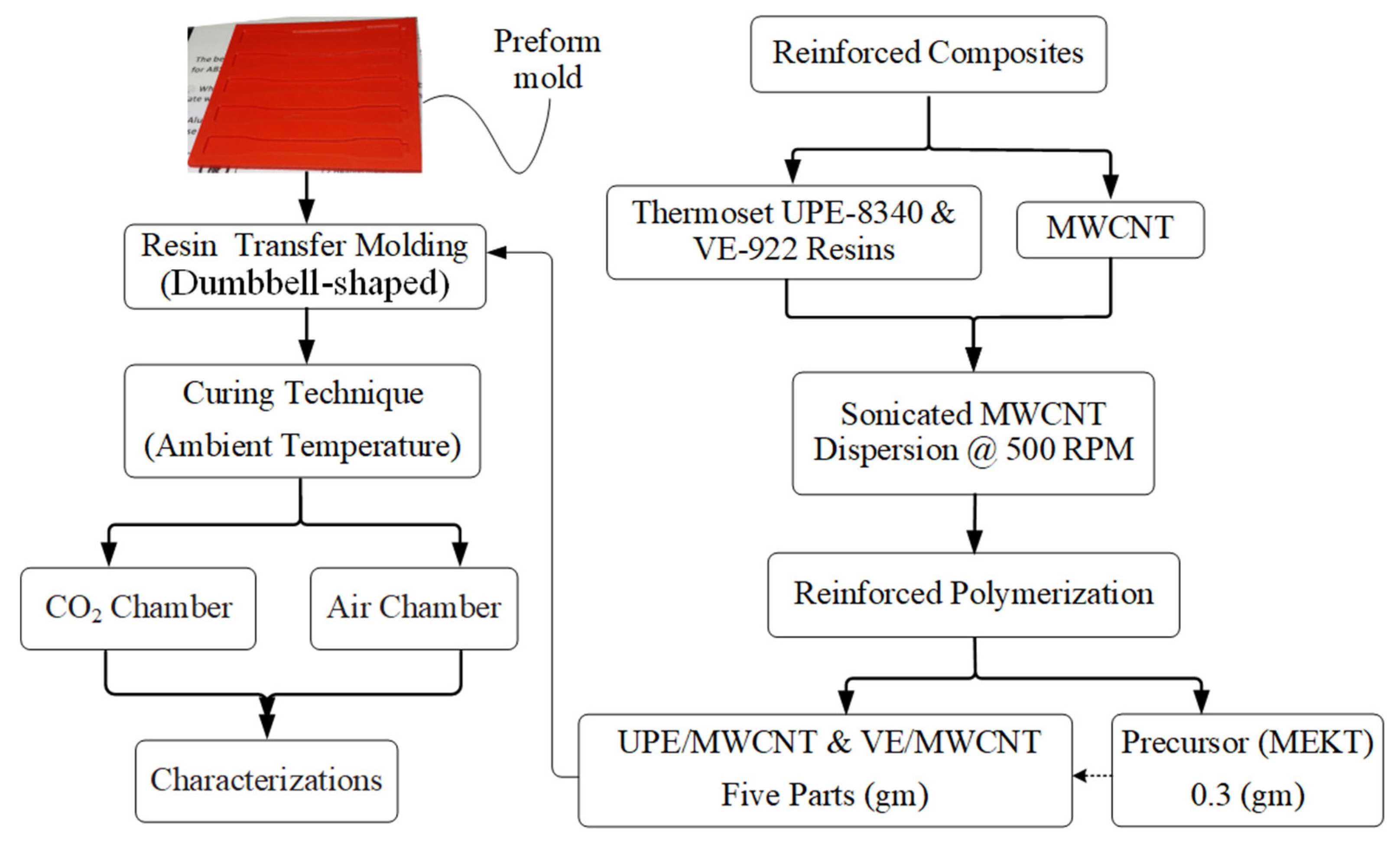
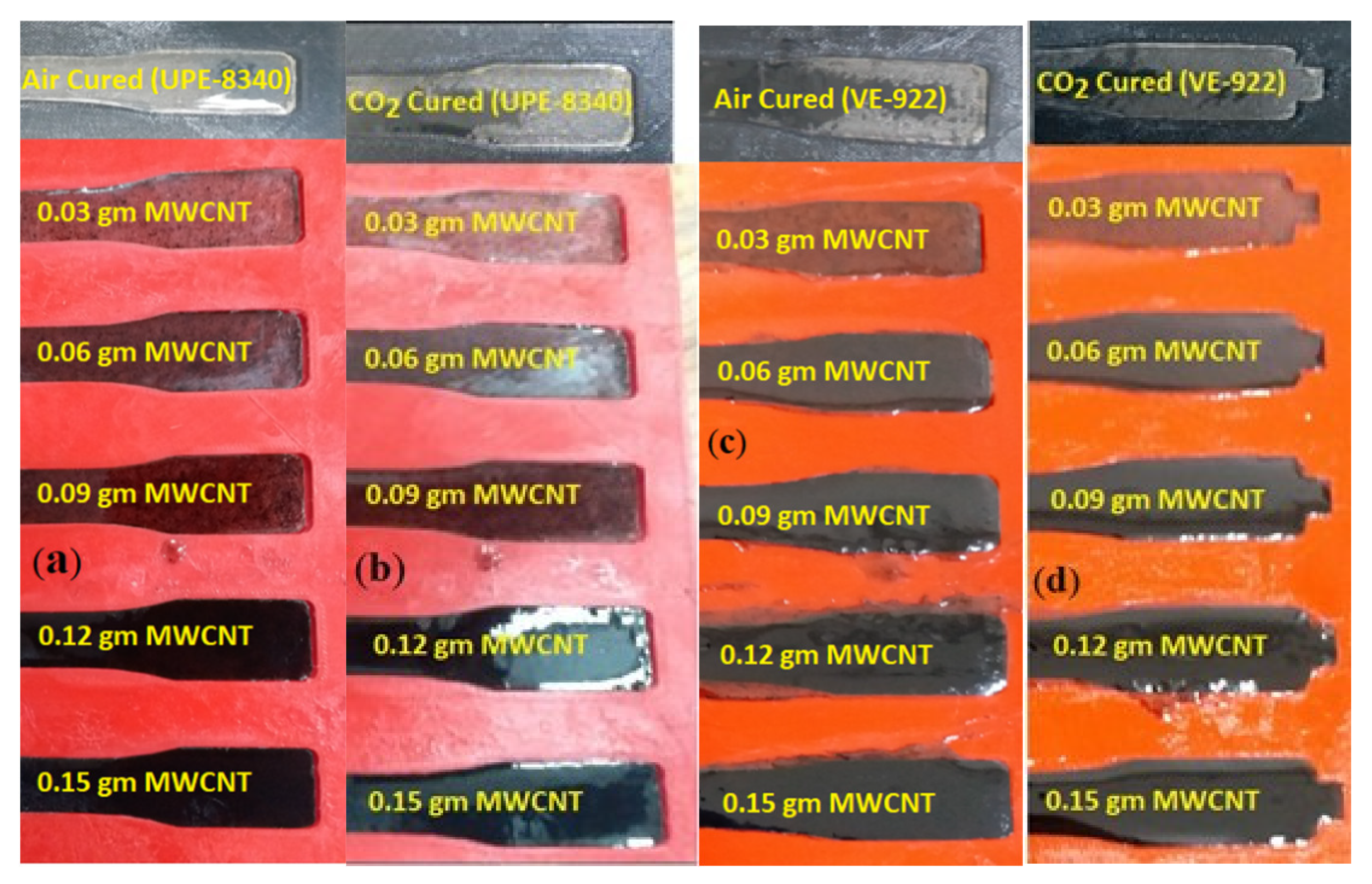
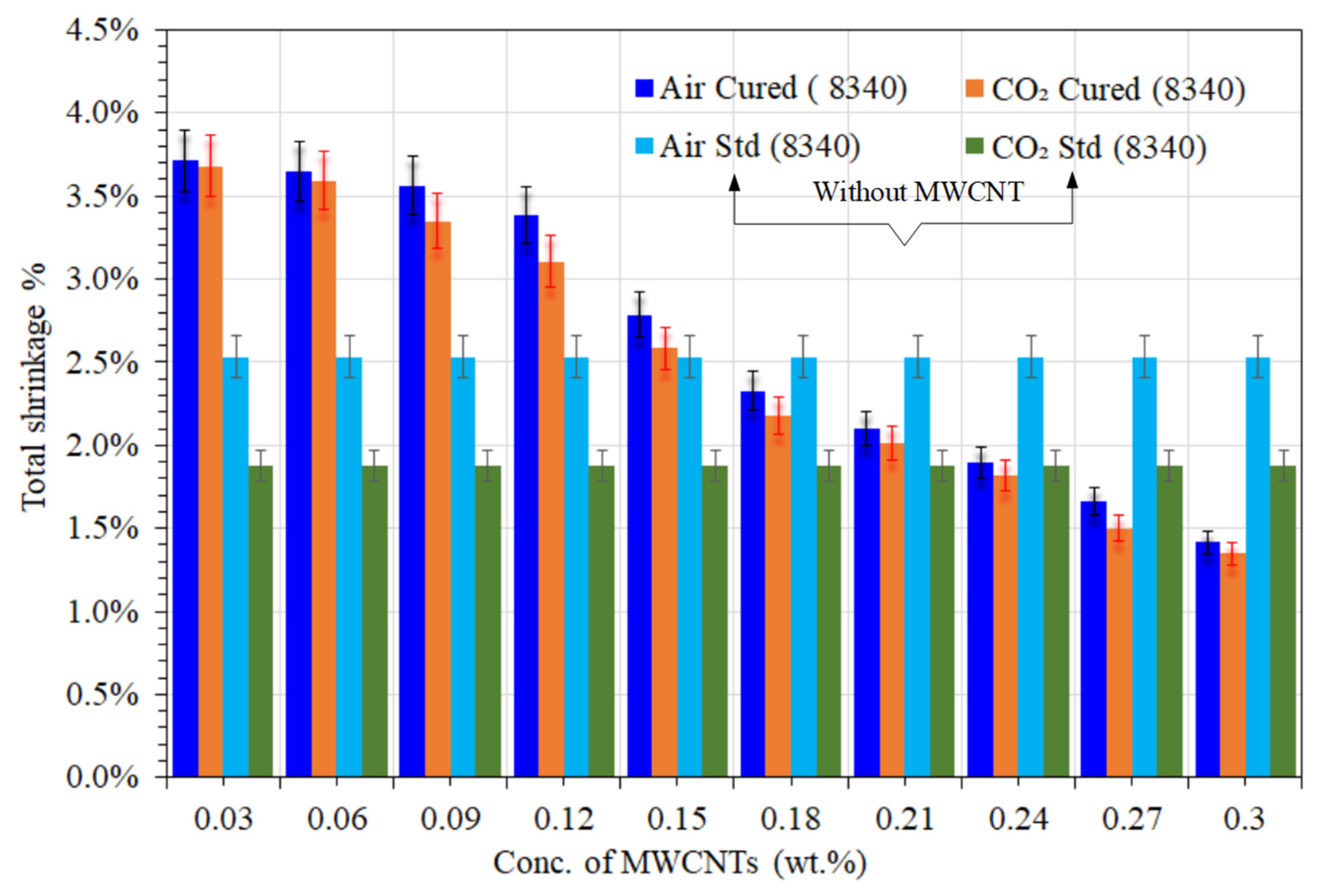
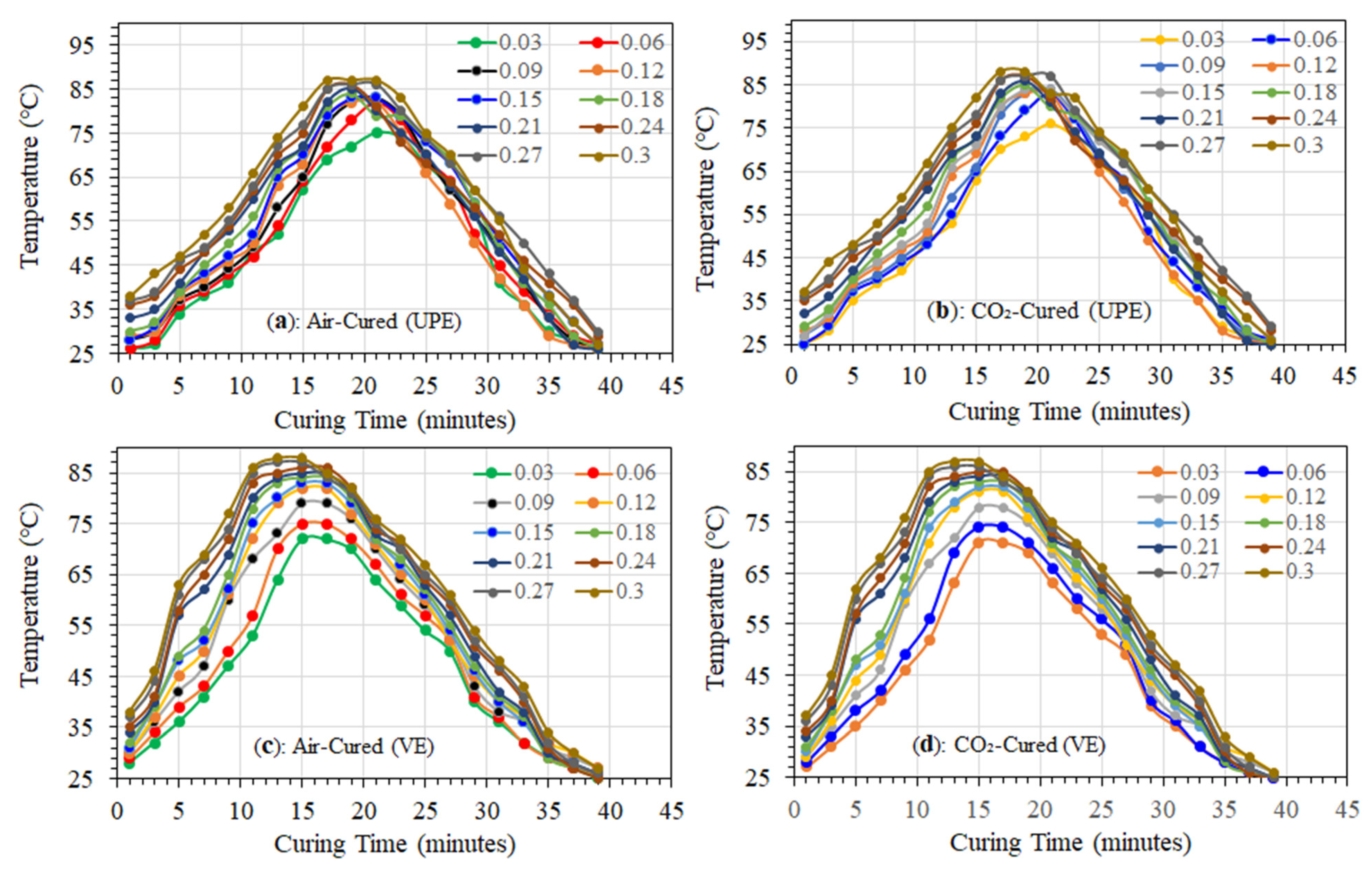
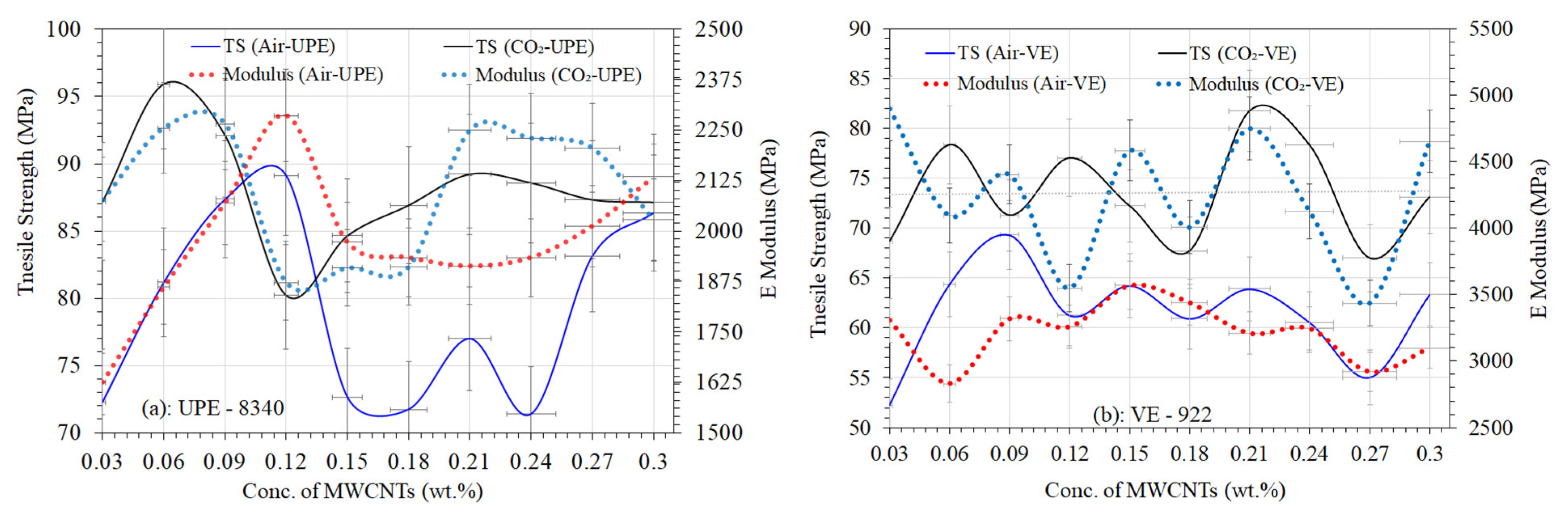
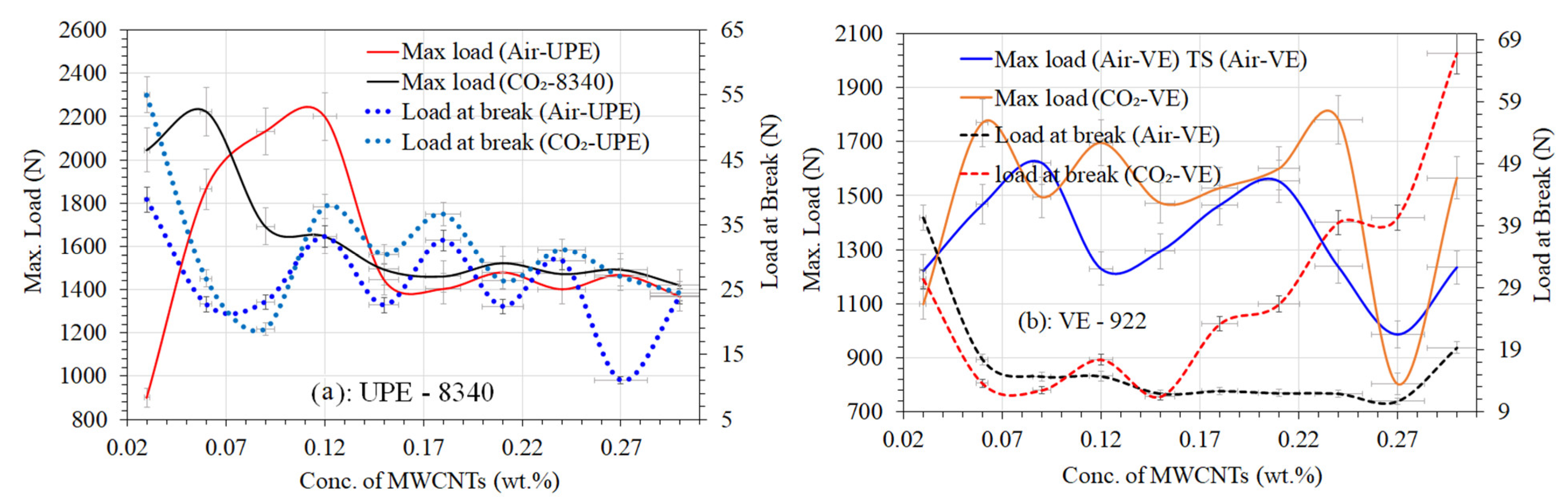
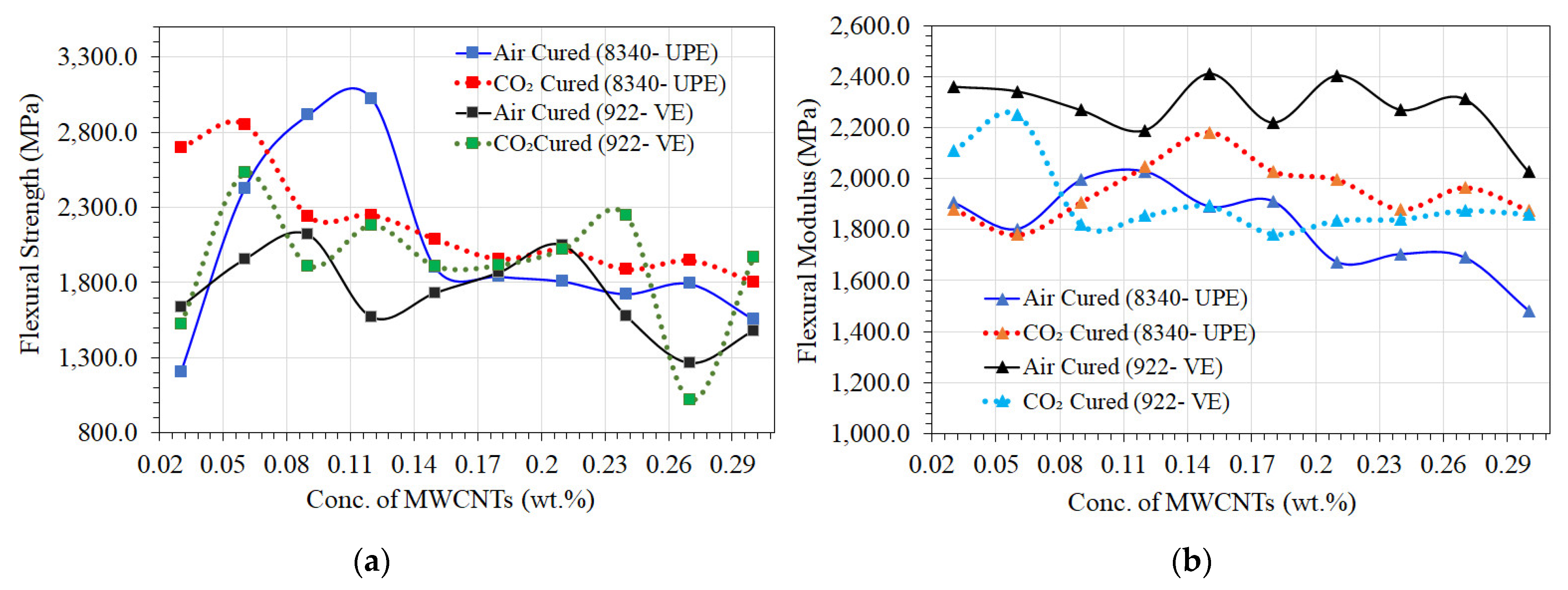
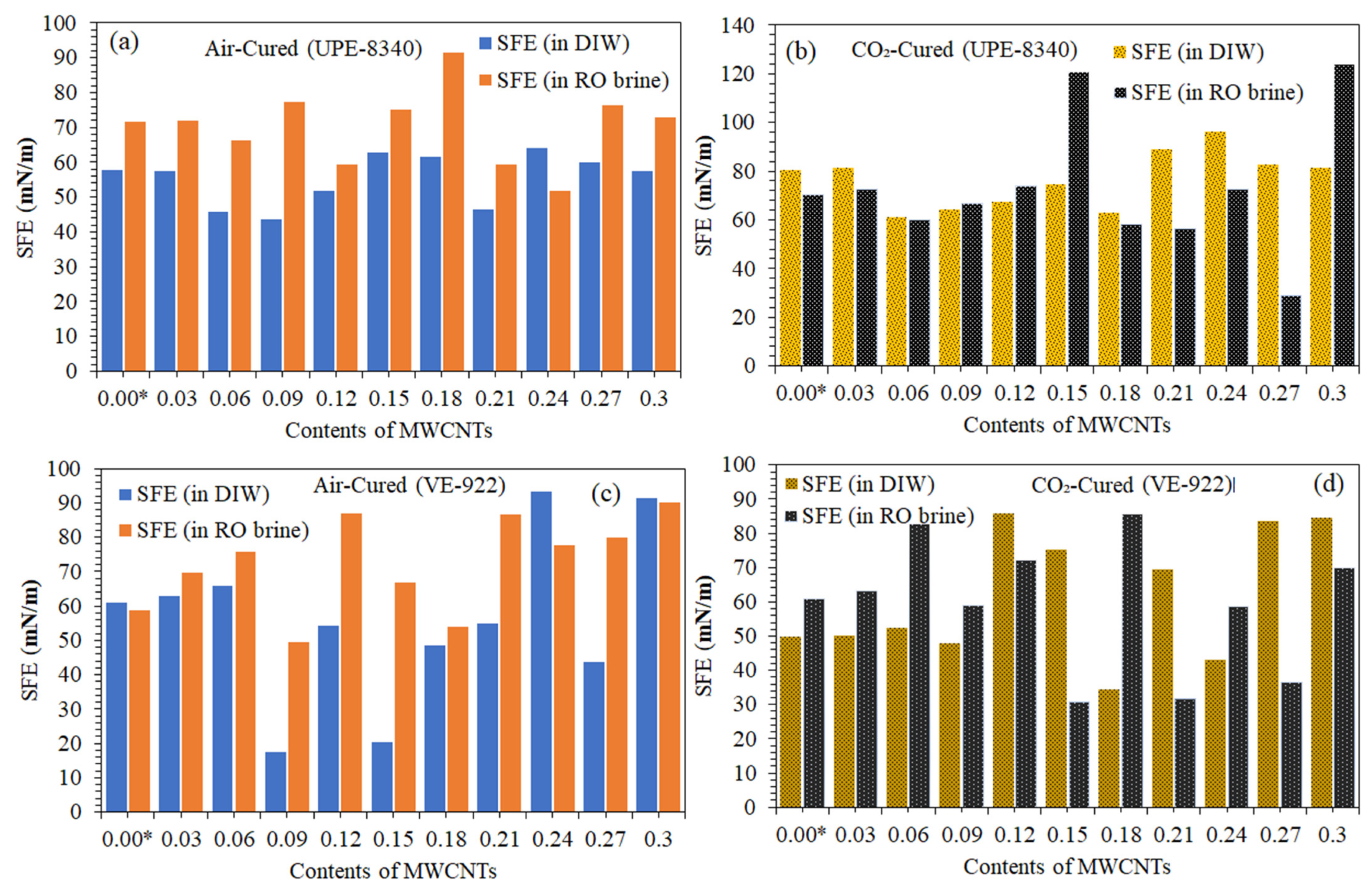
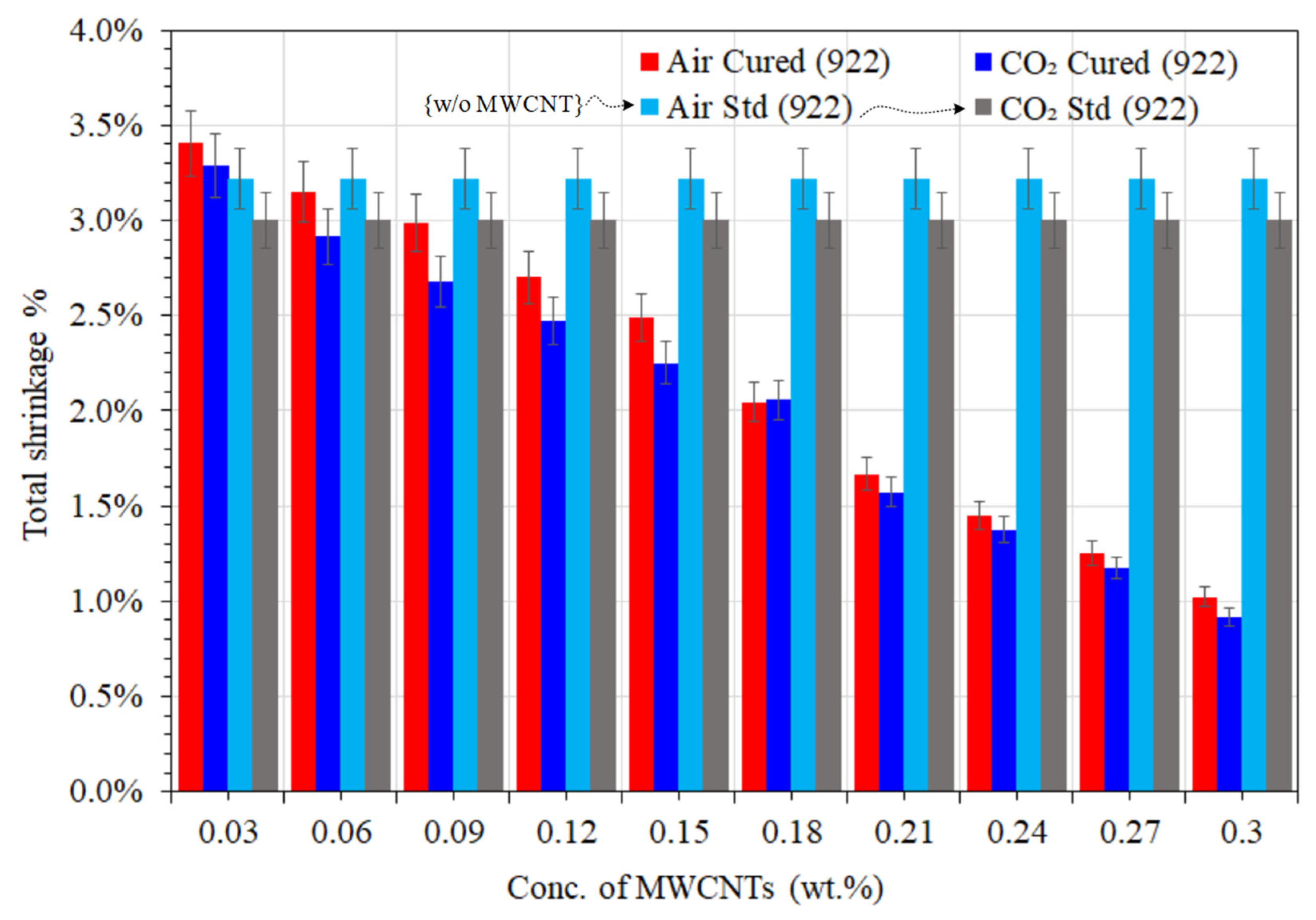
In this work, a comprehensive shrinkage and tensile strength characterization of unsaturated polyester (UPE-8340) and vinyl ester (VE-922) epoxy matrices and composites reinforced with multiwall carbon nanotubes (MWCNTs) was conducted. The aspect ratio of UPE and VE with methyl ethyl ketone peroxide (MEKP) was kept at 1:16.6; however, the weight of the MWCNTs was varied from 0.03 to 0.3 gm for the doping of the reinforced nanocomposites. Using a dumbbell-shaped mold, samples of the epoxy matrix without MWCNTs and with reinforced UPE/MWCNT and VE/MWCNT nanocomposites were made. The samples were then cured in a typical ambient chamber with air and an inner gas (carbon dioxide). The effect of the MWCNTs on UPE- and VE-reinforced composites was studied by observing the curing kinetics, shrinkage, and tensile properties, as well as the surface free energy of each reinforced sample in confined saline water. The CO2 curing results reveal that the absence of O2 shows a significantly lower shrinkage rate and higher tensile strength and flexural modulus of UPE- and VE-reinforced nanocomposite samples compared with air-cured reinforced nanocomposites. The construction that was air- and CO2-cured produced results in the shape of a dumbbell, and a flawless surface was seen. The results also show that smaller quantities of MWCNTs made the UPET- and VE-reinforced nanocomposites more stable when they were absorbed and adsorbed in concentrated salt water. Perhaps, compared to air-cured nanocomposites, CO2-cured UPE and VE nanocomposites were better at reducing shrinkage, having important mechanical properties, absorbing water, and being resistant to seawater.
Keywords: curing; reinforced composite; shrinkage; tensile strength curing; reinforced composite; shrinkage; tensile strength