Review

Phenolic Compounds from By-Products for Functional Textiles

by
Tiago Barros Afonso
,
Teresa Bonifácio-Lopes
,
Eduardo Manuel Costa
* and
Manuela Estevez Pintado
Laboratório Associado, Escola Superior de Biotecnologia, CBQF—Centro de Biotecnologia e Química Fina, Universidade Católica Portuguesa, Rua Diogo Botelho 1327, 4169-005 Porto, Portugal
*
Author to whom correspondence should be addressed.
Materials 2023, 16(22), 7248; https://doi.org/10.3390/ma16227248
Submission received: 24 October 2023 / Revised: 14 November 2023 / Accepted: 16 November 2023 / Published: 20 November 2023
(This article belongs to the Special Issue Advanced Materials for Clothing and Textile Engineering—2nd Edition)

Abstract

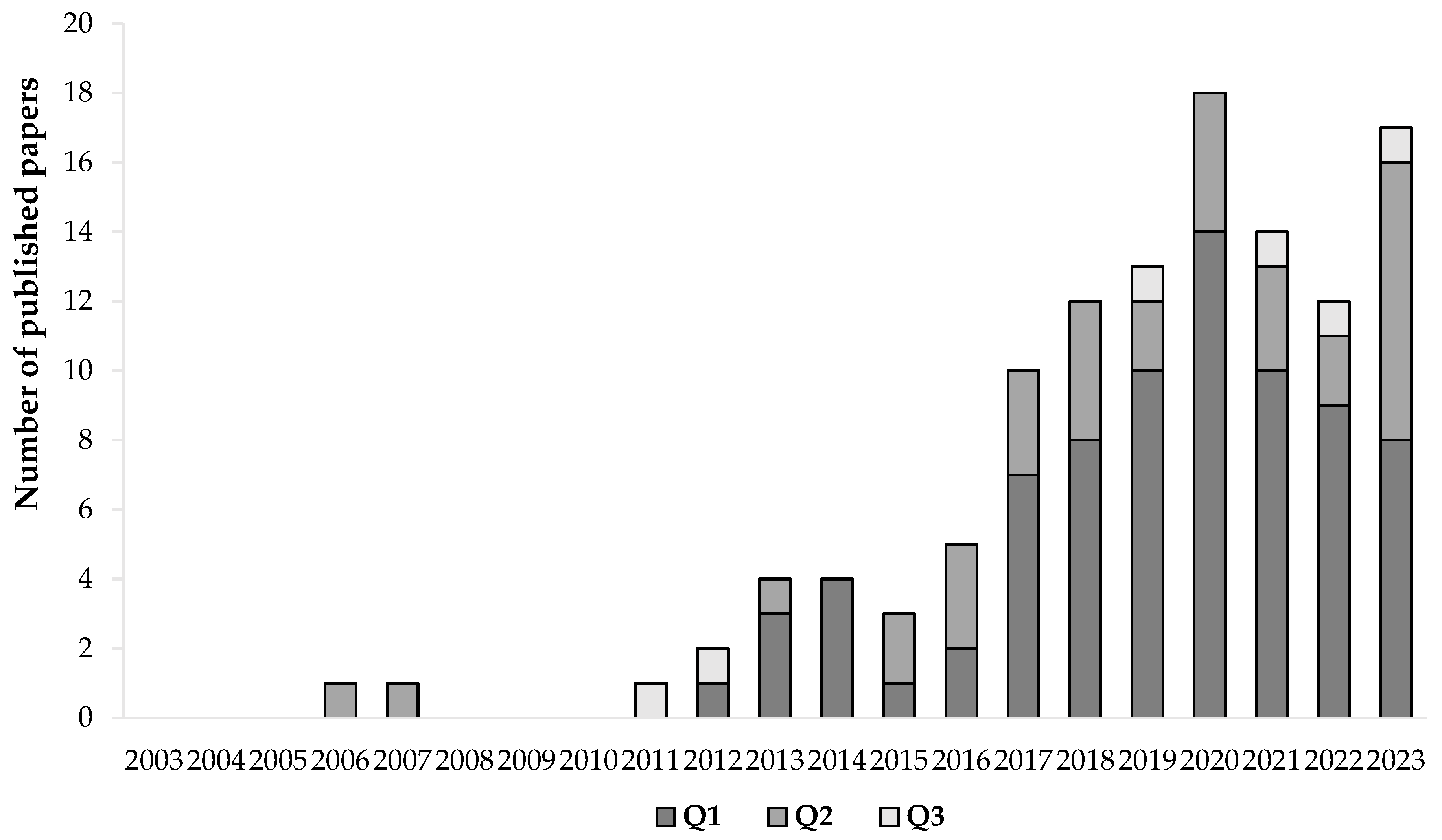
Textile dyeing is known to have major environmental concerns, especially with the high use of toxic chemicals. The use of alternatives such as natural dyes rich in phenolic compounds has become extremely appealing in order to move towards a more sustainable circular economy. Phenolic dyes have the potential to functionalize textile fabrics with properties such as antimicrobial, antioxidant, and UV protection. Wastes/residues from the agri-food industries stand out as highly attractive sources of these compounds, with several by-products showing promising results in textile dyeing through the implementation of more sustainable and eco-friendly processes. This review presents an up-to-date exploration of the sources of phenolic compounds used in the textile industry over the past two decades, with a primary focus on the functional properties they provide to different fabrics. The research highlights a surge in interest in this theme since 2017, accentuating a noticeable upward trend. Throughout this review, emphasis is given to by-products from the agri-food industry as the sources of these compounds. The reviewed papers lay the foundation for future research, paving the way for exploring the potential of raw materials and by-products in the creation of functional and smart textiles.
Keywords: phenolic compounds; by-products; textiles; sustainable dyeing; functional properties; antimicrobial activity; UV protection; antioxidant activity phenolic compounds; by-products; textiles; sustainable dyeing; functional properties; antimicrobial activity; UV protection; antioxidant activity