


Abstract
Lomatia hirsuta (Lam.) Diels is a pioneer tree species that develops after wildfires, and in advanced successional stages, it is often found as a secondary species in Patagonian forests. However, in El Manso Valley, Province of Río Negro in Western Argentina, L. hirsuta forms mature pure stands, originated from stump shoots. The wood is very attractive for its colourful appearance and beautiful grain. Nevertheless, these forests are not managed for timber production, they are mostly strong thinned for grazing, and the wood is mainly used as firewood. The objective of this study was to evaluate the possibility to improve quality wood production in stands through silvicultural interventions in a sustainable way. Samples have been carried out in stands of different developmental stages. We evaluated the state and quality of the trees, and their growth has been studied by means of trunk analysis. The results indicate that there is significant potential to improve the production of quality wood in dense stands by thinning to release crop trees. Thinning should start in young stands. It also became apparent that forest management is first necessary to stabilise these nearly unattended forests.
1. Introduction
Lomatia hirsuta is an evergreen pioneer tree species and belongs to the family Proteaceae [1]. It has a disjunct distribution area, occurring in the north-western Andes in Ecuador and Peru [2] and also in the eastern side of the Andes in Patagonia (Argentina). There, L. hirsuta is normally associated with species from Gavileo-Austrocedretum [3]. For example, it often appears in forests dominated by Austrocedrus chilensis (D. Don) Pic. Serm. & Bizzarri or Nothofagus dombeyi (Mirb.) Oerst [4,5]. Lomatia hirsuta has a wide ecological range and is able to cope with warm and cold climate conditions [2]. In the abovementioned forests with high precipitation, L. hirsuta grows in the form of a tree. However, it is also able to exist in dry areas, and in the forest-steppe ecotone, it appears as a shrub of 5–6 m in height [4].
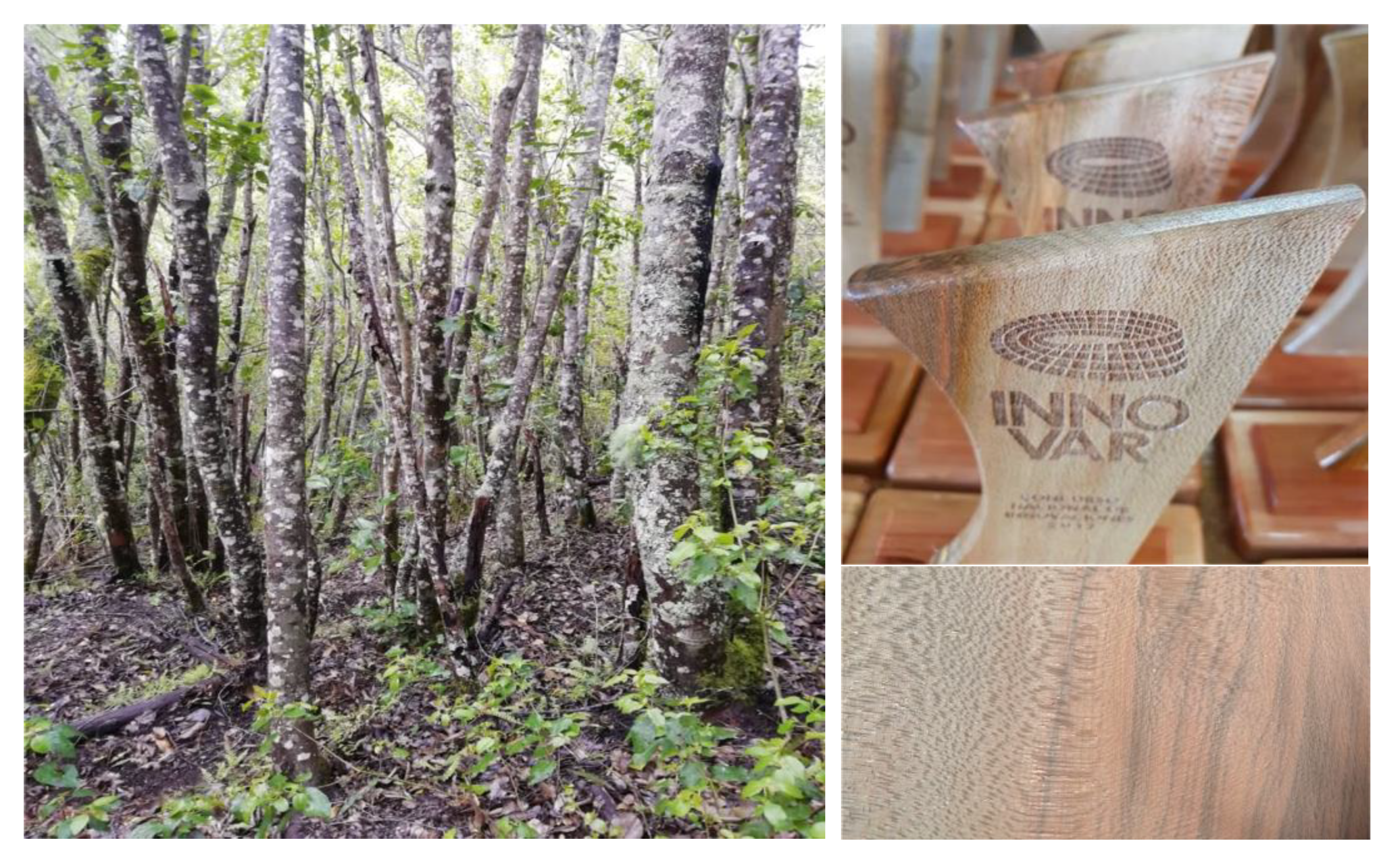
Lomatia hirsuta regenerates from stump shoots after severe forest fires (Figure 1, left). It can also colonise areas after disturbances like road cuttings or abandoned fields, growing from stump shoots or seeds [6], and rarely grows in pure stands. Lomatia hirsuta is a light-demanding species but can also germinate under mid-shady conditions [7].
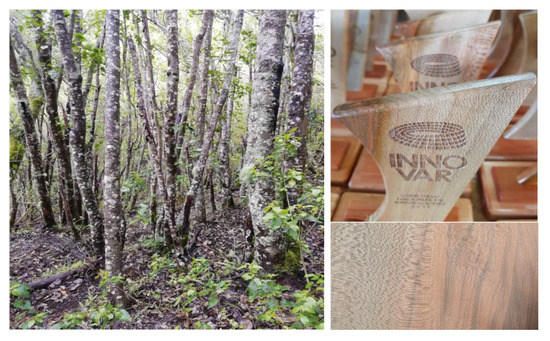
Figure 1.
Lomatia hirsuta pure forest (left) and its wood (right).
Little is known about L. hirsuta’s natural dynamic and growth. Dasometric descriptions of mixed shrublands, where L. hirsuta is present, have been made [8], volume and biomass equations have been developed [9], the diameter increment has been measured [10], and first recommendations for the management of these mixed shrubs have been made [11]. In general, in those places with less precipitation, the species grows to lower heights than the area of the present study [8,9]. Furthermore, there is no silvicultural knowledge of pure forests of L. hirsuta and no large-scale use of its wood.
Nevertheless, the wood of L. hirsuta has very attractive characteristics because of its colourful look, chestnut-pink to dark brown with violet tints (Figure 1, right). Furthermore, it is light to moderately heavy (0.53–0.57 g/cm3) and flexible [1]. The contraction of L. hirsuta has medium values, so it is somewhat unstable, but not extremely. It has clearly visible rays, which are especially apparent in radial sectioning [1]. The wood also has good workability because of its straight grain. For these reasons, it is often used for works of art, handicraft, and sometimes also for fine furniture. In short, it is a wood that could be considered of very high quality. However, the traditional uses of this species do not take full advantage of these characteristics. Normally the stands are thinned intensely, and the brushwood is eliminated to convert the forest into wood pasture: the traditional “parquizado”, and the main current destination of L. hirsuta is fuelwood.
The objective of this study was to determine the possibility to improve quality wood production through silvicultural management, evaluating the actual vigour and quality of the trees and studying their individual growth.
2. Materials and Methods
2.1. Study Area
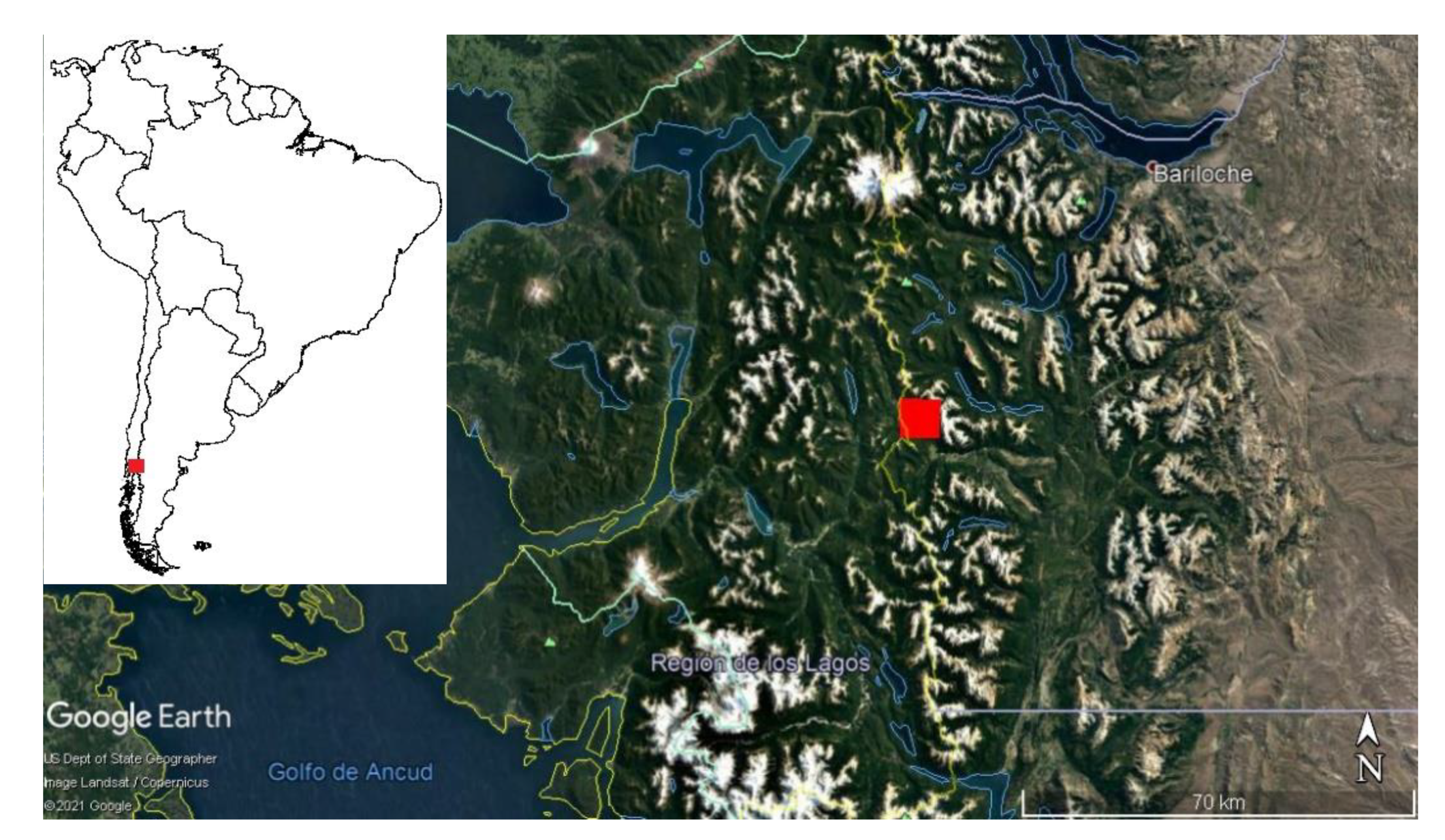
The study area is located in El Manso Valley in the southwest of the Province of Río Negro at the international border of Chile (Figure 2). The studied tree stands are particularly in the south of the river and mostly have a northern or north-western exposition. The El Manso river is the southern limit of the Nahuel Huapi National Park.
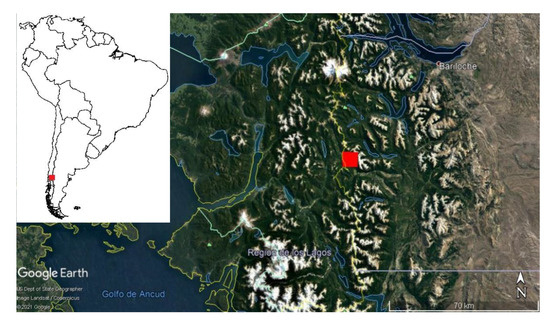
Figure 2.
Location of the study area (red) (41°31′ S and 71°49′ W) in El Manso Valley, Province of Río Negro. South America‘s map source: [12].
The climate in this region is cold temperate under a maritime buffer effect because of the proximity to the Pacific Ocean. The annual temperature of the region averages 9.3 °C. There is precipitation all year, and around 1600 mm/year are reached [13].
The soils in the study area are young Andosols (FAO legend) [14] of volcanic origin [15]. The soils have a high cation exchange capacity and a great water storage capacity; both properties are increased by allophane contents in the soil. Furthermore, the soils were profound, free from stones and had a moderate content of nitrogen and a high content of bases (K, Ca and Mg). All these characteristics were confirmed for the study area by four soil profiles.
In summary, the trees in the studied stands have very good climate and soil conditions for their growth.
2.2. Data Acquisition
2.2.1. Structures of the L. hirsuta Stands
The pure stands of L. hirsuta in El Manso Valley represent a secondary forest after past wildfires. The stands were differentiated into three stages by the dimensions of the trees: young, intermediate, and old. In every stage, three sample plots were carried out. In addition, three plots were installed in a less dense stand under the traditional use as pastures (“parquizado”). The plots were rectangular and had a size of 1000 m2, except in the young stands, which had 300 m2, because of the very high stocking density. Inside the plots, every tree and every trunk was accounted for, and the diameter at breast height (DBH) of all trunks from 7 cm and upwards was collected. In the young stands, all trunks from 4 cm upwards were measured. Furthermore, all trunks were described concerning their social position, their health condition and their form (Table 1). Furthermore, some tree heights per plot were measured along with the range of DBHs.

Table 1.
Quality criteria for the trunks inside the plots.
We also registered the volume of quality logs; for this, the mid-diameters of good logs were measured with a Finn calliper, and their lengths were estimated in fixed sections. Logs had to have a length of 1.2 m, or its multiples, and a top diameter of at least 15 cm. In the young stands, the potential to produce quality wood in the future was estimated by only taking into account the length of good straight logs, although the top diameter did not reach 15 cm yet. The quality wood of some fallen trees, which were found in the intermediate and old stands, were also measured.
2.2.2. Thinning Simulation
After collecting the data of the individual trunks, a crop tree orientated thinning was simulated in every plot. The criteria to choose the crop trees were vigour, quality, and distribution (in order of importance). Concerning the quality, a good log (sound and fit) of at least 2.4 m long was required; distribution had secondary importance. It was only ensured that two crop trees had no contact with their crowns. For each crop tree, the main competitor, or in some cases two competitors, were identified and scheduled for the cutting.
In addition to the crop tree orientated thinning, a catch-up low thinning was also simulated. It had the objective to obtain the wood of dying and damaged trees (salvage and improvement cutting).
2.2.3. Growth of the Crop Trees
In every plot of the young, intermediate, and old structures, two crop trees were selected and cut for the trunk analysis. Altogether 18 trees were considered (6 trees per structure). Before cutting the selected tree, its DBH, height, and crown radii were measured. The number of measured radii depended on the crown’s form. Furthermore, the competitors were identified (the ones that pressured the crop tree’s crown), and their DBHs and heights were measured, too. Furthermore, the distances from the crop tree’s trunk to the crown border and to the trunk of the competitors were collected.
After cutting the selected tree, the length was measured, and trunk discs were extracted at the height of 0.3 m and every two meters after (2.3 m, 4.3 m, etc.) until the beginning of the crown. The beginning of the crown was considered to be the point in which the trunk forked, and both branches were alive. Additionally, the disc in the height of the DBH (1.3 m) was extracted. In the laboratory, all discs were ground and then analysed by identifying, counting, and measuring the annual rings. Moreover, the height increment of the last year was collected by measuring the length between shoot stigmas from the top of the tree downwards. Between two and seven shoot lengths per tree could be identified and measured. Furthermore, the whole crown material was weighed together, and then the thick branches were weighed separately. Moreover, samples of thick branches, thin branches, and leaves were weighed in fresh conditions and then taken to the laboratory. There, the samples were dried in an oven until a constant weight was reached, so conversion factors from fresh to dry biomass could be determined.
2.3. Processing and Data Analysis
2.3.1. Structures of the L. hirsuta Stands and Thinning Simulation
For every age class and for the parquizado, a hypsometric height function through linear regression analysis, using the coefficient of determination (r2) and the distribution of residuals as a fit indicator, was generated. Since the available volume equations of L. hirsuta [9] correspond to sites of lower quality (= less height), to quantify the plots’ volume, functions for the total volume and the trunk volume of individual trees was adjusted. For this, the destructive sampling trees for the study of growth through stem analysis were used. The trunk volume was determined by means of Smalian’s formula [16]. This formula allows us to calculate the volume by using the given diameters and the extraction heights of the discs for the trunk analysis. To get the tree’s total volume, the trunk volume and the crown volume (branches of 2 cm upwards) were summed. The crown volume was determined by conversion of the fresh weight of biomass to dry weight and by dividing this with the dry density of L. hirsuta, which is 0.55 g/cm3 [1].
Furthermore, the volumes of the logs of good quality were calculated by means of the mid-diameter and the lengths by using the formula of Huber [17]. For the young stands, the potential of future quality wood was estimated. Therefore, the measured lengths of the straight trunks and the average mid-diameter of the quality logs of the intermediate and old stands, which averaged around 20 cm, were used.
In this way, it was also possible to quantify the volume of the different products which would be extracted in the thinning simulation. The volume of badly formed stems was determined by subtracting the volume of quality wood from the volume of stems with a DBH ≥ 20 cm. The rest of the total volume, which would be extracted, was declared as firewood from the crowns and thin stems (<20 cm). To convert the volume in m3 of standing wood over bark (m3 o.b.) into timber harvested under bark (m3 u.b.), the factor of 0.8 was used [18].
Differences among dasometrics parameters from each structure and the results of the cutting simulations (number of trees/ha, number of stems/ha, number of stems/tree, quadratic mean diameter (QMD), dominant height, basal area, total volume, volume of mature stems firewood from the crowns and thin stems, badly formed stems and quality wood) were analysed using ANOVA techniques and the Tukey test to determine significant differences at p ≤ 0.05. We verified that the models comply with the assumptions of normality through the Shapiro-Wilks test and of homoscedasticity through residual analysis. We made corrections to the models when these assumptions were not met. Contingency tables and Pearson’s Chi-square statistic were used to determine if there is a relationship between the forest structure (young, intermediate, old, and parquizado) and the quality parameters.
2.3.2. Growth of the Crop Trees
To evaluate the competition of the selected trees, the A-value of Johann was used [19]. This is a proportionality factor to determine the minimum distance between trees without competition (Equation (1)). Normally it is used as an objective parameter to regulate the intensity of a thinning. If the distance between two trees is measured, the A-value can be used to quantify the competition. The smaller A, the lower the competition is. As an example, in even-aged pure stands of Picea abies (L.) H.Karst, for which the A-value was developed, values from 4, 5, and 6 are recommended, which equates to heavy, moderate, and light releases, respectively [19]. The A-value was determined for every competitor of the selected crop trees.
where is the A-value between crop tree j and competitor i, is the height of the crop tree j, is the distance from the crop tree j to the competitor i, is the DBH of the competitor i and is the DBH of the crop tree j.
Analysing the trunk discs, some corrections were necessary because some annual rings were missed due to years of extreme conditions or very high stand density during the last years. By means of the discs, the diameter growth was analysed, and also, the height growth could be estimated.
Moreover, the degree of slenderness (h/d ratio), which is an indicator of the tree’s stability, was determined for all analysed crop trees. If the h/d ratio is above the critical value of 80, the tree is presumed to be vulnerable to damages caused by wind, wet snow, and ice accumulation [18,19,20]. The development over time of the h/d ratios of all the selected trees was analysed, and different types of growth were identified. Forest management promotes trees to have h/d values lower than 80 for most of their life to ensure stability, which is achieved by releasing the diameter growth. For this reason, to analyse the evolution of the growth of the crop trees studied, they were grouped into three classes:
- Dominant type: Trees whose h/d ratios, in general, were below 80, already in early years, and remained below the limit value throughout their lives (5 trees).
- Variable type: Trees whose h/d ratios varied throughout their lives, generally reducing the h/d value with age, reaching less than 80; but the opposite could also have happened (5 trees).
- Suppressed type: Trees whose h/d ratios, in general, were always over 80 (8 trees).
For every type of growth, the characteristic development of height, diameter, and volume was examined.
3. Results
3.1. Structures of the L. hirsuta Stands
The determined functions for total volume and trunk volume, which were used to calculate the stands volumes, are shown in Table 2. The DBH was the only independent variable used since the height coefficient was not statistically significant.
Table 2.
Functions of total volume and individual trunk volume.
Lomatia hirsuta occupies the whole site in a high density. Most of the dasometric parameters differed significantly between the young and old stands, while in the intermediate structure, they had values between them. Only the basal area and the total volume did not have significant differences between the structures without intervention (Table 3). If the density of the old stand is assumed as 100%, in the parquizado, the number of stems/ha was reduced at 28% and the basal area at 32%. The total volume reaches its maximum in the intermediate structure, with 560 m3/ha and the mature stem volume participation in the total volume increases from 4 to 46% between the young and the old structure (Table 3).
Table 3.
Parameters of the different structures.
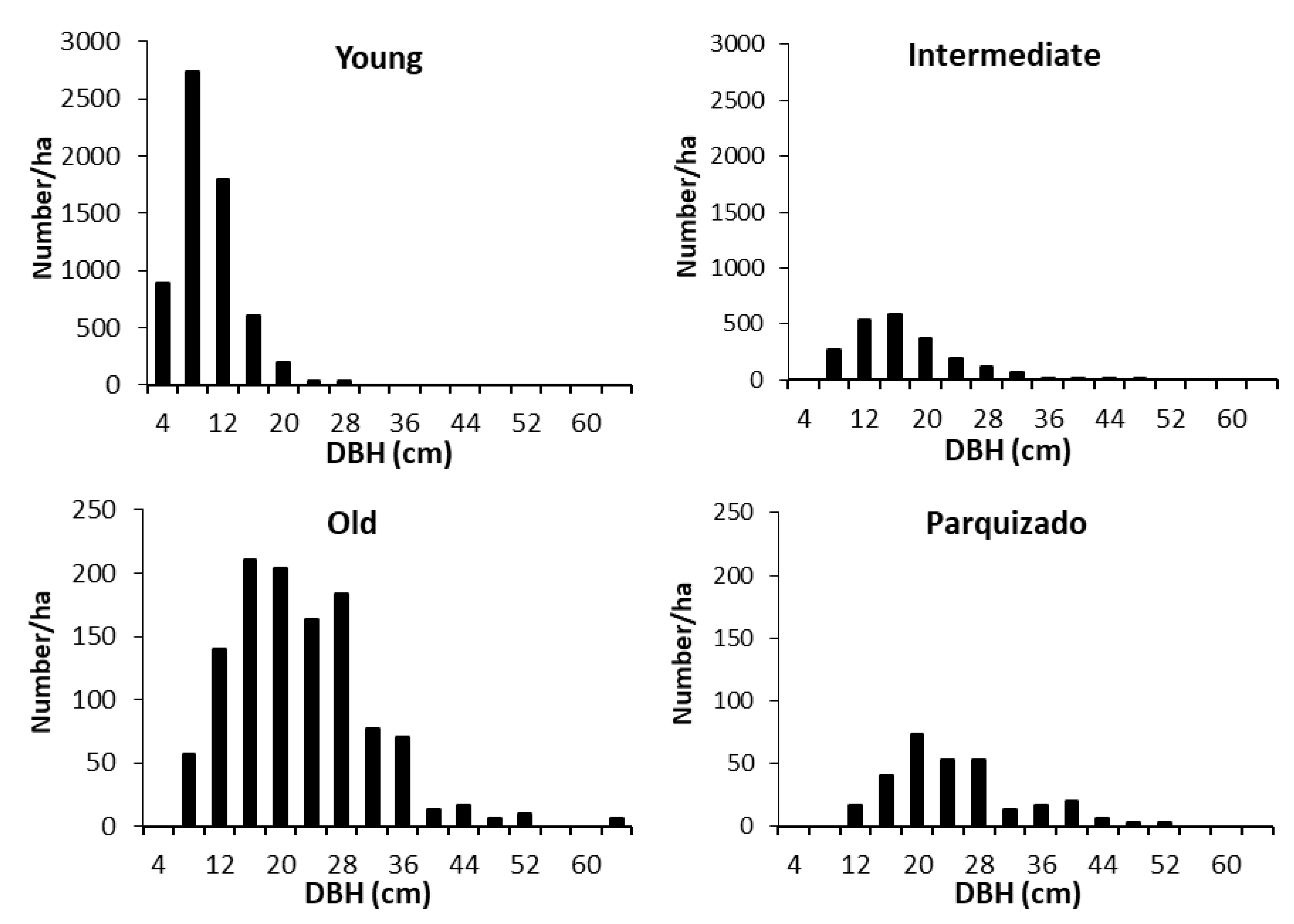
The diameter distributions of all stands are similar to a bell-shaped curve and only show little skewness to the small diameters (Figure 3). The fact that the diameter distribution of the parquizado is very similar to the others shows that by cutting, trees of all diameters were removed.
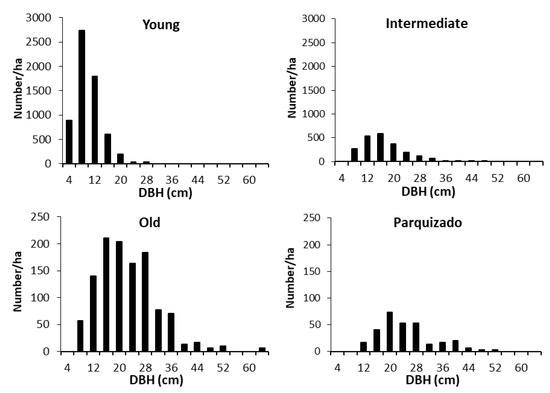
Figure 3.
Diameter distributions of the different structures; the ordinates are differently scaled because otherwise, the charts with low number of stems/ha (old stands and parquizado) would not be readable.
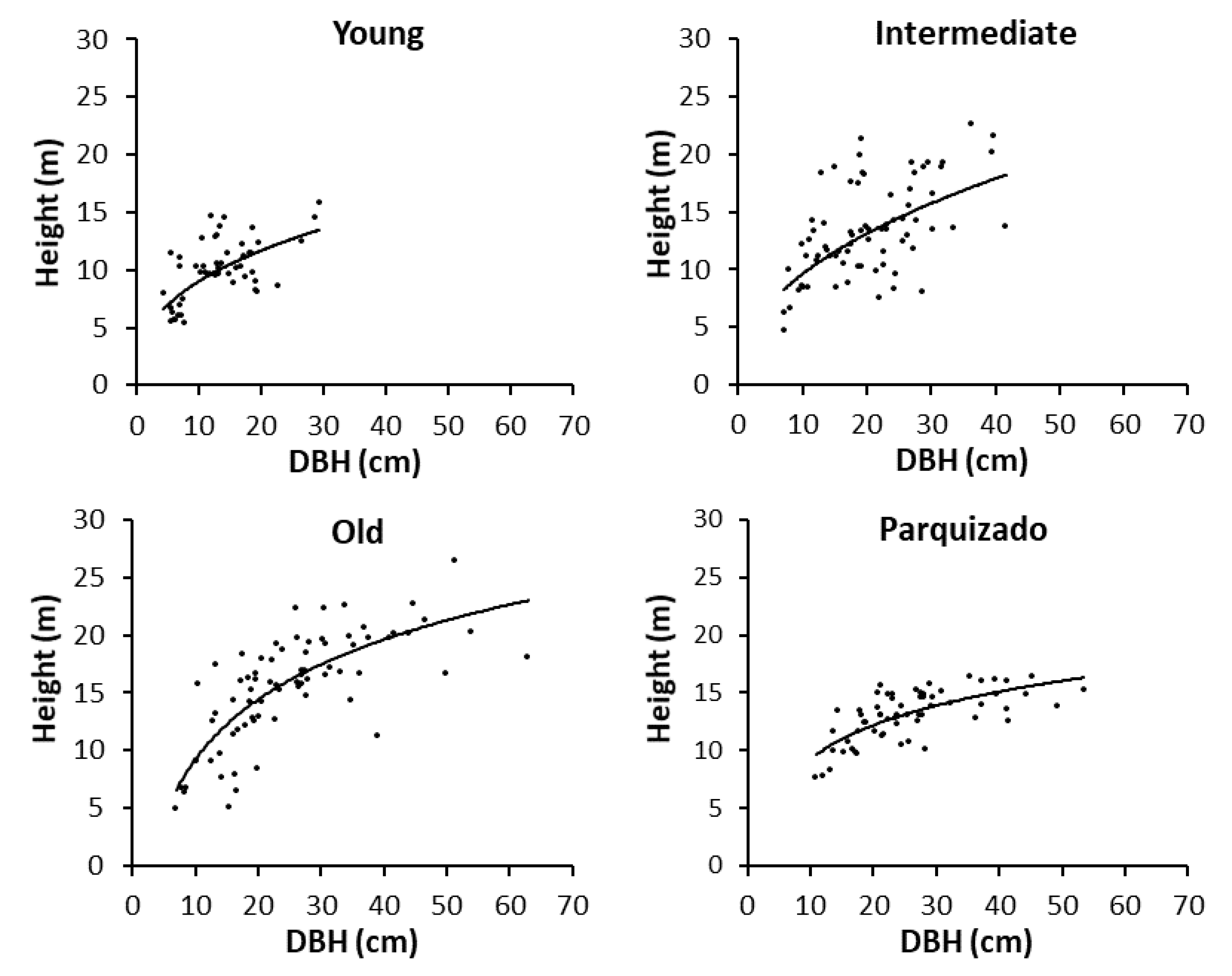
Looking at the development of the heights over diameter, it can be seen that the gradient is bigger in the smaller diameter classes, reaching its maximum at a DBH between 20 and 30 cm. After that, the curve continues approximately like an asymptote (Figure 4). Furthermore, the trees in the parquizado have minor heights at the same diameters.
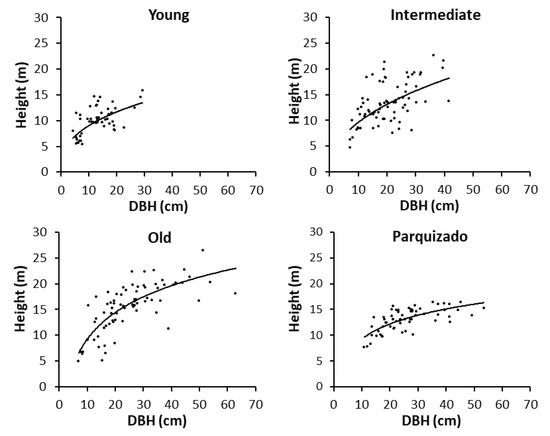
Figure 4.
Height curve of the different structures.
The frequency of trees of each health condition, social position, and form of the trunk was significantly related with the forest structure Pearson’s Chi-square statistics (p < 0.0001 for the three quality parameters). This means that social position, health condition, and form of the trunk are significantly related to the forest structure. The structure with relatively more fit and straight trees was parquizado, and that with relatively more dying trees was the young (Table 4). Intermediate trees were more frequently in the intermediate structure, and suppressed trees were more frequently in the young and old structures.
Table 4.
Quality parameters of the different structures: Absolute and relative values are shown.
3.2. Thinning Simulation
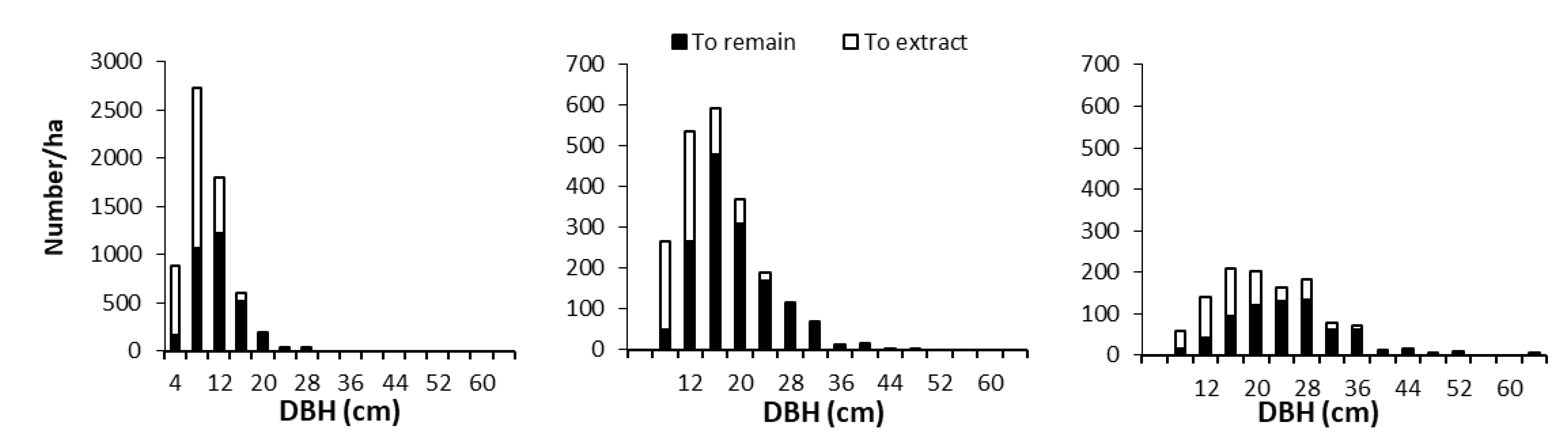
The trees, which were marked for cutting in the simulation were dominated by small trees (Figure 5). While it was possible to select an average of 300 crop trees/ha to release in the young stands, in the intermediate and old ones, only 60 and 47 trees/ha were found. The proportion between the number of crop trees/ha and the total tree number/ha in the young (1:6.4) and in the old stands (1:5.4) was very similar.
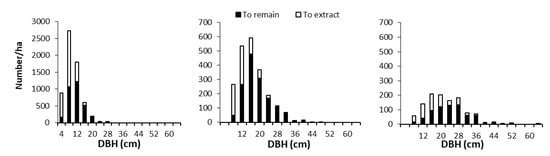
Figure 5.
Number of stems to extract and to remain in the thinning simulation per diameter class. Left: young, centre: intermediate, and right: old stands; the ordinates are differently scaled because otherwise, the charts with low number of stems/ha (intermediate and old stands) would not be readable.
The number of trees to extract would be significantly higher in the young structure compared to the intermediate and old structures, while the basal area and the total volume to extract are only significantly different between the young and intermediate structures (Table 5). The volume of mature stems to extract increases significantly between the young and old structures. On the other hand, the QMD and mean height increased significantly between extract and remained in all structures (Table 5).
Table 5.
Parameters of the trees to be extracted and to be alive in the simulation in every structure. The density variables (1–4) were compared between structures, while the size variables (5–6) within each structure (extract vs. remain).
Most of the extracted wood in the thinning simulation would be firewood (Table 6). Only little quality wood could be harvested. In the old stands, an appreciable share of quality wood is from fallen trees.
Table 6.
Product classes and volumes of the extractable wood of the thinning simulation (m3 u.b./ha).
3.3. Growth of the Crop Trees
The average A-value of the analysed trees reached 8.9 in the young and old stands and 7.2 in the intermediate. These are quite high values compared to the recommended ones (cf. Section 2.3.2), showing a high level of individual competition in all structures.
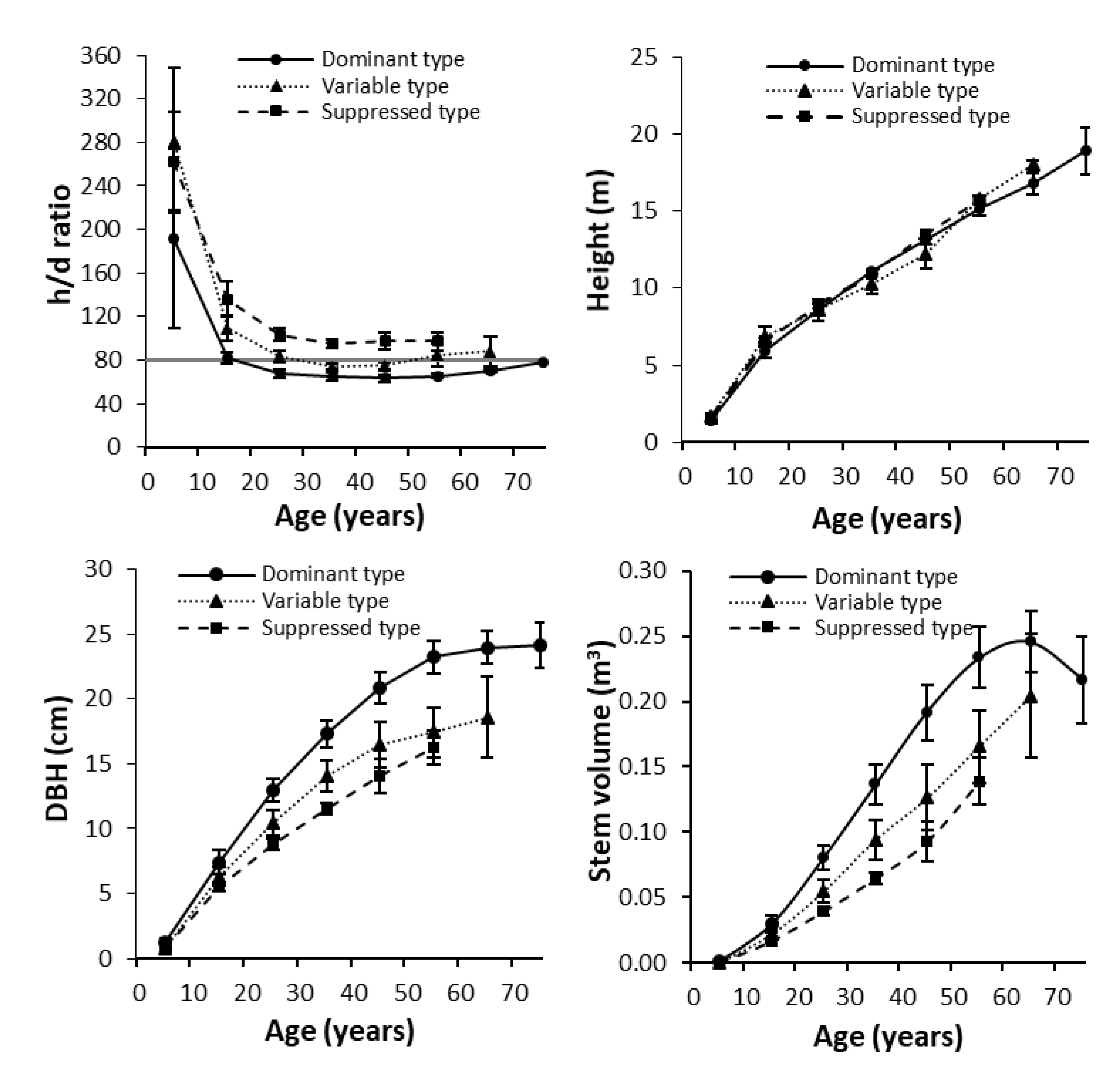
Considering the types of growth described in Section 2.3.2, the crop trees were grouped, and every ten years, the mean value of the variables were determined (Figure 6). Comparing the evolutions of the variables in each growth type, there was practically no difference in the mean height development, while the diameter increment and the stem volume development shows clear differences (Figure 6). The trees of the dominant type had a greater diameter growth since their early years, which caused their h/d value to remain below 80 for most of their life (Figure 6, top left).
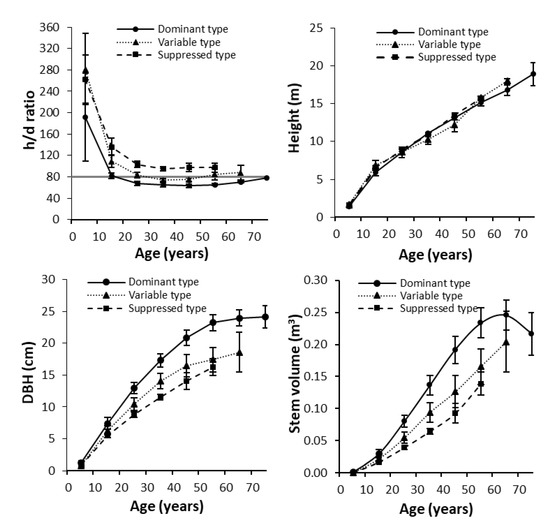
Figure 6.
Development of each variable (mean value and standard error every ten years) from studied crop trees of each growth type: dominant type, variable type, and suppressed type. Top left: h/d ratio (80 indicates the limit value of stability), top right: height development; bottom left: diameter development and bottom right: volume development. The stem volume at 75 years of trees of dominant type has a lower number of trees than in previous ages (in the age of 75 years there was data from fewer trees to be considered in the mean value).
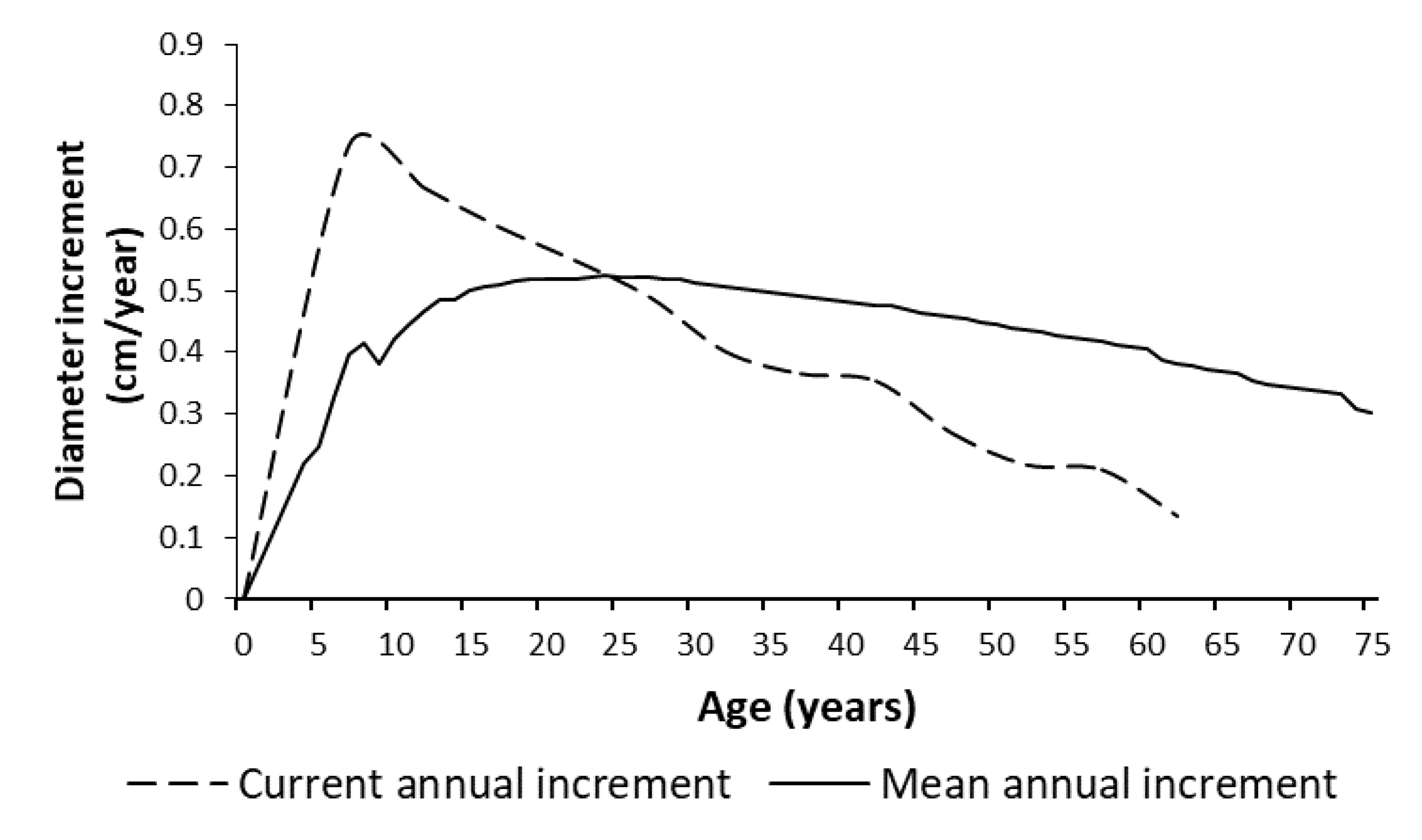
The increment of the dominant trees with dominant type growth is a good approximation of the growth that could be reached in managed stands. The periodic annual diameter increment increased in the juvenile stage and then decreased quickly when the stand was closing and equalled the mean annual increment at 25 years of age (Figure 7).
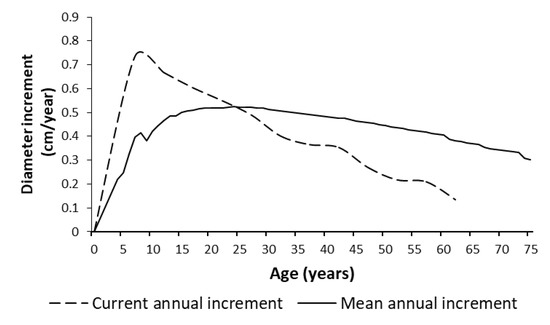
Figure 7.
Development of the current annual increment (CAI) and the mean annual increment (MAI) of tree diameter of the dominant type of growth.
4. Discussion
4.1. Credibility of Collected Data and What We Do and Don´t Know
The selection and classification of the different age stages of stands were made in consideration of the trees’ dimensions but without knowing the real age. Because of that, the distinction between the intermediate and the old stands is not always clear. Another uncertainty is caused by the fact that it was often very difficult to identify all the annual rings at the discs. Therefore, slight differences in the real age in the analysed trunks cannot be ruled out.
The reduction in the number of trees in the unmanaged stands between the young and old structure (Table 3) is explained by the mortality due to competition, and this is also expressed in the high percentage of injured and dying trees in each structure (Table 4). The damages in the stems and crowns were probably caused by snow and wind in trees with high h/d ratios due to the high stand density, expressed in high A-values, and the lack of light that controls the diameter increment, especially for the short trees. This is also the reason why the number of selected crop trees is only optimal in the juvenile phase, but without applying silviculture, it is reduced considerably in older stages.
Another aspect that may have an effect on vulnerability to damage, known from other species in temperate climates, is that the vigour, sprouting capacity, and growth of stump shoots decrease after three or more generations [21,22,23]. Lomatia hirsuta is a pioneer species, which forms post-fire mixed shrublands together with others such as Schinus patagonicus (Phil.) I. M. Johnst. ex Cabrera, Maitenus boaria (Mol.), and Nothofagus antarctica (Forst.) Oerst. [5,11,24]. In the process of succession, they are gradually invaded and replaced by species from the high forest, such as Austrocedrus chilensis and/or Nothofagus dombeyi [5,24]. It was not possible to know the type of forest that existed before the last wildfire. At present, the almost absolute dominance of L. hirsuta of stump regrowth, practically without other tree species or its regeneration, suggests that the previous forest was also dominated by the same species. And if so, it would then be possible that the studied L. hirsuta forests also started after two or more previous fire events. This might be also the reason for the loss of vitality and stability of the L. hirsuta with old rootstocks in the intermediate and old stands in El Manso Valley.
4.2. Possibility of Growth for High-Quality Trees
In relation to the simulation of cutting applying the concept of crop trees, the fact that the QMD increases due to the thinning, especially in the intermediate and old stands (Table 5), shows that the intervention resembled a low thinning more than the liberation of the crop trees. This can be traced back to the low number of crop trees found. Although the optimal phase to start the application of silviculture for quality improvement is already over, the implementation of a crop tree-orientated management in the young stands, with three hundred registered aspirants to crop trees per hectare, should be still possible and successful.
The trunk analysis of the dominant type of growth in dominant trees (Figure 7) shows that it is possible to reach an MAI in DBH of 0.35 cm/year at the age of 70. Furthermore, trunks with a DBH of 45 cm were registered, which had to have nearly the same age. This means that an MAI of 0.6 cm/year seems to be achievable, too. This could be taken as an indicator for the magnitude of the target diameter. Nevertheless, during the first pre-commercial thinning in the young stands, almost no wood of sawn timber quality will be harvested. On the other hand, the high volume of badly formed stems (139–194 m3/ha) in intermediate and old stands (Table 4) is an indicator of the potential volume to improve their quality through the application of forest management from an early age.
4.3. Parquizado Management and Fire Risk Reduction
The named problems of falling trees do not appear that intensely in the parquizado, probably because in the intense thinning, the trees with less vitality were eliminated. The fact that the diameter distribution of the parquizado is very similar to the others (Figure 3) shows that by cutting, trees of all diameters were removed. The trees in the parquizado presented minor heights at the same diameters (Figure 4). This could be a sign that the remaining trees could have reacted to the intervention by bigger diameter increments. On the other hand, in the parquizado, the total volume and the continuity of biomass fuel is much lower than in the other structures (visually appreciated). This leads to lower flammability and lower fire intensity in case of a fire event and results in a lower risk of wildfires [25]. Moreover, for the parquizado, a forest regeneration concept must be developed to ensure sustainability.
4.4. Recommendations for the Intermediate and Old Stands
Most of the wood harvested during the conversion to managed forests in the intermediate stands will be firewood and timber for handicraft or glued-wood products. For the conversion, the following steps are recommended:
- Salvage and improvement cutting: This includes the extraction of fallen and unstable trees or great damages to be obtained for their wood in favour of the better trees.
- Remove patchy clearances to create space for natural regeneration or plantings.
- Planting L. hirsuta in irregular holes in order to renew the stand and with the expectation of improving the vigour and quality of trees in the old phase. The question of whether the vitality and productive quality of the stand can be improved through the planting of seed trees is subject to research. L. hirsuta and seedlings of other native species that are later successional stage of this forests, like A. chilensis or N. dombeyi, could also be integrated. To succeed, it would be necessary to stop the grazing in the stands with plantings; further, the stumps of the cut trunks have to be killed to prevent new shoot growth. In this context, knowledge about the biological-technical maximum rotation period of L. hirsuta should be researched in further studies.
4.5. Recommendations for Young Stands
Two hundred crop trees should be selected and favoured by extracting 1–3 competitors per tree. The objective is to have around 150 crop trees/ha at the age of harvesting. It should be possible to reach a target diameter of 40 cm in 70 years by favouring the growth of crop trees. Additionally, at least in the first interventions, the worst trees concerning health conditions and quality should be extracted to reduce the general competition.
4.6. Additional Considerations
The proposed management is aimed to maintain the dominance of L. hirsuta in the stand to promote the production of its quality wood. However, the entry of natural regeneration of other shrub species also with the potential to produce quality wood, such as M. boaria, or others of a later stage of the succession, such as A. chilensis or N. dombeyi, as they occur, could be incorporated into this forest management. In this case, it should be taken into account that A. chilensis and especially N. dombeyi, due to their greater growth and development in height, will tend to dominate in the stand [5,24]. In this sense, new silvicultural research will be required for those conversion and management processes.
It is also suggested to apply the proposed thinning method in experimental units on an operational scale. There, the responses to the crop trees could be monitored and the results validated. Furthermore, in the experimental units, the predictions and their relationships with other variables could be adjusted, for example, the effect of wet and dry years. In that sense, the applicability in other site conditions, especially those with less precipitation, should be evaluated.
5. Conclusions
It can be concluded that the pure L. hirsuta stands, as in El Manso Valley, have worthwhile potential and that it would be possible to improve their quality and vigour. Giving consideration to the actual situation, especially in the intermediate and old stands, it is clear that it will be a slow and long process. The main problems are the very high density that contributes to individual growth reduction and high h/d ratio, which cause vitality loss and instability. Because of these aspects, it is necessary to implement forest management to improve first their stability and then their quality. For the production of quality wood through thinning oriented to crop trees, it is essential to start at the early age of the stand when there is a sufficient number of selectable trees. On the other hand, the use as parquizado should mainly take place in areas with high fire risk, for example, along roadsides.
Author Contributions
Conceptualisation, G.A.L. and M.T.; methodology, G.A.L., H.K. and M.T.; software, H.K. and G.A.L.; validation, M.C. and G.A.L.; formal analysis, G.A.L., M.C. and H.K.; investigation, G.A.L.; resources, G.A.L.; data curation, H.K.; writing—original draft preparation, H.K.; writing—review and editing, G.A.L., M.C. and M.T.; visualisation, H.K. and G.A.L.; supervision, M.T.; project administration, G.A.L.; funding acquisition, H.K. and G.A.L. and M.T. All authors have read and agreed to the published version of the manuscript.
Funding
This research was funded by the PROMOS Scholarship program of the German Academic Exchange Service (DAAD) for travel costs and by UVT-CIEFAP for the fieldwork and by HAWK for the publication.
Data Availability Statement
The data presented in this study are available on request from the corresponding author.
Acknowledgments
This study was realised as part of a cooperation agreement between CIEFAP in Argentina and the University of Applied Sciences and Arts (HAWK) of Göttingen in Germany. We would like to express our thanks to the owners of forests for the permission to realise the fieldwork in their properties and also to the Servicio Forestal Andino de Río Negro for granting the permits for the tree cutting. Further, our thanks go to the forest engineer Pedro Pantaenius for his help cutting the trees, to the student’s Candela Rodríguez and Diego Apablaza for their active support during the fieldwork.
Conflicts of Interest
The authors declare no conflict of interest. The funders had no role in the design of the study, in the collection, analyses, or interpretation of data, in the writing of the manuscript, or in the decision to publish the results.
References
- Tortorelli, L. Maderas y Bosques Argentinos, 2nd ed.; Orientación Gráfica Editora: Buenos Aires, Argentina, 2009; pp. 329–332. [Google Scholar]
- Weinberger, P. Verbreitung und Wasserhaushalt araukano-patagonischer Proteaceen in Beziehung zu mikroklimatischen Faktoren. Flora 1974, 163, 251–264. [Google Scholar] [CrossRef]
- Eskuche, U. Estudios fitosociológicos en el norte de la Patagonia. I. Investigación de algunos factores de ambiente en comunidades de bosque y de chaparral. Phytocoenologia 1973, 1, 64–113. [Google Scholar] [CrossRef]
- Seibert, P. Die Vegetationskarte des Gebietes von El Bolsón, Prov. Río Negro, und ihre Anwendung in der Landnutzungsplanung. In Bonner Geographische Abhandlungen; Hahn, H., Kuls, W., Lauer, W., Höllermann, P., Boesler, K.A., Ruckert, H.-J., Eds.; Ferd. Dümmlers Verlag: Bonn, Germany, 1979; Volume 62, pp. 14–16. [Google Scholar]
- Kitzberger, T. Ecotones Between Forest and Grassland; Springer: New York, NY, USA, 2012; p. 63. [Google Scholar] [CrossRef]
- Lusk, C.H.; Corcuera, L.J. Effects of light availability and growth rate on leaf lifespan of four temperate rainforest Proteaceae. Rev. Chil. Hist. Nat. 2011, 84, 269–277. [Google Scholar] [CrossRef]
- Figueroa, J.A.; Lusk, C.H. Germination requirements and seedling shade tolerance are not correlated in a Chilean temperate rain forest. New Phytol. 2001, 152, 483–489. [Google Scholar] [CrossRef] [PubMed]
- Reque, J.; Sarasola, M.; Gyenge, J.; Fernández, M.E. Caracterización silvícola de los ñirantales de la cuenca central del Río Foyel (Río Negro, Patagonia Argentina). Bosque 2006, 28, 33–45. [Google Scholar]
- Gyenge, J.; Fernández, M.E.; Sarasola, M.; de Urquiza, M.; Schlichter, T. Ecuaciones para la estimación de biomasa aérea y volumen de fuste de algunas especies leñosas nativas en el valle del río Foyel, NO de la Patagonia argentina. Bosque 2009, 30, 95–101. [Google Scholar] [CrossRef]
- Gyenge, J.; Fernández, M.E.; Sarasola, M.; Schlichter, T. Testing a hypothesis of the relationship between productivity and water use efficiency in Patagonian forests with native and exotic species. For. Ecol. Manag. 2008, 255, 3281–3287. [Google Scholar] [CrossRef]
- Goldenberg, M.G.; Oddi, F.J.; Gowda, J.H.; Garibaldi, L.A. Shrubland Management in Northwestern Patagonia: An Evaluation of Its Short-Term Effects on Multiple Ecosystem Services. In Ecosystem Services in Patagonia: A Multi-Criteria Approach for an Integrated Assessment; Peri., P.L., Martínez-Pastur, G., Nahuelhual, L., Eds.; Springer Nature: Cham, Switzerland, 2021; Chapter 5; ISBN 978-3-030-69165-3. [Google Scholar]
- Porto Tapiquén, C.E. “South America” Layer (Shape File). Orogenesis Geographic Solutions. Porlamar, Venezuela 2015. Based on layers from Enviromental Systems Research Institute (ESRI). Free Distribution. Available online: http://tapiquen-sig.jimdo.com (accessed on 8 July 2021).
- Rogel, M. (Animal Breeder, El Manso, Río Negro, Argentina). Personal communication, 2020. [Google Scholar]
- IUSS Working Group WRB. World Reference Base for Soil Resources. International Soil Classification System for Naming Soils and Creating Legends for Soil Maps—Update 2015; World Soil Resources Reports No. 106; FAO: Rome, Italy, 2014; updated 2015; ISBN 978-92-5-108369-7. [Google Scholar]
- Buduba, C.; La Manna, L.; Irisarri, J. El suelo y el bosque en la Región Andino Patagónica. In Suelos y Vulcanismo: Argentina, 1st ed; Imbellone, P., Barbosa, O., Eds.; Asociación Argentina de la Ciencia del Suelo: Buenos Aires, Argentina, 2020; pp. 361–390. [Google Scholar] [CrossRef]
- Smalian, H.L. Beitrag zur Holzmeßkunst; C. Löffler Verlag: Stralsund, Germany, 1837. [Google Scholar]
- Huber, F.X. Hilfstafeln für Bedienstete des Forst- und Baufaches: Zunächst zur Leichten und Schnellen Berechnung des Massengehaltes Roher Holzstämme und der Theile Derselben, und Auch zu Anderm Gebrauche für Jedes Landesübliche Maaß Anwendbar; Fleischmann E.A.: München, Germany, 1828. [Google Scholar]
- Pretzsch, H. Grundlagen der Waldwachstumsforschung, 2nd ed.; Springer-Verlag: Berlin, Germany, 2019. [Google Scholar] [CrossRef]
- Pretzsch, H. Forest Dynamics, Growth and Yield. From Measurement to Model; Springer: Berlin, Germany, 2009. [Google Scholar] [CrossRef]
- Šēnhofa, S.; Katrevičs, J.; Adamovičs, A.; Bičkovskis, K.; Bāders, E.; Donis, J.; Jansons, A. Tree Damage by Ice Accumulation in Norway Spruce (Picea abies (L.) Karst.) Stands Regarding Stand Characteristics. Forests 2020, 11, 679. [Google Scholar] [CrossRef]
- Nicolescu, V.-N.; Carvalho, J.; Hochbichler, E.; Bruckman, V.; Piqué-Nicolau, M.; Hernea, C.; Viana, H.; Štochlová, P.; Ertekin, M.; Tijardovic, M.; et al. Silvicultural Guidelines for European Coppice Forests; Albert-Ludwigs-Universität Freiburg: Freiburg, Germany, 2017; pp. 4–5. [Google Scholar]
- Burschel, P.; Huss, J. Grundriss des Waldbaus. Ein Leitfaden für Studium und Praxis; Parey Buchverlag: Berlin, Germany, 1997; p. 487. [Google Scholar]
- Nyland, R.D. Silviculture: Concepts and Applications, 2nd ed.; Waveland Press, Inc.: Long Grove, USA, 2002; p. 682. ISBN 978-1-57766-527-4. [Google Scholar]
- Veblen, T.T.; Kitzberger, T.; Lara, A. Disturbance and forest dynamics along a transect from Andean rain forest to Patagonian shrublands. J. Veg. Sci. 1992, 3, 507–520. [Google Scholar] [CrossRef]
- Corona, P.; Ascoli, D.; Barbati, A.; Bovio, G.; Colangelo, G.; Elia, M.; Garfi, V.; Iovino, F.; Lafortezza, R.; Leone, V.; et al. Integrated forest management to prevent wildfires under Mediterranean environments. Ann. Silvic. Res. 2015, 39, 1–22. [Google Scholar] [CrossRef]
Publisher’s Note: MDPI stays neutral with regard to jurisdictional claims in published maps and institutional affiliations. |
© 2021 by the authors. Licensee MDPI, Basel, Switzerland. This article is an open access article distributed under the terms and conditions of the Creative Commons Attribution (CC BY) license (https://creativecommons.org/licenses/by/4.0/).