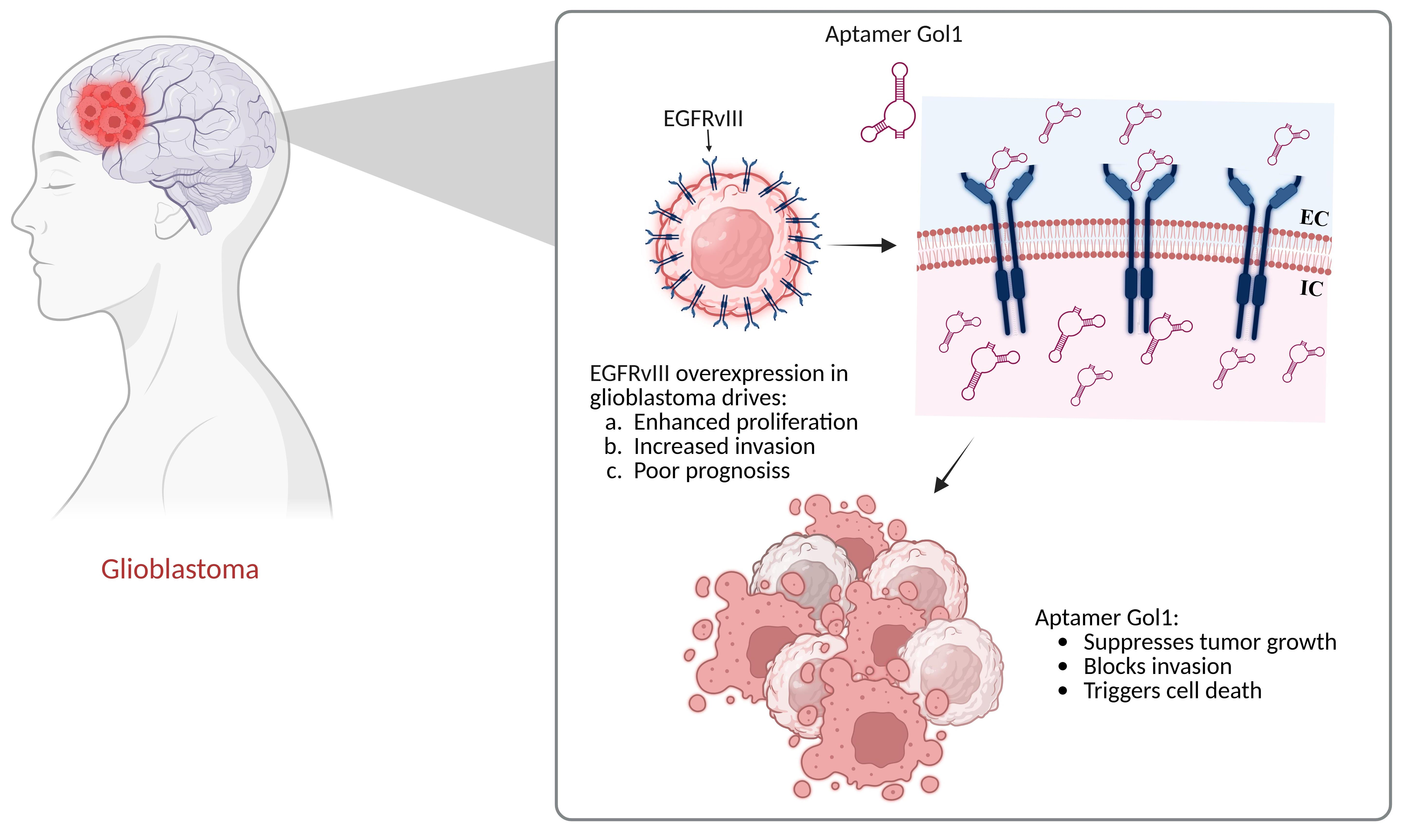
New Player in the Field of Glioblastoma Therapy: EGFRvIII-Specific Gol1 Aptamer Shows a Great Therapeutic Potential

 , , , , ,
  , and
, and
Abstract
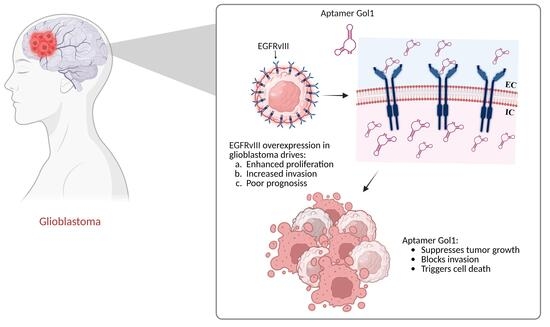
1. Introduction
2. Materials and Methods
2.1. Cell Cultures
2.2. Aptamers
2.3. Transfection
2.4. Competitive Aptamer/Immunocytochemical Staining
2.5. RT-qPCR
2.6. Immunocytochemistry
2.7. FAM-Aptamer Incubation and Immunohistochemistry
2.8. Determination of Fluorescence Intensity
2.9. MTS Analysis
2.10. xCELLigence RTCA DP Cell Analysis
2.11. Migration Analysis
2.12. Statistical Analysis
2.13. Transcriptomic Analysis
2.14. Animal Models
2.14.1. Glioblastoma Transplantation 101/8
2.14.2. Introduction of Fluorescent Markers
Dose–Response Injection Protocol
- Sodium fluorescein in PBS at doses of 100, 600, and 6300 nmol/kg (n = 3 per group);
- Fluorescein-labeled Gol1 aptamer at doses of 50, 100, 200, 400, and 3800 nmol/kg (n = 3 per dose in the preliminary experiment).
Targeted Injection for Confocal Microscopy
2.14.3. Brain Slices Preparation
Fluorescence Scanning Protocol
Protocol for Confocal Microscopy
2.14.4. Visualization and Analysis
Fluorescence Scanning
Confocal Microscopy
2.14.5. Quantitative Fluorescence Analysis
- I tumor—average tumor fluorescence intensity;
- I normal—intensity in normal brain tissue of a similar area.
2.14.6. Statistical Analysis
3. Results
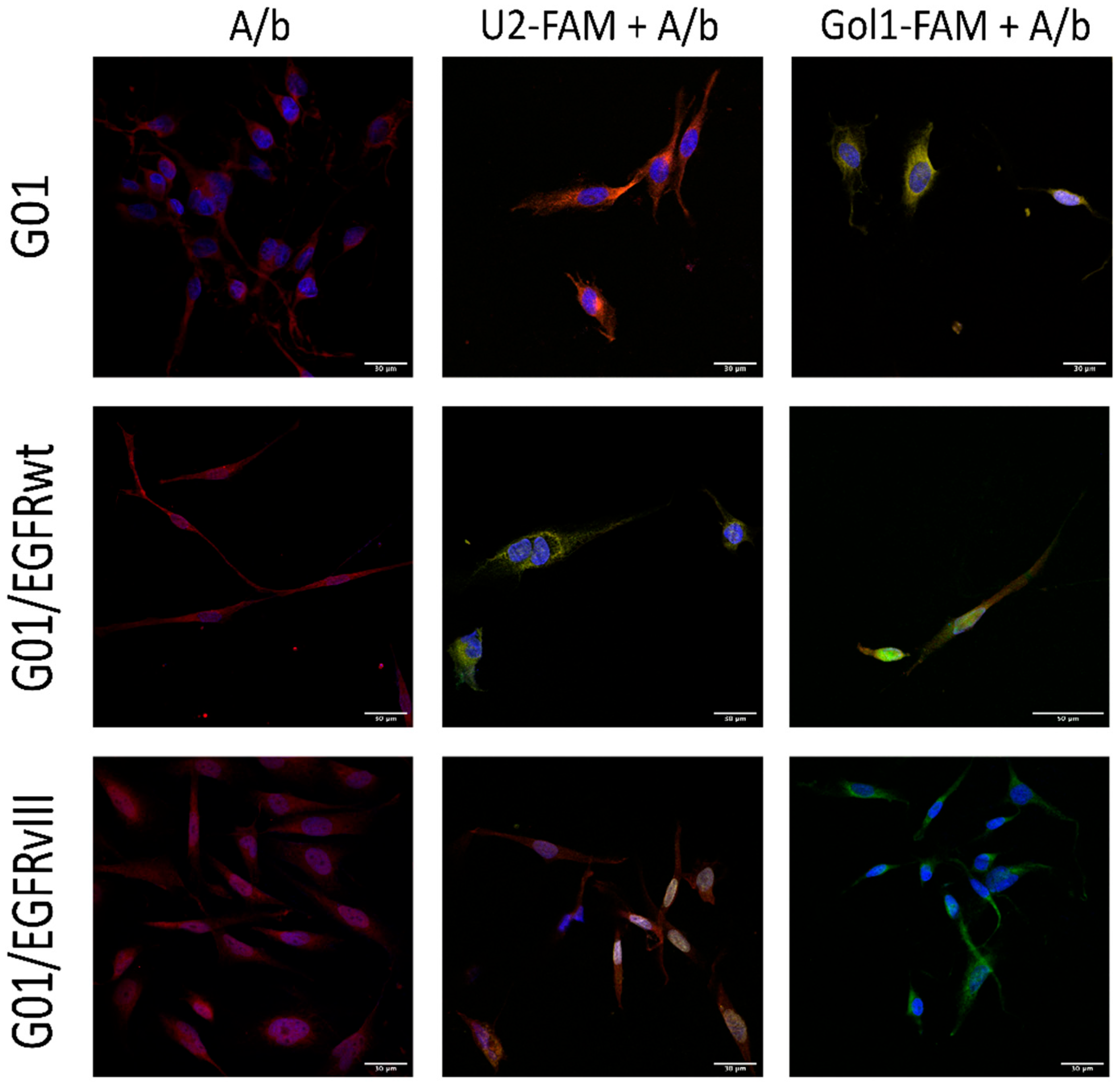
3.1. Determination of the Specificity of the Gol1 Aptamer to EGFR and EGFRvIII
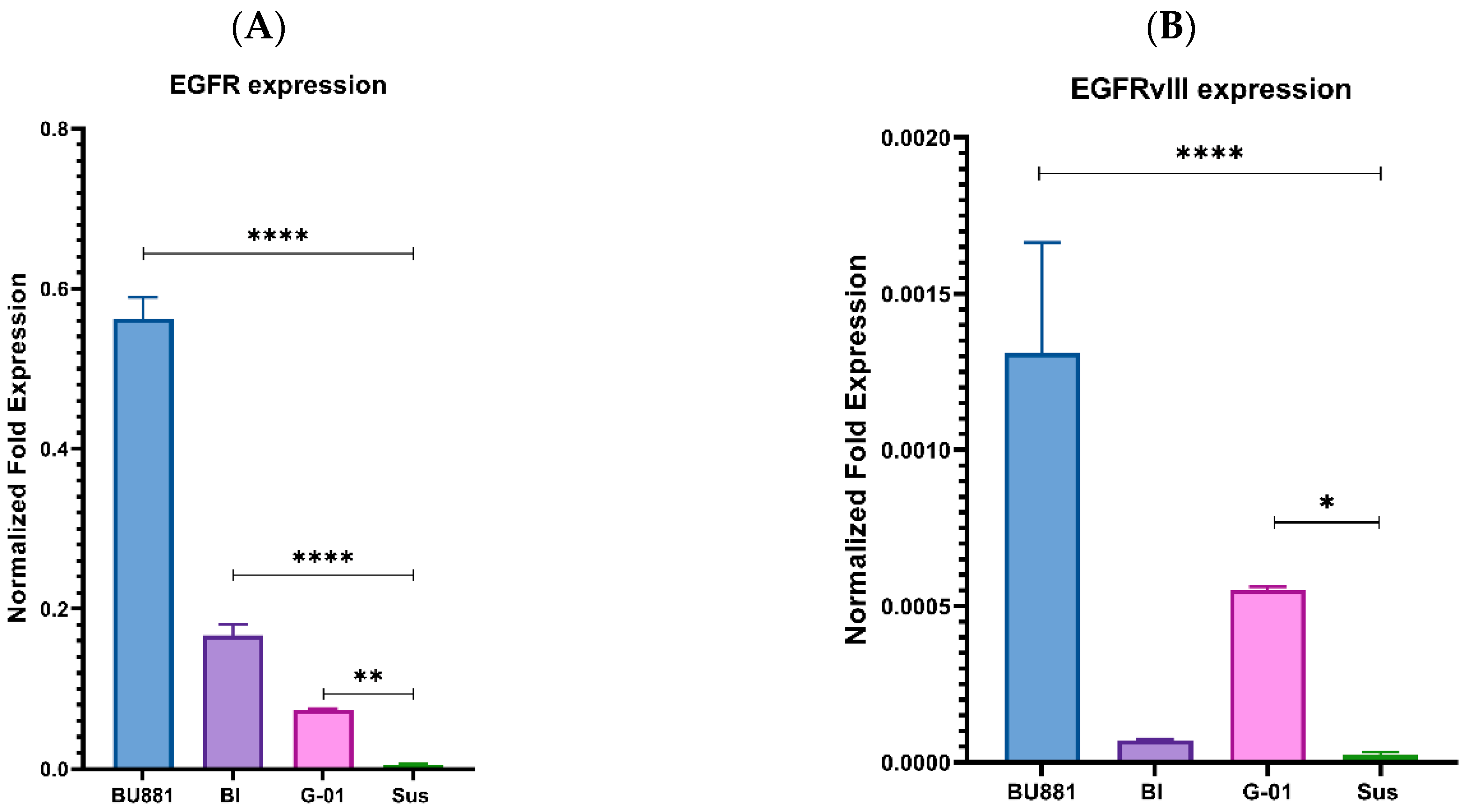
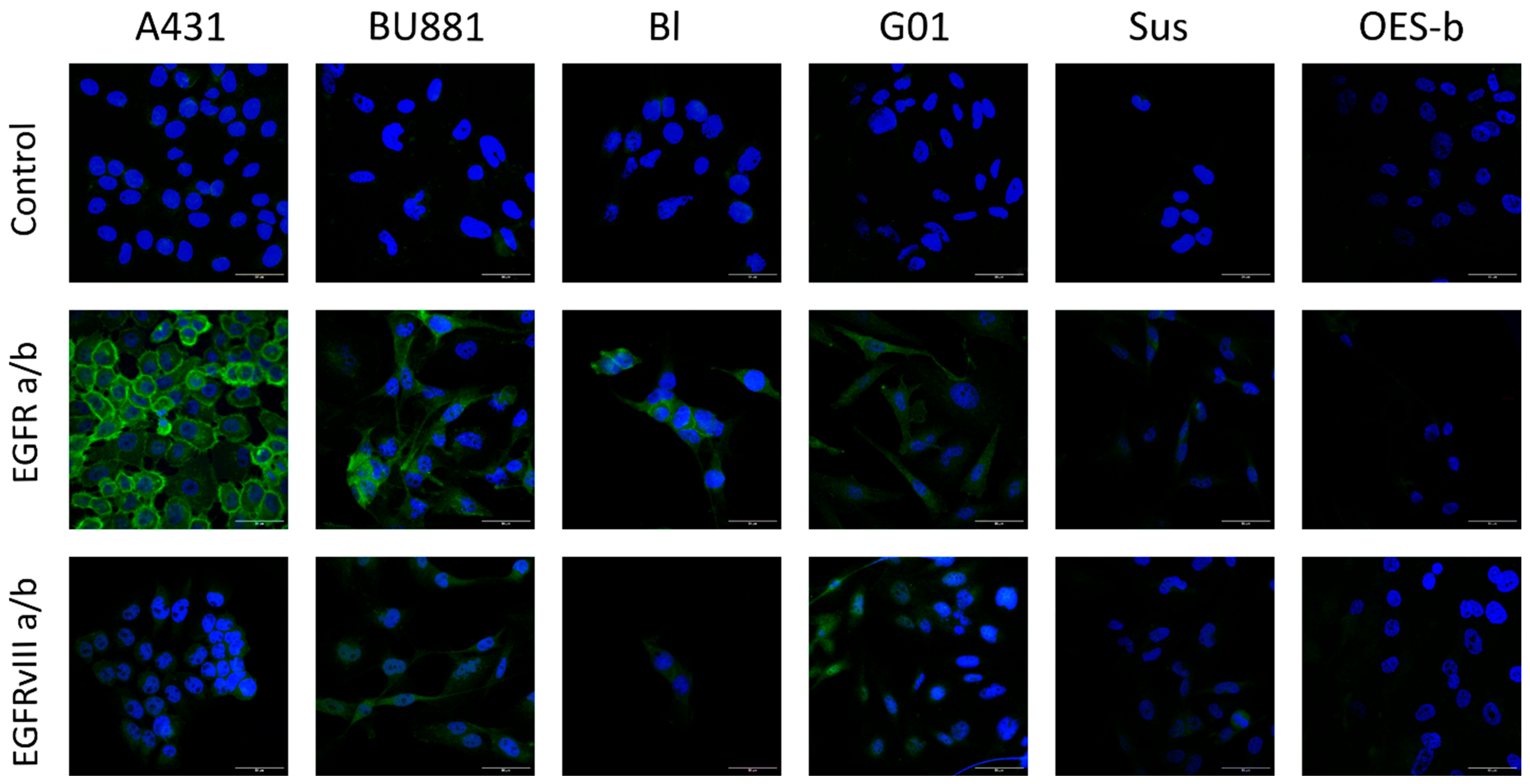
3.2. Selection of Human Glioblastoma Cell Cultures with Various Expression of EGFRwt and EGFRvIII to Further Investigate the Properties of Gol1 Aptamer
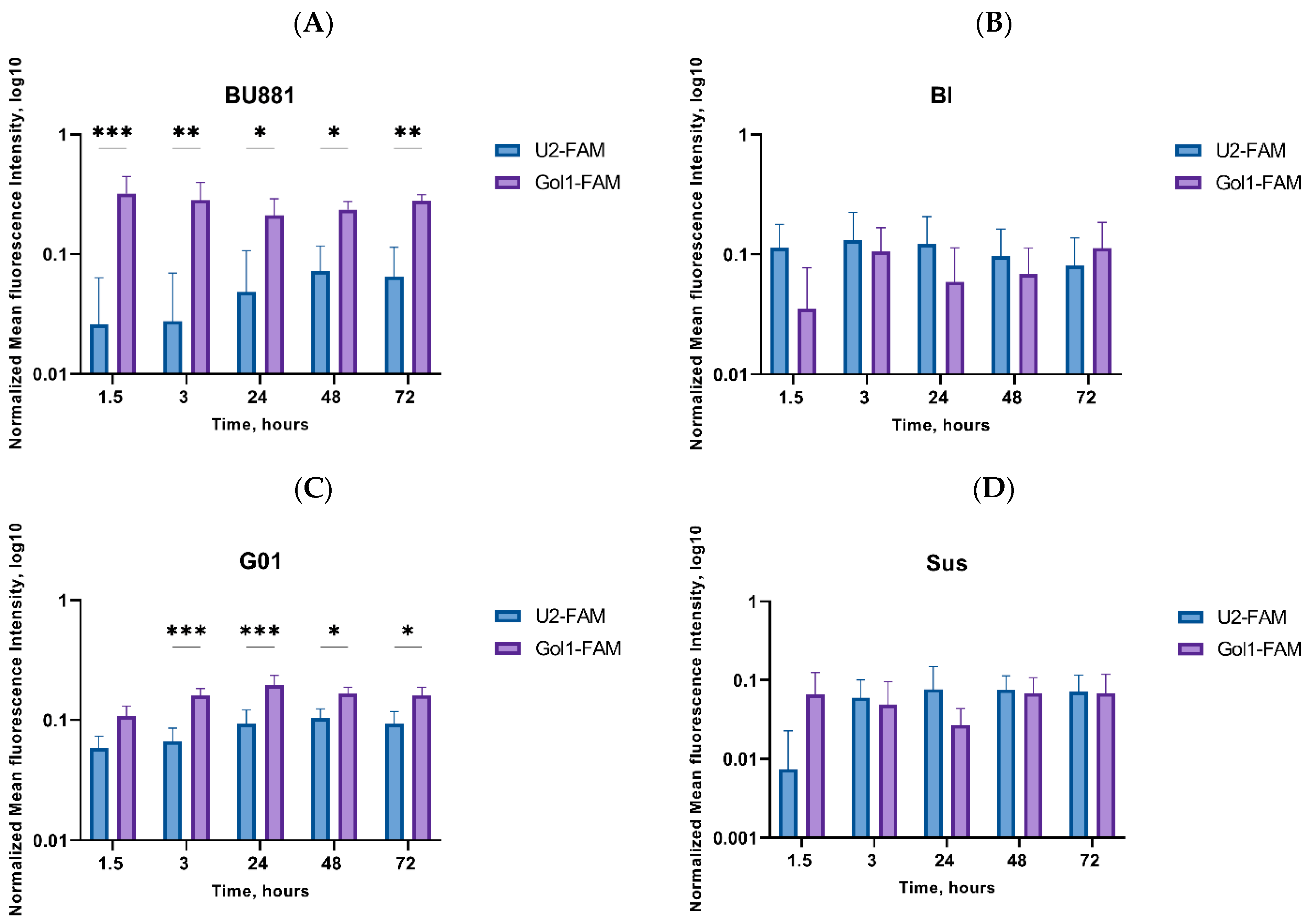
3.3. Distribution of the Gol1 Aptamer in Human Glioblastoma Cells
3.4. Effect of Gol1 Aptamer on the Proliferative Potential of Human Glioblastoma Cells
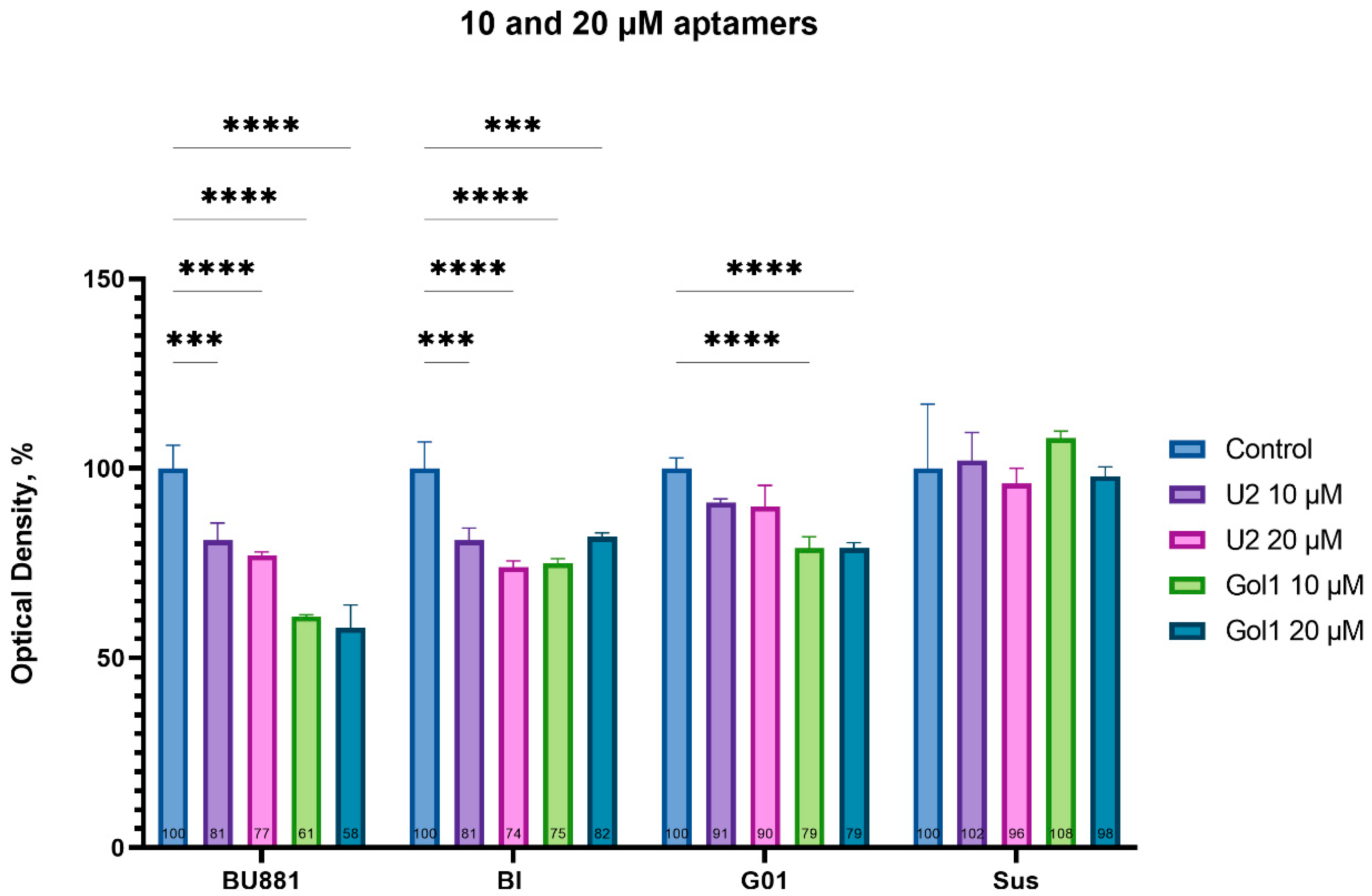
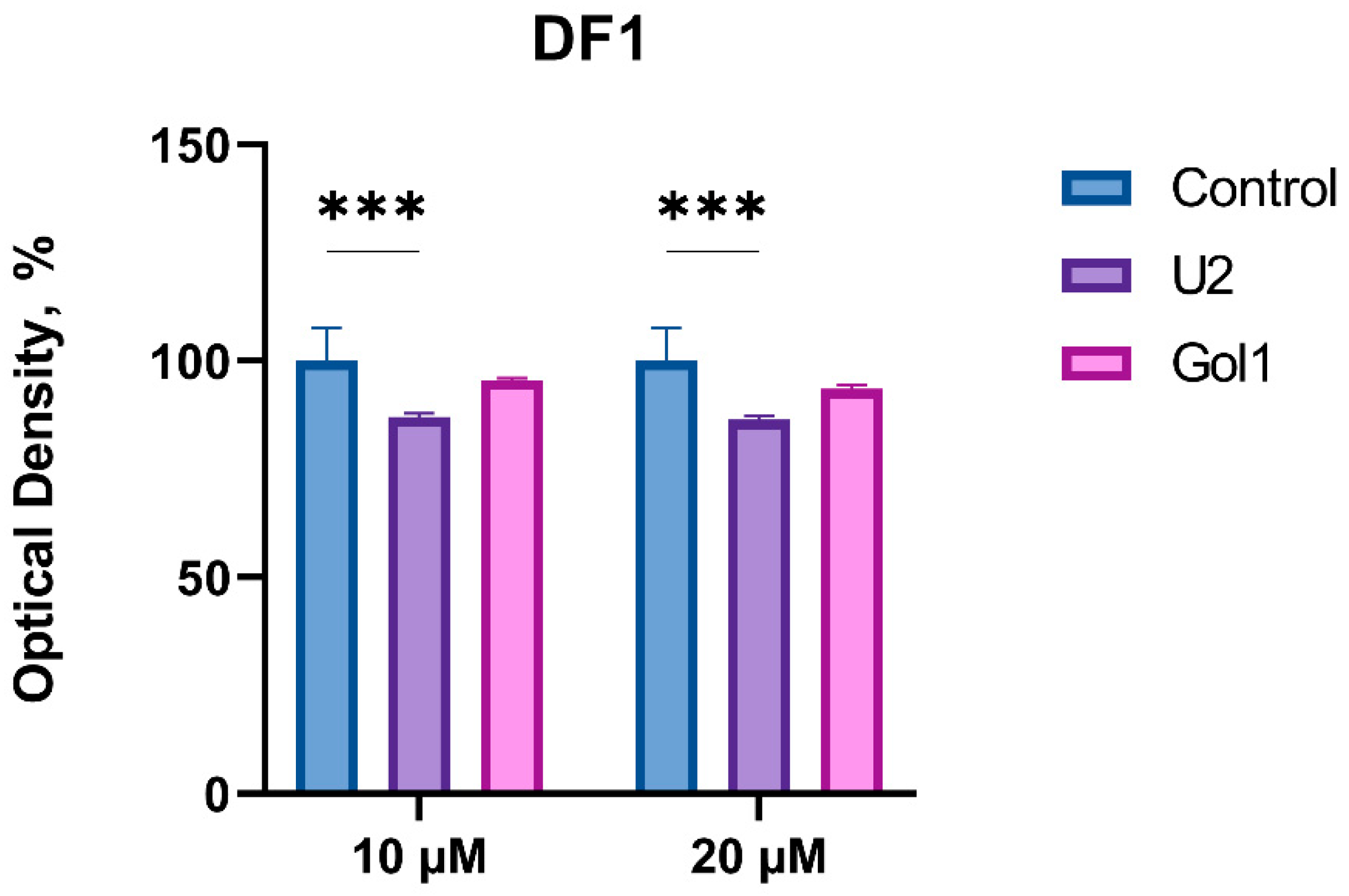
3.4.1. MTS-Proliferation Test
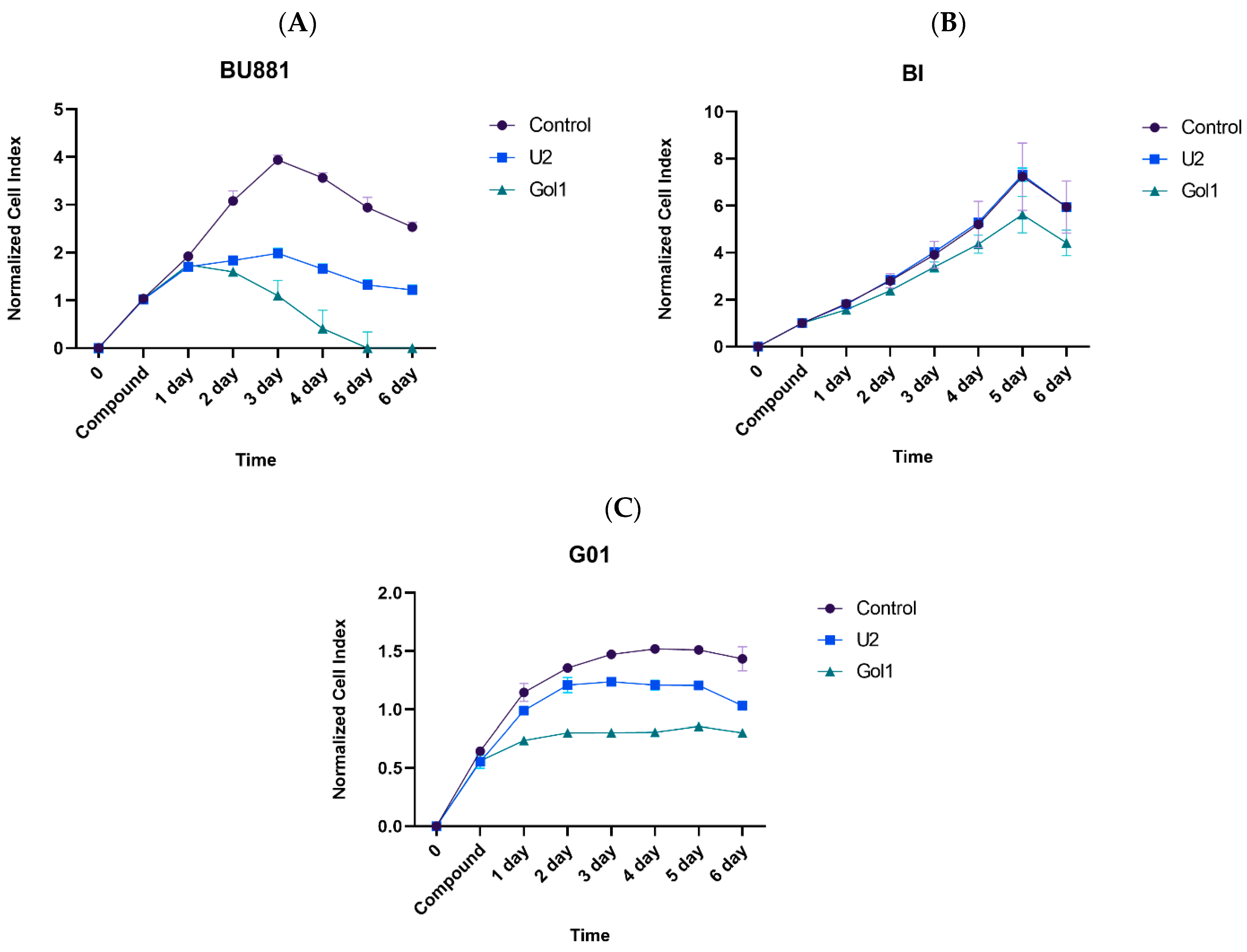
3.4.2. Real-Time Cell Analyzer Analysis
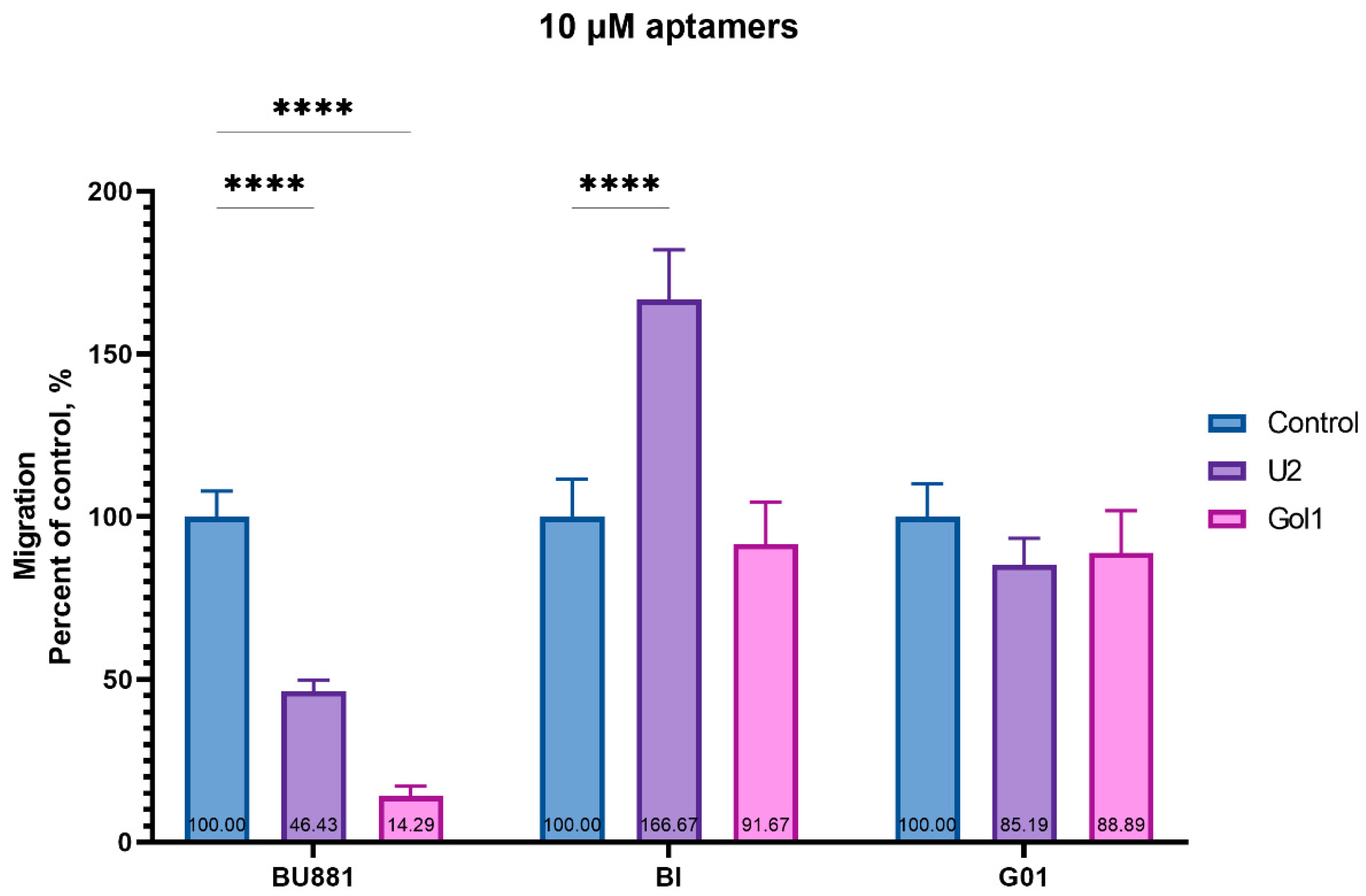
3.5. Evaluation of the Effect of Gol1 Aptamer on the Migration of Human Glioblastoma Cells
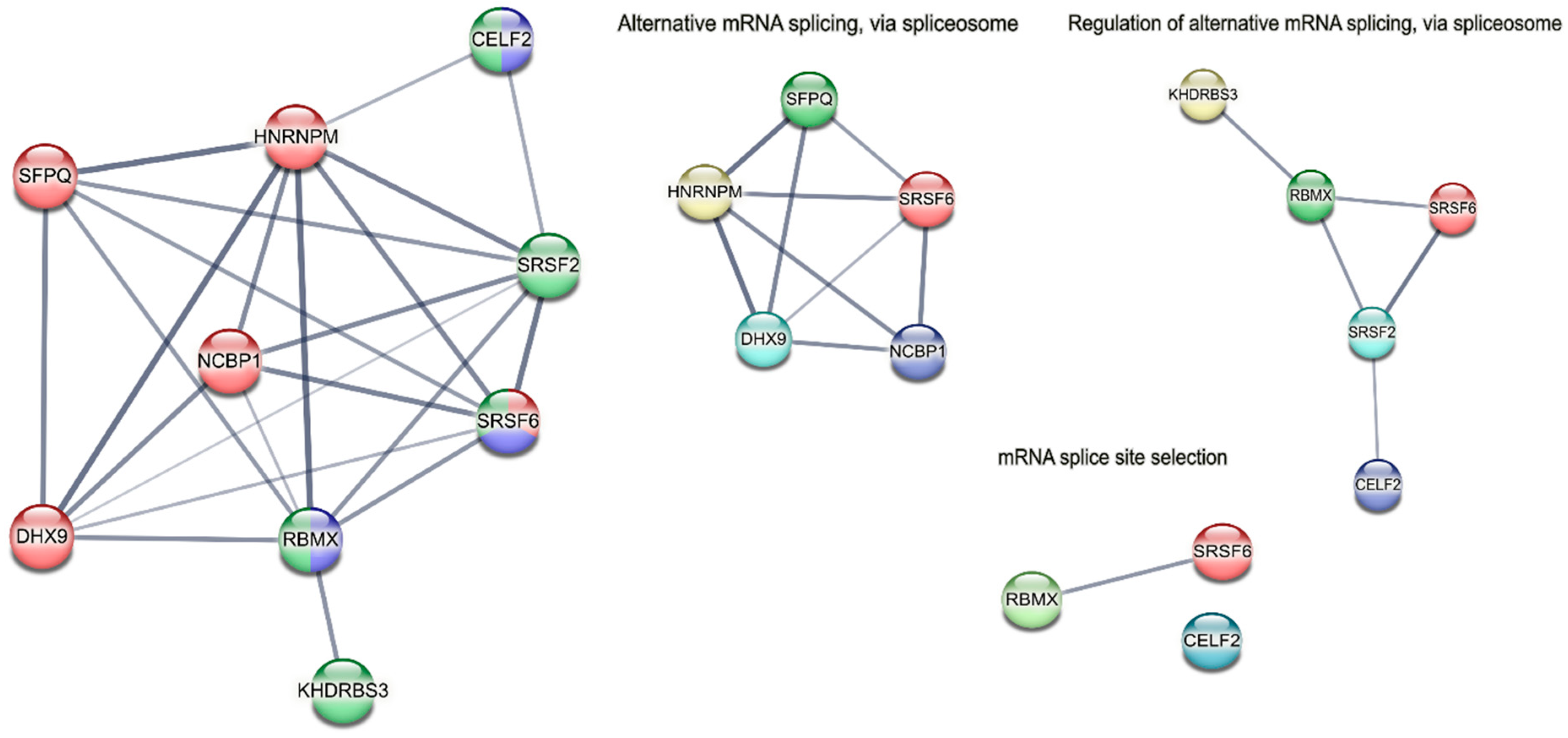
3.6. Transcriptome Data Analysis of Human Glioblastoma Cells After Treatment with Gol1 Aptamer
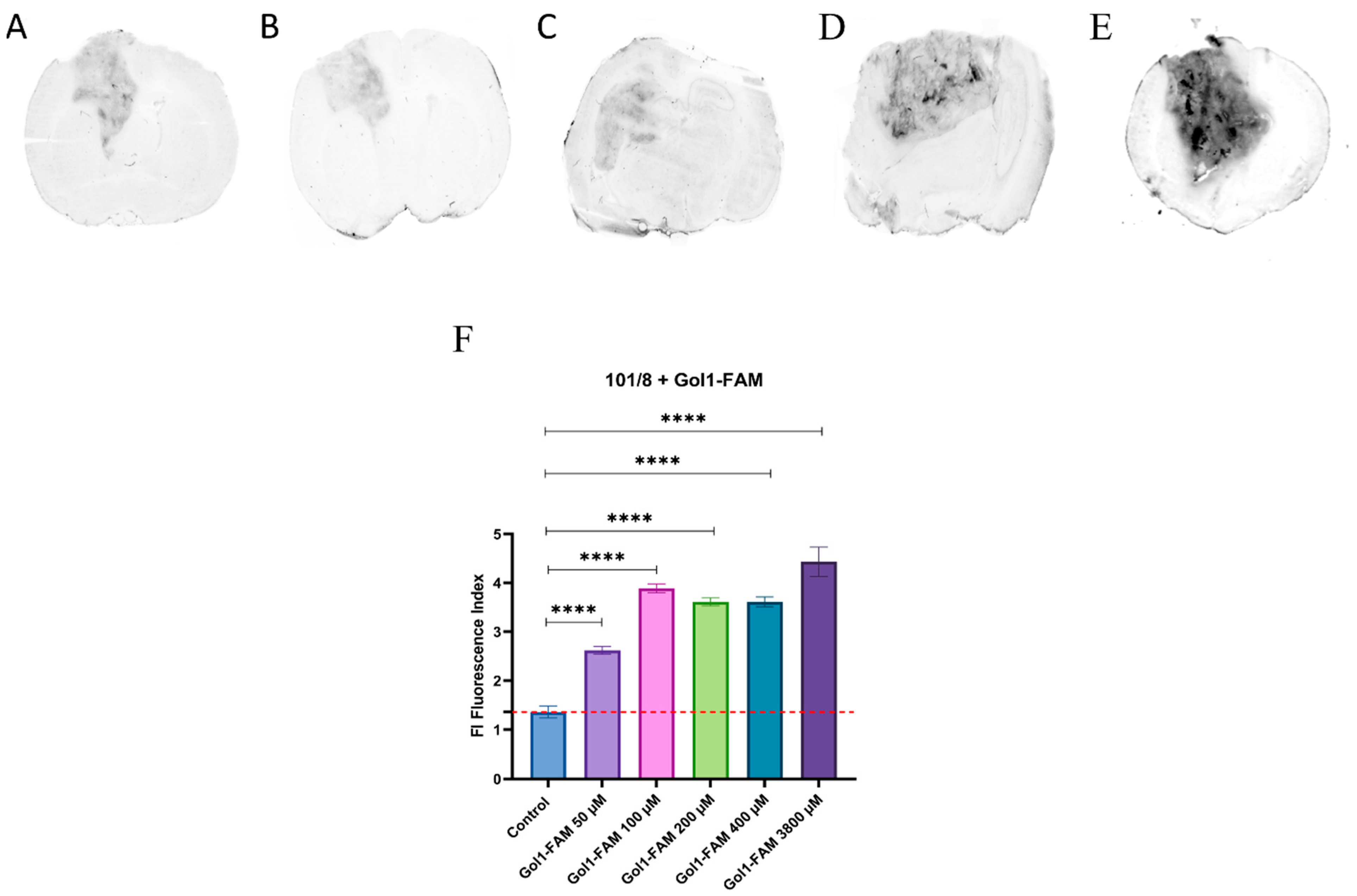
3.7. Visualization of the Gol1-FAM Aptamer in Animal Models with Implanted 101/8 Glioblastoma Tissue
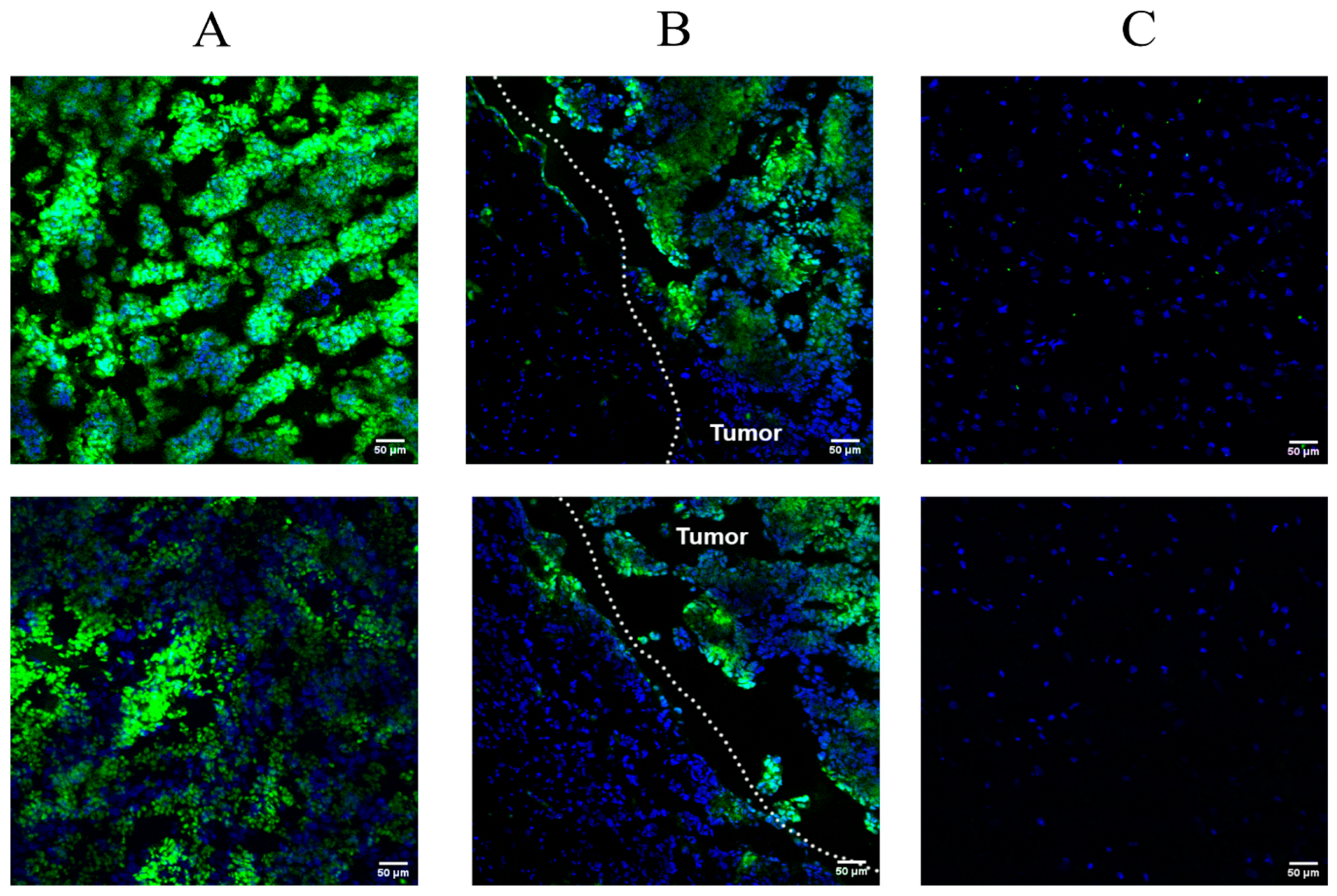
3.8. Analysis of the Accumulation of Fluorescent Aptamer Gol1 in Glioblastoma 101/8 Cells upon Systemic Administration
4. Discussion
5. Conclusions
Supplementary Materials
Author Contributions
Funding
Institutional Review Board Statement
Data Availability Statement
Conflicts of Interest
References
- An, Z.; Aksoy, O.; Zheng, T.; Fan, Q.-W.; Weiss, W.A. Epidermal Growth Factor Receptor and EGFRvIII in Glioblastoma: Signaling Pathways and Targeted Therapies. Oncogene 2018, 37, 1561–1575. [Google Scholar] [CrossRef] [Scilit]
- Sabbah, D.A.; Hajjo, R.; Sweidan, K. Review on Epidermal Growth Factor Receptor (EGFR) Structure, Signaling Pathways, Interactions, and Recent Updates of EGFR Inhibitors. Curr. Top. Med. Chem. 2020, 20, 815–834. [Google Scholar] [CrossRef] [Scilit] [PubMed]
- Padfield, E.; Ellis, H.P.; Kurian, K.M. Current Therapeutic Advances Targeting EGFR and EGFRvIII in Glioblastoma. Front. Oncol. 2015, 5, 5. [Google Scholar] [CrossRef] [Scilit] [PubMed]
- Saleem, H.; Kulsoom Abdul, U.; Küçükosmanoglu, A.; Houweling, M.; Cornelissen, F.M.G.; Heiland, D.H.; Hegi, M.E.; Kouwenhoven, M.C.M.; Bailey, D.; Würdinger, T.; et al. The TICking Clock of EGFR Therapy Resistance in Glioblastoma: Target Independence or Target Compensation. Drug Resist. Updates 2019, 43, 29–37. [Google Scholar] [CrossRef] [Scilit] [PubMed]
- Frumento, D.; Grossi, G.; Falesiedi, M.; Musumeci, F.; Carbone, A.; Schenone, S. Small Molecule Tyrosine Kinase Inhibitors (TKIs) for Glioblastoma Treatment. Int. J. Mol. Sci. 2024, 25, 1398. [Google Scholar] [CrossRef] [Scilit]
- Nuzzo, S.; Brancato, V.; Affinito, A.; Salvatore, M.; Cavaliere, C.; Condorelli, G. The Role of RNA and DNA Aptamers in Glioblastoma Diagnosis and Therapy: A Systematic Review of the Literature. Cancers 2020, 12, 2173. [Google Scholar] [CrossRef] [Scilit]
- Wu, X.; Liang, H.; Tan, Y.; Yuan, C.; Li, S.; Li, X.; Li, G.; Shi, Y.; Zhang, X. Cell-SELEX Aptamer for Highly Specific Radionuclide Molecular Imaging of Glioblastoma In Vivo. PLoS ONE 2014, 9, e90752. [Google Scholar] [CrossRef] [Scilit]
- Zhang, X.; Peng, L.; Liang, Z.; Kou, Z.; Chen, Y.; Shi, G.; Li, X.; Liang, Y.; Wang, F.; Shi, Y. Effects of Aptamer to U87-EGFRvIII Cells on the Proliferation, Radiosensitivity, and Radiotherapy of Glioblastoma Cells. Mol. Ther. Nucleic Acids 2018, 10, 438–449. [Google Scholar] [CrossRef] [Scilit]
- Golovin, A.; Dzarieva, F.; Rubetskaya, K.; Shamadykova, D.; Usachev, D.; Pavlova, G.; Kopylov, A. In Silico Born Designed Anti-EGFR Aptamer Gol1 Has Anti-Proliferative Potential for Patient Glioblastoma Cells. Int. J. Mol. Sci. 2025, 26, 1072. [Google Scholar] [CrossRef] [Scilit]
- Moiseenko, V.L.; Antipova, O.M.; Rybina, A.A.; Mukhametova, L.I.; Eremin, S.A.; Pavlova, G.V.; Kopylov, A.M. Post-Selection Design of Aptamers: Comparative Study of Affinity of the DNA Aptamers to Recombinant Extracellular Domain of Human Epidermal Growth Factor Receptors. Biochemistry 2024, 89, 2183–2193. [Google Scholar] [CrossRef] [Scilit]
- Dzarieva, F.M.; Shamadykova, D.V.; Sluchanko, O.V.; Pavlova, S.A.; Fab, L.V.; Ryabova, A.V.; Panteleev, D.Y.; Kopylov, A.M.; Usachev, D.Y.; Golovin, A.V.; et al. Specificity of Aptamers U2 and Gol1 to EGFR-Positive Human Glioblastoma Cells in Vitro. Neurosci. Behav. Physiol. 2024, 54, 912–922. [Google Scholar] [CrossRef] [Scilit]
- Dzarieva, F.M.; Shamadykova, D.V.; Sluchanko, O.V.; Pavlova, S.A.; Fab, L.V.; Ryabova, A.V.; Panteleev, D.Y.; Kopylov, A.M.; Usachev, D.Y.; Golovin, A.V.; et al. Specificity of U2 and GOL1 Aptamers to EGFR-Positive Human Glioblastoma Cells in Vitro. Zhurnal Vyss. Nervn. Deyatelnosti Im. IP Pavlov. 2024, 74, 85–99. [Google Scholar] [CrossRef] [Scilit]
- Pronin, I.N.; Postnov, A.A.; Lipengolts, A.A.; Pavlova, G.V.; Revishchin, A.V.; Skribitsky, V.A.; Finogenova, Y.A.; Smirnova, A.V.; Shpakova, K.E.; Grigorieva, E.Y.; et al. A Novel Rat Glioblastoma 101/8 Model: A Comparative PET-CT Study with C6 Rat Model. Burdenko’s J. Neurosurg. 2024, 88, 54. [Google Scholar] [CrossRef] [Scilit] [PubMed]
- Gan, H.K.; Cvrljevic, A.N.; Johns, T.G. The Epidermal Growth Factor Receptor Variant III (EGFR v III): Where Wild Things Are Altered. FEBS J. 2013, 280, 5350–5370. [Google Scholar] [CrossRef] [Scilit] [PubMed]
- Heimberger, A.B.; Suki, D.; Yang, D.; Shi, W.; Aldape, K. The Natural History of EGFR and EGFRvIII in Glioblastoma Patients. J. Transl. Med. 2005, 3, 38. [Google Scholar] [CrossRef] [Scilit]
- Kolbe, N.; Sfakianakis, N.; Stinner, C.; Surulescu, C.; Lenz, J. Modeling Multiple Taxis: Tumor Invasion with Phenotypic Heterogeneity, Haptotaxis, and Unilateral Interspecies Repellence. Discret. Contin. Dyn. Syst.-B 2021, 26, 443–481. [Google Scholar] [CrossRef] [Scilit]
- Pham, K.; Chauviere, A.; Hatzikirou, H.; Li, X.; Byrne, H.M.; Cristini, V.; Lowengrub, J. Density-Dependent Quiescence in Glioma Invasion: Instability in a Simple Reaction–Diffusion Model for the Migration/Proliferation Dichotomy. J. Biol. Dyn. 2012, 6, 54–71. [Google Scholar] [CrossRef] [Scilit]
- Hatzikirou, H.; Basanta, D.; Simon, M.; Schaller, K.; Deutsch, A. “Go or Grow”: The Key to the Emergence of Invasion in Tumour Progression? Math. Med. Biol. 2012, 29, 49–65. [Google Scholar] [CrossRef] [Scilit]
- Winkler, F.; Kienast, Y.; Fuhrmann, M.; Von Baumgarten, L.; Burgold, S.; Mitteregger, G.; Kretzschmar, H.; Herms, J. Imaging Glioma Cell Invasion in Vivo Reveals Mechanisms of Dissemination and Peritumoral Angiogenesis. Glia 2009, 57, 1306–1315. [Google Scholar] [CrossRef]
- Chen, Y.; Ning, J.; Cao, W.; Wang, S.; Du, T.; Jiang, J.; Feng, X.; Zhang, B. Research Progress of TXNIP as a Tumor Suppressor Gene Participating in the Metabolic Reprogramming and Oxidative Stress of Cancer Cells in Various Cancers. Front. Oncol. 2020, 10, 568574. [Google Scholar] [CrossRef] [Scilit]
- Watanabe, R.; Nakamura, H.; Masutani, H.; Yodoi, J. Anti-Oxidative, Anti-Cancer and Anti-Inflammatory Actions by Thioredoxin 1 and Thioredoxin-Binding Protein-2. Pharmacol. Ther. 2010, 127, 261–270. [Google Scholar] [CrossRef] [Scilit] [PubMed]
- Zhou, J.; Chng, W.-J. Roles of Thioredoxin Binding Protein (TXNIP) in Oxidative Stress, Apoptosis and Cancer. Mitochondrion 2013, 13, 163–169. [Google Scholar] [CrossRef] [Scilit] [PubMed]
- Minn, A.H.; Hafele, C.; Shalev, A. Thioredoxin-Interacting Protein Is Stimulated by Glucose through a Carbohydrate Response Element and Induces β-Cell Apoptosis. Endocrinology 2005, 146, 2397–2405. [Google Scholar] [CrossRef] [Scilit] [PubMed]
- Wang, Z.; Rong, Y.P.; Malone, M.H.; Davis, M.C.; Zhong, F.; Distelhorst, C.W. Thioredoxin-Interacting Protein (Txnip) Is a Glucocorticoid-Regulated Primary Response Gene Involved in Mediating Glucocorticoid-Induced Apoptosis. Oncogene 2006, 25, 1903–1913. [Google Scholar] [CrossRef] [Scilit]
- Takahashi, Y.; Masuda, H.; Ishii, Y.; Nishida, Y.; Kobayashi, M.; Asai, S. Decreased Expression of Thioredoxin Interacting Protein MRNA in Inflamed Colonic Mucosa in Patients with Ulcerative Colitis. Oncol. Rep. 2007, 18, 531–535. [Google Scholar] [CrossRef] [Scilit]
- Han, S.H.; Jeon, J.H.; Ju, H.R.; Jung, U.; Kim, K.Y.; Yoo, H.S.; Lee, Y.H.; Song, K.S.; Hwang, H.M.; Na, Y.S.; et al. VDUP1 Upregulated by TGF-Β1 and 1,25-Dihydorxyvitamin D3 Inhibits Tumor Cell Growth by Blocking Cell-Cycle Progression. Oncogene 2003, 22, 4035–4046. [Google Scholar] [CrossRef] [Scilit]
- Butler, L.M.; Zhou, X.; Xu, W.-S.; Scher, H.I.; Rifkind, R.A.; Marks, P.A.; Richon, V.M. The Histone Deacetylase Inhibitor SAHA Arrests Cancer Cell Growth, up-Regulates Thioredoxin-Binding Protein-2, and down-Regulates Thioredoxin. Proc. Natl. Acad. Sci. USA 2002, 99, 11700–11705. [Google Scholar] [CrossRef] [Scilit]
- Xie, M.; Xie, R.; Xie, S.; Wu, Y.; Wang, W.; Li, X.; Xu, Y.; Liu, B.; Zhou, Y.; Wang, T.; et al. Thioredoxin Interacting Protein (TXNIP) Acts as a Tumor Suppressor in Human Prostate Cancer. Cell Biol. Int. 2020, 44, 2094–2106. [Google Scholar] [CrossRef] [Scilit]
- Stolearenco, V.; Levring, T.B.; Nielsen, H.M.; Lindahl, L.; Fredholm, S.; Kongsbak-Wismann, M.; Willerslev-Olsen, A.; Buus, T.B.; Nastasi, C.; Hu, T.; et al. The Thioredoxin-Interacting Protein TXNIP Is a Putative Tumour Suppressor in Cutaneous T-Cell Lymphoma. Dermatology 2021, 237, 283–290. [Google Scholar] [CrossRef] [Scilit]
- Yan, M.; Liu, Q. Differentiation Therapy: A Promising Strategy for Cancer Treatment. Chin. J. Cancer 2016, 35, 3. [Google Scholar] [CrossRef] [Scilit]
- Pavlova, G.; Kolesnikova, V.; Samoylenkova, N.; Drozd, S.; Revishchin, A.; Shamadykova, D.; Usachev, D.Y.; Kopylov, A. A Combined Effect of G-Quadruplex and Neuro-Inducers as an Alternative Approach to Human Glioblastoma Therapy. Front. Oncol. 2022, 12, 880740. [Google Scholar] [CrossRef] [Scilit] [PubMed]
- Gastfriend, B.D.; Snyder, M.E.; Holt, H.E.; Daneman, R.; Palecek, S.P.; Shusta, E.V. Notch3 Directs Differentiation of Brain Mural Cells from Human Pluripotent Stem Cell–Derived Neural Crest. Sci. Adv. 2024, 10, eadi1737. [Google Scholar] [CrossRef] [Scilit] [PubMed]
- González-Castillo, C.; Ortuño-Sahagún, D.; Guzmán-Brambila, C.; Pallàs, M.; Rojas-Mayorquín, A.E. Pleiotrophin as a Central Nervous System Neuromodulator, Evidences from the Hippocampus. Front. Cell. Neurosci. 2015, 8, 443. [Google Scholar] [CrossRef] [Scilit] [PubMed]
- Tang, C.; Wang, M.; Wang, P.; Wang, L.; Wu, Q.; Guo, W. Neural Stem Cells Behave as a Functional Niche for the Maturation of Newborn Neurons through the Secretion of PTN. Neuron 2019, 101, 32–44.e6. [Google Scholar] [CrossRef] [Scilit]
- Micera, A.; Lambiase, A.; Stampachiacchiere, B.; Bonini, S.; Bonini, S.; Levischaffer, F. Nerve Growth Factor and Tissue Repair Remodeling: TrkANGFR and P75NTR, Two Receptors One Fate. Cytokine Growth Factor Rev. 2007, 18, 245–256. [Google Scholar] [CrossRef] [Scilit]
- Yang, P.; Yan, W.; Zhang, W.; You, G.; Bao, Z.; Jiang, T. Whole-Genome Messenger RNA Profiling Reveals Genes Involved in Malignant Progression of Glioma. Zhonghua Yi Xue Za Zhi 2013, 93, 5–7. [Google Scholar]
- Marinaro, C.; Butti, E.; Bergamaschi, A.; Papale, A.; Furlan, R.; Comi, G.; Martino, G.; Muzio, L. In Vivo Fate Analysis Reveals the Multipotent and Self-Renewal Features of Embryonic AspM Expressing Cells. PLoS ONE 2011, 6, e19419. [Google Scholar] [CrossRef] [Scilit]
- Rujano, M.A.; Sanchez-Pulido, L.; Pennetier, C.; le Dez, G.; Basto, R. The Microcephaly Protein Asp Regulates Neuroepithelium Morphogenesis by Controlling the Spatial Distribution of Myosin II. Nat. Cell Biol. 2013, 15, 1294–1306. [Google Scholar] [CrossRef] [Scilit]
- Karalay, Ö.; Doberauer, K.; Vadodaria, K.C.; Knobloch, M.; Berti, L.; Miquelajauregui, A.; Schwark, M.; Jagasia, R.; Taketo, M.M.; Tarabykin, V.; et al. Prospero-Related Homeobox 1 Gene (Prox1) Is Regulated by Canonical Wnt Signaling and Has a Stage-Specific Role in Adult Hippocampal Neurogenesis. Proc. Natl. Acad. Sci. USA 2011, 108, 5807–5812. [Google Scholar] [CrossRef] [Scilit]
- Holzmann, J.; Hennchen, M.; Rohrer, H. Prox1 Identifies Proliferating Neuroblasts and Nascent Neurons during Neurogenesis in Sympathetic Ganglia. Dev. Neurobiol. 2015, 75, 1352–1367. [Google Scholar] [CrossRef] [Scilit]
- Valacca, C.; Bonomi, S.; Buratti, E.; Pedrotti, S.; Baralle, F.E.; Sette, C.; Ghigna, C.; Biamonti, G. Sam68 Regulates EMT through Alternative Splicing–Activated Nonsense-Mediated MRNA Decay of the SF2/ASF Proto-Oncogene. J. Cell Biol. 2010, 191, 87–99. [Google Scholar] [CrossRef] [Scilit]
- Anczuków, O.; Rosenberg, A.Z.; Akerman, M.; Das, S.; Zhan, L.; Karni, R.; Muthuswamy, S.K.; Krainer, A.R. The Splicing Factor SRSF1 Regulates Apoptosis and Proliferation to Promote Mammary Epithelial Cell Transformation. Nat. Struct. Mol. Biol. 2012, 19, 220–228. [Google Scholar] [CrossRef] [Scilit] [PubMed]
- Cherry, S.; Lynch, K.W. Alternative Splicing and Cancer: Insights, Opportunities, and Challenges from an Expanding View of the Transcriptome. Genes Dev. 2020, 34, 1005–1016. [Google Scholar] [CrossRef] [Scilit] [PubMed]
- Ladd, A.N.; Charlet-B., N.; Cooper, T.A. The CELF Family of RNA Binding Proteins Is Implicated in Cell-Specific and Developmentally Regulated Alternative Splicing. Mol. Cell. Biol. 2001, 21, 1285–1296. [Google Scholar] [CrossRef] [Scilit] [PubMed]
- Turchi, L.; Sakakini, N.; Saviane, G.; Polo, B.; Saurty-Seerunghen, M.S.; Gabut, M.; Gouillou, C.A.; Guerlais, V.; Pasquier, C.; Vignais, M.L.; et al. CELF2 Sustains a Proliferating/OLIG2+ Glioblastoma Cell Phenotype via the Epigenetic Repression of SOX3. Cancers 2023, 15, 5038. [Google Scholar] [CrossRef] [Scilit]
- Xu, Y.; Gao, X.D.; Lee, J.-H.; Huang, H.; Tan, H.; Ahn, J.; Reinke, L.M.; Peter, M.E.; Feng, Y.; Gius, D.; et al. Cell Type-Restricted Activity of HnRNPM Promotes Breast Cancer Metastasis via Regulating Alternative Splicing. Genes Dev. 2014, 28, 1191–1203. [Google Scholar] [CrossRef] [Scilit]
- Somrit, K.; Krobthong, S.; Yingchutrakul, Y.; Phueakphud, N.; Wongtrakoongate, P.; Komyod, W. KHDRBS3 Facilitates Self-Renewal and Temozolomide Resistance of Glioblastoma Cell Lines. Life Sci. 2024, 358, 123132. [Google Scholar] [CrossRef] [Scilit]
- She, W.; Shao, J.; Jia, R. Targeting Splicing Factor SRSF6 for Cancer Therapy. Front. Cell Dev. Biol. 2021, 9, 780023. [Google Scholar] [CrossRef] [Scilit]
- Liu, W.; Li, D.; Lu, T.; Zhang, H.; Chen, Z.; Ruan, Q.; Zheng, Z.; Chen, L.; Guo, J. Comprehensive Analysis of RNA-Binding Protein SRSF2-Dependent Alternative Splicing Signature in Malignant Proliferation of Colorectal Carcinoma. J. Biol. Chem. 2023, 299, 102876. [Google Scholar] [CrossRef] [Scilit]
- Weinholdt, C.; Wichmann, H.; Kotrba, J.; Ardell, D.H.; Kappler, M.; Eckert, A.W.; Vordermark, D.; Grosse, I. Prediction of Regulatory Targets of Alternative Isoforms of the Epidermal Growth Factor Receptor in a Glioblastoma Cell Line. BMC Bioinform. 2019, 20, 434. [Google Scholar] [CrossRef] [Scilit]


Disclaimer/Publisher’s Note: The statements, opinions and data contained in all publications are solely those of the individual author(s) and contributor(s) and not of MDPI and/or the editor(s). MDPI and/or the editor(s) disclaim responsibility for any injury to people or property resulting from any ideas, methods, instructions or products referred to in the content. |
© 2026 by the authors. Licensee MDPI, Basel, Switzerland. This article is an open access article distributed under the terms and conditions of the Creative Commons Attribution (CC BY) license.
Share and Cite
Dzarieva, F.; Pavlova, S.; Fab, L.; Shamadykova, D.; Revishchin, A.; Alekseeva, A.; Kopylov, A.; Pronin, I.; Pavlova, G. New Player in the Field of Glioblastoma Therapy: EGFRvIII-Specific Gol1 Aptamer Shows a Great Therapeutic Potential. Pharmaceutics 2026, 18, 299. https://doi.org/10.3390/pharmaceutics18030299
Dzarieva F, Pavlova S, Fab L, Shamadykova D, Revishchin A, Alekseeva A, Kopylov A, Pronin I, Pavlova G. New Player in the Field of Glioblastoma Therapy: EGFRvIII-Specific Gol1 Aptamer Shows a Great Therapeutic Potential. Pharmaceutics. 2026; 18(3):299. https://doi.org/10.3390/pharmaceutics18030299
Chicago/Turabian StyleDzarieva, Fatima, Svetlana Pavlova, Lika Fab, Dzhirgala Shamadykova, Alexander Revishchin, Anna Alekseeva, Alexey Kopylov, Igor Pronin, and Galina Pavlova. 2026. "New Player in the Field of Glioblastoma Therapy: EGFRvIII-Specific Gol1 Aptamer Shows a Great Therapeutic Potential" Pharmaceutics 18, no. 3: 299. https://doi.org/10.3390/pharmaceutics18030299
APA StyleDzarieva, F., Pavlova, S., Fab, L., Shamadykova, D., Revishchin, A., Alekseeva, A., Kopylov, A., Pronin, I., & Pavlova, G. (2026). New Player in the Field of Glioblastoma Therapy: EGFRvIII-Specific Gol1 Aptamer Shows a Great Therapeutic Potential. Pharmaceutics, 18(3), 299. https://doi.org/10.3390/pharmaceutics18030299