


Abstract
With the consumption of energy, blackouts, and a series of social development problems, the discussion of energy security has become the focus of international attention. This paper aims to construct a universal multidimensional index system from four dimensions, and compare the energy security systems of different countries by measuring the Energy Security Index (ESI) of 19 countries of G20 and analyzing their evolution characteristics. The results of this paper show that the ESI of the G20 countries is increasing, the number of dangerous countries is decreasing, mainly concentrated in the Asian and African regions, and environmental sustainability and safety use are the main factors affecting their energy security. The security countries are mainly concentrated in the developed countries of the Americas and Europe. Since 1995, the ESI of China has continued to rise and now China is a generally safe country, which reflects China’s continuous optimization of energy structure and continuous improvement of the relationship of energy systems and economic, population, and environmental systems.
1. Introduction
Energy is the driving force for the development of human society and an important foundation for the national economy, national security, and sustainable development. With the progress of human civilization, the issue of energy security, which concerns economic development, social stability, and national security, has become a focus of increasing concern. With the expansion of energy supply types, the concept of energy security is not limited to the security of energy supply, but should also include the safety of energy use. In other words, it is necessary to provide users with high-quality and safe energy in a sustained and stable manner, and at the same time, it is necessary to meet the coordination between energy use and the environment and society, so as to prevent energy from polluting the environment and affecting the sustainable development of society in the process of energy use.
As time goes on, the concept of energy security expands in both scope and depth and becomes more complex. It is a linkage effect interacting with multiple systems such as resource reserve, geographical location, economic development, political situation, and environment. As early as the beginning of the 20th century, the International Energy Agency (IEA) believed that energy security was mainly reflected in stabilizing oil security, ensuring oil supply, and maintaining price stability [1]. Later, because the supply of energy is not only affected by resources, but also by the supply chain, scholars further cover energy security to energy infrastructure and supply chain security [2]. With global integration and diversification of energy sources, the supply of energy security is not limited to the supply of oil. As for the different status of energy exporting and importing countries in the energy market, the assessment of energy security also extends from a single supply security conducive to the security of energy exporting countries to multiple fields such as the economy, environment, and social security. Due to the differences in energy reserves, consumption levels and power consumption policies between different countries in time and space, the energy security status of different countries is also different.
The paper is organized as follows. The second part serves as a literature review. The third part introduces the establishment of the index system. The fourth part introduces the evaluation process of energy security. The fifth part carries out case demonstration, scenario analysis, and gives suggestions. Finally, the sixth part offers conclusions.
2. Literature Review
As a comprehensive attribute reflecting the regional energy system, the concept of energy security is not clearly defined internationally due to its regional and multi-dimensional characteristics. Currently, the “4A” concept of energy security proposed by the Asia Pacific Energy Research Centre (APERC) [3] is internationally recognized, namely, availability, accessibility, affordability, and acceptability. These four are not isolated from each other, but have a complex interaction relationship.
According to the research results of domestic and foreign scholars, the following conclusions are summarized as shown in Table 1:

Table 1.
Comparison of literatures on energy security evaluation.
The above table shows that the concept of energy security has changed from “one-dimensional dominance” to “multi-dimensional drive”, and its dimensions are mainly focused on energy availability, infrastructure, energy prices, social impact, economic development, technological development, environment, governance, and energy efficiency, research areas are mainly concentrated in areas with high energy consumption, such as China, the United States. and the European Union.
Regarding the evaluation method of energy security, there are about ten comprehensive indexes that are currently widely used [18], respectively, Herfindahl-Hirschman Index, Shannon-Wiener Index, Supply/Demand Index for Long-term Security of Supply, Oil Vulnerability Index [19], Risky External Energy Supply, Socioeconomic Energy Risk [20], The US Energy Security Risk Index, MOSES (Measuring Short-term Energy Security), Energy Security Index [21], Global Energy Architecture Performance Index, most of them are concerned about energy supply.
To sum up, the concept of energy security is multi-dimensional, and the above dimensions are interrelated and are not completely independent, but are basically included in the four dimensions adopted in this paper: Energy supply stability, use security, technical reliability, and social and environmental sustainability. Due to the extensiveness and strong representation of G20 members, the energy security situation can reflect the world energy security pattern to a certain extent. Therefore, this paper chooses G20 countries as the research object.
3. Construction of Index System
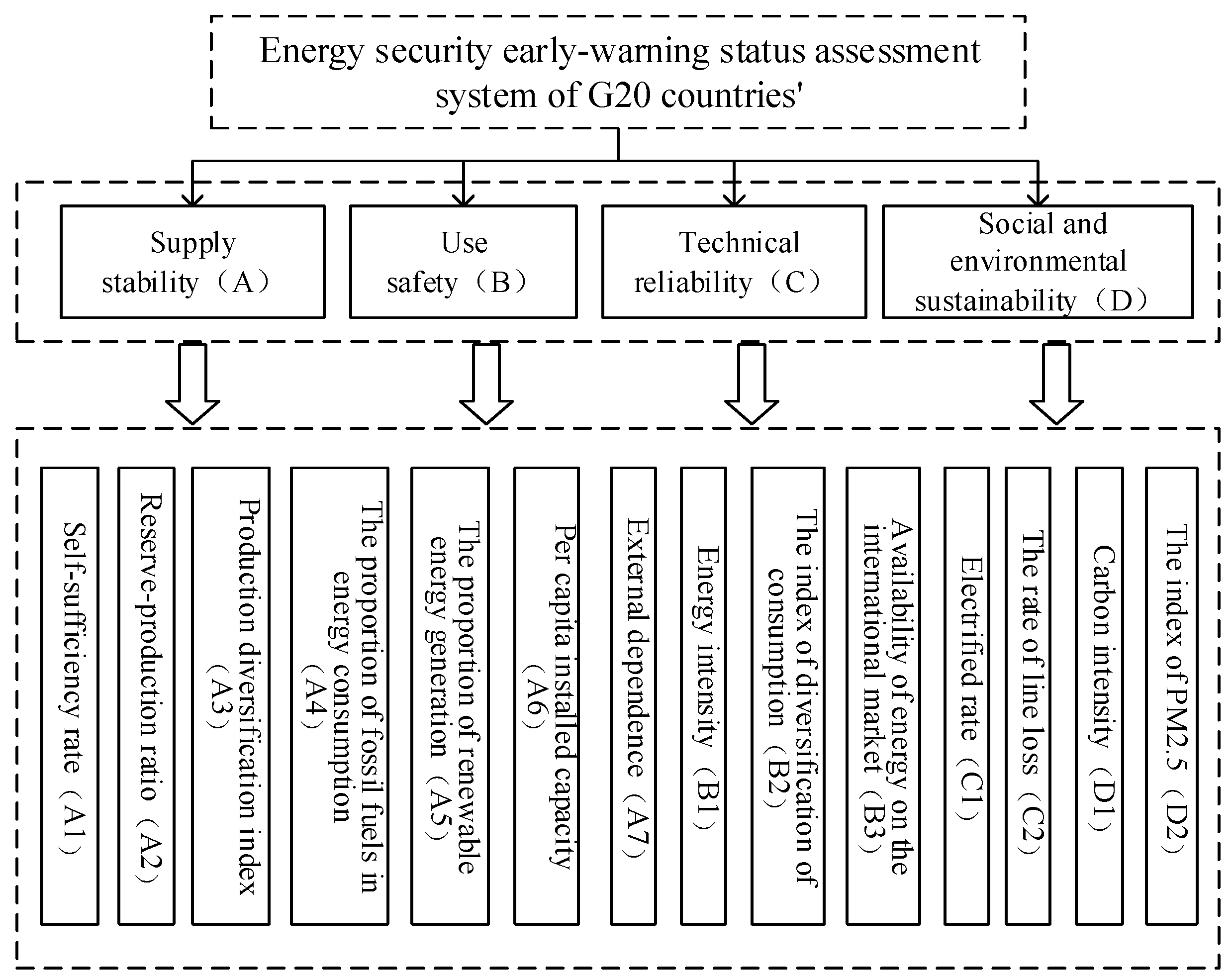
The framework covers four dimensions and 14 indicators, as shown in Figure 1. Supply stability includes energy reserves and energy production structure, and use security includes energy consumption structure and sustainable access to energy and payment capacity. In addition, technological and environmental impacts should be considered. Based on the frequency of use of each index and the universality of indicators among countries, 14 indicators in this paper were selected. While the frequency of line loss rate and per capita installed capacity is not as high as other indicators, the author believes that it is an important technical indicator to measure national energy security, so it is also included in the index system. The specific attributes and meanings of each indicator are shown in Table 2.
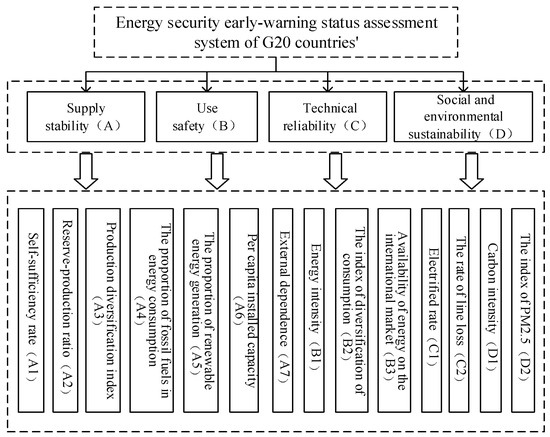
Figure 1.
Early-warning status assessment system of energy security.
Table 2.
The description of safety evaluation index.
4. Evaluation Process of Energy Security
This paper aims to construct a universal multidimensional evaluation system. The energy security index is aggregated from bottom-up calculations using “scores” (objective values) and “weights” (principal component analysis) to obtain a country’s overall ESI. After obtaining ESI of 19 countries, this paper analyzes the evolutionary mechanisms of countries and gives the swot matrix. Finally, taking China as an example for scenario analysis, it shows the changes in energy security and the contribution of key indicators.
4.1. Implementation Path of Evaluation Model
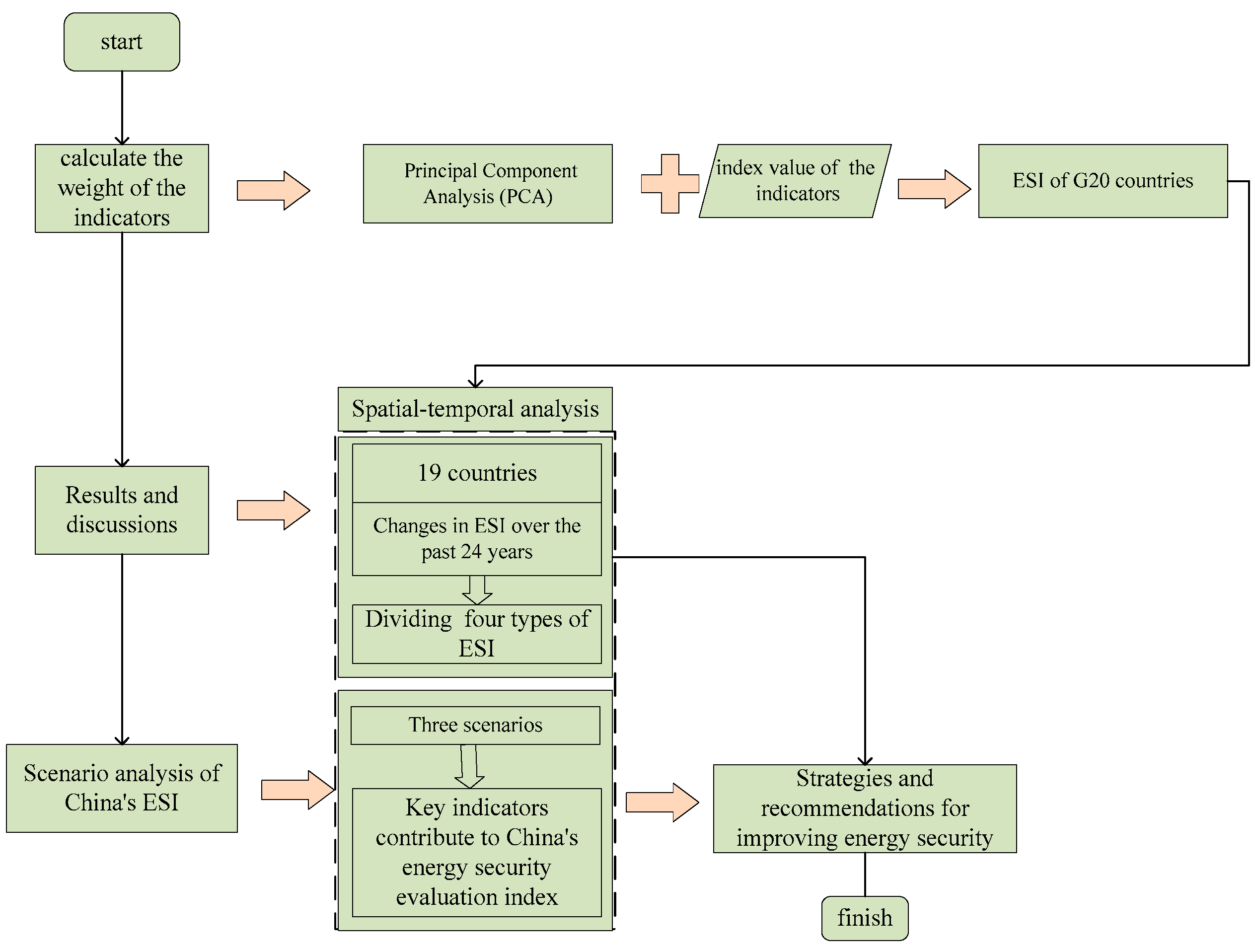
The overall research route of this paper is shown in Figure 2, which shows the research content and method of this paper.
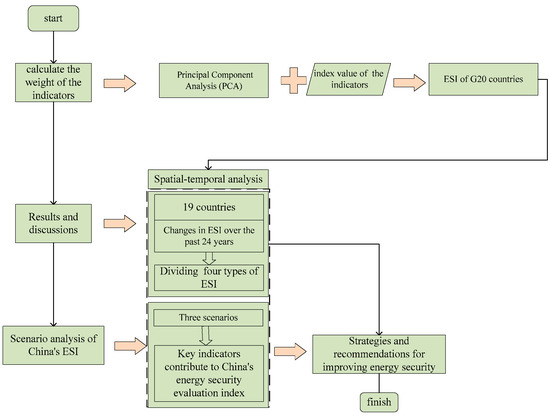
Figure 2.
Implementation path of evaluation model.
4.2. Principal Component Analysis (PCA)
PCA is a statistical tool used to reduce dimensions of multivariate dataset. It retains maximum informative value of the input data intact, while trying to reduce its dimensions. PCA summarizes the information that is dispersed in several dimensions into a decreased number of dimensions that are not correlated. It is a widely acceptable appropriate procedure for independent variable selection and by discarding redundant or highly correlated parameters. It identifies the variance within a huge dataset of correlated variables in terms of a small number of new pseudo variables called Principal Components. As the principal components are uncorrelated in nature, it indicates that they are representing the information of a different “statistical dimensions” in the dataset. The specific application steps are as follows:
- Calculate the mean vector of the samples in the sample data set and centralize the sample data, .
- Construct the covariance matrix of the data matrix V, the eigenvalue λi and the corresponding eigenvector wi are obtained by eigendecomposition of the matrix V, and the eigenvalue λi is arranged in descending order.
- According to the contribution rate, the first d eigenvalues and corresponding eigenvectors are taken as the basis of the subspace. Then, the d principal components to be extracted are .
- The original data is reconstructed from the extracted principal components .
5. Case Study
5.1. Results and Discussions
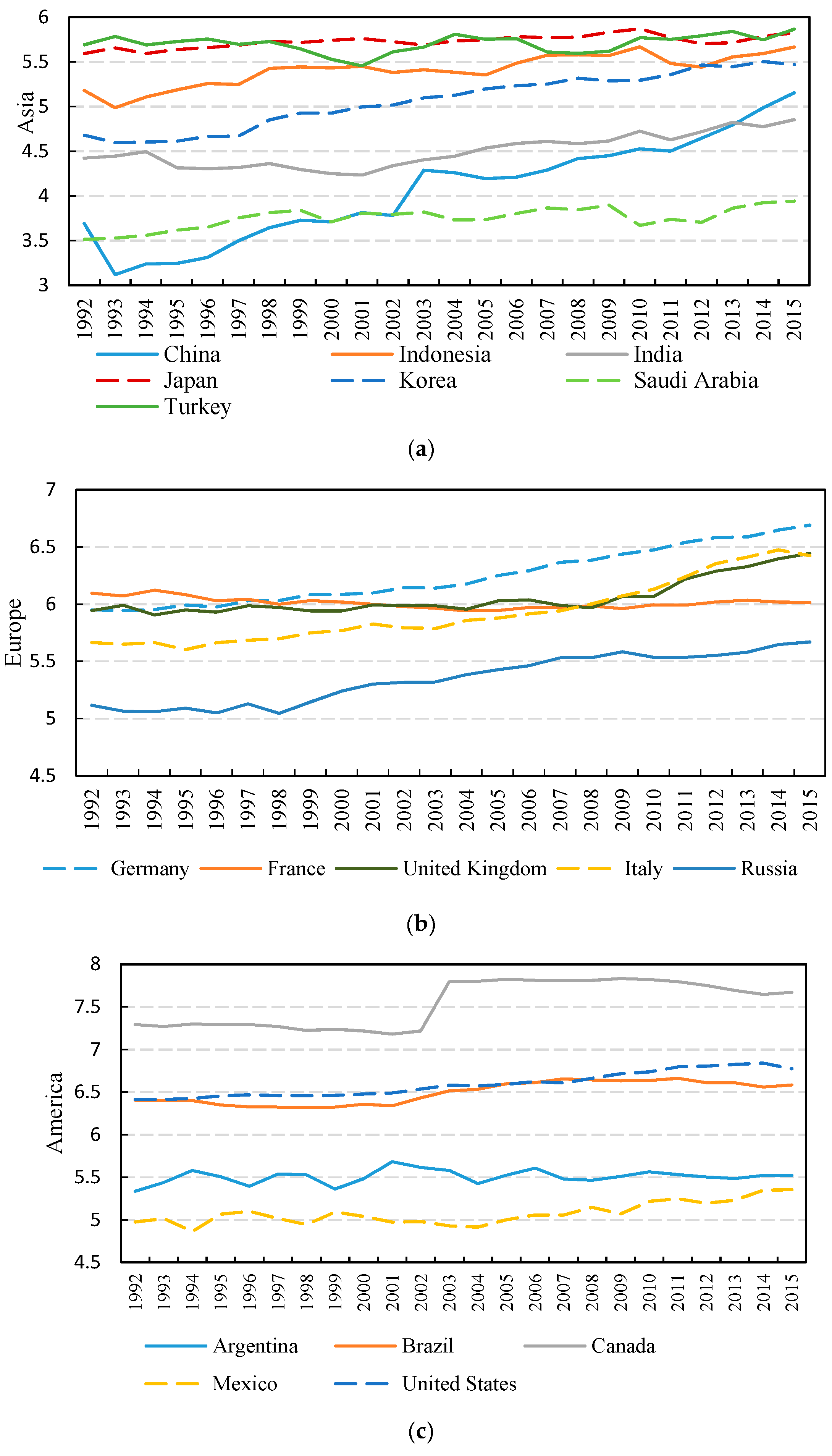
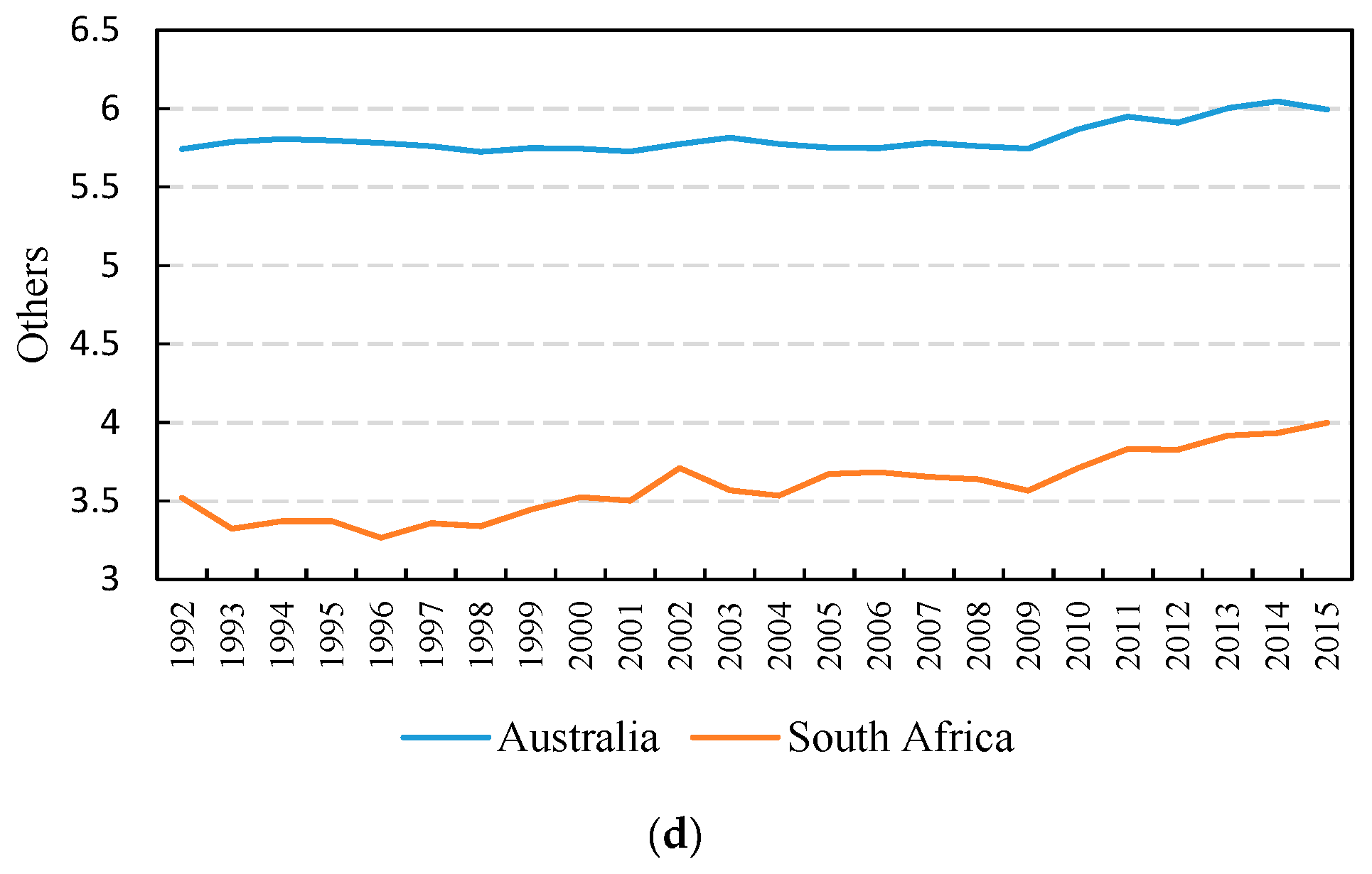
According to regional classification, the ESI of G20 countries from 1992 to 2015 are shown in Figure 3. On the whole, the ESI of most G20 countries was on the rise from 1992 to 2015. However, due to the differences in national conditions, the trend and magnitude of energy security changes are also different. Among them, the ESI in Asia and Europe fluctuates the most, while in America, South Africa, and Oceania, the energy security situation is relatively stable and the ESI increases slightly.
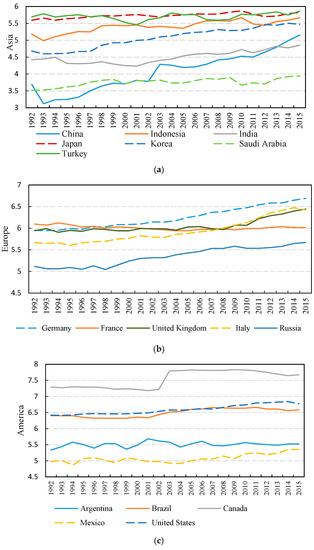
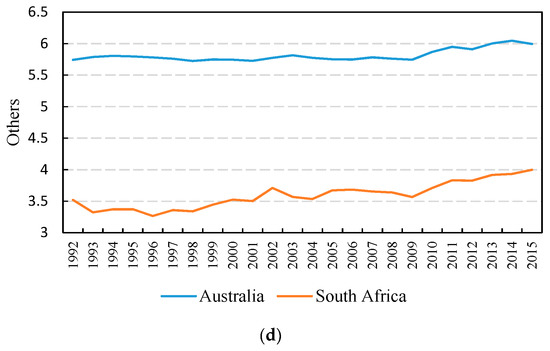
Figure 3.
(a) Evolution of the ESI of G20 countries in Asia from 1992 to 2015; (b) evolution of the ESI of G20 countries in Europe from 1992 to 2015; (c) evolution of the ESI of G20 countries in America from 1992 to 2015; and (d) evolution of the ESI of G20 countries in other countries from 1992 to 2015.
5.1.1. Spatial-Temporal Analysis and SWOT Matrix Analysis of Energy Security Evolution in G20 Countries
According to the historical score of each country, the score is divided into four ranges from low to high, as shown in Table 3, respectively high-risk type, low-risk type, slightly-safe type, and safe type.
Table 3.
The classification of the ESI of G20 Countries.
As can be seen from the Table 3, the safe countries are mainly distributed in developed regions such as Europe and America. High-risk type and low-risk type countries are mainly located in Africa and Asia. Among the G20 countries, most are slightly-safe type countries. It is worth noting that China has risen from a high-risk country in 1995 to a slightly-safe country in 2015, and the energy security situation continues to improve.
According to the variation trend of evaluation indicators in the past three years and the degree of similarity between them, this paper adopts k-means method for cluster analysis of 19 countries. According to the results, it can be divided into five categories. The first category is mainly developed countries, including Australia, Germany, France, Britain, Italy, Japan, Korea and the United States. The second category of countries have a single energy structure, including Saudi Arabia and South Africa. The third category is Brazil, the only developing country that is a safe-type country. The fourth category is Canada, which consistently leads other countries in energy security. The fifth category is mainly developing countries, including Argentina, China, Indonesia, India, Mexico, Russia, and Turkey. This paper takes the first, second and fifth categories as examples, and then use SWOT matrix to analyzes the strengths, weaknesses, opportunities, and threats of these countries, and gives relevant countermeasures, as shown in the Table 4, Table 5 and Table 6.
Table 4.
SWOT matrix analysis of countries in the first category.
Table 5.
SWOT matrix analysis of countries in the second category.
Table 6.
SWOT matrix analysis of countries in the fifth category.
5.1.2. Driving Factor Analysis
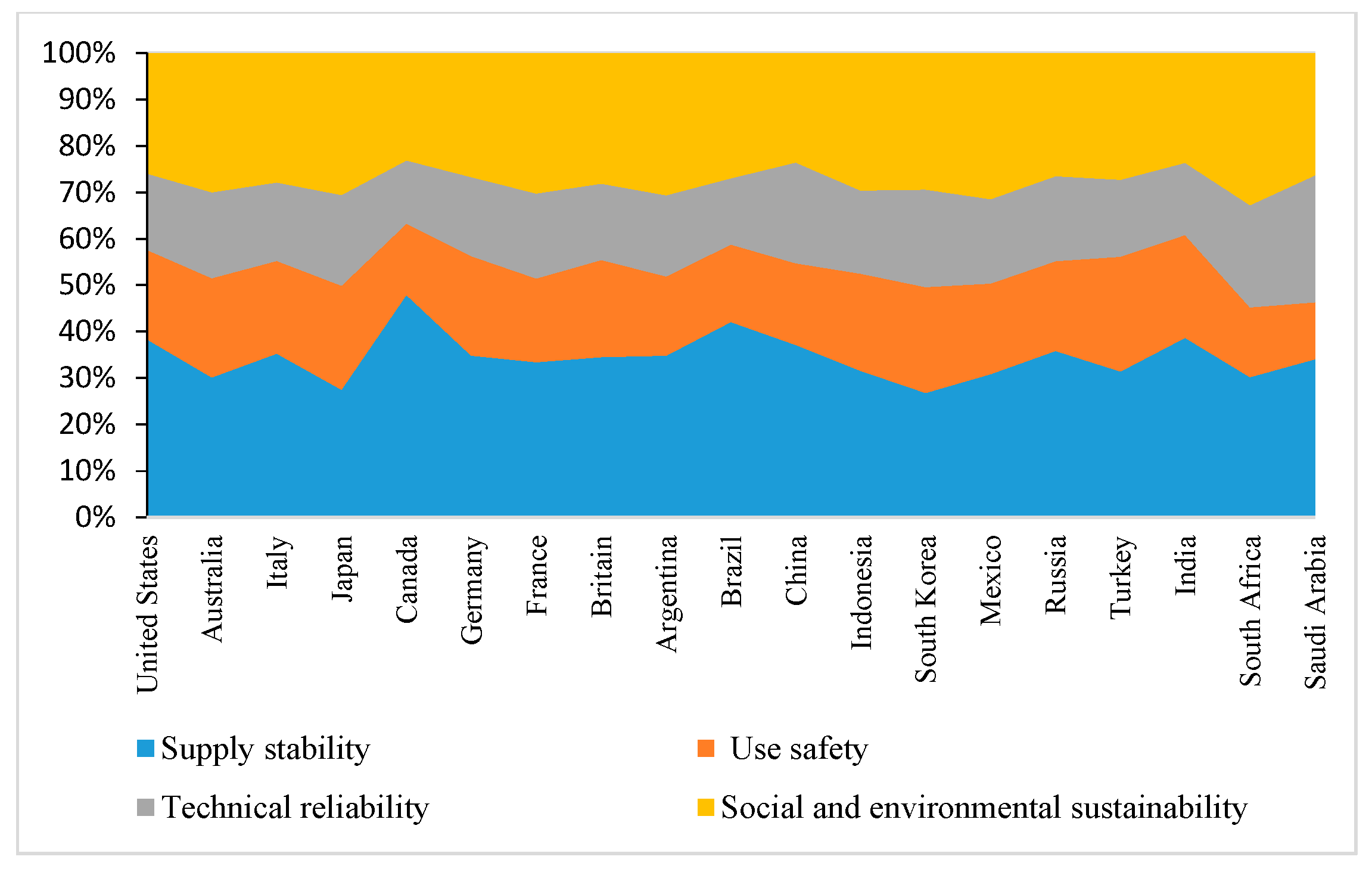
The influence of each indicator on the energy security of G20 countries in the past 24 years is analyzed through the change trend of historical data and the weight of each indicator. Figure 4 shows the contribution of the four dimensions of the 2015 index system to the energy security of each country. It can be seen from the figure that supply stability is still the mainstream driving factor, generally around 30%. Supply stability and social and environmental sustainability account for 60–70%, which are the main driving factors affecting energy security. Different countries have slightly different performance in these four dimensions. For example, Canada, Brazil, China, Russia, and India are typical supply-driven countries. The United States, Australia, Italy, France, and other developed countries are driven by social and environmental sustainability, and energy security mainly depends on the technological maturity and energy efficiency.
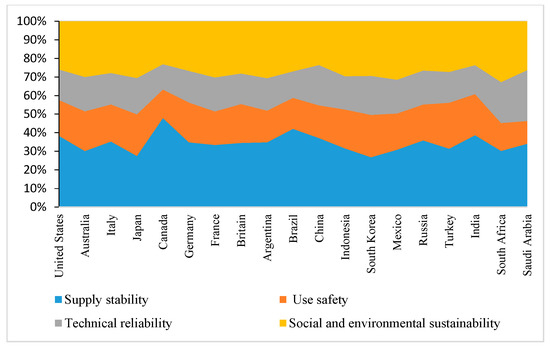
Figure 4.
The contribution of each dimension index to the safety in 2015.
5.2. Scenario Analysis of China’s ESI
5.2.1. The Key Indicators of China’s ESI
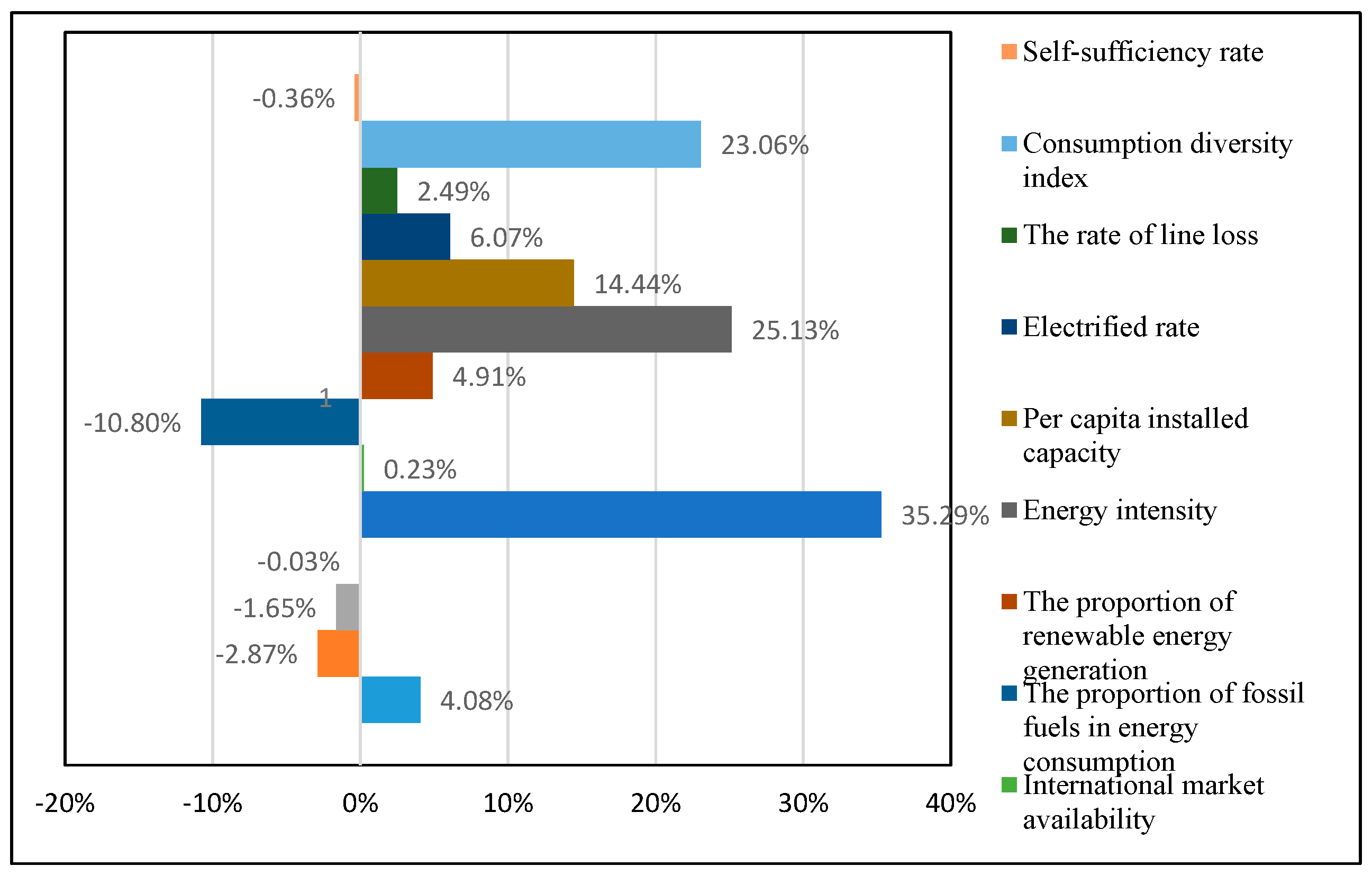
Taking China as an example, this paper demonstrates the key impact indicators of its energy security intensity and calculates the contribution rate of each index to China’s ESI growth, as shown in Figure 5 below. As can be seen from the above research, China’s ESI increased from 3.69 in 1992 to 5.15 in 2015. In the past 24 years, China’s ESI increased by 39.58 percent, far exceeding the growth rate of other G20 countries. It can be seen from Figure 5 that the biggest contribution to China’s ESI growth is carbon intensity, energy intensity, consumption diversity, and per capita installed capacity. The contribution rate to China’s ESI exceeded 10%, and the cumulative contribution reached 97.92%. In addition, the contribution rate of fossil energy consumption to China’s ESI growth rate reached −10.8%, which has become the biggest bottleneck that hinders China’s energy security development.
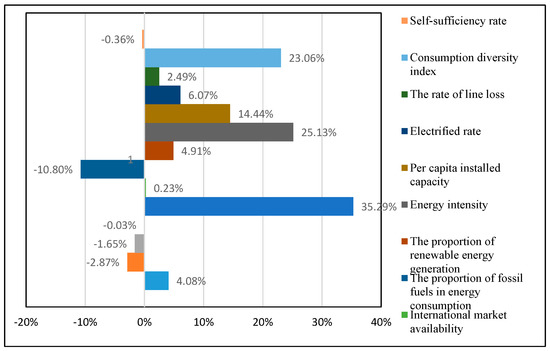
Figure 5.
The contribution of various indicators to China’s ESI growth.
5.2.2. Scenario Analysis Based on Key Indicators
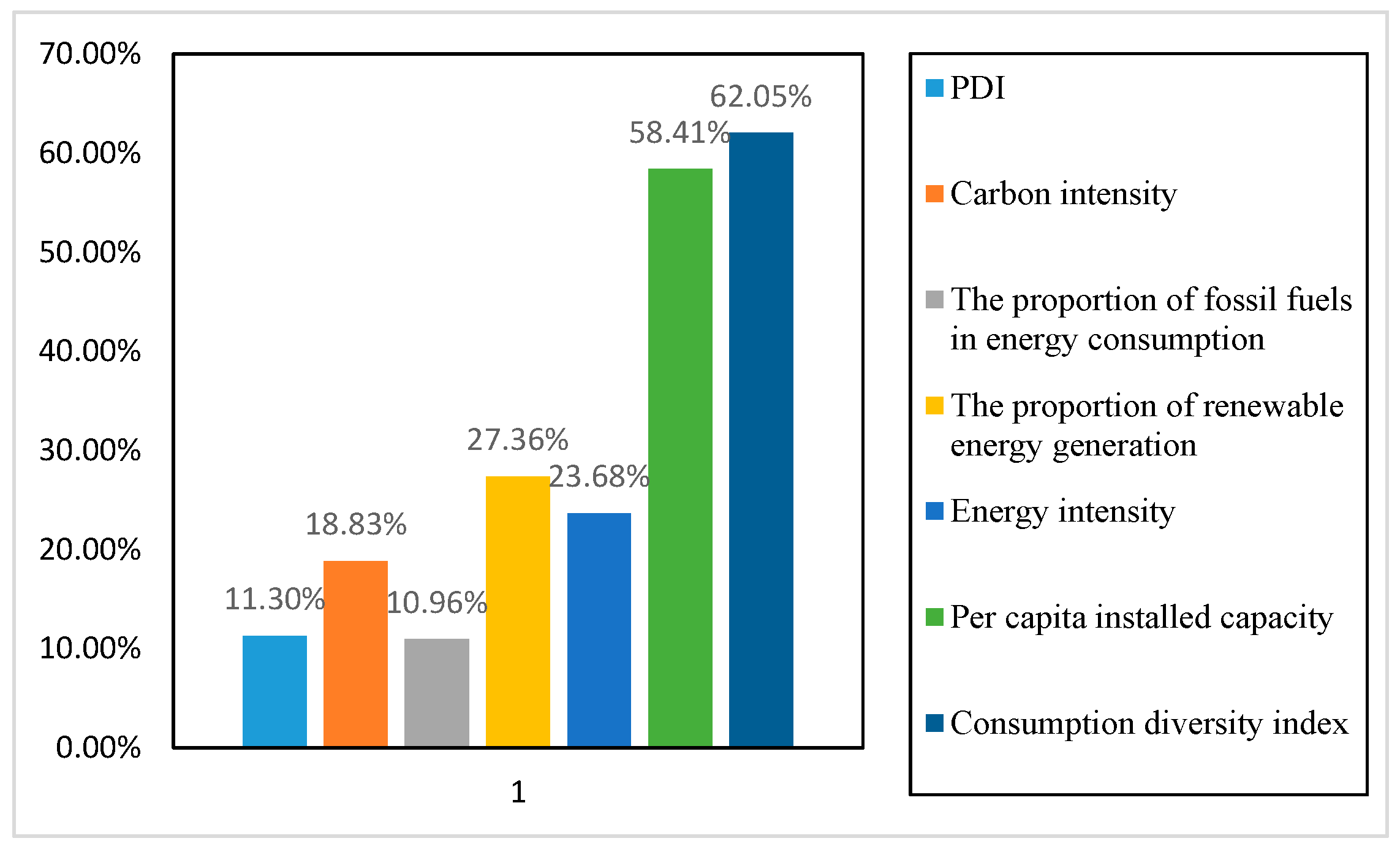
According to the growth trend of various indicators from 2010 to 2015 (as shown in Figure 6), this paper sets three scenarios for the development trend of each indicator in 2020, which are optimistic, neutral and pessimistic. The growth rates and energy security contributions of each indicator under different scenarios are shown in Table 7 and Table 8.
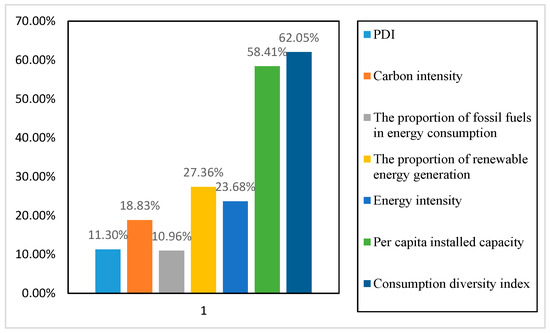
Figure 6.
Growth rate of key indicators of China’s energy security in 2015 (based on 2010).
Table 7.
Growth rate of key indicators in 2020 (based on 2015) in three scenarios (unit/%).
Table 8.
Energy security contribution of each index and ESI in 2020.
It can be seen that the contribution rate of energy consumption diversity index to the growth in 2020 will reach 31.9%, 24% and 16% respectively in three scenarios, which will become the most important driving factor for the improvement of energy security in China from 2016 to 2020. Carbon intensity, energy intensity, the proportion of renewable energy power generation capacity and the per capita installed capacity also contribute significantly to the improvement. Production diversity index and the ratio of fossil energy consumption to energy security have little impact, which is caused by the low growth rate of these two indicators. However, China’s current national conditions also make it difficult for these two indicators to achieve breakthrough development in 2016–2020.
5.2.3. Proposals for China to Improve Energy Security
Based on the historical data of key indicators and comparative analysis among G20 countries, the following suggestions are put forward for China’s future energy security development strategies:
(1) Increase the proportion of natural gas in fossil energy consumption. This is an important indicator affecting China’s energy security. Since the increase in the share of natural gas in fossil energy consumption will directly promote the diversification of China’s energy consumption and effectively increase China’s carbon intensity level, this improvement will significantly improve China’s energy security level in the future; and (2) continue to expand the installed power generation capacity in China, especially to increase the proportion of renewable energy in the newly added power generation capacity. This will directly promote China’s per capita installed capacity and the proportion of renewable energy generation, which is also an important indicators affecting China’s energy security level. In addition, the increase in the proportion of renewable energy generation will simultaneously promote the diversification of China’s energy consumption and the increase of carbon intensity in the future, thereby improving the energy security level of China in the future; (3) look to the international energy market and take advantage of the “One Belt And One Road” strategic opportunity. China urgently needs to participate in international cooperation on energy supply security, establish friendly dialogue mechanisms with the world’s energy exporters and world powers, and diversify its energy supply. China needs to accelerate the exploration and development of overseas energy and resources to raise China’s position in the global energy industry value chain.
6. Conclusions
Based on the data of energy supply stability, use safety, technical reliability, and environmental sustainability of 19 G20 countries from 1992 to 2015, this paper calculates the ESI of 19 countries. The evolution characteristics, formation mechanism and policy recommendations of energy security pattern of G20 countries are systematically analyzed. At the same time, the change of China’s ESI and the contribution rate of key indexes to it under three scenarios are analyzed. The results show that:
- (1)
- On the whole, the energy security index of G20 countries shows an increasing trend, and the number of dangerous countries is decreasing, among which, China has increased from dangerous countries to generally safe countries.
- (2)
- From the geographical location of G20 countries, the security countries are mainly concentrated in the Americas and European developed countries, and the dangerous countries are mainly concentrated in Asia, Africa, and Latin America. Environmental sustainability and use safety dimensions are the main factors affecting dangerous countries. Improving energy efficiency and technical reliability and increasing clean energy installation are the keys to the trend change of energy security pattern in these countries.
- (3)
- From the point of view of driving mechanism, seven indicators, such as production diversity index, carbon intensity, energy intensity, fossil energy consumption ratio, renewable energy generation installation ratio, per capita installation and consumption diversity index, are the key impact indicators.
- (4)
- As far as China is concerned, the energy security index has continued to rise since 1995. At present, China is a generally safe country, which reflects the continuous optimization of the energy structure and the improvement of the energy situation in China. Constantly improve the relationship between energy system and economic, demographic, and environmental systems.
Energy security is a core field in the study of sustainable development of society, economy and ecological environment in the world at present. The members of the Group of 20 (G-20) are broad and representative. The Group’s GDP accounts for 90% of the global economy and 80% of the world’s trade. Therefore, the energy security situation of G20 countries represents the pattern of energy security in the world to a certain extent. In the face of the changes in the pattern of world energy security, we should recognize the status of national energy security and judge the possible changes in the international energy pattern. It has become an important basis and reference for countries to plan energy strategy, diplomatic strategy, development strategy, and security strategy with forward-looking strategic thinking.
Author Contributions
J.L. contributed to the conception and design. L.W. contributed to the computation and English editing. T.L. and S.Z. contributed to the analysis of calculation results and English checking. All of the authors drafted and revised the manuscript together and approved its final publication.
Funding
This research was funded by the Science and Technology Project of SGCC “Research on lean investment optimization method based on benefit analysis of the whole process of power grid”.
Acknowledgments
This work has been supported by the Science and Technology Project of SGCC “Research on lean investment optimization method based on benefit analysis of the whole process of power grid” and the “Fundamental Research Funds for the Central Universities (2018ZD14)”.
Conflicts of Interest
The authors declare no conflict of interest.
References
- International Energy Agency (IEA). Energy Technology Policy; OECD/IEA: Paris, France, 1985; p. 29. [Google Scholar]
- Yergin, D. Energy security and markets. In Energy and Security: Toward a New Foreign Policy Strategy; Kalicki, J.H., Goldwyn, D.L., Eds.; Woodrow Wilson Press: Washington, DC, USA, 2005. [Google Scholar]
- Asia Pacific Energy Research Centre (APERC). A Quest for Energy Security in the 21st Century. 2007. Available online: http://aperc.ieej.or.jp/file/2010/9/26/APL,RC_2007_A_Quest_for Energy Security.Pdf (accessed on 8 March 2019).
- Ang, B.W.; Choong, W.L.; Ng, T.S. A framework for evaluating Singapore’s energy security. Appl. Energy 2015, 148, 314–325. [Google Scholar] [CrossRef]
- Narula, K.; Reddy, B.S. A SES (sustainable energy security) index for developing countries. Energy 2016, 94, 326–343. [Google Scholar] [CrossRef]
- Burgherr, P.; Hirschberg, S. Comparative risk assessment of severe accidents in the energy sector. Energy Policy 2014, 74, S45–S56. [Google Scholar] [CrossRef]
- Yao, L.; Chang, Y. Energy security in China: A quantitative analysis and policy implications. Energy Policy 2014, 67, 595–604. [Google Scholar] [CrossRef]
- Sovacool, B.K. Evaluating energy security in the Asia pacific: Towards a more comprehensive approach. Energy Policy 2011, 39, 7472–7479. [Google Scholar] [CrossRef]
- Li, Y.; Shi, X.; Yao, L. Evaluating energy security of resource-poor economies: A modified principle component analysis approach. Energy Econ. 2016, 58, 211–221. [Google Scholar] [CrossRef]
- Sovacool, B.K.; Mukherjee, I.; Drupady, I.M.; D’Agostino, A.L. Evaluating energy security performance from 1990 to 2010 for eighteen countries. Energy 2011, 36, 5846–5853. [Google Scholar] [CrossRef]
- Cho, S.; Kim, J. Feasibility and impact analysis of a renewable energy source (RES)-based energy system in Korea. Energy 2015, 85, 317–328. [Google Scholar] [CrossRef]
- Portugal-Pereira, J.; Esteban, M. Implications of paradigm shift in Japan’s electricity security of supply: A multi-dimensional indicator assessment. Appl. Energy 2014, 123, 424–434. [Google Scholar] [CrossRef]
- Vivoda, V. Evaluating energy security in the Asia-Pacific region: A novel methodological approach. Energy Policy 2010, 38, 5258–5263. [Google Scholar] [CrossRef]
- Sáfián, F. Modelling the Hungarian energy system—The first step towards sustainable energy planning. Energy 2014, 69, 58–66. [Google Scholar] [CrossRef]
- Geng, J.B.; Ji, Q. Multi-perspective analysis of China’s energy supply security. Energy 2014, 64, 541–550. [Google Scholar] [CrossRef]
- Tonn, B.; Healy, K.C.; Gibson, A.; Ashish, A.; Cody, P.; Beres, D.; Lulla, S.; Mazur, J.; Ritter, A.J. Power from Perspective: Potential future United States energy portfolios. Energy Policy 2009, 37, 1432–1443. [Google Scholar] [CrossRef]
- Laldjebaev, M.; Morreale, S.J.; Sovacool, B.K.; Kassam, K.A. Rethinking energy security and services in practice: National vulnerability and three energy pathways in Tajikistan. Energy Policy 2018, 114, 39–50. [Google Scholar] [CrossRef]
- Radovanović, M.; Filipović, S.; Pavlović, D. Energy security measurement—A sustainable approach. Renew. Sustain. Energy Rev. 2016, 68, 1020–1032. [Google Scholar] [CrossRef]
- Eshita, G. Oil vulnerability index of oil-importing countries. Energy Policy 2008, 36, 1195–1211. [Google Scholar] [CrossRef]
- Bompard, E.; Carpignano, A.; Erriquez, M.; Grosso, D.; Pession, M.; Profumo, F. National energy security assessment in a geopolitical perspective. Energy 2017, 130, 144–154. [Google Scholar] [CrossRef]
- Badea, A.C.; Tarantola, S.; Bolado, R. Composite indicators for security of energy supply using ordered weighted averaging. Reliab. Eng. Syst. Saf. 2011, 96, 651–662. [Google Scholar] [CrossRef]
© 2019 by the authors. Licensee MDPI, Basel, Switzerland. This article is an open access article distributed under the terms and conditions of the Creative Commons Attribution (CC BY) license (http://creativecommons.org/licenses/by/4.0/).