


Abstract
Green design pursues maximum economic efficiency and minimum environmental impact. Green design of mechanical equipment can ensure environmentally friendly design and manufacturing. A rust-off machine is a crucial piece of equipment in remanufacturing. As attention to remanufacturing grows, the demand for rust-off machines is gradually increasing, but their green characteristics have not attracted attention. There is a need to carry out a green design for a rust-off machine that can improve its economy and environmental friendliness. In response to this need, in this study, a green design method for a rust-off machine was developed, combining the strengths of quality function deployment for environment (QFDE) and function analysis. In this method, functional analysis was used to determine the mapping relationship between functions and components. QFDE was used not only to determine the relationship between customer requirements and engineering metrics, but also to establish the relationship between engineering metrics and components and to obtain optimal structural solutions. A green design of a steel plate surface rust-off machine was taken as a case study. The results show that this method can achieve a win-win design that achieves maximum economic benefit and environmental protection.
1. Introduction
With the worsening of global environmental problems, there is a growing need for a way to solve the contradictory problems between the resource environment and industrialization, and hence green design has emerged [1,2]. Green design reduces environmental pollution and resource consumption as much as possible while satisfying human life, work, and social development [3]. The green design of mechanical equipment conforms to the trend of environmental protection development, and promotes industrial innovation for the long-term development of enterprises, as well as ecological environment protection [4,5].
The green design of mechanical equipment includes the whole life cycles of products, from conceptual design to manufacturing, use, recycling, reuse, and treatment [6,7]. For research in conceptual design, Zhang et al. [8] realized the updating of knowledge in the process of the green design of mechanical products through green design knowledge rule matching. Researchers can better match the latest knowledge of green design in conceptual design. Similarly, Xin et al. [9] put forward the concept of green features and established an environmental information expression model for mechanical and electrical products based on green features. At the same time, they also emphasized the research on the green production of mechanical equipment. Wang et al. [10] carried out multi-objective optimization of the grinding process for AISI 1045 steel from a worker health and environmental perspective to comply with green manufacturing. In addition, some researchers have studied the use, recycling and disposal process in the green design of mechanical equipment [11]. Ajukumar et al. [12] proposed an integrated approach to evaluate the green maintenance aspects of mechanical systems at the design stage. Smith et al. [13] proposed a recursive approach based on heuristic disassembly rules, which can realize the best solutions for green design under the special situation that only a few components can be recovered and recycled from a given product. To facilitate the study of green design, some researchers have proposed modularity to assist in the green design of products [14]. Agrawal et al. [15] studied the role of modular scalability on green design, and showed that modular scalability can make products more environmentally friendly. Previous conceptual design research includes that of Zhang et al. [16], who built a green innovative design framework through functional analysis. This method can meet customers’ needs in the early concept stage. Further, Younesi et al. [17] used the QFDE method to design sustainable products to reduce costs and prevent environmental problems. QFDE can realize the integration of the customer’s voice, ambient voice, and quality characteristics.
The aforementioned studies provide a useful reference for a green design method for rust-off machines. Rust-off machines can remove rust on metal surfaces. They are a crucial piece of equipment for the cleaning process in remanufacturing [18]. With the rising cost of resources and the improvement of environmental awareness, remanufacturing has gained the attention of governments and enterprises [19,20]. Cleaning is a critical step in remanufacturing, and has high work intensity but also high pollution. Although rust-off machines have become important due to governments’ and enterprises’ focus on remanufacturing, their green characteristics have not attracted people’s attention. There is a need to develop a green design for rust-off machines. This can relieve the pressure of environmental pollution from the sources of manufacture and use, which would lower costs for businesses. Further, it would also provide health and safety protections for staff using this machinery. In response to this need, in this study, a green design method for rust-off machines was developed, combining the strengths of QFDE and function analysis. The proposed approach benefits from the fact that functional analysis is utilized to establish the mapping relationship between functions and components. QFDE is used not only to obtain customer requirements related to environmental characteristics but also to establish the relationship between customer requirements and engineering metrics and to obtain optimal structural solutions. Following the presentation of the proposed method, a green design method for a steel plate surface rust-off machine is forwarded as a case study.
2. Methodology
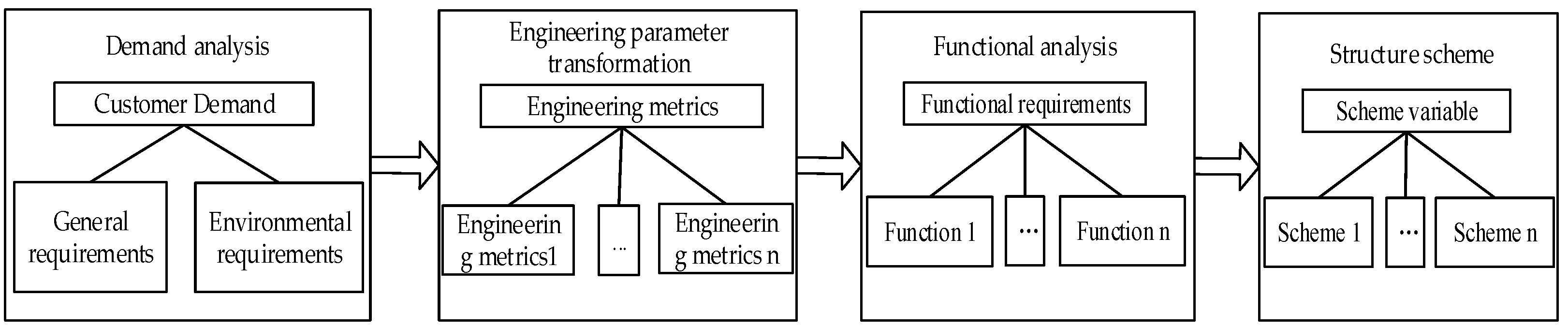
A green design process is divided into four stages: customer requirements analysis, engineering parameter transformation, functional analysis, and structural design [21]. Figure 1 shows a framework of a green design process for rust-off machines.
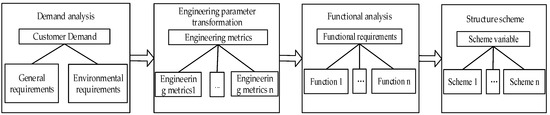
Figure 1.
Framework of a green design process for rust-off machines.
2.1. Demand Analysis for Rust-Off Machines
To create a rust-off machine that is environmentally friendly, it is not only required to meet functional, physical, and quality standards but also to incorporate environmental considerations. Customer requirements were obtained through questionnaire surveys, combined with the characteristics of QFDE and green design, and the affinity diagram method was used to divide the total customer requirements. Customer requirements with similar meanings were grouped to form a systematic and hierarchical customer demand summary. Therefore, total customer requirements in this paper can be divided into general and environmental requirements. General requirements were three main requirements, such as functionality, reliability, and economy. Environmental requirements were mainly in the form of low environmental pollution, low noise, and good remanufacturing performance. Table 1 shows the general and environmental requirements for a rust-off machine. The left side of Table 1 shows the total customer requirements, mainly including the four major customer requirements of functionality, reliability, economy, and environmental performance. On the right side of Table 1, under each large requirement, are several specific customer requirements.

Table 1.
Customer requirements.
2.2. Engineering Parameter Transformation for Rust-Off Machines
Designers translated the customer requirements into engineering metrics. The structure of a rust-off machine is complex; there were many engineering metrics associated with customer requirements, and those closely related to customer requirements were selected. Designers derived and refined a set of engineering metrics that can be used in practice by comparing and studying the actual situation of green design development. Customer requirements of the rust-off machine were converted into engineering metrics, as shown in Table 2. The contents of the first two columns of Table 2 are the contents of Table 1. The third column of Table 2 shows the engineering metrics corresponding to specific customer requirements.
Table 2.
Engineering metrics.
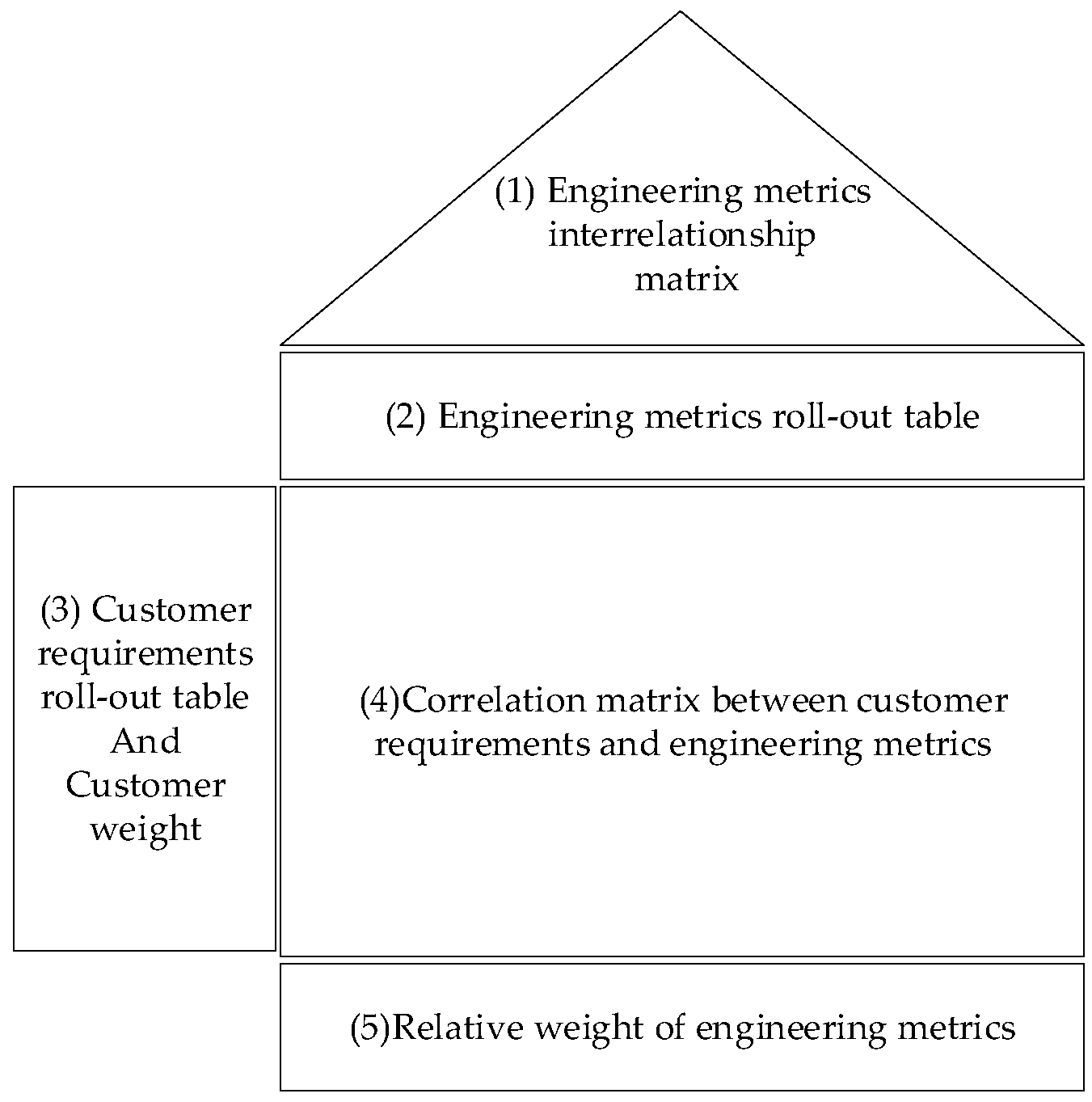
Once customer needs and engineering metrics were known, we further elaborated on the relationships between them. The house of quality can directly reflect the relationship between customer requirements and engineering metrics by constructing a matrix [22]. Figure 2 shows the house of quality for the rust-off machine.
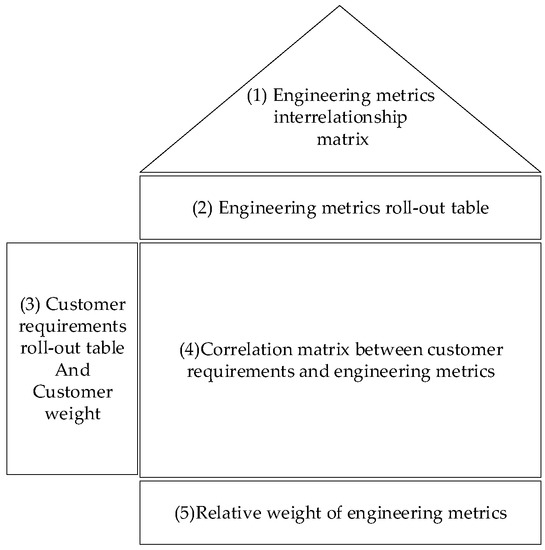
Figure 2.
House of quality for the rust-off machine.
- (1)
- Engineering metrics interrelationship matrix, denoted by P; Pj,k represents the correlation coefficient between the jth engineering metric and kth engineering metric, with a smaller coefficient indicating a weaker relationship.
- (2)
- Engineering metrics roll-out table consists mainly of engineering metrics such as wear resistance, ease of reprocessing, and ease of recycling, with ECj denoting the jth engineering metric.
- (3)
- The customer requirements roll-out table, which mainly includes environmental friendliness, ease of use, safe and reliability, etc., is represented by CRi for the ith customer demand. Customer weight was assigned to customer requirements using the Likert scale method.
- (4)
- Correlation matrix between customer requirements and engineering metrics, denoted by A. Ai,j represents the correlation between the ith customer requirement and jth engineering metric. The higher the value, the higher the correlation.
- (5)
- The relative weight of engineering metrics was obtained by multiplying the importance with a matrix of correlations between customer requirements and engineering metrics.
2.3. Function Analysis for Rust-Off Machines
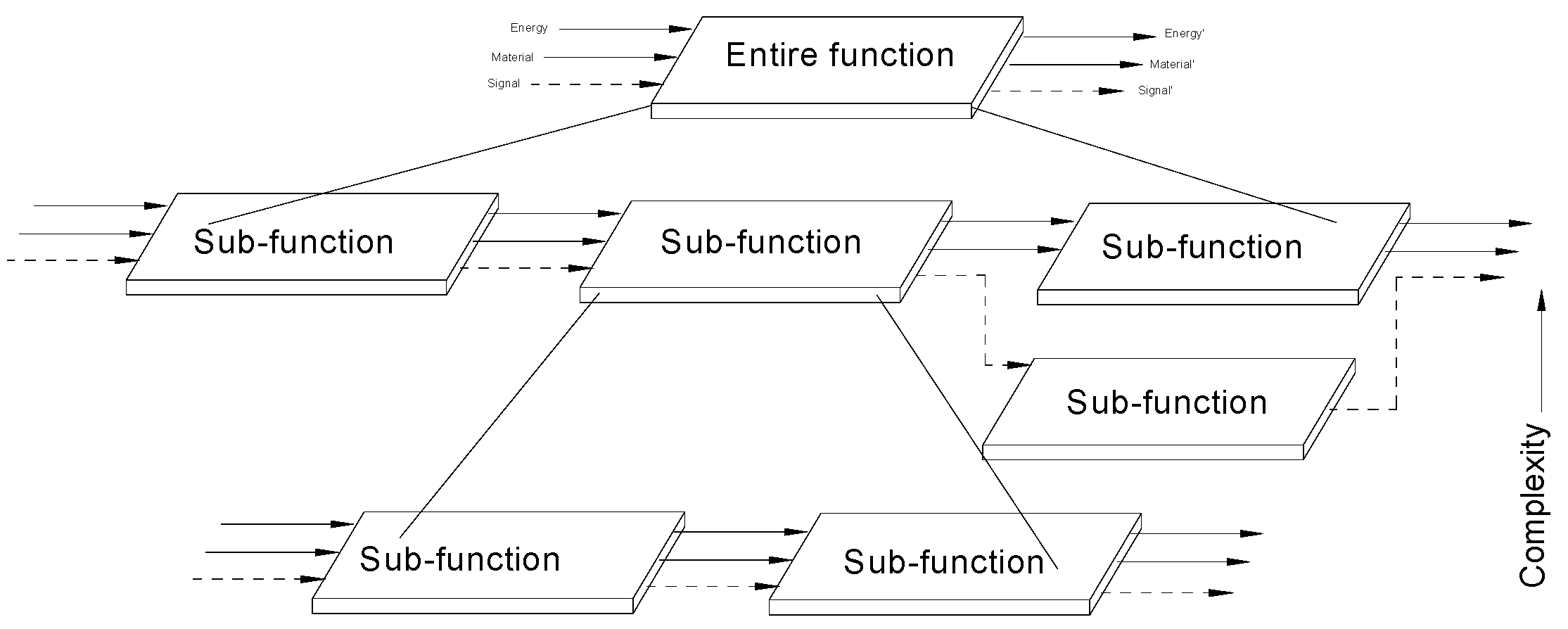
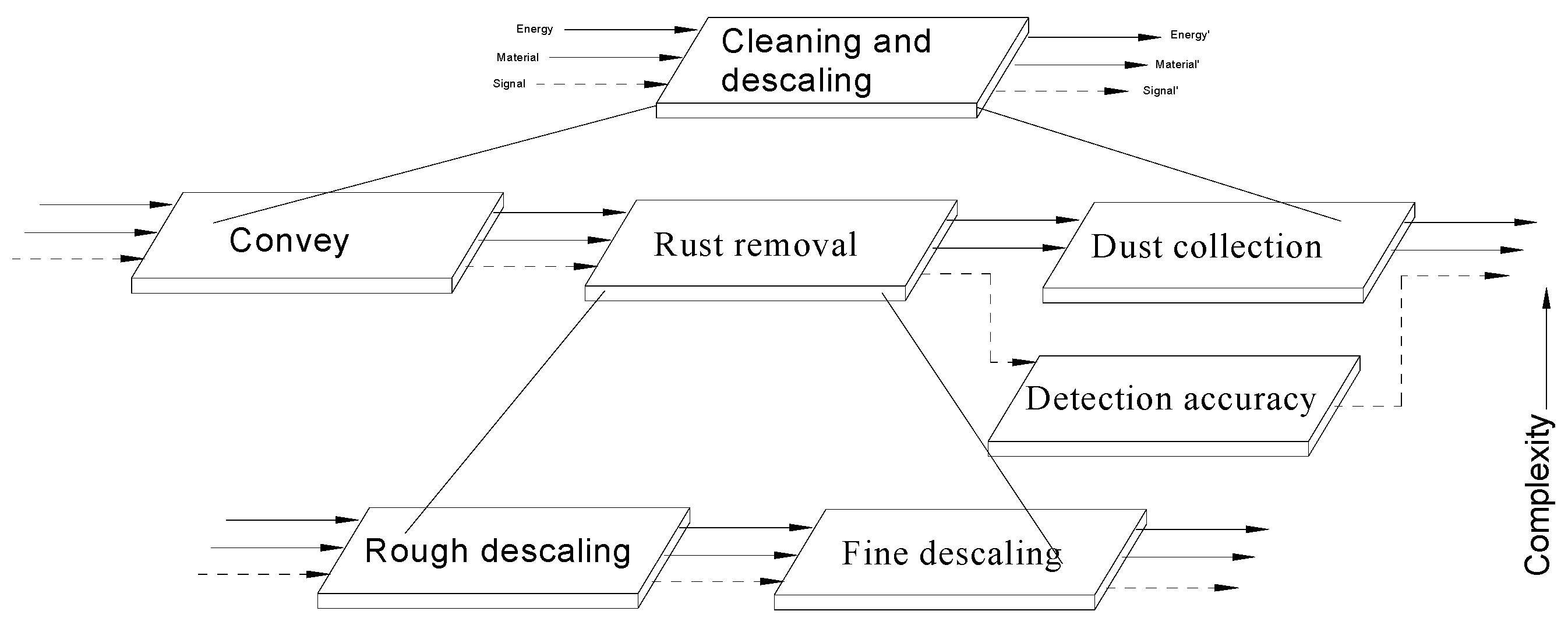
The entire function of a rust-off machine is usually complex, so it is challenging to design the equipment directly. The functional analysis method can divide the entire function into several sub-functions, as shown in Figure 3. Then, components of rust-off machines are obtained through function tree analysis.
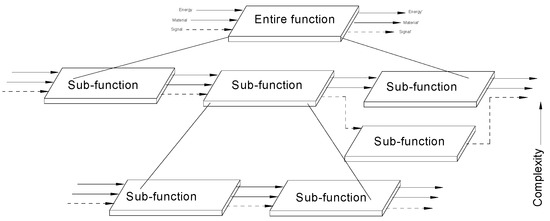
Figure 3.
Functional analysis for rust-off machines.
2.4. Structure Scheme for Rust-Off Machines
QFDE is a green design method that translates the needs of the customer and the environment at multiple levels [23]. The difference between QFDE and QFD (Quality Function Deployment) is the integration of environmental factors into customer requirements and engineering metrics [24]. A green design based on QFDE has the following operation process:
Step 1. Build the house of quality for customer requirements and engineering metrics, and obtain ‘relative weights’ for engineering metrics. Among them, environmental factors are included in customer requirements and engineering metrics. In the house of quality, the score is obtained by multiplying the matrix of customer requirements and engineering metrics and the customer weight, and the ‘relative weight’ is obtained from the score/total score.
Step 2. Build the matrix of engineering metrics and parts, and calculate the relative weight of parts. The calculation of the relative weight is the same as in the first step. The parts of rust-off machines are obtained by analyzing the functional requirements of rust-off machines using the function tree. The critical parts of rust-off machines are the top three parts with the relative weight.
Step 3. Calculate the improvement efficiency of engineering metrics. Build the QFDE Phase III for mechanical equipment. The matrix of engineering metrics and components corresponds to the matrix in step 2. The engineering metrics improvement rate is expressed by Equation (1):
where K is the component’s serial number, and denotes the serial number of the engineering metrics. indicates the relationship strength of the th component corresponding to the jth engineering metric, and represents the improvement rate of the kth component corresponding to the jth engineering metric. If , this indicates that the engineering metrics have an improvement rate, while if , this indicates that it has an impossible improvement.
Step 4. Calculate the improvement effect and improvement rate of customer requirements. Build the fourth stage QFDE table for mechanical equipment. The matrix of customer demand and engineering metrics in the table is consistent with the house of quality and includes the improvement rate of engineering metrics in the third step. The improvement rate for customer requirements is expressed by Equation (2):
where I is the serial number of the customer requirements, and J is the serial number of the engineering metrics. indicates the relationship strength of the ith customer requirement corresponding to the jth engineering metric. represents the improvement effect of the ith customer demand, which is obtained by multiplying and the customer weight.
The relative weights of engineering metrics are first obtained by constructing the house of quality for customer requirements and engineering metrics. Then, a matrix of engineering metrics and parts is built to calculate the relative weights of parts. The fourth stage of the QFDE calculates the improvement effect and improvement rate of customer requirements. The critical parts of the equipment are then optimized according to the second stage of QFDE. The final structural solution consists of the conclusions obtained in the four phases of the QFDE.
When the above design steps are completed, we can obtain the structural scheme of the rust-off machine.
3. Case Study
A steel plate rust-off machine is a typical rust-off machine. In this study, in response to the low efficiency and high work intensity in rust removal, and considering green factors, a steel plate rust-off machine was designed.
3.1. Demand Analysis for the Steel Plate Rust-Off Machine
For the design requirements of steel plate rust-off machines, it is not only necessary to meet customers’ needs but also to satisfy remanufacturers’ needs. Combined with the characteristics of steel plate rust-off machines, these requirements were divided into conventional requirements and environmental requirements. Table 3 shows the general and environmental requirements of the designed steel plate rust-off machine.
Table 3.
General and environmental requirements of the steel plate rust-off machine.
3.2. Engineering Parameter Transformation for the Steel Plate Rust-Off Machine
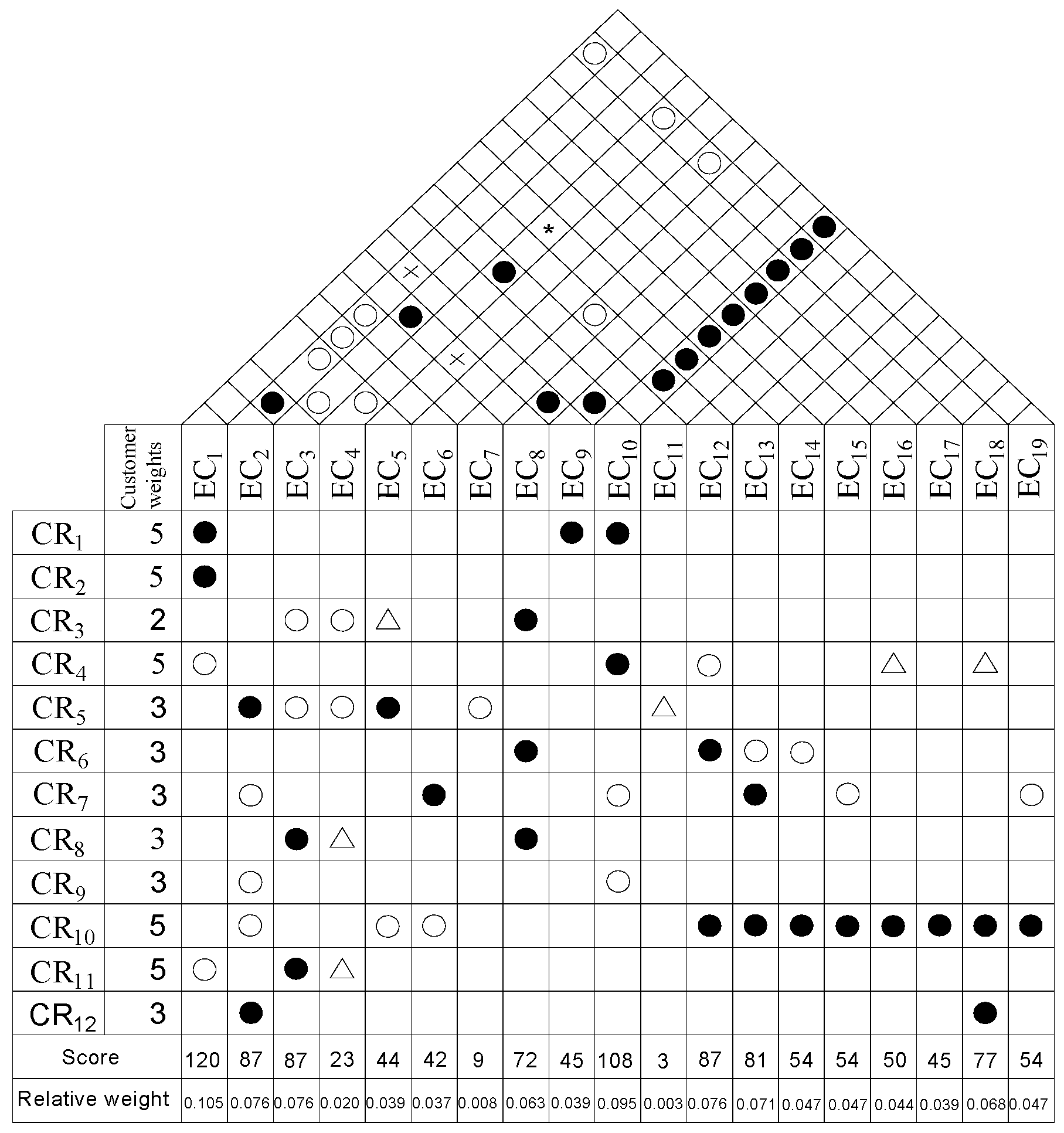
Steel plate rust-off machines have a complicated structure, and only engineering metrics most directly related to customer requirements were selected. The table of engineering metrics for steel plate rust-off machines is shown in Table 4. The QFDE method was used to construct the house of quality for rust-off machines, as shown in Figure 4 [25]. The relational strength between customer requirements and engineering metrics and the relational strength between engineering metrics is shown in Table 5. The most important engineering metrics were the automation level, reliability, mechanical vibration, cost, ease of recycling, and ease of reassembling.
Table 4.
Engineering metrics for the steel plate rust-off machine.
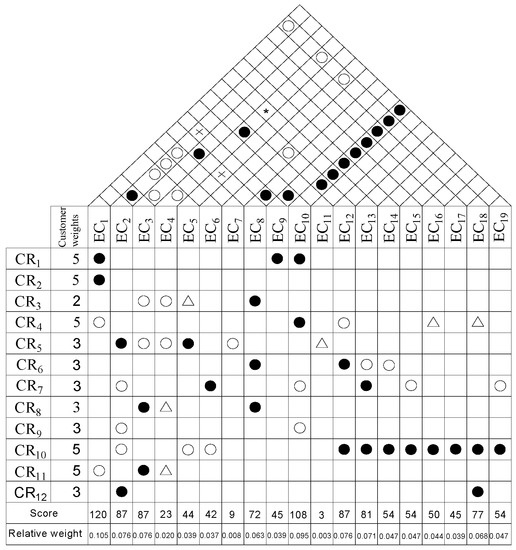
Figure 4.
House of quality for the steel plate rust-off machine.
Table 5.
Relational strength score comparison table.
3.3. Function Analysis for the Steel Plate Rust-Off Machine
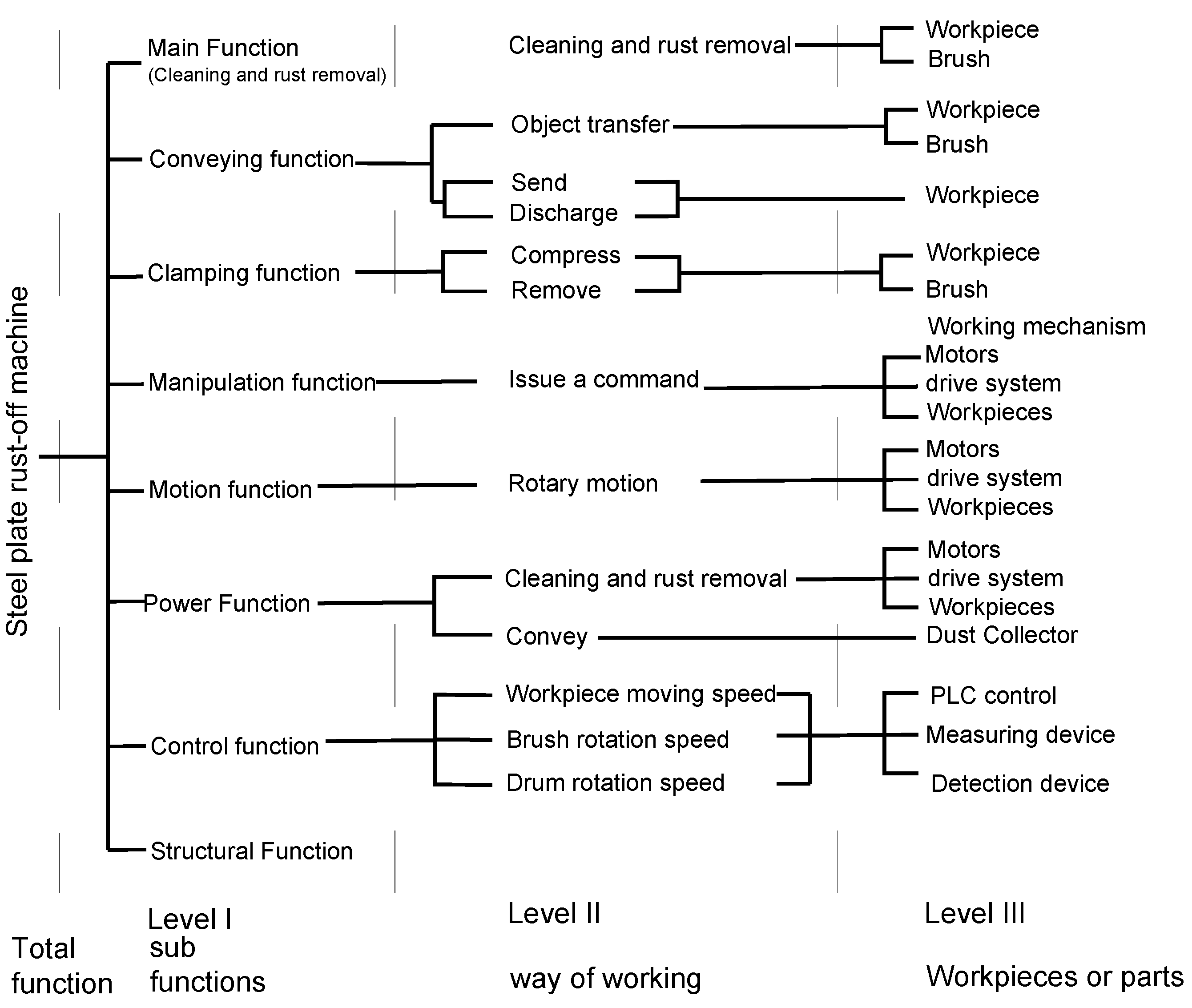
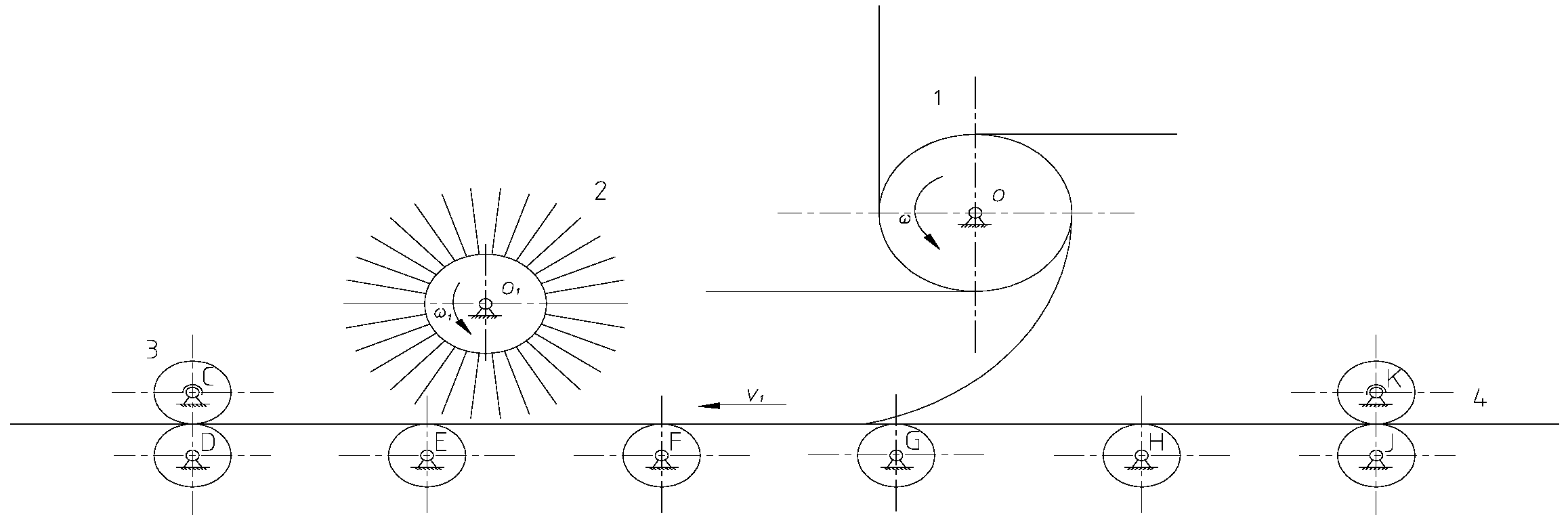
The conventional descaling of steel plates includes shot blasting, sandblasting, water jetting, and so on [26]. Functional analysis was performed based on the main customer requirements for rust-off machines, such as high-efficiency rust removal and low pollution. As can be seen from Figure 5, the main functions of a rust-off machine are conveying, rust removal, and dust collection. To improve the rust removal efficiency and reduce the introduction of new pollution in the rust removal process, the designed steel plate rust-off machine impacts steel plates to achieve the purpose of rust removal. Figure 6 shows the function tree of the steel plate rust-off machine, listing the components that realize the operation of a rust-off machine [27]. The schematic diagram for rust removal is shown in Figure 7. The steel plate enters the descaling mechanism at a uniform speed from the right side, first for rough descaling, and then for fine descaling, and is finally transported out by the conveying mechanism. The descaling mechanism is composed of a roller and flexible cables. Therefore, the main parts of the rust-off machine are a flexible cable, roller brush, roller, spindle, bearing, dust collector, dust collector, protective cover, and reducer. Table 6 presents a matrix of the engineering metrics and components. The results based on the relative weights provide the essential parts: the flexible cable, roller, and reducer.
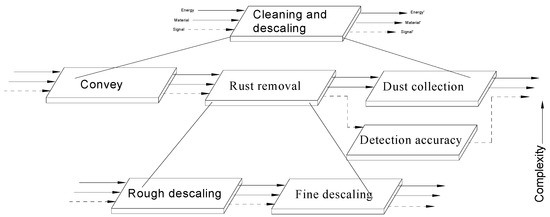
Figure 5.
Function decomposition of the steel plate rust-off machine.
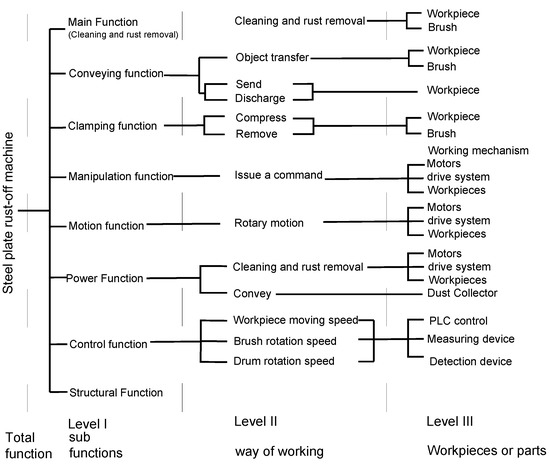
Figure 6.
Function tree for the steel plate rust-off machine.
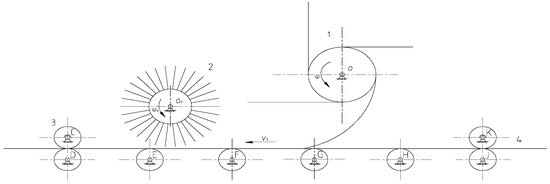
Figure 7.
The principal mechanism of rust removal. 1. Rough descaling mechanism; 2. Fine descaling mechanism; 3. Conveying mechanism; 4. Steel plate.
Table 6.
QFDE Phase II of the steel plate rust-off machine.
3.4. Structural Scheme for the Steel Plate Rust-Off Machine
According to the results in Table 6, it is clear that the main areas of improvement for the designed steel plate rust-off machine were the flexible cable, the drum, and the reducer. In addition, the matrix of interrelationships between the engineering metrics from the house of quality showed a negative correlation between reliability and cost, a negative correlation between wear resistance and noise, and a strong negative correlation between movement coordination and disassembly.
Table 7 shows the available types of critical parts of the steel plate rust-off machine. According to Table 7, there were five types of flexible cables available. The price of copper wire was the highest. Therefore, considering the cost, the copper wire was dismissed. When flexible cables work on steel plates, the temperature will rise, which is inconsistent with the characteristics of the pencil rod, so the pencil rod was also ruled out. When removing rust on the surface of steel plates with flexible cables, a certain hardness is required. It is better not to produce permanent deformation, so the iron wire was not selected. After much consideration, the wire rope was finally chosen as the component for the flexible rope.
Table 7.
Selection table of types of critical parts of the steel plate rust-off machine.
There were four types of rollers to choose from. The electric drum had the highest price among the four types, so it was excluded first. The service life of the belt conveyor is short, and frequent replacement of belts will increase the cost, so it was not selected. The chain delivery will have shock and vibration, which will affect the rust removal of the steel plates, and there is noise, which does not meet the customer requirements. Ultimately, a roller conveyor was chosen for its reliable operation, medium price, and easy maintenance.
There were four types of reducers to choose from. For cost reasons, the planetary gear reducer was not chosen as the reducer. The RV (Rotate Vector) reducer applies to a high-speed light load that is not consistent with the operating conditions of a steel plate rust-off machine, so it was not chosen. The turbo worm gear reducer is less efficient and offers no additional benefit to the customer, so it was also ruled out. Finally, the cylindrical gear reducer was chosen. Although it is large, it is suitable in price, stable in operation, and has a low failure rate, which is very in line with the working conditions.
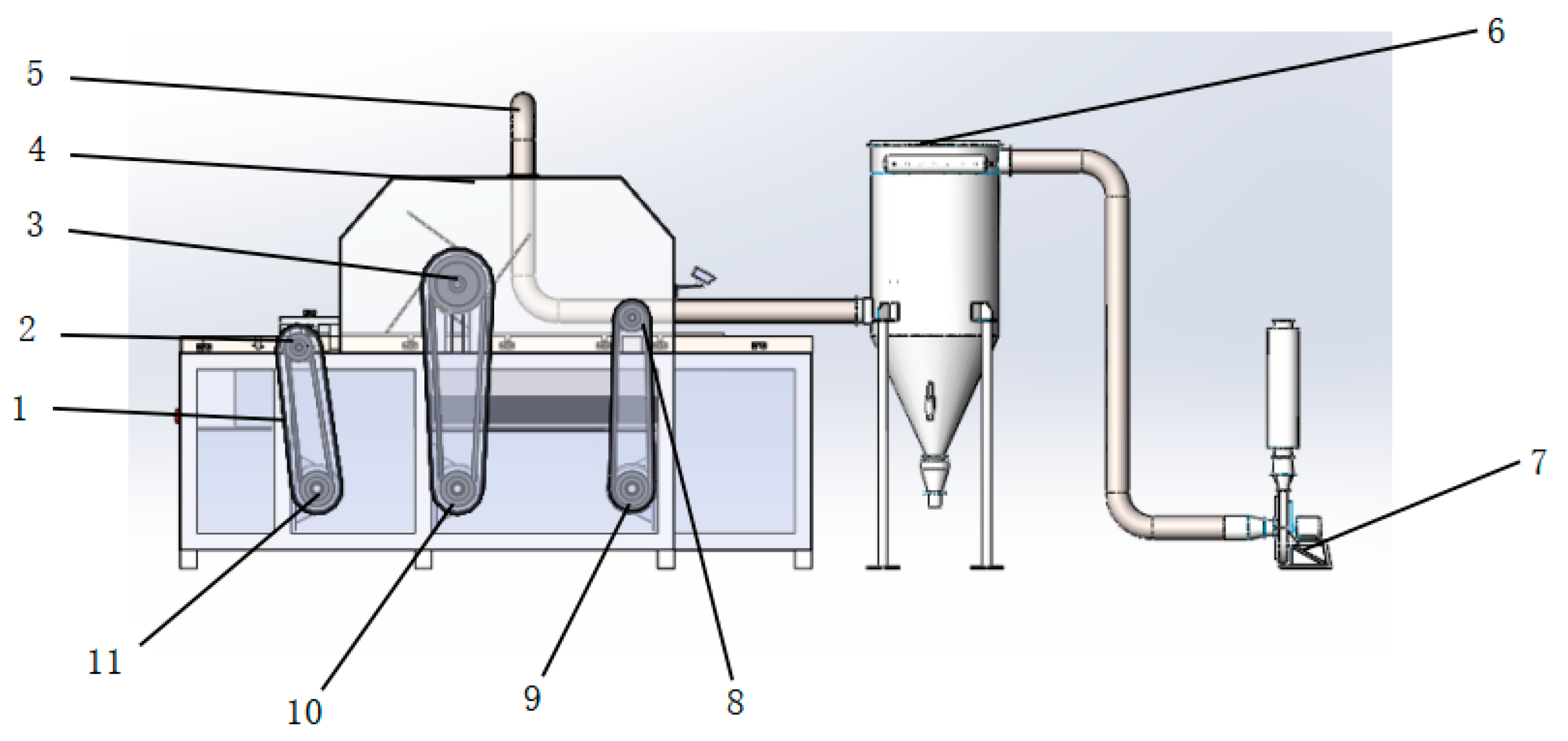
Based on the above analysis, the wire rope was used as the main component structure of the flexible rope, and a roller conveyor was used to convey the steel plates, using a cylindrical gear reducer to regulate the speed. Table 8 shows the structural scheme of the steel plate rust-off machine, which consists of: wire rope + wire brush + roller + 40Cr + rolling bearing + bag filter + cyclone separator + steel plate guard + cylindrical gear reducer. Table 9 shows the steel plate rust-off machine for QFDE Stage III. The relational strength between the components and engineering metrics in Table 9 was consistent with the relational strength in QFDE Phase II. It can be seen from Table 9 that the degree of automation was improved, the wear resistance was improved, and the cost was also reduced. This combination is moderately priced and offers good reliability and high wear resistance without too much noise. The overall structure of the steel plate rust-off machine is shown in Figure 8.
Table 8.
Structural scheme of the steel plate rust-off machine.
Table 9.
QFDE Phase III of the steel plate rust-off machine.
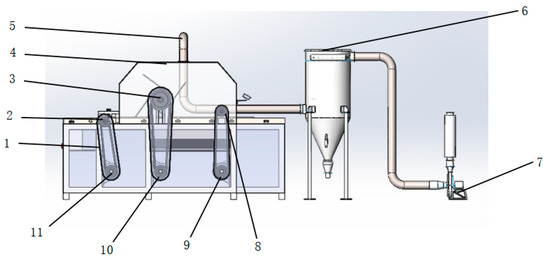
Figure 8.
The overall structure of the steel plate rust-off machine. 1. Belt; 2. Press wheel; 3. Wire rope roller; 4. Dust cover; 5. Pipeline; 6. Dust collector; 7. Exhaust fan; 8. Brush roller; 9–11. Motor.
The fourth stage of the QFDE for the steel plate rust-off machine is shown in Table 10. Its main task was to obtain customer satisfaction with the design changes. According to Table 10, the customer demand improvement rate was 1.51, and the improvement effect was 6.88.
Table 10.
QFDE Phase IV of the steel plate rust-off machine.
4. Results and Discussion
In this paper, a steel plate rust-off machine was used as a case study to carry out a green design. According to Figure 4, customers have relatively high requirements for automation, high efficiency, cost, ease to remanufacture, good descaling performance, and high reliability. According to the relative weight of engineering metrics, the important engineering metrics, such as automation, reliability, mechanical vibration, cost, ease to recycle, and ease to disassemble were ranked higher. This also means that these engineering metrics were more critical. After the function analysis method, the main components of a steel plate rust-off machine were found to be the flexible cable, roller brush, roller, spindle, bearing, dust collector, dust collector, protective cover, and reducer. Based on the relative weights calculated in the second phase of QFDE, the three most essential components, namely the flexible cable, the roller, and the reducer, were selected, with the characteristics of cost competitiveness, low noise, and reliability focused on. The wire rope was chosen as the flexible rope, the roller conveyor was used to convey the steel plates, and the speed was regulated using a cylindrical gear reducer. The final design of the steel plate rust-off machine obtained a customer demand improvement rate of 1.51 and an improvement effect of 6.88.
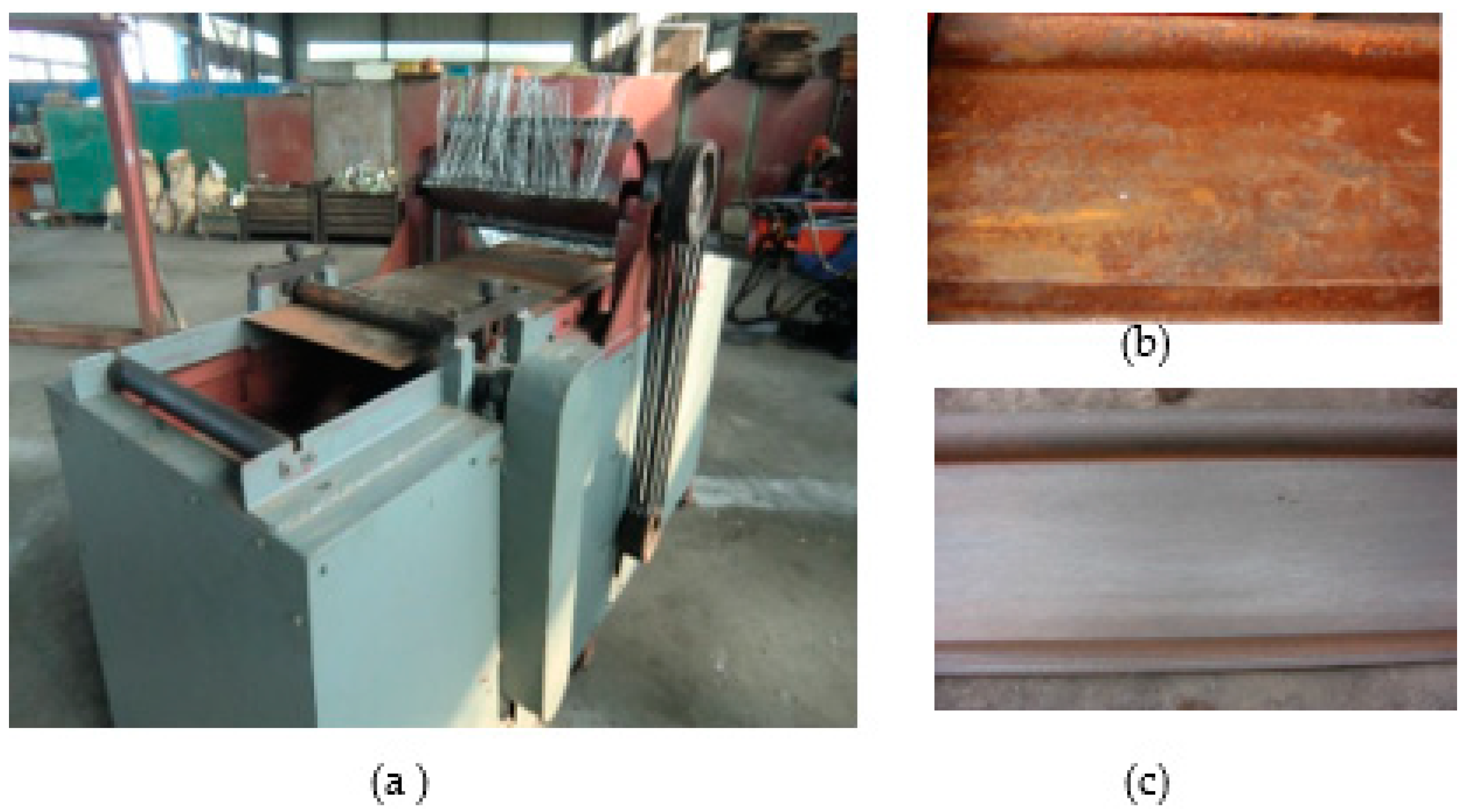
The case study results showed that the proposed method of combining QFDE and function analysis is simple and effective and contributes to the green design of the rust-off machine. The rust removal effect of the rust-off machine did not decreased, and the green environmental protection characteristics were improved. Figure 9 shows a prototype of the steel plate rust-off machine and its descaling capability.
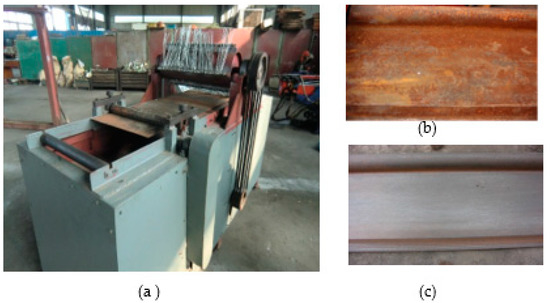
Figure 9.
A steel plate rust-off test machine. (a) A steel plate rust-off test machine; (b) Steel plate before test; (c) After test.
5. Conclusions
This paper proposes a green design method for rust-off machines, which can not only ensure working performance, but also meets the requirements of environmental protection. Since the function of the rust-off machine is complex and the green characteristics of the rust-off machine needed to be obtained, this paper used QFDE and functional analysis methods. The green design of the rust-off machine was carried out by combining the advantages of the two methods. The function analysis method can simplify the complex functions of the rust-off machine, and QFDE can obtain the green characteristics of the rust-off machine. Taking a steel plate rust-off machine as a case study, customer satisfaction was improved, and the improvement effect was also increased by 6.88. This shows that this method is conducive to the green design of rust-off machines.
In the future, based on obtaining the green design scheme of rust-off machines, the structure of rust-off machines will be optimized to further improve their green characteristics.
Author Contributions
Conceptualization, Q.G. and Z.J.; Data curation, Y.X.; Formal analysis, M.H.; Investigation, Q.G., C.C. and Z.J.; Methodology, Q.G. and Z.J.; Resources, M.H. and J.Y. All authors have read and agreed to the published version of the manuscript.
Funding
This research paper is supported by Development Project of the Ministry of Industry and Information Technology (TC200802C, TC200A00W), the Scientific Research Project of the Education Department of Hubei Province (D20211803), Key R&D Projects in Hubei Province (2020BAA005) and Ph.D. research startup foundation of Hubei University of Automotive Technology (BK202001). These financial contributions are gratefully acknowledged.
Institutional Review Board Statement
Not applicable.
Informed Consent Statement
Not applicable.
Data Availability Statement
Not applicable.
Conflicts of Interest
The authors declare no conflict of interest.
References
- Liu, G.; Liu, Z.; Li, G. Green Design and Green Manufacturing; Press of Machinery Industry: Beijing, China, 2000; pp. 1–9. [Google Scholar]
- Jnr, B.A.; Majid, M.A.; Romli, A. A generic study on Green IT/IS practice development in collaborative enterprise: Insights from a developing country. J. Eng. Technol. Manag. 2020, 55, 101555. [Google Scholar]
- Fu, Z.H.; Peng, Y.C. Green design method of products. Mech. Des. Res. 2000, 10–12+6. [Google Scholar] [CrossRef]
- Jnr, B.A. Examining the role of green IT/IS innovation in collaborative enterprise-implications in an emerging economy. Technol. Soc. 2020, 62, 101301. [Google Scholar]
- Gong, Q.; Xiong, Y.; Jiang, Z.; Yang, J.; Chen, C. Timing Decision for Active Remanufacturing Based on 3E Analysis of Product Life Cycle. Sustainability 2022, 14, 8749. [Google Scholar] [CrossRef]
- Chen, J.; Zhang, S.L.; Li, X.; Chen, K. Research on relative greenness of environmental awareness design scheme based on fuzzy AHP-TOPSIS. Sci. Technol. Rep. 2016, 34, 304–313. [Google Scholar]
- Tao, F.; Bi, L.N.; Zuo, Y.; Nee, A.Y.C. A hybrid group leader algorithm for green material selection with energy consideration in product design. CIRP Ann. Manuf. Technol. 2016, 65, 9–12. [Google Scholar] [CrossRef]
- Zhang, L.; Zheng, C.X.; Zhong, Y.J.; Qin, X. Mechanical product green design knowledge update based on rough set. China Mech. Eng. 2019, 30, 595–602. [Google Scholar]
- Xin, L.L.; Jia, X.J.; Li, F.Y.; Wang, X.W.; Chen, X.X. Green feature modeling for mechanical and electrical product conceptual design. Comput. Integr. Manuf. Syst. 2012, 18, 713–718. [Google Scholar]
- Wang, Z.X.; Zhang, T.Q.; Yu, T.B.; Zhao, J. Assessment and optimization of grinding process on AISI 1045 steel in terms of green manufacturing using orthogonal experimental design and grey relational analysis. J. Clean. Prod. 2020, 253, 119896. [Google Scholar] [CrossRef]
- Tian, G.; Zhang, C.; Fathollahi-Fard, A.M.; Li, Z.; Zhang, C.; Jiang, Z. An Enhanced Social Engineering Optimizer for Solving an Energy-Efficient Disassembly Line Balancing Problem Based on Bucket Brigades and Cloud Theory. IEEE Trans. Ind. Inform. 2022. [Google Scholar] [CrossRef]
- Ajukumar, V.N.; Gandhi, O.P. Evaluation of green maintenance initiatives in design and development of mechanical systems using an integrated approach. J. Clean. Prod. 2013, 51, 34–46. [Google Scholar] [CrossRef]
- Smith, S.; Chen, W. Rule-based recursive selective disassembly sequence planning for green design. J. Adv. Eng. Inf. 2011, 25, 77–87. [Google Scholar] [CrossRef]
- Wang, J.Z.; Zhang, L.Q.; Han, X.M.; Zhu, C.J.; Wang, L.H. Development of green design platform for key components of high-end equipment based on modularization. J. Manuf. Autom. 2021, 43, 114–117. [Google Scholar]
- Agrawal, V.V.; Ülkü, S. The Role of Modular Upgradability as a Green Design Strategy. Manuf. Serv. Oper. Manag. 2013, 15, 523–700. [Google Scholar] [CrossRef]
- Zhang, F.Y.; Zhang, H.C.; Zheng, H.; Zhang, Q.Q. Study on Green Innovative Design Based on Function Analysis. Appl. Mech. Mater. 2010, 44, 44–47. [Google Scholar]
- Younesi, M.; Roghanian, E. A Framework for Sustainable Product Design: A Hybrid Fuzzy approach Based on Quality Function Deployment for Environment. J. Clean. Prod. 2015, 108, 385–394. [Google Scholar] [CrossRef]
- Gong, Q.S.; Zhang, H.; Jiang, Z.G.; Ma, F. Methodology for steel plate remanufacturing cleaning with flexible cable impact contact and friction. Procedia CIRP 2018, 72, 1374–1379. [Google Scholar] [CrossRef]
- Xu, B.S.; Li, E.Z.; Zheng, H.D.; Sang, F.; Shi, P.J. The remanufacturing industry and its development strategy in China. China Eng. Sci. 2017, 19, 61–65. [Google Scholar]
- Tian, G.D.; Yuan, G.; Aleksandrov, A.; Zhang, T.Z.; Li, Z.W.; FathollahiFard, A.M.; Ivanov, M. Recycling of spent lithiumion batteries a comprehensive review for identification of main challenges and future research trends. Sustain. Energy Technol. Assess. 2022, 53, 102447. [Google Scholar]
- Gong, Q.S.; Zhang, H.; Jiang, Z.G.; Wang, H.; Wang, Y.; Hu, X.L. Nonempirical hybrid multi-attribute decision-making method for design for remanufacturing. Adv. Manuf. 2019, 7, 423–437. [Google Scholar] [CrossRef]
- Jiao, X.L.; Hu, Z.G. Study on improvement design decision of sewing product based on house of quality. Manuf. Autom. 2011, 33, 139–142. [Google Scholar]
- Keijiro, M.; Tomohiko, S.K.; Mitsuru, K.; Atsushi, I. Applying Quality Function Deployment to environmentally conscious design. Int. J. Qual. Reliab. Manag. 2003, 20, 90–106. [Google Scholar]
- Edmund, S.M.; Rajesh, A. Gear concept selection procedure using fuzzy QFD, AHP and tacit knowledge. Cogent Eng. 2020, 7, 1802816. [Google Scholar]
- Gong, Q.S. Research on Multi-Objective Optimization Design Method of Mechanical Equipment Design for Remanufacturing; Wuhan University of Science and Technology: Wuhan, China, 2020. [Google Scholar]
- Ma, F.; Zhang, H.; Gong, Q.S.; Hon, K.K.B. A novel energy efficiency grade evaluation approach for machining systems based on inherent energy efficiency. Int. J. Prod. Res. 2020, 59, 6022–6033. [Google Scholar] [CrossRef]
- Ma, F.; Zhang, H.; Gong, Q.S.; Hon, K.K.B. A novel energy evaluation approach of machining processes based on data analysis. Energy Sources Part A Recovery Util. Environ. Eff. 2019, 1–15. [Google Scholar]
Publisher’s Note: MDPI stays neutral with regard to jurisdictional claims in published maps and institutional affiliations. |
© 2022 by the authors. Licensee MDPI, Basel, Switzerland. This article is an open access article distributed under the terms and conditions of the Creative Commons Attribution (CC BY) license (https://creativecommons.org/licenses/by/4.0/).