


Abstract
The construction of tunnels involves massive excavation work and generates an enormous amount of waste slag. The improper disposal of the waste slag may cause environmental pollution. The treatment of waste slag is usually costly. In this study, the feasibility of recycling waste slag as a component in the synchronous grouting material was investigated. A series of experimental measurements were conducted to evaluate the performance of grouting material with different proportions of recycled waste slag. The experimental results show that the grouting material with the selected proportion of recycled slag has a similar performance to the original grouting material mix. It was observed that waste slag can be recycled as one component of the grouting material for tunneling engineering.
1. Introduction
The Tunnel Boring Machine (TBM) method is widely used in underground construction. To reduce the earth pressure acting on the shield segments and the leakage around the shield segments, grouting is usually applied in the tunneling process. The grouting material is usually designed and premixed with bentonite, foam agent, high polymer and water. It is difficult to control the volume of grouting material in some areas because of the complex geological conditions. As a result, the expenses related to grouting material are usually high in tunneling engineering. On the other hand, the excavated soil from the TBM method is commonly transported by mud and is separated from the mud using the filtration technique. As the soil has been mixed with mud, its mechanical properties are weak and this type of soil is commonly called waste slag. There are various problems associated with the disposal of the waste slag. Wang et al. [1], Yin et al. [2], and Yu et al. [3] indicated that the most common problems associated with the disposal of waste slag are land occupation, soil pollution, air pollution, groundwater pollution, damage to the appearance of the city, and deterioration of the urban sanitation environment.
Helmut [4] showed that the separated sand from waste slag can be reused as a sound insulation wall and filler. Chen et al. [5] used waste slag to prepare back wall grouting material with different water–binder ratios for shield tunneling. Xu [6] used mud mixed with sand to replace bentonite mixed with river sand. This new mixture was prepared as synchronous grouting materials for shield tunneling. Zhang et al. [7] illustrated an appropriate method for slurry preparation with waste clay, waste clay slurry and waste silty fine sand as grouting material for shield tunneling. Zhong et al. [8] demonstrated the possibility of recycling excavated silty sand as a grouting material for shield tunneling. Yang et al. [9] used waste slag to replace bentonite in the preparation of mortar. Zhou et al. [10] indicated that waste slag could be locally recycled into grouting material in shield tunneling. Zhang et al. [11] indicated that breakthroughs in new technologies are needed in the tunneling construction. Based on the stress–strain analyses from Sun et al. [12,13,14], the reinforced ground has a significant effect on the stability and displacement of the supporting system in tunneling construction. The quality of the reinforcement work is highly dependent on the engineering properties of the grouting material. Therefore, in this study, the engineering properties of grouting material premixed using waste slag were compared with those premixed using the original grouting material mix.
In this study, waste slag was used as the raw material to prepare grouting material. A series of experimental measurements were conducted to investigate the optimal proportion of waste slag to produce a good quality grouting material. The engineering properties such as the setting time, degree of consistency, bleeding rate and volume shrinkage rate of the grouting material, were recorded in the measurements. The grouting material following the design mix was used as the reference to evaluate the performances of the grouting material mixed with different proportions of waste slag. It was observed that reusing waste slag with proper proportions in the grouting material is feasible and has a performance similar to that of grouting material premixed following the design mix.
2. Project Background
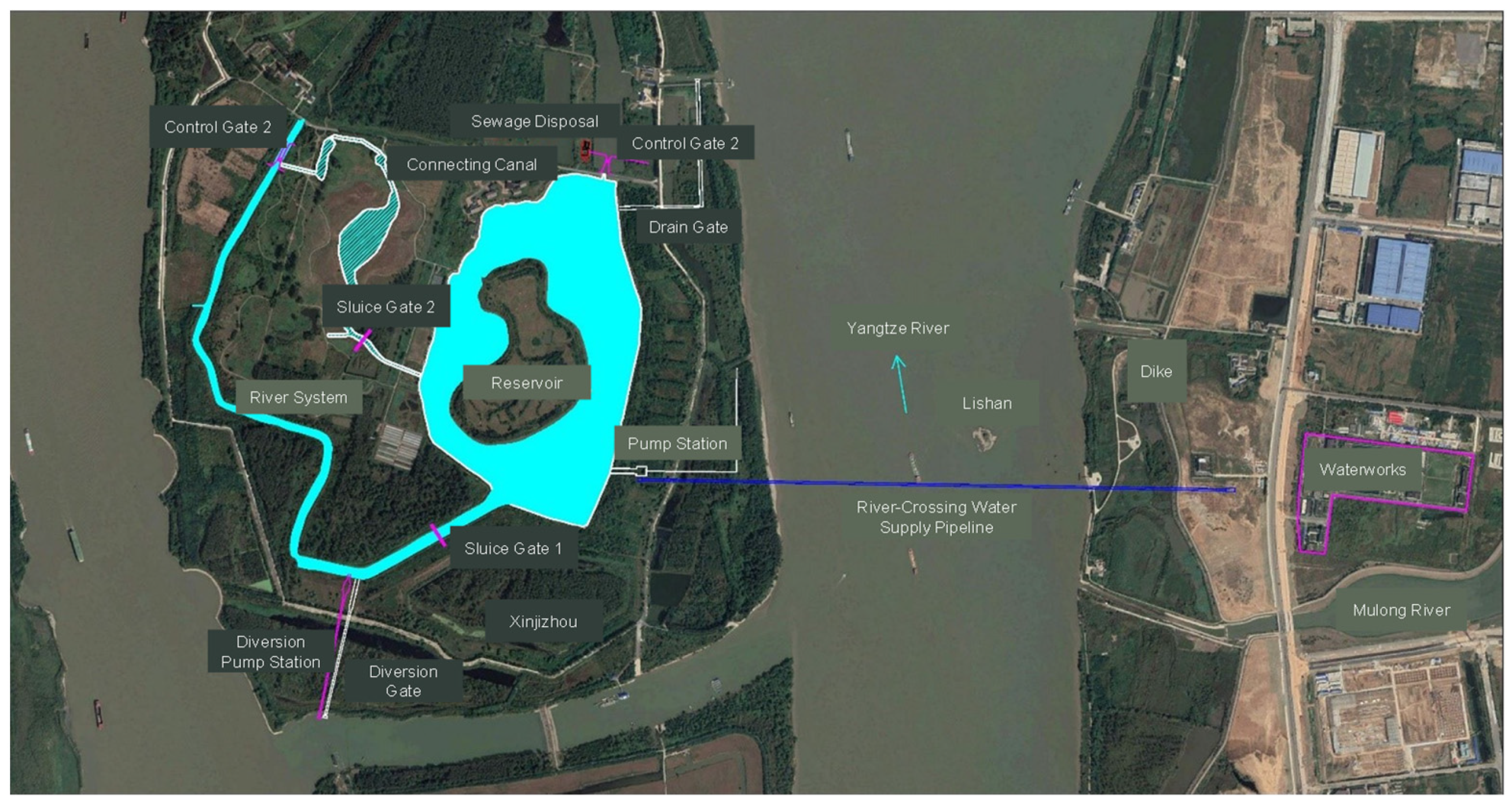
The project of the water supply crossing the Yangtze River of Nanjing Jiangning Xinjizhou was designed to divert water from Xinjizhou Island to the pump station at Jiangning District, as shown in Figure 1. The river-crossing corridor was constructed using the TBM method. The tunnel launching shaft was located on the land in Jiangning District and the originating well was installed 150 m away from the embankment. The receiving well was constructed at Zinjizhou which is located 90 m away from the embankment.
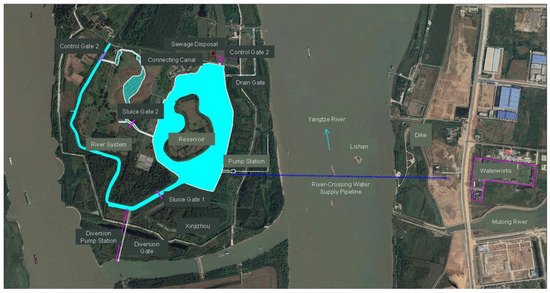
Figure 1.
The layout of the water supply project.
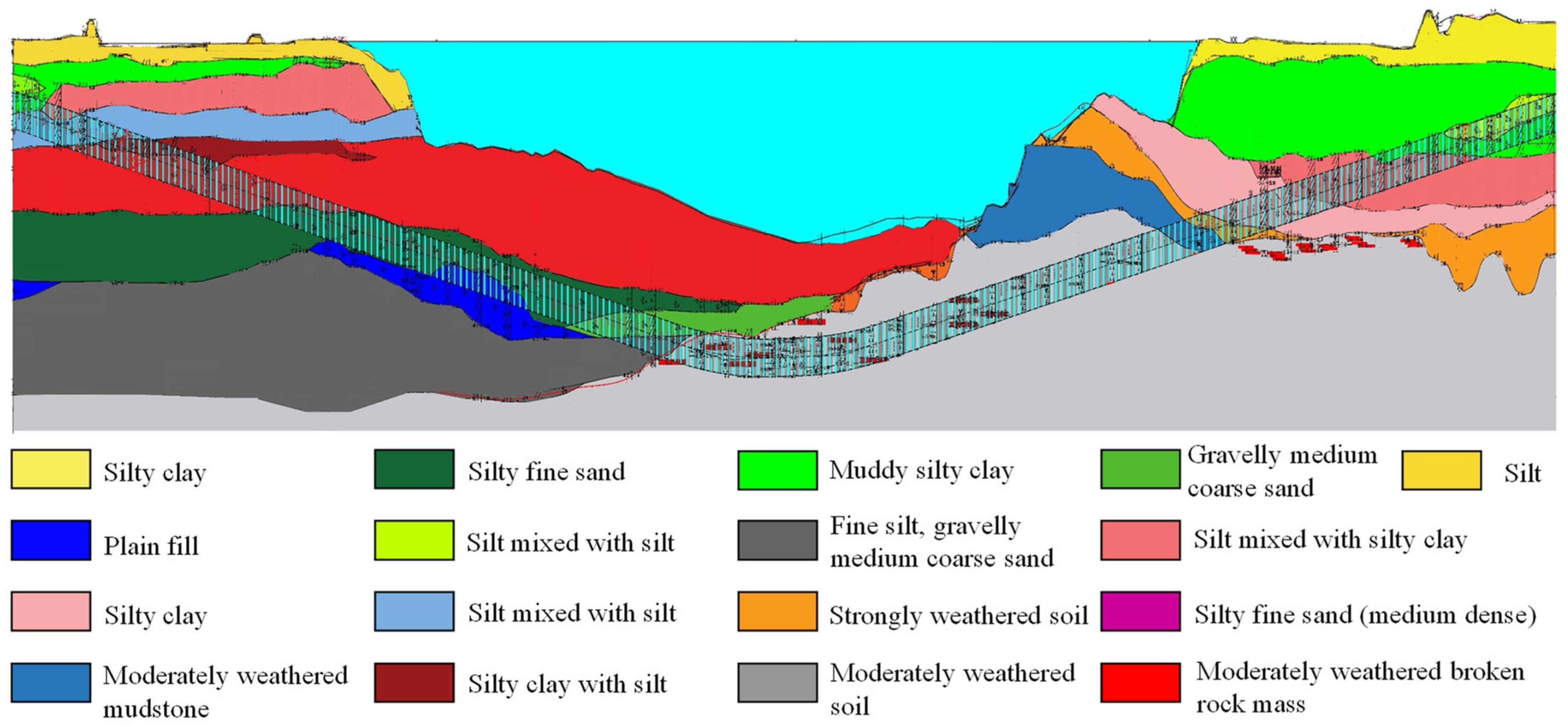
The corridor is a single line and the total length is 1945 m. The geological profile around the river-crossing corridor is illustrated in Figure 2. The largest thickness of the soil deposit above the tunnel is 15.42 m from the riverbank with a water depth of 33.1 m. The outer and inner diameters of the tunnel are 6200 mm and 5500 mm, respectively.
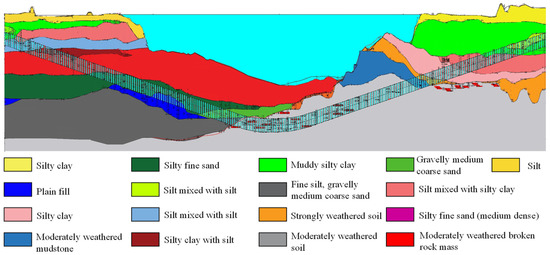
Figure 2.
Geological profile around the river crossing corridor.
3. Experimental Program
3.1. Test Material and Sample Preparation
Based on the original design mix, the grouting materials were premixed from cement, coal fly ash, bentonite, sand, and water, as illustrated in Table 1.

Table 1.
Basic parameters of the grouting materials.
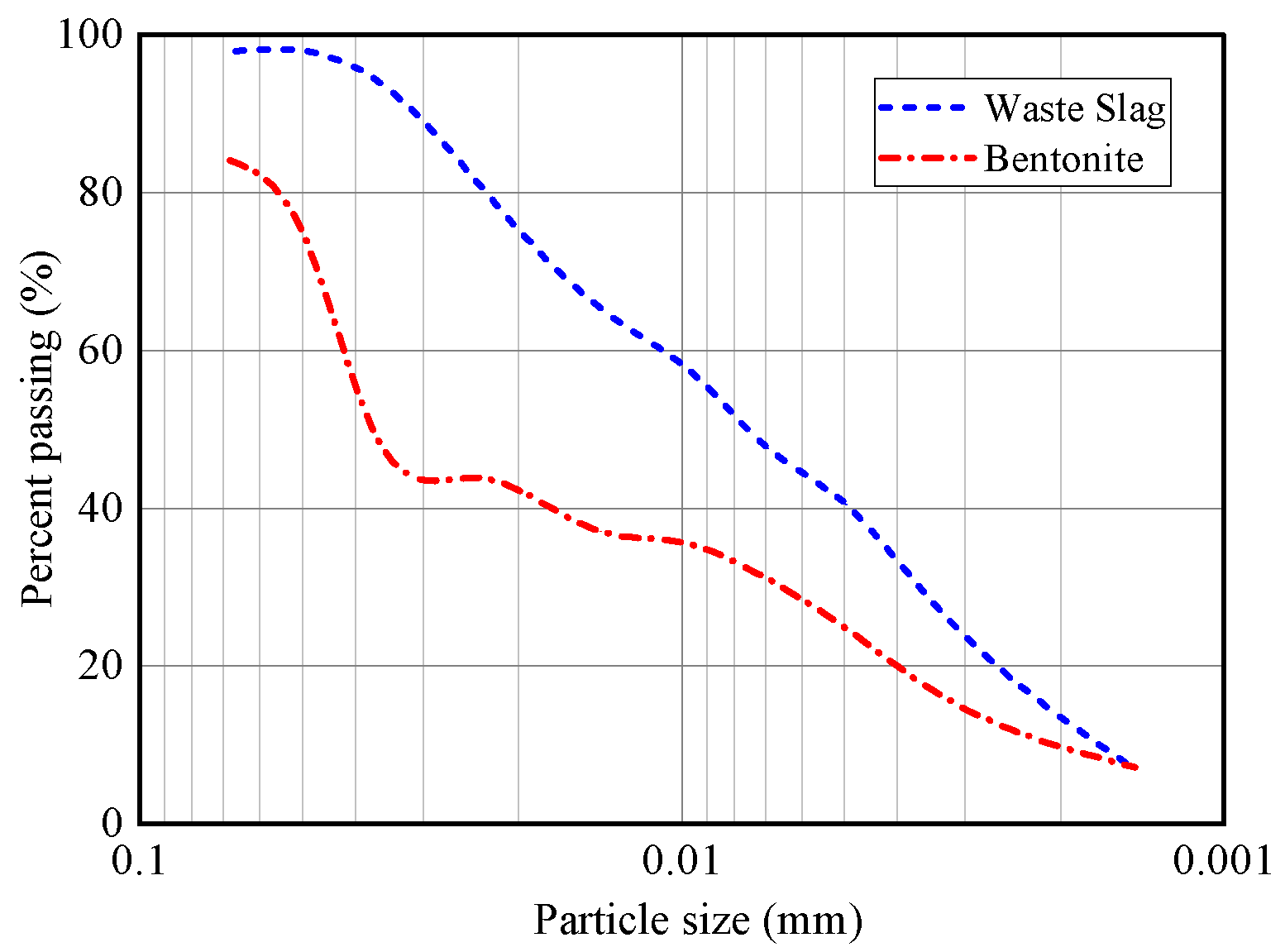
Based on the field measurements in this project, the waste slag was found to mainly consist of fine-grained particles. Therefore, only bentonite in the design mix could be replaced with waste slag. As a result, particle analysis tests of both the waste slag and bentonite were conducted using the hydrometer method. The measured results of the grain-size distribution (GSD) curves of both soils are illustrated in Figure 3. The nonuniformity coefficients (Cu) for waste slag and the bentonite are 6.47 and 21, respectively, while the curvature coefficients (Cc) for waste slag and bentonite are 0.69 and 0.39, respectively.
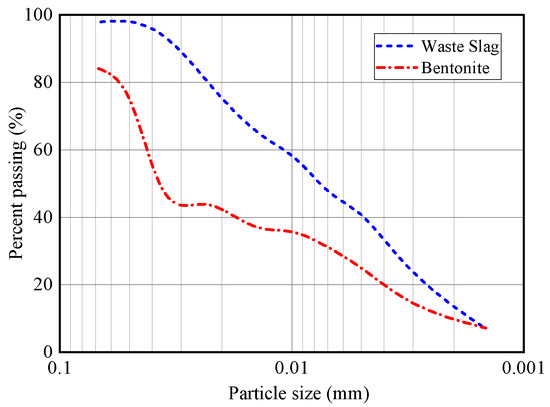
Figure 3.
Particle analysis curve for the waste slag and bentonite.
The procedure for the preparation of the synchronous grouting slurry is illustrated in the following steps. Step 1: The selected amount of waste slag and water were mixed evenly to generate a waste slag slurry. Step 2: The selected proportions of cement, coal fly ash and river sand were quickly mixed into the waste slag slurry to obtain the cement mortar. Step 3: The cement mortar was subsequently prepared for several tests to investigate the engineering properties such as the fluidity, bleeding rate, degree of consistency and volume shrinkage rate.
3.2. Testing Apparatus and the Orthogonal Test
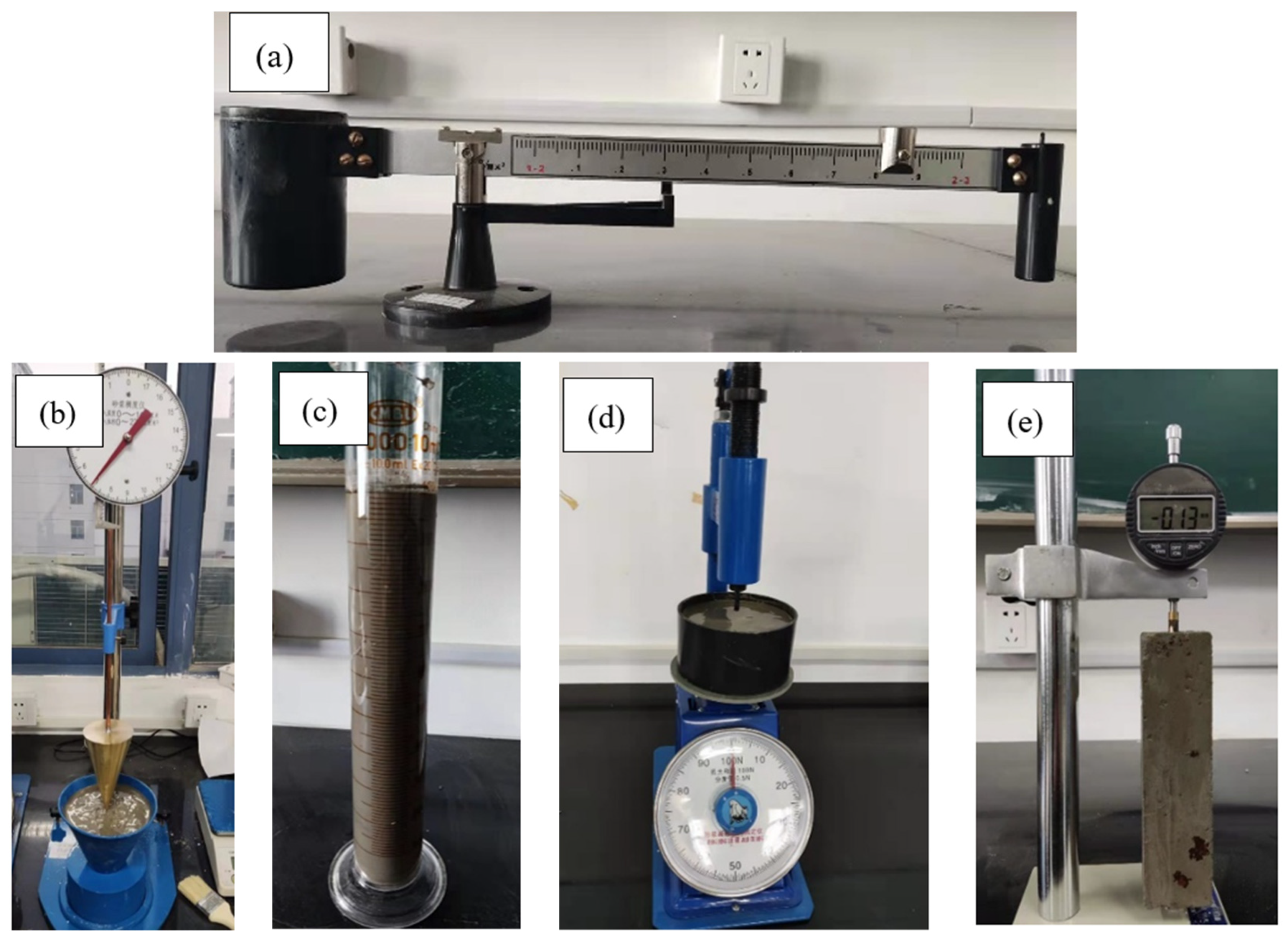
The measurement apparatus, including the relative density apparatus, mortar consistency meter, sedimentation cylinder tube, mortar setting time tester and specific length meter is shown in Figure 4.
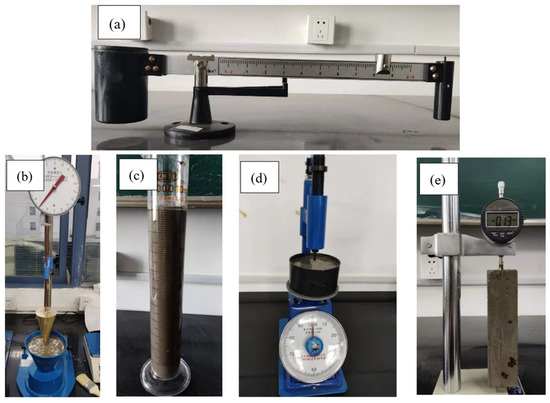
Figure 4.
Measurement apparatus used in this study, (a) relative density apparatus; (b) mortar consistency meter; (c) sedimentation cylinder tube; (d) mortar setting time tester; (e) specific length meter.
The degree of consistency and setting time of the slurry should be determined according to the National Standard of the People’s Republic of China GJ/T 70-2009 Standard [15]. The bleeding rate of grout should be measured according to the relevant methods of the National Standard of the People’s Republic of China GB/T 25182-2010 [16]. The shrinkage rate of solid grout is the ratio of the shrinkage volume of the sample after 28 days of curing to the original volume of the specimen.
The measurements were conducted according to previous construction experience on site. The range of the water–binder ratio (the mass ratio of water to coal fly ash plus cement) is between 0.6 and 1.0. The range of the binder–sand ratio is between 0.60 and 0.84. The bentonite–water ratio ranges between 0.08 and 0.24 and the coal fly ash–cement ratio ranges between 1.8 and 4.2. Orthogonal tests with four factors and five levels (i.e., L25 (54)), such as the water-binder ratio, binder–sand ratio, bentonite–water ratio and coal fly ash–cement ratio, were conducted. The factor levels that were modified from the mixed design mix provided by the design engineer are illustrated in Table 2. A total of 25 groups of grouting materials consisting of different proportions of waste slag were prepared and are illustrated in Table 3. An additional group of grouting materials comprising bentonite following the original design mix was prepared as the reference. In all the tests, the proportions of the mixing material were computed from the same weight of mortar (2 kg) and are illustrated in Table 4. The indices of the synchronous grouting material following the orthogonal design are illustrated in Table 5.
Table 2.
The factor levels for the orthogonal test.
Table 3.
Groups of grouting materials prepared for testing.
Table 4.
Proportions of mixing material in the mortar.
Table 5.
Waste slurry preparation table.
4. Results and Discussion
For practical engineering, the engineering properties of the grouting material should fall within the specified ranges as requested by the design engineer. The specific gravity should fall within the range of 1.750 to 2.000, the degree of consistency should fall within the range of 8 to 14 cm, the initial setting time should fall within the range of 10 to 20 h, the bleeding rate at 2 h should not be more than 5%, and the shrinkage rate of solid grout at 28 d should not be more than 8%. The results of the orthogonal test are shown in Table 6.
Table 6.
The engineering properties of the grouting material with different proportions of waste slag.
Table 6 indicates that the values of the specific gravity, bleeding rate, and volume shrinkage rate for all the groups meet the requirements as specified by the design engineer. It was observed that only the degree of consistency and the initial setting times for Groups 19, 20 and 22 to 25 meet the requirements and are within the range of 8 to 14 cm and 10 to 20 h, respectively. Therefore, only five groups (Groups 19, 20 and 22 to 25) with different proportions of waste slag can be used for the grouting material.
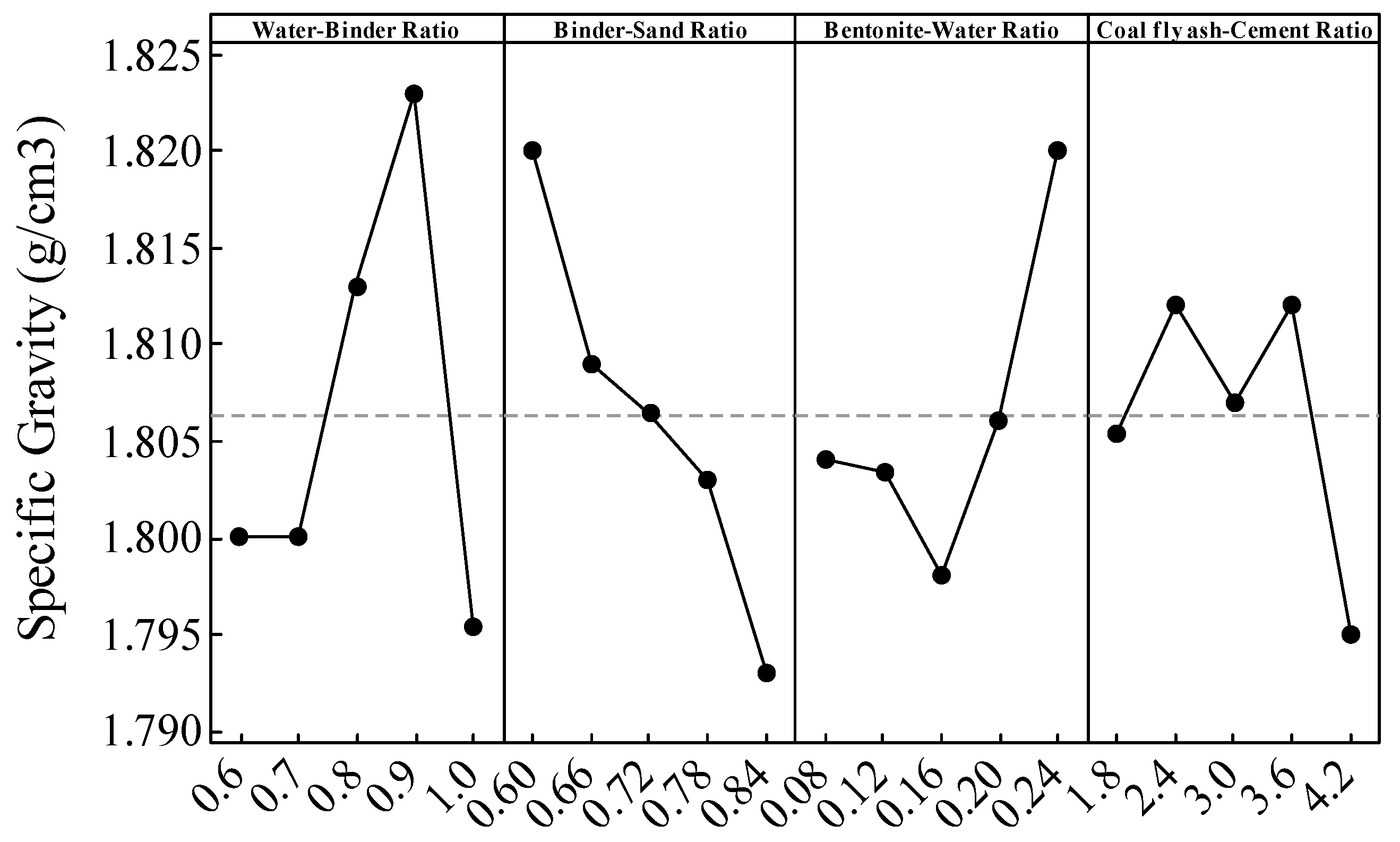
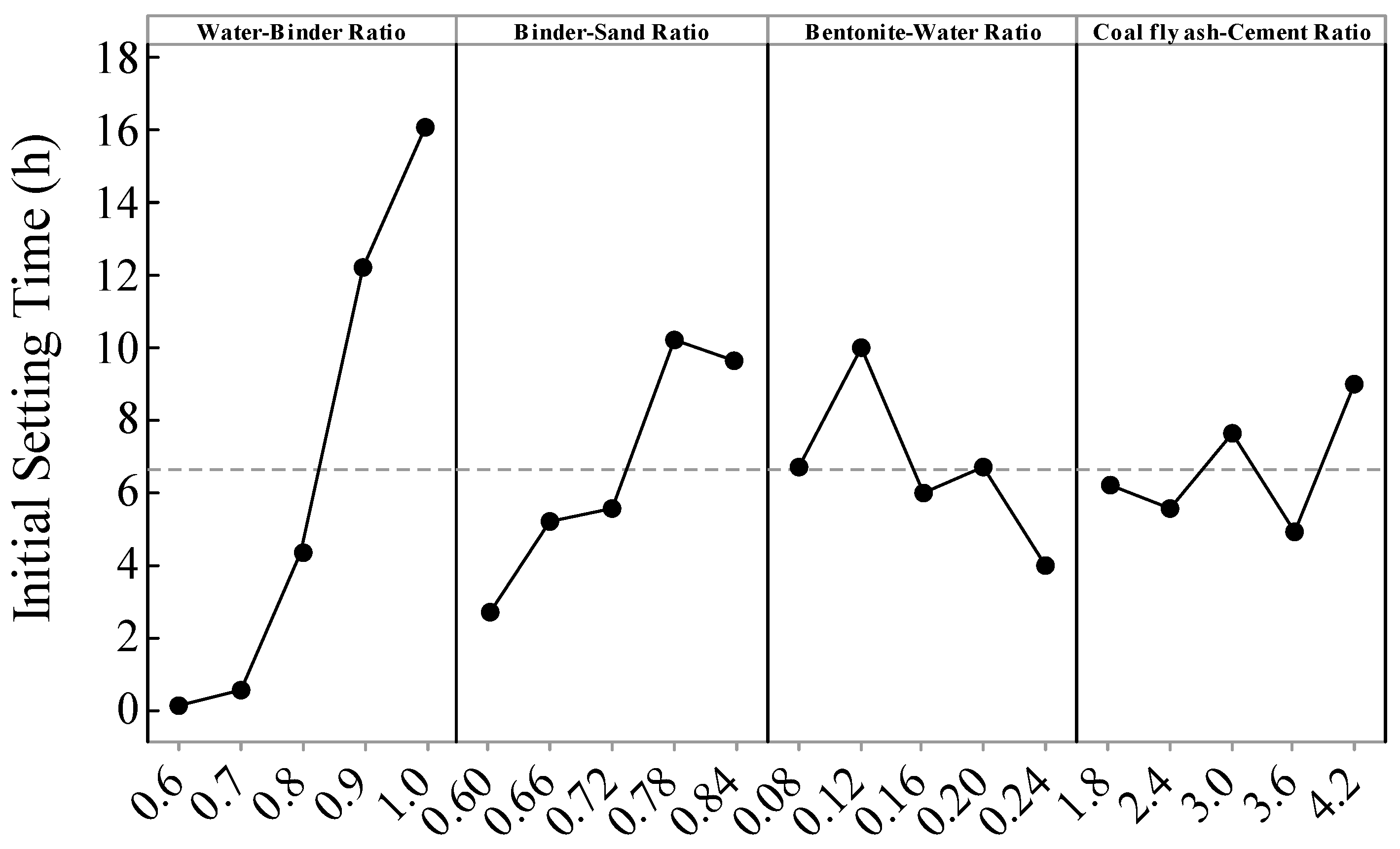
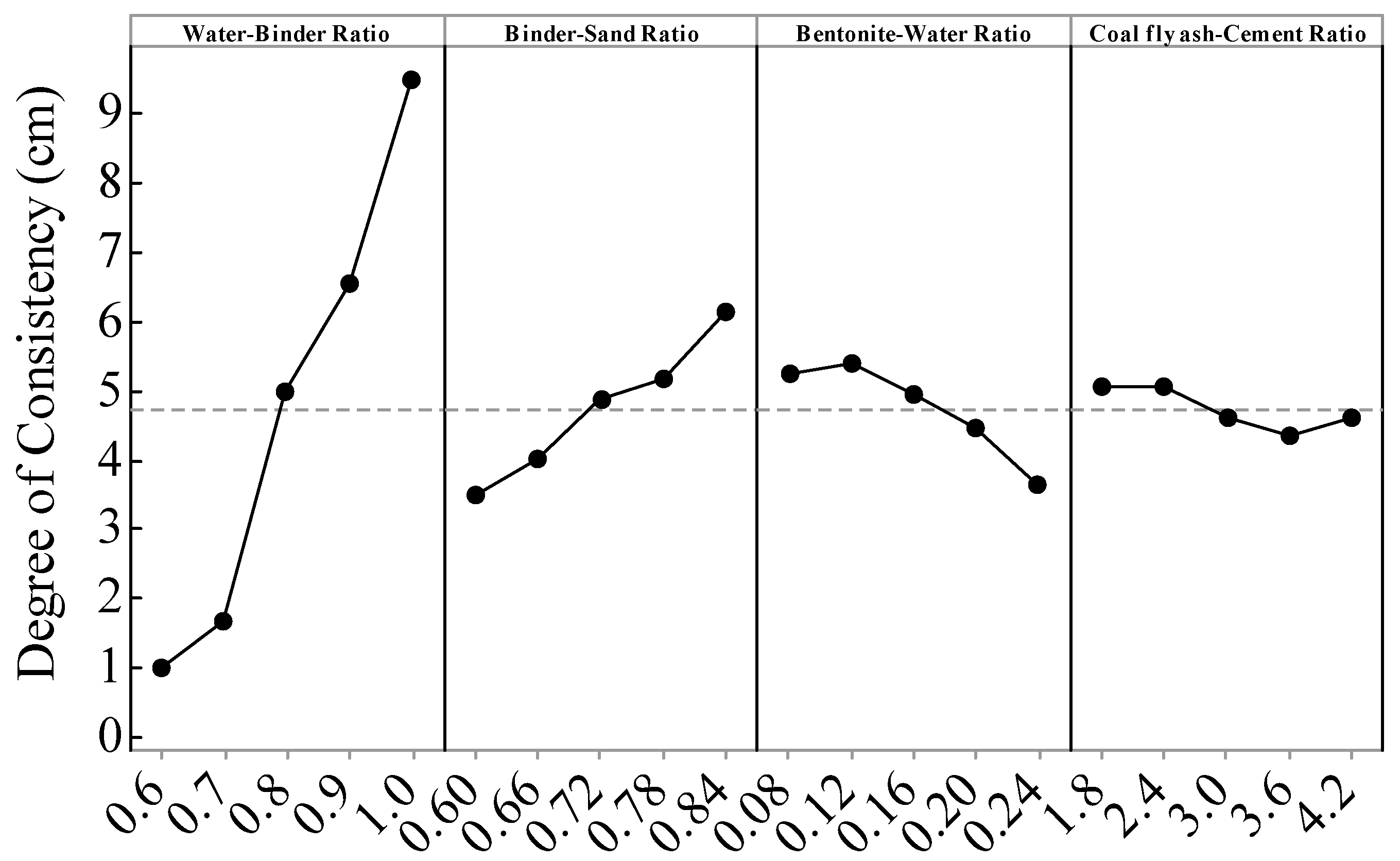
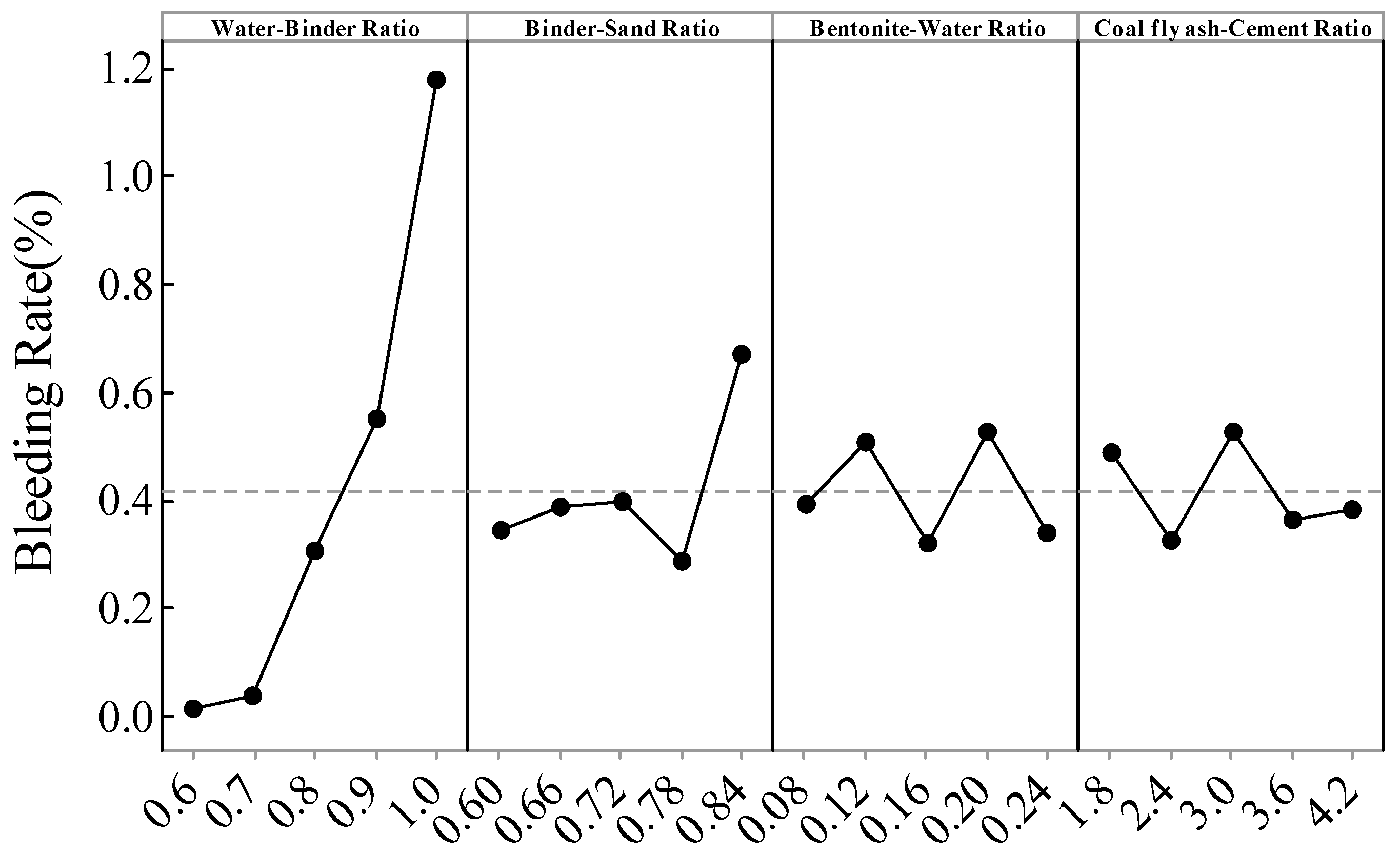
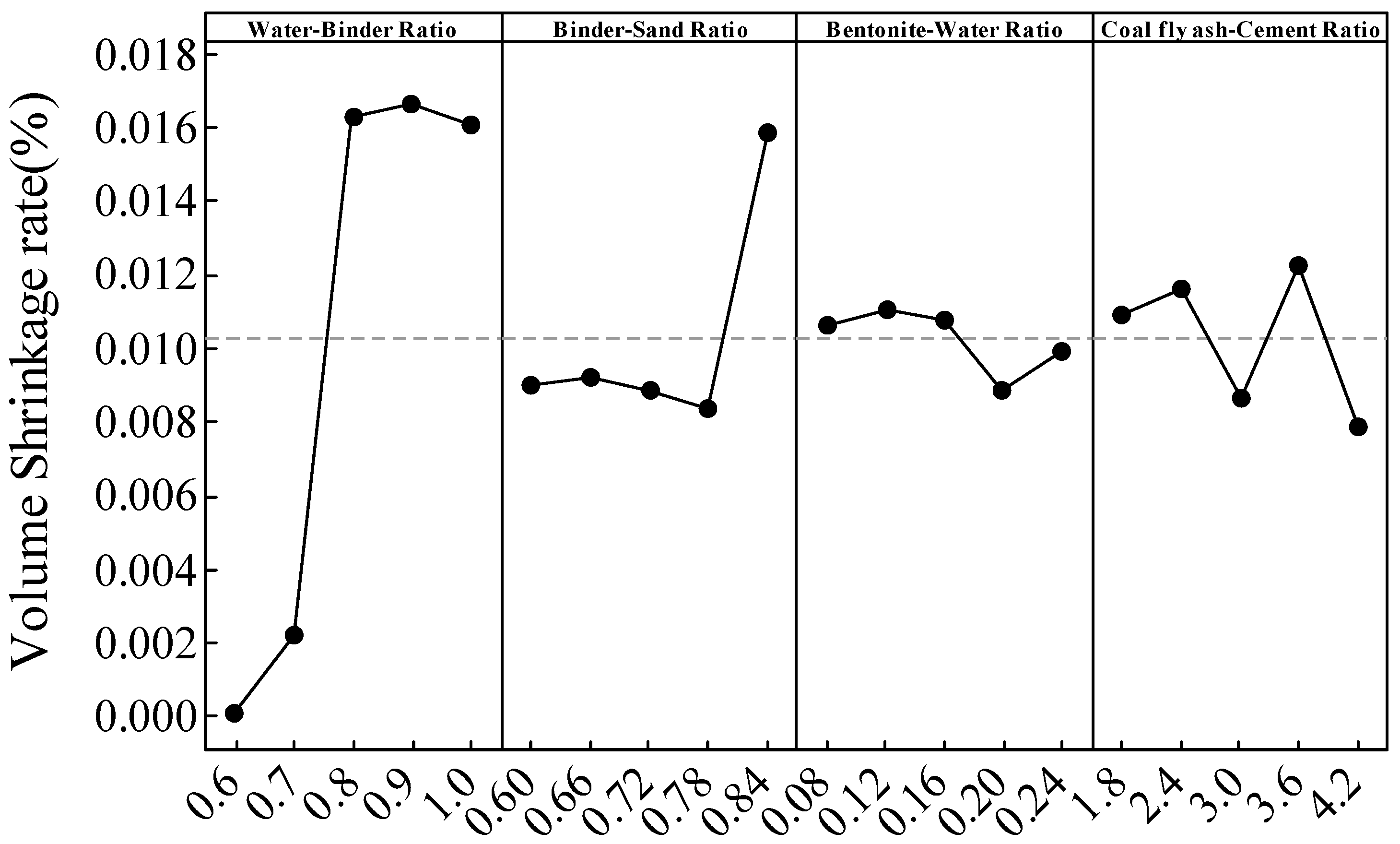
Range analyses for the experimental data from the orthogonal test were conducted. Both the average values and the ranges of four factors (the water–binder ratio, the binder–sand ratio, the bentonite–water ratio and the coal fly ash–cement ratio) at five levels (including the specific gravity, the initial setting time, the degree of consistency, the bleeding rate and the volume shrinkage rate) are illustrated in Table 7, Table 8, Table 9, Table 10 and Table 11, respectively. Meanwhile, the variations of five levels (such as the specific gravity, the initial setting time, degree of consistency, the bleeding ratio, and volumetric shrinkage ratio) with respect to the changes in four factors (such as the water–binder ratio, the binder–sand ratio, the bentonite–water ratio and the coal fly ash–cement ratio) are shown in Figure 5, Figure 6, Figure 7, Figure 8 and Figure 9, respectively.
Table 7.
Range analysis for the specific gravity.
Table 8.
Range analysis for the initial setting time.
Table 9.
Range analysis for the degree of consistency.
Table 10.
Range analysis for the bleeding rate.
Table 11.
Range analysis for the volume shrinkage range.
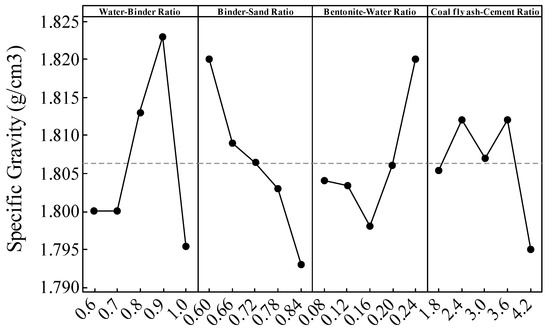
Figure 5.
Sensitivity factor analysis for the specific gravity.
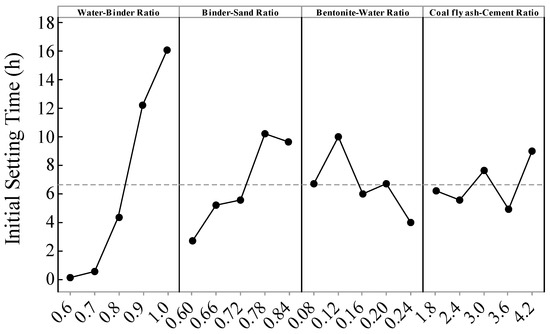
Figure 6.
Sensitivity factor analysis for the initial setting time.
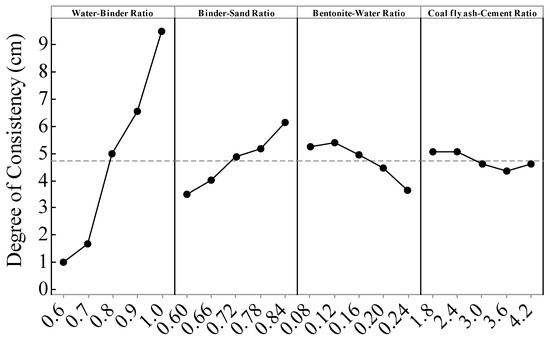
Figure 7.
Sensitivity factor analysis for the degree of consistency.
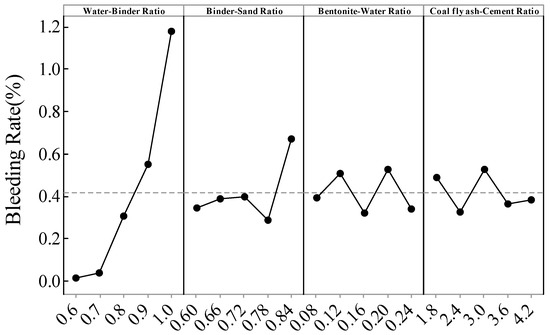
Figure 8.
Sensitivity factor analysis for the bleeding rate.
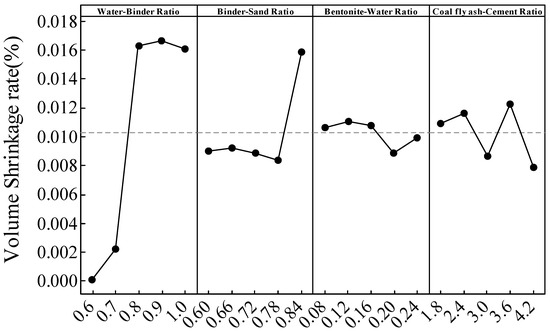
Figure 9.
Sensitivity factor analysis of the volume shrinkage rate.
Table 7, Table 8, Table 9, Table 10 and Table 11 and Figure 5, Figure 6, Figure 7, Figure 8 and Figure 9 indicate that the water–binder ratio has most significant effect on the engineering properties of the synchronous grouting material because the ranges of the water–binder ratio are largest as compared with others in each Table. On the other hand, the coal fly ash–cement ratio has most insignificant effect on the engineering properties of the synchronous grouting material because the ranges of the coal fly ash–cement ratio are smallest compared with others in each Table. Figure 5, Figure 6, Figure 7, Figure 8 and Figure 9 also indicate that the effect of the binder–sand ratio is more significant on the engineering properties of the synchronous grouting material than the effect of the bentonite–water ratio.
As illustrated in this paper, to evaluate the engineering properties of grouting materials with different proportions of waste slag, a series of tests needs to be conducted. For practical engineering, it is impossible to conduct such types of experiments. Therefore, a rough quick estimation is attractive for the preliminary design.
We define X1, X2, X3, and X4 to denote the water–binder ratio, binder–sand ratio, bentonite–water ratio and coal fly ash–cement ratio, respectively. On the other hand, the vector [Y1, Y2, Y3, Y4, Y5]T is defined to denote the specific gravity, setting time, degree of consistency, bleeding rate and the volume shrinkage rate. Then the possible correlation between [Y1, Y2, Y3, Y4, Y5]T and [X1, X2, X3, X4, 1]T can be obtained as shown in Equation (1). The regression analysis was conducted by best fitting Equation (1) with the experimental data collected in this study. Consequently, the correlation coefficients can be obtained, as shown in Equation (2), from the regression analysis by using the software of MATLAB in Southeast University in China.
where A1 to E5 are the correlation coefficients.
Equation (2) can be used as the rough estimation of the levels from the factors in the orthogonal test. This saves the time in determining the proportion of waste slag in the grouting material.
5. Conclusions
Based on the results of this study, following conclusions were obtained.
- The grouting material with the selected proportions of waste slag has similar engineering properties to the grouting material following the design mix. This indicates that waste slag can be reused in grouting materials for tunneling engineering.
- The orthogonal test was adopted to minimize the number of specimens required for the measurements. The efficiency of the experimental studies was thus significantly improved.
- A new equation was proposed for the rough estimation of the engineering properties of grouting material with different proportions of waste slag.
- The engineering properties of the grouting material based on the design mix can be used as the reference in the evaluation of the feasibility of recycling waste slag for tunneling engineering.
Author Contributions
Conceptualization, G.C. and X.C.; methodology, Y.O.; software, Y.O. and G.T.; validation, J.C., G.C. and X.C.; formal analysis, Y.O.; investigation, G.T.; resources, H.L.; writing—original draft preparation, Y.O., A.S. and Q.Z.; writing—review and editing, A.S. and Q.Z.; visualization, B.L.; supervision, H.L. and Q.Z.; project administration, M.Q.; funding acquisition, T.H. All authors have read and agreed to the published version of the manuscript.
Funding
This research was funded by the National Natural Science Foundation of China, grant number (No. 52078128), China Huaneng Group Co., Ltd. (No. HNKJ19-H17).
Institutional Review Board Statement
Not Applicable.
Informed Consent Statement
Not Applicable.
Conflicts of Interest
The authors declare no conflict of interest.
References
- Wang, Z.; Wu, X.; Lu, Q.; Peng, G.; Jiang, H.; Zhang, H.; Liu, Y.; Feng, X. Study on the field processing technology of engineering slurry. West-China Explor. Eng. 2018, 4, 23–25. [Google Scholar]
- Yin, Y.; Li, B.; Wang, W.; Zhan, L.; Xue, Q.; Gao, Y.; Zhang, L.; Chen, H.; Liu, T.; Li, A. Mechanism of the December 2015 catastrophic landslide at the Shenzhen landfill and controlling geotechnical risks of urbanization. Engineering 2016, 2, 230–249. [Google Scholar] [CrossRef]
- Yu, C.; Zhou, A.; Chen, J.; Arulrajah, A.; Horpibulsuk, S. Analysis of a tunnel failure caused by leakage of the shield tail seal system. Undergr. Space 2020, 5, 105–114. [Google Scholar] [CrossRef]
- Helmut, G. Cost-efficient Regeneration of Bore Slurry for Driving of Weser Tunnel. Tunn. Constr. 2007, 27, 47–51. [Google Scholar]
- Chen, X.; Zhu, W.; Wang, R.; Min, F.; Wei, D. Application of Waste Sand in Backfilling Grouting in Shielding Tunneling: Case Study on Weisanlu River-crossing Tunnel in Nanjing. Tunn. Constr. 2015, 35, 1176–1181. [Google Scholar]
- Xu, K. The Research and Application on High-Performance Grouting Made by Shield Sediment. Master’s Thesis, Wuhan University of Technology, Wuhan, China, 2011. [Google Scholar]
- Zhang, Y.; Xia, P.; Wei, D.; Jiang, T.; Chen, X.; Lu, S. Slurry Treatment and Waste Muck Recycling Use in Construction of Weisanlu Yangtze River Crossing Tunnel in Nanjing. Tunn. Constr. 2015, 35, 1229–1233. [Google Scholar]
- Zhong, X.; Zuo, J.; Liu, Q.; Han, Y. Reuse of excavated fine sand for back grouting of shield tunnelling. Rock Soil Mech. 2008, 29, 293–296. [Google Scholar]
- Yang, Z.; He, Z.; Wu, K. Study of Application of Waste Slurry to Backfilled Grouting of Shield Tunnel. Tunn. Constr. 2017, 37, 985–989. [Google Scholar]
- Zhou, S.; Li, X.; Ji, C.; Xiao, J. Back-fill grout experimental test for discharged soils reuse of the large-diameter size slurry shield tunnel. KSCE J. Civ. Eng. 2017, 21, 725–733. [Google Scholar] [CrossRef]
- Zhang, D.; Sun, Z.; Fang, Q. Scientific problems and research proposals for Sichuan-Tibet railway tunnel construction. Undergr. Space 2022, 7, 419–439. [Google Scholar] [CrossRef]
- Sun, Z.; Zhang, D.; Fang, Q.; Liu, D.; Dui, G. Displacement process analysis of deep tunnels with grouted rockbolts considering bolt installation time and bolt length. Comput. Geotech. 2021, 140, 104437. [Google Scholar] [CrossRef]
- Sun, Z.; Zhang, D.; Fang, Q.; Dui, G.; Tai, Q.; Sun, F. Analysis of the interaction between tunnel support and surrounding rock considering pre-reinforcement. Tunn. Undergr. Space Technol. 2021, 115, 104074. [Google Scholar] [CrossRef]
- Sun, Z.; Zhang, D.; Fang, Q.; Dui, G.; Chu, Z. Analytical solutions for deep tunnels in strain-softening rocks modeled by different elastic strain definitions with the unified strength theory. Sci. China Technol. Sci. 2022, 65. [Google Scholar] [CrossRef]
- JGJ/T 70—2009; Standard for Test Method of Performance on Building Mortar. Shaanxi Academy of Architectural Sciences Co., Ltd.; China Architecture & Building Press: Beijing, China, 2009.
- GB/T 25182-2010; Grouting Admixture for Prestressed Structure. China Academy of Building Research; Standards Press of China: Beijing, China, 2010.
Publisher’s Note: MDPI stays neutral with regard to jurisdictional claims in published maps and institutional affiliations. |
© 2022 by the authors. Licensee MDPI, Basel, Switzerland. This article is an open access article distributed under the terms and conditions of the Creative Commons Attribution (CC BY) license (https://creativecommons.org/licenses/by/4.0/).