


Abstract
Sustainability, entrepreneurship and tourism, destination and hospitality research have attracted scholars’ attention for their relevance in bringing to fruition a future that links economic well-being with the environmental, cultural, and social sustainability of human beings. This article provides a bibliometric overview of the academic research where these topics intersect. To accomplish this, various bibliometric methods are implemented, which include a performance analysis and graphic mapping of the academic production in this specific topic. This research uses the Web of Science database to identify and classify the most preponderant investigations in the field and considers articles, authors, institutions, countries, and journals. To complete the performance analysis, a series of indicators, such as number of papers and number of citations, are used. Graphic visualization maps are produced using the co-citation and co-occurrence of keywords under the Visualization of Similarities—VOSviewer—software. The results show a growing concern for entrepreneurship in sustainable tourism development research, which is evidenced in the increasing number of studies during the last decade. Some influential research institutions and authors from countries including the USA, New Zealand, and Norway are found to be influential leaders in this topic. Additionally, the results show that journals from the area of hospitality, leisure, sport, and tourism are frontrunners in this subject.
1. Introduction
The tourism industry is one of the largest in the world and has shown rapid growth in recent decades; further, it has been promoting and sustaining, to a great extent, the economic development of many countries. However, the growth orientation, development, and wealth creation of the industry have not been without their critics, and many studies have held the industry responsible for obvious environmental consequences [1]. Therefore, for some years now, experts have been calling for profound changes in the industry, moderating its focus on purely economic aspects, and strongly involving those based on sustainability [2]. Echoing these calls, the tourism industry has been adopting sustainable forms of tourism in all areas involving this concept. The adoption and development of sustainability in the tourism industry also requires that new companies and entrepreneurs enter the industry as agents of change, committed to the creation of social, ecological, and economic value—in other words, committed to sustainable development [3].
Entrepreneurship in the tourism industry plays a fundamental role in the economic development of countries and their regions [4]. In addition, it is increasingly seen as an economic development strategy for the weakest and most vulnerable regions, and many countries are encouraging the development of this industry in less-developed regions [5]. Therefore, the importance of tourism entrepreneurship has not gone unnoticed in the scientific community, and thus, the literature that is focused on this particular field of study has increased in recent years, covering a fairly wide variety of topics that apply to various sectors of the tourism industry. Of course, the challenges posed by sustainability to tourism entrepreneurship have been assessed by experts in this field and, currently, the literature that focuses on the intersection of knowledge from sustainability, entrepreneurship, and tourism is growing. Therefore, it is necessary to synthesize and organize sustainable entrepreneurship in tourism (SET) research knowledge in order to serve as a source of information and decision making for the different actors of society linked to this industry, such as researchers, students, policy makers, and professionals.
To evaluate the trends of a field of study and organize its knowledge, there are several techniques used in science [6]. One of the most important and most used in recent times is bibliometrics, which is a set of methods that measure current research trends through scientific publications stored or indexed in large reference databases [7]. Bibliometrics can contribute to research in several ways, for example, by identifying the main scientific players in a given field [8]; by offering guidelines that promote and motivate future research [9]; by developing bibliometric indexes to evaluate and organize scientific production in various sources of knowledge [10]; and, in particular, by providing more objective and complete results than the typical bibliographic review [11,12,13]. The potential of these contributions, therefore, has promoted the publication of this type of analysis and has been applied to a wide variety of fields and subfields of study [14]. For example, in the field of entrepreneurship, interesting bibliometric studies applied to international entrepreneurship [15], sports entrepreneurship [16], and social entrepreneurship [17], among many others, have been developed. However, to the best of our knowledge and experience in searching for such analyses, there are no bibliometric analyses that focus on SET research. Therefore, the main objective of this article is to provide both a quantitative and qualitative view of the published literature on SET research by means of bibliometric techniques or procedures, such as bibliometric performance analysis and scientific mapping analysis.
To achieve this objective, references obtained from the main referential database, namely the Web of Science (WoS hereinafter), are analyzed. Bibliometric techniques will be applied to different units of analysis, such as authors, journals, universities, and countries. Thus, bibliometric performance analysis organizes the information based on different performance indicators, such as the number of publications, the number of citations, and the h-index—an indicator that combines the two previous indicators. Science mapping analysis, meanwhile, complements the previous analyses, and presents information on the most representative connections between the different elements that make up the field of study. In this study, both bibliometric techniques are applied on the basis of documents published in the WoS between 1989 and 2021. With all of this, we believe we offer a fairly complete and novel overview of SET research.
This paper is organized as follows. Section 2 presents the theoretical background which provides the foundation of SET research. Section 3 describes all aspects related to the methodology used. Section 4 presents the results derived from both the analysis of bibliometric performance (Section 4.1) and the scientific mapping analysis of SET research (Section 4.2). Section 5 describes and interprets these findings in light of other studies within the literature. Finally, Section 6 presents the main conclusions of this work.
2. Background
The tourism industry has been highlighted as a growth engine to destination communities, which is achieved by boosting the generation of employment and economic wealth [18]. Notwithstanding this, there has been a growing focus in the literature regarding the social and environmental concerns as well as the collateral harms derived from the tourism industry [19]. The literature on negative tourism impacts demonstrates a wide range of studies that show how tourism has played a role in social problems such as human trafficking [20], cultural harms [21], displacement of viable economic traditional activities [22], negative environmental impacts on ecosystems [23], as well as an overall deterioration of residents’ life in destination areas due to excessive touristic exploitation [24]. This literature has increasingly documented urgent calls to make changes within the industry from various interest groups, such as politicians, community organizations, and academics, in response to these sustainability concerns.
In reply to these foregoing warnings, there a flourishing line of research has developed within tourism literature, with an emphasis on new businesses and entrepreneurs committed as agents of change [25]. Sustainable entrepreneurship within the tourism industry has been understood as a development model [26]. Practices of sustainable entrepreneurship within the tourism industry are preponderant, since they facilitate the incorporation of the material and non-material welfare of communities [27], the development and use of local labor and product demand [28], the ensuring of cultural integrity and social belongingness [23], while also protecting the environment [29]. This diverges from the traditional entrepreneurial approach within the industry, which does not present the same interdependence for its subsistence [30].
Before presenting the main trends in this important field of research, information on the bibliometric techniques used in this study are provided below.
3. Methodology
This study classifies the academic output that is framed in SET research through an analysis of the bibliographic records available on the Web of Science (WoS) database, which is currently owned by Clarivate. This database is a traditional source for both literature searches and citation analyses [10,31]. The WoS database covers approximately 151 areas of investigation, gathering more than 12,000 journals, around 50 million articles, and other products of scientific publications as of the current date on which our search was carried out.
Note that several other databases such as ProQuest, Google Scholar, and Scopus can also be used for data retrieval [7,32]. However, it should be recognized that they do not cover scientific fields in the same way as the WoS, as their data retrieval functions depend, in part, on the discipline [33]. In addition to this, the retrospective coverage is different in each database; as such, differences in the total number of documents reported can be found despite using the same search criteria [34]. For this study, we used the WoS because it is a world-leading scientific database [35], perceived in the scientific community as more selective [36] and with the highest quality standards [37]. In addition, other researchers have noted that the WoS is useful for examining intellectual content and identifying research opportunities [38], as well as for conducting bibliometric studies of specific research topics [39,40,41].
We performed a basic topic search in the categories business, management, and hospitality, leisure, and sport tourism within the WoS database; this was conducted as this work aims to focus on an entrepreneurial-based perspective. As our exploration is aimed at the intersection between three different subjects of research, we therefore used a compound basic search (employing three groups of keywords), which has been used in previous bibliometric-based investigations and systematic revisions in the literature. In the first group of keywords, considering entrepreneurship, we used: “entrep*”, “new ventur*”, “start-up*”, “spin-off*”, “new firm*”, and “new business*”. The second group of keywords, related to tourism, considered the following keywords: “touris*”, “destination*”, and “hospitalit*”. Finally, in the third group, we searched for sustainability issues utilizing the following keywords: “sustainab*”, “green*”, “recycl*”, “renew*”, “remanuf*”, “environment*”, “ecotourism”, “Social Responsibility”, “CSR”, “social entrep*”, “eco-innovation”, “sharing econom*”, “social innov*”, “circular econom*”, “corporate environment*”, “eco-design*”, “ecodesign*”, “eco-effi*”, “bioeconom*”, and “14001”. Following [42], we retained studies involving articles, reviews, and early access manuscripts for analysis, totaling 874 publications.
Once the reference search process was completed, we proceeded to implement bibliometric analysis techniques, which offer a general and quantitative perspective of a topic or field of research [43,44]. Bibliometric techniques encompass two central approaches: a performance analysis, and a network analysis of science or bibliometric mapping. The performance analysis is useful to determine both the relevance and impact of any actor at different levels of analysis, including authors, institutions, countries, journals, and the structure of the field [45]. Bibliometric techniques are based on indicators such as the number of publications and the number of citations as valid and reliable measurements of scientific output, to determine both their importance and influence [46]. Similarly, following well-cited studies [e.g., 8,10], we used other indicators that are commonly used, such as the h-index [47], and thresholds that categorize the number of articles above a certain number of citations based on SET research. The h-index is calculated as the number of publications that have received at least the same number of citations [48].
The network analysis is an important methodology in the field of scientometrics, since it permits researchers to examine the intellectual associations within a subject of research [49]. This analysis matches the inspection of the distance and clustering between items, where the nearness of the items in a network map echoes a robust relationship between them. Additionally, the size of the items varies according to the importance of the item [13]. A key feature of this approach is that it permits a fractional counting assignation, which allocates the same percentage of authorship to each author [10]. We used two different measures to extract and represent networks within SET research. First, we used co-citation analysis, which embodies the probability that when a document cites two others, both cited sources are related by its content [50]. This measure is useful in quantifying the content of publications and. therefore, providing information on the internal structure of the field [6]. Second, we used co-occurrence linkages between keywords, which is useful for studying the conceptual structure of a subject of research [51]. For the latter, version 1.6.6 of the VOSviewer software was used.
4. Results
4.1. Performance Bibliometric Analysis
This section shows the performance analysis of academic output based on the bibliometric indicators described above, associated with SET research published in the WoS database until 2021.
Publications and Citations in SET Research
First, we present the general aspects of SET research. Figure 1 presents the evolution of publications in SET investigations found in the WoS over time. It is clear that research on SET topics has been growing significantly in the areas of business and management in recent years. Interestingly, the number of articles published in almost all areas has accumulated over the last decade. In particular, since 2016, the number of publications in SET research has reached three digits, amounting to 803 papers, which represents almost 86.5% of the total volume. This growth can be related to several factors. The first is the formulation of the 17 Sustainable Development Goals (SDGs) in the United Nations’ new sustainable development agenda, where world leaders adopted a set of global aims addressing poverty, prosperity, and protection of the planet issues [52]. The second is that an increasing number of researchers worldwide are highlighting the importance of sustainability in entrepreneurship [53], as well as in tourism, destination, and hospitality research [54]. The third is that there is an increasing number of specialized journals on sustainability science, as well as others, that have emerged at the intersection of the fields of entrepreneurship, tourism, destination, and hospitality research, including, but not limited to, Sustainability, the Journal of Sustainable Tourism, Entrepreneurship and Sustainability Issues, Tourism Management, and the International Journal of Contemporary Hospitality Management.
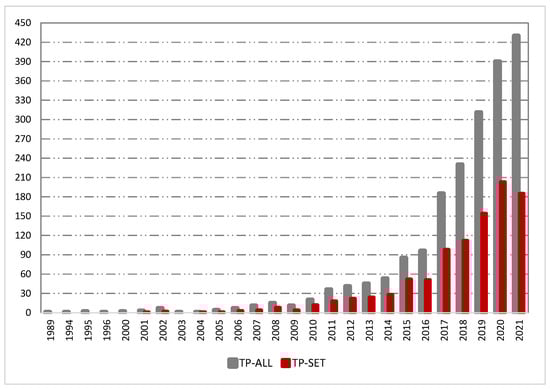
Figure 1.
Number of SET research publications per year. Note: Grey bars indicate the total articles + early access + reviews published in SET research, within the WoS database from 1989 to 2021. Red bars indicate the academic production in SET research (total articles + early access + reviews), within the management and hospitality, leisure sports and tourism categories per year, during the same period.
Another way of analyzing the evolution of SET research is through the number of citations. To evaluate the general citation pattern in SET research, Table 1 presents the overall citation structure of SET investigations. The number of citations was classified by different threshold citation values, including the number of papers that each rank references, the total number of citations received per paper, and the number of citations received during 2021. Note that only five papers reached more than 200 citations, four of which were published in the first decade, suggesting seminal papers that show evidence of the construction of knowledge and learning in SET research. The number of citations received per paper in the last quinquennium is also interesting as they have an average rate of 1316 citations per paper published. Considering the h-index, note that in the first decade it is 29, and in the second decade it reaches 33. This suggests that there are at least that many of papers that have received at least the same number of citations in each decade. Finally, note that the h-index per year has increased over time. Since the h-index is a measure of the impact of research output from individual scientific achievements, this evidences the growing relevance that sustainability has had on entrepreneurship in tourism, destination, and hospitality research. Interestingly, since 2020, the h-index per year has decreased. This might be due to the unprecedented worldwide travel restrictions and stay-at-home instructions that may have impacted the research of new ventures in the tourism, destination, and hospitality industry.

Table 1.
General citation structure of SET research.
One of the most important concerns that bibliometrics are used for is to unveil the most popular and influential articles in SET research. In order to do so, Table 2 presents the 50 most-cited papers until 2021. In this list, the most influential article is [30], portraying the serious problems faced by global tourism within the context of the COVID-19 pandemic. In addition, it is noted that four authors have at least three articles in this top 50 list, namely, Hall, C.M.; Gosling, S.; Scott, D.; and Ryan, C. Of the 102 authors in the list, 90 co-authored one paper each, which suggests a consistent distribution. The works of Hjalager (2010) [55] and Gössling et al. (2021) [56] have become two of the most popular articles, with an outstanding number of citations.
Table 2.
Top 50 most-cited papers on SET research during the 2000–2022 period.
The term “sustainable tourism” has been increasingly adopted at different levels of aggregation by both public and private sectors [58]. As a practice, sustainable tourism has become a paramount success of knowledge transfer that has contributed to the cumulative nature of the entrepreneurial process [104]. As a phenomenon, sustainable tourism has been primed by continuous growth and has a large participation in academic, business, and governance terms [55]. An important aspect when providing an overview of a topic of academic interest is determining the most prolific and preponderant authors in the area of research. Table 3 shows the results of this exploration, ordered by their impact in SET research, considering their h-index.
Table 3.
The top 30 most productive and influential authors in SET research.
In general terms, Hall, C.M. is the author who currently has the greatest impact on SET research, as shown by analyzing the number of citations received in his publications, which collect approximately 29% of all citations made in SET research in Table 3’s list. Other well-known authors within this list include Gössling, S., Scott, D., and Prayag, G., who are also, between themselves, the most productive authors in SET research. Note that when considering the institutions that the most productive and influential authors represent, there is no clearly marked regional domain; the only exception is when the country in which the authors are located is taken into account. In this regard, Australia, the USA, and New Zealand are the countries with the greatest accumulation of the most productive and prominent SET researchers.
The singularities of sustainable new ventures in the tourism, hospitality, and destination sector have drawn the attention of numerous research institutions around the world. To take a more detailed overview in this sense, Table 4 presents the most prolific and preponderant institutions that have addressed SET investigations. This list considers several bibliometric performance indicators in this categorization, such as the specific SET h-index, the total volume of SET articles published, as well as several thresholds of the number of citations received. Furthermore, to obtain a complete overview, additional indicators are included, such as the current global ranking of these institutions, according to the Quacquarelli Symonds (QS) World University Rankings, and the Academic Ranking of World Universities (ARWU).
Table 4.
The top 30 most productive and influential institutions in SET research.
According to the above, the University of Canterbury is the most influential and prolific institution in SET research, considering the specific h-index and the number of papers published in this topic. Three of the most relevant academics in SET investigations presented in Table 3 are from this university, which also explains why the University of Canterbury thus obtains good indicators in this research area. Concerning scientific productivity in investigation topics, the second and third most fruitful research institutions are Linnaeus University and the University of Oulu. The European universities are the most numerous in this ranking, with twelve institutions (40%) on this list, led by Sweden with three institutions. The fact that Europe has the greatest number of institutions participating in SET investigations highlights the common interest in SET research spread throughout the region. It is also noteworthy that the number of institutions and publications from Oceania is greater than the number of publications and institutions from North America, which is surprising compared to other related subjects of research such as social entrepreneurship or eco-tourism, in which North America obtains almost all the top positions [17,105].
Finally, considering the overall indicators of universities, only two of them appear in the top 100 of the QS top ranking universities, and only one in the ARWU ranking. This suggests quite varied influences in the world, but also suggests a lack of interest in these issues on the part of the most influential institutions in the world.
Tourism is one of the most important economic activities worldwide, fostering economic expansion [106]. Based on the premise that sustainability fosters tourism destination competitiveness, countries are increasingly investing in research activities in this sector [107]. Further, with the aim of obtaining a more complete overview of SET research, this section analyzes the subject of sustainability in tourism destination competitiveness research according to the geographical origin of its academic output. Since an author may have several publications when working in different locations, this analysis addresses the country in which the researcher was working at the time of publication. Table 5 presents this analysis considering the top 30 countries in SET research. We use similar indicators previously used in the analysis of institutions, but we also consider the number of years of experience in the topic (YET), which represents the number of years since the author’s first publication. In a similar manner, the results are ordered considering the h-index in SET research. The first tiebreaker is the total number of citations, and the second tiebreaker is the number of papers published in SET research.
Table 5.
The top 30 most productive and influential countries in SET research.
New Zealand is the leading country in SET research considering the impact of its publications as well as the number of citations received, followed closely by Australia and the USA. Likewise, the New Zealand citation level is well above England’s, the second country, considering the number of citations received. Moreover, New Zealand is the country with the most papers among the 50 most influential articles in SET investigations. Additionally, the threshold citation value shows that New Zealand has published most of the principal papers in SET research. This leadership is supported by the years of experience in the topic (i.e., 19 YET), which, together with the Netherlands, are the most experienced countries in this topic of research. Nevertheless, the USA is still the most productive country in terms of SET research.
Note that most of the countries that emerge in this ranking belong to the region of Europe (17 countries), representing more than half of the list. Likewise, seven countries in the list are from the region of Asia, led by China as the most prolific country when considering the number of papers and the numbers of citations received in SET research. However, it is important to highlight the poor productivity in developing countries, both in quantity and influence. Even when emerging economies show concerns related to environmental sustainability and prioritization of tourism [107], this result is to be expected, since the top ranks of the World Economic Forum Travel and Tourism Competitiveness Index are regularly dominated by advanced countries [108].
When analyzing journals, there is important information to be gained when integrating the representation of scientific vigilance of rigorousness in research with an overview of SET research. Table 6 shows the top 30 rankings of journals in SET research. Following the methodology presented in previous analyses, we use the number of papers, the number of citations received, and the h-index, as key indicators to measure the impact of academic output in SET research. As seen previously, articles on SET research are published in a wide spectrum of journals that have adopted aspects related to entrepreneurship, tourism, and sustainability within their scopes of research. From these, only four journals are specialized in sustainability related issues, while six are focused on entrepreneurship topics, and twenty-three are centered on tourism related topics. The most preponderant journals are the Journal of Sustainable Tourism (JST) and the Tourism Management Journal (TMJ), by far. Note that the specific SET h-index of these UK-based journals, as well as their productivity and citation levels, are quite superior to those of the following journals in the list. Gathering 56% of the 50 most preeminent articles, 22.4% of the published papers, and 50.6% of all citations received in this Top 30 ranking, makes them outstandingly the prolific publishers of academic output for SET investigations. Another important journal in the subject is the Annals of Tourism Research, which is the publisher with the most years of experience in publishing SET articles. Further, according to the indicator that shows the number of years of experience for the journals publishing in SET research (EXP), the work carried out by the journal of Entrepreneurship and Sustainability Issues (ESI) should be highlighted, as it appears as the second most productive journal, despite having only four years of experience in publishing SET research. Other journals, such as the Journal of Business Research and the International Entrepreneurship and Management Journal are two publishers who, although not specialized in entrepreneurship, tourism, or sustainability, have become preponderant editors of SET investigations.
Table 6.
The top 30 most influential journals in SET research.
4.2. Science Mapping Analysis of SET Research
As mentioned above, graphic mapping or scientific mapping has become an important methodology in the field of bibliometrics [109]. This methodology aims to provide a spatial representation of how the different scientific actors of a dynamically changing field of knowledge relate to each other [50]. In summary, scientific mapping shows the structural and dynamic aspects of scientific research [110], and can be used as a complementary approach to bibliometric performance indicators [10]. Therefore, in order to obtain a more complete and complementary image of the results previously shown, the graphic mapping of the main scientific actors that publish in SET topics are presented in this section. As mentioned, this analysis is accomplished using the VOSviewer software, which visualizes the bibliographic material through bibliographic coupling [111] and the analysis of citations and co-citations [112]. In this study, we use co-citations and co-occurrence of keywords analyses. Note that shared citations or co-citations study the cited papers and occur when two papers receive a citation in a third paper that has been published. For the purposes of this analysis, the figure shows the two papers that have been cited by the article published in the journal. In the case of this research, the co-citation shows the most-cited SET studies in terms of their topics and connections [113].
To carry out the graphic mapping of this work, the co-citations of the most-cited journals in the SET topic are analyzed first. Figure 2 presents these results with a threshold of 60 for a source, and also the 100 strongest co-citation connections.
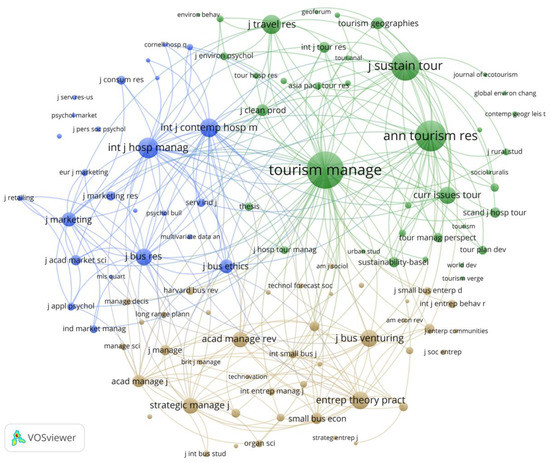
Figure 2.
Co-citations of journals cited in SET research. Note: For a better interpretation of this Figure, see Appendix A with the definition of the journals’ abbreviations.
The figure highlights several journals in three different clusters. The colors represent the links or closeness between these knowledge sources. Likewise, the closeness between them within a cluster represents the relationship of the journals in terms of co-citations. Thus, in the upper right cluster, in the green color, there is a strong co-citation relationship between a group of journals, mainly in regard to tourism. These include Tourism Management, the Journal of Sustainable Tourism, Annals of Tourism Research, and, to a lesser extent, the Journal of Travel Research and Current Issues in Tourism. These last two are not among the most productive journals according to Table 6, but they are journals with a lot of experience in the field (according to the EXP indicator), so they tend to be co-cited in SET research studies. In the lower cluster, which is brown in color, there is a strong co-citation between business journals, such as Entrepreneurship Theory and Practice, the Journal of Business Venturing, Academy of Management Review, and the Strategic Management Journal. Finally, the upper left cluster, in blue, shows a strong relationship between journals from the two areas described above, i.e., tourism and business. These include the Journal of Business Re-search, International Journal of Hospitality Management, and the International Journal of Hospitality Management.
Another interesting aspect to analyze is the co-citation of authors, in other words, the consideration of the most-cited authors in the SET research area and the different connections they have with other researchers. Figure 3 presents the co-citations of authors with a threshold of 50 papers and also the 100 strongest co-citation connections.
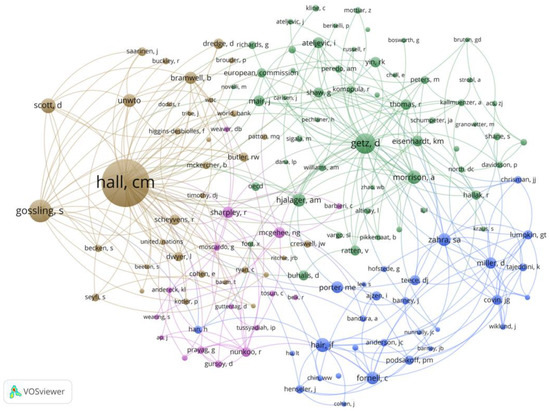
Figure 3.
Co-citations of authors cited in SET research.
According to the above Figure, it is clear that Hall, C.M. is the most-cited author in SET research. Moreover, he is the absolute leader in one of the clusters in the above Figure, in which authors such as Gössling and Scott also stand out. Note that these researchers are by far the most influential in SET research and have several co-authored papers among the top 50 most-cited papers in SET research. However, there are other authors who also stand out in the figure—such as in the case of Getz, Morrison, and Hjalager, in the green cluster, or Zahra and Miller in the blue cluster. It should be noted that in the same cluster, authors such as Hair—who is linked to the development of partial least squares methodologies, which is a type of methodology that is widely used in SET research—are also cited. In general, several of the authors appearing in the figure are among the most productive authors in Table 3 and, therefore, it can be concluded, in this sense, that the results obtained from the performance analysis and graph mapping are consistent among them.
Finally, we come to the analysis of the keywords most used by the authors who publish in the SET research area. Note that the focus of the co-occurrence of keywords is based on the list of keywords provided by the author. The graphic display of these words is accomplished through a network graphic. The size of the circles, which represent a keyword, are larger according to the relevance of this word in SET research. The network connections of these words are used to identify the most closely linked keywords. Figure 4 presents the results, considering a threshold of 5 occurrences and the 115 most frequent co-occurrences.
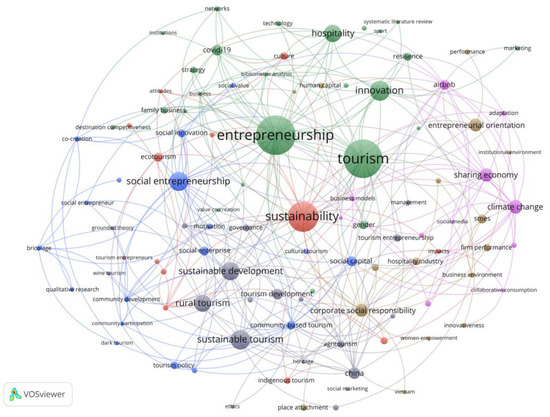
Figure 4.
Mapping of the co-occurrences of keywords in SET research.
At first glance, it can be seen that the subject matter of the articles published in the SET area is very varied; however, this is with concepts that logically stand out because they are the ones that guide this study, i.e., entrepreneurship, tourism, and sustainability. However, other keywords, such as innovation and hospitality, also stand out as very close to the top keywords. The gray cluster highlights some themes that are related to rural tourism and sustainable tourism. For example, COVID-19 appears as a keyword that has taken on relative relevance in SET research. Obviously, other keywords with less relevance in the field are observed, but they do manage to appear in the SET research areas. These issues still have a great deal of potential and it is hoped, therefore, that SET researchers will be able to nurture these topics in a period of post-pandemic reactivation. Logically, it is expected that this period will be fruitful for SET researchers.
5. Discussions
The results of this study are obtained from the use of two bibliometric techniques—which, by complementing each other, provide studies of this type with greater robustness and consistency [8]—namely, the use of bibliometric performance analysis and a graphic mapping of science analysis.
The bibliometric performance analysis shows that the SET research field has seen a significant increase in the number of studies, especially during the last decade. An interesting milestone to note is that articles published in the last decade are very influential compared to those generated in previous years. It is likely that this last decade has seen the development of those articles that will be the trendsetters for the further development of this subject of study. Beyond this, the performance analysis shows that the SET field is being led mainly by English-speaking countries. The USA is the country showing the highest productivity. This country generally leads the rankings of scientific productivity in most disciplines [11,14]. Regarding impact or influence, however, this study shows that New Zealand is the most influential country for this field of study, showing the highest number of citations and the highest h-index. This is consistent with the historical importance of the tourism industry in New Zealand’s economic development. This result is also striking to us because they are different from similar studies analyzing the field intersecting tourism and sustainability (e.g., [114,115]), which show the USA as the absolute leader in that field (both in productivity and influence), demonstrating the consistency of our analysis and the projection of SET research. It is also important to mention that although SET research is concentrated in English-speaking countries, many other countries have also been publishing and influencing the development of this topic in recent years, such as Scandinavian and other European countries. However, the analysis also shows the absence of less-developed countries such as those in Latin America (except for Brazil), and it is therefore expected that these countries, which have great potential to sustainably develop their tourism industries, could encourage SET research. Despite the above, the analysis shows, in general terms, a growing concern for the sustainable development of entrepreneurship in the tourism sector.
Although the USA leads with productivity in the SET field, this is not similarly and clearly reflected in the list of the most productive and influential institutions. In fact, only 5 of the 30 institutions presented in our analysis are of North American origin, which shows an interesting dispersion of institutions that have been making efforts to continue developing this line of research. Thus, several universities from different countries have an interesting presence and influence in the list, such as universities in Oceania, including the University of Canterbury in New Zealand, or universities in the Nordic countries, with Linnaeus University in Sweden or the Western Norway Research Institute in Norway. At the European level, these results should also be considered, since countries such as the United Kingdom tend to lead research in this region. Finally, analysis by institutions/universities in related fields, such as tourism–sustainability, are not common. As such, the information provided by this study is valuable for policy makers and the scientific community focused on SET.
Taking onboard the analysis of the researchers, our results follow a similar trend to those shown above, with those from New Zealand and Scandinavian countries leading the SET field. Thus, Hall, C.M. from the University of Canterbury is, without a doubt, the absolute leader in this field of study in terms of both productivity and influence. The scientific mapping, and in particular, the analysis of author co-citations, corroborates the results of the researcher analysis. In this way, researchers such as Gössling and Scott, affiliated with Scandinavian universities, but who have a strong collaboration with Hall, C.M., should also be highlighted. Other studies focused on the field of tourism–sustainability, such as that of Garrigos-Simon and others [114], also highlight the collaboration between these authors, and their strong orientation to publish in the SET research field. In general, the analyses performed with both bibliometric techniques show that a large number of researchers are associated with this field. It is likely that several of them have applied their main line of research to this field, for example, Zahra, S., a well-known and influential researcher in the field of entrepreneurship, who has developed some ideas in SET research. Finally, our analysis did not include researchers from developing countries.
Given the particular field of research addressed by this study, it was expected that the most productive and influential journals would have a clear focus on the field of sustainability, but also on tourism and entrepreneurship. According to our bibliometric performance analysis, the most productive and influential journal in SET research is the Journal of Sustainable Tourism (JST). This journal is the seventh best positioned in the Journal Citation Reports’ (JCR) ranking in the area of hospitality, leisure, sport and tourism. In addition, other journals in this area stand out in our results, such as Tourism Management (TM) or the International Journal of Contemporary Hospitality Management (IJCHM), both of which have good indicators of productivity and influence. The importance of these journals is also corroborated in the graphic mapping conducted in this study. This same analysis is complemented by the analysis of bibliometric performance and shows how clusters of journals, mainly focused on entrepreneurship and tourism, form the structure of SET research. However, our results, especially those from the performance analysis, also show that journals in the areas of business and entrepreneurship have weak leadership in this field, which is considered an interesting opportunity to exploit. Finally, it is important to note that the general results of both bibliometric techniques are similar to those found by Niñerola and others [115], who focus only on tourism and sustainability.
SET research has a great potential for projection given the efforts of the tourism sector to position sustainability as a value/stamp among the different actors involved in it. The graphic mapping presented in this study shows how SET research has been structured. In general, this analysis corroborates and complements the findings of the bibliometric performance analysis of this study. However, it also shows, from the analysis of the co-citation of keywords, the various topics that are being worked on and others that appear with less importance in the field, which suggests an opportunity to explore research opportunities in this field. Therefore, in SET research, several topics that appear in the visualization can make an important contribution to this field, such as business models, adaptation, bricolage, or the institutional environment.
6. Conclusions
Sustainability is a concept widely used by various actors around the world, especially by policy makers and the scientific community, who consider it a priority for companies, nations, and for society as a whole [116]. Given its importance, some of the world’s leading organizations, such as the World Tourism Organization (UNWTO), have declared the sustainable development of their industry as a relevant aspect, despite the fact that, globally, the industry is considered less sustainable than ever [64]. In this context, entrepreneurship in the tourism sector has become especially relevant for the industry to assume responsibility for reducing its impact on the environment and thus contribute to sustainability. In the last decade, the scientific community has paid special attention to sustainable entrepreneurship in the tourism sector, which is reflected in the significant growth of knowledge focused on this phenomenon. Therefore, the main objective of this study was to present an overview of the research developed to date in the field of research that arises from the intersection of three important fields of study, namely tourism, entrepreneurship, and sustainability—which, in this study, we refer to as SET research.
To meet this objective, bibliometric techniques widely recognized in the scientific literature were used, such as bibliometric performance analysis and scientific mapping [7]. These allow for quantitative and qualitative analyses of the structure of knowledge generated in SET research. Our findings help to organize and structure the literature and show the performance and relationships of the main scientific actors involved in SET research, such as authors, universities, and countries. In this sense, our study shows that a broad scientific community, from different parts of the world, has been contributing new knowledge, which demonstrates the growing international interest in sustainability in entrepreneurship in the tourism industry. Even so, and as is generally the case, the most advanced countries, which also base their economies on tourism, are the ones with the best bibliometric performance in SET research. Such is the case of the USA, England, New Zealand, and Australia, in which the main institutions/universities and the most productive and influential authors are concentrated.
6.1. Theoretical and Practical Implications
To the best of our knowledge, this is the first bibliometric study that focuses on the field of SET research. Therefore, the information contained in this study may be important for various stakeholders, considering that the sustainable development of business and tourism is more relevant than ever to our society.
For example, for the SET scientific community, this study offers a visualization with several interdisciplinary themes that are important to foster the sustainability of tourism ventures. Thus, solutions to address this phenomenon should include issues such as destination development, integration of public–private actions, institutional environment, the implementation of incentives for sustainable development considering the geographic space, the community, and entrepreneurial behavior, among other aspects. With this in mind, future research questions should explore the antecedents that drive sustainability-based tourism ventures. Some examples of these questions are as follows:
- How is the behavior of tourism entrepreneurs in geographical areas exposed to conflicts, adversities, or crises?
- How do the institutional environment or tourism policies influence the promotion of sustainable entrepreneurship in the sector?
- What factors influence the adaptation of traditional business models to orient them towards the creation of sustainable value?
In summary, these questions and several other topics associated with entrepreneurship, such as gender, motivation, or bricolage, may be very interesting to explore in association with SET research.
On the other hand, public policy advisors could find relevant information on contingent SET issues or on the main scientific actors that are contributing to this important field of study. Having this information would serve to strengthen and expand science through the creation of research networks with the identified scientific actors. Policy advisors could use this information to take note of the relevance of the field and, in the case of developing countries, for example, use it when deciding to give greater emphasis and priority to funding projects that contribute to the field.
6.2. Limitations
Finally, our study presents several limitations that we would like to make transparent. First, the changing dynamics of science must be considered; if we add the increasing relevance of SET-related topics, this implies that part of the data and indicators presented in this study may vary over time. However, this study is purely informative and is intended to provide a general guide to the main actors in SET research, which may also be updated from time to time. Second, this study analyzed particular references according to the Web of Science (WoS) database, such as articles, reviews, letters, and notes, which may exclude important references in this field. In addition, other databases are of similar relevance and using them can solve the endemic problems of reference exclusion. Therefore, future updates of this study may incorporate references from databases such as EBSCO, ProQuest, or Scopus in their analysis. Another limitation derived from the use of the WoS database is that the complete count system used by this database gives more relevance to references with more than one author. For this purpose, the scientific mapping is performed with VOSviewer since it neutralizes this limitation by using a fractional counting system [6,15]. Despite these limitations, we believe that this study succeeds in highlighting the various scientific actors who are contributing to this important field of research.
Author Contributions
Conceptualization, N.A.-V., H.B.-F., and M.G.-M.; methodology, N.A.-V., H.B.-F., and M.G.-M.; software, formal analysis, and data curation, N.A.-V., H.B.-F., and M.G.-M.; project administration, N.A.-V., H.B.-F., and M.G.-M.; investigation and funding acquisition, N.A.-V., H.B.-F., and M.G.-M.; writing—original draft preparation, N.A.-V., H.B.-F., and M.G.-M.; writing—review and editing, N.A.-V., H.B.-F., and M.G.-M.; visualization, N.A.-V., H.B.-F., and M.G.-M. All authors have read and agreed to the published version of the manuscript.
Funding
The APC was funded by Universidad Católica de la Santísima Concepción. The author, H.B-F. acknowledges partial support from the Research Department of the Universidad Católica de la Santísima Concepción for facilitating this research through funding from project DIREG 11/2020.
Institutional Review Board Statement
Not applicable.
Informed Consent Statement
Not applicable.
Data Availability Statement
Data requests should be made to the corresponding author, at mgaviria@ucsc.cl.
Conflicts of Interest
The authors declare no conflict of interest.
Appendix A
Table A1.
Definitions of the journals’ abbreviations.
Table A1.
Definitions of the journals’ abbreviations.
| R | Journal Abbreviations | Journal Title | Citations | Total Link Strength |
|---|---|---|---|---|
| 1 | Acad. Manag. J. | Academy of Management Journal | 404 | 20,876 |
| 2 | Acad. Manag. Perspect. | Academy of Management Perspectives | 68 | 3227 |
| 3 | Acad. Manag. Rev. | Academy of Management Review | 585 | 25,643 |
| 4 | Admin. Sci. Quart. | Administrative Science Quarterly | 226 | 11,259 |
| 5 | Am. Econ. Rev. | American Economic Review | 73 | 2185 |
| 6 | Am. J. Social. | American Journal of Sociology | 99 | 3725 |
| 7 | Anatolia | Anatolia | 99 | 3661 |
| 8 | Ann. Tourism Res. | Annals of Tourism Research | 1872 | 59,507 |
| 9 | Asia. Pac. J. Tour. Res. | Asia Pacific Journal of Tourism Research | 174 | 8291 |
| 10 | Brit. J. Manage. | British Journal of Management | 87 | 4245 |
| 11 | Bus. Horizons | Business Horizons | 85 | 3420 |
| 12 | Bus. Strateg. Environ. | Business Strategy and the Environment | 95 | 4067 |
| 13 | Calif. Manage. Rev. | California Management Review | 103 | 4200 |
| 14 | Case Study Res. Desig. | Case Study Research Design | 63 | 2024 |
| 15 | Contemp. Geogr. Leis. T. | Contemporary Geographies of Leisure, Tourism and Mobility | 98 | 2939 |
| 16 | Cornell Hosp. Q. | Cornell Hospitality Quarterly | 78 | 5323 |
| 17 | Cornell Hotel and Restaurant Administration Quarterly | The Cornell Hotel and Restaurant Administration Quarterly | 70 | 4498 |
| 18 | Corp. Soc. Resp. Environ. Ma. | Corporate Social Responsibility and Environmental Management | 67 | 3318 |
| 19 | Curr. Issues Tour. | Current Issues in Tourism | 512 | 19,305 |
| 20 | Current Issues Tourism | Current Issues in Tourism | 159 | 4828 |
| 21 | Ecol. Econ. | Ecological Economics | 123 | 3965 |
| 22 | Entrep. Region. Dev. | Entrepreneurship & Regional Development | 266 | 10,607 |
| 23 | Entrep. Theory Pract. | Entrepreneurship Theory and Practice | 729 | 32,232 |
| 24 | Environ. Behave. | Environment and Behavior | 61 | 2683 |
| 25 | Environ. Plan. A | Environment and Planning A | 88 | 2640 |
| 26 | Eur. J. Marketing | European Journal of Marketing | 157 | 7311 |
| 27 | Fam. Bus. Rev. | Family Business Review | 160 | 8950 |
| 28 | Geoforum | Geoforum | 61 | 1915 |
| 29 | Global Environ. Chang. | Global Environmental Change | 73 | 1623 |
| 30 | Harvard Bus. Rev. | Harvard Business Review | 197 | 7850 |
| 31 | Ind. Market Manag. | Industrial Marketing Management | 192 | 8778 |
| 32 | Int. Entrep. Manag. J. | Journal of Vacation Marketing | 184 | 8485 |
| 33 | Int. J. Contemp. Hosp. M. | International Journal of Contemporary Hospitality Management | 617 | 38,757 |
| 34 | Int. J. Entrep. Behave. R. | International Journal of Entrepreneurial Behavior & Research | 207 | 7702 |
| 35 | Int. J. Hosp. Manag. | International Journal of Hospitality Management | 816 | 47,855 |
| 36 | Int. J. Manag. Rev. | International Journal of Management Reviews | 84 | 3818 |
| 37 | Int. J. Tour. Res. | International Journal of Tourism Research | 236 | 12,030 |
| 38 | Int. Small Bus. J. | International Small Business Journal, | 180 | 8569 |
| 39 | J. Acad. Market Sci. | Journal of the Academy of Marketing Science | 283 | 14,859 |
| 40 | J. Appl. Psychol. | Journal of Applied Psychology | 186 | 10,493 |
| 41 | J. Bus. Ethics | Journal of Business Ethics | 462 | 17,744 |
| 42 | J. Bus. Res. | Journal of Business Research | 667 | 30,342 |
| 43 | J. Bus. Venturing | Journal of Business Venturing | 701 | 30,938 |
| 44 | J. Clean. Prod. | Journal of Cleaner Production | 354 | 13,752 |
| 45 | J. Consum. Res. | Journal of Consumer Research | 218 | 8491 |
| 46 | J. Destin. Mark. Manag. | Journal of Destination Marketing & Management | 126 | 5698 |
| 47 | J. Enterp. Communities | Journal of Enterprising Communities | 76 | 2153 |
| 48 | J. Environ. Psychol. | Journal of Environmental Psychology | 185 | 7397 |
| 49 | J. Fam. Bus. Strateg. | Journal of Family Business Strategy | 64 | 3832 |
| 50 | J. Herit. Tour. | Journal of Heritage Tourism | 79 | 2207 |
| 51 | J. Hosp. Market. Manag. | Journal of Hospitality Marketing & Management | 128 | 10,383 |
| 52 | J. Hosp. Tour. Manag. | Journal of Hospitality and Tourism Management | 177 | 8671 |
| 53 | J. Hosp. Tour. Res. | Journal of Hospitality & Tourism Research | 129 | 8003 |
| 54 | J. Int. Bus. Stud. | Journal of International Business Studies | 132 | 6300 |
| 55 | J. Manag. | Journal of Management | 293 | 15,859 |
| 56 | J. Manag. Stud. | Journal of Management Studies | 189 | 9809 |
| 57 | J. Marketing | Journal of Marketing | 516 | 23,559 |
| 58 | J. Marketing Res. | Journal of Marketing Research | 253 | 12,200 |
| 59 | J. Pers. Soc. Psychol. | Journal of Personality and Social Psychology | 94 | 4284 |
| 60 | J. Prod. Innovate. Manag. | Journal of Product Innovation Management | 91 | 4404 |
| 61 | J. Retail. Consum. Serv. | Journal of Retailing and Consumer Services | 73 | 3310 |
| 62 | J. Retailing. | Journal of Retailing | 120 | 7053 |
| 63 | J. Rural. Stud. | Journal of Rural Studies | 147 | 4645 |
| 64 | J. Serv. Mark. | Journal of Services Marketing | 88 | 4562 |
| 65 | J. Serv. Res-us | Journal of Service Research | 81 | 5174 |
| 66 | J. Small. Bus. Enterp. D. | Journal of Small Business and Enterprise Development | 105 | 4340 |
| 67 | J. Small Bus. Manag. | Journal of Small Business Management | 272 | 12,372 |
| 68 | J. Small Business Ent. | Journal of Small Business and Enterprise Development | 87 | 3408 |
| 69 | J. Soc. Entrep. | Journal of Social Entrepreneurship | 70 | 1944 |
| 70 | J. Sustain. Tour. | Journal of Sustainable Tourism | 1625 | 81,471 |
| 71 | J. Travel Res. | Journal of Travel Research | 493 | 20,772 |
| 72 | J. Travel Tour. Mark. | Journal of Travel & Tourism Marketing | 148 | 6923 |
| 73 | J. World Bus. | Journal of World Business | 150 | 5809 |
| 74 | Journal of Ecotourism | Journal of Ecotourism | 67 | 1986 |
| 75 | Journal of Travel & Tourism Marketing | Journal of Travel & Tourism Marketing | 60 | 3242 |
| 76 | Long Range Plan. | Long range Planning | 102 | 5019 |
| 77 | Manage. Decis. | Management Decision | 153 | 6846 |
| 78 | Manage. Sci. | Management Science | 138 | 6474 |
| 79 | Mis Quart. | MIS Quarterly | 62 | 2817 |
| 80 | Multivariate Data An. | Multivariate Data Analysis | 97 | 4108 |
| 81 | Organ. Res. Methods | Organizational Research Methods | 60 | 2709 |
| 82 | Organ. Sci. | Organization Science | 171 | 9472 |
| 83 | Organ. Stud. | Organization Studies | 82 | 3678 |
| 84 | Procd. Soc. Behv. | Procedia Social and Behavioral Sciences | 104 | 4323 |
| 85 | Psychol. Bull. | Psychological Bulletin | 97 | 4274 |
| 86 | Psychol. Market. | Psychology & Marketing | 69 | 2758 |
| 87 | Res. Policy | Research Policy | 169 | 6399 |
| 88 | Scand. J. Hosp. Tour. | Scandinavian Journal of Hospitality and Tourism | 281 | 8896 |
| 89 | Serv. Ind. J. | Service Industries Journal | 196 | 11,589 |
| 90 | Small Bus. Econ. | Small business Economics | 342 | 15,450 |
| 91 | Social Entrepreneurs | Journal of Social Entreneurship | 75 | 1961 |
| 92 | Social. Ruralis. | Sociologia Ruralis | 67 | 2558 |
| 93 | Strateg. Entrep. J. | Strategic Entrepreneurship Journal | 78 | 3890 |
| 94 | Strategic Manage. J. | Strategic Management Journal | 586 | 28,998 |
| 95 | Sustainability-Basel | Sustainability Basel | 284 | 9975 |
| 96 | Technol. Forecast Soc. | Technological Forecasting and Social Change | 106 | 4906 |
| 97 | Technovation | Tourism Review | 64 | 2346 |
| 98 | Thesis | Thesis | 198 | 4834 |
| 99 | Tour. Anal. | Tourism Analysis | 100 | 3980 |
| 100 | Tour. Hosp. Res. | Tourism and Hospitality Research | 127 | 4962 |
| 101 | Tour. Manag. Perspect. | Tourism Management Perspectives | 257 | 10,032 |
| 102 | Tour. Plan. Dev. | Tourism Planning & Development | 221 | 8556 |
| 103 | Tour. Recreat. Res. | Tourism Recreation Research | 199 | 6498 |
| 104 | Tour. Rev. | Tourism Review | 157 | 5738 |
| 105 | Tourism | Tourism | 65 | 2311 |
| 106 | Tourism Econ. | Tourism Economics | 109 | 3820 |
| 107 | Tourism Geogr. | tourism geography | 281 | 8675 |
| 108 | Tourism Manag. | tourism manage | 2587 | 95,562 |
| 109 | Urban Stud. | Urban Studies | 77 | 1640 |
| 110 | World Dev. | World Development | 74 | 2366 |
References
- Sørensen, F.; Grindsted, T.S. Sustainability Approaches and Nature Tourism Development. Ann. Tour. Res. 2021, 91, 103307. [Google Scholar] [CrossRef]
- Fletcher, R.; Murray Mas, I.; Blanco-Romero, A.; Blázquez-Salom, M. Tourism and Degrowth: An Emerging Agenda for Research and Praxis. J. Sustain. Tour. 2019, 27, 1745–1763. [Google Scholar] [CrossRef]
- Álvarez-García, J.; Hormiga-Pérez, E.; Sarango-Lalangui, P.O.; Río-Rama, M.D.L.C.D. Leaders’ Sustainability Competences and Small and Medium–Sized Enterprises Outcomes: The Role of Social Entrepreneurial Orientation. Sustain. Dev. 2022, 30, 927–943. [Google Scholar] [CrossRef]
- Andrade-Valbuena, N.A.; Merigo-Lindahl, J.M.; Olavarrieta, S.S. Bibliometric Analysis of Entrepreneurial Orientation. World J. Entrep. Manag. Sustain. Dev. 2019, 15, 45–69. [Google Scholar] [CrossRef]
- Solvoll, S.; Alsos, G.A.; Bulanova, O. Tourism Entrepreneurship—Review and Future Directions. Scand. J. Hosp. Tour. 2015, 15, 120–137. [Google Scholar] [CrossRef]
- Andrade-Valbuena, N.A.; Merigo, J.M. Outlining New Product Development Research through Bibliometrics: Analyzing Journals, Articles and Researchers. J. Strateg. Manag. 2018, 11, 328–350. [Google Scholar] [CrossRef]
- Gutiérrez-Salcedo, M.; Martínez, M.A.; Moral-Munoz, J.A.; Herrera-Viedma, E.; Cobo, M.J. Some Bibliometric Procedures for Analyzing and Evaluating Research Fields. Appl. Intell. 2018, 48, 1275–1287. [Google Scholar] [CrossRef]
- Cobo, M.J.; López-Herrera, A.G.; Herrera-Viedma, E.; Herrera, F. An Approach for Detecting, Quantifying, and Visualizing the Evolution of a Research Field: A Practical Application to the Fuzzy Sets Theory Field. J. Informetr. 2011, 5, 146–166. [Google Scholar] [CrossRef]
- Muhuri, P.K.; Shukla, A.K.; Abraham, A. Industry 4.0: A Bibliometric Analysis and Detailed Overview. Eng. Appl. Artif. Intell. 2019, 78, 218–235. [Google Scholar] [CrossRef]
- Gaviria-Marin, M.; Merigó, J.M.; Baier-Fuentes, H. Knowledge Management: A Global Examination Based on Bibliometric Analysis. Technol. Forecast. Soc. Change 2019, 140, 194–220. [Google Scholar] [CrossRef]
- Ramos-Rodríguez, A.-R.; Ruíz-Navarro, J. Changes in the Intellectual Structure of Strategic Management Research: A Bibliometric Study of the Strategic Management Journal, 1980–2000. Strateg. Manag. J. 2004, 25, 981–1004. [Google Scholar] [CrossRef]
- Baier-Fuentes, H.; González-Serrano, M.H.; Alonso-Dos Santos, M.; Inzunza-Mendoza, W.; Pozo-Estrada, V. Emotions and Sport Management: A Bibliometric Overview. Front. Psychol. 2020, 11, 1512. [Google Scholar] [CrossRef] [PubMed]
- Andrade-Valbuena, N.A.; Valenzuela-Fernández, L.; Merigó, J.M. Thirty-Five Years of Strategic Management Research. A Country Analysis Using Bibliometric Techniques for the 1987–2021 Period. Cuad. Gest. 2022, 22, 7–22. [Google Scholar] [CrossRef]
- Andrade-Valbuena, N.A.; Merigó-Lindahl, J.M.; Fernández, L.V.; Alarcón, C.N. Mapping Leading Universities in Strategy Research: Three Decades of Collaborative Networks. Cogent Bus. Manag. 2019, 6, 1632569. [Google Scholar] [CrossRef]
- Baier-Fuentes, H.; Merigó, J.M.; Amorós, J.E.; Gaviria-Marin, M. International Entrepreneurship: A Bibliometric Overview. Int. Entrep. Manag. J. 2019, 15, 385–429. [Google Scholar] [CrossRef]
- Huertas González-Serrano, M.; Jones, P.; Llanos-Contrera, O. An Overview of Sport Entrepreneurship Field: A Bibliometric Analysis of the Articles Published in the Web of Science. Sport Soc. 2020, 23, 296–314. [Google Scholar] [CrossRef]
- Rey-Martí, A.; Ribeiro-Soriano, D.; Palacios-Marqués, D. A Bibliometric Analysis of Social Entrepreneurship. J. Bus. Res. 2016, 69, 1651–1655. [Google Scholar] [CrossRef]
- Lordkipanidze, M.; Brezet, H.; Backman, M. The Entrepreneurship Factor in Sustainable Tourism Development. J. Clean. Prod. 2005, 13, 787–798. [Google Scholar] [CrossRef]
- Gursoy, D.; Ouyang, Z.; Nunkoo, R.; Wei, W. Residents’ Impact Perceptions of and Attitudes towards Tourism Development: A Meta-Analysis. J. Hosp. Mark. Manag. 2019, 28, 306–333. [Google Scholar] [CrossRef]
- Brooks, A.; Heaslip, V. Sex Trafficking and Sex Tourism in a Globalised World. Tour. Rev. 2019, 74, 1104–1115. [Google Scholar] [CrossRef]
- Smith, O. Luxury, Tourism and Harm: A Deviant Leisure Perspective. In Deviant Leisure; Raymen, T., Smith, O., Eds.; Springer: Berlin/Heidelberg, Germany, 2019; pp. 305–323. [Google Scholar]
- Caserta, S.; Russo, A.P. More Means Worse: Asymmetric Information, Spatial Displacement and Sustainable Heritage Tourism. J. Cult. Econ. 2002, 26, 245–260. [Google Scholar] [CrossRef]
- Zhao, J.; Min Li, S. The Impact of Tourism Development on the Environment in China. Acta Sci. Malaysia 2018, 2, 1–4. [Google Scholar] [CrossRef]
- Duigman, M. ‘Overtourism’? Understanding and managing urban tourism growth beyond perceptions: Cambridge case study: Strategies and tactics to tackle overtourism. In ‘Overtourism’? Understanding and Managing Urban Tourism Growth Beyond Perceptions: Case Studies; United Nations World Tourism Organisation (UNWTO): Madrid, Spain, 2019; pp. 34–39. [Google Scholar]
- Ramadani, V.; Agarwal, S.; Caputo, A.; Agrawal, V.; Dixit, J.K. Sustainable Competencies of Social Entrepreneurship for Sustainable Development: Exploratory Analysis from a Developing Economy. Bus. Strateg. Environ. 2022, 1–17. [Google Scholar] [CrossRef]
- Kokkranikal, J.; Morrison, A. Entrepreneurship and Sustainable Tourism: The Houseboats of Kerala. Tour. Hosp. Res. 2002, 4, 7–20. [Google Scholar] [CrossRef]
- Yachin, J.M.; Ioannides, D. “Making Do” in Rural Tourism: The Resourcing Behaviour of Tourism Micro-Firms. J. Sustain. Tour. 2020, 28, 1003–1021. [Google Scholar] [CrossRef]
- Chan, J.H.; Chen, S.Y.; Ji, Z.; Zhang, Y.; Qi, X. Self-gentrification as a pro-active response to tourism development: Cases of indigenous entrepreneurship in Mainland China and Taiwan. In Indigenous Wellbeing and Enterprise: Self-Determination and Sustainable Economic Development; Taylor Francis Group: Abingdon, UK, 2020; pp. 165–191. [Google Scholar]
- Chidakel, A.; Child, B. Convergence and Divergence in the Economic Performance of Wildlife Tourism within Multi-Reserve Landscapes. Land Use policy 2022, 120, 106252. [Google Scholar] [CrossRef]
- Gössling, S.; Michael Hall, C. Sharing versus Collaborative Economy: How to Align ICT Developments and the SDGs in Tourism? J. Sustain. Tour. 2019, 27, 74–96. [Google Scholar] [CrossRef]
- Vieira, E.S.; Gomes, J.A.N.F. A Comparison of Scopus and Web of Science for a Typical University. Scientometrics 2009, 81, 587–600. [Google Scholar] [CrossRef]
- Bhatnagar, S.; Sharma, D. Evolution of Green Finance and Its Enablers: A Bibliometric Analysis. Renew. Sustain. Energy Rev. 2022, 162, 112405. [Google Scholar] [CrossRef]
- Bar-Ilan, J. Citations to the “Introduction to Informetrics” Indexed by WOS, Scopus and Google Scholar. Scientometrics 2010, 82, 495–506. [Google Scholar] [CrossRef]
- Murgado-Armenteros, E.M.; Gutiérrez-Salcedo, M.; Torres-Ruiz, F.J.; Cobo, M.J. Analysing the Conceptual Evolution of Qualitative Marketing Research through Science Mapping Analysis. Scientometrics 2015, 102, 519–557. [Google Scholar] [CrossRef]
- Li, K.; Rollins, J.; Yan, E. Web of Science Use in Published Research and Review Papers 1997–2017: A Selective, Dynamic, Cross-Domain, Content-Based Analysis. Scientometrics 2018, 115, 1–20. [Google Scholar] [CrossRef] [PubMed]
- Singh, V.K.; Singh, P.; Karmakar, M.; Leta, J.; Mayr, P. The Journal Coverage of Web of Science, Scopus and Dimensions: A Comparative Analysis. Scientometrics 2021, 126, 5113–5142. [Google Scholar] [CrossRef]
- Merigó, J.M.; Mas-Tur, A.; Roig-Tierno, N.; Ribeiro-Soriano, D. A Bibliometric Overview of the Journal of Business Research between 1973 and 2014. J. Bus. Res. 2015, 68, 2645–2653. [Google Scholar] [CrossRef]
- Markoulli, M.P.; Lee, C.I.S.G.; Byington, E.; Felps, W.A. Mapping Human Resource Management: Reviewing the Field and Charting Future Directions. Hum. Resour. Manag. Rev. 2017, 27, 367–396. [Google Scholar] [CrossRef]
- Gurzki, H.; Woisetschläger, D.M. Mapping the Luxury Research Landscape: A Bibliometric Citation Analysis. J. Bus. Res. 2017, 77, 147–166. [Google Scholar] [CrossRef]
- Kim, H.; So, K.K.F. Two Decades of Customer Experience Research in Hospitality and Tourism: A Bibliometric Analysis and Thematic Content Analysis. Int. J. Hosp. Manag. 2022, 100, 103082. [Google Scholar] [CrossRef]
- Zhang, D.; Zhang, Z.; Managi, S. A Bibliometric Analysis on Green Finance: Current Status, Development, and Future Directions. Financ. Res. Lett. 2019, 29, 425–430. [Google Scholar] [CrossRef]
- Merigó, J.M.; Cancino, C.A.; Coronado, F.; Urbano, D. Academic Research in Innovation: A Country Analysis. Scientometrics 2016, 108, 559–593. [Google Scholar] [CrossRef]
- Podsakoff, P.M.; MacKenzie, S.B.; Podsakoff, N.P.; Bachrach, D.G. Scholarly Influence in the Field of Management: A Bibliometric Analysis of the Determinants of University and Author Impact in the Management Literature in the Past Quarter Century. J. Manage. 2008, 34, 641–720. [Google Scholar] [CrossRef]
- Mody, M.A.; Hanks, L.; Cheng, M. Sharing Economy Research in Hospitality and Tourism: A Critical Review Using Bibliometric Analysis, Content Analysis and a Quantitative Systematic Literature Review. Int. J. Contemp. Hosp. Manag. 2021, 33, 1711–1745. [Google Scholar] [CrossRef]
- Small, H. Co-citation in the Scientific Literature: A New Measure of the Relationship between Two Documents. J. Am. Soc. Inf. Sci. 1973, 24, 265–269. [Google Scholar] [CrossRef]
- Servantie, V.; Cabrol, M.; Guieu, G.; Boissin, J.-P. Is International Entrepreneurship a Field? A Bibliometric Analysis of the Literature (1989–2015). J. Int. Entrep. 2016, 14, 168–212. [Google Scholar] [CrossRef]
- Hirsch, J.E. An Index to Quantify an Individual’s Scientific Research Output That Takes into Account the Effect of Multiple Coauthorship. Scientometrics 2010, 85, 741–754. [Google Scholar] [CrossRef]
- Hirsch, J.E.; Buela-Casal, G. The Meaning of the H-Index. Int. J. Clin. Heal Psychol. 2014, 14, 161–164. [Google Scholar] [CrossRef]
- Baier-Fuentes, H.; Cascón-Katchadourian, J.; Martínez, M.A.; Herrera-Viedma, E.; Merigó, J.M. A Bibliometric Overview of the International Journal of Interactive Multimedia and Artificial Intelligence. Int. J. Interact. Multimed. Artif. Intell. 2018, 5, 9–16. [Google Scholar] [CrossRef]
- Jeong, Y.K.; Song, M.; Ding, Y. Content-Based Author Co-Citation Analysis. J. Informetr. 2014, 8, 197–211. [Google Scholar] [CrossRef]
- Kraus, S.; Li, H.; Kang, Q.; Westhead, P.; Tiberius, V. The Sharing Economy: A Bibliometric Analysis of the State-of-the-Art. Int. J. Entrep. Behav. Res. 2020, 26, 1769–1786. [Google Scholar] [CrossRef]
- United Nations. Transforming Our World: The 2030 Agenda for Sustainable Development; United Nations: New York City, NY, USA, 2015; pp. 1–35. [Google Scholar]
- Terán-Yépez, E.; Marín-Carrillo, G.M.; del Pilar Casado-Belmonte, M.; de las Mercedes Capobianco-Uriarte, M. Sustainable Entrepreneurship: Review of Its Evolution and New Trends. J. Clean. Prod. 2020, 252, 119742. [Google Scholar] [CrossRef]
- Ruhanen, L.; Weiler, B.; Moyle, B.D.; McLennan, C.-L.J. Trends and Patterns in Sustainable Tourism Research: A 25-Year Bibliometric Analysis. J. Sustain. Tour. 2015, 23, 517–535. [Google Scholar] [CrossRef]
- Hjalager, A.M. A Review of Innovation Research in Tourism. Tour. Manag. 2010, 31, 1–12. [Google Scholar] [CrossRef]
- Gössling, S.; Scott, D.; Hall, C.M. Pandemics, Tourism and Global Change: A Rapid Assessment of COVID-19. J. Sustain. Tour. 2021, 29, 1–20. [Google Scholar] [CrossRef]
- Byrd, E.T.; Bosley, H.E.; Dronberger, M.G. Comparisons of Stakeholder Perceptions of Tourism Impacts in Rural Eastern North Carolina. Tour. Manag. 2009, 30, 693–703. [Google Scholar] [CrossRef]
- Hall, M.C. Policy Learning and Policy Failure in Sustainable Tourism Governance: From FIrst- and Second-Order to Third-Order Change? J. Sustain. Tour. 2011, 19, 649–671. [Google Scholar] [CrossRef]
- Ryan, C. Equity, Management, Power Sharing and Sustainability-Issues of the “New Tourism”. Tour. Manag. 2002, 23, 17–26. [Google Scholar] [CrossRef]
- Zapata, M.J.; Hall, C.M.; Lindo, P.; Vanderschaeghe, M. Can Community-Based Tourism Contribute to Development and Poverty Alleviation? Lessons from Nicaragua. Curr. Issues Tour. 2011, 14, 725–749. [Google Scholar] [CrossRef]
- Komppula, R. The Role of Individual Entrepreneurs in the Development of Competitiveness for a Rural Tourism Destination - A Case Study. Tour. Manag. 2014, 40, 361–371. [Google Scholar] [CrossRef]
- Hall, J.; Matos, S.; Sheehan, L.; Silvestre, B. Entrepreneurship and Innovation at the Base of the Pyramid: A Recipe for Inclusive Growth or Social Exclusion? J. Manag. Stud. 2012, 49, 785–812. [Google Scholar] [CrossRef]
- Lew, A.A. Scale, Change and Resilience in Community Tourism Planning. Tour. Geogr. 2014, 16, 14–22. [Google Scholar] [CrossRef]
- Hall, C.M. Constructing Sustainable Tourism Development: The 2030 Agenda and the Managerial Ecology of Sustainable Tourism. J. Sustain. Tour. 2019, 27, 1044–1060. [Google Scholar] [CrossRef]
- Kajanus, M.; Kangas, J.; Kurttila, M. The Use of Value Focused Thinking and the A’WOT Hybrid Method in Tourism Management. Tour. Manag. 2004, 25, 499–506. [Google Scholar] [CrossRef]
- Haber, S.; Reichel, A. The Cumulative Nature of the Entrepreneurial Process: The Contribution of Human Capital, Planning and Environment Resources to Small Venture Performance. J. Bus. Ventur. 2007, 22, 119–145. [Google Scholar] [CrossRef]
- Yeoman, I.; Brass, D.; McMahon-Beattie, U. Current Issue in Tourism: The Authentic Tourist. Tour. Manag. 2007, 28, 1128–1138. [Google Scholar] [CrossRef]
- Sidali, K.L.; Kastenholz, E.; Bianchi, R. Food Tourism, Niche Markets and Products in Rural Tourism: Combining the Intimacy Model and the Experience Economy as a Rural Development Strategy. J. Sustain. Tour. 2015, 23, 1179–1197. [Google Scholar] [CrossRef]
- Vallaster, C.; von Wallpach, S. An Online Discursive Inquiry into the Social Dynamics of Multi-Stakeholder Brand Meaning Co-Creation. J. Bus. Res. 2013, 66, 1505–1515. [Google Scholar] [CrossRef]
- Williams, A.M.; Shaw, G. Internationalization and Innovation in Tourism. Ann. Tour. Res. 2011, 38, 27–51. [Google Scholar] [CrossRef]
- Sainaghi, R. From Contents to Processes: Versus a Dynamic Destination Management Model (DDMM). Tour. Manag. 2006, 27, 1053–1063. [Google Scholar] [CrossRef]
- Lerner, M.; Haber, S. Performance Factors of Small Tourism Ventures: The Interface of Tourism, Entrepreneurship and the Environment. J. Bus. Ventur. 2001, 16, 77–100. [Google Scholar] [CrossRef]
- Dahles, H.; Susilowati, T.P. Business Resilience in Times of Growth and Crisis. Ann. Tour. Res. 2015, 51, 34–50. [Google Scholar] [CrossRef]
- Carlisle, S.; Kunc, M.; Jones, E.; Tiffin, S. Supporting Innovation for Tourism Development through Multi-Stakeholder Approaches: Experiences from Africa. Tour. Manag. 2013, 35, 59–69. [Google Scholar] [CrossRef]
- Hall, C.M. Framing Behavioural Approaches to Understanding and Governing Sustainable Tourism Consumption: Beyond Neoliberalism, “Nudging” and “Green Growth”? J. Sustain. Tour. 2013, 21, 1091–1109. [Google Scholar] [CrossRef]
- Hosany, S.; Prayag, G.; Van Der Veen, R.; Huang, S.; Deesilatham, S. Mediating Effects of Place Attachment and Satisfaction on the Relationship between Tourists’ Emotions and Intention to Recommend. J. Travel Res. 2017, 56, 1079–1093. [Google Scholar] [CrossRef]
- Chrisman, J.J.; Memili, E.; Misra, K. Nonfamily Managers, Family Firms, and the Winner’s Curse: The Influence of Noneconomic Goals and Bounded Rationality. Entrep. Theory Pract. 2014, 38, 1103–1127. [Google Scholar] [CrossRef]
- Hindle, K. How Community Context Affects Entrepreneurial Process: A Diagnostic Framework. Entrep. Reg. Dev. 2010, 22, 599–647. [Google Scholar] [CrossRef]
- Hallak, R.; Brown, G.; Lindsay, N.J. The Place Identity - Performance Relationship among Tourism Entrepreneurs: A Structural Equation Modelling Analysis. Tour. Manag. 2012, 33, 143–154. [Google Scholar] [CrossRef]
- Hwang, J.; Griffiths, M.A. Share More, Drive Less: Millennials Value Perception and Behavioral Intent in Using Collaborative Consumption Services. J. Consum. Mark. 2017, 34, 132–146. [Google Scholar] [CrossRef]
- Oklevik, O.; Gössling, S.; Hall, C.M.; Steen Jacobsen, J.K.; Grøtte, I.P.; McCabe, S. Overtourism, Optimisation, and Destination Performance Indicators: A Case Study of Activities in Fjord Norway. J. Sustain. Tour. 2019, 27, 1804–1824. [Google Scholar] [CrossRef]
- Barbieri, C. Assessing the Sustainability of Agritourism in the US: A Comparison between Agritourism and Other Farm Entrepreneurial Ventures. J. Sustain. Tour. 2013, 21, 252–270. [Google Scholar] [CrossRef]
- Zellweger, T.M.; Kellermanns, F.W.; Eddleston, K.A.; Memili, E. Building a Family Firm Image: How Family Firms Capitalize on Their Family Ties. J. Fam. Bus. Strateg. 2012, 3, 239–250. [Google Scholar] [CrossRef]
- Yang, J.; Ryan, C.; Zhang, L. Social Conflict in Communities Impacted by Tourism. Tour. Manag. 2013, 35, 82–93. [Google Scholar] [CrossRef]
- McGehee, N.G.; Lee, S.; O’Bannon, T.L.; Perdue, R.R. Tourism-Related Social Capital and Its Relationship with Other Forms of Capital: An Exploratory Study. J. Travel Res. 2010, 49, 486–500. [Google Scholar] [CrossRef]
- Lee, C.; Hallak, R.; Sardeshmukh, S.R. Innovation, Entrepreneurship, and Restaurant Performance: A Higher-Order Structural Model. Tour. Manag. 2016, 53, 215–228. [Google Scholar] [CrossRef]
- Scott, D.; Hall, C.M.; Gössling, S. Global Tourism Vulnerability to Climate Change. Ann. Tour. Res. 2019, 77, 49–61. [Google Scholar] [CrossRef]
- Millán, J.M.; Congregado, E.; Román, C. Determinants of Self-Employment Survival in Europe. Small Bus. Econ. 2012, 38, 231–258. [Google Scholar] [CrossRef]
- Matlay, H.; Westhead, P. Virtual Teams and the Rise of E-Entrepreneurship in Europe. Int. Small Bus. J. 2005, 23, 279–302. [Google Scholar] [CrossRef]
- Bacq, S.; Alt, E. Feeling Capable and Valued: A Prosocial Perspective on the Link between Empathy and Social Entrepreneurial Intentions. J. Bus. Ventur. 2018, 33, 333–350. [Google Scholar] [CrossRef]
- Byrd, E.T.; Canziani, B.; Hsieh, Y.C.; Debbage, K.; Sonmez, S. Wine Tourism: Motivating Visitors through Core and Supplementary Services. Tour. Manag. 2016, 52, 19–29. [Google Scholar] [CrossRef]
- Truong, V.D.; Hall, C.M.; Garry, T. Tourism and Poverty Alleviation: Perceptions and Experiences of Poor People in Sapa, Vietnam. J. Sustain. Tour. 2014, 22, 1071–1089. [Google Scholar] [CrossRef]
- Scott, D.; Gössling, S.; Hall, C.M.; Peeters, P. Can Tourism Be Part of the Decarbonized Global Economy? The Costs and Risks of Alternate Carbon Reduction Policy Pathways. J. Sustain. Tour. 2016, 24, 52–72. [Google Scholar] [CrossRef]
- Gössling, S.; Scott, D.; Hall, C.M. Inter-Market Variability in CO2 Emission-Intensities in Tourism: Implications for Destination Marketing and Carbon Management. Tour. Manag. 2015, 46, 203–212. [Google Scholar] [CrossRef]
- Tervo, K. The Operational and Regional Vulnerability of Winter Tourism to Climate Variability and Change: The Case of the Finnish Nature-Based Tourism Entrepreneurs. Scand. J. Hosp. Tour. 2008, 8, 317–332. [Google Scholar] [CrossRef]
- Hwang, J. Organic Food as Self-Presentation: The Role of Psychological Motivation in Older Consumers’ Purchase Intention of Organic Food. J. Retail. Consum. Serv. 2016, 28, 281–287. [Google Scholar] [CrossRef]
- Ryan, C.; Chaozhi, Z.; Zeng, D. The Impacts of Tourism at a UNESCO Heritage Site in China - a Need for a Meta-Narrative? The Case of the Kaiping Diaolou. J. Sustain. Tour. 2011, 19, 747–765. [Google Scholar] [CrossRef]
- Sofield, T.; Lia, S. Tourism Governance and Sustainable National Development in China: A Macro-Level Synthesis. J. Sustain. Tour. 2011, 19, 501–534. [Google Scholar] [CrossRef]
- Weerawardena, J.; Mort, G.S. Competitive Strategy in Socially Entrepreneurial Nonprofit Organizations: Innovation and Differentiation. J. Public Policy Mark. 2012, 31, 91–101. [Google Scholar] [CrossRef]
- Scott, D.; Hall, C.M.; Gössling, S. A Report on the Paris Climate Change Agreement and Its Implications for Tourism: Why We Will Always Have Paris. J. Sustain. Tour. 2016, 24, 933–948. [Google Scholar] [CrossRef]
- Siegel, J.I.; Licth, A.N.; Schwartz, S.H. Egalitarianism, Cultural Distance, and Foreign Direct Investment: A New Approach. Organ. Sci. 2013, 24, 1174–1194. [Google Scholar] [CrossRef]
- Altinay, L.; Sigala, M.; Waligo, V. Social Value Creation through Tourism Enterprise. Tour. Manag. 2016, 54, 404–417. [Google Scholar] [CrossRef]
- Yeoman, I.; John Lennon, J.; Blake, A.; Galt, M.; Greenwood, C.; McMahon-Beattie, U. Oil Depletion: What Does This Mean for Scottish Tourism? Tour. Manag. 2007, 28, 1354–1365. [Google Scholar] [CrossRef]
- Sundbo, J.; Johnston, R.; Mattssons, J.; Millett, B. Innovation in Service Internationalization: The Crucial Role of the Frantrepreneur. Entrep. Reg. Dev. 2001, 13, 247–267. [Google Scholar] [CrossRef]
- Shasha, Z.T.; Geng, Y.; Sun, H.P.; Musakwa, W.; Sun, L. Past, Current, and Future Perspectives on Eco-Tourism: A Bibliometric Review between 2001 and 2018. Environ. Sci. Pollut. Res. 2020, 27, 23514–23528. [Google Scholar] [CrossRef] [PubMed]
- United Nations World Tourism Organization 2020: El Peor Año de La Historia Del Turismo, con Mil Millones Menos de Llegadas Internacionales. Available online: https://www.unwto.org/es/news/2020-el-peor-ano-de-la-historia-del-turismo-con-mil-millones-menos-de-llegadas-internacionales (accessed on 2 July 2022).
- Goffi, G.; Cucculelli, M.; Masiero, L. Fostering Tourism Destination Competitiveness in Developing Countries: The Role of Sustainability. J. Clean. Prod. 2019, 209, 101–115. [Google Scholar] [CrossRef]
- Uppink, L.; Soshkin, M. The travel and tourism competitiveness report 2019. In World Economic Forum; Holtzbrinck Publishing Group: Cologny, Switzerland, 2019. [Google Scholar]
- Grauwin, S.; Jensen, P. Mapping Scientific Institutions. Scientometrics 2011, 89, 943–954. [Google Scholar] [CrossRef]
- Börner, K.; Chen, C.; Boyack, K.W. Visualizing Knowledge Domains. Annu. Rev. Inf. Sci. Technol. 2003, 37, 179–255. [Google Scholar] [CrossRef]
- Kessler, M.M. Bibliographic Coupling between Scientific Papers. Am. Doc. 1963, 14, 10–25. [Google Scholar] [CrossRef]
- Ding, X.; Yang, Z. Knowledge Mapping of Platform Research: A Visual Analysis Using VOSviewer and CiteSpace. Electron. Commer. Res. 2020, 22, 787–809. [Google Scholar] [CrossRef]
- Mas-Tur, A.; Roig-Tierno, N.; Sarin, S.; Haon, C.; Sego, T.; Belkhouja, M.; Porter, A.; Merigó, J.M. Co-Citation, Bibliographic Coupling and Leading Authors, Institutions and Countries in the 50 Years of Technological Forecasting and Social Change. Technol. Forecast. Soc. Change 2021, 165, 120487. [Google Scholar] [CrossRef]
- Garrigos-Simon, F.J.; Narangajavana-Kaosiri, Y.; Lengua-Lengua, I. Tourism and Sustainability: A Bibliometric and Visualization Analysis. Sustainability 2018, 10, 1976. [Google Scholar] [CrossRef]
- Niñerola, A.; Sánchez-Rebull, M.V.; Hernández-Lara, A.B. Tourism Research on Sustainability: A Bibliometric Analysis. Sustainability 2019, 11, 1377. [Google Scholar] [CrossRef]
- Janjua, Z.U.A.; Krishnapillai, G.; Rahman, M. A Systematic Literature Review of Rural Homestays and Sustainability in Tourism. SAGE Open 2021, 11. [Google Scholar] [CrossRef]
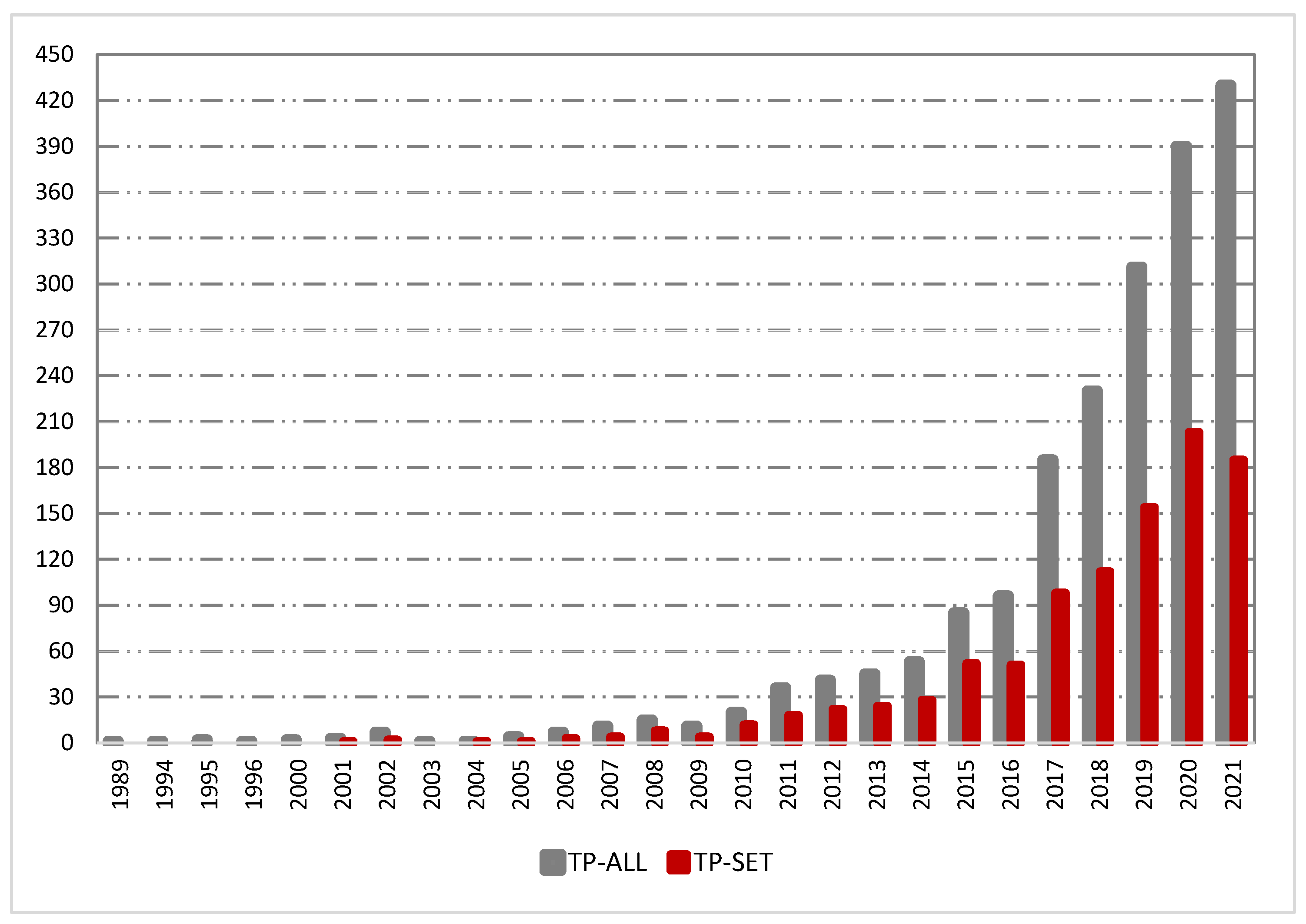
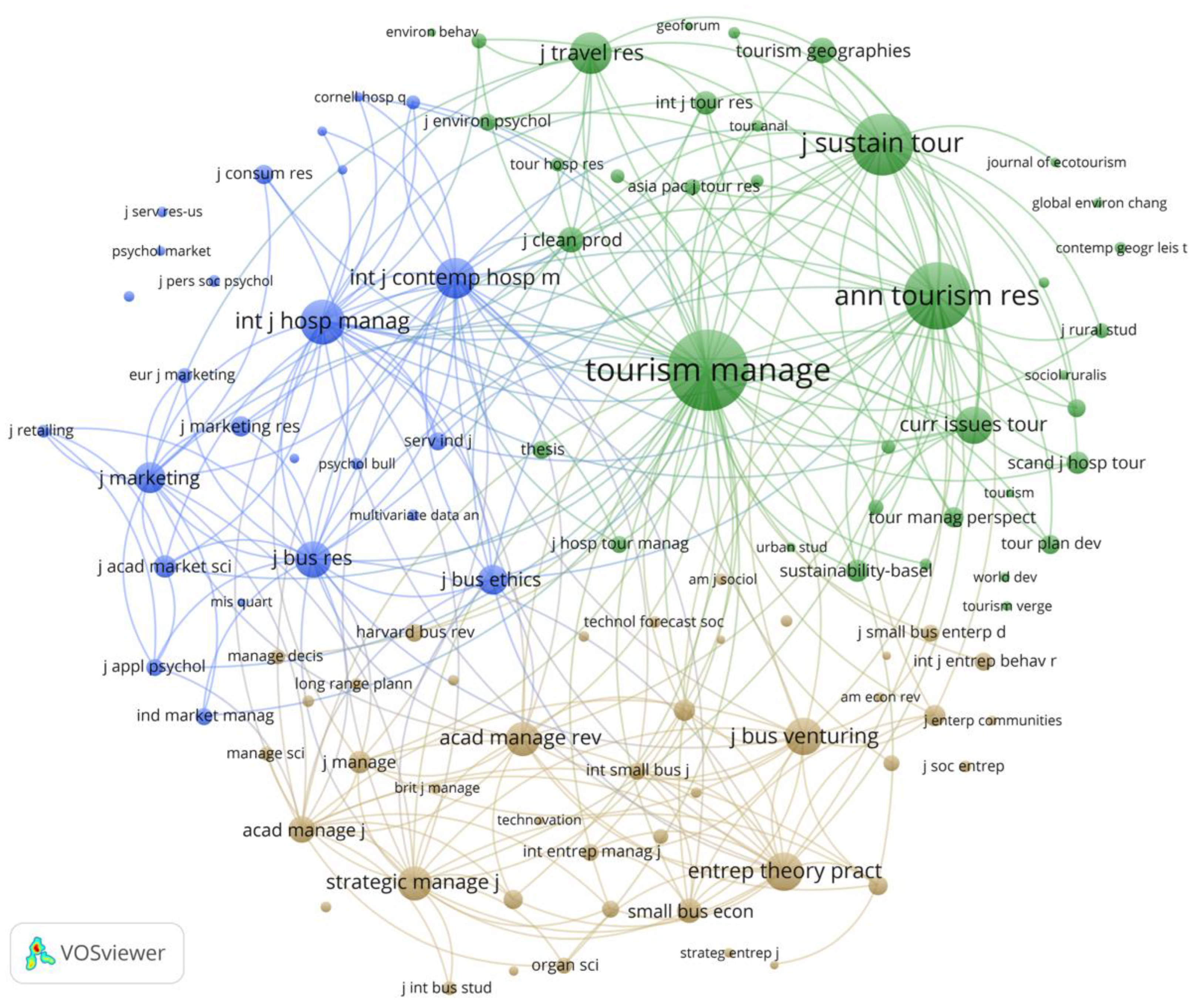
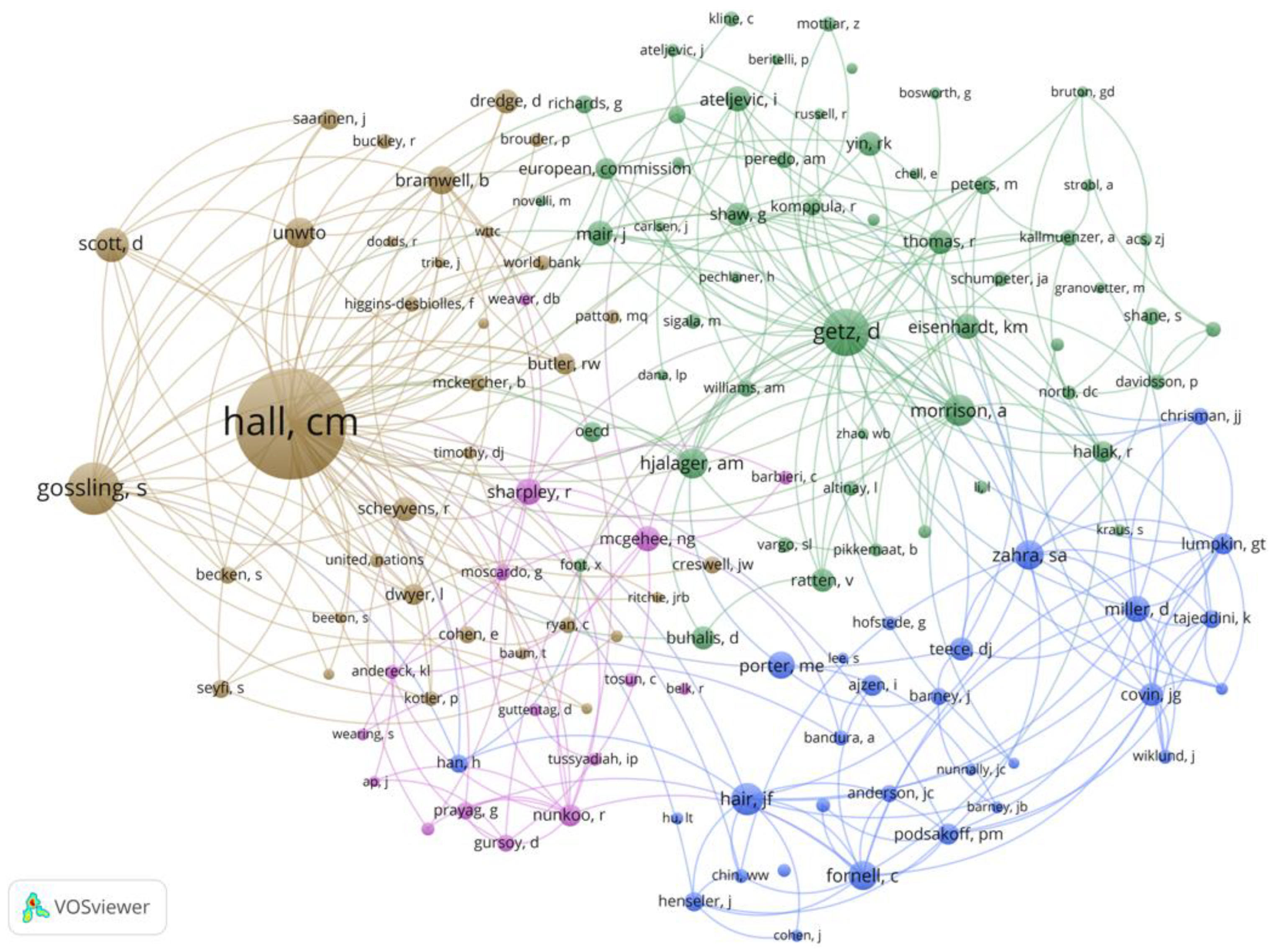
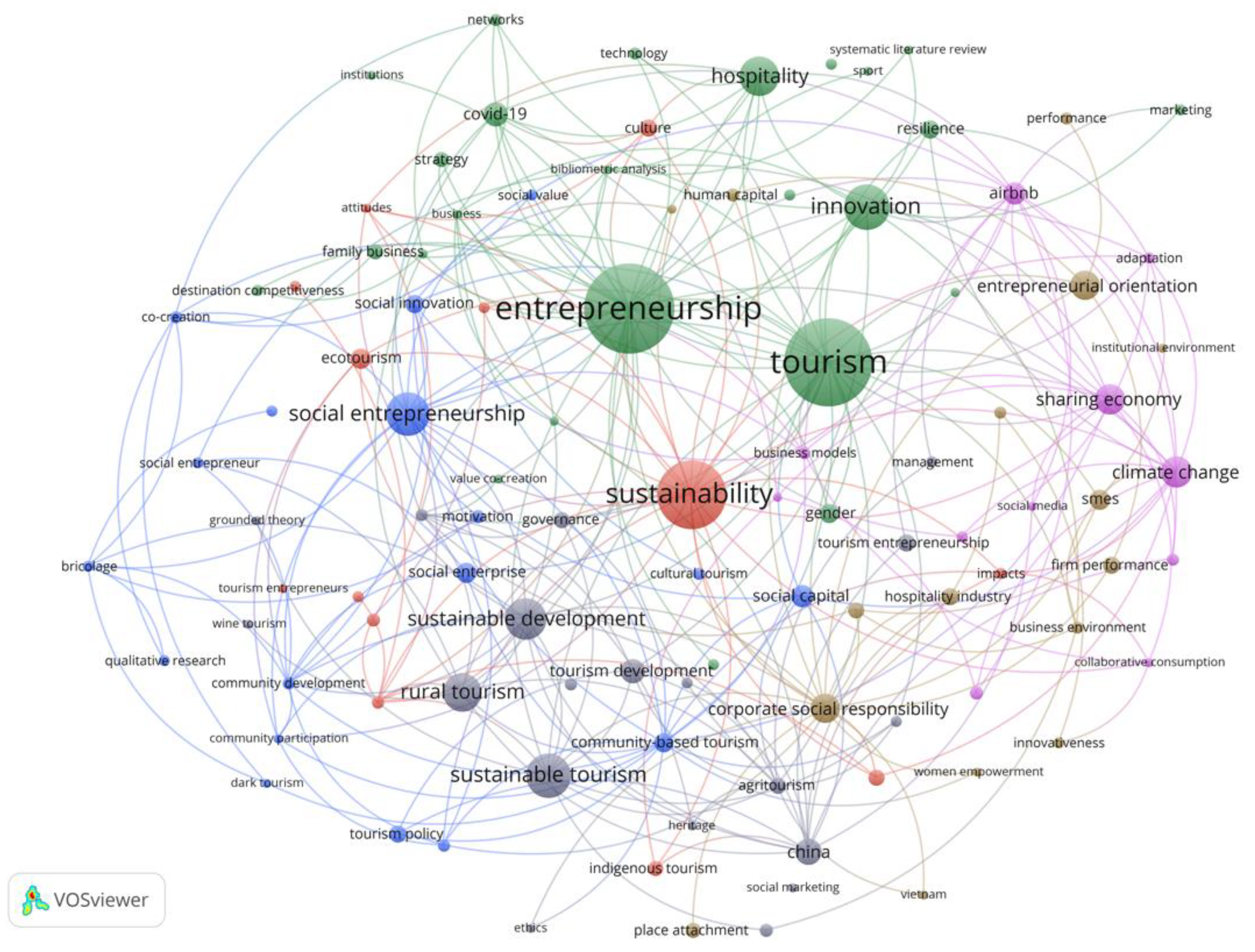
Publisher’s Note: MDPI stays neutral with regard to jurisdictional claims in published maps and institutional affiliations. |
© 2022 by the authors. Licensee MDPI, Basel, Switzerland. This article is an open access article distributed under the terms and conditions of the Creative Commons Attribution (CC BY) license (https://creativecommons.org/licenses/by/4.0/).