


Abstract
To explore the potential of Koenigia mollis as a pioneer plant in acid tin mine wasteland, Koenigia mollis plants and the corresponding rhizosphere soils in different areas in Lianghe County, Yunnan Province were collected, and their chemical properties and heavy metals contents were determined., the adaptability of the plant to the barren tailing environment and its acid resistance and tolerance to heavy metal such as Cu (Cu, CAS. No. 7144-37-8), Cd (Cd, CAS. No. 7440-43-9) and Pb (Pb, CAS. No. 10099-74-8) pollution were analyzed. Results showed that Koenigia mollis growth was normal. The pH value in rhizosphere soils was 3.74–4.30, which was strongly acidic. The organic matter (OM), total nitrogen (TN) (N, CAS. No. 7727-37-9), available potassium (AK) (K, CAS. No. 7440-09-7), and available phosphorus (AP) (P, CAS. No. 7723-14-0) contents in soils of the research area were in low levels. The total contents of Cu, Cd, and Pb in the soil of the research area exceeded the pollution risk screening value for the national risk control standard of soil environmental quality, indicating that Koenigia mollis has a certain resistance to acid and heavy metal pollution. In addition, Koenigia mollis has strong transport and enrichment capacity for Cu, Cd, and Pb and therefore has potential as a pioneer phytoremediation plant for acid tin mine wastelands and a remediated plant for agricultural land around metal mining areas.
1. Introduction
Sn (Sn, CAS. No.7440-31-5) is an important industrial raw material and plays an important role in economic development. Sn is widely used in metallurgy, electronics, and the chemical industry due to its softness, good ductility, low melting point, easy smelting, and non-toxic and stable chemical properties. Moreover, with the rapid development of technology and the economy, the application and demand for Sn will continue to expand. While the exploitation and utilization of tin resources offer economic benefits, a large number of tailings can pile up as a result of extensive mining [1,2]. Because tailings are the remaining part of the ore after it has been crushed and concentrated, it is not soil in the true sense of the word and has a series of problems such as low nutrient content, severe heavy metal contamination, extremely low pH, and no soil agglomerates [3], leading to difficulties in plant survival and low vegetation cover in the area. Open piling of tailings not only causes serious ecological degradation but also causes heavy metal pollution and acidification of tailings wasteland [4]. When encountering stormy weather is very easy to cause the spread of pollutants through subsidence, runoff, seepage, etc., to the surrounding water bodies, agricultural soils, and other hazards. Heavy metals in agricultural soils are not degradable and can pose a risk to human health, either directly or indirectly, through the food chain [5]. Great importance has been attached to the ecological reclamation of mine wastelands at home and abroad [6,7]. At present, the most common methods of tailings treatment include physical remediation, chemical remediation, and phytoremediation. Phytoremediation technology has been widely used in the field of heavy metal pollution remediation due to its advantages, including environmental protection [8].
In recent years, China has made some progress in the ecological restoration of mining wastelands. Juncus ochraceus has been identified as a pioneer plant suitable for the ecological restoration of tin mine wasteland [9]. Pteris vittata and Viola philippica, two potential polymetallic extractants, have been used for the remediation of polymetallic-contaminated soils, such as soils contaminated with Cu, Cd, Pb, and Zn (Zn, CAS. No. 7440-66-6) [10]. Most of the hyperaccumulators that are currently used are wild herbaceous plants with low biomass and have problems, including complex cultivation, strict requirements for growth conditions, and small biomass. Bamboo plants have a wide range of growth, strong environmental adaptability, large biomass, and strong resistance and enrichment capacity to heavy metals [11,12,13].
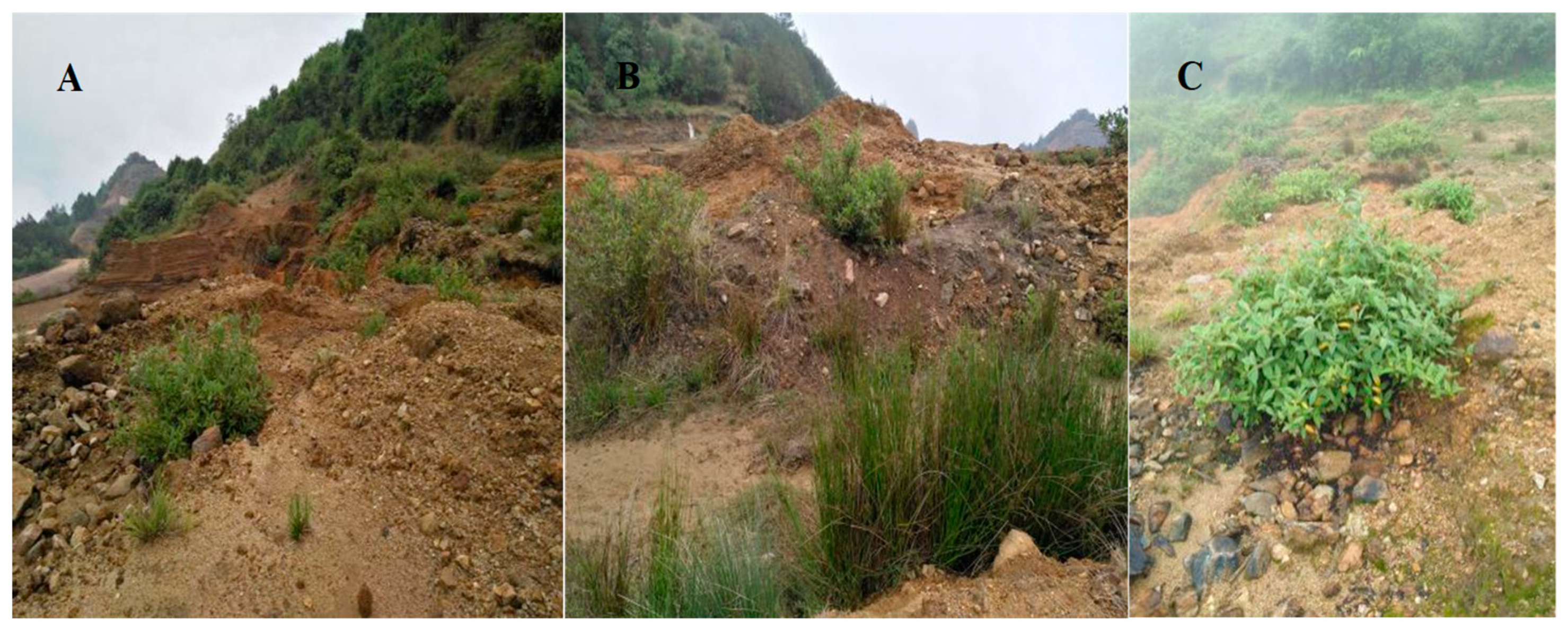
In this paper, the acid tin mine wasteland in the research area has a high heavy metal content. The strong soil acidity, poor soil fertility and structure, and high heavy metal content in the research area are all harmful to plant growth. Under natural conditions, the growth of plants and other biological activities are limited by the prevailing environmental conditions [14]. Some native plants have, however, due to long-term natural selection, adapted to survive in extreme environments, and they grow, settle, and even reproduce offspring normally on mine wastelands; indeed, these plants can play a decisive role in the rehabilitation of the mine wasteland. In this study, it was found that Koenigia mollis, Juncus effusus L., Bambusa multiplex ‘Alphonse-Karr’ R.A. Young, and a small number of other herbaceous plants were growing in the field survey area (Figure 1). Depending on the characteristics of the survey area, adaptability studies of potential tolerant pioneer plants can lay a theoretical foundation for the vegetation restoration of acid tin mine wasteland and remediation of heavy metal-contaminated farmland soils.
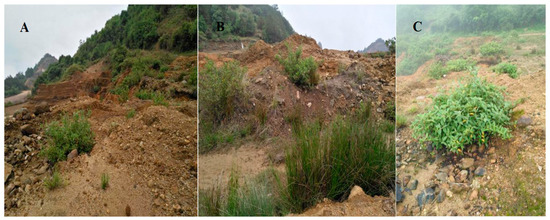
Figure 1.
Some photos of the plants in the research area. Pictures (A,B) are photos of some plants in the research area. The photo of (C) is the species analyzed herein.
2. Materials and Methods
2.1. Overview of the Research Area
The research area is located in the canyon area of the southwest end of the Hengduan Mountains in western Yunnan Province and the canyon zone in terraces between the west slope of Gaoligong Mountain. It is between 98°06′~98°31′ E and 24°31′~24°58′ N and is located at an altitude of 2243~2394 m. The soil type is mainly yellow-brown soil in the alpine mountain area, the natural soil pH value is 5.1, and the climate belongs to the south subtropical monsoon climate, with abundant rainfall, light, and heat energy resources. The research area is rich in tin resources, but tin mining (including the level of mineral processing technology applied and the characteristics of tin resources) have resulted in a high degree of tin metal loss to tailings which has led to land acidification and also destroyed the diversity of the surrounding vegetation. From the field survey, it was found that there were mainly Koenigia mollis, Juncus ochraceus Buchen, and a small number of other herbaceous plants near the tin tailings in the research area. Koenigia mollis had the best growth.
2.2. Research Method
2.2.1. Collection of Plant and Soil Samples
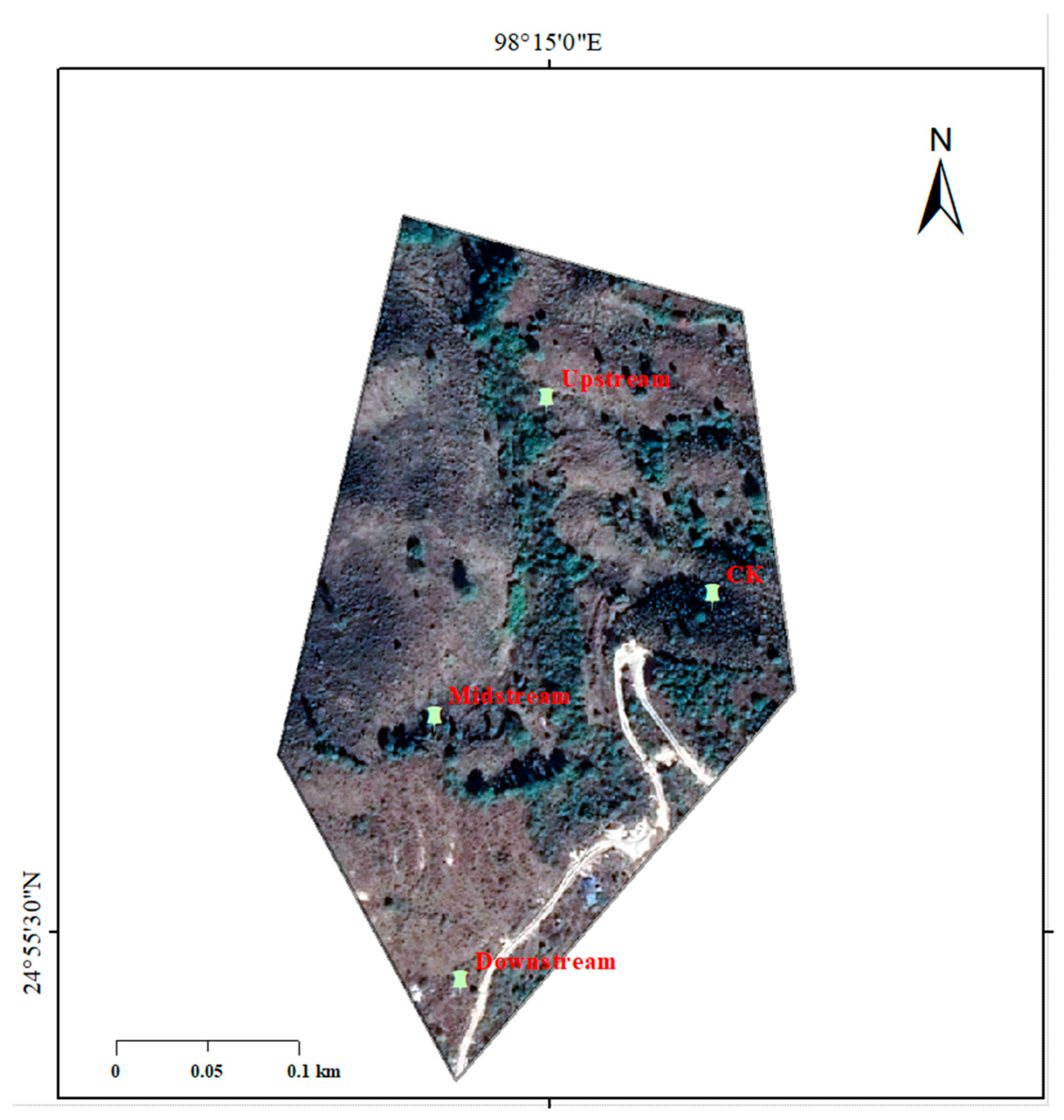
Through field investigation of this tailing’s wasteland, it was found that Koenigia mollis was the best plant for tin mine wastelands. Koenigia mollis was therefore collected for analysis, and according to the tailings pond and plant growth status screening, the tailings pond was divided into upstream (2389 ± 5 m), midstream (2318 ± 7 m), and downstream (2246 ± 3 m) three representative areas. The specific sampling site is shown in Figure 2. In the representative area, natural growths of Koenigia mollis were randomly selected, and the complete plants were collected and marked. A total of 30 groups of Koenigia mollis samples were collected. Five groups of Koenigia mollis which were growing on soil with similar surroundings but less affected by the mine wasteland, were selected as the control group.
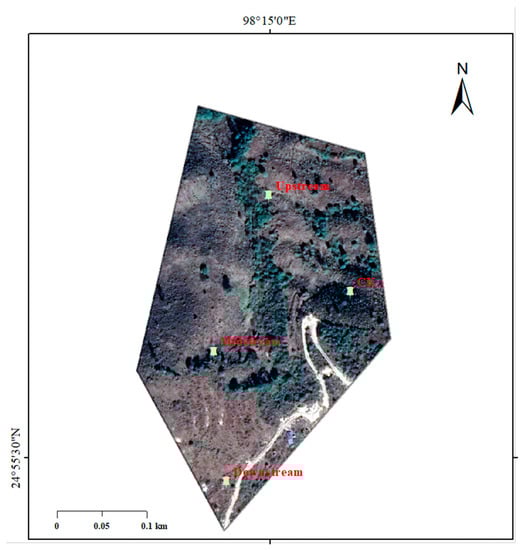
Figure 2.
The specific sampling site map.
The soil samples consisted of 0–20 cm soil attached to the rhizosphere of plants. Soil samples were taken on-site using the shaking method and were sealed in a self-sealing bag after mixing evenly [15].
2.2.2. Sample Determination and Analysis Method
The plant samples collected during the research were washed with tap water to remove the soil and dirt and then rinsed with deionized water. After drying the deionized water, it was put into the oven, killed out at 105 °C for 30 min, then the temperature was adjusted to 50 °C, and the dry weight was measured. The dried plant samples were divided into shoot and root parts. Plant samples were crushed with a crusher, sieved with a 100-mesh sieve, loaded into a numbered self-sealing bag,, and then reserved. After the soil samples were returned to the laboratory, they were spread into thin layers, and the stones and plant roots were picked out. The soil samples were dried naturally in the room; then they were ground and screened using 2, 1, and 0.149 mm sieves, respectively. The samples were packaged, stored, and numbered.
The basic physical and chemical properties of the test soil were determined using analytical methods from soil agricultural chemistry [16]. The pH was measured using the 1:2.5 soil-water ratio method (Acidimeter, Starter-3 C, OHAUS Instruments Ltd., Parsippany, NJ, USA). Organic matter was determined using the potassium dichromate (Cr2K2O7, CAS. No. 7778-50-9)-external heating method. The soil samples were treated using the digestion method, the total N content of soil samples was determined using the Kjeldahl nitrogen method, the total P content of soil samples was determined using the molybdenum antimony colorimetric method, and the total K content of soil samples was determined using flame photometry. Soil alkali-hydrolyzable nitrogen and available P and K were determined using the alkaline diffusion method, 0.5 mol·L−1 NaHCO3 (NaHCO3, CAS. No. 144-55-8) extraction method, and 0.1 mol·L−1 CH3COONH4 (CH3COONH4, CAS. No. 631-61-8)-flame photometric method, respectively. The total Cu, Cd, and Pb concentrations in plants were digested using the microwave accelerated reaction system (MARS5, CEM Microwave Technology Ltd., Matthews, NC, USA). The total content of Cu, Cd, and Pb in basic soil was determined using the wet ashing method. The Foss digestion furnace (2040 Digestion System of FOSS TECATOR) was used for soil digestion. The digested samples were determined using an inductively coupled plasma mass spectrometer (ICAPRQ and ACJ36) for Cu, Cd, and Pb. Additionally, the standard materials provided by the national bureau of standards (shrub branches and leaves, GBW07603, GSV-2) were added to ensure the accuracy of the digestion and analysis process. The Recovery rate of Cu, Cd, and Pb are 97.5~103.2%, 87.4~107.0%, and 92.6~105.2%, respectively.
2.3. Data Processing
Data processing and analysis were performed using Excel 2010 (Redmond, WA, USA) and SPSS 19.0 softwaree (Chicago, IL, USA). The drawing was undertaken using Origin 2019 (Northampton, NC, USA).
BCF = Cplant/Csoil [17].
TF = Cshoot/Croot [18].
Retention rate = (Croot − Cshoot)/Croot × 100% [19].
Single factor pollution index = Ci/Cn.
Note: Cplant is the concentration of the heavy metal in the plant, mg·kg−1, Croot is the concentration of the heavy metal in the root, mg·kg−1, Csoil is the concentration of the same heavy metal in the soil, mg·kg−1, Cshoot is the concentration of the heavy metal in the aboveground part of plants, Ci is the measured content of heavy metal element i, mg·kg−1, Cn is the pollution risk screening value of heavy metal element i, mg·kg−1.
3. Results and Analysis
3.1. Rhizosphere Soil Fertility of Koenigia mollis in Acid Tin Mine Wasteland
The pH of the tested soil in the research area was between 3.74 and 4.30, which was at a strong level of acidity. The results showed that the contents of organic matter, total nitrogen, and available K and P in rhizosphere soils in the investigation areas were 5.57~6.48 g·kg−1, 0.47~0.73 g·kg−1, 55.67~69.93 mg·kg−1 and 4.34~5.09 mg·kg−1, respectively (Table 1). According to the classification standard of the soil fertility index, these areas had 4–5 grade soil fertility and lacked nutrients. The contents of total P and K and alkali-hydrolyzable nitrogen were 0.68~0.82 g·kg−1, 11.33~16.86 g·kg−1, and 42.93~106.71 mg·kg−1, respectively, which were at the upper and middle levels, respectively. The contents of organic matter, total nitrogen, and alkali-hydrolyzable nitrogen in the control group soils were significantly higher than those in the other three research areas, and there was no significant difference for other fertility measures.

Table 1.
Fertility status of rhizosphere soil of Koenigia mollis in different sampling areas.
3.2. Morphological Characteristics of Koenigia mollis in Acid Tin Mine Wasteland
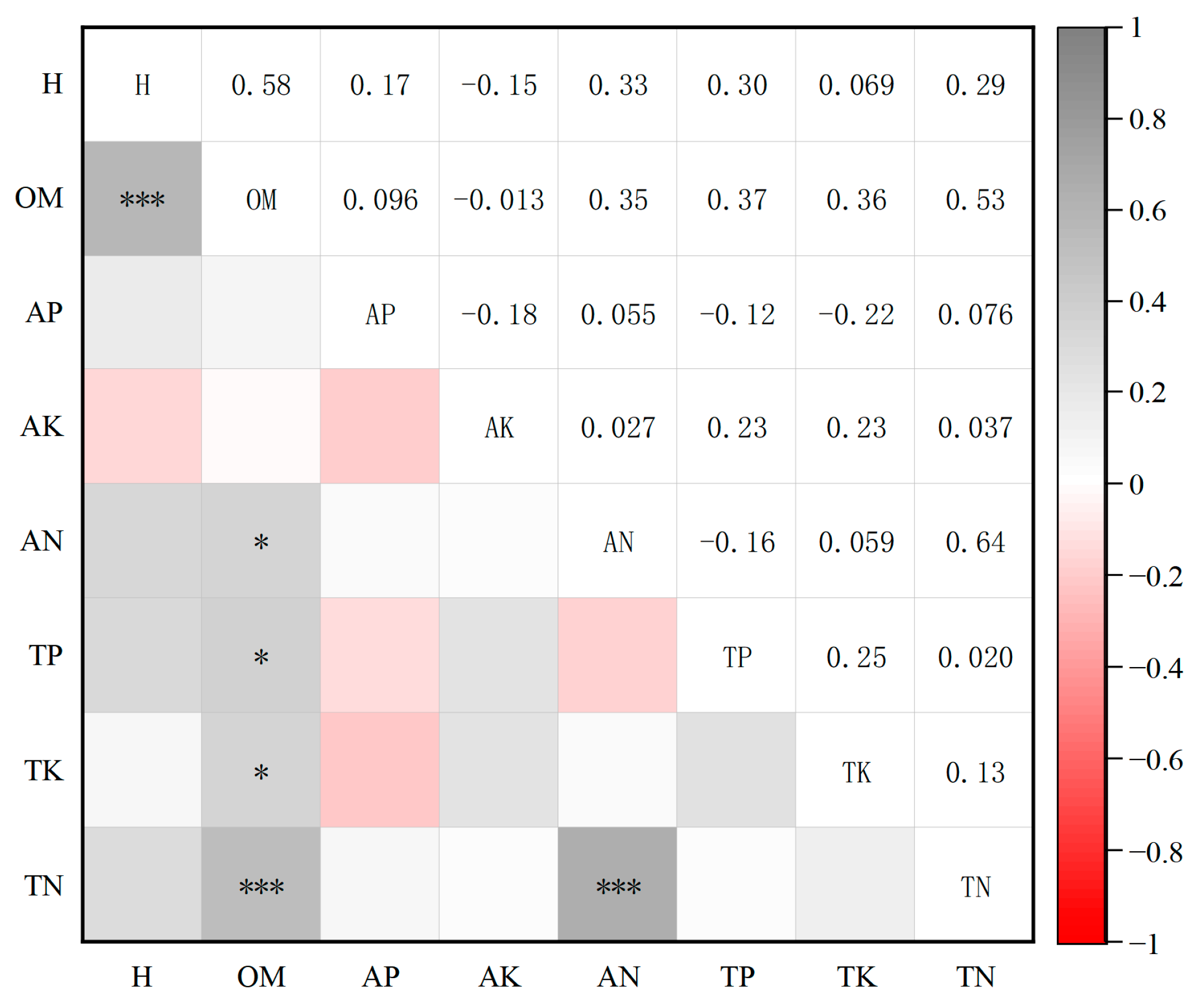
The average plant biomass of Polygonum molle in the research area was 37.98 g in the control group, 34.24 g in the upstream, 33.21 g in the midstream, and 32.25 g in the downstream. The height of Koenigia mollis plants in the tin mine wasteland research area was 50.34~78.96 cm, and in the control group area, it was 68.71~90.38 cm. The results showed that the plant height of Koenigia mollis in the control group area was higher than in the research area. The results of Pearson correlation analysis between different rhizosphere soil fertility indicators and growth characteristics of Koenigia mollis are shown in Figure 3. The results (Figure 3) show a significant correlation between plant height and organic matter (r = 0.58, p < 0.001).
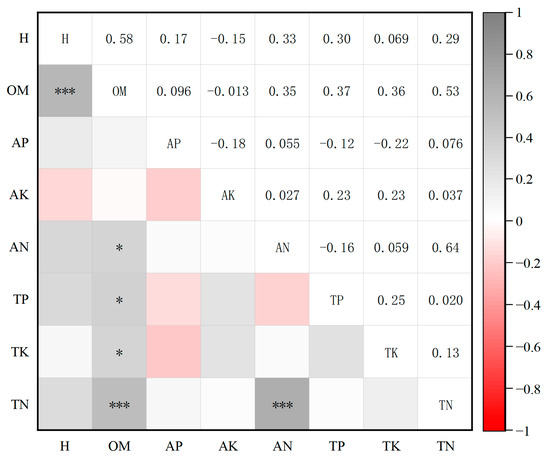
Figure 3.
Pearson correlation analysis between plants height of Koenigia mollis and rhizosphere soil fertility projects. H means plant height; OM means organic matter; AP and TP refer to available phosphorus and total phosphorus, respectively; AN and TN refer to alkaline-hydrolyzable nitrogen and total nitrogen, respectively; AK and TK refer to available potassium and total potassium, respectively. *, *** Correlation is significant at 0.05 and 0.001, respectively (two-tailed test).
Koenigia mollis was able to grow normally on the acid tin mine wasteland with low soil fertility, indicating that Koenigia mollis has strong adaptability for the research area and therefore has the potential to be a pioneer plant for the ecological restoration of acid tin mine wasteland. There was a significant correlation between plant height and organic matter, indicating that the lack of soil organic matter may be the main stress factor for the growth of Koenigia mollis in the research area.
3.3. Acid Tolerance of Koenigia mollis in Acid Tin Min Wasteland
Pearson correlation analysis showed no significant positive correlation between rhizosphere soil pH and plant height (r = 0.04, p = 0.81 > 0.05). The results (Table 2) showed that rhizosphere soil pH in the upstream areas was significantly higher than in other areas but significantly lower than the soil background value. Koenigia mollis could grow in the research area, indicating that Koenigia mollis had strong acidic resistance. The findings show that Koenigia mollis has the potential as a pioneer plant for vegetation restoration of tin tailings.
Table 2.
Mean pH and background value of rhizosphere soils for different sampling areas.
3.4. Distribution Characteristics and Single Factor Pollution Index of Heavy Metals in Different Parts and Rhizosphere Soils of Koenigia mollis
As shown in Table 3 and Table 4, the total contents of Cu, Cd, and Pb in the soil of the research area exceeded the pollution risk screening value for the national risk control standard of soil environmental quality (GB 15618-2018). The Cd total content in the downstream soil was close to three times of pollution risk screening value. Additionally, Pb was the main heavy metal pollution stress factor of the rhizosphere soil in the research area, with the bioavailability of Pb in rhizosphere soil in the research area being 40.8% (CK), 39.7% (upstream), 43.2% (midstream) and 41.3% (downstream), respectively.
Table 3.
Concentrations of heavy metals in Koenigia mollis and contents in rhizosphere soils.
Table 4.
Single-factor pollution index for different regions.
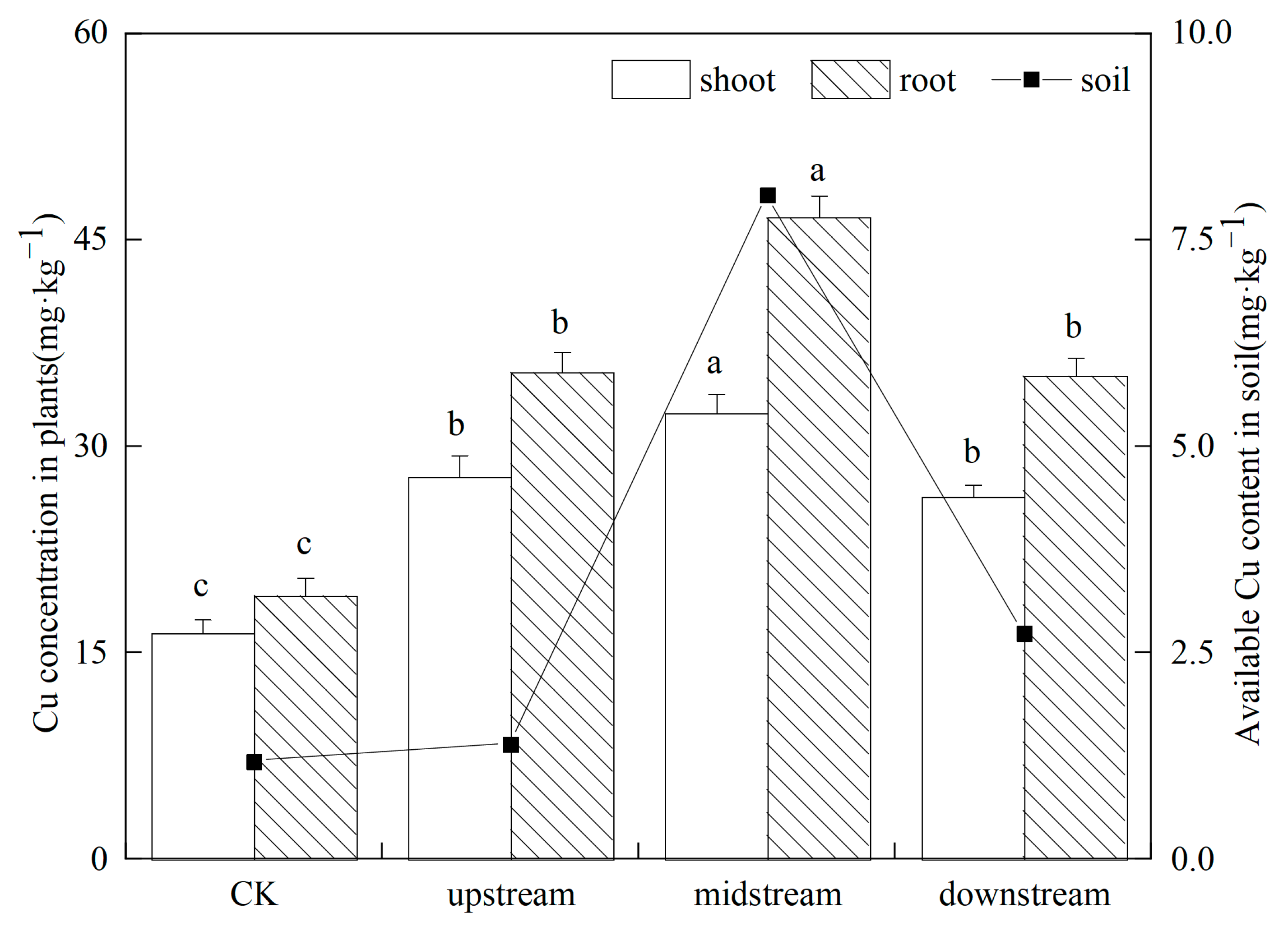
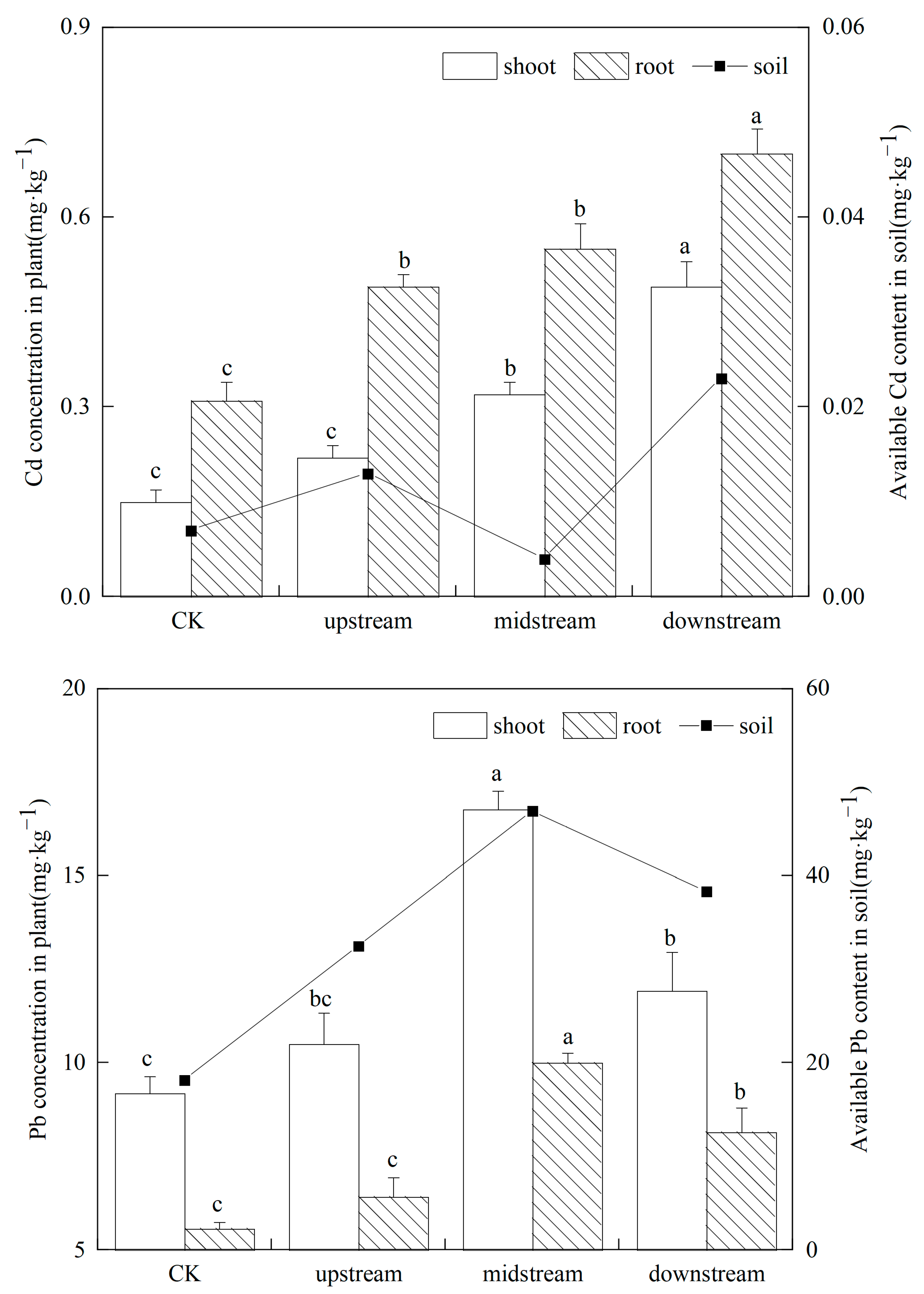
As shown in Table 3 and Figure 4, the concentrations of Cu, Cd, and Pd in Koenigia mollis in different growth areas differed. The heavy metal concentrations of Cu and Cd in the root were higher than those in the shoot. The heavy metal concentrations of Pb in the root were lower than those in the shoot. The Pb concentration in the shoot of Koenigia mollis growing in the midstream was the highest, at 16.76 mg·kg−1; the Cu concentration in the root of Koenigia mollis growing in the midstream was the highest, at 46.62 mg·kg−1; and the Pb concentrations in the root of Koenigia mollis growing in the downstream was the highest, at 0.70 mg·kg−1. Pearson correlation analysis was used to analyze the relations for total Cu, Cd, and Pb in rhizosphere soils and Koenigia mollis. The results showed significant positive correlations between the Cu, Cd, and Pb contents in rhizosphere soils and the Cu, Cd, and Pb concentrations in Koenigia mollis, respectively (r (Cu) = 0.922; r (Cd) = 0.889; r (Pb) = 0.534). In the research area, with the increase of Cu, Cd, and Pb content in soils, the accumulations of Cu, Cd, and Pb in Koenigia mollis also increased significantly. This shows that the absorption of heavy metals by Koenigia mollis was not only limited by the physiological conditions of the plants but was also affected by heavy metal stress in soils.
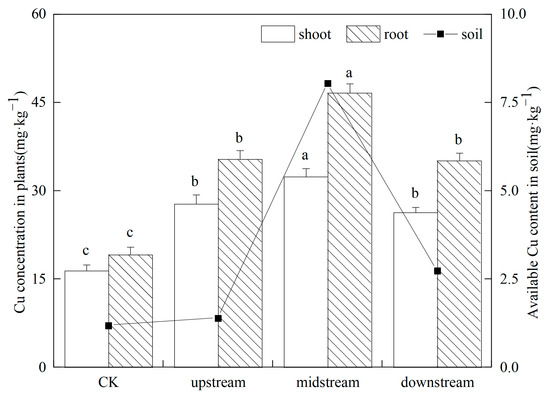
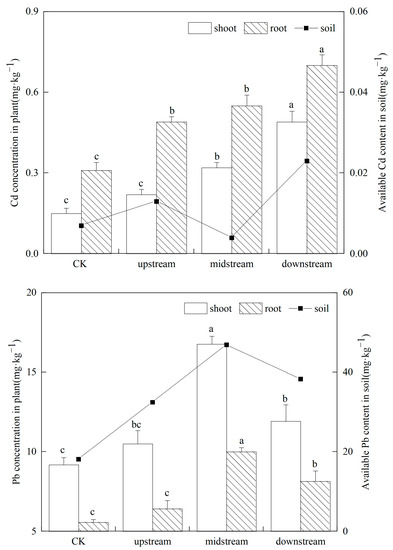
Figure 4.
Heavy metal contents in rhizosphere soils and concentrations in Koenigia mollis under different areas. The different letters marked in the figure indicate that the same part has significant indigenous differences in all research areas (p < 0.05).
As shown in Table 4, the pollution index of Cu, Cd, and Pb in the control group was less than 1, respectively, indicating no pollution. The pollution index of Cu and Pb in the research area ranged from 1 to 2, indicating light pollution. Cd was in light pollution in the upstream, light-moderate pollution in the midstream, and moderate pollution in the downstream.
3.5. Enrichment, Transport Factors, and Retention Rate of Major Metals in Koenigia mollis
The enrichment coefficient is an important index that indicates the accumulation ability and remediation potential of heavy metals in plants. The greater the enrichment coefficient, the stronger the ability of plants to enrich the heavy metal. The coefficient can not only be used to reflect the absorption capacity of plants to major metal elements in the soil but can also be used to reflect the absorption potential of plants to heavy metals. The coefficient can also be used to infer the ability of plants to repair themselves [20]. As shown in Table 5, Koenigia mollis grows in the four areas and has the strongest Cd enrichment ability, with the largest Cd enrichment coefficient, reaching 1.71. The transport coefficient is commonly used to measure the ability of plants to transfer heavy metals [21]. The transport capacity of Koenigia mollis grown in the four areas for heavy metals was Pb > Cu > Cd. Retention rate can reflect the tolerance of plants to heavy metals, and it is also a protective response of plant roots to heavy metal pollution [22]. The retention rate of Koenigia mollis grown in the four areas was Cd > Cu > Pb, which was opposite to the change in transport capacity. The retention effect of Cd was relatively large, reaching 55.72%. It was concluded that Koenigia mollis grown in different areas has a certain enrichment ability for Cu and Cd and has a good transport ability for Pb. At the same time, the Cu, Cd, and Pb concentrations in plants did not cause significant stress for plant growth. Koenigia mollis has the potential to be a pioneer plant for vegetation restoration of acid tin mine wastelands.
Table 5.
Enrichment coefficient, transport coefficient, and retention rate of heavy metals in Koenigia mollis.
4. Discussion
The strong acidity, poor soil fertility and structure, and high heavy metal contents in the acid tin mine wasteland are harmful to plant growth [23]. Koenigia mollis can survive in acid tin mine wastelands and can occupy a dominant position in natural communities, probably because the plants have a tolerance to acid stress and heavy metal pollution, as shown by the action of natural selection in this research area [3].
The pH of rhizosphere soil in the research area was strongly acidic, and the soil contained heavy metals such as Cu, Cd, and Pb. The contents of Cu, Cd, and Pb in the soil of the research area were higher than the pollution risk screening value for the national risk control standard of soil environmental quality, and the multiples were 1.11–1.52, 1.67–3.33 and 1.17–1.55, respectively. Soil acidification and accumulation of heavy metals in the soils are harmful to the soil environment and to plant growth by inhibiting soil microbial biomass and enzyme activity [24,25], thereby affecting soil fertility. Soil acidification caused the loss of, and also reduced the effectiveness of, nutrients in the soil [26]. Additionally, soil acidification increased the solubility and effectiveness of heavy metals [27]. The plant height of Koenigia mollis was consistent with the plant height of the sample recorded in Flora of China [28], and there was no significant correlation between the plant height of Koenigia mollis and the pH value of rhizosphere soils, which indicated that Koenigia mollis has good acid tolerance. The results showed that Koenigia mollis had a certain enrichment capacity for Cu, Cd, and Pb, with the enrichment capacity for Cd being the strongest, which had a better transport capacity compared with Pb. The contents of the heavy metals Cu, Cd, and Pb in rhizosphere soils were significantly correlated with the Cu, Cd, and Pb concentrations in Koenigia mollis. However, the heavy metals in rhizosphere soils had not caused significant stress on plant growth, which indicated that Koenigia mollis have the ability to survive in environments with heavy metal pollution.
Guo et al. [29] found that Miscanthus sacchariflorus had resistance to low acid and heavy metal toxicity, but Miscanthus sacchariflorus likes warm, moist, and semi-shady environments. Zhang et al. [30] pointed out that Taraxacum koksaghyz had good tolerance to Pb and Cd stress, but its biomass was small. Taraxacum koksaghyz generally grew in alkaline environments. Koenigia mollis has good acid resistance and tolerance to heavy metals stress, meaning that it can grow, settle and reproduce easily in acid tin mine wasteland. It also has high plant biomass and so has the potential to be a pioneer plant in acid tin mine wastelands and a remediated plant for heavy metal-contaminated farmland soils.
5. Conclusions
- (1)
- The results from the research showed that the rhizosphere soil of Koenigia mollis in the tailings wasteland was strongly acidic, and the plant height had no significant positive correlation with the pH value of rhizosphere soil, which indicated that Koenigia mollis had strong acid resistance.
- (2)
- The contents of organic matter, total nitrogen, and available K and P contents in the rhizosphere soil of Koenigia mollis were at a low level, and there was a compound pollution risk of Cu, Cd, and Pb. Koenigia mollis could grow under these conditions of poor soil fertility and heavy metal pollution, indicating that the plant has strong adaptability to the soil conditions of mining wasteland.
- (3)
- Koenigia mollis in different areas of tailings wasteland could grow normally, and the Cu, Cd, and Pb concentrations in different parts of plants for different areas were different, indicating a certain degree of enrichment ability.
- (4)
- There is no heavy metal pollution in the control group; Cu and Pb were light pollution in the research area, and Cd was in light to moderate pollution in the research area.
- (5)
- Koenigia mollis had strong acid resistance, could adapt to the barren tailings environment, and showed a certain degree of tolerance to heavy metals. Koenigia mollis, therefore, has great potential as a pioneer plant in acid tin mine wastelands and a remediated plant for agricultural land around metal mining areas.
Author Contributions
Q.D. analyzed the related data and wrote the manuscript. H.W. contributed to the test analysis. Y.X. (Yunni Xia) helped perform the data analysis and translation of the manuscript. B.W., L.C. and N.Z. performed the investigation work. Y.X. (Yunsheng Xia) conceived the study and contributed to the preparation and modification of the manuscript. X.Y. designed the entire study and retouched the manuscript. All authors have read and agreed to the published version of the manuscript.
Funding
This research was funded by the National Key Research and Development Program of China (2018YFC1802603). The authors declare no conflict of interest. The authors thank all the staff at the Kunming University of Science and Technology for their help during the research process in the field.
Institutional Review Board Statement
Not applicable.
Informed Consent Statement
Not applicable.
Data Availability Statement
Data will be made available on request.
Conflicts of Interest
The authors declare no conflict of interest.
References
- Siyar, R.; Ardejani, F.D.; Farahbakhsh, M.; Norouzi, P.; Yavarzadeh, M.; Maghsoudy, S. Potential of Vetiver grass for the phytoremediation of a real multi-contaminated soil, assisted by electrokinetic. Chemosphere 2020, 246, 125802. [Google Scholar] [CrossRef] [PubMed]
- Briki, M.; Ji, H.B.; Li, C.; Ding, H.J.; Gao, Y. Characterization, distribution, and risk assessment of heavy metals in agricultural soil and products around mining and smelting areas of Hezhang, China. Environ. Monit. Assess. 2015, 187, 460–469. [Google Scholar] [CrossRef] [PubMed]
- Li, M.S. Ecological restoration of mineland with particular reference to the metalliferous mine wasteland in China: A review of research and practice. Sci. Total Environ. 2006, 357, 38–53. [Google Scholar] [CrossRef] [PubMed]
- Hammond, C.M.; Root, R.A.; Maier, R.M.; Chorover, J. Arsenic and iron speciation and mobilization during phytostabilization of pyritic mine tailings. Geochim. Cosmochim. Acta 2020, 286, 306–323. [Google Scholar] [CrossRef]
- Ma, Z.W.; Tao, R.H.; Hu, J.Y.; Cao, Y.; Hu, Z.Y.; Chen, Y.; Hu, H.X.; Ma, Y.H. Effects of Formula Fertilizer and Biochar on Cadmium and Plumbum Absorption in Maize (Zea mays L.). Sustainability 2023, 15, 4696. [Google Scholar] [CrossRef]
- Lv, J.S.; Xia, Q.; Yan, T.; Zhang, M.L.; Wang, Z.; Zhu, L.Y. Identifying the sources, spatial distributions, and pollution status of heavy metals in soils from the southern coast of Laizhou Bay, eastern China. Hum. Ecol. Risk Assess. 2019, 25, 1953–1967. [Google Scholar] [CrossRef]
- Guan, Y.J.; Wang, J.; Zhou, W.; Bai, Z.K.; Cao, Y.G. Identification of land reclamation stages based on succession characteristics of rehabilitated vegetation in the Pingshuo opencast coal mine. J. Environ. Manag. 2022, 305, 114352. [Google Scholar] [CrossRef]
- Yang, C.R.; Tan, Q.Y.; Zeng, X.L.; Zhang, Y.P.; Wang, Z.S.; Li, J.H. Measuring the sustainability of tin in China. Sci. Total Environ. 2018, 635, 1351–1359. [Google Scholar] [CrossRef]
- Huang, J.H.; Fu, J.L.; Yan, X.R.; Yin, F.; Tian, S.L.; Ning, P.; Li, Y.J. Acid mine wasteland reclamation by Juncus ochraceus buchen as a potential pioneer plant. Environ. Sci. 2020, 41, 3829–3835. [Google Scholar]
- Wan, X.M.; Lei, M.; Yang, J.X. Two potential multi-metal hyperaccumulators found in four mining sites in Hunan Province, China. Catena 2017, 148, 67–73. [Google Scholar] [CrossRef]
- Bian, F.Y.; Zhong, Z.K.; Zhang, X.P.; Yang, C.B.; Gai, X. Bamboo—An untapped plant resource for the phytoremediation of heavy metal contaminated soils. Chemosphere 2020, 246, 125750. [Google Scholar] [CrossRef] [PubMed]
- Cai, X.Y.; Jiang, M.Y.; Liao, J.R.; Yang, Y.X.; Li, N.F.; Cheng, Q.B.; Li, X.; Song, H.X.; Luo, Z.H.; Liu, S.L. Biomass allocation strategies and Pb-enrichment characteristics of six dwarf bamboos under soil Pb stress. Ecotoxicol. Environ. Saf. 2021, 207, 111500. [Google Scholar] [CrossRef] [PubMed]
- Liao, J.R.; Cai, X.Y.; Yang, Y.X.; Chen, Q.B.; Gao, S.P.; Liu, G.L.; Sun, L.X.; Luo, Z.H.; Lei, T.; Jiang, M.Y. Dynamic study of the lead (Pb) tolerance and accumulation characteristics of new dwarf bamboo in Pb-contaminated soil. Chemosphere 2021, 282, 131089. [Google Scholar] [CrossRef] [PubMed]
- Guo, M.N.; Zhong, X.; Liu, W.S.; Wang, G.B.; Chao, Y.Q.; Huot, H.; Qiu, R.L.; Watteau, F.; Sere, G.; Tang, Y.T.; et al. Biogeochemical dynamics of nutrients and rare earth elements (REEs) during natural succession from biocrusts to pioneer plants in REE mine tailings in southern China. Sci. Total Environ. 2022, 828, 154361. [Google Scholar] [CrossRef]
- Boldt-Burisch, K.; Schneider, B.U.; Naeth, M.A.; Huttl, R.F. Root Exudation of Organic Acids of Herbaceous Pioneer Plants and Their Growth in Sterile and Non-Sterile Nutrient-Poor, Sandy Soils from Post-Mining Sites. Pedosphere 2019, 29, 34–44. [Google Scholar] [CrossRef]
- Lu, R.K. Analytical Methods of Soil Agricultural Chemistry; China Agricultural Science and Technology Press: Beijing, China, 2020. [Google Scholar]
- Zhang, J.; Yang, N.N.; Geng, Y.N.; Zhou, J.H.; Lei, J. Effects of the combined pollution of cadmium, lead and zinc on the phytoextraction efficiency of ryegrass (Lolium perenne L.). Rsc Adv. 2019, 9, 20603–20611. [Google Scholar] [CrossRef]
- Cui, Y.X.; Fang, L.C.; Guo, X.B.; Han, F.; Ju, W.L.; Ye, L.P.; Wang, X.; Tan, W.F.; Zhang, X.C. Natural grassland as the optimal pattern of vegetation restoration in arid and semi-arid regions: Evidence from nutrient limitation of soil microbes. Sci. Total Environ. 2019, 648, 388–397. [Google Scholar] [CrossRef]
- Wang, X.; Liu, Y.G.; Zeng, G.M.; Chai, L.Y.; Xiao, X.; Song, X.C.; Min, Z.Y. Pedological characteristics of Mn mine tailings and metal accumulation by native plants. Chemosphere 2008, 72, 1260–1266. [Google Scholar] [CrossRef]
- Zhu, G.X.; Xiao, H.Y.; Guo, Q.J.; Zhang, Z.Y.; Yang, X.; Jing, K. Subcellular distribution and chemical forms of heavy metals in three types of compositae plants from lead-zinc tailings area. Environ. Sci. 2017, 38, 3054–3060. [Google Scholar]
- Li, N.Y.; Guo, B.; Li, H.; Fu, Q.L.; Feng, R.W.; Ding, Y.Z. Effects of double harvesting on heavy metal uptake by six forage species and the potential for phytoextraction in field. Pedosphere 2016, 26, 717–724. [Google Scholar] [CrossRef]
- Zurayk, R.; Sukkariyah, B.; Baalbaki, R. Common hydrophytes as bioindicators of nickel, chromium and cadmium pollution. Water Air Soil Pollut. 2001, 127, 373–388. [Google Scholar] [CrossRef]
- Li, S.; Wu, J.L.; Huo, Y.L.; Zhao, X.; Xue, L.G. Profiling multiple heavy metal contamination and bacterial communities surrounding an iron tailing pond in Northwest China. Sci. Total Environ. 2021, 752, 141827. [Google Scholar] [CrossRef] [PubMed]
- Rousk, J.; Baath, E.; Brookes, P.C.; Lauber, C.L.; Lozupone, C.; Caporaso, J.G.; Knight, R.; Fierer, N. Soil bacterial and fungal communities across a pH gradient in an arable soil. ISME J. 2010, 4, 1340–1351. [Google Scholar] [CrossRef] [PubMed]
- Tang, B.; Xu, H.P.; Song, F.M.; Ge, H.G.; Yue, S.Y. Effects of heavy metals on microorganisms and enzymes in soils of lead-zinc tailing ponds. Environ. Res. 2022, 207, 112174. [Google Scholar] [CrossRef] [PubMed]
- Zhu, Q.C.; Liu, X.J.; Hao, T.X.; Zeng, M.F.; Shen, J.B.; Zhang, F.S.; Devries, W. Cropland acidification increases risk of yield losses and food insecurity in China. Environ. Pollut. 2020, 256, 113145. [Google Scholar] [CrossRef]
- Zhao, W.; Gai, Z.C.; Xu, Z.H. Does ammonium-based N addition influence nitrification and acidification in humid subtropical soils of China. Plant Soil 2007, 297, 213–221. [Google Scholar] [CrossRef]
- Editorial Committee of Flora of China; Chinese Academy of Sciences. Flora of China; Science Press: Beijing, China, 1998; Volume 25, p. 82. [Google Scholar]
- Guo, H.P.; Hong, C.T.; Chen, X.M.; Xu, Y.X.; Liu, Y.; Jiang, D.A.; Zheng, B.S. Different Growth and Physiological Responses to Cadmium of the Three Miscanthus Species. PLoS ONE 2016, 11, 153475. [Google Scholar] [CrossRef]
- Zhang, H.; Xiong, M.B.; Wang, Q.X.; Sun, B.W.; Rao, Y.C.; Zhang, C.; Xu, X.X.; Yang, Z.B.; Xian, J.R.; Zhu, X.M.; et al. Remediation potential of taraxacum kok-saghyz rodin on lead and cadmium contaminated farmland soil. Environ. Sci. 2022, 43, 4253–4261. [Google Scholar]
Disclaimer/Publisher’s Note: The statements, opinions and data contained in all publications are solely those of the individual author(s) and contributor(s) and not of MDPI and/or the editor(s). MDPI and/or the editor(s) disclaim responsibility for any injury to people or property resulting from any ideas, methods, instructions or products referred to in the content. |
© 2023 by the authors. Licensee MDPI, Basel, Switzerland. This article is an open access article distributed under the terms and conditions of the Creative Commons Attribution (CC BY) license (https://creativecommons.org/licenses/by/4.0/).