Article

A Framework for Assessing the Climate Impacts of Research and Innovation Projects and Programmes


by
André Martinuzzi
1,
Markus Hametner
1,*,
Andreas Windsperger
2 and
Nadine Brunnhuber
2
1
Institute for Managing Sustainability, Vienna University of Economics and Business, 1020 Vienna, Austria
2
Institute for Industrial Ecology, Rennbahnstrasse 29, 3100 Sankt Pölten, Austria
*
Author to whom correspondence should be addressed.
Sustainability 2023, 15(24), 16600; https://doi.org/10.3390/su152416600
Submission received: 5 October 2023 / Revised: 10 November 2023 / Accepted: 4 December 2023 / Published: 6 December 2023

Abstract

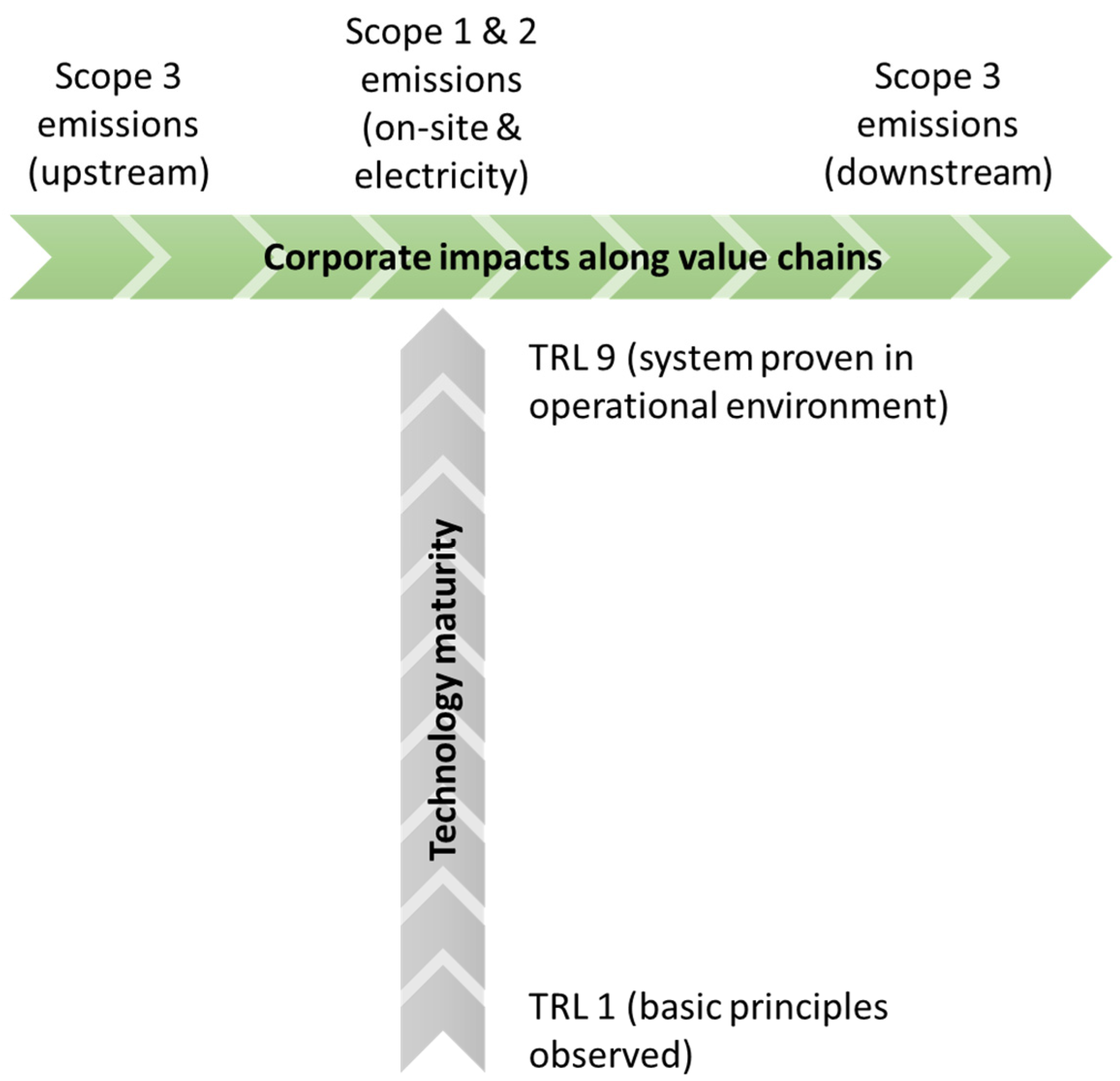
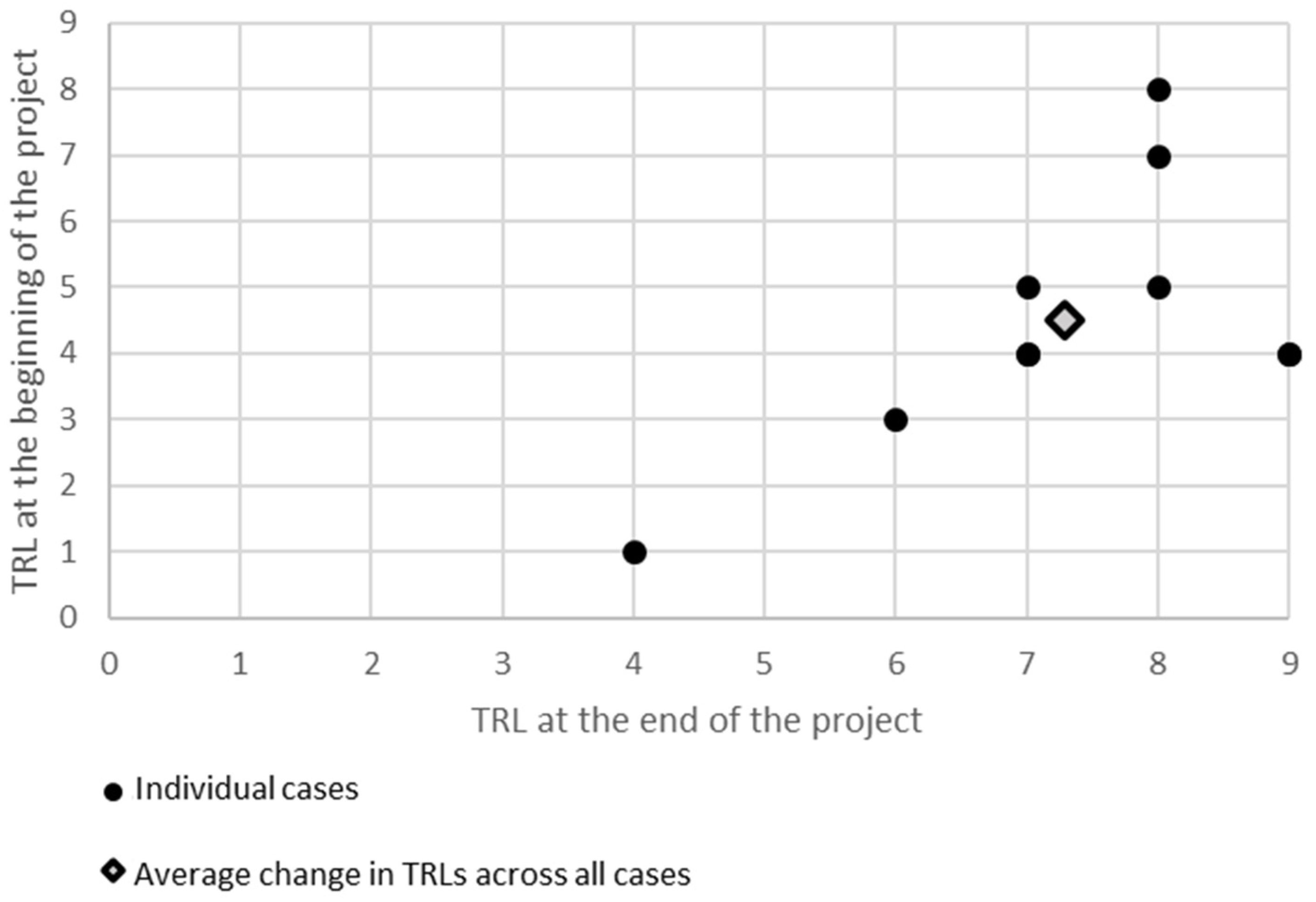
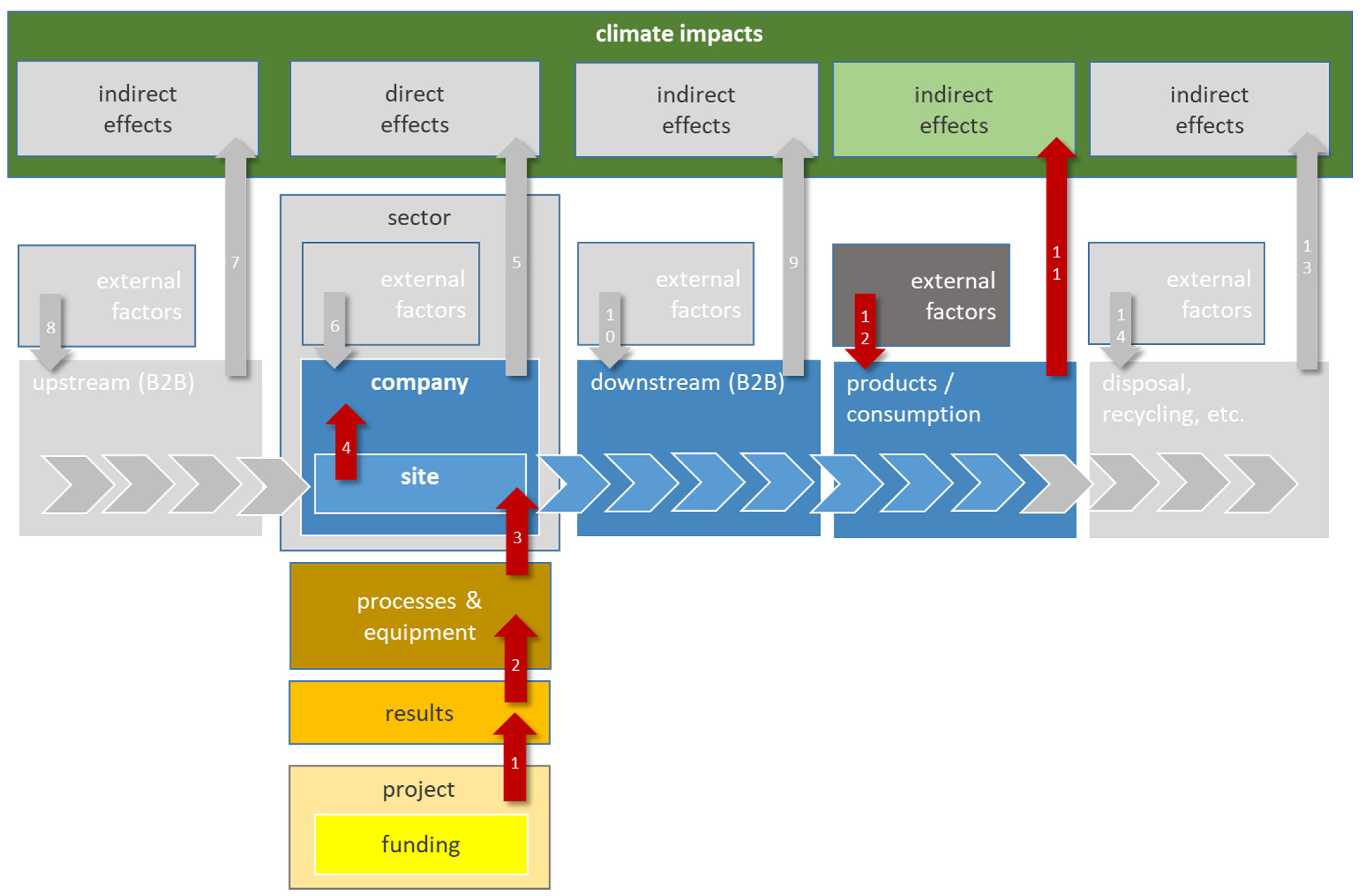
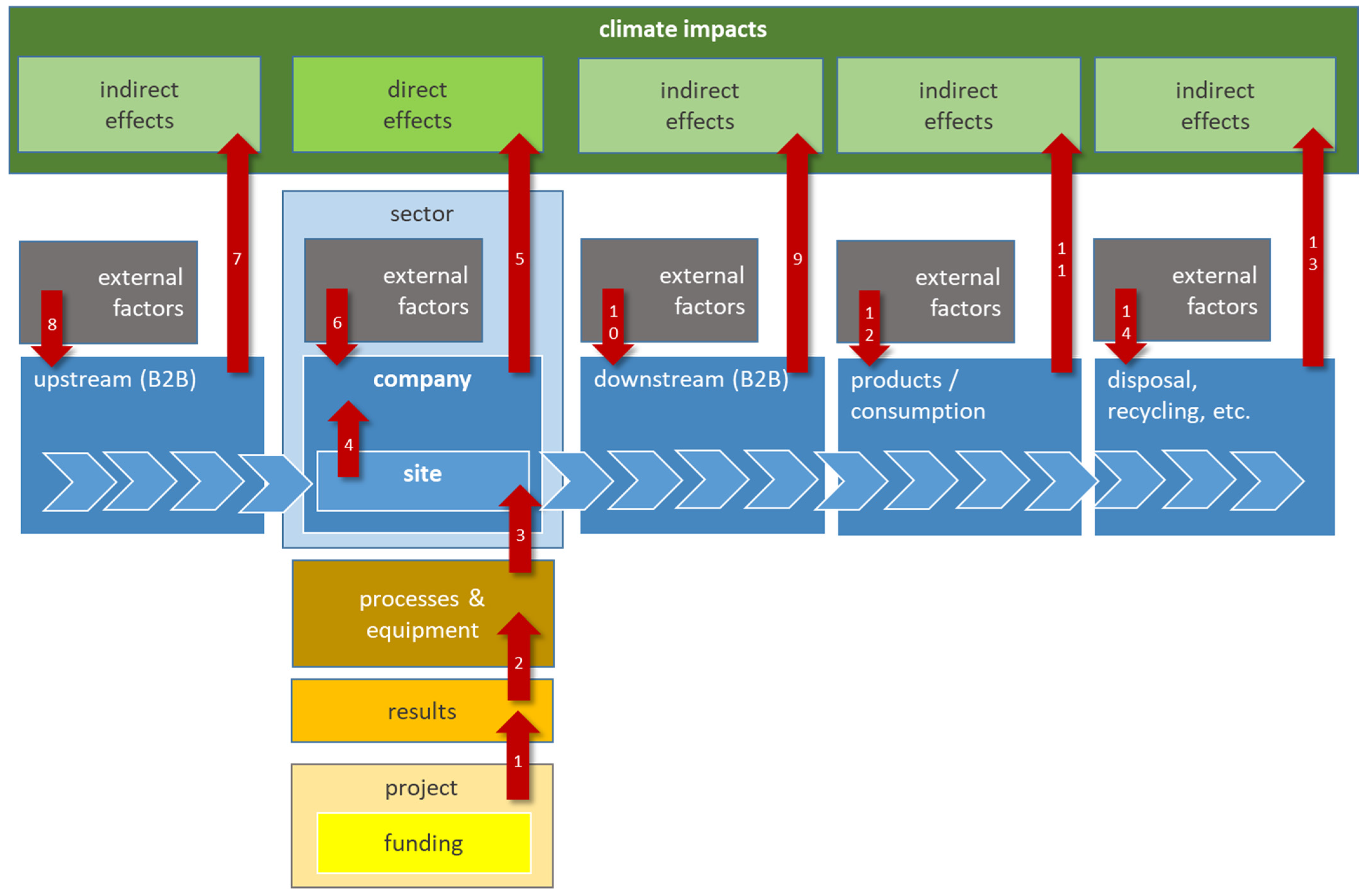
Public spending on research and innovation (R&I) to tackle grand societal challenges, such as climate change, is increasing. Consequently, research funding organisations face an ever-growing demand to demonstrate the social return of their investments. However, tools and frameworks that facilitate the description and assessment of the climate impacts of R&I activities are largely lacking. The present paper addresses this gap by conducting a comparative case analysis of corporate R&I projects co-funded by a thematically open R&I funding programme with the aim of identifying the key impact pathways. Data for the cases were collected through document analysis and video interviews. The results show that assessments of the climate impacts of R&I need to take into account the expected change in technology maturity and the impacts that are caused up- and downstream in a company’s value chain. The results serve as a basis for the development of a framework for the ex-ante assessment of climate impacts of public R&I programmes. A series of workshops with research funders, companies, and evaluation experts helped refine and validate the framework and ensure its real-world applicability. The framework provides proposal writers and evaluators with a pragmatic and easy-to-use orientation tool for describing and assessing the climate impacts of a planned R&I activity during the proposal evaluation stage. It therefore supports a more systematic and systemic assessment of R&I impacts that can help funding organisations better address the challenges of climate change.
Keywords: research impact assessment; ex-ante assessment; proposal evaluation; impact pathways; societal impacts; climate change; scope 3 emissions; corporate value chains research impact assessment; ex-ante assessment; proposal evaluation; impact pathways; societal impacts; climate change; scope 3 emissions; corporate value chains