


Abstract
At present, the nutrient solution of soilless culture is mostly configured by simply using the standard fertilizer formula, lacking the precise matching technology of nutrient solutions based on nutrient elements. It is unable to change the formula configuration according to vegetable types, different growth stages and growth needs, especially in the secondary fertilizer reuse of nutrient solution reflux. In order to make precise secondary fertilization, a model and system for secondary fertilization of nutrient solution residual liquid were established in this paper. It can be used for secondary fertilization based on nutrient ions and reused after the sterilization of the residual liquid. A nutrient solution fertilizer system based on nutrient elements was designed. The nutrient solution fertilizer system based on the online detection of ions was determined with different element compounds as the fertilizer unit. Combined with the existing hydroponic water-soluble inorganic salts, the ion concentration and its proportioning quantitative model of the nutrient solution recovery solution were established. The experimental verification and result analysis of the fertilizer model were carried out to test the accuracy and practicability of the established model. The ion concentration error obtained from the mathematical model was established as 0.0093–0.5294.The precise proportioning technology of nutrient solution based on nutrient elements can realize the precise and intelligent proportioning of nutrient elements in the nutrient solution of crops and can also make full use of the nutrient solution. It also improves the efficiency of greenhouse cultivation.
1. Introduction
Although research on the mixed fertilizer system exists, a precise fertilizer mixing method based on the recycled liquid has not yet been developed. The absorption of different elements by plants is different [1]. Precise fertilizer mixing can adjust the elements according to the actual needs of plants. In terms of precision irrigation and fertilization equipment, the Nutriflex series products of Netherlands and the Fertimix series products of Israel have accurate fertilizer distribution and stable performance but are expensive. To make irrigation convenient, an intelligent integrated irrigation system for water and fertilizer was designed in this paper. It includes a human–machine interface, pump, solenoid valve, peristaltic pump, conductivity, and pH sensor, Raman probe and control cabinet [2]. To improve the performance of the fertilization system controlled by the conductivity value of the nutrient solution in greenhouse irrigation, two new control algorithms based on fuzzy proportion, integral and differential (PID), an algorithm to calculate the control quantity by using proportion, integral and differential, was developed [3]. To provide improved nutrient content and mineral bioavailability, and correlate electrical signals with leaf gas exchange, a fertilization scheme based on smart nutrients was developed [4]. In terms of precise control and decision-making for water and fertilization, the experience and data of fertilization of experts was drawn upon. Web crawler technology was used to establish the irrigation, fertilization decision-making model, and analysis method [5]. There are some other ways to suggest required fertilizer, such as the Mamdani fuzzy logic tool based on minerals contained in soil [6]. To make full use of nutrient liquid return, a two-level cascade cultivation system was used according to the difference of nutrient elements required by two-level crops [7].
There is still a lack of precise fertilizer compounding methods for different crops and different growth stages, especially for the secondary utilization of nutrient solution. After verification of the expert system, the secondary utilization of the nutrient solution return liquid has great economic effects [8]. A Bayesian belief network including numerical and expert knowledge was used to model and evaluate the secondary water and fertilizer utilization system. Results concluded that the water and fertilizer secondary utilization system can fully balance the relationship between economy and ecology [9]. An intelligent IoT hydroponics system based on a deep neural network was developed using a prototype of tomato plant growth as an example [10]. A mathematical model was established to calculate the optimal ratio of N, P, K and Ca in the nutrient solution, which can promote high yield and high quality of tomato [11]. The content mentioned above is research related to this question done by other scholars.
In this paper, a secondary fertilizer mixing device and its mathematical model for precise fertilizer mixing were established. The device can accurately recover and utilize the returned nutrient solution, so as to improve the utilization rate of nutrient solution and reduce the cost of hydroponic cultivation. The main cost of secondary fertilization is the cost of nutrient fertilizer required for fertilization, which can be understood as the cost of irrigation. Therefore, through evaluation, the cost of secondary fertilization is far less than the waste of fertilizer solution. In this paper, a fertilizer preparation device based on nutrient elements in nutrient solution reflux was proposed, including an ion detection device for nutrient solution reflux, a control device for adding amount of fertilizer raw materials, and a detection device for nutrient elements in nutrient solution after fertilizer preparation. A calculation method (mathematical model) for the secondary fertilization of nutrient solution reflux was proposed. The proposed fertilizer mixing device and mathematical model were designed to recycle the nutrient liquid reflux in the hydroponics system, conduct secondary fertilizer mixing and reuse it in plant cultivation. Experiments were carried out to verify the accuracy of the secondary fertilizer distribution device and the mathematical model. The residual liquid of the nutrient solution after recovery and disinfection can be used for secondary fertilization, so as to realize the function of supplementing the elements required by crops in a certain proportion and maintain the proper pH value and EC (index of salt concentration of solution) value. The model proposed in this paper can be applied to the hydroponic nutrient solution circulation system in modern large-scale glass greenhouse intelligent production systems to improve the performance of the system.
2. Materials and Methods
2.1. Water and Fertilizer Integration Operation Process
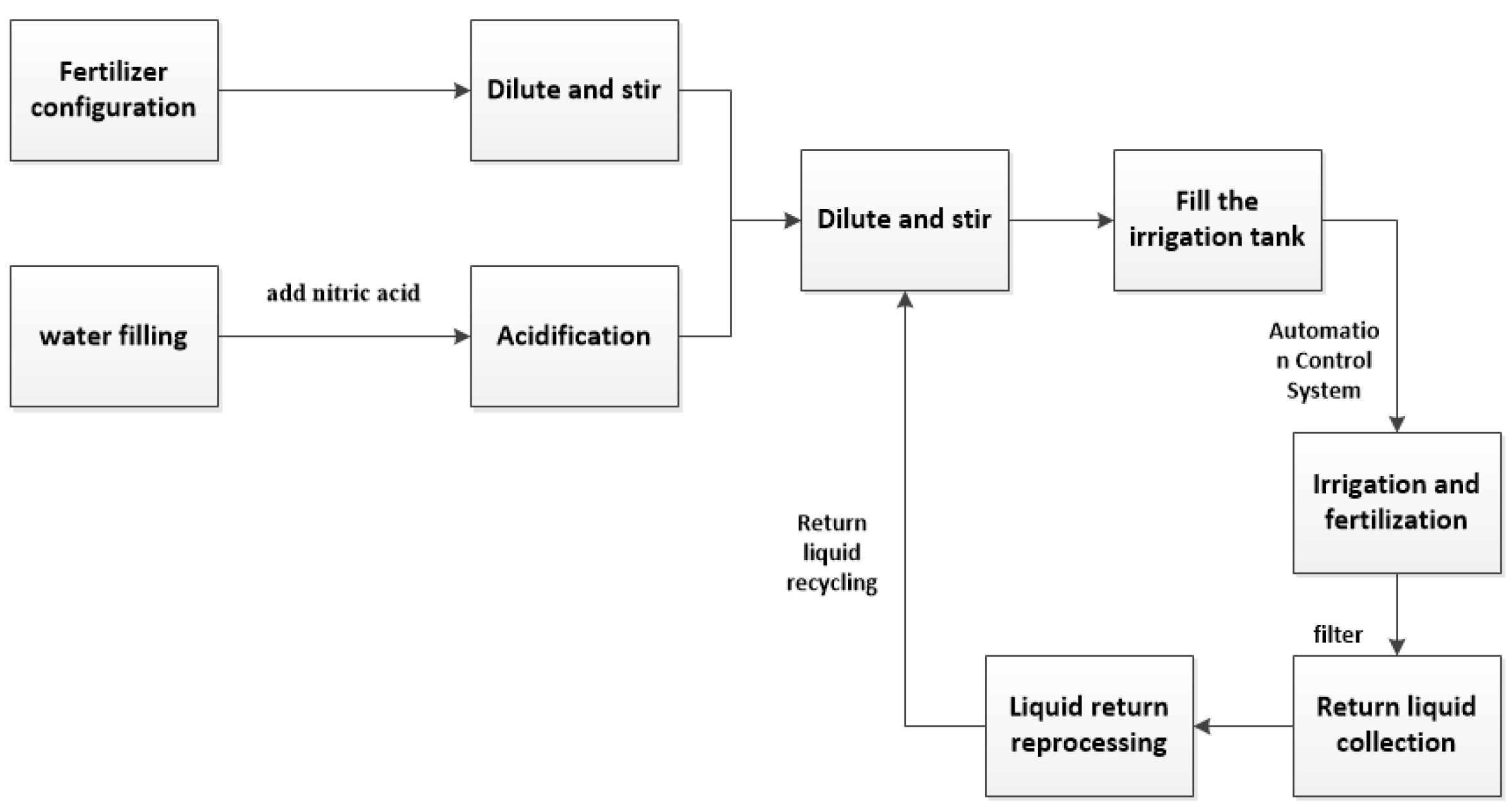
The integrated water and fertilizer technology integrates irrigation and fertilization. The flow of the existing common fertilizer system is shown as Figure 1.
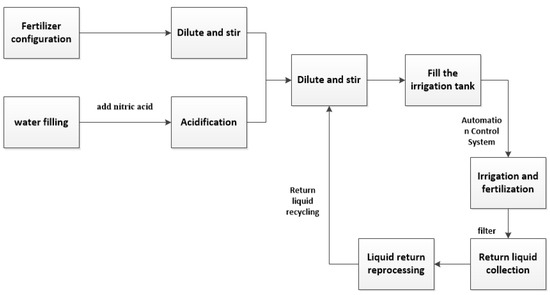
Figure 1.
Water and fertilizer integrated operation process.
The operation process of the existing domestic water and fertilizer integrated fertilizer system is to prepare the AB mother liquor and acid firstly (The A mother liquor takes calcium salt as the center, and any salt that does not react with calcium and produce precipitation can be put together. The B mother liquor takes phosphate as the center, and anything that does not precipitate with phosphate can be put together. Nutrient solution can be obtained by preparing mother liquor A and B. A mother liquor and B mother liquor are collectively referred to as AB mother liquor). The liquid storage tank to concentrate the nutrient solution was prepared with 100–1000 times mother liquor for storage, and clear water and nitric acid were mixed to form a nitric acid solution for storage. The nitric acid was added to clean water for acidification to form acid solution for storage. In the process of using the system, the AB mother liquor was diluted and stirred according to a certain proportion, and then the fertilizer was mixed together with acid in the mixing tank, the clean water was added to the appropriate EC value (The optimal EC value of different crops is different, and the EC value of 1.5 is relatively safe for most crops), and finally, the pH was fine-tuned. The mixed fertilizer was injected into the irrigation liquid tank for preservation. In order to stably add acid solution to the fertilizer compounding system to the required pH dose, a metering pump was used to precisely control the liquid extraction flow, and the highest accuracy was within 1%. In the process of use, the irrigation liquid was controlled by the automatic control system for fertilization, and the remaining fertilizer liquid was filtered and collected to form the residual liquid. The disadvantage of this system is that the content of a single ion cannot be adjusted to meet the controls in terms of quality and taste in vegetable production [12].
2.2. Structure of Multi-Element Fertilizer Compounding System
Taking the existing fertilizer system as the basic model, a multi-element fertilizer system was experimentally designed on this basis.
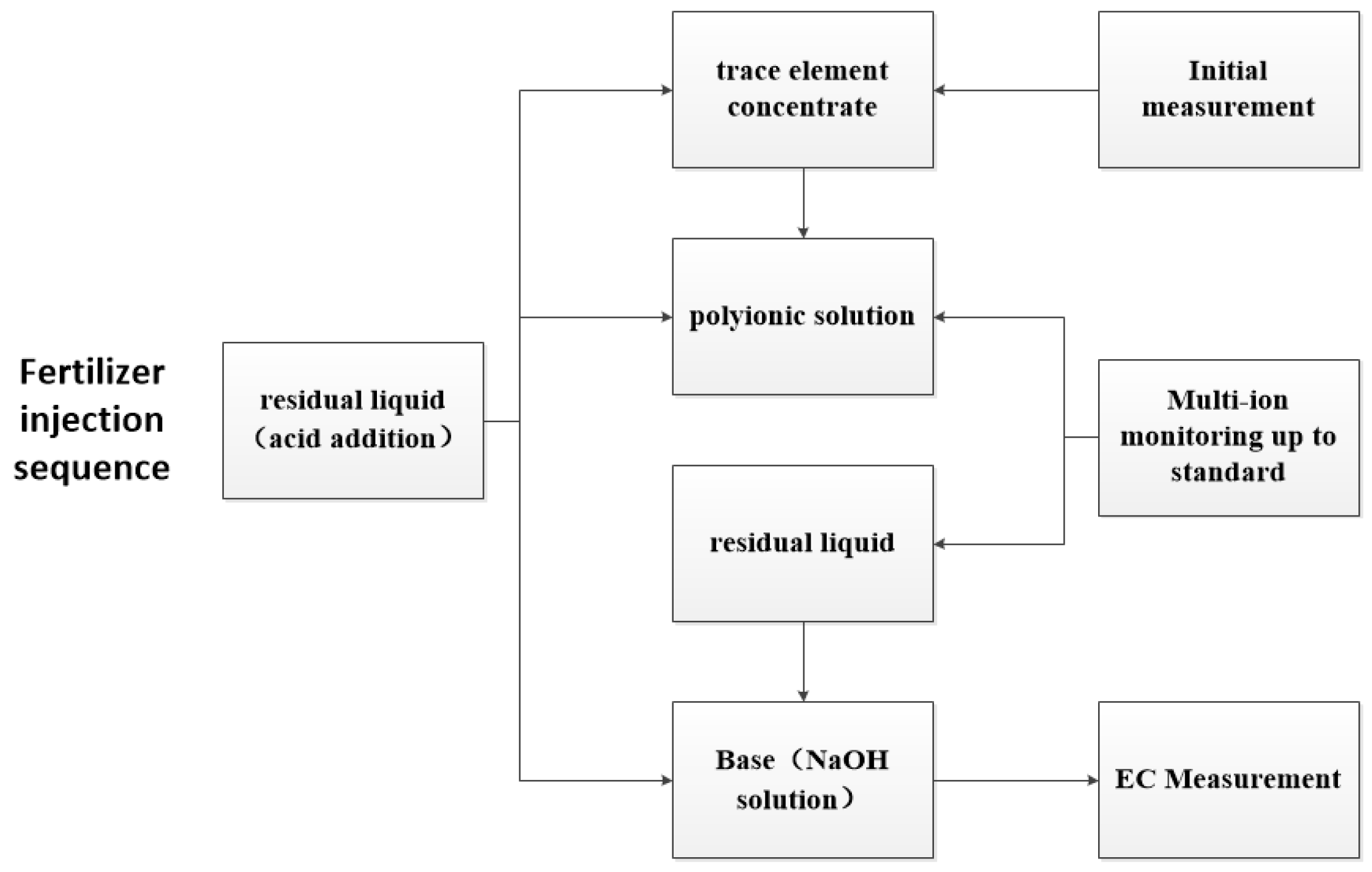
In the innovative design of the original water and fertilizer integration system, the fertilizer compounding process and pH control was stabilized by first acidifying the residual liquid in the system after disinfection treatment, after adding suitable trace element concentrate, and element ion detection was carried out and used as the initial value of the system. Because the residual liquid of the system is a polyionic solution, the water-soluble concentrated liquid of different element compounds was stored as an independent unit, and the fertilizer compounding process was mixed with the residual liquid according to the calculated value of the system model. After adding water to the volume, the pH was adjusted, and finally the EC value was detected to complete the secondary fertilization of the remaining liquid [13]. Figure 2 is the working process flow chart of the nutrient solution fertilizer compounding system based on nutrient elements.
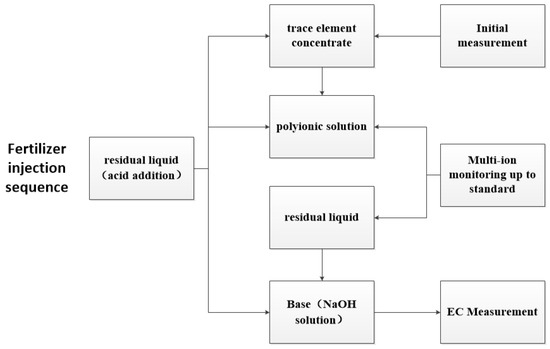
Figure 2.
Working process flow chart of nutrient solution fertilizer system based on nutrient elements.
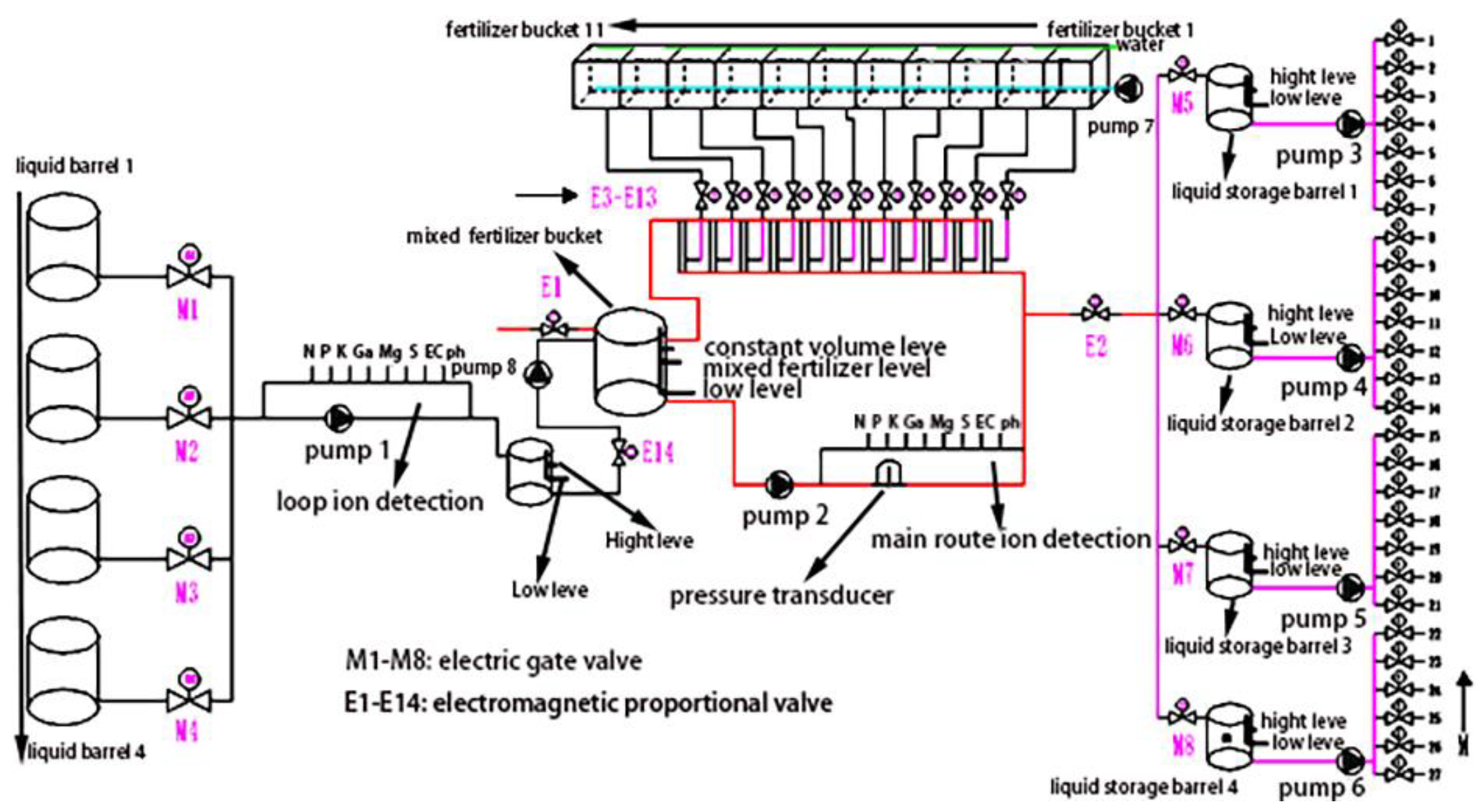
In Figure 3, the acidified residual liquor was stored in the residual liquor tank. Then, the detection of loop ions was carried out. The electric gate valve was represented by M, electric control proportional valve was represented by E. Fertilizers 1–7 are NH4NO3, KH2PO4, K2SO4, KNO3, Ca(NO3)2 ( represents the nitrate ion), CaCl2 and MgSO4, respectively. Acid 1, acid 2, acid 3 and base are H3PO4, H2SO4, HNO3 and NaOH, respectively. An ion sensor was used to detect ion content, the potentiometric sensor was used to measure EC value, and pH sensor was used to measure pH values. The amount of fertilizer was controlled by an electronically controlled proportional valve, that is, the ratio of fertilizers with different elements was carried out under the indicators of ion concentrations and EC value.
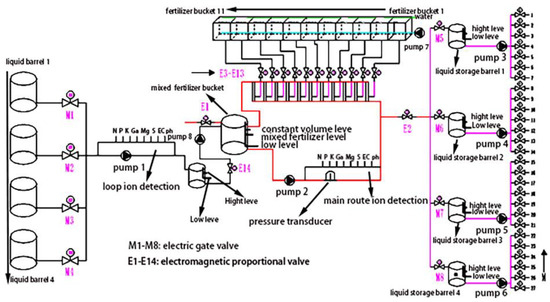
Figure 3.
Structure block diagram of nutrient solution fertilizer system based on nutrient elements.
2.3. Establishment of the Model of Secondary Fertilization with Nutrient Ion in Residual Liquid
Plants are selective in the absorption of mineral elements. The ion absorption of different elements by the root system is not proportional to the ion concentration of the traditional nutritional formula solution, and the anions and cations of salts of the same element are not absorbed into the plant body in the same proportion. Therefore, the composition and pH of the nutrient solution gradually changed with this difference in the absorption of anions and cations.
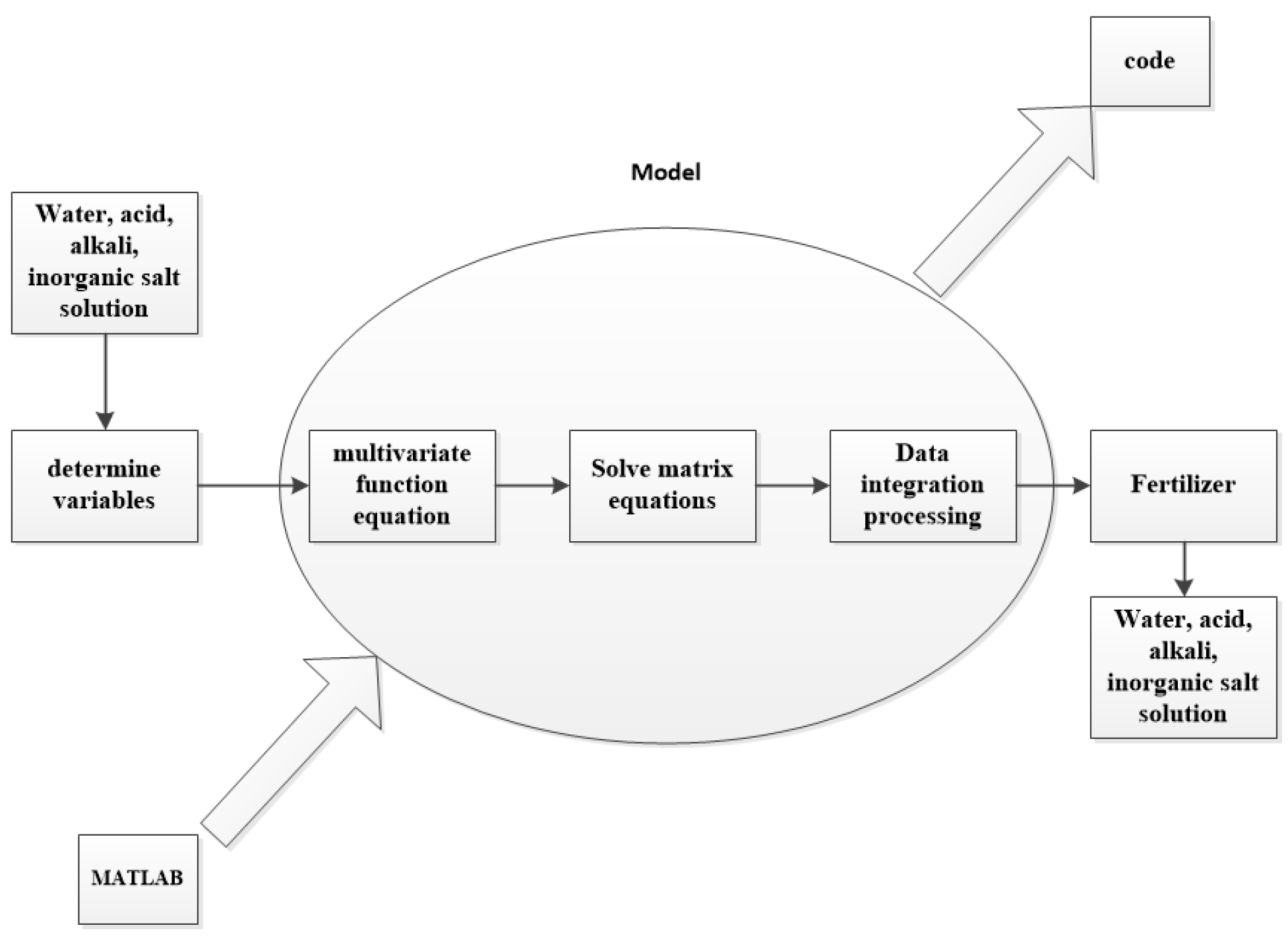
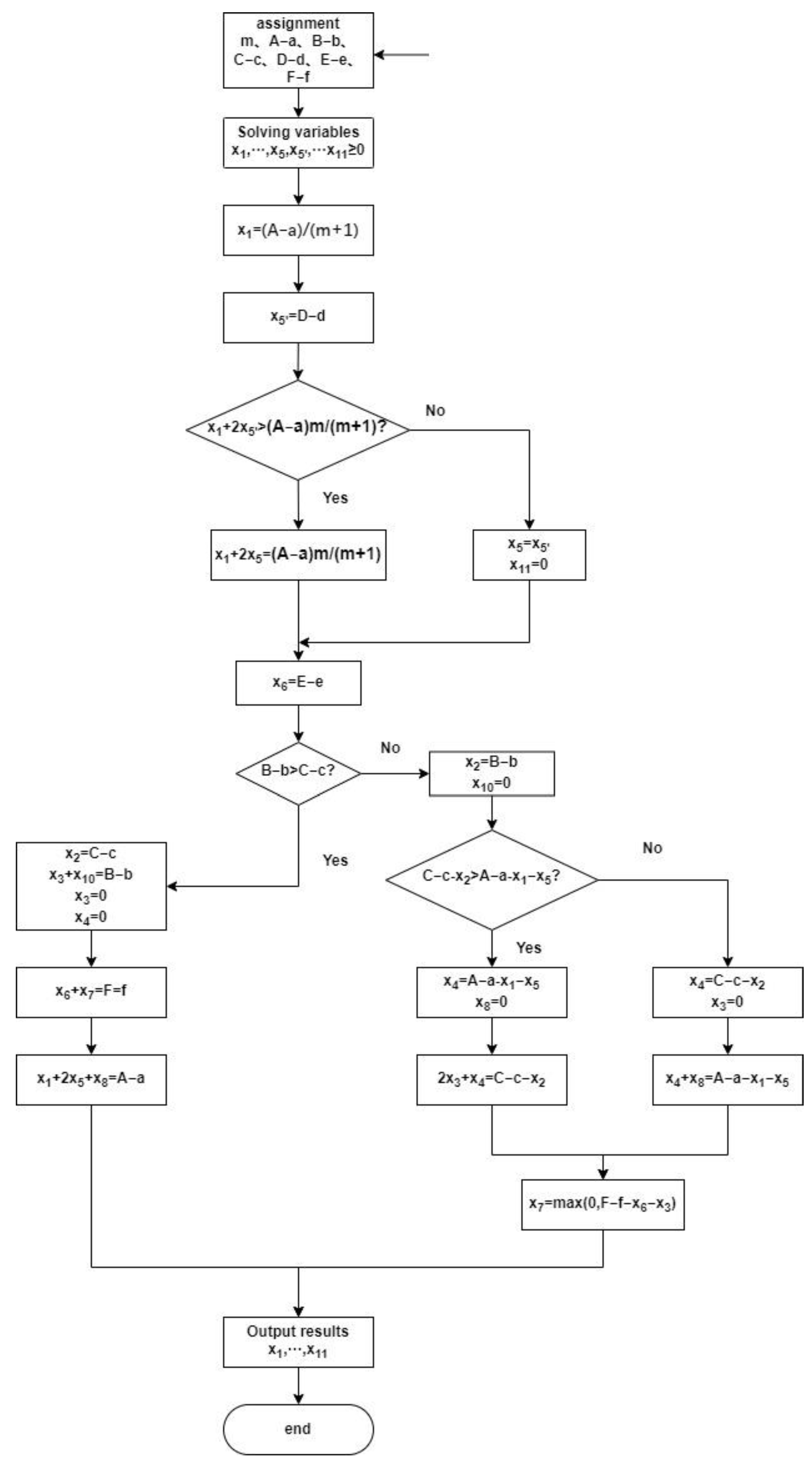
After recycling and sterilizing the residual liquid of nutrient solution, secondary fertilization was carried out to supplement the elements required by crops in a certain proportion and maintain the proper pH value and EC value. The structure of the nutrient solution fertilizer system was established, and the secondary fertilizer model of the residual nutrient ions was established. The overall solution process is shown as Figure 4.
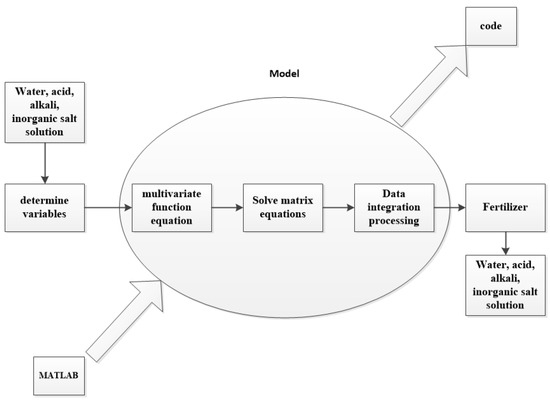
Figure 4.
The flow chart of the solution of the secondary fertilizer model.
2.4. Selection of Water-Soluble Inorganic Salts and Definition of Solution Variables
The secondary formula of the residual liquid after disinfection is to remove the existing ions in the residual liquid based on the concentration of each ion in the standard solution. The main elements of fertilizer composition were solved and detected as nitrogen (N), potassium (K), calcium (Ca), magnesium (Mg), phosphorus (P), sulfur (S) 6 main elements, as well as EC and pH. The overall usage of water-soluble inorganic fertilizers is as follows:
- N (nitrogen source): Urea, NH4H2PO4, Ca(NO3)2, NH4NO3—main, KNO3, (NH4)2SO4, NH4Cl—auxiliary;
- P (phosphorus source): KH2PO4, diammonium phosphate (DAP), NH4H2PO4, H3PO4;
- K: KH2PO4—main, KNO3—auxiliary;
- Ca: Ca (NO3)2, CaCl2;
- Mg: MgSO4;
- S: Sulfate.
Table 1 lists the fertilizers and solution variables defined by the model.

Table 1.
Defining Fertilizers and Solving Variables.
In Table 1, , , , , , , is the molar mass of , , , , , , and respectively;
For nitrogen fertilizer, and is mainly introduced. Phosphorus is mainly introduced into , and too much phosphorus in the fertilizer solution can lead to magnesium and iron deficiencies in plants. Potassium is mainly introduced into , plants absorb faster, but excessive potassium will affect the absorption of calcium, magnesium, and manganese. is difficult to move in plants but is a necessary microelement. MgSO4, CuSO4 and ZnSO4 used in the nutrient solution solve the supply problem of sulfur and corresponding trace elements at the same time. Chelated iron was used to solve the supply of iron.
The designed mathematical model is only for the model calculation of the main elements, and the water-soluble inorganic salts used in the fertilizer formulation are NH4NO3, KH2PO4, K2SO4, KNO3, Ca (NO3)2, CaCl2, MgSO4. Use H3PO4, H2SO4, HNO3 and NaOH for final adjustments.
Define the solution variables for each fertilizer as , , , , , , , , , , and . Restricted initial conditions: … are all non-negative. For the six main elements of nitrogen (N), potassium (K), calcium (Ca), magnesium (Mg), phosphorus (P), and sulfur (S), the ion contents corresponding to these six main elements in the nutrient solution are respectively for A, B, C, D, E, F. The contents of the corresponding ions of these 6 main elements in the recovered liquid are a, b, c, d, e, f respectively. As shown in Table 1, the amounts of inorganic salts to be supplemented are A-a, B-b, C-c, D-d, E-e, F-f, respectively.
2.5. Solving the Model of Fertilizer with Nutrient Ion in Residual Liquid
When mixing and dissolving fertilizers, the order should be paid attention to strictly. The should be separated from , . It means that Ca (NO3)2, CaCl2 cannot be mixed with several fertilizers other than potassium nitrate, such as magnesium sulfate and other sulfates, dihydrogen phosphate ammonium, etc. In order to avoid calcium precipitation. The mixing sequence can set the time difference Ti.
Restricted initial conditions: … are all non-negative.
Determine the detection target ion:
Set nitrogen fertilizer according to demand , the value of i is determined according to the ionic formula.
- 1.
- Determine the amount of
Set the water-soluble inorganic salt NH4NO3 according to the demand (mass ratio). The value of i is determined according to the ion formula. The required by crops is greater than , and some has been introduced into the nutrient solution, so it can be guaranteed that is greater than .
Since the value of i can be determined according to the ion formula, the value of can be determined by Formula (1), that is, the amount of is determined.
- 2.
- Determine the amount of
If , it means that the amount of is insufficient, and Ca(NO3)2 can be added continuously, so that , and is determined by Formula (2). The values of and are determined, that is, the amount of is determined.
If , it means that the amount of is sufficient, then the values of and are determined according to Formulas (3) and (4), that is, the amount of is determined.
- 3.
- Determine the amount of
The value of is determined by Formula (5), that is, the amount of is determined.
- 4.
- Determine the amount of
Start by determining KH2PO4 (), without considering K2SO4 and KNO3, so set , If: , more is required, and with smaller demand is satisfied firstly. The formulas are shown in Formulas (6) and (7). At this time , obtain ; If: , required more, then make , and obtain the value of according to Formula (7).
- 5.
- Determine the value of to determine the amount of ,
Continue to supplement and , the variables have been obtained in the above model solution, and are obtained from Formulas (8)–(10).
Formulas (8)–(10) can be simplified as Formulas (11)–(13).
In Formulas (11)–(13), represent H2SO4 and HNO3 respectively, only the effective element ions and are introduced as adjustment variables, and all variables in the formula are non-negative.
- 6.
- Determine the amount of
Optimized for model in step (5): If , supplemented greater than required, then surplus, = 0; If > , i.e., the required K is more than N, make = < , and make = 0, , then the value is valid; If < , i.e., the required N is more than K, make = < = 0, , then the value of is valid. Determine according to Formulas (14) and (15), and ; The amount of is: .
To sum up, the solution process proposed in this paper is shown as Figure 5, which can be solved through MATLAB. The model was solved in this paper, and the accuracy of the results was verified by experiments (see results and discussion section).
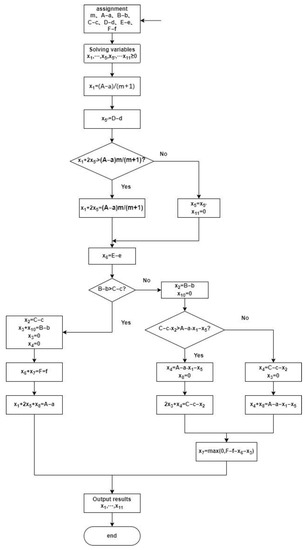
Figure 5.
Solution model diagram of nutrient liquid return for secondary fertilization.
2.6. Preparation and Detection Method of Nutrient Solution Stock Solution and Recovery Solution
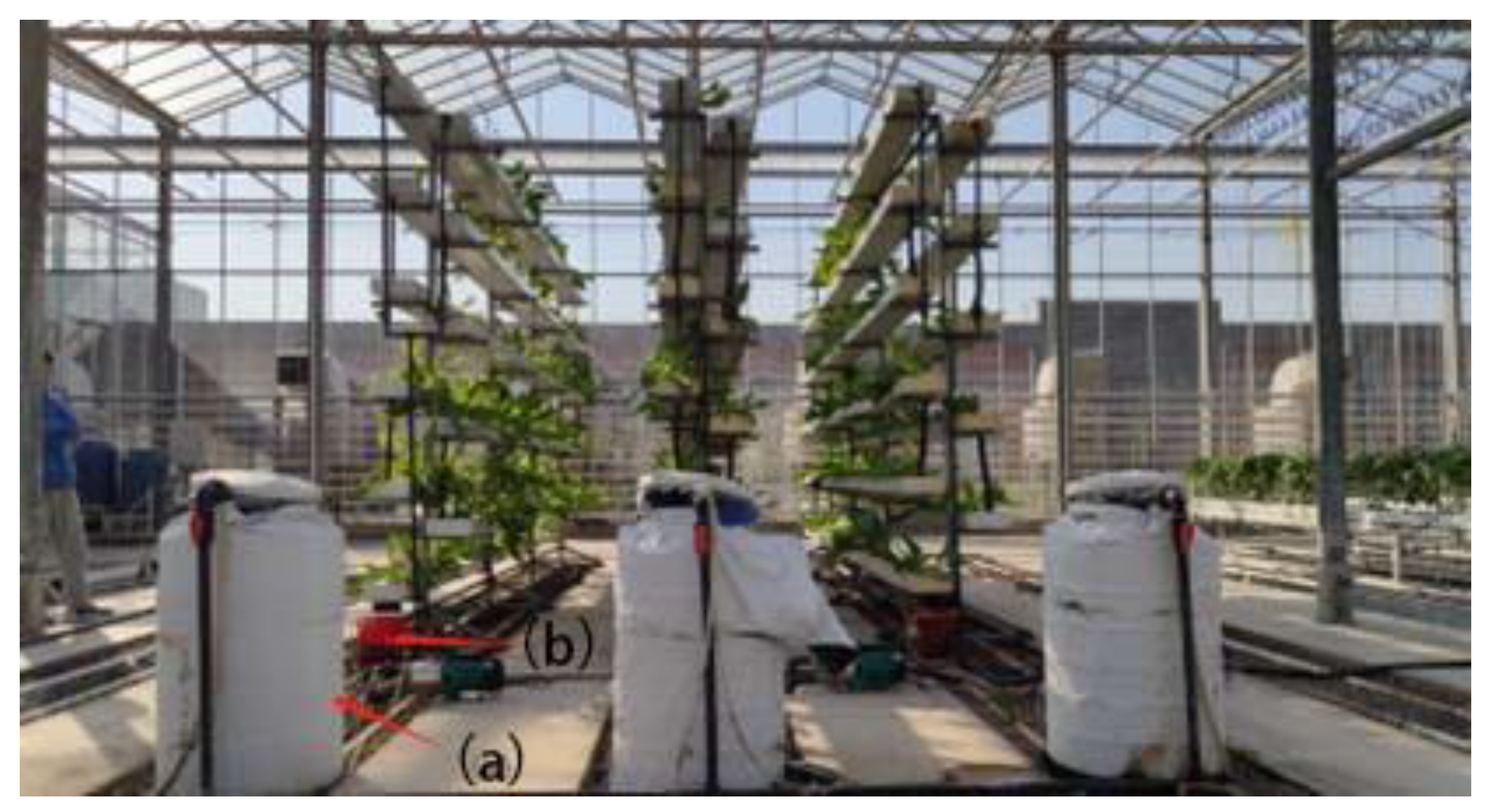
A Beijing Tianshi T6 New Century Ultraviolet Photometer was used to measure the concentration of each element in the nutrient solution before and after compounding to verify the accuracy of the model. The repeated tests were set up in strict accordance with the requirements of the instructions to ensure that the test results meet the requirements (six repeating groups). The plant used in this study is leaf-eating grass. Plant samples were provided by Jiangsu Lvgang Modern Agricultural Development Company Limited (Suqian City, China). The sampling site of nutrient solution and reflux solution are shown as Figure 6.
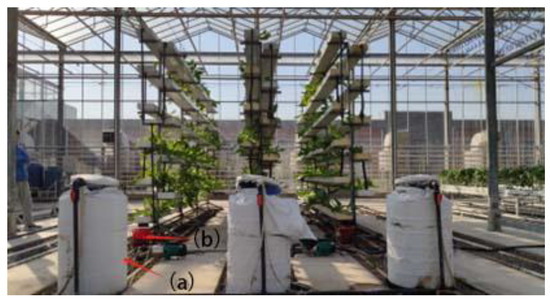
Figure 6.
Nutrient solution, return liquid sampling site: (a) raw liquid tank; and (b) remaining liquid barrel.
The remaining liquid was sampled from 14:00 to 16:00, a test sample was taken every 1 h, each sample was 1500 mL. The hydroponic nutrient solution of Foliage was selected from the formula of Lugang’s self-developed tomato, and 300 mL of three groups of nutrient solution stock solutions were taken every 1 h. The same group of test beds were selected for sampling. The 300 mL of the obtained residual liquid samples was separated from the three groups and sent together with the original solution for testing.
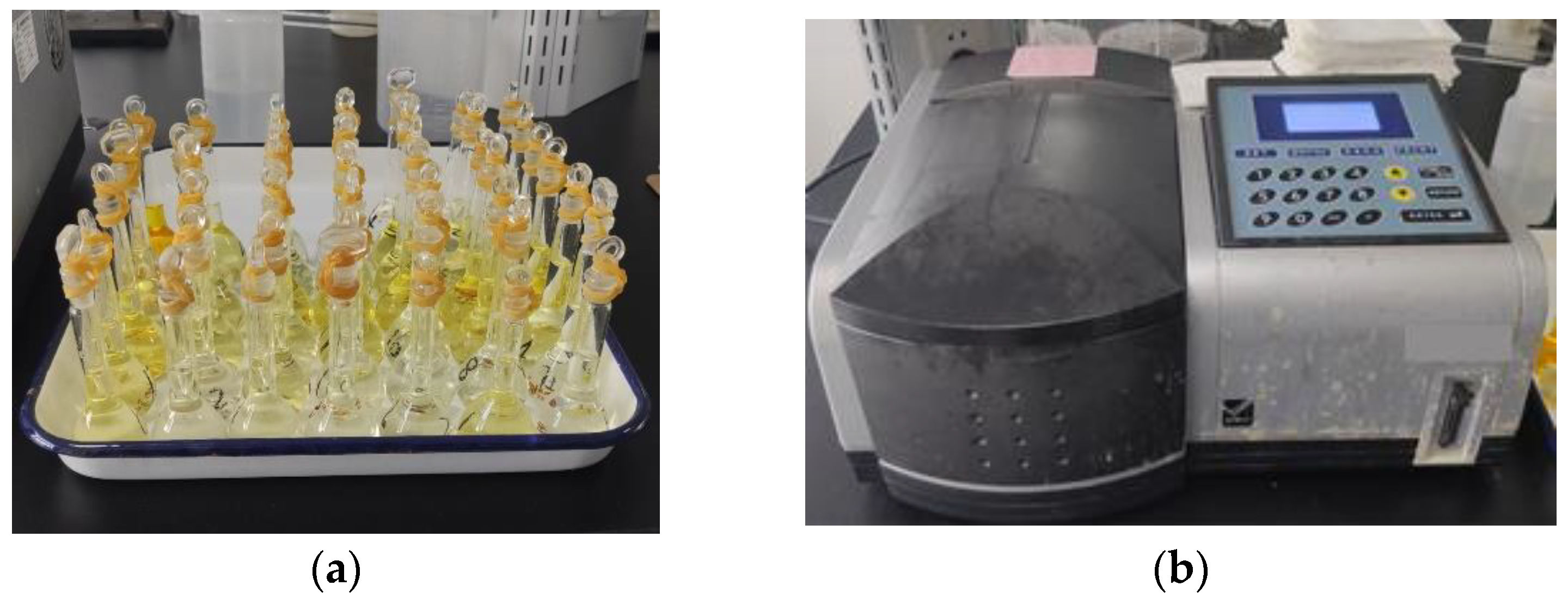
The nutrient ion detection test site is located in the modern agricultural industrial park of Sucheng District, Suqian City, Jiangsu Province. The test objects are the value of , EC and pH. Among them, the detection of and is colorimetry (UV-Vis spectrophotometer). The detection of and was Atomic Absorption Method (Atomic Absorption Spectrophotometer), the turbidimetry was used to detect (The manufacturer of the UV-Vis spectrophotometer and Atomic Absorption Spectrophotometer: Beijing General Instrument Limited Liability Company, Beijing, China). A conductivity meter was used to detect the value of EC. The pH value was detected with an acidity meter. Other ions such as iron, zinc, copper, manganese and sodium were detected using atomic absorption, boron was detected using colorimetry, and chloride was detected using a chloride ion concentration meter. Figure 7 is a diagram of a universal UV-Vis spectrophotometer and a sample to be tested.
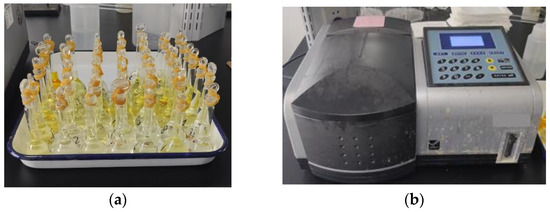
Figure 7.
PGENERAL UV-Vis spectrophotometer and samples to be tested: (a) UV-V is the spectrophotometer; and (b) Colorimetric test sample.
3. Results and Discussion
3.1. Verification of the Model System of Secondary Fertilizer Compounding with Nutrient Ions in Residual Liquid
The sampling location was in the large-scale greenhouse test base of Jiangsu Lvgang Modern Agriculture Development Co., Ltd. in Suqian City. The nutrient solution in this paper is used for leaf eating grass (alias: albumen grass, amino acid grass, perennial perennial herb, Rumex of Polygonaceae).
As shown in Table 2, it can be seen from the test that the EC value of the nutrient solution and the residual solution of the nutrient solution of the hydroponic system in the hydroponic system of the leaf-eating grass cultivation bed did not change significantly. The overall pH value showed an upward trend. The in the nutrient elements was almost completely consumed, the contents of nitrate nitrogen and calcium decreased significantly, and the contents of other elements ions decreased in varying degrees.
Table 2.
Initial test report of nutrient solution return liquid and original liquid sample.
The model variables were calculated according to the test results in Table 2. The model unit used in this test is mmol. The difference between the content of the original solution and the remaining solution of different element ions in each group is the amount of element ions to be supplemented (mg). The model variables were converted by the following relationship.
That is, the total moles of the supplemented variables are equal to the moles of the corresponding element ions, as shown in Table 3 below.
Table 3.
Nutrient solution return element replenishment variable.
The three groups of supplementary variable values in Table 3 were input into the MATLAB secondary fertilizer model for solution (mol), and the solution results are shown in Table 4.
Table 4.
Nutrient solution return element return model solution value.
The above-mentioned sealed residual liquid was fertilized according to Table 4. Pure ammonium nitrate is a white crystalline powder, which is flammable and explosive. It often exists in the form of compound fertilizer calcium ammonium nitrate in fertilizer production. Therefore, ammonium sulfate was used instead to verify the ammonium ion concentration in the compound fertilizer experiment. The chemical reagents from Sinopharm Group were used for fertilizer verification. The inorganic salt reagents and acid-base solutions used were: ammonium sulfate (≥99.0%), potassium dihydrogen phosphate (≥99.5%), potassium sulfate (≥99.0%), nitric acid Potassium (≥98.5%), calcium chloride anhydrous (≥96.0%), calcium nitrate 4 hydrate (≥98.0%), magnesium sulfate 7 hydrate (≥99.0%), 1 titrated phosphoric acid solution, 1 diluted sulfuric acid standard solution, 1 laboratory titration nitric acid solution and 1 sodium hydroxide solution.
3.2. Analysis of the Terification Results of the Secondary Fertilization Model of Residual Liquid Nutrient Ions
In the modern agricultural industrial park of Sucheng District, Suqian City, Jiangsu Province, the nutrient ion detection of compound fertilizer samples was carried out, and the detection method was the same as that in Section 3.1. Since ammonium sulfate was used instead of ammonium nitrate in the compound fertilizer, some S elements were introduced, so the S content of the part introduced by using ammonium sulfate after detection needs to be removed. The final test results are shown in Table 5.
Table 5.
Nutrient solution stock solution, secondary fertilizer sample test report.
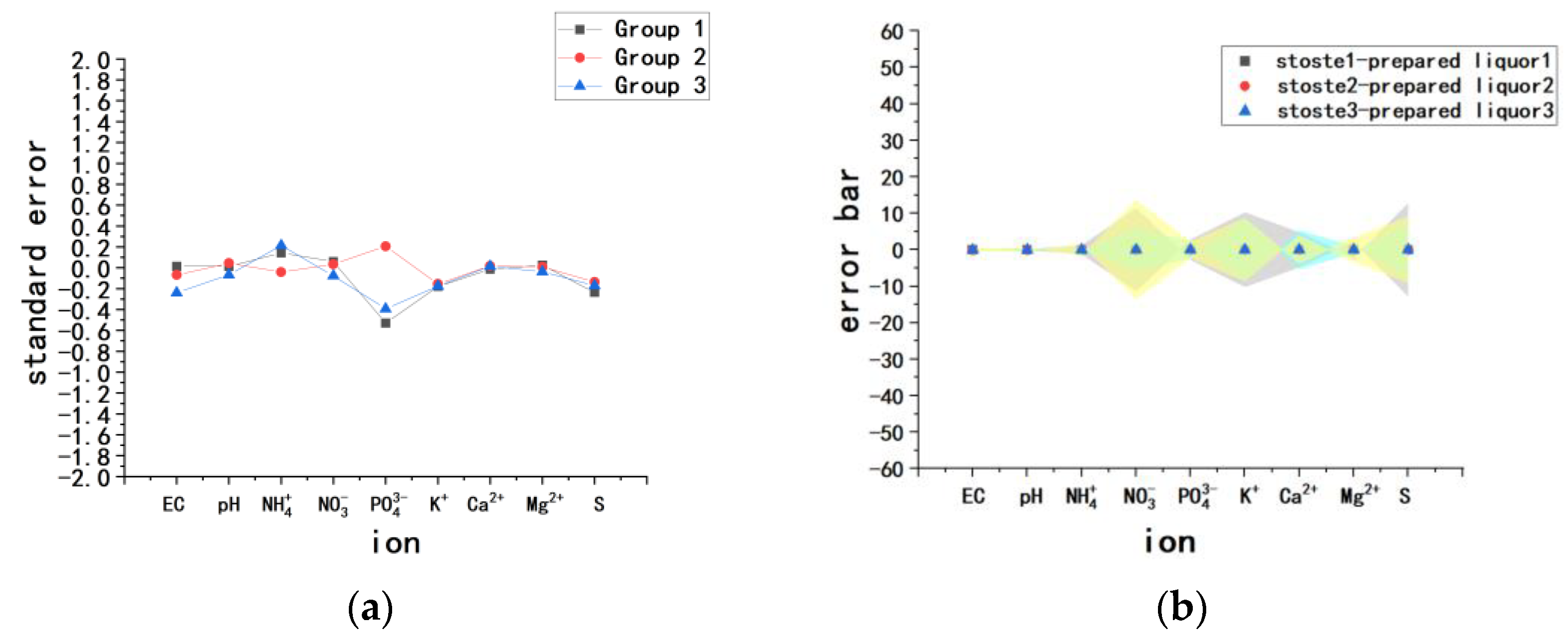
Figure 8 is the error diagram of the second fertilization test of the nutrient solution remaining liquid. Figure 8a is the standard error of the fertilizer test result relative to the original solution. The standard error reflects the difference between the nutrient solution original solution variable and the fertilizer solution variable and the original solution variable. Figure 8b is the difference between the nutrient solution stock solution variable and the formulated fertilizer solution variable after fertilization. The three groups of test results more accurately reflect the difference between the nutrient elements, EC and pH values detected in the fertilizer solution after the second fertilizer formulation, and the detection value of the nutrient solution. Among them, the maximum relative error was −0.5294 (), and the minimum relative error was 0.0093 (). The minimum change of EC value in group 1 was 0.02 , and the maximum change in group 3 was −0.32 . The change of pH value in group 1 was the smallest of 0.1, the largest change in group 3 was −0.48. The maximum error of nutrient element S element was −12.7 mg, and the minimum error of ammonium nitrogen was −0.31 mg.
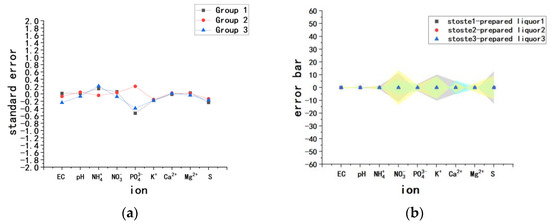
Figure 8.
Nutrient solution returning to liquid secondary fertilizer detection error: (a) standard error diagram of secondary fertilization; and (b) error bar diagram of secondary fertilization.
3.3. Discussion on the Application Effect of the Secondary Fertilization Model
At present, nutrient solutions for hydroponics are mainly prepared according to the standard formula, and the utilization rate of the nutrient solution reflux is low. If the ion content in the returned nutrient solution can be detected and used as the basis for ion supplement in the nutrient solution during the recovery and reuse of the returned nutrient solution, the nutrient solution composition after secondary fertilization can be closer to the standard nutrient solution composition that suitable for plant absorption [14]. The utilization rate of the nutrient solution can be improved through the effective utilization of water and nutrient components in the nutrient solution recovery solution through precise fertilization [15,16]. In this paper, in order to improve the utilization rate of nutrient solution return in hydroponics, a device and mathematical model for secondary fertilizer preparation of nutrient solution return were established, and the nutrient solution return was configured according to the secondary fertilizer preparation model. It was found that the secondary fertilizer preparation of nutrient solution return according to the model established in this paper will improve the utilization rate of nutrient solution return [17].
The results of the secondary fertilization test of the nutrient ions in the residual solution showed that the nutrient elements, EC and pH values detected in the fertilizer solution after the secondary fertilization had a high degree of fit with the detected values of the nutrient solution. The ion concentration error obtained from the secondary fertilization of nutrient solution return solution with the secondary fertilization device and mathematical model established in this paper is 0.0093–0.5294 , which is a small probability error. The precision of nutrient element control was higher than that of fertilization systems at home and abroad that only rely on compound element fertilizers or A and B fertilizers as mixed fertilizer methods, use EC and pH detection as the final control methods [18,19,20,21,22,23]. It is convenient and accurate to use the device and mathematical model established in this paper for fertilizer allocation. The Research Institute has established the secondary fertilizer mixing model of nutrient solution residue. The solid inorganic salt fertilizer used in the research is often introduced with some impurity ions due to the influence of the purity of the product itself. In view of the instability of the solution and the reduction of the model calculation error, further optimization methods are needed to optimize the matrix model solution
The results of the above secondary fertilizer allocation model of residual nutrient ions show that fertilizer allocation with high precision can be achieved according to the solution model of inorganic nutrient elements. Moreover, the fertilizer blending model based on nutrient ions can not only realize the secondary utilization of the greenhouse hydroponic solution, but also realize the multi-way fertilizer blending based on water-soluble inorganic fertilizers according to the element ions required by plants in different growth stages. The secondary fertilizer mixing device and mathematical model designed in this paper can effectively improve the utilization rate of nutrient solution in hydroponics system and reduce the material consumption of hydroponics planting.
4. Conclusions
(1) In this paper, a secondary fertilizer compounding device, mathematical model and method based on nutrient ions were established, and the principle and structure of the element-based nutrient solution fertilizer compounding system were designed. The mathematical model of precise fertilization of nutrient solution return established is based on nutrient elements and can be used for carrying out secondary fertilization to the nutrient solution return, supplements the elements required by crops according to a certain proportion, and maintains the proper pH value and EC value of nutrient solution.
(2) The residual liquid of the nutrient solution was mixed with the trace element concentrated liquid according to the calculated value of the system. The calculation was made according to the formula requirements of various elements and nutrient ions. The single element was taken as the solution object, and the multivariate matrix was solved as a means to solve the nutrient solution and fertilizer model. The output solution was optimized under the multivariate infinite solution matrix model, and the optimization solved the situation that some variables have no effective output solution, and the solution was not good. The feasibility of the secondary fertilization model of residual liquid nutrient ions was verified by experiments.
(3) The secondary fertilization device and fertilization model established in this paper can effectively use the nutrient solution to reconfigure the nutrient solution suitable for plant absorption, which can reduce the waste of nutrient solution and improve the benefits of soilless culture.
Author Contributions
Conceptualization: X.W., W.F. and Z.Z. reviewed the literature and wrote the initial draft of the paper, X.W. contributed to revising the manuscript. All authors have read and agreed to the published version of the manuscript.
Funding
This work was supported by The National Key Research and Development Project (No.2022YFD2002403), Jiangsu Province Modern Agricultural Machinery Equipment and Technology Demonstration and Promotion Project (No. NJ2020-14), Kunshan Municipal Science and Technology Project (KN2202), The Priority Academic Program Development of Jiangsu Higher Education Institutions (No. PAPD-2018-87), and Project of the Agricultural Equipment Faculty of Jiangsu University (No. NZXB20200104).
Institutional Review Board Statement
Not applicable.
Data Availability Statement
Not applicable.
Conflicts of Interest
The authors declare no conflict of interest.
References
- Lu, J.; Cheng, M.; Zhao, C.; Li, B.; Peng, H.; Zhang, Y.; Shao, Q.; Hassan, M. Application of lignin in preparation of slow-release fertilizer: Current status and future perspectives. Ind. Crop. Prod. 2022, 176, 114267. [Google Scholar] [CrossRef]
- Liu, N.; Xu, C.; Chen, B.; Xiong, Z.; Li, H.; Li, G. Research and Experiment on Key Technology of Water-Fertilizer Integration Intelligent Equipment. In Proceedings of the 2021 6th International Conference on Automation, Control and Robotics Engineering (CACRE), Dalian, China, 15–17 July 2021; pp. 493–497. [Google Scholar]
- Wu, Y.; Li, L.; Li, S.; Wang, H.; Zhang, M.; Sun, H.; Sygrimis, N.; Li, M. Optimal control algorithm of fertigation system in greenhouse based on EC model. Int. J. Agric. Biol. Eng. 2019, 12, 118–125. [Google Scholar] [CrossRef]
- Mihalache, G.; Peres, C.I.; Bodale, I.; Achitei, V.; Gheorghitoaie, M.V.; Teliban, G.C.; Cojocaru, A.; Butnariu, M.; Muraru, V.; Stoleru, V. Tomato Crop Performances under Chemical Nutrients Monitored by Electric Signal. Agronomy 2020, 10, 1915. [Google Scholar] [CrossRef]
- Zhai, Z.; Chen, X.; Zhang, Y.; Zhou, R. Decision-making technology based on knowledge engineering and experiment on the intelligent water-fertilizer irrigation system. J. Comput. Methods Sci. Eng. 2021, 21, 665–684. [Google Scholar] [CrossRef]
- Nithiya, S.; Annapurani, K. Optimised fertiliser suggestion in smart agriculture system based on fuzzy inference rule. Acta Agric. Scand. Sect. B-Soil Plant Sci. 2021, 71, 191–201. [Google Scholar] [CrossRef]
- Elvanidi, A.; Reascos, C.M.B.; Gourzoulidou, E.; Kunze, A.; Max, J.F.J.; Katsoulas, N. Implementation of the Circular Economy Concept in Greenhouse Hydroponics for Ultimate Use of Water and Nutrients. Horticulturae 2020, 6, 83. [Google Scholar] [CrossRef]
- Hodgson, B.; Sharvelle, S. Development of generalized empirical models for comparing effectiveness of wastewater nutrient removal technologies. Environ. Sci. Pollut. Res. 2019, 26, 27915–27929. [Google Scholar] [CrossRef]
- Zimmermann, M.; Fischer, M. Impact assessment of water and nutrient reuse in hydroponic systems using Bayesian Belief Networks. J. Water Reuse Desalination 2020, 10, 431–442. [Google Scholar] [CrossRef]
- Mehra, M.; Saxena, S.; Sankaranarayanan, S.; Tom, R.J.; Veeramanikandan, M. IoT based hydroponics system using Deep Neural Networks. Comput. Electron. Agric. 2018, 155, 473–486. [Google Scholar] [CrossRef]
- Qu, F.; Zhang, J.; Ma, X.; Wang, J.; Gao, Z.; Hu, X. Effects of different N, P, K and Ca levels on tomato yield, quality and fertiliser use efficiency. Plant. Soil Environ. 2020, 66, 569–575. [Google Scholar] [CrossRef]
- Yan, W.; Fan, W. Research on the Current Situation and Development of Intelligent Precision Fertilizer Technology. In Proceedings of the 11th IFIP WG 5.14 International Conference on Computer and Computing Technologies in Agriculture (CCTA), Jilin, China, 12–15 August 2019. [Google Scholar]
- Milon, C.; Nafiul, I.M.; Nasim, R.M.; Mohammod, A.L.I.; Kamal, R.; Shafik, K.; Daehyun, L.E.E.; Sun-Ok, C. Sensor-Based Nutrient Recirculation for Aeroponic Lettuce Cultivation. J. Biosyst. Eng. 2021, 46, 81–92. [Google Scholar]
- Moreno-Pérez, E.D.C.; Castillo, S.D.; Gutiérrez-Tlaque, J.; González-Molina, L.; Pineda-Pineda, J. Greenhouse lettuce production with and without nutrient solution recycling. Rev. Chapingo Ser. Hortic. 2015, 21, 43–55. [Google Scholar] [CrossRef]
- Miller, A.; Adhikari, R.; Nemali, K. Recycling Nutrient Solution Can Reduce Growth Due to Nutrient Deficiencies in Hydroponic Production. Front. Plant Sci. 2020, 11, 607643. [Google Scholar] [CrossRef] [PubMed]
- Park, C.J.; Ok, Y.S.; Eui, Y.J.; Yoal, Y.K. Recycling of Hydroponic Waste Solution for Red Pepper (Capsicum annum L.) Growth. Korean J. Environ. Agric. 2005, 24, 24–28. [Google Scholar] [CrossRef]
- Patel, A.; Mungray, A.A.; Mungray, A.K. Technologies for the recovery of nutrients, water and energy from human urine: A review. Chemosphere 2020, 259, 127372. [Google Scholar] [CrossRef] [PubMed]
- Benni, S.; Tassinari, P.; Bonora, F.; Barbaresi, A.; Torreggiani, D. Efficacy of greenhouse natural ventilation: Environmental monitoring and CFD simulations of a study case. Energy Build. 2016, 125, 276–286. [Google Scholar] [CrossRef]
- Chen, J.; Xu, F.; Tan, D.P.; Shen, Z.; Zhang, L.B.; Ai, Q.L. A control method for agricultural greenhouses heating based on computational fluid dynamics and energy prediction model. Appl. Energy 2015, 141, 106–118. [Google Scholar] [CrossRef]
- Yuan, H.; Li, L.; Wang, J.; Wang, H.; Sigrimis, N.A. Design and test of regulation and control equipment for nutrient solution of water and fertilizer integration in greenhouse. Trans. Chin. Soc. Agric. Eng. 2016, 32, 27–32. [Google Scholar] [CrossRef]
- Wang, L.; Zhu, M.; Li, L.; Wang, H. Influence of Different Fertilization on-Phenotypic Data of Greenhouse Tomato in all Growth Periods. Trans. Chin. Soc. Agric. Mach. 2017, 48, 321–326. [Google Scholar]
- Ohana-Levi, N.; Ben-Gal, A.; Peeters, A.; Termin, D.; Linker, R.; Baram, S.; Raveh, E.; Paz-Kagan, T. A comparison between spatial clustering models for determining N-fertilization management zones in orchards. Precis. Agric. 2021, 22, 99–123. [Google Scholar] [CrossRef]
- Wang, H.; Fu, Q.; Meng, F.; Mei, S.; Wang, J.; Li, L. Optimal design and experiment of fertilizer EC regulation based on subsection control algorithm of fuzzy and PI. Trans. Chin. Soc. Agric. Eng. 2016, 32, 110–116. [Google Scholar]
Disclaimer/Publisher’s Note: The statements, opinions and data contained in all publications are solely those of the individual author(s) and contributor(s) and not of MDPI and/or the editor(s). MDPI and/or the editor(s) disclaim responsibility for any injury to people or property resulting from any ideas, methods, instructions or products referred to in the content. |
© 2023 by the authors. Licensee MDPI, Basel, Switzerland. This article is an open access article distributed under the terms and conditions of the Creative Commons Attribution (CC BY) license (https://creativecommons.org/licenses/by/4.0/).