


Abstract
The increase of the global population and the requirement of food production and agricultural development, combined with a lack of water resources, have led to human attention being drawn to unconventional water sources, including saline water and wastewater. Most unconventional water treatment methods are not cost-effective; however, researchers have become interested in the phytoremediation method due to its cost-efficient and eco-friendly removal of many pollutants in recent years. Research showed that due to its unique characteristics, vetiver grass can be useful in phytoremediation. In the current review, research on vetiver-based phytoremediation of unconventional water, especially wastewater, was reviewed. The vetiver-reduced contaminants in wastewater can be related to the interactions between (1) the root-released oxygen into the rhizosphere; (2) the root-based uptake of nutrients from the wastewater; (3) the existence of an appropriate surface area for the attached microbial growth; as well as (4) the root-exuded organic carbon.
1. Introduction
Global warming and decreased precipitation have led to climate change and the consequent water shortage, specifically in arid areas [1]. The increased human population as well as expanded agricultural and industrial activities have also decreased the freshwater resources and increased pollution [2]. Consequently, the application of unconventional water seems necessary because water pollution makes economic development increasingly vulnerable and fragile [3]. Unconventional water sources cannot be used normally; therefore, their usage management and protection policies are needed [4]. In many countries, the urban and industrial-resulted unconventional water is applied for agricultural purposes as a solution to droughts [5,6]. However, its prolonged agricultural applications face challenges due to health problems and significant organic and mineral substances [7]. Among these cases, we can mention soil salinization, groundwater pollution, and health risks for the producers and customers [8]. For instance, high levels of carbonate and bicarbonate within wastewater could negatively impact plant roots by inhibiting the uptake of manganese, iron, magnesium, zinc, potassium, as well as phosphorus [9].
One of the technologies that applies resistant plants with the purpose of the removal or decrease of organic/inorganic contaminants, as well as eco-unfriendly heavy metals, petroleum substances, and herbicides, is phytoremediation, which is also referred to as a plant-based biological treatment. Today, the use of green plants is prevalent based on their extraordinary ability to accumulate elements and remove harmful compounds from the environment [10,11].
Compared to other technologies, the following advantages are recognized for phytoremediation: (1) phytoremediation can be used in large areas for a wide range of pollutants due to its economic feasibility, low energy consumption [12], and environmental compatibility [10,11,13,14]; (2) being publicly acceptable and practical [15]; (3) the decreasing effects on wind and water erosion on a site; and (4) feedstock generation for a variety of different applications [12]. However, this method has several limitations, including: (1) the limited range of the affected contaminants, relatively prolonged time scale, and inappropriate achievable levels of the residual contaminant [16]; (2) although the method is not technically complex, considerable experience and expertise may be required to design and implement a successful phytoremediation program due to the need of a complete evaluation of a site for suitability and to optimize the conditions to achieve a satisfactory result [17]; (3) limitations of the depth of root-occupied phytoremediation; as well as (4) contamination of the food chain which resulted from the toxic-compound-absorbed plants [18].
Phytoremediation-involved plants are highly tolerant against the desired pollutants. Applied research conducted on vetiver grass showed that the unique characteristics of vetiver grass can be useful in phytoremediation. This plant has a high range of tolerance against toxic elements, salinity, alkalinity, sodium, and various heavy metals [19,20,21,22]. Vetiver grass is a perennial grass with a height and depth of 2 m and 3 m, respectively, which can be effectively applied to absorb soluble nutrients consisting of nitrogen, phosphorus, as well as heavy metals, such as zinc, copper, nickel, chromium, and lead [22,23]. As a consequence, the vetiver-grass-based phytoremediation is a reliable method to purify polluted water. Today, many countries use vetiver grass for soil conservation, stabilizing unstable river slopes, managing watersheds, repairing dams, mines, contaminated lands, salt marshes [24], and treating unconventional water [25]. The current study reviews recent studies on vetiver-grass-resulted effects on the removal of pollutants from unconventional water.
2. Phytoremediation
Various physical and chemical approaches are applied to the process of unconventional water treatment [26,27]; however, most of them are associated with both disadvantages and limitations, such as the production of toxic sludge [28], high costs [29], and incomplete target removal [30]. Therefore, researchers have turned their interest toward the biological technique due to its low cost, nature-mimicking, and practical [31] bioremediation. This technique is based on the biogeochemical cycles, which is applicable to soil, surface water, groundwater, sediments, as well as ecosystem restoration and cleanup [32,33]. Phytoremediation, bioleaching land farming, bioventing, bioreaction, composting bio augmentation rhizofiltration, and biostimulation are known as bioremediation technologies [12].
The developed application of green plants with the purpose of purification of polluted environments, including soil, water, and wastewater, is known as phytoremediation [13]. “Phytoremediation” comes from the Greek word “phyto” (meaning plant) and the Latin word “remedium”, which, respectively, mean “plant” and “removal/correction”. The process can be applied to the green restoring of polluted sites [12]. Moreover, it cannot have any environmental adverse effects due to its biological traits [34]. Phytoremediation can also be defined as a process whereby soil or water pollutants are degraded, extracted, or immobilized through the use of plants [28,32]. The process is associated with nonintrusiveness, aesthetical smoothing, as well as biodegradant effects on polluted sites [35]. The mentioned technique can be used in places with different weather conditions through an appropriate plant selection [12]. It is recommended that the plant selection procedure be carried out considering the adequate growth ability in polluted water and soil. Studies showed that even within one genus, the pollutant uptake varies between species [11]. It has been demonstrated that phytoremediation, in combination with the simultaneous application of minerals, can have a significant impact on its capacity [10].
Plants are capable of remediating contamination through a number of different mechanisms and paths, including those of the roots and those of the foliar surface. The active surface area of a plant in the phytoremediation process refers to the pollutants’ directly connected plant parts, which contribute to the remediation. For the remediation of aquatic media, plant shoots [36] or roots [37] can be considered as the active parts of the plant. Highly active surface areas of plants can develop the efficiency of remediation through providing more sites of micro-organism absorption [38].
According to several investigations, unconventional water phytoremediation using various plants, including common reeds (Phragmites australis) [39], water hyacinth (Eichhornia crasspies) [24], water lettuce (Pistia stratiotes) [40], bulrush (Typha) [41], duckweed (Lemna) [42], pampas grass (Cortaderia selloana) [43], vetiver grass (Chrysopogon zizanoioides) [21,22,23,24], and Quinoa plant (Chenopodium quinoa willd) [44], could be a supplementary approach.
3. Mechanisms of Phytoremediation
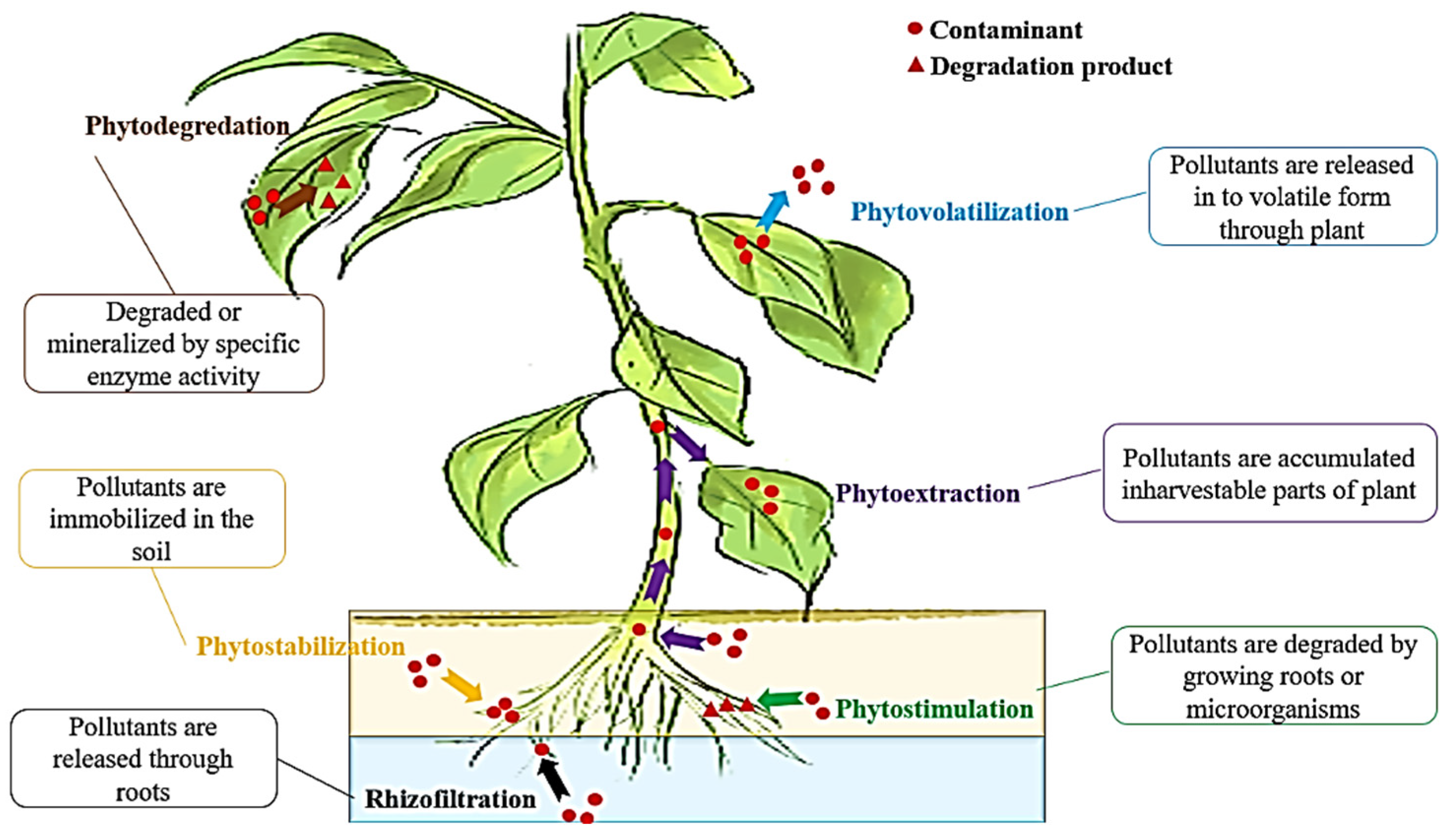
In phytoremediation, a variety of phytotechniques may be used to ameliorate a wide variety of pollutants using a variety of mechanisms depending on the application (Figure 1). There are various phytoremediation methods, including phytoextraction, phytostabilization, phytovolatilization, rhizodegradation, phytodegradation, as well as rhizofiltration, investigated comprehensively in several studies [12,18]. These techniques are characterized in Table 1 [12,13,45]:
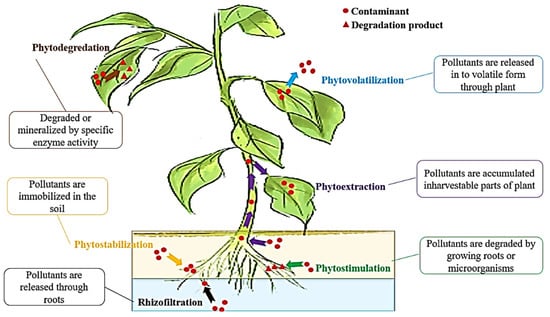
Figure 1.
Schematic diagram of different approaches of phytoremediation.

Table 1.
Characteristics of phytotechniques.
According to the previous literature, the mechanism of decontaminating unconventional water by vetiver grass is usually phytoextraction. The vetiver root system is dense and can be grown up to 7 m. The pollutants can be adsorbed by the channels, and then transferred in the plasma membrane of the root [22]. To understand the mechanism of vetiver grass for the decontaminating of industrial wastewaters, two factors consisting of the bioaccumulation factor (BAF), and translocation factor (TF) were evaluated. The BAF and TF can be expressed by Equations (1) and (2), respectively.
where , , and are the concentration of the pollutant in the harvested plant tissue, shoots, and roots, respectively, and also is the initial concentration of pollutant in the wastewater. Previous research indicated that both BAF and TF are greater than 1, indicating that phytoextraction is the main mechanism for the phytoremediation of pollutants in wastewater using vetiver grass [22].
4. Vetiver System
The vetiver system is based on the use of the Nash vetiver plant. First, it was developed in 1985 by the World Bank to protect India’s soil and water [21]. The system contributes to the procedures of agricultural land management [33], environmental protection [63], soil and water conservation [64], infrastructure balancing [65], contamination management [23], as well as water and wastewater treatment [66,67,68]. The origin of the Chryspogon zizanioides species is in South India [69]. This plant is sterile, non-invasive, and propagated by dividing the plant [70]. The plants are grown according to various factors, including soil moisture, soil texture, temperature, and chemical traits of heavy metal concentration, salinity, as well as pH value. This plant is able to grow and survive in harsh environmental conditions. Even though vetiver grass is tropical grass, it can survive extremely cold temperatures. Under frost conditions, the plant’s top growth dies back or becomes dormant; however, the underground growing points remain active. According to a comparison, it was found that severe frost at –14 °C could not affect vetiver growth in Australia, while it respectively survived briefly at –22 °C (−8 °F) and −10 °C in northern China and Georgia (USA) [70]. This plant is a 4-carbon (C4) plant with different anatomical features, such as the type of stomata and epidermal nature. Moreover, its cellular arrangement is different from other C4 plants. It could be the reason for the plant’s survival under different severe conditions [70]. Furthermore, its by-products could be applied to make handicrafts, thatches, animal feed, manure, and organic compost if the plant does not accumulate heavy metals.
4.1. Genetic and Taxonomic Properties
The vetiver grass (Chrysopogon zizanioides L.) family is similar to that of maize, sorghum, sugarcane, and lemon grass. It is extensively found in South and Southeast Asia. Specifically, it is native to tropical and subtropical Indian areas (Figure 2 and Table 2). In addition to Chrysopogon zizanioides L., there are various accessions of Vetiveria zizanioides (L. Nash) and Vetiver species, including Chrysopogon fulvus (Spreng.), C. gryllus, Sorghum bicolor (L.), and S. halepense (L.). Due to the fact that Chrysopogon and Vetiveria could not be separated through Random Amplified Polymorphic DNAs (RAPDs), their genera are merged. Vetiveria zizanioides (L. Nash) is recently referred to as Chrysopogon zizanioides (L. Roberty), which contains chromosomes x = 5 and 10, as well as 2n = 20 and 40 [71].
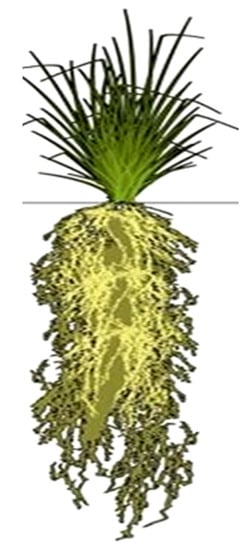
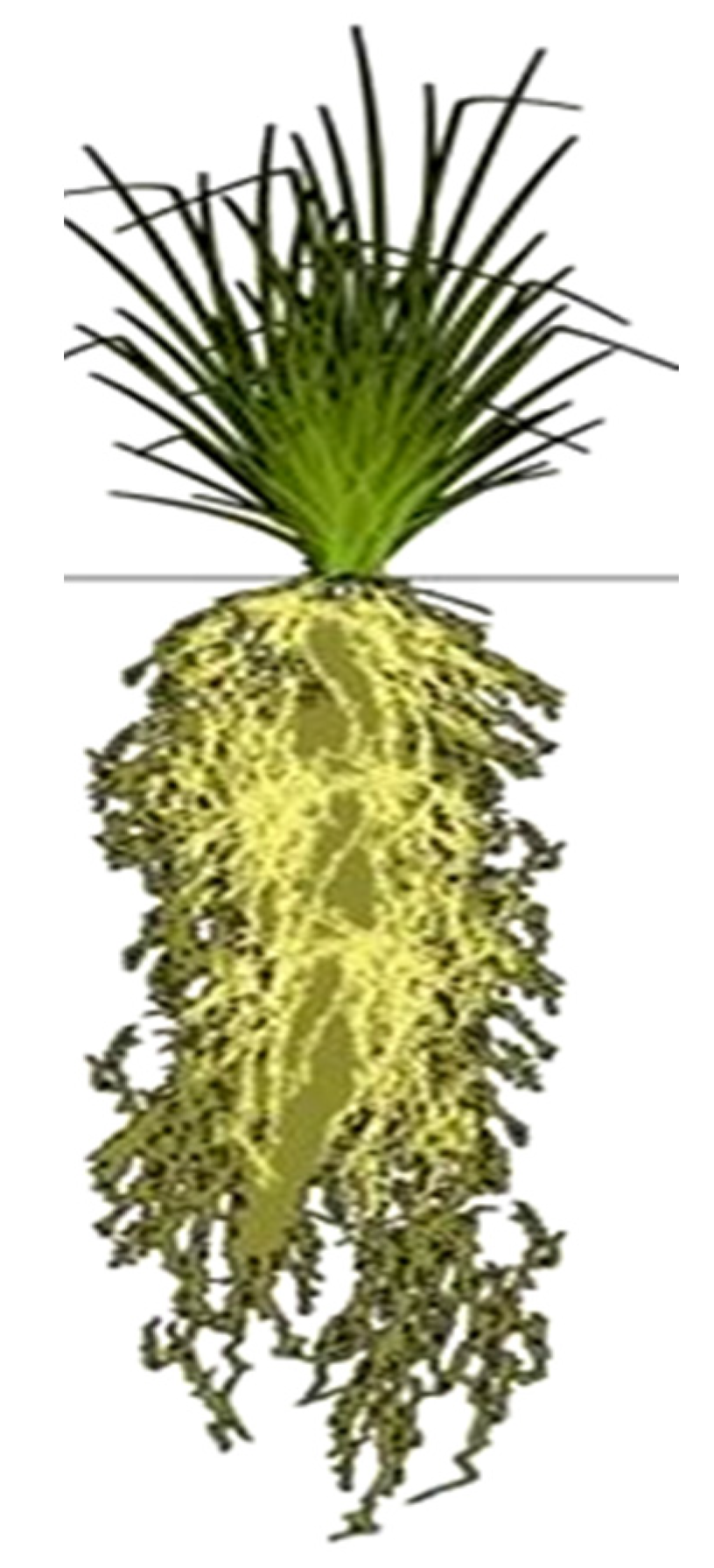
Figure 2.
Vetiver grass plant.
Table 2.
Scientific classification of vetiver grass.
4.2. Morphological Characteristics
This plant belongs to Poaceae family and is free of stolons or rhizomes. It contains voluminous roots with fine structures that lead to its fast growth, which can even be increased to a depth of 3 to 4 m during the first year [20]. The deep roots of the plant can cause its extreme resistant against drought and makes it hard to uproot in strong water currents and wind. The stems are stiff and erect, highly resistant to pests, diseases, and fires, which form dense hedges that act as sediment filters and water spreaders when planted closely together. After being buried in sediment, new roots grow from nodes and vetiver develops new shoots from its underground crown. Therefore, it will be resistant to fire, frost, traffic, as well as high grazing pressure [20].
4.3. Physiological Characteristics
Vetiver grass has the ability to handle extreme weather conditions, such as extended drought, flood, submersion, as well as severe temperatures ranging from −14 °C to +55 °C. After the above-mentioned extreme conditions, the process of plant recovery will occur immediately. It can simply tolerate extensive soil pH values without soil amendment ranging from 3.3 to 12.5. It is highly resistant to pesticides and herbicides and efficient in absorbing heavy metals and dissolved nutrient solutions within polluted water. It is also extremely tolerant against high acidity, alkalinity, salinity, sodicity, magnesium growing mediums, as well as Al, Mn, and heavy metals such as As, Cd, Cr, Ni, Pb, Hg, Se, and Zn [72,73].
4.4. Ecologic Properties
Vetiver is highly resistant against the above-mentioned extreme conditions; however, it is not tolerant against shade as it could be observed for most of tropical grasses. The shading effect decreases vetiver growth over time and, in extreme cases, it can even eradicate the plant. Due to the fact that the best growth condition for the plant is an open weed-free environment, it is required that we control the weeds at the establishment stage. Vetiver initially decreases erosion and stabilizes slopes, especially steep slopes. Consequently, micro-environment development occurs due to its nutrient and moisture conservation, which leads to the establishment of volunteered plants or sown seeds [70].
5. Vetiver System to Reduce/Eliminate Contaminants from Unconventional Water
The plant selection is crucial for a successful phytoremediation [15]. There are different types of aquatic plants that can absorb and eliminate pollutants [28], such as free-floating plants (Pistia stratiotes, Salvinia molesta, Lemna spp., Azolla pinnata, Landoltia punctata, Spirodela polyrhiza, Marsilea mutica, Eichhornia crassipes, and Riccia fluitans), submerged plants (Hygrophilla corymbosa, Najas marina, Ruppia maritima, Hydrilla verticillata, Egeria densa, Vallisneria americana, and Myriophyllum aquaticum), and emergent plants (Distichlis spicata, Cyperus spp., Imperata cylindrical, Iris virginica, Nuphar lutea, Justicia americana, Diodia virginiana, Nymphaea spp., Typha spp., Phragmites autralis, and Hydrochloa caroliniensis) [74]. In that regard, available records of aquatic plant species applied to the unconventional water phytoremediation, especially wastewater, are provided in Table 3.
Table 3.
Phytoremediation capacities of aquatic plant for unconventional water.
Vetiver’s specific properties include the growth capability under undesirable conditions, deep long roots, fleshy leaves, root aroma, soil agglomeration that resulted from extreme root-based absorption, metal adsorption capability, as well as tolerance against inadequate climatic conditions. Therefore, it is considered as an appropriate candidate for bioremediation [91]. In fact, this plant can remove many pollutants from soil and water or even detoxify them in its own tissue. It is reported that vetiver grass can effectively treat contaminants, such as organic matter, nutrients, heavy metals, as well as aromatic mixtures that are highly tolerant against extreme weather conditions (cold, hot, flood, and water shortage). According to the reports, vetiver has the capability of remediating toxic heavy-metal-polluted soil and water [92], herbicides [93], petroleum hydrocarbons (PHCs) [94], nuclear waste [95], acid mine drainage [96], textile dyes [97], ciprofloxacin (CIP), and tetracycline (TTC) [98], as well as 3-nitro-1,2,4-triazol-5-one (NTO) [99]. According to the unique characteristics reported for vetiver grass in the previous sections, several recent studies used this plant species to remove or decrease pollutants in unconventional water. Table 4 provides a number of the mentioned investigations.
Table 4.
Phytoremediation potentials of vetiver grass for unconventional water.
6. Traditional and Medicinal Uses of Vetiver Grass
In addition to the use of vetiver grass in the above-mentioned parts, this plant has also had many traditional and medicinal uses. For example, vetiver grass is used to improve nausea and vomiting, relieve genital disorders, improve sperm quality, promote lactation, relieve pain, and reduce fatigue. More precisely, the root of this plant is used for the improvement of burns, as a blood purifier/for the enhancement of blood circulation, as a gastrointestinal system strengthener, for the improvement of cataract/convulsions [126], for the improvement of malarial fever [127,128], as a respiratory system strengthener, as an immunity enhancer [129], and its stem is used to improve urinary tract infections [130].
The leaves of this plant have also been used to remove parasitic infections in feed animals [131], and the mixture of its roots and leaves has been used as a pain reliever for rheumatoid arthritis, lumbago, and sprain [126]. Recently, the utility of vetiver grass as a green infrastructure tool for transportation planning to reduce the risks of erosion, landslides, and flooding was reported [132].
7. Economic Analysis
An economic analysis based on the cost–benefit method indicated that phytoremediation of polluted soils with vetiver grass could be used as an eco-friendly, low-cost, and high-efficiency alternative to other treatment methods for ecological and environmental applications [133]. The approximate cost of the decontamination of polluted soil is found to be about 25 US$ ton−1, which is lower than other methods.
8. Outlook
The vetiver system is in the primary phase and its usage in a full-scale setting is still highly limited. The use of new technology should be approached with caution, as with all new technologies. Public opposition to genetic modification may be the most significant barrier to the advancement of the mentioned technology. This public opposition includes concerns about a decrease in biodiversity, the introduction of potentially harmful genes into foods, and the slippery slope created when a novel foreign DNA is introduced and transferred between unrelated species. As all-natural hyper-accumulators have a small size, genetic modification can apply the technology to other species or lead to an increased natural hyper-accumulator biomass and, consequently, make them more efficient phytoremediators. Nevertheless, the advantages of using vetiver grass for stressed environments are more than its costs. According to the related studies, the following concepts and results could be derived: (1) Phytoremediation of soils has been of interest for the past decades; however, the phytoremediation of solutions, such as water and wastewater, has recently received attention due to the environmental effects of their reuse. (2) The success of phytoremediation (removal of contaminants) is dependent upon the exposure time, contaminant concentration, environmental elements (pH and temperature), as well as plant potential (species, root system, etc.). (3) The ideal plants for phytoremediation are expected to be able to grow in contaminated areas. Moreover, other properties are observed for the mentioned plants such as fast growth, high-quality biomass, easy harvesting, as well as the accumulation of large amounts of pollutants and heavy metals. Currently, there is not any plant that meets all of the mentioned criteria. (4) Vetiver’s high effectiveness in the treatment of pollutants indicates its applicability in creating a cost-efficient and eco-friendly treatment for non-conventional water (especially wastewater). Vetiver is tolerant against 3.5–11.5 pH values, as well as extended salinity (calcium, magnesium, sodium, etc.) and heavy metals (arsenic, cadmium, copper, chromium, etc.). Due to the high root depth, it can decrease or remove the leaching of deep nitrate into groundwater. Compared to other herbs, vetiver grass is more efficient because of its roots’ high adsorption capacity.
However, further research is recommended in the following areas since vetiver phytoremediation requires more accurate scientific evidence, including investigations on (1) a larger scale with continuous flow; (2) the characteristics of root morphology, type and amount of secretions, and the mechanism of root-surrounded contaminant removal; (3) the possibility of using vetiver by-products as the biomass for biofuel production; (4) and the effects of vetiver grass on removing methane from anaerobic treatment processing.
9. Conclusions
Phytoremediation with vetiver grass, which is a green and environmentally friendly method, could enable the creation of green space in polluted areas. This system is also useful as a part of the filtration systems of treatment plants and irrigation systems because it can grow in almost any climate. In the vetiver system, the contaminants’ mobility is eliminated as a result of the plant’s roots in their rhizosphere. Therefore, vetiver grass is much more suitable for phytostabilization. The production of fodder for livestock, oil and essential oil for the perfumery industry, branches and leaves for the textile industry, and roots for the medical industry, in addition to the purification of pollutants, are considered for the system selection. In other words, the mentioned plant can be considered as an effective solution in sustainable agriculture even if the phytoremediation of pollutants fails. According to the previous studies, vetiver grass is much more appropriate for phytoextraction.
Author Contributions
Conceptualization, M.M.D., J.A.-K., and S.E.; writing—original draft preparation, M.M.D.; writing—review and editing, M.J.A.; supervision, J.A.-K. and S.E. All authors have read and agreed to the published version of the manuscript.
Funding
This research received no external funding.
Institutional Review Board Statement
Not applicable.
Informed Consent Statement
Not applicable.
Data Availability Statement
The data are available in the paper.
Conflicts of Interest
The authors declare no conflict of interest.
References
- Eltarabily, M.G.; Abd-Elaty, I.; Elbeltagi, A.; Zeleňáková, M.; Fathy, I. Investigating Climate Change Effects on Evapotranspiration and Groundwater Recharge of the Nile Delta Aquifer, Egypt. Water 2023, 15, 572. [Google Scholar] [CrossRef]
- Martínez-Sifuentes, A.R.; Trucíos-Caciano, R.; Rodríguez-Moreno, V.M.; Villanueva-Díaz, J.; Estrada-Ávalos, J. The Impact of Climate Change on Evapotranspiration and Flow in a Major Basin in Northern Mexico. Sustainability 2023, 15, 847. [Google Scholar] [CrossRef]
- Lu, Z.-N.; Chen, H.; Hao, Y.; Wang, J.; Song, X.; Mok, T.M. The dynamic relationship between environmental pollution, economic development and public health: Evidence from China. J. Clean. Prod. 2017, 166, 134–147. [Google Scholar]
- Eslamian, S.; Amiri, M.J.; Abedi-Koupai, J.; Karimi, S.S. Reclamation of unconventional water using nano zero-valent iron particles: An application for groundwater. Int. J. Water 2013, 7, 1–13. [Google Scholar]
- Asano, T.; Levine, A.D. Wastewater reclamation, recycling and reuse: Past, present, and future. Water Sci. Technol. 1996, 33, 1–14. [Google Scholar]
- Al Salem, S.S. Environmental considerations for wastewater reuse in agriculture. Water Sci. Technol. 1996, 33, 345–353. [Google Scholar]
- Amiri, M.J.; Eslamian, S.; Arshadi, M.; Khozaei, M. Water recycling and community. In Urban Water Reuse Handbook; Eslamian, S., Ed.; CRC Press: Boca Raton, FL, USA, 2015; pp. 261–273. [Google Scholar]
- Mojiri, A. Effects of municipal wastewater on physical and chemical properties of saline soil. J. Biol. Environ. Sci. 2011, 5, 71–76. [Google Scholar]
- Valdez-Aguilar, L.A.; Reed, D.W. Response of selected greenhouse ornamental plants to alkalinity in irrigation water. J. Plant Nutr. 2007, 30, 441–452. [Google Scholar]
- Amiri, M.J.; Shabani, A.; Javidi, A. Phytoremediation potential of rapeseed in phenanthrene-contaminated soils under different irrigation regimes and pumice levels. Irrig. Drain. 2023, 72, 90–104. [Google Scholar]
- Kafle, A.; Timilsina, A.; Gautam, A.; Adhikari, K.; Bhattarai, A.; Aryal, N. Phytoremediation: Mechanisms, plant selection and enhancement by natural and synthetic agents. Environ. Adv. 2022, 8, 100203. [Google Scholar]
- Sharma, J.K.; Kumar, N.; Singh, N.P.; Santal, A.R. Phytoremediation technologies and their mechanism for removal of heavy metal from contaminated soil: An approach for a sustainable environment. Front. Plant Sci. 2023, 14, 1076876. [Google Scholar]
- Saxena, G.; Purchase, D.; Mulla, S.I.; Saratale, G.D.; Bharagava, R.N. Phytoremediation of heavy metal-contaminated sites: Eco-environmental concerns, field studies, sustainability issues, and future prospects. Rev. Environ. Contam. Toxicol. 2020, 249, 71–131. [Google Scholar]
- Shah, V.; Daverey, A. Effects of sophorolipids augmentation on the plant growth and phytoremediation of heavy metal contaminated soil. J. Clean. Prod. 2021, 280, 124406. [Google Scholar]
- Seroja, R.; Effendi, H.; Hariyadi, S. Tofu wastewater treatment using vetiver grass (Vetiveria zizanioides) and zeliac. Appl. Water Sci. 2018, 8, 2. [Google Scholar]
- Fu, W.-Q.; Xu, M.; Zhang, A.-Y.; Sun, K.; Dai, C.-C.; Jia, Y. Remediation of phenanthrene phytotoxicity by the interaction of rice and endophytic fungus P. liquidambaris in practice. Ecotoxicol. Environ. Saf. 2022, 235, 113415. [Google Scholar]
- Sui, X.; Wang, X.; Li, Y.; Ji, H. Remediation of petroleum-contaminated soils with microbial and microbial combined methods: Advances, mechanisms, and challenges. Sustainability 2021, 13, 9267. [Google Scholar]
- Muthusaravanan, S.; Sivarajasekar, N.; Vivek, J.; Paramasivan, T.; Naushad, M.; Prakashmaran, J.; Gayathri, V.; Al-Duaij, O.K. Phytoremediation of heavy metals: Mechanisms, methods and enhancements. Environ. Chem. Lett. 2018, 16, 1339–1359. [Google Scholar]
- Ng, C.C.; Boyce, A.N.; Abas, M.R.; Mahmood, N.Z.; Han, F. Phytoassessment of Vetiver grass enhanced with EDTA soil amendment grown in single and mixed heavy metal-contaminated soil. Environ. Monit. Assess. 2019, 191, 434. [Google Scholar]
- Darajeh, N.; Truong, P.; Rezania, S.; Alizadeh, H.; Leung, D.W. Effectiveness of Vetiver grass versus other plants for phytoremediation of contaminated water. J. Environ. Treat. Tech. 2019, 7, 485–500. [Google Scholar]
- Banerjee, R.; Goswami, P.; Lavania, S.; Mukherjee, A.; Lavania, U.C. Vetiver grass is a potential candidate for phytoremediation of iron ore mine. Ecol. Eng. 2019, 132, 120–136. [Google Scholar]
- Masinire, F.; Adenuga, D.O.; Tichapondwa, S.M.; Chirwa, E.M.N. Phytoremediation of Cr(VI) in wastewater using the vetiver grass (Chrysopogon zizanioides). Miner. Eng. 2021, 172, 107141. [Google Scholar]
- Worku, A.; Tefera, N.; Kloos, H.; Benor, S. Bioremediation of brewery wastewater using hydroponics planted with vetiver grass in Addis Ababa, Ethiopia. Bioresour. Bioprocess. 2018, 5, 39. [Google Scholar]
- Gupta, P.; Roy, S.; Mahindrakar, A.B. Treatment of water using water hyacinth, water lettuce and vetiver grass—A review. System 2012, 49, 50. [Google Scholar]
- Hemalatha, G.; Uma, S.G.; Muthulakshmi, S. Sewage water treatment using vetiver grass. Mater. Today: Proc. 2021, 46, 3795–3798. [Google Scholar]
- Amiri, M.J.; Bahrami, M.; Badkouby, M.; Kalavrouziotis, I.K. Greywater treatment using single and combined adsorbents for landscape irrigation. Environ. Process. 2019, 6, 43–63. [Google Scholar]
- Amiri, M.J.; Arshadi, M.; Giannakopoulos, E.; Kalavrouziotis, I.K. Removal of mercury (II) and lead (II) from aqueous media by using a green adsorbent: Kinetics, thermodynamic, and mechanism studies. J Hazard Toxic Radioact Waste. 2018, 22, 04017026. [Google Scholar]
- Mustafa, H.M.; Hayder, G. Recent studies on applications of aquatic weed plants in phytoremediation of wastewater: A review article. Ain Shams Eng. J. 2021, 12, 355–365. [Google Scholar]
- Amiri, M.J.; Bahrami, M.; Beigzadeh, B.; Gil, A. A response surface methodology for optimization of 2,4-dichlorophenoxyacetic acid removal from synthetic and drainage water: A comparative study. Environ. Sci. Pollut. Res. 2018, 25, 34277–34293. [Google Scholar]
- Amiri, M.J.; Abedi-Koupai, J.; Eslamian, S. Adsorption of Hg(II) and Pb(II) ions by nanoscale zero-valent iron supported on ostrich bone ash in a fixed-bed column system. Water Sci. Technol. 2017, 76, 671–682. [Google Scholar]
- Zamorska, J.; Kiełb-Sotkiewicz, I. A Biological Method of Treating Surface Water Contaminated with Industrial Waste Leachate. Water 2021, 13, 3644. [Google Scholar] [CrossRef]
- Gholipour, M.; Mehrabanjoubani, P.; Abdolzadeh, A.; Raghimi, M.; Seyedkhademi, S.; Karimi, E.; Sadeghipour, H.R. Facilitated decrease of anions and cations in influent and effluent of sewage treatment plant by vetiver grass (Chrysopogon zizanioides): The uptake of nitrate, nitrite, ammonium, and phosphate. Environ. Sci. Pollut. Res. 2020, 27, 21506–21516. [Google Scholar]
- Raman, J.K.; Gnansounou, E. A review on bioremediation potential of vetiver grass. In Waste Bioremediation. Energy, Environment, and Sustainability; Varjani, S., Gnansounou, E., Gurunathan, B., Pant, D., Zakaria, Z., Eds.; Springer: Singapore, 2018. [Google Scholar] [CrossRef]
- Sricoth, T.; Meeinkuirt, W.; Pichtel, J.; Taeprayoon, P.; Saengwilai, P. Synergistic phytoremediation of wastewater by two aquatic plants (Typha angustifolia and Eichhornia crassipes) and potential as biomass fuel. Environ. Sci. Pollut. Res. 2018, 25, 5344–5358. [Google Scholar]
- Malik, A.; Batool, S.; Farooqi, A. Advances in biodegradation and bioremediation of arsenic contamination in the environment. In Biological Approaches to Controlling Pollutants; Elsevier: Amsterdam, The Netherlands, 2022; pp. 107–120. [Google Scholar]
- Thomas, G.; Andresen, E.; Mattusch, J.; Hubáček, T.; Küpper, H. Deficiency and toxicity of nanomolar copper in low irradiance—A physiological and metalloproteomic study in the aquatic plant Ceratophyllum demersum. Aquat. Toxicol. 2016, 177, 226–236. [Google Scholar]
- Rane, N.R.; Chandanshive, V.V.; Watharkar, A.D.; Khandare, R.V.; Patil, T.S.; Pawar, P.K.; Govindwar, S.P. Phytoremediation of sulfonated Remazol Red dye and textile effluents by Alternanthera philoxeroides: An anatomical, enzymatic and pilot scale study. Water Res. 2015, 83, 271–281. [Google Scholar]
- Kodituwakku, K.; Yatawara, M. Phytoremediation of industrial sewage sludge with Eichhornia crassipes, Salvinia molesta and Pistia stratiotes in batch fed free water flow constructed wetlands. Bull. Environ. Contam. Toxicol. 2020, 104, 627–633. [Google Scholar]
- Bello, A.O.; Tawabini, B.S.; Khalil, A.B.; Boland, C.R.; Saleh, T.A. Phytoremediation of cadmium-, lead-and nickel-contaminated water by Phragmites australis in hydroponic systems. Ecol. Eng. 2018, 120, 126–133. [Google Scholar]
- Qin, H.; Zhang, Z.; Liu, M.; Liu, H.; Wang, Y.; Wen, X.; Zhang, Y.; Yan, S. Site test of phytoremediation of an open pond contaminated with domestic sewage using water hyacinth and water lettuce. Ecol. Eng. 2016, 95, 753–762. [Google Scholar]
- Rahman, M.A.; Hasegawa, H. Aquatic arsenic: Phytoremediation using floating macrophytes. Chemosphere 2011, 83, 633–646. [Google Scholar]
- Saha, P.; Banerjee, A.; Sarkar, S. Phytoremediation potential of Duckweed (Lemna minor L.) on steel wastewater. Int. J. Phytoremediat. 2015, 17, 589–596. [Google Scholar]
- Aydın Temel, F.; Avcı, E.; Ardalı, Y. Full scale horizontal subsurface flow constructed wetlands to treat domestic wastewater by Juncus acutus and Cortaderia selloana. Int. J. Phytoremediat. 2018, 20, 264–273. [Google Scholar]
- Guarino, F.; Ruiz, K.B.; Castiglione, S.; Cicatelli, A.; Biondi, S. The combined effect of Cr(III) and NaCl determines changes in metal uptake, nutrient content, and gene expression in quinoa (Chenopodium quinoa Willd). Ecotoxicol. Environ. Saf. 2020, 193, 110345. [Google Scholar]
- Ullah, A.; Heng, S.; Munis, M.F.H.; Fahad, S.; Yang, X. Phytoremediation of heavy metals assisted by plant growth promoting (PGP) bacteria: A review. Environ. Exp. Bot. 2015, 117, 28–40. [Google Scholar]
- Nisa, W.; Rashid, A.; Aziz, N.B.; Mahmood, T.; Islam, K.; Kazmi, S.K.; Raziq, M. Potential of vetiver (Vetiveria zizanioides L.) grass in removing selected pahs from diesel contaminated soil. Pak. J. Bot. 2015, 47, 291–296. [Google Scholar]
- Xie, Q.E.; Yan, X.L.; Liao, X.Y.; Li, X. The arsenic hyperaccumulator fern Pteris vittata L. Environ. Sci. Technol. 2009, 43, 8488–8495. [Google Scholar]
- Van der Ent, A.; Baker, A.J.; Reeves, R.D.; Pollard, A.J.; Schat, H. Hyperaccumulators of metal and metalloid trace elements: Facts and fiction. Plant Soil 2013, 362, 319–334. [Google Scholar]
- He, Y.; Chi, J. Phytoremediation of sediments polluted with phenanthrene and pyrene by four submerged aquatic plants. J. Soils Sediments 2016, 16, 309–317. [Google Scholar]
- Dhote, S.; Dixit, S. Water quality improvement through macrophytes—A review. Environ. Monit. Assess. 2009, 152, 149–153. [Google Scholar]
- Rawat, K.; Fulekar, M.H.; Pathak, B. Rhizofiltration: A green technology for remediation of heavy metals. Int. J. Inno Biosci. 2012, 2, 193–199. [Google Scholar]
- Dinesh, M.; Kumar, M.V.; Neeraj, P.; Shiv, B. Phytoaccumulation of heavy metals in contaminated soil using Makoy (Solenum nigrum L.) and Spinach (Spinacia oleracea L.) plant. Sciences 2014, 2, 350–354. [Google Scholar]
- Domínguez, M.T.; Madrid, F.; Marañón, T.; Murillo, J.M. Cadmium availability in soil and retention in oak roots: Potential for phytostabilization. Chemosphere 2009, 76, 480–486. [Google Scholar]
- Ali, H.; Khan, E.; Sajad, M.A. Phytoremediation of heavy metals—Concepts and applications. Chemosphere 2013, 91, 869–881. [Google Scholar]
- Yang, S.; Liang, S.; Yi, L.; Xu, B.; Cao, J.; Guo, Y.; Zhou, Y. Heavy metal accumulation and phytostabilization potential of dominant plant species growing on manganese mine tailings. Front. Environ. Sci. Eng. 2014, 8, 394–404. [Google Scholar]
- Zhan, F.; Li, B.; Jiang, M.; Li, T.; He, Y.; Li, Y.; Wang, Y. Effects of arbuscular mycorrhizal fungi on the growth and heavy metal accumulation of bermudagrass [Cynodon dactylon (L.) Pers.] grown in a lead–zinc mine wasteland. Int. J. Phytoremediat. 2019, 21, 849–856. [Google Scholar]
- Pilon-Smits, E.A.; LeDuc, D.L. Phytoremediation of selenium using transgenic plants. Curr. Opin. Biotechnol. 2009, 20, 207–212. [Google Scholar]
- Khandare, R.V.; Govindwar, S.P. Phytoremediation of textile dyes and effluents: Current scenario and future prospects. Biotechnol. Adv. 2015, 33, 1697–1714. [Google Scholar]
- Mirza, N.; Pervez, A.; Mahmood, Q.; Shah, M.M.; Shafqat, M.N. Ecological restoration of arsenic contaminated soil by Arundo donax L. Ecol. Eng. 2011, 37, 1949–1956. [Google Scholar]
- Rylott, E.L.; Bruce, N.C. Plants disarm soil: Engineering plants for the phytoremediation of explosives. Trends Biotechnol. 2009, 27, 73–81. [Google Scholar]
- Frers, C. El uso de plantas acuaticas para el tratamiento de aguas residuales. Obs. Medioambient. 2008, 11, 301–306. [Google Scholar]
- Khan, M.S.; Zaidi, A.; Wani, P.A.; Oves, M. Role of plant growth promoting rhizobacteria in the remediation of metal contaminated soils. Environ. Chem. Lett. 2009, 7, 1–19. [Google Scholar]
- Darajeh, N.; Idris, A.; Masoumi, H.R.F.; Nourani, A.; Truong, P.; Sairi, N.A. Modeling BOD and COD removal from Palm Oil Mill Secondary Effluent in floating wetland by Chrysopogon zizanioides (L.) using response surface methodology. J. Environ. Manage. 2016, 181, 343–352. [Google Scholar]
- Otunola, B.O.; Aghoghovwia, M.P.; Thwala, M.; Gómez-Arias, A.; Jordaan, R.; Hernandez, J.C.; Ololade, O.O. Influence of Clay Mineral Amendments Characteristics on Heavy Metals Uptake in Vetiver Grass (Chrysopogon zizanioides L. Roberty) and Indian Mustard (Brassica juncea L. Czern). Sustainability 2022, 14, 5856. [Google Scholar] [CrossRef]
- Mahadevan, R. The high price of sweetness: The twin challenges of efficiency and soil erosion in Fiji’s sugar industry. Ecol. Econ. 2008, 66, 468–477. [Google Scholar]
- Panja, S.; Sarkar, D.; Datta, R. Vetiver grass (Chrysopogon zizanioides) is capable of removing insensitive high explosives from munition industry wastewater. Chemosphere 2018, 209, 920–927. [Google Scholar]
- Panja, S.; Sarkar, D.; Datta, R. Removal of antibiotics and nutrients by Vetiver grass (Chrysopogon zizanioides) from secondary wastewater effluent. Int. J. Phytoremediat. 2020, 22, 764–773. [Google Scholar]
- Panja, S.; Sarkar, D.; Datta, R. Removal of tetracycline and ciprofloxacin from wastewater by vetiver grass (Chrysopogon zizanioides (L.) Roberty) as a function of nutrient concentrations. Environ. Sci. Pollut. Res. 2020, 27, 34951–34965. [Google Scholar]
- Darajeh, N.; Idris, A.; Truong, P.; Abdul Aziz, A.; Abu Bakar, R.; Che Man, H. Phytoremediation potential of vetiver system technology for improving the quality of palm oil mill effluent. Adv. Mater. Sci. Eng. 2014, 2014, 683579. [Google Scholar]
- Truong, P.; Van, T.T.; Pinners, E. Vetiver System Applications Technical Reference Manual; The Vetiver Network International (TVNI): San Antonio, TX, USA, 2008; pp. 1–126. [Google Scholar]
- Adams, R.; Turuspekov, M.Z.Y.; Dafforn, M.; Veldkamp, J. DNA fingerprinting reveals clonal nature of Vetiveria zizanioides (L.) Nash, Gramineae and sources of potential new germplasm. Mol. Ecol. 1998, 7, 813–818. [Google Scholar]
- Effendi, H.; Utomo, B.A.; Pratiwi, N.T. Ammonia and orthophosphate removal of tilapia cultivation wastewater with Vetiveria zizanioides. J. King Saud Univ. Sci. 2020, 32, 207–212. [Google Scholar]
- Zhang, X.; Gao, B.; Xia, H. Effect of cadmium on growth, photosynthesis, mineral nutrition and metal accumulation of bana grass and vetiver grass. Ecotoxicol. Environ. Saf. 2014, 106, 102–108. [Google Scholar]
- Ekperusi, A.O.; Sikoki, F.D.; Nwachukwu, E.O. Application of common duckweed (Lemna minor) in phytoremediation of chemicals in the environment: State and future perspective. Chemosphere 2019, 223, 285–309. [Google Scholar]
- Tangahu, B.V.; Putri, A.P. The degradation of BOD and COD of batik industry wastewater using Egeria densa and Salvinia molesta. J. Sains Teknol. Lingkung. (JSTL) 2017, 9, 82–91. [Google Scholar]
- Alam, A.R.; Hoque, S. Phytoremediation of industrial wastewater by culturing aquatic macrophytes, Trapa natans L. and Salvinia cucullata Roxb. Jahangirnagar Univ. J. Biol. Sci. (JUJBS) 2017, 6, 19–27. [Google Scholar]
- Chandanshive, V.V.; Rane, N.R.; Tamboli, A.S.; Gholave, A.R.; Khandare, R.V.; Govindwar, S.P. Co-plantation of aquatic macrophytes Typha angustifolia and Paspalum scrobiculatum for effective treatment of textile industry effluent. J. Hazard. Mater. 2017, 338, 47–56. [Google Scholar]
- Sa’at, S.K.M.; Zaman, N.Q. Phytoremediation potential of palm oil mill effluent by constructed wetland treatment. Eng. Herit. J. 2017, 1, 49–54. [Google Scholar]
- Amare, E.; Kebede, F.; Mulat, W. Wastewater treatment by Lemna minor and Azolla filiculoides in tropical semi-arid regions of Ethiopia. Ecol. Eng. 2018, 120, 464–473. [Google Scholar]
- Basiglini, E.; Pintore, M.; Forni, C. Effects of treated industrial wastewaters and temperatures on growth and enzymatic activities of duckweed (Lemna minor L.). Ecotoxicol. Environ. Saf. 2018, 153, 54–59. [Google Scholar]
- Lu, B.; Xu, Z.; Li, J.; Chai, X. Removal of water nutrients by different aquatic plant species: An alternative way to remediate polluted rural rivers. Ecol. Eng. 2018, 110, 18–26. [Google Scholar]
- Marzec, M.; Jóźwiakowski, K.; Dębska, A.; Gizińska-Górna, M.; Pytka-Woszczyło, A.; Kowalczyk-Juśko, A.; Listosz, A. The efficiency and reliability of pollutant removal in a hybrid constructed wetland with common reed, manna grass, and Virginia mallow. Water 2018, 10, 1445. [Google Scholar]
- Abbasi, S.A.; Ponni, T.-A.G.; Tauseef, S. Potential of joyweed Alternanthera sessilis for rapid treatment of domestic sewage in SHEFROL® bioreactor. Int. J. Phytoremediat. 2019, 21, 160–169. [Google Scholar]
- Abd Rasid, N.; Naim, M.; Man, H.C.; Bakar, N.A.; Mokhtar, M. Evaluation of surface water treated with lotus plant; Nelumbo nucifera. J. Environ. Chem. Eng. 2019, 7, 103048. [Google Scholar]
- Sudiarto, S.I.A.; Renggaman, A.; Choi, H.L. Floating aquatic plants for total nitrogen and phosphorus removal from treated swine wastewater and their biomass characteristics. J. Environ. Manage. 2019, 231, 763–769. [Google Scholar]
- Ayache, L.; Boudehane, A. Wastewater treatment by floating macrophytes (Salvinia natans) under algerian semi-Arid climate. Eur. J. Eng. Nat. Sci. (EJENS) 2019, 3, 103–110. [Google Scholar]
- Rai, P.K. Heavy metals/metalloids remediation from wastewater using free floating macrophytes of a natural wetland. Environ. Technol. Innov. 2019, 15, 100393. [Google Scholar]
- Saleh, H.M.; Moussa, H.R.; Mahmoud, H.H.; El-Saied, F.A.; Dawoud, M.; Wahed, R.S.A. Potential of the submerged plant Myriophyllum spicatum for treatment of aquatic environments contaminated with stable or radioactive cobalt and cesium. Prog. Nucl. Energy 2020, 118, 103147. [Google Scholar]
- Abdolhoseini, M.; Heidarpour, M.; Abedi-Koupai, J. The feasibility study of water salinity reduction by Atriplex lentiformis plant in a zeolite substrate. Iran. J. Soil Water Res. (IJSR) 2021, 51, 2901–2912. [Google Scholar]
- Abedi-Koupaei, J.; Dorafshan, M.; Gohari, A. Investigation of Bioremediation of Quinoa plant for Desalination of unconventional water. JWSS-Isfahan Univ. Technol. 2022, 26, 329–342. [Google Scholar]
- Leguizamo, M.A.O.; Gómez, W.D.F.; Sarmiento, M.C.G. Native herbaceous plant species with potential use in phytoremediation of heavy metals, spotlight on wetlands—A review. Chemosphere 2017, 168, 1230–1247. [Google Scholar]
- RoyChowdhury, A.; Sarkar, D.; Datta, R. Remediation of acid mine drainage-impacted water. Curr. Pollut. Rep. 2015, 1, 131–141. [Google Scholar]
- Cull, R.; Hunter, H.; Hunter, M.; Truong, P. Application of vetiver grass technology in off-site pollution control II. Tolerance to herbicides under selected wetland conditions. In Proceedings of the Second International Vetiver Conference, Bangkok, Thailand, 18–22 January 2000. [Google Scholar]
- Brandt, R.; Merkl, N.; Schultze-Kraft, R.; Infante, C.; Broll, G. Potential of vetiver (Vetiveria zizanioides (L.) Nash) for phytoremediation of petroleum hydrocarbon-contaminated soils in Venezuela. Int. J. Phytoremediat. 2006, 8, 273–284. [Google Scholar]
- Maiti, S.; Kumar, A. Energy plantations, medicinal and aromatic plants on contaminated soil. In Bioremediation and Bioeconomy; Elsevier: Amsterdam, The Netherlands, 2016; pp. 29–47. [Google Scholar]
- Kiiskila, J.D.; Sarkar, D.; Panja, S.; Sahi, S.V.; Datta, R. Remediation of acid mine drainage-impacted water by vetiver grass (Chrysopogon zizanioides): A multiscale long-term study. Ecol. Eng. 2019, 129, 97–108. [Google Scholar]
- Chandanshive, V.V.; Kadam, S.K.; Khandare, R.V.; Kurade, M.B.; Jeon, B.-H.; Jadhav, J.P.; Govindwar, S.P. In situ phytoremediation of dyes from textile wastewater using garden ornamental plants, effect on soil quality and plant growth. Chemosphere 2018, 210, 968–976. [Google Scholar]
- Datta, R.; Das, P.; Smith, S.; Punamiya, P.; Ramanathan, D.M.; Reddy, R.; Sarkar, D. Phytoremediation potential of vetiver grass [Chrysopogon zizanioides (L.)] for tetracycline. Int. J. Phytoremediat. 2013, 15, 343–351. [Google Scholar]
- RoyChowdhury, A.; Mukherjee, P.; Panja, S.; Datta, R.; Christodoulatos, C.; Sarkar, D. Evidence for phytoremediation and phytoexcretion of NTO from industrial wastewater by vetiver grass. Molecules 2020, 26, 74. [Google Scholar]
- Truong, P.; Hart, B. Vetiver System for Wastewater Treatment; Pacific Rim Vetiver Network Technical Bulletin No. 2001/2; Office of the Royal Development Projects Board: Bangkok, Thailand, 2001; p. 26. [Google Scholar]
- Liao, X.; Luo, S.; Wu, Y.; Wang, Z. Studies on the abilities of Vetiveria zizanioides and Cyperus alternifolius for pig farm wastewater treatment. Int. Conf. Vetiver Exhib. 2003, 3, 174–181. [Google Scholar]
- Jayashree, S.; Rathinamala, J.; Lakshmanaperumalsamy, P. Determination of heavy metal removal efficiency of Chrysopogon zizanioides (Vetiver) using textile wastewater contaminated soil. J. Environ. Sci. Technol. 2011, 4, 543–551. [Google Scholar]
- Aneez, E.; Mohammed, A.; Jawahar, N.; Sekarbabu, H. A preliminary attempt to reduce total dissolved solids in ground water using different plant parts. Int. J. Pharma Bio Sci. (IJPBS) 2011, 2, 414–422. [Google Scholar]
- Keshtkar, A.R.; Ahmadi, M.; Naseri, H.; Atashi, H.; Hamidifar, H.; Razavi, S.; Yazdanpanah, A.; Karimpour Reihan, M.; Moazami, N. Application of a vetiver system for unconventional water treatment. Desalin. Water Treat. 2016, 57, 25474–25483. [Google Scholar]
- Pongthornpruek, S. Treatment of Piggery Wastewater by Three Grass Species Growing in a Constructed Wetland. Appl. Environ. Sci. 2017, 39, 75–83. [Google Scholar]
- Hasan, S.N.M.S.; Kusin, F.M.; Lee, A.L.S.; Ukang, T.A.; Yusuff, F.M.; Ibrahim, Z.Z. Performance of vetiver grass (Vetiveria zizanioides) for phytoremediation of contaminated water. MATEC Web Conf. 2017, 103, 06003. [Google Scholar] [CrossRef]
- Maharjan, A.; Pradhanang, S. Potential of Vetiver grass for wastewater treatment. Environ. Ecol. Res. 2017, 5, 489–494. [Google Scholar]
- Astuti, J.T.; Sriwuryandari, L.; Sembiring, T. Application of vetiver (Vetiveria zizanioides) on phytoremediation of carwash wastewater. Pertanika J. Trop. Agric. Sci. 2018, 41, 1463–1477. [Google Scholar]
- Angassa, K.; Leta, S.; Mulat, W.; Kloos, H.; Meers, E. Organic matter and nutrient removal performance of horizontal subsurface flow constructed wetlands planted with Phragmite karka and Vetiveria zizanioide for treating municipal wastewater. Environ. Process. 2018, 5, 115–130. [Google Scholar]
- Kusin, F.; Hasan, S.; Nordin, N.; Mohamat-Yusuff, F.; Ibrahim, Z. Floating Vetiver island (FVI) and implication for treatment system design of polluted running water. Appl. Ecol. Environ. Res. 2019, 17, 497–510. [Google Scholar]
- Deva, M.A.; Manderia, S.; Singh, S.; Sheikh, M.Y. Phytoremedial treatment of domestic wastewater at GWALIOR (MP) by chrysopogon zizanioides (Vetiver grass). Adv. Innov. Res. 2019, 6, 78–81. [Google Scholar]
- Itam, M.O.; Nnamani, C.V.; Oku, E.E. African Vetiver grass cleans abattoir effluent. Agric. Nat. Resour. 2019, 53, 260–266. [Google Scholar]
- Hemamalini, C.; Niveditha, K.; Ramyashree, H.; Sumithra, T.M. Waste water treatment by phytoremediation technique. Bull. Pure Appl. Sci.-Chem. 2019, 38, 128–137. [Google Scholar]
- Abedi-Koupai, J.; Jamalian, M.; Dorafshan, M. Improving isfahan landfill leachate quality by phytoremediation using vetiver and phragmites plants in green space irrigation. J. Water Wastewater 2020, 31, 101–111. [Google Scholar]
- Davamani, V.; Parameshwari, C.I.; Arulmani, S.; John, J.E.; Poornima, R. Hydroponic phytoremediation of paperboard mill wastewater by using vetiver (Chrysopogon zizanioides). J. Environ. Chem. Eng. 2021, 9, 105528. [Google Scholar]
- Abedi-Koupai, J.; Hakimian, M.H.; Motamedi, A.; Ghods Motahari, A. Performance of Vetiver system in complementary municipal wastewater treatment. Water Irrig. Manag. 2021, 11, 275–290. [Google Scholar]
- Goren, A.Y.; Yucel, A.; Sofuoglu, S.C.; Sofuoglu, A. Phytoremediation of olive mill wastewater with Vetiveria zizanioides (L.) Nash and Cyperus alternifolius L. Environ. Technol. Innov. 2021, 24, 102071. [Google Scholar]
- Dhanya, G.; Gopal, V.V.; Jaya, D. An appraisal on the stress amelioration of effluent treated Vetiver plants amended with ascorbic acid in constructed wetlands. J. Stress physiol. Biochem. 2022, 18, 88–100. [Google Scholar]
- Aregu, M.B. Industrial wastewater treatment efficiency of mixed substrate (Pumice and scoria) in horizontal subsurface flow constructed wetland: Comparative experimental study design. Air Soil Water Res. 2022, 15, 11786221211063888. [Google Scholar]
- Abedi-Koupai, J.; Ghods Motahari, A.; Najafi, N. Improvement of saline effluent quality using phytoremediation. Water Wastewater Sci. Eng. 2022, 7, 53–62. [Google Scholar]
- Nugroho, A.P.; Butar, E.S.B.; Priantoro, E.A.; Sriwuryandari, L.; Pratiwi, Z.B.; Sembiring, T. Phytoremediation of electroplating wastewater by vetiver grass (Chrysopogon zizanoides L.). Sci. Rep. 2021, 11, 14482. [Google Scholar]
- Suelee, A.L.; Hasan, S.N.M.S.; Kusin, F.M.; Yusuff, F.M.; Ibrahim, Z.Z. Phytoremediation potential of vetiver grass (Vetiveria zizanioides) for treatment of metal-contaminated water. Water Air Soil Pollut. 2017, 228, 158. [Google Scholar]
- Alsghayer, R.; Salmiaton, A.; Mohammad, T.; Idris, A.; Ishak, C.F. Removal efficiencies of constructed wetland planted with Phragmites and Vetiver in treating synthetic wastewater contaminated with high concentration of PAHs. Sustainability 2020, 12, 3357. [Google Scholar]
- Mirzaee, M.M.; ZakeriNia, M.; Farasati, M. The effects of phytoremediation of treated urban wastewater on the discharge of surface and subsurface drippers (Case study: Gorgan wastewater treatment plant in northern Iran). Clean. Eng. Technol. 2021, 4, 100210. [Google Scholar]
- Mirzaee, M.M.; Zakerinia, M.; Farasati, M. Performance evaluation of vetiver and pampas plants in reducing the hazardous ions of treated municipal wastewater for agricultural irrigation water use. Water Pract. Technol. 2022, 17, 1002–1018. [Google Scholar]
- Grover, M.; Behl, T.; Virmani, T.; Bhatia, S.; Al-Harrasi, A.; Aleya, L. Chrysopogon zizanioides—A review on its pharmacognosy, chemical composition and pharmacological activities. Environ. Sci. Pollut. Res. 2021, 28, 44667–44692. [Google Scholar]
- Singh, K.K.; Maheshwari, J.K. Traditional phytotherapy amongst the tribals of Varanasi district, Uttar Pradesh. J. Ecol. Taxon. Bot. 1983, 4, 829–838. [Google Scholar]
- Jain, V.; Jain, S.K. Compendium of Indian Folk Medicine and Ethnobotany; Deep Publications: New Delhi, India, 2016. [Google Scholar]
- Duke, J.A. Handbook of Medicinal Herbs; CRC Press: Boca Raton, FL, USA, 2002. [Google Scholar]
- Chomchalow, N. The Utilization of Vetiver as Medicinal and Aromatic Plants: With Special Reference to Thailand; Office of the Royal Development Projects Board: Bangkok, Thailand, 2001. [Google Scholar]
- Pareek, A.R.C.H.A.N.A.; Kumar, A.S.H.W.A.N.I. Ethnobotanical and pharmaceutical uses of Vetiveria zizanioides (Linn) Nash: A medicinal plant of Rajasthan. Int. J. Life Sci. Pharm. Sci. 2013, 50, 12–18. [Google Scholar]
- Kim, K.; Riley, S.; Fischer, E.; Khan, S. Greening Roadway Infrastructure with Vetiver Grass to Support Transportation Resilience. CivilEng 2022, 3, 147–164. [Google Scholar] [CrossRef]
- Dudai, N.; Tsion, I.; Shamir, S.Z.; Nitzan, N.; Chaimovitsh, D.; Shachter, A.; Haim, A. Agronomic and economic evaluation of Vetiver grass (Vetiveria zizanioides L.) as means for phytoremediation of diesel polluted soils in Israel. J. Environ. Manage. 2018, 211, 247–255. [Google Scholar]
Disclaimer/Publisher’s Note: The statements, opinions and data contained in all publications are solely those of the individual author(s) and contributor(s) and not of MDPI and/or the editor(s). MDPI and/or the editor(s) disclaim responsibility for any injury to people or property resulting from any ideas, methods, instructions or products referred to in the content. |
© 2023 by the authors. Licensee MDPI, Basel, Switzerland. This article is an open access article distributed under the terms and conditions of the Creative Commons Attribution (CC BY) license (https://creativecommons.org/licenses/by/4.0/).