


Abstract
This paper aims to apply a generic model for the transition to a product classified as a Product-Service System in the bike sharing case. For theoretical foundation, a systematic literature review was conducted, and then, the model was developed and validated with PSS experts and statistical analysis. Considering the need of PSS products to be aligned with the Tripple Botton Line, a Life Cycle Analysis (LCA) was performed to measure the environmental and human health impacts of a bike. Aiming to design an action plan and mitigate these impacts, the generic model was applied. The results contribute to (i) the theoretical development of the literature by proposing a generic model validated and applicable in other cases, and (ii) with the practical development, since with the application of the LCA and the model, it was possible to identify an alternative to mitigate the impacts of the most polluting part of a bike: the aluminum frame. Thus, this study proposes substituting aluminum with a polymeric biocomposite: a blend between polypropylene and bamboo fiber. Given the theoretical modeling of this work, future studies can focus on the practical validation of this blend through mechanical testing.
1. Introduction
The intensification of industrial activities and the development paradigm based on linear economics led to the depletion of natural resources, waste generation, and CO2 emissions, among others [1]. An alternative to mitigate these negative externalities is transitioning to proposals based on lean manufacturing and circular economy concepts [2,3].
In this context, several approaches, frameworks, methods, and tools emerge to enable the transitional process for proposals aligned with the circular economy. Among them, the ReSOLVE framework, which consists of Regenerate, Share, Optimize, Cycle, Virtualize, and Exchange to support circularity, allowing organizations to establish a holistic perspective of opportunities and identify potential opportunities in the face of the circular economy [3].
Catulli et al. (2021) affirm that Product-Service Systems (PSS) represent a perspective in the face of this context since they are composed of products, services, infrastructure, and stakeholders [4], capable of satisfying customer needs [5], while also meeting the social, environmental and economic areas of the Triple Botton Line [6]. The study by Chiarot et al. (2022) highlights the contributions of a PSS proposal, and emphasizes its relationship with the circular economy, as well as with the ReSOLVE framework, highlighting that they mutually contribute with advances in the face of sustainable development [7].
In the search for sustainable production and consumption patterns, mobility is one of the priority areas [8], since transportation is responsible for 40% of pollutant emissions, 72% of which come from road transport [9]. Given this context, bike-sharing systems represent a promising initiative to increase the supply of sustainable transportation in urban contexts [10,11]. The study by Prasara and Bridhikitti (2022) points out that approximately 0.2 million tons of carbon dioxide could have been reduced yearly if bicycle lanes were installed [12].
However, to meet the guidelines of a PSS proposal, the product must be designed with a view towards social and environmental balance (sustainable design) [13]. Thus, PSS bikes should be developed with lower environmental impact materials, which feature ease of disassembly, repair, and recycling [14]. In addition, Liu et al. (2019) [15] point out that the manufacturing of a bike includes more than 100 parts, so there is a need to mitigate the heterogeneity of materials to facilitate post-use disposal [16].
Civancik-Uslu (2019) points out that to meet circular economy principles, Life Cycle Analysis (LCA) represents a strategic tool used to map the impacts throughout the life cycle of a product [17]; and Hurley (2016) complement, highlighting that LCA is the is the most widely used tool globally to assess the environmental profile of a product [18]. Life cycle analysis studies point out that the greatest socio-environmental impact of a bike is related to the aluminum frame, and a research gap emerges from the need to propose alternative materials to replace it, such as carbon fiber, steel, or bamboo fiber [19]. Another gap is the need for more data on biocomposites, raising the need to deepen the bibliography regarding this research topic and to perform mechanical tests to analyze its application feasibility [20].
According to Macedo et al. (2020), the production of aluminum, from the extraction of bauxite to the transformation of alumina into aluminum, emits several pollutant gases, such as CO2 and perfluorocarbons (PFCs). In addition, the extraction of bauxite ore requires the complete removal of vegetation above the soil, and this process releases a highly caustic red lava (pH above 13) [21]. Due to these impacts, the activities related to aluminum’s production have been directed to peripheral or emerging nations, where countries such as Brazil have changed from exporting bauxite ore to processing it and supplying primary aluminum [22]. However, public health policies concentrate mainly on corrective measures against the impacts caused by this and other processes, where preventive measures need to be taken aiming at a socio-environmental balance [21].
Therefore, to optimize the production of a bike and enable the transition to a PSS proposal, it is necessary to reduce the diversity of materials and seek component solutions aligned with green development, in addition to ensuring that the product meets the physicochemical requirements that ensure its technical properties [23]. In addition, it is important to measure environmental contributions when proposing material substitution, and to avoid greenwashing, the practice of misleading communication about socio-environmental performance. Therefore, it is necessary to validate the legitimacy and environmental certification of products before incorporating them into the production process [24].
In view of the above, the goal of this work is to apply a generic model for the transition to a product classified as a Product-Service System in the bike-sharing case. To this end, this research: (i) proposes a generic model, validated by experts, to enable this transition process; (ii) performs a Life Cycle Analysis (LCA) of the most toxic component of bike sharing; and (iii) interrelates the case study (rental bicycles) with the data obtained by applying the LCA and with the proposed model, in order to promote the transition from a traditional product to a product classified as PSS.
2. Methodology
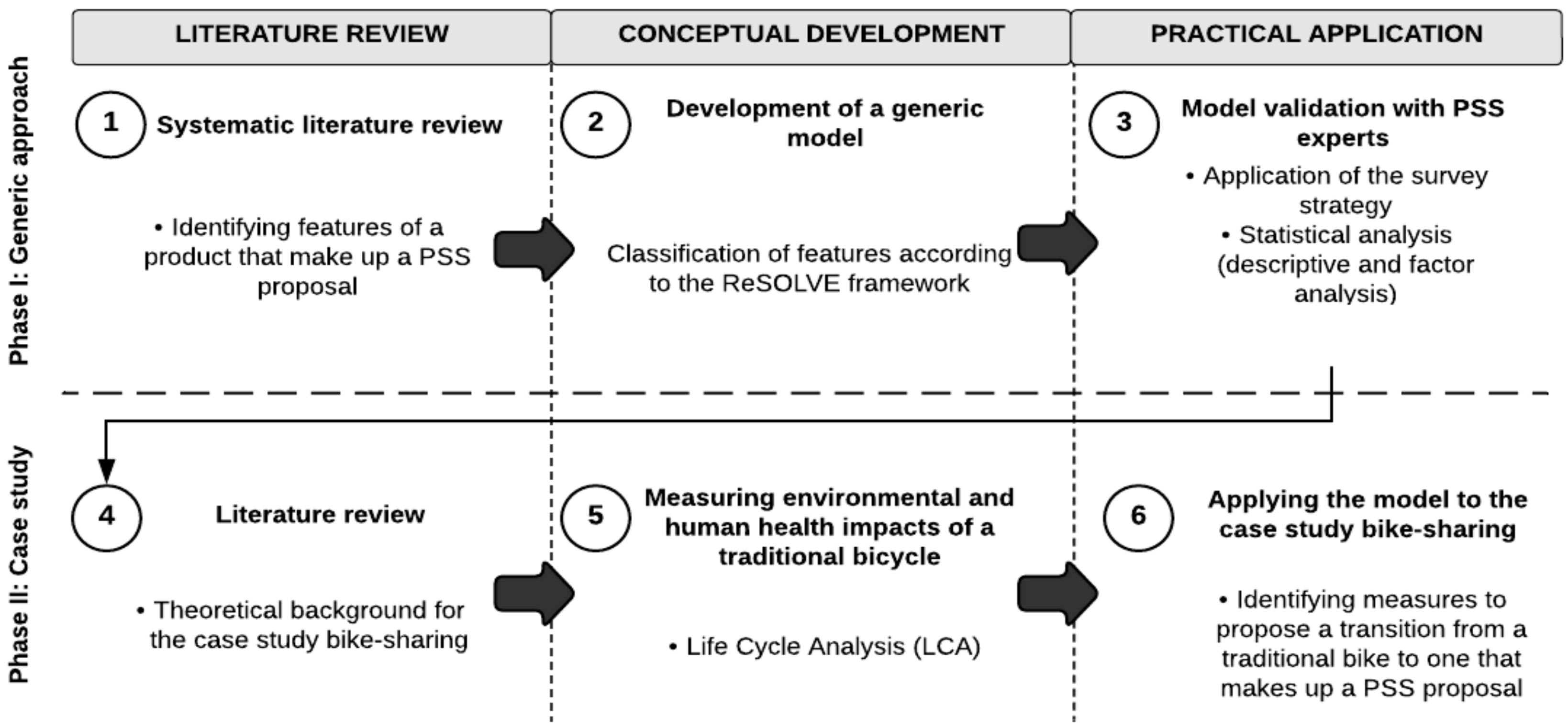
This research was conducted in six stages (Figure 1) and contemplated a mixed approach, since it analyzes bibliographic and empirical data. Initially, this work adopted a generic approach (phase I), proposing a generic model to enable the process of promoting the transition from a traditional product to a product characterized as a product-service system. To analyze the model’s effectiveness, it was applied to a case study: bike sharing (phase II). To support these research phases, the following strategies were used: literature review, conceptual development, and practical application, as highlighted in Figure 1.
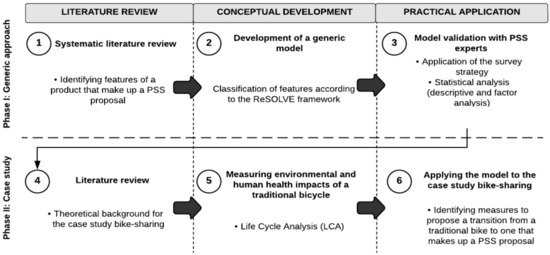
Figure 1.
Methodological procedures.
Each step of this research will be presented in the following sections, as follows:
- Section 2.1 presents the results of stages 1 and 2 of Figure 1.
- Section 2.2 presents the results of step 3 in Figure 1.
- Section 2.3 presents the results of steps 4 and 5 of Figure 1.
- Section 2.4 presents the results of step 6 in Figure 1.
2.1. Steps 1 and 2: Systematic Literature Review and Development of the Generic Model
A systematic literature review was conducted, aiming to understand the state of the art regarding the transition from a traditional product to a product that composes a PSS proposal. Bertoni et al. (2016) highlight that systematic reviews are widely conducted in studies on PSS [25] (e.g., [26,27,28]), highlighting the academic interest and the relevance of this approach. The Scopus and Web of Science databases were used to select the 55 articles used to identify the characteristics of a product classified as PSS and underpin the development of the generic model. The Table 1 presents the combination of keywords used to compose the sample of articles analyzed.

Table 1.
Keyword combinations (first stage). Source: Adapted from Kohlbeck et al. (2021) [13].
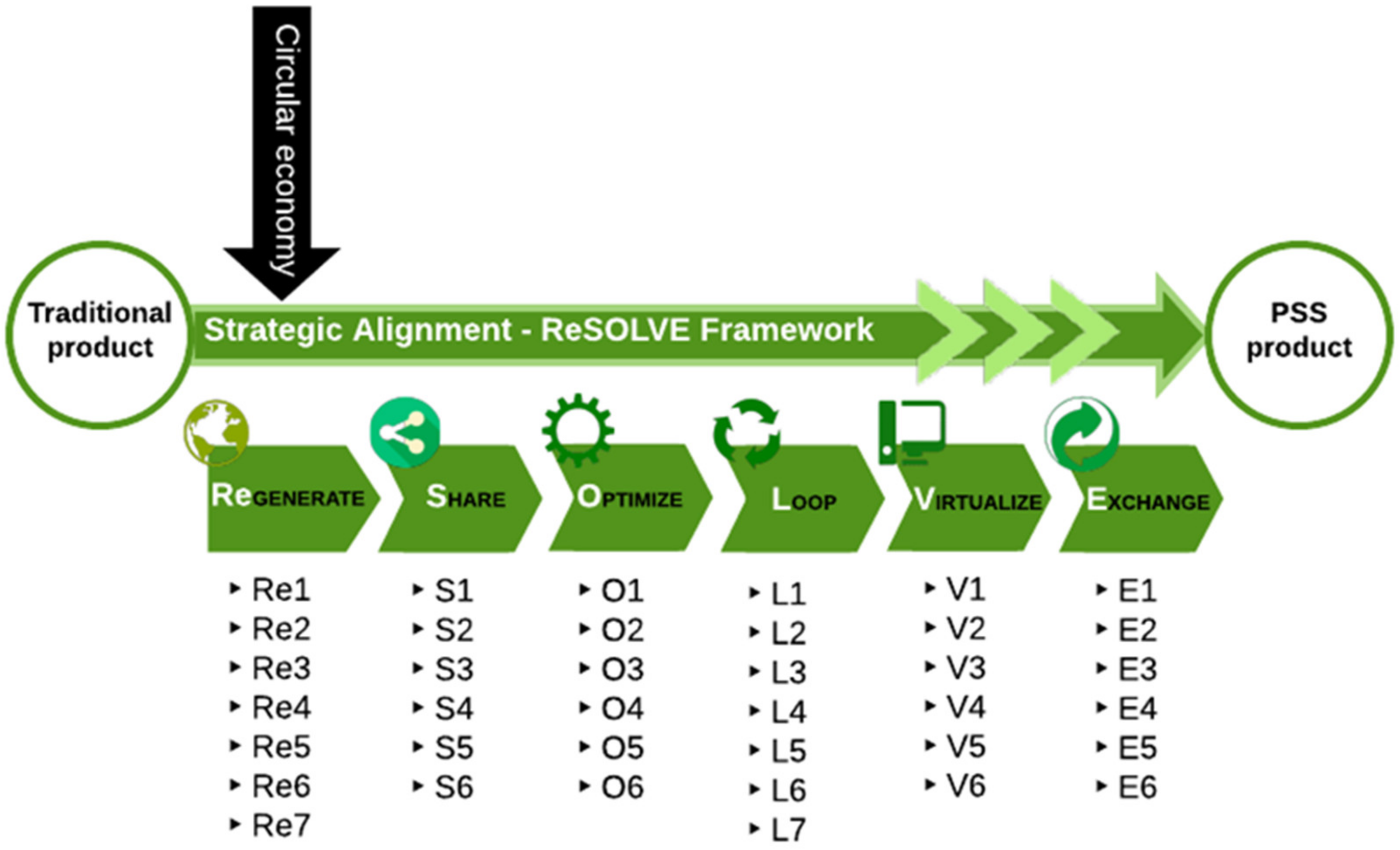
The ReSOLVE framework [29] was used to organize the information from the literature. According to [30], this framework organizes circular economy guidelines in six dimensions: regenerate, share, optimize, loop, virtualize, and exchange. Thus, a product’s characteristics that make up a PSS proposal were coded and classified according to the ReSOLVE framework. In this way, the features were presented: Re1–Re7 represent the regenerate dimension guidelines; S1–S6, of the share dimension; O1–O6 correspond to the optimize features; L1–L7, loop; V1–V6, virtualize; and E1–E6, exchange [13].
The results of this step were previously published by Kohlbeck et al. (2021) [13], where the authors performed a synthesis of the bibliographic data, highlighting how to promote the transition from a traditional product to a product classified as a PSS proposal [13]. Thus, strategies to enable this process are proposed, coded, and classified according to the ReSOLVE framework (Figure 2).
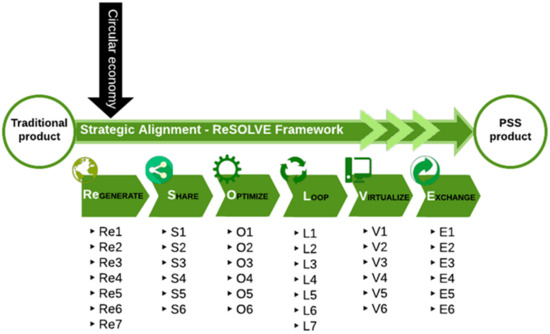
Figure 2.
Generic model-transition to a PSS product. Source: Kohlbeck et al. (2021) [13].
Table 2 presents the description of the coding of strategies to promote the transition to a PSS business proposition, highlighting that the first step of this process is to design the product according to the principles of sustainable development, generating a balance between the environmental, social and economic spheres [31].
Table 2.
Product characteristic that makes up a PSS proposal. Source: adapted from Kohlbeck et al. (2021) [13].
2.2. Step 3: Validation of the Model with PSS Experts
Experts in product-service systems (survey strategy), which were selected through the ORCID platform (Open Researcher and Contributor ID), evaluated the characteristics of a PSS product to validate the generic model. Through a questionnaire developed using the Google Forms tool, the interviewees analyzed the degree of agreement regarding each feature’s ability to transition from a traditional product to a PSS product. For this, a Likert scale with five gradations was used, in which 1 represents “strongly disagree”, and 5 represents “strongly agree” [32].
The data obtained through the questionnaire were analyzed using Statistical Package for the Social Sciences® (SPSS) software (version 24.0). SPSS is a widely used statistical tool that groups data numerically through tables and graphs [33]. Descriptive (calculation of mean and standard deviation) and factorial (calculation of variance) analyses were performed for this study. Through these analyses, it was possible to identify a product’s characteristics that make up a PSS strategy that best represents the dimensions of the ReSOLVE framework. Based on the statistical results, the generic model was validated.
2.3. Steps 4 and 5: Case Study—Life Cycle Analysis (LCA)
The bibliographic and statistical data were validated in sequence through a case study. For this, the second stage of the literature review was carried out, where the most toxic component of bike sharing was identified to promote the transition of this component (traditional product) to a PSS product, where there is greater engagement with the environmental scope of the Triple Bottom Line. For this, the combination of keywords (Table 3) was used, highlighting that 23 articles were analyzed.
Table 3.
Keyword combinations (fourth step).
The literature has highlighted that, although bikes represent a sustainable means of transportation, there are negative externalities to the environment and human health related to their life cycle [34]. In light of this, Wurster (2020) highlights the need to create life cycle management based on circular economy principles [35].
Although bike sharing systems replace high carbon emission transportation modes, and decrease the emission of greenhouse gases (GEE) under the atmosphere, for a product to be properly classified as PSS, it needs to meet the characteristics presented in Table 2, so as to be previously aligned with sustainable development, from its conception to its final destination. Thus, PSS bicycles should seek more sustainable ways of production, use and disposal of materials, and also maintain the alignment between the environmental, social and economic spheres.
To measure the environmental and human health impacts of a bike, the Life Cycle Analysis (LCA) tool was used [36]. The LCA represents a systematic approach to quantifying environmental performance linked to all phases of a product’s life cycle, enabling the identification of solutions to mitigate negative externalities under the environment and human health [37]. Since it is necessary to use data management software to measure impacts caused by a bike, this research used SimaPro® (version 9.0), which systematically analyzes the product’s life cycle, following the recommendations of the ISO 14040 series [38]. The database Ecoinvent 3.7.1 [39] was used to develop the life cycle inventory of the bike.
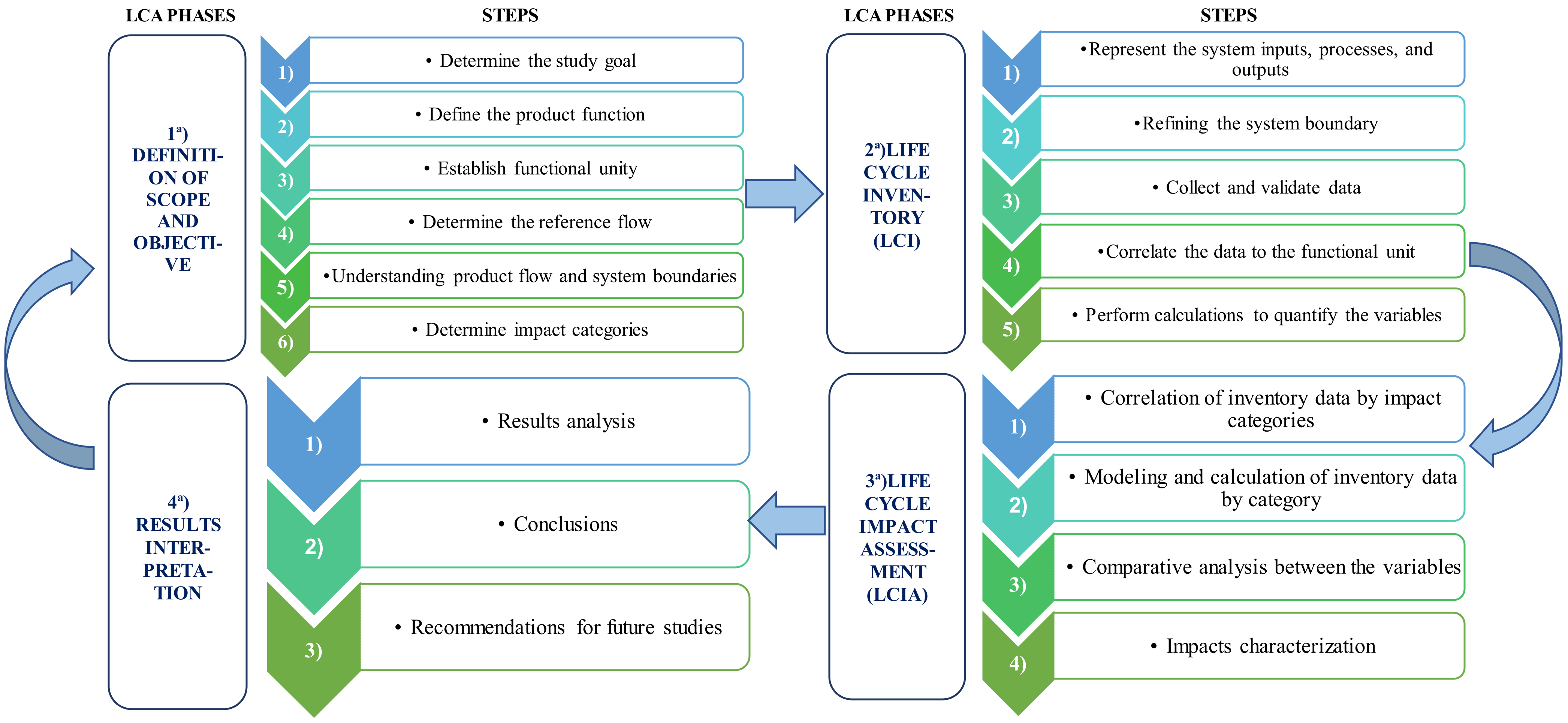
In 2006, the International Organization for Standardization (ISO) published a series of standards, called ISO 14040, defining the content and constraints of a Life Cycle Analysis [40]. According to ISO 14040, LCA processes are classified into four steps: (i) definition of the scope and purpose of the analysis; (ii) life cycle inventory (LCI) (the quantitative step that provides the input and output streams for a given process); (iii) life cycle impact assessment (LCIA), where the externalities caused by the system inputs and outputs, the use of raw materials and emissions of pollutants are analyzed; and finally, (iv) interpretation results, in order to compare them with the scope and objective, verifying whether they were properly met [40,41]. Figure 3 presents the procedures employed in this Life Cycle Analysis (LCA).
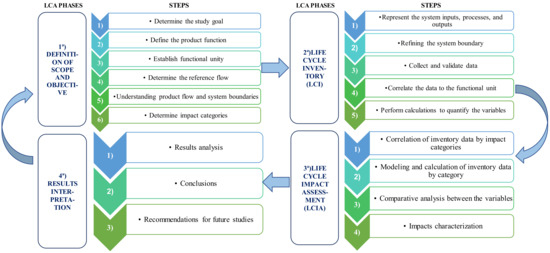
Figure 3.
LCA steps.
The ReCiPe impact assessment method [42] was used to analyze the midpoint and endpoint of a bike. Adopting an approach based on these two aspects is essential since they are complementary [43]. The midpoint assesses the product’s environmental effects, analyzing ecotoxicity, climate change, and acidification [42]. On the other hand, the endpoint presents the characterization of these impacts [44], evaluating aspects such as damage to human health and ecosystem quality [42].
The data provided by SimaPro® software (version 9.2.0.2) were presented through the Pareto Diagram tool, which established an order of the causes of impacts on human health and the environment. According to Aminmahalati (2021), the Pareto Diagram, associated with simulations, such as those generated by SimaPro®, enables the identification of opportunities for process optimizations, reducing the negative externalities generated by a product [45,46]. This analysis pointed out that aluminum is the most toxic component of a bike; therefore, the following section presents the methodological procedures employed to propose the replacement of this material for another one engaged with sustainable development.
2.4. Step 6: Model Application in the Case Study
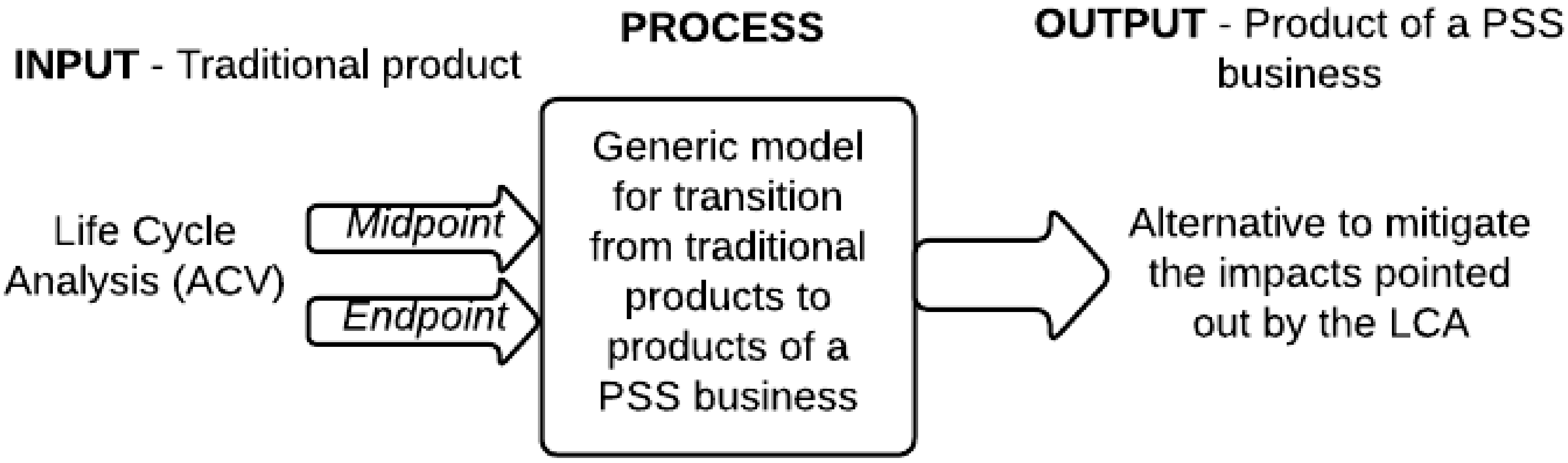
Based on the proposed model and validated with PSS specialists and Life Cycle Analysis (LCA), this work proposes possibilities to mitigate environmental and human health impacts caused by a bike. In this way, alternatives are identified to accomplish the transition from a traditional product to a product that composes a PSS proposal. Thus, alternatives were identified to mitigate the impacts caused by a traditional bicycle, analyzing how many characteristics of a PSS product the alternative meets (application of the proposed generic model). Figure 4 presents the procedures used to propose the transition to a PSS proposal.
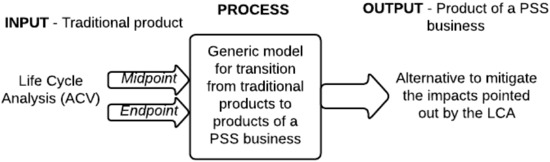
Figure 4.
Model application: transition to a PSS proposal.
3. Results and Discussion
3.1. Model Validation with PSS Experts
The following sections present the results from the statistical analysis, where Section 3.1.1 shows the described analysis, while Section 3.1.2 presents the results of the factor analysis.
3.1.1. Descriptive Analysis
Table 4 presents the results of the descriptive analysis, where the average () and standard deviation (σ) of the model variables were calculated.
Table 4.
Descriptive analysis.
The results indicate that, in the dimension “Re” (regenerate), the variable that best describes the observed phenomenon is the “Re7”, since it presented the highest average and lowest standard deviation of this dimension. Thus, it is inferred that there is a high index of convergence in the respondents’ opinions, in addition to the fact that this variable presented the highest mean and lowest standard deviation of the entire statistical analysis, demonstrating the importance of adopting measures aimed at socio-environmental balance in the early stages of the life cycle.
In dimension “S” (sharing), there was also a high convergence index, since dimension S2 (extension of the product’s life cycle; intensified use) obtained the highest average and lowest standard deviation. The interviewees stressed this variable’s importance as a way to reduce the disposal and pollution caused by the product. In the “O” dimension (optimize), the variable O3 (ease of disassembly of parts) showed the highest average and lowest standard deviation, demonstrating that there is a high index of convergence and appreciation of dimensions based on preventive behavior towards sustainable development.
The analyses of dimension “L” (cycling) presented the lowest convergence index of the statistical analysis, since variable L6 (remanufacturing) presented the highest average, and L2 (circular design) the lowest standard deviation. Although the result of this dimension is the least valued, the model generally presents high averages and low standard deviation values, contributing to the validation of the analyzed phenomenon.
The final dimensions of the model, “V” (virtualize) and “E” (exchange), presented converging results, since the variable V5 (operational support, advise on the efficient use) and E5 (rethink) presented the highest means and lowest standard deviations of their respective dimensions. Both variables emphasize the need to support the customer regarding socio-environmental balance, since an organizational awareness of sustainable production is not enough if there is no mobilization on the part of the consumer.
3.1.2. Factorial Analysis
Table 5 presents the factorial analysis’ results, where the variance (V) is calculated for each variable in the model.
Table 5.
Factorial analysis.
The variables that contribute the most to the dimensions’ significance were identified through the analysis of variance. Thus, it is inferred that the variables Re3 (ecodesign or Design for X (DfX)), S3 (redistribution), O5 (maintenance), L1 (cradle to cradle approach), V1 (advisory and consulting) and E6 (replace non-renewable materials by more sustainable alternatives) were the variables that best represent the construct. These are the ones that contribute the most to significance and summarize the information of the other variables. For example, variable Re3 (ecodesign or Design for X (DfX)) best represents the “Regenerate” dimension.
These variables (Re3, S3, O5, L1, V2 and E6), which have the most significant impact on each dimension’s significance based on the sample analyzed, are suggested to receive the most prioritization. However, analyses with a larger sample are necessary to validate this assertion.
3.2. Case Study—Life Cycle Analysis (LCA)
Conducting a Life Cycle Analysis of products makes it possible to act before the occurrence of environmental and human health impacts, and Haupt (2017) points out that Life Cycle Analysis supports the transition to a circular economy [47]. Thus, Table 6 presents how this approach (LCA) is interrelated with the structure used in the generic model developed (ReSOLVE).
Table 6.
ReSOLVE framework and Life Cycle Analysis.
Table 6 shows that the literature highlights the LCA potential in the face of circular economy, making it possible to affirm that the LCA is related to the generic model developed (Figure 2). Thus, a Life Cycle Analysis was conducted to quantify the environmental and human health impacts caused by a bike, enabling to outline an action plan to mitigate them.
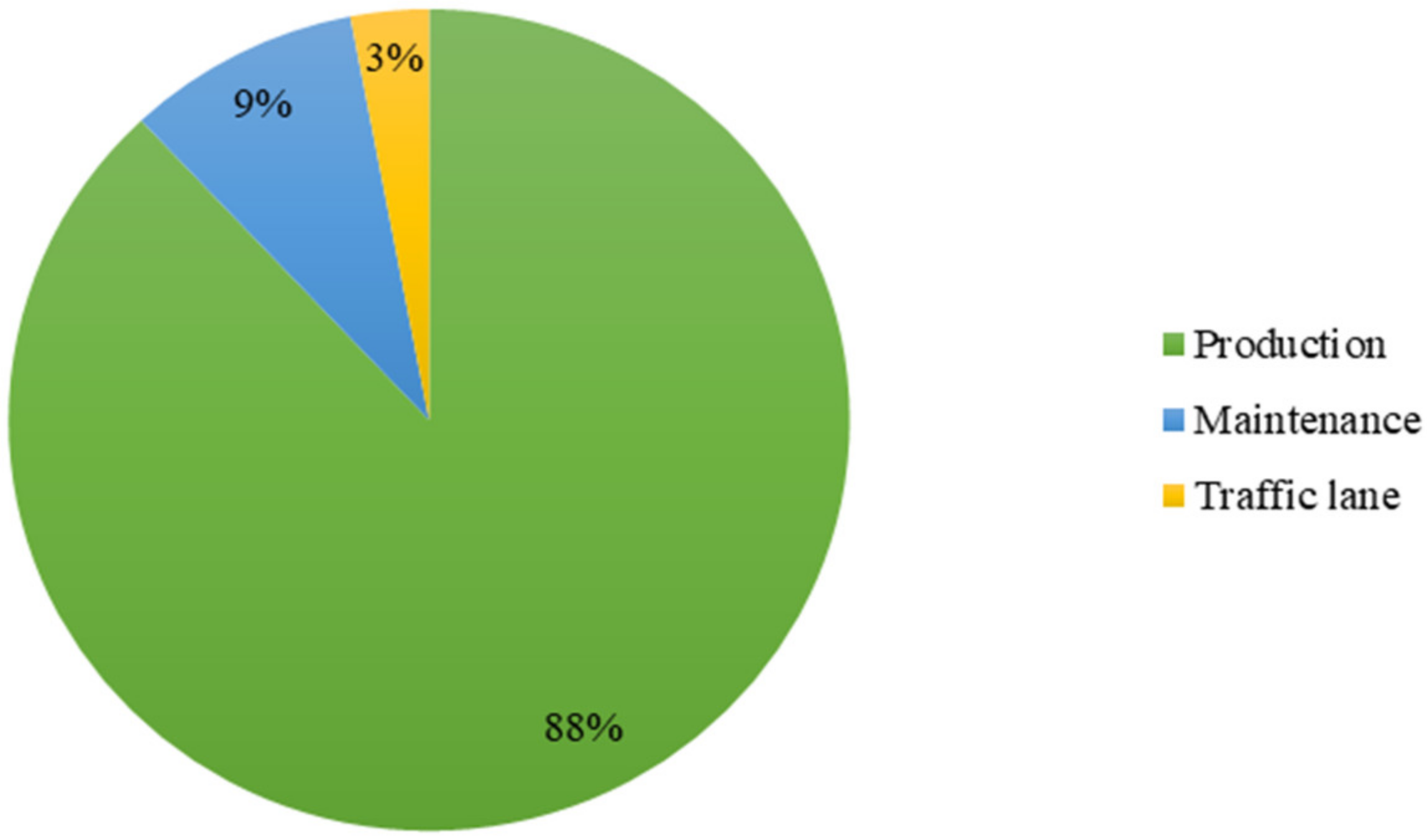
Although bicycles represent a means of transportation aligned with sustainable development, the product must be planned to balance the environmental, social and economic spheres in order to transition to a PSS proposal [13]. In view of this, Figure 5 shows a mapping of the main impacts caused by a bike, where it can be seen that the production stage is responsible for the main negative externalities on the environment and human health.
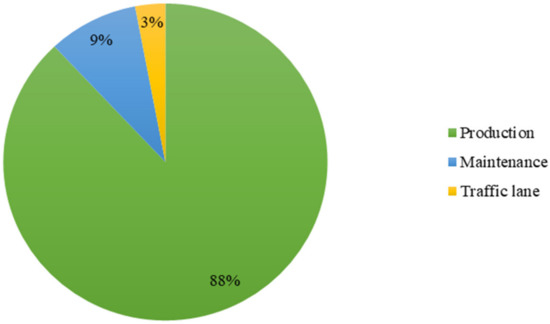
Figure 5.
Bike impacts.
In this phase, high energy consumption and different materials usage (such as aluminum, steel, and rubber [19]) cause an environmental burden. Moreover, the Simapro® software highlights that the main impacts are the carcinogenic toxicity of the production process of a bicycle and the contribution to the scarcity of mineral resources. Henriques et al. (2013) point out that the main materials that make up a bike, such as aluminum, contribute to the context of resource scarcity, in addition to contributing to the emission of chlorofluorocarbons (CFCs), thus potentiating harmful effects on health, such as the incidence of skin cancer, sunburn and genetic changes in humans, animals and vegetation [22].
Given the result presented in Figure 5, this research performs the Life Cycle Analysis (LCA) of the production of a bike, measuring its impacts on the environment and human health (midpoint and endpoint). Table 7 presents the steps of the first phase of the LCA (definition of scope and objective), where we highlight that the goal of this Life Cycle Analysis is to analyze the environmental impacts caused by the production of a bicycle in Brazil, aiming to identify the main negative externalities. This makes it possible to draw a strategy to mitigate them, making the product aligned with the principles of a product-service system.
Table 7.
First step of the LCA-production of 1 bike.
In the second and third stages of the Life Cycle Analysis, the SimaPro® software was used, which enabled the construction of the inventory (LCI) [41], where the inputs, processes and outputs of the system were represented, in order to correlate the inventory data with the functional unit (production of 1 bicycle) (stage 2: Life Cycle Inventory). In stage 3, the life cycle impacts assessment (LCA) took place, which supports the interpretation of an LCA study [56]. Table 8 presents the main procedures of these steps.
Table 8.
Second and third stage of the LCA-production of 1 bike.
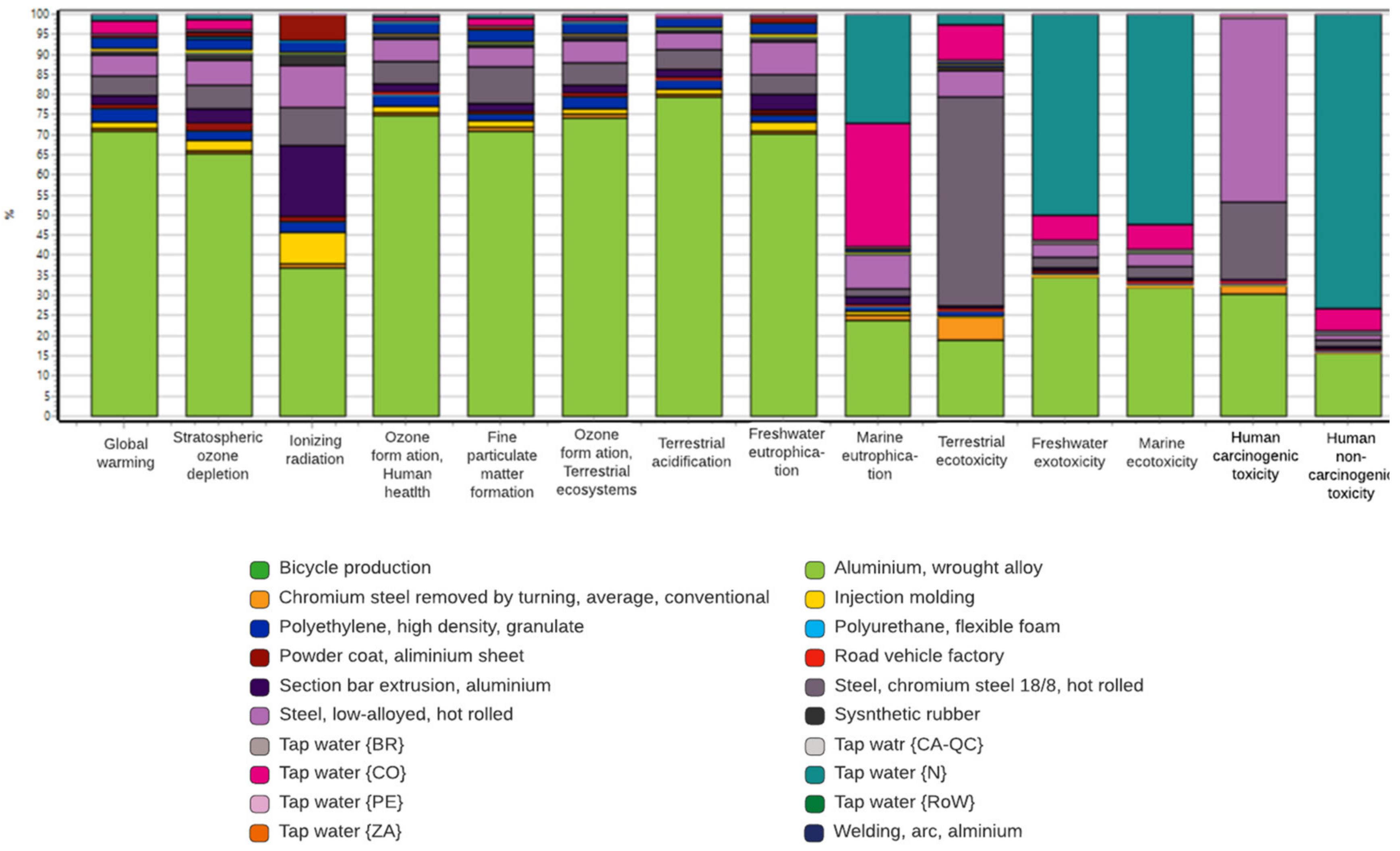
In the fourth step of the Life Cycle Analysis, the results were interpreted, so that Figure 6 presents the negative externalities caused by the production of a bike. These impacts are presented according to the raw materials used for the production of bicycles, such as aluminum, chrome, steel, and polymers (direct materials). In addition, the externalities caused indirectly by the manufacturing processes are also analyzed, such as electricity consumption, the impacts caused by the injection molding process, the extrusion of aluminum bars, among others. All the impacts of these materials, both direct and indirect, are analyzed, in order to measure how they interfere with global warming, the emission of ionizing radiation, ozone emissions (impacts on human health and terrestrial ecosystems), and the degradation of the stratospheric ozone layer, among others.
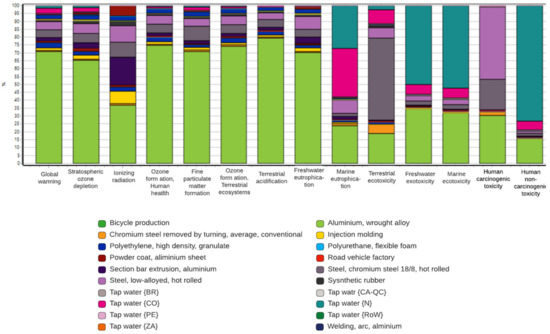
Figure 6.
Impacts of producing 1 bicycle.
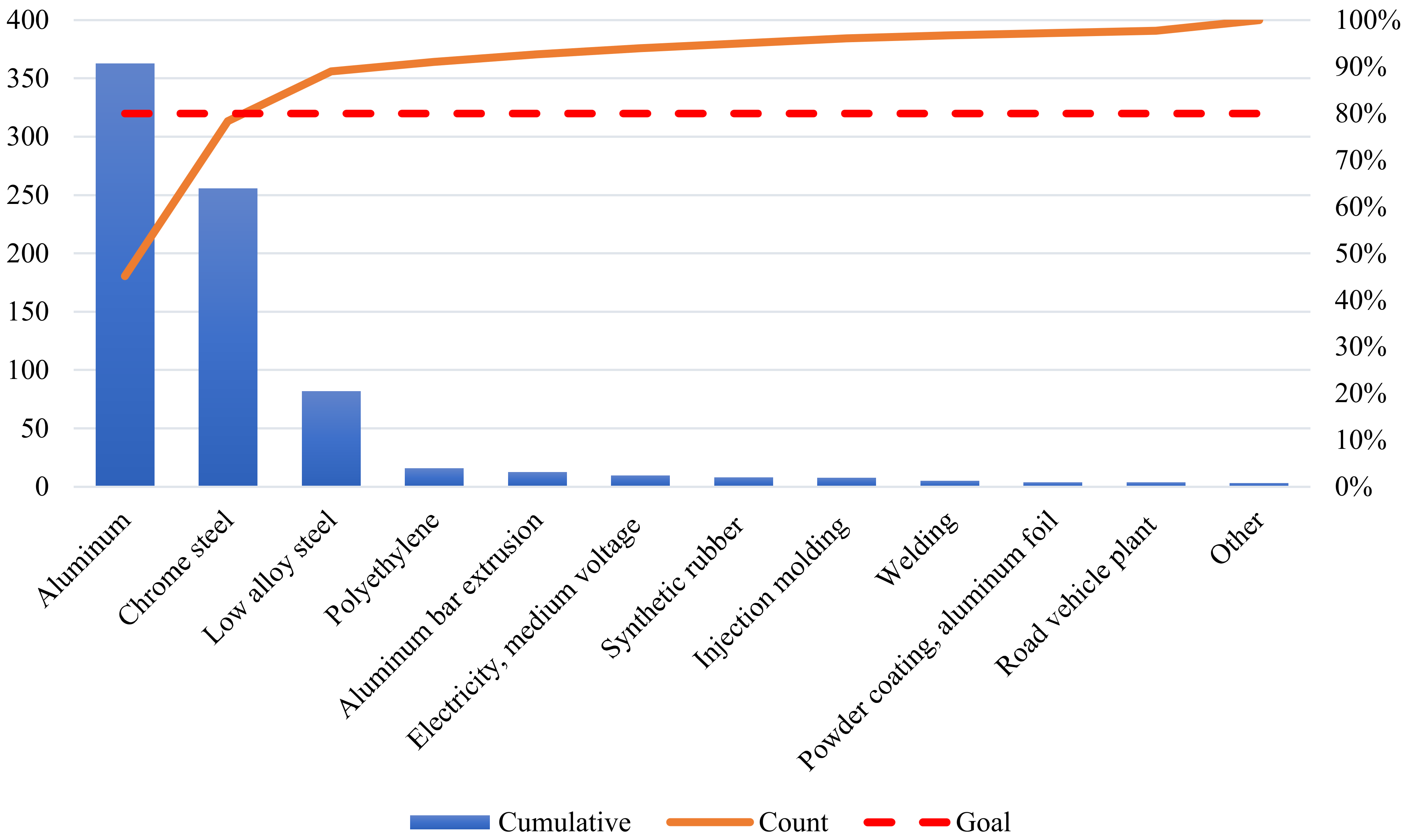
The results of the application of this tool indicate that aluminum, chrome steel, and low alloy steel cause the greatest impacts on human health and the environment, contributing 45.17%, 31.86%, and 10.23% of negative externalities, respectively. When analyzing the impact categories, the Life Cycle Analysis highlights that the main burdens of bike production considering the Brazilian context are terrestrial acidification (79%), impacts of ozone emissions on human health (75%) and terrestrial ecosystems (74%).
The results obtained are theoretical and generic, but the work of Matos et al. (2020) corroborates the software data, highlighting the impact of the aluminum production process through a case study carried out in Pará, Brazil. The authors highlight the contribution of aluminum to the alteration of the physical and chemical properties of the soil, since the removal of the upper layers of soil for the extraction of bauxite (the raw material base of alumina, and subsequent aluminum) exposes the lower layers to the loss of nutrients and erosion. There is also high water consumption during this process (data in Figure 6 corroborates this assertion), used in the bauxite extraction process, its processing and other steps until aluminum is obtained.
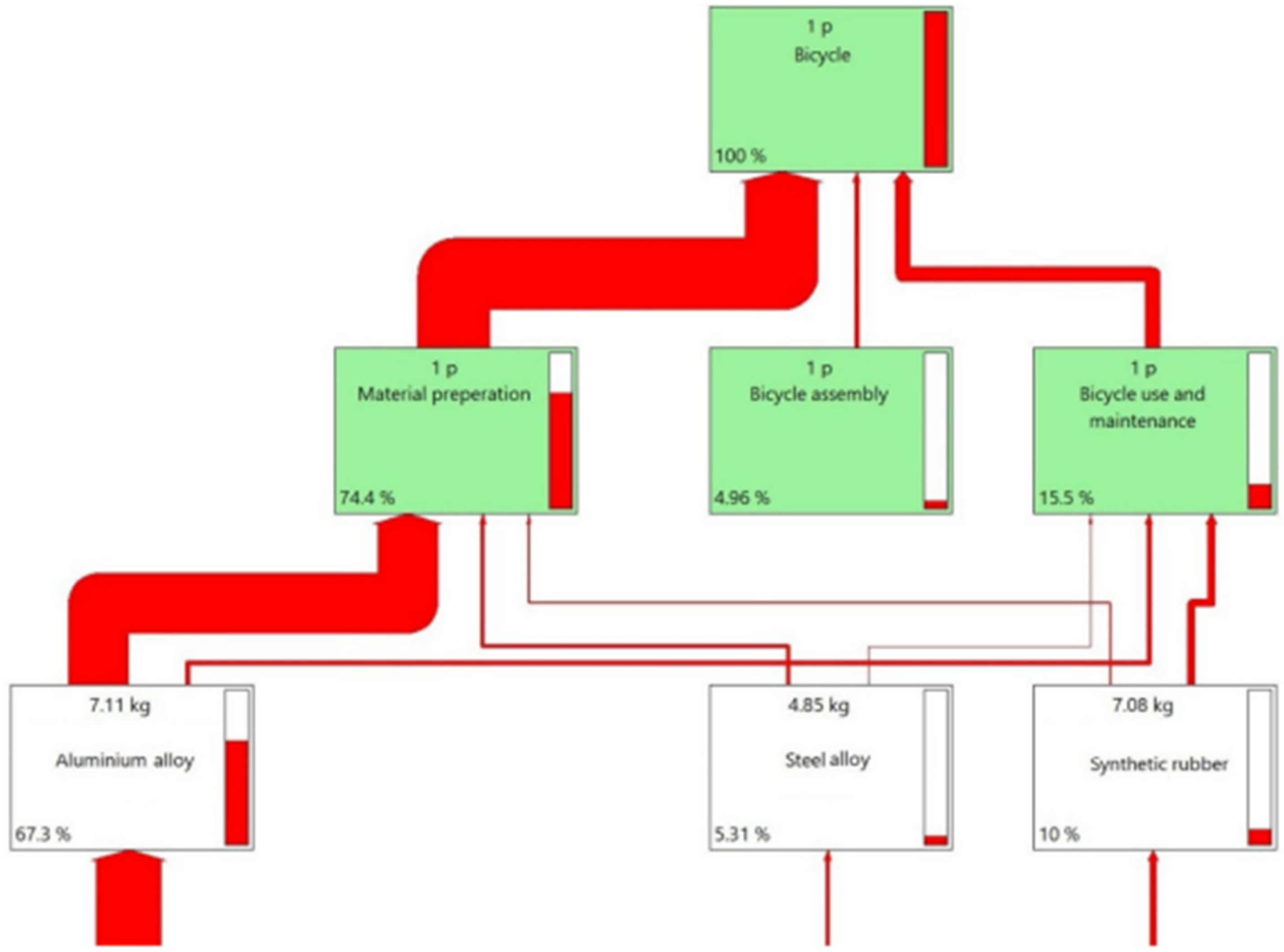
The study by Erkoyuncu (2019) corroborates this analysis, highlighting that the aluminum used for the production of the bike frame is the main responsible agent for the impacts at the stages of production, use and maintenance [57]. Therefore, it is essential to avoid the aluminum frame, and replace it with another material aligned with sustainable development. The Life Cycle Analysis by [57] was conducted in Bangladesh, also aiming to measure the impacts of producing a bicycle. The study by [57] points out that among the main negative externalities of aluminum, climate change stands out, since it is responsible for 67.3% of the impacts related to this category, as presented in Figure 7.
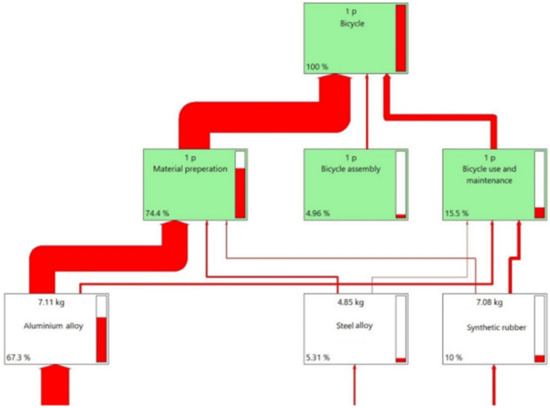
Figure 7.
Environmental impacts of bicycle production in Bangladesh. Source: Roy et al. (2019).
This research corroborates with the study of Erkoyuncu, extending the analysis to the Brazilian context, in which Figure 8 complements this investigation through a Pareto diagram, which points out that the three main sources of impacts are aluminum, chrome steel and low alloy steel. By applying the 80/20 Pareto rule, these variables represent the activities (approximately 20%) responsible for approximately 80% of the impacts, i.e., these are the main factors to consider when developing an action plan aiming to mitigate the impacts on the environment and human health caused by the production of a bike.
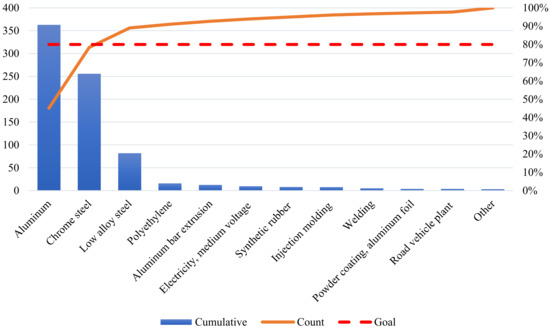
Figure 8.
Variables that have the greatest impact on bike production.
The higher impact caused by aluminum can be explained because its production depends mainly on the electrolytic method (Hall–Héroult process, in which igneous electrolysis of alumina fused into cryolite is performed), which consumes high rates of electricity [58]. Although aluminum in the transportation sector is widely used due to its light weight, its production causes greater environmental impacts compared to other materials, such as steel [59]. According to Cullen (2013), aluminum production uses more than 3.5% of global electricity, contributing significantly to greenhouse gas (GHG) emissions [60]. Thus, aluminum consumption and production drives coal consumption, as well as sulfur dioxide (SO2) and carbon dioxide (CO2) emissions [8].
Among the components of a bike that use aluminum, the frame stands out, followed by the chain, rims, spokes, among others. Considering the sustainable development, it becomes attractive to change this material for others that cause less impact, such as the replacement of the aluminum chain with a more ecological steel chain that ensures the same degree of wear and useful life [14].
Given the environmental impacts caused by aluminum and that the annual demand for this material grows exponentially (30-fold increase since 1950) [60], the identification and use of alternative materials becomes an imperative measure. Thus, in order to mitigate the main negative externalities caused by bicycle production, especially aluminum (responsible for approximately 45.17% of the impacts), the following section presents alternatives aimed at replacing the aluminum frame with more sustainable proposals, in order to apply them in the proposed model to analyze their effectiveness.
3.3. Applying the Model in the Case Study
Aiming to mitigate the impacts pointed out by the LCA, this subsection presents a proposal that seeks to align the production of a bike with the principles of a product linked to a PSS proposal. Since the Life Cycle Analysis pointed out that aluminum generates high environmental and human health impacts, this work analyzes the substitution of this material with a bamboo fiber polypropylene composite. According to Scherer (2020), composites reinforced with natural fibers, besides being aligned with sustainable development, present the advantages of low cost, abundance and low weight [61].
To measure the effectiveness of the alternative facing the transition to a PSS proposal, the proposed model was applied (Table 9), in order to analyze how many characteristics of a PSS product the materials meet (aluminum and bamboo fiber).
Table 9.
Generic model application.
The application of the model shows that the alternative of using bamboo fiber is 37.5% more aligned with sustainable development than aluminum, proving the viability of the proposal aiming at the transition to a PSS business model. According to Scherer (2021), bamboo’s high strength and durability, as well as its rapid growth and wide availability, allows for a high range of high-performance applications [20].
Thus, Table 9 presents a comparative analysis, based on bibliographic data, between using aluminum and developing a biocomposite with bamboo fiber. Among the advantages of substitution, it can be highlighted that bamboo is a renewable resource, of rapid growth, that helps prevent soil erosion, absorbs carbon dioxide (CO2) and releases oxygen into the atmosphere, contributing to the minimization of the greenhouse effect, a factor considered critical in the Life Cycle Analysis of aluminum as one of the main negative externalities caused by this element.
Thus, managers and industries can benefit from this substitution given the benefits mentioned above, in addition to being an alternative aimed at sustainability, which has been arousing business interest given the pressure in the face of environmental commitments such as Agenda 2030. Thus, proposals with sustainable alignment gain greater visibility in the market, enabling companies to perform the green marketing of the proposal.
Scherer, Bom and Barbieri (2020) reinforce this notion, highlighting that bamboo reconciles the benefits of being a sustainable alternative with low cost, abundance in nature and low weight, an essential characteristic for a bike frame [61]. Thus, this step contributes to propose an alternative to the main impacts of the production of a bicycle, pointed out by the Life Cycle Analysis (LCA). In this way, the next steps of this research will focus on mechanical tests of the polypropylene and bamboo fiber biocomposite, to perform a comparative study with the aluminum, in order to validate in a practical way the contributions pointed out in Table 9.
4. Conclusions
Motivated by the need to propose alternatives aligned with sustainability, and by the lack of guidance as regards the development of a PSS business proposal, this work aimed to apply a generic model for the transition to a product classified as a Product-Service System in the bike sharing case. The conclusions of the study are presented according to the structure of the paper: (i) systematic literature review and development of the generic model; (ii) validation of the model with PSS experts; (iii) case study—Life Cycle Analysis (LCA); and (iv) application of the model in the case study.
As for step (i), systematic literature review and development of the generic model, this research contributed to theoretical knowledge by advancing the discussion concerning the differences between servitization and Product-Service Systems (PSS), besides proposing a scientifically grounded model to propose the transition from a traditional product to a product classified as PSS. Thus, the proposed model can be used as a support for both researchers and companies when characterizing a PSS product.
Stage (ii), validation of the model with PSS specialists, demonstrated the model’s viability, given its high acceptability by experts in the field. The high index of convergence in the interviewees’ opinion, proven through low standard deviations and high averages, confirmed the model’s effectiveness, as well as the need to align business proposals with the circular economy, given that the ReSOLVE structure was understood by literature as an effective way to promote the transition to a proposal aligned with this conjuncture.
Stage (iii), case study—Life Cycle Analysis (LCA), presents the practical advance of this research, once the impacts of a bike were measured to understand its main externalities under the environment and human health. Thus, through the application of the proposed model, it was possible to outline an action plan to mitigate the impacts. Therefore, this tool was the basis for the last stage of this work: (iv) application of the model in the case study. Having identified that aluminum is the most toxic component of a bike, this research proposes the development of a biocomposite to reinforce polypropylene with bamboo fiber. It is also noteworthy that this research has limitations, among them the conjectures it provides about a specific case, analyzing only the bike product. It is also limited exclusively to the PSS product, which is composed of product, service, infrastructure, and stakeholders, all of which should be designed with sustainability in mind. However, from these limitations emerge opportunities for future studies, where we highlight the possibility of applying the proposed model to other products to prove its generic character. Future studies can also extend the statistical analysis by performing the interrelationship between the variables of the model.
In addition, it is necessary to deepen the studies regarding the proposed alternative, to perform mechanical tests on the biocomposite, analyzing the effectiveness of replacing the aluminum frame by the material suggested in this work. Thus, despite the fact that studies regarding the reduction in environmental impacts are being published, this is a non-renewable resource, and the substitution with more sustainable and renewable alternatives becomes a plausible alternative. However, future studies are necessary to prove the viability of the change under the environmental, social and economic aspects, besides ensuring the required mechanical properties.
Author Contributions
Conceptualization, D.B.d.C.; Software, D.P.; Validation, A.B.F.; Writing—original draft, E.K.; Writing—review & editing, F.H.B. All authors have read and agreed to the published version of the manuscript.
Funding
This research received no external funding.
Institutional Review Board Statement
Not applicable.
Informed Consent Statement
Not applicable.
Data Availability Statement
Not applicable.
Conflicts of Interest
The authors declare no conflict of interest.
References
- Kjaer, L.L.; Pigosso, D.C.A.; Niero, M.; Bech, N.M.; McAloone, T.C. Product/Service-Systems for a Circular Economy: The Route to Decoupling Economic Growth from Resource Consumption? J. Ind. Ecol. 2019, 23, 22–35. [Google Scholar] [CrossRef]
- de Kwant, C.; Rahi, A.F.; Laurenti, R. The Role of Product Design in Circular Business Models: An Analysis of Challenges and Opportunities for Electric Vehicles and White Goods. Sustain. Prod. Consum. 2021, 27, 1728–1742. [Google Scholar] [CrossRef]
- Ellen MacArthur Foundation. Towards the Circular Economy Volume 1. Economic and Business Rationale for an Accelerated Transition; Ellen MacArthur Foundation: Cowes, UK, 2012; Volume 1. [Google Scholar]
- Catulli, M.; Sopjani, L.; Reed, N.; Tzilivakis, J.; Green, A. A Socio-Technical Experiment with a Resource Efficient Product Service System. Resour. Conserv. Recycl. 2021, 166, 105364. [Google Scholar] [CrossRef]
- Mont, O.K. Clarifying the Concept of Product-Service System. J. Clean. Prod. 2002, 10, 237–245. [Google Scholar] [CrossRef]
- Jin, M.; Tang, R.; Ji, Y.; Liu, F.; Gao, L.; Huisingh, D. Impact of Advanced Manufacturing on Sustainability: An Overview of the Special Volume on Advanced Manufacturing for Sustainability and Low Fossil Carbon Emissions. J. Clean. Prod. 2017, 161, 69–74. [Google Scholar] [CrossRef]
- Chiarot, C.; Eduardo, R.; Ordoñez, C.; Lahura, C. Evaluation of the Applicability of the Circular Economy and the Product-Service System Model in a Bearing Supplier Company. Sustainability 2022, 14, 12834. [Google Scholar] [CrossRef]
- Ding, X.; Zhong, W.; Shearmur, R.G.; Zhang, X.; Huisingh, D. An Inclusive Model for Assessing the Sustainability of Cities in Developing Countries—Trinity of Cities’ Sustainability from Spatial, Logical and Time Dimensions (TCS-SLTD). J. Clean. Prod. 2015, 109, 62–75. [Google Scholar] [CrossRef]
- D’Almeida, L.; Rye, T.; Pomponi, F. Emissions Assessment of Bike Sharing Schemes: The Case of Just Eat Cycles in Edinburgh, UK. Sustain. Cities Soc. 2021, 71, 103012. [Google Scholar] [CrossRef]
- Sousa-Zomer, T.T.; Miguel, P.A.C. Exploring the Consumption Side of Sustainable Product-Service Systems (PSS): An Empirical Study and Insights for PSS Sustainable Design. CIRP J. Manuf. Sci. Technol. 2016, 15, 74–81. [Google Scholar] [CrossRef]
- Luo, H.; Kou, Z.; Zhao, F.; Cai, H. Comparative Life Cycle Assessment of Station-Based and Dock-Less Bike Sharing Systems. Resour. Conserv. Recycl. 2019, 146, 180–189. [Google Scholar] [CrossRef]
- Prasara, A.J.; Bridhikitti, A. Carbon Footprint and Cost Analysis of a Bicycle Lane in a Municipality. Glob. J. Environ. Sci. Manag. 2022, 8, 197–208. [Google Scholar] [CrossRef]
- Kohlbeck, E.; Beuren, F.H.; Fagundes, A.B.; Campos, D.B. De Framework for Transition from Traditional to PSS Products. Int. J. Adv. Eng. Res. Sci. 2021, 6495, 366–379. [Google Scholar] [CrossRef]
- Mao, G.; Hou, T.; Liu, X.; Zuo, J.; Kiyawa, A.H.I.; Shi, P.; Sandhu, S. How Can Bicycle-Sharing Have a Sustainable Future? A Research Based on Life Cycle Assessment. J. Clean. Prod. 2021, 282, 125081. [Google Scholar] [CrossRef]
- Liu, X.; Yang, T.; Pei, J.; Liao, H.; Pohl, E.A. Replacement and Inventory Control for a Multi-Customer Product Service System with Decreasing Replacement Costs. Eur. J. Oper. Res. 2019, 273, 561–574. [Google Scholar] [CrossRef]
- Liu, Z.; Ming, X. A Methodological Framework with Rough-Entropy-ELECTRE TRI to Classify Failure Modes for Co-Implementation of Smart PSS. Adv. Eng. Inform. 2019, 42, 100968. [Google Scholar] [CrossRef]
- Civancik-Uslu, D.; Puig, R.; Ferrer, L.; Fullana-i-Palmer, P. Influence of End-of-Life Allocation, Credits and Other Methodological Issues in LCA of Compounds: An in-Company Circular Economy Case Study on Packaging. J. Clean. Prod. 2019, 212, 925–940. [Google Scholar] [CrossRef]
- Hurley, B.R.A.; Ouzts, A.; Fischer, J.; Gomes, T. Realizing Product-Packaging Combinations in Circular Systems: Shaping the Research Agenda. Packag. Technol. Sci. 2016, 29, 399–412. [Google Scholar] [CrossRef]
- Roy, P.; Miah, M.D.; Zafar, M.T. Environmental Impacts of Bicycle Production in Bangladesh: A Cradle-to-Grave Life Cycle Assessment Approach. SN Appl. Sci. 2019, 1, 1–16. [Google Scholar] [CrossRef]
- Scherer, J.F. Fadiga Em Torção de Materiais Compósitos de Resina Epóxi Reforçados Com Fibras de Bambu; Santa Catarina State University: Joinville, Brazil, 2021. [Google Scholar]
- Macedo, A.M.; Alves, C.B.; Silva, V.M.; Oliveira, A.C.A. de Impacto Do Alumínio No Meio Ambiente e Na Saúde. 2020. Available online: http://www.faculdadealfredonasser.edu.br/files/Pesquisar_5/21-11-2016-21.38.49.pdf (accessed on 12 December 2022).
- Henriques, A.B.; Firpo, M.; Porto, S. A Insustentável Leveza Do Alumínio Impactos Socioambientais. Cien. Saude Colet. 2013, 1, 3223–3234. [Google Scholar] [CrossRef]
- Winslow, J.; Mont, O. Bicycle Sharing: Sustainable Value Creation and Institutionalisation Strategies in Barcelona. Sustainability 2019, 11, 728. [Google Scholar] [CrossRef]
- Flagstad, I.; Hauge, Å.L.; Åge, S. Certification Dissonance: Contradictions between Environmental Values and Certification Scheme Requirements in Small-Scale Companies. J. Clean. Prod. 2022, 358, 132037. [Google Scholar] [CrossRef]
- Bertoni, A.; Bertoni, M.; Panarotto, M.; Johansson, C.; Larsson, T.C. Value-Driven Product Service Systems Development: Methods and Industrial Applications. CIRP J. Manuf. Sci. Technol. 2016, 15, 42–55. [Google Scholar] [CrossRef]
- Annarelli, A.; Battistella, C.; Nonino, F. Product Service System: A Conceptual Framework from a Systematic Review. J. Clean. Prod. 2016, 139, 1011–1032. [Google Scholar] [CrossRef]
- Fernandes, S.D.C.; Pigosso, D.C.A.; McAloone, T.C.; Rozenfeld, H. Towards Product-Service System Oriented to Circular Economy: A Systematic Review of Value Proposition Design Approaches. J. Clean. Prod. 2020, 257, 120507. [Google Scholar] [CrossRef]
- Tukker, A. Product Services for a Resource-Efficient and Circular Economy—A Review. J. Clean. Prod. 2015, 97, 76–91. [Google Scholar] [CrossRef]
- Ellen MacArthur Foundation. Delivering the Circular Economy a Toolkit for Policymakers; Ellen MacArthur Foundation: Cowes, UK, 2015. [Google Scholar]
- Lopes de Sousa Jabbour, A.B.; Rojas Luiz, J.V.; Rojas Luiz, O.; Jabbour, C.J.C.; Ndubisi, N.O.; Caldeira de Oliveira, J.H.; Junior, F.H. Circular Economy Business Models and Operations Management. J. Clean. Prod. 2019, 235, 1525–1539. [Google Scholar] [CrossRef]
- Vezzoli, C.; Ceschin, F.; Diehl, J.C. Sustainable Product-Service System Design Applied to Distributed Renewable Energy Fostering the Goal of Sustainable Energy for All. J. Clean. Prod. 2015, 97, 134–136. [Google Scholar] [CrossRef]
- Höhne, J.K.; Krebs, D.; Kühnel, S.M. Measurement Properties of Completely and End Labeled Unipolar and Bipolar Scales in Likert-Type Questions on Income (in)Equality. Soc. Sci. Res. 2021, 97, 1–14. [Google Scholar] [CrossRef]
- Qi, P.; Yan, C.; Zang, C.; Xu, J.; Huang, X.; Dai, X.; Jin, Y.; Zhao, T. Analysis of Factors Influencing the Resistance of a Type of Air Filter Paper Based on SPSS. IOP Conf. Ser. Mater. Sci. Eng. 2020, 711, 012060. [Google Scholar] [CrossRef]
- Kumar, M.; Huang, K.-Y.; Othieno, C.; Wamalwa, D.; Hoagwood, K.; Unutzer, J.; Saxena, S.; Petersen, I.; Njuguna, S.; Amugune, B.; et al. Implementing Combined WHO MhGAP and Adapted Group Interpersonal Psychotherapy to Address Depression and Mental Health Needs of Pregnant Adolescents in Kenyan Primary Health Care Settings (INSPIRE): A Study Protocol for Pilot Feasibility Trial of the Integ. Pilot Feasibility Stud. 2020, 6. [Google Scholar] [CrossRef]
- Wurster, S.; Schulze, R. Consumers’ Acceptance of a Bio-Circular Automotive Economy: Explanatory Model and Influence Factors. Sustainability 2020, 12, 2186. [Google Scholar] [CrossRef]
- Pehlken, A.; Rolbiecki, M.; Decker, A.; Thoben, K.-D. Asessing the Future Potential of Waste Flows—Case Study Scrap Tires. Int. J. Sustain. Dev. Plan. 2014, 9, 90–105. [Google Scholar] [CrossRef]
- NBR14044 ISO 14044: 2006; Gestão Ambiental—Avaliação Do Ciclo de Vida—Requisitos e Diretrizes. ISO: Geneva, Switzerland. Available online: https://www.iso.org/standard/38498.html (accessed on 1 June 2022).
- SimaPro LCA Software for Fact-Based Sustainability. Available online: https://simapro.com/ (accessed on 1 June 2022).
- Ecoinvent Ecoinvent—The World’s Mostconsistent & Transparentlife Cycle Inventory Database. Available online: https://www.ecoinvent.org/ (accessed on 1 June 2022).
- ABNT Associação Brasileira de Normas Técnicas. ISO 14040: Gestão Ambiental—Avaliação Do Ciclo de Vida—Princípios e Estrutura; ABNT Associação Brasileira de Normas Técnicas: São Paulo, Brazil, 2006; Volume 21. [Google Scholar]
- Nunes, I.C.; Kohlbeck, E.; Beuren, F.H.; Fagundes, A.B.; Pereira, D. Life Cycle Analysis of Electronic Products for a Product-Service System. J. Clean. Prod. 2021, 314, 127926. [Google Scholar] [CrossRef]
- Goedkoop, M.J.; Heijungs, R.; Huijbregts, M.A.J.; De Schryver, A.; Struijs, J.; van Zelm, R. Category Indicators at the Midpoint and the Endpoint Level ReCiPe 2008. ResearchGate 2009, 126. [Google Scholar]
- Rosenbaum, R.K. Introducing Life Cycle Impact Assessment; Springer: Berlin/Heidelberg, Germany, 2015; ISBN 978-94-017-9743-6. [Google Scholar]
- Piekarski, C.M.; de Francisco, A.C.; da Luz, L.M.; Kovaleski, J.L.; Silva, D.A.L. Life Cycle Assessment of Medium-Density Fiberboard (MDF) Manufacturing Process in Brazil. Sci. Total Environ. 2017, 575, 103–111. [Google Scholar] [CrossRef]
- Astanti, R.D.; Sutanto, I.C.; Ai, T.J. Complaint Management Model of Manufacturing Products Using Text Mining and Potential Failure Identification. TQM J. 2021; ahead-of-print. [Google Scholar] [CrossRef]
- Aminmahalati, A.; Fazlali, A.; Safikhani, H. Study on the Performance and Optimization of CO Boiler in the Oil Refinery. Appl. Therm. Eng. 2021, 201, 117790. [Google Scholar] [CrossRef]
- Haupt, M.; Zschokke, M. How Can LCA Support the Circular Economy?—63rd Discussion Forum on Life Cycle Assessment, Zurich, Switzerland, November 30, 2016. Int. J. Life Cycle Assess. 2017, 22, 832–837. [Google Scholar] [CrossRef]
- Julianelli, V.; Caiado, R.G.G.; Scavarda, L.F.; Cruz, S.P.D.M.F. Interplay between Reverse Logistics and Circular Economy: Critical Success Factors-Based Taxonomy and Framework. Resour. Conserv. Recycl. 2020, 158, 104784. [Google Scholar] [CrossRef]
- Sandin, G.; Peters, G.M. Environmental Impact of Textile Reuse and Recycling—A Review. J. Clean. Prod. 2018, 184, 353–365. [Google Scholar] [CrossRef]
- Halstenberg, F.A.; Lindow, K.; Stark, R. Leveraging Circular Economy through a Methodology for Smart Service Systems Engineering. Sustainability 2019, 11, 3517. [Google Scholar] [CrossRef]
- Alcántara-Concepción, V.; Gavilán-García, A.; Gavilán-García, I.C. Environmental Impacts at the End of Life of Computers and Their Management Alternatives in México. J. Clean. Prod. 2016, 131, 615–628. [Google Scholar] [CrossRef]
- De los Rios, I.C.; Charnley, F.J.S. Skills and Capabilities for a Sustainable and Circular Economy: The Changing Role of Design. J. Clean. Prod. 2017, 160, 109–122. [Google Scholar] [CrossRef]
- van Loon, P.; Diener, D.; Harris, S. Circular Products and Business Models and Environmental Impact Reductions: Current Knowledge and Knowledge Gaps. J. Clean. Prod. 2021, 288, 125627. [Google Scholar] [CrossRef]
- Kuo, T.-C.; Chiu, M.-C.; Hsu, C.-W.; Tseng, M.-L. Supporting Sustainable Product Service Systems: A Product Selling and Leasing Design Model. Resour. Conserv. Recycl. 2019, 146, 384–394. [Google Scholar] [CrossRef]
- Barbosa-Póvoa, A.P.; da Silva, C.; Carvalho, A. Opportunities and Challenges in Sustainable Supply Chain: An Operations Research Perspective. Eur. J. Oper. Res. 2018, 268, 399–431. [Google Scholar] [CrossRef]
- Huijbregts, M.A.J.; Steinmann, Z.J.N.; Elshout, P.M.F.; Stam, G.; Verones, F.; Vieira, M.; Zijp, M.; Hollander, A.; van Zelm, R. ReCiPe2016: A Harmonised Life Cycle Impact Assessment Method at Midpoint and Endpoint Level. Int. J. Life Cycle Assess. 2017, 22, 138–147. [Google Scholar] [CrossRef]
- Erkoyuncu, J.A.; Roy, R.; Shehab, E.; Durugbo, C.; Khan, S.; Datta, P. An Effective Uncertainty Based Framework for Sustainable Industrial Product-Service System Transformation. J. Clean. Prod. 2019, 208, 160–177. [Google Scholar] [CrossRef]
- Pedneault, J.; Majeau-Bettez, G.; Krey, V.; Margni, M. What Future for Primary Aluminium Production in a Decarbonizing Economy? Glob. Environ. Chang. 2021, 69, 102316. [Google Scholar] [CrossRef]
- Luthin, A.; Backes, J.G.; Traverso, M. A Framework to Identify Environmental-Economic Trade-Offs by Combining Life Cycle Assessment and Life Cycle Costing—A Case Study of Aluminium Production. J. Clean. Prod. 2021, 321, 128902. [Google Scholar] [CrossRef]
- Cullen, J.M.; Allwood, J.M. Mapping the Global Flow of Aluminum: From Liquid Aluminum to End-Use Goods. Environ. Sci. Technol. 2013, 47, 3057–3064. [Google Scholar] [CrossRef]
- Scherer, J.F.; Bom, R.P.; Barbieri, R. Torsional Fatigue in Bamboo Fibers Reinforced Epoxy Resin Composites. Eng. Res. Express 2020, 2, 015018. [Google Scholar] [CrossRef]
Disclaimer/Publisher’s Note: The statements, opinions and data contained in all publications are solely those of the individual author(s) and contributor(s) and not of MDPI and/or the editor(s). MDPI and/or the editor(s) disclaim responsibility for any injury to people or property resulting from any ideas, methods, instructions or products referred to in the content. |
© 2023 by the authors. Licensee MDPI, Basel, Switzerland. This article is an open access article distributed under the terms and conditions of the Creative Commons Attribution (CC BY) license (https://creativecommons.org/licenses/by/4.0/).