


Abstract
Smart cities are urban areas that leverage technological solutions to enhance traditional network management and efficiency to benefit residents and businesses. Based on the Scientific Procedures and Rationales for Systematic Literature Reviews (SPAR-4-SLR) protocol, this study presents a systematic literature review aimed at analyzing the existing literature on smart cities research. The literature review specifically focuses on the impact of blockchain technology on the urban environment and its potential to contribute to the development of inclusive and sustainable communities, including financial systems and infrastructures with similar characteristics to serve these societies. The findings reveal a lack of studies on the practical applications of distributed ledger technologies (DLTs), particularly blockchain, that specifically focus on the urban context capable of developing the (financial) ecosystem of smart cities. To address this gap, a future research agenda is proposed, highlighting several research questions that could guide academics and practitioners interested in exploring the development of smart city systems, with particular attention on the financial framework.
1. Introduction
Cities can fundamentally be interpreted along two closely interlinked dimensions: as a collection of real estate assets, represented by buildings and infrastructures located within a geographically delimited urban space, and as a set of related governance structures and services, such as transportation, security, connections, and waste management, that enable residents to use the same spaces either for living or working. Based on this perspective, cities have a significant impact on the following: (i) quality of life, which largely depends on amenities and opportunities; almost 75% of Europeans live in cities [1], and in turn, the urban environment affects sociological behaviors in a cause–effect relationship; (ii) sustainability and climate change, considering that metropolitan areas contribute circa 75% of the total greenhouse gas emissions worldwide [2]; and (iii) overall economy, because urban areas represent between 3 and 6% of the total geographic land use but roughly 90% of the overall land/real estate values in financial terms (where, in turn, real estate represents almost 55–57% of the overall wealth of households’ portfolios) [3].
In that context, “smart” cities may be defined as metropolitan areas where technological solutions, both private and public, help improve “the management and efficiency of traditional networks for the benefits of their residents and business” [4] (i.e., the type and quality of the abovementioned urban governance and services, such as transportation and security, are enhanced by applying digital advancements and new technologies to their production and management processes and overall urban governance). Implementing such digital advancements and new technologies aims to reduce metropolitan environments’ climate and environmental impacts and improve urban vitality by boosting positive externalities at societal and governance levels.
Following that perspective, this study aims to review the existing literature and assess the body of knowledge on smart cities research, focusing on how blockchain technology impacts the urban environment and may contribute to constructing inclusive and sustainable communities, including financial systems with the same characteristics to serve these societies. Blockchain as a distributed ledger technology (DLT) has immense potential for urban settings because it is perfectly suited to conveying secure and trusted information spread across sites and market participants from various perspectives that might be used for micro- and macro-level constructs: at the micro-level, e.g., for incorporating legal, environmental, social, and governance (ESG), technical, and financial data on urban real estate assets and development projects; at the macro-level, for integrating reliable and certified information in traditional metropolitan services and the overall planning and renewal of cities.
This is because of the perceived lack of a systematic comprehension of the existing literature in the field and the fact that, despite the research efforts by scholars, crucial knowledge about smart cities remains scattered and fragmented on several fronts, leading to limited contributions in terms of potential policy indications. Moreover, the perception, confirmed by the analysis, is that there is a scarcity of studies referring specifically to applications of blockchain technology to urban activities and phenomena that allow, as a whole, an integrated vision of their impacts on the overall urban system. In particular, studies related to financial applications specifically devoted to smart cities from an integrated perspective, such as in the field of payment systems, smart contracts, digital currencies, and financial real estate and investments, seem to be largely missing. Addressing this gap would benefit both economic operators and governance authorities in charge of the regulatory choices on the subject and managing the urban contexts.
In light of that, the main objective of this study is to conduct the following: (i) identify the reference literature investigating smart cities and, more specifically, blockchain technology applied to the urban environment; (ii) outline the knowledge in the field—with a focus on economic and business applications and, in particular, financial issues—in terms of research topics and results, as well as map the emerging trends and intellectual structures in smart cities research over an extensive period (from 1950 to 2023); and (iii) highlight the directions for potential future research with a research agenda concerning financial system development in smart cities.
The original contribution of this study is twofold and lies, on the one hand, in the mapping and systematization of the existing literature and also in terms of the covered research topics and results related to smart cities and blockchain and, on the other hand, in proposing further research issues for developing a systematic investigation agenda based on the previous analysis. This is especially true for research directions, such as the financial perspective, which have not yet been sufficiently explored by existing studies in terms of urban applications of blockchain with the capability to obtain a global view of their impact on smart cities.
2. Methodology and Design
According to Paul and Criado’s [5] suggestions for literature reviews, the research methodology of this study combines qualitative and quantitative methods. Notably, we used bibliometric indicators to provide a more comprehensive understanding of the knowledge in the field and to map emerging trends, collaboration patterns, and intellectual structures in smart city research over time [6]. The research was conducted using statistical and graphical interfaces, such as the VOSviewer software (1.6.20) [7] and the Bibliometrix package of R [8,9,10,11,12,13]. We also conducted a systematic literature review (SLR), which is a well-established scientific research method in management and social sciences, to enhance our analysis and specifically focus on the financial systems of smart cities. The literature review included a transparent and replicable review protocol that can be used to analyze research insights and trends, identify gaps, and propose ways to advance the field [14,15,16,17,18,19,20].
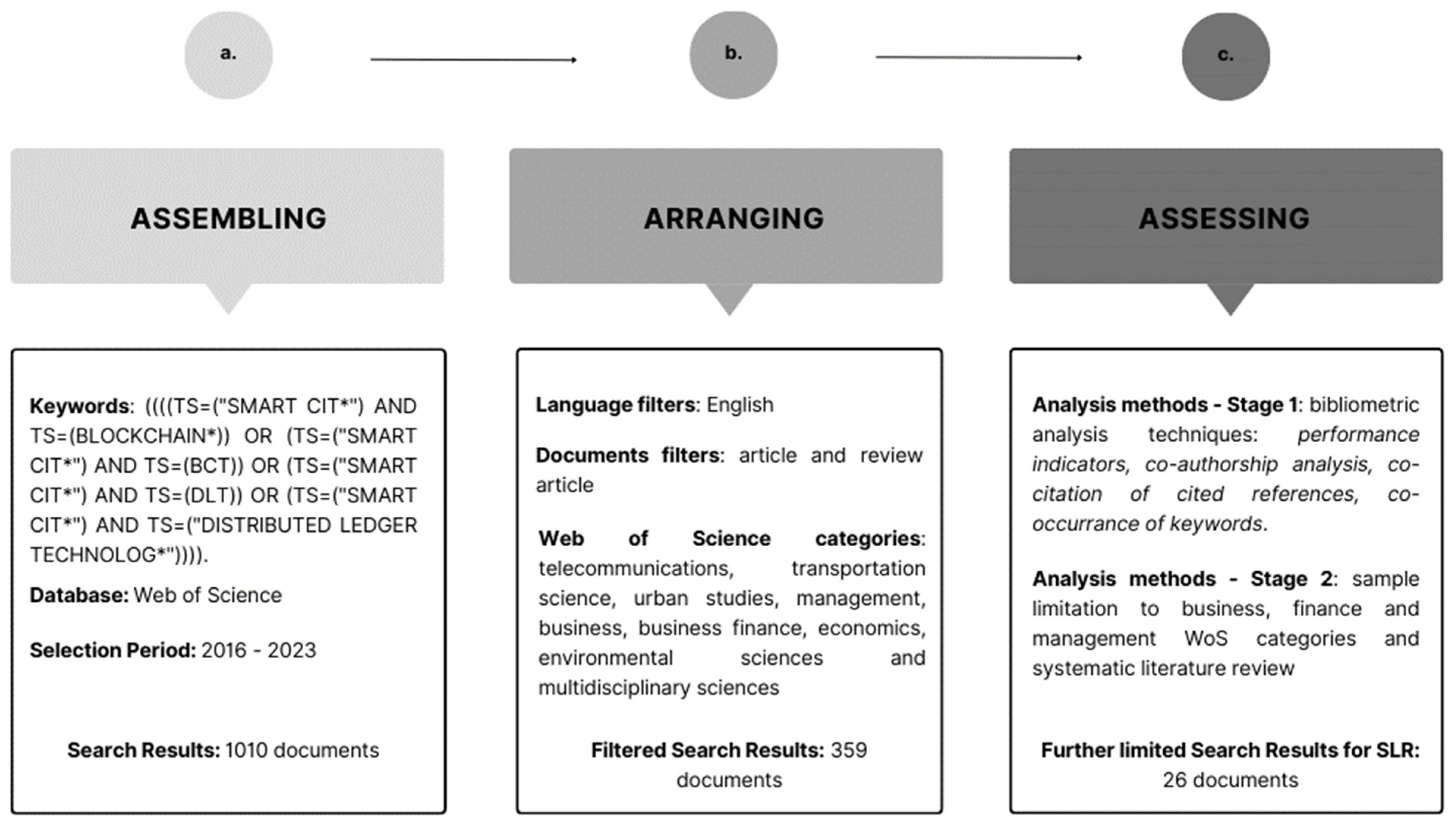
To organize relevant research on smart cities and blockchain technology, this study adopted, alternatively to the common PRISMA (Preferred Reporting Items for Systematic Reviews and Meta-Analyses) guidelines [21,22], the Scientific Procedures and Rationales for Systematic Literature Reviews (SPAR-4-SLR) protocol proposed by Kumar et al. [17], Paul et al. [18], and He et al. [23], which consists of assembling, arranging, and assessing data. The methodology of the SPAR-4-SLR protocol is described below and charted in Figure 1.
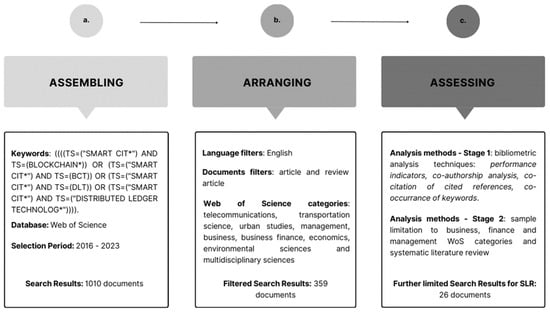
Figure 1.
Research design using the SPAR-4-SLR protocol.
- Assembling: The authors conducted a preliminary review of the most significant literature on smart cities and blockchain technology to commence the process. They also brainstormed to determine the most accurate combination of keywords representing the knowledge body in this field [6]. One of the most comprehensive bibliometric databases of high-quality peer-reviewed journals, the Web of Science (WoS), was selected as the research engine. This database captures missed references and involves most scientific articles in the field [15,20,24,25]. To conduct the article search, we used the following combinations of keywords (“TS” corresponds to the title, keywords, and abstract in the WoS Core Collection) and Boolean operators (“AND/OR”): ((((TS=(“SMART CIT*”) AND TS=(BLOCKCHAIN*)) OR (TS=(“SMART CIT*”) AND TS=(BCT)) OR (TS=(“SMART CIT*”) AND TS=(DLT)) OR (TS=(“SMART CIT*”) AND TS=(“DISTRIBUTED LEDGER TECHNOLOG*”)))).
All of the articles in the database were considered for selection, covering the period from 1950 (the first year available in the field) to 2023. The research returned 1010 documents from 2016 to 2023.
- Arranging: In this stage, we applied WoS cleaning filters to limit the sample selection to articles written in English and to include, following Paul et al. [18], only articles and review articles. This filtering process was conducted to ensure the final sample’s quality from a committed scientific perspective, since proceeding articles and book chapters may not require peer review. Then, we refined the research by selecting only articles published in the WoS categories of telecommunications, transportation science, urban studies, management, business, business finance, economics, environmental sciences, and multidisciplinary sciences to exclude more technical contributions related to blockchain technology applications in other scientific fields, such as engineering or computer sciences. In this way, we identified research related to the role of blockchain technology in the construction of innovative, inclusive, and sustainable smart cities. After this stage, the final sample consisted of 359 articles.
- Assessing: To assess the final sample of 359 articles resulting from the arranging stage, this study adopted a bibliometric analysis approach that consisted of the following: (i) performance analysis in which we described the sample characteristics and the most influential authors, journals, and documents in the field; (ii) co-authorship analysis; (iii) co-citation analysis of cited references; and (iv) co-occurrence analysis of the most popular keywords [13].
Furthermore, to enhance the contribution of this study, the final sample (359) was further limited to business, finance, management, and economics WoS categories to systematically review and focus on articles related to the role and application of blockchain technology in the smart cities financial system. After applying this filter and after double-checking, the final sample included in the SLR consisted of 26 documents. Based on the analysis of the final selection of articles, we aim to contribute to the advancement of the field by providing a future research agenda that can guide researchers looking to identify and address research gaps in the field.
3. Results
3.1. Results of the Bibliometric Analysis
3.1.1. Information about the Sample and Performance Analysis
Examining the dataset resulting from the arranging stage (Table 1), we highlight that, although there are 87 journals involved in the field, the IEEE Access multidisciplinary journal is the top journal with 1996 total citations, which also hosts the most globally cited documents [26] (Table 2). Fuller et al.’s article reviews the definition of digital twin technology, focusing on the various definitions in manufacturing, healthcare, and smart cities research, providing insights for further study. However, looking at the local citations reported in Table 3, in which the number of citations received in the sample is considered, Fuller et al. have only one local citation. Therefore, the article may not have a direct connection to the research stream related to smart cities despite its high importance in the literature.
Looking at the most locally cited article, Xie et al.’s [27] study is the first, with 38 local citations and 298 global citations (the highest LC/TC ratio, 11.27). Moreover, this article was published in IEEE Communications Surveys and Tutorials (the fourth most influential source), which is the journal with the highest impact factor (35.9). Xie et al.’s article provides a comprehensive survey relating to the applications of blockchain technology in smart cities, providing future research challenges and directions. High levels of citations often characterize survey and literature reviews.

Table 1.
Sample details.
Table 1.
Sample details.
| Description | Results |
|---|---|
| Sources (journals) | 94 |
| Authors | 1278 |
| Documents | 359 |
| References | 19,966 |
| Average years from publication | 2.53 |
| Average citations per document | 34.14 |
| Average citations per year per doc | 8.021 |
| Documents per author | 0.281 |
| Authors per document | 3.56 |
| Co-authors per document | 4.27 |
| Collaboration index | 3.73 |
Source: Data elaboration from Bibliometrix.
Table 2.
Top 10 influential sources based on total citations.
Table 2.
Top 10 influential sources based on total citations.
| Source | h_index | g_index | m_index | TCs | No. of Articles Published | PY_start | Impact Factor ** |
|---|---|---|---|---|---|---|---|
| IEEE Access | 22 | 39 | 3.14 | 1996 | 39 | 2018 | 3.9 |
| IEEE Internet of Things Journal | 21 | 38 | 3.50 | 1490 | 41 | 2019 | 10.6 |
| Sustainable Cities and Society | 13 | 13 | 1.86 | 1291 | 13 | 2018 | 11.7 |
| IEEE Communications Surveys and Tutorials | 6 | 6 | 1.00 | 1212 | 6 | 2019 | 35.6 |
| Sustainability | 14 | 23 | 2.00 | 632 | 37 | 2018 | 3.9 |
| Cities | 5 | 5 | 0.83 | 610 | 5 | 2019 | 6.7 |
| IEEE Network | 7 | 8 | 1.40 | 335 | 8 | 2020 | 10.294 |
| Computer Communications | 5 | 7 | 1.00 | 301 | 7 | 2020 | 6 |
| Financial Innovation | 1 | 1 | 0.11 | 279 | 1 | 2016 | 8.4 |
| Transactions on Emerging Telecommunications Technologies | 7 | 10 | 1.75 | 260 | 10 | 2021 | 3.6 |
Source: Data elaboration from Bibliometrix. ** Data from the journal website. PY start indicates the publication year. h_index is generally used to measure authors’ productivity and influence and calculate the number of publications and citations received. m_index is another variant of the h-index that displays the h-index per year since the first publication. g_index is a variant of the h-index that, in its calculation, gives credit for the most highly cited papers in a dataset.
Table 3.
Top 10 globally cited documents.
Table 3.
Top 10 globally cited documents.
| Author(s) (Year) [Ref. Number] | Title | Journal | Local Citations | Total Citations | TCs per Year | LC/TC Ratio (%) | Normalized TCs |
|---|---|---|---|---|---|---|---|
| Fuller et al. (2020) [26] | Digital Twin: Enabling Technologies, Challenges and Open Research | IEEE Access | 1 | 630 | 126.000 | 0.16 | 103.753 |
| Allam and Dhunny (2019) [28] | On big data, artificial intelligence, and smart cities | Cities | 11 | 409 | 68.167 | 2.69 | 36.441 |
| Dagher et al. (2018) [29] | Ancile: Privacy-preserving framework for access control and interoperability of electronic health records using blockchain technology | Sustainable Cities and Society | 7 | 373 | 53.286 | 1.88 | 26.559 |
| Xie et al. (2019) [27] | A Survey of Blockchain Technology Applied to Smart Cities: Research Issues and Challenges | IEEE Communications Surveys & Tutorials | 40 | 355 | 59.167 | 11.27 | 31.630 |
| Nguyen et al. (2021) [30] | Federated Learning for Internet of Things: A Comprehensive Survey | IEEE Communications Surveys & Tutorials | 1 | 346 | 86.500 | 0.29 | 100.907 |
| Stoyanova et al. (2020) [31] | A Survey on the Internet of Things (IoT) Forensics: Challenges, Approaches, and Open Issues | IEEE Communications Surveys & Tutorials | 6 | 331 | 66.200 | 1.81 | 54.511 |
| Sun et al. (2016) [32] | Blockchain-based sharing services: What blockchain technology can contribute to smart cities | Financial Innovation | 30 | 279 | 31.000 | 10.75 | 10.000 |
| Shen et al. (2019) [33] | Privacy-Preserving Support Vector Machine Training Over Blockchain-Based Encrypted IoT Data in Smart Cities | IEEE Internet of Things Journal | 13 | 240 | 40.000 | 5.42 | 21.384 |
| Banerjee et al. (2018) [34] | A blockchain future for internet of things security: a position paper | Digital Communications and Networks | 11 | 240 | 34.286 | 4.58 | 17.089 |
| Guan et al. (2018) [35] | Privacy-Preserving and Efficient Aggregation Based on Blockchain for Power Grid Communications in Smart Communities | IEEE Communications Magazine | 2 | 232 | 33.143 | 0.86 | 16.519 |
Source: Authors’ elaboration from Bibliometrix.
Furthermore, in Table 2, we also identified the top 10 influential journals in the research stream, ranking them by the total number of citations (TCs) received. Table 3 reports the top 10 globally cited documents in the database ranked based on the TCs received.
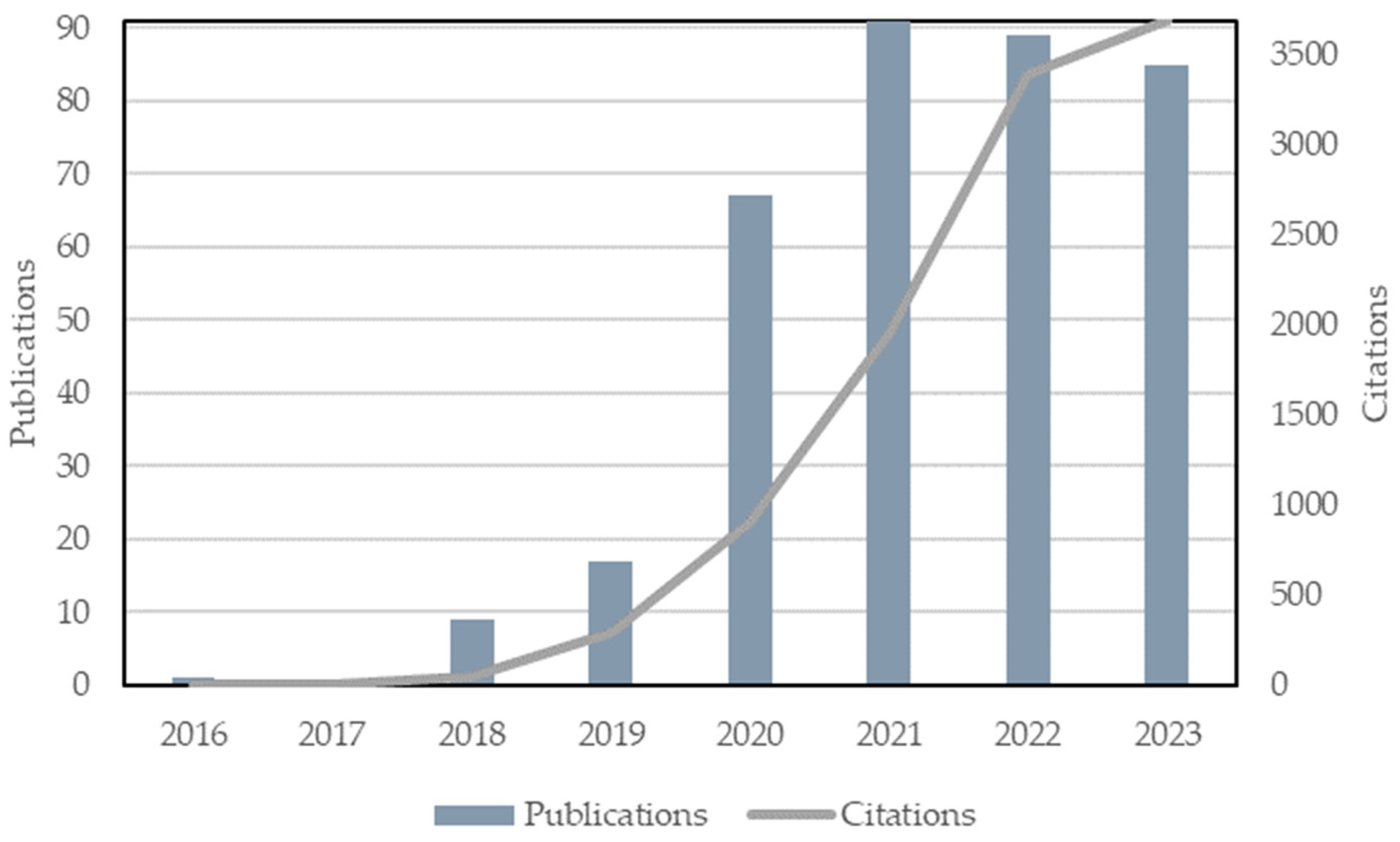
Finally, looking at the bibliometric performance of the sample, we noted that academic contributions are characterized by a growing increase in recent years, starting from 2016. Since 2019, the number of publications has surged by about 300% over the previous period, probably relating to the increase in interest in digitalization and the use of blockchain during and after the COVID-19 pandemic (Figure 2).
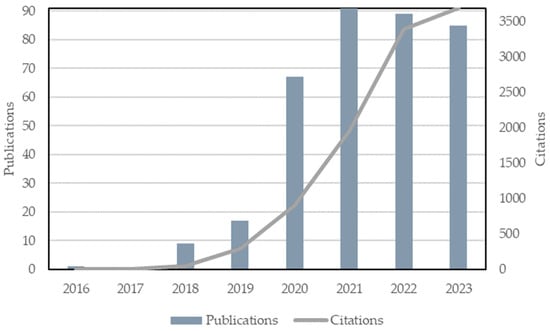
Figure 2.
Citations and publications over time. Source: WoS citation report.
3.1.2. Co-Authorship Analysis
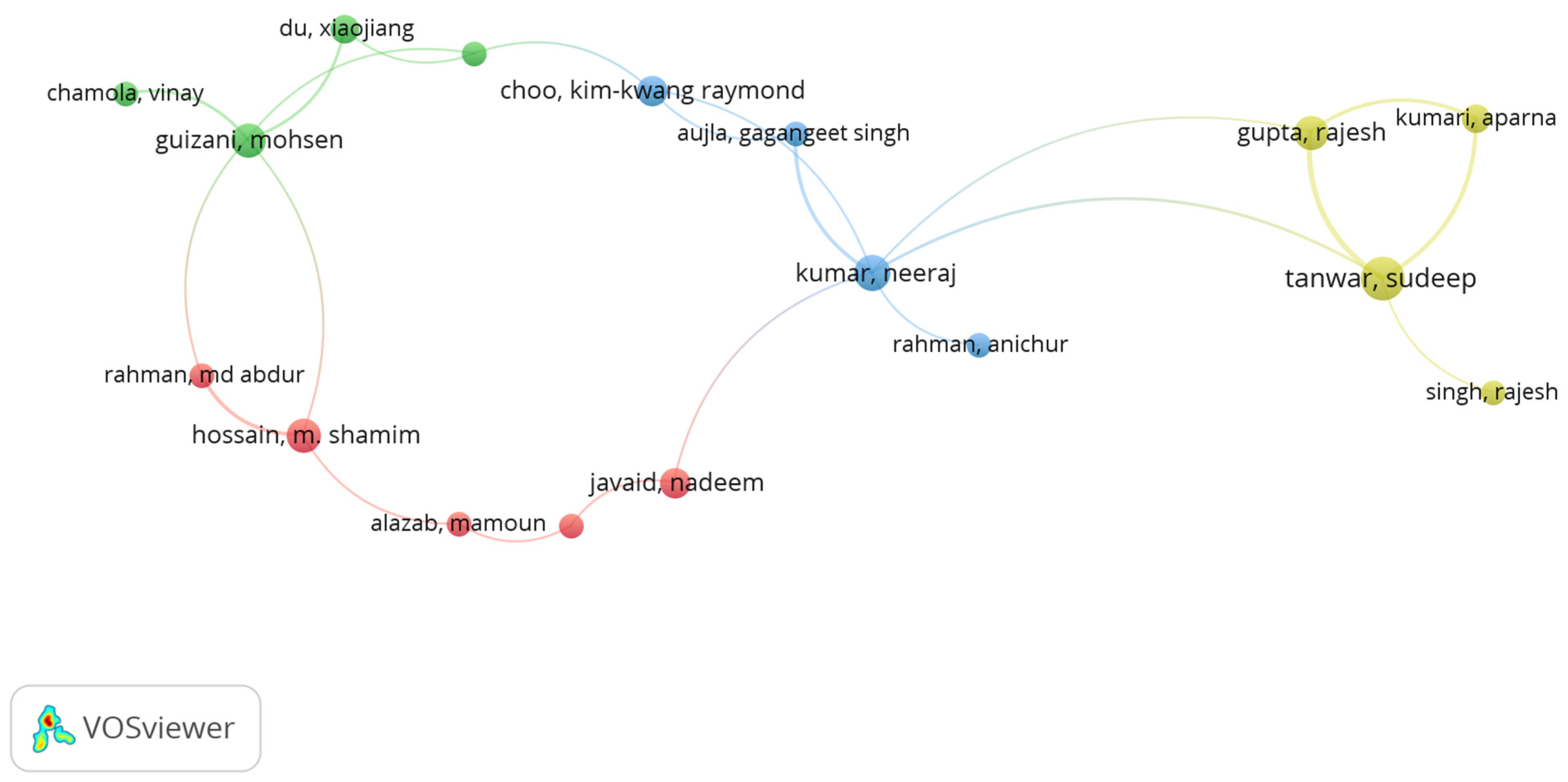
Co-authorship analysis, also named social network analysis, has become a common practice in literature reviews. This analysis method helps identify relationships between authors, which, in turn, helps scholars in their future research projects [36,37]. Co-authorship analysis is a technique used to create a network of authors based on the total link strength. This technique helps identify the social network of authors working on different aspects of the literature. The link strength is determined by the number of local citations (LCs) per author, making it easier to identify the network of authors and co-authors, including key persons in the field. Paltrinieri et al. [24] emphasize the significance of co-authorship analysis, particularly in the context of less-developed literature, such as the topic of this study. The co-authorship analysis charted in Figure 3 identifies four main groups of authors.
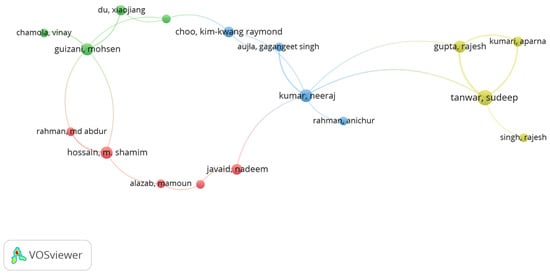
Figure 3.
Chart of the co-authorship analysis by authors using VOSviewer software.
Looking at Figure 3 and Table 4, the blue group, consisting of Choo K.-K.R. and Kumar N., forms the network’s core and, therefore, has direct relations to all other groups, making the realization of cross-group cooperation easier. Choo K.-K.R. was co-author of one of the most cited articles [34], underpinning their core position in the network. Guizani M. connects the green group to the red group with the highest total number of citations, which reflects the interdisciplinary effort and high collaborative impact of these authors. Led by Tanwar S. and Gupta R., the yellow group includes leading authors with high local citations, such as Tanwar S., who tops the list among the most locally cited in this dataset. Table 4 lists key authors who dominate the discipline, with Yu F. Richard and Nguyen Dinh C. contributing much to the literature. These two authors have a high number of citations per year on wide-ranging topics, from blockchain applications in smart cities to federated learning for the Internet of Things (IoT). The top list of authors includes Guizani M. and Du Xiaojang, who continue to demonstrate heavy collaboration and contribution. Table 5 presents the local impact metrics, with Tanwar Sudeep first, but Nguyen Dinh C. and Du Xiaojang are rapidly growing impact authors. This analysis was undertaken to underpin how the network is mapped to collaborative dynamics and spot contributors with great value for blockchain and IoT research. Further, the span of topics and the high citation counts among the top authors reflect the depth and width of research in this field. Strong collaborative links can indicate a robust, dynamic research community, moving innovations and knowledge forward.
Table 4.
Top 10 authors’ articles.
Table 5.
Top 10 authors’ local impact.
3.1.3. Co-Citation Analysis
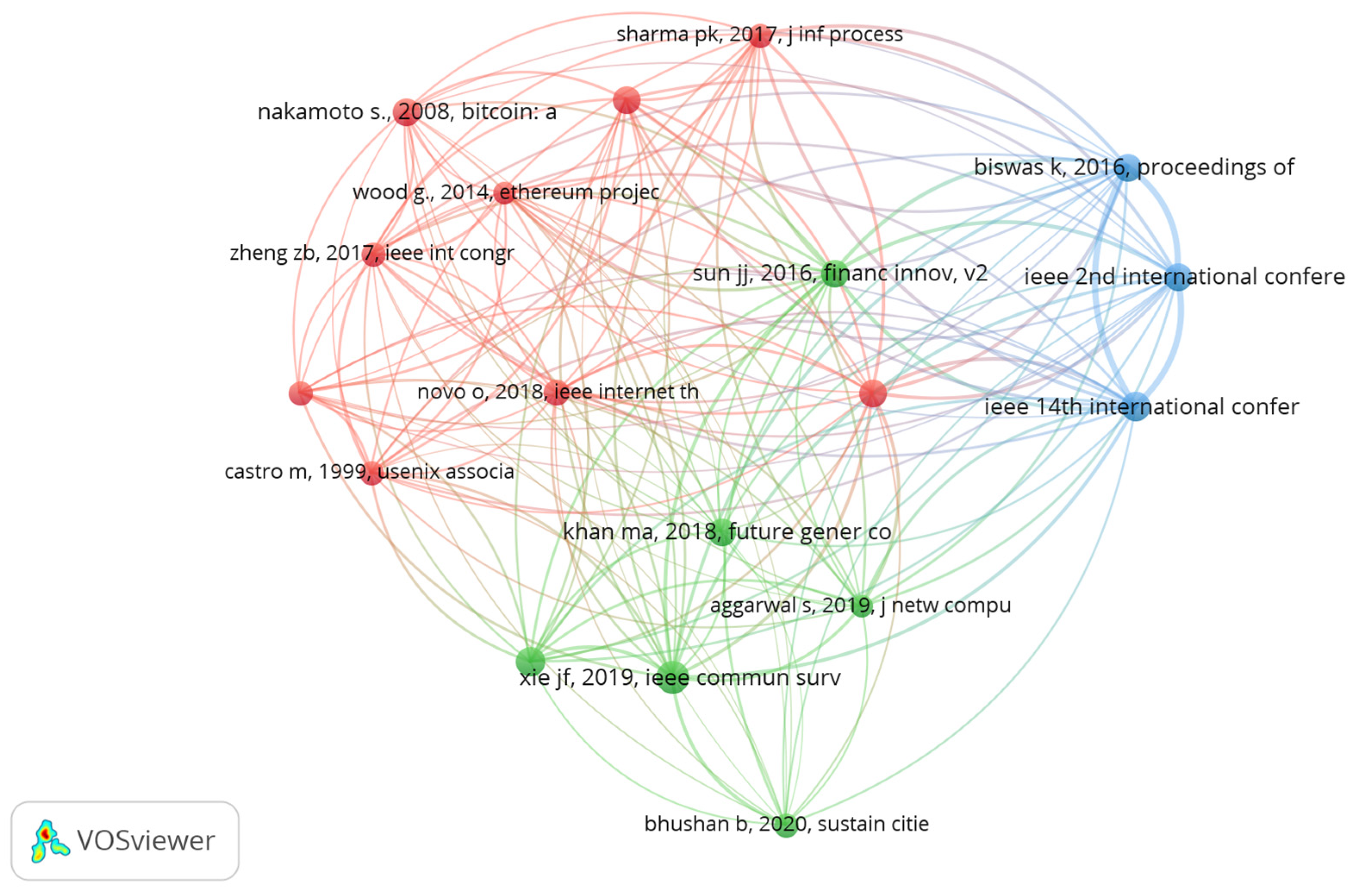
In this section, we discuss the co-citation analysis of articles based on their cited references, as detailed in Table 6 and depicted in Figure 4. The co-citation analysis overcomes the mere counting of citations and is instrumental in identifying the most relevant aspect of the field. This bibliometric method allows for identifying the articles that cite each other on the same concept or topic. This method provides valuable insights into the commonalities and research streams or clusters in the literature, thereby aiding in the identification of emerging trends and areas of interest [11,24,39]. The most cited references in the sample are ordered by considering the number of citations received.
Table 6.
Co-citation network and local cited references (top 10 list).
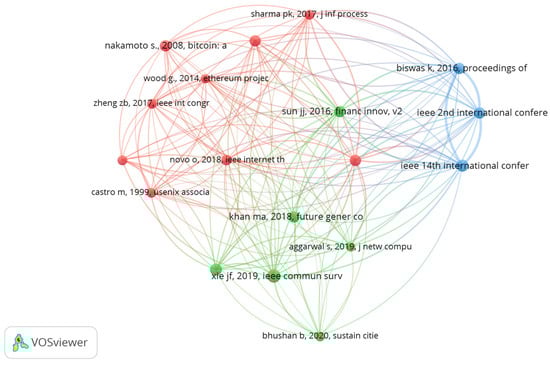
Figure 4.
Chart of co-citation analysis of cited references using VOSviewer software.
The VOSviewer software identifies three different clusters, headed again by Xie et al. [27] in the green cluster and Nakamoto [40], with the article that made blockchain technology famous for introducing the Bitcoin payment system. Nakamoto’s article is always cited most when discussing blockchain, cryptocurrency, or digital payments. The third most cited article with 30 citations is Biswas et al. [41], in the blue cluster, followed by Sun et al. [32] and Khan and Salah [42], which led to the green cluster. Sharma and Park [43] lead the red cluster, including all the other most cited articles in Table 6.
These articles all discuss the proposal of a framework architecture for blockchain applications in future smart cities. The authors discuss the advent of IoT applications and the importance of blockchain in solving security problems, proposing a new framework for their combined adoption.
3.1.4. Co-Occurrence Analysis
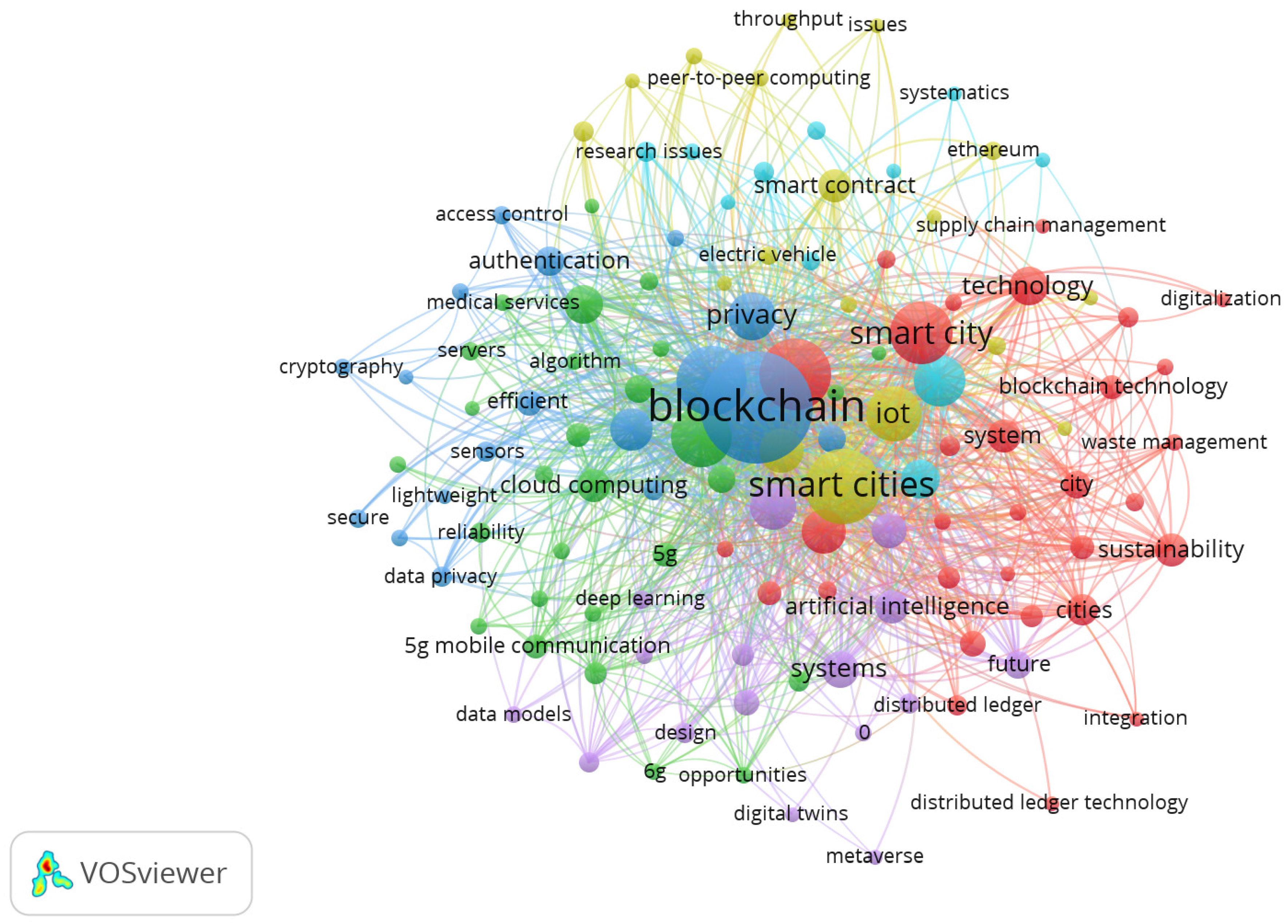
In this section, we present a co-occurrence analysis of the keywords available in the sample, which is also called a cartographic analysis. Cartographic analysis aims to map the keywords that identify different research streams by grouping them into clusters that represent content areas. The relatedness of these areas is evaluated by considering the total link strength and the number of occurrences of the keywords in the sample [13,36,48,49]. Table 7 and Figure 5 present the results obtained using the VOSviewer software. The keywords representing the topic of this literature review are indicated in green and are also the most used by the authors, such as blockchain and smart city/cities. The blue cluster, instead, contains keywords that recall another research stream related to the previous one, including IoT, big data, cybersecurity, or distributed ledger. The term IoT is also presented in the complete form of the Internet of Things in the red cluster, which also contains keywords related to another research stream that treated other blockchain applications such as cloud computing, 5G, wireless networks, or the Internet of Vehicles. These keywords also identify the most relevant articles discussed in the previous bibliometric analysis.
Table 7.
Keyword occurrence and cluster details (top 10 list).
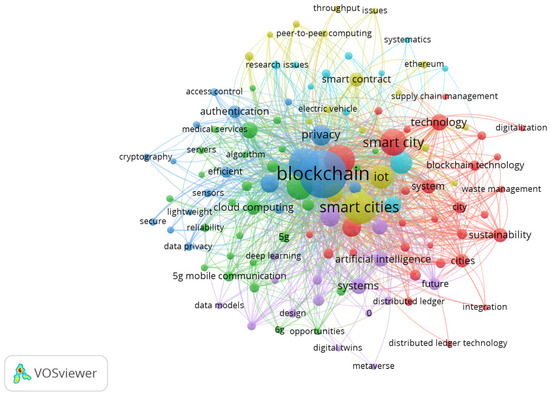
Figure 5.
Cartographic analysis through VOSviewer software. Source: Authors’ elaboration from VOSviewer.
3.2. Systematic Analysis: WoS Business, Finance, Economics, and Management
This section examines the current status of blockchain applications in developing financial ecosystems for smart cities, summarized in Table 8 below. We have limited the WoS database search to the business, finance, economics, and management categories to achieve this, yielding 26 documents published between 2016 and 2023. According to Paul et al. [18], the process of conducting an SLR is the best option to achieve our objective since it helps to develop a comprehensive understanding of the existing literature (state of the art) and provides new avenues for future research (stimulating agenda). The term “state of the art” refers to the mapping and up-to-date literature summary. In contrast, “stimulating agenda” refers to the potential directions for future research to enrich the literature and enhance our understanding of smart cities.
Table 8.
Summary of the systematic analysis.
The emergence of specific technologies such as blockchain, 5G internet, virtual and augmented reality, and quantum computing can contribute to the development of smart cities.
The SLR process classifies the documents into nine main themes: (i) blockchain governance and infrastructure; (ii) definitions and key components; (iii) blockchain implementation and performance indicators; (iv) smart city development financing; (v) robotic services; (vi) blockchain applications in smart city development; (vii) transport and logistic systems; (vii) big data; and (ix) blockchain and sustainability of electric vehicle performance. Articles that cover more technical topics, such as Wi-Fi sensors, 5G, or data transmission, are classified as off-topic; since they do not cover financial topics associated with blockchain, they are unsuitable for the research aim. The results of the analyses are summarized in Table 8, which highlight each article’s aims and main findings.
A brief discussion of the documents highlights that the first category includes a systematic literature review on decentralized governance systems, which first highlights the impact of blockchain technology in smart city governance. Blockchain-based smart governance systems utilize data computing, DLTs, visual analytics, and smart devices to engage the public. These technologies have multiple applications and can increase trust in computationally networked urbanism. Blockchain technology enables seamless data-sharing and reduces transaction costs, while smart contracts democratize governance structures. The decentralized nature of blockchain optimizes smart city self-governance [50]. For this purpose, Marsal-Llacuna [52] proposed using community-led technologies such as blockchain to solve the problem of smart cities, which fail to be citizen-centric due to the top-down approach. The author proposes using a People’s Smart City Dashboard (PSCD). This community-led initiative aims to provide an alternative to the current top-down approach to smart city development. The project uses blockchain technology, which is designed to be community led, allowing citizens to significantly implement smart city agendas and collaborate with society. Furthermore, Bohloul [54] provides a comprehensive review of challenges, trends, and opportunities in the topic of smart cities, and also provides an overview of the main definition of a smart city, which does not present a consensus about the exact definition. The author affirms that certain technologies, such as blockchain, 5G internet, virtual/augmented reality, and quantum computing, can contribute to the advancement of smart cities. These technologies have created numerous opportunities for research and entrepreneurial endeavors. Although the current state of smart cities is promising, it remains a rapidly evolving field, with new trends expected to shape its future. A similar assessment of the field of smart cities is presented by Marsal-Llacuna [58], Migliorini et al. [59], and Sun et al. [32], who highlight the role of blockchain technology in disrupting urban networks and being essential for governance, infrastructure [61,63], and financial services development in smart cities through the use of smart contracts and IoT. Another interesting point of view is provided in an article by Tiwari et al. [62], which presents a conceptual framework of the smart city for the adoption of Industry 4.0. Their article also highlights challenges and trends in technologies, such as big data, cloud computing, edge computing, and IoT. These advanced technologies are crucial for successfully implementing and monitoring a smart city.
4. Further Discussion of the Results
The bibliometric and systematic analysis results provide several insights into the research landscape of blockchain applications in smart cities. From the bibliometric analysis, IEEE Access emerges as the most influential journal with the highest number of total citations and the most globally cited documents, such as Fuller et al. [26]. Though globally influential, Fuller’s research receives limited local citations, which may further imply that the research relevant to this specific smart city research niche was either indirectly utilized or underutilized in localized contexts. With high local citation counts, Xie et al. [27] represent direct relevance and influence on the smart cities research community, thus forming a cornerstone of subsequent research and application development in this field.
The co-authorship and co-citation networks underscore the collaborative nature of this research domain. Notable authors, such as Choo K.-K.R. and Guizani M., serve as central hubs in the network, fostering interdisciplinarity and cross-group research efforts within this area. This structure provides a solid platform for blockchain and smart city research, which is inherently dynamic and fast-paced.
Systematic analysis shows that blockchain is instrumental in the decentralized governance system for transparency, security, and increasing public engagement in urban management. In overall terms, the studies largely focus on the concept of smart cities and the potential impact of blockchain considering the following: (1) the merging of information systems and urban infrastructure such as, e.g., transportation/mobility, connections, electricity and waste management, and safety and healthcare [32,59,60,61,62,63]; (2) the progressive extension to the areas of planning, development, civil/administrative services, and sustainability issues [52,53,54,55,56]; and (3) citizens’ participation and cooperation in urban governance in terms of both actions and processes, moving from a largely technological focus to a social, economic, and political approach [50,51,52,53,57,58].
This is evidenced by studies, such as Balcerzak et al. [50], which adduce how blockchain democratizes governance structures with smart contracts and decentralized applications to have a more inclusive model of urban governance. Although there has yet to be a single agreed definition of what constitutes a smart city, which reflects the field’s diversity and multidisciplinarity, common components identified include smart buildings, transportation, healthcare, and energy systems. Most of the emerging technologies are related to 5G, IoT, and artificial intelligence; thus, being already recognized as critical enablers of smart city advancement would point out a trend towards their integration for holistic urban development. The Delphi method reveals a number of other performance indicators relevant to evaluating blockchain projects in smart cities. These include environmental sustainability, data integrity, and increasing the user base, among others, which consequently provide a holistic framework for assessing blockchain impact and effectiveness within urban contexts.
These findings are within the larger research trends that put blockchain at the core of efficiency and security in smart city infrastructures worldwide. Other authors of research papers, such as Marsal-Llacuna [52] and Deng et al. [53], underline blockchain’s disruptive role in urban governance, relating its integration to digital twins and IoT technologies. This perspective contributes to the novel identification of specific performance indicators regarding blockchain implementation in smart cities, which needs to be explored more in future literature. This provides more granularity in understanding how blockchain can be effectively used and measured within urban environments.
The research conducted in this study uncovers several implications for future studies. The absence of a unified concept of smart cities presents a research opportunity: developing an agreed core set of components and applications could enhance the comparability and coherence of this area of research. Moreover, the integration of emerging technologies such as quantum computing and augmented reality into the contexts of smart cities is certain to reveal additional lines of research inquiry. The systematic application of bibliometric and co-authorship analyses strengthens the methodology for understanding the research landscape. Future research could consider similar approaches to map the evolution of other emerging technologies and their applications across different domains, inspiring further exploration and discovery.
The results of this study also highlight the dynamic and interdisciplinary nature of blockchain and smart city research. There is significant potential to improve urban governance and infrastructure through the integration of blockchain. For instance, it has already been proven that blockchain can be applicable to enhancing the transparency, security, and efficiency of urban management systems with decentralized governance and seamless data sharing. The previously mentioned Marsal-Llacuna [52] has introduced the idea of the People’s Smart City Dashboard based on blockchain to enhance community-led governance and collaboration in overcoming top-down traditional smart city development deficiencies. Further, Balcerzak et al. [50] underline how blockchain democratizes the governance structure ruled by smart contracts and makes models of urban governance more inclusive. Again, the research performed by Deng et al. [53] proved that blockchain will be powerful in creating disruptions if it is combined with digital twin technologies and IoT to make urban planning and real-time decision making more effective. Though the prospect looks bright, a set of standard definitions and performance metrics remains indispensable to be developed to complete the deployment of blockchain benefits for smart cities. Future research should, therefore, address such standardizations and work out synergies between blockchain and other emerging technologies like quantum computing or augmented reality.
In addition, more research is required to standardize definitions, develop comprehensive performance metrics, and explore synergies between blockchain and other emerging technologies. This ongoing exploration and discovery should excite and engage researchers in the field.
Most of the articles studied in the bibliometric analysis are mainly qualitative, signaling the need for stronger quantitative research. Hence, future research should focus on producing quantitative analyses to provide more depth and scope to the knowledge base on the subject. Moreover, a comprehensive framework for the economic implementation of blockchain in smart cities appears to be missing. The current studies follow a scattered and fragmented approach of smaller, transversal application areas, which are largely driven by technical analysis methods that lack the capability to measure the performance gains of DLTs compared with conventional information systems. In this sense, metropolitan government authorities would be required to define and coordinate the overall action plan for a smart city considering the various target sectors of interest and related potential blockchain applications (especially those referred to in the proposed research agenda—Table 9), in order to ensure an aggregate economic perspective capable of capturing potential operational synergies.
Table 9.
Future research agenda.
Furthermore, narrowing the sample to focus specifically on the WoS categories of economics, business, and management, the SLR reveals that most articles are centered on DLTs, particularly on blockchain technology applications (through smart contracts) in smart city organizations and governance. However, most articles did not adequately focus on blockchain but included this technology in describing all those essential for developing smart cities (such as IoT, cloud computing, edge computing, robotics, 5G). Some of the articles proposed a review of the definition of what constitutes a smart city and its elements as the basis for the proposal of frameworks for smart city development.
In summary, however, none of the reviewed literature investigated applications of DLTs and blockchain in developing the financial systems of smart cities, revealing a significant lack of research highlighted by this systematic literature review. From this perspective, there is great potential for further studies to develop economic and financial applications specifically intended for smart cities that might commonly be used for shared micro- and macro-constructs. Moreover, it is crucial to consider aspects related to economics and finance in the early stage when raising funds for smart city infrastructure constructions, as well as in the later stage when an efficient, inclusive, and sustainable financial system is necessary for the urban operation of smart cities.
5. Conclusions and Further Research
Smart cities leverage digital technologies to promote sustainable environments, optimize public service delivery, and boost citizens’ well-being. Developing an efficient, sustainable, and inclusive financial system is crucial to support the development and resilience of smart cities. This kind of financial system significantly improves citizen participation in city life and increases the efficient use of resources, services, and spaces. The financial system represents the beating heart of every economic system; without it, it would be impossible to ensure the functioning of smart cities. Blockchain and DLTs are new technologies that can merge with the need to increase the inclusiveness and participation of people in the financial system and contribute to the construction and development of smart cities. This pioneering study provides a bibliometric and systematic literature review to highlight the impact, potential, and challenges of using blockchain and DLTs in the development and functioning of smart cities. Unlike previous research, this study focuses on the financial and economic applications and implications of using these pioneering technologies in the environment of smart cities, highlighting a lack of research on the topic. The bibliometric analysis reveals that the majority of the reviewed articles focused on various technologies and applications in the urban environment of smart cities, including blockchain, and conjugated their characteristics compared with the possible uses and applications. Thus, the bibliometric analysis demonstrates scholars’ scarce interest in blockchain technology’s practical implications on smart city financial system development and functioning.
Finally, this literature review sheds light on the challenges and opportunities of blockchain in the realm of smart city financial systems, bridging the gap in this research stream. The results of this study can guide researchers and policymakers in exploring the impact of blockchain technology on citizen participation in urban financial activities and the efficient utilization of financial resources while considering the public externalities of most urban services. This may lead to more collaborative research in this area, exploiting findings from the bibliometric analysis. Table 9 below aims to stimulate further research by suggesting some open research questions identified after the literature review analysis. The future research agenda presented in Table 9 also includes several research questions that could be food for thought for academics and practitioners interested in covering aspects related to the financial system development of smart cities. The development of this research agenda comes from the need to stimulate potential directions for future research to enrich the literature and enhance our understanding of smart cities. It includes relevant topics, above all related to the economic and financial aspects of blockchain in smart cities, which were not mentioned in previous literature but which we consider fundamental in the context of designing future smart cities.
As previously mentioned, the literature review did not detect specific studies on the potential of blockchain applications in developing a payment system serving the urban environment. However, it is essential to explore this topic since it encompasses different disciplines and other applications in urban services (transportation, waste management, and energy services) and is related to smart city governance in general. In addition, the organization of the payment system does not overlook the use of future Central Bank Digital Currency (CBDC) initiatives, which, owing to the characteristics of CBDCs, perfectly match the needs of citizens and the functioning of smart cities. Furthermore, using blockchain for the real estate market constitutes a trending topic that is driving the old concept of urban organization toward future smart city constructions. Blockchain can provide a secure and transparent land registry system that reduces fraud, streamlines property transactions, and enhances land management in smart cities. However, research is necessary to develop blockchain-based solutions for land registration, title verification, and property taxation in smart city governance.
Additionally, since this study specifically focuses on the application of DLTs, particularly blockchain, we acknowledge some issues related to (i) the rapidly evolving nature of the technology and the urban environment; (ii) the sample selection process, which was limited to peer-reviewed papers and did not consider proceedings and working papers and (iii) the novelty of the subject, which is still in development.
Funding
This project has received funding from the European Union’s Horizon 2020 research and innovation programme under the Marie Skłodowska-Curie grant agreement No 101007820.

Conflicts of Interest
The authors declare no conflict of interest.
Author Disclaimer
This publication reflects only the author’s view and the European Research Executive Agency (REA) is not responsible for any use that may be made of the information it contains.
References
- De Dominicis, L.; Berlingieri, F.; d’Hombres, B.; Gentile, C.; Mauri, C.; Stepanova, E.; Pontarollo, N. Report on the Quality of Life in European Cities; Publications Office of the European Union: Luxembourg, 2023. [Google Scholar]
- Seto, K.C.; Churkina, G.; Hsu, A.; Keller, M.; Newman, P.W.; Qin, B.; Ramaswami, A. From low-to net-zero carbon cities: The next global agenda. Annu. Rev. Environ. Resour. 2021, 46, 377–415. [Google Scholar] [CrossRef]
- De Bondt, G.; Gieseck, A.; Tujula, M. Household Wealth and Consumption in the Euro Area; Economic Bulletin Articles; European Central Bank: Frankfurt am Main, Germany, 2020; p. 1. [Google Scholar]
- European Commission—What Are Smart Cities? Available online: https://commission.europa.eu/eu-regional-and-urban-development/topics/cities-and-urban-development/city-initiatives/smart-cities_en (accessed on 13 February 2024).
- Paul, J.; Criado, A.R. The art of writing literature review: What do we know and what do we need to know? Int. Bus. Rev. 2020, 29, 101717. [Google Scholar] [CrossRef]
- Donthu, N.; Kumar, S.; Mukherjee, D.; Pandey, N.; Lim, W.M. How to conduct a bibliometric analysis: An overview and guidelines. J. Bus. Res. 2021, 133, 285–296. [Google Scholar] [CrossRef]
- Van Eck, N.; Waltman, L. Software survey: VOSviewer, a computer program for bibliometric mapping. Scientometrics 2010, 84, 523–538. [Google Scholar] [CrossRef] [PubMed]
- Aria, M.; Cuccurullo, C. Bibliometrix: An R-tool for comprehensive science mapping analysis. J. Informetr. 2017, 11, 959–975. [Google Scholar] [CrossRef]
- Pattnaik, D.; Kumar, S.; Vashishtha, A. Research on trade credit–a systematic review and bibliometric analysis. Qual. Res. Financ. Mark. 2020, 12, 367–390. [Google Scholar] [CrossRef]
- Hassan, M.K.; Alshater, M.M.; Atayah, O.F. Twenty-nine years of the journal of international review of economics and finance: A scientometric overview (1992–2020). Int. Rev. Econ. Financ. 2021, 76, 1106–1125. [Google Scholar] [CrossRef]
- Patel, R.; Goodell, J.W.; Oriani, M.E.; Paltrinieri, A.; Yarovaya, L. A bibliometric review of financial market integration literature. Int. Rev. Financ. Anal. 2022, 80, 102035. [Google Scholar] [CrossRef]
- Delle Foglie, A.; Keshminder, J.S. Challenges and opportunities of SRI sukuk toward financial system sustainability: A bibliometric and systematic literature review. Int. J. Emerg. Mark. 2022. [Google Scholar] [CrossRef]
- Sgambati, S.; Gargiulo, C. The evolution of urban competitiveness studies over the past 30 years. A bibliometric analysis. Cities 2022, 128, 103811. [Google Scholar] [CrossRef]
- Rao, P.; Kumar, S.; Chavan, M.; Lim, W.M. A systematic literature review on SME financing: Trends and future directions. J. Small Bus. Manag. 2021, 61, 1247–1277. [Google Scholar] [CrossRef]
- Lim, W.M.; Weissmann, M.A. Toward a theory of behavioral control. J. Strateg. Mark. 2021, 31, 185–211. [Google Scholar] [CrossRef]
- Akello, P.; Beebe, N.L.; Choo, K.K.R. A literature survey of security issues in Cloud, Fog, and Edge Heading structure. Electron. Commer. Res. 2022, 1–35. [Google Scholar] [CrossRef]
- Kumar, S.; Sharma, D.; Rao, S.; Lim, W.M.; Mangla, S.K. Past, present, and future of sustainable finance: Insights from big data analytics through machine learning of scholarly research. Ann. Oper. Res. 2022, 1–44. [Google Scholar] [CrossRef]
- Paul, J.; Lim, W.M.; O’Cass, A.; Hao, A.W.; Bresciani, S. Scientific procedures and rationales for systematic literature reviews (SPAR-4-SLR). Int. J. Consum. Stud. 2021, 45, O1–O16. [Google Scholar] [CrossRef]
- Hajek, P.; Youssef, A.; Hajkova, V. Recent developments in smart city assessment: A bibliometric and content analysis-based literature review. Cities 2022, 126, 103709. [Google Scholar] [CrossRef]
- Sharifi, A.; Allam, Z.; Bibri, S.E.; Khavarian-Garmsir, A.R. Smart cities and sustainable development goals (SDGs): A systematic literature review of co-benefits and trade-offs. Cities 2024, 146, 104659. [Google Scholar] [CrossRef]
- Moher, D.; Liberati, A.; Tetzlaff, J.; Altman, D.G.; Prisma Group. Preferred reporting items for systematic reviews and meta-analyses: The PRISMA statement. PLoS Med. 2009, 6, e1000097. [Google Scholar] [CrossRef]
- Moher, D.; Shamseer, L.; Clarke, M.; Ghersi, D.; Liberati, A.; Petticrew, M.; Shekelle, P.; Stewart, L.A. Preferred reporting items for systematic review and meta-analysis protocols (PRISMA-P) 2015 statement. Syst. Rev. 2015, 4, 1. [Google Scholar] [CrossRef]
- He, P.; Wang, T.Y.; Shang, Q.; Zhang, J.; Xu, H. Knowledge mapping of e-commerce supply chain management: A bibliometric analysis. Electron. Commer. Res. 2022, 1–37. [Google Scholar] [CrossRef]
- Paltrinieri, A.; Hassan, M.K.; Bahoo, S.; Khan, A. A bibliometric review of sukuk literature. Int. Rev. Econ. Financ. 2019, 86, 897–918. [Google Scholar] [CrossRef]
- Lim, W.M.; Yap, S.F.; Makkar, M. Home sharing in marketing and tourism at a tipping point: What do we know, how do we know, and where should we be heading? J. Bus. Res. 2021, 122, 534–566. [Google Scholar] [CrossRef] [PubMed]
- Fuller, A.; Fan, Z.; Day, C.; Barlow, C. Digital Twin: Enabling Technologies, Challenges and Open Research. IEEE Access 2020, 8, 108952–108971. [Google Scholar] [CrossRef]
- Xie, J.; Tang, H.; Huang, T.; Yu, F.R.; Xie, R.; Liu, J.; Liu, Y. A Survey of Blockchain Technology Applied to Smart Cities: Research Issues and Challenges. IEEE Commun. Surv. Tutor. 2019, 21, 2794–2830. [Google Scholar] [CrossRef]
- Allam, Z.; Dhunny, Z.A. On big data, artificial intelligence and smart cities. Cities 2019, 89, 80–91. [Google Scholar] [CrossRef]
- Dagher, G.G.; Mohler, J.; Milojkovic, M.; Marella, P.B. Ancile: Privacy-preserving framework for access control and interoperability of electronic health records using blockchain technology. Sustain. Cities Soc. 2018, 39, 283–297. [Google Scholar] [CrossRef]
- Nguyen, D.C.; Ding, M.; Pathirana, P.N.; Seneviratne, A.; Li, J.; Poor, H.V. Federated Learning for Internet of Things: A Comprehensive Survey. IEEE Commun. Surv. Tutor. 2021, 23, 1622–1658. [Google Scholar] [CrossRef]
- Stoyanova, M.; Nikoloudakis, Y.; Panagiotakis, S.; Pallis, E.; Markakis, E.K. A Survey on the Internet of Things (IoT) Forensics: Challenges, Approaches, and Open Issues. IEEE Commun. Surv. Tutor. 2020, 22, 1191–1221. [Google Scholar] [CrossRef]
- Sun, J.; Yan, J.; Zhang, K.Z.K. Blockchain-based sharing services: What blockchain technology can contribute to smart cities. Financ. Innov. 2016, 2, 26. [Google Scholar] [CrossRef]
- Shen, M.; Tang, X.; Zhu, L.; Du, X.; Guizani, M. Privacy-Preserving Support Vector Machine Training Over Blockchain-Based Encrypted IoT Data in Smart Cities. IEEE Internet Things J. 2019, 6, 7702–7712. [Google Scholar] [CrossRef]
- Banerjee, M.; Lee, J.; Choo, K.-K.R. A blockchain future for internet of things security: A position paper. Digit. Commun. Netw. 2018, 4, 149–160. [Google Scholar] [CrossRef]
- Guan, Z.; Si, G.; Zhang, X.; Wu, L.; Guizani, N.; Du, X.; Ma, Y. Privacy-Preserving and Efficient Aggregation Based on Blockchain for Power Grid Communications in Smart Communities. IEEE Commun. Mag. 2018, 56, 82–88. [Google Scholar] [CrossRef]
- Bahoo, S.; Alon, I.; Paltrinieri, A. Corruption in international business: A review and research agenda. Int. Bus. Rev. 2020, 29, 101660. [Google Scholar] [CrossRef]
- Olawumi, T.O.; Chan, D.W. A scientometric review of global research on sustainability and sustainable development. J. Clean. Prod. 2018, 183, 231–250. [Google Scholar] [CrossRef]
- Rahman, M.A.; Rashid, M.M.; Hossain, M.S.; Hassanain, E.; Alhamid, M.F.; Guizani, M. Blockchain and IoT-based cognitive edge framework for sharing economy services in a smart city. IEEE Access 2019, 7, 18611–18621. [Google Scholar] [CrossRef]
- Panetta, I.C.; Leo, S.; Delle Foglie, A. The development of digital payments–Past, present, and future–From the literature. Res. Int. Bus. Financ. 2023, 64, 101855. [Google Scholar] [CrossRef]
- .Nakamoto, S. Bitcoin: A Peer-to-Peer Electronic Cash System. Decentralized Business Review. 2008. Available online: https://bitcoin.org/bitcoin.pdf (accessed on 13 February 2024).
- Biswas, K.; Muthukkumarasamy, V. Securing smart cities using blockchain technology. In Proceedings of the 2016 IEEE 18th International Conference on High Performance Computing and Communications; IEEE 14th International Conference on Smart City; IEEE 2nd International Conference on Data Science and Systems (HPCC/SmartCity/DSS), Sydney, NSW, Australia, 12–14 December 2016; IEEE: New York, NY, USA, 2016; pp. 1392–1393. [Google Scholar]
- Khan, M.A.; Salah, K. IoT security: Review, blockchain solutions, and open challenges. Future Gener. Comput. Syst. 2018, 82, 395–411. [Google Scholar] [CrossRef]
- Sharma, P.K.; Park, J.H. Blockchain based hybrid network architecture for the smart city. Future Gener. Comput. Syst. 2018, 86, 650–655. [Google Scholar] [CrossRef]
- Christidis, K.; Devetsikiotis, M. Blockchains and smart contracts for the internet of things. IEEE Access 2016, 4, 2292–2303. [Google Scholar] [CrossRef]
- Novo, O. Blockchain meets IoT: An architecture for scalable access management in IoT. IEEE Internet Things J. 2018, 5, 1184–1195. [Google Scholar] [CrossRef]
- Zheng, Z.; Xie, S.; Dai, H.; Chen, X.; Wang, H. An Overview of Blockchain Technology: Architecture, Consensus, and Future Trends. In Proceedings of the IEEE International Congress on Big Data (BigData Congress), Honolulu, HI, USA, 25–30 June 2017; pp. 557–564. [Google Scholar]
- Bhushan, B.; Khamparia, A.; Sagayam, K.M.; Sharma, S.K.; Ahad, M.A.; Debnath, N.C. Blockchain for smart cities: A review of architectures, integration trends and future research directions. Sustain. Cities Soc. 2020, 61, 102360. [Google Scholar] [CrossRef]
- Khan, A.; Goodell, J.W.; Hassan, M.K.; Paltrinieri, A. A bibliometric review of finance bibliometric papers. Financ. Res. Lett. 2022, 47, 102520. [Google Scholar] [CrossRef]
- Migliavacca, M.; Goodell, J.W.; Paltrinieri, A. A bibliometric review of portfolio diversification literature. Int. Rev. Financ. Anal. 2023, 90, 102836. [Google Scholar] [CrossRef]
- Balcerzak, A.P.; Nica, E.; Rogalska, E.; Poliak, M.; Kliestik, T.; Sabie, O.-M. Blockchain Technology and Smart Contracts in Decentralized Governance Systems. Adm. Sci. 2022, 12, 96. [Google Scholar] [CrossRef]
- Lafioune, N.; St-Jacques, M. Towards the creation of a searchable 3D smart city model. Innov. Manag. Rev. 2020, 17, 285–305. [Google Scholar] [CrossRef]
- Marsal-Llacuna, M.-L. The people’s smart city dashboard (PSCD): Delivering on community-led governance with blockchain. Technol. Forecast. Soc. Chang. 2020, 158, 120150. [Google Scholar] [CrossRef]
- Deng, T.; Zhang, K.; Shen, Z.-J. A systematic review of a digital twin city: A new pattern of urban governance toward smart cities. J. Manag. Sci. Eng. 2021, 6, 125–134. [Google Scholar] [CrossRef]
- Bohloul, S.M. Smart Cities: A Survey on New Developments, Trends, and Opportunities. J. Ind. Integr. Manag. Innov. Entrep. 2020, 5, 311–326. [Google Scholar] [CrossRef]
- Ivanisevic, S.; Ivic, A.; Ciric, Z. Blockchain implementation in smart cities—Discussion on performance indicators. Strateg. Manag. 2023, 28, 66–72. [Google Scholar] [CrossRef]
- Kalenyuk, I.; Bohun, M.; Djakona, V. Investing in Intelligent Smart City Technologies. Balt. J. Econ. Stud. 2023, 9, 41–48. [Google Scholar] [CrossRef]
- Kapitonov, A.; Lonshakov, S.; Berman, I.; Ferrer, E.C.; Bonsignorio, F.P.; Bulatov, V.; Svistov, A. Robotic Services for New Paradigm Smart Cities Based on Decentralized Technologies. Ledger 2019, 4, 56–66. [Google Scholar] [CrossRef]
- Marsal-Llacuna, M.-L. Future living framework: Is blockchain the next enabling network? Technol. Forecast. Soc. Chang. 2018, 128, 226–234. [Google Scholar] [CrossRef]
- Migliorini, I.B.; Guevara, A.d.H.; Dib, V.C.; Conti, D.d.M. Blockchain Technologies in Smart Cities: A Proposal for Autopoietic Smart Cities. Risus-J. Innov. Sustain. 2021, 12, 4–12. [Google Scholar] [CrossRef]
- Moro, E.P.; Duke, A.K. Distributed Ledger Technologies and the Internet of Things: A Devices Attestation System for Smart Cities. J. Br. Blockchain Assoc. 2020, 3, 66–70. [Google Scholar] [CrossRef] [PubMed]
- Savin, G. The smart city transport and logistics system: Theory, methodology and practice. Upr. Manag. 2021, 12, 67–86. [Google Scholar] [CrossRef]
- Tiwari, P.; Ilavarasan, P.V.; Punia, S. Content analysis of literature on big data in smart cities. Benchmarking-Int. J. 2021, 28, 1837–1857. [Google Scholar] [CrossRef]
- Sundarakani, B.; Rajamani, H.-S.; Madmoune, A. Sustainability study of electric vehicles performance in the UAE: Moderated by blockchain. Benchmarking-Int. J. 2023, 31, 199–219. [Google Scholar] [CrossRef]
- Liu, S.; Wang, C.; Zhou, Y. Analysis of Financial Data Risk and Network Information Security by Blockchain Technology and Edge Computing. IEEE Trans. Eng. Manag. 2022, 1–14. [Google Scholar] [CrossRef]
- Liu, Q.; Wan, P.; Chen, F.; Li, W. Cost efficient management of complex financial energy trading systems: Knowledge-based blockchain technique. J. Innov. Knowl. 2023, 8, 100323. [Google Scholar] [CrossRef]
- Fathi, M.; Marufuzzaman, M.; Buchanan, R.K.; Rinaudo, C.H.; Houte, K.M.; Bian, L. An Integrated Pricing, QoS-Aware Sensor Location Model for Security Protection in Society 5.0. IEEE Trans. Eng. Manag. 2023, 70, 3863–3875. [Google Scholar] [CrossRef]
- Chung, K.H.Y.; Li, D.; Adriaens, P. Technology-enabled financing of sustainable infrastructure: A case for blockchains and decentralized oracle networks. Technol. Forecast. Soc. Chang. 2023, 187, 122258. [Google Scholar] [CrossRef]
- Parmentola, A.; Petrillo, A.; Tutore, I.; De Felice, F. Is blockchain able to enhance environmental sustainability? A systematic review and research agenda from the perspective of Sustainable Development Goals (SDGs). Bus. Strategy Environ. 2022, 31, 194–217. [Google Scholar] [CrossRef]
- Prabucki, R.T. Self-executing Contracts from the perspective of the selected Polish regulations and the future potential prevalence of ‘Smarter’ Contracts. J. Br. Blockchain Assoc. 2020, 3, 48–52. [Google Scholar] [CrossRef] [PubMed]
- Ren, Y.-S.; Ma, C.-Q.; Chen, X.-Q.; Lei, Y.-T.; Wang, Y.-R. Sustainable finance and blockchain: A systematic review and research agenda. Res. Int. Bus. Financ. 2023, 64, 101871. [Google Scholar] [CrossRef]
- Saric, Z.; Obradovic, V.; Bogdanovic, Z.; Labus, A.; Mitrovic, S. Crowd-Based Open Innovation in Telco Operators: Readiness Assessment for Smart City Service Development. Serbian J. Manag. 2022, 17, 179–196. [Google Scholar] [CrossRef]
- Zhang, T.; Zhang, S.; Jia, W. Person Reidentification Based on Adaptive Relation Attention Network in Intelligent Monitoring System for the IoB. IEEE Trans. Eng. Manag. 2022, 1–10. [Google Scholar] [CrossRef]
- Zhang, Z.; Li, C. Intelligent Information Network Security Management Strategy for Service Innovation of Manufacturing Enterprises Under Blockchain. J. Organ. End User Comput. 2022, 34, 1–17. [Google Scholar] [CrossRef]
- Jnr, B.A.; Sylva, W.; Watat, J.K.; Misra, S. A framework for standardization of distributed ledger technologies for interoperable data integration and alignment in sustainable smart cities. J. Knowl. Econ. 2023, 1–44. [Google Scholar] [CrossRef]
Disclaimer/Publisher’s Note: The statements, opinions and data contained in all publications are solely those of the individual author(s) and contributor(s) and not of MDPI and/or the editor(s). MDPI and/or the editor(s) disclaim responsibility for any injury to people or property resulting from any ideas, methods, instructions or products referred to in the content. |
© 2024 by the authors. Licensee MDPI, Basel, Switzerland. This article is an open access article distributed under the terms and conditions of the Creative Commons Attribution (CC BY) license (https://creativecommons.org/licenses/by/4.0/).