


Abstract
Effective decision-making in tourism destinations relies significantly on employing suitable indicators for policy design and impact evaluation. However, the adoption of sustainability-focused indicators remains constrained in the field of cultural tourism. The purpose of this research is to provide decision-makers with an extensive array of criteria and indicators, enabling informed decision-making, policy formulation, and impact assessment tailored to the distinctive attributes encountered in European destinations. Based on the synthesis of existing approaches, and in co-creation with 21 European tourism destinations, an indicator-based framework is proposed, structured around the environmental, economic, social, cultural, resilience, and characterization domains. The results are particularly novel in the resilience and cultural domains, related to the recovery from crisis impacts, but also to the enhancement of digital approaches, as well as the preservation and promotion of cultural heritage towards a more hospitable destination. Moreover, the involvement of stakeholders incorporating real-case scenarios allows this research to bridge the gap between theoretical constructs and practical application. The indicator-based framework resulting from this research will provide stakeholders with assistance in assessing and comparing the impacts of cultural tourism on their destinations and, thence, help them acquire knowledge on cultural resource management, contributing to a more sustainable, responsible, and balanced impact.
1. Introduction
While tourism represents the exploitation of natural and cultural resources for profit accumulation [1], culture has been also recognized as a driver of economic development, with community-wide social and environmental impacts [2]. Sustainability appears as a key player for long-term success, and sustainable tourism approaches to generate positive economic and social benefits in cultural destinations are recommended by both European and international stakeholders [3]. Existing indicators cover the most important aspects of the sustainability of tourism at cultural destinations, including both tangible and intangible heritage [4]. Nevertheless, there is not a universally accepted approach to measuring cultural tourism’s impacts, and the available indicator systems lean toward the broader concept of sustainable tourism.
Policymakers and researchers concur that there is a knowledge gap concerning methods and data sources to measure the impacts of cultural tourism [4]. Similarly, UNWTO (the United Nations World Tourism Organization) reports the “need for better and more comprehensive data to adequately chart tourism and culture synergies”, meaning that integrated approaches are needed to enhance the relations between tourism and culture. It also mentions the current lack of consistency in the measurement of cultural tourism [5]. Academic researchers point out that the challenge of developing theories and applications of the cultural aspects of the economics of tourism looms large [6].
Cultural tourism, usually considered to be a specific subsector of tourism [7], is especially difficult to measure; many factors make it difficult to particularize the characteristics that differentiate a tourist from a cultural tourist. The work presented here relies on the UNWTO definition of cultural tourism, which calls it “a type of tourism activity in which the visitor’s essential motivation is to learn, discover, experience and consume the tangible and intangible cultural attractions/products in a tourism destination” [8].
Nevertheless, cultural tourism can also be an unintentional part of the tourism experience and a byproduct of a person’s travel, leading to the need to further analyze the cultural dimension of the tourist activity. The cultural dimension has been included from the very beginning in the wider concept and debate on sustainable tourism, considering the cultural authenticity and/or natural integrity of a site when developing tourism policy goals and objectives [9], but it was only in 2005 that the cultural sphere and the built environment were explicitly mentioned [10]. More recently, ICOMOS (the International Council on Monuments and Sites) proposed updating the cultural tourism development and management strategies at destinations by incorporating climate-compatible development principles into their sustainable tourism models [11]. Furthermore, the concept of sustainable cultural tourism was defined as such by the Sustainable Cultural Tourism Open Method of Coordination working group as “the integrated management of cultural heritage and tourism activities in conjunction with the local community creating social, environmental and economic benefits for all stakeholders, to achieve tangible and intangible cultural heritage conservation and sustainable tourism development” [12]. The mandate considers cultural heritage and digitization of core elements of cultural content to build new forms of sustainable tourism and aid in the development of small, emerging destinations. It is also adopting the values of cultural heritage for society described in the Faro Convention (2005) [13] by placing communities at the center of the decision-making process. Furthermore, taking into account sustainability as a core principle, it is thus aligned with the Sustainable Development Goals (SDGs) approved by the European Commission [14], in particular SDG.5—Gender equality, SDG.8—Decent work and economic growth, SDG.11—Sustainable cities and communities, SDG.12—Responsible consumption and production, SDG.13—Climate action, and SDG15—Life on land. Therefore, cultural tourism, if well managed, is a key factor that contributes to global sustainability through the preservation of a non-renewable resource: the tangible and intangible cultural heritage. Derived from the necessity of addressing tourism’s impacts on cultural aspects, this research aims to set up an indicator-based framework that focuses on and particularizes the cultural effects of tourism; to that end, it provides a way of making a comparative assessment between different European destinations. In this regard, it is not among our research objectives to delve into the boundaries between tourism and cultural tourism, but rather to emphasize the effects of tourism on cultural heritage (both material and immaterial) in pursuit of sustainable destination management.
The IMPACTOUR project (H2020 GA No. 870747) has shown that there is a knowledge gap on methods to measure different types of cultural tourism and their impacts on European destinations and their related territories. It is challenging to go beyond the traditional focus on the tourism sector and explore the positive and negative impacts that cultural tourism has on the destinations, through a measurement framework via tailored indicators.
The COVID-19 pandemic has proven that culture is also indispensable during challenging periods [15]. Indeed, tourism today appears as the economic sector that has proven most vulnerable to measures to combat the pandemic, and its full resumption after the end of the pandemic will never be the same as in the pre-pandemic period [16]. The use of indicators is also indispensable in the analysis of the new management models [12] that are arising following the pandemic period.
The research question at the core of this study seeks to address a critical gap in the sustainable management of cultural tourism by asking “How can the existing indicator-based frameworks be effectively developed further to assess and compare the sustainable development of cultural tourism across diverse European destinations?” This question underscores the need for a systematic approach to measure the multifaceted impacts of cultural tourism, encompassing the economic, social, environmental, and cultural dimensions, specifically within the European context. This inquiry is motivated by the lack of universally accepted methodologies for evaluating the sustainability of cultural tourism, and it aims to provide stakeholders with a comprehensive set of criteria and indicators that facilitate informed decision-making, policy design, and impact evaluation tailored to the unique characteristics and challenges faced by European tourism destinations.
The research presented in this paper conducts a review of the existing indicator systems to manage tourism destinations. It then focuses on proposing a set of criteria and indicators applicable to different types of sites, covering different realities of cultural tourism all around Europe. The theoretical research was complemented by including 21 European destinations from the IMPACTOUR project’s pilot community with different characteristics, cultural resources, and particular tourism trends (see Appendix A). Site managers provided the research team with a real-case approach and, particularly, helped filter the huge number of indicators collected from existing indicator systems into a more manageable and easy-to-obtain core set of indicators.
The proposed indicator-based framework focuses on measuring the cultural tourism performance in a determined destination, as part of the knowledge-building processes, and has the objective of providing a metric system that is able to compare cultural tourism activities in different locations around Europe. Considering the provision of metrics for comparative assessment as the main goal, desk research and consultation with stakeholders allowed for providing a down-to-earth list of indicators that were considered to be currently measurable, available, and ready to use. Thus, the results of the comparisons will support stakeholders and cultural site managers in evaluating sustainable development, contributing to more resilient and balanced tourist activity in European destinations.
2. Materials and Methods
2.1. Literature Review
A comprehensive literature review was performed to establish the indicator-based methodology, close the gaps in existing methods and, therefore, particularly tackle the impacts of cultural tourism (not only tourism) on the European sites and related territories. The key indicator systems studied included those by UNWTO [17], ETIS [18], GSTC-DC [19], and CCCM [20].
UNWTO published the guidebook on Indicators of Sustainable Development for Tourism Destinations [17]. Such a methodology can be considered as the starting point for further research. The European Tourism Indicators System (ETIS), first launched in 2013 and further revised and published after initial testing [18], is the most recognized tool aiming to achieve sustainable management in all different types of tourism destinations, and it has since been rebuilt or readapted by other researchers: SIROCCO [21], CO-EVOLVE [22], MITOMED+ [23], etc.
While cultural heritage holds many tangible and intangible values for local communities and society in general, there is a knowledge gap regarding suitable methods to measure the impacts of cultural tourism [7]. In the same context, Robinson and Picard highlighted the need for not separating culture from tourism [24]. Moreover, the ICOMOS International Cultural Tourism Charter establishes in its fifth principle that cultural tourism activities and conservation actions should benefit the hosting communities as well, providing a proper distribution of the benefits obtained [25]. The need for the classification of cultural tourists and their motivational trends in cultural tourism, such as authenticity and uniqueness (for UNESCO-listed sites), cultural immersion, and experiential holidays, amongst others, is highlighted [26].
Aiming at making a unique and particularized set of indicators, one of the first challenges is to get over the barriers already identified by other researchers when applying existing indicator systems for cultural tourism monitoring. Tudorache et al. concluded that the main identified problems are related to the lack of official statistical data for a series of quantitative indicators [27]. In addition to being flexible in particularities and dependent on the existence and periodicity of the data available, Modica et al. underlined that an adaptive management approach would be appropriate to achieve the objectives of promoting economic prosperity, social equity, cohesion, and environmental protection [28], for which adapting the standardized indicators is suggested. Although indicators have been used in tourism since the origins of the activity, they have gradually shifted from a purely economic focus towards an integrated perspective that takes account of social, economic, and environmental impacts [29], while still missing the cultural impacts that this research aims to address. Recent research has demonstrated that cultural dimensions play a significant role in explaining a country’s tourism competitiveness [30], while indicator systems have not been designed accordingly.
During the last few years, great efforts have been made to tackle both climate change and the COVID-19 pandemic’s impacts on tourism. Research on the resilience of tourism has significantly progressed due to the drastic impact that the pandemic had on destinations. As far as the application of existing indicator systems is concerned, Polukhina et al. anticipate what may be the biggest limitation in this sense: the lack of empirical data obtained from a broader, representative sample before, during, and particularly after the pandemic [31]. Studies have succeeded in identifying and proposing sound recommendations for a social and cultural recovery from COVID-19 [15]. Nevertheless, there still exists a gap in the adaptation of indicator systems to the particularities of crises like the pandemic or climate change, proving the resilience of the destinations whose singularities have not been explicitly considered in the existing indicator systems. Additionally, destination managers express the concern that overcrowding during the recovery may deteriorate tourists’ experience [32] and destinations’ hospitality choices. It is then worth highlighting the need for endowing relevance to the site’s resilience capacity, thus enabling its adaptability to changes in tourism trends and maintaining the level of hospitality when global crises happen.
Analyzing the existing indicator systems helps understand that there is not a universally accepted approach that can be used to effectively compare cultural tourism’s impacts on European destinations, nor to compare the diversity of these sites, and that most of the existing indicator systems for this topic lean towards the broader concept of sustainable tourism. The present research aimed to shape, filter, and further propose a specific set of indicators that may be applied for comparative purposes in sites where cultural tourism’s impacts require a specific focus and are uneven.
In the UNWTO guidebook, indicators are seen as a central instrument for the improvement of tourism management [17]. It is presented as an open methodology and encourages readers to use it as a resource; thus, it contains a range of examples that can be of direct use. Users are urged to consider the importance of all of the listed indicators, as well as those that are perhaps unique to their destination, before settling on a final list for implementation in their site. Moreover, it gives interesting inputs and relevance to the measurement of resilience in tourist destinations, which, despite not having been further developed in the following research until recent days, has become a very relevant issue as a result of the pandemic.
The ETIS [18], developed by the EC in 2013 (updated in 2016 after testing it over 100 destinations and following the feasibility to obtain real data for the quantitative obtention of those indicators in real cases which has proven difficult [29]) is the most significant indicator system today for destinations aiming to achieve sustainable management of tourism. It supports and considers all the governance processes, stakeholders’ engagement, and business model developments that are involved in the tourism impact analysis process, data analysis, and the planning of activities. It defines sustainability as a fundamental factor to consider when revising the destination performance for long-term planning, presenting the indicators arranged in four main categories: destination management, economic values, social and cultural impact, and environmental impact. Each of those sections is divided into criteria, which encompass a series of indicators aiming at the identification of the same issue, and each of the criteria has several indicators proposed whereby the criteria can successfully be identified. Destinations can adapt the indicator system to their needs, highlighting the necessity of having further extra sections for issues not covered within the main criteria when evaluating cultural aspects at destinations.
The Cultural and Creative Cities Monitor (CCCM) [20] represents an interesting framework, with particular attention to culture. It aims at measuring culture and creativity over time and considering the diverse demographic and economic characteristics of the destinations. The main result that it provides is the CCC Index score, which is calculated through a weighted average of three domains of a city’s cultural and socioeconomic vitality: cultural vibrancy, creative economy, and enabling environment. It aims to allow cities to evaluate and monitor the impact of culture-led strategies and policies.
The Global Sustainable Tourism Council Destination Criteria (GSTC-DC) [19] aim to establish a basis for building more sustainable tourist destinations. They provide managers with specific guidance when measuring the sustainability of a site, presenting a formulation of criteria organized around the following main themes: sustainable management, socioeconomic sustainability, cultural sustainability, and environmental sustainability.
Being the main focus of the IMPACTOUR project, the authors found that neither UNWTO [17] nor the ETIS [18] pays attention to the cultural tourism subsector. Richards [33] describes how the concept of cultural tourism has been transformed in the last few years and is still evolving. Of the analyzed tourism indicator systems, only GSTC-DC provides a mention of the sustainability of tourism in a broader approach that addresses the cultural sustainability of tourism [19]. Moreover, the pandemic has revealed the need for fostering the cultural aspects of tourism, while a sustainable tourism sector depends not only on the economic, environmental, or social impacts, but also on the impact that tourism has on cultural heritage (either tangible or intangible).
Most of the research and previous projects addressing the use of existing indicator systems on sites with certain particularities, or between different sites in a territory, are based on the ETIS. An important added value of this system is that destinations can choose the most relevant indicators that they wish to adopt and monitor, based on an easy-to-use implementation guide, which also supports the continuous analysis and revision of the indicators’ implementation at destinations [18]; in terms of the need for monitoring cultural tourism, this enables and recommends the research presented. As argued above, some researchers propose different adaptations of existing indicator systems (such as SIROCCO, MITOMED+, etc.). There are also scientific papers that raise some of the debates that have emerged about the antecedents and effects of cultural tourism experiences [34], while others measure the negative impacts that tourists produce on residents [35], and some define indicator systems to manage cultural tourism, but in very particular locations [36]. In summary, although some studies pay attention to the sustainability of tourism, cultural tourism measurements have been poorly addressed.
One of the consequences of the economic crisis brought by the pandemic is the effect on the responsiveness capacity of the destinations to any external hazards or crises that may affect the existing tourism tendencies in the future. The tourism and culture sectors are required to adapt quickly and respond effectively at short notice [9]. The effects of climate change and the COVID-19 pandemic on the economy and tourist activities are comparable to those produced by other eventual hazards or economic crises, such as the volcano activity on the Spanish tourist island of La Palma (in 2021), or the huge number of fires in natural areas all over Europe in summer of 2022, all of which have lasting impacts on society, communities, and economic sectors. The pandemic has shown that the tourism system should have assorted action plans prepared to deal with similar global disasters in the future [37].
This work interprets resilience as the readiness and ability of a system, community, or society exposed to hazards to resist, absorb, accommodate, and recover from the effects of a hazard [7]. Therefore, starting from measuring and comprehending how cultural tourism destinations manage crises, resilience can be quantified and measured through a systemic and integrated vision of the cultural tourism destination. The adaptation ability of a cultural tourism destination is improved by addressing its vulnerability to promote and implement tailored options and recovery measures when a crisis disturbs the existing socioeconomic activity. Diagnosing the cultural tourism activity at a site before a crisis happens is the best way to understand how the ecosystem socially and economically functions and, in this way, to help it be prepared for a sound response during and after the crisis. Thus, making a cultural tourism destination resilient means preparing it to be able to rapidly adapt when an external event takes place that affects the established socioeconomic activity in the territory, defining the recovery measures that the site should implement in these cases, and also fostering digitalization and innovative activities and businesses that can help the site respond more wisely. Furthermore, this crisis has highlighted the importance of the role of ICT and digital tools, especially in the cultural sector. It is therefore necessary to start implementing a resilience thinking approach, considering the broad perspective of external factors influencing societal, economic, cultural, and environmental changes in cultural tourism destinations.
As Table 1 shows, overtourism and various crises in the last few years have made resilience and digitalization the primary focus for researchers concerning the sustainability of tourism. It has been shown that crisis management should become a priority in strategic planning, especially when the aim is sustainable [38]; the more prepared a destination is against hazards, the more resilient the tourism sector will be. Moreover, to avoid paying attention to the purely economic benefits, enhancing and highlighting the roles of culture and heritage as crucial drivers and pillars of sustainable development is significant [39]. There is a need to adapt the indicator systems to measure the resilience of sites that receive tourists.

Table 1.
Cultural tourism responses to crises.
2.2. Research Methodology
Building upon the IMPACTOUR project, the research methodology followed in this paper aims to foster cultural tourism as a driver for European sites’ sustainable development. A step-based approach was followed to build the new set of indicators, as Figure 1 shows.
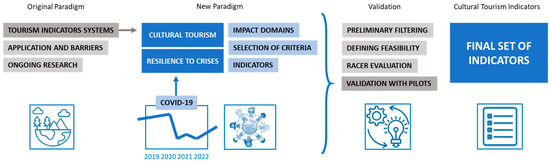
Figure 1.
Research approach (source: IMPACTOUR project).
This research aims to find a balance between the existing indicator systems used for the monitoring of tourism’s impacts and the feasibility of obtaining real data for the quantitative obtention of those indicators in real cases (considering that their success is limited by their usefulness and lack of effectiveness in the long term [50]), along with the viability of forecasting the impact of cultural tourism in European destinations. Complementarily to the theoretical insights gained from experts in cultural heritage, the tourism sector, and the social, economic, and environmental domains, preliminary results were contrasted with real cases.
The first step was focused on reviewing the common impact domains considered in academic studies, public reports, or research projects in the field. Several criteria in every domain were thoroughly reviewed, paying particular attention to those issues that are more related to the effects that tourism has on cultural aspects.
Secondly, empirical feedback was gathered from tourism development organizations participating in the IMPACTOUR project (partners and external piloting partners). Their current practices regarding methods and data sources used to measure impacts were assessed through a web survey, tailored face-to-face meetings, and workshops. The survey was dispatched to 26 tourism destinations on 14 December 2020 and was completed by 21 respondents (see Appendix A) by the end of January 2021. This indicates diversity in the countries, regions, and destination characteristics. As a result of the 21 pilots being surveyed, relevant feedback on the indicator domains and the indicators, as well as on their feasibility and usability, was provided (Appendix A, Table A1). This helped us to develop the first selection of indicators, eliminating duplicates and prioritizing the safeguarding of material and immaterial heritage. After this first feedback, a second iteration of the evaluation process using the RACER criteria (Relevant, Acceptable, Credible, Easy, and Robust) [51] was deployed. Ultimately, the final set of indicators was defined (Appendix B, Table A2).
3. Results: IMPACTOUR Comparative Assessment Framework
3.1. General Domains
Having analyzed the indicator systems and all studies in the field based on them, a variety of classifications of the indicators by blocks or sections, which are used in this research, are proposed and named “Impact Domains”.
The focus of the main existing indicator systems in the tourism sector, while it may appear redundant, is tourism as a whole. Due to the gap in the area of indicator systems for cultural tourism management, the cultural domain acquires significance, and tailored indicators are required. Rethinking tourism involves promoting cultural tourism; thus, monitoring of tourism should pay special attention to the cultural impacts that it has on a region or territory. Seeking to address this need, a specific group of indicators are proposed in this research, focused on the management of cultural tourism.
The COVID-19 pandemic has drastically affected cultural tourism and has revealed the need to measure how a site can or will respond to a future economic, health, environmental, geological, or political crisis. The analysis shown here indicates the need for measuring and tackling the resilience levels of sites to external hazards or crises that may produce (sudden or long-term) changes in the touristic trends, before they happen. The global pause in travel (2020–2021) has created an opportunity to move away from the unsustainable practices of the past and move forward to more resilient, inclusive, and resource-efficient models that contribute to the SDGs [15]. Thus, the need for a resilience domain is grounded in the current crisis due to the pandemic and aims to prepare the European sites to face any kind of crisis in the future by monitoring their resilience capacities.
Moving back to the existing literature, all of the indicator systems available weigh the understanding of the general features of a site, adopting indicators related to their management or characterization. This research also includes a separate characterization domain, which helps to set up the differentiation characteristics between sites and manage the indicator system considering the different nature of the destinations in both the type and scale (local, regional, territorial) of cultural activities. This research also contemplates the current monitoring domains of existing tourism indicator systems: social, economic, and environmental domains.
Based on the desk research, which is summarized in Table 2, the authors propose the following classification.
Table 2.
Impact domains proposed by each tourism indicator system.
3.2. Proposed Impact Domains
3.2.1. Characterization Domain
The desk-based research showed that the management of indicators in destinations requires adapting and configuring the list of indicators on a case-by-case basis. The impact that cultural tourism has on a destination is dependent on the specificities of the site; thus, the measurement of the factors is unequal, and this makes the comparative assessment more arduous. Furthermore, it is also dependent on tourists’ awareness of the environmental impact that they generate in a territory, as well as on their recognition of a destination’s vulnerability to crises such as climate change [52] or pandemics. The main need for the characterization indicators is to understand the main features of a site: scale, dimensions, and the relevance of the impact that the tourism sector has on the site. Other characteristics, such as connectivity, are also significant, and some indicator systems, such as the ETIS, also underline the need for the physical accessibility of the sites. This research embraces the following criteria for the characterization domain:
- Size: Aiming to understand the overall dimensions of the site in terms of understanding the location and its population concentration.
- Cultural resilience relevance: Identifying the types of cultural facilities as well as the official recognition of existing cultural resources.
- Organization/destination management: Identifying characteristics related to the seasonality of tourism, as well as management and marketing strategies aiming at better-informed tourists who understand the impacts of their activities.
- Connectivity and accessibility: Aiming at understanding how cultural resources are connected to local and regional transport services, and understanding the extent to which destinations can cater for visitors with physical, sensory, or cognitive impairments, in terms of provision of infrastructure, facilities, and services that can be used equitably by visitors and the local community.
3.2.2. Resilience Domain
The pandemic has shown that tourism is vulnerable to crises but, at the same time, has shown that these global crises may be an opportunity to develop new approaches and models for a resilient and sustainable tourism recovery. The pandemic can be compared to other hazards that may have lasting impacts on society, communities, and economic sectors; furthermore, it stresses the vital role of ICT and digital tools, and it advocates for a resilience approach to address external factors influencing societal, economic, cultural, and environmental changes in cultural tourism destinations. The following criteria are included within the resilience domain:
- Adaptation to crises or sudden events: How the global changes in tourism trends (related to crises of all types: economic, hazard-related, climate change, overtourism, etc.) may affect the tourism and transportation sectors.
- Recovery measures. Aiming to understand the tools, strategies, or plans that a site may use to contend with adverse conditions and recover during and after crises.
- Digitalization: Fostering digitalization as the main resilience booster. This can be considered as a recovery measure itself, aiming to be the main driver of the site’s management in the future.
3.2.3. Environmental Domain
The complexity of measuring the direct and particularly indirect effects that tourism has on the environment is challenging. Tourism can lead to adverse effects or increasing pressure on natural resources and land use. In the meantime, tourism has the potential to create positive effects by contributing to environmental protection and conservation, increasing awareness of environmental values and contributing to economic sustainability. The environmental criteria and indicators aim to address these complex relations and, in this way, help maintain a balance between environmental quality and tourism development. Building efficient management and proper planning programs and policies appears crucial based on ecological awareness for both local citizens and tourists. The environmental domain criteria were established as follows:
- Environmental quality: Understanding the impact that cultural tourism activities have in terms of public noise, traffic disturbances, or site pollution.
- Environmental awareness: Identifying how local activities are directly related to landscape and biodiversity protection, promoting campaigns of environmental awareness, and/or preparing to meet requirements regarding nature preservation.
- Carbon footprint: Aiming to address the ecological impact of local production and the promotion of sustainable practices.
- Water usage: Effects that tourism has on drinking-water management.
- Energy usage: Energy sustainability of the destination.
- Waste management: Recycling and reuse practices or policies specifically related to landscape protection.
- Reducing transport impacts: Aiming at identifying the implementation of sustainable policies in terms of public transport, bikes, footpaths, or low-carbon modes of transport.
3.2.4. Economic Domain
Measuring the direct and indirect economic effects of tourism makes it necessary to address the linkages between different productive activities and industries. These linkages are important to measure, since they are crucial in maximizing the benefits of (cultural) tourism. One of the major drawbacks of the existing frameworks is that they have been designed to aid in the measurement of tourism’s impacts at the national level, whereas in practice a lot of tourism planning and development happens at the regional or local level, as well as at the cross-border or supranational level. When crises appear, the first and most affected domain is the economic one. This is why monitoring is particularly relevant for indicators that might fluctuate a lot, as occurs in this domain. The following criteria are proposed for the economic domain:
- Cultural tourism flow at the destination: Addressing the tourist flow (arrivals and length of stays) as a general precondition for economic impacts.
- Direct economic impact from the cultural tourists: Related to direct consumption by the tourists, generally measurable by the daily spending per tourist/visitor.
- Cultural tourism enterprise(s) performance: Aiming to address the actual weight and strength of the tourist sector and enterprises. The current employment in cultural tourism-related activities, turnover, and added value generated by the cultural tourism enterprises, as well as wage information, would make it possible to evaluate the competitiveness and sustainability of the cultural tourism sector. Since seasonality is a challenge in many locations, this could be analyzed based on the occupancy rate per month and the average for the year.
- Clustering and innovation: Related to the innovativeness of cultural tourism companies. Systemic interactions between businesses and other actors lead to virtuous economic development [53]. Clustering and innovation by looking at the collaborations with R&D actors and other industries, as well as the investments into new technologies directed towards cultural tourism.
3.2.5. Social Domain
Tourism is a multilayered social activity, while cultural tourism is a meaningful activity based on values experienced to stimulate commonality, contrast, or curiosity. Even retreats or wild tourism visiting cultural landscapes can only be provided and sustained by the interaction between residents and visiting communities. Therefore, successful sustainable cultural tourism management requires matching the needs and interests of all social groups without excluding or compromising the benefits to others. Relationships between visitors and residents are a product of the behavioral patterns and interactions between groups, including other actors such as suppliers, transport providers, and tourism agencies. This research considers the following criteria in the social domain:
- Balance of population: Monitoring the coexistence between residents and visitors.
- Quality of life: Aiming to improve the quality of life of residents.
- Cultural responsibility: Assuring the maintenance and safeguarding of inherited values and traditional ways of life.
- Social inclusion: Aiming to measure the accessibility of tourist information and the universal accessibility of cultural tourism attractions.
- Intercultural: Monitoring the capacity to attract and entertain visitors despite their origins or abilities.
3.2.6. Cultural Domain
Managing cultural tourism requires addressing the interactions between residents and visiting communities, without compromising the level of hospitality of the destinations. Social impacts are generally obvious, while the impacts on the cultural aspects are often hidden amidst the broader socioeconomic impacts. As explained in Section 2, the ongoing research proposes to establish a separate domain of the cultural aspects, in which data indicators of tourist cultural activity are studied separately (the impact of cultural tourism activity vs. the preservation of cultural resources).
Almost all of the data measured concerning tourism fall within the social area, and the few references that separate the cultural impacts from the social ones are usually subjective and always influenced by the tourist/visitor’s experience of how they perceive the heritage resources at the destination. Consequently, the following criteria are considered for the cultural domain:
- Cultural heritage preservation: Measuring and minimizing the impact that tourists have on the integrity of the cultural heritage and its unique values. Also, understanding how tourists degrade or impact those material or immaterial values, or whether tourism activities help in heritage preservation.
- Cultural tourism promotion: Aiming to reveal the way in which a destination is organized to host and represent tourism and make the impact sustainable in all ways. This criterion monitors the need for diversification and marketing strategies for cultural tourism at pilot destinations, and it also indicates the need to ensure more accessible and equitable websites and promotion products. Its goal is to better promote cultural tourism while upholding the hospitality levels of the destinations.
- Management/protection plans: Aiming to know the traditional and innovative methods that the destination must use to attract tourists and manage the site. It addresses the need for better-focused governance strategies, plans, and actions for more hospitable cultural tourism at destinations.
The indicators derived from the desk research described in the previous sections returned an unmanageable set of indicators. Aiming to produce a suitable and available list of indicators, and based on the recommendations by UNWTO and the ETIS concerning the composition of very objective-focused indicators per sector or subsector (in this case, cultural tourism), a prioritization process was developed. This implied the elimination of duplicated indicators that, with a similar definition by the different indicator systems, aim for the same measurement, as well as those considered too complex for usability means (e.g., those that required obtaining data from several public and private organizations), and others showing the same measurement objectives were combined.
3.3. Validation of the Domains and Indicators with the Pilot Community
The major complexity of indicator systems when applied in real-life contexts is to succeed in obtaining the desirable data from real-case activity. This is not a particular constraint in the case of tourism or cultural tourism, but it is a problem revealed by most of the indicator-based metric systems, as concluded by Pires et al. [54] who, more concretely, noted unsuitable or unavailable data sources as one of the most common failings of indicator systems. Hence, this research proposes a strict filtering process using real cases that deal with the management of cultural tourism, helping with the development of a well-addressed monitoring framework.
Essentially, the initial indicator framework was shared with the IMPACTOUR pilot community, and through a survey developed for this purpose they were consulted to capture their opinions about the data availability (and feasibility of obtention) of the proposed indicators. After discarding 22 indicators due to the lack of focus on measuring cultural tourism, the survey included 68 questions related to the list of 144 indicators obtained in the desk research. Among the IMPACTOUR pilot community, 21 respondents helped to identify those indicators that are surely available through known or public existing data, or those that could be gathered through visual inspections.
The most significant feedback obtained from the consultation process concerned data availability. Participants’ answers allowed us to classify the degree of data availability of the indicators (in real scenarios) (see Table A1 in Appendix A for additional information). They also helped us discard those indicators with very low availability and revise those with medium availability. The second iteration with the pilot community focused on deploying a relevant, acceptable, credible, easy, and robust [51] set of indicators, which resulted in a set of 51 sustainable cultural tourism indicators (see Table A2 in Appendix B).
Overall, both the contribution of an interdisciplinary expert group to review and deeply explore existing indicator systems and the empirical observations facilitated to elaborate an available and effective monitoring framework were used for deploying a comparative assessment of the impact that cultural tourism has on different European sites.
4. Discussion
The importance of evidence has increased considerably in the planning, implementation, and evaluation of policy. On the one hand, economic, social, and environmental challenges are becoming increasingly complex; on the other hand, governments are facing growing pressure to deliver more quality services for less. Therefore, to address these complexities, the implementation and delivery of public policies and services must be informed by sound evidence, and they must be effectively and efficiently designed.
The use of proper indicators is crucial for policy design and implementation, as well as for the management of tourism destinations. However, our synthesis reveals that no universally accepted approach of sustainability-oriented indicators can be used to effectively compare the impacts of cultural tourism over all European destinations.
This paper offers an evidence-based set of indicators for measuring the impact of cultural tourism. The approach is centered around sustainability, which is central to long-term social, cultural, and economic development. By synthesizing the existing relevant indicator frameworks and developing them further, a novel approach framework is proposed for the sustainable management of cultural tourism. To test the validity of the indicator framework developed, a large-scale consultation was carried out in 21 diverse cultural tourism destinations all over Europe. Those destinations have different characteristics, cultural resources, and tourism activities, thus contributing to the development of the universal indicator framework. Therefore, the feasibility of obtaining real data regarding the indicators was tested in this research, and their relevance and usefulness in practical-oriented scenarios were evaluated.
As a result, 51 indicators were validated and structured around the environmental, economic, social, cultural, resilience, and characterization domains. Achieving balance across these domains is crucial for the sustainable growth of cultural tourism. The proposed indicators aim to assist stakeholders across the 21 destinations in assessing and comparing the impacts of cultural tourism. This process aids in acquiring knowledge about managing cultural resources, ultimately fostering more sustainable, responsible, and well-rounded impacts.
Built on the extensive work on the environmental, economic, and social impacts, which are rather developed, this research offers a significant contribution to the cultural tourism field. In the environmental domain, cultural tourism is acknowledged as a driver of adverse effects, such as those derived from the overcrowding of new buildings, infrastructure, and facilities, or increasing pressure on natural resources and land use. In the meantime, cultural tourism has the potential to create positive effects by contributing to environmental protection and conservation, increasing awareness of environmental values, and contributing to economic sustainability. Our environmental criteria and indicators address these complex relations and, in this way, help maintain a balance between environmental quality and cultural tourism development.
Similarly, when measuring the economic impacts of cultural tourism activities, they can be assessed by looking at their indirect impacts (focusing on cultural tourism investment and impacts on cultural tourism suppliers) and induced impacts (spending by employees directly or indirectly working for the cultural tourism sector). To assess the total economic impact of cultural tourism, it is important to understand the relationships between the trade, production, and consumption of cultural tourism services, the share of domestic and foreign value added in tourism exports, the benefits that tourism creates for national economies, and the forward and backward linkages between tourism and other industries. Contemporary economic development discourse also emphasizes that all economic activities are not the same in terms of their potential to foster an increase in living standards. What is also important is the clustering and systemic interactions in increasing and capturing the economic value added by various economic activities. Also, global value chains have emerged and gained importance [53]. However, the existing frameworks have been designed to aid in the measurement of tourism’s impacts at the national level, whereas, in practice, a lot of tourism planning and development happens at the regional or local level. In order to supplement national-level impact assessment frameworks, several countries and regions are developing subnational approaches to assessing tourism’s impacts. Many of these rely on versions of the Regional Tourism Satellite Accounts, which in itself is still a developing methodology. As destinations have limited access to the relevant data, this research’s approach was simplified in the economic domain and focused on the flow of tourists, the economic performance of cultural tourism enterprises, and direct economic benefits.
The social domain is also important, as successful sustainable cultural tourism management requires matching the needs and interests of all social groups without excluding or compromising the benefits to others, especially local communities, ensuring universal equality and proper social integration by guaranteeing the appropriate preservation of their identity through cultural heritage’s authenticity and uniqueness. Relationships between visitors and residents are a product of the behavioral patterns and interactions between groups, including other actors such as suppliers, transport providers, and tourism agencies.
Having found that there is a gap in the existing indicator systems concerning the cultural domain as a specific field, the monitoring of tourism, particularly cultural tourism, should pay special attention to the impacts on a region or territory derived from cultural activities or investments. The proposed indicators are related to cultural heritage preservation, cultural tourism promotion, and the management of cultural tourism.
One of the key contributions of this research is related to the resilience domain and the development of related indicators. The pandemic situation is one of the most notorious examples [16,55,56] and, more recently, meteorological disasters such as fires and floods need to be included too; finally, the Russian war against Ukraine is another example, impacting the global trade of goods and services. Worthy of note is that the responsiveness capacity of the destinations to any external hazards or crises that may affect the existing tourism tendencies in the future should be properly addressed for achieving sustainable development of destinations. Therefore, starting from measuring and comprehending how cultural tourism destinations manage external hazards or crises, resilience can be quantified and measured through a systemic and integrated vision of the cultural tourism destination. Consequently, adaptation to crises or sudden events, recovery measures, and digitalization are embodied in the resilience domain, aligned with recent research on this topic (e.g., [46,57]).
Finally, from the attempt to come up with a universal approach, but at the same time to develop location-specific recommendations within the IMPACTOUR project, a separate characterization domain was also considered to be included. The aim was to capture the key contextual differences and cultural-tourism-related challenges between destinations (based on the importance of contextual differences; see, for example, [58]). Criteria such as destination size, accessibility characteristics, cultural resources/facilities, and global challenges were included in the assessment framework.
The comprehensive research on developing an indicator-based framework for assessing the sustainability of cultural tourism, while novel and insightful, is not without its limitations. The framework was developed and validated primarily within the context of European tourism destinations, which might limit its applicability to other geographic regions with different cultural, environmental, and socioeconomic backgrounds, and different policy ambitions.
Also, the effectiveness of the proposed framework is contingent upon the availability and reliability of data, which, as previous research outlines [29], are mainly dependent on the capacity in each of the destinations. Some indicators might be challenging to measure due to the lack of accessible, accurate, or up-to-date data. This limitation is particularly pertinent for indicators related to cultural heritage preservation, social impacts, and digitalization efforts, where data collection mechanisms may not be standardized or widely implemented.
The tourism sector is highly dynamic, influenced by a multitude of external factors, including economic fluctuations, political changes, social crises, hazards, and environmental disasters. The framework, while comprehensive at the time of its development, may require periodic updates to remain relevant and to accurately reflect emerging trends and challenges in cultural tourism.
Implementing the proposed framework requires a significant investment of resources, including time, financial resources, and technical expertise. For some destinations, especially those with limited capacity or in developing regions, the complexity and resource-intensiveness of the framework might pose implementation challenges. These findings are aligned with recent research in this regard, e.g., [59].
While our framework attempts to capture a wide range of impacts, its emphasis on quantifiable indicators may overlook qualitative aspects of cultural tourism’s sustainability. The subjective experiences of tourists and local communities [60], the intangible benefits of cultural exchange, and the nuanced impacts on cultural heritage may not be fully captured through quantitative measures alone.
5. Conclusions
This research develops a comprehensive framework aimed at scrutinizing the sustainability of cultural tourism through an innovative indicator-based approach. This endeavor addresses the critical gap in the quantification and comparative analysis of cultural tourism’s impacts across diverse European destinations. Recognizing the multifaceted nature of cultural tourism, encompassing the economic, social, environmental, cultural, and resilience dimensions, this study underscores the absence of a universally accepted methodology.
This study’s significance is manifold, presenting a novel paradigm in the assessment of cultural tourism’s sustainability. By integrating the environmental, economic, social, cultural, resilience, and characterization domains, our framework offers an improved holistic view of the impacts of cultural tourism. This comprehensive approach not only fills the existing methodological void but also aligns with the broader objectives of sustainable development. Particularly noteworthy is the emphasis on resilience and cultural aspects, underscoring the importance of crisis recovery mechanisms, digital innovation, and the preservation and promotion of cultural heritage. These insights are instrumental in fostering destinations that are not only economically viable but also socially responsible and environmentally sustainable.
The methodological rigor of this research is evident in its systematic approach to developing the indicator framework. The methodology encompasses an extensive literature review, empirical feedback from European tourism destinations, and a validation process involving a diverse pilot community. This multifaceted approach ensures the relevance, credibility, and applicability of the proposed indicators across various types of destinations. By engaging directly with stakeholders and incorporating real-case scenarios, this research bridges the gap between theoretical constructs and practical application.
This research has shown that, despite the need for developing feasible indicators to monitor the impacts of cultural tourism, there is also a need for aiding European tourism destinations’ managers in the decision-making process to select the most suitable strategies for managing the impacts of cultural tourism, as well as in the deployment of broader indicator systems adapted to sites’ characteristics and managers’ expectations or objectives. Indicators should be able to measure destinations’ baseline situation, starting with which a sound approach will lead them to foster the impacts that cultural tourism has on them. Moreover, these instruments should be adaptable to both local and global changes in tourism trends; the need for resilient approaches has proven crucial for the long-term sustainability of cultural tourism.
The indicators were carefully designed to form a practical list, moving beyond mere theoretical proposals—a set that destinations can effectively utilize in their daily operations. However, the refining process unavoidably faced limitations due to the selection of destinations, which, while diverse in typologies and locations across Europe, were confined to the pilot sites within the IMPACTOUR community—a restriction imposed by the scale of the project itself. Still, as evidenced by the work carried out, for practitioners and policymakers, the proposed framework serves as a valuable tool for the strategic planning and management of cultural tourism destinations. By facilitating the measurement and comparison of impacts across different locations, this framework aids in identifying areas of strength and opportunities for improvement. This capability is crucial for the development of targeted interventions and policies that can enhance the sustainability of cultural tourism. Through its practical application, our framework can support destinations in achieving a balanced and sustainable development trajectory, contributing to the overall vitality and attractiveness of cultural tourism in Europe.
Future research lines can be suggested in this regard. The set of indicators might be enhanced if it could be implemented in selected destinations. In this way, the comparative assessment of the impact of cultural tourism at the European level would provide significant insights to develop policy recommendations, as well as to implement mitigation measures. Moreover, those empirical results derived from several case studies could prove whether an appropriate management framework could assist managers or decision-makers in monitoring the performance of the strategies developed in an effort to achieve sustainable cultural tourism.
Addressing the previously raised limitations in future research will enhance the robustness, applicability, and effectiveness of the framework for assessing the sustainability of cultural tourism. Expanding the geographical scope of the research, improving data collection mechanisms, incorporating qualitative indicators, and ensuring the framework’s adaptability to the dynamic nature of tourism are the recommended next steps.
Author Contributions
Conceptualization: M.Z., A.G. and T.K.; methodology: M.Z., A.S., A.G. and T.K.; validation: A.S.; formal analysis: M.Z.; investigation: M.Z., A.S., A.G., H.M.A. and T.K.; resources: H.M.A.; writing—original draft preparation, M.Z.; writing—review and editing: A.S., A.G., H.M.A. and T.K. All authors have read and agreed to the published version of the manuscript.
Funding
This research was funded by the European Union’s Horizon 2020 research and innovation programme under grant agreement No. 87074.
Institutional Review Board Statement
Not applicable.
Informed Consent Statement
Not applicable.
Data Availability Statement
The results of this research are included in the article; additional datasets and information can be found on the IMPACTOUR website: https://www.impactour.eu/ (accessed on 15 January 2024).
Acknowledgments
The participation of all IMPACTOUR consortium members is gratefully acknowledged. The authors wish to acknowledge the European Commission for its support in the collaborative European research project.
Conflicts of Interest
Author Héctor M. Aliaga was employed by the company Cultur Viajes. The remaining authors declare that the research was conducted in the absence of any commercial or financial relationships that could be construed as a potential conflict of interest.
Appendix A
The IMPACTOUR project launched the IMPACTOUR pilot community; comprising tourist destinations that collaborated in discussing and validating the theory-based outputs from the research. The number of participating sites fluctuated over the project timeline, with 21 active pilots at the time of selecting the indicators for comparative assessment. These sites represented diverse types, offering insights into visitor flows under changing conditions, as well as the cultural heritage characteristics, environmental effects, economic implications, and social significance of tourism’s impacts. Their contributions aided in filtering and delineating the set of indicators. The following municipalities and destinations completed the survey: Trikala (Greece), Almada (Portugal), Camino de Santiago in Castilla y León province (Spain), Basilicata (Italy), Setomaa/Võrumaa (Estonia), Sassi di Matera (Italy), Parco Murgia (Italy), Rab Tourist Board (Croatia), Tartu (Estonia), Chemin de Compostelle en Aveyron (France), Kyperounda (Cyprus), Valcamonica (Italy) Strasse der Romanik (Germany), Chemin d’Arles (France), Rota do Românico (Portugal), Aguilar de Campoo (Spain), Comune di Palmi (Italy), Sete Cidades (Portugal), Caldeirão-Corvo (Portugal), Aldeia dos Biscoitos (Portugal), and Fajã dos Cubres (Portugal).
The indicators of the initial list were classified as having low availability when less than four cases considered the data available, medium availability when between four and six cases considered the data available, and high availability when more than six cases considered the data available.
Table A1.
Answers to indicators’ availability (pilot survey): average answers.
Table A1.
Answers to indicators’ availability (pilot survey): average answers.
| Questions/Do You Have Information Regarding… | Positive Answers |
|---|---|
| … the resilience of your site against COVID-19 crisis? | |
| Social distancing impact upon religious and cultural festivals calculated | 5 |
| Change in domestic cultural tourism visitors’ numbers (domestic vs. international…) | 11 |
| Number of inhabitants visiting local attractions | 9 |
| % of shift to digital online visits | 6 |
| Income from digital tourists/online visits | 2 |
| Public sectors’ participation in financing the response to COVID-19 (e.g., employment support, operating costs, other grants or loans to businesses) | 9 |
| Public sectors’ support in dealing with small scale services with business and bureaucratic issues due to COVID-19 | 7 |
| Number of complaints from businesses due to COVID-19 measures | 5 |
| Percentage of employments affected by the pandemic in the cultural tourism sector (reduction of salaries or unemployed people) | 7 |
| … data related to cultural tourism in your destination? | |
| Visitors attractions (or Cultural Tourism sites) with cultural or language barriers (such as the use or not of English, or any other foreign language different to the native one, at the destination) | 7 |
| Number of cultural attractions that tourists visit (average) in the destination (compared, or not, to total visits). | 8 |
| Use that tourists make of the digital offer of your site (% that buy on-line tickets, % that use tourism apps, …) | 3 |
| The number of second homes in your destination | 10 |
| Number of residents employed in tourism sector | 12 |
| Number of residents employed in cultural tourism sector | 6 |
| Number of residents volunteering in tourism attractions and events | 5 |
| Residents’ perception on tourism | 7 |
| Visitor attractions (or cultural tourism sites) accessible for people with physical disability (ramps, elevators…) | 14 |
| Visitor attractions (or cultural tourism sites) accessible for people with sensory disabilities (sight, hearing… audio/video-guides, tactile info, etc.) | 9 |
| Visitor attractions with digital content offer | 10 |
| % of digital offer accessible for people with sensory disabilities | 4 |
| Number of cultural events celebrated per year (Including concerts, exhibitions, theatre…) | 16 |
| Number of attendees per event | 10 |
| % of the tourists on your destination with high cultural tourism motivation | 11 |
| … cultural heritage of your destination? | |
| Public funding spent in restoration of historic buildings | 10 |
| Private funding spent in restoration of historic buildings | 4 |
| Number of restored buildings | 8 |
| Number of listed or protected tangible or intangible cultural heritage | 10 |
| Donations and sponsorship for cultural heritage attractions or events | 4 |
| Number of residents volunteering in cultural heritage protection, management… | 4 |
| Number of heritage buildings/cultural attractions in risk due to overtourism? | 1 |
| … environmental data in your destination? | |
| Number of environmental or cultural awareness activities promoted by museums, heritage interpretation centres or other cultural attractions in destination | 8 |
| Percentage of annual amount of energy consumed from renewable sources compared to overall energy consumption at destination level per year | 3 |
| Percentage of local or environmentally friendly materials for buildings renovation | 1 |
| … these data? | |
| Energy consumption per night/per person (in each season, month…) | 2 |
| Water consumption per night/per person | 1 |
| Waste produced per night/per person | 1 |
| Waste recycled per year/per person | 1 |
| Daily spending per tourist/visitor | 7 |
| … the number of tourism companies in your destination which? | |
| Separate different types of waste | 9 |
| Take actions to reduce water consumption | 3 |
| Use recycled water | 2 |
| Take actions to reduce energy consumption | 3 |
| Use renewable sources | 3 |
| Use a voluntary certification/labelling of sustainability measures | 3 |
| Use a voluntary accessibility information certification/labelling scheme | 5 |
| Contribute to cultural heritage protection or restoration | 5 |
| Actively support protection, conservation and management of local biodiversity and landscapes | 3 |
| … tourism companies? | |
| Number of tourism companies (restaurants, accommodations…) who use local products (zero miles food/“Km0”/“locavorism”/local food supply chain) | 10 |
| Has a woman as a general manager | 8 |
| Average wage in tourism sector, and wage differentials between men and women | 3 |
| Average wage in tourism sector per economic field (e.g., hotels, restaurants, museums, etc.), and for men/women | 5 |
| Age ranges of employees in tourism sector | 5 |
| Number of tourism enterprises per type of services provided (transport, accommodation, tours, etc.) | 9 |
| Employment in tourism enterprises per type of services provided | 6 |
| Value added generated by the cultural tourism enterprises (per field of activity) | 1 |
| Percentage of employments affected by the COVID-19 pandemic in the Cultural Tourism sector (reduction of salaries or unemployed people) | 3 |
| … local overnight accommodation? | |
| Arrivals and nights spent at commercial accommodation establishments (all types) | 11 |
| Commercial accommodations that are accessible to disabled people | 9 |
| Arrivals and nights spent at sharing/collaborative economy accommodation establishments | 4 |
| Occupancy rate in commercial accommodation per month and average for the year | 9 |
| Occupancy rate in sharing/collaborative economy accommodation establishments | 4 |
| …transport companies (public or private), which…? | |
| Transport modes that are accessible to disabled people | 7 |
| % of transport fleet powered by electricity per type of transport | 2 |
| … your destination products? | |
| ECO or BIO label/certification | 6 |
| Number of sales of ECO/BIO products | 4 |
| Number of sales of zero miles-kms food products | 3 |
| % of sales of local made souvenirs | 4 |
Appendix B
Table A2.
Sustainable cultural tourism indicators.
Table A2.
Sustainable cultural tourism indicators.
| Characterization Indicators | ||
|---|---|---|
| Size | A1.1 | Total population |
| A1.2 | Population density | |
| Cultural tourism relevance | A2.1 | Percentage of cultural tourists (compared to the total number of tourists) |
| A2.2 | Number of listed tangible or intangible cultural heritage | |
| A2.3 | Number of other EU heritage/natural labels | |
| A2.4 | Number and type of cultural facilities, museums, exhibition halls, theatres, monuments | |
| Organization/destination Management | A3.1 | Percentage of dispersed cultural tourism attractions |
| A3.2 | Percentage of key sites operating all year | |
| A3.3 | Destination management organization (DMO) | |
| Connectivity | A4.1 | Connectivity to site (passenger flights + by road + by rail + boat/cruise) |
| RESILIENCE INDICATORS | ||
| Adaptation to crises or sudden events | B1.1 | Cultural tourism income decrease in a year affected by an external event (pandemic/climate events/economic crisis) |
| B1.2 | Percentage of employments affected by emergencies/external factors in the cultural tourism sector | |
| B1.3 | Tourist infrastructure in zones vulnerable to climate change/environmental hazards | |
| Recovery measures | B2.1 | Public sectors’ participation in financing the response to emergencies/external factors (e.g., employment support, operating costs, other grants or loans to businesses) |
| B2.2 | Existing contingency and/or recovery plans (vulnerability against hazards or others) | |
| B2.3 | Diversification strategies/plans for tourists’ masses or sudden tourism growth | |
| B2.4 | Tools for tourists’ masses or sudden tourism growth (real-time monitoring of tourism flow, carrying capacity, etc.) | |
| B2.5 | Percentage of tourists per type of origin (local/national/international/etc.) | |
| Digitalization | B3.1 | Public sectors’ participation in financing the response to emergencies/external factors (e.g., employment support, operating costs, other grants or loans to businesses) |
| Environmental Indicators | ||
| Environmental quality | C1.1 | Rate of noise, light/air pollution, or traffic disturbance complaints per 100 inhabitants |
| Environmental awareness | C2.1 | Percentage of local enterprises in the tourism sector actively supporting the conservation of local biodiversity and landscapes |
| C2.2 | Percentage of tourism sector enterprises whose main focus is environmental awareness (museums, shops, etc.) | |
| Carbon footprint | C3.1 | Local products with any kind of local, national, or international ecological label (ECO/BIO/KM0 labels) |
| Water usage | C4.1 | Number of days per year where there are water supply shortages |
| Reducing transport impacts | C5.1 | Percentage of cultural touristic disperse attractions connected by public transport |
| C5.2 | Percentage of total cultural touristic attractions accessible by bike or scooter | |
| Economic Indicators | ||
| Cultural tourism flow at destination | D1.1 | Average nights spent at tourist accommodation establishments |
| D1.2 | Average nights spent at shared/collaborative economy accommodation establishments | |
| Direct economic impact from the cultural tourists | D2.1 | Average daily spending per tourist/visitor |
| Cultural tourism enterprise(s) performance | D3.1 | Employment in cultural tourism activities |
| D3.2 | Occupancy rate in commercial accommodation per month, and average for the year | |
| D3.3 | Occupancy rate in shared/collaborative economy accommodation establishments | |
| D3.4 | Turnover per cultural tourism activity | |
| Social Indicators | ||
| Balance of population | E1.1 | Number of tourists/visitors per 100 residents |
| E1.2 | Tourism pressure on residents | |
| E1.3 | Percentage of residents employed in tourism | |
| Cultural responsibility | E2.1 | Percentage of volunteering at cultural tourism sites/attractions |
| E2.2 | Local availability of traditional skills | |
| E2.3 | Responsibility share (public/private) for cultural tourism sites | |
| Social inclusion | E3.1 | Availability of free/discounted/educational access to key sites for locals |
| E3.2 | Accessibility plan: physical, mental, visual, etc. | |
| Interculturality | E4.1 | Cultural tourism for defined social purposes: pilgrimages, folk or religious festivals, etc. |
| E4.2 | Accessible multilingual directions to venue; signage and interpretation at venue | |
| Cultural Indicators | ||
| Cultural heritage preservation | F1.1 | Degradation on buildings/sites by usage/massification (include if they are listed as endangered sites) |
| F1.2 | Tourism’s contribution to the protection and restoration of historic buildings/sites in the tourist area | |
| F1.3 | Percentage of funding of public and private finance spent on the improvement of the physical urban environment over the total amount | |
| F1.4 | Visual impacts | |
| F1.5 | Percentage of restored historic buildings and sites | |
| Cultural heritage promotion | F2.1 | Promotion of cultural activities (museums, festivals, traditional events, local culture, guided tours, publications, etc.) and attendees per activity/event/year |
| F2.2 | Alternative cultural attractions (considering the surrounding area or territory near to the destination) | |
| F2.3 | Number of cultural attractions that tourists visit (average) in the destination (compared to total visits) | |
References
- Mathisen, L.; Søreng, S.; Lyrek, T. The reciprocity of soil, soul and society: The heart of developing regenerative tourism activities. J. Tour. Futur. 2022, 8, 330–341. [Google Scholar] [CrossRef]
- UNESCO. Culture: A Driver and an Enabler of Sustainable Development. Thematic Think Piece: 2012; 10p. Available online: https://www.un.org/millenniumgoals/pdf/Think%20Pieces/2_culture.pdf (accessed on 15 January 2024).
- Potts, A. European Cultural Heritage Green Paper “Putting Europe’s Shared Heritage at the Heart of the European Green Deal”; Europa Nostra: Brussels, Belgium, 2022. [Google Scholar]
- Dupeyras, A.; Maccallum, N. Indicators for Measuring Competitiveness in Tourism: A Guidance Document; OECD Tourism Papers, 2013/02; OECD: Paris, France, 2013. [Google Scholar] [CrossRef]
- World Tourism Organization (UNWTO). Report on Tourism and Culture Synergies; UNWTO: Madrid, Spain, 2018. [Google Scholar] [CrossRef]
- Noonan, D.S.; Rizzo, I. Economics of cultural tourism: Issues and perspectives. J. Cult. Econ. 2017, 41, 95–107. [Google Scholar] [CrossRef]
- Kalvet, T.; Olesk, M.; Tiits, M.; Raun, J. Innovative Tools for Tourism and Cultural Tourism Impact Assessment. Sustainability 2020, 12, 7470. [Google Scholar] [CrossRef]
- UNWTO. Tourism Definitions; UNWTO: Madrid, Spain, 2019. [Google Scholar] [CrossRef]
- Pedersen, A. Managing Tourism at World Heritaga Sites: A Practical Manual for World Heritage Site Managers; UNESCO World Heritage Centre: Paris, France, 2002; 96p. [Google Scholar]
- UNEP; UNWTO. Making Tourism More Sustainable: A Guide for Policy Makers; UNWTO: Madrid, Spain, 2005; ISBN 978-92-807-2507-0. [Google Scholar]
- ICOMOS. The Future of Our Pasts: Engaging Cultural Heritage in Climate Action; ICOMOS: Charenton-le-Pont, France, 2019. [Google Scholar]
- SCT OMC Working Group Sustainable Cultural Tourism Open Method of Coordination. Available online: https://www.culturaltourism-network.eu/ (accessed on 19 December 2022).
- Cleere, H. Council of Europe Framework Convention on the Value of Cultural Heritage for Society (2005). In Encyclopedia of Global Archaeology; Springer: Cham, Switzerland, 2020; pp. 2720–2722. [Google Scholar] [CrossRef]
- European Commission EU Delivering on the UN 2030 Agenda. 2019, pp. 1–4. Available online: https://openresearch.amsterdam/image/2022/9/22/factsheet_eu_delivering_2030_agenda_sustainable_development_en_0.pdf (accessed on 15 January 2024).
- World Tourism Organization. UNWTO Inclusive Recovery Guide—Sociocultural Impacts of COVID-19, Issue 2: Cultural Tourism; UNWTO: Madrid, Spain, 2021. [Google Scholar] [CrossRef]
- Vărzaru, A.A.; Bocean, C.G.; Cazacu, M. Rethinking tourism industry in pandemic COVID-19 period. Sustainability 2021, 13, 6956. [Google Scholar] [CrossRef]
- UNWTO. Indicator of Sustainable Development for Tourism Destination: A Guidebook; UNWTO: Madrid, Spain, 2004; Volume 3. [Google Scholar]
- European Commission; Directorate-General for Internal Market Industry Entrepreneurship and SMEs. The European Tourism Indicator System—ETIS Toolkit for Sustainable Destination Management; Publications Office of the European Union: Luxembourg, 2016; ISBN 978-92-79-55249-6. [Google Scholar]
- GSTC. GSTC Destination Criteria. Glob. Sustain. Tour. Counc. 2019, 1–17. Available online: https://www.gstcouncil.org/wp-content/uploads/GSTC-Destination-Criteria-v2.0.pdf (accessed on 15 January 2024).
- Montalto, V.; Tacao Moura, C.; Panella, F.; Alberti, V.; Becker, W.; Saisana, M. The Cultural and Creative Cities Monitor: 2019 Edition; Publications Office of the European Union: Luxembourg, 2019. [Google Scholar] [CrossRef]
- Halatsis, A.; Munoz, A. Sustainable Cruise Tourism Certification System. SIROCCO Project D3.4.1. 2017. Available online: https://sirocco.interreg-med.eu/fileadmin/user_upload/Sites/Sustainable_Tourism/Projects/SIROCCO/SIROCCO_D3.4.1.pdf (accessed on 15 January 2024).
- Coccossis, H.; Koutsopoulou, A. Building a Common Approach in Tourism Sustainability Evaluation, CO-EVOLVE Project D3.16.1. 2017.
- MITOMED+ Tourism Data Indicators Toolkit. Models of Integrated Tourism in the MEDiterranean Plus 2017–2020. Project Deliverable. Toolbox 2020. Available online: https://mitomed-plus.interreg-med.eu/ (accessed on 15 January 2024).
- Robinson, M.; Picard, D. Tourism, Culture and Sustainable Development. Sustain. Dev. 2011, 54, 97. [Google Scholar]
- Ethos, T.C.; Heritage, C. International Cultural Tourism Charter, Managing Tourism at Places of Heritage Significance; ICOMOS: Charenton-le-Pont, France, 1999; 5p. [Google Scholar]
- London, A. Cultural Tourism Resources. 2010, pp. 5–7. Available online: https://www.culturehive.co.uk/wp-content/uploads/2013/07/Cultural-Tourism-Definitions-resource-1.pdf (accessed on 15 January 2024).
- Tudorache, D.M.; Simon, T.; Frenţ, C.; Musteaţă-Pavel, M. Difficulties and challenges in applying the European Tourism Indicators System (ETIS) for sustainable tourist destinations: The case of Braşov county in the Romanian Carpathians. Sustainability 2017, 9, 1879. [Google Scholar] [CrossRef]
- Modica, P.; Capocchi, A.; Foroni, I.; Zenga, M. An assessment of the implementation of the European tourism indicator system for sustainable destinations in Italy. Sustainability 2018, 10, 3160. [Google Scholar] [CrossRef]
- Torres-Delgado, A.; Palomeque, F.L. Measuring sustainable tourism at the municipal level. Ann. Tour. Res. 2014, 49, 122–137. [Google Scholar] [CrossRef]
- Kumar, S.; Kumar, D.; Luis Nicolau, J. How does culture influence a Country’s travel and tourism competitiveness? A longitudinal frontier study on 39 countries. Tour. Manag. 2024, 100, 104822. [Google Scholar] [CrossRef]
- Polukhina, A.; Sheresheva, M.; Efremova, M.; Suranova, O.; Agalakova, O.; Antonov-Ovseenko, A. The Concept of Sustainable Rural Tourism Development in the Face of COVID-19 Crisis: Evidence from Russia. J. Risk Financ. Manag. 2021, 14, 38. [Google Scholar] [CrossRef]
- Tokarchuk, O.; Barr, J.C.; Cozzio, C. How much is too much? Estimating tourism carrying capacity in urban context using sentiment analysis. Tour. Manag. 2022, 91, 104522. [Google Scholar] [CrossRef]
- Richards, G. Rethinking Cultural Tourism; Edward Elgar Publishing: Cheltenham, UK, 2021. [Google Scholar] [CrossRef]
- Richards, G. Cultural tourism: A review of recent research and trends. J. Hosp. Tour. Manag. 2018, 36, 12–21. [Google Scholar] [CrossRef]
- Postma, A.; Schmuecker, D. Understanding and overcoming negative impacts of tourism in city destinations: Conceptual model and strategic framework. J. Tour. Futur. 2017, 3, 144–156. [Google Scholar] [CrossRef]
- Lozano-Oyola, M.; Blancas, F.J.; González, M.; Caballero, R. Sustainable tourism indicators as planning tools in cultural destinations. Ecol. Indic. 2012, 18, 659–675. [Google Scholar] [CrossRef]
- Huynh, D.V.; Truong, T.T.K.; Duong, L.H.; Nguyen, N.T.; Dao, G.V.H.; Dao, C.N. The COVID-19 pandemic and its impacts on tourism business in a developing city: Insight from Vietnam. Economies 2021, 9, 172. [Google Scholar] [CrossRef]
- Kowalczyk-Anioł, J.; Grochowicz, M.; Pawlusiński, R. How a tourism city responds to COVID-19: A cee perspective (kraków case study). Sustainability 2021, 13, 7914. [Google Scholar] [CrossRef]
- Egusquiza, A.; Zubiaga, M.; Gandini, A.; de Luca, C.; Tondelli, S. Systemic innovation areas for heritage-led rural regeneration: A multilevel repository of best practices. Sustainability 2021, 13, 5069. [Google Scholar] [CrossRef]
- UNWTO. ‘Overtourism’?—Understanding and Managing Urban Tourism Growth beyond Perceptions, Executive Summary; UNWTO: Madrid, Spain, 2018. [Google Scholar] [CrossRef]
- McKinsey and the World Travel & Tourism Council. Managing Overcrowding Tourism Destinations; McKinsey & Company: Hong Kong, China, 2017. [Google Scholar]
- Peeters, P.; Gössling, S.; Klijs, J.; Milano, C.; Novelli, M.; Dijkmans, C.; Eijgelaar, E.; Hartman, S.; Heslinga, J.; Isaac, R.; et al. Overtourism: Impact and Possible Policy Responses; Research for TRAN Committee: Brussels, Belgium, 2018; pp. 1–255. [Google Scholar]
- He, H.; Shen, L.; Wong, S.W.; Cheng, G.; Shu, T. A “load-carrier” perspective approach for assessing tourism resource carrying capacity. Tour. Manag. 2023, 94, 104651. [Google Scholar] [CrossRef]
- European Commission. Tourism and Transport in 2020 and beyond; European Commission: Luxembourg, 2020. [Google Scholar]
- European Expert Network on Culture and Audiovisual (EENCA). Carrying Capacity at Sensitive Cultural Heritage Sites; EENCA: Luxembourg, 2013. [Google Scholar]
- Ivars-Baidal, J.A.; Celdrán-Bernabeu, M.A.; Femenia-Serra, F.; Perles-Ribes, J.F.; Giner-Sánchez, D. Measuring the progress of smart destinations: The use of indicators as a management tool. J. Destin. Mark. Manag. 2021, 19, 100531. [Google Scholar] [CrossRef]
- UNWTO. Experiences from Pilot Studies in Measuring the Sustainability of Tourism; UNWTO: Madrid, Spain, 2020; 52p. [Google Scholar]
- OECD. Tourism Policy Responses to the Coronavirus (COVID-19); OECD: Paris, France, 2020; pp. 1–50. [Google Scholar]
- Helble, M.; Fink, A. Reviving Tourism amid the COVID-19 Pandemic. ADB Briefs 2020, 1, 1–13. [Google Scholar]
- Eppich, R.; Grinda, J.L.G. Management documentation indicators & good practice at cultural heritage places. Int. Arch. Photogramm. Remote Sens. Spat. Inf. Sci.—ISPRS Arch. 2015, 40, 133–140. [Google Scholar] [CrossRef]
- BirdLife. International Monitoring and Indicators; BirdLife: Cambridge, UK, 2019; pp. 110–116. [Google Scholar]
- Lin, C.-H.; Wang, W.-C. Impacts of climate change knowledge on coastal tourists’ destination decision-making and revisit intentions. J. Hosp. Tour. Manag. 2023, 56, 322–335. [Google Scholar] [CrossRef]
- Kalvet, T.; Olesk, M.; Tiits, M. Report on Cultural Tourism Leading to Sustainable Economic and Social Development; IMPACTOUR Deliverable 1.1: Brussels, Belgium, 2020. [Google Scholar]
- Moreno Pires, S.; Fidélis, T.; Ramos, T.B. Measuring and comparing local sustainable development through common indicators: Constraints and achievements in practice. Cities 2014, 39, 1–9. [Google Scholar] [CrossRef]
- Wallace, C.; Chen, X.; Garrison, S.; Shaddock, J. Introduction: The Impact of (COVID)-19 on Cultural Tourism. Tour. Cult. Commun. 2023, 23, 87–96. [Google Scholar] [CrossRef]
- Richards, G.; Fernandes, C. Cultural Tourism During the (COVID)-19 Pandemic in Portugal. Tour. Cult. Commun. 2022, 23, 219–231. [Google Scholar] [CrossRef]
- Zhao, X.; Xie, C.; Huang, L.; Wang, Y.; Han, T. How digitalization promotes the sustainable integration of culture and tourism for economic recovery. Econ. Anal. Policy 2023, 77, 988–1000. [Google Scholar] [CrossRef]
- Stojanović, T.; Trišić, I.; Brđanin, E.; Štetić, S.; Nechita, F.; Candrea, A.N. Natural and Sociocultural Values of a Tourism Destination in the Function of Sustainable Tourism Development—An Example of a Protected Area. Sustainability 2024, 16, 759. [Google Scholar] [CrossRef]
- Abouelmagd, D. Sustainable urbanism and cultural tourism, the case of the Sphinx Avenue, Luxor. Alex. Eng. J. 2023, 71, 239–261. [Google Scholar] [CrossRef]
- Trišić, I.; Privitera, D.; Ristić, V.; Štetić, S.; Stanić Jovanović, S.; Nechita, F. Measuring Residents’; and Visitors’ Satisfaction with Sustainable Tourism—The Case of “Rusanda” Nature Park, Vojvodina Province. Sustainability 2023, 15, 16243. [Google Scholar] [CrossRef]
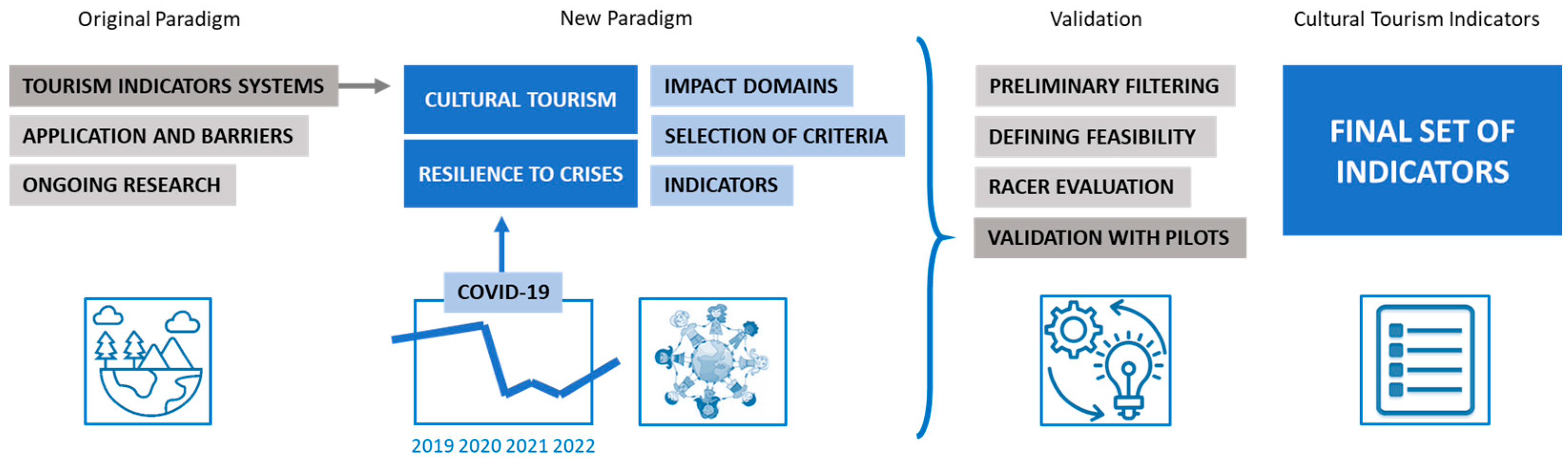
Disclaimer/Publisher’s Note: The statements, opinions and data contained in all publications are solely those of the individual author(s) and contributor(s) and not of MDPI and/or the editor(s). MDPI and/or the editor(s) disclaim responsibility for any injury to people or property resulting from any ideas, methods, instructions or products referred to in the content. |
© 2024 by the authors. Licensee MDPI, Basel, Switzerland. This article is an open access article distributed under the terms and conditions of the Creative Commons Attribution (CC BY) license (https://creativecommons.org/licenses/by/4.0/).