Reducing Thermal Bridging from Antenna Installations Using an External-Wall Mounting Block to Support Sustainable Development


Abstract
1. Introduction
2. Materials and Methods
3. Results and Discussion
4. Conclusions
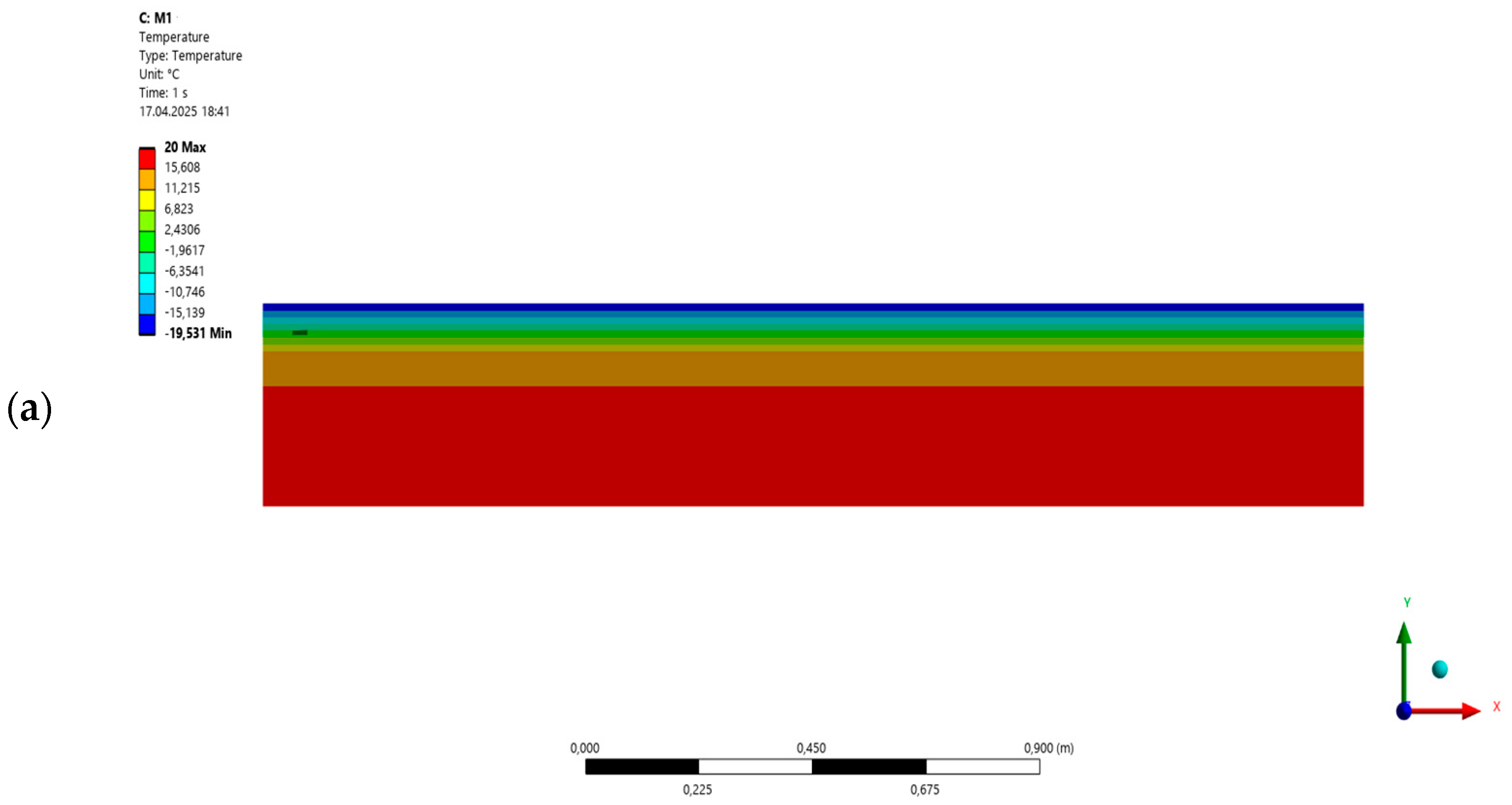
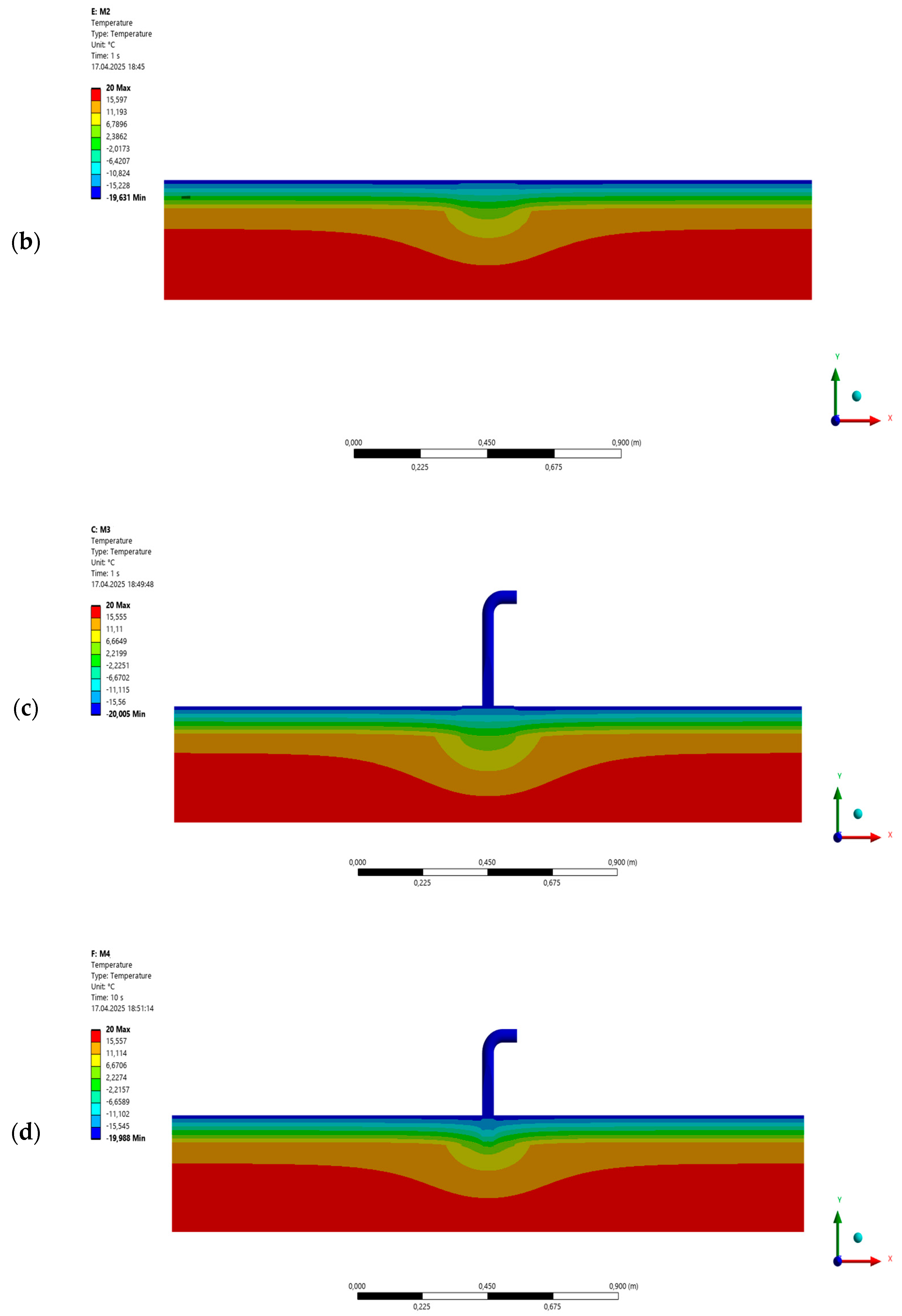
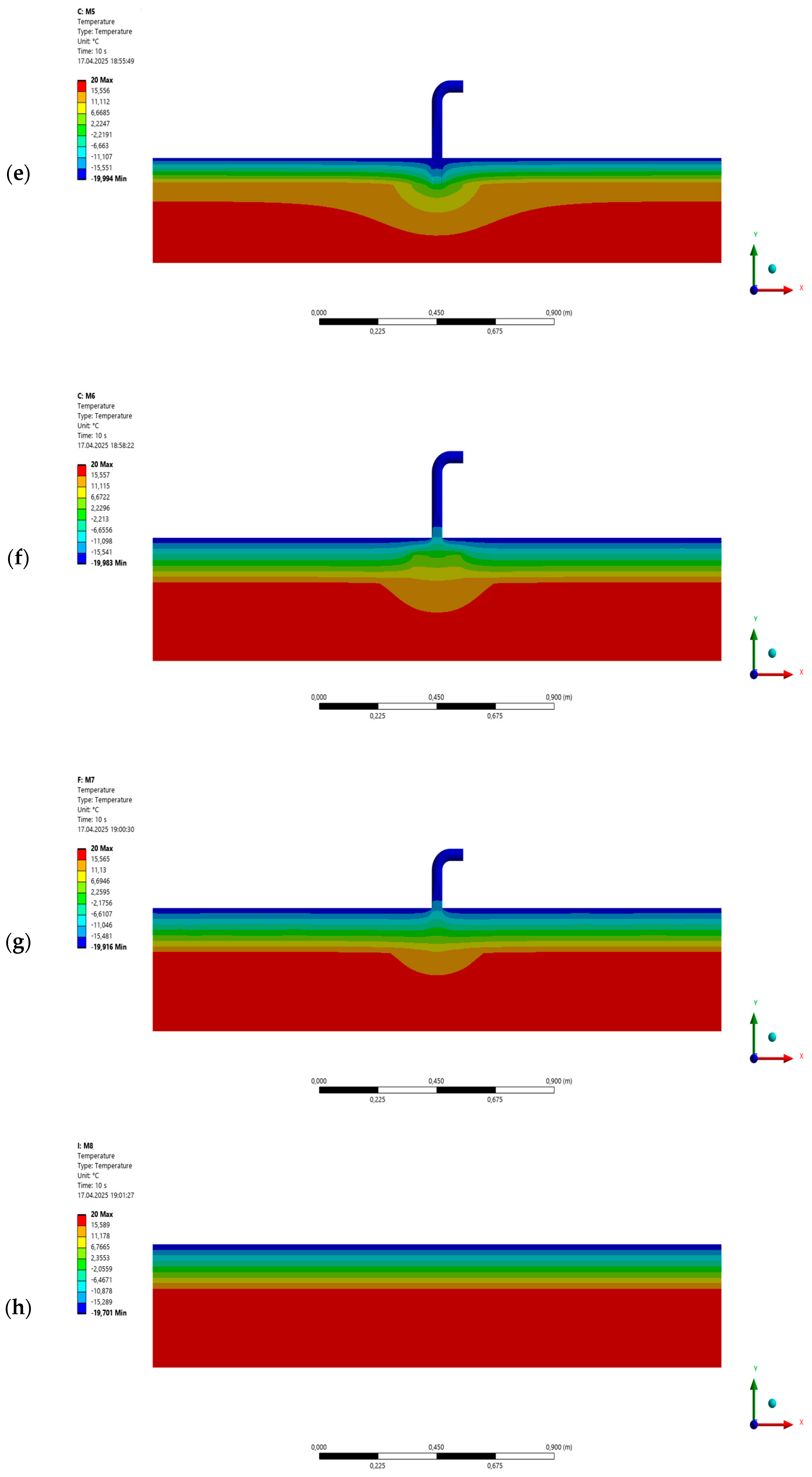
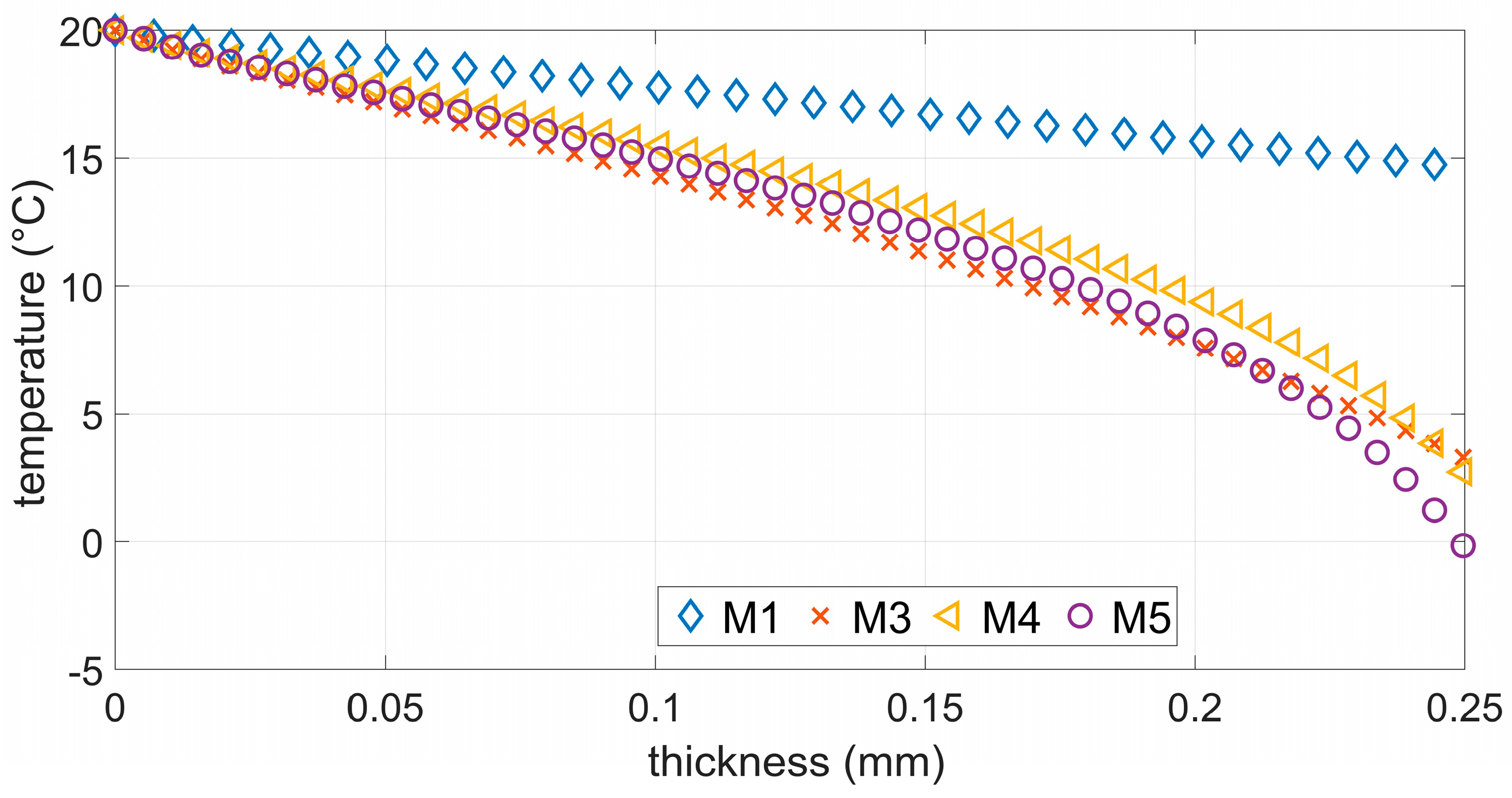
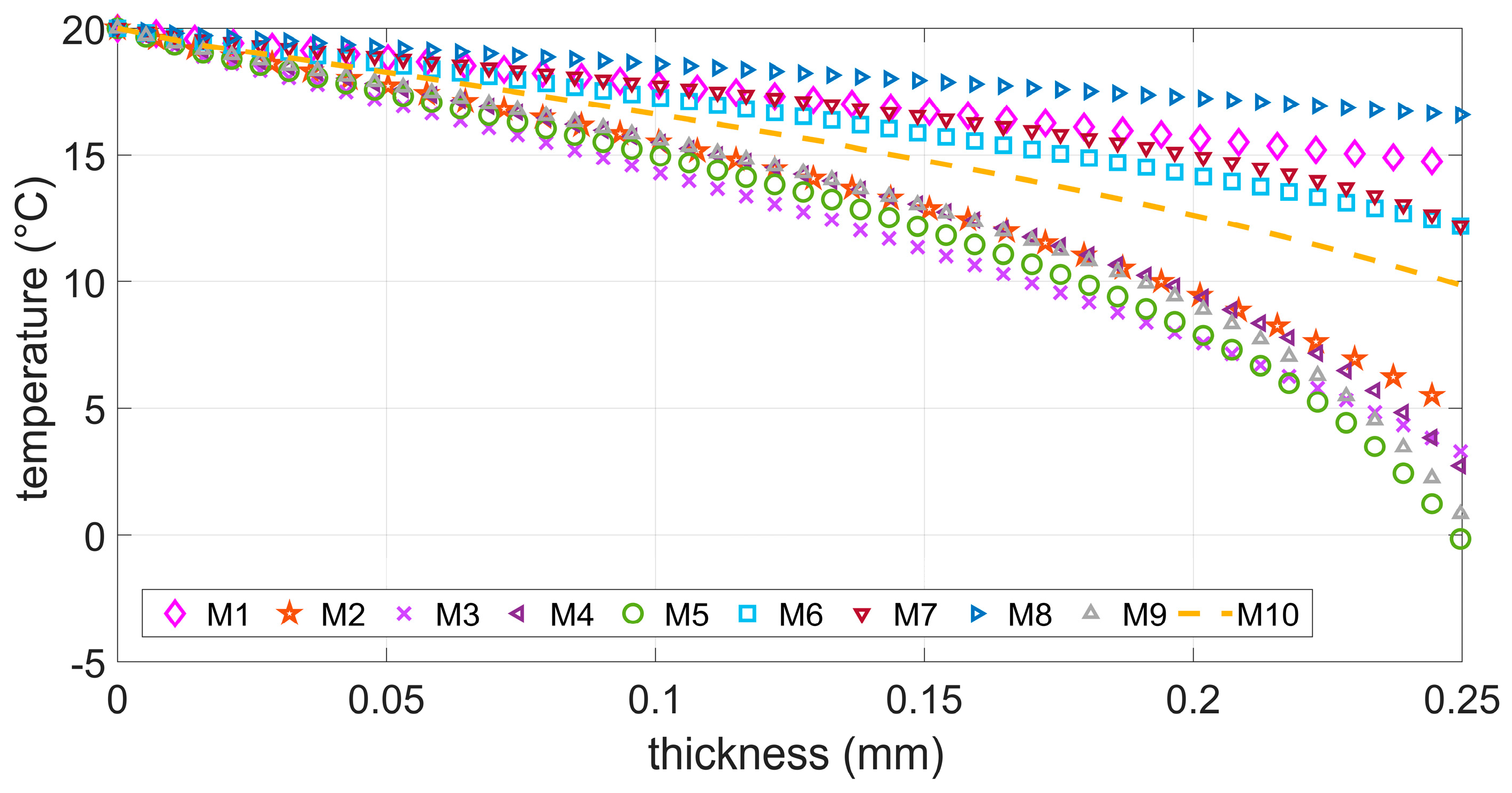
- Under ideal conditions (M4 and M3), it was found that the temperature distribution in the load-bearing wall was nearly identical. A similar situation was observed with two layers of polystyrene, i.e., model M6 and M7. The temperature difference did not exceed 2%.
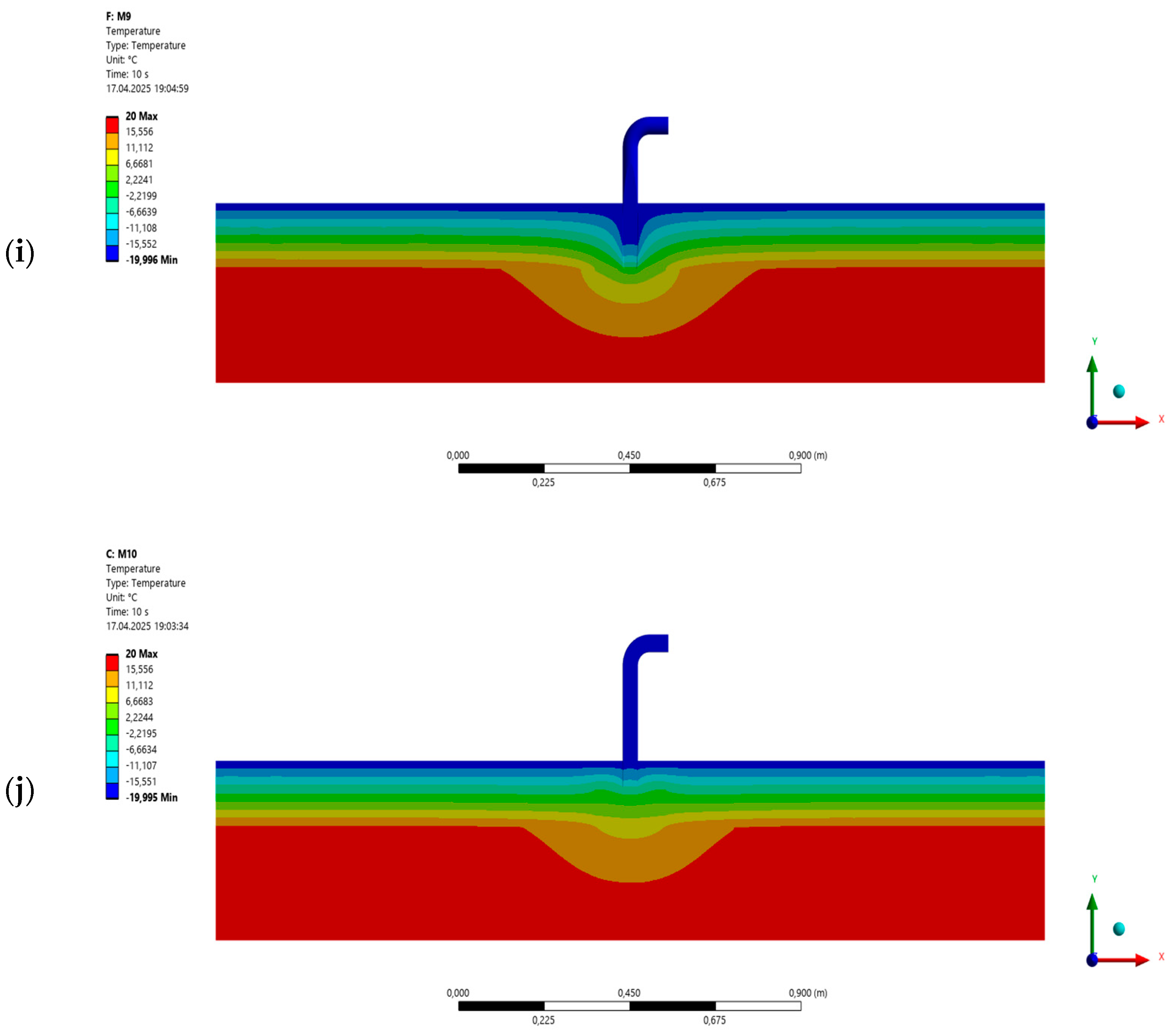
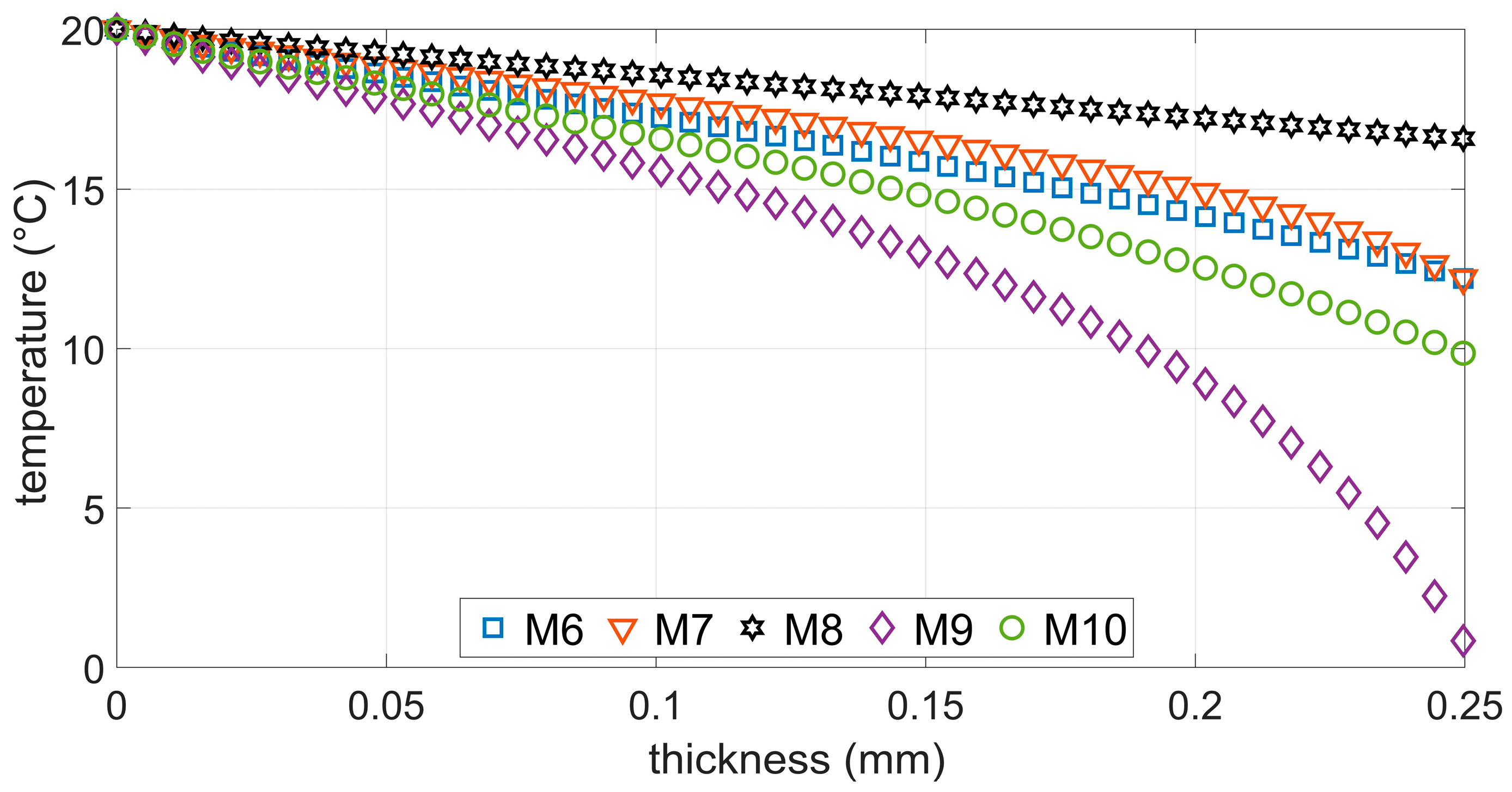
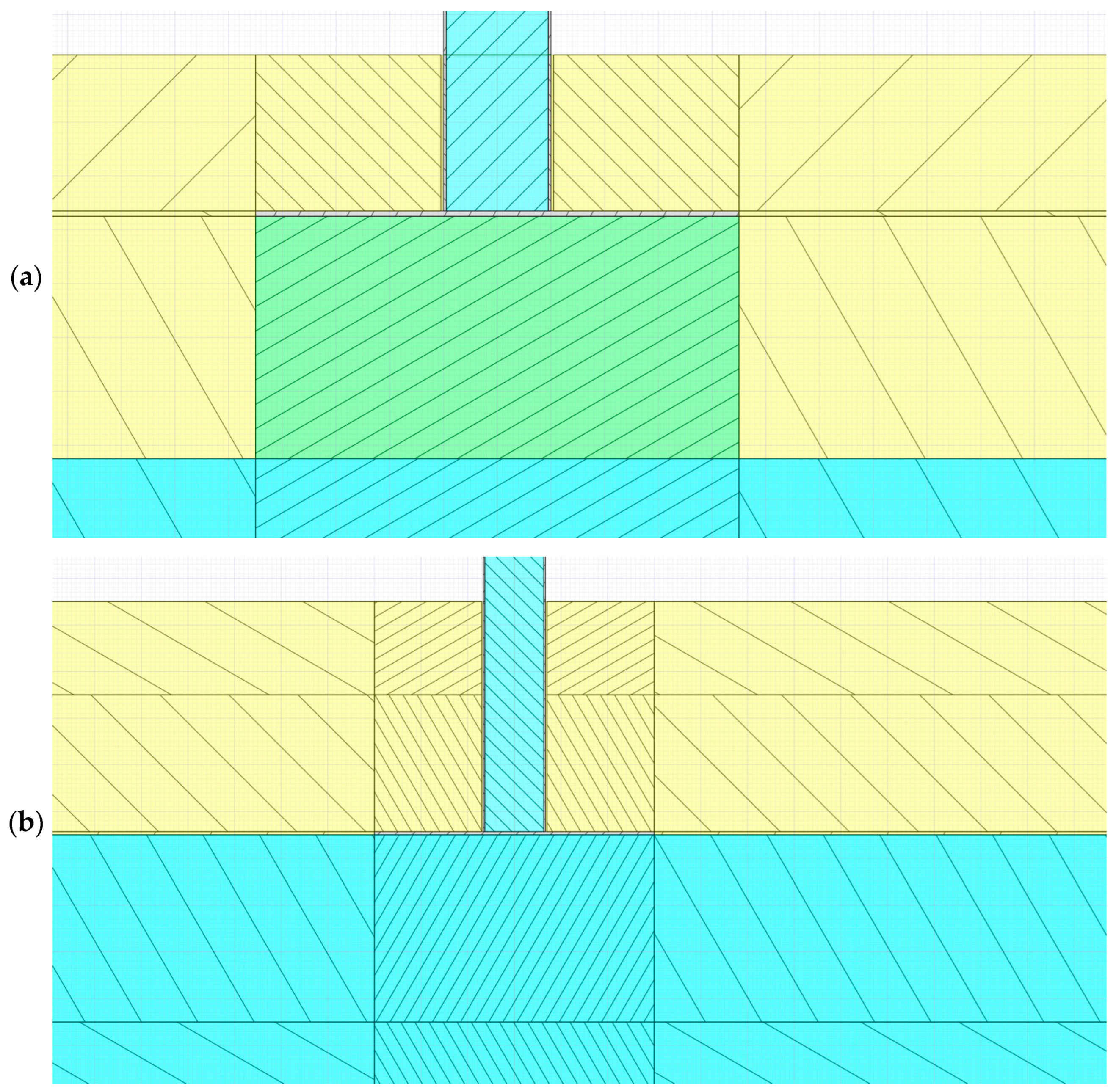
- A significant advantage of the mounting elements was observed in more realistic operating conditions (model M10). In this case, the use of the mounting block retained twice as much heat inside the room compared to the configuration without the block (M9). The temperature on the outer wall of the concrete block in the M10 model was 9.49 °C, while in the model without the mounting element (M9) the temperature in the same place reached −0.74 °C. Thus, the applied mounting block effectively reduced the impact of point thermal bridges at the antenna holder by approximately 50%.
- The analyses revealed that the presence or absence of gaps between the antenna mount and the insulation layers significantly affects the results obtained during simulations.
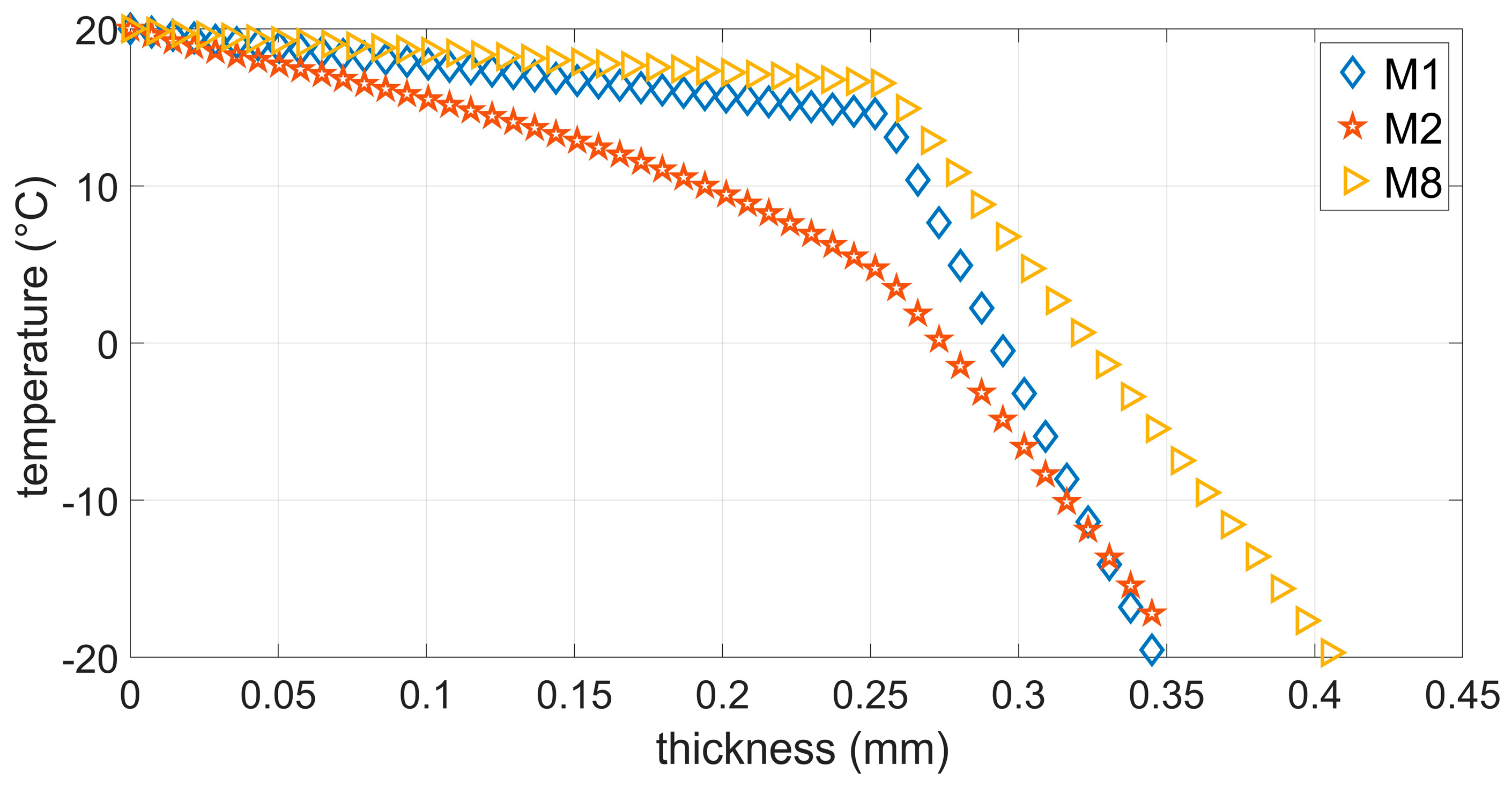
- Models with two (M9) and one layer of Styrofoam (M5) were compared, and it was found that an additional 6 cm thick layer of Styrofoam increases the temperature on the wall by only about 1 °C (when the gap is taken into account) or by about 2 °C (between the reference models M1 and M8).
- Evaluating linear and point thermal transmittance values;
- Analyzing local temperature fields and identifying regions with increased surface-temperature risk (e.g., mold-growth risk);
- Comparing alternative material or installation configurations of mounting blocks;
- Providing boundary conditions for more advanced transient or 3D analyses in future work.
Author Contributions
Funding
Institutional Review Board Statement
Informed Consent Statement
Data Availability Statement
Acknowledgments
Conflicts of Interest
References
- Clarke, J.A. Energy Simulation in Building Design; Elsevier Ltd.: Oxford, UK, 2001. [Google Scholar]
- European Parliament Resolution of 15 December 2021 on the Implementation of the Energy Performance of Buildings Directive (2021/2077(INI)). Available online: https://eur-lex.europa.eu/legal-content/PL/TXT/PDF/?uri=CELEX:52021IP0503 (accessed on 11 October 2025).
- Theodosiou, T.G.; Papadopoulos, A.M. The Impact of Thermal Bridges on the Energy Demand of Buildings with Double Brick Wall Constructions. Energy Build. 2008, 40, 2083–2089. [Google Scholar] [CrossRef]
- Citterio, M.; Cocco, M.; Erhorn-Kluttig, H. Thermal Bridges in the EPBD Context: Overview on MS Approaches in Regulations. ASIEPI Information Paper. 2008. Available online: https://build-up.ec.europa.eu/sites/default/files/P064_EN_ASIEPI_WP4_IP1_p3073.pdf (accessed on 11 October 2025).
- Evola, G.; Margani, G.; Marletta, L. Energy and Cost Evaluation of Thermal Bridge Correction in Mediterranean Climate. Energy Build. 2011, 43, 2385–2393. [Google Scholar] [CrossRef]
- Ge, H.; Baba, F. Effect of Dynamic Modeling of Thermal Bridges on the Energy Performance of Residential Buildings with High Thermal Mass for Cold Climates. Sustain. Cities Soc. 2017, 34, 250–263. [Google Scholar] [CrossRef]
- Sadauskiene, J.; Ramanauskas, J.; Vasylius, A. Impact of point thermal bridges on thermal properties of building envelopes. Therm. Sci. Part 3B 2020, 24, 2181–2188. [Google Scholar] [CrossRef]
- Zheng, S.; Hao, F.; Lu, Y.; Jiang, T.; Yang, X. A method for quantitatively evaluating the impact of defects on wall U-value using infrared thermal imaging. Build. Simul. 2025, 18, 281–293. [Google Scholar] [CrossRef]
- Asdrubali, F.; Baldinelli, G.; Bianchi, F. A quantitative methodology to evaluate thermal bridges in buildings. Appl. Energy 2012, 97, 365–373. [Google Scholar] [CrossRef]
- Larbi, A.B. Statistical modelling of heat transfer for thermal bridges of buildings. Energy Build. 2005, 37, 945–951. [Google Scholar] [CrossRef]
- Brzyski, P.; Grudzińska, M.; Majerek, D. Analysis of the Occurrence of Thermal Bridges in Several Variants of Connections of the Wall and the Ground Floor in Construction Technology with the Use of a Hemp–Lime Composite. Materials 2019, 12, 2392. [Google Scholar] [CrossRef]
- Vaseghi, A.; Capano, C.D. Comparative analysis of insulation strategies for improving thermal performance of wall to parkade suspended slab. Energy Built Environ. 2025, 6, 147–160. [Google Scholar] [CrossRef]
- Grudzińska, M.; Patyna, K.; Jabłoński, W.; Brzyski, P. Thermal Transmittance in Roof–Wall Structural Junction Areas Insulated with a Hemp–Lime Mixture. Energies 2024, 17, 316. [Google Scholar] [CrossRef]
- Alhavari, A.; Mukhopadhyaya, P. Thermal Bridges in Building Envelopes an Overview of Impacts and Solutions. Int. Rev. Appl. Sci. Eng. 2018, 9, 31–40. [Google Scholar] [CrossRef]
- Cappelletti, F.; Gasparella, A.; Romagnoni, P.; Baggio, P. Analysis of the Influence of Installation Thermal Bridges on Windows Performance: The Case of Clay Block Walls. Energy Build. 2011, 43, 1435–1442. [Google Scholar] [CrossRef]
- Moumtzakis, A.; Zoras, S.; Evagelopoulos, V.; Dimoudi, A. Experimental Investigation of Thermal Bridges and Heat Transfer through Window Frame Elements at Achieving Energy Saving. Energies 2022, 15, 5055. [Google Scholar] [CrossRef]
- Terentjevas, J.; Šadauskaitė, M.; Šadauskienė, J.; Ramanauskas, J.; Buska, A.; Fokaides, P.A. Numerical investigation of buildings point thermal bridges observed on window-thermal insulation interface. Case Stud. Constr. Mater. 2021, 15, e00768. [Google Scholar] [CrossRef]
- Ge, H.; McClung, V.R.; Zhang, S. Impact of balcony thermal bridges on the overall thermal performance of multi-unit residential buildings: A case study. Energy Build. 2013, 60, 163–173. [Google Scholar] [CrossRef]
- Aghasizadeh, S.; Kari, B.M.; Fayaz, R. Thermal performance of balcony thermal bridge solutions in reinforced concrete and steel frame structures. J. Build. Eng. 2022, 48, 103984. [Google Scholar] [CrossRef]
- Pawlowski, K.; Nakielska, M. Shaping of Selected Elements for A Low Energy Building. IOP Conf. Ser. Mater. Sci. Eng. 2019, 471, 062041. [Google Scholar] [CrossRef]
- Guo, J.; Wang, Z.; Jin, Y.; Zhao, W.; Li, M.; Feng, H.; Chen, Q. Effects of joint tolerances on thermal bridging in precast concrete shear walls: Field tests and numerical simulations. J. Build. Eng. 2024, 95, 110097. [Google Scholar] [CrossRef]
- Qi, X.; Tan, Y.; Tan, J.; Li, X. Methods for improving the thermal performance of thermal bridges of lightweight steel-framed buildings. PLoS ONE 2024, 19, E0314634. [Google Scholar] [CrossRef]
- Ilomets, S.; Kuusk, K.; Paap, L.; Arumägi, E.; Kalamees, T. Impact of linear thermal bridges on thermal transmittance of renovated apartment buildings. J. Civ. Eng. Manag. 2016, 23, 96–104. [Google Scholar] [CrossRef]
- Luo, Z.; Zhang, S.; Zhang, L.; Hu, X.; Huang, P.; Tang, W.; Wang, H. Effects of connectors on the heat transfer coefficient of reinforced composite rock wool board insulation system and optimization of combined mechanical properties. Therm. Sci. Eng. Prog. 2023, 41, 101826. [Google Scholar] [CrossRef]
- Ru, J.; Shan, G.; Shen, W. Evaluation of anchor bolt effects on the thermal performance of building insulation materials. J. Build. Eng. 2010, 29, 101200. [Google Scholar]
- Ru, J.; Zuotai, Z.; Yang, H.; Jiang, L.; Shilin, Q. Simulating the effects of anchors on the thermal performance of building insulation systems. Energy Build. 2017, 140, 501–507. [Google Scholar] [CrossRef]
- Buday, P.; Ingeli, R. Balcony Systems (Isokorb) Impact on Energy Need for Heating and Economic Valuation. Appl. Mech. Mater. 2016, 820, 146–151. [Google Scholar]
- Müller, M.; Li, Z.; Standeker, J. Schöck Isokorb®–Gebrauchstauglichkeit unter Berücksichtigung der Langzeiteigenschaften. Beton-Und Stahlbetonbau 2020, 115, 35–43. [Google Scholar] [CrossRef]
- Sousa, L.C.; Sousa, H.; Castro, C.F.; António, C.; Sousa, R. A new lightweight masonry block: Thermal and mechanical performance. Archiv. Civ. Mech. Eng. 2014, 14, 160–169. [Google Scholar] [CrossRef]
- Urzędowski, A.; Styczeń, J.; Wójcicka-Migasiuk, D. Analisis of Thermal Properties and Heat Loss in Construction and Isothermal Materials of Multilayer Building Walls. Adv. Sci. Technol. Res. J. 2017, 11, 33–37. [Google Scholar] [CrossRef][Green Version]
- ISO 10211:2017; Thermal Bridges in Building Construction—Heat Flows and Surface Temperatures—Detailed Calculations. International Organization for Standardization (ISO): Geneva, Switzerland, 2017.
- EN 12831-1:2017; Heating systems in buildings — Method for calculation of the design heat load — Part 1: Heat load. European Committee for Standardization (CEN): Brussels, Belgium, 2017.
- ISO 6946:2017; Building components and building elements—Thermal resistance and thermal transmittance—Calculation methods. International Organization for Standardization (ISO): Geneva, Switzerland, 2017.
- Jiji, L.M.; Danesh-Yazdi, A.H. Heat Conduction, 4th ed.; Springer: Cham, Switzerland, 2024. [Google Scholar]








| Parameter | HDPE | Steel | Styrofoam | Plaster | Concrete Block |
|---|---|---|---|---|---|
| Thermal conductivity [W/mK] | 0.28 | 60.5 | 0.031 | 0.4 | 0.56 |
| Heat constant pressure [J/kgK] | 2300 | 434 | 1200 | 1000 | 860 |
| Configuration | Layer 1 | Layer 2 | Layer 3 | Layer 4 | Layer 5 | GAP |
|---|---|---|---|---|---|---|
| Model 1 (M1) | Plaster | CB | S1 | |||
| Model 2 (M2) | Plaster | CB | AB + S1 | |||
| Model 3 (M3) | Plaster | CB | AB + S1 | AH | ||
| Model 4 (M4) | Plaster | CB | AH | S1 | ||
| Model 5 (M5) | Plaster | CB | AH | S1 | AH − S1 | |
| Model 6 (M6) | Plaster | CB | AB + S1 | AH | S2 | |
| Model 7 (M7) | Plaster | CB | AH | S1 | S2 | |
| Model 8 (M8) | Plaster | CB | S1 | S2 | ||
| Model 9 (M9) | Plaster | CB | AH | S1 | S2 | AH − S1 + S2 |
| Model 10 (M10) | Plaster | CB | AB + S1 | AH | S2 | AH − S2 |
| Model 1 (M1) | Model 8 (M8) | |
|---|---|---|
| Analytical | 11.87 | 7.54 |
| Ansys | 11.87 | 7.48 |
| Error [%] | 0.00 | 0.80 |
Disclaimer/Publisher’s Note: The statements, opinions and data contained in all publications are solely those of the individual author(s) and contributor(s) and not of MDPI and/or the editor(s). MDPI and/or the editor(s) disclaim responsibility for any injury to people or property resulting from any ideas, methods, instructions or products referred to in the content. |
© 2026 by the authors. Licensee MDPI, Basel, Switzerland. This article is an open access article distributed under the terms and conditions of the Creative Commons Attribution (CC BY) license.
Share and Cite
Gawryluk, J.; Tudruj, S. Reducing Thermal Bridging from Antenna Installations Using an External-Wall Mounting Block to Support Sustainable Development. Sustainability 2026, 18, 463. https://doi.org/10.3390/su18010463
Gawryluk J, Tudruj S. Reducing Thermal Bridging from Antenna Installations Using an External-Wall Mounting Block to Support Sustainable Development. Sustainability. 2026; 18(1):463. https://doi.org/10.3390/su18010463
Chicago/Turabian StyleGawryluk, Jarosław, and Sylwester Tudruj. 2026. "Reducing Thermal Bridging from Antenna Installations Using an External-Wall Mounting Block to Support Sustainable Development" Sustainability 18, no. 1: 463. https://doi.org/10.3390/su18010463
APA StyleGawryluk, J., & Tudruj, S. (2026). Reducing Thermal Bridging from Antenna Installations Using an External-Wall Mounting Block to Support Sustainable Development. Sustainability, 18(1), 463. https://doi.org/10.3390/su18010463