A Systematic Study of Mathematical Modeling for Sustainable Community-Based Disaster Risk Management

 ,
,  ,
,  , and
, and
Abstract
1. Introduction
- a.
- What types of mathematical models have been applied to support CBDRM?
- b.
- Do these studies include financial risk mitigation partially, conceptually, or through practical implementation? Additionally, who are the major organizations or stakeholders engaged in the CBDRM efforts, irrespective of the connection to financial mechanisms?
- c.
- What essential components have been identified in existing studies for the design and implementation of financial risk mitigation mechanisms in CBDRM?
2. Methods
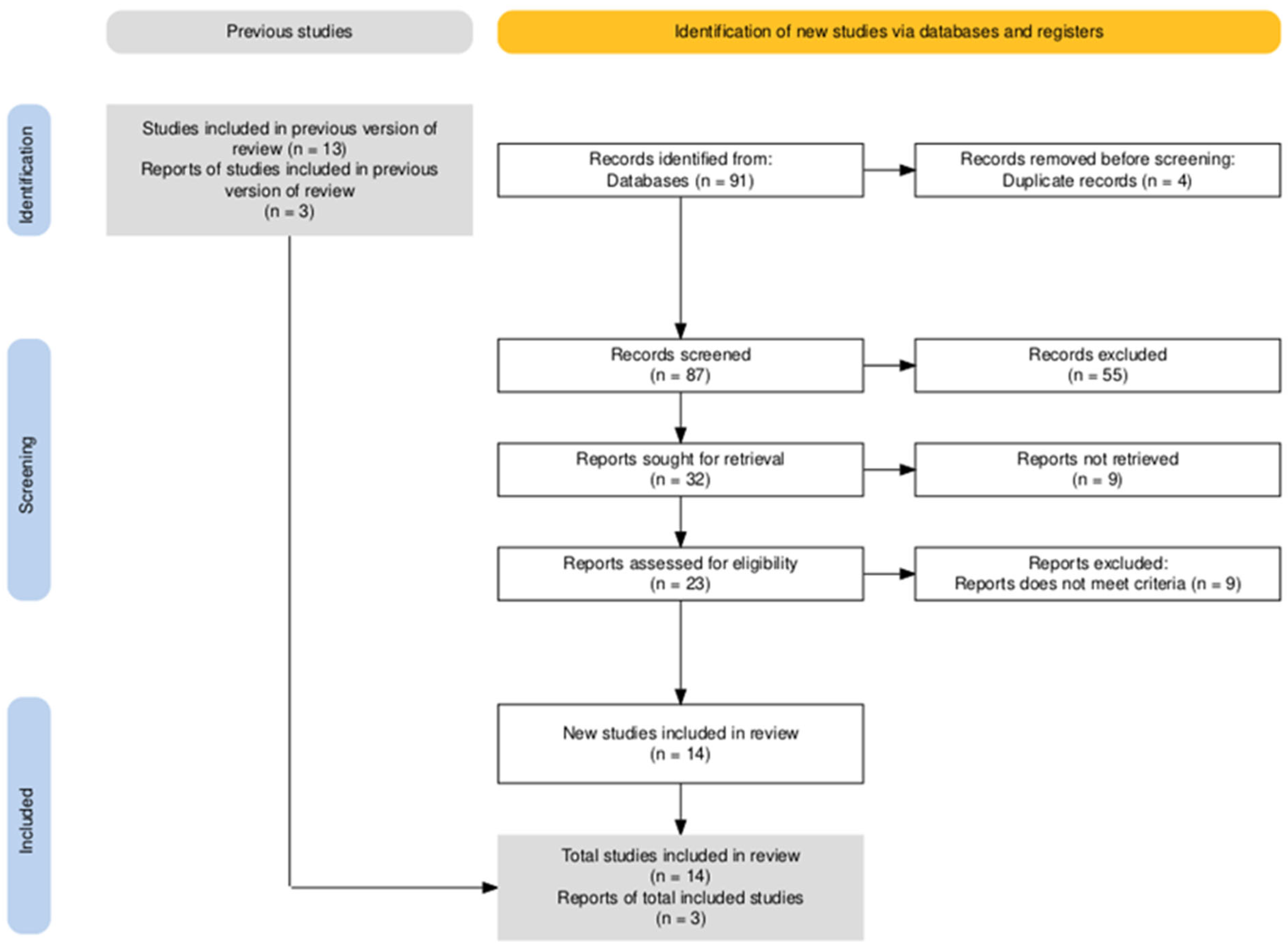
3. Results
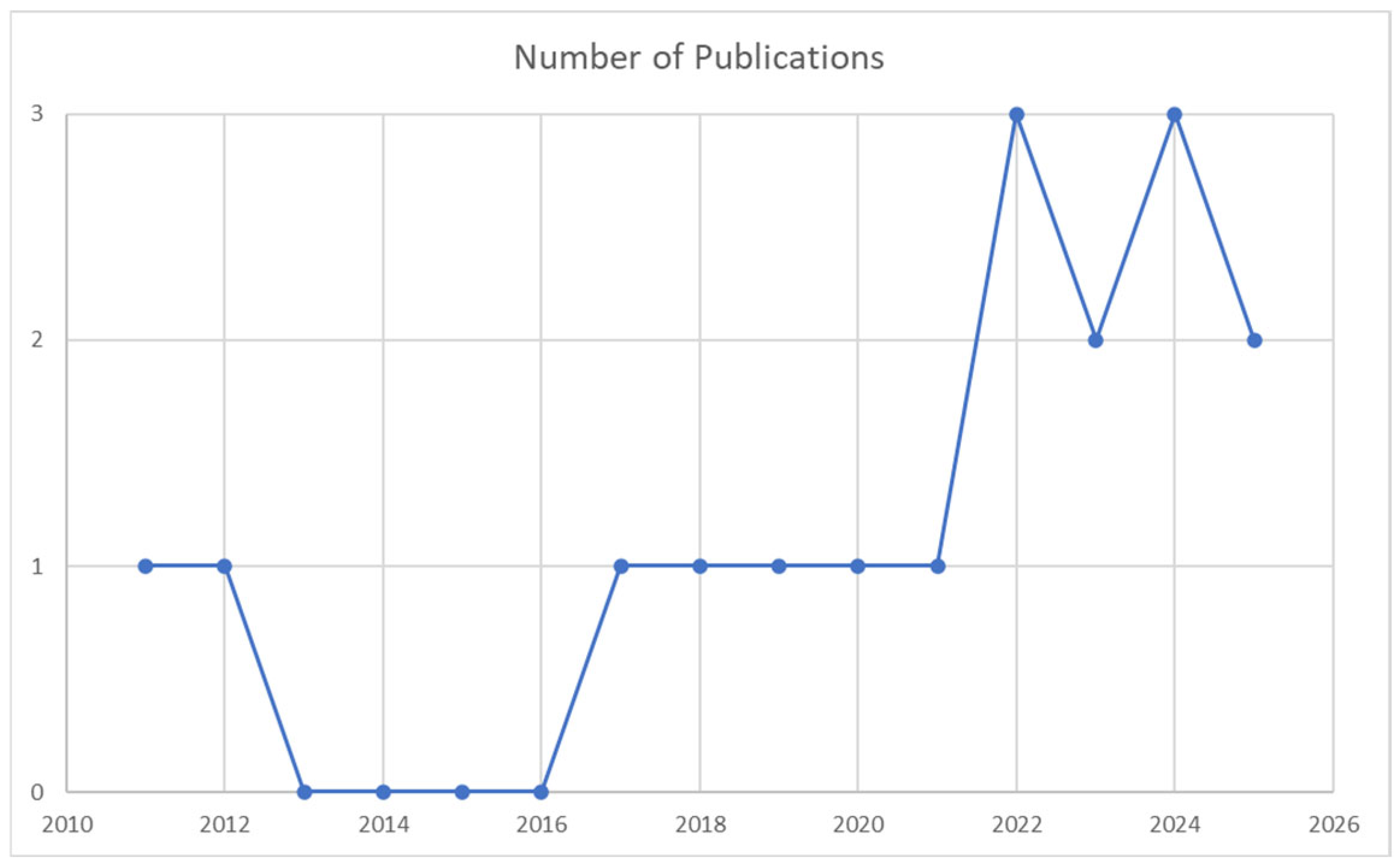
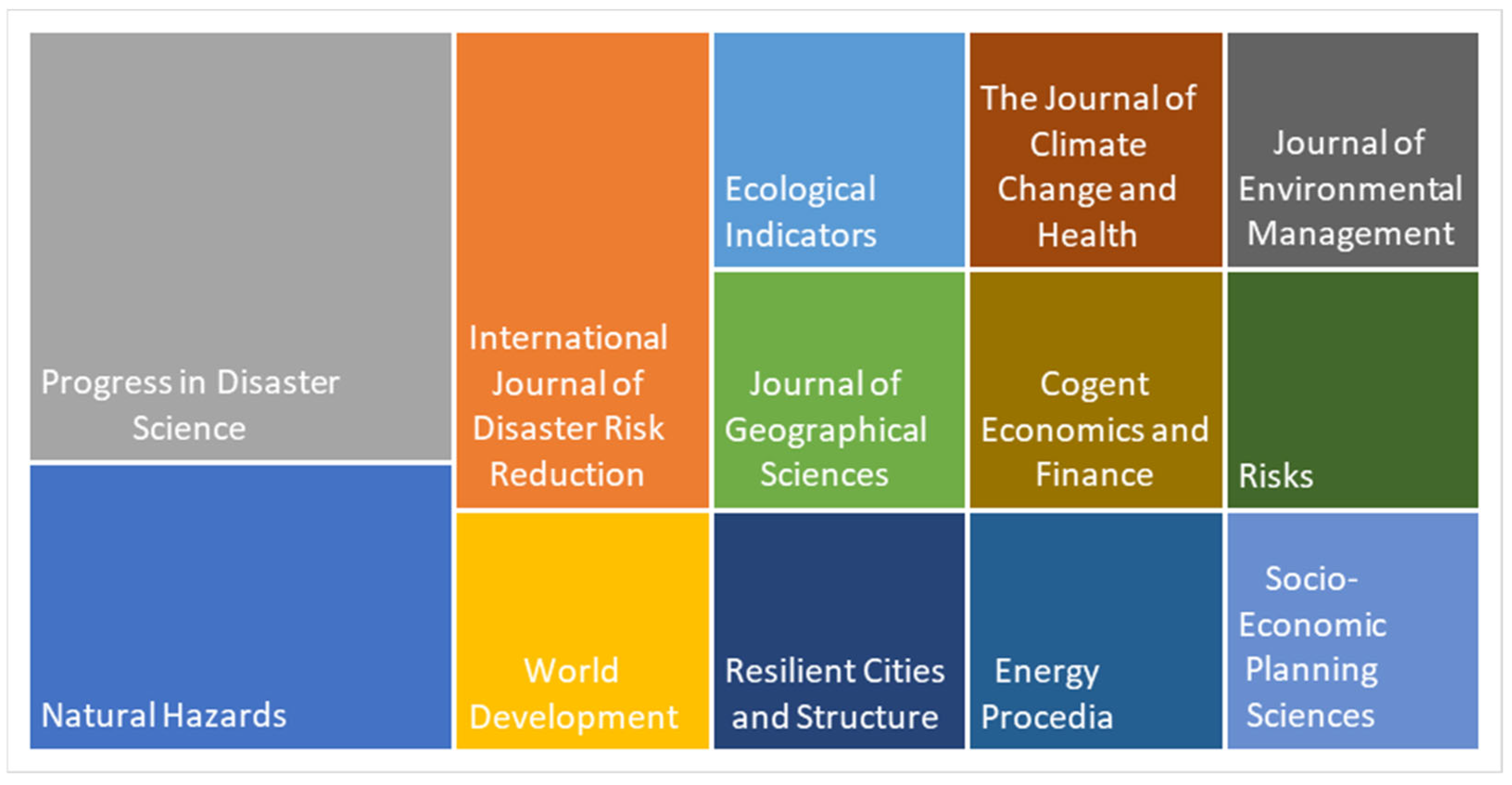
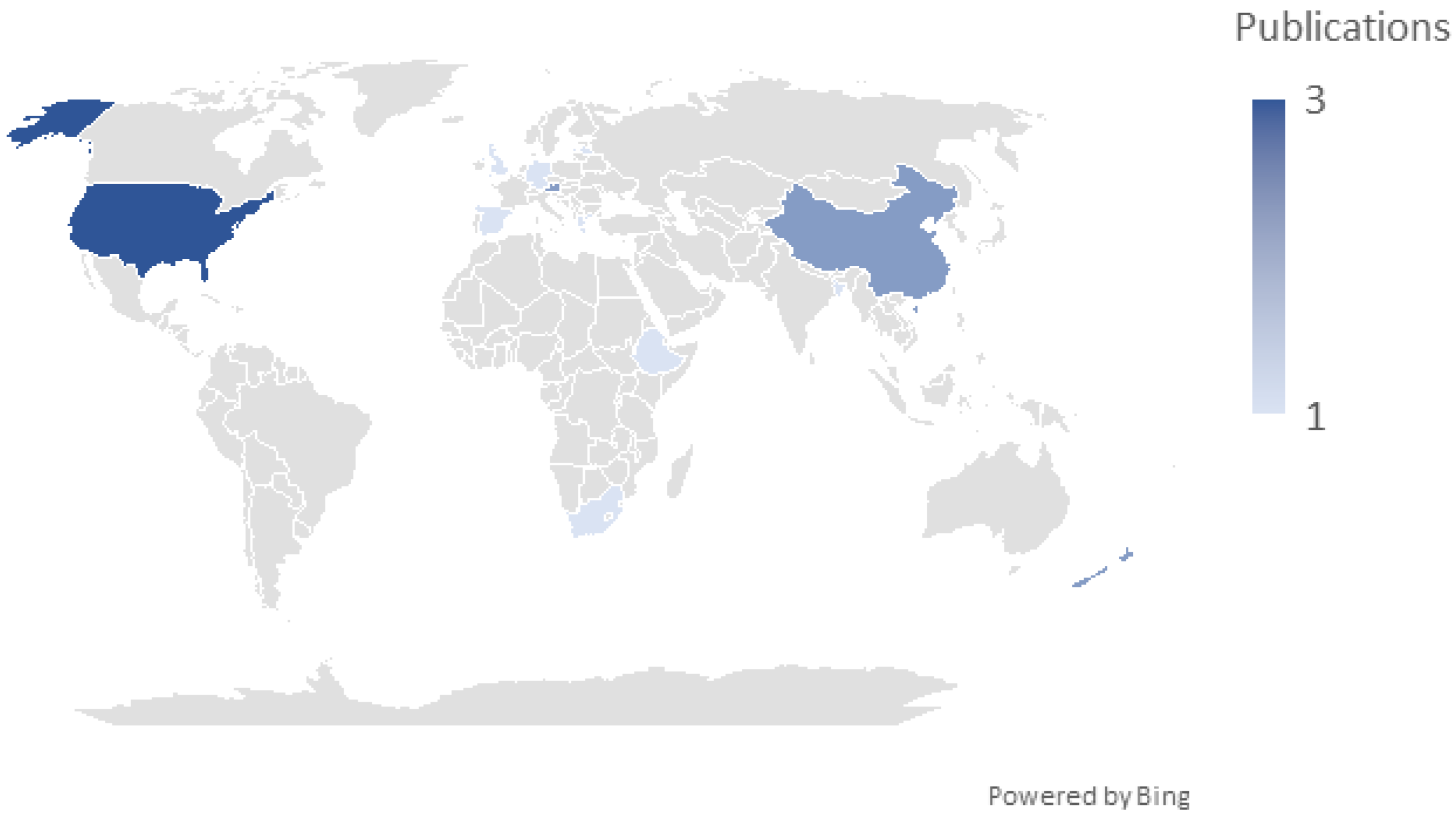
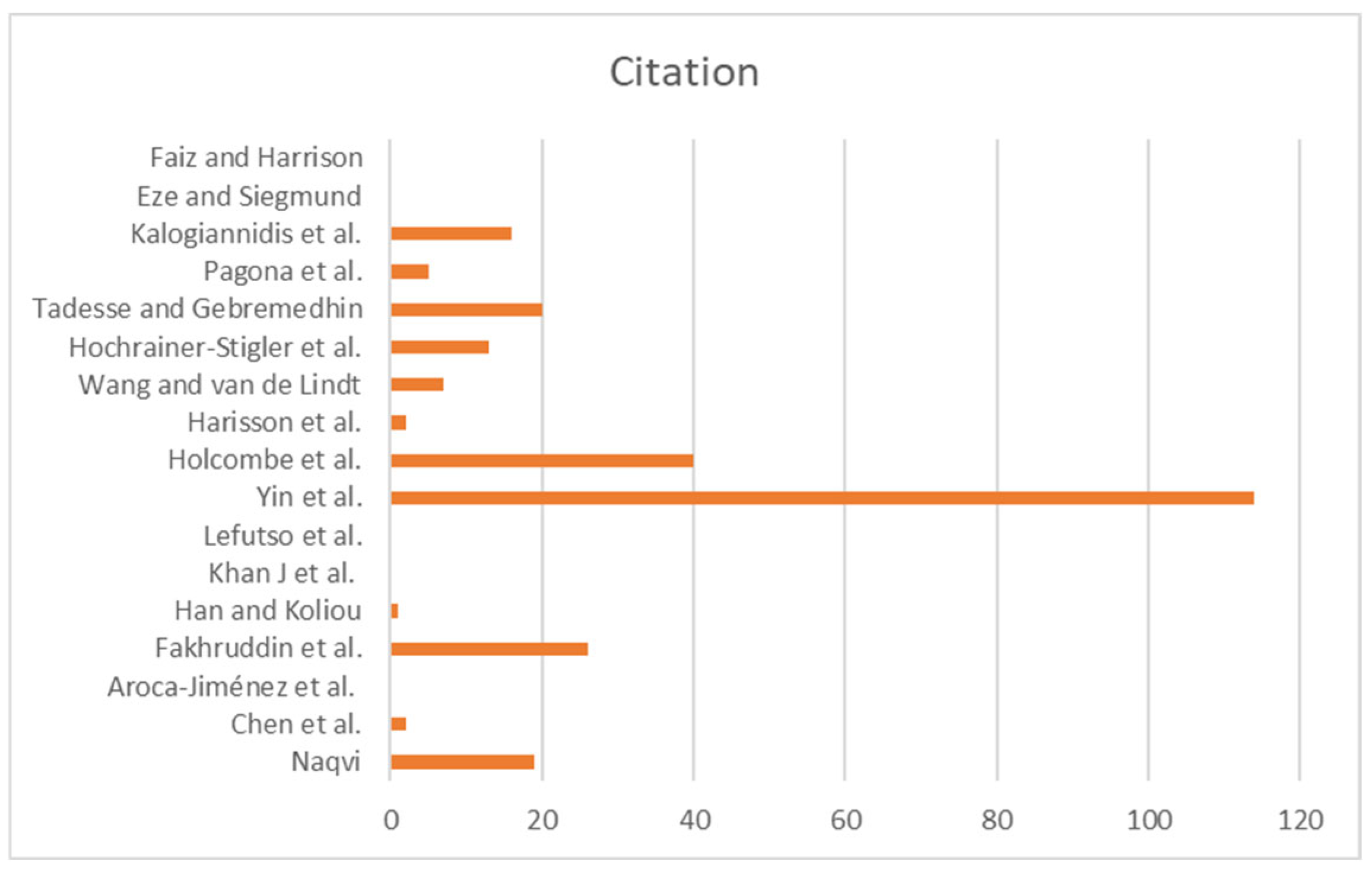
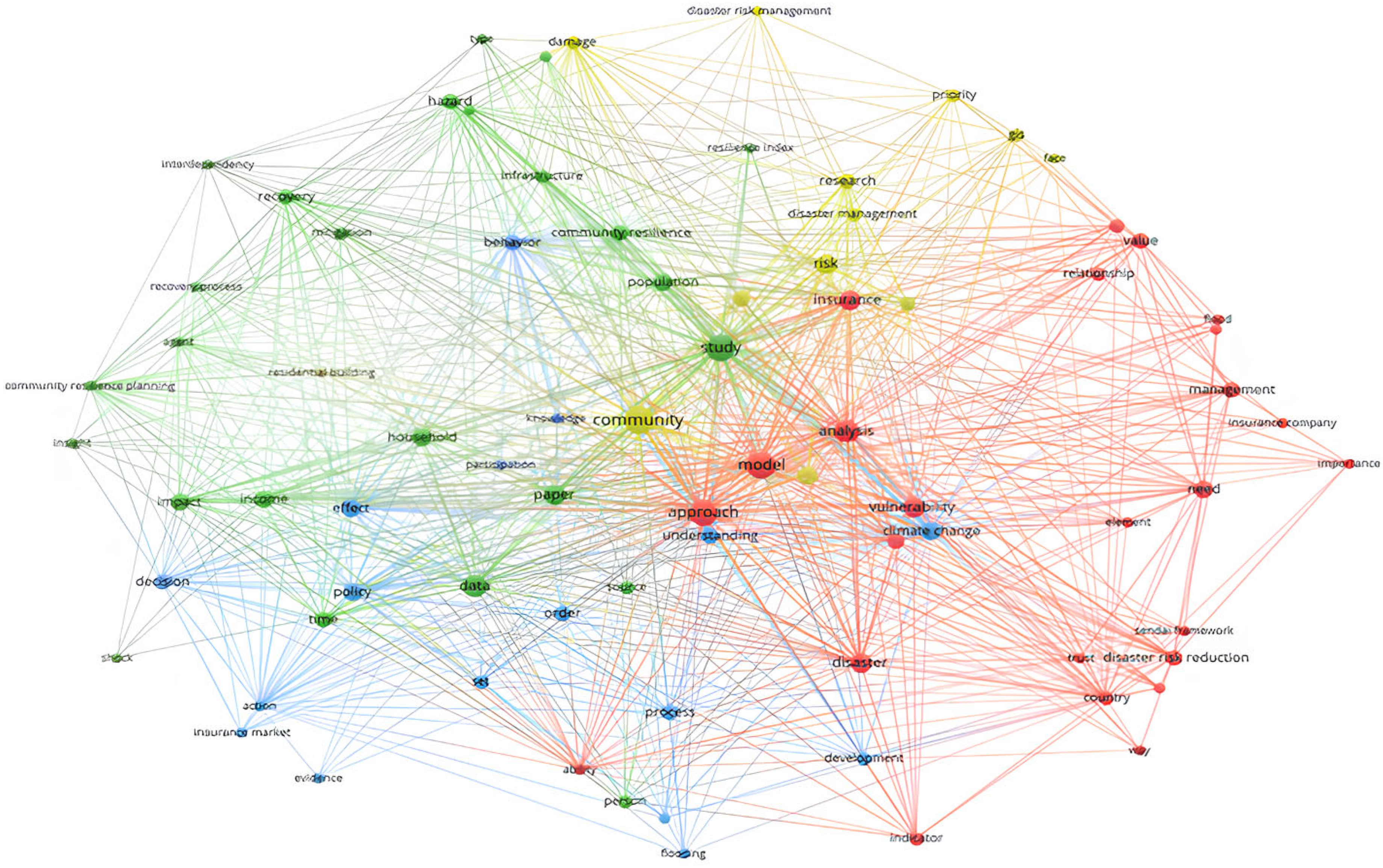
3.1. Bibliometric Analysis
3.2. Main Review Results
3.2.1. Classification by Model Type
3.2.2. Level of Incorporation of Financial Risk Mitigation
- Level 1—No explicit financial incorporation
- Level 2—Conceptual or partial financial reference
- Level 3—Explicit financial incorporation
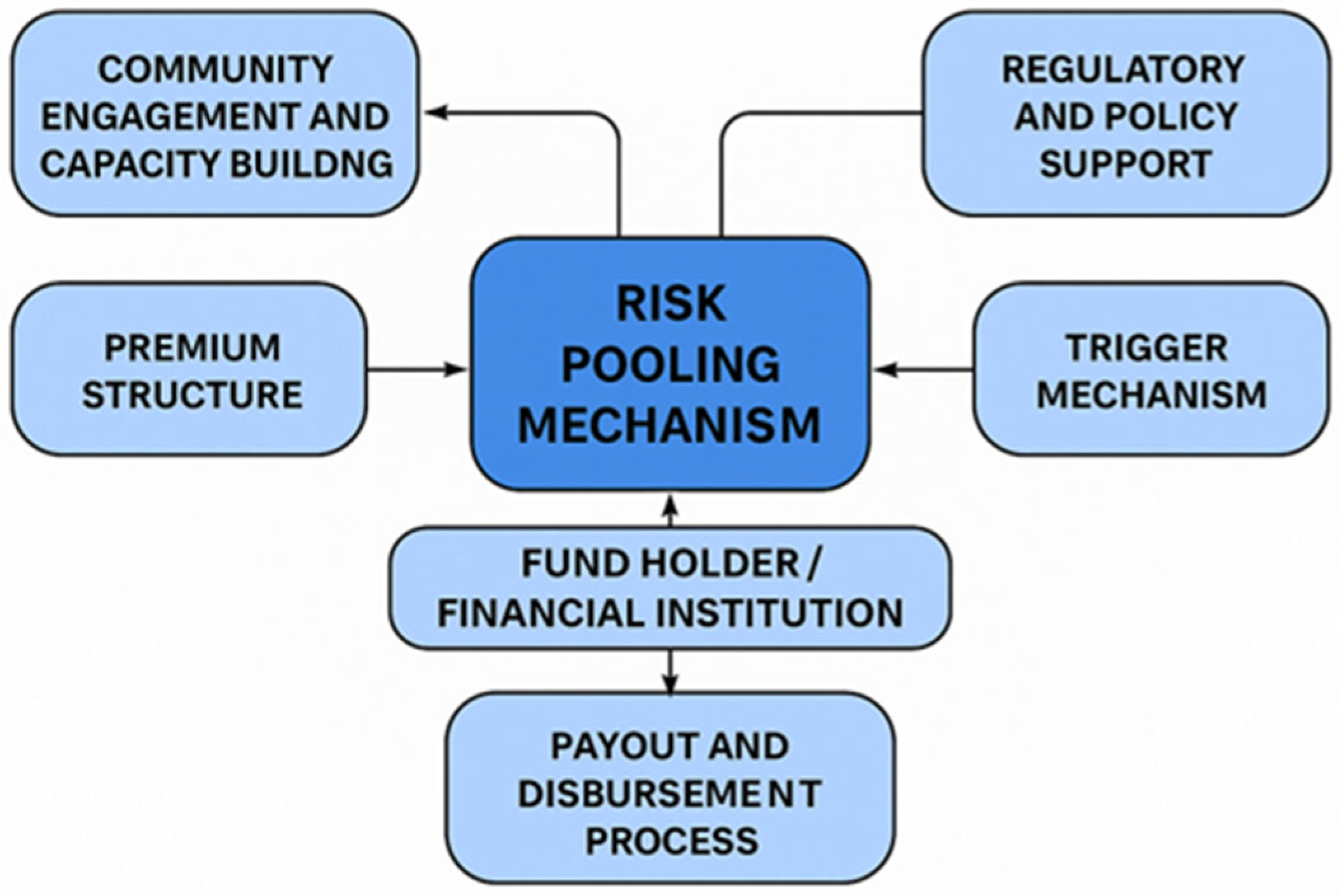
3.2.3. Structural Components
4. Discussion
4.1. Study Gaps
4.2. Future Study
4.3. Limitations of the Review
5. Conclusions
Supplementary Materials
Author Contributions
Funding
Institutional Review Board Statement
Informed Consent Statement
Data Availability Statement
Acknowledgments
Conflicts of Interest
Abbreviations
| CBDRM | Community-based disaster risk management |
References
- Allen, K.M. Community-based disaster preparedness and climate adaptation: Local capacity-building in the Philippines. Disasters 2006, 30, 81–101. [Google Scholar] [CrossRef]
- Tariq, H.; Pathirage, C.; Fernando, T. Measuring community disaster resilience at local levels: An adaptable resilience framework. Int. J. Disaster Risk Reduct. 2021, 62, 102358. [Google Scholar] [CrossRef]
- Aven, T. Risk assessment and risk management: Review of recent advances on their foundation. Eur. J. Oper. Res. 2016, 253, 1–13. [Google Scholar] [CrossRef]
- Surminski, S.; Bouwer, L.M.; Linnerooth-Bayer, J. How insurance can support climate resilience. Nat. Clim. Change 2016, 6, 333–334. [Google Scholar] [CrossRef]
- Ale, B.; Hartford, D.; Slater, D. ALARP and CBA all in the same game. Saf. Sci. 2015, 76, 90–100. [Google Scholar] [CrossRef]
- Kunreuther, H.C.; Michel-Kerjan, E.O.; Doherty, N.A.; Grace, M.F.; Klein, R.W.; Pauly, M.V. At War with the Weather; The MIT Press: Cambridge, MA, USA, 2009. [Google Scholar] [CrossRef]
- Aerts, J.C.J.H.; Botzen, W.J.W.; Emanuel, K.; Lin, N.; de Moel, H.; Michel-Kerjan, E.O. Evaluating Flood Resilience Strategies for Coastal Megacities. Science 2014, 344, 473–475. [Google Scholar] [CrossRef]
- Mahdyiar, M.; Porter, B. The Risk Assessment Process: The Role of Catastrophe Modeling in Dealing with Natural Hazards. In Catastrophe Modeling: A New Approach to Managing Risk; Kluwer Academic Publishers: Boston, MA, USA, 2005; pp. 45–68. [Google Scholar] [CrossRef]
- Surminski, S.; Oramas-Dorta, D. Flood insurance schemes and climate adaptation in developing countries. Int. J. Disaster Risk Reduct. 2014, 7, 154–164. [Google Scholar] [CrossRef]
- Page, M.J.; McKenzie, J.E.; Bossuyt, P.M.; Boutron, I.; Hoffmann, T.C.; Mulrow, C.D.; Shamseer, L.; Tetzlaff, J.M.; Akl, E.A.; Brennan, S.E.; et al. The PRISMA 2020 statement: An updated guideline for reporting systematic reviews. BMJ 2021, 372, n71. [Google Scholar] [CrossRef]
- Martín-Martín, A.; Orduna-Malea, E.; Thelwall, M.; López-Cózar, E.D. Google Scholar, Web of Science, and Scopus: A systematic comparison of citations in 252 subject categories. J. Informetr. 2018, 12, 1160–1177. [Google Scholar] [CrossRef]
- Falagas, M.E.; Pitsouni, E.I.; Malietzis, G.A.; Pappas, G.; Kouranos, V.D.; Arencibia-Jorge, R.; Karageorgopoulos, D.E.; Reagan-Shaw, S.; Nihal, M.; Ahmad, N.; et al. Comparison of PubMed, Scopus, Web of Science, and Google Scholar: Strengths and weaknesses. FASEB J. 2008, 22, 338–342. [Google Scholar] [CrossRef]
- Bramer, W.M.; Rethlefsen, M.L.; Kleijnen, J.; Franco, O.H. Optimal database combinations for literature searches in systematic reviews: A prospective exploratory study. Syst. Rev. 2017, 6, 245. [Google Scholar] [CrossRef]
- Surya, H.A.; Sukono; Napitupulu, H.; Ismail, N. A Systematic Literature Review of Insurance Claims Risk Measurement Using the Hidden Markov Model. Risks 2024, 12, 169. [Google Scholar] [CrossRef]
- Aria, M.; Cuccurullo, C. bibliometrix: An R-tool for comprehensive science mapping analysis. J. Informetr. 2017, 11, 959–975. [Google Scholar] [CrossRef]
- Donthu, N.; Kumar, S.; Mukherjee, D.; Pandey, N.; Lim, W.M. How to conduct a bibliometric analysis: An overview and guidelines. J. Bus. Res. 2021, 133, 285–296. [Google Scholar] [CrossRef]
- Cole, S.; Giné, X.; Tobacman, J.; Topalova, P.; Townsend, R.; Vickery, J. Barriers to Household Risk Management: Evidence from India. Am. Econ. J. Appl. Econ. 2013, 5, 104–135. [Google Scholar] [CrossRef] [PubMed]
- Clarke, D.J.; Dercon, S. Dull Disasters? Oxford University Press: Oxford, Oxfordshire, UK, 2016. [Google Scholar] [CrossRef]
- Purwandari, T.; Hidayat, Y.; Sukono; Kalfin; Ibrahim, R.A.; Subiyanto. Development of the Black–Scholes Model for Determining Insurance Premiums to Mitigate the Risk of Disaster Losses Using the Principles of Mutual Cooperation and Regional Economic Growth. Risks 2024, 12, 110. [Google Scholar] [CrossRef]
- Haimes, Y.Y. On the Complex Definition of Risk: A Systems-Based Approach. Risk Anal. 2009, 29, 1647–1654. [Google Scholar] [CrossRef]
- Sukono; Ghazali, P.L.B.; Ibrahim, R.A.; Riaman; Mamat, M.; Sambas, A.; Hidyat, Y. Price model of multiple-trigger flood bond with trigger indices of aggregate losses and maximum number of submerged houses. Int. J. Disaster Risk Reduct. 2025, 116, 105156. [Google Scholar] [CrossRef]
- Cutter, S.L.; Ash, K.D.; Emrich, C.T. The geographies of community disaster resilience. Glob. Environ. Change 2014, 29, 65–77. [Google Scholar] [CrossRef]
- Hofer, L.; Zanini, M.A.; Gardoni, P. Risk-based catastrophe bond design for a spatially distributed portfolio. Struct. Saf. 2020, 83, 101908. [Google Scholar] [CrossRef]
- Yin, Z.; Yin, J.; Xu, S.; Wen, J. Community-based scenario modelling and disaster risk assessment of urban rainstorm waterlogging. J. Geogr. Sci. 2011, 21, 274–284. [Google Scholar] [CrossRef]
- Holcombe, E.; Smith, S.; Wright, E.; Anderson, M.G. An integrated approach for evaluating the effectiveness of landslide risk reduction in unplanned communities in the Caribbean. Nat. Hazards 2012, 61, 351–385. [Google Scholar] [CrossRef]
- Fakhruddin, B.; Reinen-Hamill, R.; Robertson, R. Extent and evaluation of vulnerability for disaster risk reduction of urban Nuku’alofa, Tonga. Prog. Disaster Sci. 2019, 2, 100017. [Google Scholar] [CrossRef]
- Tadesse, T.; Zeleke, T.G. The impact of the productive safety net program (PSNP) on food security and asset accumulation of rural households’: Evidence from Gedeo zone, Southern Ethiopia. Cogent Econ. Financ. 2022, 10, 2087285. [Google Scholar] [CrossRef]
- Kalogiannidis, S.; Toska, E.; Chatzitheodoridis, F.; Kalfas, D. Using School Systems as a Hub for Risk and Disaster Management: A Case Study of Greece. Risks 2022, 10, 89. [Google Scholar] [CrossRef]
- Hochrainer-Stigler, S.; Laurien, F.; Velev, S.; Keating, A.; Mechler, R. Standardized disaster and climate resilience grading: A global scale empirical analysis of community flood resilience. J. Environ. Manag. 2020, 276, 111332. [Google Scholar] [CrossRef]
- Khan, M.A.; Hasan, K.; Kabir, K.H. Determinants of households’ livelihood vulnerability due to climate induced disaster in southwest coastal region of Bangladesh. Prog. Disaster Sci. 2022, 15, 100243. [Google Scholar] [CrossRef]
- Harrison, S.; Macmillan, A.; Bond, S.; Stephenson, J. Participatory modeling for local and regional collaboration on climate change adaptation and health. J. Clim. Chang. Health 2023, 12, 100235. [Google Scholar] [CrossRef]
- Han, X.; Koliou, M. Investigation of effects of hazard geometry and mitigation strategies on community resilience under tornado hazards using an Agent-based modeling approach. Resilient Cities Struct. 2024, 3, 1–19. [Google Scholar] [CrossRef]
- Faiz, T.I.; Harrison, K.W. A risk-averse stochastic optimization model for community resilience planning. Socio-Econ. Plan. Sci. 2024, 92, 101835. [Google Scholar] [CrossRef]
- Aroca-Jiménez, E.; Cutter, S.L.; Bodoque, J.M.; García, J.A. Enhancing understanding of vulnerability and resilience to flash floods through comparative analysis of multidimensional indices. Int. J. Disaster Risk Reduct. 2025, 125, 105540. [Google Scholar] [CrossRef]
- Eze, E.; Siegmund, A. Appraising competency gaps among UNESCO-designated heritage site actors in disaster risk reduction innovations. Prog. Disaster Sci. 2024, 22, 100321. [Google Scholar] [CrossRef]
- Chen, S.; Zou, Q.; Wang, B.; Zhou, W.; Yang, T.; Jiang, H.; Zhou, B.; Yao, H. Disaster risk management of debris flow based on time-series contribution mechanism (CRMCD): Nonnegligible ecological vulnerable multi-ethnic communities. Ecol. Indic. 2023, 157, 111266. [Google Scholar] [CrossRef]
- Naqvi, A. Deep Impact: Geo-Simulations as a Policy Toolkit for Natural Disasters. World Dev. 2017, 99, 395–418. [Google Scholar] [CrossRef]
- Pagano, A.J.; Feofilovs, M.; Romagnoli, F. The relationship between insurance companies and natural disaster risk reduction: Overview of the key characteristics and mechanisms dealing with climate change. Energy Procedia 2018, 147, 566–572. [Google Scholar] [CrossRef]
- Wang, W.L.; van de Lindt, J.W. Quantitative modeling of residential building disaster recovery and effects of pre- and post-event policies. Int. J. Disaster Risk Reduct. 2021, 59, 102259. [Google Scholar] [CrossRef]
- Lefutso, D.; Ogundeji, A.A.; Danso-Abbeam, G.; Nyam, Y.S. Low-income households’ willingness to pay for flood risk insurance in South Africa. Prog. Disaster Sci. 2025, 25, 100403. [Google Scholar] [CrossRef]
- Bornmann, L.; Daniel, H. What do citation counts measure? A review of studies on citing behavior. J. Doc. 2008, 64, 45–80. [Google Scholar] [CrossRef]




| No | Author(s) | Mathematical Model | Model Function | |
|---|---|---|---|---|
| 1 | Faiz and Harrison [33] | Mean Risk Model as Mixed-Integer Linear Programing | The definitions of sets, parameters, and the decision variables are as shown in [33]. | Incorporating hazard uncertainty alongside low-probability, high-impact events. Combining fragility functions to model building vulnerability, with population dislocation models based on demographic data. Analyzing community resilience through two major metrics, namely, the number of households displaced and the time to restore essential services. |
| 2 | Eze and Siegmund [35] | - | - | - |
| 3 | Fakhruddin et al. [26] | Additive Weight-Based Aggregation | signifies the normalized indicator. | Assessing the vulnerability of urban infrastructure systems to disasters and climate change. |
| 4 | Aroca- Jiménez et al. [34] | Incorporated Multidimensional Vulnerability Index and Incorporated Multidimensional Resilience Index | with statistical models, Spearman correlation, ordinary least squares, and geographically weighted regression. | Measuring multi-dimensional vulnerability (social, economic, physical, ecosystem, institutional, cultural). |
| 5 | Chen et al. [36] | Community Risk Management Capacity for Debris Flow | signifies the capabilities of each criterion layer, with the statistic model R hierarchical clustering for the category of indicator, coefficient of variation for indicator selection, entropy-weighted gray correlation analysis for entropy weight and correlation, linear weighted synthesis for score aggregate, and contribution degree model for three different management types (prevention-oriented, emergency-oriented, recovery-oriented). | Developing a risk management evaluation system for multi-ethnic communities that were vulnerable to disasters and had socio-economic challenges, with three categories. |
| 6 | Naqvi [37] | Spatially Explicit Agent-Based Model | was defined as per unit of output times the total output produced by workers: or wage rate times worker productivity siginfied by was defined as every time, defined as . Locations sold the goods being produced in different locations in the region or exported the goods outside the region. Unit costs were determined as , defined as signifies the probability of migrating based on the real income ratio of the target location to the current location. | Mapping the impact of major earthquakes. |
| 7 | Pagano et al. [38] | - | - | - |
| 8 | Kalogiannidis et al. [28] | Multiple Linear Regression | are the regression coefficients of the two independent variables. | Testing the relationship between school systems and increased disaster risk reduction capacity. |
| 9 | Tadesse and Zeleke [27] | Logistics Distribution Function | represents the disturbance term. | Controlling selection bias and evaluating the impact of the productive safety net program on daily calorie consumption, annual consumption expenditure, household income, livestock ownership, and housing conditions. |
| 10 | Hochrainer-Stigler et al. [29] | General Linear Modeling | Statistical analysis using | Measuring community flood resilience. |
| 11 | Wang and Lindt [39] | Two-Step Residential Recovery Model | captured administrative and resource-related delays. The repair phase captured physical construction time based on damage state, using fragility and restoration data. The total time required for each building to be fully restored could be determined by combining the delay time and repair time. For each time step, there was a probability that each building was fully recovered. Therefore, the percentage of residential buildings that were fully restored could be calculated. and where | Modeling two stages of recovery, namely, delay time and repair time, and considering the distribution of household income in determining the source of repair financing. |
| 12 | Harrison et al. [31] | - | - | - |
| 13 | Lefutso et al. [40] | Discrete Choice Experiment and Mixed Logic Model | The utility that individuals derive from selecting alternative insurance options is the random error term that captures unobserved factors assumed to follow a Gumbel distribution. The econometric model that was finally applied to derive the WTP of individuals was in selected task t was is the parameter. The willingness to pay of individuals was computed by represent the marginal utility of each attribute. | Exploring the preferences of poor individuals toward flood insurance attributes (coverage size, premiums, and excess costs) and considering the heterogeneity of preferences between individuals. |
| 14 | Han and Koliou [32] | Resilience Index, Community Resilience Index, and Model Fragility Functions | The resilience index for an individual system was represents the time variant functionality of the system. The community resilience was calculated by th system. This mitigation strategy focused on business resilience after a tornado. Following damage assessment, contractor mobilization and financing proceeded in parallel, and insured businesses filed claims, while others took loans. Each step, including permit acquisition, introduced delays that could be modeled using fragility functions. are the median and dispersion of the fragility function, respectively. | Modeling community resilience to tornadoes for structural damage and recovery delays. |
| 15 | Holcombe et al. [25] | Present Value Calculation of Landslide Costs | was was The definitions of variables and assumption are shown in [25]. | Calculating the probability of a landslide event multiplied by the exposure and vulnerability of elements at the location. |
| 16 | Khan et al. [30] | Livelihood Vulnerability Index and Ordered Logistic Regression Model | Various factors such as socio-demographics, livelihood strategies, social networks, health, food, water, and climate-related disasters were considered to assess livelihood vulnerability at the union level. Each sub-component was first standardized to a 0–1 scale using this equation. are the minimum and maximum values, respectively, of the same indicator. Calculation of the average of the principal components: is the number of sub-components in each major component. Calculation of the weighted value of each dimension of LVI (IPCC): is the number of major components under each dimension. The three dimensions were finally combined to generate the LVI (IPCC) after computing the exposure, sensitivity, and adaptive capacity: (the weighted mean of the major components, namely, health, food, and water). The Kruskal–Wallis H Test was used to differentiate vulnerability between groups, and an ordered logistic regression model was used to identify significant indicators that influenced vulnerability. | Measuring household vulnerability to climate disasters and identifying significant indicators that influence vulnerability. |
| 17 | Yin et al. [24] | Disaster Risk Formula, Urban Rainfall Intensity Formula, Surface Runoff Model using SCS Curve Number, Waterlogging Estimation Model, Loss Estimation Based on Stage-Damage Curve, and Annual Risk Model | The possibility of expected losses: signifies exposure to the element of risk, including buildings, population, property, or other human activities. Calculation of different intensities of rainfall: representes the duration of rainfall. Surface runoff model using the SCS curve number: is curve number. Waterlogging estimation model: ) was defined as the area under the risk curve: . | Spatial mapping of inundation, vulnerability, losses, and risk evaluation. |
| Author(s) | Financial Risk Mitigation | Local Government/Government | Community | Institute/ Company/ NGO |
|---|---|---|---|---|
| Faiz and Harrison [33] | ✔ | ✔ | ✔ | ✔ |
| Eze and Siegmund [35] | ✔ | ✘ | ✘ | ✔ |
| Fakhruddin et al. [26] | ✔ | ✔ | ✔ | ✔ |
| Aroca- Jiménez et al. [34] | ✘ | ✔ | ✔ | ✔ |
| Chen et al. [36] | ✘ | ✔ | ✔ | ✔ |
| Naqvi [37] | ✔ | ✔ | ✔ | ✔ |
| Pagano et al. [38] | ✔ | ✔ | ✔ | ✔ |
| Kalogiannidis et al. [28] | ✘ | ✔ | ✔ | ✔ |
| Tadesse and Zeleke [27] | ✔ | ✔ | ✔ | ✔ |
| Hochrainer-Stigler et al. [29] | ✔ | ✘ | ✘ | ✔ |
| Wang and Lindt [39] | ✔ | ✔ | ✔ | ✔ |
| Harrison et al. [31] | ✘ | ✔ | ✔ | ✔ |
| Lefutson et al. [40] | ✔ | ✔ | ✔ | ✔ |
| Han and Koliou [32] | ✔ | ✔ | ✔ | ✔ |
| Holcombe et al. [25] | ✔ | ✔ | ✔ | ✘ |
| Khan et al. [30] | ✘ | ✔ | ✔ | ✔ |
| Yin et al. [24] | ✘ | ✔ | ✔ | ✔ |
| No. | Component | Description | Example from Reviewed Studies |
|---|---|---|---|
| 1 | Risk Pooling Mechanism | A collective fund to spread disaster risk in the community or across regions | Spatial agent-based model explored impact zones and potential to incorporate risk pooling geographically [37] |
| 2 | Premium Structure | Contribution scheme paid by community members, including subsidies for vulnerable groups | Examined community preferences for premium size, coverage, and cost-sharing [40] |
| 3 | Trigger Mechanism | Conditions for payout based on objective indices or verified damages | Showed the role of index-based insurance activated by weather parameters [38] |
| 4 | Fund Holder/Financial Institution | Entity responsible for managing funds (government, NGO, private sector, or hybrid) | Prioritized multi-stakeholder coordination in risk-informed financial management [26] |
| 5 | Payout and Disbursement Process | Mechanism to deliver funds or assistance quickly post-disaster | Considered household income in recovery funding and timing of repairs [39] |
| 6 | Community Engagement and Capacity Building | Participation of local communities in design, monitoring, and education about schemes | Participatory modeling built awareness and strengthened ownership of risk solutions [31] |
| 7 | Regulatory and Policy Support | Enabling laws and policies to facilitate insurance, subsidies, or public–private partnerships | Discussed governance challenges and policy gaps in disaster financial protection [35] |
Disclaimer/Publisher’s Note: The statements, opinions and data contained in all publications are solely those of the individual author(s) and contributor(s) and not of MDPI and/or the editor(s). MDPI and/or the editor(s) disclaim responsibility for any injury to people or property resulting from any ideas, methods, instructions or products referred to in the content. |
© 2026 by the authors. Licensee MDPI, Basel, Switzerland. This article is an open access article distributed under the terms and conditions of the Creative Commons Attribution (CC BY) license.
Share and Cite
Sukono; Susanti, D.; Nahar, J.; Ghazali, P.L.B.; Surya, H.A.; Ibrahim, R.A.; Azahra, A.S.; Sambas, A. A Systematic Study of Mathematical Modeling for Sustainable Community-Based Disaster Risk Management. Sustainability 2026, 18, 2711. https://doi.org/10.3390/su18062711
Sukono, Susanti D, Nahar J, Ghazali PLB, Surya HA, Ibrahim RA, Azahra AS, Sambas A. A Systematic Study of Mathematical Modeling for Sustainable Community-Based Disaster Risk Management. Sustainability. 2026; 18(6):2711. https://doi.org/10.3390/su18062711
Chicago/Turabian StyleSukono, Dwi Susanti, Julita Nahar, Puspa Liza Binti Ghazali, Hilda Azkiyah Surya, Riza Andrian Ibrahim, Astrid Sulistya Azahra, and Aceng Sambas. 2026. "A Systematic Study of Mathematical Modeling for Sustainable Community-Based Disaster Risk Management" Sustainability 18, no. 6: 2711. https://doi.org/10.3390/su18062711
APA StyleSukono, Susanti, D., Nahar, J., Ghazali, P. L. B., Surya, H. A., Ibrahim, R. A., Azahra, A. S., & Sambas, A. (2026). A Systematic Study of Mathematical Modeling for Sustainable Community-Based Disaster Risk Management. Sustainability, 18(6), 2711. https://doi.org/10.3390/su18062711