Article

A Change-Point-Based Deformation Grouping Strategy in Long-Term Near-Real-Time Deformation Monitoring

1
Department of Space Microwave Remote Sensing System, Aerospace Information Research Institute, Chinese Academy of Sciences, Beijing 100190, China
2
School of Electronic, Electrical and Communication Engineering, University of Chinese Academy of Sciences, Beijing 100049, China
*
Author to whom correspondence should be addressed.
Remote Sens. 2026, 18(17), 2956; https://doi.org/10.3390/rs18172956
Submission received: 21 July 2026 / Revised: 28 August 2026 / Accepted: 31 August 2026 / Published: 2 September 2026

Abstract

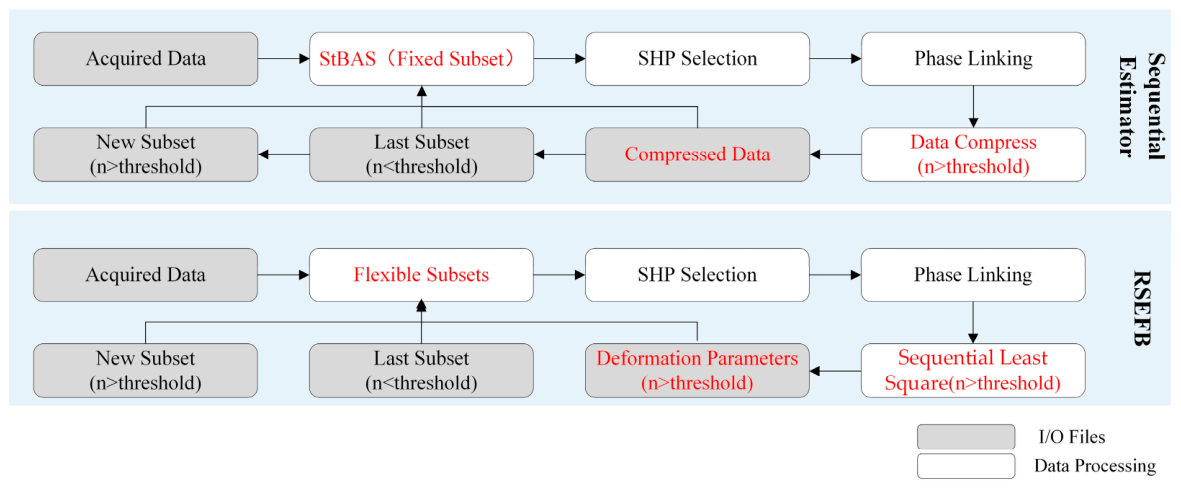
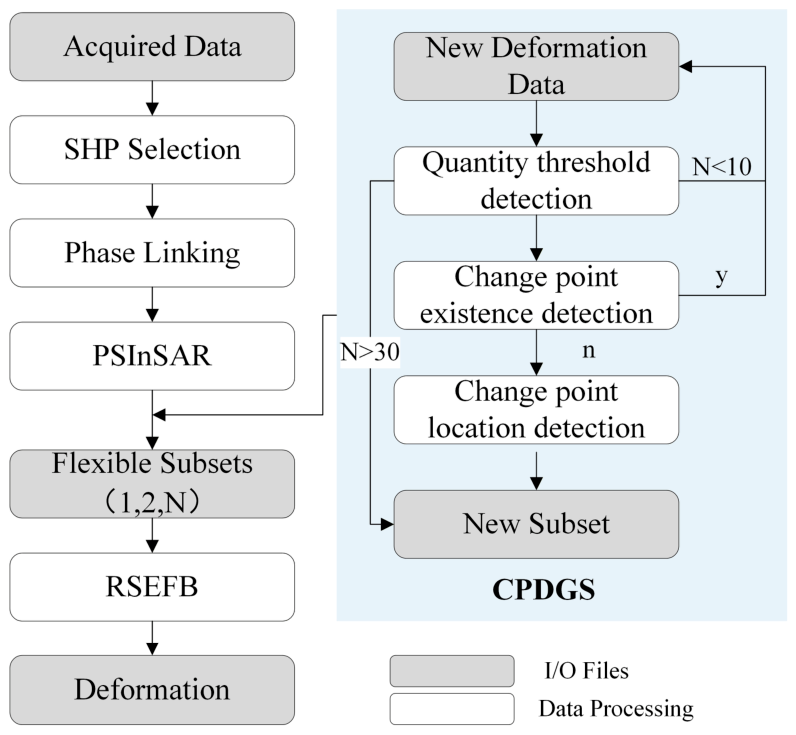
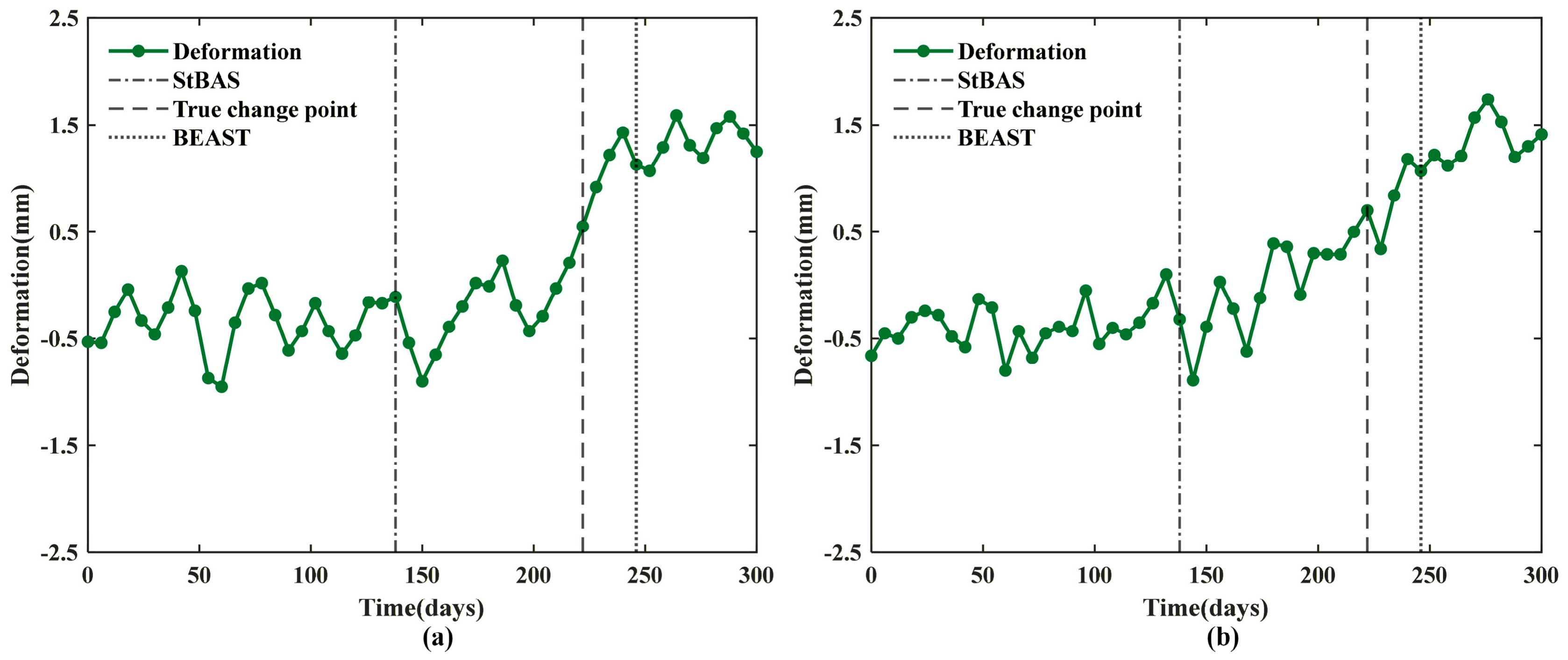
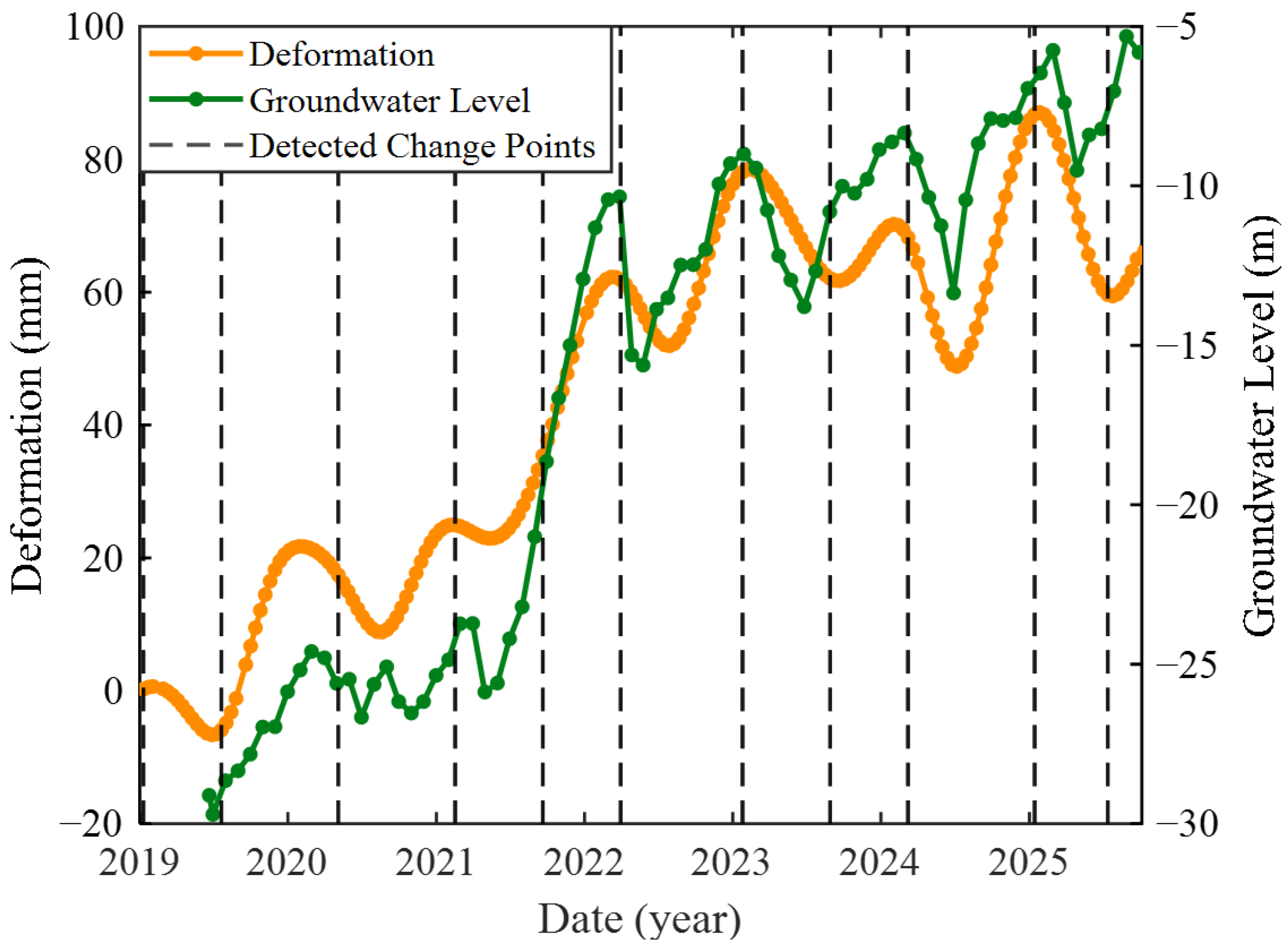
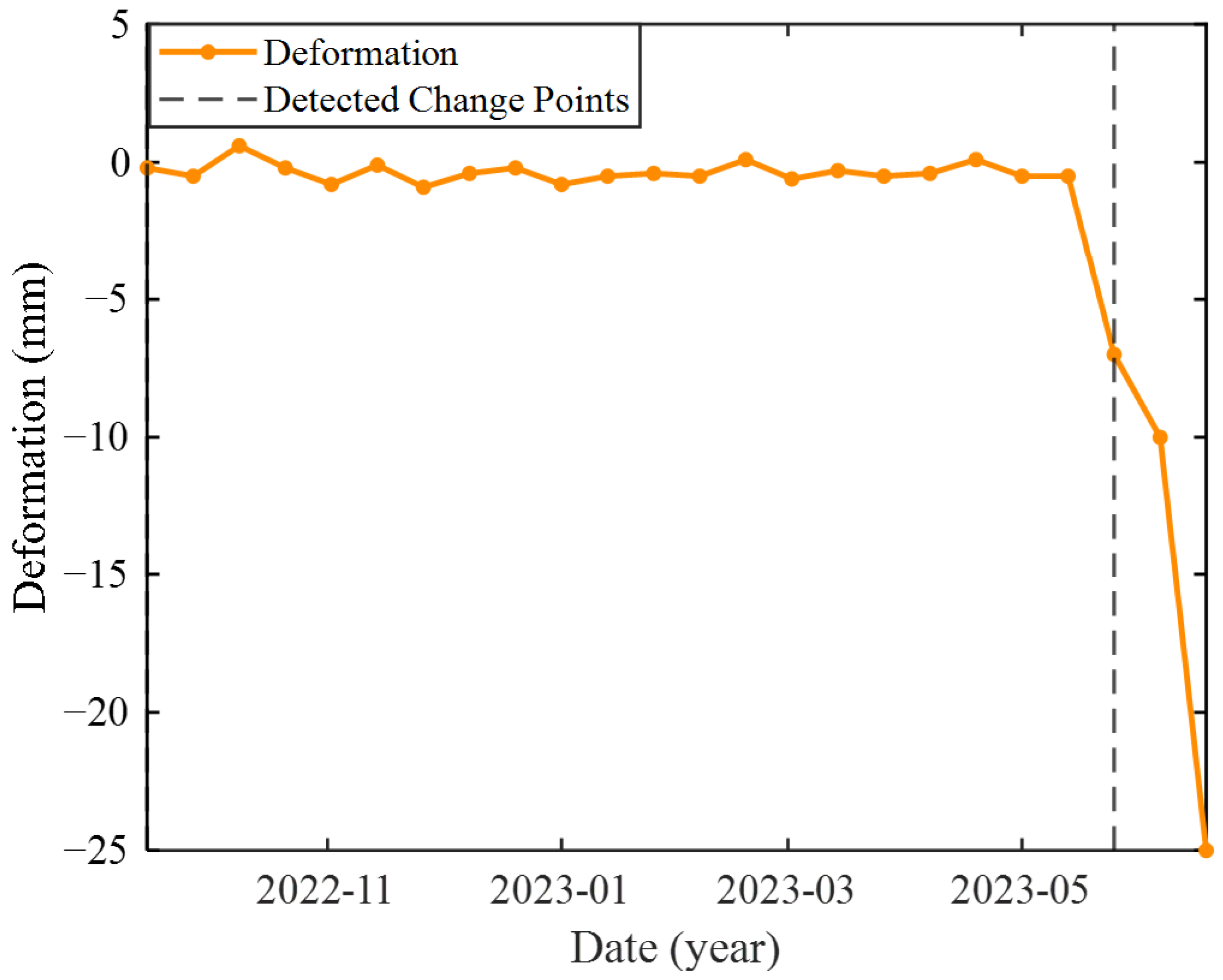
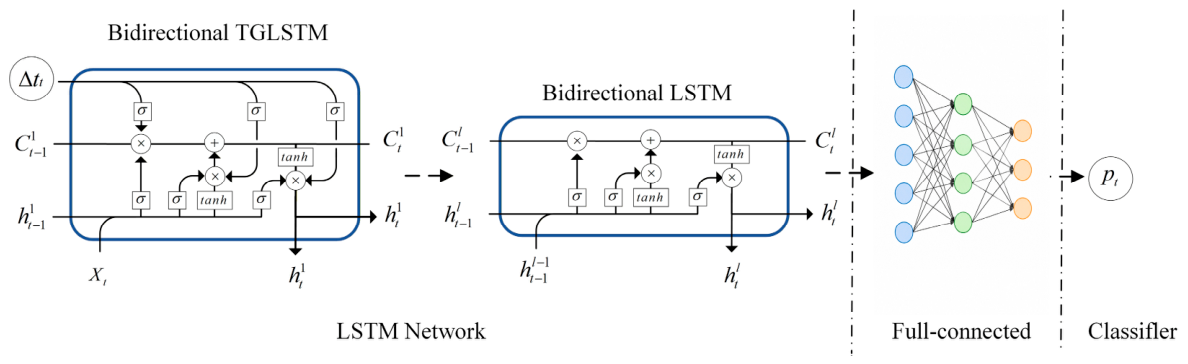
Distributed Scatterer Interferometric Synthetic Aperture Radar (DSInSAR) technology has been widely applied in areas with complex terrain and dense vegetation. However, DSInSAR is computationally intensive and requires considerable processing time. When new observations become available, the entire dataset must be reprocessed without utilizing previously obtained results. This makes DSInSAR unsuitable for long-term continuous monitoring. The Sequential Estimator partitions large datasets into fixed-size subsets and compresses these subsets to avoid redundant processing. The Recursive Sequential Estimator with Flexible Batches (RSEFB) method was proposed to partition large datasets into flexibly sized subsets. However, how to determine appropriate grouping boundaries remains unresolved. In this paper, a Change-Point-Based Deformation Grouping Strategy (CPDGS) is proposed to enhance the deformation estimation accuracy within each group, thereby reducing the attenuation of abrupt deformation signals during estimation. In the proposed method, a Bidirectional Long Short-Term Memory (Bidirectional LSTM) network is employed to identify the potential presence of deformation change points. Bayesian Estimator of Abrupt change, Seasonality and Trend (BEAST) is subsequently used to localize the change points. Considering computational efficiency, an upper limit is also set on the number of Single Look Complex (SLC) per group. Due to the lack of ground truth, simulated data were used for the network training. Comparative experiments show that the proposed Bidirectional LSTM achieves the best overall performance, with an accuracy of 88.43%, a precision of 90.76%, a recall of 86.04%, and an F1-score of 88.34%, outperforming the LSTM and Transformer models. Further comparisons with conventional change point detection methods show that the proposed method achieves an F1-score of 91.23%, higher than Cumulative Sum (CUSUM; 69.20%) and and Bayesian Online Change Point Detection (BOCPD; 84.44%). Experiments using real Interferometric Synthetic Aperture Radar (InSAR) deformation data further demonstrate its effectiveness in identifying deformation change points in practical scenarios.
Keywords: synthetic aperture radar interferometry (InSAR); near-real-time InSAR (NRT InSAR); long short-term memory (LSTM); Bayesian estimator of abrupt change, seasonality and trend (BEAST) synthetic aperture radar interferometry (InSAR); near-real-time InSAR (NRT InSAR); long short-term memory (LSTM); Bayesian estimator of abrupt change, seasonality and trend (BEAST)