Prelaunch Assessment and Correction of Polarization Effects for HIRAS-II on the Fengyun-3 Satellite

Highlights
- A dedicated prelaunch thermal-vacuum polarization test apparatus provided controlled scan-angle measurements, revealing a clear polarization-induced angular modulation in all three HIRAS-II bands.
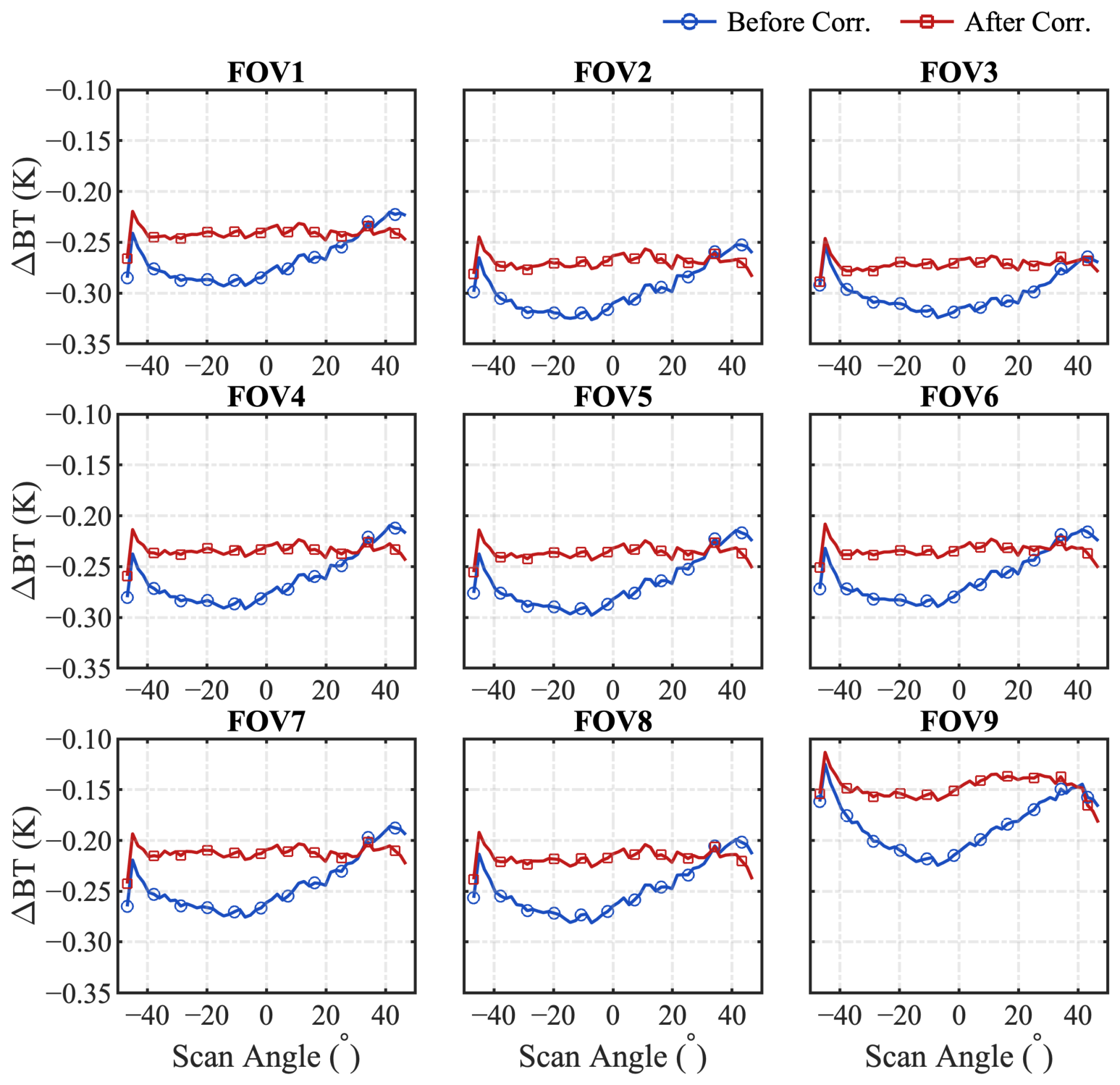
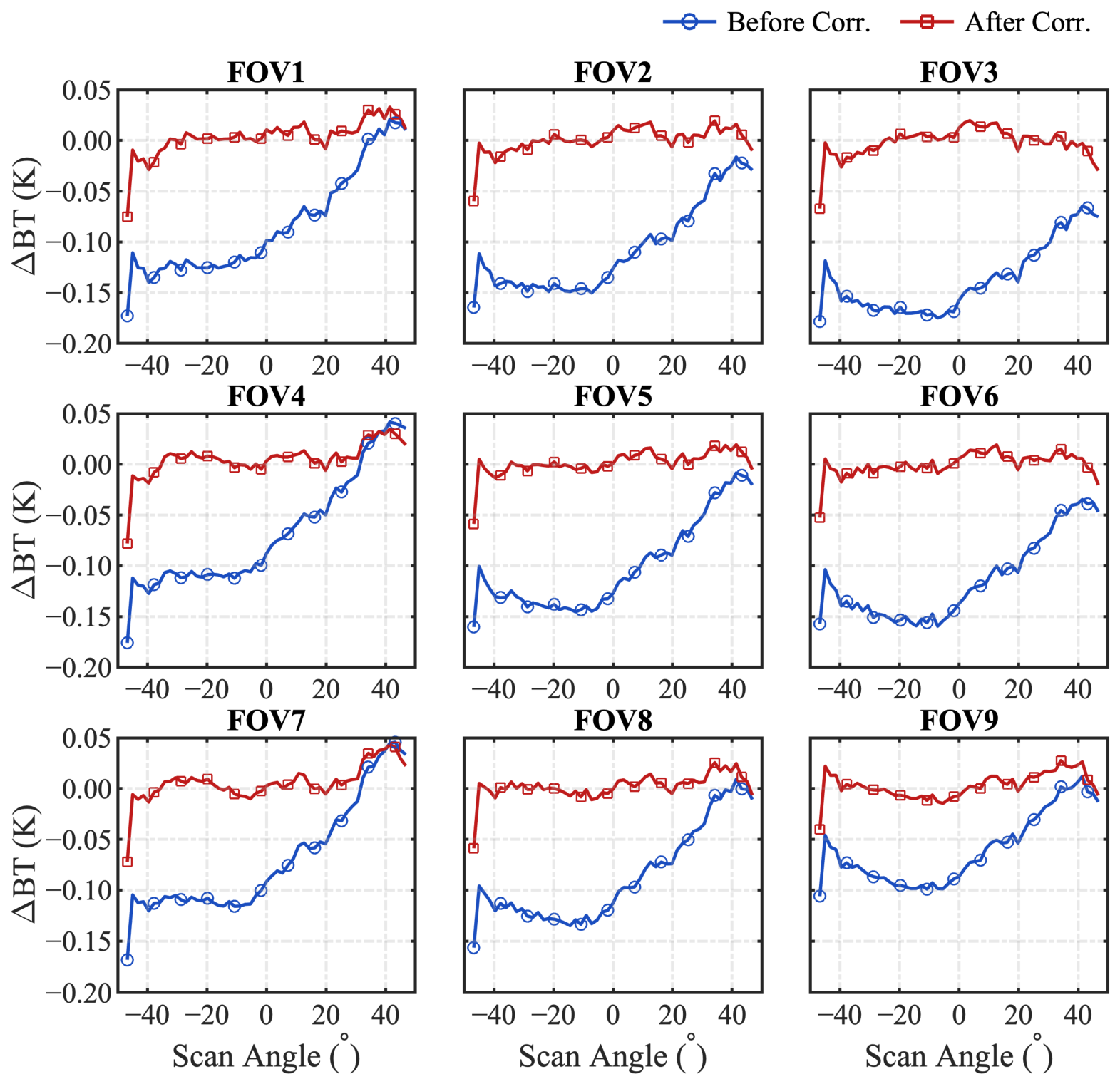
- A decoupled two-step least-squares method retrieved FOV- and channel-specific polarization parameters and reduced the scan-angle-dependent brightness temperature deviations, with maximum reductions of 0.093, 0.064, and 0.174 K in the LW, MW1, and MW2 bands, respectively.
- Controlled prelaunch measurements enable instrument-specific characterization of the polarization response while reducing interference from scene variability and other on-orbit factors.
- The retrieved polarization parameters provide a basis for on-orbit evaluation and correction, helping to improve HIRAS-II radiometric calibration accuracy and the reliability of Level-1 radiance data for atmospheric profile retrievals and assimilation into global numerical weather prediction (NWP) systems.
Abstract
1. Introduction
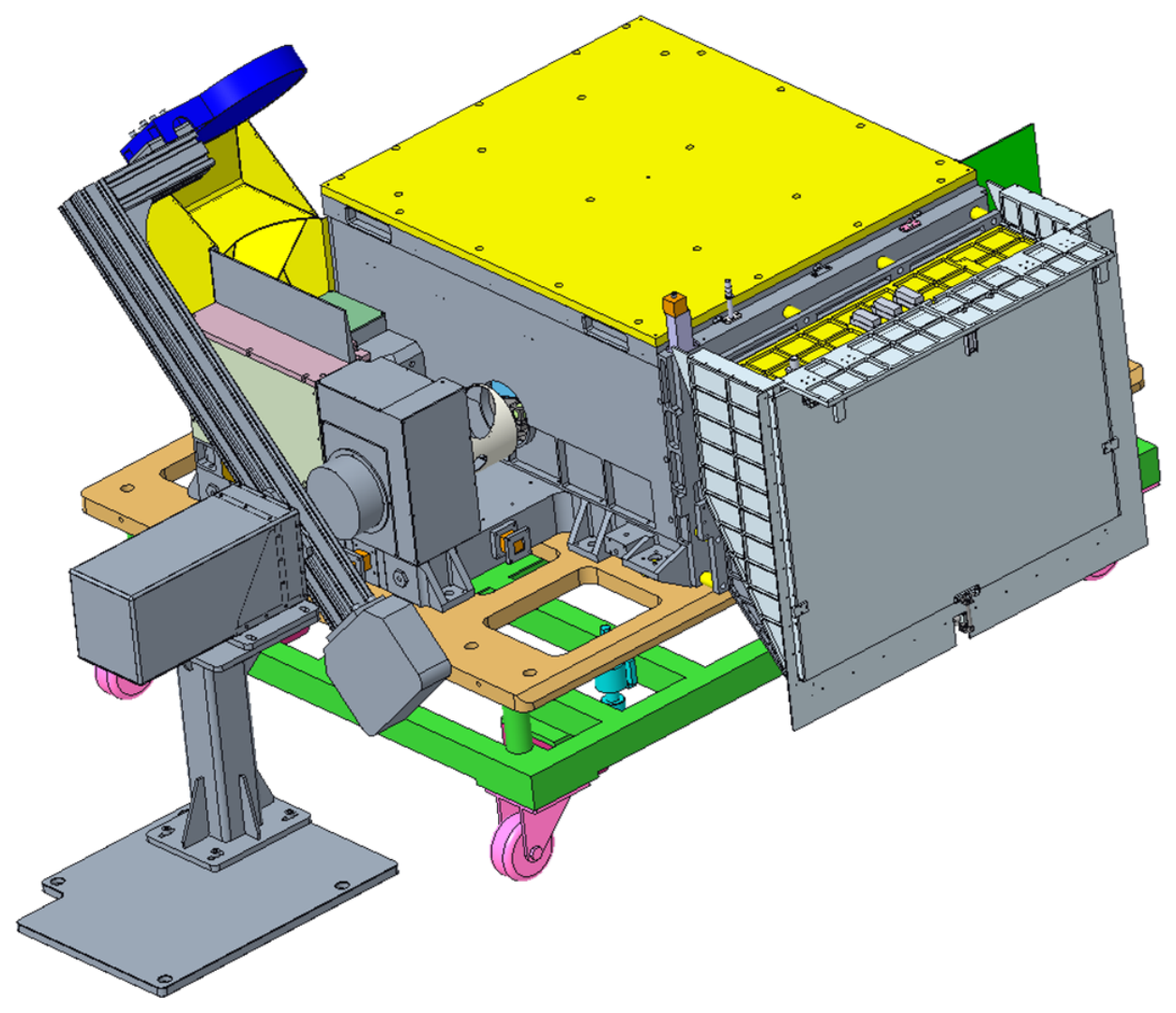
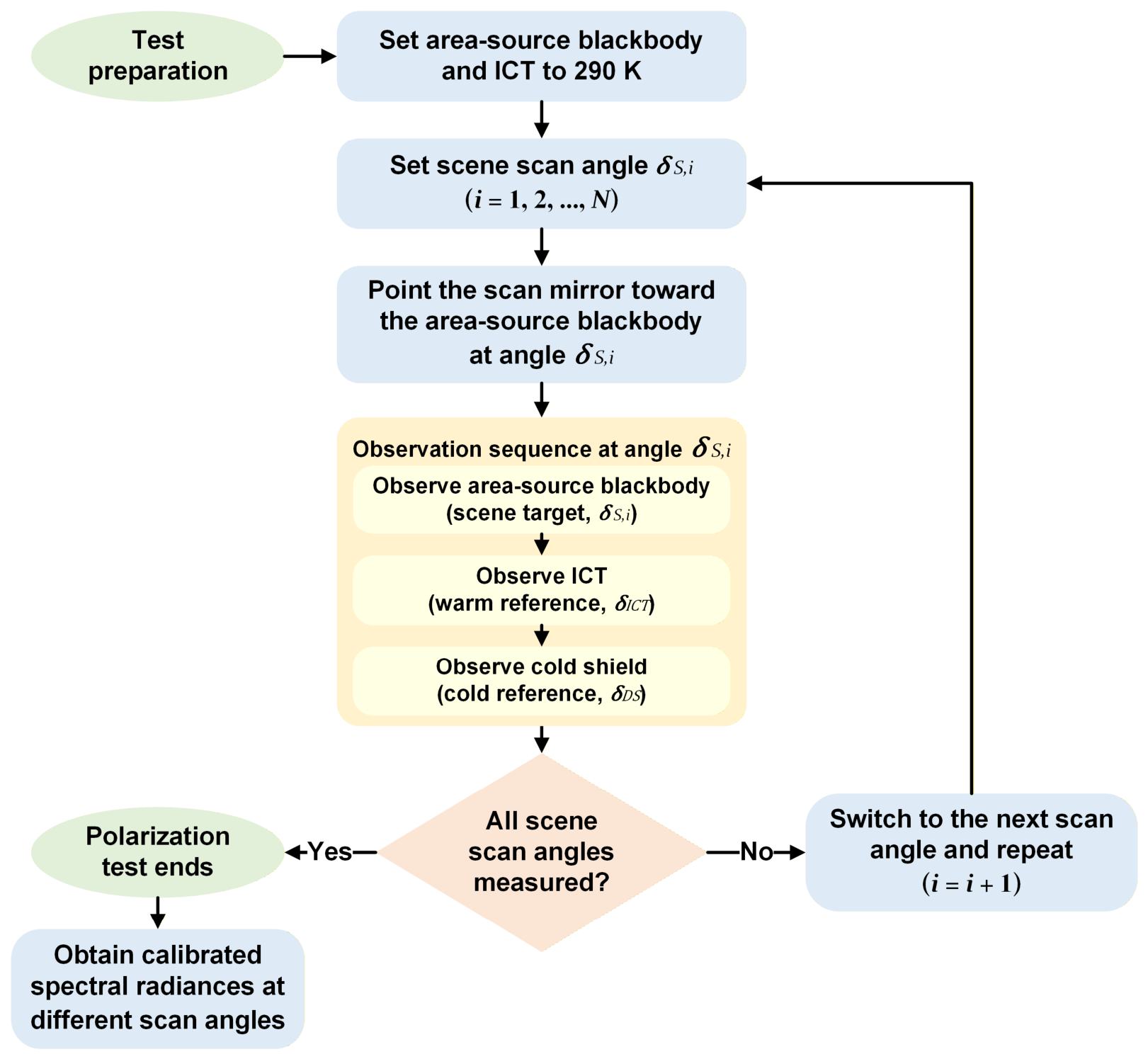
- A dedicated polarization test apparatus was designed and constructed for the prelaunch TVAC calibration campaign, and a scan-angle-dependent polarization test was conducted using a stable 290 K area-source blackbody. By synchronously rotating the blackbody and scan mirror, the apparatus enabled HIRAS-II to observe the same target over a densely sampled scan-angle range, providing controlled measurements of its angular polarization response.
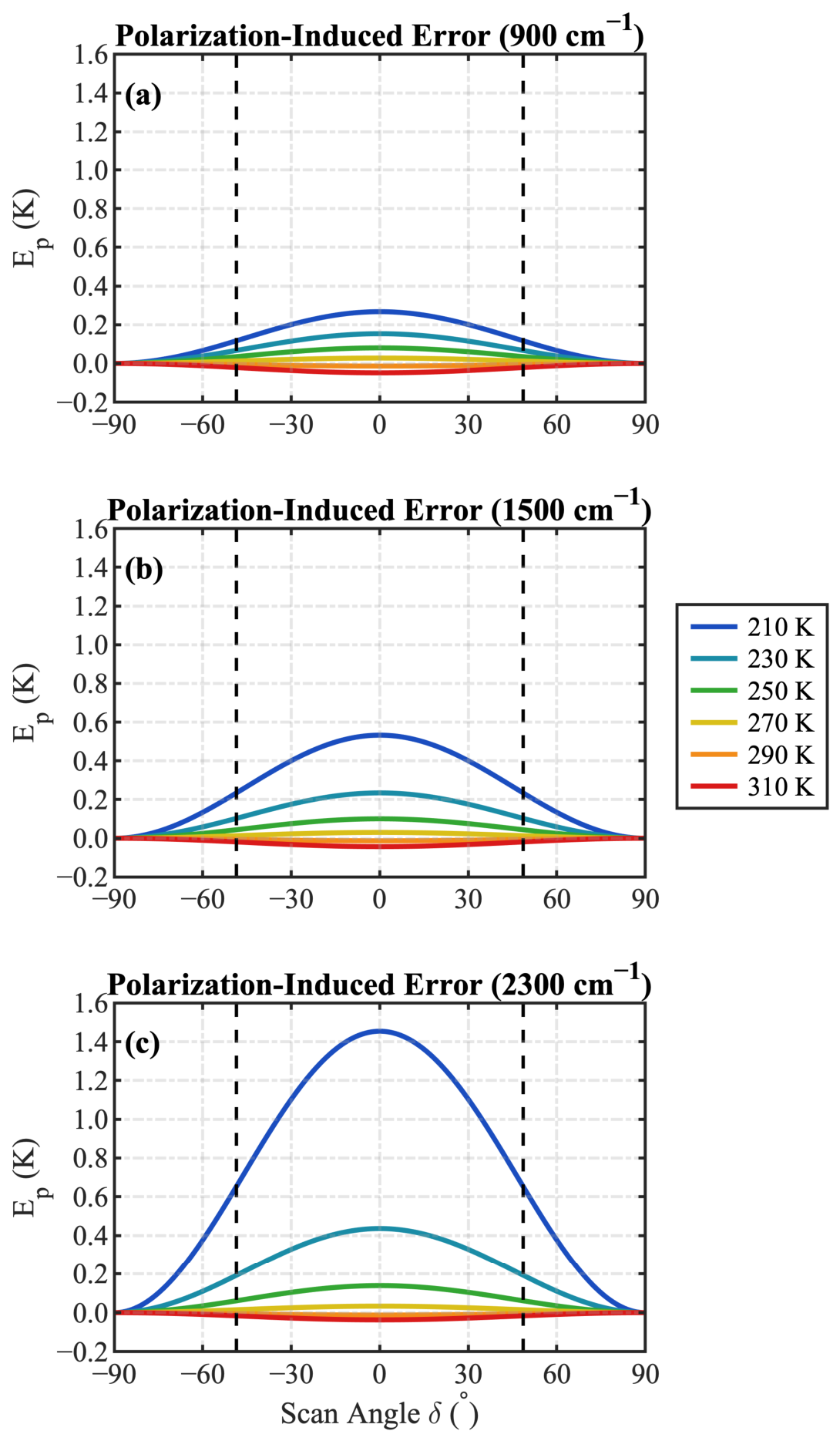
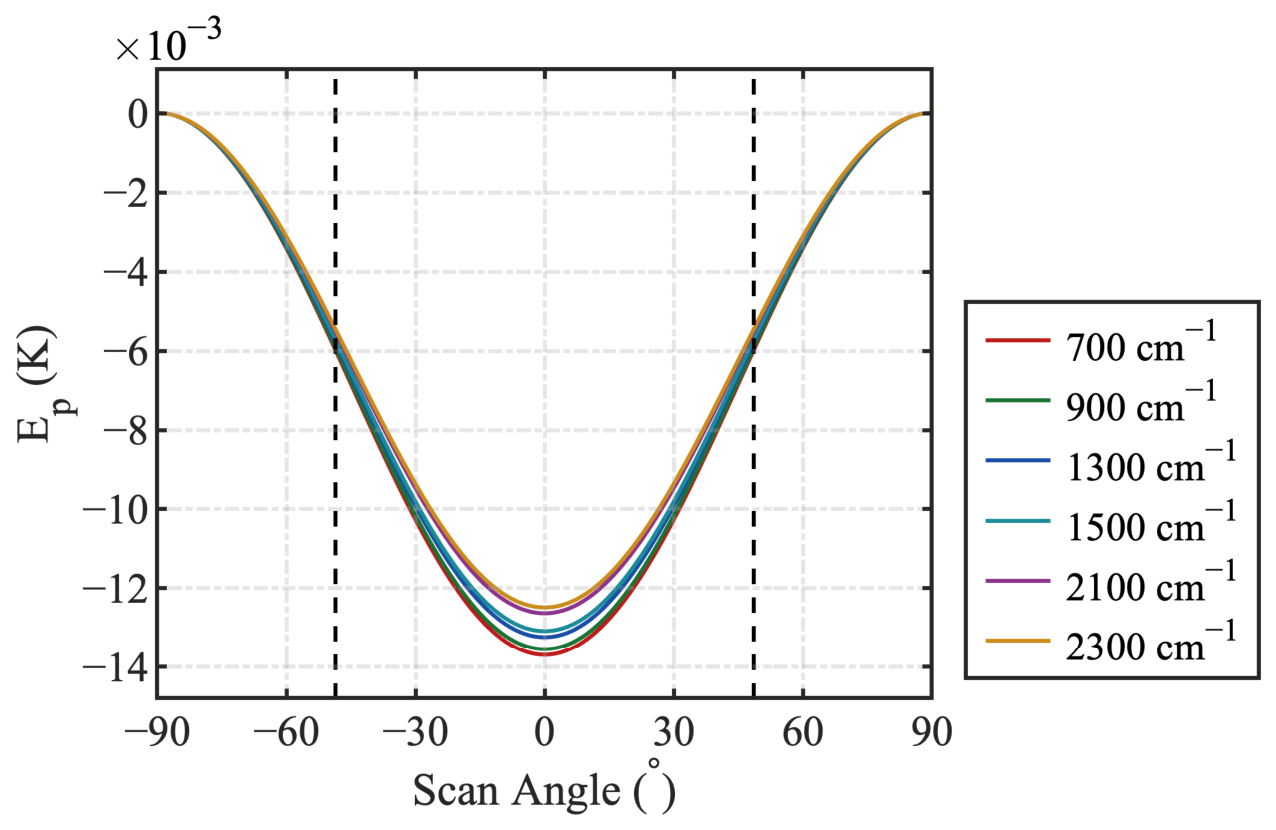
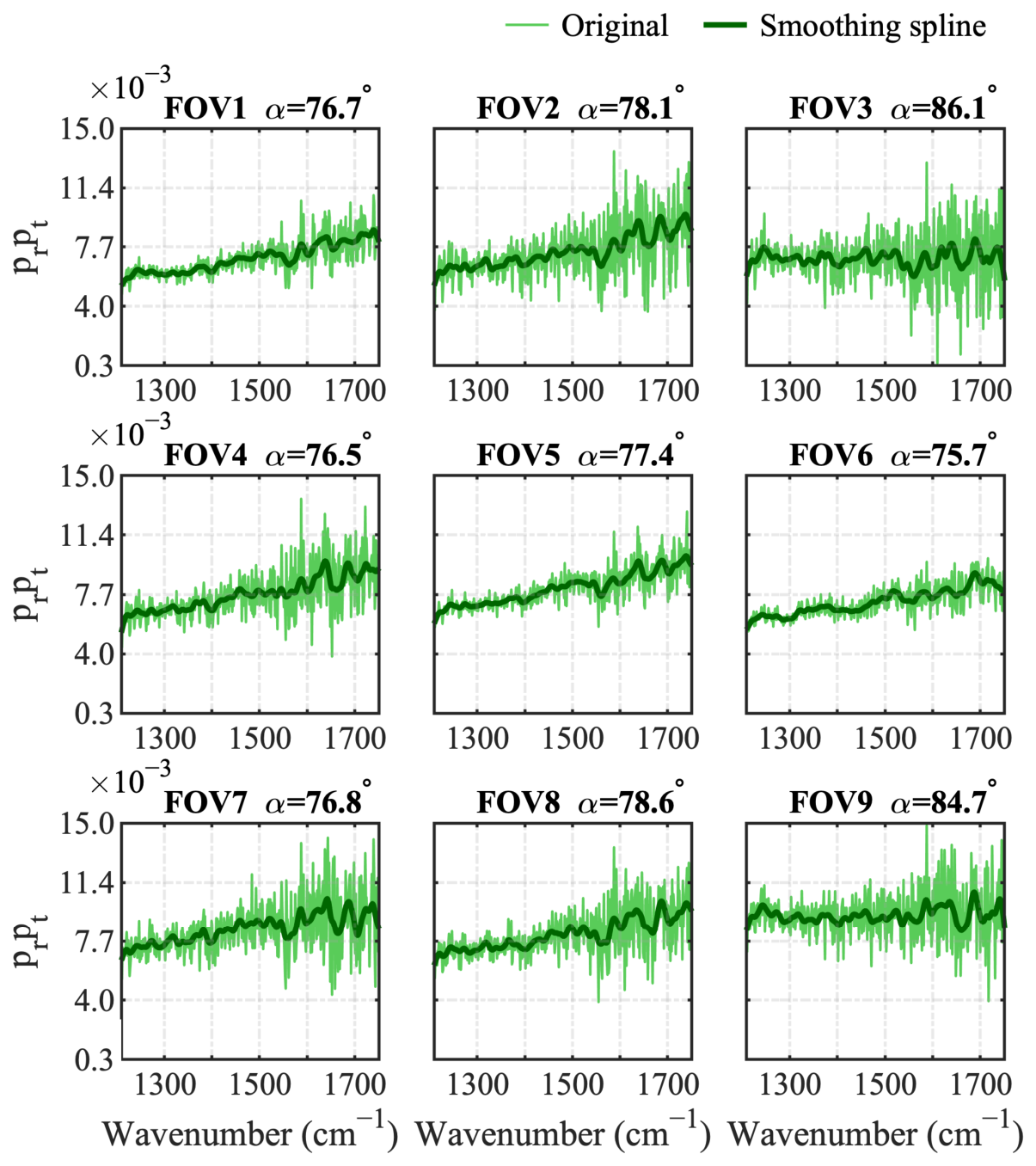
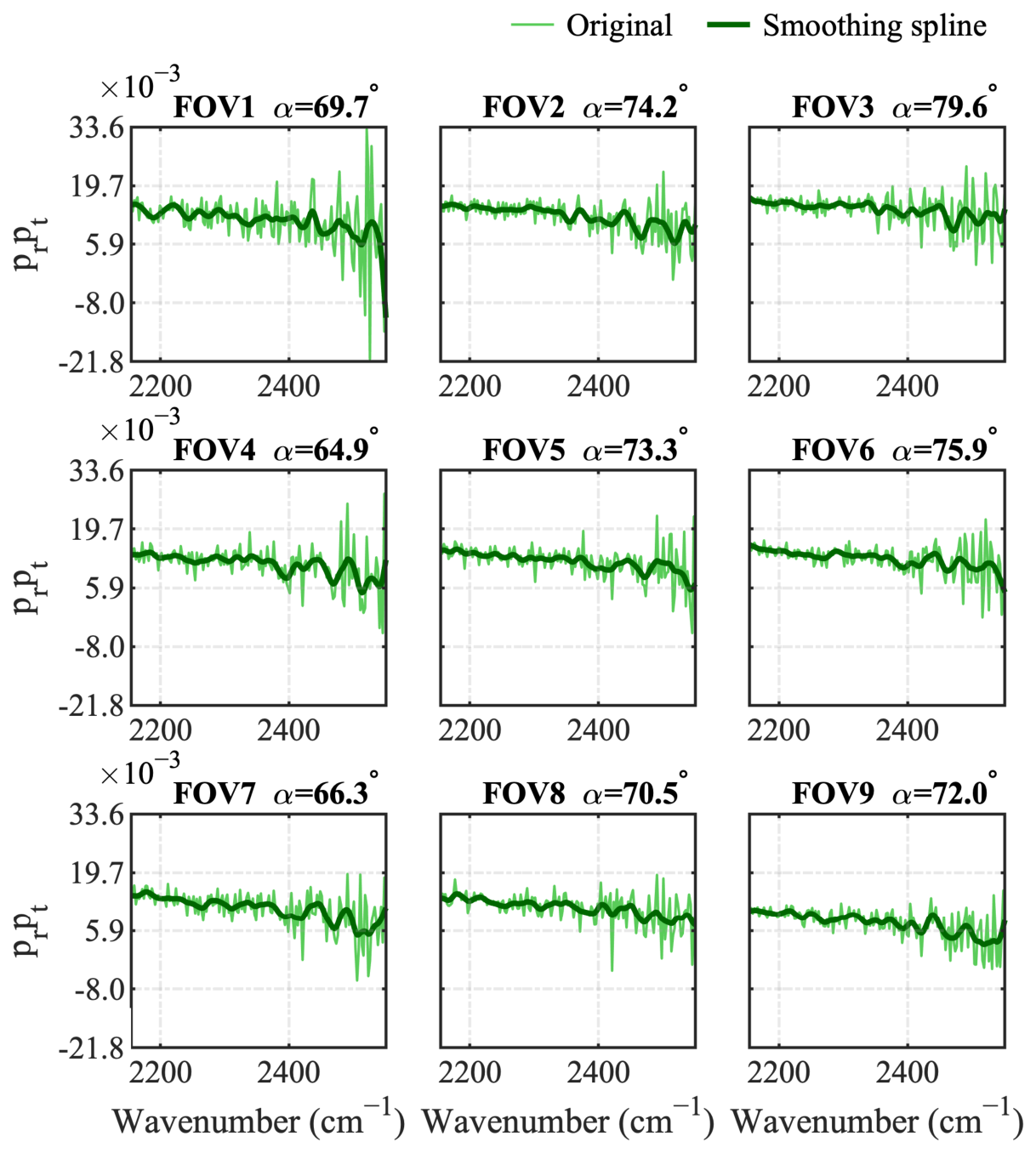
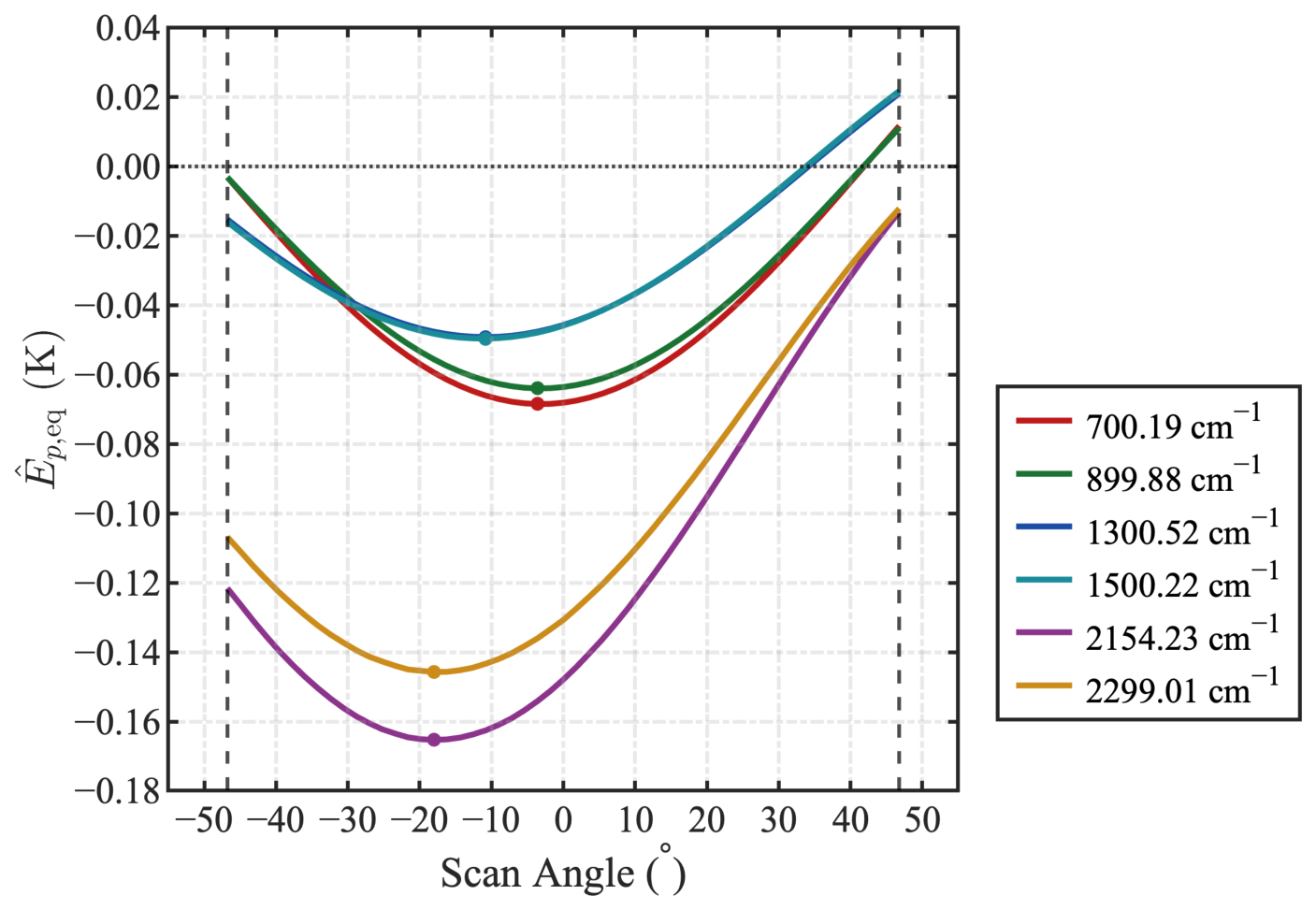
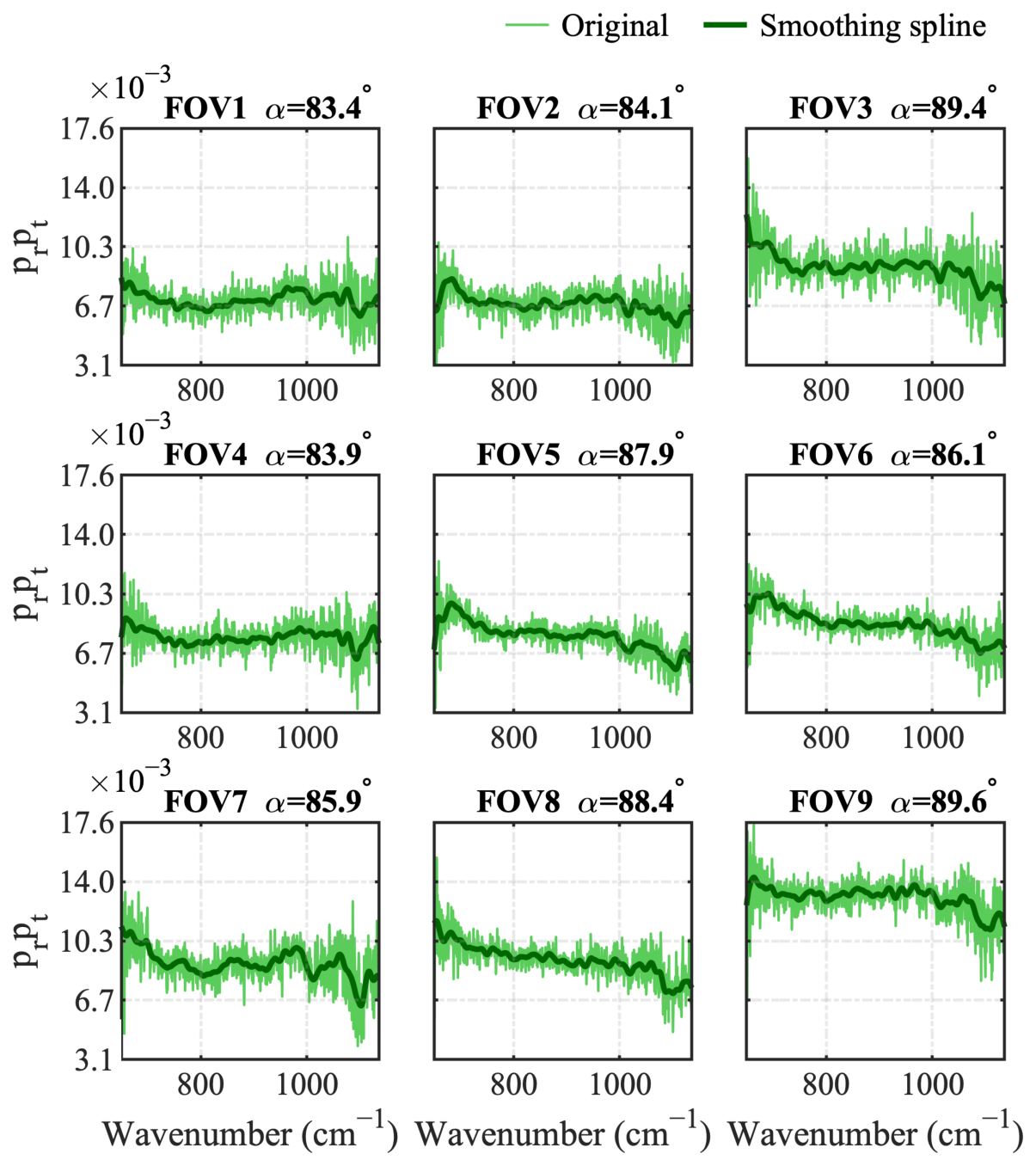
- Guided by a polarization-induced radiometric error model formulated within the two-point calibration framework, a decoupled two-step least-squares method was developed to retrieve the required polarization parameters from the TVAC measurements. The equivalent polarization-axis angle of the downstream optical system was retrieved separately for each FOV, followed by the effective combined polarization parameter for each FOV and spectral channel. Sensitivity simulations were also performed to examine the dependence of the modeled error on scene temperature, scan angle, and wavenumber.
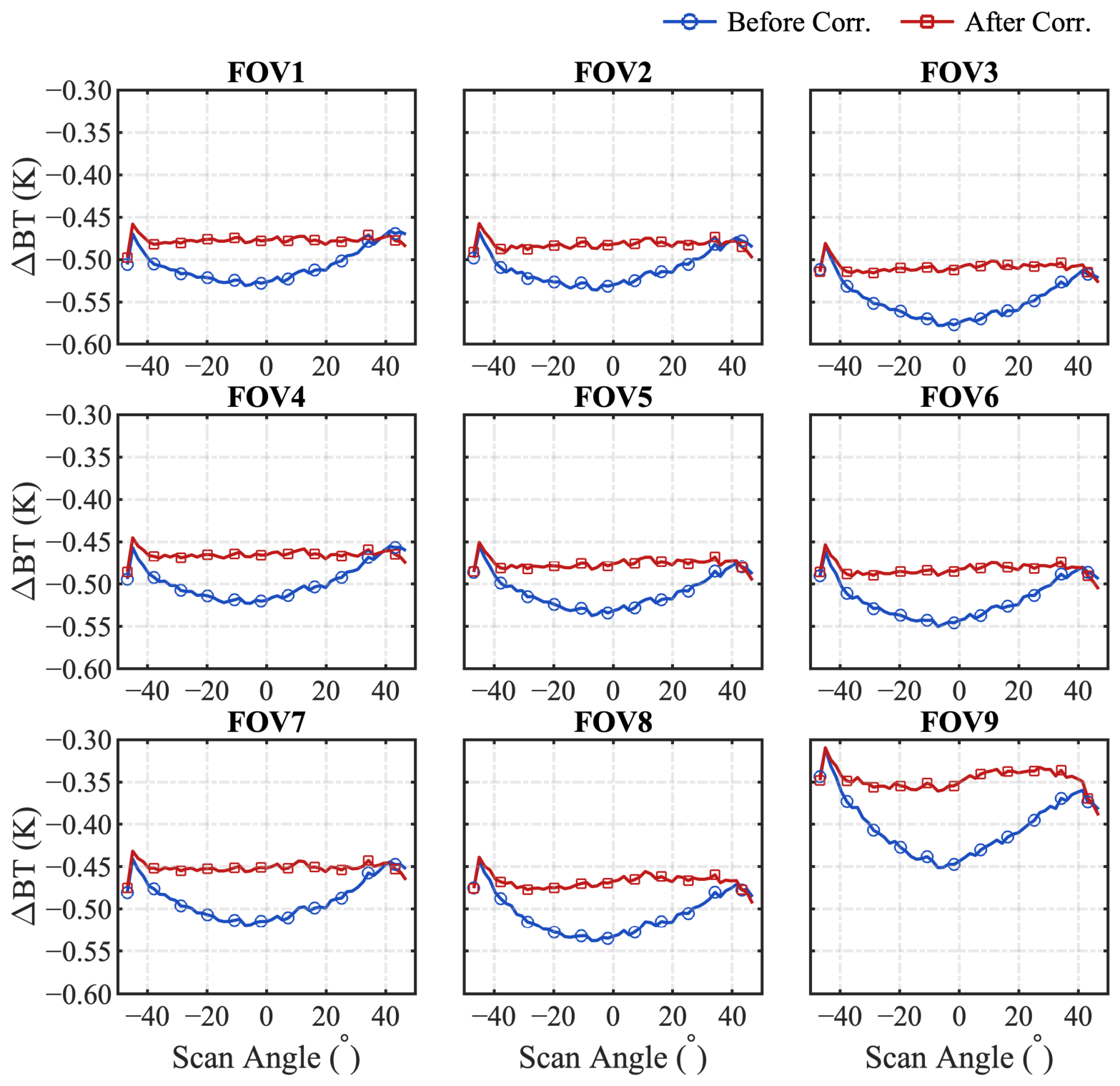
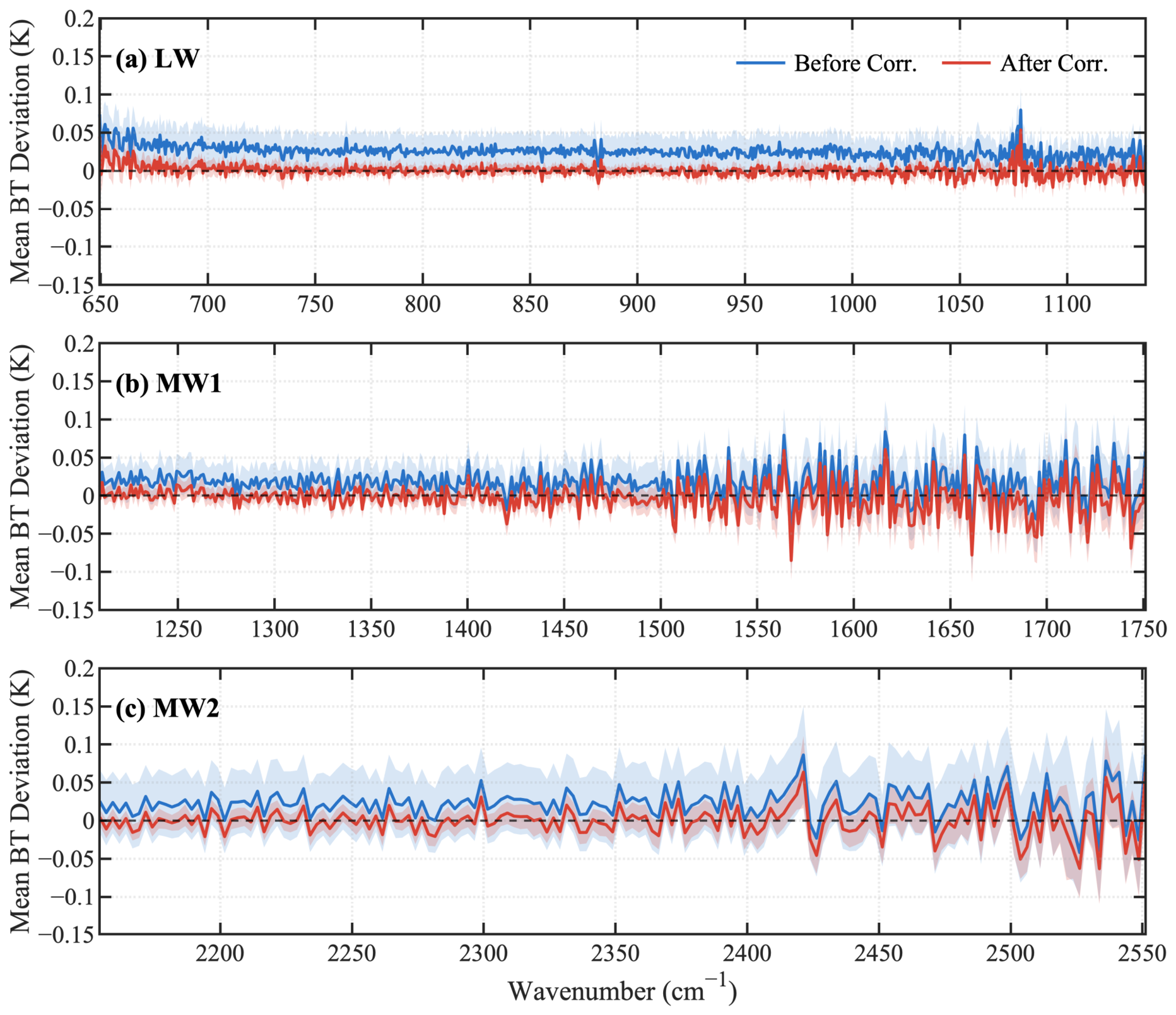
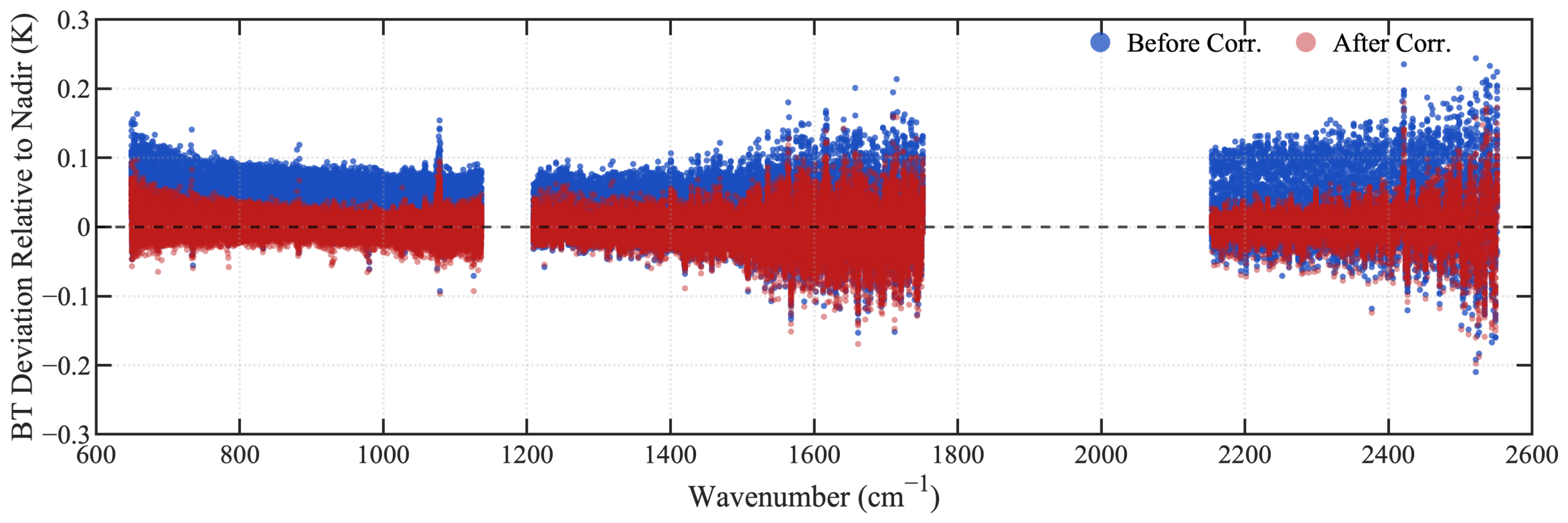
- The retrieved parameters were used to calculate the scan-angle-dependent polarization correction term and correct the calibrated spectra. The correction was evaluated at representative wavenumbers, across all nine FOVs, and over the full spectral ranges. Under the 290 K test condition, the maximum reductions in brightness temperature deviation reached 0.093, 0.064, and 0.174 K in the LW, MW1, and MW2 bands, respectively.
2. Materials and Methods
2.1. HIRAS-II Instrument Characteristics and Observation Modes
2.2. Polarization-Induced Radiometric Error Model
2.3. Simulation Setup for Polarization-Error Sensitivity Analysis
2.4. Prelaunch TVAC Polarization Test
2.5. Decoupled Two-Step Polarization Parameter Retrieval and Correction
3. Results
3.1. Sensitivity Simulation of Polarization-Induced Radiometric Error
3.2. Retrieval Results of Polarization Parameters
3.3. Polarization Correction Results
4. Discussion
4.1. Physical Interpretation of the Retrieved Polarization Parameters
4.2. Relationship Between the Sensitivity Simulation and the Retrieved Polarization Modulation
4.3. Correction Performance and the Scan-Angle-Independent Residual
4.4. Comparison with Previous Studies
4.5. Limitations and Future Work
5. Conclusions
Author Contributions
Funding
Data Availability Statement
Conflicts of Interest
References
- Smith, N.; Barnet, C.D. CLIMCAPS Observing Capability for Temperature, Moisture, and Trace Gases from AIRS/AMSU and CrIS/ATMS. Atmos. Meas. Tech. 2020, 13, 4437–4459. [Google Scholar] [CrossRef] [Scilit]
- Aumann, H.H.; Chahine, M.T.; Gautier, C.; Goldberg, M.D.; Kalnay, E.; McMillin, L.M.; Revercomb, H.; Rosenkranz, P.W.; Smith, W.L.; Staelin, D.H.; et al. AIRS/AMSU/HSB on the Aqua Mission: Design, Science Objectives, Data Products, and Processing Systems. IEEE Trans. Geosci. Remote Sens. 2003, 41, 253–264. [Google Scholar] [CrossRef] [Scilit]
- Strow, L.L.; DeSouza-Machado, S. Establishment of AIRS Climate-Level Radiometric Stability Using Radiance Anomaly Retrievals of Minor Gases and Sea Surface Temperature. Atmos. Meas. Tech. 2020, 13, 4619–4644. [Google Scholar] [CrossRef] [Scilit]
- Smith, N.; Smith, W.L.; Weisz, E.; Revercomb, H.E. AIRS, IASI, and CrIS Retrieval Records at Climate Scales: An Investigation into the Propagation of Systematic Uncertainty. J. Appl. Meteorol. Climatol. 2015, 54, 1465–1481. [Google Scholar] [CrossRef] [Scilit]
- Taylor, J.K. Achieving 0.1 K Absolute Calibration Accuracy for High Spectral Resolution Infrared and Far Infrared Climate Benchmark Measurements. Doctoral Dissertation, Université Laval, Québec, QC, Canada, 2014. [Google Scholar]
- Sun, J.-Q.; Xiong, X. MODIS Polarization-Sensitivity Analysis. IEEE Trans. Geosci. Remote Sens. 2007, 45, 2875–2885. [Google Scholar] [CrossRef]
- Chiang, K.-F.; Xiong, X. Pre-Launch Characterization of Aqua MODIS Scan Mirror Response versus Scan Angle for Thermal Emissive Bands. In Proceedings of the Earth Observing Systems XII; SPIE: Bellingham, WA, USA, 2007; Volume 6677, p. 559. [Google Scholar]
- Pagano, T.S.; Aumann, H.H.; Overoye, K.; Gigioli, G.W., Jr. Scan-Angle-Dependent Radiometric Modulation Due to Polarization for the Atmospheric Infrared Sounder (AIRS). In Proceedings of the Earth Observing Systems V; SPIE: Bellingham, WA, USA, 2000; Volume 4135, p. 108. [Google Scholar]
- Gigioli, G.W., Jr.; Pagano, T.S. AIRS Instrument Polarization Response: Measurement Methodology. In Proceedings of the Infrared Spaceborne Remote Sensing VII; SPIE: Bellingham, WA, USA, 1999; Volume 3759, p. 279. [Google Scholar]
- Pagano, T.S.; Aumann, H.H.; Elliott, D.; Broberg, S.E. AIRS Infrared Polarization Sensitivity and In-Flight Observations. In Proceedings of the Earth Observing Systems IX; SPIE: Bellingham, WA, USA, 2004; Volume 5542, p. 45. [Google Scholar]
- Taylor, J.K.; Revercomb, H.E.; Tobin, D.C. An Analysis and Correction of Polarization Induced Calibration Errors for the Cross-Track Infrared Sounder (CrIS) Sensor. In Proceedings of the Light, Energy and the Environment 2018 (E2, FTS, HISE, SOLAR, SSL), Singapore, 5–8 November 2018; p. FW2B.3. [Google Scholar]
- Taylor, J.K.; Revercomb, H.E.; Tobin, D.C.; Knuteson, R.O.; Loveless, M.L.; Malloy, R.; Suwinski, L.; Iturbide-Sanchez, F.; Chen, Y.; White, G.; et al. Assessment and Correction of View Angle Dependent Radiometric Modulation Due to Polarization for the Cross-Track Infrared Sounder (CrIS). Remote Sens. 2023, 15, 718. [Google Scholar] [CrossRef] [Scilit]
- Wu, C.; Qi, C.; Hu, X.; Gu, M.; Yang, T.; Xu, H.; Lee, L.; Yang, Z.; Zhang, P. FY-3D HIRAS Radiometric Calibration and Accuracy Assessment. IEEE Trans. Geosci. Remote Sens. 2020, 58, 3965–3976. [Google Scholar] [CrossRef] [Scilit]
- Liang, X.; Zou, Y.; Han, C.; Huang, P.; Li, L.; Zhang, Y. Temperature-Field Driven Adaptive Radiometric Calibration for Scan Mirror Thermal Radiation Interference in FY-4B GIIRS. Remote Sens. 2025, 17, 3948. [Google Scholar] [CrossRef] [Scilit]
- Chen, H.; Guan, L. Assessing FY-3E HIRAS-II Radiance Accuracy Using AHI and MERSI-LL. Remote Sens. 2022, 14, 4309. [Google Scholar] [CrossRef] [Scilit]
- Zhang, P.; Hu, X.; Lu, Q.; Zhu, A.; Lin, M.; Sun, L.; Chen, L.; Xu, N. FY-3E: The First Operational Meteorological Satellite Mission in an Early Morning Orbit. Adv. Atmos. Sci. 2022, 39, 1–8. [Google Scholar] [CrossRef] [Scilit]
- Collett, E. Field Guide to Polarization; SPIE Field Guides; SPIE Press: Bellingham, WA, USA, 2005; ISBN 978-0-8194-5868-1. [Google Scholar]
- Goldstein, D.H. Polarized Light, 3rd ed.; CRC Press: Boca Raton, FL, USA, 2017. [Google Scholar]
- Revercomb, H.E.; Buijs, H.; Howell, H.B.; LaPorte, D.D.; Smith, W.L.; Sromovsky, L.A. Radiometric Calibration of IR Fourier Transform Spectrometers: Solution to a Problem with the High-Resolution Interferometer Sounder. Appl. Opt. 1988, 27, 3210–3218. [Google Scholar] [CrossRef] [Scilit]
- Lawson, C.L.; Hanson, R.J. Solving Least Squares Problems; Society for Industrial and Applied Mathematics: Philadelphia, PA, USA, 1995; ISBN 978-0-89871-356-5. [Google Scholar]
- Shaw, J.A. Degree of Linear Polarization in Spectral Radiances from Water-Viewing Infrared Radiometers. Appl. Opt. 1999, 38, 3157–3165. [Google Scholar] [CrossRef] [Scilit]
- Shaw, J.A. The Effect of Instrument Polarization Sensitivity on Sea Surface Remote Sensing with Infrared Spectroradiometers. J. Atmos. Ocean. Technol. 2002, 19, 820–827. [Google Scholar] [CrossRef] [Scilit]
- O’Neill, E.L. Introduction to Statistical Optics; Dover Books on Physics; Courier Corporation: North Chelmsford, MA, USA, 2003; ISBN 978-0-486-43578-7. [Google Scholar]







| Band | Spectral Range (cm−1) | Spectral Range (µm) | Resolution (cm−1) | Spectral Accuracy (ppm) | Radiometric Accuracy (K) |
|---|---|---|---|---|---|
| LW | 650–1136 | 15.38–8.8 | 0.625 | 7 | 0.4–1.0 |
| MW1 | 1210–1750 | 8.26–5.71 | 1.25 | 7 | 0.4–0.5 |
| MW2 | 2155–2550 | 4.64–3.92 | 2.5 | 7 | 0.5–0.6 |
| Parameter | Value | Remarks |
|---|---|---|
| Target scene temperature | [210 K, 310 K] | Blackbody scene radiance RS; evaluated in increments of 20 K. |
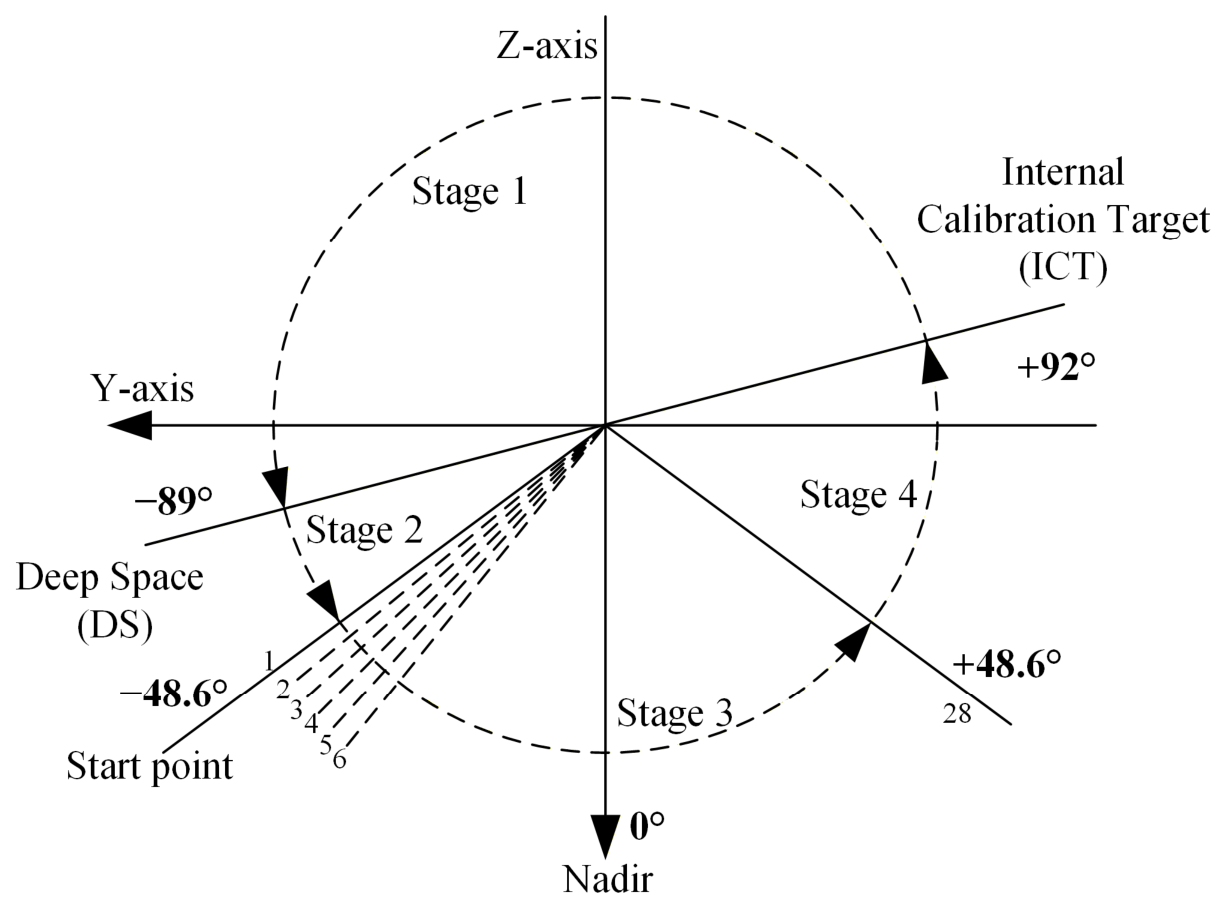
| Scene scan angle δS | [−90°, 90°] | Simulation sweep; nominal HIRAS-II Earth-view range is [−48.6°, 48.6°] |
| ICT scan angle δICT | 92° | Warm calibration reference |
| DS scan angle δDS | −89° | Cold calibration reference |
| Downstream-optics polarization-axis angle α | 90° | Assumed value for the sensitivity simulation; α is retrieved from the measured scan-angle modulation in Section 3.2. |
| Scan-mirror temperature | 283 K | Used to calculate BSM |
| ICT temperature | 290 K | Warm-reference temperature |
| DS temperature | 15 K | Cold-reference temperature |
| Effective combined polarization | 0.001 | Wavenumber-independent nominal value representing weak polarization coupling; used to set the reference magnitude of the sensitivity simulation. |
Disclaimer/Publisher’s Note: The statements, opinions and data contained in all publications are solely those of the individual author(s) and contributor(s) and not of MDPI and/or the editor(s). MDPI and/or the editor(s) disclaim responsibility for any injury to people or property resulting from any ideas, methods, instructions or products referred to in the content. |
© 2026 by the authors. Licensee MDPI, Basel, Switzerland. This article is an open access article distributed under the terms and conditions of the Creative Commons Attribution (CC BY) license.
Share and Cite
Yang, Z.; Shao, C.; Liang, K.; Gu, M. Prelaunch Assessment and Correction of Polarization Effects for HIRAS-II on the Fengyun-3 Satellite. Remote Sens. 2026, 18, 3025. https://doi.org/10.3390/rs18173025
Yang Z, Shao C, Liang K, Gu M. Prelaunch Assessment and Correction of Polarization Effects for HIRAS-II on the Fengyun-3 Satellite. Remote Sensing. 2026; 18(17):3025. https://doi.org/10.3390/rs18173025
Chicago/Turabian StyleYang, Zhiyu, Chunyuan Shao, Kefeng Liang, and Mingjian Gu. 2026. "Prelaunch Assessment and Correction of Polarization Effects for HIRAS-II on the Fengyun-3 Satellite" Remote Sensing 18, no. 17: 3025. https://doi.org/10.3390/rs18173025
APA StyleYang, Z., Shao, C., Liang, K., & Gu, M. (2026). Prelaunch Assessment and Correction of Polarization Effects for HIRAS-II on the Fengyun-3 Satellite. Remote Sensing, 18(17), 3025. https://doi.org/10.3390/rs18173025