


Abstract
Background/Objectives: Nutrition incentive programs can increase access to fresh fruits and vegetables and improve food security among Supplemental Nutrition Assistance Program (SNAP) participants and others in the United States. This qualitative study explored SNAP participants’ and farmers’ market staff’s perceptions of and experiences with a pilot supplemental benefit program offered at seven farmers’ markets in 2023 as part of the California Fruit and Vegetable Electronic Benefit Transfer Pilot Project. The pilot introduced specific characteristics that differ from more traditional nutrition incentive program dollar-for-dollar match incentive models, particularly the traditional model operating in California. Specific differences included the following: (1) offering a monthly USD 60 supplemental benefit that could be redeemed in a single shopping trip; (2) providing the supplemental benefit as a match that could be spent on any SNAP-eligible item in any retail location (rather than solely on fruits and vegetables at the farmers’ market). Methods: We conducted a qualitative, cross-sectional study including seven focus groups with 40 SNAP shoppers and six focus groups with 14 farmers’ market staff at six pilot-participating farmers’ markets in California. All focus groups were conducted by trained research staff and were recorded, transcribed, and analyzed using the immersion crystallization method. Results: Our findings include that shoppers appreciated several features of the pilot, particularly the ability to obtain an entire month’s supplemental benefit during one shopping trip and the ability to spend the benefit earned on any SNAP-eligible item at any SNAP retailer. Farmers’ market staff appreciated that the pilot benefited shoppers but found it difficult to manage due to staff and shopper confusion about the program, increased program utilization, subsequent long lines, and the spending of the earned incentives at other SNAP retailers. Both shoppers and staff reported that the program was difficult to understand. Conclusions: These findings can inform future nutrition incentive program designs to benefit SNAP participants while offering sustainable models for farmers’ markets.
1. Introduction
Most U.S. adults do not consume the recommended quantities of fruits and vegetables, despite evidence linking fruit and vegetable consumption to improved health and reduced risk of multiple chronic diseases, including cardiovascular disease and diabetes [1]. Disparities in fruit and vegetable consumption persist, as Americans with lower incomes consume fewer fruits and vegetables than those with higher incomes [2]. One frequently cited barrier to produce intake is the high per-calorie cost of fresh fruits and vegetables relative to the lower per-calorie cost of nutrient-poor foods [3,4].
The Supplemental Nutrition Assistance Program (SNAP) is the most significant source of food assistance in the U.S., providing USD 107 billion in benefits to 42 million low-income Americans in 2023 [5]. SNAP funds are distributed through electronic benefit transfer (EBT) “debit” cards that can be used to make purchases at participating retailers. SNAP funds can be spent on most foods and beverages, excluding alcohol and certain prepared foods, like those that are hot at the point of sale [6]. Unlike poverty alleviation programs in many other peer nations, the U.S. safety net system primarily focuses benefits on in-kind food aid, making the federal food program policies critical for people experiencing food insecurity and economic hardship [7].
Nutrition incentive programs provide additional funds for fruits and vegetables purchased using SNAP benefits, frequently as dollar-for-dollar matched funds [8]. These programs were first launched in 2005 as a strategy to make healthy foods more affordable for consumers with low incomes while supporting local agriculture, which tends to be organic or pesticide-free, thus also supporting more sustainable food systems [9,10]. Nutrition incentive programs have expanded significantly since 2005: in 2023, over 1500 unique SNAP retailers, including farmers’ markets and grocery stores, offered nutrition incentive programs [11]. The federal Gus Schumacher Nutrition Incentive Program (GusNIP), established in 2019, funds nutrition incentive programs, as do several private foundations, nonprofit organizations, and other sources [8]. While program designs vary, most provide a dollar-for-dollar match on SNAP funds spent on fruits and vegetables, up to a per-visit maximum of typically USD 5–20 [11]. While nutrition incentive programs are now offered at a variety of retail outlets in the U.S., they are still most commonly offered at farmers’ markets [11].
A significant body of research on U.S. nutrition incentive programs finds that program participants are grateful for the programs, appreciating the extra funds provided to support their household food purchases [12,13,14]. In terms of outcomes, studies primarily focus on changes to shopper produce purchases and consumption [15]. Some studies have found associations between incentive programs and increased participant produce intake [16,17,18,19]. Other studies have found associations with increased produce purchases and/or indicators of food security but not consumption [12,20]. Heterogenous incentive designs can make it challenging to determine which programmatic features are most effective [17].
Fewer studies have analyzed program operator perspectives. An evaluation of a nutrition incentive program at farmers’ markets in New York City found that market managers reported that the program attracted new shoppers to farmers’ markets and that farmers’ market vendors reported they made more money and had more repeat shoppers with the program [21]. A study in Maryland found that farmers’ market managers reported that the nutrition incentive program provided benefits to shoppers and vendors through increased food access and sales, thereby aligning with the market’s mission to increase access to high-quality food [22].
The largest nutrition incentive program in California is the California Nutrition Incentive Program (CNIP), which has operated since 2017. CNIP is funded as a partnership between federal GusNIP funds and state and private funds [23]. The majority of sites that administer CNIP are farmers’ markets [23]. CNIP program designs vary by site, but most provide a dollar-for-dollar match on SNAP funds spent at the market, up to a maximum of typically USD 5–20 per shopping trip. The match funds can only be used to purchase fruits and vegetables and other “specialty crops”, such as herbs and seedlings. Evaluations of CNIP indicate that the program is well received by participants, who report an increased ability to purchase high-quality fresh produce and eat healthily [12]. CNIP program participants have also reported that the program influences their decision to shop at farmers’ markets [12].
In February 2023, the California Department of Social Services (CDSS) launched the California Fruit and Vegetable EBT Pilot Project at seven farmers’ markets to test alternative methods for administering nutrition incentive programs. This study assessed shopper and staff perceptions of the program, hereafter referred to as the “pilot”. In particular, the study captured shopper and staff perceptions of the benefits and drawbacks of the pilot compared to more traditional CNIP—hereafter referred to as “traditional CNIP”. The pilot differed from traditional CNIP in two primary ways:
The pilot offered a monthly USD 60 maximum match that could be redeemed in a single visit or multiple visits during the same month, whereas traditional CNIP offers a variable weekly maximum match of USD 5–20.
The pilot benefit was earned when SNAP funds were spent on fruits and vegetables and was applied directly to shoppers’ EBT cards for purchasing any SNAP-eligible item at any retail location. Traditional CNIP incentives were earned when SNAP funds were spent at the farmers’ market and could only be redeemed for fruits and vegetables at the farmers’ market.
These differences make this supplemental benefit program distinct from other similar programs in California and across the U.S. According to a recent evaluation of federally funded nutrition incentive programs, 91% of farm-direct sites (e.g., farmers’ markets and farm stands) require shoppers to spend their SNAP dollars at the market to earn incentive funds for purchasing fresh fruits and vegetables [11]. The only other program that reverses this model is the Healthy Incentive Program (HIP) in Massachusetts [24]. The HIP shares several programmatic features with the pilot studied here, including the ability to earn the supplemental benefit on the purchase of fruits and vegetables, which is credited to participants’ SNAP accounts and can be used to purchase any SNAP-eligible item. Our study is therefore one of the few to evaluate this model of SNAP incentive programs. This study aims to evaluate the experiences of shoppers and market managers with the pilot and assess its perceived impact on shoppers’ use of farmers’ markets and their produce purchasing and consumption behaviors, as well as market operators’ sales and management processes. The study findings can inform future nutrition incentive programs.
2. Materials and Methods
2.1. Study Sample
This study included SNAP shoppers and farmers’ market staff from six of seven farmers’ markets that implemented the pilot. The markets, which were located in Northern and Southern California, implemented the program during the period 25 February–4 April 2023. All markets participated in CNIP before implementing the pilot, with 3 offering a USD 10 per visit (weekly) maximum match and 3 offering a USD 15 maximum match. One market offered an unlimited match before and during the pilot, which meant that shoppers did not experience a change in benefits with the pilot program compared to CNIP. This market was therefore excluded from this study.
2.2. Participants and Recruitment
2.2.1. SNAP Shoppers
Recruitment and Screening
SNAP shoppers were recruited to participate in this study during the period June–July 2023. At five markets, a member of the research team recruited shoppers in person. All shoppers approaching the EBT booth at participating farmers’ markets were asked if they had used the pilot previously. Those answering yes (i.e., for whom it was not their first time using the program) were invited to provide their contact information so that the research team could contact them about this study. Due to language barriers at the sixth market, market staff conducted recruitment and provided the research team with contact information for interested shoppers.
Interested SNAP shoppers were contacted via text or email and invited to complete a brief online screener to establish their study eligibility. Shoppers were deemed eligible if they were over 18, spoke English or Spanish, were a member of a household receiving SNAP benefits, and had shopped at a pilot-participating market during the preceding month. Eligible shoppers were invited to electronically sign up to attend a virtual focus group after completing the screener.
Data Collection
Seven focus groups were held via Zoom between June and August 2023, of which six were conducted in English and one in Spanish. Three members of the research team participated in the focus group discussions as facilitators and/or notetakers. Each focus group included one facilitator and one notetaker. Participants were sorted into focus groups based on the market from which they were recruited and their availability. Only one focus group included shoppers from multiple markets. Focus group participants received a USD 50 gift card in appreciation for their participation.
A semi-structured focus group guide was developed by the research team to elicit shopper perceptions of and experiences with the pilot, including their perceived changes in shopping habits, diet quality, and food security (Table 1). The focus group guide was reviewed by staff at the CDSS and the Ecology Center (pilot administrator) and was revised based on feedback. All focus groups were conducted via Zoom.

Table 1.
Questions asked in focus groups conducted with Supplemental Nutrition Assistance Program shoppers participating in the Fruit and Vegetable Electronic Benefit Transfer Pilot Project in California, 2023.
2.2.2. Farmers’ Market Staff
Recruitment and Screening
All staff at the six pilot-participating farmers’ markets included in this study were invited to participate in focus groups. The research team connected with one key staff member, typically a manager, at each market, who recruited additional staff members to participate.
Data Collection
One research team member conducted focus groups with market staff between July and August 2023. A total of five focus groups were conducted with staff: four with staff from each individual market and one with staff from two markets operated by the same organization. Focus group questions explored staff members’ experiences operating the pilot; their perceptions of benefits and challenges for staff, shoppers, and vendors; and recommendations for improvements. The focus group guide was reviewed by staff at the CDSS and the Ecology Center and was revised based on feedback. All focus groups were conducted via Zoom (Table 2).
Table 2.
Questions asked in focus groups with farmers’ market staff at markets participating in the Fruit and Vegetable Electronic Benefit Transfer Pilot Project in California, 2023.
2.2.3. Ethical Approval
The Institutional Review Board of the University of California, Davis approved this study.
2.3. Data Analysis
English-language focus group transcripts were transcribed using Otter.ai (https://otter.ai/. Access date 21 August 2023) and reviewed by a member of the research team for errors. The focus group conducted in Spanish was transcribed and translated using a professional translation service. Vocal disfluencies were removed from all transcripts.
The research team used the immersion crystallization method of qualitative data analysis [25]. Two researchers immersed themselves in the data by reading all transcripts. Both researchers developed an initial codebook using a deductive approach and jointly coded one shopper focus group and one staff focus group transcript line-by-line to ensure consistency in the application of codes. Additional codes were subsequently added using an inductive approach. One researcher then coded the remaining transcripts, and the other reviewed the first coder’s work, resolving coding discrepancies via consensus. The same set of codes was used for both staff and shopper transcripts, given thematic overlap, and to facilitate comparing and contrasting findings between the two stakeholder groups. After coding all staff and shopper focus groups, the two researchers engaged in the crystallization phase of analysis, articulating and reflecting upon major themes and synthesizing them into categories. The full research team met weekly to further discuss and refine themes. All coding and data analysis was conducted using ATLAS.ti (Version 24.0.1) [26].
3. Results
3.1. SNAP Shopper Focus Groups
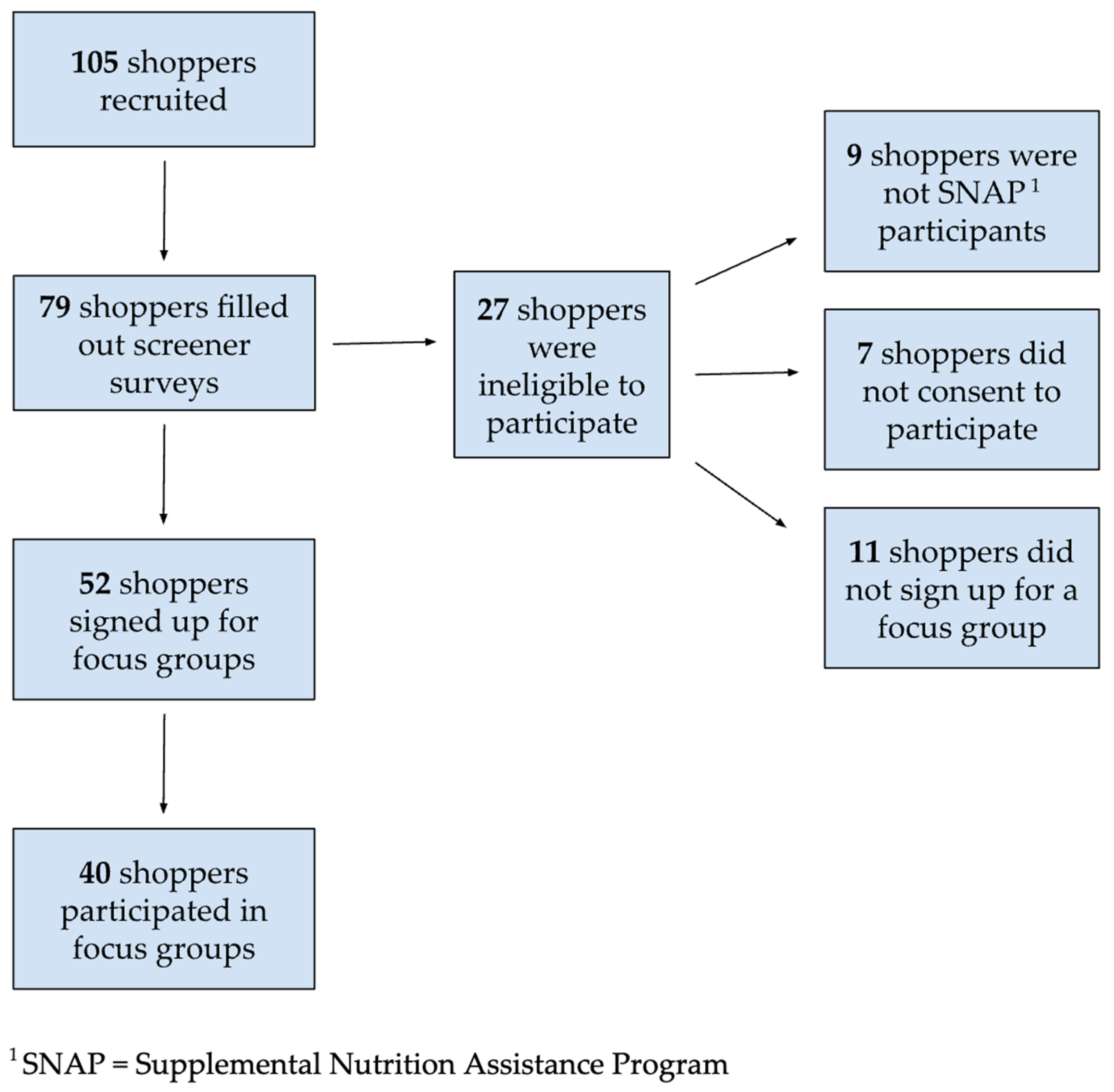
Of the 105 shoppers initially invited to participate in this study, 79 filled out eligibility screener surveys (Figure 1). Twenty-seven respondents were ineligible to participate, as they were not SNAP participants (n = 9), did not provide consent to participate (n = 7), or did not sign up for a focus group (n = 11). Fifty-two shoppers were eligible to participate and signed up for focus groups. Of those, 40 participated in focus groups (Table 3). The number of participants in each focus group ranged from 1 to 10, with an average of 5.7. Focus groups included a mix of shoppers who had experience using traditional CNIP and those for whom the pilot was their first experience with match incentive/supplemental benefit programs.
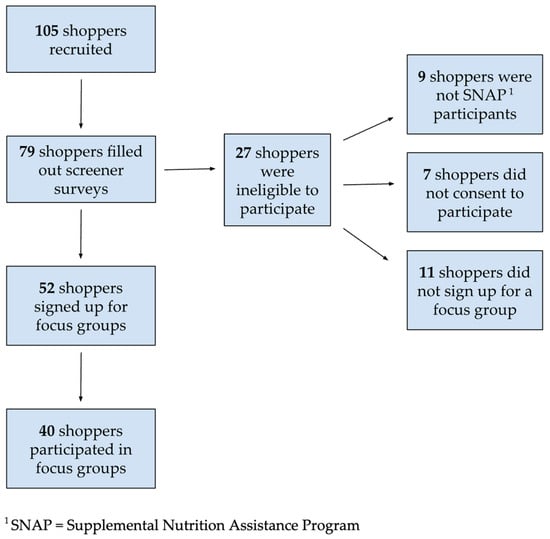
Figure 1.
Sample selection flow chart for focus groups with Supplemental Nutrition Assistance Program shoppers participating in the Fruit and Vegetable Electronic Benefit Transfer Pilot Project in California, 2023.
Table 3.
Description of focus groups conducted with Supplemental Nutrition Assistance Program shoppers participating in the Fruit and Vegetable Electronic Benefit Transfer Pilot Project in California, 2023.
The majority of shopper participants (65%) were female, with individuals identifying as White representing the largest ethnic group (42.5%), followed by Latino/a and Asian shoppers (both 25%) (Table 4).
Table 4.
Demographics of participants of focus groups conducted with Supplemental Nutrition Assistance Program shoppers participating in the Fruit and Vegetable Electronic Benefit Transfer Pilot Project in California, 2023 (n = 40).
3.2. Farmers’ Market Staff Focus Groups
Five focus groups were conducted with a total of 14 farmers’ market staff. Participation ranged from 1 to 5 staff members per focus group (Table 5).
Table 5.
Number of staff from farmers’ markets implementing the Fruit and Vegetable Electronic Benefit Transfer Pilot Project participating in staff focus groups in California, 2023.
3.3. Key Findings
Fourteen key findings emerged from the focus groups with shoppers and farmers’ market staff (Table 6). Findings are presented in three categories – shopper-only findings, shopper- and staff-shared findings, and staff-only findings – as there was overlap in some shopper and staff findings, while other findings emerged only from one of the two populations. Key findings reflect themes that arose in nearly all focus groups and were typically reported by multiple participants per group.
Table 6.
Key findings and supporting quotes from focus groups conducted with Supplemental Nutrition Assistance Program shoppers participating in the Fruit and Vegetable Electronic Benefit Transfer Pilot Project and from farmers’ market staff at farmers’ markets implementing the Fruit and Vegetable Electronic Benefit Transfer Pilot Project in California, 2023.
3.3.1. Key Findings from Shopper Focus Groups
Shoppers overwhelmingly reported positive perceptions of the pilot and reported preferring many aspects of the pilot structure over traditional CNIP. They appreciated being able to receive the full benefit in one monthly visit rather than weekly, which was particularly helpful for disabled shoppers or those with dependents, for whom traveling to the market each week was difficult. Shoppers at markets previously offering a USD 10 per visit match also greatly appreciated the USD 60 monthly benefit. The higher benefit amount, coupled with the ability to earn and redeem the entire benefit in one visit, allowed shoppers to purchase more—and often more expensive—fruits and vegetables. Shoppers also greatly appreciated the option of keeping the entire benefit on their EBT card and being able to spend it on any SNAP-eligible item at any retailer rather than only on produce at the farmers’ market. In that regard, shoppers noted that the supplemental benefit felt like “free money”. Most shoppers reported spending the benefit at other retailers on staple items that were not available at or more affordable than at farmers’ markets. Nonetheless, some reported purchasing non-produce items such as eggs and honey at the farmers’ market. Shoppers cited confusion regarding several aspects of the pilot, including the requirement to have a minimum EBT balance to obtain the maximum match since the supplemental benefit was credited directly to their EBT cards, and they were not required to spend those funds at the farmers’ market. Additionally, since news of the pilot was often spread via word-of-mouth, many shoppers understood the program as USD 60 of “free” money and were disappointed to learn of the requirement to spend EBT funds to earn the supplemental benefit. An additional source of confusion—and in some cases, mistrust—for shoppers familiar with the previous approach was that the supplemental benefit was electronically credited to shoppers’ EBT cards, whereas traditional CNIP benefits are provided in the form of physical tokens or scrip, which offer tangible proof of having received the benefit. Shoppers reported logistical challenges as well, including receiving as many as 60 one-dollar tokens, given the lack of larger denominations.
3.3.2. Key Findings from Shopper and Staff Focus Groups
Both shoppers and market staff reported that the pilot attracted new SNAP shoppers to participating farmers’ markets, noting that increased attendance created long lines, which were exacerbated by the time required to explain the pilot to shoppers. Staff at some markets reported queues of up to three hours before the market opened. Staff and shoppers reported that the pilot was difficult to understand, which was a more significant issue for those familiar with traditional CNIP than new shoppers with no previous frame of reference. Staff and shoppers reported that confusion was exacerbated for shoppers who spoke languages other than English.
3.3.3. Key Findings from Staff Focus Groups
Staff appreciated that the pilot offered shoppers a higher benefit amount and greater flexibility regarding where shoppers could spend those funds. Additionally, staff noted a “workaround” allowing them to provide the full benefit to shoppers with an EBT balance of less than USD 60. That was accomplished by repeatedly applying the benefit in smaller increments until the full USD 60 was reached—an approach that is not possible with traditional CNIP. Staff felt that vendors benefitted from increased shopper attendance and higher benefits; however, they expressed concerns regarding potential negative impacts on non-produce vendors, given shoppers’ tendencies to purchase fruits and vegetables at the farmers’ market and spend the supplemental benefit at other retailers. Under traditional CNIP, shoppers are required to purchase tokens that could be spent on anything sold at the farmers’ market and spend earned incentives only on produce at the farmers’ market. Staff appreciated that the pilot offered shoppers increased choice by allowing them to spend the supplemental benefit at grocery stores; however, they expressed concerns regarding reduced farmers’ market sales. Staff at every market discussed technological and logistical challenges, including insufficient point-of-sale devices and market scrip to meet increased demand, EBT mischarges, and the inability to check shopper incentive balances. Staff also reported that the pilot required significantly more time to process paperwork than traditional CNIP and subsequently required a greater number of more highly trained staff. Several staff noted that the increased stress and workload associated with the pilot made it more difficult to recruit and train staff, including volunteers. Staff also reported that the quality of their interactions with shoppers was diminished due to increased shopper attendance and more time being required to explain the program, further contributing to job dissatisfaction. They expressed discomfort with having to ask questions regarding the amount of produce shoppers planned to purchase, which was perceived as invasive.
4. Discussion
This study explores shopper and farmers’ market staff perceptions of a new approach for delivering nutrition incentives to SNAP shoppers at farmers’ markets in California: the California Fruit and Vegetable EBT Pilot Project. This study found that shoppers appreciated several features of the pilot, particularly the ability to obtain the full benefit in one monthly visit. Shoppers and staff appreciated higher benefit amounts and the flexibility to spend the benefit on any SNAP-eligible item at any SNAP retailer. Shoppers and staff cited difficulties understanding the pilot and concerns regarding long lines. Staff also reported technological challenges, reduced quality of interactions with shoppers, and increased stress and workload.
The pilot model contained several features which, our findings suggest, if expanded, would largely benefit SNAP shoppers but could have mixed impacts on farmers’ markets. The features include the following: (1) larger monthly benefits for shoppers at some markets; (2) the ability of shoppers to obtain the entire monthly benefit at once; (3) the delivery of benefits as an automatic rebate applied to a shopper’s EBT card; and (4) the ability for shoppers to spend supplemental benefits on any SNAP-eligible items anywhere that accepts SNAP. The following section discusses what we learned about each of these features and their implications if the pilot model were to be scaled up in California or other jurisdictions.
4.1. Larger Benefits for Shoppers
The pilot provided a USD 60 per month incentive, which is higher than the amounts offered by many nutrition incentive programs, including in California. Shoppers reported that these increased funds were beneficial in allowing them to purchase more and higher quality produce. This finding aligns with research demonstrating that SNAP shoppers appreciate nutrition incentive programs for the financial and nutritional benefits that they provide [17] and that they value increases in incentive match maximums and the ability to purchase more produce [27]. Research also demonstrates that higher incentives are associated with increased produce purchases by SNAP shoppers [28] and improvements in some measures related to food security [12].
Farmers’ market staff also appreciated the increased benefits. They valued the ability to provide shoppers with increased funds for purchasing produce and felt that the program attracted new shoppers to the market. Previous research has demonstrated market staff appreciate nutrition incentive programs’ role in increasing SNAP shoppers’ access to high-quality food and improving food security and that nutrition incentive programs benefit farmers’ markets and vendors by attracting new and repeat shoppers [21,22].
4.2. Ability for Shoppers to Obtain the Entire Monthly Benefit at Once
The pilot enabled shoppers to earn the entire benefit at once, rather than having to visit the market weekly, which allowed more shoppers, particularly those experiencing mobility challenges, to obtain the full monthly benefit amount. Farmers’ market staff reported some challenges associated with this feature, such as difficulty dispensing larger than usual amounts of scrip (which typically come in only USD 1 increments) and running out of scrip mid-market—challenges that could be relatively easily addressed if the pilot were to be expanded.
Few studies have examined the impact of monthly vs. weekly incentive maximums on shoppers and staff. The Healthy Incentive Program (HIP) implemented in Massachusetts offers shoppers a monthly, rather than per-visit, incentive maximum, and evaluations of HIP have shown the program to be highly utilized among SNAP shoppers and have associated the program with increases in produce purchases and consumption [24]. However, HIP evaluations did not specifically address customer or staff perceptions of the monthly vs. per-visit maximum, despite many HIP farmers’ markets previously offering per-visit maximums.
4.3. Delivery of Benefits as an Electronic Rebate
The pilot provided the supplemental benefit as an electronic rebate, i.e., a credit applied directly to shoppers’ EBT cards, rather than physical scrip, as is typical of traditional CNIP. Electronic rebates can be beneficial for shoppers, as they are typically automatically and seamlessly applied at the point of sale, with no extra effort required of the shopper. For this reason, “automatic discounts” have been found to have higher redemption rates compared with “physical” incentives, such as scrip or coupons [11].
However, electronic rebates can be challenging to implement at farmers’ markets, where shoppers must typically exchange EBT for physical scrip at a manager’s booth before shopping, as vendors are often unable to directly apply incentives at the time of sale. This was the case for the pilot since shoppers were required to purchase fruits and vegetables at the market to earn the incentive and thus needed to obtain scrip to make those purchases. Since shoppers were required to obtain scrip for the purchase of fruits and vegetables before shopping, they had to specify how much they intended to spend on produce in advance, which was challenging and felt invasive. Additionally, the requirement to obtain scrip before shopping contributed to long lines, which was challenging for shoppers and staff. Ultimately, the continued need for the use of scrip at pilot-participating farmers’ markets negated the “seamlessness” of the automatic rebate. This issue could potentially be addressed by providing individual vendors with the ability to process EBT transactions—and subsequently offer rebates on individual purchases—similar to the HIP [29]. This approach would likely require training produce vendors on how to use the technology and providing vendors with enough point-of-sale devices to process their EBT transactions [24]. If these issues were addressed, some benefits of automatic rebates may be more fully realized by shoppers and staff; however, the issue of shoppers choosing to spend the incentives earned at grocery stores and other retail outlets would not likely be impacted.
4.4. Ability for Shoppers to Redeem Benefits on All SNAP-Eligible Items Anywhere That Accepts SNAP
Perhaps the most significant feature of the pilot that differentiates it from traditional CNIP is the ability to redeem benefits anywhere that accepts SNAP, including grocery stores. Virtually all shoppers appreciated this feature, and most reported using it, noting that they could purchase a wider variety of foods, often at lower prices than at the farmers’ market. This finding aligns with research demonstrating that grocery stores typically offer shoppers a broader array of food options, many at lower prices and consistently with more accessible hours than farmers’ markets [8,9]. Farmers’ market staff also expressed concerns that shoppers redeeming benefits at grocery stores would negatively impact farmers’ market sales and local growers. There is little research examining the impact of allowing shoppers to redeem nutrition incentive benefits earned at farmers’ markets at grocery stores, as most nutrition incentive programs do not offer this feature [11].
4.5. Recommendations
Shoppers and farmers’ market staff offered several issues driving a need for improving program design and implementation. Both shoppers and staff cited a need to reduce long lines, which could be accomplished by means of explaining the program more clearly and concisely, particularly to non-English speakers, as well as more point-of-sale terminals to process EBT transactions. Shoppers also struggled with logistical issues related to the denomination of tokens, so larger-value tokens and more tokens being available could both speed up the process and facilitate the shopping experience. Farmers’ market staff recommended efforts to reduce reporting requirements and cited concerns about potential negative impacts on farmers’ markets associated with this model. Paying careful attention to the burden and benefit of this model to farmers’ markets will be critical to avoid negative unintended consequences.
Program sustainability must also be considered moving forward. The pilot ended in March 2024, when CDSS reported that program demand outpaced funding [30]. Future efforts should include sufficient funding to meet anticipated high consumer demand. Further, safety-net participants generally appreciate access to consistent support rather than constantly changing programs and funding [31]. Thus, scaling up a program such as this pilot should be carried out only when the resources are likely to be available to support the program for a meaningful period so that people with limited incomes can predict the benefits to which they have access and plan their finances accordingly.
4.6. Study Strengths and Limitations
The strengths of this study include the qualitative research design, which allowed us to capture rich and nuanced insights into participants’ lived experiences with the pilot program.
This study has several limitations. Participants were recruited based on interest, which may have resulted in self-selection bias. Additionally, a small number of shopper participants were recruited by market managers, who may have referred individuals with certain perceptions of the program. Participants were required to use technology (text message or e-mail and Zoom) and speak English or Spanish to engage in this study, which could have further limited participation and created bias.
4.7. Future Research
This study assessed the implementation of a pilot program in farmers’ markets that provided a new model of distributing SNAP supplemental benefits to shoppers. Future research should assess the impact of the program on farmers’ market sales and on local agriculture and sustainable food systems more broadly, given that supplemental benefits earned are not required to be spent at farmers’ markets. Exploring where shoppers spend the incentive, what they purchase, and impacts on diet and household food security would provide important insights. Future research should also assess the impact on farmers’ markets of adding the opportunity for SNAP shoppers to earn supplemental benefits for fruit and vegetable purchases at grocery stores.
5. Conclusions
The findings of this evaluation of the California Fruit and Vegetable EBT Pilot Project demonstrated that SNAP shoppers appreciated most aspects of the program and farmers’ market staff supported the enhanced purchasing power of SNAP shoppers; however, staff reported numerous challenges, and four out of six farmers’ markets included in this study ultimately discontinued participation in the pilot. The study findings indicate there are tradeoffs to expanding this supplemental benefit program model in California and nationally.
Author Contributions
Conceptualization, W.G.; methodology, W.G., C.C. and S.C.H.; formal analysis, C.C. and R.S.; investigation, C.C. and R.S.; data curation, C.C.; writing—original draft preparation, C.C.; writing—review and editing, C.C., R.S., W.G. and S.C.H.; supervision, W.G.; project administration, C.C.; funding acquisition, W.G. All authors have read and agreed to the published version of the manuscript.
Funding
This research was made possible through a contract with the Ecology Center, Agreement Y20-5354, and funding provided by the California Department of Social Services, Agreement SG-EBT-21-002.
Institutional Review Board Statement
This study was conducted in accordance with the Declaration of Helsinki and approved by the Institutional Review Board (or Ethics Committee) of the University of California, Davis (protocol code 2011345, 30 June 2023).
Informed Consent Statement
Informed consent was obtained from all subjects involved in this study.
Data Availability Statement
The original contributions presented in the study are included in the article, further inquiries can be directed to the corresponding author.
Conflicts of Interest
The authors declare no conflicts of interest.
References
- Lee, S.H.; Moore, L.V.; Park, S.; Harris, D.M.; Blanck, H.M. Adults Meeting Fruit and Vegetable Intake Recommendations—United States, 2019. MMWR Morb. Mortal. Wkly. Rep. 2022, 71, 1–9. [Google Scholar] [CrossRef] [PubMed]
- Zhang, F.F.; Liu, J.; Rehm, C.D.; Wilde, P.; Mande, J.R.; Mozaffarian, D. Trends and Disparities in Diet Quality Among US Adults by Supplemental Nutrition Assistance Program Participation Status. JAMA Netw. Open 2018, 1, e180237. [Google Scholar] [CrossRef] [PubMed]
- Leung, C.W.; Hoffnagle, E.E.; Lindsay, A.C.; Lofink, H.E.; Hoffman, V.A.; Turrell, S.; Willett, W.C.; Blumenthal, S.J. A Qualitative Study of Diverse Experts’ Views About Barriers and Strategies to Improve the Diets and Health of Supplemental Nutrition Assistance Program (SNAP) Beneficiaries. J. Acad. Nutr. Diet. 2013, 113, 70–76. [Google Scholar] [CrossRef]
- Darmon, N.; Drewnowski, A. Contribution of Food Prices and Diet Cost to Socioeconomic Disparities in Diet Quality and Health: A Systematic Review and Analysis. Nutr. Rev. 2015, 73, 643–660. [Google Scholar] [CrossRef]
- USDA. SNAP Data Tables. Food and Nutrition Service. Available online: https://www.fns.usda.gov/pd/supplemental-nutrition-assistance-program-snap (accessed on 19 January 2024).
- USDA. Supplemental Nutrition Assistance Program (SNAP). Food and Nutrition Service. Available online: https://www.fns.usda.gov/snap/supplemental-nutrition-assistance-program (accessed on 28 January 2024).
- Fernald, L.C.H.; Gosliner, W. Alternatives to SNAP: Global Approaches to Addressing Childhood Poverty and Food Insecurity. Am. J. Public Health 2019, 109, 1668–1677. [Google Scholar] [CrossRef] [PubMed]
- John, S.; Lyerly, R.; Wilde, P.; Cohen, E.D.; Lawson, E.; Nunn, A. The Case for a National SNAP Fruit and Vegetable Incentive Program. Am. J. Public Health 2021, 111, 27–29. [Google Scholar] [CrossRef]
- Oberholtzer, L.; Dimitri, C.; Schumacher, G. Linking Farmers, Healthy Foods, and Underserved Consumers: Exploring the Impact of Nutrition Incentive Programs on Farmers and Farmers’ Markets. J. Agric. Food Syst. Community Dev. 2012, 2, 63–77. [Google Scholar] [CrossRef]
- Hewawitharana, S.C.; Webb, K.L.; Strochlic, R.; Gosliner, W. Comparison of Fruit and Vegetable Prices between Farmers’ Markets and Supermarkets: Implications for Fruit and Vegetable Incentive Programs for Food Assistance Program Participants. Nutrients 2022, 14, 1842. [Google Scholar] [CrossRef]
- Parks, C.A.; Mitchell, E.; Byker Shanks, C.; Budd Nugent, N.; Reynolds, M.; Sun, K.; Zhang, N.; Yaroch, A.L. Which Program Implementation Factors Lead to More Fruit and Vegetable Purchases? An Exploratory Analysis of Nutrition Incentive Programs across the United States. Curr. Dev. Nutr. 2023, 7, 102040. [Google Scholar] [CrossRef]
- Gosliner, W.; Hewawitharana, S.C.; Strochlic, R.; Felix, C.; Long, C. The California Nutrition Incentive Program: Participants’ Perceptions and Associations with Produce Purchases, Consumption, and Food Security. Nutrients 2022, 14, 2699. [Google Scholar] [CrossRef]
- Rydell, S.A.; Turner, R.M.; Lasswell, T.A.; French, S.A.; Oakes, J.M.; Elbel, B.; Harnack, L.J. Participant Satisfaction with a Food Benefit Program with Restrictions and Incentives. J. Acad. Nutr. Diet. 2018, 118, 294–300. [Google Scholar] [CrossRef] [PubMed]
- Savoie Roskos, M.R.; Wengreen, H.; Gast, J.; LeBlanc, H.; Durward, C. Understanding the Experiences of Low-Income Individuals Receiving Farmers’ Market Incentives in the United States: A Qualitative Study. Health Promot. Pract. 2017, 18, 869–878. [Google Scholar] [CrossRef] [PubMed]
- Budd Nugent, N.; Byker Shanks, C.; Seligman, H.K.; Fricke, H.; Parks, C.A.; Stotz, S.; Yaroch, A.L. Accelerating Evaluation of Financial Incentives for Fruits and Vegetables: A Case for Shared Measures. Int. J. Environ. Res. Public Health 2021, 18, 12140. [Google Scholar] [CrossRef]
- Atoloye, A.T.; Savoie-Roskos, M.R.; Durward, C.M. Higher Fruit and Vegetable Intake Is Associated with Participation in the Double Up Food Bucks (DUFB) Program. Nutrients 2021, 13, 2607. [Google Scholar] [CrossRef]
- Engel, K.; Ruder, E.H. Fruit and Vegetable Incentive Programs for Supplemental Nutrition Assistance Program (SNAP) Participants: A Scoping Review of Program Structure. Nutrients 2020, 12, 1676. [Google Scholar] [CrossRef] [PubMed]
- GusNIP NTAE. Gus Schumacher Nutrition Incentive Program (GusNIP): Impact Findings Y4: September 1, 2022 to August 31, 2023. 2024. Available online: https://www.nutritionincentivehub.org/media/ev5aet4n/year-4-gusnip-impact-findings-report-2024.pdf (accessed on 21 August 2024).
- Karpyn, A.; Pon, J.; Grajeda, S.B.; Wang, R.; Merritt, K.E.; Tracy, T.; May, H.; Sawyer-Morris, G.; Halverson, M.M.; Hunt, A. Understanding Impacts of SNAP Fruit and Vegetable Incentive Program at Farmers’ Markets: Findings from a 13 State RCT. Int. J. Environ. Res. Public Health 2022, 19, 7443. [Google Scholar] [CrossRef]
- Vericker, T.; Dixit-Joshi, S.; Taylor, J.; May, L.; Baier, K.; Williams, E.S. Impact of Food Insecurity Nutrition Incentives on Household Fruit and Vegetable Expenditures. J. Nutr. Educ. Behav. 2021, 53, 418–427. [Google Scholar] [CrossRef]
- Payne, G.H.; Wethington, H.; Olsho, L.; Jernigan, J.; Farris, R.; Walker, D.K. Implementing a Farmers’ Market Incentive Program: Perspectives on the New York City Health Bucks Program. Prev. Chronic Dis. 2013, 10, E145. [Google Scholar] [CrossRef]
- Hecht, A.A.; Misiaszek, C.; Headrick, G.; Brosius, S.; Crone, A.; Surkan, P.J. Manager Perspectives on Implementation of a Farmers’ Market Incentive Program in Maryland. J. Nutr. Educ. Behav. 2019, 51, 926–935. [Google Scholar] [CrossRef]
- CDFA. CDFA Office of Farm to Fork—California Nutrition Incentive Program. Available online: https://cafarmtofork.cdfa.ca.gov/cnip.html (accessed on 21 January 2024).
- Calise, T.; Ruggiero, L.; Spitzer, N.; Schaffer, S.; Wingerter, C. Evaluation of the Healthy Incentives Program; JSI Research & Training Institute, Inc.: Boston, MA, USA, 2018. [Google Scholar]
- Borkan, J.M. Immersion-Crystallization: A Valuable Analytic Tool for Healthcare Research. Fam. Pract. 2022, 39, 785–789. [Google Scholar] [CrossRef]
- ATLAS.Ti. 2023. Available online: https://atlasti.com/ (accessed on 15 March 2024).
- Sam-Chen, S.; Hewawitharana, S.C.; Felix, C.; Strochlic, R.; Gosliner, W. Shopper and Farmer/Vendor Perceptions of Changed Maximum Incentive Levels at Farmers’ Markets Participating in the California Nutrition Incentive Program (GusNIP in California): Evaluation Findings; University of California Nutrition Policy Institute: Oakland, CA, USA, 2023. [Google Scholar]
- UCSD School of Medicine, Center for Community Health. Más Fresco! Progress Report. 2020. Available online: https://masfresco.org/wp-content/uploads/2021/06/2020-Mas-Fresco-Progress-Report-_compressed.pdf (accessed on 30 April 2024).
- Olsho, L.E.; Klerman, J.A.; Wilde, P.E.; Bartlett, S. Financial Incentives Increase Fruit and Vegetable Intake among Supplemental Nutrition Assistance Program Participants: A Randomized Controlled Trial of the USDA Healthy Incentives Pilot. Am. J. Clin. Nutr. 2016, 104, 423–435. [Google Scholar] [CrossRef] [PubMed]
- Chan, N. Assemblymember Alex Lee Seeks $30 Million to Revive CalFresh Fruit and Vegetable Pilot Project. Available online: https://a24.asmdc.org/press-releases/20240326-assemblymember-alex-lee-seeks-30-million-revive-calfresh-fruit-and (accessed on 30 April 2024).
- Gosliner, W.; Shah, H. Participant Voices: Examining Issue, Program and Policy Priorities of SNAP-Ed Eligible Adults in California. Renew. Agric. Food Syst. 2020, 35, 407–415. [Google Scholar] [CrossRef]
Disclaimer/Publisher’s Note: The statements, opinions and data contained in all publications are solely those of the individual author(s) and contributor(s) and not of MDPI and/or the editor(s). MDPI and/or the editor(s) disclaim responsibility for any injury to people or property resulting from any ideas, methods, instructions or products referred to in the content. |
© 2024 by the authors. Licensee MDPI, Basel, Switzerland. This article is an open access article distributed under the terms and conditions of the Creative Commons Attribution (CC BY) license (https://creativecommons.org/licenses/by/4.0/).