


Abstract
The current food system is harming both planetary and human health. The shift to a sustainable diet can help alleviate both adverse effects. The aim of this review was to conduct a scoping review of the literature pertaining to consumer knowledge and willingness concerning the adoption of a sustainable diet. A total of 45 papers met the eligibility criteria. Preferred Reporting Items for Systematic Reviews and Meta-analyses Extension for Scoping Reviews (PRISMA-ScR) guidelines were employed to conduct the scoping review. Studies reported that many participants have misconceptions regarding the meaning of a sustainable diet, and their willingness to adopt a sustainable diet was oftentimes low. Evidence also suggests that the lack of knowledge regarding sustainable diets and the reluctance to reduce meat consumption are chief factors hindering the transition to a sustainable diet. Gender imbalance was also evident with females forming the majority of total participants. During the time of the literature search, no studies were conducted in Ireland. Research needs to be conducted in this country, specifically on young consumers, to explore their knowledge and willingness to adopt a sustainable diet. This would provide further insights into the research area of sustainable diets.
1. Introduction
As the global population is projected to approach 10 billion by 2050, ensuring the sustainability of our food systems is more essential than ever [1,2,3]. The current food system is exhausting planetary boundaries, and according to the EAT-Lancet Commission, it is the entity that causes the greatest source of environmental degradation and has the most effect on the Earth system [2] (p. 461). This is evident as the food system expels roughly a third of GHG emissions [4] whilst also contributing to a cascade of detrimental consequences such as biodiversity loss, eutrophication, land change, and deforestation [2,5,6]. As a result, the need for the transition to a sustainable diet is advised to alleviate these harmful consequences caused by the current food system [2,7]. In addition, this strain on the environment is mirrored by increasing public health concerns.
From a global perspective, in 2017, 20% of deaths were associated with a poor diet [8]. Globally, 2 billion adults are overweight, and 670 million of those adults have obesity [1]. Additionally, this figure is expected to rise as 1 billion people are projected to have obesity by 2030 [9]. Conversely, the Food and Agricultural Organization (FAO) and World Health Organization (WHO) [1] noted that “820 million people go to bed hungry every night” (p. 5). More recently, FAO et al. [10] reported that much of the world is still undernourished, stating that between 691 and 783 million people faced hunger in 2022. Thus, displaying a scenario whereby both undernutrition and overnutrition are in sync.
As a consequence, the current food system appears to be creating a triad of adverse effects, namely the destruction of the planet, rising obesity rates, and the prevalence of worldwide hunger. A paper published in The Lancet by Swinburn et al. [11] labelled these effects as “The Global Syndemic” because they “co-occur in time and place, interact with each other to produce complex sequelae, and share common underlying societal drivers” (p. 791). Thus, it appears that to feed a population of almost 10 billion people by 2050, the adoption of a sustainable diet is imperative to mitigate the destructive effects of the current food system on the planet whilst also bettering health.
The interpretation of what constitutes a sustainable diet used throughout this review has been extracted from the FAO, which defines sustainable healthy diets as “dietary patterns that promote all dimensions of individuals’ health and wellbeing; have low environmental pressure and impact; are accessible, affordable, safe and equitable; and are culturally acceptable” [1] (p. 9). Thus, a sustainable diet is one that is not only environmentally adequate and optimal for human health but also cost-effective, accepted by consumers, pragmatic, and feasible.
This paper aims to conduct a scoping review of the literature pertaining to consumer knowledge concerning a sustainable diet and their willingness to adopt a sustainable diet. This will expose research gaps to be further explored.
2. Materials and Methods
The review type chosen is a scoping review. A scoping review is “a type of evidence synthesis that aims to systematically identify and map the breadth of evidence available on a particular topic, field, concept, or issue, often irrespective of source” [12] (p. 950). A scoping review was implemented as it charts the current literature available without focusing on precise research questions [13]. Ergo, a scoping review was appropriate for this review as they are useful for identifying and analysing knowledge gaps, examining how this particular field conducts research, and pinpointing the available evidence pertinent to this topic [14]. Thus, aligning with the overall aim of this review.
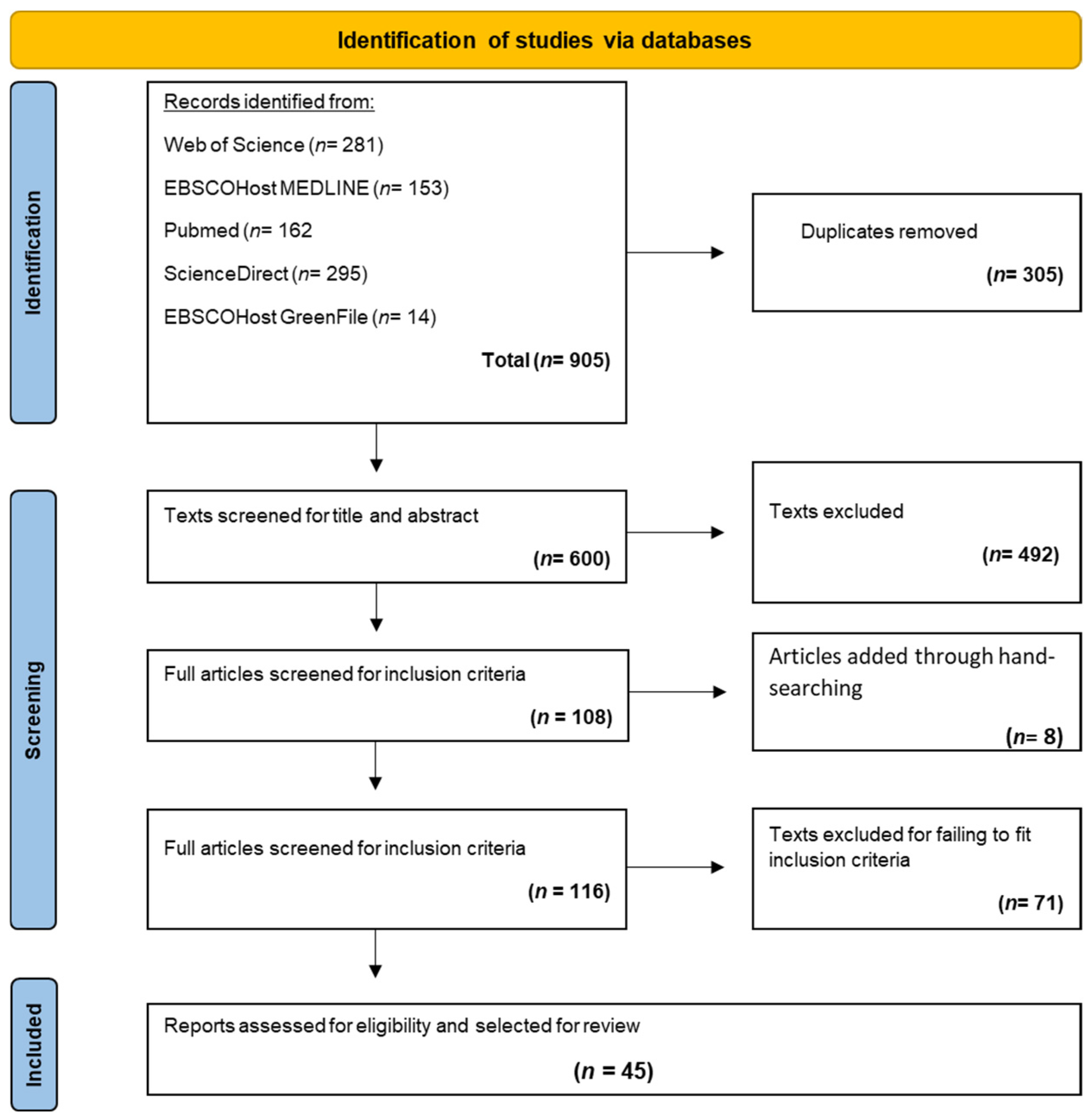
The guidelines set out in the Preferred Reporting Items for Systematic Reviews and Meta-analyses Extension for Scoping Reviews (PRISMA-ScR) by Tricco et al. [15] were employed to conduct this review. The strategy to locate the articles included in this review can be seen in Figure 1.
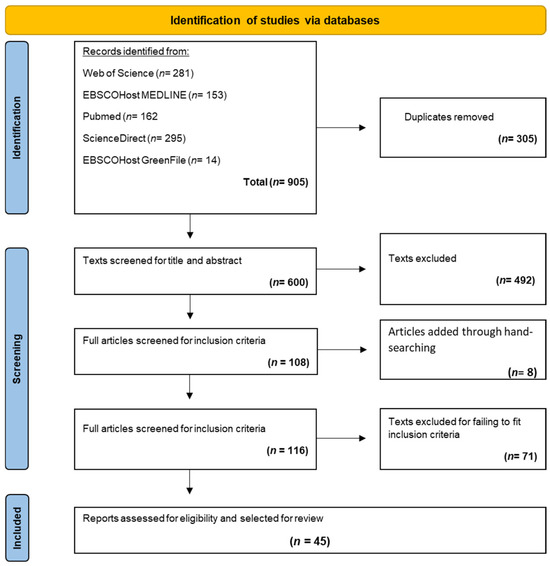
Figure 1.
PRISMA flow chart of the article selection process.
Search terms (Table 1) derived from the review’s objective were used as part of the online database advanced search strategy. The databases searched were Web of Science, ScienceDirect, EBSCOHost, GreenFile, EBSCOHost MEDLINE, and PubMed. The searches were conducted in January 2023.

Table 1.
Search terms derived from each concept.
The articles selected were required to meet pre-determined eligibility criteria. To meet the inclusion criteria, articles must have been peer-reviewed, published in the previous 10 years, primary research articles, available in English, and allude to at least one of the following: (1) consumer knowledge of a sustainable diet and (2) consumer willingness to adopt a sustainable diet. Aside from failing to meet the inclusion criteria, articles were excluded if they focused on novel forms of protein, e.g., jellyfish, hybrid products, seaweed, etc. These were excluded because these are specific food products, not diets. Also excluded were reviews, such as systematic reviews, as these are secondary research [16].
To achieve the aim of this review, data were extracted from the included studies, as evident in the results section. Although the results from each article are extracted, a thorough analysis of each article’s results is not presented in this review, as an in-depth analysis of results would be best suited to a systematic review [14,17,18]. However, to fulfil the aim of this review, qualitative content analysis was employed as this is suitable and permitted to be conducted in a scoping review [17]. Moreover, an inductive approach was utilised to collate the article results, which were pivotal to the review’s aim. Likewise, results were coded into either ‘knowledge’ or ‘willingness’.
Database searches yielded 905 articles, which were uploaded to the referencing management software Zotero 6.0.26. These were initially screened for title and abstract per the eligibility criteria. Articles passed initial screening if their title contained words or sentences included in the search terms derived from each concept (“sustainable diet” and “knowledge/willingness”) (Table 1). The abstracts of articles that passed screening by title were then screened in more detail. Articles progressed to the next stage of selection if they met the eligibility criteria aforementioned. Hence, 116 articles were uploaded to Rayyan.
Rayyan is a research collaboration software [19]. Rayyan enables researchers to screen articles based on their eligibility criteria. The invited researchers can select articles they wish to include, exclude, or are undecided about. Any disagreements are highlighted, and the researchers can discuss these to decide whether to include or exclude these articles. The methods and results of these articles were reviewed for eligibility as per inclusion criteria. After examining the articles uploaded to Rayyan, two independent researchers were invited to review the articles, and 45 articles were deemed acceptable to be included in the review (Figure 1). Any disagreements among articles were resolved by the second independent reviewer.
3. Results
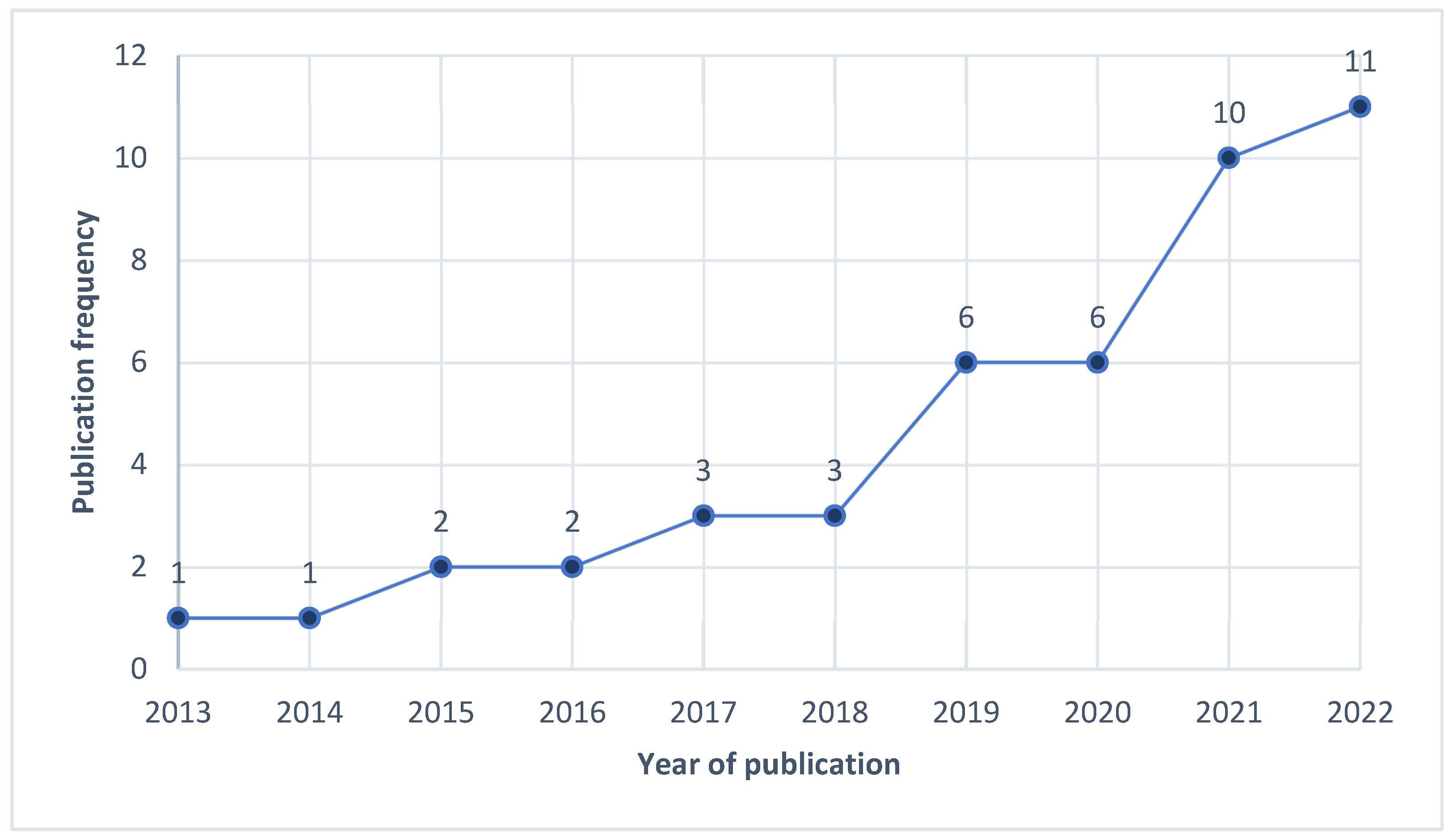
As depicted in Figure 2, research in this area increases each subsequent year, with 60% (n = 27) of the studies included in this review conducted in the three preceding years.
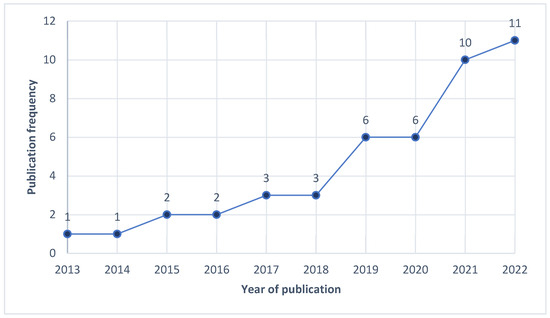
Figure 2.
Publication year frequency (n = 45).
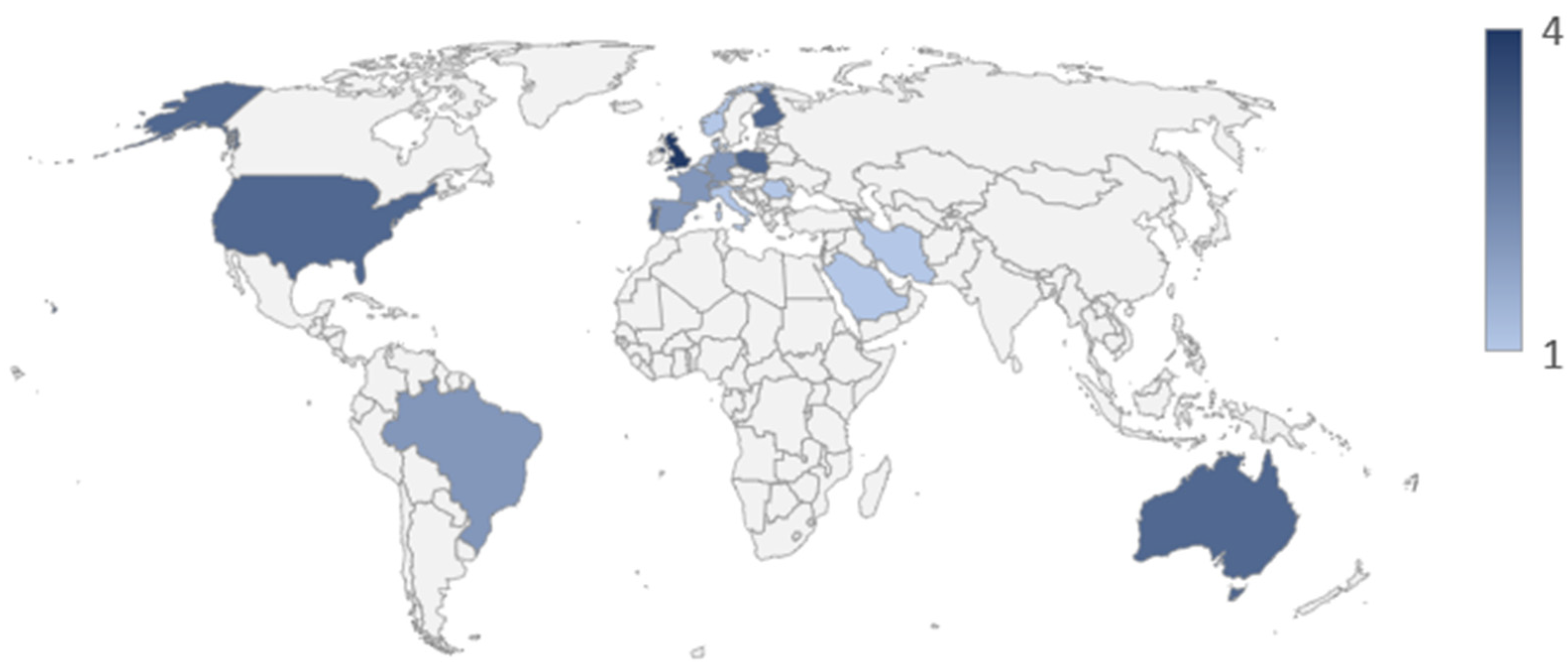
Demographically, the majority (n = 28) have been conducted in Europe, with the remaining carried out in North America (n = 3), Oceania (n = 3), South America (n = 2), and Asia (n = 3). Multi-country studies (n = 6) are not included in the demographic frequency count (Figure 3).
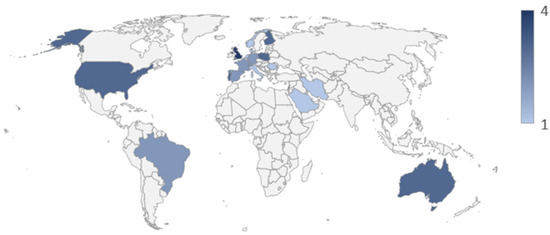
Figure 3.
Demographic frequency (n = 39).
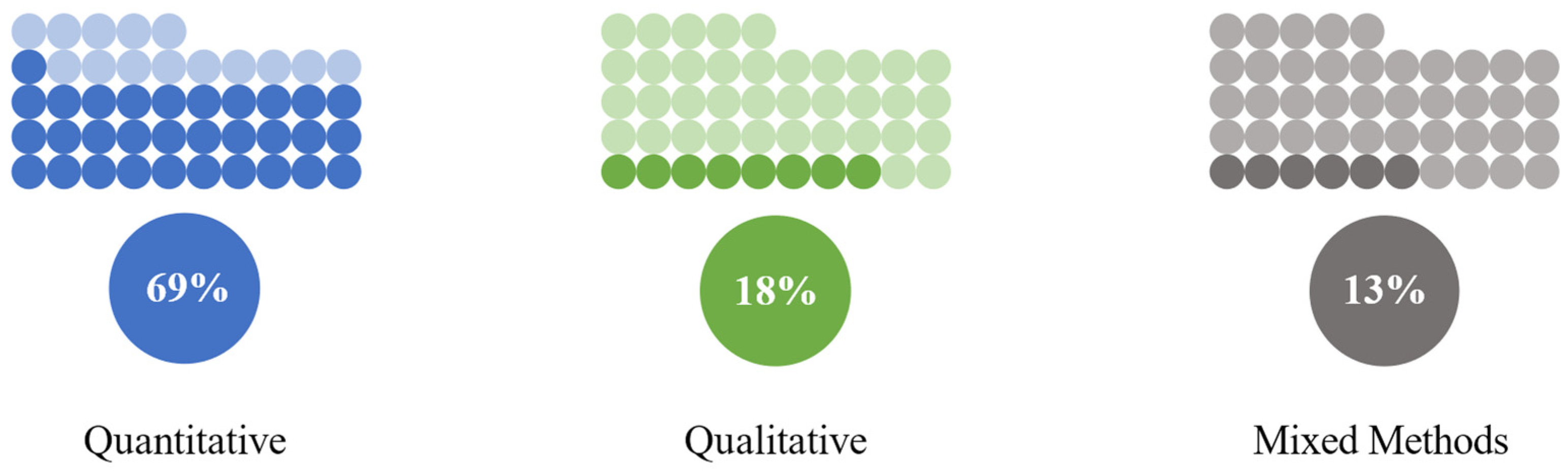
Regarding methods, eight used qualitative methods, thirty-one used quantitative methods, and six used a mixed-methods approach (Figure 4).
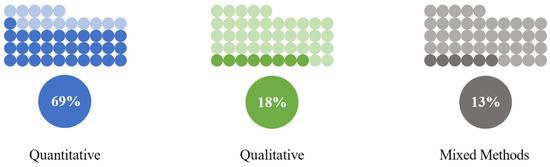
Figure 4.
Methods frequency (n = 45).
The gender of participants involved in many of the studies remained consistent. Male participation was low compared to that of females. Zero studies had over 51% male participants, whereas 36 studies had over 51% female participation. Furthermore, 17 studies consisted of over 60% females. The highest male participant level of any study was 50.5% (n = 2).
Knowledge and Willingness
Few studies (n = 6) exhibit some understanding of the term sustainable diets. However, the understanding of the term sustainable diets seems to be improving as the years progress, with two of the six studies reporting consumer knowledge of sustainable diets published in 2022 and none published before 2017. Conversely, a large number of studies (n = 14) show that there appears to be a general lack of knowledge concerning what is meant by this term, with participants admitting to needing more information on this concept. Furthermore, several studies (n = 11) reported that some participants thought they understood sustainable diets; however, many communicated misconceptions (n = 3). For example, Mann et al. [20] found that most people believe that sustainable eating would only be slightly beneficial to the environment as they underestimated the environmental impact of farming, processing, and packaging. Likewise, three studies found that participants held cynical attitudes toward sustainability. Regarding misconceptions, three studies discovered that participants erroneously overstated the environmental impact of food transportation compared to other factors pertinent to sustainable diets.
General unawareness of the (un)sustainability of particular foods was a frequent finding (n = 12). Eleven studies expressed an underestimation of the environmental impact of meat, with four overestimating the environmental impact of plant protein sources. One study, in particular, found that less than a fifth of participants agreed that reducing meat, dairy, and egg consumption would mitigate climate change [21]. Or another where participants “mistakenly perceived the environmental impact of soy-based meat substitutes as similar to that of conventionally produced meat” [22] (p. 196). Moreover, two studies revealed how participants were sceptical of the importance of sustainable diets lessening environmental degradation, whilst one was dubious of the health impacts of new alternative protein sources [23]. With references to gender differences, five studies found that women had more knowledge surrounding sustainability, with one contrasting and reporting no gender differences regarding knowledge of sustainable diets [24].
In the studies that looked at the motives for choosing food, health was near or at the top of the list in all (n = 16). Other motives included taste (n = 6), price (n = 6), and convenience (n = 2). Interestingly, environmental reasons were the third most mentioned food choice motive in a study by Culliford and Bradbury [25]. However, this is outnumbered by the 16 studies that conveyed that consumers either do not consider environmental reasons when purchasing food or that it has little influence on their food choices, with the former motives, especially health, dominating reasons for food choice. Correspondingly, the barriers to sustainable eating mirror the already stated motives for food choice. The barrier mentioned most frequently was connected to either a lack of knowledge regarding sustainable diets (n = 10) or attachment to meat and its difficulty to reduce (n = 9). Another frequent barrier reported was that sustainable diets are perceived as expensive (n = 9). Other barriers related to a lack of skills concerning the preparation of sustainable meals (n = 5), limited availability of sustainable food (n = 4), high preparation/cooking time of sustainable protein sources, namely pulses (n = 4), and expectations that plant-based food is not tasty (n = 3).
Interestingly, the studies that used a Likert scale to assess consumer willingness to adopt sustainable diets (n = 3) all reported that consumers were more open than not to adopting a sustainable diet. Additional studies (n = 6) also indicated consumers’ positive motives towards adopting sustainable diets. For example, health reasons were the main motive for accepting the ‘Meatless Monday’ challenge in Ramsing et al. [26], but environmental reasons were the main motive for continuing the challenge. Nevertheless, of the studies exploring consumer willingness (n = 26), nine reported that consumers were willing to adopt a sustainable diet. However, these were outnumbered by studies reporting unwillingness (n = 17) to adopt sustainable diets. The main component of unwillingness was reluctance to reduce meat consumption (n = 9), followed by low intention to adopt a plant-based diet (n = 4) and low acceptance of alternative protein sources (n = 4). In addition, two studies reported a low willingness to adopt a sustainable diet in general. Moreover, whether knowledge of healthy, sustainable diets transferred to implementing a sustainable diet was contradictory among the studies. Five reported that knowledge regarding sustainable diets did not transfer to implementing a sustainable diet, whilst 11 found that there was a positive correlation between knowledge of sustainable diets and the implementation of a sustainable diet.
Regarding gender, females are more willing to either reduce meat consumption or adopt sustainable eating habits (n = 20), whilst one study [27] reported men to be more willing to adopt a sustainable diet and two stated how intentions to eat sustainably did not differ by gender. Additional study characteristics, namely study aim, data collection tool, sample size, and specific target group, can be seen below (Table 2).
Table 2.
Characteristics of included articles (n = 45).
4. Discussion
This scoping review aimed to complete a review of the studies conducted on consumers concerning their knowledge of a sustainable diet and their willingness to adopt a sustainable diet. From this, 45 articles were deemed eligible for this review. As illustrated in Figure 2, studies published in this area have steadily increased in the previous 10 years.
4.1. Trends in Research
Evidently, 60% of the selected studies were published between 2020 and 2022. The increase in publications central to this research area is likely due to the growing awareness of the impact of climate change. For instance, the popular EAT-Lancet Commission Report published in The Lancet in 2019 by Willett et al. [2] perhaps spurred a movement that galvanised the need for research in the area of consumer orientation pertaining to sustainable diets. In addition, the rampant growth of publications may be because sustainability is now an interdisciplinary approach that almost all sectors have adopted. Thus, the food industry is following suit and seeking the need for research in sustainable diets as vital to uphold sustainability. Similarly, research in sustainable diets can also bring the food system closer to achieving the Sustainable Development Goals (SDGs) by 2030. This initiative emphasises responsible consumer consumption and food security, encouraging academics to research how the food system can align with the SDGs [65]. Nonetheless, the spread of this research worldwide varies.
4.2. Geographical Focus
Noticeably, European countries appear to be the frontrunners in gathering data pertaining to consumer knowledge and willingness concerning the adoption of a sustainable diet, with 28 of the 39 studies that focused on a single country coming from European nations. This could be because of the environmental regulations imposed upon European Union (EU) countries. An example of this is the EU Green Deal, which aims to make the EU the first region in the world with a climate-neutral status by 2050 [66]. Another factor is the EU’s adoption of a Circular Economy Action Plan, which promotes sustainable production intending to reduce a product’s environmental impact throughout its lifecycle [67]. Interestingly, during the literature search, no studies, to the knowledge of the author, have been published in Ireland. However, since the literature search, Safefood [68] has published a series of studies pertinent to this research area. Additionally, the Climate and Health Alliance [69] has also published a position paper regarding transitioning Ireland to a healthy and sustainable food system. From this, the aspiration is that population knowledge concerning the need to shift to a more sustainable diet increases.
4.3. Knowledge
As reported in the results, knowledge pertaining to a sustainable diet was low (n = 6). However, as seen in Figure 2, the growing body of research on this subject may suggest that this topic is relatively new. Therefore, time may be needed for consumers to develop an understanding of what constitutes a sustainable diet. Interestingly, in the subject of Home Economics in Irish post-primary schools, the topic of sustainability is a major focus in the new National Council for Curriculum and Assessment (NCCA) Junior Cycle Home Economics course [70]. This focus can be seen with the element of “sustainable and responsible living” being integrated throughout the three strands of this subject’s curriculum [70] (p. 12). This is of particular importance as one of these strands is “Food health and culinary skills” [70] (p. 10). Thus, enabling Junior Cycle Home Economics students to learn food health and culinary skills from a sustainability perspective. This is something that is not explicitly addressed in the current NCCA Leaving Certificate Home Economics course [71]. Therefore, a reform of this course could implement elements of sustainability to bridge the gap between the Junior Cycle and Leaving Certificate to continue and progress the learning of practical food skills using a sustainable approach. This lack of knowledge also appears to have generated misconceptions surrounding sustainable diets.
4.4. Misconceptions
Three studies reported that participants overstated the effects of transport, particularly air-freighted food, on the environment [20,22,25]. Conversely, figures depict that only 0.16% of food is transported by air, whilst 58.97% is carried by water [6]. In addition, the level of scepticism reported in three studies exposed the reality that many consumers do not have sufficient knowledge about the necessity of transitioning to a sustainable diet [20,23,31]. Ergo, this lack of knowledge surrounding sustainable diets may translate to a lesser chance of sustainability being a factor affecting food choices.
4.5. Barriers to Adoption
In terms of factors affecting food choice, health was deemed the most or one of the most important in all of the 16 studies that posed this question. Cost (n = 6), taste (n = 6), and convenience (n = 2) were other popular motives affecting food choice. However, choosing foods for environmental purposes was much less favoured, as 16 studies indicated that environmental reasons do not influence food choice to a great extent. Perhaps due to the lack of environmental knowledge among consumers, coupled with their general scepticism surrounding sustainable diets, as aforementioned.
Likewise, the prominent barriers inhibiting sustainable eating were lack of knowledge regarding sustainable diets (n = 10), attachment to meat (n = 9), perceived cost (n = 9), and inadequate culinary skills—particularly surrounding meat substitutes (n = 5). Attachment to meat is of particular significance as livestock-derived food is responsible for 72–78% of total agricultural emissions [72], and high consumption of red and processed meats has been linked to adverse effects on human health [73]. Moreover, red meat and processed meats have been classified as group 2A (probably carcinogenic to humans) and group 1 (carcinogenic to humans), respectively [74]. Thus, a reduction in red and processed meat is beneficial for human and planetary health [75]. Interestingly, females tend to be more open to adopting a sustainable diet than men.
4.6. Gender Differences
Although overall willingness to adopt a sustainable diet was relatively low, female participants (n = 20) seemed to be more inclined than their male counterparts (n = 1) to adopt a sustainable diet. One reason females may be more open to adopting a sustainable diet could come down to gender perceptions. A study by Rozin et al. [76] found that individuals who preferred a beef-based diet were perceived as less feminine and more masculine than those who preferred a vegetable-based diet. Ergo, this stigma may explain one reason why females are more willing to adopt a sustainable diet than men. Since there is such a difference regarding genders, perhaps a tailored education campaign may be advantageous to balance a willingness to adopt a sustainable diet amongst males and females.
4.7. Limitations
The first limitation of this scoping review is that many of the studies employed different research methods. Therefore, interpreting results is challenging as many of the qualitative studies provided in-depth analysis, whilst some of the quantitative studies gave more concise responses. Another limitation of this review could be the superficial analysis and interpretation of the results of each study, although such analysis would be beyond the remit of a scoping review and best suited to a systematic review [17]. However, a systematic review would not suit the aim of this paper, as the aim of this paper was to conduct a scoping review to map the literature pertaining to consumer knowledge concerning sustainable diets and their willingness to adopt a sustainable diet. Ergo, a scoping review was the most suitable review type to map the pertinent literature.
4.8. Further Research
Many of the results from the included studies are transferrable and can be employed from an Irish perspective. However, further studies are needed to look at Irish consumer perceptions of the environmental and health impact of foods. This would address both Irish consumers’ knowledge and perceptions of foods in terms of their effects on human and planet health. Furthermore, although Safefood [68] conducted a series of studies on the Irish population pertaining to sustainable diets, they did not carry out a study that focused on young Irish consumers. Thus, to the author’s knowledge, no studies on young consumers in Ireland exist regarding sustainable diets. Therefore, a future study could look at the knowledge and perceptions of young consumers to discover their knowledge about sustainable diets and their willingness to adopt a sustainable diet.
5. Conclusions
The current food system needs reform to mitigate the ongoing disastrous effects on both human and planetary health. One way to alleviate this concern is the shift towards a sustainable diet. Thus, this scoping review set out to map the current literature relating to consumer knowledge concerning sustainable diets and their willingness to adopt a sustainable diet. Additionally, the consensus from the included studies suggests that consumers generally lack knowledge about food sustainability and, in the main, are unwilling to adopt a sustainable diet at this current time. Misconceptions surrounding sustainable diets exist, and this is perhaps due to a lack of information in this area. Therefore, more research-based initiatives in this area may encourage the transition towards a diet that promotes human health whilst also preserving the planet. Consequently, more research in this research area is required, specifically research conducted on young consumers to further the body of knowledge in this area.
Author Contributions
C.D., A.M. and E.M. were involved in the conception of the review, C.D. conducted the searches of the literature. A.M. and E.M. reviewed all articles for suitability for inclusion or exclusion. C.D. drafted the manuscript, and A.M. and E.M. edited it. All authors have read and agreed to the published version of the manuscript.
Funding
This research received no external funding.
Data Availability Statement
The original contributions presented in this study are included in the article. Further inquiries can be directed to the corresponding author.
Conflicts of Interest
The authors declare no conflicts of interest.
References
- FAO (Food and Agricultural Organization); WHO (World Health Organization). Sustainable Healthy Diets—Guiding Principles; FAO, WHO: Rome, Italy, 2019; Available online: https://openknowledge.fao.org/server/api/core/bitstreams/03bf9cde-6189-4d84-8371-eb939311283f/content (accessed on 3 June 2024).
- Willett, W.; Rockström, J.; Loken, B.; Springmann, M.; Lang, T.; Vermeulen, S.; Garnett, T.; Tilman, D.; DeClerck, F.; Wood, A.; et al. Food in the Anthropocene: The EAT—Lancet commission on healthy diets from sustainable food systems. Lancet 2019, 393, 447–492. [Google Scholar] [CrossRef] [PubMed]
- United Nations; Department of Economic and Social Affairs; Population Division. World Population Prospects: The 2017 Revision, Key Findings and Advance Tables; United Nations: New York, NY, USA, 2017; Available online: https://population.un.org/wpp/publications/files/wpp2017_keyfindings.pdf (accessed on 21 August 2023).
- Crippa, M.; Solazzo, E.; Guizzardi, D.; Monforti-Ferrario, F.; Tubiello, F.N.; Leip, A. Food systems are responsible for a third of global anthropogenic GHG emissions. Nat. Food 2021, 2, 198–209. [Google Scholar] [CrossRef] [PubMed]
- Allen, A.M.; Hof, A.R. Paying the price for the meat we eat. Environ. Sci. Policy 2019, 97, 90–94. [Google Scholar] [CrossRef]
- Poore, J.; Nemecek, T. Reducing food’s environmental impacts through producers and consumers. Science 2019, 360, 987–992. [Google Scholar] [CrossRef] [PubMed]
- Gibbs, J.; Cappuccio, F.P. Planet-Based Dietary Patterns for Human and Planetary Health. Nutrients 2022, 14, 1614. [Google Scholar] [CrossRef] [PubMed]
- GBD 2017 Diet Collaborators. Health effects of dietary risks in 195 countries, 1990–2017: A systematic analysis for the Global Burden of Disease Study 2017. Lancet 2019, 393, 1958–1972. [Google Scholar] [CrossRef]
- World Obesity Federation. World Obesity Atlas 2022. Available online: https://data.worldobesity.org/publications/World-Obesity-Atlas-2022-updated.pdf (accessed on 20 August 2023).
- FAO; International Fund for Agricultural Development; UNICEF; World Food Programme; World Health Organization. The State of Food Security and Nutrition in the World. Urbanization, Agrifood Systems Transformation and Healthy Diets Across the Rural-Urban Continuum; FAO: Rome, Italy, 2023; Available online: https://www.fao.org/3/cc3017en/cc3017en.pdf (accessed on 20 October 2023).
- Swinburn, B.A.; Kraak, V.I.; Allender, S.; Atkins, V.J.; Baker, P.I.; Bogard, J.R.; Brinsden, H.; Calvillo, A.; De Schutter, O.; Devarajan, R.; et al. The Global Syndemic of Obesity, Undernutrition, and Climate Change: The Lancet Commission report. Lancet 2019, 393, 791–846. [Google Scholar] [CrossRef]
- Munn, Z.; Pollock, D.; Khalil, H.; Alexander, L.; Mclnerney, P.; Godfrey, C.N.; Peter, M.; Tricco, A.C. What are scoping reviews? Providing a formal definition of scoping reviews as a type of evidence synthesis. JBI Evid. Synth. 2022, 20, 950–952. [Google Scholar] [CrossRef]
- Arksey, H.; O’Malley, L. Scoping studies: Towards a methodological framework. Int. J. Soc. Res. Methodol. 2005, 8, 19–32. [Google Scholar] [CrossRef]
- Munn, Z.; Peters, M.D.; Stern, C.; Tufanaru, C.; McArthur, A.; Aromataris, E. Systematic review or scoping review? Guidance for authors when choosing between a systematic or scoping review approach. BMC Med. Res. Methodol. 2018, 18, 143. [Google Scholar] [CrossRef]
- Tricco, A.C.; Lillie, E.; Zarin, W.; O’Brien, K.K.; Colquhoun, H.; Levac, D.; Moher, D.; Peters, M.D.J.; Horsley, T.; Weeks, L. PRISMA Extension for Scoping Reviews (PRISMA-ScR): Checklist and Explanation. Ann. Intern. Med. 2018, 169, 467–473. [Google Scholar] [CrossRef] [PubMed]
- Grant, M.J.; Booth, A. A typology of reviews: An analysis of 14 review types and associated methodologies. Health Inf. Libr. J. 2009, 26, 91–108. [Google Scholar] [CrossRef] [PubMed]
- Pollock, D.; Peters, M.D.J.; Khalil, H.; McInerney, P.; Alexander, L.; Tricco, A.C.; Evans, C.; de Moraes, É.B.; Godfrey, C.M.; Pieper, D. Recommendations for the extraction, analysis, and presentation of results in scoping reviews. JBI Evid. Synth. 2023, 21, 520–532. [Google Scholar] [CrossRef] [PubMed]
- Peters, M.D.J.; Godfrey, C.; McInerney, P.; Munn, Z.; Tricco, A.C.; Khalil, H. Chapter 11: Scoping Reviews (2020 version). In JBI Manual for Evidence Synthesis; Aromataris, E., Munn, Z., Eds.; JBI: Adelaide, Australia, 2020; pp. 406–451. [Google Scholar]
- Ouzzani, M.; Hammady, H.; Fedorowicz, Z.; Elmagarmid, A. Rayyan—A web and mobile app for systematic reviews. Syst. Rev. 2016, 5, 210. [Google Scholar] [CrossRef]
- Mann, D.; Thornton, L.; Crawford, D.; Ball, K. Australian consumers’ views towards an environmentally sustainable eating pattern. Public Health Nutr. 2018, 21, 2714–2722. [Google Scholar] [CrossRef]
- Clonan, A.; Wilson, P.; Swift, J.A.; Leibovici, D.G.; Holdsworth, M. Red and processed meat consumption and purchasing behaviours and attitudes: Impacts for human health, animal welfare and environmental sustainability. Public Health Nutr. 2015, 18, 2446–2456. [Google Scholar] [CrossRef]
- Siegrist, M.; Hartmann, C. Impact of sustainability perception on consumption of organic meat and meat substitutes. Appetite 2019, 132, 196–202. [Google Scholar] [CrossRef]
- Fox, E.L.; Davis, C.; Downs, S.M.; McLaren, R.; Fanzo, J. A focused ethnographic study on the role of health and sustainability in food choice decisions. Appetite 2021, 165, 105319. [Google Scholar] [CrossRef]
- Polleau, A.; Biermann, G. Eat local to save the planet? Contrasting scientific evidence and consumers’ perceptions of healthy and environmentally friendly diets. Curr. Res. Environ. Sustain. 2021, 3, 100054. [Google Scholar] [CrossRef]
- Culliford, A.; Bradbury, J. A cross-sectional survey of the readiness of consumers to adopt an environmentally sustainable diet. Nutr. J. 2020, 19, 138. [Google Scholar] [CrossRef]
- Ramsing, R.; Chang, K.B.; Hendrickson, Z.M.; Xu, Z.; Friel, M.; Calves, E. The role of community-based efforts in promoting sustainable diets: Lessons from a grassroots meat-reduction campaign. J. Agric. Food Syst. Community Dev. 2021, 10, 373–397. [Google Scholar]
- Alnasser, A.; Musallat, N. Food Sustainability Knowledge among Saudis: Towards the Goals of Saudi Vision 2030. Sustainability 2022, 14, 11398. [Google Scholar] [CrossRef]
- Vanhonacker, F.; Van Loo, E.J.; Gellynck, X.; Verbeke, W. Flemish consumer attitudes towards more sustainable food choice. Appetite 2013, 62, 7–16. [Google Scholar] [CrossRef] [PubMed]
- de Boer, J.; Schosler, H.; Aiking, H. ‘Meatless days’ or ‘less but better’? Exploring strategies to adapt Western meat consumption to health and sustainability challenges. Appetite 2014, 76, 120–128. [Google Scholar] [CrossRef] [PubMed]
- Graca, J.; Oliveria, A.; Calheiros, M.M. Meat, beyond the plate. Data-driven hypotheses for understanding consumer willingness to adopt a more plant-based diet. Appetite 2015, 90, 80–90. [Google Scholar] [CrossRef]
- Macdiarmid, J.I.; Douglas, F.; Campbell, J. Eating like there’s no tomorrow: Public awareness of the environmental impact of food and reluctance to eat less meat as part of a sustainable diet. Appetite 2016, 96, 487–493. [Google Scholar] [CrossRef]
- Jallinoja, P.; Niva, M.; Latvala, T. Future of sustainable eating? Examining the potential for expanding bean eating in a meat-eating culture. Futures 2016, 83, 4–14. [Google Scholar] [CrossRef]
- Allés, B.; Péneau, S.; Kesse-Guyot, E.; Baudry, J.; Hercberg, S.; Méjean, C. Food choice motives including sustainability during purchasing are associated with a healthy dietary pattern in French adults. Nutr. J. 2017, 16, 58. [Google Scholar] [CrossRef]
- Péneau, S.; Fassier, P.; Allés, B.; Kesse-Guyot, E.; Hercberg, S.; Méjean, C. Dilemma between health and environmental motives when purchasing animal food products: Sociodemographic and nutritional characteristics of consumers. BMC Public Health 2017, 17, 876. [Google Scholar] [CrossRef]
- Van Loo, E.J.; Hoefkens, C.; Verbeke, W. Healthy, sustainable and plant-based eating: Perceived (mis)match and involvement-based consumer segments as targets for future policy. Food Policy 2017, 69, 46–57. [Google Scholar] [CrossRef]
- Asvatourian, V.; Craig, T.; Horgan, G.W.; Kyle, J.; Macdiarmid, J.I. Relationship between pro-environmental attitudes and behaviour and dietary intake patterns. Sustain. Prod. Consum. 2018, 16, 216–226. [Google Scholar] [CrossRef]
- Harray, A.J.; Meng, X.; Kerr, D.A.; Pollard, C.M. Healthy and sustainable diets: Community concern about the effect of the future food environments and support for government regulating sustainable food supplies in Western Australia. Appetite 2018, 125, 225–232. [Google Scholar] [CrossRef] [PubMed]
- Lehikoinen, E.; Salonen, A.O. Food Preferences in Finland: Sustainable Diets and their Differences between Groups. Sustainability 2019, 11, 1259. [Google Scholar] [CrossRef]
- Graca, J.; Truninger, M.; Junqueira, L.; Schmidt, L. Consumption orientations may support (or hinder) transitions to more plant-based diets. Appetite 2019, 140, 19–26. [Google Scholar] [CrossRef]
- Rejman, K.; Kaczorowska, J.; Halicka, E.; Laskowski, W. Do Europeans consider sustainability when making food choices? A survey of Polish city-dwellers. Public Health Nutr. 2019, 22, 1330–1339. [Google Scholar] [CrossRef]
- Barone, B.; Nogueira, R.M.; de Queiroz Guimarães, K.R.L.S.L.; Behrens, J.H. Sustainable diet from the urban Brazilian consumer perspective. Food Res. Int. 2019, 124, 206–212. [Google Scholar] [CrossRef]
- Larson, N.; Laska, M.N.; Neumark-Sztainer, D. Do young adults value sustainable diet practices? Continuity in values from adolescence to adulthood and linkages to dietary behaviour. Public Health Nutr. 2019, 22, 2598–2608. [Google Scholar] [CrossRef]
- García-González, Á.; Achón, M.; Krug, A.C.; Varela-Moreiras, G.; Alonso-Aperte, E. Food Sustainability Knowledge and Attitudes in the Spanish Adult Population: A Cross-Sectional Study. Nutrients 2020, 12, 3154. [Google Scholar] [CrossRef]
- Duarte, M.; Vasconcelos, M.; Pinto, E. Pulse Consumption among Portuguese Adults: Potential Drivers and Barriers towards a Sustainable Diet. Nutrients 2020, 12, 3336. [Google Scholar] [CrossRef]
- Voinea, L.; Popescu, D.V.; Bucurm, M.; Negrea, T.M.; Dina, R.; Enache, C. Reshaping the Traditional Pattern of Food Consumption in Romania through the Integration of Sustainable Diet Principles. A Qualitative Study. Sustainability 2020, 12, 5826. [Google Scholar] [CrossRef]
- Szczebylo, A.; Rejman, K.; Halicka, E.; Laskowski, W. Towards More Sustainable Diets, Attitudes, Opportunities and Barriers to Fostering Pulse Consumption in Polish Cities. Nutrients 2020, 12, 1589. [Google Scholar] [CrossRef] [PubMed]
- Tepper, S.; Kaufman-Shriqui, V.; Shahar, D.R. Mapping Young Adults’ Concerns and Attitudes toward Food-Related Sustainability Issues in Israel: Implications for Food Policy. Nutrients 2020, 12, 3190. [Google Scholar] [CrossRef] [PubMed]
- Fink, L.; Strassner, C.; Ploeger, A. Exploring External Factors Affecting the Intention-Behavior Gap When Trying to Adopt a Sustainable Diet: A Think Aloud Study. Front. Nutr. 2021, 8, 511412. [Google Scholar] [CrossRef] [PubMed]
- Gonera, A.; Svanes, E.; Bugge, A.B.; Hatlebakk, M.M.; Prexl, K.M.; Ueland, Ø. Moving Consumers along the Innovation Adoption Curve: A New Approach to Accelerate the Shift toward a More Sustainable Diet. Sustainability 2021, 13, 4477. [Google Scholar] [CrossRef]
- Haghighian Roudsari, A.; Vedadhir, A.; Pourmoradian, A.; Rahimi-Ardabili, H.; Shokouhi, M.; Milani-Bonab, A. Exploring adults’ motives for food choice of sustainable diet components: A qualitative study in Tehran Metropolis. BMC Nutr. 2021, 7, 55. [Google Scholar] [CrossRef]
- Hielkema, M.H.; Lund, T.B. Reducing meat consumption in meat-loving Denmark: Exploring willingness, behavior, barriers and drivers. Food Qual. Prefer. 2021, 93, 104257. [Google Scholar] [CrossRef]
- Kirbis, A.; Lamot, M.; Javornik, M. The Role of Education in Sustainable Dietary Patterns in Slovenia. Sustainability 2021, 13, 13036. [Google Scholar] [CrossRef]
- Smiglak-Krajewska, M.; Wojciechowska-Solia, J. Consumption Preferences of Pulses in the Diet of Polish People: Motives and Barriers to Replace Animal Protein with Vegetable Protein. Nutrients 2021, 13, 454. [Google Scholar] [CrossRef]
- Niva, M.; Vainio, A. Towards more environmentally sustainable diets? Changes in the consumption of beef and plant- and insect-based protein products in consumer groups in Finland. Meat Sci. 2021, 182, 108635. [Google Scholar] [CrossRef]
- Pucci, T.; Casprini, E.; Sogari, G.; Zanni, L. Exploring the attitude towards the adoption of a sustainable diet: A cross-country comparison. Br. Food J. 2022, 124, 290–304. [Google Scholar] [CrossRef]
- Simeone, M.; Scarpato, D. Consumer Perception and Attitude toward Insects for a Sustainable Diet. Insects 2022, 13, 39. [Google Scholar] [CrossRef] [PubMed]
- Lourenco, C.E.; Nunes-Galbes, N.M.; Borgheresi, R.; Cezarino, L.O.; Martins, F.P.; Liboni, L.B. Psychological Barriers to Sustainable Dietary Patterns: Findings from Meat Intake Behaviour. Sustainability 2022, 14, 2199. [Google Scholar] [CrossRef]
- Gaspar, M.C.M.P.; Celorio-Sardà, R.; Comas-Basté, O.; Latorre-Moratalla, M.L.; Aguilera, M.; Llorente-Cabrera, G.A.; Puig-Llobet, M.; Vidal-Carou, M.C. Knowledge and perceptions of food sustainability in a Spanish university population. Front. Nutr. 2022, 9, 970923. [Google Scholar] [CrossRef] [PubMed]
- Varela, P.; Arvisenet, G.; Gonera, A.; Myhrer, K.S.; Fifi, V.; Valentin, D. Meat replacer? No thanks! The clash between naturalness and processing: An explorative study of the perception of plant-based foods. Appetite 2022, 169, 105793. [Google Scholar] [CrossRef] [PubMed]
- Baur, I.; Stylianou, K.S.; Ernstoff, A.; Hansmann, R.; Jolliet, O.; Binder, C.R. Drivers and Barriers Toward Healthy and Environmentally Sustainable Eating in Switzerland: Linking Impacts to Intentions and Practices. Front. Sustain. Food Syst. 2022, 6, 808521. [Google Scholar] [CrossRef]
- Migliavada, R.; Coricelli, C.; Bolat, E.E.; Ucuk, C.; Torri, L. The modulation of sustainability knowledge and impulsivity traits on the consumption of foods of animal and plant origin in Italy and Turkey. Sci. Rep. Nat. Portf. 2022, 12, 20036. [Google Scholar] [CrossRef]
- de Boer, J.; Aiking, H. Do EU consumers think about meat reduction when considering to eat a healthy, sustainable diet and to have a role in food system change? Appetite 2022, 170, 105880. [Google Scholar] [CrossRef]
- Perez-Cueto, F.J.A.; Rini, L.; Faber, I.; Rasmussen, M.A.; Bechtolf, K.; Schouteten, J.J.; De Steur, H. How barriers towards plant-based food consumption differ according to dietary lifestyle: Findings from a consumer survey in 10 EU countries. Int. J. Gastron. Food Sci. 2022, 29, 100587. [Google Scholar] [CrossRef]
- Ronto, R.; Saberi, G.; Carins, J.; Papier, K.; Fox, E. Exploring young Australians’ understanding of sustainable and healthy diets: A qualitative study. Public Health Nutr. 2022, 25, 2957–2969. [Google Scholar] [CrossRef]
- United Nations. Transforming Our World: The 2030 Agenda for Sustainable Development. 2015. Available online: https://www.dev-practitioners.eu/media/key_documents/SDGs_Booklet_Web_En.pdf (accessed on 16 November 2024).
- European Commission; Directorate-General for Communication. European Green Deal: Delivering on Our Targets; Publications Office of the European Union: Luxembourg, 2021; Available online: https://data.europa.eu/doi/10.2775/373022 (accessed on 16 November 2024).
- European Commission; Directorate-General for Communication. Circular Economy Action Plan: For a Cleaner and More Competitive Europe; Publications Office of the European Union: Luxembourg, 2020; Available online: https://data.europa.eu/doi/10.2779/05068 (accessed on 17 November 2024).
- Safefood. Building ‘Sustainability’ into National Healthy Eating Guidelines: Review of International Practice on Building ‘Sustainability’ into National Healthy Eating Guidelines and Practical Implications for Policy; Safefood: Cork, Ireland, 2023; Available online: https://www.safefood.net/getmedia/749f3084-21cf-41ce-a009-1594c1e5916c/Building-sustainability-into-national-healthy-eating-guidelines-(3).pdf (accessed on 12 December 2023).
- O’Brien, O.; Owens, S.; Stanton, A.; Allman, J.; Browne, S.; Cox, J.; Fitzgerald, R.; Harrington, J.; Morrissey, J.; Tierney, A. Fixing Food Together: Transitioning Ireland to a Healthy and Sustainable Food System. Eur. J. Public Health 2023, 33, ckad160.1166. [Google Scholar] [CrossRef]
- NCCA (National Council for Curriculum Assessment). Junior Cycle Home Economics Curriculum Specifications; Department of Education and Skills: Dublin, Ireland, 2017; Available online: https://www.curriculumonline.ie/getmedia/6d9ca864-75a5-4f99-80bc-7a9c416e6f05/JCSpec_HomeEc.pdf (accessed on 9 June 2024).
- NCCA (National Council for Curriculum Assessment). Leaving Certificate Home Economics—Scientific and Social Syllabus; Department of Education and Science: Dublin, Ireland, 2001; Available online: https://curriculumonline.ie/getmedia/b9bc688f-3a5d-48a7-90f1-b60063f49c74/SCSEC21_Home_Economics_syllabus_eng.pdf (accessed on 9 June 2024).
- Gerber, P.J.; Steinfeld, H.; Henderson, B.; Mottet, A.; Opio, C.; Dijkman, J.; Falcucci, A.; Tempio, G. Tackling Climate Change Through Livestock—A Global Assessment of Emissions and Mitigation Opportunities; Food and Agriculture Organization of the United Nations (FAO): Rome, Italy, 2013. [Google Scholar]
- Ekmekcioglu, C.; Wallner, P.; Kundi, M.; Weisz, U.; Haas, W.; Hutter, H.P. Red meat, diseases, and healthy alternatives: A critical review. Crit. Rev. Food Sci. Nutr. 2018, 58, 247–261. [Google Scholar] [CrossRef]
- International Agency for Research on Cancer. Red Meat and Processed Meat: IARC Monographs on the Evaluation of Carcinogenic Risks to Humans; International Agency for Research on Cancer/World Health Organization: Lyon, France, 2018; Available online: https://www.iarc.who.int/wp-content/uploads/2018/07/pr240_E.pdf (accessed on 5 June 2024).
- WHO (World Health Organization). Red and Processed Meat in the Context of Health and the Environment: Many Shades of Red and Green; Information Brief; World Health Organization: Geneva, Switzerland, 2023; Available online: https://iris.who.int/bitstream/handle/10665/370775/9789240074828-eng.pdf?sequence=1 (accessed on 7 April 2024).
- Rozin, P.; Hormes, J.M.; Faith, M.S.; Wansink, B. Is meat male? A quantitative multimethod framework to establish metaphoric relationships. J. Consum. Res. 2012, 39, 629–643. [Google Scholar] [CrossRef]
Disclaimer/Publisher’s Note: The statements, opinions and data contained in all publications are solely those of the individual author(s) and contributor(s) and not of MDPI and/or the editor(s). MDPI and/or the editor(s) disclaim responsibility for any injury to people or property resulting from any ideas, methods, instructions or products referred to in the content. |
© 2024 by the authors. Licensee MDPI, Basel, Switzerland. This article is an open access article distributed under the terms and conditions of the Creative Commons Attribution (CC BY) license (https://creativecommons.org/licenses/by/4.0/).