


Highlights
- The present study is the first scoping review to comprehensively map published evidence on childhood obesity prevalence and related policies in Greece.
- A total of 66 studies were included—61 on obesity prevalence and 5 on existing policies—providing the most up-to-date overview of this public health issue.
- The review reveals wide variability in childhood obesity prevalence, both overall and across gender groups.
- Existing national policies address multiple domains, including healthy nutrition, physical activity, and school-based initiatives.
- Our study findings confirm that childhood obesity remains a major public health challenge in Greece, underscoring the need for coordinated and evidence-based strategies to address this issue.
Abstract
Background/Objectives: Childhood obesity is a global epidemic. Addressing the modifiable risk factors with effective policies is crucial for both prevention and intervention. This scoping review aims to provide a situational analysis of childhood obesity in Greece by mapping the available evidence on the prevalence of obesity among Greek children and adolescents and exploring the existing policies implemented to address this issue. Methods: A systematic literature search was conducted on 15 September 2023, using the PubMed, Scopus, and IATROTEK-online databases to identify studies related to childhood obesity and policies in Greece. Keyword groups were developed for “childhood obesity,” “Greece,” and either “prevalence” or “policies”. Additional sources, including Google and Google Scholar, were screened to ensure comprehensiveness. Results: A total of 66 studies were included: 61 on obesity prevalence (≤18 years of age) and 5 on existing policies tackling childhood obesity, all in Greece. The collective prevalence was observed to lie within the subsequent range of values: 2.8–21.2%. Regarding both genders, the observed prevalence ranged from 2.8% to 26.7% in males, and between 1.3% and 33.7% in females. The policies adopted in Greece cover various domains (healthy nutrition, public preferences, physical activity, school policies, and programs related to childhood obesity). Conclusions: Childhood obesity in Greece is a major challenge. Greece currently uses some policies and strategies to combat childhood obesity. There is still work to be done: policies play a pivotal role as a key tool to influence lifestyle habits on a broad scale and exert a considerable impact on the reduction in this prevalent health concern.
1. Introduction
1.1. Background
Childhood obesity is a global epidemic, with all countries worldwide reporting concerning prevalence rates of overweight and obese children that have increased over the past four decades, mirroring the trends observed in adults [1]. Genetic and behavioral factors that are influenced by an obesogenic environment are implicated in its etiology, with low rates of physical activity, an increased sedentary lifestyle, and unhealthy dietary habits that result in a positive energy imbalance recognized as the main culprits in children [2,3].
Child and adolescent obesity impact the quality of life and mental health during childhood. Several studies carried out in Norway [4], Germany [5,6], the Netherlands [7], Ireland [8], Australia [9], the USA [10,11], and Israel [12], among others, have proven that health-related quality of life diminished in children and adolescents with overweight and obesity, with excessive weight affecting both physical wellbeing, mental wellbeing, and self-perception [4]. Young people with overweight and obesity often experience weight-related stigma and bullying that impacts their self-esteem, which may lead to social isolation, eating disorders, body dissatisfaction, anxiety, and depression [4,5,6]. Concerns about overweight and obese children and adolescents’ health-related quality of life were also echoed by parents, with observed variations attributed to different perceptions of quality of life between guardians and their children [11,12,13].
Obesity during childhood is likely to continue into adulthood, as young people are likely to remain exposed to the same obesogenic environments as they grow older and persist in unhealthy lifestyle habits established during childhood that increase their risk of excess weight [14,15]. The prolonged exposure to the negative impacts of increased fat deposition was associated with an earlier onset of chronic diseases [1,14] and excess morbidity in early adulthood [15]. Early occurrences of diabetes, cardiovascular disease, and certain forms of cancer in both sexes were linked to childhood obesity in a systematic review [15]. Several studies also associated excessive weight in childhood with increased morbidity and mortality in the working population, leading to significant social, economic, and health implications for the individual concerned and the country [1,2,14,15]. The additional increased healthcare cost implicated for overweight and obesity can be significant, with a systematic review and meta-analysis published in 2022 indicating an increase in total annual medical expenses of USD 237.55 per capita. This study reported that non-hospital care increased by USD 56.54, outpatient visit costs by USD 14.27, medication costs by USD 46.38, and hospitalization costs by USD 1975.06 per capita. Additionally, the length of hospital stays increased by 0.28 days. Cost projections for 2050 showed an annual direct cost of USD 13.62 billion and USD 49.02 billion in annual indirect costs [16].
The severe consequences of childhood overweight and obesity have prompted policymakers to implement various actions to address childhood obesity. In the “Report of the Commission on Ending Childhood Obesity”, the World Health Organization (WHO) identified three critical life-course periods where action is needed to address the childhood obesity epidemic: preconception and pregnancy, infancy and early childhood, and adolescence. The report acknowledged the significant impact of maternal health and lifestyle choices in shaping the future risk for excess weight in children, in addition to the influence of the obesogenic environment and genetic predispositions. In particular, maternal conditions such as entering pregnancy with obesity or pre-existing diabetes, or developing gestational diabetes, predispose the child to increased fat accumulation and a higher risk of metabolic diseases and obesity later in life. The recommendations included actions aimed at improving the nutritional value of food and beverages consumed by children and adolescents all through their life course, including from preconception to during pregnancy, early infancy, childhood, and adolescence; increasing the amount of physical exercise carried out at home, school, and during leisure time; creating healthy environments that promote a healthy life; and providing evidence-based weight management programs [17]. Actions implemented in countries included legislation and regulations, recommendations and guidelines targeting the whole population, and others that focused on selective sections of the population, such as schoolchildren, as well as pregnant and lactating women [17,18].
1.2. Status of Obesity in Europe
Worldwide trends in child and adolescent obesity have increased across all ages, with the doubling of rates in those aged 2–4 and an 8-fold increase in those aged 5–19 years. Progress was heterogeneous amongst countries, with some higher-income countries reporting a plateau, while lower-income countries showed upward trends [19]. Within the WHO European Region, surveillance data from several national surveys including WHO’s Global Health Observatory [20], the Childhood Obesity Surveillance Initiative (COSI) [21], and Health Behaviour in School-aged Children (HBSC) [3], consistently found an increased prevalence of childhood overweight and obesity in countries in Southern Europe and from around the Mediterranean Region. The latest COSI survey carried out between 2018 and 2020 among 7–9-year-old children found that 29% of children in the WHO European Region have excess weight, with 31% of boys and 28% of girls affected. Insights from the evidence revealed that 43% of children spent at least 2 hours per day interacting with electronic devices or watching TV, while 22% consumed soft drinks on more than 3 days during the week [22]. The HBSC survey assesses 11-, 13-, and 15-year-old adolescents, with the latest findings showing that 20% of adolescents have excessive weight. Boys and younger participants had higher weight, while a third of the participating countries and regions reported an increase in rates compared to previous years [21].
A review of the literature found studies from most southern European countries, including Portugal [23,24,25], Spain [26,27], France [28], Italy [29,30], Malta [31], Croatia [32,33], Montenegro [33], Romania [34], Hungary [35,36], Serbia [37], North Macedonia [38], Cyprus [39,40], Turkey [41,42,43], and Israel [44], which provided an insight into the prevalence of childhood obesity in different study cohorts and the factors contributing to excess weight while also providing a picture of trends over time in different age cohorts and population groups.
The prevalence of excessive weight among children and adolescents increasedover the years among all age groups, with some studies indicating exponential increments [26,44] despite implementing targeted actions [26]. Other countries reported encouraging results with overweight and obesity rates levelling off in Hungary [35], as well as declining trends in some, or most, cohorts in Cyprus [40], Portugal [24], and Croatia [32]. Improvements in rates were attributed to the successful implementation of legislations and regulations finalized at improving the nutritional value of food consumed by children and an increase in the amount of physical activity carried out [24].
Most studies reviewed reported a higher prevalence of both overweight and obesity in boys [29,31,33,35,40,41], while two studies reported higher rates in girls [23,27]. On the other hand, trends in different age groups indicated that childhood obesity tends to increase with increasing age from birth, reaching a peak around ages 7–10 years and decreasing thereafter [31,36,38], with this observation attributed to the effects of puberty [38]. Different factors were found to contribute to obesity. Lifestyle choices, especially the sort of food and beverages consumed, and the level of physical activity and inactive time were investigated in several studies [29,30,31,41,45,46]. The effect of socio-economic disparities and cultural differences on overweight and obesity in children was also investigated, with foreign nationality [27], poverty and social deprivation [28,43], and low maternal educational attainment [28] found to contribute to excess weight.
The majority of studies found that overweight rates were higher than obesity in both boys and girls [23,24,28,30,39,40]; however, obesity rates were found to be on the rise, with a study in Israel reporting a 4-fold increment in obesity and a 20-fold increment in severe obesity over the past 10 years [44]. On the other hand, studies carried out in Malta [31] and North Macedonia [38] indicated that obesity rates had surpassed the prevalence of overweight. Another study from Romania reported similar findings in children who were seen in the emergency department for other reasons [34]. Studies from Portugal [23] and Italy [29] highlighted the need to monitor central obesity as a marker of visceral adiposity in addition to the BMI. These studies reported that increased risks for cardiovascular disease, diabetes, and other metabolic disorders later in life were associated with the presence of visceral fat, even when the BMI is within normal limits [23,29]. Controlling the childhood obesity epidemic is necessary, not only to prevent the short-term effects of excessive weight, such as hypertension in childhood [34], but also to prevent the occurrence of chronic diseases in early adulthood and later in life, such as type 2 diabetes, end-stage renal failure, cancer, ischemic stroke, coronary heart disease, and all-cause mortality [44].
Despite the wealth of accessible data about the prevalence of child and adolescent overweight and obesity in southern European countries, comparisons are not straightforward, particularly when different cut-off values are used to classify children according to their weight. Most studies used either the WHO cut-off values or the IOTF classification, and in some cases both measures were used. Despite these differences, childhood obesity affects all countries and requires comprehensive and intersectoral actions that involve all stakeholders [17].
1.3. Status of Obesity in Greece: Filling the Gap, Aims, and Objectives
This scoping review aims to provide a situational analysis of childhood obesity in Greece by mapping the available evidence on the prevalence of obesity among Greek children and adolescents and exploring the existing policies implemented to address this issue.
2. Materials and Methods
2.1. Literature Search Strategy
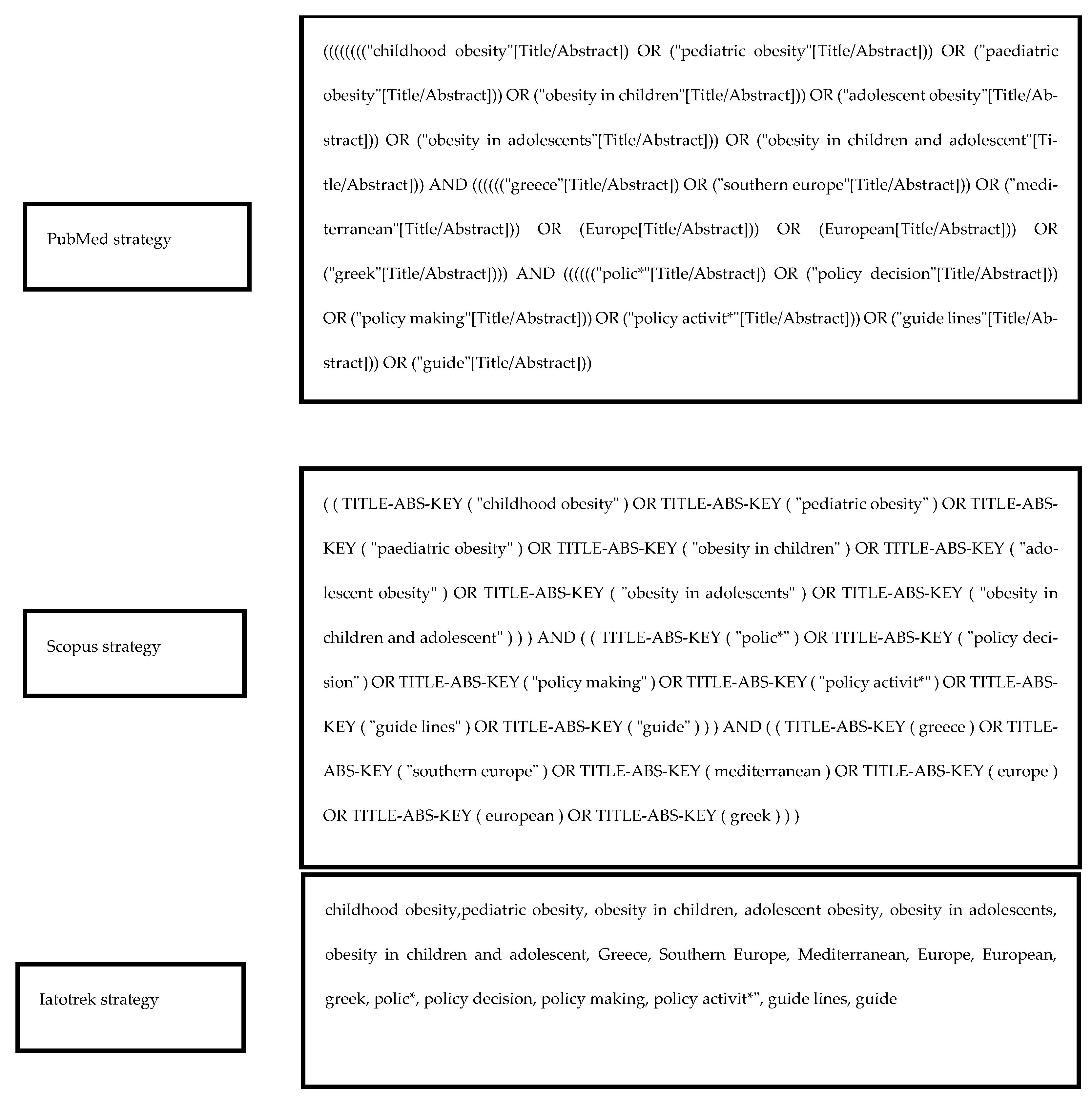
A systematic search of the PubMed, Scopus, and IATROTEK-Online databases was conducted by 1 researcher (R.S.) on 15 September 2023; no specific start date limit was intentionally applied in the search strategy, with the aim of gathering information from a wide temporal range. The search was conducted within the “title” and “abstract” fields, using three sets of keyword groups for both prevalence-related and policy-related studies; groups of terms related to ‘childhood obesity’ and ‘Greece’ were utilized in both searches, while keywords related to ‘prevalence’ were employed in the first research, and keywords related to ‘policies’ were used in the second one. The Boolean terms “AND” and “OR” were used to combine relevant terms. Appendix A presents the complete search strategy (Figure A1) used for the three databases. Cited references from chosen articles were screened to identify additional studies that were not retrieved during the initial search, while Google and Google Scholar were utilized to broaden the scope and comprehensiveness of the search.
2.2. Selection Criteria
Following the initial literature search, a check for duplicate studies was conducted. The remaining articles were subjected to a two-step screening process, which was performed independently by two researchers (R.S. and C.T.), to identify studies meeting the predefined inclusion criteria. In the initial step, titles and abstracts were assessed for eligibility against the predetermined criteria. Subsequently, full-text articles were evaluated when the information provided in the titles/abstracts was inadequate to make a definitive inclusion/exclusion decision. Any divergencies between the two researchers were solved through discussion with a third researcher (T.C.).
The study eligibility criteria were chosen by applying the PICOS (population, intervention, comparison, outcomes, and setting) question format. These criteria differed for prevalence and policies as follows:
- Prevalence:
- Population: Studies referring to children and adolescents (≤18 years of age) living in Greece were eligible; those including both adult and pediatric populations were eligible only if they presented stratified results by age group.
- Interventions and comparators: Studies including both a group of children with obesity and without obesity were eligible, such as studies that were centered on the evaluation/presentation of an intervention, provided they included original data on prevalence before the implementation of the tool.
- Outcomes: Studies providing data on childhood obesity prevalence in Greece were eligible.
- Study design: Clinical trials and observational studies related to childhood obesity in Greece were eligible.
- Policies:
- Population: Studies referring to children and adolescents (≤18 years of age) living in Greece were eligible; those including both adult and pediatric populations were eligible.
- Interventions and comparators: Studies including international comparisons among childhood obesity policies were eligible, such as studies that were centered on the evaluation/presentation of policy interventions tackling childhood obesity.
- Outcomes: Studies evaluating the existing or upcoming policies to address obesity in Greece were eligible.
- Study design: Observational studies related to childhood obesity policies in Greece were eligible.
Lastly, only studies with the full text available and published in English or Greek were considered.
2.3. Data Extraction
Data extraction was performed by a single researcher (R.S.), and the information was recorded in Microsoft Excel tables (Microsoft, Redmond, WA, USA). The data collected included the following: author, year of publication, country, study design, population, purpose, obesity definition used (only for prevalence studies), and key results. Regarding the prevalence, studies focusing on the same population were excluded, retaining the study with the larger sample; studies reporting a combined prevalence of overweight and obesity were not included.
3. Results
3.1. Study Selection and Characteristics
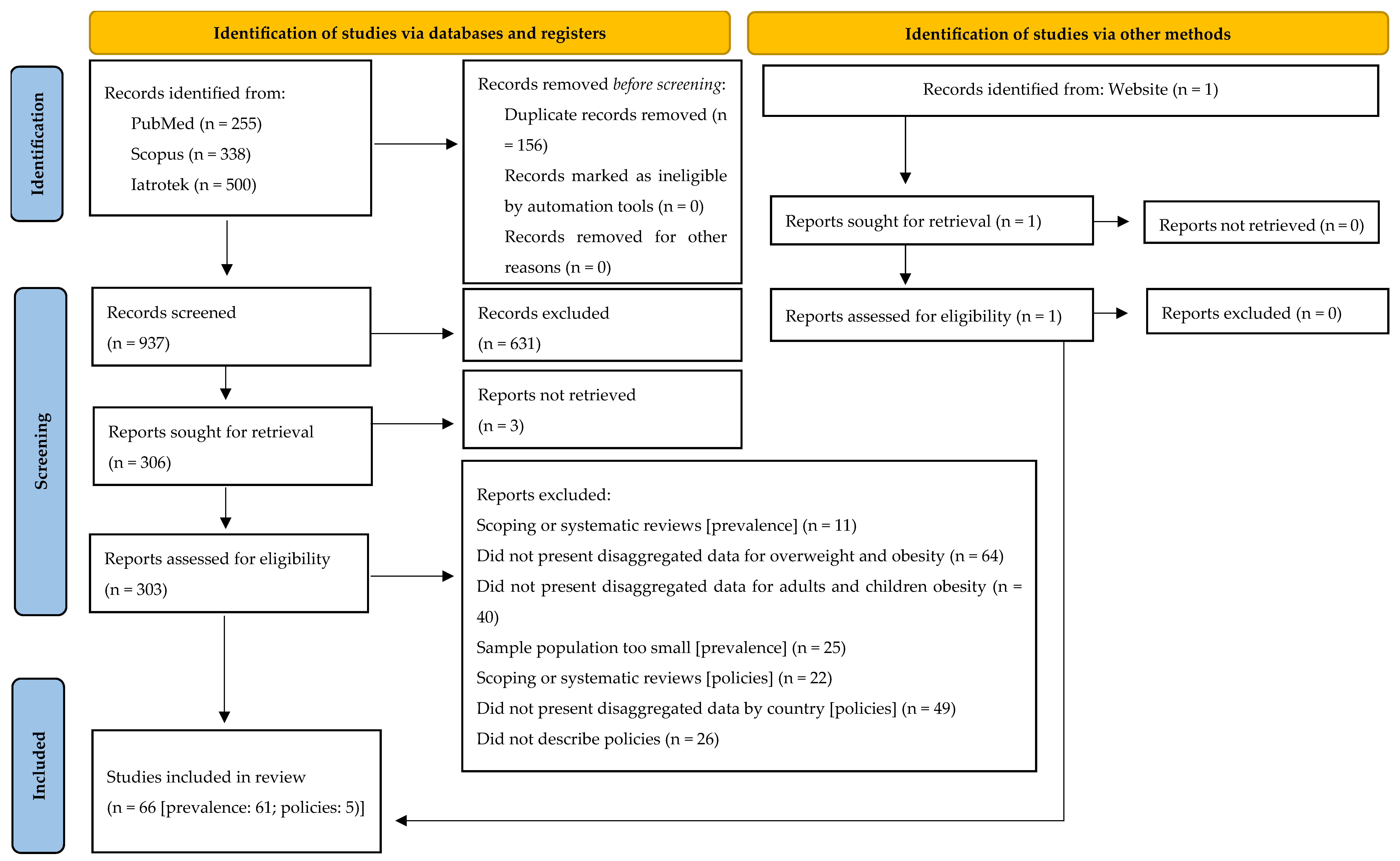
The literature search identified 1094 studies (255 from PubMed, 338 from Scopus, 500 from Iatrotek, and 1 from other sources). After removing duplicates, 937 titles and abstracts were screened, resulting in the exclusion of 634 articles that did not meet the inclusion criteria. Full-text assessments were conducted for the remaining 303 studies, and an additional 237 studies were excluded for failing to meet the inclusion criteria. As a result, 66 studies were included in the scoping review: 61 addressed the prevalence [47,48,49,50,51,52,53,54,55,56,57,58,59,60,61,62,63,64,65,66,67,68,69,70,71,72,73,74,75,76,77,78,79,80,81,82,83,84,85,86,87,88,89,90,91,92,93,94,95,96,97,98,99,100,101,102,103,104,105,106,107], and 5 examined the policies [108,109,110,111,112]. Figure 1 shows the flow diagram of the included studies.
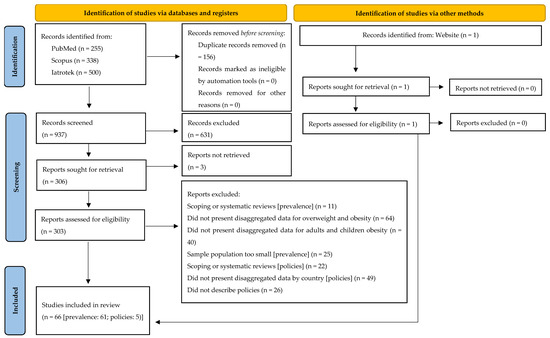
Figure 1.
PRISMA 2020 flow diagram for new systematic reviews which included searches in databases, registers, and other sources (source: Page MJ et al. [113]).
The majority of studies were cross-sectional (n = 53, 81.5%) [47,50,51,52,53,54,55,56,57,58,61,63,64,65,66,67,68,69,70,71,72,74,75,76,77,78,79,80,81,82,83,84,85,86,87,88,89,90,92,93,95,96,97,98,99,100,101,102,103,104,105,106,107]. Six studies (9.2%) were characterized as descriptive [48,60,108,109,110,111], four studies (6.2%) as epidemiological [49,62,73,91], and two (3.1%) as longitudinal [59,94]. In addition, a document published on the official UNICEF webpage was also included as it was deemed relevant for the purposes of the review.
The majority of studies used to assess the prevalence of childhood obesity in Greece (n = 37, 60.7%) were conducted on student populations attending primary schools [47,50,53,54,56,57,61,62,63,65,67,68,69,71,72,76,77,78,79,80,81,82,84,85,88,89,90,91,95,96,97,99,100,101,104,105,106]; out of the 41 studies (67.2%) that reported gender-specific data, 23 (56.1%) indicated a predominance of females [48,49,51,53,54,60,61,62,63,64,68,69,74,75,77,80,84,88,96,98,101,105,106]. Furthermore, 51 (83.6%) applied the International Obesity Task Force [IOTF] criteria to define obesity [47,49,50,52,53,54,56,58,59,60,61,63,64,65,68,69,70,71,72,73,74,75,76,77,79,80,81,82,83,84,85,86,87,90,92,93,94,95,96,97,98,99,100,101,102,103,104,105,106].
Among the articles included in the scoping review, the earliest publication is from 2001 [67], while the most recent ones were published in 2023 [48,74,75,110].
3.2. Prevalence
From the analysis of the included studies on prevalence (Table 1), it is worth noting that the highest observed value was 57.1% [mean age (±SD) of 15.09 ± 1.81 years], followed by 25.1% [mean age (±SD) of 15.09 ± 1.81] in studies that focused on populations attending healthcare services for the control of overweight and obesity [49,60]; the highest value for obesity prevalence in studies involving the general pediatric population was 21.2% [mean age (±SD) of 13.6 ± 0.9 years] [95]. With respect to the lowest prevalence rate, it was observed to be 2.8% [85]; however, in a study which presented results stratified by age, the lowest prevalence rate detected was 1%, referring to the population with the age of two years [94]. Regarding both genders, the highest prevalence rates observed were 66.3% in males and 49.5% in females [mean age of both sexes (±SD) of 10.10 ± 0.09 years], in a study targeting populations attending clinics for the control of overweight and obesity [60]. In studies referring to the general population, the highest prevalence observed was 26.7% in males [mean age (±SD) of 9.1 ± 1.8 years], while in females, it was 33.7% [mean age (±SD) of 9.3 ± 1.8 years] [50]. The lowest prevalence reported for males was 2.8% [mean age 7.9] [85], while for females, it was 1.3% [mean age (±SD) of 12.4 ± 1.5 years] [83].

Table 1.
Prevalence study table.
Direct comparisons between studies were not possible due to differences in the time of data collection, the methodology, and the target population.
3.3. Policies
According to the included studies on policies (Table 2), Greece presently enforces a multifaceted policy framework designed to combat childhood obesity, incorporating various strategic dimensions: school-centric measures focus on the school environment, involving the oversight of food provided in school cafeterias, curbing the presence of obesogenic foods and related advertisements [111]; family-oriented strategies entail educational initiatives targeting children and parents in matters of nutrition and dietary conducts [108], and soliciting public opinions on preferred anti-obesity policy directions plays a pivotal role [109]; community-wide interventions are instrumental in creating environments conducive to physical activity, extending beyond school boundaries, and include workforce training within healthcare facilities and community health organizations [110]; healthcare service provisions aim to heighten awareness among pediatric healthcare practitioners about childhood obesity issues and advocate for enhanced collaboration between educational institutions and healthcare professionals to ensure comprehensive follow-up care for children and adolescents grappling with obesity [112]; the research component also assumes a fundamental position, contributing to the expansion of knowledge and the formulation of evidence-based policy recommendations [112].
Table 2.
Policy study table.
4. Discussion
The primary aim of this scoping review is twofold: first, to provide a detailed analysis of the prevalence of childhood obesity in Greece in order to gain an accurate understanding of the extent of the issue faced by the country and second, to critically analyze the existing policies addressing this problem, with the goal of identifying points of implementation and potential areas for improvement. To combat childhood obesity, indeed, it is crucial to comprehend both its prevalence and the existence of national strategies to tackle it, as these measures furnish us with the tools and approaches to confront this pressing public health issue. What makes this study unique is its approach of merging the examination of childhood obesity prevalence in Greece with a detailed investigation of the preventive policies implemented in the country; until now, previous research and analyses have primarily focused on one of these aspects, often overlooking the opportunity to fully understand the interplay between the epidemiological situation and government initiatives. Our scoping review aims to bridge this gap by providing a comprehensive overview of the situation in Greece, offering a different perspective on the challenge of childhood obesity; through this innovative combination of data and analysis, we aim to lay the groundwork for a deeper understanding and significant progress in managing childhood obesity, not only in Greece but also on an international scale.
The overall prevalence exhibited a range of values from 2.8% [mean age of 7.9 years] [85] to 21.2% [mean age of 13.6 years] [95]. In terms of gender-specific prevalence, the observed rates ranged from 2.8% [mean age 7.9 years] [85] to 26.7% [mean age of 9.1 years] in males [50] and from 1.3% [mean age of 12.4 years] [83] to 33.7% [mean age of 9.3 years] in females [50]. The results highlighted a significant variation in the prevalence of childhood obesity in Greece, both in terms of overall values and distribution between genders. Most of the studies included in this review were cross-sectional (53 out of 61), with very few epidemiological, longitudinal, or descriptive studies. This predominance limits the ability to assess causality and trends over time and makes the findings more susceptible to recall and selection bias.
To provide context for these results on the prevalence of childhood obesity, it is pertinent to make some observations about the European scenario into which Greece fits.
According to data derived from the fifth round of the WHO COSI surveillance, the prevalence of childhood obesity, as defined by the WHO criteria, exhibited significant disparities across European countries. Notably, Cyprus reported the highest prevalence, standing at 19%, followed by Greece, (which also displayed a rate slightly less than 19%) ranking alongside Italy; these results confirm the overweight–obesity gradient, whereby these conditions have a higher prevalence in Southern European countries [21]. In contrast, Tajikistan, Denmark, Kazakhstan, and Israel reported much lower prevalence rates [21]. When the IOTF criteria are applied to assess obesity prevalence in Greece, the numbers continue to be noteworthy. Among 7-year-olds, the prevalence of obesity stood at 11.7% for boys and 10.1% for girls; furthermore, 9-year-old boys and girls showed rates of 10.0% and 6.8%, respectively [21]. It is intriguing to observe that Greece is among the select group of countries that witnessed a decline in childhood obesity prevalence between the first (2007–2008) and fourth (2015–2017) rounds of the COSI surveillance—a group that also includes Italy, Slovenia, Portugal, and Spain. However, when comparing obesity prevalence between the fifth round and the previous cycle (2015–2017), statistically significant changes were limited to an increase among boys in Georgia and decreases among boys in San Marino and girls in Malta [21].
These findings highlight the diverse patterns of childhood obesity prevalence across Europe, with Greece holding a notable position in the context; the data from the WHO surveillance reveals that the situation in Greece is not isolated but is part of a broader European context where childhood obesity presents a significant challenge. These results align with the fact that Greece is a part of Southern Europe, and as such, it is in accordance with this prevailing trend. It is indeed a positive outcome that the prevalence of childhood obesity in Greece, along with other countries, exhibited a reduction between the first and fourth rounds of COSI [21]; nonetheless, given the statistically significant increase in obesity prevalence among girls in Georgia between the fourth and fifth rounds of COSI, the importance of strengthening prevention efforts cannot be overstated [21].
Regarding policies to combat childhood obesity, Greece is currently enacting strategies that encompass the application of the “Greek Nutrition and Diet Guidelines” (NDGGr), which provide recommendations for a balanced diet and promote key messages on healthy dietary patterns and lifestyle habits; the involvement of the Greek public in determining the most important and effective policies to establish a healthier diet for the pediatric population; the existence of physical activity policies in Greece, targeting schools, communities, workplaces, and healthcare facilities; the successful implementation of the “Greek School Canteen Policy,” effectively limiting the presence of unhealthy foods in the school environment and imposing restrictions on advertising unhealthy foods within educational institutions; and the promotion of programs to prevent childhood obesity in Greece through the “Childhood Obesity Prevention Program,” involving health centers, schools, and the community.
The nutrition guidelines are considered a fundamental policy not only for combating childhood obesity but also for addressing any form of malnutrition; they are also deemed essential for promoting a healthy lifestyle. For these reasons, among the data collected for the tracking and oversight of childhood obesity, the WHO Regional Office for Europe has made available the e-Library of Evidence for Nutrition Action (eLena) since 2011; eLENA serves as a digital repository housing evidence-based guidelines for a continually growing array of nutritional interventions [117]. This resource functions as a centralized hub that offers the most up-to-date dietary guidelines, advice, and related resources, which encompass empirical evidence endorsing these directives, as well as statements providing biological, behavioral, and contextual rationale; furthermore, it provides observations contributed by recognized experts in the field. eLENA’s overarching objective is to support nations in the effective implementation and expansion of nutritional interventions. It achieves this by serving as an informative resource and guiding the development of policies and the design of programs [117]. Greece, starting in 2019, has embraced the national nutrition guidelines as one of the cornerstones in the fight against childhood obesity, much like the majority of other WHO European countries. It is important to emphasize that despite variations in geographical, socio-economic, and cultural contexts across countries, most of the essential nutritional recommendations remain consistent [108]. These key messages advocate for the everyday consumption of sufficient quantities of fruits, vegetables, and dairy products, as well as starches, cereals, and grains, along with a moderate-to-limited intake of fats. Additionally, it is worth noting that a majority of the countries within the WHO European Region provide guidelines on physical activity, but just a few recommend physical exercise for at least 60 min per day, which aligns with the highest recommendation, mirroring the approach taken by the NDGGr [108].
When it comes to considering public opinion, it is important to mention that assessing public perspectives on health policies can yield practical advantages [109]. This includes pinpointing areas where knowledge gaps or misunderstandings exist regarding suitable health behaviors. Moreover, it allows us to measure various factors associated with health policy opinions, such as gender, race, and education. In countries like the United States, Germany, and Australia, previous scientific investigations have delved into gauging public support for government interventions related to obesity, identifying factors linked to specific policy endorsements, and tracking shifts in public sentiment over time [109]. The European Union [EU] public generally supports specific policies aimed at addressing childhood obesity, which include promoting communication with parents, delivering healthy nutrition education to children, and increasing physical activity within school settings [109]. Limited endorsement was evident for certain policy strategies that have frequently been employed by policymakers: enhancements to school meal programs and levies on unhealthy nutritional products were preferred only by a small minority of the participants; this could serve as a valuable point of reflection to better understand how to proceed with the implementation of future policies [109]. The Greek public’s preferences regarding policy strategies to combat childhood obesity align with those of the EU public [109]: they prioritize improving children’s diets, with a significant emphasis on providing information to parents. Additionally, Greek citizens prioritize physical activity programs in schools, education on diet and exercise, and further restrictions on food advertisements. It is noteworthy that Greece has closely aligned itself with countries (Cyprus, Greece, Italy, Malta, Portugal, Spain, and Turkey) in its region (Southern Europe) in terms of supporting the parental information policy. On the other hand, it has diverged from its regional counterparts concerning support for physical activity [109]: the public in other southern nations did not rank physical activity as one of their preferred policies; in contrast, the highest support was observed in Southeastern European countries (Croatia and Slovenia).
To provide context for the physical activity policies adopted in Greece, it is essential to consider that European countries have been active in implementing various policy actions related to physical activity. These include educational policies focusing on physical activity programs in schools and communities, environmental policies creating physical activity-friendly environments like cycling lanes and parks, fiscal policies providing subsidies for sports and recreational activities, and marketing policies aimed at promoting physical activity through campaigns and awareness programs [117]. Substantial progress has been made, but further investments and coordination are needed. Countries that have embraced coordinated, multisectoral approaches and developed supportive environments for physical activity, such as Ireland, the United Kingdom, and Finland, are more likely to achieve better outcomes in the fight against childhood obesity [110]. Greece has already implemented several physical activity policies, encompassing educational programs, environmental enhancements, and fiscal support for sports and recreational activities [110], but it is actively seeking areas for improvement: for instance, physical activity education programs in Greek schools often suffer from insufficient funding; furthermore, the Greek environment does not always facilitate physical activity, with a limited presence of cycling lanes and parks. However, Greece’s commitment to tackling these issues demonstrates a proactive approach and a willingness to progress further.
National school nutrition policies have been adopted by all 28 EU Member States [117]. Approximately half of these nations have instituted mandatory standards, while the other half have provided voluntary guidelines. These policies exhibit a wide range of approaches in their development, from simple lists of permitted or prohibited nutrients within schools, as seen in Cyprus and Greece, to comprehensive sets of instructions addressing various elements of dietary regulation such as procurement, food provision services, and meal preparation and dining spaces, as observed in France and Spain [117]. The primary goals of these policies are to enhance child nutrition, promote healthy eating habits and lifestyles among children, and combat or prevent childhood obesity. These objectives are shared by a significant percentage of the policies, with 97% focusing on improving child nutrition, 94% emphasizing healthy eating habits and lifestyles, and 88% targeting the reduction or prevention of childhood obesity [117]. Regarding the “Greek School Canteen Policy,” it should be noted that it has evolved through collaborative efforts, effective communication, and vigilant monitoring procedures. Certain countries, including Greece, Latvia, and Hungary, have instituted formal monitoring mechanisms to oversee the enforcement of specific legislations; in the case of Greece, a comprehensive control system has been put in place to assess the adherence of school canteens to established policies [111]: this oversight involves public health supervisors from each prefecture and certified auditors from the Hellenic Food Authority (EFET). Inspection evaluations are meticulously documented, with a specific form used to determine compliance with valid criteria. At the commencement of every new school year, the Ministry of Health proactively reminds prefectures to initiate investigations in all available schools. Inspections are thoughtfully planned on an unpredictable schedule and may be carried out either with or without prior notice to the head of the school, including in response to complaints regarding the products available in school canteens or dining areas. The Ministry of Health maintains a comprehensive list that explicitly outlines the permissible products in school canteens, ensuring a clear and unambiguous framework [111].
The Childhood Obesity Prevention Program, jointly developed by the Greek Ministry of Health and UNICEF, is a comprehensive action plan aimed at addressing all areas that can promote the prevention and control of childhood obesity [112]. This program encompasses initiatives spanning primary, secondary, and tertiary prevention, focusing on children aged 0–17 and their families. Its primary objective is to address risk factors and socio-economic disparities associated with childhood and adolescent obesity while also combatting the long-term health implications frequently associated with excess weight during adulthood [112]. Greece is not the only nation to have embraced the idea of creating an integrated plan to combat childhood obesity while also addressing health inequalities, identified as a key factor influencing obesity development. Also Spain has developed the “Plan Estratégico Nacional para la Reducción de la Obesidad Infantil”, which was adopted in 2022. This plan was created and developed by the Spanish government in close collaboration with UNICEF and the WHO. Its purpose [118] is to reduce childhood obesity by 25% over the next decade, focusing on physical activity, healthy nutrition, adequate rest, and emotional wellbeing; it adopts a child rights-based approach, with measures impacting all aspects of a child’s life. The social determinants of health approach, a conceptual framework developed by the WHO, emphasize that the social, cultural, and environmental conditions in which people live with substantially influence their lifestyles and health [118]. The Greek action plan closely aligns with the Spanish plan in numerous key aspects [112]: to address childhood obesity, it recommends implementing comprehensive and intersectoral measures that integrate the links between healthy individuals, healthy societies, and healthy environments; also, the plan is implemented through an action framework in the main environments where children and adolescents live and grow: the family, educational, healthcare, active leisure and sports, urban (towns and cities), digital, and audiovisual environments, as well as the macrosocial environment, which spans across all the others.
Overall, Greece has implemented a range of policies and programs to address childhood obesity and promote healthy lifestyles; although there are areas for improvement, these policies reflect the country’s commitment to tackle this public health issue.
This study is subject to several inherent limitations. Firstly, it is prudent to acknowledge the potential presence of language bias, as the review exclusively incorporated studies composed in English and Greek. The decision to restrict inclusion to these languages was prompted by practical constraints, particularly the challenges associated with translating content from a multitude of languages. Furthermore, the search strategy’s exclusive reliance on electronic databases could have resulted in publication bias, as this method might overlook studies that were not published in peer-reviewed journals.
Another notable limitation is the variability in the definitions of obesity used across the included studies. As this is a descriptive review, we included all studies meeting the eligibility criteria regardless of the classification system applied, specifying the criteria used in each study in Table 1. Moreover, additional limitations relate to the heterogeneous age ranges within the pediatric population targeted by the prevalence studies, the presence of some outdated data, and the wide time span covered by the included studies, all of which should be taken into consideration. This heterogeneity limits the direct comparability of prevalence estimates across studies. In addition, this review considered overall obesity prevalence without assessing abdominal (central) obesity separately, which may have limited a more specific evaluation of health risks. Another aspect to consider is that, as a descriptive review, this study does not include a quantitative synthesis or meta-analysis, which limits its ability to provide pooled estimates or to explore potential causal relationships and trends over time. Concerning Greek policies, the foremost limitation, which also represents a significant discovery, is the paucity of published studies focusing on the subject matter. However, the limited number of studies included may lead to an incomplete representation of the policy environment, potentially overlooking existing structural efforts that are not formally documented. A further key limitation is the lack of data regarding the effects or outcomes of the implemented policies. Given the descriptive nature of this study, we focused on identifying existing policies without assessing their impact or effectiveness. Future research should address this gap by evaluating how these policies influence childhood obesity rates and related health outcomes.
5. Conclusions
The prevalence of childhood obesity in Greece fluctuates significantly, ranging from 2.8% to 21.2%. This variation is not only based on age but also on gender, with different rates for boys and girls. Greece currently adopts policies and strategies targeting childhood obesity, prioritizing balanced nutrition, physical activity, and public involvement. These policies place an emphasis on monitoring, coordination, and collaboration among different stakeholders. However, further efforts are needed to achieve a sustained reduction in childhood obesity rates in Greece. Enhancing surveillance systems is crucial for improving our understanding of the mechanisms underlying the development of obesity. Such intensified monitoring is essential not only to support future research but also to increase public awareness, including through collaboration with the media. Moreover, it is important to evaluate the effectiveness of existing policies in Greece and assess their efficiency, allowing for adaptation to the specific needs of the population. Further national studies are needed to investigate these aspects, including a deeper examination of the social determinants of childhood obesity, in order to provide updated evidence that can inform policy decisions and guide targeted interventions.
Author Contributions
R.S.: conceptualization, methodology, and writing—original draft; C.T.: conceptualization, methodology, and writing—review and editing; T.C.: conceptualization, writing—review and editing; J.B.: supervision, conceptualization, methodology, and writing—review and editing; G.I.: supervision and writing—review and editing. All authors have read and agreed to the published version of the manuscript.
Funding
The WHO Regional Office for Europe provided financial support for the publication of this study. The authors affiliated with the World Health Organization are solely responsible for the content and views expressed in this publication, which do not necessarily reflect the decisions, policies, or views of the World Health Organization.
Data Availability Statement
This study did not generate any new data.
Conflicts of Interest
The authors declare no conflicts of interest.
Abbreviations
The following abbreviations are used in this manuscript:
| WHO | World Health Organization |
| HBSC | Health Behaviour in School-aged Children |
| PICOS | Population, Intervention, Comparison, Outcomes, and Setting |
| BMI | Body Mass Index |
| UNICEF | United Nations Children’s Fund |
| IOTF | International Obesity Task Force |
| COSI | Childhood Obesity Surveillance Initiative |
Appendix A
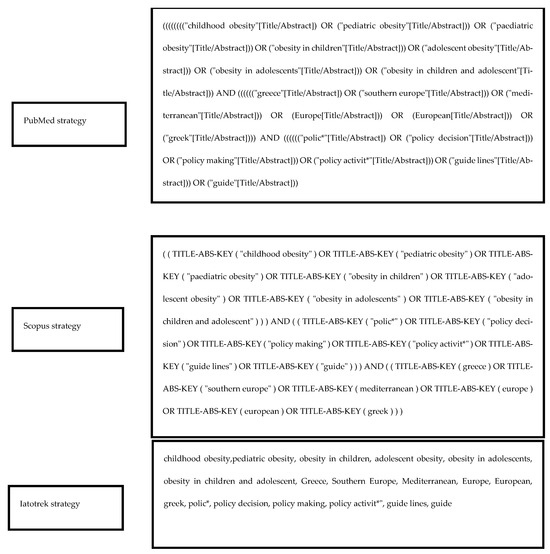
Figure A1.
Full search strategy.
Figure A1.
Full search strategy.
References
- World Health Organization. Noncommunicable Diseases. In Childhood Overweight and Obesity; Key Figures: Toronto, ON, Canada, 2020. [Google Scholar]
- Safaei, M.; Sundararajan, E.A.; Driss, M.; Boulila, W.; Shapi’i, A. A Systematic Literature Review on Obesity: Understanding the Causes & Consequences of Obesity and Reviewing Various Machine Learning Approaches Used to Predict Obesity. Comput. Biol. Med. 2021, 136, 104754. [Google Scholar] [CrossRef]
- World Health Organization Regional Office for Europe. Spotlight on Adolescent Health and Well-Being. Findings from the 2017/2018 Health Behaviour in School-Aged Children (HBSC) Survey in Europe and Canada. In International Report: Summary; Key Figures: Toronto, ON, Canada, 2020. [Google Scholar]
- Helseth, S.; Haraldstad, K.; Christophersen, K.-A. A Cross-Sectional Study of Health Related Quality of Life and Body Mass Index in a Norwegian School Sample (8–18 Years): A Comparison of Child and Parent Perspectives. Health Qual. Life Outcomes 2015, 13, 47. [Google Scholar] [CrossRef]
- Wille, N.; Bullinger, M.; Holl, R.; Hoffmeister, U.; Mann, R.; Goldapp, C.; Reinehr, T.; Westenhöfer, J.; Egmond-Froehlich, A.; Ravens-Sieberer, U. Health-Related Quality of Life in Overweight and Obese Youths: Results of a Multicenter Study. Health Qual. Life Outcomes 2010, 8, 36. [Google Scholar] [CrossRef] [PubMed]
- Meixner, L.; Cohrdes, C.; Schienkiewitz, A.; Mensink, G.B.M. Health-Related Quality of Life in Children and Adolescents with Overweight and Obesity: Results from the German KIGGS Survey. BMC Public Health 2020, 20, 1722. [Google Scholar] [CrossRef] [PubMed]
- De Beer, M.; Hofsteenge, G.H.; Koot, H.; Hirasing, R.; Delemarre-van De Waal, H.; Gemke, R. Health-related-quality-of-life in Obese Adolescents Is Decreased and Inversely Related to BMI. Acta Paediatr. 2007, 96, 710–714. [Google Scholar] [CrossRef]
- Wynne, C.; Comiskey, C.; Hollywood, E.; Quirke, M.B.; O’Sullivan, K.; McGilloway, S. The Relationship between Body Mass Index and Health-Related Quality of Life in Urban Disadvantaged Children. Qual. Life Res. 2014, 23, 1895–1905. [Google Scholar] [CrossRef]
- Jansen, P.W.; Mensah, F.K.; Clifford, S.; Nicholson, J.M.; Wake, M. Bidirectional Associations between Overweight and Health-Related Quality of Life from 4–11 Years: Longitudinal Study of Australian Children. Int. J. Obes. 2013, 37, 1307–1313. [Google Scholar] [CrossRef]
- Friedlander, S.L.; Larkin, E.K.; Rosen, C.L.; Palermo, T.M.; Redline, S. Decreased Quality of Life Associated With Obesity in School-Aged Children. Arch. Pediatr. Adolesc. Med. 2003, 157, 1206. [Google Scholar] [CrossRef]
- Zeller, M.H.; Modi, A.C. Predictors of Health-Related Quality of Life in Obese Youth. Obesity 2006, 14, 122–130. [Google Scholar] [CrossRef]
- Pinhas-Hamiel, O.; Singer, S.; Pilpel, N.; Fradkin, A.; Modan, D.; Reichman, B. Health-Related Quality of Life among Children and Adolescents: Associations with Obesity. Int. J. Obes. 2006, 30, 267–272. [Google Scholar] [CrossRef]
- Tsiros, M.D.; Olds, T.; Buckley, J.D.; Grimshaw, P.; Brennan, L.; Walkley, J.; Hills, A.P.; Howe, P.R.C.; Coates, A.M. Health-Related Quality of Life in Obese Children and Adolescents. Int. J. Obes. 2009, 33, 387–400. [Google Scholar] [CrossRef] [PubMed]
- The Lancet Diabetes & Endocrinology Childhood Obesity: A Growing Pandemic. Lancet Diabetes Endocrinol. 2022, 10, 1. [CrossRef]
- Horesh, A.; Tsur, A.M.; Bardugo, A.; Twig, G. Adolescent and Childhood Obesity and Excess Morbidity and Mortality in Young Adulthood—A Systematic Review. Curr. Obes. Rep. 2021, 10, 301–310. [Google Scholar] [CrossRef]
- Ling, J.; Chen, S.; Zahry, N.R.; Kao, T.A. Economic Burden of Childhood Overweight and Obesity: A Systematic Review and Meta-analysis. Obes. Rev. 2023, 24, e13535. [Google Scholar] [CrossRef] [PubMed]
- World Health Organization. Report of the Commission on Ending Childhood Obesity; World Health Organization: Geneva, Switzerland, 2016; ISBN 978-92-4-151006-6. [Google Scholar]
- Wickramasinghe, K.; Chatterjee, S.; Williams, J.; Weber, M.W.; Rito, A.I.; Rippin, H.; Breda, J. Childhood Overweight and Obesity Abatement Policies in Europe. Obes. Rev. 2021, 22, e13300. [Google Scholar] [CrossRef]
- Abarca-Gómez, L.; Abdeen, Z.A.; Hamid, Z.A.; Abu-Rmeileh, N.M.; Acosta-Cazares, B.; Acuin, C.; Adams, R.J.; Aekplakorn, W.; Afsana, K.; Aguilar-Salinas, C.A.; et al. Worldwide Trends in Body-Mass Index, Underweight, Overweight, and Obesity from 1975 to 2016: A Pooled Analysis of 2416 Population-Based Measurement Studies in 128·9 Million Children, Adolescents, and Adults. Lancet 2017, 390, 2627–2642. [Google Scholar] [CrossRef]
- World Health Organization. Global Health Observatory Noncommunicable Diseases: Risk Factors. In Noncommunicable Diseases; Elsevier: Amsterdam, The Netherlands, 2016. [Google Scholar]
- WHO. Regional Office for Europe Report on the Fifth Round of Data Collection, 2018–2020: WHO European Childhood Obesity Surveillance Initiative (COSI); World Health Organization: Geneva, Switzerland, 2022. [Google Scholar]
- WHO. European Region Childhood Obesity in European Region Remains High: New WHO Report Presents Latest Country Data; World Health Organization: Geneva, Switzerland, 2022. [Google Scholar]
- Rodrigues, D.; Padez, C.; Machado-Rodrigues, A.M. Prevalence of Abdominal Obesity and Excess Weight among Portuguese Children and Why Abdominal Obesity Should Be Included in Clinical Practice. Acta Med. Port. 2018, 31, 159–164. [Google Scholar] [CrossRef]
- Rodrigues, D.; Costa, D.; Gama, A.; Machado-Rodrigues, A.M.; Nogueira, H.; Silva, M.G.; Rosado-Marques, V.; Padez, C. Socioeconomic Inequalities in the Prevalence of Overweight and Obesity among Portuguese Preschool-aged Children: Changes from 2009 to 2016. Am. J. Hum. Biol. 2022, 34, e23582. [Google Scholar] [CrossRef]
- Marques, A.; De Matos, M.G. Trends in Prevalence of Overweight and Obesity: Are Portuguese Adolescents Still Increasing Weight? Int. J. Public Health 2016, 61, 49–56. [Google Scholar] [CrossRef]
- Bravo-Saquicela, D.M.; Sabag, A.; Rezende, L.F.M.; Rey-Lopez, J.P. Has the Prevalence of Childhood Obesity in Spain Plateaued? A Systematic Review and Meta-Analysis. Int. J. Environ. Res. Public Health 2022, 19, 5240. [Google Scholar] [CrossRef]
- Moncho, J.; Martínez-García, A.; Trescastro-López, E.M. Prevalence of Overweight and Obesity in Children of Immigrant Origin in Spain: A Cross-Sectional Study. Int. J. Environ. Res. Public Health 2022, 19, 1711. [Google Scholar] [CrossRef] [PubMed]
- Roth, B.; Reynaud, R.; Nègre, V.; Gentile, S.; Pauly, V.; Bernard, O. Prevalence of Overweight, Obesity, and Early Adiposity Rebound in Nursery School Children in Southeastern France. Arch. Pédiatr. 2022, 29, 388–394. [Google Scholar] [CrossRef]
- Galfo, M.; Censi, L.; D’Addezio, L.; Melini, F.; Martone, D. Overweight/Obesity and Lifestyle Factors among Italian Adolescents: The ALIADO Study. Minerva Pediatr. 2022, 74, 251–258. [Google Scholar] [CrossRef]
- Stival, C.; Lugo, A.; Barone, L.; Fattore, G.; Odone, A.; Salvatore, S.; Santoro, E.; Scaglioni, S.; Van Den Brandt, P.A.; Gallus, S.; et al. Prevalence and Correlates of Overweight, Obesity and Physical Activity in Italian Children and Adolescents from Lombardy, Italy. Nutrients 2022, 14, 2258. [Google Scholar] [CrossRef]
- Grech, V.; Aquilina, S.; Camilleri, E.; Spiteri, K.; Busuttil, M.; Sant’Angelo, V.F.; Calleja, N. The Malta Childhood National Body Mass Index Study: A Population Study. J. Pediatr. Gastroenterol. Nutr. 2017, 65, 327–331. [Google Scholar] [CrossRef] [PubMed]
- Musić Milanović, S. Regional and Sociodemographic Determinants of the Prevalence of Overweight and Obesity in Children Aged 7–9 Years in Croatia. ACC 2020, 59, 303–311. [Google Scholar] [CrossRef] [PubMed]
- Banjari, I.; Martinović, M.; Belojević, G.; Ašanin, B.; Kovačević, N.D.; Kenjerić, D.; Miškulin, M.; Pantović, S.; Pušeljić, S.; Sokolić, D.; et al. Poverty and Other Correlates of Obesity and Underweight among 7-Year-Olds from Croatia and Montenegro. Public Health 2020, 182, 64–69. [Google Scholar] [CrossRef]
- Miron, V.D.; Bar, G.; Filimon, C.; Gaidamut, V.A.; Craiu, M. Monitoring of Excess Body Weight in Children in the Emergency Department of a Tertiary Pediatric Hospital in Bucharest, Romania. Maedica 2021, 16, 389–393. [Google Scholar] [CrossRef]
- Jakab, A.E.; Hidvégi, E.V.; Illyés, M.; Cziráki, A.; Bereczki, C. Prevalence of Overweight and Obesity in Hungarian Children and Adolescents. Ann. Nutr. Metab. 2018, 72, 259–264. [Google Scholar] [CrossRef]
- Kovacs, V.A.; Bakacs, M.; Kaposvari, C.; Illes, E.; Erdei, G.; Martos, E.; Breda, J. Weight Status of 7-Year-Old Hungarian Children between 2010 and 2016 Using Different Classifications (COSI Hungary). Obes. Facts 2018, 11, 195–205. [Google Scholar] [CrossRef]
- Marković, L.; Đorđić, V.; Trajković, N.; Božić, P.; Halaši, S.; Cvejić, D.; Ostojić, S.M. Childhood Obesity in Serbia on the Rise. Children 2021, 8, 409. [Google Scholar] [CrossRef] [PubMed]
- Raufi, A.; Konstantinova, M.K. Prevalence of Overweight and Obesity in Children: Variation in Different Ethnicities, Age, and Sex in North Macedonia. PRILOZI 2022, 43, 23–31. [Google Scholar] [CrossRef] [PubMed]
- Savva, S.C.; Kourides, Y.A.; Hadjigeorgiou, C.; Tornaritis, M.J. Overweight and Obesity Prevalence and Trends in Children and Adolescents in Cyprus 2000–2010. Obes. Res. Clin. Pract. 2014, 8, e426–e434. [Google Scholar] [CrossRef] [PubMed]
- Grammatikopoulou, M.G.; Kotanidou, E.P.; Markaki, A.G.; Stylianou, C.; Galli-Tsinopoulou, A.; Tsigga, M.; Hassapidou, M. A Systematic Review and Meta-Analysis of Weight. Status among Adolescents in Cyprus: Scrutinizing the Data for the Years 2000–2010. Hormones 2014, 13, 543–551. [Google Scholar] [CrossRef]
- Alkan, H.; Enc, N.; Yeni, K.; Ayvaz, M.Y.; Kayikci, E.E.; Uğurlu, Y.K. Evaluation of Childhood Obesity, Prevalence, and Related Factors in Istanbul. FNJN 2022, 30, 267–273. [Google Scholar] [CrossRef]
- Görçin Karaketir, Ş.; Lüleci, N.E.; Eryurt, M.A.; Emecen, A.N.; Haklıdır, M.; Hıdıroğlu, S. Overweight and Obesity in Preschool Children in Turkey: A Multilevel Analysis. J. Biosoc. Sci. 2023, 55, 344–366. [Google Scholar] [CrossRef]
- Santas, F.; Santas, G. Prevalence of Pre-School Children for Overweight/Obesity in Turkey. World J. Pediatr. 2018, 14, 77–83. [Google Scholar] [CrossRef]
- Bardugo, A.; Twig, G. [ADOLESCENT OBESITY IN ISRAEL]. Harefuah 2021, 160, 732–739. [Google Scholar]
- De Morais Macieira, L.M.; Tavares Lopes De Andrade Saraiva, J.M.; Da Conceição Santos, L. Overweight and Obesity and Their Associated Factors among Early Adolescence School Children in Urban and Rural Portugal. BMC Nutr. 2017, 3, 17. [Google Scholar] [CrossRef] [PubMed]
- Cauchi, D.; Rutter, H.; Knai, C. An Obesogenic Island in the Mediterranean: Mapping Potential Drivers of Obesity in Malta. Public Health Nutr. 2015, 18, 3211–3223. [Google Scholar] [CrossRef]
- Grigorakis, D.A.; Georgoulis, M.; Psarra, G.; Tambalis, K.D.; Panagiotakos, D.B.; Sidossis, L.S. Prevalence and Lifestyle Determinants of Central Obesity in Children. Eur. J. Nutr. 2016, 55, 1923–1931. [Google Scholar] [CrossRef] [PubMed]
- Bastida, L.; Cea, G.; Moya, A.; Gallego, A.; Gaeta, E.; Sillaurren, S.; Barbosa, P.; Souto, S.; Rodrigues, E.; Torrego-Ellacuria, M.; et al. Promoting Obesity Prevention and Healthy Habits in Childhood: The OCARIoT Experience. IEEE J. Transl. Eng. Health Med. 2023, 11, 261–270. [Google Scholar] [CrossRef] [PubMed]
- Andrie, E.K.; Melissourgou, M.; Gryparis, A.; Vlachopapadopoulou, E.; Michalacos, S.; Renouf, A.; Sergentanis, T.N.; Bacopoulou, F.; Karavanaki, K.; Tsolia, M.; et al. Psychosocial Factors and Obesity in Adolescence: A Case-Control Study. Children 2021, 8, 308. [Google Scholar] [CrossRef] [PubMed]
- Kollias, A.; Skliros, E.; Stergiou, G.S.; Leotsakos, N.; Saridi, M.; Garifallos, D. Obesity and Associated Cardiovascular Risk Factors among Schoolchildren in Greece: A Cross-Sectional Study and Review of the Literature. J. Pediatr. Endocrinol. Metab. 2011, 24, 929–938. [Google Scholar] [CrossRef]
- Malindretos, P.; Doumpali, E.; Mouselimi, M.; Papamichail, N.; Doumpali, C.; Sianaba, O.; Orfanaki, G.; Sioulis, A. Childhood and Parental Obesity in the Poorest District of Greece. Hippokratia 2009, 13, 46–49. [Google Scholar]
- Sergentanis, T.N.; Bampalitsa, S.D.; Theofilou, P.; Panagouli, E.; Vlachopapadopoulou, E.; Michalacos, S.; Gryparis, A.; Thomaidis, L.; Psaltopoulou, T.; Tsolia, M.; et al. Cyberbullying and Obesity in Adolescents: Prevalence and Associations in Seven European Countries of the EU NET ADB Survey. Child 2021, 8, 235. [Google Scholar] [CrossRef]
- Athanasopoulos, D.T.; Garopoulou, A.I.; Dragoumanos, V.P. Childhood Obesity and Associated Factors in a Rural Greek Island. Rural Remote Health 2011, 11, 1641. [Google Scholar] [CrossRef]
- Jelastopulu, E.; Kallianezos, P.; Merekoulias, G.; Alexopoulos, E.C.; Sapountzi-Krepia, D. Prevalence and Risk Factors of Excess Weight in School Children in West Greece. Nurs. Health Sci. 2012, 14, 372–380. [Google Scholar] [CrossRef]
- Manios, Y.; Kourlaba, G.; Kondaki, K.; Grammatikaki, E.; Anastasiadou, A.; Roma-Giannikou, E. Obesity and Television Watching in Preschoolers in Greece: The GENESIS Study. Obesity 2009, 17, 2047–2053. [Google Scholar] [CrossRef]
- Kyriazis, I.; Rekleiti, M.; Saridi, M.; Beliotis, E.; Toska, A.; Souliotis, K.; Wozniak, G. Prevalence of Obesity in Children Aged 6-12 Years in Greece: Nutritional Behaviour and Physical Activity. Arch. Med. Sci. 2012, 8, 859–864. [Google Scholar] [CrossRef]
- Mavrakanas, T.A.; Konsoula, G.; Patsonis, I.; Merkouris, B.P. Childhood Obesity and Elevated Blood Pressure in a Rural Population of Northern Greece. Rural Remote Health 2009, 9, 1150. [Google Scholar] [CrossRef] [PubMed]
- Manios, Y.; Androutsos, O.; Katsarou, C.; Vampouli, E.A.; Kulaga, Z.; Gurzkowska, B.; Iotova, V.; Usheva, N.; Cardon, G.; Koletzko, B.; et al. Prevalence and Sociodemographic Correlates of Overweight and Obesity in a Large Pan-European Cohort of Preschool Children and Their Families: The ToyBox Study. Nutrition 2018, 55–56, 192–198. [Google Scholar] [CrossRef]
- Margetaki, K.; Stratakis, N.; Roumeliotaki, T.; Karachaliou, M.; Alexaki, M.; Kogevinas, M.; Chatzi, L.; Vafeiadi, M. Prenatal and Infant Antibiotic Exposure and Childhood Growth, Obesity and Cardiovascular Risk Factors: The Rhea Mother-Child Cohort Study, Crete, Greece. Pediatr. Obes. 2022, 17, e12843. [Google Scholar] [CrossRef] [PubMed]
- Tragomalou, A.; Moschonis, G.; Kassari, P.; Papageorgiou, I.; Genitsaridi, S.-M.; Karampatsou, S.; Manios, Y.; Charmandari, E. A National E-Health Program for the Prevention and Management of Overweight and Obesity in Childhood and Adolescence in Greece. Nutrients 2020, 12, 2858. [Google Scholar] [CrossRef] [PubMed]
- Hassapidou, M.; Papadopoulou, S.K.; Frossinis, A.; Kaklamanos, I.; Tzotzas, T. Sociodemographic, Ethnic and Dietary Factors Associated with Childhood Obesity in Thessaloniki, Northern Greece. Hormones 2009, 8, 53–59. [Google Scholar] [CrossRef]
- Tsolakis, C.; Cherouveim, E.D.; Skouras, A.Z.; Antonakis-Karamintzas, D.; Czvekus, C.; Halvatsiotis, P.; Savvidou, O.; Koulouvaris, P. The Impact of Obesity on the Fitness Performance of School-Aged Children Living in Rural Areas-The West Attica Project. Int. J. Environ. Res. Public Health 2022, 19, 11476. [Google Scholar] [CrossRef]
- Kosti, R.I.; Kanellopoulou, A.; Morogianni, K.; Notara, V.; Antonogeorgos, G.; Kourtesa, T.; Rojas-Gil, A.P.; Kornilaki, E.N.; Lagiou, A.; Panagiotakos, D.B. The Path between Breakfast Eating Habit, Sleep Duration and Physical Activity on Obesity Status: An Epidemiological Study in Schoolchildren. Nutr. Health 2023, 29, 721–730. [Google Scholar] [CrossRef]
- Patsopoulou, A.; Tsimtsiou, Z.; Katsioulis, A.; Rachiotis, G.; Malissiova, E.; Hadjichristodoulou, C. Prevalence and Risk Factors of Overweight and Obesity among Adolescents and Their Parents in Central Greece (FETA Project). Int. J. Environ. Res. Public Health 2015, 13, 83. [Google Scholar] [CrossRef]
- Farajian, P.; Risvas, G.; Karasouli, K.; Pounis, G.D.; Kastorini, C.M.; Panagiotakos, D.B.; Zampelas, A. Very High Childhood Obesity Prevalence and Low Adherence Rates to the Mediterranean Diet in Greek Children: The GRECO Study. Atherosclerosis 2011, 217, 525–530. [Google Scholar] [CrossRef]
- Kosti, R.I.; Panagiotakos, D.B.; Mihas, C.C.; Alevizos, A.; Zampelas, A.; Mariolis, A.; Tountas, Y. Dietary Habits, Physical Activity and Prevalence of Overweight/Obesity among Adolescents in Greece: The Vyronas Study. Med. Sci. Monit. 2007, 13, CR437-444. [Google Scholar]
- Krassas, G.E.; Tzotzas, T.; Tsametis, C.; Konstantinidis, T. Prevalence and Trends in Overweight and Obesity among Children and Adolescents in Thessaloniki, Greece. J. Pediatr. Endocrinol. Metab. 2001, 14 (Suppl. S5), 1319–1326; discussion 1365. [Google Scholar] [PubMed]
- Karachaliou, F.; Vlachopapadopoulou, E.; Psaltopoulou, T.; Manios, Y.; Koutsouki, D.; Bogdanis, G.; Carayianni, V.; Sergentanis, T.; Hatzakis, A.; Michalacos, S. Prevalence of Asthma Symptoms and Association with Obesity, Sedentary Lifestyle and Sociodemographic Factors: Data from the Hellenic National Action Plan for the Assessment, Prevention and Treatment of Childhood Obesity (MIS301205). J. Asthma 2020, 57, 55–61. [Google Scholar] [CrossRef]
- Manios, Y.; Vlachopapadopoulou, E.; Moschonis, G.; Karachaliou, F.; Psaltopoulou, T.; Koutsouki, D.; Bogdanis, G.; Carayanni, V.; Hatzakis, A.; Michalacos, S. Utility and applicability of the “Childhood Obesity Risk Evaluation” (CORE)-index in predicting obesity in childhood and adolescence in Greece from early life: The “National Action Plan for Public Health”. Eur. J. Pediatr. 2016, 175, 1989–1996. [Google Scholar] [CrossRef]
- Moschonis, G.; De Lauzon-Guillain, B.; Jones, L.; Oliveira, A.; Lambrinou, C.-P.; Damianidi, L.; Lioret, S.; Moreira, P.; Lopes, C.; Emmett, P.; et al. The Effect of Early Feeding Practices on Growth Indices and Obesity at Preschool Children from Four European Countries and UK Schoolchildren and Adolescents. Eur. J. Pediatr. 2017, 176, 1181–1192. [Google Scholar] [CrossRef] [PubMed]
- Tokmakidis, S.P.; Kasambalis, A.; Christodoulos, A.D. Fitness Levels of Greek Primary Schoolchildren in Relationship to Overweight and Obesity. Eur. J. Pediatr. 2006, 165, 867–874. [Google Scholar] [CrossRef]
- Tambalis, K.D.; Panagiotakos, D.B.; Sidossis, L.S. Greek Children Living in Rural Areas Are Heavier but Fitter Compared to Their Urban Counterparts: A Comparative, Time-Series (1997–2008) Analysis. J. Rural Health 2011, 27, 270–277. [Google Scholar] [CrossRef] [PubMed]
- Magkos, F.; Manios, Y.; Christakis, G.; Kafatos, A.G. Age-Dependent Changes in Body Size of Greek Boys from 1982 to 2002. Obesity 2006, 14, 289–294. [Google Scholar] [CrossRef]
- Pavlidou, E.; Papandreou, D.; Taha, Z.; Mantzorou, M.; Tyrovolas, S.; Kiortsis, D.N.; Psara, E.; Papadopoulou, S.K.; Yfantis, M.; Spanoudaki, M.; et al. Association of Maternal Pre-Pregnancy Overweight and Obesity with Childhood Anthropometric Factors and Perinatal and Postnatal Outcomes: A Cross-Sectional Study. Nutrients 2023, 15, 3384. [Google Scholar] [CrossRef]
- Chatzinikola, C.; Papavasileiou, V.; Koutelidakis, A. Mediterranean Diet Adherence and Physical Activity Level in AdolescentsDuring the Lockdown in the COVID-19 Pandemic: A Cross-sectionalStudy in Greek Island of Rhodes. CNF 2023, 19, 469–477. [Google Scholar] [CrossRef]
- Pappa, T.; Jelastopoulou, E. Child Obesity in Regional Greece, and Assessment of Its Risk Factors. Arch. Hellen. Med. 2022, 39, 781–789. [Google Scholar]
- Makri, R.; Katsoulis, M.; Fotiou, A.; Kanavou, E.; Stavrou, M.; Richardson, C.; Kanellopoulou, A.; Orfanos, P.; Benetou, V.; Kokkevi, A. Prevalence of Overweight and Obesity and Associated Diet-Related Behaviours and Habits in a Representative Sample of Adolescents in Greece. Child 2022, 9, 119. [Google Scholar] [CrossRef] [PubMed]
- Kostopoulou, E.; Tsekoura, E.; Fouzas, S.; Gkentzi, D.; Jelastopulu, E.; Varvarigou, A. Association of Lifestyle Factors with a High Prevalence of Overweight and Obesity in Greek Children Aged 10–16 Years. Acta Paediatr. 2021, 110, 3356–3364. [Google Scholar] [CrossRef] [PubMed]
- Spinelli, A.; Buoncristiano, M.; Nardone, P.; Starc, G.; Hejgaard, T.; Júlíusson, P.B.; Fismen, A.; Weghuber, D.; Musić Milanović, S.; García-Solano, M.; et al. Thinness, Overweight, and Obesity in 6- to 9-year-old Children from 36 Countries: The World Health Organization European Childhood Obesity Surveillance Initiative—COSI 2015–2017. Obes. Rev. 2021, 22, e13214. [Google Scholar] [CrossRef] [PubMed]
- Kanellopoulou, A.; Kosti, R.I.; Notara, V.; Antonogeorgos, G.; Rojas-Gil, A.P.; Kornilaki, E.N.; Lagiou, A.; Yannakoulia, M.; Panagiotakos, D.B. Dietary Patterns, Weight Perception and Obesity Status, among 10-12-Year-Old Children; an Epidemiological Study in Greece. Child 2021, 8, 626. [Google Scholar] [CrossRef]
- Tsekoura, E.; Kostopoulou, E.; Fouzas, S.; Souris, E.; Gkentzi, D.; Jelastopulu, E.; Varvarigou, A. The Association between Obesity and the Risk for Development of Eating Disorder-A Large-Scale Epidemiological Study. Eur. Rev. Med. Pharmacol. Sci. 2021, 25, 6051–6056. [Google Scholar] [CrossRef]
- Champilomati, G.; Notara, V.; Prapas, C.; Konstantinou, E.; Kordoni, M.; Velentza, A.; Mesimeri, M.; Antonogeorgos, G.; Rojas-Gil, A.P.; Kornilaki, E.N.; et al. Breakfast Consumption and Obesity among Preadolescents: An Epidemiological Study. Pediatr. Int. 2020, 62, 81–88. [Google Scholar] [CrossRef]
- Poulimeneas, D.; Vlachos, D.; Maraki, M.I.; Daskalou, E.; Grammatikopoulou, M.; Karathanou, L.; Kotsias, E.; Tsofliou, F.; Tsigga, M.; Grammatikopoulou, M.G. Diet Quality, Overweight and Daily Monetary Allowance of Greek Adolescents. Int. J. Adolesc. Med. Health 2017, 31, 1–6. [Google Scholar] [CrossRef]
- Nika, T.; Stabouli, S.; Kollios, K.; Papadopoulou-Legbelou, K.; Printza, N.; Antza, C.; Papachristou, F.; Kotsis, V. Obesity and Season as Determinants of High Blood Pressure in a School-Based Screening Study. J. Hum. Hypertens. 2019, 33, 277–285. [Google Scholar] [CrossRef]
- Spinelli, A.; Buoncristiano, M.; Kovacs, V.A.; Yngve, A.; Spiroski, I.; Obreja, G.; Starc, G.; Pérez, N.; Rito, A.I.; Kunešová, M.; et al. Prevalence of Severe Obesity among Primary School Children in 21 European Countries. Obes. Facts 2019, 12, 244–258. [Google Scholar] [CrossRef]
- Zhao, M.; López-Bermejo, A.; Caserta, C.A.; Medeiros, C.C.M.; Kollias, A.; Bassols, J.; Romeo, E.L.; Ramos, T.D.A.; Stergiou, G.S.; Yang, L.; et al. Metabolically Healthy Obesity and High Carotid Intima-Media Thickness in Children and Adolescents: International Childhood Vascular Structure Evaluation Consortium. Diabetes Care 2019, 42, 119–125. [Google Scholar] [CrossRef]
- Papoutsakis, C.; Papadakou, E.; Chondronikola, M.; Antonogeorgos, G.; Matziou, V.; Drakouli, M.; Konstantaki, E.; Priftis, K.N. An Obesity-Preventive Lifestyle Score Is Negatively Associated with Pediatric Asthma. Eur. J. Nutr. 2018, 57, 1605–1613. [Google Scholar] [CrossRef]
- Katsa, M.E.; Ioannidis, A.; Zyga, S.; Tsironi, M.; Koutsovitis, P.; Chatzipanagiotou, S.; Panagiotakos, D.; Sachlas, A.; Kolovos, P.; Routsi, K.; et al. The Effect of Nutrition and Sleep Habits on Predisposition for Metabolic Syndrome in Greek Children. J. Pediatr. Nurs. 2018, 40, e2–e8. [Google Scholar] [CrossRef]
- Koulouvaris, P.; Tsolakis, C.; Tsekouras, Y.E.; Donti, O.; Papagelopoulos, P.J. Obesity and Physical Fitness Indices of Children Aged 5-12 Years Living on Remote and Isolated Islands. Rural Remote Health 2018, 18, 4425. [Google Scholar] [CrossRef] [PubMed]
- Tambalis, K.D.; Panagiotakos, D.B.; Psarra, G.; Sidossis, L.S. Current Data in Greek Children Indicate Decreasing Trends of Obesity in the Transition from Childhood to Adolescence; Results from the National Action for Children’s Health (EYZHN) Program. J. Prev. Med. Hyg. 2018, 59, E36–E47. [Google Scholar] [CrossRef] [PubMed]
- Kleanthous, K.; Dermitzaki, E.; Papadimitriou, D.T.; Papaevangelou, V.; Papadimitriou, A. Overweight and Obesity Decreased in Greek Schoolchildren from 2009 to 2012 during the Early Phase of the Economic Crisis. Acta Paediatr. 2016, 105, 200–205. [Google Scholar] [CrossRef] [PubMed]
- Hassapidou, M.; Daskalou, E.; Tsofliou, F.; Tziomalos, K.; Paschaleri, A.; Pagkalos, I.; Tzotzas, T. Prevalence of Overweight and Obesity in Preschool Children in Thessaloniki, Greece. Hormones 2015, 14, 615–622. [Google Scholar] [CrossRef]
- Sourani, M. Cross-Sectional Study on Childhood Obesity and Central Obesity on a Rural Greek Island. Acta Endo 2015, 11, 329–336. [Google Scholar] [CrossRef]
- Karachaliou, M.; Georgiou, V.; Roumeliotaki, T.; Chalkiadaki, G.; Daraki, V.; Koinaki, S.; Dermitzaki, E.; Sarri, K.; Vassilaki, M.; Kogevinas, M.; et al. Association of Trimester-Specific Gestational Weight Gain with Fetal Growth, Offspring Obesity, and Cardiometabolic Traits in Early Childhood. Am. J. Obs. Gynecol. 2015, 212, 502.E1–502.E14. [Google Scholar] [CrossRef]
- Girvalaki, C.; Vardavas, C.; Papandreou, C.; Christaki, G.; Vergetaki, A.; Tsiligianni, I.G.; Hatzis, C.; Kafatos, A. Trends in Metabolic Syndrome Risk Factors among Adolescents in Rural Crete between 1989 and 2011. Hormones 2014, 13, 259–267. [Google Scholar] [CrossRef]
- Manios, Y.; Moschonis, G.; Chrousos, G.P.; Lionis, C.; Mougios, V.; Kantilafti, M.; Tzotzola, V.; Skenderi, K.P.; Petridou, A.; Tsalis, G.; et al. The Double Burden of Obesity and Iron Deficiency on Children and Adolescents in Greece: The Healthy Growth Study. J. Hum. Nutr. Diet. 2013, 26, 470–478. [Google Scholar] [CrossRef]
- Tambalis, K.D.; Panagiotakos, D.B.; Kavouras, S.A.; Papoutsakis, S.; Sidossis, L.S. Higher Prevalence of Obesity in Greek Children Living in Rural Areas despite Increased Levels of Physical Activity. J. Paediatr. Child. Health 2013, 49, 769–774. [Google Scholar] [CrossRef] [PubMed]
- Kollias, A.; Psilopatis, I.; Karagiaouri, E.; Glaraki, M.; Grammatikos, E.; Grammatikos, E.E.; Garoufi, A.; Stergiou, G.S. Adiposity, Blood Pressure, and Carotid Intima-Media Thickness in Greek Adolescents. Obesity 2013, 21, 1013–1017. [Google Scholar] [CrossRef]
- Chalkias, C.; Papadopoulos, A.G.; Kalogeropoulos, K.; Tambalis, K.; Psarra, G.; Sidossis, L. Geographical Heterogeneity of the Relationship between Childhood Obesity and Socio-Environmental Status: Empirical Evidence from Athens, Greece. Appl. Geogr. 2013, 37, 34–43. [Google Scholar] [CrossRef]
- Vik, F.N.; Bjørnarå, H.B.; Overby, N.C.; Lien, N.; Androutsos, O.; Maes, L.; Jan, N.; Kovacs, E.; Moreno, L.A.; Dössegger, A.; et al. Associations between Eating Meals, Watching TV While Eating Meals and Weight Status among Children, Ages 10-12 Years in Eight European Countries: The ENERGY Cross-Sectional Study. Int. J. Behav. Nutr. Phys. Act. 2013, 10, 58. [Google Scholar] [CrossRef]
- Antonogeorgos, G.; Papadimitriou, A.; Panagiotakos, D.B.; Priftis, K.N.; Nicolaidou, P. Association of Extracurricular Sports Participation with Obesity in Greek Children. J. Sports Med. Phys. Fit. 2011, 51, 121–127. [Google Scholar]
- Kontogianni, M.D.; Farmaki, A.-E.; Vidra, N.; Sofrona, S.; Magkanari, F.; Yannakoulia, M. Associations between Lifestyle Patterns and Body Mass Index in a Sample of Greek Children and Adolescents. J. Am. Diet. Assoc. 2010, 110, 215–221. [Google Scholar] [CrossRef]
- Tsioufis, C.; Tsiachris, D.; Dimitriadis, K.; Thomopoulos, C.; Syrseloudis, D.; Andrikou, E.; Chatzis, D.; Taxiarchou, E.; Selima, M.; Mazaraki, A.; et al. Leontio Lyceum ALbuminuria (3L Study) Epidemiological Study: Aims, Design and Preliminary Findings. Hell. J. Cardiol. 2009, 50, 476–483. [Google Scholar]
- Papandreou, D.; Rousso, I.; Makedou, A.; Arvanitidou, M.; Mavromichalis, I. Association of Blood Pressure, Obesity and Serum Homocysteine Levels in Healthy Children. Acta Paediatr. 2007, 96, 1819–1823. [Google Scholar] [CrossRef]
- Tokmakidis, S.P.; Christodoulos, A.D.; Mantzouranis, N.I. Validity of Self-Reported Anthropometric Values Used to Assess Body Mass Index and Estimate Obesity in Greek School Children. J. Adolesc. Health 2007, 40, 305–310. [Google Scholar] [CrossRef]
- Papoutsakis, C.P.; Vidra, N.V.; Hatzopoulou, I.; Tzirkalli, M.; Farmaki, A.-E.; Evagelidaki, E.; Kapravelou, G.; Kontele, I.G.; Skenderi, K.P.; Yannakoulia, M.; et al. The Gene-Diet Attica Investigation on Childhood Obesity (GENDAI): Overview of the Study Design. Clin. Chem. Lab. Med. 2007, 45, 309–315. [Google Scholar] [CrossRef]
- Stabouli, S.; Kotsis, V.; Papamichael, C.; Constantopoulos, A.; Zakopoulos, N. Adolescent Obesity Is Associated with High Ambulatory Blood Pressure and Increased Carotid Intimal-Medial Thickness. J. Pediatr. 2005, 147, 651–656. [Google Scholar] [CrossRef] [PubMed]
- Kastorini, C.-M.; Critselis, E.; Zota, D.; Coritsidis, A.L.; Nagarajan, M.K.; Papadimitriou, E.; Belogianni, K.; Benetou, V.; Linos, A. Greek National Dietary Guidelines Scientific Team National Dietary Guidelines of Greece for Children and Adolescents: A Tool for Promoting Healthy Eating Habits. Public Health Nutr. 2019, 22, 2688–2699. [Google Scholar] [CrossRef]
- Suggs, L.S.; McIntyre, C. European Union Public Opinion on Policy Measures to Address Childhood Overweight and Obesity. J. Public Health Pol. 2011, 32, 91–106. [Google Scholar] [CrossRef]
- Oldridge-Turner, K.; Kokkorou, M.; Vlad, I.; Klepp, K.-I.; Rutter, H.; Helleve, A.; Fanian, D.; Sing, F.; O’Mara, J.; Mitrou, G.; et al. Scan of Physical Activity Policy Actions in Europe: Lessons Learned from Populating the MOVING Database. Obes. Rev. 2023, 24, e13523. [Google Scholar] [CrossRef] [PubMed]
- Kovacs, V.A.; Messing, S.; Sandu, P.; Nardone, P.; Pizzi, E.; Hassapidou, M.; Brukalo, K.; Tecklenburg, E.; Abu-Omar, K. Improving the Food Environment in Kindergartens and Schools: An Overview of Policies and Policy Opportunities in Europe. Food Policy 2020, 96, 101848. [Google Scholar] [CrossRef]
- Unicef; Greek Government. National Action Plan Against Childhood Obesity; Unicef: New York, NY, USA, 2023. Available online: https://www.unicef.org/greece/en/topics/childhood-obesity (accessed on 15 September 2023).
- Page, M.J.; McKenzie, J.E.; Bossuyt, P.M.; Boutron, I.; Hoffmann, T.C.; Mulrow, C.D.; Shamseer, L.; Tetzlaff, J.M.; Akl, E.A.; Brennan, S.E.; et al. The PRISMA 2020 statement: An updated guideline for reporting systematic reviews. BMJ 2021, 372, n71. [Google Scholar] [CrossRef] [PubMed]
- de Onis, M.; Onyango, A.W.; Borghi, E.; Siyam, A.; Nishida, C.; Siekmann, J. Development of a WHO growth reference for school-aged children and adolescents. Bull. World Health Organ. 2007, 85, 660–667. [Google Scholar] [CrossRef]
- Lurbe, E.; Agabiti-Rosei, E.; Cruickshank, J.K.; Dominiczak, A.; Erdine, S.; Hirth, A.; Invitti, C.; Litwin, M.; Mancia, G.; Pall, D.; et al. 2016 European Society of Hypertension guidelines for the management of high blood pressure in children and adolescents. J. Hypertens. 2016, 34, 1887–1920. [Google Scholar] [CrossRef] [PubMed]
- McCarthy, H.; Jarrett, K.; Crawley, H. The development of waist circumference percentiles in British children aged 5.0–16.9 y. Eur. J. Clin. Nutr. 2001, 55, 902–907. [Google Scholar] [CrossRef]
- Chrissini, M.K.; Panagiotakos, D.B. Public Health Interventions Tackling Childhood Obesity at European Level: A Literature Review. Prev. Med. Rep. 2022, 30, 102068. [Google Scholar] [CrossRef]
- La Moncloa. Plan Estratégico Nacional para la Reducción de la Obesidad Infantil (2022–2030); La Moncloa: Madrid, Spain, 2022. [Google Scholar]
Disclaimer/Publisher’s Note: The statements, opinions and data contained in all publications are solely those of the individual author(s) and contributor(s) and not of MDPI and/or the editor(s). MDPI and/or the editor(s) disclaim responsibility for any injury to people or property resulting from any ideas, methods, instructions or products referred to in the content. |
© 2025 by the authors. Licensee MDPI, Basel, Switzerland. This article is an open access article distributed under the terms and conditions of the Creative Commons Attribution (CC BY) license (https://creativecommons.org/licenses/by/4.0/).