


Abstract
During the last decade, countless advancements have been made in the field of micro-energy storage systems (MESS) and ambient energy harvesting (EH) shows great potential for research and future improvement. A detailed historical overview with analysis, in the research area of MESS as a form of ambient EH, is presented in this study. The top-cited articles in the field of MESS ambient EH were selected from the Scopus database, and based on articles published from 2010 to 2021, and the number of citations. The search for these top-cited articles was conducted in the third week of December 2021. Mostly the manuscripts were technical and contained an experimental setup with algorithm development (65%), whereas 27.23% of the articles were survey-based. One important observation was that the top 20 selected articles, which are the most-cited articles in the different journals, come from numerous countries of origin. This study revealed that the MESS integrated renewable energy sources (RESs) are an enhancement field of research for EH applications. On the basis of this survey, we hope to identify and solve research problems in the field of MESS and RESs integration, and provide suggestions for future developments for EH applications.
1. Introduction
Nowadays, energy harvesting (EH) receives much attention due to the availability of abundant energy resources, the low cost of harvesters, and the reduction in the emission of greenhouse gases (GHG) [1,2]. In EH, either mega- or micro-scale, there are three important parameters that must be considered: a. the availability of the energy source (preferably free), b. the total cost of the harvesting system, and c. the impact of pollution on global warming. Due to EH fitting remarkably well within these parameters, it has gained in importanceto researchers globally [3]. Sarker et al. [3] provided a strategy to improve piezoelectric EH system efficiency in order to solve the problem of power loss. A major improvement in lowering the output error is made in terms of power efficiency, power loss, rising time, and settling time, to improve the proportional-integral voltage controller based on the hybrid optimization approach. Based on the findings, the overall efficiency of the piezoelectric EH system converter is estimated to be around 85%. However, it is difficult to design an EH system for specific applications due to the availability of different sources of energy, and the modeling of these systems for dealing with complex performance metrics [4,5]. Sarker et al. [4] discussed the effects of electromagnetic EH circuits, low-power electromagnetic EH devices, power electronic converters, and controllers in a variety of applications, as well as their merits and limitations. The authors also suggested a low-voltage, smart electronic circuit for a low-power sensor that gathers electromagnetic energy and that could deal with complex metrics. Riaz et al. [5] explained the importance of ambient energy as a reliable low-cost source for EH, and its vital role in the development of reliable and low-cost energy storage systems.
We present this recently published scientific literature in the area of MESS in terms of ambient EH, to highlight the latest trends and topics in these fields [6,7,8,9]. In the research field, the assessment and impact of published manuscripts is becoming popular. An impact factor is a measure of a journal’sor a researcher’s relevance to the literature and research in a specific field. In the research field, assessing the impact of a published manuscript is becoming popular; it’s related to the overview of the manuscript, keywords, and the author’s impact in the relevant field of research. In a specific field of research, the number of citations received is the measure of the impact of the manuscript, the authors, and publishers, and the influence of the research is measured using journal impact factors, citations to articles, and the h-index of researchers. According to a fundamental theorem, the impact factor is directly proportional to the number of citations. On the basis of this theorem, if we consider highly-cited articles in a specific field, then we can recognize the current exemplary work in that field, and would be able to predict the areas of future research in this field. In consideration of the most-cited articles, a few limitations can be investigated to help imagine new methods of design, modeling, and simulation. Older articles have more citations due to having been written some time ago, and this is also an important factor.
In the literature, many publications described MESS integrated RESs in EH application [10,11,12]. According to [10] the RES received attention because of their numerous advantages which include cost, reduced greenhouse effects, and the reliability of the system. When using batteries as MESS, voltage levels can be synthesized resulting inless harmonic distortion and noise in the output. However, the main disadvantage is that stronger semiconductor switches are required. The non-constant output capacitors, input current, and charging current, result in a high filter size, and extra electromagnetic interference concerns. Thermal energy is a renewable energy source and we are interested in energy on a micro-scale, such as the thermal energy of sun waves, vibrational energy, and the heat energy of the human body, among other resources [13,14,15].
Pusty et al. [15] discussed graphene, its derivatives in PVDF, and its co-polymers for efficient piezoelectric EH, as well as their production, characterization, characteristics, performance, and applications. PVDF and its copolymers are piezoelectric polymers that can be shaped into flexible EH devices. Also discussed by these authors was the electrospinning process for increasing the piezoelectricity of the graphene-PVDF nanocomposite. It is one of the most environmentally friendly energy sources available. Radiant energy is a type of energy that travels in the form of particles or waves; the most common examples are electromagnetic radiations, such as X-rays and heat released from a bonfire, microwave heat, gamma rays, and electricity [16]. In electromagnetic EH, the inductance determines the highest power transfer to the load, and this inductance can be utilized to tune resonance to obtain peak power. When nonlinearities are introduced into the EH system, however, it becomes difficult to obtain the maximum power. Radiant heat transmission is lethal and passers-by can be killed or injured by a fire’s electromagnetic radiation, which can also induce the combustion material to catch fire. The kinetic and potential energies, on the other hand, are the mechanical energy of an object. The energy produced by light waves, the energy produced by electricity, and the energy produced by sound waves are just a few examples of kinetic mechanical energy [17,18]. Cai et al. [17] determined that to charge batteries to higher levels, vibrations at high frequency are required. Mechanical energy’s biggest downside is its lack of safety and its difficulties in transmitting energy across great distances [19,20]. The power is generated using a variety of techniques and resources, both renewable and nonrenewable, but the major issue is the generation of low-cost electrical power, and the design of an energy storage device that avoids the drawbacks of ordinary batteries (self-discharging, loss of electrolyte, nickel gets stuck by hazards and burns faster, etc.). Only three options are available for storing the energy generated: batteries, fuel cells, and supercapacitors (SCs). SCs are now widely regarded as the most effective energy storage device. SCs outperform regular capacitors and secondary lithium-ion batteries [21]. In [22] the author suggests that a high level of energy self-sufficiency can be achieved utilizing currently available technologies. Microscale generation in the context of energy, is associated with high investment costs, but it has the potential to have a big ecological impact in the future.
In the most recent decade, the new trend of bibliographic analysis of the most-cited articles in different energy fields, has been reported, and some of these are; electromechanical EH system [22,23], thermal storage system with smart controlling strategies [24], electromagnetic storage system [25], piezoelectric EH system [26,27,28], application of hybrid materials in highly efficient energy storage systems (ESS) (e.g., SCs, batteries) [29,30,31,32], ESS optimization techniques [33,34], thermal ESS [35,36,37], electrical energy [38,39], and electrostatic ESS [40]. The Au NP–cellulose/polydimethylsiloxane nanocomposite was used to create a mechanical EH device such as a piezoelectric nanogenerator (PNG) invented by Pusty et al. [27]. When activated with a periodic force of 3 N, and a short circuit current of 700 nA, the PNG showed an open circuit voltage of 6 V. The advantage of the cellulose-based nanogenerator is that it allows for the production of a lead-free PNG. Because cellulose is biocompatible, biodegradable, and recyclable, it may enable the development of body-implanted EH devices that may capture mechanical energy from human body movements, blood circulation, and other sources. According to [32,34], a high level of energy self-sufficiency can be achieved utilizing currently available technologies. Micro-scale generation in the context of energy is associated with high investment costs, but it has the potential to have a big ecological impact in the future. The work done so far points in the right direction for selecting the right structure for a small, distributed energy system. The tremendous potential demonstrated in the case of integrating already known technologies, motivates future research, particularly in the field of management and control of tiny systems defined by a structure that grows in complexity with time. It is also a component of future studies that will be conducted. The current research [33] provides a new method for sizing a multi-source PV/Wind system with a hybrid energy storage system, and proposes an optimization technique that was developed by using detailed modeling of all sub-systems that make up the integral system. In addition, a frequency management method based on the Discrete Fourier Transform algorithm was utilized to disperse the power supplied by the power supply system into distinct dynamics. As a result, many frequency channels were collected in order to split the functions of each storage device, and demonstrate the impact of incorporating fast dynamics into renewable energy-based applications. In [39] the study proposed a better controller for micro EH systems.
Based on our analysis, this constitutes comprehensive research findings in the area of micro energy storage systems (MESS), from ambient EH systems, to power micro electronic devices [23,41,42]. In the last 20 years, improvement was based on the research and analysis in the field of MESS [36]. The aim of this study is to explain the importance of MESS integrated RESs, the application of EH, and to identify the issues and challenges in this specific field. For future developments, different suggestions are presented. To achieve these goals the methodology of this analysis involved the selection of the most highly-cited articles containing the important keywords. The document is reorganized based on the technique of using a sorting criterion known as, “time sighted–highest to lowest.” A filter was used on the Scopus data to locate the self-citations. The main goals of this study are illustrated below:
- To portray a clear picture of the research trends of the history and developments in the field of MESS and RESs.
- To preview a detailed analysis of the papers in the field of MESS as a form of RESs on the basis of number of citations.
- Highlight a few effective suggestions for future improvement in MESS.
2. Surveying Methodology
To highlight the importance of ESS in renewable EH, a brief analysis of the Scopus database was done in the third week of December 2021, considering the best research publications in the journal and indexed in the years 2010 to 2021. The main aim of this article is to provide a comprehensive study of the top-cited manuscripts covering future research trends in the field of MESS as a sort of RESs integration. In this analysis, highly-cited publication articles are selected and which contained a few keywords such as a. battery energy storage, b. RE and ambient EH. The English language filter was applied.
On the basis of the above strategy, and has already been stated, the manuscript was rearranged utilizing a sorting criterion known as, “time sighted–highest to lowest.” A filter was applied to the Scopus data to find the self-citations. Finally, the ultimate selection of appropriate articles was based on the titles, abstracts, and the contribution of the article to the field of MESS. This screening procedure is described in Figure 1.
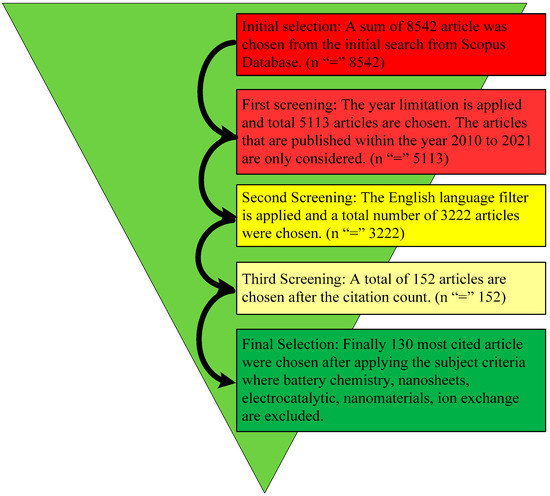
Figure 1.
Schematic diagram of the reviewing method.
2.1. Criteria to Analyze the Manuscript
After selecting the appropriate articles, the number of selected articles was reduced based on the top-cited manuscripts. Finally, we settled on 130 publications in the area of MESS as a form of RESs. The details of these articles are given below:
- Articles considering RE, battery ESS, and ambient EH.
- Exclusion was based on the topics of (i). battery chemistry, (ii). nanostructures, (iii). electrolytic analysis, (iv). nano materials, v. ion exchange, vi. composite analysis and (vii). nanowires.
- For the analysis, manuscripts published in the years 2010 to 2021 were included.
- Only manuscripts published in the English language were selected from the Scopus database.
2.2. Selection Process
In Figure 1, the selection process for ESS is explained in detail. After the initial selection, 8542 articles were chosen (n = 8542). The year range limitation was applied for the first evaluation and screening of the articles. On the basis of the year range limitation of between 2010 and 2021, a total of 3222 (n = 3222) articles were selected from the Scopus database.
2.3. Research Trends
Nowadays, there is a keenness among researchers to study the area of micro EH with renewable energy resources integration to create new resources for micro EH.
As reported by the Scopus database, the first article on MESS as a sort of RESs integration, was published in 1978 [43]. After this publication, many researchers suggested and designed different techniques of harvesting with RESs for the MESS. Figure 2 presents the research trends in this field from 2010 to 2021. It is clear from Figure 2 that the trend of research in the field of MESS increased remarkably from 2015 to 2021; 2157 articles were published representing 73.34% of the total published articles. On the other hand, only 784 articles were published in the four years from 2010 to 2014, which is 26.66% of the total published articles.
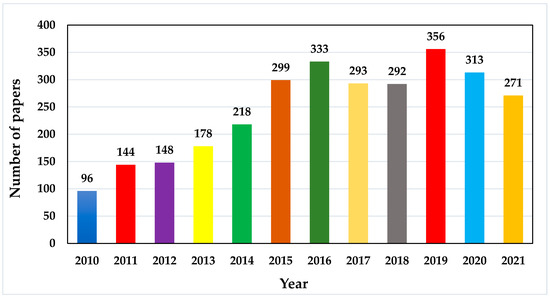
Figure 2.
Trends in MESS research from the year 2010 to 2021.
2.4. Data Extraction
To carry out the analysis of research publications, data was extracted from the Scopus database based on the following parameters; (1) Title, (2) highest citation (last five years), (3) study types, (4) categories on the subject basis, (5) name of publisher, (6) total number of published articles in different journals, (7) impact factor, (8) country of origin, and (9) productive authors. After the extraction of articles based on these parameters, only 130 articles were chosen from the database.
2.5. Research Analyze and Outcomes
At the end of the initial search, 3222 articles were found. In the most-cited papers, the total citations were 23,499, ranging from 21 to 1928. Among these 130 papers, the citation of papers published in the last 5 years was 5512, and there were 12 articles having been cited more than 300 times. The most cited article was published in 2016 in the journal of “Chem. Soc. Rev.” with an impact factor of 54.564, and a total number of citations of 1928. After several screening processes, a total of 130 articles was selected, and Table 1 gives the complete information about the 130 articles including (i) author name, (ii) article DOI, (iii) impact factor, (iv) types of energy storage, (v) keywords, (vi) abbreviated journal name, (vii) name of publisher, (viii) year of publishing, (ix) country of origin, (x) number of citations.

Table 1.
The 130 highly-cited manuscripts in the area of energy storage as a form of renewable energy.
3. Discussion
In the research of certain areas of technology, the first step is to gain knowledge and differentiate important information in the specific sector of study. The basic aim of this research is to present comprehensive information about recent study areas about MESS and RESs from the Scopus database, for future improvement. Future research directions in the PMEH include modeling, problem identification, simulation performance evolution, development, experimental prototype, an optimization method for sizing and increasing EH system efficiency, reviews, and technical overview. Table 1 provides complete information of the final 130 articles that were selected. Here, the top-cited manuscript was published in 2016 by Wang et al. [44], and the second most-cited article was published in 2011 by Sudevalayam et al. [45].
In Figure 3 a graphical presentation of the total number of articles versus years is shown. It is clear from the graph that the articles published in the years 2017 and 2018 constituted only 9.17% and 2.5% of total publications, respectively. The arrangement of the final 20 highly-cited manuscripts per year in the area of MESS and ambient EH from 2010 to 2021, is presented in Figure 3. It is also clear that the lowest number of manuscripts (3) was published in 2020, followed by 2021 with 1 article as shown in Figure 3. Besides9 articles published in 2010, 16 articles were published in 2013 and 2014. Based on this analysis, we can suggest that the number of citations of a manuscript in some specific area of research is time-dependent.
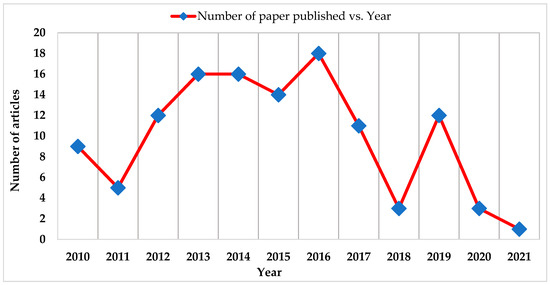
Figure 3.
Distribution of 130 top cited manuscripts from 2010 to 2021.
The most-cited article is, “Electrochemical capacitors: mechanism, materials, systems, characterization and applications” by Wang et al. in the field of MESS and RE integration, published in the journal of “Chem. Soc. Rev.” in the year 2016, with a total number of citations of 1928 [44]. This paper reviews the latest research trends in SCs charge mechanism, electrode and electrolyte materials, SCs characterization methods and applications in ESS. The second most-cited article is also a survey review paper, “Energy Harvesting Sensor Nodes: Survey and Implications” by Sudevalayam et al. This paper reviews different aspects of EH sensor systems architecture, energy sources and different storage technologies [45]. This paper was published in 2011 in, “IEEE Communications Surveys and Tutorials” with a total number of citations at 1275. The third most-cited article was published in 2011, “Transmission with Energy Harvesting Nodes in Fading Wireless Channels: Optimal Policies” by Ozel et al. [46]. This article has 891 citations and was published in, “IEEE Journal on Selected Areas in Communications”. In this paper, the optimization of point-to-point data transmission with an EH transmitter is considered. The throughput of data is maximized, and the transmission time is reduced.
The analytical evaluation selection of the keywords from these manuscripts related to EH is shown in Figure 4 and Table 2, providing a clear view of the research contributions of these relatively new researchers in the said field. Figure 4 is developed with the help of VOSviewer (software) and represents a connection between all keywords. In this network the size of the label and circle measures the importance of the keyword, whereas the lines are used for connection between keywords to make a network. On the basis of this area of research and knowledge, various clusters are highlighted with the help of numerous colors. In this connective network it can be clearly observed that in the publications there is a strong relationship between (i) energy efficiency, (ii) energy management, (iii) self-powered system, and (iv) internet of things situated in the green cluster, whereas, in the blue cluster the (i) energy storage, (ii) boost converter, (iii) battery, (iv) supercapacitor are directly related to the energy harvesting. Renewable energy resources like solar and thermal energy are presented in the olive-green cluster which is also associated with SCs and power management. Ultimately, the red cluster represents the different types of systems discussed in MESS like; (i) embedded system, (ii) IoT, and (iii) sensors.
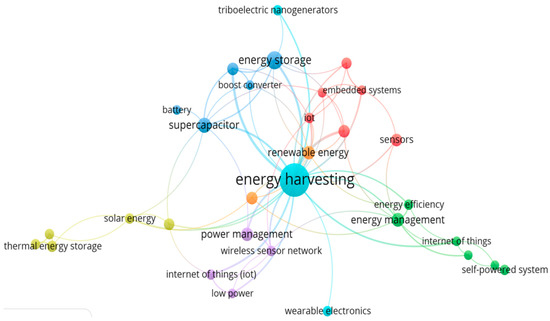
Figure 4.
Finalized manuscript from the Scopus database based on the Co-occurrence keywords.
Table 2.
11 most-selected keywords utilized in numerous manuscripts from 2010 to 2021.
In Table 2, articles are selected based on 11 relevant, common keywords within the years 2010 to 2021. Based on the information presented in Table 2 the literature gaps and the research trend in the field of MESS as integration of RE could be highlighted. It is also clear from Table 2 that within the 11 relevant keywords, the highest common words are; “energy harvesting” followed by “renewable energy resources”, “hybrid EH and energy storage”, and “energy storage system”.
In the last 5 years, the most studied research keywords are, “energy harvesting”, “energy storage”, “supercapacitor”, “hybrid EH and energy storage”, and “batteries”, representing the current research trends in the area of ambient EH. The detailed distribution of the 11 relevant key research words is graphically represented in Figure 5 (graphical representation of Table 2. Here on the vertical axis, there are a number of articles and on the horizontal axis, the key research words are represented.
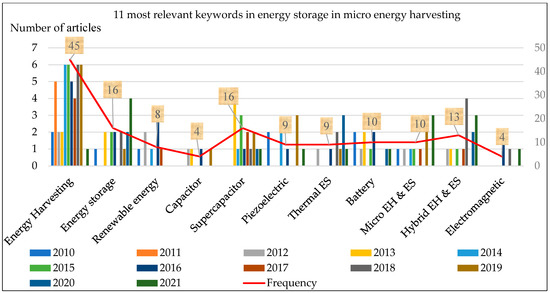
Figure 5.
Presentation of 11 most relevant keywords from 2010 to 2021.
- Nowadays, hybrid energy storage related to RE e.g., vibrational energy, thermal, electromagnetic, etc., is well known.
- The popularity of EH (2014 to 2021), energy storage (2021), and hybrid EH and ES (2018 to 2021) has increased remarkably for the application of ESS and standalone devices.
- In MESS integrated RESs, SCs are the better option for energy storage compared to batteries.
The 10 manuscripts which are most-cited in the previous 5 years are listed in Table 3. The first most-cited article in Table 3 by Wang and the second manuscript by Sudevalayam.
Table 3.
Highly cited manuscripts in the last decayed.
Here, the number of citations per year for each manuscript is changing from the highest- to lowest-cited articles published by the researcher in the last 5 years. On the basis of Table 1, Table 2 and Table 3, it can be concluded that the manuscripts related to MESS in the field of ambient EH are the most-cited articles compared to the articles relating to capacitors and electromagnetic EH. Table 4 compares micro-energy storage systems such as batteries, capacitors, thermal storage, and ultra-capacitors.
Table 4.
A comparison of various micro-energy storage systems that are used in energy harvesting.
The distribution of the most-cited manuscripts with frequency of publications, years range, and a number of citations are listed in Table 4. It can be observed from this table that the articles related to Review are highly-cited articles with 55.31% of citations in the Scopus database. The second most-cited articles are Modelling, Problem Identification, and Simulation Performance Evolution and have 23.99% of citations in the database. The third most-cited articles are related to Development and Experimental Prototype with citations 17.7%. In Table 5 there is a correlation between the frequency of publications and year range. It is clear from Table 5 that the articles published in the years 2010 to 2021 are mostly modeling, problem identification, and simulation performance evolution based, whereas the articles published in the years from 2013 to 2021 are mostly optimization methods for sizing and enhancing the efficiency of EH systems-based. Researchers are now concentrating their efforts on establishing a real-time application of MESS with RESs.
Table 5.
Classification of a manuscript based on the type of research.
In Table 6 the distribution of highly-cited manuscripts in different categories of research is explained in detail. According to this table, the top-cited articles are based on “Micro energy storage system” and these are 34.84% of the total most-cited articles. The second most-cited articles are based on “Micro energy harvesting system” having 23.03% of the total most-cited articles. The articles on “Renewable energy source “account for 12.05%.
Table 6.
Information about manuscripts in various areas of research.
There is great potential for research in MESS integrated RE and battery storage systems. The recent research trends in 2021 focus on micro energy harvesting, hybrid EH and storage, and ESS.
According to the type of study (refer to Table 5), 40.52% of articles are based on modelling, problem identification and simulation performance evolution, development, and experimental prototype-based articles constitute 30.17%, whereas articles on optimization methods for sizing and enhancing the efficiency of EH system are 12.93%, review articles are 12.07% and articles on state-of-the-art technical overview are 4.31%.
Table 3, Table 5 and Table 6 concluded that in recent years the most focused article topics by researchers are: electrochemical capacitors; mechanism, materials, systems, characterization and applications, EH sensor nodes, and conformal piezoelectric EH and electrical energy storage. Figure 6 provides clear details of highly-cited manuscripts published by numerous publishers from the Scopus database.
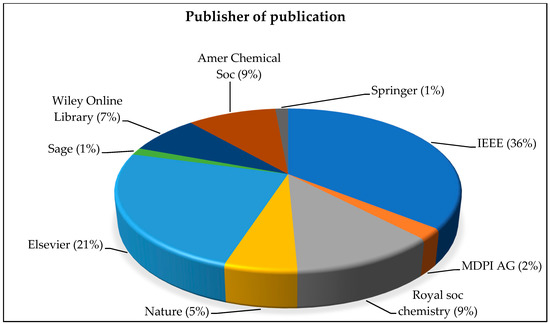
Figure 6.
Frequency of different publisher articles.
The selected 130 articles are the most-cited and published in different peer-reviewed journals. A total of 34 different journals published these 130 most-cited articles with an impact factor from 2.34 to 46.495 (according to Journal Citation reports 2021). The journal “Applied Energy” published the 8 highest-cited articles, “Nano Energy” also published 8 articles, whereas “IEEE Transactions on Wired Communication” and “IEEE J. Solid State Circuits” published 7 articles each.
In the last 3 years “Elsevier” published the 290 highest-cited articles followed by “Royal Soc. Chemistry” with 4 articles. Both “Nano Energy” and “Energy Environ. Sci.” having 5 manuscripts from the highly-cited Scopus database. In Figure 7 below, the Evaluation of journals Figure 7a and Impact Factor Figure 7b, based on the frequency of publications, are described for the 130 selected publications. The highest impact factor is 38.53 but the frequency of publication is 4% for the journal of “Energy Environ. Sci.”, the second-highest impact factor is 30.85, with a frequency of publication of 3% for the journal of “Advanced Materials” whereas the article with the third-highest impact factor is “IEEE Communications Surveys and Tutorials” with an impact factor of 23.7 and 2% frequency of publications. On the basis of these details, we can conclude that the top 4 journals have the highest number of articles (40.23%) of the total selected most-cited articles with impact factors ranging from 5.55 to 15.13.
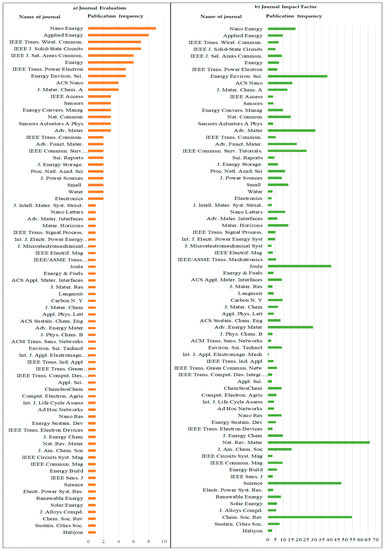
Figure 7.
(a) Frequency of manuscripts published in different journals (b) Impact factor of this journal.
One of the interesting aspects is that of the selected 130 most-cited articles, 28 come from authors based in different countries (affiliation of the first author’s affiliation). The United States has the highest number of publications at 57.69%, England has the second-highest number of publications at 22.31%, and Germany has the third-highest number of publications at 8.46%. The remaining 11.54% of articles come from the rest of the world. In Figure 8 below, the distribution of most-cited articles based on country of origin is explained.
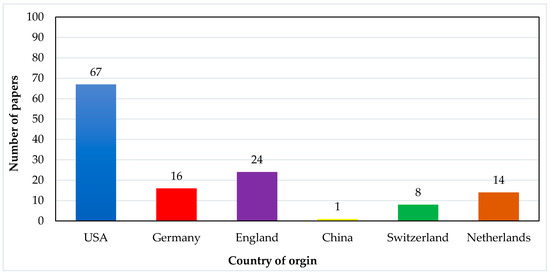
Figure 8.
Graphical presentation of the number of papers vs. country of origin.
In Table 7, the highly-cited articles on the basis of most prolific authors, country of origin, number of articles, h-index, and the position on the author are listed. A. Yener from Ohio State University University, USA, is the author with the highest (4) number of most-cited publications. Yang H from Tsinghua University is the author with the second highest citations with 4 articles. Table 7 indicates that China has a second, third and fourth position in this list. A.Yener from the Ohio State University, USA, has the highest number of citations at 14,275 and a h-index of 55. Yang H from Tsinghua University has the second-highest number of citations (10,945) with a h-index of 48.
Table 7.
Top 10 authors with 2 or more published manuscripts.
From the top-cited articles, 130 articles were selected, analyzed, and discussed, with the help of figures and tables. On the basis of this analysis and observations, we can conclude that in recent years the top-cited articles are “algorithm type” instead of “literature review”. The researchers are focusing on micro EH, micro-energy storage, renewable energy, and electrical storage systems. Among the selected total most- cited articles, only 12% of the articles are review based.
In this bibliometric analysis, we only considered the Scopus database and selected only 130 top-cited articles. For future work, the database of Web Sciences and Google Scholar should also be considered. To consider current research trends, research data from the years 2010–2021 was considered. In this analysis only articles written in the English language were considered; articles in other languages were ignored and this may have a global impact.
All the selected 130 articles have the same time in years for the citations. Finally, the papers that met the inclusion requirements were subjected to a subjective selection process. The combination of numerous disciplines makes the analysis difficult. The research-based battery analysis is included but the articles related to the batteries’ chemistry, and nano batteries are not considered. The citation analysis is the best way to understand current research trends in any specific field of research, limitations, and possible solutions. It is also a valuable way to distinguish the authors of the articles with high impact factors.
4. MESS Integrated with RESs: Issues and Challenges
The demand for an efficient, light and reliable MESS is growing as electronic gadgets, low-cost microelectronic devices, and WSNs become more common. Self-discharging, energy density, and longevity are all shortcomings of the current ESS. Although RESs are the best option as a source of energy, the insecurity of the energy supply is a challenge in harvesting energy from ambient sources. In many cases, due to the blast of Lithium-ion batteries, SCs are the best alternative of convection batteries for MESS.
4.1. Challenges Supercapacitor as MESS Integrated RESs
The energy density of SCs is low, resulting in a gap between SCs and batteries in terms of energy density. By increasing the electrode surface area of electrostatics double layer capacitors, the low energy density can be increased [177,178]. SCs have more discharging cycles than batteries. The reason for the low power is that the chemical reaction requires time to free electrons for current flow.
4.2. Thermal Issues of Batteries in MESS
The issues surrounding battery thermal management were discussed by various authors [179,180]. Chemical reactions generate high temperatures, which is a major issue that affects all batteries. A battery’s chemical properties are harmed by unusual temperatures, which results in considerable reductions in a battery’s efficiency. Secondary batteries require a temperature control system as well. The charging and discharging currents, as well as the battery’s power-handling capacities, are reduced by the impact of low temperature. The increasing temperature in the battery generates difficult circumstances that cause an abnormal chemical action and eventually lead to the battery exploding.
Although the stimulating effect can save some power, a higher current results in a higher temperature, which can lead to thermal runaway due to positive temperature feedback. Specific measures must be taken to prevent the battery from overheating. In comparison to other common batteries, the lithium-ion battery’s capacity increases as the temperature rises at the expense of the battery’s life. As a result, more attention is required to solve the battery’s thermal concerns in order to improve the efficiency of MESS integrated RESs.
4.3. Detection of Consistency
The SCs rated voltage is quite low (2.7 V), hence it is not suitable for large voltages [181]. The series combination is suggested for higher voltages. Overcharging also reduces the life of SCs. The performance of batteries is determined by two factors: the initial state of circuit (SOC) and temperature [182]. The constancy of lithium-ion batteries determines their performance. Partial discharge cycles can increase the performance of lithium batteries by reducing the battery temperature and avoiding discharging below 2 volts.
4.4. Environmental and Decarbonization Issues
Environmental factors like temperature and humidity have an impact on batteries and SCs [183]. Corrosion is a major issue for terminals. Carbon dioxide emissions have an impact on the environment. The US Environmental Protection Agency previously investigated lithium-ion batteries for their use of nickel and cobalt-based cathodes, as well as solvent-based electrode processing, and discovered significant environmental impacts, including resource depletion, global warming, ecological toxicity, and human health effects [184]. People who work with cobalt and nickel metal compounds in manufacturing or processing, or use them, may be at risk of respiratory, pulmonary, and neurological diseases. This risk can be reduced by recycling lithium-ion batteries to conserve natural resources and reduce the use of nickel and cobalt.
4.5. Industrial Standards
The use of SCs has increased due to its advantages of fast speed and short time requirement in development. Only some industries can design SCs to practical standards [185]. These industries also design and use batteries; strength, efficiency, and performance on standards. As a result, standards for (i) model name, (ii) terminology, (iii) electrical performance methodologies, (iv) general specifications, (v) safety technical criteria, and (vi) electrode material specifications and (vii) electrolyte specifications must be considered.
5. Conclusions and Future Improvement
Bibliometric analysis is a popular research method used for detecting the state of the art for MESS with RE integration. On the basis of this analysis, it was observed that bibliometric analysis is not only capable of utilizing quotative analysis but also capable of describing publication patterns within a given time period 2010 to 2021. The citation status of any research publication is the mirror image of citation, impact factor, and h-index. In this bibliographic review, 130 highly-cited articles covering the areas of MESS as a form of RESs with ambient EH were selected from the Scopus database. The selection criteria centred on the top-cited publications within the years 2010 to 2021. In this publication, different analyses have been presented and include: (a) distribution of most-cited articles in the last 5 years, (b) classification of publications on the basis of area of research, (c) study type, (d) country of origin and (e) journals publishing articles with highest citations. The basic idea behind this article is to understand and highlight the developments and problems in the areas of MESS in terms of ambient EH. In this bibliometric analysis, the thermal effect, cost minimization, and energy storage are also considered. On the basis of this study, it is analyzed that the MESS application is very useful in replacing traditional fuels with renewable energy resources. The MESS with ambient EH has disadvantages such as voltage variations, back feeding in the power system, system efficiency, future development of MESS, load, and power management. The top-cited articles also provide guidance for the proper solution of issues related to integration of RE with MESS connected to grid e.g., during the backup time the combo of battery-supercapacitor or battery hybrid system is the best solution of smoothing peak power during backup time. This research work also recommended that the use of MESS with ambient EH system will reduce the cost and emission of greenhouse gases (GHG), and it can also minimize the temperature effect, and ensure the dependability of micro EH application. Hence the chance of MESS as integration of RE of having a greater possibility to meet future demands. To solve the problem of thermal effect in electronics devices, a hybrid combination of battery with supercapacitor is the best option. The main target of MESS with ambient EH is to reduce the total cost of the system which also depends upon energy management. The MESS with RE integration use for micro electronic devices has proactive, systematic, and organized energy management. In the ESS technology, the future is low-cost carbon technology. MESS as integration of RE is the best alternative to fossil fuels which will reduce CO2 emission in the environment. For the reduction of carbon emission, lithium-ion batteries are a good choice. In this research article, the types of ESS with respect to cost, energies, power rating, output power, charging/discharging and environmental effect of recycling batteries and disposals. Here it is important to mention that the environmental effect of batteries could be reduced with the hybrid combination of battery and SCs. On the basis of this analysis, we can conclude that MESS integrated RES is the future of ambient EH. The attraction of MESS is low cost, easy to design, and has the availability of different optimization algorithms. Also, with these developments, the efficiency of the system can be increased remarkably.
This bibliometric analysis delivered numerous key and selective ideas for future research on the progress of MESS integrated RESs applications based on a careful review of existing research work. Here, the cost of ESS and Hybrid systems for MESS integrated with REs is discussed. To store the harvested energy, an efficient ESS is required and SCs are suggested as better storage devices than batteries due to the power density, cost in bulk and lifetime. The different problems in energy storage in MESS are discussed below and with the help of recent research studies, a few suggestions are presented to solve these problems.
- The SCs two fundamental problems are energy density and cost, which must be achieved without sacrificing exponential rate performance or high cycle life.
- The batteries must contend with cyclic life as well as rapid charging and discharging. A hybrid supercapacitor-battery system is thought to be a better solution for electrical energy storage. On the other hand, energy management is a challenge in a hybrid system. This issue can be solved with the help of an expert energy management system that extends battery life, improves system efficiency, and takes advantage of RESs.
- SCs are electronic devices that hold a small amount of energy. To solve this problem, a hybrid supercapacitor-lithium-ion battery system is excellent, since it not only increases the power capacity of MESS but also delivers a high-power density and energy density.
- During peak demand situations in electrical equipment, the batteries are put under a lot of strain. The hybrid ESS, which combines SCs and batteries, is the ideal solution.
- The manufacturing of SCs electrodes utilizing waste materials is the way of future improvement, but it will take a lot of research to get the optimum results.
This bibliometric analysis presents the following ideas, knowledge, and guidelines for future improvement and development in the areas of MESS integrated RES, EH, and different ESS:
- This study gives researchers a lot of information which helps them to publish research papers in well-known journals in the research area of MESS.
- For the relevant studies of MESS, RES, and EH, this document includes highly referenced papers and other possible articles. The characteristics of highly-cited papers can provide some insight into key advances in MESS. Citation reviews can be beneficial to the editorial board, potential writers, and reviewers by providing information on the types of publications that the researcher is interested in. It also provides writers with information on what makes a paper one of the most-cited.
- Keywords can be used to locate recent study papers from the past. It also indicates the breadth of relevant articles that have appeared in MESS integrated RES publications. The promotion of research keywords is expected to clarify the numerous phenomena in the field of MESS.
- Examination and interpretation of the manuscript submitted to the journal publishers and editors is made simple with this analysis.
- The rise of scientific cooperation, as well as the achievements of diverse authors, universities, and countries, has resulted in a massive mutual relationship. To get an article published, the writers and co-authors must make an original, descriptive, or empirical observation with those long-standing in the profession. In less developed countries, international collaboration fosters publications with higher citation counts. Furthermore, industrialized countries frequently reap the benefits of international cooperation.
In conclusion, based on the 130 most-frequently-cited publications over the last ten years, possible MESS studies and discoveries will not only play a critical role in the growth of evolving MESS technologies, but will also have significant implications on energy storage and harvesting market. We may be able to apply this analysis, knowledge, and information to overcome current ESS constraints and future developments in the field of MESS.
Author Contributions
Writing—original draft preparation, M.R.S.; writing—review and editing, M.R.S., M.H.M.S., A.R., M.S.H.L. and J.L.O.; project administration, M.R.S.; funding acquisition, M.R.S. and M.H.M.S. All authors have read and agreed to the published version of the manuscript.
Funding
This research was funded by Universiti Kebangsaan, Malaysia under Grant Code GGPM-2021-050.
Data Availability Statement
Not applicable.
Conflicts of Interest
The authors declare no conflict of interest.
References
- Reyes-Belmonte, M.A. The energy and environment connection, research trends based on a bibliometric analysis. Energy Ecol. Environ. 2021, 6, 479–495. [Google Scholar] [CrossRef]
- Ferrari, G.; Pezzuolo, A.; Nizami, A.S.; Marinello, F. Bibliometric Analysis of Trends in Biomass for Bioenergy Research. Energies 2020, 13, 3714. [Google Scholar] [CrossRef]
- Sarker, M.R.; Mohamed, R.; Saad, M.H.M.; Tahir, M.; Hussain, A.; Mohamed, A. A Hybrid Optimization Approach for the Enhancement of Efficiency of a Piezoelectric Energy Harvesting System. Electronics 2021, 10, 75. [Google Scholar] [CrossRef]
- Sarker, M.R.; Saad, M.H.M.; Olazagoitia, J.L.; Vinolas, J. Review of power converter impact of electromagnetic energy harvesting circuits and devices for autonomous sensor applications. Electronics 2021, 10, 1108. [Google Scholar] [CrossRef]
- Riaz, A.; Sarker, M.R.; Saad, M.H.M.; Mohamed, R. Review on Comparison of Different Energy Storage Technologies Used in Micro-Energy Harvesting, WSNs, Low-Cost Microelectronic Devices: Challenges and Recommendations. Sensors 2021, 21, 5041. [Google Scholar] [CrossRef] [PubMed]
- Xu, Y.; Zhang, H.; Yang, F.; Tong, L.; Yang, Y.; Yan, D.; Wang, C.; Ren, J.; Wu, Y. Experimental study on small power generation energy storage device based on pneumatic motor and compressed air. Energy Convers. Manag. 2021, 234, 113949. [Google Scholar] [CrossRef]
- Altin, S.; Bulut, F.; Yasar, S. The production of a low cost printing device for energy storage systems and the application for supercapacitors. J. Energy Storage 2019, 25, 100882. [Google Scholar] [CrossRef]
- Ding, Z.; Wu, W. A hybrid compression-assisted absorption thermal battery with high energy storage density/efficiency and low charging temperature. Appl. Energy 2021, 282, 116068. [Google Scholar] [CrossRef]
- Roy, P.; He, J.; Liao, Y. Cost Minimization of Battery-Supercapacitor Hybrid Energy Storage for Hourly Dispatching Wind-Solar Hybrid Power System. IEEE Access 2020, 8, 210099–210115. [Google Scholar] [CrossRef]
- Laajimi, M.; Go, Y.I. Energy storage system design for large-scale solar PV in Malaysia: Techno-economic analysis. Renew. Wind Water Sol. 2021, 8, 3. [Google Scholar] [CrossRef]
- Bai, Y.; Jantunen, H.; Juuti, J. Hybrid, multi-source, and integrated energy harvesters. Front. Mater. 2018, 5, 65. [Google Scholar] [CrossRef] [Green Version]
- Kalair, A.; Abas, N.; Saleem, M.S.; Kalair, A.R.; Khan, N. Role of energy storage systems in energy transition from fossil fuels to renewables. Energy Storage 2021, 3, e135. [Google Scholar] [CrossRef] [Green Version]
- Zou, Y.; Bo, L.; Li, Z. Recent progress in human body energy harvesting for smart bioelectronic system. Fundam. Res. 2021, 1, 364–382. [Google Scholar] [CrossRef]
- Lee, D.W.; Jeong, D.G.; Kim, J.H.; Kim, H.S.; Murillo, G.; Lee, G.H.; Song, H.C.; Jung, J.H. Polarization-controlled PVDF-based hybrid nanogenerator for an effective vibrational energy harvesting from human foot. Nano Energy 2020, 76, 105066. [Google Scholar] [CrossRef]
- Pusty, M.; Shirage, P.M. Insights and perspectives on graphene-PVDF based nanocomposite materials for harvesting mechanical energy. J. Alloys Compd. 2022, 904, 164060. [Google Scholar] [CrossRef]
- Gholikhani, M.; Beheshti Shirazi, S.Y.; Mabrouk, G.M.; Dessouky, S. Dual electromagnetic energy harvesting technology for sustainable transportation systems. Energy Convers. Manag. 2021, 230, 113804. [Google Scholar] [CrossRef]
- Cai, W.; Harne, R.L. Investigations on energy harvesting systems incorporating mechanical and electrical nonlinearities to charge reusable batteries. Energy Convers. Manag. 2021, 115045. [Google Scholar] [CrossRef]
- Pan, H.; Qi, L.; Zhang, Z.; Yan, J. Kinetic energy harvesting technologies for applications in land transportation: A comprehensive review. Appl. Energy 2021, 286, 116518. [Google Scholar] [CrossRef]
- Salameh, Z. Energy Storage. Renew. Energy Syst. Des. 2014, 201–298. [Google Scholar] [CrossRef]
- Fu-Bao, W.; Bo, Y.; Ji-Lei, Y. Development of energy storage technology. In Grid-Scale Energy Storage Systems and Applications; Elsevier: Amsterdam, The Netherlands, 2019; pp. 1–15. [Google Scholar] [CrossRef]
- Iqbal, M.Z.; Aziz, U. Supercapattery: Merging of battery-supercapacitor electrodes for hybrid energy storage devices. J. Energy Storage 2022, 46, 103823. [Google Scholar] [CrossRef]
- Uchman, W.; Kotowicz, J.; Li, K.F. Evaluation of a micro-cogeneration unit with integrated electrical energy storage for residential application. Appl. Energy 2021, 282, 116196. [Google Scholar] [CrossRef]
- Hamidah, I.; Pawinanto, R.E.; Mulyanti, B.; Yunas, J. A bibliometric analysis of micro electro mechanical system energy harvester research. Heliyon 2021, 7, e06406. [Google Scholar] [CrossRef] [PubMed]
- Tarragona, J.; de Gracia, A.; Cabeza, L.F. Bibliometric analysis of smart control applications in thermal energy storage systems. A model predictive control approach. J. Energy Storage 2020, 32, 101704. [Google Scholar] [CrossRef]
- Feng, G.; Wang, G.; Li, Q.; Zhang, Y.; Li, H. Investigation of a solar heating system assisted by coupling with electromagnetic heating unit and phase change energy storage tank: Towards sustainable rural buildings in northern China. Sustain. Cities Soc. 2022, 80, 103449. [Google Scholar] [CrossRef]
- Lopez Garcia, A.J.; Sico, G.; Montanino, M.; Defoor, V.; Pusty, M.; Mescot, X.; Loffredo, F.; Villani, F.; Nenna, G.; Ardila, G. Low-Temperature Growth of ZnO Nanowires from Gravure-Printed ZnO Nanoparticle Seed Layers for Flexible Piezoelectric Devices. Nanomaterials 2021, 11, 1430. [Google Scholar] [CrossRef]
- Pusty, M.; Shirage, P.M. Gold nanoparticle–cellulose/PDMS nanocomposite: A flexible dielectric material for harvesting mechanical energy. RSC Adv. 2020, 10, 10097–10112. [Google Scholar] [CrossRef]
- Wang, C.; Wang, S.; Gao, Z.; Song, Z. Effect evaluation of road piezoelectric micro-energy collection-storage system based on laboratory and on-site tests. Appl. Energy 2021, 287, 116581. [Google Scholar] [CrossRef]
- Veneri, O.; Capasso, C.; Patalano, S. Experimental investigation into the effectiveness of a super-capacitor based hybrid energy storage system for urban commercial vehicles. Appl. Energy 2018, 227, 312–323. [Google Scholar] [CrossRef]
- Soltani, M.; Ronsmans, J.; Kakihara, S.; Jaguemont, J.; van den Bossche, P.; van Mierlo, J.; Omar, N. Hybrid battery/lithium-ion capacitor energy storage system for a pure electric bus for an urban transportation application. Appl. Sci. 2018, 8, 1176. [Google Scholar] [CrossRef] [Green Version]
- Zhao, X.; Li, Z.; Guo, Q.; Yang, X.; Nie, G. High performance organic-inorganic hybrid material with multi-color change and high energy storage capacity for intelligent supercapacitor application. J. Alloys Compd. 2021, 855, 157480. [Google Scholar] [CrossRef]
- Walter, O.; Tremel, A.; Prenzel, M.; Becker, S.; Schaefer, J. Techno-economic analysis of hybrid energy storage concepts via flowsheet simulations, cost modeling and energy system design. Energy Convers. Manag. 2020, 218, 112955. [Google Scholar] [CrossRef]
- Abdelkader, A.; Rabeh, A.; Mohamed Ali, D.; Mohamed, J. Multi-objective genetic algorithm based sizing optimization of a stand-alone wind/PV power supply system with enhanced battery/supercapacitor hybrid energy storage. Energy 2018, 163, 351–363. [Google Scholar] [CrossRef]
- Wegener, M.; Villarroel Schneider, J.; Malmquist, A.; Isalgue, A.; Martin, A.; Martin, V. Techno-economic optimization model for polygeneration hybrid energy storage systems using biogas and batteries. Energy 2021, 218, 119544. [Google Scholar] [CrossRef]
- Frazzica, A.; Brancato, V.; Caprì, A.; Cannilla, C.; Gordeeva, L.G.; Aristov, Y.I. Development of “salt in porous matrix” composites based on LiCl for sorption thermal energy storage. Energy 2020, 208, 118338. [Google Scholar] [CrossRef]
- Akba, T.; Baker, D.; Yazıcıoğlu, A.G. Modeling, transient simulations and parametric studies of parabolic trough collectors with thermal energy storage. Sol. Energy 2020, 199, 497–509. [Google Scholar] [CrossRef]
- Kumar, A.; Saha, S.K. Performance study of a novel funnel shaped shell and tube latent heat thermal energy storage system. Renew. Energy 2021, 165, 731–747. [Google Scholar] [CrossRef]
- Long, R.; Lai, X.; Liu, Z.; Liu, W. A continuous concentration gradient flow electrical energy storage system based on reverse osmosis and pressure retarded osmosis. Energy 2018, 152, 896–905. [Google Scholar] [CrossRef]
- Gil, W.; Montoya, O.D.; Garces, A. Direct power control of electrical energy storage systems: A passivity-based PI approach. Electr. Power Syst. Res. 2019, 175, 105885. [Google Scholar]
- Mao, N.; Meng, L.; Li, Y.; Hu, Z.; Chu, J. Enhanced voltage endurance capability of Ba(Zr0.2Ti0.8)O3 thin films induced by atomic-layer-deposited Al2O3 intercalations and the application in electrostatic energy storage. Ceram. Int. 2021, 47, 7720–7727. [Google Scholar] [CrossRef]
- Jiang, D.; Shi, B.; Ouyang, H.; Fan, Y.; Wang, Z.L.; Chen, Z.M.; Li, Z. A 25-year bibliometric study of implantable energy harvesters and self-powered implantable medical electronics researches. Mater. Today Energy 2020, 16, 100386. [Google Scholar] [CrossRef]
- Azam, A.; Ahmed, A.; Kamran, M.S.; Hai, L.; Zhang, Z.; Ali, A. Knowledge structuring for enhancing mechanical energy harvesting (MEH): An in-depth review from 2000 to 2020 using CiteSpace. Renew. Sustain. Energy Rev. 2021, 150, 111460. [Google Scholar] [CrossRef]
- Leicester, R.J.; Newman, V.G.; Wright, J.K. Renewable energy sources and storage. Nature 1978, 272, 518–521. [Google Scholar] [CrossRef]
- Wang, Y.; Song, Y.; Xia, Y. Electrochemical capacitors: Mechanism, materials, systems, characterization and applications. Chem. Soc. Rev. 2016, 45, 5925–5950. [Google Scholar] [CrossRef] [PubMed]
- Sudevalayam, S.; Kulkarni, P. Energy harvesting sensor nodes: Survey and implications. IEEE Commun. Surv. Tutor. 2011, 13, 443–461. [Google Scholar] [CrossRef] [Green Version]
- Ozel, O.; Tutuncuoglu, K.; Yang, J.; Ulukus, S.; Yener, A. Transmission with Energy Harvesting Nodes in Fading Wireless Channels: Optimal Policies. IEEE J. Sel. Areas Commun. 2011, 29, 1732–1743. [Google Scholar] [CrossRef] [Green Version]
- Li, Y.; Fu, Z.Y.; Su, B.L. Hierarchically structured porous materials for energy conversion and storage. Adv. Funct. Mater. 2012, 22, 4634–4667. [Google Scholar] [CrossRef]
- Beaudin, M.; Zareipour, H.; Schellenberglabe, A.; Rosehart, W. Energy storage for mitigating the variability of renewable electricity sources: An updated review. Energy Sustain. Dev. 2010, 14, 302–314. [Google Scholar] [CrossRef]
- Bauer, S.; Bauer-Gogonea, S.; Graz, I.; Kaltenbrunner, M.; Keplinger, C.; Schwödiauer, R. 25th anniversary article: A soft future: From robots and sensor skin to energy harvesters. Adv. Mater. 2014, 26, 149–162. [Google Scholar] [CrossRef] [Green Version]
- Ho, C.K.; Zhang, R. Optimal energy allocation for wireless communications with energy harvesting constraints. IEEE Trans. Signal Process. 2012, 60, 4808–4818. [Google Scholar] [CrossRef] [Green Version]
- Dagdeviren, C.; Yang, B.D.; Su, Y.; Tran, P.L.; Joe, P.; Anderson, E.; Xia, J.; Doraiswamy, V.; Dehdashti, B.; Feng, X.; et al. Conformal piezoelectric energy harvesting and storage from motions of the heart, lung, and diaphragm. Proc. Natl. Acad. Sci. USA 2014, 111, 1927–1932. [Google Scholar] [CrossRef] [Green Version]
- Ramadass, Y.K.; Chandrakasan, A.P. An efficient piezoelectric energy harvesting interface circuit using a bias-flip rectifier and shared inductor. IEEE J. Solid-State Circuits 2010, 45, 189–204. [Google Scholar] [CrossRef] [Green Version]
- Ramadass, Y.K.; Chandrakasan, A.P. A batteryless thermoelectric energy-harvesting interface circuit with 35 mV startup voltage. In Proceedings of the 2010 IEEE International Solid-State Circuits Conference—(ISSCC), San Francisco, CA, USA, 7–11 February 2010. [Google Scholar] [CrossRef]
- El-Kady, M.F.; Ihns, M.; Li, M.; Hwang, J.Y.; Mousavi, M.F.; Chaney, L.; Lech, A.T.; Kaner, R.B. Engineering three-dimensional hybrid supercapacitors and microsupercapacitors for high-performance integrated energy storage. Proc. Natl. Acad. Sci. USA 2015, 112, 4233–4238. [Google Scholar] [CrossRef] [PubMed] [Green Version]
- Lin, L.; Wang, S.; Xie, Y.; Jing, Q.; Niu, S.; Hu, Y.; Wang, Z.L. Segmentally Structured Disk Triboelectric Nanogenerator for Harvesting Rotational Mechanical Energy. Nano Lett. 2013, 13, 2916–2923. [Google Scholar] [CrossRef] [PubMed]
- Chang, J.; Dommer, M.; Chang, C.; Lin, L. Piezoelectric nanofibers for energy scavenging applications. Nano Energy 2012, 1, 356–371. [Google Scholar] [CrossRef]
- Akaydin, H.D.; Elvin, N.; Andreopoulos, Y. Energy Harvesting from Highly Unsteady Fluid Flows using Piezoelectric Materials. J. Intell. Mater. Syst. Struct. 2010, 21, 1263–1278. [Google Scholar] [CrossRef]
- Medepally, B.; Mehta, N.B. Voluntary energy harvesting relays and selection in cooperative wireless networks. IEEE Trans. Wirel. Commun. 2010, 9, 3543–3553. [Google Scholar] [CrossRef]
- Zi, Y.; Wang, J.; Wang, S.; Li, S.; Wen, Z.; Guo, H.; Wang, Z.L. Effective energy storage from a triboelectric nanogenerator. Nat. Commun. 2016, 7, 10987. [Google Scholar] [CrossRef] [Green Version]
- Sun, H.; Zhang, Y.; Zhang, J.; Sun, X.; Peng, H. Energy harvesting and storage in 1D devices. Nat. Rev. Mater. 2017, 2, 17023. [Google Scholar] [CrossRef]
- Gunduz, D.; Stamatiou, K.; Michelusi, N.; Zorzi, M. Designing intelligent energy harvesting communication systems. IEEE Commun. Mag. 2014, 52, 210–216. [Google Scholar] [CrossRef]
- Frackowiak, E.; Abbas, Q.; Béguin, F. Carbon/carbon supercapacitors. J. Energy Chem. 2013, 22, 226–240. [Google Scholar] [CrossRef]
- Ng, D.W.K.; Lo, E.S.; Schober, R. Energy-efficient resource allocation in OFDMA systems with hybrid energy harvesting base station. IEEE Trans. Wirel. Commun. 2013, 12, 3412–3427. [Google Scholar] [CrossRef] [Green Version]
- Yang, Y.; Zhang, H.; Zhu, G.; Lee, S.; Lin, Z.-H.; Wang, Z.L. Flexible Hybrid Energy Cell for Simultaneously Harvesting Thermal, Mechanical, and Solar Energies. ACS Nano 2012, 7, 785–790. [Google Scholar] [CrossRef] [PubMed]
- Qian, Z.; Abdel-Rahman, O.; Batarseh, I. An integrated four-port DC/DC converter for renewable energy applications. IEEE Trans. Power Electron. 2010, 25, 1877–1887. [Google Scholar] [CrossRef]
- Luo, S.; Zhang, R.; Lim, T.J. Optimal save-then-transmit protocol for energy harvesting wireless transmitters. IEEE Trans. Wirel. Commun. 2013, 12, 1196–1207. [Google Scholar] [CrossRef] [Green Version]
- Ozel, O.; Yang, J.; Ulukus, S. Optimal broadcast scheduling for an energy harvesting rechargeable transmitter with a finite capacity battery. IEEE Trans. Wirel. Commun. 2012, 11, 2193–2203. [Google Scholar] [CrossRef] [Green Version]
- Kim, S.H.; Haines, C.S.; Li, N.; Kim, K.J.; Mun, T.J.; Choi, C.; Di, J.; Oh, Y.J.; Oviedo, J.P.; Bykova, J.; et al. Harvesting electrical energy from carbon nanotube yarn twist. Science 2017, 357, 773–778. [Google Scholar] [CrossRef] [PubMed] [Green Version]
- Ongaro, F.; Saggini, S.; Mattavelli, P. Li-Ion battery-supercapacitor hybrid storage system for a long lifetime, photovoltaic-based wireless sensor network. IEEE Trans. Power Electron. 2012, 27, 3944–3952. [Google Scholar] [CrossRef]
- Chen, G.; Fojtik, M.; Kim, D.; Fick, D.; Park, J.; Seok, M.; Chen, M.-T.; Foo, Z.; Sylvester, D.; Blaauw, D. Millimeter-scale nearly perpetual sensor system with stacked battery and solar cells. In Proceedings of the 2010 IEEE International Solid-State Circuits Conference—(ISSCC), San Francisco, CA, USA, 7–11 February 2010. [Google Scholar] [CrossRef]
- Gorlatova, M.; Wallwater, A.; Zussman, G. Networking low-power energy harvesting devices: Measurements and algorithms. In Proceedings of the 2011 Proceedings IEEE INFOCOM, Shanghai, China, 10–15 April 2011. [Google Scholar] [CrossRef]
- Pu, X.; Hu, W.; Wang, Z.L. Toward Wearable Self-Charging Power Systems: The Integration of Energy-Harvesting and Storage Devices. Small 2018, 14, 1702817. [Google Scholar] [CrossRef]
- Chai, Z.; Zhang, N.; Sun, P.; Huang, Y.; Zhao, C.; Fan, H.J.; Fan, X.; Mai, W. Tailorable and Wearable Textile Devices for Solar Energy Harvesting and Simultaneous Storage. ACS Nano 2016, 10, 9201–9207. [Google Scholar] [CrossRef]
- Soyata, T.; Copeland, L.; Heinzelman, W. RF Energy Harvesting for Embedded Systems: A Survey of Tradeoffs and Methodology. IEEE Circuits Syst. Mag. 2016, 16, 22–57. [Google Scholar] [CrossRef]
- Dhillon, H.S.; Li, Y.; Nuggehalli, P.; Pi, Z.; Andrews, J.G. Fundamentals of heterogeneous cellular networks with energy harvesting. IEEE Trans. Wirel. Commun. 2014, 13, 2782–2797. [Google Scholar] [CrossRef]
- Ramadoss, A.; Saravanakumar, B.; Lee, S.W.; Kim, Y.-S.; Kim, S.J.; Wang, Z.L. Piezoelectric-Driven Self-Charging Supercapacitor Power Cell. ACS Nano 2015, 9, 4337–4345. [Google Scholar] [CrossRef] [PubMed]
- Yu, H.; Zhou, J.; Deng, L.; Wen, Z. A Vibration-Based MEMS Piezoelectric Energy Harvester and Power Conditioning Circuit. Sensors 2014, 14, 3323–3341. [Google Scholar] [CrossRef] [PubMed]
- Andosca, R.; McDonald, T.G.; Genova, V.; Rosenberg, S.; Keating, J.; Benedixen, C.; Wu, J. Experimental and theoretical studies on MEMS piezoelectric vibrational energy harvesters with mass loading. Sens. Actuators A Phys. 2012, 178, 76–87. [Google Scholar] [CrossRef]
- Jeong, C.K.; Park, K.-I.; Son, J.H.; Hwang, G.-T.; Lee, S.H.; Park, D.Y.; Lee, H.E.; Lee, H.K.; Byun, M.; Lee, K.J. Self-powered fully-flexible light-emitting system enabled by flexible energy harvester. Energy Environ. Sci. 2014, 7, 4035–4043. [Google Scholar] [CrossRef]
- Adu-Manu, K.S.; Adam, N.; Tapparello, C.; Ayatollahi, H.; Heinzelman, W. Energy-harvesting wireless sensor networks (EH-WSNs): A review. ACM Trans. Sens. Netw. 2018, 14, 1–50. [Google Scholar] [CrossRef]
- Siddiqui, S.; Kim, D.I.; Duy, L.T.; Nguyen, M.T.; Muhammad, S.; Yoon, W.S.; Lee, N.E. High-performance flexible lead-free nanocomposite piezoelectric nanogenerator for biomechanical energy harvesting and storage. Nano Energy 2015, 15, 177–185. [Google Scholar] [CrossRef]
- Son, E.J.; Kim, J.H.; Kim, K.; Park, C.B. Quinone and its derivatives for energy harvesting and storage materials. J. Mater. Chem. A 2016, 4, 11179–11202. [Google Scholar] [CrossRef]
- Aktakka, E.E.; Najafi, K. A micro inertial energy harvesting platform with self-supplied power management circuit for autonomous wireless sensor nodes. IEEE J. Solid-State Circuits 2014, 49, 2017–2029. [Google Scholar] [CrossRef]
- Zhang, Z.; Zhang, X.; Chen, W.; Rasim, Y.; Salman, W.; Pan, H.; Yuan, Y.; Wang, C. A high-efficiency energy regenerative shock absorber using supercapacitors for renewable energy applications in range extended electric vehicle. Appl. Energy 2016, 178, 177–188. [Google Scholar] [CrossRef]
- Ostfeld, A.E.; Gaikwad, A.M.; Khan, Y.; Arias, A.C. High-performance flexible energy storage and harvesting system for wearable electronics. Sci. Rep. 2016, 6, 26122. [Google Scholar] [CrossRef] [PubMed] [Green Version]
- Niu, S.; Zhou, Y.S.; Wang, S.; Liu, Y.; Lin, L.; Bando, Y.; Wang, Z.L. Simulation method for optimizing the performance of an integrated triboelectric nanogenerator energy harvesting system. Nano Energy 2014, 8, 150–156. [Google Scholar] [CrossRef]
- Lechêne, B.P.; Cowell, M.; Pierre, A.; Evans, J.W.; Wright, P.K.; Arias, A.C. Organic solar cells and fully printed super-capacitors optimized for indoor light energy harvesting. Nano Energy 2016, 26, 631–640. [Google Scholar] [CrossRef] [Green Version]
- Luo, J.; Fan, F.R.; Jiang, T.; Wang, Z.; Tang, W.; Zhang, C.; Liu, M.; Cao, G.; Wang, Z.L. Integration of micro-supercapacitors with triboelectric nanogenerators for a flexible self-charging power unit. Nano Res. 2015, 8, 3934–3943. [Google Scholar] [CrossRef]
- Moth-Poulsen, K.; Ćoso, D.; Börjesson, K.; Vinokurov, N.; Meier, S.K.; Majumdar, A.; Vollhardt, K.P.C.; Segalman, R.A. Molecular solar thermal (MOST) energy storage and release system. Energy Environ. Sci. 2012, 5, 8534–8537. [Google Scholar] [CrossRef] [Green Version]
- Chia, Y.K.; Sun, S.; Zhang, R. Energy cooperation in cellular networks with renewable powered base stations. IEEE Trans. Wirel. Commun. 2014, 13, 6996–7010. [Google Scholar] [CrossRef] [Green Version]
- Hehn, T.; Hagedorn, F.; Maurath, D.; Marinkovic, D.; Kuehne, I.; Frey, A.; Manoli, Y. A fully autonomous integrated interface circuit for piezoelectric harvesters. IEEE J. Solid-State Circuits 2012, 47, 2185–2198. [Google Scholar] [CrossRef]
- Tan, O.; Gunduz, D.; Poor, H.V. Increasing smart meter privacy through energy harvesting and storage devices. IEEE J. Sel. Areas Commun. 2013, 31, 1331–1341. [Google Scholar] [CrossRef] [Green Version]
- Lv, J.; Jeerapan, I.; Tehrani, F.; Yin, L.; Silva-Lopez, C.A.; Jang, J.-H.; Joshuia, D.; Shah, R.; Liang, Y.; Xie, L.; et al. Sweat-based wearable energy harvesting-storage hybrid textile devices. Energy Environ. Sci. 2018, 11, 3431–3442. [Google Scholar] [CrossRef]
- Yu, M.; McCulloch, W.D.; Beauchamp, D.R.; Huang, Z.; Ren, X.; Wu, Y. Aqueous Lithium–Iodine Solar Flow Battery for the Simultaneous Conversion and Storage of Solar Energy. J. Am. Chem. Soc. 2015, 137, 8332–8335. [Google Scholar] [CrossRef]
- Dyatkin, B.; Presser, V.; Heon, M.; Lukatskaya, M.R.; Beidaghi, M.; Gogotsi, Y. Development of a Green Supercapacitor Composed Entirely of Environmentally Friendly Materials. ChemSusChem 2013, 6, 2269–2280. [Google Scholar] [CrossRef] [PubMed]
- Niu, S.; Liu, Y.; Zhou, Y.S.; Wang, S.; Lin, L.; Wang, Z.L. Optimization of triboelectric nanogenerator charging systems for efficient energy harvesting and storage. IEEE Trans. Electron Devices 2015, 62, 641–647. [Google Scholar] [CrossRef]
- Krikidis, I. Relay Selection in Wireless Powered Cooperative Networks with Energy Storage. IEEE J. Sel. Areas Commun. 2015, 33, 2596–2610. [Google Scholar] [CrossRef] [Green Version]
- Yun, S.; Zhang, Y.; Xu, Q.; Liu, J.; Qin, Y. Recent advance in new-generation integrated devices for energy harvesting and storage. Nano Energy 2019, 60, 600–619. [Google Scholar] [CrossRef]
- Zhang, Y.; Xie, M.; Roscow, J.; Bao, Y.; Zhou, K.; Zhang, D.; Bowen, C.R. Enhanced pyroelectric and piezoelectric properties of PZT with aligned porosity for energy harvesting applications. J. Mater. Chem. A 2017, 5, 6569–6580. [Google Scholar] [CrossRef] [PubMed] [Green Version]
- Xia, X.; Ku, Z.; Zhou, D.; Zhong, Y.; Zhang, Y.; Wang, Y.; Huang, M.J.; Tu, J.; Fan, H.J. Perovskite solar cell powered electrochromic batteries for smart windows. Mater. Horiz. 2016, 3, 588–595. [Google Scholar] [CrossRef]
- Pan, G.; Ye, J.; Ding, Z. Secure Hybrid VLC-RF Systems with Light Energy Harvesting. IEEE Trans. Commun. 2017, 65, 4348–4359. [Google Scholar] [CrossRef]
- Zhang, X.; Zhang, Z.; Pan, H.; Salman, W.; Yuan, Y.; Liu, Y. A portable high-efficiency electromagnetic energy harvesting system using supercapacitors for renewable energy applications in railroads. Energy Convers. Manag. 2016, 118, 287–294. [Google Scholar] [CrossRef]
- Fic, K.; Frackowiak, E.; Béguin, F. Unusual energy enhancement in carbon-based electrochemical capacitors. J. Mater. Chem. 2012, 22, 24213–24223. [Google Scholar] [CrossRef]
- Scalia, A.; Bella, F.; Lamberti, A.; Bianco, S.; Gerbaldi, C.; Tresso, E.; Pirri, C.F. A flexible and portable powerpack by solid-state supercapacitor and dye-sensitized solar cell integration. J. Power Sources 2017, 359, 311–321. [Google Scholar] [CrossRef]
- Sarı, A.; Bicer, A.; Al-Sulaiman, F.A.; Karaipekli, A.; Tyagi, V.V. Diatomite/CNTs/PEG composite PCMs with shape-stabilized and improved thermal conductivity: Preparation and thermal energy storage properties. Energy Build. 2018, 164, 166–175. [Google Scholar] [CrossRef]
- Lei, H.; Xu, M.; Ansari, I.S.; Pan, G.; Qaraqe, K.A.; Alouini, M.S. On secure underlay MIMO cognitive radio networks with energy harvesting and transmit antenna selection. IEEE Trans. Green Commun. Netw. 2017, 1, 192–203. [Google Scholar] [CrossRef] [Green Version]
- Wang, S.; Lin, Z.-H.; Niu, S.; Lin, L.; Xie, Y.; Pradel, K.C.; Wang, Z.L. Motion Charged Battery as Sustainable Flexible-Power-Unit. ACS Nano 2013, 7, 11263–11271. [Google Scholar] [CrossRef] [PubMed]
- Shigeta, R.; Sasaki, T.; Quan, D.M.; Kawahara, Y.; Vyas, R.J.; Tentzeris, M.M.; Asami, T. Ambient rf energy harvesting sensor device with capacitor-leakage-aware duty cycle control. IEEE Sens. J. 2013, 13, 2973–2983. [Google Scholar] [CrossRef]
- Ambaw, A.; Delele, M.A.; Defraeye, T.; Ho, Q.T.; Opara, L.U.; Nicolaï, B.M.; Verboven, P. The use of CFD to characterize and design post-harvest storage facilities: Past, present and future. Comput. Electron. Agric. 2013, 93, 184–194. [Google Scholar] [CrossRef] [Green Version]
- Zwerg, M.; Baumann, A.; Kuhn, R.; Arnold, M.; Nerlich, R.; Herzog, M.; Ledwa, R.; Sichert, C.; Rzehak, V.; Thanigai, P.; et al. An 82 μA/MHz microcontroller with embedded FeRAM for energy-harvesting applications. In Proceedings of the 2011 IEEE International Solid-State Circuits Conference, San Francisco, CA, USA, 20–24 February 2011. [Google Scholar] [CrossRef]
- Sakr, A.H.; Hossain, E. Analysis of K-Tier Uplink Cellular Networks with Ambient RF Energy Harvesting. IEEE J. Sel. Areas Commun. 2015, 33, 2226–2238. [Google Scholar] [CrossRef]
- Angrill, S.; Farreny, R.; Gasol, C.M.; Gabarrell, X.; Viñolas, B.; Josa, A.; Rieradevall, J. Environmental analysis of rainwater harvesting infrastructures in diffuse and compact urban models of Mediterranean climate. Int. J. Life Cycle Assess. 2011, 17, 25–42. [Google Scholar] [CrossRef]
- Prauzek, M.; Konecny, J.; Borova, M.; Janosova, K.; Hlavica, J.; Musilek, P. Energy harvesting sources, storage devices and system topologies for environmental wireless sensor networks: A review. Sensors 2018, 18, 2446. [Google Scholar] [CrossRef] [Green Version]
- Tutuncuoglu, K.; Yener, A.; Ulukus, S. Optimum Policies for an Energy Harvesting Transmitter under Energy Storage Losses. IEEE J. Sel. Areas Commun. 2015, 33, 467–481. [Google Scholar] [CrossRef] [Green Version]
- Prasad, R.V.; Devasenapathy, S.; Rao, V.S.; Vazifehdan, J. Reincarnation in the Ambiance: Devices and networks with energy harvesting. IEEE Commun. Surv. Tutor. 2014, 16, 195–213. [Google Scholar] [CrossRef] [Green Version]
- Anton, S.; Farinholt, K.; Erturk, A. Piezoelectret foam–based vibration energy harvesting. J. Intell. Mater. Syst. Struct. 2014, 25, 1681–1692. [Google Scholar] [CrossRef]
- Gasnier, P.; Willemin, J.; Boisseau, S.; Despesse, G.; Condemine, C.; Gouvernet, G.; Chaillout, J.J. An autonomous piezoelectric energy harvesting IC based on a synchronous multi-shot technique. IEEE J. Solid-State Circuits 2014, 49, 1561–1570. [Google Scholar] [CrossRef]
- Hong, S.; Lee, J.; Do, K.; Lee, M.; Kim, J.H.; Lee, S.; Kim, D.-H. Stretchable Electrode Based on Laterally Combed Carbon Nanotubes for Wearable Energy Harvesting and Storage Devices. Adv. Funct. Mater. 2017, 27, 1704353. [Google Scholar] [CrossRef]
- Farhat, M.; Barambones, O.; Sbita, L. A new maximum power point method based on a sliding mode approach for solar energy harvesting. Appl. Energy 2017, 185, 1185–1198. [Google Scholar] [CrossRef]
- Wang, H.; Park, J.D.; Ren, Z. Active energy harvesting from microbial fuel cells at the maximum power point without using resistors. Environ. Sci. Technol. 2012, 46, 5247–5252. [Google Scholar] [CrossRef]
- Li, C.; Cong, S.; Tian, Z.; Song, Y.; Yu, L.; Lu, C.; Shao, Y.; Li, J.; Zou, G.; Rümmeli, M.H.; et al. Flexible perovskite solar cell-driven photo-rechargeable lithium-ion capacitor for self-powered wearable strain sensors. Nano Energy 2019, 60, 247–256. [Google Scholar] [CrossRef]
- Song, Y.; Cheng, X.; Chen, H.; Huang, J.; Chen, X.; Han, M.; Su, Z.; Meng, B.; Song, Z.; Zhang, H. Integrated self-charging power unit with flexible supercapacitor and triboelectric nanogenerator. J. Mater. Chem. A 2016, 4, 14298–14306. [Google Scholar] [CrossRef]
- Chien, C.T.; Hiralal, P.; Wang, D.Y.; Huang, I.S.; Chen, C.C.; Chen, C.W.; Amaratunga, G.A. Graphene-Based Integrated Photovoltaic Energy Harvesting/Storage Device. Small 2015, 11, 2929–2937. [Google Scholar] [CrossRef]
- Lakshminarayana, S.; Quek, T.Q.S.; Poor, H.V. Cooperation and storage tradeoffs in power grids with renewable energy resources. IEEE J. Sel. Areas Commun. 2014, 32, 1386–1397. [Google Scholar] [CrossRef]
- Yang, H.; Zhang, Y. Analysis of supercapacitor energy loss for power management in environmentally powered wireless sensor nodes. IEEE Trans. Power Electron. 2013, 28, 5391–5403. [Google Scholar] [CrossRef]
- Samson, D.; Kluge, M.; Becker, T.; Schmid, U. Wireless sensor node powered by aircraft specific thermoelectric energy harvesting. Sens. Actuators A Phys. 2011, 172, 240–244. [Google Scholar] [CrossRef]
- Li, J.; Liu, Y.; Zhu, Z.; Zhang, G.; Zou, T.; Zou, Z.; Zhang, S.; Zeng, D.; Xie, C. A full-sunlight-driven photocatalyst with super long-persistent energy storage ability. Sci. Rep. 2013, 3, 2409. [Google Scholar] [CrossRef] [Green Version]
- Pampal, E.S.; Stojanovska, E.; Simon, B.; Kilic, A. A review of nanofibrous structures in lithium ion batteries. J. Power Sources 2015, 300, 199–215. [Google Scholar] [CrossRef]
- Song, R.; Jin, H.; Li, X.; Fei, L.; Zhao, Y.; Huang, H.; Chan, H.L.-W.; Wang, Y.; Chai, Y. A rectification-free piezo-supercapacitor with a polyvinylidene fluoride separator and functionalized carbon cloth electrodes. J. Mater. Chem. A 2015, 3, 14963–14970. [Google Scholar] [CrossRef]
- Lallart, M.; Guyomar, D. Piezoelectric conversion and energy harvesting enhancement by initial energy injection. Appl. Phys. Lett. 2010, 97, 014104. [Google Scholar] [CrossRef]
- Liu, S.; Lu, J.; Wu, Q.; Qiu, Q. Harvesting-aware power management for real-time systems with renewable energy. IEEE Trans. Very Large Scale Integr. Syst. 2012, 20, 1473–1486. [Google Scholar] [CrossRef]
- Shen, C.; Xu, S.; Xie, Y.; Sanghadasa, M.; Wang, X.; Lin, L. A Review of On-Chip Micro Supercapacitors for Integrated Self-Powering Systems. J. Microelectromech. Syst. 2017, 26, 949–965. [Google Scholar] [CrossRef]
- Amos, C.C.; Rahman, A.; Gathenya, J.M. Economic Analysis and Feasibility of Rainwater Harvesting Systems in Urban and Peri-Urban Environments: A Review of the Global Situation with a Special Focus on Australia and Kenya. Water 2016, 8, 149. [Google Scholar] [CrossRef]
- Wang, Y.; Liu, Y.; Wang, C.; Li, Z.; Sheng, X.; Lee, H.G.; Chang, N.; Yang, H. Storage-Less and Converter-Less Photovoltaic Energy Harvesting with Maximum Power Point Tracking for Internet of Things. IEEE Trans. Comput. Des. Integr. Circuits Syst. 2016, 35, 173–186. [Google Scholar] [CrossRef]
- Michelusi, N.; Badia, L.; Carli, R.; Corradini, L.; Zorzi, M. Energy management policies for harvesting-based wireless sensor devices with battery degradation. IEEE Trans. Commun. 2013, 61, 4934–4947. [Google Scholar] [CrossRef]
- Wickenheiser, A.M.; Reissman, T.; Wu, W.J.; Garcia, E. Modeling the effects of electromechanical coupling on energy storage through piezoelectric energy harvesting. IEEE/ASME Trans. Mechatron. 2010, 15, 400–411. [Google Scholar] [CrossRef]
- Li, Z.; Zhu, M.; Qiu, Q.; Yu, J.; Ding, B. Multilayered fiber-based triboelectric nanogenerator with high performance for biomechanical energy harvesting. Nano Energy 2018, 53, 726–733. [Google Scholar] [CrossRef]
- El-Damak, D.; Chandrakasan, A.P. A 10 nW–1 μW Power Management IC with Integrated Battery Management and Self-Startup for Energy Harvesting Applications. IEEE J. Solid-State Circuits 2016, 51, 943–954. [Google Scholar] [CrossRef]
- Zheng, S.; Shi, X.; Das, P.; Wu, Z.-S.; Bao, X. The Road towards Planar Microbatteries and Micro-Supercapacitors: From 2D to 3D Device Geometries. Adv. Mater. 2019, 31, 1900583. [Google Scholar] [CrossRef]
- Xiao, K.; Jiang, L.; Antonietti, M. Ion Transport in Nanofluidic Devices for Energy Harvesting. Joule 2019, 3, 2364–2380. [Google Scholar] [CrossRef]
- Allahbakhsh, A.; Arjmand, M. Graphene-based phase change composites for energy harvesting and storage: State of the art and future prospects. Carbon 2019, 148, 441–480. [Google Scholar] [CrossRef]
- Sherazi, H.H.R.; Grieco, L.A.; Boggia, G. A comprehensive review on energy harvesting MAC protocols in WSNs: Challenges and tradeoffs. Ad Hoc Netw. 2018, 71, 117–134. [Google Scholar] [CrossRef]
- Yu, G.; Chew, K.W.R.; Sun, Z.C.; Tang, H.; Siek, L. A 400 nW Single-Inductor Dual-Input-Tri-Output DC-DC Buck-Boost Converter with Maximum Power Point Tracking for Indoor Photovoltaic Energy Harvesting. IEEE J. Solid-State Circuits 2015, 50, 2758–2772. [Google Scholar] [CrossRef]
- Tao, P.; Chang, C.; Tong, Z.; Bao, H.; Song, C.; Wu, J.; Shang, W.; Deng, T. Magnetically-accelerated large-capacity solar-thermal energy storage within high-temperature phase-change materials. Energy Environ. Sci. 2019, 12, 1613–1621. [Google Scholar] [CrossRef]
- Pazhamalai, P.; Krishnamoorthy, K.; Mariappan, V.K.; Sahoo, S.; Manoharan, S.; Kim, S.-J. A High Efficacy Self-Charging MoSe2 Solid-State Supercapacitor Using Electrospun Nanofibrous Piezoelectric Separator with Ionogel Electrolyte. Adv. Mater. Interfaces 2018, 5, 1800055. [Google Scholar] [CrossRef]
- Liu, Y.; Narayanasamy, M.; Yang, C.; Shi, M.; Xie, W.; Wu, H.; Yan, C.; Hou, H.; Guo, Z. High-performance coaxial wire-shaped supercapacitors using ionogel electrolyte toward sustainable energy system. J. Mater. Res. 2019, 34, 3030–3039. [Google Scholar] [CrossRef] [Green Version]
- Wang, Y.; Zhu, X.; Zhang, T.; Bano, S.; Pan, H.; Qi, L.; Zhang, Z.; Yuan, Y. A renewable low-frequency acoustic energy harvesting noise barrier for high-speed railways using a Helmholtz resonator and a PVDF film. Appl. Energy 2018, 230, 52–61. [Google Scholar] [CrossRef]
- Abouzied, M.A.; Ravichandran, K.; Sanchez-Sinencio, E. A fully integrated reconfigurable self-startup RF energy-harvesting system with storage capability. IEEE J. Solid-State Circuits 2017, 52, 704–719. [Google Scholar] [CrossRef]
- Kim, S.; Chou, P.H. Size and topology optimization for supercapacitor-based sub-Watt energy harvesters. IEEE Trans. Power Electron. 2013, 28, 2068–2080. [Google Scholar] [CrossRef]
- Zhang, Q.; Agbossou, A.; Feng, Z.; Cosnier, M. Solar micro-energy harvesting based on thermoelectric and latent heat effects. Part I: Theoretical analysis. Sens. Actuators A Phys. 2010, 163, 277–283. [Google Scholar] [CrossRef]
- Lee, W.K.; Schubert, M.J.W.; Ooi, B.Y.; Ho, S.J.Q. Multi-Source Energy Harvesting and Storage for Floating Wireless Sensor Network Nodes with Long Range Communication Capability. IEEE Trans. Ind. Appl. 2018, 54, 2606–2615. [Google Scholar] [CrossRef]
- Tutuncuoglu, K.; Ozel, O.; Yener, A.; Ulukus, S. Binary energy harvesting channel with finite energy storage. IEEE Int. Symp. Inf. Theory-Proc. 2013, 1591–1595. [Google Scholar] [CrossRef] [Green Version]
- Cansiz, M.; Altinel, D.; Kurt, G.K. Efficiency in RF energy harvesting systems: A comprehensive review. Energy 2019, 174, 292–309. [Google Scholar] [CrossRef]
- Tempelaar, R.; Jansen, T.L.C.; Knoester, J. Vibrational Beatings Conceal Evidence of Electronic Coherence in the FMO Light-Harvesting Complex. J. Phys. Chem. B 2014, 118, 12865–12872. [Google Scholar] [CrossRef]
- Colin, A.; Ruppel, E.; Lucia, B. A Reconfigurable Energy Storage Architecture for Energy-harvesting Devices. In Proceedings of the ASPLOS’18: Architectural Support for Programming Languages and Operating Systems, Williamsburg, VA, USA, 24–28 March 2018. [Google Scholar] [CrossRef]
- Dong, P.; Rodrigues, M.T.F.; Zhang, J.; Borges, R.S.; Kalaga, K.; Reddy, A.L.M.; Silva, G.G.; Ajayan, P.M.; Lou, J. A flexible solar cell/supercapacitor integrated energy device. Nano Energy 2017, 42, 181–186. [Google Scholar] [CrossRef]
- Yuan, F.; Zhang, Q.T.; Jin, S.; Zhu, H. Optimal harvest-use-store strategy for energy harvesting wireless systems. IEEE Trans. Wirel. Commun. 2015, 14, 698–710. [Google Scholar] [CrossRef]
- Lehtimäki, S.; Li, M.; Salomaa, J.; Pörhönen, J.; Kalanti, A.; Tuukkanen, S.; Heljo, P.; Halonen, K.; Lupo, D. Performance of printable supercapacitors in an RF energy harvesting circuit. Int. J. Electr. Power Energy Syst. 2014, 58, 42–46. [Google Scholar] [CrossRef]
- Sarker, M.R.; Julai, S.; Sabri, M.F.M.; Said, S.M.; Islam, M.M.; Tahir, M. Review of piezoelectric energy harvesting system and application of optimization techniques to enhance the performance of the harvesting system. Sens. Actuators A Phys. 2019, 300, 111634. [Google Scholar] [CrossRef]
- Zhang, Y.; Wan, F.; Huang, S.; Wang, S.; Niu, Z.; Chen, J. A chemically self-charging aqueous zinc-ion battery. Nat. Commun. 2020, 11, 2199. [Google Scholar] [CrossRef]
- Mansø, M.; Petersen, A.U.; Wang, Z.; Erhart, P.; Nielsen, M.B.; Moth-Poulsen, K. Molecular solar thermal energy storage in photoswitch oligomers increases energy densities and storage times. Nat. Commun. 2018, 9, 1945. [Google Scholar] [CrossRef] [PubMed]
- Yao, Y.; Jiang, T.; Zhang, L.; Chen, X.; Gao, Z.; Wang, Z.L. Charging System Optimization of Triboelectric Nanogenerator for Water Wave Energy Harvesting and Storage. ACS Appl. Mater. Interfaces 2016, 8, 21398–21406. [Google Scholar] [CrossRef] [PubMed]
- Kimizuka, N.; Yanai, N.; Morikawa, M. Photon Upconversion and Molecular Solar Energy Storage by Maximizing the Potential of Molecular Self-Assembly. Langmuir 2016, 32, 12304–12322. [Google Scholar] [CrossRef]
- Chen, X.; Villa, N.S.; Zhuang, Y.; Chen, L.; Wang, T.; Li, Z.; Kong, T. Stretchable Supercapacitors as Emergent Energy Storage Units for Health Monitoring Bioelectronics. Adv. Energy Mater. 2020, 10, 1902769. [Google Scholar] [CrossRef]
- Shirvanimoghaddam, M.; Shirvanimoghaddam, K.; Abolhasani, M.M.; Farhangi, M.; Zahiri Barsari, V.; Liu, H.; Dohler, M.; Naebe, M. Towards a Green and Self-Powered Internet of Things Using Piezoelectric Energy Harvesting. IEEE Access 2019, 7, 94533–94556. [Google Scholar] [CrossRef]
- Newell, D.; Duffy, M. Review of Power Conversion and Energy Management for Low-Power, Low-Voltage Energy Harvesting Powered Wireless Sensors. IEEE Trans. Power Electron. 2019, 34, 9794–9805. [Google Scholar] [CrossRef]
- Jiang, Y.; Liu, J.; Tian, W.; Shahidehpour, M.; Krishnamurthy, M. Energy Harvesting for the Electrification of Railway Stations: Getting a charge from the regenerative braking of trains. IEEE Electrif. Mag. 2014, 2, 39–48. [Google Scholar] [CrossRef]
- Zhang, Z.; Zhang, X.; Rasim, Y.; Wang, C.; Du, B.; Yuan, Y. Design, modelling and practical tests on a high-voltage kinetic energy harvesting (EH) system for a renewable road tunnel based on linear alternators. Appl. Energy 2016, 164, 152–161. [Google Scholar] [CrossRef]
- Tarelho, J.P.G.; Soares dos Santos, M.P.; Ferreira, J.A.F.; Ramos, A.; Kopyl, S.; Kim, S.O.; Hong, S.; Kholkin, A. Graphene-based materials and structures for energy harvesting with fluids—A review. Mater. Today 2018, 21, 1019–1041. [Google Scholar] [CrossRef]
- He, Z.; Gao, B.; Li, T.; Liao, J.; Liu, B.; Liu, X.; Wang, C.; Feng, Z.; Gu, Z. Piezoelectric-Driven Self-Powered Patterned Electrochromic Supercapacitor for Human Motion Energy Harvesting. ACS Sustain. Chem. Eng. 2018, 7, 1745–1752. [Google Scholar] [CrossRef]
- Miao, L.; Song, Z.; Zhu, D.; Li, L.; Gan, L.; Liu, M. Ionic Liquids for Supercapacitive Energy Storage: A Mini-Review. Energy Fuels 2021, 35, 8443–8455. [Google Scholar] [CrossRef]
- Chen, X.; Gao, H.; Tang, Z.; Dong, W.; Li, A.; Wang, G. Optimization strategies of composite phase change materials for thermal energy storage, transfer, conversion and utilization. Energy Environ. Sci. 2020, 13, 4498–4535. [Google Scholar] [CrossRef]
- Mohamed, R.; Sarker, M.R.; Mohamed, A. An optimization of rectangular shape piezoelectric energy harvesting cantilever beam for micro devices. Int. J. Appl. Electromagn. Mech. 2016, 50, 537–548. [Google Scholar] [CrossRef]
- Wu, L.; Li, Y.; Fu, Z.; Su, B.-L. Hierarchically structured porous materials: Synthesis strategies and applications in energy storage. Natl. Sci. Rev. 2020, 7, 1667–1701. [Google Scholar] [CrossRef]
- Sarker, M.R.; Mohamed, R.; Saad, M.H.M.; Mohamed, A. DSPACE Controller-based enhanced piezoelectric energy harvesting system using PI-lightning search algorithm. IEEE Access 2019, 7, 3610–3626. [Google Scholar] [CrossRef]
- Sultana, A.; Alam, M.M.; Ghosh, S.K.; Middya, T.R.; Mandal, D. Energy harvesting and self-powered microphone application on multifunctional inorganic-organic hybrid nanogenerator. Energy 2019, 166, 963–971. [Google Scholar] [CrossRef]
- Huang, C.; Lv, S.; Gao, A.; Ling, J.; Yi, F.; Hao, J.; Wang, M.; Luo, Z.; Shu, D. Boosting the energy density of supercapacitors by designing both hollow NiO nanoparticles/nitrogen-doped carbon cathode and nitrogen-doped carbon anode from the same precursor. Chem. Eng. J. 2022, 431, 134083. [Google Scholar] [CrossRef]
- Chen, X.; Liu, Y.; Yang, Q.; Li, L.; Ying, Y.; Shi, W. Novel CoZnNi oxyphosphide-based electrode with high hydroxyl ion adsorption capacity for ultra-high volumetric energy density asymmetric supercapacitor. J. Colloid Interface Sci. 2022, 610, 427–437. [Google Scholar] [CrossRef] [PubMed]
- Zhi, M.; Fan, R.; Yang, X.; Zheng, L.; Yue, S.; Liu, Q.; He, Y. Recent research progress on phase change materials for thermal management of lithium-ion batteries. J. Energy Storage 2022, 45, 103694. [Google Scholar] [CrossRef]
- Lin, X.; Zhang, X.; Liu, L.; Liang, J.; Liu, W. Polymer/expanded graphite-based flexible phase change material with high thermal conductivity for battery thermal management. J. Clean. Prod. 2022, 331, 130014. [Google Scholar] [CrossRef]
- Zhang, C.; Bao, J.; Gao, W.; Lu, H. Facile electrochemical oxidation of activated carbon at low voltage for supercapacitors. Mater. Lett. 2021, 298, 129976. [Google Scholar] [CrossRef]
- Zhang, W.; Wang, J.; Ruan, D.; Shi, Q.; Zhang, F.; Ren, Q.; Shi, Z. Water-based synthesis of spiro-(1,1′)-bipyrrolidinium bis(fluorosulfonyl)imide electrolyte for high-voltage and low-temperature supercapacitor. Chem. Eng. J. 2019, 373, 1012–1019. [Google Scholar] [CrossRef]
- Hannan, M.A.; Wali, S.B.; Ker, P.J.; Rahman, M.S.A.; Mansor, M.; Ramachandaramurthy, V.K.; Muttaqi, K.M.; Mahlia, T.M.I.; Dong, Z.Y. Battery energy-storage system: A review of technologies, optimization objectives, constraints, approaches, and outstanding issues. J. Energy Storage 2021, 42, 103023. [Google Scholar] [CrossRef]
- Hannan, M.A.; Faisal, M.; Jern Ker, P.; Begum, R.A.; Dong, Z.Y.; Zhang, C. Review of optimal methods and algorithms for sizing energy storage systems to achieve decarbonization in microgrid applications. Renew. Sustain. Energy Rev. 2020, 131, 110022. [Google Scholar] [CrossRef]
- Naseri, F.; Karimi, S.; Farjah, E.; Schaltz, E. Supercapacitor management system: A comprehensive review of modeling, estimation, balancing, and protection techniques. Renew. Sustain. Energy Rev. 2021, 155, 111913. [Google Scholar] [CrossRef]
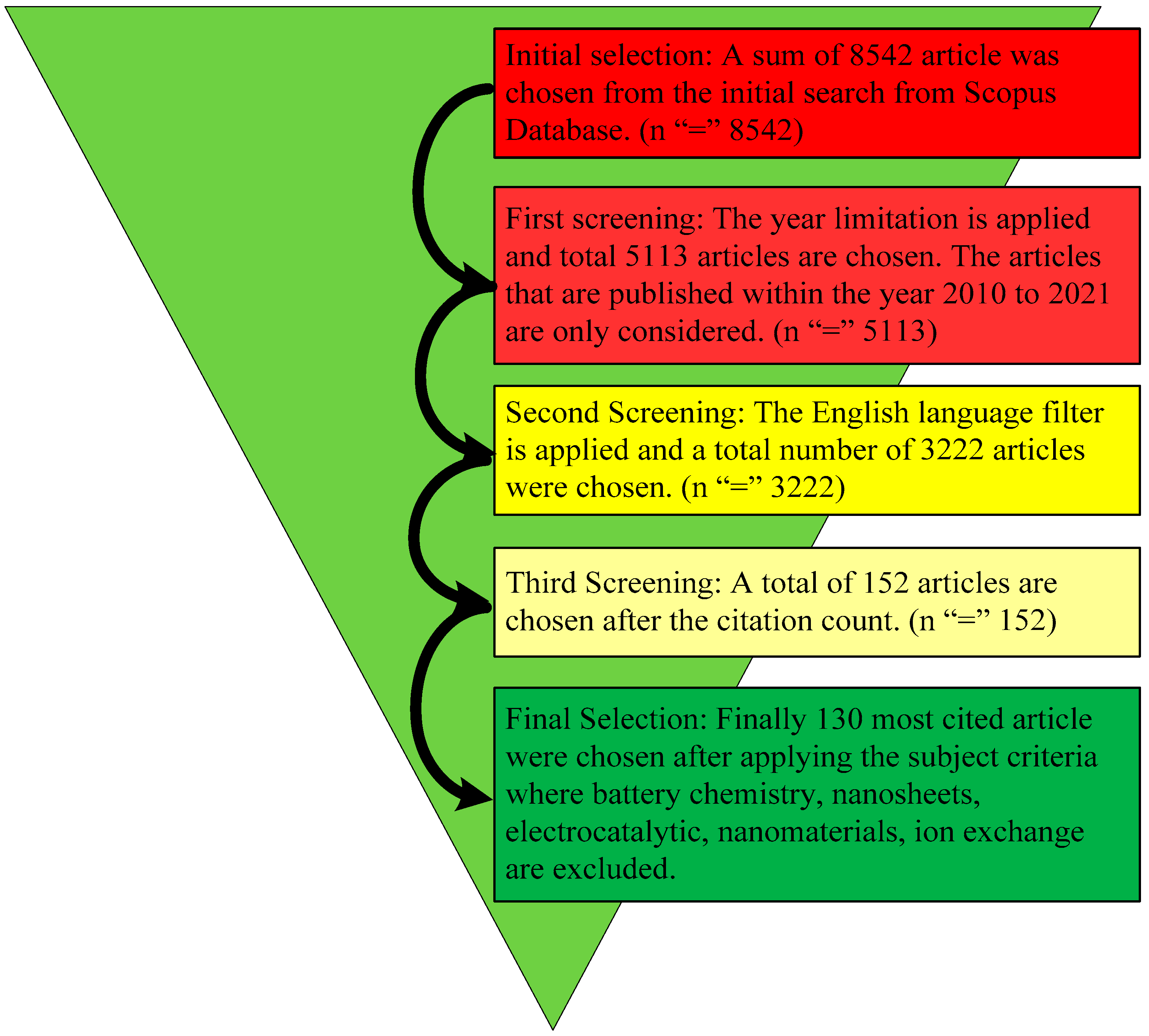
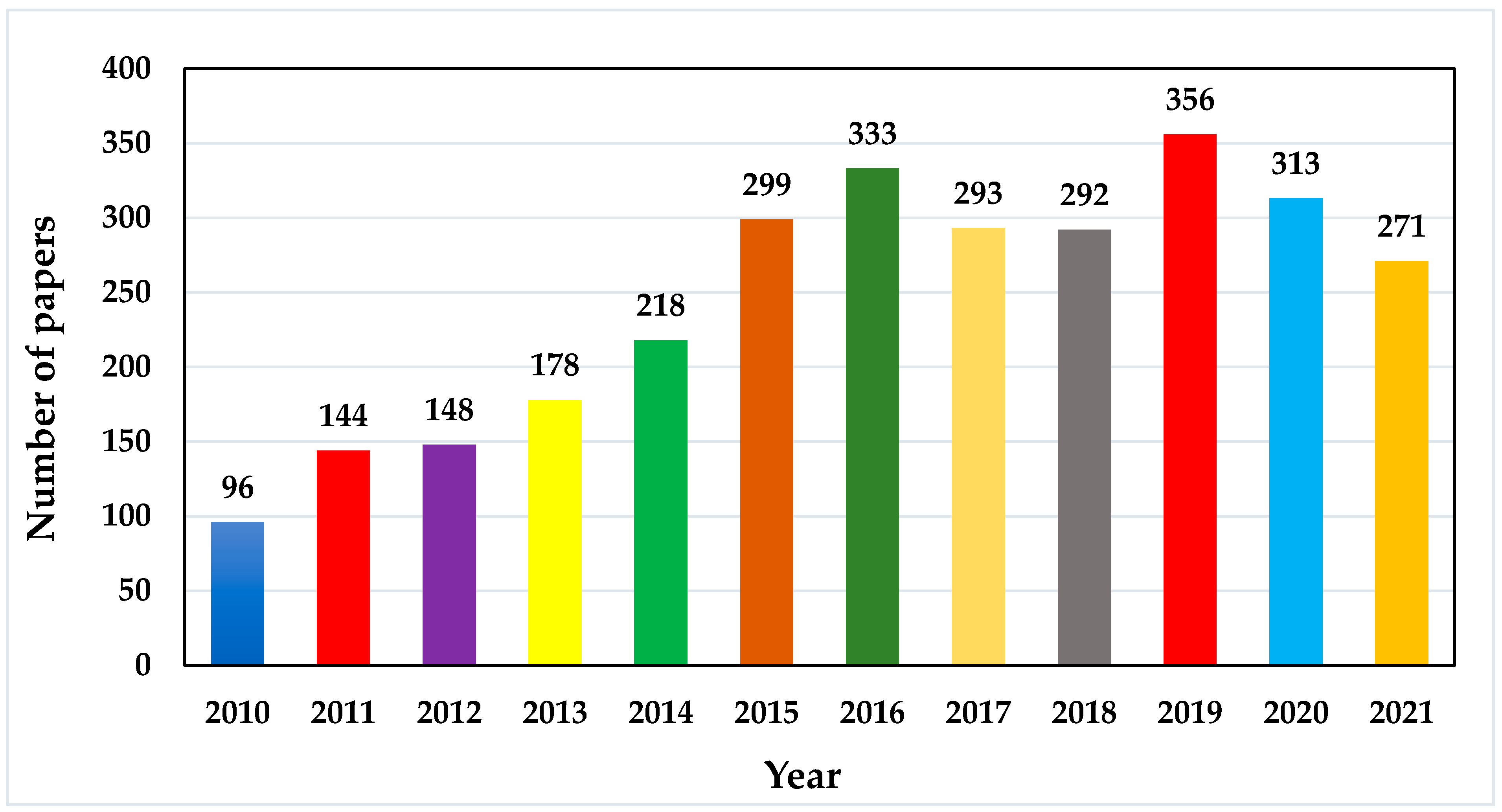
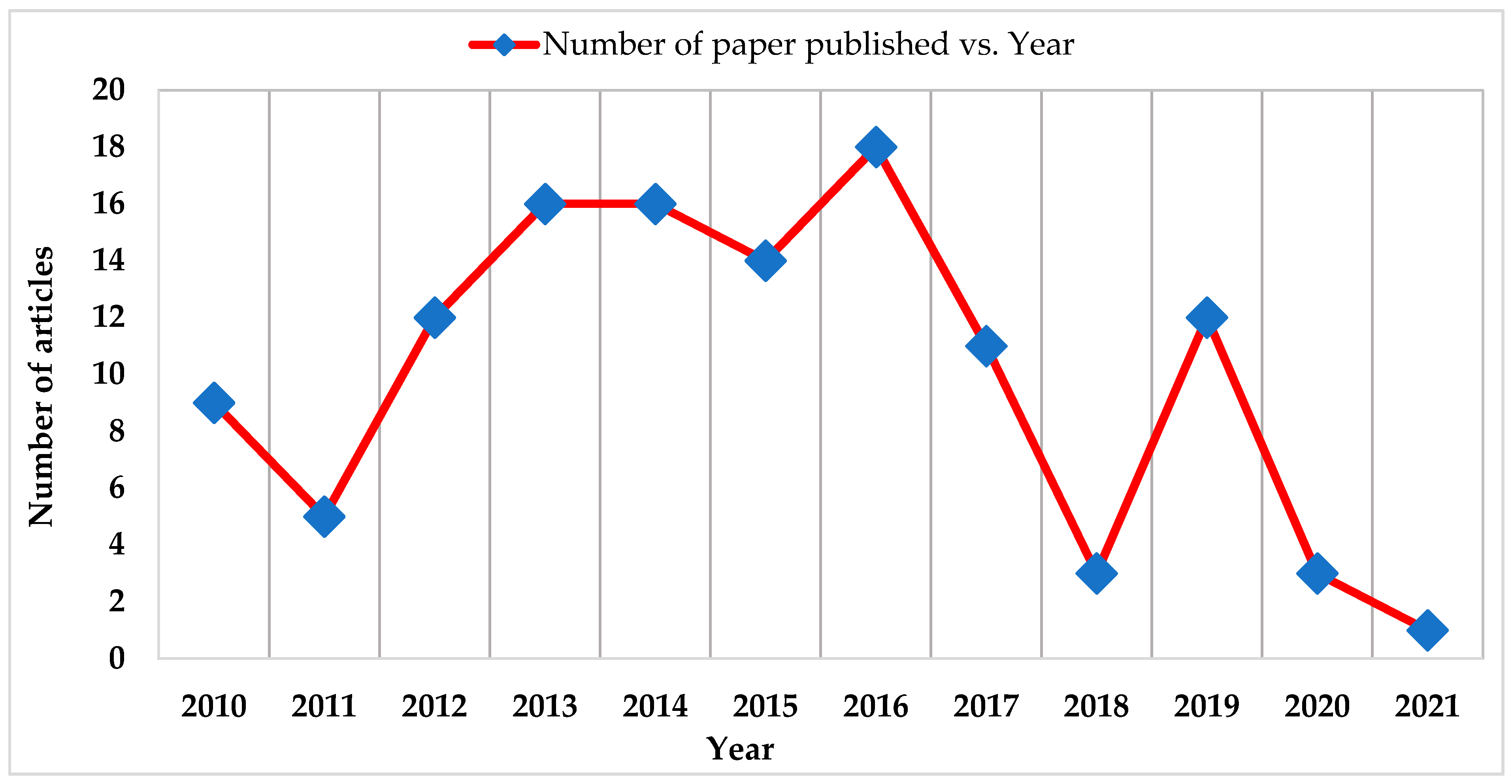
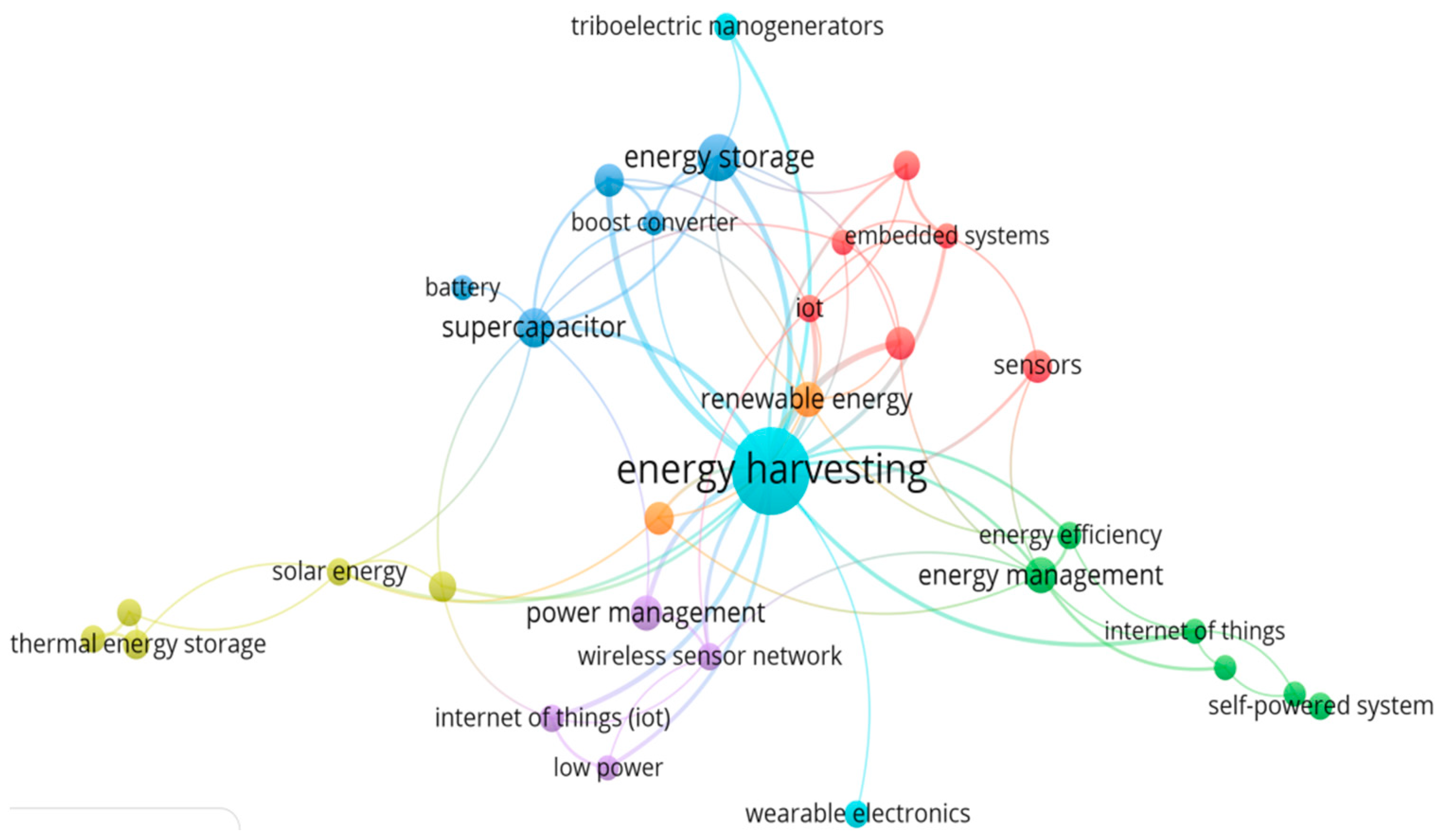
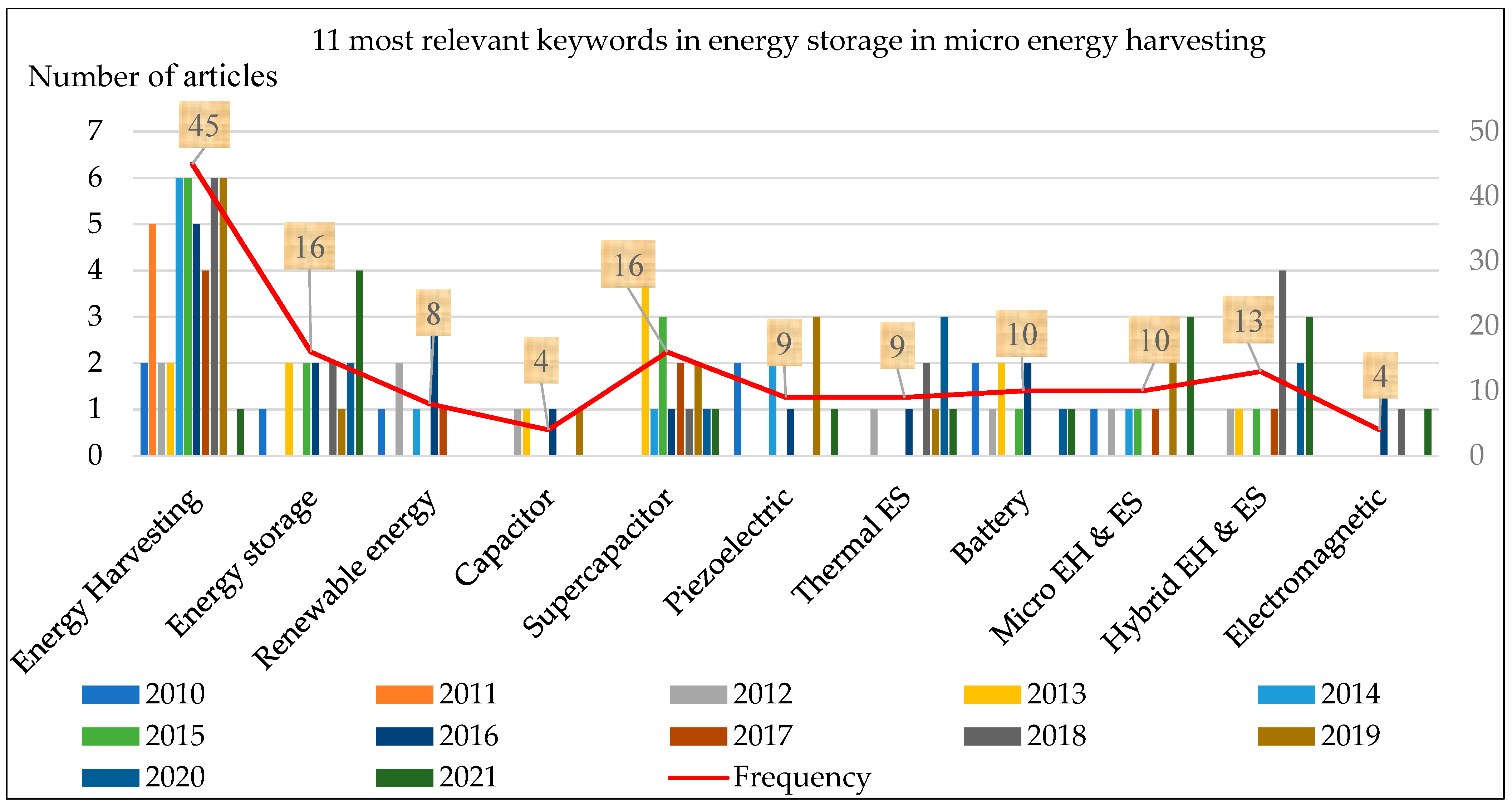
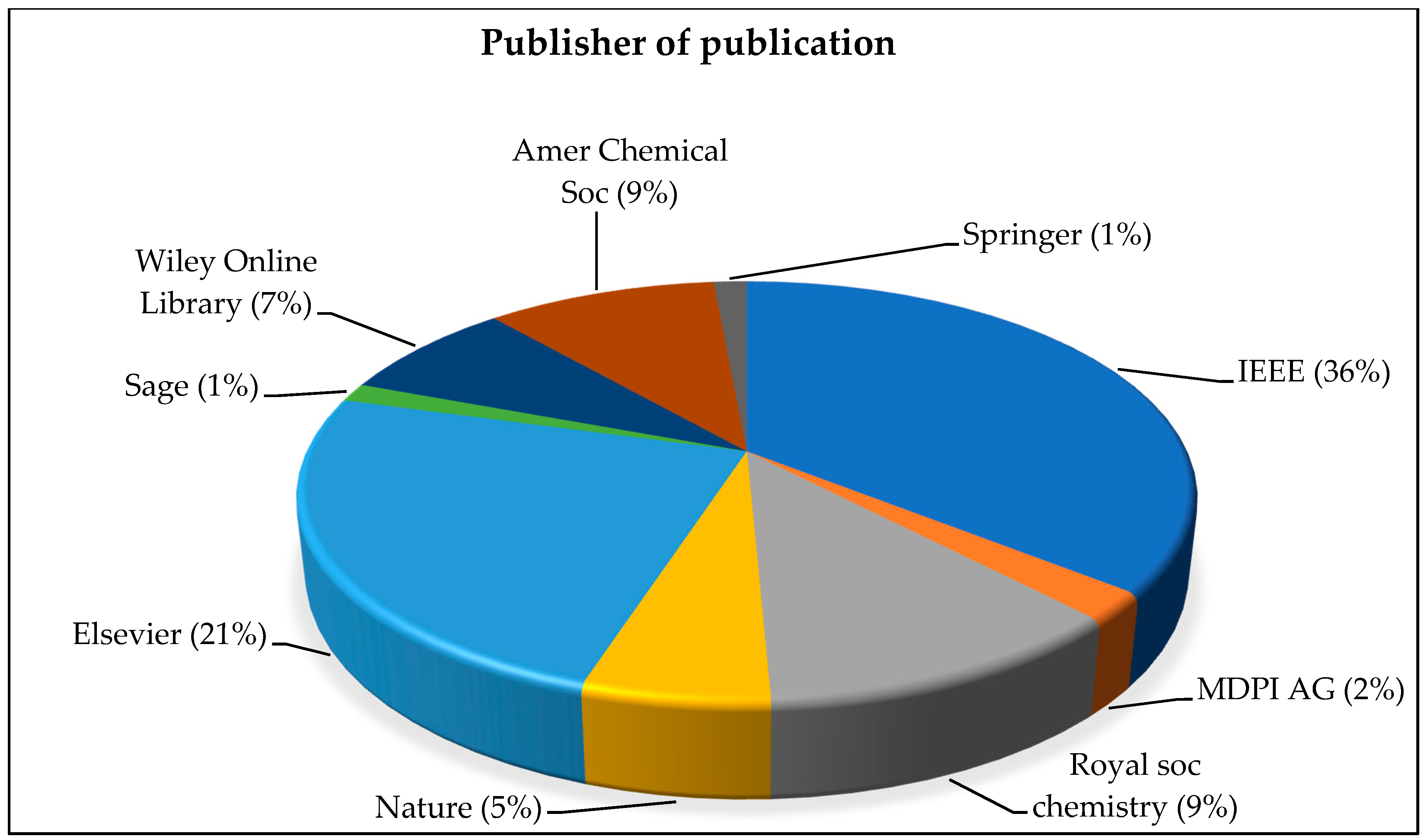
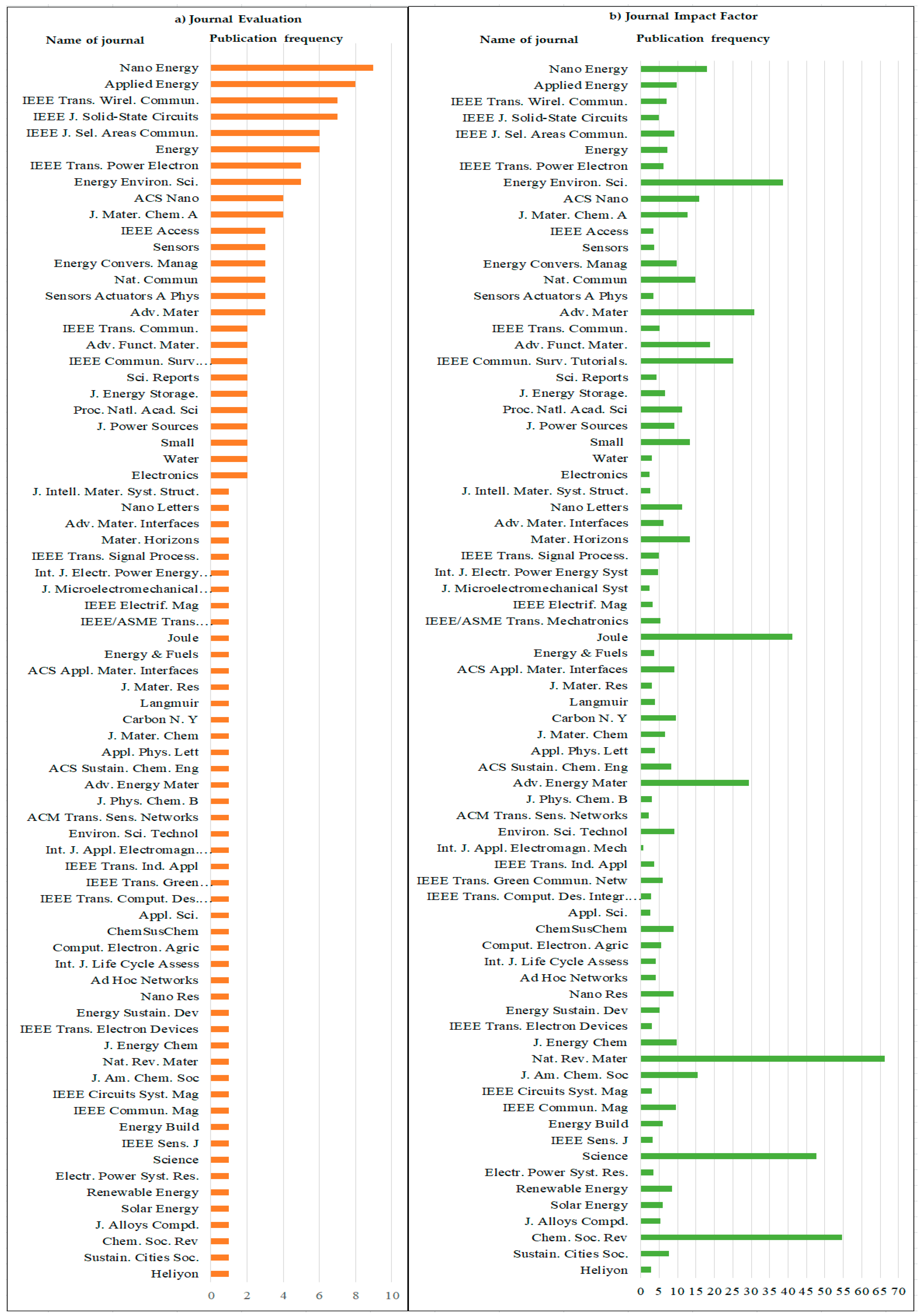
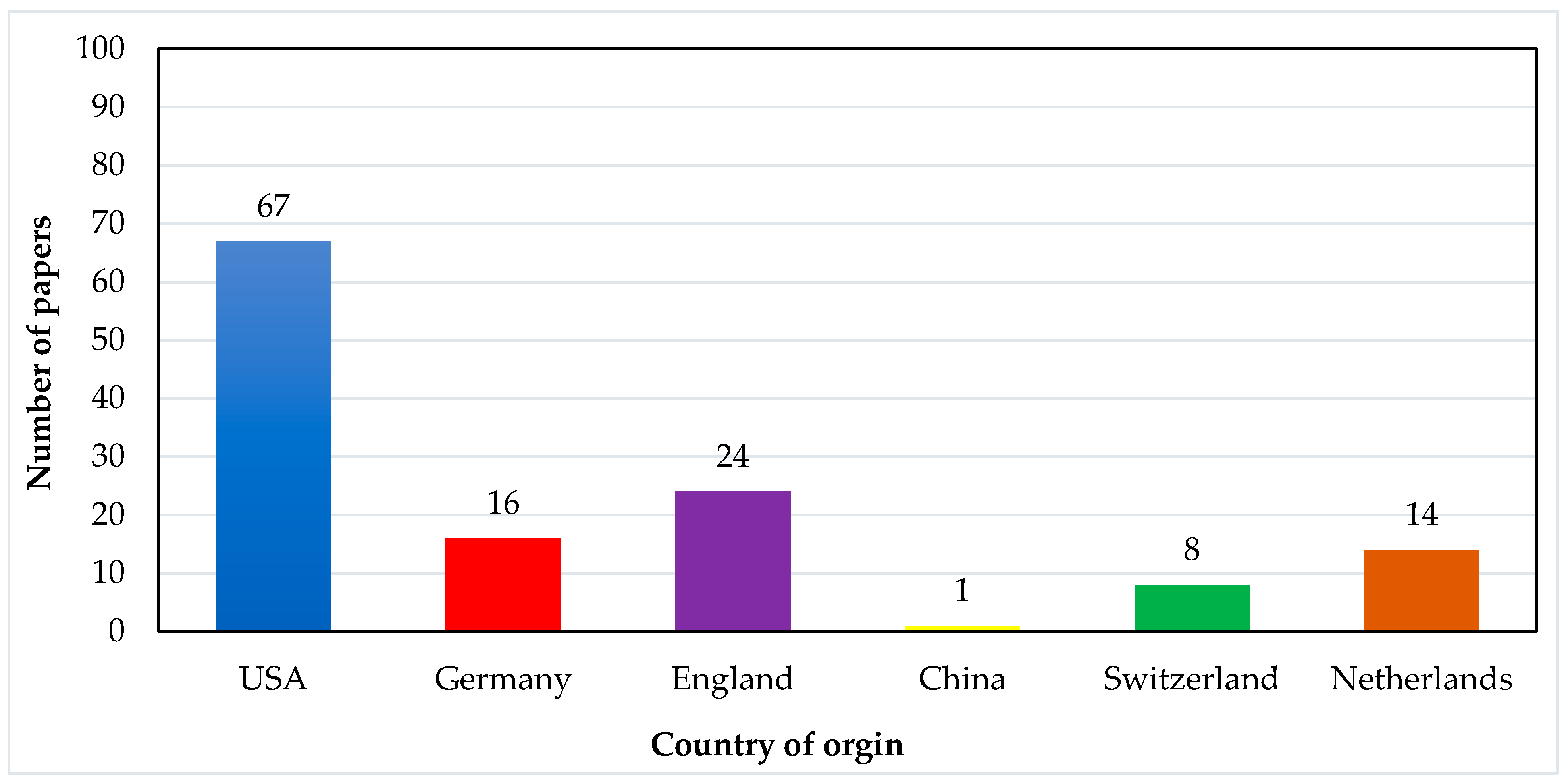
Publisher’s Note: MDPI stays neutral with regard to jurisdictional claims in published maps and institutional affiliations. |
© 2022 by the authors. Licensee MDPI, Basel, Switzerland. This article is an open access article distributed under the terms and conditions of the Creative Commons Attribution (CC BY) license (https://creativecommons.org/licenses/by/4.0/).