Article

Micromotors of MnO2 for the Recovery of Microplastics

by
Oscar Cervantes
1,2,
Claudia Valtierra-Montiel
3,
Laura Sampedro-Plata
1,
Norberto Casillas
2,
Nieves Menendez
1 and
Pilar Herrasti
1,*
1
Department of Applied Physical Chemistry, Faculty of Sciences, Autonomous University of Madrid, Francisco Tomás y Valiente 7, 28049 Madrid, Spain
2
Department of Chemistry, Center of Exact Sciences and Engineering (CUCEI), University of Guadalajara, Marcelino García Barragán 1421, Col. Olímpica, Guadalajara 44430, Jalisco, Mexico
3
Master’s Program in Nanomaterials Science and Technology, Natural and Exact Sciences Division, University of Guanajuato, Noria Alta S/N, Guanajuato 36050, Guanajuato, Mexico
*
Author to whom correspondence should be addressed.
Micromachines 2024, 15(1), 141; https://doi.org/10.3390/mi15010141
Submission received: 14 November 2023 / Revised: 11 January 2024 / Accepted: 12 January 2024 / Published: 17 January 2024
(This article belongs to the Special Issue Fundamentals and Catalytic Applications of Oxide-Based Materials)

Abstract

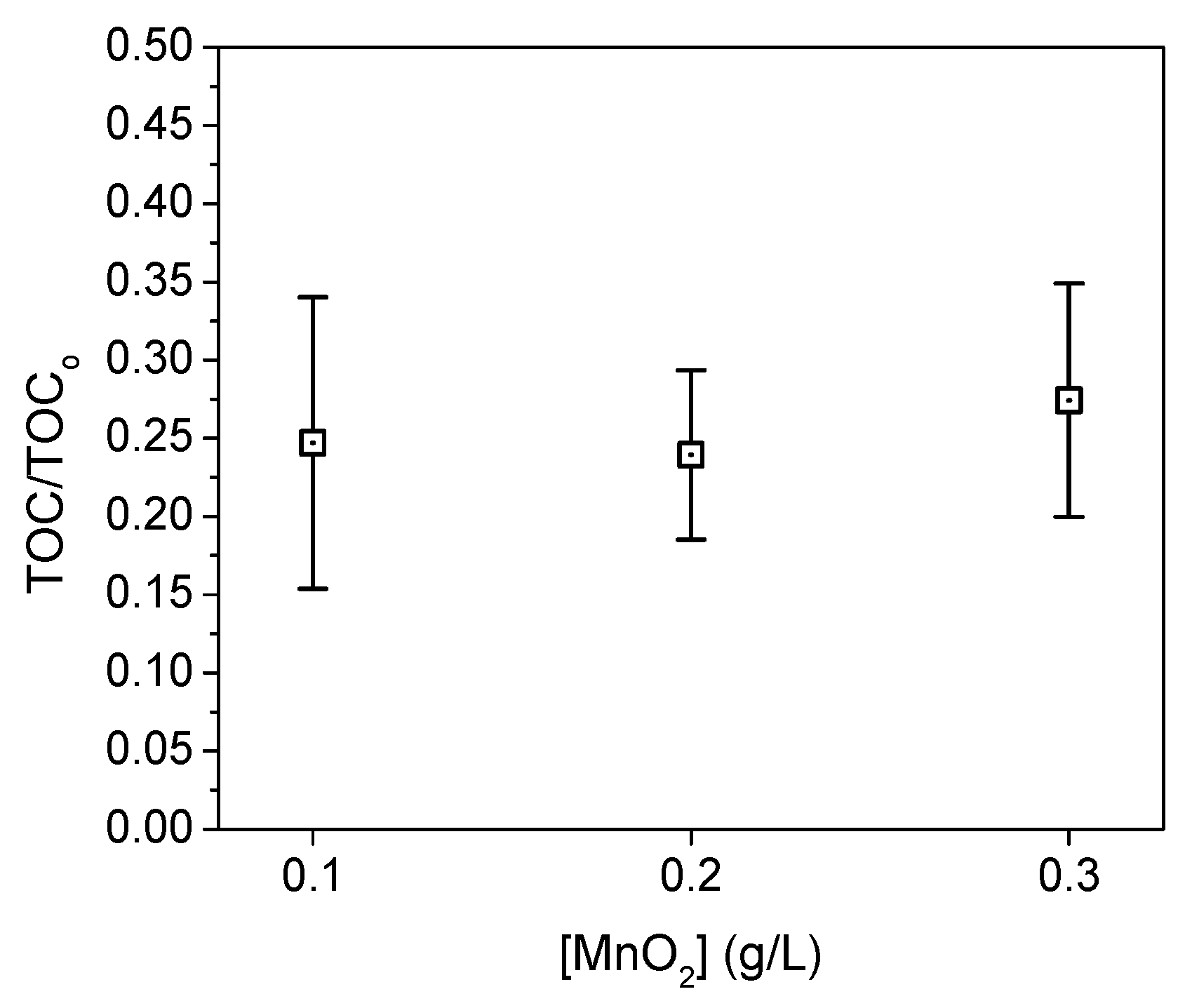
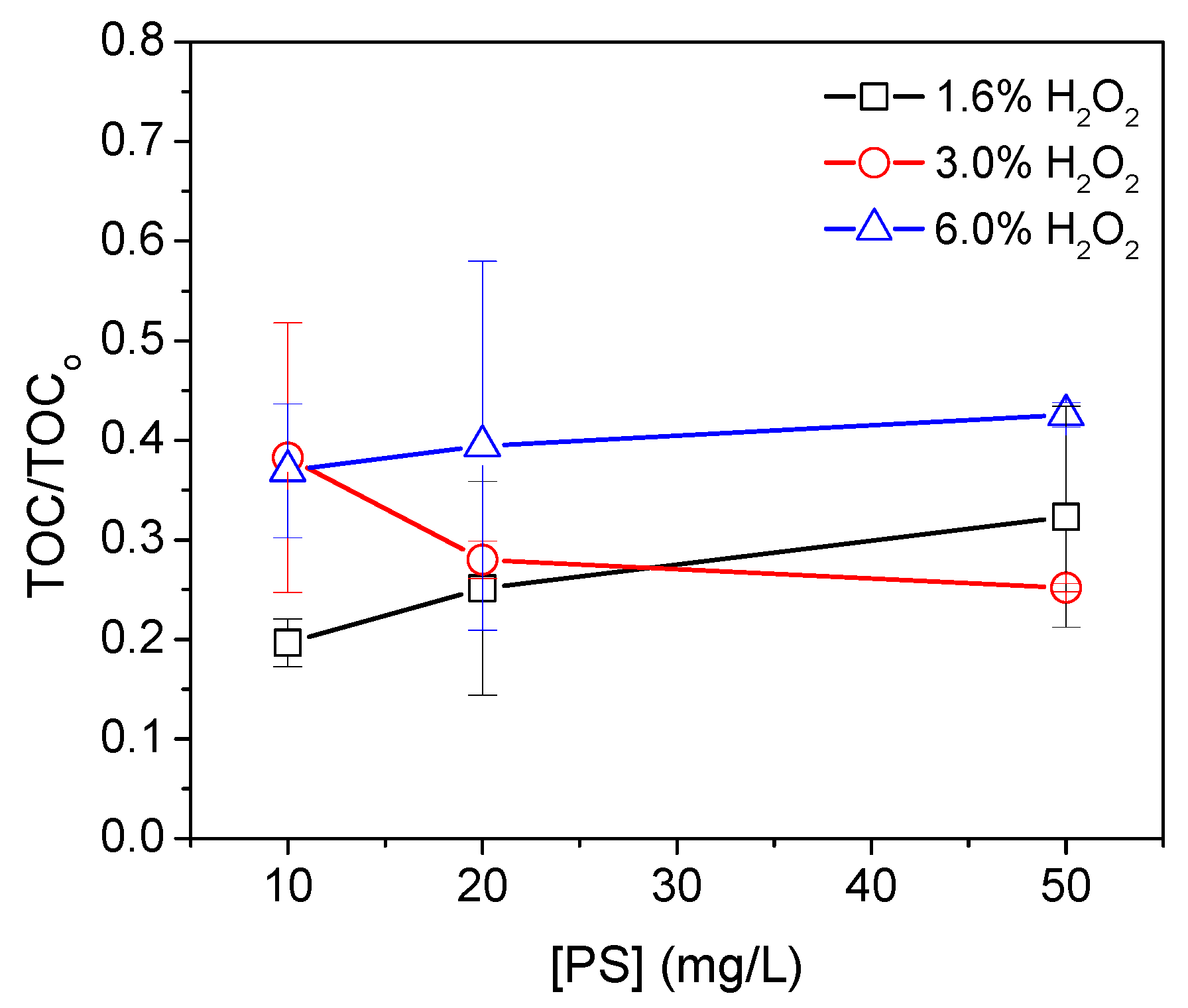
Plastics, primarily microplastics, are among the greatest pollutants in aquatic environments. Their removal and/or degradation in these environments are crucial to ensure an optimal future of these ecosystems. In this work, MnO2 particles were synthesized and characterized for the removal of polystyrene microplastics as a model. MnO2 catalyzes the peroxide reaction, resulting in the formation of oxygen bubbles that propel the pollutants to the surface, achieving removal efficiencies of up to 80%. To achieve this, hydrothermal synthesis was employed using various methods. Parameters such as MnO2, pH, microplastics, and H2O2 concentrations were varied to determine the optimal conditions for microplastics recovering. The ideal conditions for a low microplastic concentrations (10 mg L−1) are 0.2 g L−1 MnO2, 1.6% of H2O2 and 0.01 triton as a surfactant. In these conditions, the micromotors can recover approximately 80% of 300 nm sized polystyrene microplastic within 40 min.
Keywords: manganese oxide; polystyrene; micromotors; recovering manganese oxide; polystyrene; micromotors; recovering