


Abstract
Recycled aggregates (RA) from construction and demolition waste are an alternative to natural aggregates in the construction sector. They are usually classified according to their composition. The main constituent materials are separated into the following categories: unbound natural aggregates, ceramic particles, cementitious particles, bituminous materials, and other materials considered impurities, such as glass, plastic, wood, or gypsum. In this research, a large number of samples of RA were collected from three different recycling plants and their properties were studied. After that, 35 samples were selected randomly, and their RA constituents were separated under laboratory conditions. Cementitious particles were differentiated into two subcategories: masonry mortar and concrete particles. Subsequently, their physical–mechanical properties were measured. The statistical analysis carried out exhibited that the constituents had a statistically significant influence on the physical–mechanical properties studied. Specifically, masonry mortar particles had higher water absorption and worse mechanical properties than concrete and ceramic particles. Secondly, multiple regression models were performed to predict the physical–mechanical properties of RA from their composition since mean absolute percentage error (MAPE) ranged between 0.9% and 8.6%. The differentiation in the subcategories of concrete and masonry mortar particles in compositional testing is useful for predicting the physical–mechanical properties of RA.
1. Introduction
The use of natural aggregates plays a key role in the construction sector. The current demand of construction aggregates is about 44 billion tonnes and is estimated to reach 66 billion tonnes by 2025 [1]. The utilization of recycled aggregates (RA) from construction and demolition waste (CDW) is a viable alternative to natural aggregates (Silva et al., 2019), since it reduces natural aggregate consumption, landfill disposal and environmental, economic and social impacts [2].
The use of secondary raw materials such as CDW, which amounts to a third of the total waste generated in the European Union (EU), faces the environmental demands by European policies [3]. Since the 1980s, there has been considerable progress in CDW recycle systems [4], not only in the methods of recovery from CDW into recycled aggregate (RA), but also on the approaches and techniques of its utilisation in the construction industry. In Europe, the average CDW recycling rate was about 40% in 2011 [5]. In Spain, 5 million tonnes of CDW were backfilled, 6 million tonnes were recycled and 9 million tonnes were landfilled, from a total of 20 million tonnes of CDW generated in 2014 [6], which is far from the target set (70%) by the Directive for 2020, representing one of the lowest ratios in the EU [7]. Currently, no data are available in the EU on recycling rates in 2020. The use of RA as a secondary raw material presents benefits such as landfill space reduction and minimisation of quarry exploitation, contributing to the new circular economy paradigm [8,9].
CDW becomes RA after being processed in a recycling plant [10]. The primary constituents of RA are identified according to the EN 933-11:2009 in unbound natural aggregates (Ru), ceramic particles (Rb), cementitious particles (Rc) and to a lesser extent asphalt, gypsum, glass, plastic, wood, and metals, among others. Generally, there are two major types of RA from CDW according to their composition: recycled concrete aggregates (RCA) and mixed recycled aggregates (MRA), which have a heterogenous composition [11]. In Spain, MRA represents 70–80% of the total RA produced [12].
Most classification systems for RA are based on their physical–mechanical properties and their constituents. Generally, the main constituent materials are separated into the following categories: unbound natural aggregates, ceramic particles, cementitious particles, bituminous material, glass, and other materials considered impurities such as plastic, wood or gypsum. Nevertheless, none of the current classification systems distinguishes between concrete and masonry mortar particles in compositional tests. The International Union of Laboratories and Experts in Construction Materials, Systems and Structures (RILEM) proposed a classification of RA: RILEM TC 121-DRG [13], identifying three types of RA according to their main source: Type-I from masonry rubble; Type-II from concrete rubble; and Type-III natural aggregates and RA mixture. Agrela et al. [14] suggested an RA classification system regarding ceramic and concrete particle content: Concrete Recycled Aggregate (CRA), describes a concrete and natural aggregate particle content greater than 90%; Mixed Recycled Aggregate (MRA) details a ceramic particle content less than 30%; and Ceramic Recycled Aggregate (CerRA), depicts a ceramic particle content greater than 30%. The Spanish Guide for RA from CDW [15] established a similar classification of RA. The GEAR project [15] proposes the following RA classification: CRA and CerRA, with the same composition as that in Agrela et al. [14]; and MRA with a concrete and natural aggregate (Ru) content less than 90% and a ceramic content less than 30%. Jiménez [11] and Barbudo et al. [12] proposed a classification for RA according to the percentage of their constituents as shown in Table 1.

Table 1.
Classification of RA according to composition test EN 933-11:2009 proposed by Jiménez [11] and Barbudo et al. [12].
Silva et al. [16] established an RA classification system that took into account the following physical–mechanical properties: oven-dried density, water absorption and fragmentation resistance. The following types of RA were established: Type-A with a minimum oven-dried density (drd) of 2400 kg/m3, a maximum water absorption (WA) of 3.5% and Los Angeles test result (LA) of 40%; Type-B with a minimum drd of 2100 and a maximum WA of 8.5% and LA of 45%; and Type-C with a minimum drd of 1800 and a maximum WA of 15% and LA of 50%. These three types of RA are further classified into three subtypes (I, II, and III), depending on the drd and WA values.
None of the classification systems described above studied the physical–mechanical properties of each of the constituents and their influence on the final results. Moreover, none of the current classification systems distinguish between mortar and concrete particles. Indeed, different treatments have been carried out to remove mortar phase in RCA, thus enhancing the RCA properties [17,18]. Hence, it would be interesting to study whether RA constituents have different physical–mechanical properties and its influence on the final results.
The influence of RA properties on the physical–mechanical properties of recycled aggregate concrete (RAC) has been revealed in many studies. Nevertheless, the influence of the RA’s constituents on the RA’s physical–mechanical properties has not yet been studied. Bravo et al. [19] carried out an analysis of the RA’s physical–mechanical and chemical properties on the durability of RAC. The authors performed a compositional test and determined the following properties of RA: particle density and water absorption, shape index, resistance to fragmentation by Los Angeles test, and water-soluble chlorides, among other measurements. However, the mathematical relationship between RA composition and its physical–mechanical properties was not studied in detail.
In the first stage of this study, the physical–mechanical properties of each main RA constituent was analysed, separating masonry mortar and concrete particles. For this purpose, a statistical study was undertaken to determine whether there are significant differences between the physical–mechanical properties of the RA constituents, distinguishing concrete and mortar particles. The second stage involved prediction of the physical–mechanical properties of RA based on its constituents, establishing multiple regression models. Previously, the statistical relationship was assessed between the RA constituents and the physical–mechanical properties of RA. Predicting the physical–mechanical properties of recycled aggregates is a key aspect in establishing their feasibility of use in the new paradigm of circular economy.
2. Materials and Methods
2.1. Materials
Over the span of three years, eighty-nine samples of RA from CDW were collected from three different recycling plants located in Andalusia (Spain). Only the coarse fraction of each sample (8/31.5 mm) was taken into account in this study. The samples had different sources: forty-seven were classified as RCA and forty-two as MRA according to the classification system proposed by Jiménez [11]. Four crushed natural aggregates (CNA) with different properties (siliceous, granite and limestone) were used as reference.
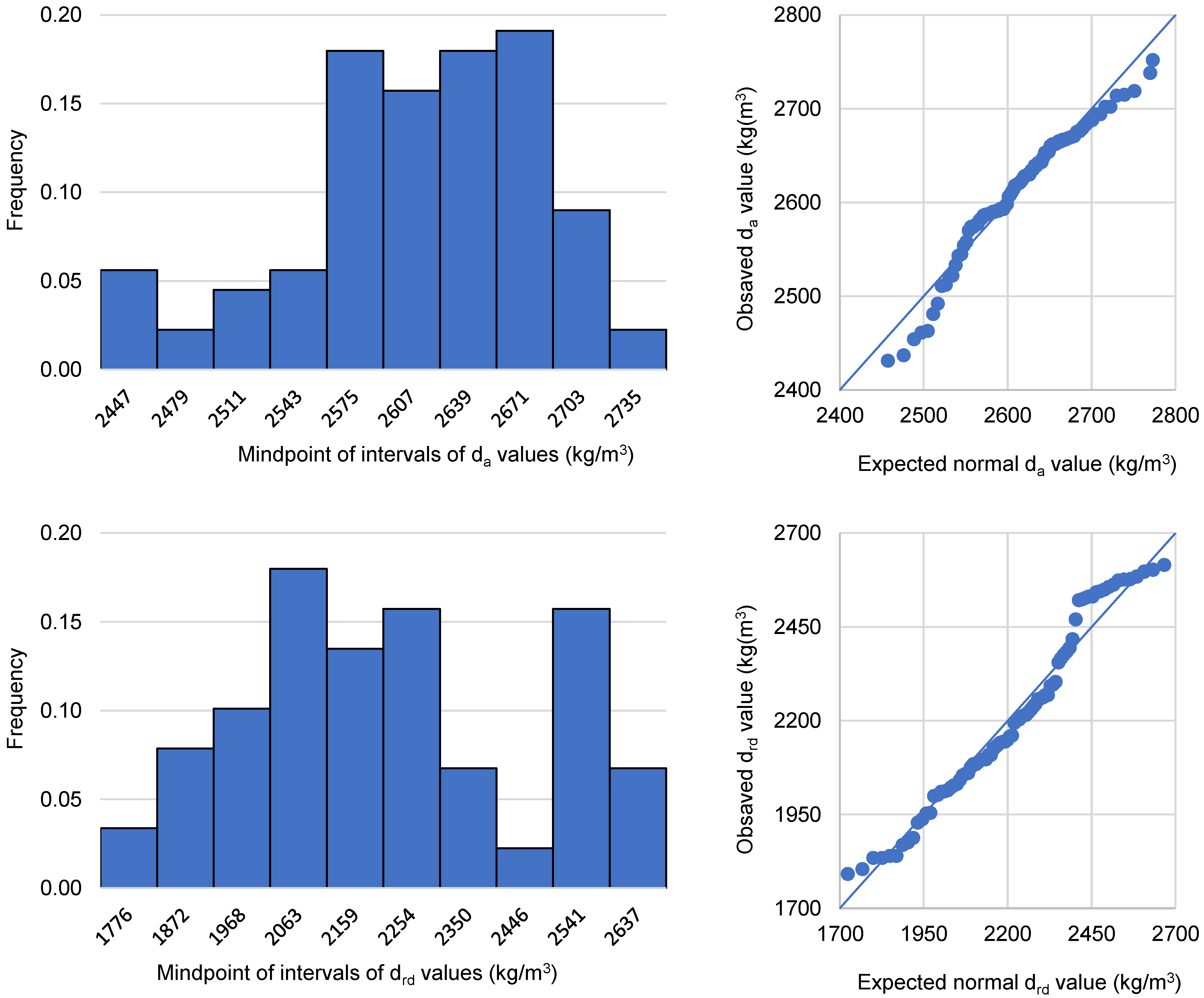
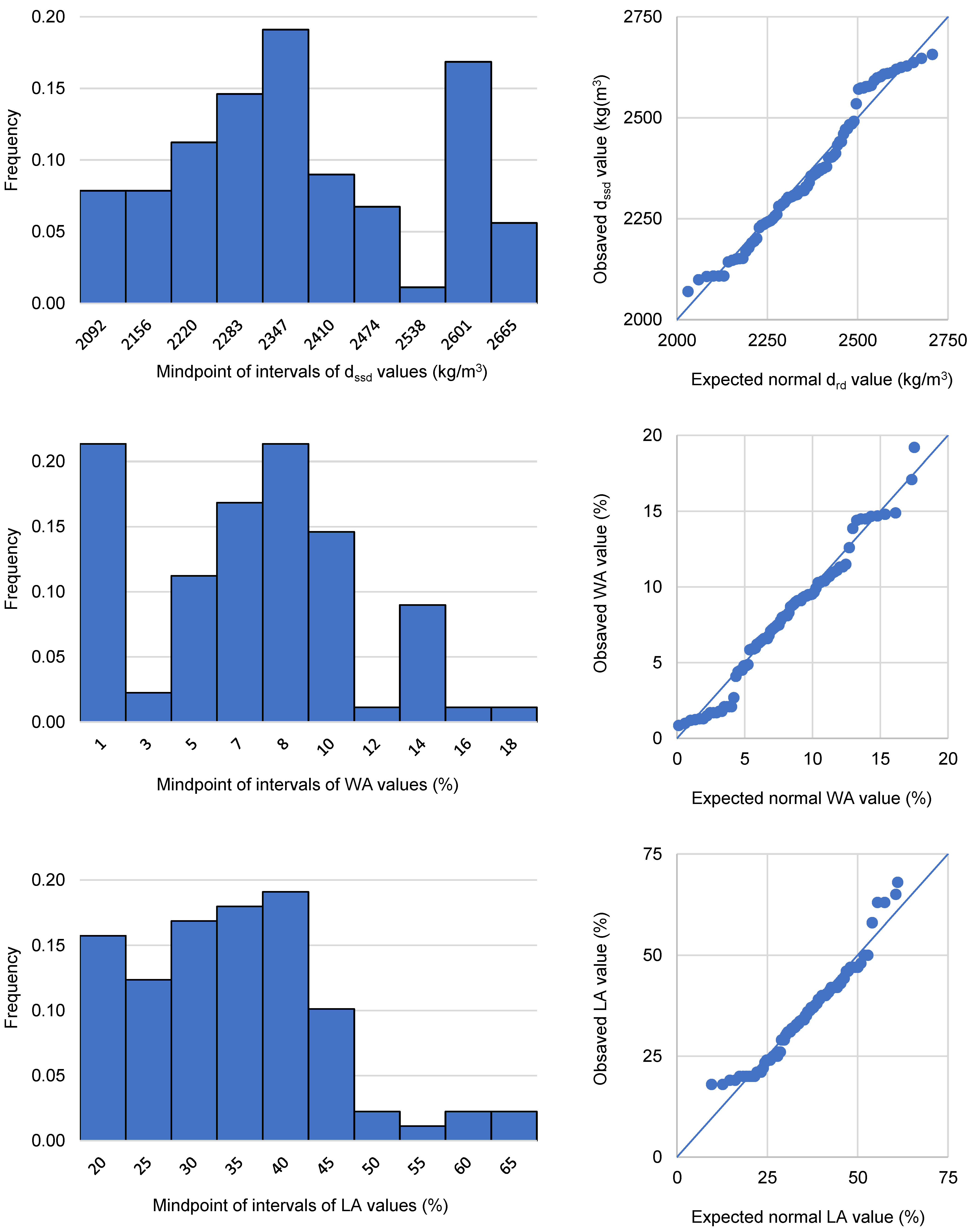
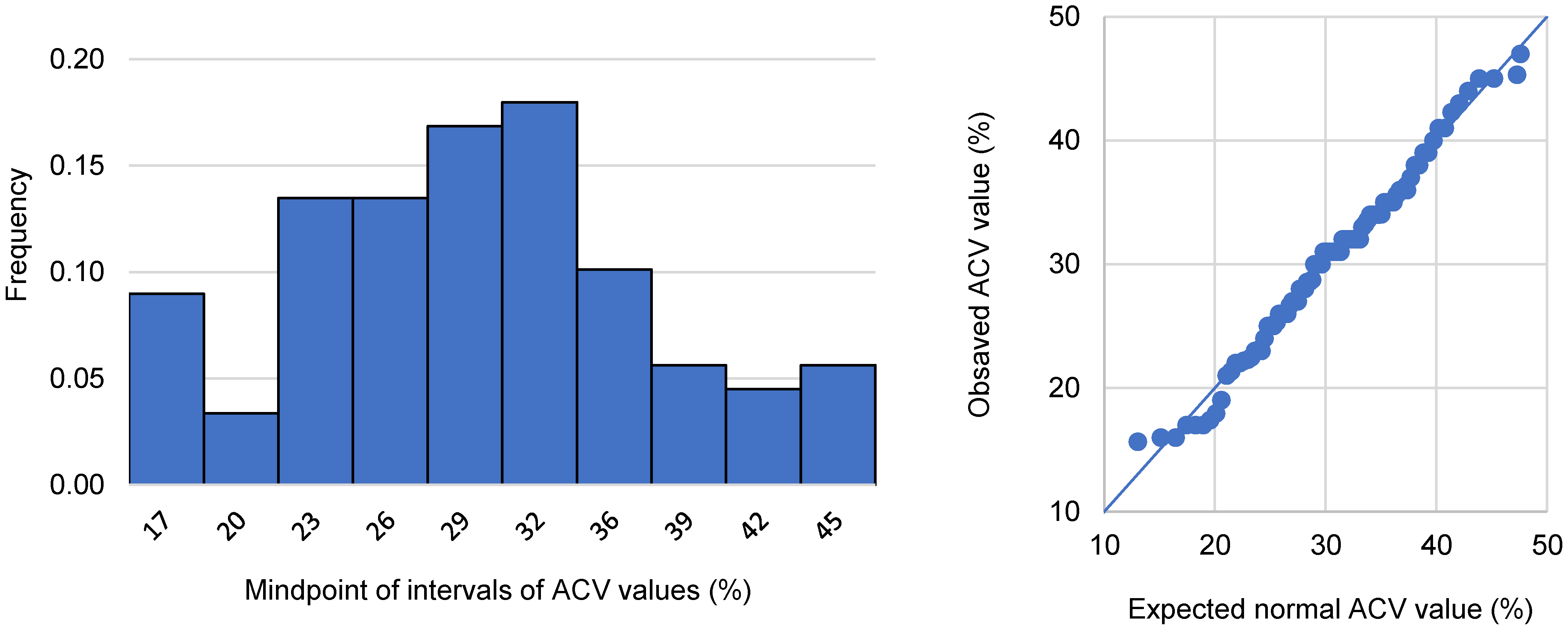
RA were characterized by four physical properties: density oven-dried particle density (drd), saturated and surface dried particle density (dSSD), apparent particle density (da) and water absorption after 24 h (WA) calculated according to UNE-EN 1097-6:2014; and two mechanical properties: resistance to fragmentation by Los Angeles test (LA) calculated according to UNE-EN 1097-2:2010 and Aggregate Crushing Value (ACV) calculated according to BS 812-110:1990. For description of the properties studied on the RA samples the mean, maximum, minimum, and standard deviation (SD) values are presented in Table 2. Figure 1 shows the RA properties dataset. These data are in accordance with findings by other researchers [14,20].
Table 2.
Statistics of the properties studied on the RA samples.
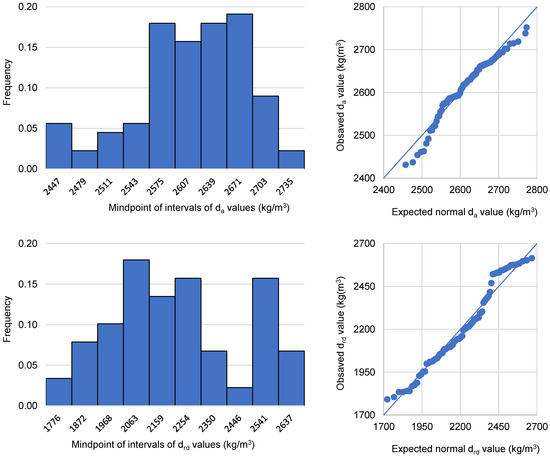
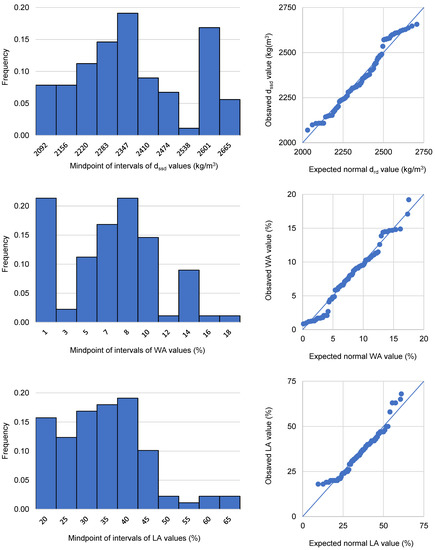
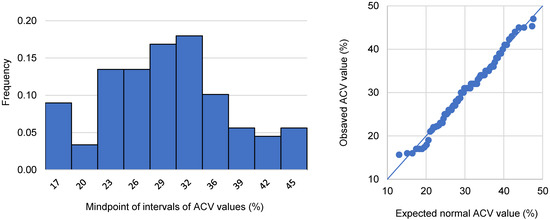
Figure 1.
Histograms and normal plots of the properties studied of the RA samples.
A compositional test was then performed using 35 RA samples selected randomly, sorting the RA constituents into unbound natural aggregates, ceramic particles, concrete, masonry mortar, asphalt and to a lesser extent gypsum, glass, plastic, wood, and metals, among other constituents. The percentage of each of the constituents was calculated. The novelty of this work is the fact that the masonry mortar particles were counted separately to the concrete particles.
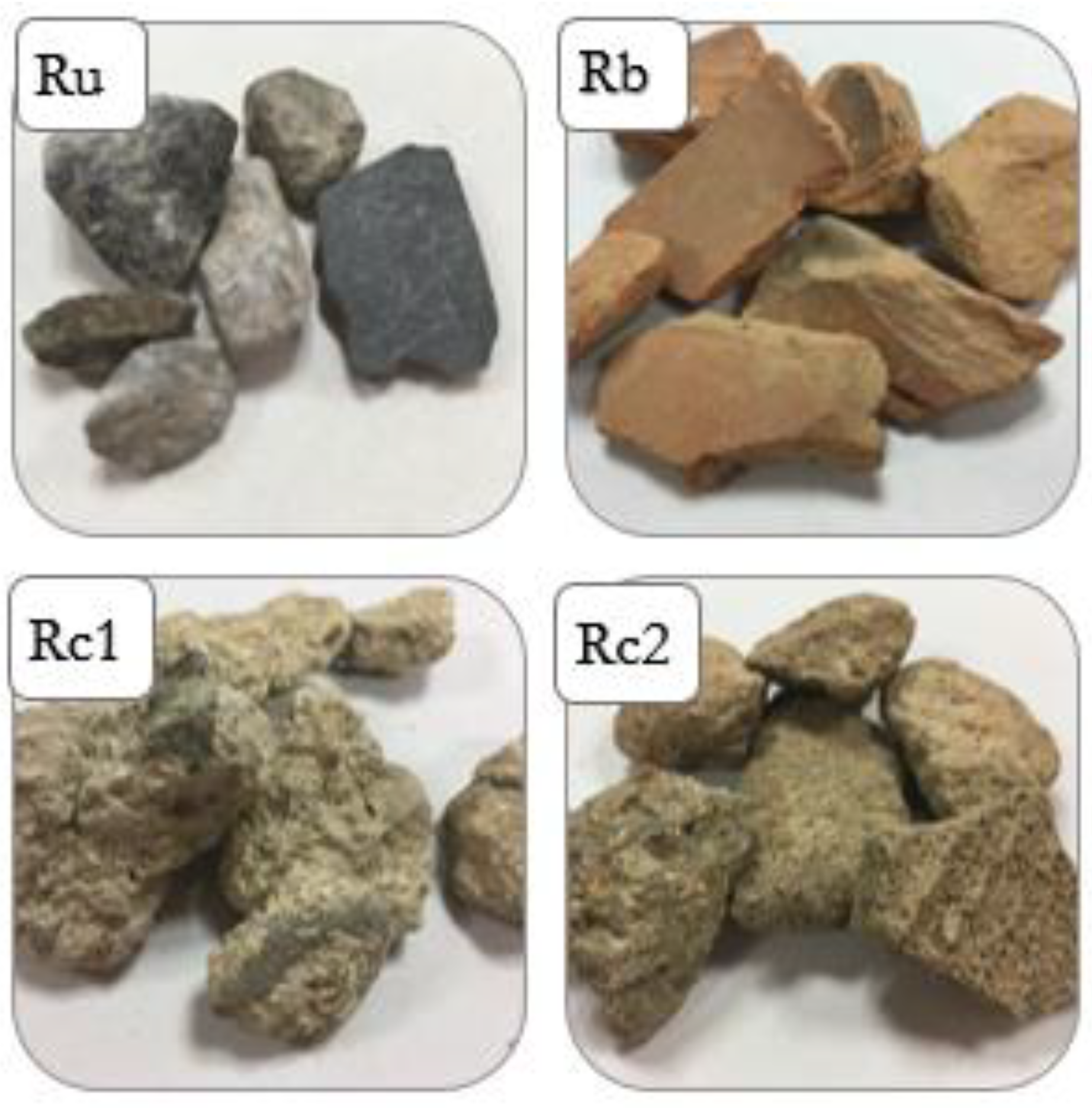
Among all the constituents, the four representing the highest proportions were selected as primary RA constituents for this study: Ru, Rb, concrete (Rc1) and masonry mortar (Rc2) (Figure 2). The rest of the constituents were considered as “others”.
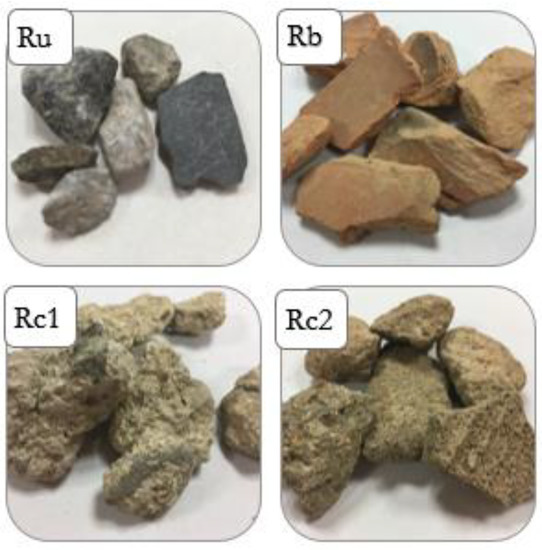
Figure 2.
Main RA constituents.
2.2. Experimental Program and Statistical Analysis
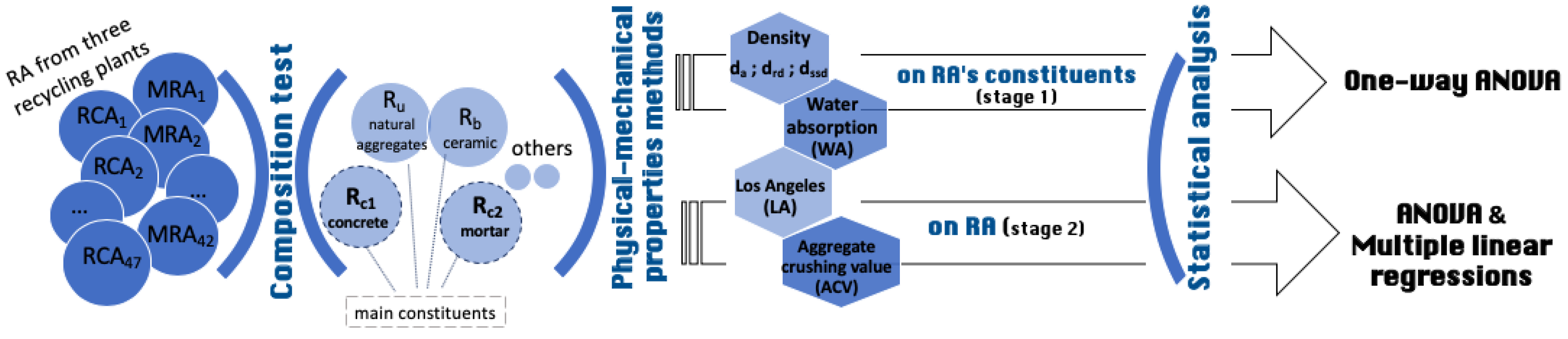
Figure 3 shows the experimental program performed. Two stages were differentiated.
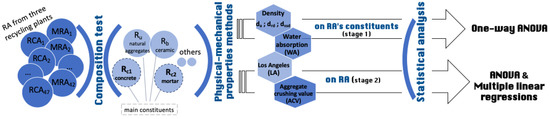
Figure 3.
Experimental program.
During the first stage, the main RA constituents were separated and their physical and mechanical properties were calculated. A one-way ANOVA was conducted to determine if the factor “RA’s constituents” had a statistically significant effect on each physical–mechanical property (drd, dssd, dap, WA, LA and ACV). The ANOVA performed involves the analysis of one factor (RA constituents) with five different levels (Ru, Rb, Rc1, Rc2 and CNA). If the p-value was lower than 0.05, the factor showed a significant effect on the property studied. To check whether there was a significant difference between the levels for each factor, Fisher’s Least Significant Difference (LSD) test was conducted.
The second stage involved a multiple regression analysis to establish if there was a significant correlation between the main RA constituents and each of the RA’s physical–mechanical properties. Six multiple linear regressions (models) were performed to predict each of the six aforementioned physical–mechanical properties (dependent variable) based on the percentages of the main RA’s constituents (independent variables). The level of correlation between the variables was calculated.
3. Results and Discussion
3.1. ANOVA Test Results—First Stage
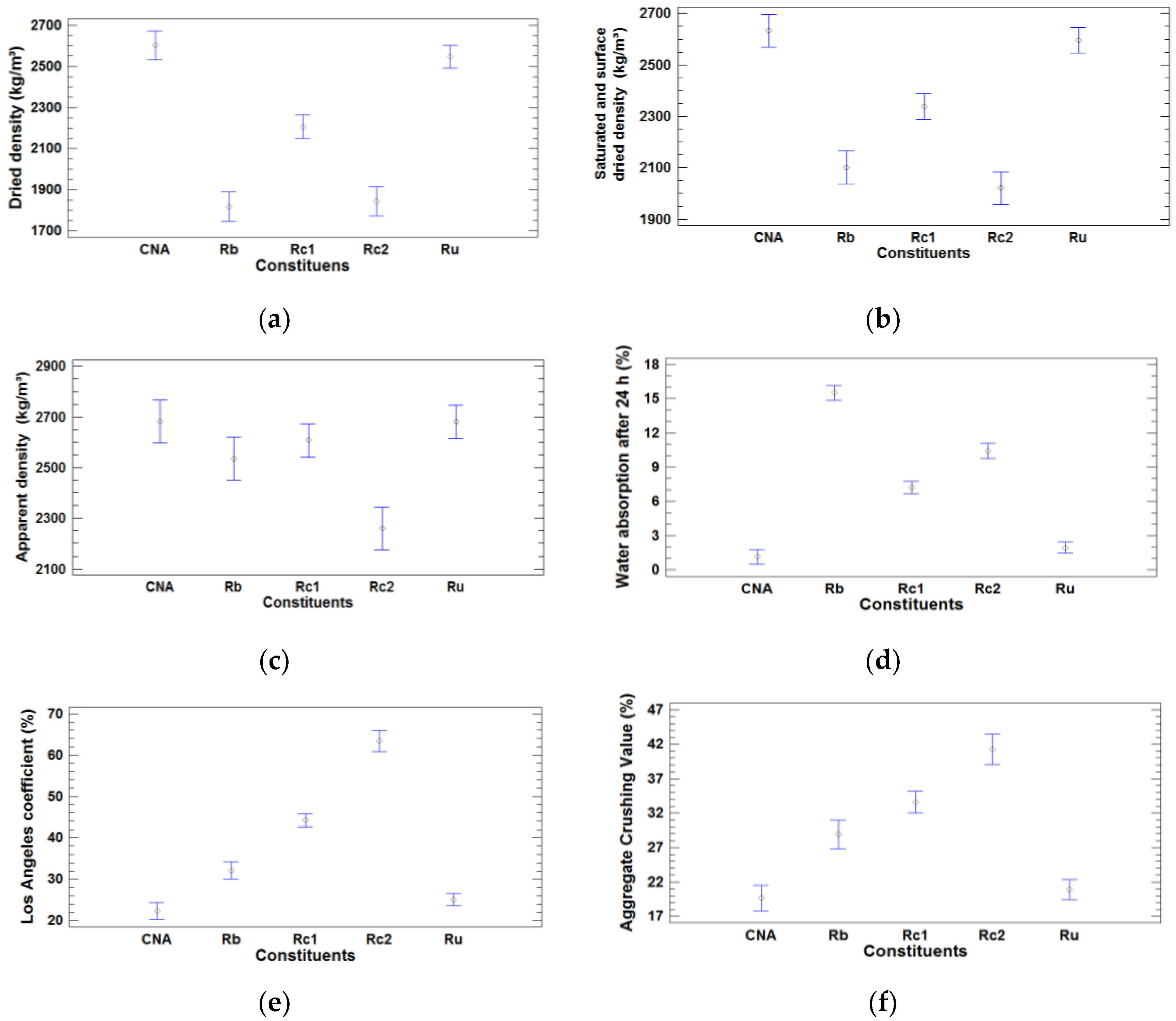
In all one-way ANOVA tests carried out, the p-value of the F-Tests were less than 0.05 with a confidence level of 95% (Table 3), indicating statistically significant differences between the physical–mechanical properties of each RA constituent. Figure 4 shows Fisher’s Least Significant Difference (LSD) tests, where it can be observed whether there was a significant difference between the factor levels examining the mean plot and identifying the LSD intervals.
Table 3.
One-way ANOVA.
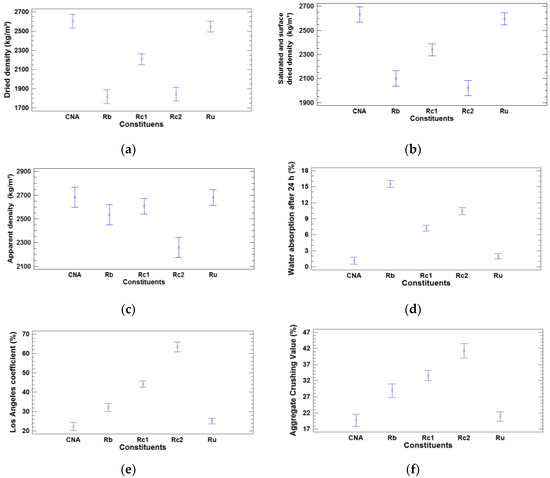
Figure 4.
Means and 95.0 percent LSD intervals of each physical–mechanical property studied: (a) oven-dried particle density, drd; (b) saturated and surface dried particle density, dSSD; (c), Apparent particle density, da; (d) water absorption after 24 h, WA; (e), Los Angeles coefficient, LA, and (f) Aggregate Crushing Value, ACV.
Regarding the drd and the dssd, three homogeneous groups without statistically significant differences can be observed (Figure 4a,b): the group of natural aggregates (CNA, Ru), Rb and masonry mortar (Rc2), and concrete particles (Rc1). It has been proven that cementitious particles (Rc1 and Rc2) present lower values than natural aggregates in drd and dssd [21,22,23,24,25,26,27]. However, natural aggregates, Rb, and Rc1 had similar dap, while Rc2 had the lowest value (Figure 4c) and presented significant differences. Regarding the fact that Rc1 presented greater mean values than Rc2, this is due to mortar having lower density values than concrete; the dry density values of reference mixtures (with virgin aggregates) based on two reviews on mortar (Silva et al. [28]) and concrete (Verian et al. [29]), on recycled aggregate influence, were approximately 1900 kg/m3 (170 SD) and 2400 kg/m3 (55 SD), respectively. It has been reported that the greater the amount of cement mortar, the lower the density of the RA, due to the greater porosity [30]. In relation to Rb, natural aggregates had the highest density values, followed by crushed clay brick. In contrast, crushed clay brick had the highest water absorption values, followed by recycled concrete aggregate and ceramic particles when no differentiation between Rc1 and Rc2 was carried out [31]. The fact that Rc2 was in a different homogenous group, concerning dap, can be attributed to the determination of dap as the aggregate mass per volume, excluding the accessible air void volume (but including trapped void volume inside the aggregate particles) [32], whereas drd and dssd include the accessible air void volume, bearing in mind that Rc2 presents a greater amount of accessible air voids.
With respect to WA, as observed in Figure 4d, ceramic particles Rb had the highest mean value, followed by masonry mortar Rc2, demonstrating the high absorption capacity of these particles [31,33,34,35] due to their high porosity. Yang et al. [36] reported that water absorption of RA from CDW was approximately 10 times larger than CNA. The fact Rb exhibited higher WA denotes greater porosity, and hence, greater presence of more accessible voids, justifying the density values aforementioned.
Figure 4e,f display the mechanical properties for constituents LA and ACV respectively. The trend in the mean values of both properties for each constituent was similar. The greatest value of resistance corresponded to Ru, followed by ceramic particles Rb, presenting better behaviour than cementitious particles (Rc1 and Rc2). Rc2 had the worst value of mechanical strength. Conversely, Diagne et al. [37] found that the RCA presented lower LA test results than recycled clay bricks. This coud be attributed to the recycling process. Vegas et al. [38] found that the greater the amount of Rb, the higher the LA value. In line with these results, Nagataki et al. [39] concluded that further processing of coarse RCA, through a combination of a jaw crusher, an impact crusher and a mechanical grinder device, enhanced their properties by reducing the adhered mortar; RCA with a higher percentage of adhered mortar exhibited higher crushing values and RCA, regardless of the amount of adhered mortar or the source, showed lower than virgin aggregates. When masonry mortar quantity in RA is high, LA coefficient increases [27], because the mortar is easily powdered during the test. Dhir et al. [40] stated, based on statistical data taken from more than three hundred RA samples, that the LA test results of RCA were lower than MRA, and MRA was lower than RMA, whereas no sufficient ACV test results were found to establish a tendency. Hence, the physical–mechanical properties of Rc1 and Rc2 were completely different, which did not show any similarity with any of the test results studied according to the one-way ANOVA analysis. Determination of the RA composition Standard UNE-EN 933-11:2009 does not distinguish between Rc1 and Rc2. However, based on these results, this differentiation could be helpful for better characterization of RA performance.
3.2. Results of Multiple Regression Analysis—Second Stage
The following Equations (1)–(6) show the best fit obtained from each multiple linear regression between the six physical–mechanical properties (dap, drd, dSSD in kg/m3; and WA, LA, and ACV in %) studied, as dependent variables, and the main constituents (Rb, Rc1, Rc2, Ru) as independent variables (in %):
The six multiple linear regressions carried out showed that there were statistically significant relationships between the main RA constituents and the properties studied, the dependent variables, since the p-value was lower than 0.05 at 95% confidence level (Table 4). In the drd, dSSD, WA and ACV properties, the coefficient of determination (R2) was found to be greater than 0.8, indicating an effective regression model [41], while the R2 values for LA and the dap were greater than 0.4. In these last two cases, the values of R2 were too low to claim that a significant correlation existed, which indicates that the relationship between the variables is not linear.
Table 4.
Coefficients of determination (R2), root-mean-squared error (RMSE), mean error (BIAS) and mean absolute percentage error (MAPE).
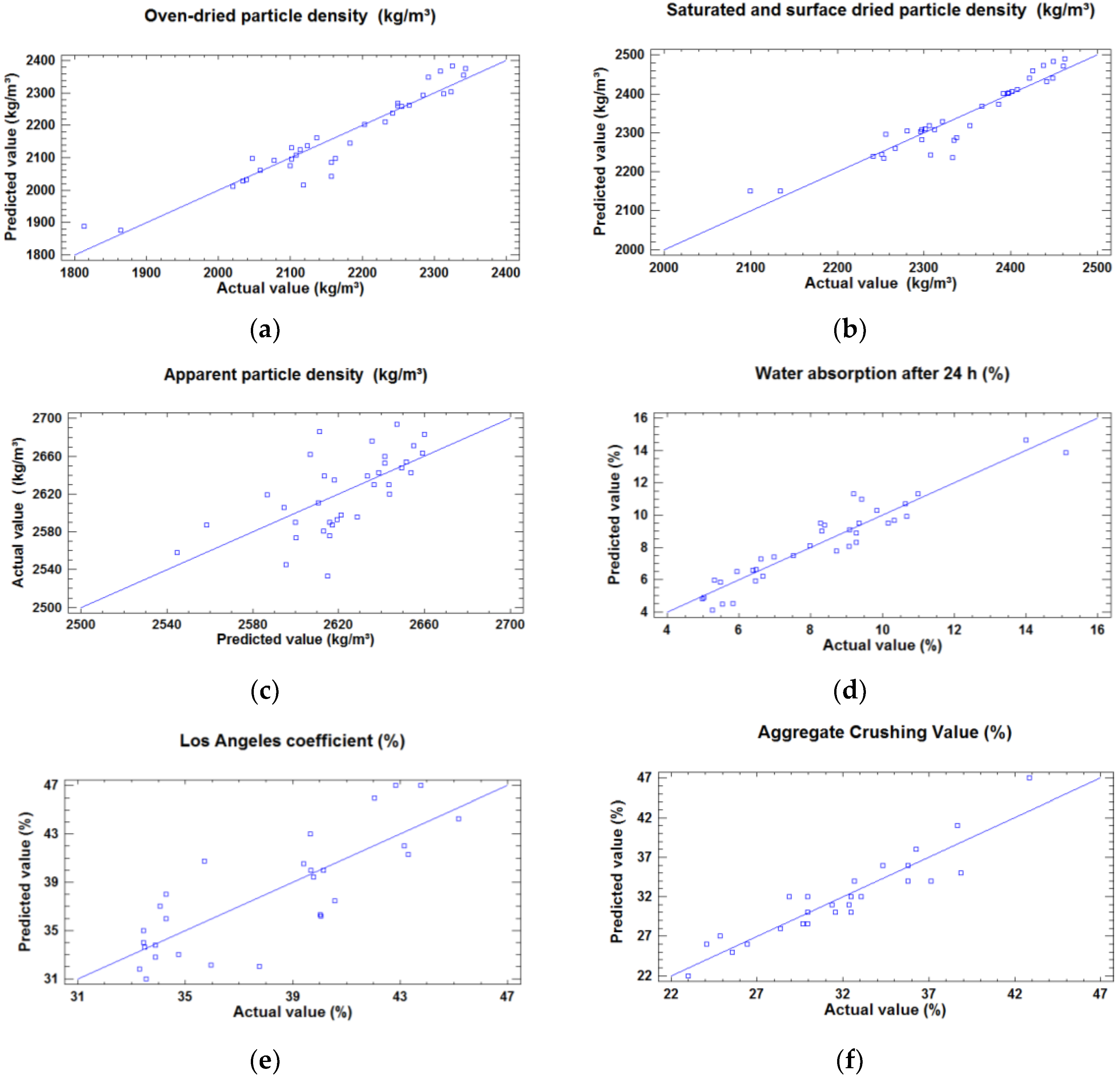
The predicted values for each physical–mechanical property had been calculated using Equations (1)–(6). A comparison of the predicted value with the corresponding actual value (the experimental value measured in a laboratory) is shown in Figure 5. The predicted values corresponding to those multiple regression models with an R2 value greater than 0.8 (drd, dSSD, WA and ACV) followed a trend similar to the experimental values, and the scatter was slight. As expected, the predictions for dap (R2 = 0.4) and LA (R2 = 0.6) showed greater scatter of data, that leads to the idea that there was not significant linear correlation (Figure 5c,e).
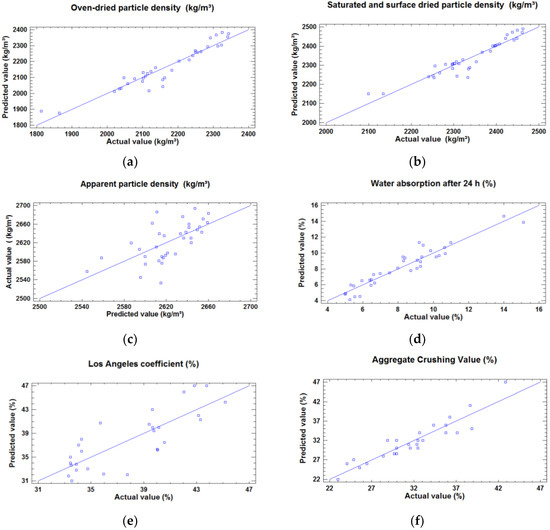
Figure 5.
Comparison of the experimental values with the predicted values using the multiple linear regression: (a) oven-dried particle density, drd; (b) saturated and surface dried particle density, dSSD; (c) apparent particle density, da; (d) water absorption after 24 h, WA; (e) Los Angeles coefficient, LA; and (f) Aggregate Crushing Value, ACV.
In this study, the forecast accuracy of the multiple linear regression models was measured with root-mean-squared error (RMSE), mean error (BIAS) and mean absolute percentage error (MAPE) (Equations (7)–(9)).
At and Ft denote the actual and forecast values at data point t, respectively [42].
The performance of each multiple linear regression model, reflected by RMSE and MAPE, are shown in Table 3. In this table, it is possible to observe that even though the values of R2 for dap and LA were low, the predictions provided by each multiple linear regression had an excellent accuracy, with MAPE values between 0.9% and 8.6%. Despite the fact that R2 was lower than 0.8 for LA and da regressions, low MAPE values are interpreted as good accuracy even for these cases [43]. Overall, it has been shown that the above multiple linear regressions are capable of predicting the physical–mechanical properties of RA satisfactorily from their main constituents.
4. Conclusions
This study proposes a novel composition test that differentiates between masonry mortar and concrete particles and evaluates the substantial differences between the physical–mechanical properties of both constituents and between the main RA constituents. Taking this into consideration, multiple linear regression models were carried out to obtain a correlation between the physical–mechanical properties of RA and the main RA constituents. Based on this study, the most important conclusions obtained are as follows:
- Concrete and masonry mortar particles show statistically significant differences in each of the six physical–mechanical properties studied (dry density, saturated and surface dried density, apparent density, water absorption, Los Angeles coefficient and Aggregate Crushing Value).
- Masonry mortar presented lower densities, higher water absorption and worse mechanical properties than concrete and ceramic particles. Therefore, the differentiation between concrete and masonry mortar particles are highly recommended for better characterization of RA, which is not taken into consideration in the actual RA composition Standard (UNE-EN 933-11:2009), used by most researchers to classify RA from CDW.
- The proportions of the main RA constituents (unbound natural aggregates, ceramic particles, concrete and masonry mortar) have a strong dependence on the six physical–mechanical properties studied.
- The dry density, saturated and surface dried density, water absorption, and aggregate crushing value of RA can be predicted from their main constituents using multiple linear regression models with a coefficient of determination greater than 0.8.
Although the apparent density and Los Angeles coefficient of determination were measured at values between 0.4 and 0.8 for these multiple linear regressions, the low MAPE value obtained demonstrates good accuracy in predicting the value of these properties.
Author Contributions
Conceptualization, J.R.J.; methodology, J.R.J. and L.S.-M.; formal analysis and investigation, A.L.-U., E.F.-L. and D.S.-M.; resources, J.R.J.; data curation, A.L.-U. and L.S.-M.; writing—original draft preparation, A.L.-U., E.F.-L. and D.S.-M.; writing—review and editing, J.R.J. and L.S.-M.; supervision, J.R.J.; funding acquisition, J.R.J. All authors have read and agreed to the published version of the manuscript.
Funding
Ministry of Science and Innovation of the Government of Spain (Ministerio de Ciencia e Innovación del Gobierno de España) through the PRECAST-CO2 research project (Ref. PID2019-111029RB-I00).
Data Availability Statement
Not available.
Acknowledgments
The authors thank Pilar Muñoz-Moreno for her collaboration in the data analysis. D. Suescum-Morales also acknowledges funding from Ministerio de Educación, Cultura y Deporte. Spain FPU 17/04329.
Conflicts of Interest
The authors declare no conflict of interest.
Acronyms
| RA | Recycled Aggregate |
| CDW | Construction Demolition Waste |
| EU | European Union |
| RCA | Recycled Concrete Aggregate |
| MRA | Mixed Recycles Aggregate |
| CRA | Concrete Recycled Aggregate |
| CerRA | Ceramic Recycled Aggregate |
| WA | Water Absorption |
| LA | Los Angeles test |
| CNA | Crushed Natural Aggregate |
| drd | Density oven-dried particle density |
| dSSD | Saturated and surface dried particle density |
| da | Apparent particle density |
| ACV | Aggregate Crushing Value |
| SD | Standard Deviation |
| Rc | Concrete particles |
| Ru | Unbound aggregate |
| Ra | Asphalt particles |
| Rb | Ceramic particles |
| Rc1 | Concrete |
| Rc2 | Masonry mortar |
| Xg | Gypsum particles |
| X | Impurities such as wood, glass, plastics, metals… |
| FL | Floating particles |
| LSD | Least Significant Difference |
References
- Persistence Market Research (PMR). Global Market Study on Construction Aggregates: Crushed Stone Product Type Segment Projected to Register High Value and Volume CAGR during 2017–2025; PMR: New York, NY, USA, 2017; p. 235. [Google Scholar]
- Yeheyis, M.; Hewage, K.; Alam, M.S.; Eskicioglu, C.; Sadiq, R. An overview of construction and demolition waste management in Canada: A lifecycle analysis approach to sustainability. Clean Technol. Environ. Policy 2013, 15, 81–91. [Google Scholar] [CrossRef]
- Directive, E.C. 98/EC of the European Parliament and of the Council, on waste and repealing certain Directives. Off. J. Eur. Union 2008, 312, 3–30. [Google Scholar]
- Tam, V.W.Y.; Soomro, M.; Evangelista, A.C.J. A review of recycled aggregate in concrete applications (2000–2017). Constr. Build. Mater. 2018, 172, 272–292. [Google Scholar] [CrossRef]
- Saez, P.V.; del Río Merino, M.; Porras Amores, C.; de San Antonio Gonzalez, A. European legislation and implementation measures in the management of construction and demolition waste. Open Constr. Build. Technol. J. 2011, 5, 156–161. [Google Scholar] [CrossRef] [Green Version]
- European Union. Waste Statistics, Eurostat, 2018. 2020, pp. 1–12. Available online: https://ec.europa.eu/eurostat/statistics-explained/index.php/Municipal_waste_statistics (accessed on 17 October 2021).
- Service, B.I. Final Report; Task 2: Service Contract on Management of Construction and Demolition Waste; Office des Publications de l’Union Européenne: Luxembourg, 2011; Available online: https://op.europa.eu/en/publication-detail/-/publication/0c9ecefc-d07a-492e-a7e1-6d355b16dde4 (accessed on 29 November 2021).
- Phutthimethakul, L.; Kumpueng, P.; Supakata, N. Use of flue gas desulfurization gypsum, construction and demolition waste, and oil palm waste trunks to produce concrete bricks. Crystals 2020, 10, 709. [Google Scholar] [CrossRef]
- Makul, N.; Fediuk, R.; Amran, M.; Zeyad, A.M.; Klyuev, S.; Chulkova, I.; Azevedo, A. Design Strategy for Recycled Aggregate Concrete: A Review of Status and Future Perspectives. Crystals 2021, 11, 695. [Google Scholar] [CrossRef]
- Barbudo, A.; Ayuso, J.; Lozano, A.; Cabrera, M.; López-Uceda, A. Recommendations for the management of construction and demolition waste in treatment plants. Environ. Sci. Pollut. Res. 2020, 27, 125–132. [Google Scholar] [CrossRef] [PubMed] [Green Version]
- Jiménez, J.R. Recycled aggregates (RAs) for roads. In Handbook of Recycled Concrete and Demolition Waste; Woodhead Publishing: Sawston, UK, 2013; pp. 351–377. [Google Scholar] [CrossRef]
- Barbudo, A.; Jiménez, J.R.; Ayuso, J.; Galvín, A.P.; Agrela, F. Catalogue of Pavements with Recycled Aggregates from Construction and Demolition Waste. Proceedings 2018, 2, 1282. [Google Scholar] [CrossRef] [Green Version]
- Rilem, T.C. 121-DRG. Specifications for concrete with recycled aggregates. Mater. Struct. 1994, 27, 557–559. [Google Scholar]
- Agrela, F.; Sánchez De Juan, M.; Ayuso, J.; Geraldes, V.L.; Jiménez, J.R. Limiting properties in the characterisation of mixed recycled aggregates for use in the manufacture of concrete. Constr. Build. Mater. 2011, 25, 3950–3955. [Google Scholar] [CrossRef] [Green Version]
- Asociación Española de Gestores de RCD, GEAR. Guía española de áridos Reciclados procedentes de residuos de construcción y demolición (RCD); Asociación Española de Gestores de RCD: Madrid, Spain, 2012. [Google Scholar]
- Silva, R.V.; De Brito, J.; Dhir, R.K. Properties and composition of recycled aggregates from construction and demolition waste suitable for concrete production. Constr. Build. Mater. 2014, 65, 201–217. [Google Scholar] [CrossRef]
- Shi, C.; Li, Y.; Zhang, J.; Li, W.; Chong, L.; Xie, Z. Performance enhancement of recycled concrete aggregate–A review. J. Clean. Prod. 2016, 112, 466–472. [Google Scholar] [CrossRef]
- Vengadesh Marshall Raman, J.; Ramasamy, V. Various treatment techniques involved to enhance the recycled coarse aggregate in concrete: A review. Mater. Today Proc. 2020, 45, 6356–6363. [Google Scholar] [CrossRef]
- Bravo, M.; De Brito, J.; Pontes, J.; Evangelista, L. Durability performance of concrete with recycled aggregates from construction and demolition waste plants. Constr. Build. Mater. 2015, 77, 357–369. [Google Scholar] [CrossRef]
- Makul, N.; Fediuk, R.; Amran, M.; Zeyad, A.M.; Murali, G.; Vatin, N.; Vasilev, Y. Use of Recycled Concrete Aggregates in Production of Green Cement-Based Concrete Composites: A Review. Crystals 2021, 11, 232. [Google Scholar] [CrossRef]
- McNeil, K.; Kang, T.H.K. Recycled Concrete Aggregates: A Review. Int. J. Concr. Struct. Mater. 2013, 7, 61–69. [Google Scholar] [CrossRef] [Green Version]
- Bravo, M.; Santos Silva, A.; de Brito, J.; Evangelista, L. Microstructure of Concrete with Aggregates from Construction and Demolition Waste Recycling Plants. Microsc. Microanal. 2016, 22, 149–167. [Google Scholar] [CrossRef] [PubMed]
- Yan, X.; Tian, Y.; Lu, X.; Jiang, J.; Qi, L.; Zhang, M. Effect of Recycled Aggregate Carrying Sulfate Corrosion Media on Drying and Autogenous Shrinkage of Mortar. Crystals 2021, 11, 1211. [Google Scholar] [CrossRef]
- Poon, C.S.; Shui, Z.H.; Lam, L. Effect of microstructure of ITZ on compressive strength of concrete prepared with recycled aggregates. Constr. Build. Mater. 2004, 18, 461–468. [Google Scholar] [CrossRef]
- Feng, C.; Cui, B.; Ge, H.; Huang, Y.; Zhang, W.; Zhu, J. Reinforcement of Recycled Aggregate by Microbial-Induced Mineralization and Deposition of Calcium Carbonate—Influencing Factors, Mechanism and Effect of Reinforcement. Crystals 2021, 11, 887. [Google Scholar] [CrossRef]
- Abdulla, N.A. Effect of recycled coarse aggregate type on concrete. J. Mater. Civ. Eng. 2015, 27, 4014273. [Google Scholar] [CrossRef]
- Sánchez de Juan, M.S.; Gutiérrez, P.A. Study on the influence of attached mortar content on the properties of recycled concrete aggregate. Constr. Build. Mater. 2009, 23, 872–877. [Google Scholar] [CrossRef]
- Silva, R.V.; De Brito, J.; Dhir, R.K. Performance of cementitious renderings and masonry mortars containing recycled aggregates from construction and demolition wastes. Constr. Build. Mater. 2016, 105, 400–415. [Google Scholar] [CrossRef]
- Verian, K.P.; Ashraf, W.; Cao, Y. Properties of recycled concrete aggregate and their influence in new concrete production. Resour. Conserv. Recycl. 2018, 133, 30–49. [Google Scholar] [CrossRef]
- Martín-Morales, M.; Zamorano, M.; Ruiz-Moyano, A.; Valverde-Espinosa, I. Characterization of recycled aggregates construction and demolition waste for concrete production following the Spanish Structural Concrete Code EHE-08. Constr. Build. Mater. 2011, 25, 742–748. [Google Scholar] [CrossRef]
- Poon, C.S.; Chan, D. Feasible use of recycled concrete aggregates and crushed clay brick as unbound road sub-base. Constr. Build. Mater. 2006, 20, 578–585. [Google Scholar] [CrossRef]
- Liu, G.; Jin, X.; Rose, A.; Cui, Y.; Glover, C.J. Application of density gradient column to flexible pavement materials: Aggregate characteristics and asphalt absorption. Constr. Build. Mater. 2014, 72, 182–188. [Google Scholar] [CrossRef]
- Artoni, R.; Cazacliu, B.; Hamard, E.; Cothenet, A.; Parhanos, R.S. Resistance to fragmentation of recycled concrete aggregates. Mater. Struct. 2017, 50, 11. [Google Scholar] [CrossRef] [Green Version]
- Kapoor, K.; Bohroo, A.U.R. Study on the influence of attached mortar content on the properties of recycled concrete aggregate. Sustain. Eng. 2019, 337–347. [Google Scholar] [CrossRef]
- Etxeberria, M.; Marí, A.R.; Vázquez, E. Recycled aggregate concrete as structural material. Mater. Struct. Constr. 2007, 40, 529–541. [Google Scholar] [CrossRef]
- Yang, J.; Du, Q.; Bao, Y. Concrete with recycled concrete aggregate and crushed clay bricks. Constr. Build. Mater. 2011, 25, 1935–1945. [Google Scholar] [CrossRef]
- Diagne, M.; Tinjum, J.M.; Nokkaew, K. The effects of recycled clay brick content on the engineering properties, weathering durability, and resilient modulus of recycled concrete aggregate. Transp. Geotech. 2015, 3, 15–23. [Google Scholar] [CrossRef]
- Vegas, I.; Ibañez, J.A.; Lisbona, A.; Sáez De Cortazar, A.; Frías, M. Pre-normative research on the use of mixed recycled aggregates in unbound road sections. Constr. Build. Mater. 2011, 25, 2674–2682. [Google Scholar] [CrossRef]
- Nagataki, S.; Gokce, A.; Saeki, T.; Hisada, M. Assessment of recycling process induced damage sensitivity of recycled concrete aggregates. Cem. Concr. Res. 2004, 34, 965–971. [Google Scholar] [CrossRef]
- Dhir, R.K.; de Brito, J.; Silva, R.V.; Lye, C.Q. Sustainable Construction Materials: Recycled Aggregates; Woodhead Publishing: Sawston, UK, 2019. [Google Scholar]
- Chicco, D.; Warrens, M.J.; Jurman, G. The coefficient of determination R-squared is more informative than SMAPE, MAE, MAPE, MSE and RMSE in regression analysis evaluation. PeerJ Comput. Sci. 2021, 7, e623. [Google Scholar] [CrossRef]
- Kim, S.; Kim, H. A new metric of absolute percentage error for intermittent demand forecasts. Int. J. Forecast. 2016, 32, 669–679. [Google Scholar] [CrossRef]
- Ostertagová, E. Modelling using polynomial regression. Procedia Eng. 2012, 48, 500–506. [Google Scholar] [CrossRef] [Green Version]
Publisher’s Note: MDPI stays neutral with regard to jurisdictional claims in published maps and institutional affiliations. |
© 2021 by the authors. Licensee MDPI, Basel, Switzerland. This article is an open access article distributed under the terms and conditions of the Creative Commons Attribution (CC BY) license (https://creativecommons.org/licenses/by/4.0/).