Article

Sorption Mechanisms and Behavior of Benzene Series Compounds by Microplastics in Aqueous Solution


State Key Laboratory of Chemical Safety, SINOPEC Research Institute of Safety Engineering Co., Ltd., Qingdao 266071, China
*
Authors to whom correspondence should be addressed.
Polymers 2026, 18(4), 526; https://doi.org/10.3390/polym18040526
Submission received: 14 January 2026 / Revised: 9 February 2026 / Accepted: 20 February 2026 / Published: 21 February 2026

Abstract

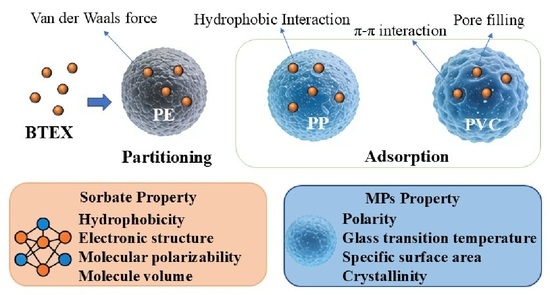
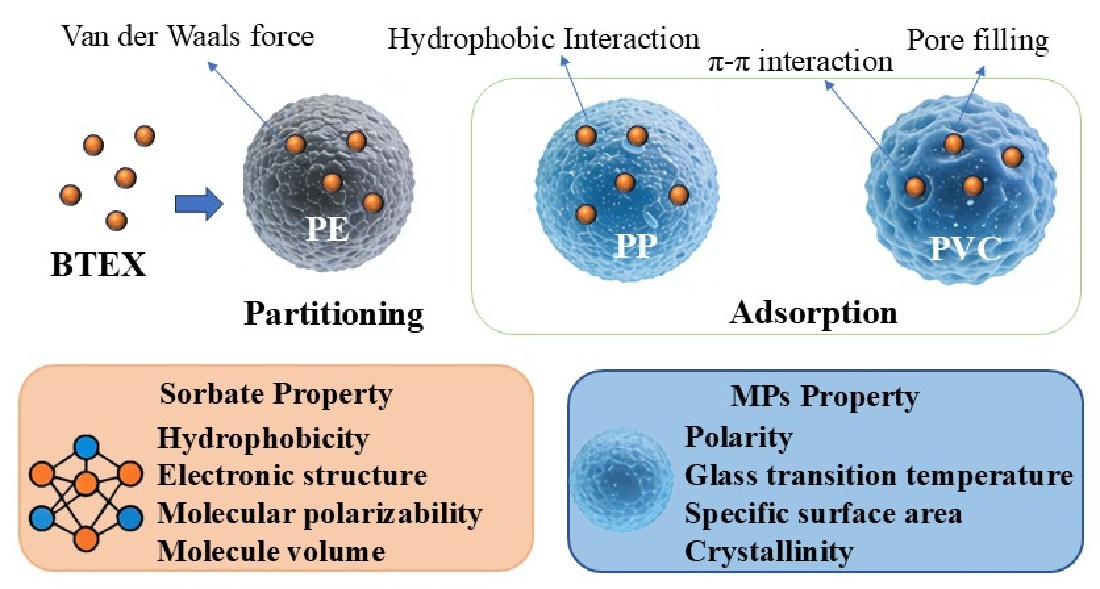
Owing to their small size and surface hydrophobicity, microplastics (MPs) tend to act as vectors for various organic pollutants. However, in contrast to well-studied pollutants like polycyclic aromatic hydrocarbons, the sorption of benzene-series compounds on MPs has been seldom studied. To investigate the sorption process, the isotherms were determined for the sorption of three benzene-series sorbates by three polymers with different physicochemical properties. The linear sorption isotherms observed for PE indicate that sorbate uptake was dominated by partitioning into the bulk polymer. In contrast, the non-linear isotherms of PP and PVC imply that adsorption onto surfaces was the dominant mechanism. Sorption capacity of m-xylene and ethylbenzene increased in the following order: polyvinyl chloride (PVC) < polyethylene (PE) < polypropylene (PP). This order does not reflect the polarity or the crystallinity of the investigated MPs, suggesting the influence of additional factors (e.g., glass transition temperature, specific surface area) on the sorption of BTEX by MPs. In addition, the particle size and morphology of MPs are also factors affecting sorption capacity. The strong correlation between the sorption coefficients and sorbate hydrophobicity indicates that the hydrophobic interactions played a crucial role. Meanwhile, specific sorbate properties, such as electronic structure and molecular polarizability, are also significant factors that affect the sorption behaviors.

Graphical Abstract

1. Introduction

Over recent years, the rapid growth in production and applications of plastics has resulted in the worldwide spread of plastic debris [1,2]. The presence of plastic debris has been reported in multiple environments, including aquatic systems [3,4], sediments [5,6], terrestrial ecosystems [7,8], and even in animal or human tissues [9,10]. By diameter, plastic debris can be defined as microplastics (MPs, 1–5000 μm) [11] and nanoplastics (NPs, lower than 0.1 μm) [12]. MPs have become an issue of increasing concern due to their adverse impact on themselves and “indirect” effect as carriers of other organic pollutants [13,14,15]. It has been reported that MPs enhance the mobility of sorbed organic compounds in the environment [16,17], which in turn may amplify the environmental risk of these co-existing pollutants. Conversely, some researchers argue that the strong sorption capacity of MPs can reduce the dissolved concentration of organic chemicals [18]. Thus, it is imperative to understand the sorption behavior of organic compounds towards MPs, for the possible sorption mechanisms are prerequisite for accurate risk assessment [19].
Due to their large surface area and high hydrophobicity, MPs exhibit a strong sorption capacity for a wide range of organic pollutants such as polycyclic aromatic hydrocarbons (PAHs), polychlorinated biphenyls (PCBs), petroleum hydrocarbons, and phenanthrene, through mechanisms including hydrophobic partitioning, pore-filling, π–π interactions, and van der Waals forces. Rochman et al. [20] compared the sorption of PAHs and PCBs by five types of MPs. Concentrations of PAHs and PCBs sorbed to high-density polyethylene (HDPE), low-density polyethylene (LDPE), and polypropylene (PP) were greater than concentrations sorbed to polyethylene terephthalate (PET) and polyvinyl chloride (PVC). They revealed that sorption rates and kinetics varied significantly among plastic types. Guo et al. [21] studied the sorption behaviors of hydrophobic organic compounds (HOCs) on PE with different crystallinity and found that the sorption capacity increased with a reduction in crystallinity, indicating that the mobility and abundance of rubbery domains play a crucial role in the sorption behavior of MPs. Velzeboer et al. [22] reported that the sorption capacity of polychlorinated biphenyls PCBs on polystyrene (PS) was much higher than on PE, due to the stronger aromaticity, higher surface area, and higher volume ratio of PS. In addition, the structure of the surface layer also affects the sorption between MPs and organic compounds. Natalia Shevchenko [23] investigated the sorption capacity for rhodamine B of pristine and N, N, N′-dimethylformamide (DMF)-modified PS. The sorption capacity of DMF-modified PS increased significantly, attributed to its large specific surface area, additional micro/mesopores, and hydrophobicity. Guo et al. [24] observed that the sorption capacity of tylosin on the MPs increased in the order of PE < PP < PS < PVC, demonstrating that electrostatic interaction, surface complexation, and hydrophobic interaction were the dominant mechanisms governing the sorption process. Hu et al. [25] studied the sorption behavior of 17β-estradiol on PS, PE, and PVC. The sorption capacity of aged MPs was stronger than that of pristine MPs, which was attributed to the hydrogen bonding. In summary, the physicochemical properties of both MPs and organic compounds have been established as key factors for the sorption process. Previous studies have primarily focused on the interaction between MPs and persistent organic pollutants. Benzene-series compounds, such as ethylbenzene and styrene, also exert toxic effects on organisms, human health, and ecosystems [26]. However, few studies have been conducted on the sorption behavior of benzene-series compounds by MPs.
The petrochemical industry was recognized as a possible contributor to environmental MPs. According to Deng [27], 1.44 quadrillion MPs were estimated to be released globally in 2021 by the petrochemical industry. Among the 25 types of MPs detected, PP, PE, and silicone resin were identified as the predominant polymers. Benzene-series compounds (benzene, toluene, ethylbenzene, and xylene) are characteristic pollutants of the petrochemical industry. Among them, ethylbenzene, m-xylene, and styrene have been frequently detected at levels exceeding environmental standards in monitoring studies. With ethyl, methyl, and vinyl substituents, respectively, these compounds offer diverse substitution patterns. Thus, they were selected as target adsorbates in this study to systematically investigate the contributions of hydrophobicity, steric hindrance, and π–π interactions. The aim of this study was therefore to investigate the underlying sorption mechanisms between MPs and benzene-series compounds. Sorption experiments were performed with MP sorbents (PE, PP, and PVC) and BTEX sorbates (ethylbenzene, m-xylene, and styrene). These compounds were selected mainly based on their physicochemical properties and widespread environmental occurrence.

2. Materials and Methods

2.1. Materials

PE, PP, and PVC were purchased as powders from Dongguan Ruixiang Plastic Co., Ltd. (Dongguan, China). The particle size of MPs ranged from 0.02 to 4 mm. Ethylbenzene, m-xylene, and styrene were obtained from Sinopharm Chemical Reagent Co., Ltd. (Shanghai, China), analytical reagents. Physicochemical properties of the above sorbates are listed in Table 1.

2.2. Sorbent Characterization

Scanning electron microscopy (SEM) (Zeiss GeminiSEM 360, Jena, Germany) was applied to observe MPs’ surface morphology at an accelerating voltage of 2.00 kV. The specific surface area analysis was performed using a surface area analyzer (Micromeritics ASAP2460, Norcross, GA, USA). Prior to analysis, 0.1 g of the MPs was dried under vacuum at 60 °C for 12 h. N2 adsorption–desorption isotherms were measured at 77 K. The specific surface area, pore volume, and pore size were calculated by applying the Brunauer–Emmett–Teller (BET) method. The surface functional groups of the MPs were analyzed by Fourier transform infrared (FTIR) spectroscopy (Bruker Vertex 70, Ettlingen, Germany). The dried samples were analyzed directly in the spectral range of 4000–600 cm−1. The crystallinity was determined with X-ray diffraction (XRD) (Shimadzu XRD-6100, Kyoto, Japan). The measurements were conducted with Cu Kα radiation (λ = 1.5406 Å) at 40 kV. The experimental data were then analyzed by Jade 6.5 software (Materials Data Inc., Livermore, CA, USA). The surface wettability was measured by a contact angle goniometer (KRÜSS DSA100, Hamburg, Germany) with 3 μL droplets of water. The final values represent the average of measurements taken at three different locations. Due to the difficulty in achieving stable aqueous dispersions of the MPs samples, the zeta potential was directly measured on the solid surfaces using an electrokinetic analyzer (SurPass, Anton Paar, Graz, Austria). The point of zero charge (pHPZC) was determined by plotting the zeta potential as a function of pH.

2.3. Sorption Batch Experiments

Batch experiments were performed to investigate the sorption kinetics and sorption isotherms of the MPs. Prior to the sorption experiments, the MPs were first added to distilled water for ultrasonic bath dispersion at a frequency of 40 kHz for 10 min at room temperature. Then 10 mg of the prepared MPs was placed into 20 mL amber headspace screw vials, to which 10 mL of BTEX solution was added. The BTEX concentrations were designed as 160–180 mg/L. The vials were then immediately sealed using screw caps with butyl/PTFE septa. All vials were shaken in the dark at 150 rpm until equilibrium was reached under 20 °C. To enable the application of sorption isotherm models for mechanistic and capacity analysis, the selected concentration range was designed to cover the complete sorption profile from low coverage to near saturation. Additionally, the inclusion of higher concentrations improves analytical detection by providing measurable concentration changes, which increases data reliability. Thus, in the sorption isotherm experiments, the initial concentrations of the BTEX were set to range from 20 to 180 mg/L. To investigate the effect of particle size on BTEX sorption, PE with sizes of 20 μm, 100 μm, 1 mm, and 4 mm were selected. Sorption experiments using PE with different morphologies, namely powder, granules, fibers, and films, were conducted to evaluate the impact of physical morphology. The experiments lasted for 56 h to ensure equilibrium. To ensure reproducibility, all experiments were conducted three times. For the quantification of BTEX, n-hexane was employed as the extraction solvent. The supernatant obtained after the secondary extraction was filtered through a 0.22 μm PVDF syringe filter prior to analysis by gas chromatography (Agilent 7890A, Santa Clara, SA, USA). The sorption capacity of BTEX was calculated using Equation (1):
Q t = ( C 0 C t ) V m ,
where Q t (mg/g) is the adsorption capacity, C 0 (mg/L) and C t (mg/L) are the initial and time-dependent solution concentrations, respectively; V (L) is the solution volume; and m (g) is the number of MPs.

2.4. Sorption Models and Statistics

To evaluate the whole sorption process, the pseudo-first-order, pseudo-second-order, and the Weber-Morris intraparticle diffusion model were fit to the sorption kinetics data.
Pseudo-first-order model:
Q t = Q m 1 e K 1 t ,
Pseudo-second-order model:
Q t = K 2 Q m 2 t 1 + K 2 Q m t ,
Weber-Morris intraparticle diffusion model:
Q t = K 3 t 1 / 2 + C
where Qm (mg/g) and Qt (mg/g) are the equilibrium and time-dependent sorption capacities, respectively; K1 (h−1), K2 (g/(mg·h)) and K3 (mg·g−1) are the rate constants for the pseudo-first-order, pseudo-second-order model and intraparticle diffusion model; t (h) is the sorption time; and C (mg·g−1) is the intercept constant.
The sorption isotherms were fitted with linear model, Langmuir model, Freundlich model, and Dubinin–Radushkevich (D–R) model. The coefficient of determination (R2) was used to evaluate the quality of the curve fit.
The Henry model is defined by Equation (5):
Q e = K d × C e ,
The Langmuir model can be described by Equation (6):
Q e = Q m · K L · C e 1 + K L · C e ,
The Freundlich model can be described by Equation (7):
Q e = K F × C e 1 / n ,
The D–R model is given by Equation (8):
Q e = Q t × e x p K D R × ε 2 ,
ε = R T ln 1 + 1 / C e ,
where Qe (mg/g) is the equilibrium adsorption capacity; Kd (L/g), KL (L/mg), KF, and KDR are the equilibrium constants for Henry, Langmuir, Freundlich and D–R adsorption models, respectively; Ce (mg/L) is the equilibrium concentration of the adsorbate; Qm (mg/g) and Qt (mg/g) represent maximum adsorption capacity and theoretical maximum adsorption capacity, respectively; n is the Freundlich adsorption intensity constant, dimensionless; R (J/mol) is molar gas constant; ε is polanyi adsorption potential; T (K) is the absolute temperature.

3. Results and Discussion

3.1. Sorbent Characterization

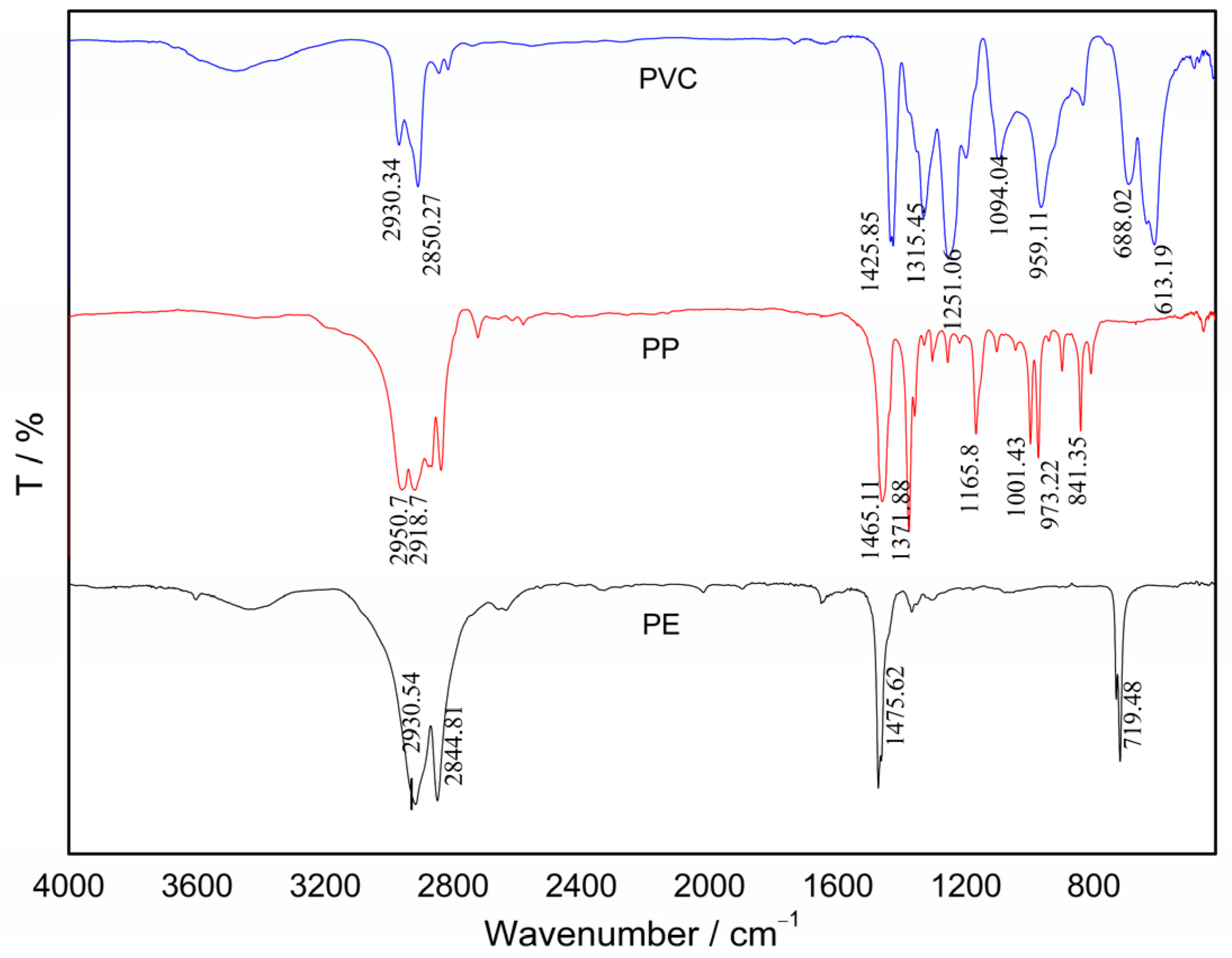
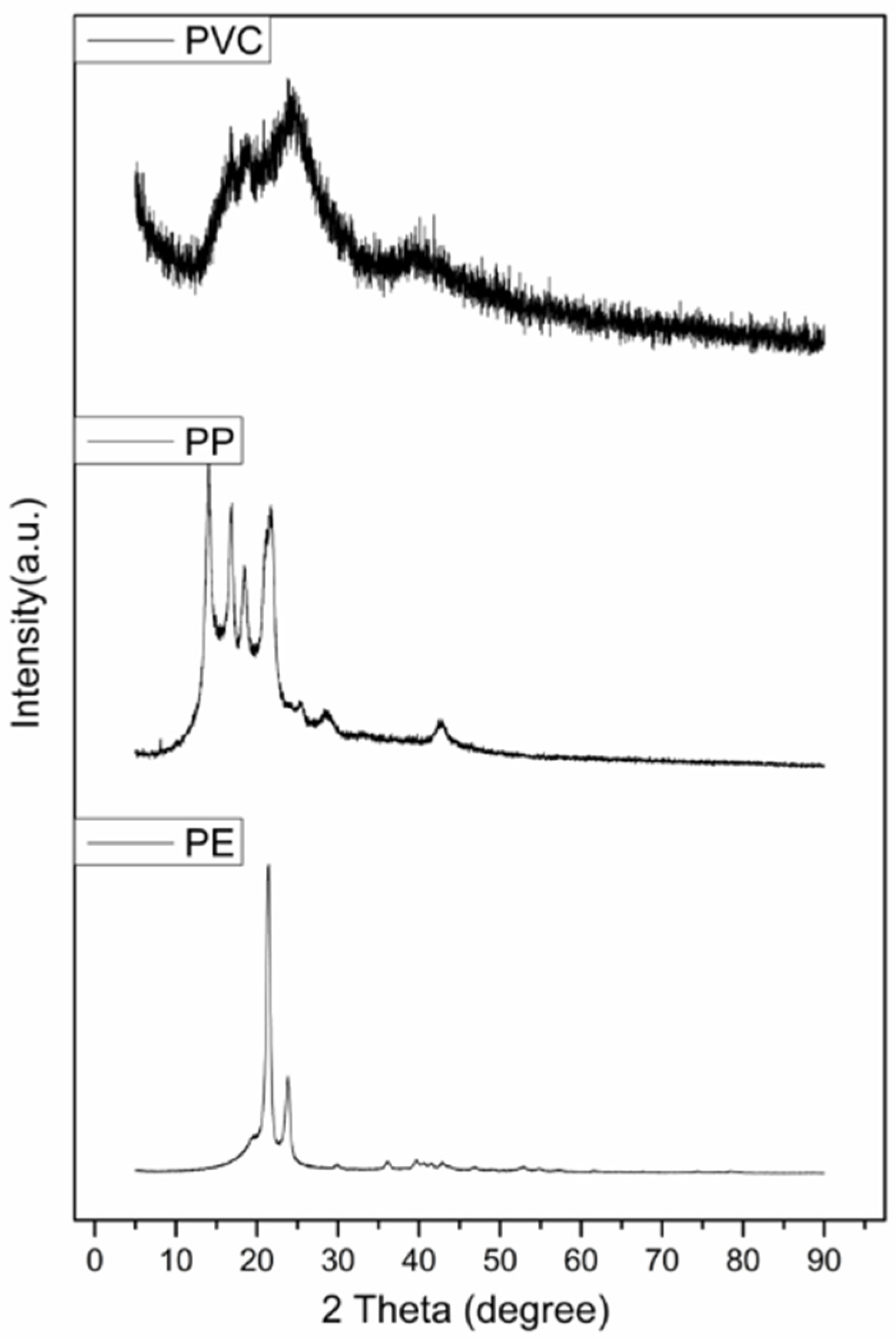
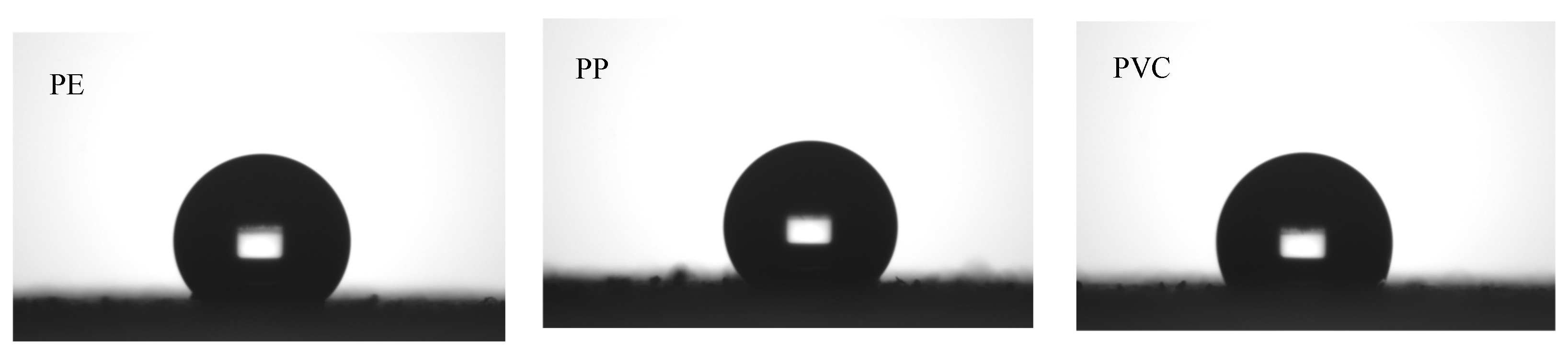
The SEM micrographs of PE, PP, and PVC are shown in Figure 1. The MPs are fragments with a particle size of approximately 100 μm. The surfaces of the MPs exhibit heterogeneous wrinkles and a number of micropores. Among them, PE and PVC demonstrate a near-spherical granular morphology with uneven, porous structures, while PP particles have an irregular fragmentary morphology with relatively smooth surfaces. According to the results of BET analysis (Figure S1), all three types of MPs exhibited relatively low specific surface areas, following the order: PP (0.567 m2/g) > PE (0.511 m2/g) > PVC (0.46 m2/g). PE and PVC possessed more developed microporous structures compared to PP. The micropore specific surface area decreased in the order of PVC (0.395 m2/g) > PE (0.358 m2/g) > PP (0.192 m2/g). The micropore volume also decreased in the same order: PVC (0.149 mm3/g) > PE (0.137 mm3/g) > PP (0.073 mm3/g). The high total BET surface area of PP is likely contributed by a substantial proportion of meso- or macropores. The FTIR spectra of MPs are depicted in Figure 2. Characteristic peaks of CH2 were observed at 2844.81 and 1475.62 cm−1 in the FTIR spectra of PE, which can be caused by the symmetric stretching and bending vibrations, respectively. For PP, the peaks at 2950 and 2865 cm−1 can be ascribed to the asymmetric and symmetric stretching of CH3, respectively. The peak at 1371 cm−1 corresponds to CH3 symmetric deformation. The overlapping stretching vibration of CH2/CH3 was observed around 2915 cm−1. The absorption peak at 2835 cm−1 can be assigned to the CH stretching vibration, while the band at 973 cm−1 can be attributed to the rocking vibration of CH3/CH groups. Characteristic peak of C–Cl stretching vibration was observed at 690~600 cm−1 in the FTIR spectra of PVC. The peaks at 2930, 2850, 1425, and 1251 cm−1 can be ascribed to the asymmetric stretching, symmetric stretching, bending vibration, and twisting vibration of CH2, respectively. The band near 1315 cm−1 can be attributed to the CH bending vibration. As shown in Figure 3, the XRD pattern of PE exhibits two sharp diffraction peaks at 21.42°and 24.08° with high intensity, demonstrating its highly crystalline nature. This can be attributed to its simple and symmetric molecular structure. With a carbon-only backbone and hydrogen side groups, the polymer chains experience minimal steric hindrance. All chains possess the same configuration, which promotes the formation of a three-dimensional ordered structure, thereby leading to a high degree of crystallinity. For PP, multiple sharp peaks can be observed at 14°, 16.7°, 18.5°, and 21.7°, which are indicative of a highly crystalline material. These diffraction peaks reveal that the polymer chains possess helical conformation, forming a highly crystalline structure dominated by the α-crystal form. In contrast, one wide diffraction peak with relatively low intensity occurs around 24° for PVC, indicating that PVC is a typical semi-crystalline polymer with a low degree of crystallinity. This may be due to the fact that the repeating unit of PVC contains a bulky and highly electronegative chlorine atom, which restricts the rotation and movement of the molecular chains. The structure hinders the regular packing of chains into an ordered lattice, resulting in a much lower crystallinity compared to PE and PP. The degree of crystallinity decreased in the order of PE (74.95) > PP (44.31) > PVC (7.76), which is consistent with Liu [28]. As shown in Figure 4, the water contact angles for PE, PP, and PVC were measured to be 134.9°, 131.8°, and 120.4°, respectively. The MPs all show strong hydrophobicity with contact angle values exceeding 90°, consistent with their non-polar nature as hydrocarbon-based polymers. Notably, PE exhibited the highest contact angle, indicating the strongest hydrophobicity. This suggests that PE may exert stronger hydrophobic interactions with hydrophobic BTEX. In contrast, the relatively lower contact angle of PVC may be attributed to the slight polarity introduced by chlorine atoms along its polymer chains. As shown in Figure S2, the zeta potentials of the MPs gradually decreased with increasing pH. Their pHPZC were determined to be 1.93, 1.24, and 0.54 for PE, PP, and PVC, respectively. These three MPs exhibit a net negative surface charge under typical natural aquatic conditions. This trend in pHPZC values can be attributed to the intrinsic chemical nature of the polymers. As non-polar hydrocarbon polymers with minimal surface functional groups, PE and PP exhibit relatively higher pHPZC values. For PVC, the chlorine atoms in PVC may introduce slight polarity and enhance the acidity of its surface groups, resulting in a lower pHPZC value. Selected properties of the three MPs are listed in Table 2. The surface morphologies of PE, PP, and PVC after BTEX sorption were further characterized by SEM (Figure S7), and no significant structural or morphological changes were observed on the MP surfaces.

3.2. Sorption Kinetics

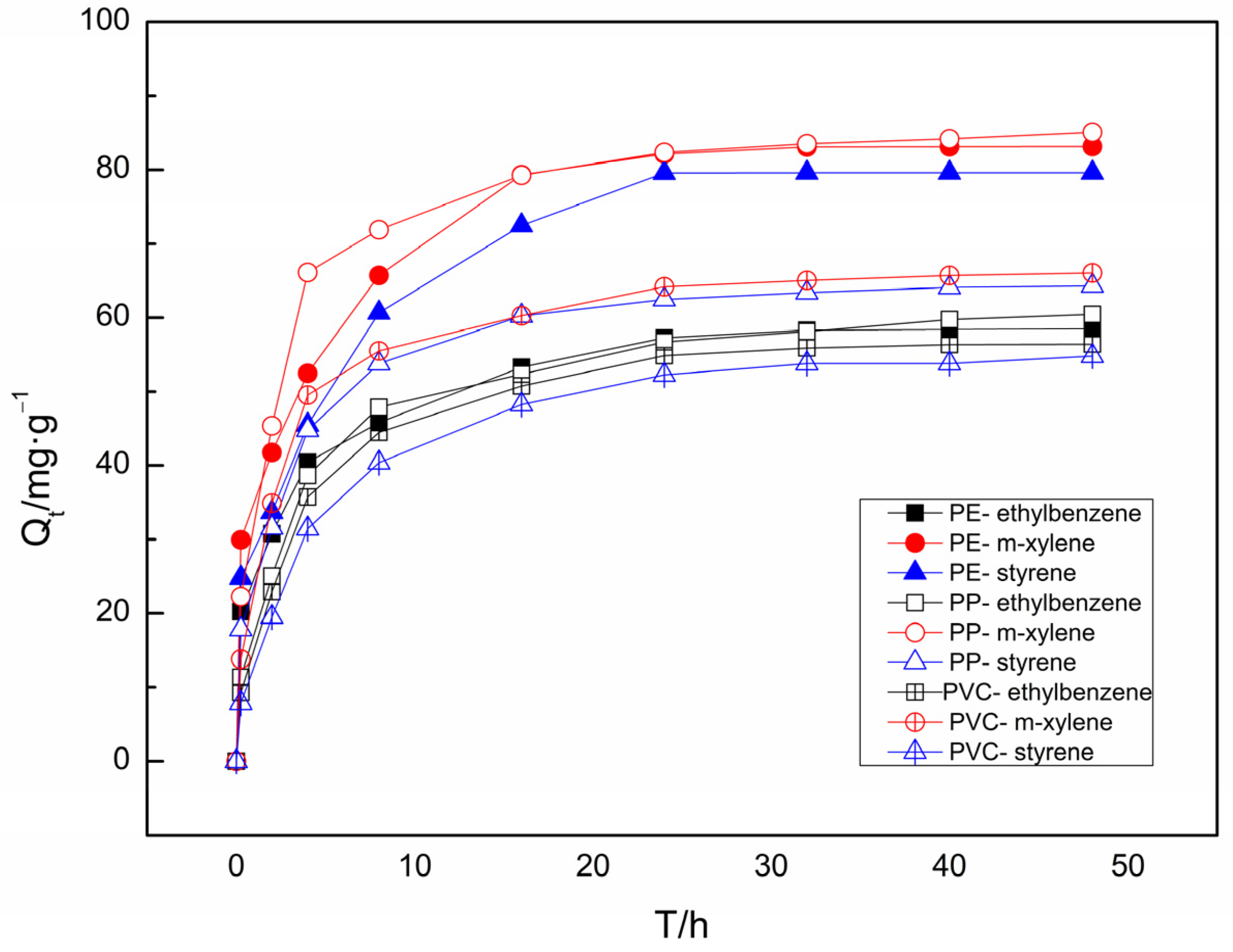
Figure 5 shows the sorption kinetics of the sorbates on the three types of MPs. The sorption capacity increased rapidly within the initial 10 h and then gradually approached equilibrium, which was attained at approximately 24 h for PE, and 32 h for PP and PVC. To analyze the sorption kinetics of the adsorption process, the pseudo-first-order model and pseudo-second-order model were used to fit the experimental data, and the relevant parameters are listed in Table 3. From the perspective of the correlation coefficient values (R2, 0.85–0.99), both models are well fitted. However, R12 obtained from the pseudo-first-order model is relatively low. The maximum amount values (Qm2) calculated by the pseudo-second-order model align more closely with the experimentally obtained values. This indicates that the overall sorption process is well described empirically by pseudo-second-order kinetics [29,30].
To further discern the rate-influencing steps, the data were analyzed using the Weber-Morris intraparticle diffusion model. The resulting plots revealed multi-stage linear regions (Figure S3), suggesting that sorption involved both boundary-layer diffusion and intra-particle diffusion. From Table 3, the intra-particle diffusion rate constants (K3) varied notably among the MPs, with values consistently higher for PE and PP compared to PVC. This observed trend aligns directly with the differences in their glass transition temperatures (Tg). At room temperature, PE and PP possess amorphous regions that are in a rubbery state, as their Tg is below room temperature. The high chain mobility within the rubbery amorphous regions of PE and PP facilitates the diffusion of BTEX molecules. In contrast, PVC is predominantly amorphous and in a glassy state, with its Tg above room temperature. The tightly packed and rigid chains in the glassy amorphous regions of PVC result in slower diffusion of BTEX molecules. Thus, the polymer chain mobility, governed by Tg, is a key factor modulating the sorption kinetics of BTEX onto these MPs. To ensure the reliability of the experimental results, the adsorption equilibrium time was set at 48 h.

3.3. Sorption Isotherm Fit

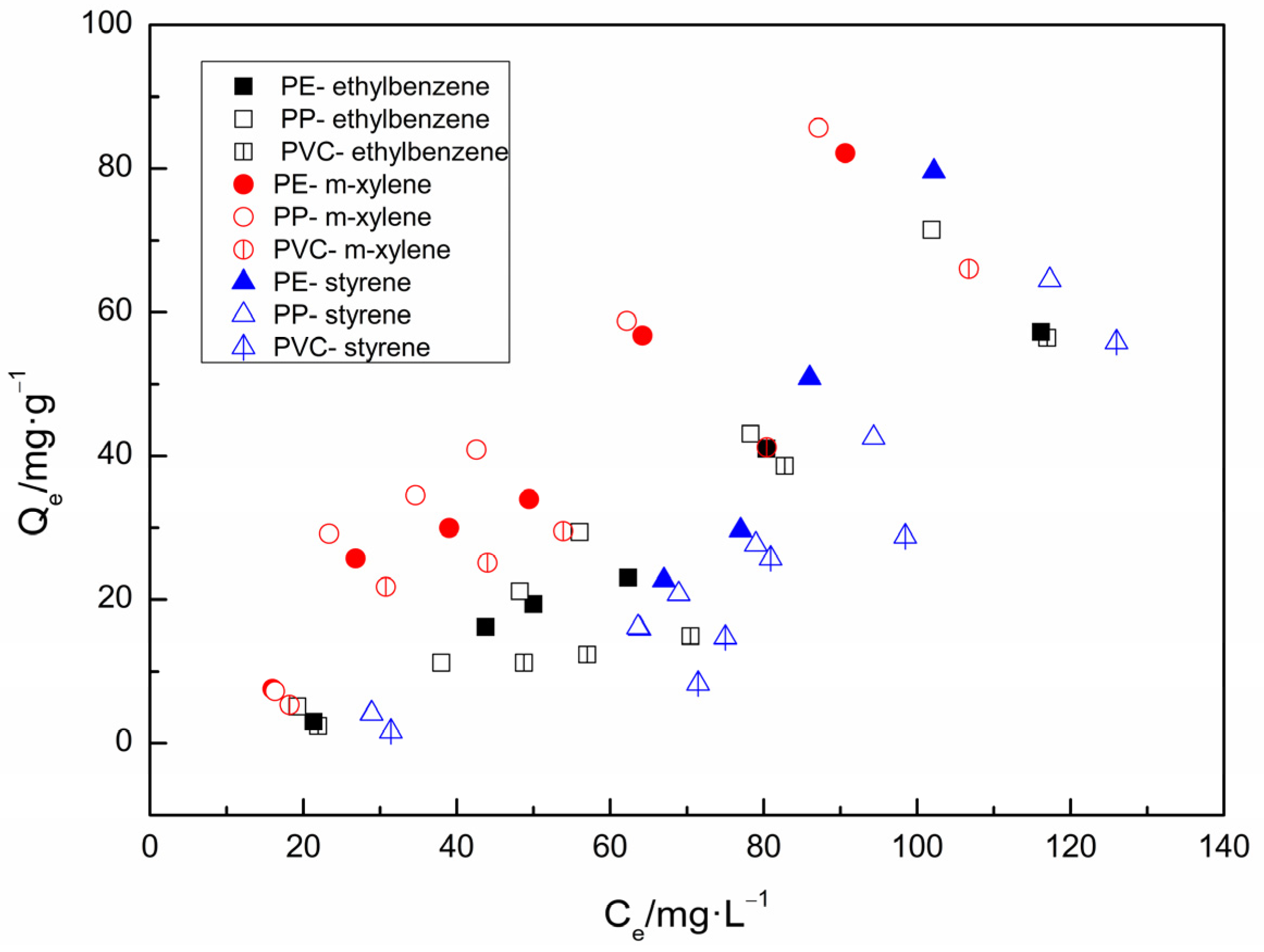
Isotherms for the sorption of BTEX by MPs are shown in Figure 6. The Henry, Langmuir, Freundlich, and D–R isotherm models were applied to demonstrate the interactions between BTEX and MPs, with the results presented in Figure S4. The corresponding fitting parameters are summarized in Table 4 and Table S1. The selection of the optimal isotherm model was comprehensively evaluated based on the coefficient of determination (R2), Akaike Information Criterion (AIC), and Bayesian Information Criterion (BIC). The results showed that the sorption behavior of BTEX on different MPs followed distinct isotherm models.
For PE, the sorption of BTEX was best described by the Henry model, which exhibited the smallest AIC and BIC values, along with the highest R2 values in most cases. This indicates that the sorption process was dominated by a linear partitioning mechanism, where BTEX molecules partitioned into the rubbery, amorphous regions of PE, rather than by adsorption onto the polymer surfaces [28,31]. This can be attributed to the nonpolar nature and rubbery state of PE at the experimental temperature (20 °C). PE, which possesses high segmental mobility and considerable free volume within the bulk polymer [32]. Such structural characteristics favor the hydrophobic partitioning of aromatic compounds into the polymer matrix via van der Waals interactions.
For PP and PVC, the Freundlich model provided the best fit, as evidenced by the lowest AIC/BIC values and highest R2 values across most BTEX compounds. This suggests a heterogeneous distribution of sorption energies of PP and PVC, and that no saturation-limited monolayer adsorption was formed on the adsorbent surfaces [18]. The nonlinear sorption isotherms further indicate that other mechanisms also played significant roles in the sorption process in addition to hydrophobic interaction. Numerous studies have demonstrated that pore filling is one of the sorption mechanisms [33,34]. It has been proposed that enhanced cohesive forces in condensed PVC polymer segments facilitate additional hole-filling mechanisms. Thus, sorbate molecules can engage in adsorption-like interactions with the sorbent surface [18,35,36]. As pore filling is a solid-surface adsorption process, the corresponding sorption isotherms are typically nonlinear, which is consistent with the findings of this study. The D–R model fitting results (R2DR > 0.76) further confirm the involvement of micropore filling in the adsorption process. However, since R2DR was lower than R2F, micropore filling is not the dominant mechanism. Therefore, in the sorption of BTEX onto PP and PVC, hydrophobic interaction may be the dominant mechanism, with a contribution from pore filling.
The concentrations employed in this study were higher than typical environmental BTEX levels. For PE, sorption exhibited a strong linear relationship across the tested range, indicative of a partition-dominated process. This linearity suggests that the distribution coefficient (Kd) derived herein can be applied to reasonably estimate sorption behavior at lower, environmentally relevant concentrations. For PP and PVC, the sorption data were better described by nonlinear isotherm models. This nonlinearity implies more complex interactions, such as heterogeneous surface adsorption, which may be concentration-dependent. Consequently, the parameters obtained from this high-concentration range cannot be directly used to predict sorption at environmental concentrations with accuracy. Nevertheless, these parameters can effectively reveal the relative sorption capacities and potential sorption mechanisms of different MPs materials for BTEX. Future studies at µg/L to low mg/L levels are needed to accurately quantify sorption under environmentally relevant conditions.

3.4. Influence of Sorbent Properties on Sorption

In summary, the sorption isotherms of PE were well described by the linear Henry model, which may indicate that the sorption process was dominated by a partition mechanism. In contrast, the sorption isotherms of PP and PVC were better fitted by the nonlinear Freundlich model, suggesting that not only hydrophobic interaction but also micropore filling played a synergistic role. When the particle size of MPs was 100 μm, the equilibrium sorption capacities for m-xylene and ethylbenzene followed the order of PVC < PE < PP, while for styrene, the order was PVC < PP < PE. The differences can likely be attributed to the variations in the physicochemical properties and polymer structures of the MPs.
Due to the regular, symmetrical molecular structure, PE is considered to be non-polar. Compared with PE, PP was slightly more polar, and PVC was strongly polar because of its substitution of one hydrogen atom with a methyl group and a chlorine atom, respectively. Since nonpolar polymers generally exhibit stronger affinity for hydrophobic organic compounds via van der Waals interactions [37], PE with high crystallinity was theoretically predicted to exhibit the highest sorption capacity for BTEX [28]. Indeed, the sorption capacity for styrene across all three MPs showed a positive correlation with material crystallinity.
However, for the other BTEX compounds, the sorption capacity of PE was lower than that of PP. This apparent discrepancy arises from their fundamentally different sorption mechanisms. For PE, sorption is dominated by partition into the polymer matrix, meaning the sorption capacity is governed by its intrinsic polymer properties rather than porous structure. The lower sorption capacity may be attributed to the limited molecular accessibility of ethylbenzene and m-xylene. In contrast, for PP and PVC, surface adsorption is the predominant mechanism. The overall sorption capacity ranking (PP > PVC) aligned with the order of both crystallinity and total specific surface area, but not with micropore characteristics. This indicates that micropore filling was not the dominant mechanism in this system. This suggests that for these polymers, the intrinsic polymer properties (e.g., crystallinity, polarity) exert a more fundamental influence on BTEX sorption than does the porous structure. The sorption differences may be ascribed to the larger specific surface area of PP. This larger area not only provides more sorption sites for BTEX [31], but also affords greater exposure to the aqueous solution, thus facilitating the mass transfer process of BTEX. Furthermore, polymer chain mobility, inferred from the glass transition temperature (Tg/°C), was considered to be another important factor that affects the sorption behavior of MPs [38]. The sorption of styrene on MPs increased with their Tg reduction in this study. This may be because both PE and PP could be viewed as rubbery polymer at room temperature, whereas PVC was recognized as glassy polymer. The high flexibility of PE and PP polymer chains may enhance the sorption affinity for BTEX, as their high mobility could improve the accessibility to sorption sites [39]. In comparison, the compact structure of PVC polymer chains results in lower fluidity and diffusivity, which contributes to its weaker sorption capacity.
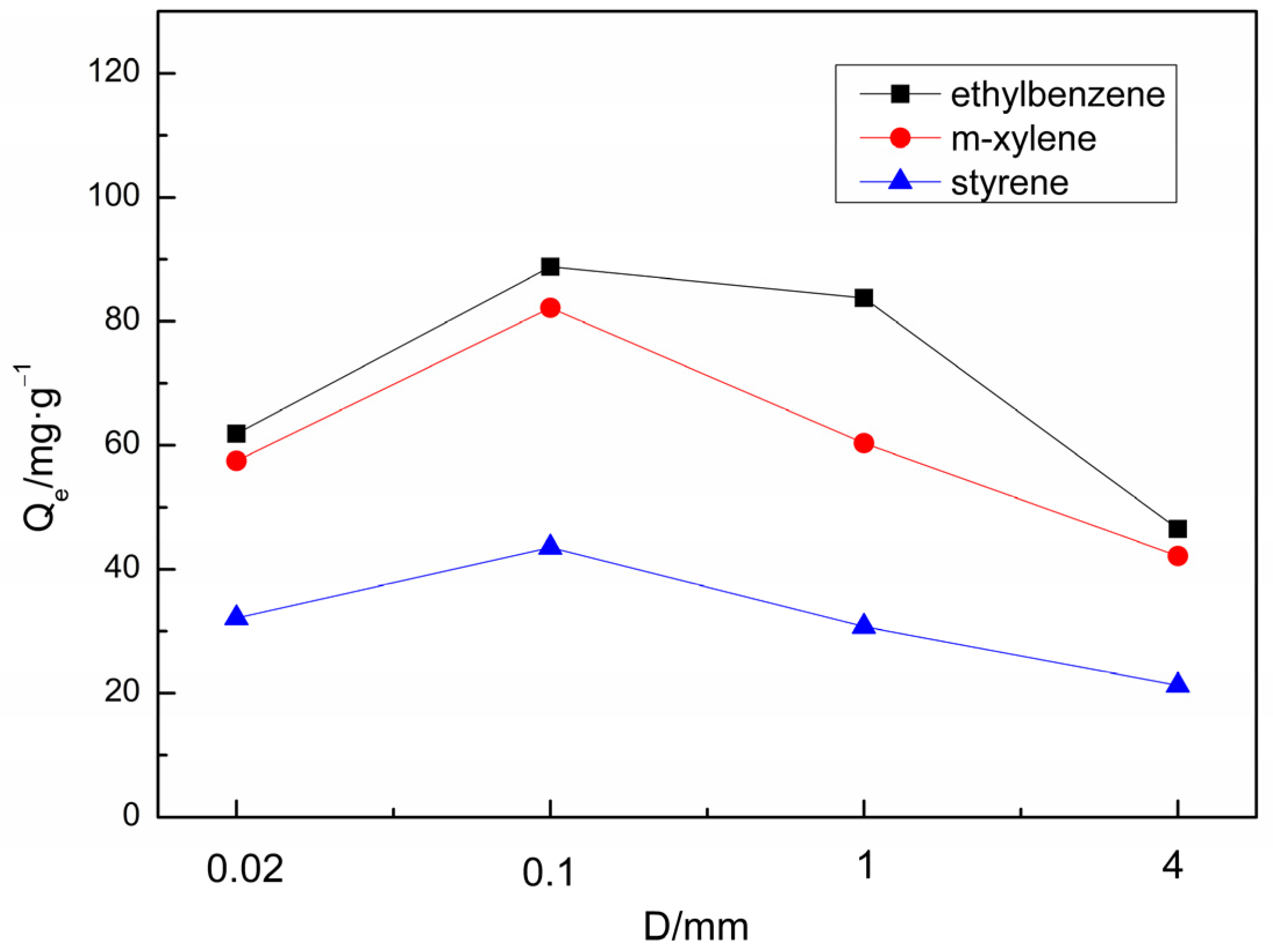
The effects of physical morphology on sorption were also investigated with PE as an example. The sorption capacities of BTEX on PE with different particle sizes are presented in Figure 7. The results indicate that the sorption capacity for BTEX showed a gradual increase as the particle size increased from 0.02 mm to 0.1 mm, reaching a maximum at a particle size of 0.1 mm, and then decreased with further decreases in particle size. For particles below 0.1 mm, the decline could potentially be attributed to particle aggregation (Figure S5). As shown in Figure S5, more pronounced aggregation was observed in the suspensions of smaller PE particles after the sorption process. Aggregation reduces the effective surface area exposed to the solution, thereby limiting the initial contact interface and hindering the diffusion of BTEX molecules into the polymer matrix. Consequently, the kinetics of the partitioning process are slowed down, leading to a lower measured sorption capacity within the experimental timeframe. Conversely, when the particle size was increased from 0.1 mm to 4 mm, the sorption capacity decreased with increasing particle size. This may be because larger particles offer longer internal diffusion paths and lower accessibility to amorphous domains, slowing down the attainment of sorption equilibrium [40].
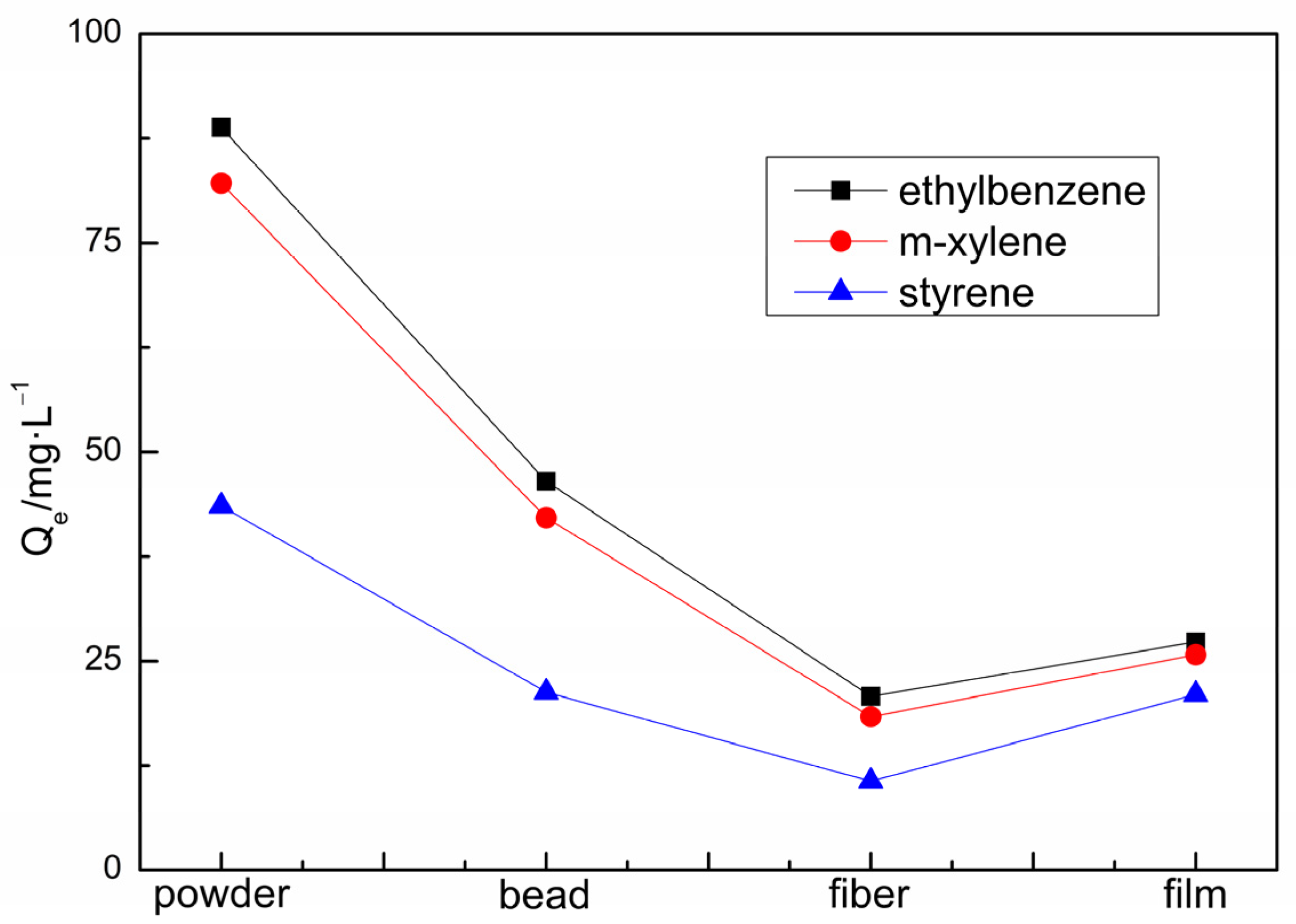
The morphology of polyethylene (PE) profoundly influences its sorption of BTEX, as shown in Figure 8. The sorption affinity followed the order: powder > bead > fiber > film, a trend fully consistent with the theoretical framework established earlier. The superior performance of powder PE is attributed to its significantly larger specific surface area (0.511 m2/g) and higher dispersibility, which facilitates rapid partitioning of BTEX. In contrast, the flat, two-dimensional structure of film and fiber morphologies offers limited surface area (e.g., 0.0285 m2/g for fiber), creating unfavorable mass transfer conditions that hinder molecular penetration and slow partition kinetics. Specifically, film samples showed weaker sorption affinity for BTEX, which might be primarily attributed to their lower specific surface area (0.0163 m2/g) and oriented packing. Moreover, its highly compact planar structure further exacerbates the resistance to mass transfer at the solid–liquid interface, leading to a further reduction in BTEX sorption capacity.
While the observed sorption trend provides a strong correlation between PE morphology and BTEX removal, a definitive mechanistic interpretation requires quantitative linkage to intrinsic material properties. To establish this structure-property-performance relationship, a comprehensive suite of characterization is essential. This detailed characterization work forms a critical part of our ongoing research, as it will not only conclusively verify the hypotheses presented herein but will also form the basis for a predictive model guiding the design of high-performance polymer sorbents.

3.5. Influence of Sorbate Properties on Sorption

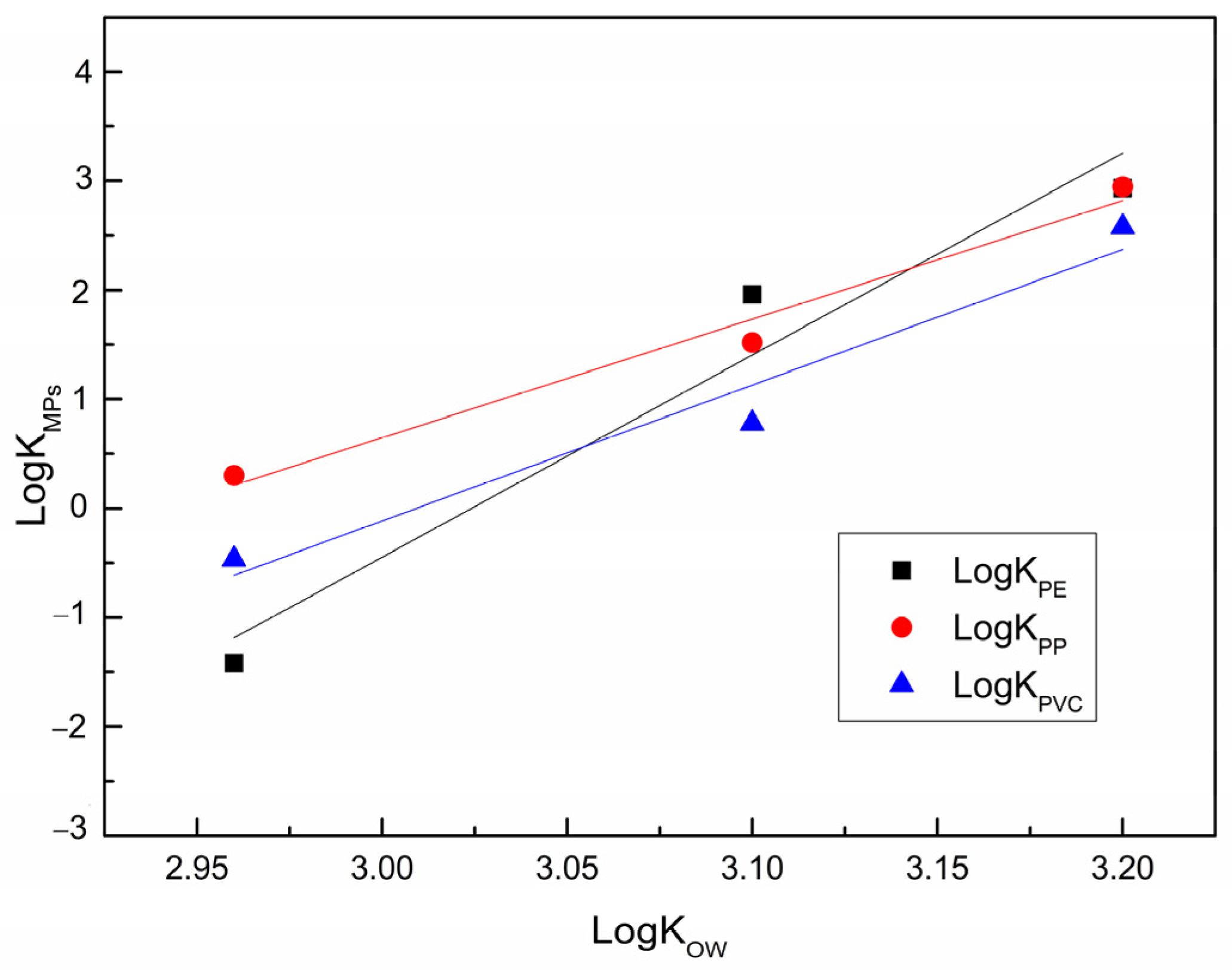
To investigate the influence of sorbate properties on sorption, a correlation matrix between the sorption coefficients and key properties of BTEX—including molar volume (MV), molecular weight (MW), and octanol-water partition coefficient (log Kow) were established. Non-significant correlations were obtained between the sorption capacity of MPs and MV or MW. Meanwhile, significant correlations (R2 > 0.91) were obtained between the calculated distribution coefficients and the Log Kow of the sorbates, as illustrated in Figure 9. The distribution coefficient Kd exhibits a positive linear correlation with the hydrophobicity of BTEX compounds, indicating that hydrophobic interaction was the dominant driving force for sorption. The regression of distribution coefficients against the log Kow yielded:
Log KPE = 18.51 log Kow − 55.99 (R2 = 0.91),
Log KPP = 10.87 log Kow − 31.97 (R2 = 0.96),
Log KPVC = 12.43 log Kow − 37.43 (R2 = 0.92),
From Figure 6 and Table 4, it can be observed that the sorption behaviors of BTEX vary with their physicochemical properties. For PE, the sorption isotherms of m-xylene and ethylbenzene followed the Henry model, indicating that hydrophobic partition was the primary process of the sorption. In contrast, the sorption isotherm of styrene was better described by the Freundlich model. This may be due to the π–π conjugated system between the benzene ring and the vinyl group of styrene. The deformable electron cloud of styrene leads to variable interaction strengths with different sites on the PE surface, which could disrupt its uniform energy distribution. This explains the nonlinear sorption behavior of styrene on PE. The Log Kow of a sorbate is considered to be the primary factor affecting the partitioning process [41,42], which supports the conclusion drawn above. However, the sorption capacity of PE for BTEX followed the order of m-xylene > styrene > ethylbenzene, which was inconsistent with the order of the Log Kow values (Table 4). The π–π conjugated structure of styrene may also account for the observation, which exhibited the highest molecular polarizability among the sorbates and thereby led to a stronger London dispersion force, thus higher sorption affinity. This result revealed that the electronic structure and molecular polarizability were also significant factors that affect the sorption behaviors.
As shown in Figure 6 and Table 4, the sorption isotherms of BTEX by PP and PVC followed the Freundlich model. The sorption capacities for BTEX decreased in the order of m-xylene > ethylbenzene ≥ styrene, which was in accordance with the order of the Log Kow values (Table 1). In addition, the molecular volume (MV) of BTEX might also contribute to this sorption behavior. With a relatively symmetric and planar molecule structure, m-xylene has the smallest molecule volume. Therefore, the m-xylene molecule could diffuse more easily into the MP’s matrix with minimal steric hindrance. Ethylbenzene exhibits higher resistance due to its ethyl group, while styrene may demonstrate the greatest diffusion limitation owing to the bulky, conformationally restricted vinyl group in styrene. The results imply that Log Kow of the sorbates is the main factor that influences the sorption behavior of BTEX by MPs; the compatibility between the physicochemical properties of the sorbate (including form, polarizability, etc.) and the micro-structural characteristics of the sorbent (e.g., polymer chain structure) also play a significant role. The mechanisms governing BTEX sorption by MPs were shown schematically in Figure S6.

4. Conclusions

In this study, the sorption behaviors of three benzene series compounds (ethylbenzene, m-xylene, and styrene) by three types of MPs, including PE, PP, and PVC, were investigated. The sorption kinetics of MPs were all well fitted by the pseudo-second-order model. The sorption equilibrium was achieved after approximately 24 h for PE, and 32 h for PP and PVC. The sorption isotherms were well described by the Linear model (R2 > 0.841) and the Freundlich model (R2 > 0.921). For PE, the linear sorption of ethylbenzene and m-xylene was governed by a partitioning mechanism. For PP and PVC, however, hydrophobic interaction may be the dominant mechanism, with an additional contribution from micropore filling. The sorption of BTEX by the three MPs was influenced by the physicochemical properties and polymer structures of the MPs. PE and PP exhibited higher sorption capacities than PVC, which is mainly attributed to the stronger polarity, higher glass-transition temperature, and smaller specific surface area of PVC. Apart from the properties of the MPs, the physicochemical characteristics of the sorbates, such as hydrophobicity, electronic structure, and molecular form, are also key factors affecting the sorption process. The higher sorption capacities of m-xylene and ethylbenzene compared to styrene are mainly due to styrene’s lower hydrophobicity and greater steric hindrance. These findings are crucial for understanding the sorption of benzene-series compounds by MPs in aquatic environments.
The present results demonstrate that MPs in aquatic environments can effectively sorb benzene-series compounds. A critical question that follows is whether MPs in soil environments may also sorb or immobilize benzene-series compounds, thereby reducing the mobility and potentially the ecological risks of MPs. Future research should therefore focus on investigating the sorption behavior, environmental fate, and transport dynamics of benzene-series compounds in MPs-contaminated soil environments.

Supplementary Materials

The following supporting information can be downloaded at: https://www.mdpi.com/article/10.3390/polym18040526/s1, Figure S1: BET transformation plot for surface area calculation; Figure S2: Zeta potentials of MPs under different pH conditions; Figure S3: Fitting of the sorption kinetic data with the Weber-Morris intraparticle diffusion model; Figure S4: Fitting of sorption data with different isotherm models: (a) Henry model; (b) Langmuir model; (c) Freundlich model; (d) D-R model; Figure S5: Visual evidence of particle aggregation in PE suspensions. (a) Representative state of PE mixtures (20 μm, 100 μm, 1 mm) prior to sorption. Post-sorption state of (b) 20 μm, (c) 100 μm, and (d) 1 mm PE particles, showing size-dependent aggregation; Figure S6: Schematic illustration of the mechanisms governing BTEX sorption by MPs; Figure S7: SEM images of MPs after BTEX sorption: (a) PE; (b) PP; (c) PVC; Table S1: Fitting results of BTEX sorption by MPs.

Author Contributions

Conceptualization, X.Y. and Y.X.; methodology, X.Y. and Y.X.; validation, Y.X. and J.L.; formal analysis, X.Y. and Z.Z.; investigation, Z.Z. and X.D.; resources, Y.X. and J.L.; data curation, X.Y., Z.Z. and X.D.; writing—original draft preparation, X.Y.; writing—review and editing, S.Z. and S.C.; visualization, Z.Z.; supervision, S.Z.; project administration, S.Z.; funding acquisition, S.Z. and S.C. All authors have read and agreed to the published version of the manuscript.

Funding

This work was financially supported by the project of SINOPEC Science and Technology Department (325002) and the National Natural Science Foundation of China (grant 22406210).

Institutional Review Board Statement

Not applicable.

Data Availability Statement

The original contributions presented in this study are included in the article/Supplementary Materials. Further inquiries can be directed to the corresponding authors.

Conflicts of Interest

Authors Xi Yan, Yan Xie, Shucai Zhang, Zhiqing Zhang, Xiaohan Dou, Jingru Liu and Shun Che were employed by State Key Laboratory of Chemical Safety, SINOPEC Research Institute of Safety Engineering Co., Ltd. The authors declare that the research was conducted in the absence of any commercial or financial relationships that could be construed as a potential conflict of interest.

References

  1. Wen, H.; Wang, P.; Mai, L.; Xu, X.; Yu, K.; Zeng, E.Y. Distribution, sorption patterns, and outflows of riverine microplastics-affiliated linear alkylbenzenes and polycyclic aromatic hydrocarbons in a dynamic coastal zone. Environ. Pollut. 2025, 364, 125295. [Google Scholar] [CrossRef]
  2. Mohsin, M.A.; Abd Zaid, A.H. Microplastic Pollution in the Environment: A Chemical Engineering Perspective on Sources, Fate, and Mitigation Strategies. Polymers 2026, 18, 29. [Google Scholar] [CrossRef] [PubMed]
  3. Eerkes-Medrano, D.; Thompson, R.C.; Aldridge, D.C. Microplastics in freshwater systems: A review of the emerging threats, identification of knowledge gaps and prioritisation of research needs. Water Res. 2015, 75, 63–82. [Google Scholar] [CrossRef] [PubMed]
  4. Liu, X.; Zhang, L.; Du, Y.; Yang, X.; He, X.; Zhang, J.; Jia, B. Microplastics in china’s surface water systems: Distribution, driving forces and ecological risk. J. Hazard. Mater. 2025, 485, 136864. [Google Scholar] [CrossRef] [PubMed]
  5. Rendón-von Osten, J.; Sosa-Rodríguez, E.; Borges-Ramírez, M.M. Ecological risk assessment for metal(oid)s in microplastics and sediments at different depths from cenotes (sinkholes) of Yucatan Mexico. Environ. Res. 2025, 285, 122262. [Google Scholar] [CrossRef]
  6. Van Cauwenberghe, L.; Devriese, L.; Galgani, F.; Robbens, J.; Janssen, C.R. Microplastics in sediments: A review of techniques, occurrence and effects. Mar. Environ. Res. 2015, 111, 5–17. [Google Scholar] [CrossRef]
  7. de Souza Machado, A.A.; Kloas, W.; Zarfl, C.; Hempel, S.; Rillig, M.C. Microplastics as an emerging threat to terrestrial ecosystems. Glob. Change Biol. 2017, 24, 1405–1416. [Google Scholar] [CrossRef]
  8. Rashid, S.; Majeed, L.R.; Mehta, N.; Radu, T.; Martín-Fabiani, I.; Bhat, M.A. Microplastics in terrestrial ecosystems: Sources, transport, fate, mitigation, and remediation strategies. Euro-Mediterr. J. Environ. Integr. 2025, 10, 2633–2659. [Google Scholar] [CrossRef]
  9. Jeong, E.; Lee, J.Y.; Redwan, M. Animal exposure to microplastics and health effects: A review. Emerg. Contam. 2024, 10, 100369. [Google Scholar] [CrossRef]
  10. Duda, A.; Petka, K. The Presence of Micro- and Nanoplastics in Food and the Estimation of the Amount Consumed Depending on Dietary Patterns. Molecules 2025, 30, 3666. [Google Scholar] [CrossRef]
  11. Hidalgo-Ruz, V.; Gutow, L.; Thompson, R.C.; Thiel, M. Microplastics in the marine environment: A review of the methods used for identification and quantification. Environ. Sci. Technol. 2012, 46, 3060–3075. [Google Scholar] [CrossRef]
  12. Gigault, J.; Halle, A.T.; Baudrimont, M.; Pascal, P.Y.; Gauffre, F.; Phi, T.L.; Hadri, H.E.; Grassl, B.; Reynaud, S. Current opinion: What is a nanoplastic? Environ. Pollut. 2018, 235, 1030–1034. [Google Scholar] [CrossRef]
  13. Cruz-Salas, A.A.; Velasco-Pérez, M.; Mendoza-Muñoz, N.; Vázquez-Morillas, A.; Beltrán-Villavicencio, M.; Alvarez-Zeferino, J.C.; Ojeda-Benítez, S. Sorption of Total Petroleum Hydrocarbons in Microplastics. Polymers 2023, 15, 2050. [Google Scholar] [CrossRef]
  14. Nauth, S.D.; Campiglia, A.D. Sorption of Polycyclic Aromatic Sulfur Heterocycles (PASH) on Nylon Microplastics at Environmentally Relevant Concentrations. Molecules 2024, 29, 1653. [Google Scholar] [CrossRef]
  15. Wang, F.; Zhang, M.; Sha, W.; Wang, Y.; Hao, H.; Dou, Y.; Li, Y. Sorption Behavior and Mechanisms of Organic Contaminants to Nano and Microplastics. Molecules 2020, 25, 1827. [Google Scholar] [CrossRef]
  16. Bakir, A.; Rowland, S.J.; Thompson, R.C. Transport of persistent organic pollutants by microplastics in estuarine conditions. Estuar. Coast. Shelf Sci. 2014, 140, 14–21. [Google Scholar] [CrossRef]
  17. Wardrop, P.; Shimeta, J.; Nugegoda, D.; Morrison, P.D.; Miranda, A.; Tang, M.; Clarke, B.O. Chemical pollutants sorbed to ingested microbeads from personal care products accumulate in fish. Environ. Sci. Technol. 2016, 50, 4037–4044. [Google Scholar] [CrossRef]
  18. Hüffer, T.; Hofmann, T. Sorption of non-polar organic compounds by micro-sized plastic particles in aqueous solution. Environ. Pollut. 2016, 214, 194–201. [Google Scholar] [CrossRef]
  19. Zhao, L.; Rong, L.; Xu, J.; Lian, J.; Wang, L.; Sun, H. Sorption of five organic compounds by polar and nonpolar microplastics. Chemosphere 2020, 257, 127206. [Google Scholar] [CrossRef]
  20. Rochman, C.M.; Hoh, E.; Hentschel, B.T.; Kaye, S. Long-term field measurement of sorption of organic contaminants to five types of plastic pellets: Implications for plastic marine debris. Environ. Sci. Technol. 2012, 47, 1646–1654. [Google Scholar] [CrossRef]
  21. Guo, X.; Wang, X.; Zhou, X.; Kong, X.; Tao, S.; Xing, B. Sorption of four hydrophobic organic compounds by three chemically distinct polymers: Role of chemical and physical composition. Environ. Sci. Technol. 2012, 46, 7252–7259. [Google Scholar] [CrossRef]
  22. Velzeboer, I.; Kwadijk, C.J.; Koelmans, A.A. Strong sorption of PCBs to nanoplastics, microplastics, carbon nanotubes, and fullerenes. Environ. Sci. Technol. 2014, 48, 4869–4876. [Google Scholar] [CrossRef]
  23. Shevchenko, N.; Iakobson, O.; Isakov, V.; Zorin, I. Effects of Particle Shape and Surface Structure on the Adsorption Properties of Polystyrene Microplastics. Polymers 2024, 16, 3159. [Google Scholar] [CrossRef]
  24. Guo, X.; Pang, J.; Chen, S.; Jia, H. Sorption properties of tylosin on four different microplastics. Chemosphere 2018, 209, 240–245. [Google Scholar] [CrossRef]
  25. Hu, B.; Li, Y.; Jiang, L.; Chen, X.; Wang, L.; An, S.; Zhang, F. Influence of microplastics occurrence on the adsorption of 17β-estradiol in soil. J. Hazard. Mater. 2020, 400, 123325. [Google Scholar] [CrossRef]
  26. Na, Y.; Weon, S.H.; Lee, G.-W.; Kim, H.J.; Lee, S.H.; Kim, Y.-H.; Kim, J.E.; Kang, G.; Park, S.; Choi, Y.-K. Evaluation of Benzene Adsorption onto Grass-Derived Biochar and Comparison of Adsorption Capacity via RSM (Response Surface Methodology). J. Compos. Sci. 2024, 8, 132. [Google Scholar] [CrossRef]
  27. Deng, L.; Xi, H.; Wan, C.; Fu, L.; Wang, Y.; Wu, C. Is the petrochemical industry an overlooked critical source of environmental microplastics? J. Hazard. Mater. 2023, 451, 131199. [Google Scholar] [CrossRef]
  28. Liu, X.; Xu, J.; Zhao, Y.; Shi, H.; Huang, C.-H. Hydrophobic sorption behaviors of 17β-Estradiol on environmental microplastics. Chemosphere 2019, 226, 726–735. [Google Scholar] [CrossRef]
  29. Wang, Z.; Chen, M.; Zhang, L.; Wang, K.; Yu, X.; Zheng, Z.; Zheng, R. Sorption behaviors of phenanthrene on the microplastics identified in a mariculture farm in Xiangshan Bay, southeastern China. Sci. Total Environ. 2018, 628–629, 1617–1626. [Google Scholar] [CrossRef]
  30. Ji, Y.; Gao, H.; Sun, J.; Cai, F. Experimental probation on the binding kinetics and thermodynamics of Au(III) onto Bacillus subtilis. Chem. Eng. J. 2011, 172, 122–128. [Google Scholar] [CrossRef]
  31. Liu, F.; Liu, G.; Zhu, Z.; Wang, S.; Zhao, F. Interactions between microplastics and phthalate esters as affected by microplastics characteristics and solution chemistry. Chemosphere 2019, 214, 688–694. [Google Scholar] [CrossRef]
  32. Vrentas, J.S.; Duda, J.L. Diffusion in polymer-solvent systems. I. Reexamination of the free-volume theory. J. Appl. Polym. Sci. 1977, 15, 403–416. [Google Scholar] [CrossRef]
  33. Seidensticker, S.; Grathwohl, P.; Lamprecht, J.; Zarfl, C. A combined experimental and modeling study to evaluate pH-dependent sorption of polar and non-polar compounds to polyethylene and polystyrene microplastics. Environ. Sci. Eur. 2018, 30, 30. [Google Scholar] [CrossRef]
  34. Endo, S.; Koelmans, A.A. Sorption of hydrophobic organic compounds to plastics in the marine environment: Equilibrium. In Hazardous Chemicals Associated with Plastics in the Marine Environment; Springer: Cham, Switzerland, 2018; pp. 185–204. [Google Scholar]
  35. Xing, B.S.; Pignatello, J.J. Dual-mode sorption of low-polarity compounds in glassy poly(vinyl chloride) and soil organic matter. Environ. Sci. Technol. 1997, 31, 792–799. [Google Scholar] [CrossRef]
  36. Llorca, M.; Schirinzi, G.; Martínez, M.; Barceló, D.; Farré, M. Adsorption of perfluoroalkyl substances on microplastics under environmental conditions. Environ. Pollut. 2018, 235, 680–691. [Google Scholar] [CrossRef]
  37. Wang, F.; Shih, K.M.; Li, X.Y. The partition behavior of perfluorooctanesulfonate (PFOS) and perfluorooctanesulfonamide (FOSA) on microplastics. Chemosphere 2015, 119, 841–847. [Google Scholar] [CrossRef]
  38. Town, R.M.; van Leeuwen, H.P.; Duval, J.F.L. Sorption kinetics of metallic and organic contaminants on micro- and nanoplastics: Remarkable dependence of the intraparticulate contaminant diffusion coefficient on the particle size and potential role of polymer crystallinity. Environ. Sci. Process. Impacts 2025, 27, 634–648. [Google Scholar] [CrossRef]
  39. Tumwesigye, E.; Nnadozie, C.F.; Akamagwuna, F.C.; Noundou, X.S.; Nyakairu, G.W.; Odume, O.N. Microplastics as vectors of chemical contaminants and biological agents in freshwater ecosystems: Current knowledge status and future perspectives. Environ. Pollut. 2023, 330, 121829. [Google Scholar] [CrossRef]
  40. Dong, Y.; Gao, M.; Song, Z.; Qiu, W. Adsorption mechanism of As(III) on polytetrafluoroethylene particles of different size. Environ. Pollut. 2019, 254, 112950. [Google Scholar] [CrossRef]
  41. Lee, H.; Shim, W.J.; Kwon, J.-H. Sorption capacity of plastic debris for hydrophobic organic chemicals. Sci. Total Environ. 2014, 470–471, 1545–1552. [Google Scholar] [CrossRef]
  42. Wang, F.; Pan, G.; Li, L. Effects of free iron oxyhydrates and soil organic matter on copper sorption-desorption behavior by size fractions of aggregates from two paddy soils. J. Environ. Sci. 2009, 21, 618–624. [Google Scholar] [CrossRef]
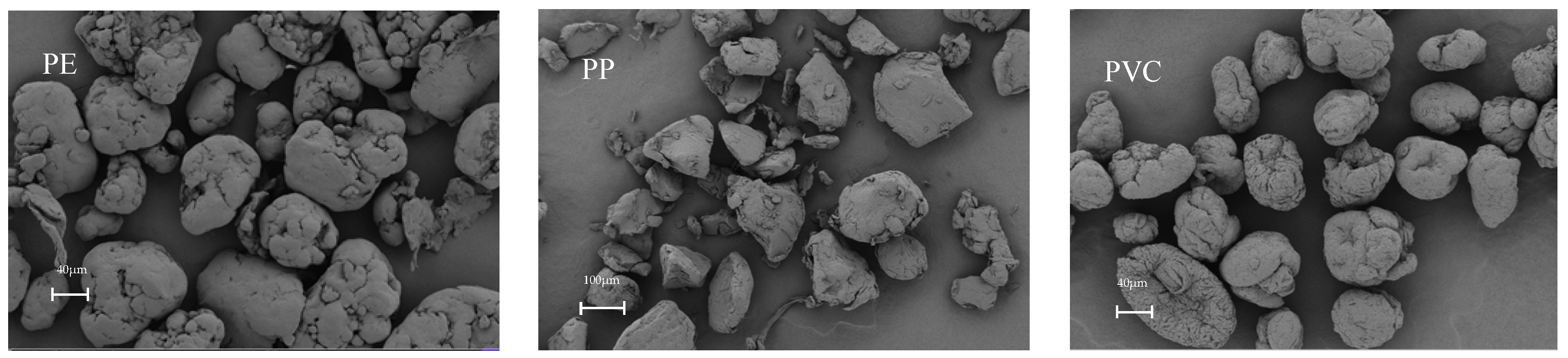
Figure 1. SEM images of MPs.
Polymers 18 00526 g001
Figure 2. FTIR spectra of MPs.
Polymers 18 00526 g002
Figure 3. XRD patterns of MPs.
Polymers 18 00526 g003
Figure 4. Water contact angles of MPs.
Polymers 18 00526 g004
Figure 5. The sorption kinetics of MPs.
Polymers 18 00526 g005
Figure 6. The sorption isotherms of BTEX on MPs.
Polymers 18 00526 g006
Figure 7. Effect of particle size on BETX sorption on PE.
Polymers 18 00526 g007
Figure 8. Effect of morphology on BETX sorption on PE.
Polymers 18 00526 g008
Figure 9. Correlation of distribution coefficients for MPs and log Kow.
Polymers 18 00526 g009
Table 1. Physicochemical properties of sorbates used in this study.
CompoundMW *Density *MV *LogKaw *Sw *LogKow *Polarizability *
ethylbenzene106.170.865–0.869122.251 ± 3.00−0.781843.114.16
m-xylene106.170.860–0.862121.984 ± 3.00−0.742003.214.23
styrene104.150.906–1.105115.381 ± 3.00−0.953202.9614.73
* MW: molecular weight (g/mol); Density: 20 °C (g/mL); MV: molecular volume (cm3/mol); LogKaw: Henry’s Law Constant; Sw: intrinsic solubility (mg/L); logKow: octanol-water partition coefficient; Polarizability: Å3.
Table 2. Characteristics of the MPs.
MPsPolarityDiameter (μm)Density (g/cm3)Surface Area (m2/g)Micropore Volume (mm3/g)Crystallinity (%)Glass Transition Temperature (Tg/°C)Contact Angle (°)pHPZC
PEnon-polar1000.920.5110.13774.95−120~−100134.91.93
PPweak-polar1000.900.5670.07344.31−20~−10131.81.24
PVCstrong-polar1001.150.460.1497.7660~100120.40.54
Table 3. Adsorption kinetic parameters of BTEX on MPs.
MPsBTEXPseudo-First-Order ModelPseudo-Second-Order ModelWeber-Morris Intraparticle Diffusion Model
Qm1K1R12Qm2K2R22CK3R32
PEethylbenzene27.426780.150.9159.417710.0109490.9917.769.470.96
m-xylene42.404310.190.9285.106380.0082030.9922.7614.470.99
styrene62.267520.200.8584.388190.0049410.9916.5314.380.98
PPethylbenzene53.266090.130.8763.091480.0063890.999.0812.090.92
m-xylene36.752270.090.9587.260030.0080870.9922.2916.150.87
styrene33.589050.110.9866.57790.0090710.9915.0312.390.94
PVCethylbenzene46.721290.150.9959.630290.0068540.996.6412.10.94
m-xylene47.904050.150.9268.212820.0090990.9914.7513.0530.86
styrene34.106910.080.9558.309040.0055540.994.0611.830.96
Table 4. Fitting results of BTEX sorption by MPs.
MPsBTEXHenry ModelLangmuir ModelFreundlich ModelD–R Model
Kd/(L·g−1)R2KL/(L·mg−1)R2KF/(mg·L−1)n−1R2KDRR2
PEethylbenzene0.4570.9734.61 × 10−50.970.1021.3380.9710.00020.919
m-xylene0.8540.9853.11 × 10−50.9560.3881.1880.9679 × 10−50.888
styrene0.5260.8414.93 × 10−90.9823.81 × 10−53.1480.9850.00040.802
PPethylbenzene0.5820.9484.03 × 10−60.9860.0331.6580.9890.00010.764
m-xylene0.9720.961.34 × 10−30.9460.8841.0230.960.00010.941
styrene0.4240.9172.01 × 10−60.9970.0022.1410.9970.00030.849
PVCethylbenzene0.3840.8825.55 × 10−80.9150.0061.9340.9210.00020.777
m-xylene0.5770.9561.87 × 10−50.9350.3781.0960.9520.00010.927
styrene0.3130.8491.91 × 10−70.9273.418 × 10−42.4820.9450.00050.835
Disclaimer/Publisher’s Note: The statements, opinions and data contained in all publications are solely those of the individual author(s) and contributor(s) and not of MDPI and/or the editor(s). MDPI and/or the editor(s) disclaim responsibility for any injury to people or property resulting from any ideas, methods, instructions or products referred to in the content.