


Abstract
Mungbean (Vigna radiata L.), one of the most widely grown edible legumes in Asia, plays important roles in the improvement of agricultural cultivation systems as well as human diets. As an understudied crop, however, most mungbean varieties are characterized by unstable yields, poor disease resistance, and unsuitability for mechanical harvesting, thereby leading to a low production income. We, therefore, developed Jilv 20, a new mungbean cultivar with a dull seed coat, by crossing Bao 942-34 with Weilv 9002-341. After 11 years of selection and evaluation, Jilv 20 has shown wide adaptability, early maturity, high yield, halo blight resistance, and suitability for mechanical harvesting. The growth period of Jilv 20 is 79.5 and 66.7 days in the spring and summer sowing seasons, respectively, and the average plant height is approximately 56.4 cm. In this study, average yields were 1737.9, 1532.3, and 2045.1 kg/hm2 in northern spring-sowing, northern summer-sowing, and southern sites, respectively; these values were respectively 27.83%, 28.48%, and 6.96% higher than those of control cultivar Zhonglv 5, which has been popular in past decades because of its wide adaptability. The average protein and starch contents of Jilv 20 seeds were 25.0% and 49.56%, respectively. Further application and extension of Jilv 20 in China should contribute to mungbean production, breeding, and industrial development.
1. Introduction
Mungbean (Vigna radiata L.) is widely grown in temperate, subtropical, and tropical regions worldwide. Production of this crop has traditionally been concentrated in Asia [1,2], including India, China, Myanmar, Thailand, Indonesia, Pakistan, the Philippines, and Sri Lanka [3,4], but has greatly increased in recent years in non-Asian countries, such as Australia, Ethiopia, Venezuela, and Brazil [5,6,7,8,9].
Mungbean, a pulse species, is usually intercropped and relayed with other crops because of its long suitable sowing period and nitrogen fixing capability [10,11]. Owing to its short growth period and adaptability to barren soils, mungbean is also used for natural disaster recovery and wasteland reclamation. Mungbean seeds are rich in nutritional substances, such as protein (22–26%), dietary fiber (3–4%), Vitamin B2 (0.25–0.29 mg/100 g), Calcium (80–155 mg/100 g), and Phosphorus (220–417 mg/100 g), and functional compounds, such as vitexin, isovitexin, and D-chiro-inositol, that have heat-clearing, detoxifying, and liver- and vision-protective activities [12,13,14,15,16]. Given these useful characteristics, mungbean has valuable roles in soil structural improvement, human dietary enrichment, and the processing and utilization of agricultural products.
Mungbean seeds are classified according to the luster of the seed coat into two types, namely, shiny mungbean and dull mungbean. In traditional Chinese cooking, dull mungbean seeds, which are mealy and fast-cooking, are used for soup and porridge, whereas shiny mungbean seeds, which have a high germination rate but do not cook quickly, are typically used for bean sprouts. But the total cultivation area and overall yield of dull mungbean are relatively low, it has long commanded a higher market price than that of shiny mungbean. According to the statistics, only 0.04% of mungbean varieties in China are dull types (private communication), which is significantly less than the number of shiny ones. Therefore, there is a lack of dull cultivars in the mungbean industry.
New plant varieties are an important component of agricultural development. In China, the improvement of mungbean varieties started in the mid-1980s. By the end of the 20th century, 22 new mungbean varieties had been developed, of which 72.72% were selected by pedigree breeding. Among them, Zhonglv No. 1 (VC1973A) was the first representative variety to be introduced and popularized across China. Since the beginning of the 21st century, an increasing number of institutes have started crossbreeding mungbean. By 2007, 34 new mungbean varieties had been developed, of which 61.76% were hybrided. With the initiation of the Chinese Agricultural Research System-Food Legumes program in 2008, even more varieties have been developed. As of 2020, a total of 85 new varieties have been developed, including 63 crossbred varieties (75.0%) [17,18,19,20]. Among them, the development of Zhonglv 6, Zhonglv 7, Jilv 15, Jilv 17, Sulv 5, Sulv 6, and Jinlvdou 7, which are resistant to bruchids, has solved the problem of bruchid damage during storage [21,22,23,24]. Several characteristics of JiLv 19, JiLv 10, and Zhong Lv 12 make these varieties suitable for mechanical harvesting, namely, their concentrated pod set, uniform maturity, small branching angle, compact plant type, and high pod-setting position [25]. Despite these advances, mungbean varieties in China still have various deficiencies, such as low and unstable yield, poor resistance to fusarium wilt and halo blight, and narrow adaptability.
The aims of this study were to develop a new cultivar characterized by high yield, wide adaptability, lodging and disease resistance, and good seed quality. The breeding objectives must be adapted to the needs of agricultural production and marketing. Our specific breeding objectives were as follows: an average yield above 1600 kg/hm2 (an 8.0% increase over the control), resistance to halo blight, adaptability to both spring- and summer-sowing regions, early maturity (ca. 80- and 65-day growth periods from spring and summer sowing, respectively), an erect form, and a height of 55–60-cm.
2. Materials and Methods
2.1. Parents and Breeding Procedure
Bao 942–34 was used as the female parent in this study. This variety, which was bred by crossing Jilv 2 (Gaoyang lvdou/VC2917A) with local variety Dengjiatai by the Baoding Academy of Agriculture Sciences, was released by the National Agricultural Technology Extension Service Center in 2004. It was an early-maturing, high-yielding variety widely cultivated in China, but small seed and susceptible to halo blight and fusarium wilt.
As the male parent, Weilv 9002–341 was bred by crossing VC3061A with local variety Yishui Yizhuxiang by the Weifang Academy of Agriculture Sciences. It is an erect, early-maturing, big dull-seed variety with wilt disease resistance, but its seeds were not full and seed coat was shriveled.
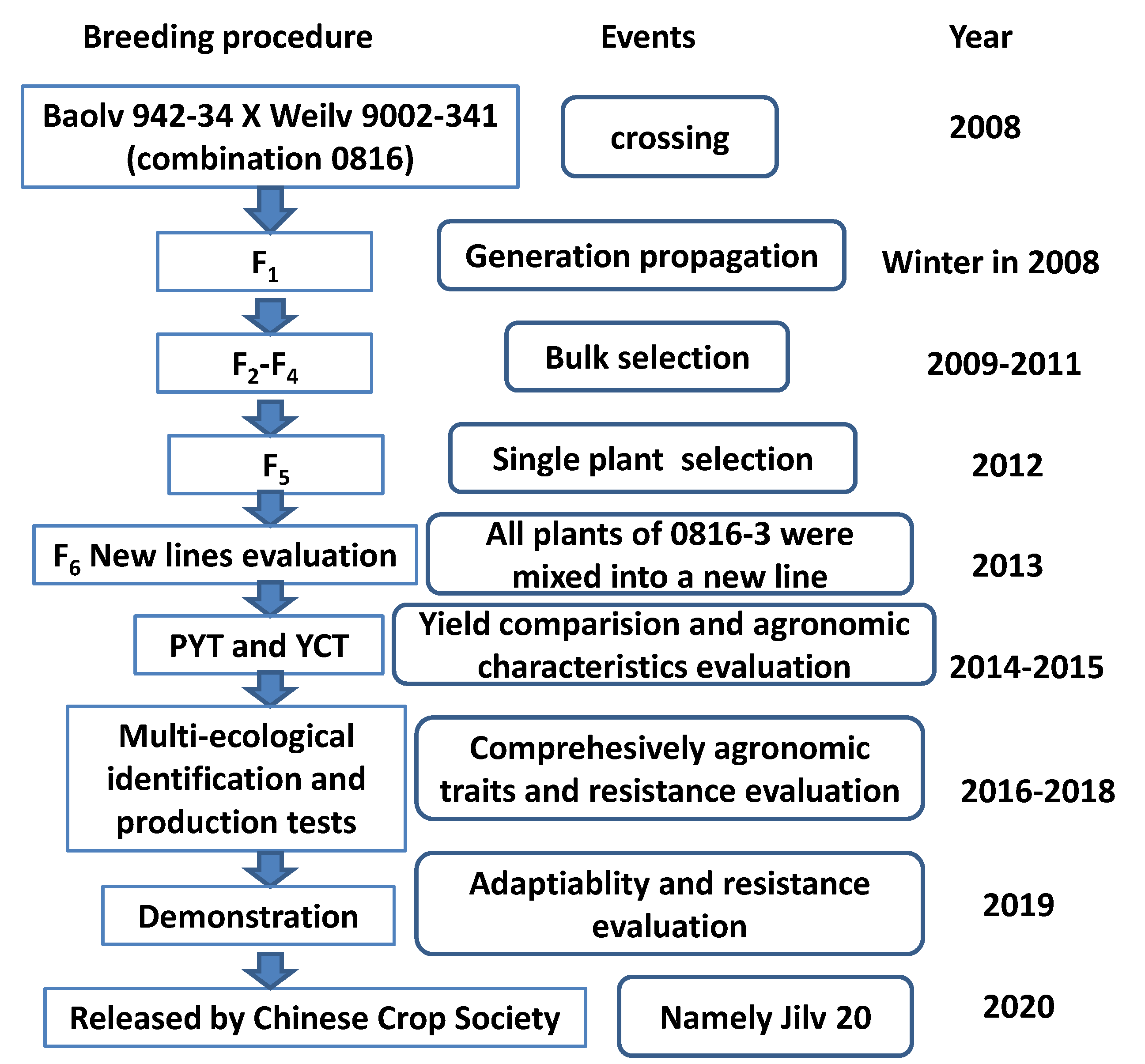
The breeding procedure used to develop Jilv 20 was as follows (Figure 1). First, the cross combination 0816 was generated from Bao 942–34 and Weilv 9002–341 during the 2008 summer sowing season in Gaocheng (38°04′ N;114°29′ E; pH value 8.33 ± 0.05, available nitrogen 102.63 ± 7.46 ppm, available potassium 174.75 ± 27.63 ppm, available phosphorus 20.48 ± 2.17 ppm, Organic matter 1.89 ± 0.12%), Shijiazhuang, Hebei Province, China. Next, the F1 generation was planted at Sanya (18°04′ N; 109°51′ E) on Hainan Island in the winter of 2008. F2, F3, and F4 generations were then planted in succession in Gaocheng by bulk selection from 2009 to 2011. Single plant selection from the F5 generation was conducted in 2012. A total of 106 newly selected plants, including an individual of 0816-3, were ultimately acquired. In 2013, all selected individuals were planted in two rows to evaluate characteristics such as uniformity, growth habit, podding habit, maturity, plant height, lodging resistance, disease resistance, pod-shattering propensity, seed size, and yield. Given the uniformity and superior target traits of 0816-3, multiple 0816-3 plants were combined into a new line. The new line 0816-3 was subjected to preliminary yield test (PYT) and yield comparison test (YCT)in Gaocheng, with two to three replications, in 2014 and 2015. From 2016 to 2018, this variety was enrolled in a multi-ecological identification trial covering 20 sites and a production trial at 8 sites organized by the Chinese Agricultural Research System-Food Legumes program. Zhonglv 5, a variety originally developed by the Institute of Crop Sciences, Chinese Academy of Agricultural Sciences, and released by the National Agricultural Technology Extension Service Center in 2004, was included as a control.
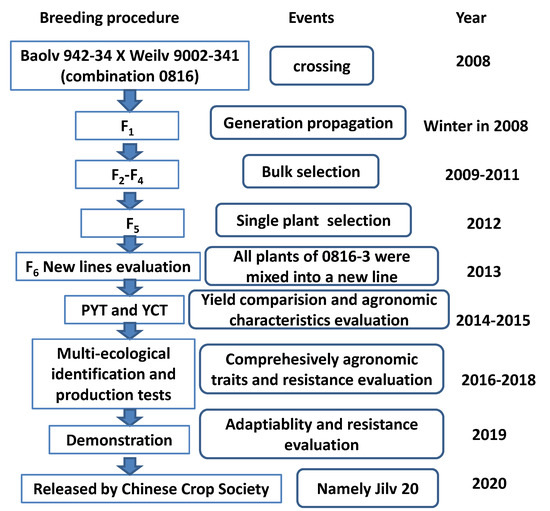
Figure 1.
Jilv 20 breeding overview. Notes: This paper mostly focuses on the multi-ecological and production test data.
2.2. Experimental Sites and Design
A multi-ecological identification trial of Jilv 20 was carried out from 2016 to 2017 at 20 sites: 10 northern spring-sowing sites, 5 northern summer-sowing sites, and 5 southern sites. Plant materials were sown in a randomized complete block design with three replications. Each sowing area covered 10–12 m2 and comprised five 4–5-m long rows spaced 50 cm apart.
Production trials of Jilv 20 were carried out in 2018 at eight locations: three northern spring-sowing sites, three northern summer-sowing sites, and two southern sites. Sowing areas consisted of single plots, each covering 333.3 m2 (Table 1). In all trials, the planting density was 120,000–150,000 plants/hm2.

Table 1.
Information on test sites of multi-ecological identification and production trials of the Chinese Agricultural Research System-Food Legumes program from 2016–2018.
2.3. Evaluation of Agronomic Characteristics and Seed Quality
The following agronomic characteristics were evaluated: growth period (days), plant height (cm), branching, number of nodes, pods/plant, pod length (cm), seeds/pod, 100-seed weight, seed-weight/plant (g), yield/plot (g), and yield/hm2 (kg). All collected data were acquired from samples of 10 plants and 10 pods, with three replications, during and after harvest according to the Chinese National Descriptors and Data Standard for Mungbean [26]. Seed protein and starch contents were respectively determined by the Kjeldahl method (KT8400) and polarimetry (SGW-1) at the Hebei Crop Quality Test Center in 2018. For these tests, 100 g of seeds were collected from each of the 15 multi-ecological identification sites, and the results from each site were then averaged.
2.4. Evaluation of Disease Resistance
Jilv 20 was visually evaluated for halo blight resistance from 2016 to 2018 at 6 spring-sowing sites marked by a heavy disease presence (i.e., Zhangjiakou of Hebei, Hohhot of Inner Mongolia, Datong of Shanxi, Yulin of Shannxi, Qiqihar of Heilongjiang, and Gongzhuling of Jilin). The investigation was carried out in mid- to late June or whenever the susceptible variety, used as a control, was seriously infected with halo blight. For the evaluation, 20 plants per plot were randomly selected and scored for disease severity and resistance as shown in Table 2, and the results for each plot were averaged.
Table 2.
Criteria used to classify the halo blight disease severity and resistance of Jilv 20 plants.
2.5. Data Analysis
Analysis of variance and multiple comparisons of varieties were conducted using R language’s ANOVA function. Variety stability and yield were analyzed by GGE Biplot software v 6.3 [27].
3. Results
3.1. Agronomic Characteristics
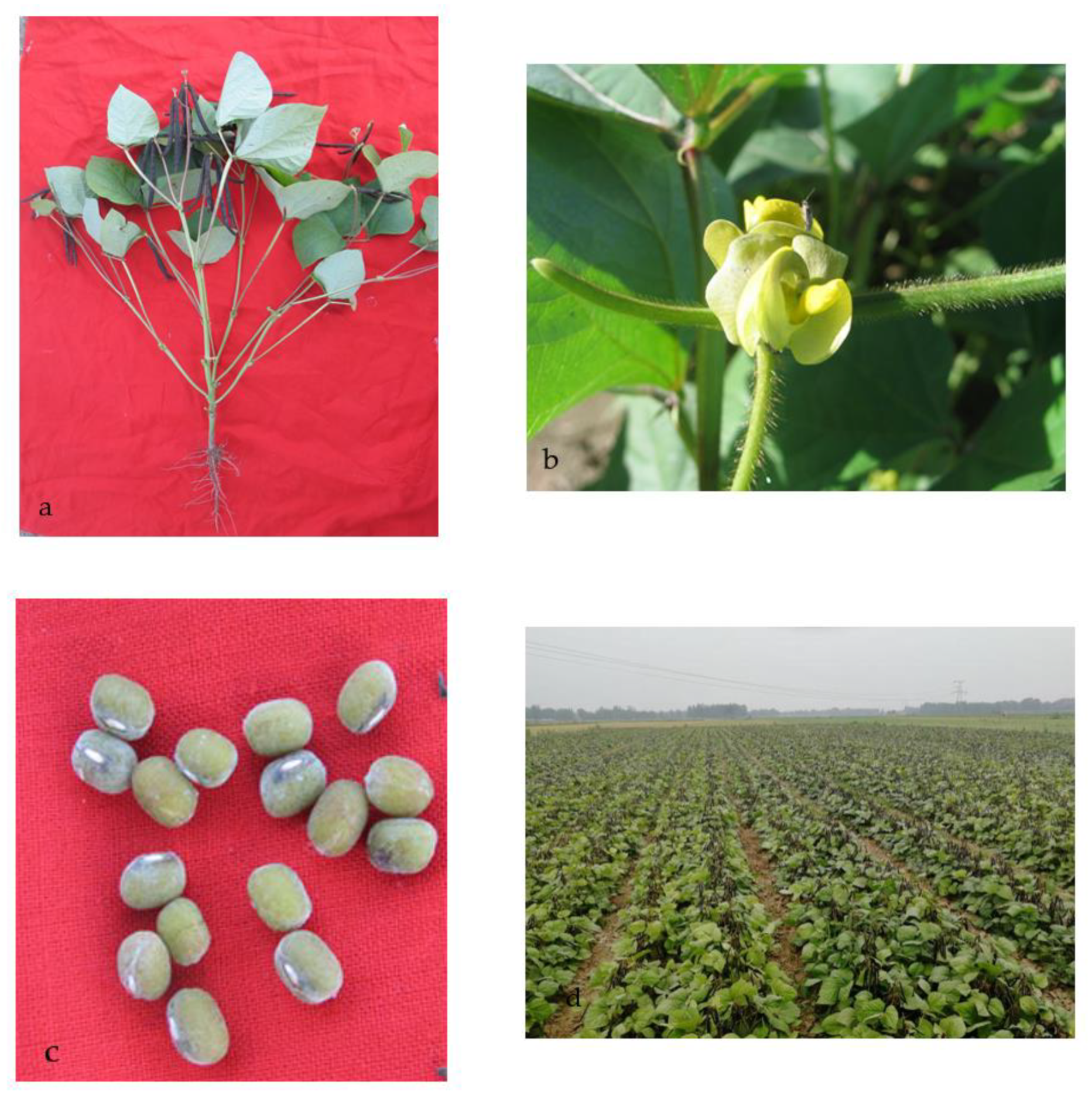
Stems of young Jilv 20 plants were purplish red due to anthocyanidin coloration, whereas stems of mature plants were green. In addition, Jilv 20 had oval leaves and pale yellow flowers and produced black mature pods and dull green seeds (Figure 2).
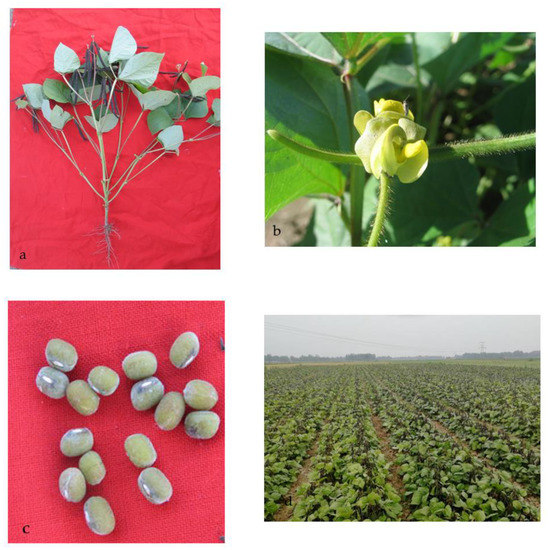
Figure 2.
Characteristics of Jilv 20. (a–d) Typical plant (a), flowers and young pods (b), seeds (c), and field performance (d).
According to our results, Jilv 20 is an early-maturing variety, with a growth period of approximately 66.7 days during the northern summer-sowing season, 79.5 days during the northern spring-sowing season, and 67.0 days in the south. Plant height ranged from 50.1 to 60.2 cm, and plants had a terminal podding habit and erect stems. The number of branches per plant varied from 2.5 to 3.6, with branch angles of 30.4° to 43.4°. Typical characteristics of pods were 22.6–27.1 pods/plant, a length of 9.8–10.8 cm, and 10.0–10.9 seeds/pod. The lowest pod was held approximately 15.2–18.7 cm above the base of the plant. Jilv 20 plants exhibited a concentrated, uniform pod set, with an 80.3–85.1% pod-setting rate and no pod-shattering, which are desirable agronomic characteristics for mechanical harvesting. The 100-seed weight of the medium-sized, dull, full seeds ranged from 7.1–8.1 g.
3.2. Disease Resistance
A field evaluation of the halo blight resistance of 60 mungbean varieties was conducted by the Institute of Crop Science, Chinese Academy of Agricultural Sciences, in six northern spring-sowing sites from 2016 to 2018. During the 3 years of the evaluation, the disease severity score of Jilv 20 at the six sites ranged from 1.9 to 3.0, with an average of 2.6, corresponding to a resistance level of R.Control variety (Zhonglv 5) showed the averages of disease grade at different sites were from 2.7 to 4.3, with an average of 3.45, corresponding to the resistance level from of MR to R (Table 3).Jilv 20 showed higher halo-blight resistance than the control.
Table 3.
Evaluation of Jilv 20 halo-blight resistance.
3.3. Seed Quality Evaluation
A seed quality analysis was conducted using 100-g samples from 15 test sites (six northern spring-sowing sites, five northern summer-sowing sites, and four southern sites). The analysis revealed that the average protein content of Jilv 20 seeds was 25.00%, which was 3.73% higher than the average content (24.10%) of the control (Zhonglv 5). The average starch content, 49.56%, was 3.20% lower than that of the control (51.20%). With respect to geography, samples from northern summer-sowing sites had the highest protein content (25.52%), whereas samples from southern sites had the highest starch content (50.56%). Compared with Chinese national averages (24.15% protein and 52.73% starch) [28], Jilv 20 seeds had less starch and slightly more protein (Table 4).
Table 4.
Results of a seed quality analysis of Jilv 20 grown at different multi-ecological identification test sites.
3.4. Yield and Stability
3.4.1. Yield in the Multi-Ecological Identification Trial
A multi-ecological identification trial of 25 new varieties developed by 15 institutes (academies) was carried out in 20 locations by the Chinese Agricultural Research System-Food Legumes program from 2016 to 2017. The analysis of variance showed that there were significant differences among varieties, sites, replications and variety with site (Table 5)
Table 5.
Analysis of variance.
Multiple comparisons of varieties showed that Jilv 20 (Jilv 0816) had the highest average yield (1763.33 kg/hm2) among the 25 new varieties, and significantly increased than the control cultivar Zhonglv 5 (Table 6).
Table 6.
Yield multiple comparison of 25 varieties (LSD).
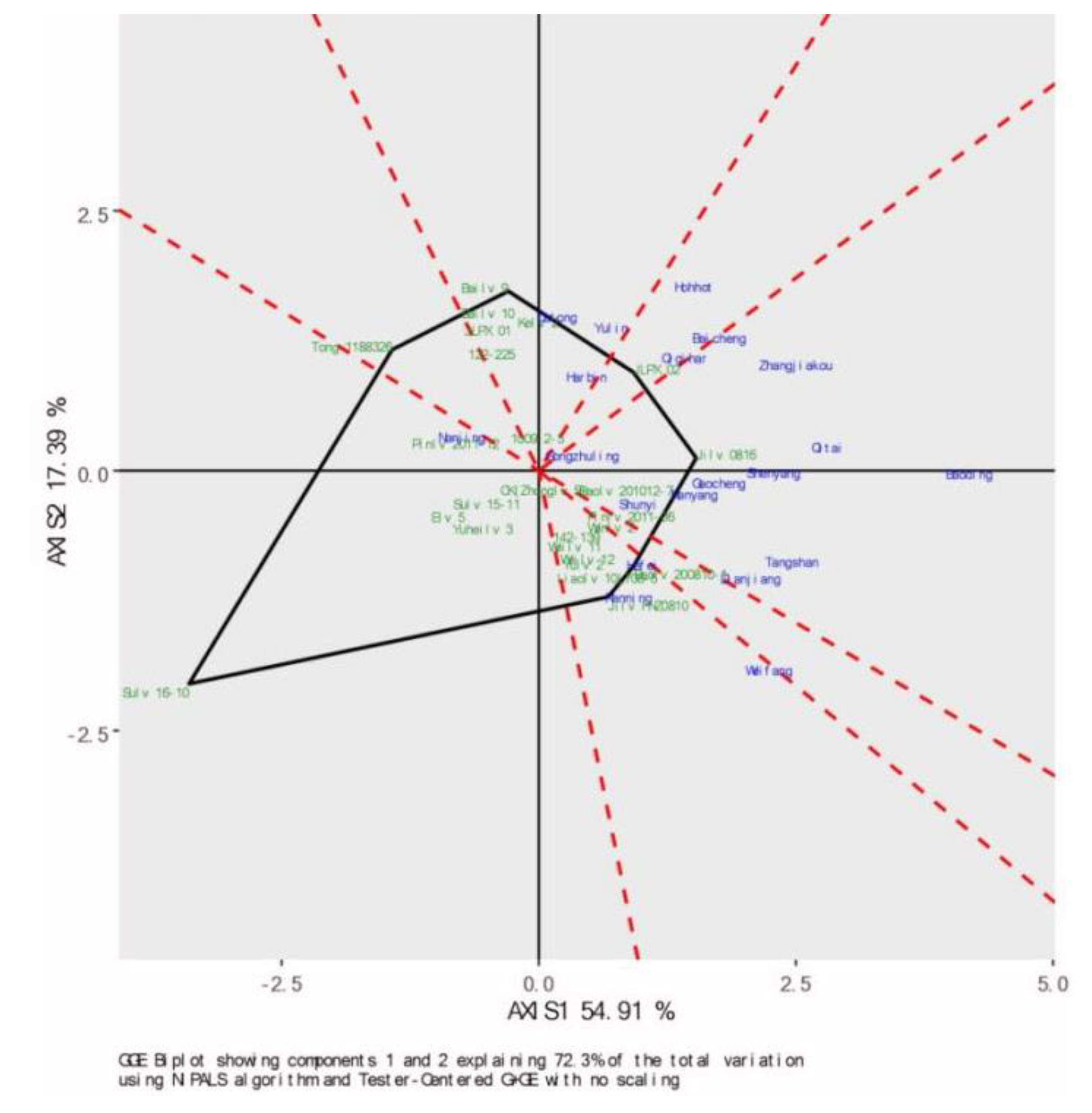
The yield performance of Jilv20 (Jilv 0816) in different years and regions showed its high yield and wide-adaptability (Table 7 and Figure 3).
Table 7.
Yield performance of Jilv 20 in multi-ecological identification trials in 2016 and 2017.
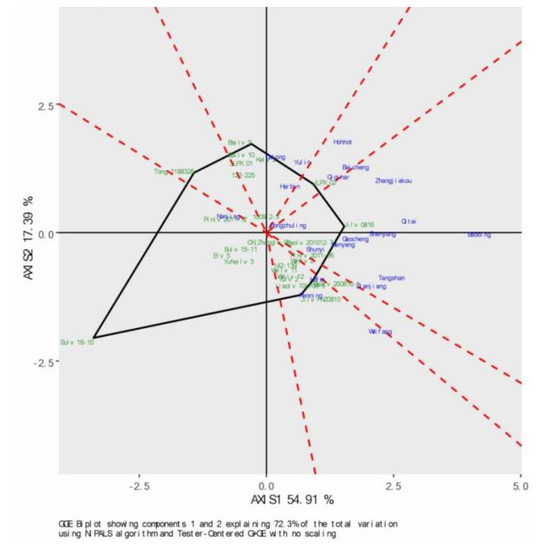
Figure 3.
Yield performance of 25 varieties in multi-ecological identification trials.
In 2016, Jilv 20 had the highest average yield (1568.3 kg/hm2) among the 25 new varieties at all sites, which was 24.67% higher than that of the control cultivar Zhonglv 5. In northern spring-sowing regions, the average yield of Jilv 20 was 1590.2 kg/hm2, which was a 27.37% increase relative to the control. Jilv 20 had the highest yield (2306.3 kg/hm2) in Qitai and the highest relative increase (87.41%) in Hohhot. In northern summer-sowing regions, the average yield of Jilv 20 was 1190.54 kg/hm2 (38.17% higher than the control), and the highest yield (1829.0 kg/hm2) and highest relative increase (61.41%) was recorded in Gaocheng. In southern regions, Jilv 20 produced an average yield of 1902.3 kg/hm2, which was 5.77% higher than the control. Among southern sites, the highest yield (2227.8 kg/hm2) was in Hefei, whereas the highest increase (47.22%) occurred in Chongqing.
In 2017, the average yield of Jilv 20 was 1958.3 kg/hm2, which was 25.76% higher than the control. In northern spring-sowing regions, the average yield of Jilv 20 was 1885.7 kg/hm2, corresponding to a 28.22% increase compared with the control. The highest yield in this region was 3630.0 kg/hm2 in Qitai, and the highest relative increase was 97.66% in Qiqihar. In northern summer-sowing regions, the average yield was 1874.00 kg/hm2—an 18.81% increase over the control. The average yield of Jilv 20 in southern sites was 2187.8 kg/hm2, which was 14.75% higher than the control.
3.4.2. Yield in the Production Trial
A production trial of Jilv 20 was carried out in 2018 at eight locations: three northern spring-sowing sites, three northern summer-sowing sites, and two southern sites (Table 8). Jilv 20 yielded well at all sites. The yield of Jilv 20 ranged from 1353.0 to 2440.8 kg/hm2, with an average of 1987.5 kg/hm2. The highest yield was 2440.8 kg/hm2 in Gaocheng, followed by 2412.9 kg/hm2 in Weifang and 2351.1 kg/hm2 in Qitai. Compared with the control, the yield of Jilv 20 increased by 2.5–68.1%, with an average increase of 30.88%. The highest yield increase, 68.1%, was recorded in Zhangjiakou.
Table 8.
Yield performance of Jilv 20 in a production trial in 2018.
3.4.3. Yield Fertility and Stability
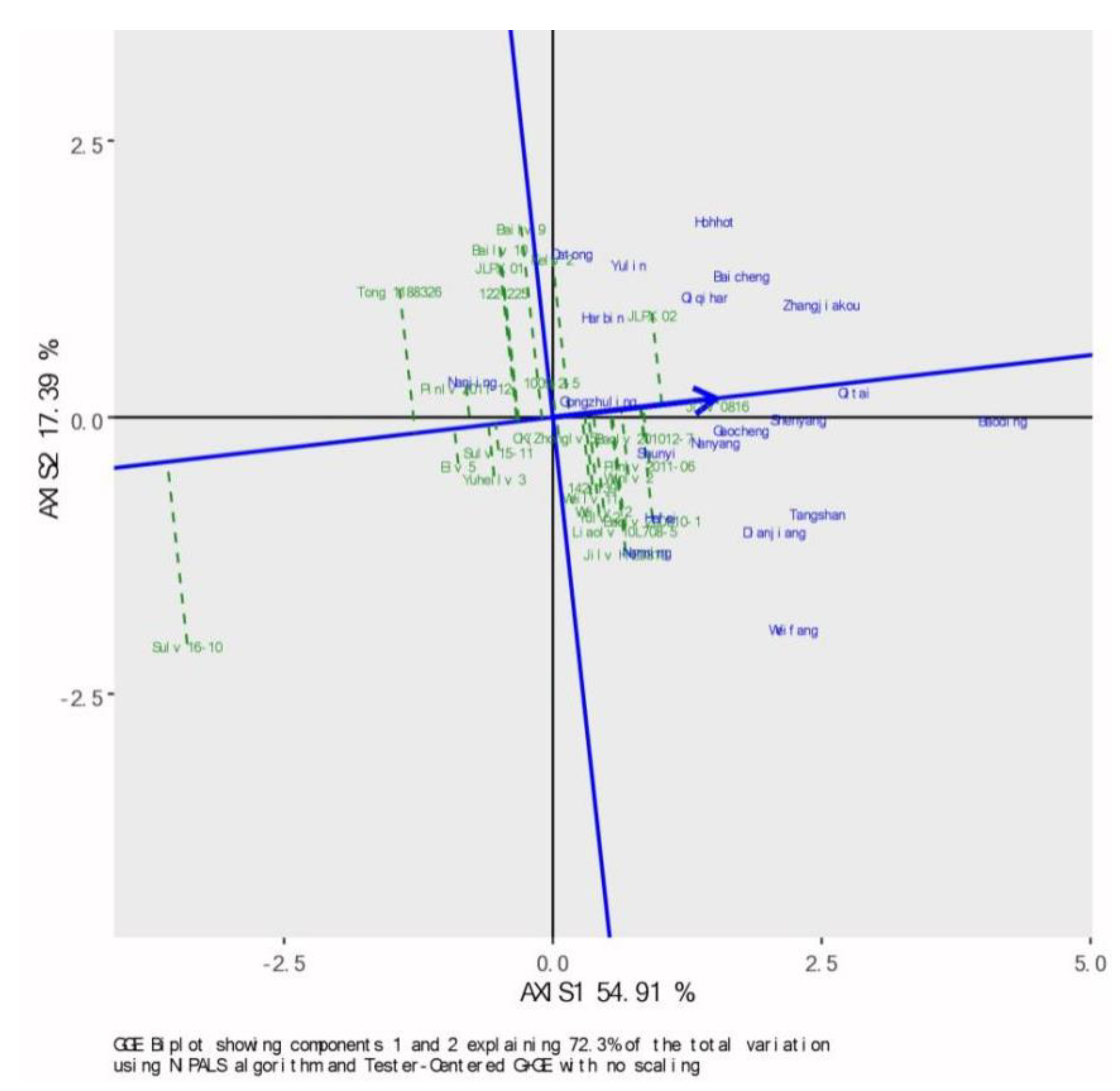
An analysis of yield fertility and stability data from all varieties in the multi-ecological identification trail was conducted using a GGE biplot (Figure 4). The results showed that Jilv 20 exhibited the best yield fertility and stability [29,30].
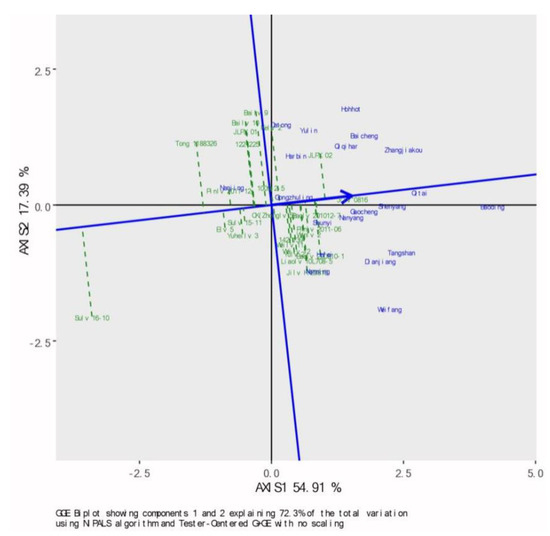
Figure 4.
Analysis of yield and stability of 25 varieties in 20 sites.
3.5. Adaptive Regions and Key Cultivation Techniques
According to the results of the multi-ecological identification and production trials, Jilv 20 possessed wide adaptability. In particular, this variety was found to be suitable for cultivation in northern spring-sowing regions (e.g., Gongzhuling and Baicheng, Jilin Province; Shenyang, Liaoning Province; Datong, Shanxi Province; Hohhot, Inner Mongolia; Yulin, Shannxi Province; Qitai, Xinjiang Uygur Autonomous Region; and Zhangjiakou, Hebei Province), northern summer-sowing regions (Shijiazhuang, Baoding, and Tangshan, Hebei Province; and Shunyi district, Beijing), and southern regions (e.g., Hefei, Anhui Province; and Chongqing).
Jilv 20 was easy to cultivate in most types of soils, with soil at a pH of 5.5–7.0 with a low salt content (<0.2%) found to be optimal. The most suitable sowing periods were from mid-April to mid-May (when the average air temperature was reliably above 15 °C) in northern spring-sowing regions and from mid-June to early July in northern summer-sowing regions. Depending on soil fertility and sowing dates, planting densities of 150,000 to 210,000 plants/hm2 at row and plant spacings of 40–50 cm and 15–20 cm, respectively, which corresponds to a seed sowing rate of 15.0–22.5 kg/hm2, were appropriate. In terms of field management, diammonium hydrogen phosphate (150 kg/hm2) could be applied as a top dressing, while urea (75 kg/hm2) was applied at the beginning of the flowering period to low-yielding, barren land. Depending on soil moisture content and weather conditions, one or two rounds of irrigation were needed at full bloom and pod stages, and properly timed pest control was critical for good yield.
4. Discussion
In this study, the objectives of mungbean breeding are early maturity, high yield, good seed quality, and disease resistance [31]. In accordance with recent changes in mungbean marketing, production demands, and climate changes, future breeding goals must take into account the goals of simple management, high efficiency, good quality, multi-resistance, and specific requirements, such as adaptability to mechanical production, uniform pod set, high protein and micro-nutrient contents, resistance to disease and abiotic adversity, and suitability for processing as bean sprouts [32,33].
The main mungbean production regions in China are in the northeastern, northwestern, and north–central parts of the country. The most important diseases in these areas are bacterial halo blight, leaf spot, fusarium wilt, powdery mildew, and viruses, with bacterial halo blight and fusarium wilt especially prominent [34,35,36,37,38]. In particular, bacterial halo blight is the most serious disease in the northeastern and northwestern areas, which is the major production and export regions of mungbean in China. In some years, the excessively early emergence of bacterial halo blight wilt causes the harvest to fail [39]. Thus, bacterial halo blight is the most considered disease in this study. Jilv 20, a high-yielding, early-maturing, new mungbean variety with good resistance to blight, is thus very suitable for widespread use in spring-sowing areas.
Compared with adzukibean and soybean, mungbean has wider adaptability to the ecological environments. Zhonglv 1 (VC 1973A, a cultivar from Asia Vegetable Research and Development Center) is a good example of its wide-adaptability, which has been popularized in the tropical, sub-tropical, and temperate regions across the world. So, we selected 20 sites across the northern spring-sowing regions, northern summer-sowing regions, and southern regions in order to identify the yield levels in different regions and decide the suitable areas for the varieties. The results showed that Jilv 20 possessed wide adaptability, and was suitable for cultivation in northern spring-sowing, northern summer-sowing, and southern regions.
Mungbean yield is strongly affected by environmental factors, such as soil, temperature, light, and rainfall. In this study, the yield of Jilv 20 ranged from 859.4 kg/hm2 to 3603.0 kg/hm2 among sites and years. The highest yields (2306.3 kg/hm2 and 3603.0 kg/hm2) were both achieved in Qitai, Xinjiang Uygur Autonomous Region, in 2016 and 2017, and were 47.06% and 83.99% higher, respectively, than the average yield across all sites. This result is similar to observations for other crops, i.e., the highest recorded yields being noted in Xinjiang [40]. The ample light, temperate climate, and sandy soil of Xinjiang are very conducive to mungbean production and suggest the strong potential of this region as a center of mungbean production and development.
At present, 75.0% of varieties were developed by crossbreeding, which has become the major method for new variety development in China. In the selection course of Jilv 20, bulk selection, a method of picking 3–5 pods from each plant and mixing for the next generation sowing, was used in the early generations (F2–F4) in order to keep more variance and save lands and labors. Single plant selection was applied in the F5 generation only one time, because most agronomic traits were uniform and stable at this generation. Compared with the typical pedigree selection from the F2 generation, this selection method was more efficient and less labor cost.
PYT and YCT in Gaocheng in 2014 and 2015 were conducted for yield comparison and agronomic character evaluation on 80 and 30 new lines respectively. Jilv 20 (Jilv 0816) showed excellent characteristics such as high yield, early maturity, lodging resistance, and disease resistance, etc. Multi-ecological identification tests verified these excellent characteristics of Jilv 20. Therefore, comparison tests for two years are necessary for the determination of elite lines.
Mungbean yield varies greatly from year to year. For instance, the lowest yields of Jilv 20 in the present study were 859.4 kg/hm2 and 996.0 kg/hm2 in Harbin, Heilongjiang Province, in 2016 and Gongzhuling, Jilin Province, in 2017, respectively. These two sites experienced natural disasters, such as severe drought at the seedling stage and hailstorms in mid-July, that led to extremely low yields. The long sowing-suitability period of mungbean allows planting to be scheduled at an appropriate time to minimize the chance of natural disasters and ensure a high yield.
Crossbreeding with other traditional methods has some disadvantages, such as time-consuming (it took 12 years to develop Jilv 20, and even longer if the evaluation and selection of germplasm resources were considered.), low efficiency, and difficulty in the efficient aggregation of excellent traits, etc. Molecular marker-assisted selection (MAS) has the advantages of shortening the breeding period, speeding up the breeding process and improving the breeding efficiency. With the development of some new molecular markers, such as disease, insect, and drought resistance, high yield, and quality improvement, MAS would be a powerful strategy for mungbean breeding in the near future. Other molecular technologies such as whole genome selection and gene editing still take time to be applied, because of the lack of well-established technical systems in mungbean.
5. Conclusions
Jilv 20 is resistant to halo blight and as such has contributed to solving the prominent problem of mungbean in northern spring sowing region in China. Meanwhile, Jilv 20 is a high-yielding, early-maturing, terminal podding habit, and erect stem and contributed to the mechanical harvesting. Moreover, dull seeds meet the market demand for this product. Further application and extension of Jilv 20 in China should contribute to mungbean production, breeding, and industrial development.
Author Contributions
Conceptualization, J.T. and Z.C.; Data curation, J.T., B.F., Z.Z. (Zhendong Zhu), C.L., S.W., Y.W., H.S., Z.Z. (Zhixiao Zhang) and Q.S.; Formal analysis, B.F., Z.Z. (Zhendong Zhu), C.L., S.W., L.W. and Y.W.; Funding acquisition, J.T. and Z.C.; Investigation, B.F., Z.Z. (Zhendong Zhu), C.L., S.W., L.W., Y.W., H.S., Z.Z. (Zhixiao Zhang), Q.S. and Y.S.; Methodology, J.T. and Z.C.; Project administration, Z.C.; Resources, B.F. and Z.Z. (Zhendong Zhu); Supervision, H.S.; Writing—original draft, J.T., B.F. and Z.C.; Writing—review & editing, J.T., L.W. and Z.C. All authors have read and agreed to the published version of the manuscript.
Funding
This research was funded by “the National Key R&D Program of China (2021YFD1600601-10), “The China Agriculture Research System of MOF and MARA(CARS-08-G3)” and “Project of S&T Innovation Team of Modern Seed Industry in Hebei Province (21326305D)”.
Institutional Review Board Statement
Not applicable.
Informed Consent Statement
Not applicable.
Data Availability Statement
The datasets used and/or analyzed during the current study are available from the corresponding author on reasonable request.
Acknowledgments
The authors appreciate researchers from 20 multi-ecological identification sites for providing data of Jilv 20.
Conflicts of Interest
The authors declare no conflict of interest.
References
- Tomooka, N.; Vaughan, D.A.; Moss, H.; Maxted, N. The Asian Vigna: Genus Vigna Subgenus Ceretotropis Genetic Resources; Kluwer Academic Publishers: London, UK, 2002. [Google Scholar]
- Somta, P.; Srinives, P. Genome research in mungbean [Vigna radiata (L.) Wilczek] and blackgram [V. mungo (L.) Hepper]. Sci. Asia 2007, 33 (Suppl. S1), 69–74. [Google Scholar] [CrossRef]
- Rawal, V.; Navarro, D.K. The Global Economy of Pulses; Food and Agriculture Organization of United Nations: Rome, Italy, 2019; pp. 54–62. [Google Scholar]
- Nair, R.M.; Schafleitner, R.; Kenyon, L.; Srinivasan, R.; Easdown, W.; Ebert, A.W.; Hanson, P. Genetic improvement of mungbean. SABRAO J. Breed. Genet. 2012, 44, 177–190. [Google Scholar]
- Kole, C. Genomic Designing of Climate—Smart Pulse Crops; Springer Nature: Cham, Switzerland, 2019; pp. 235–264. [Google Scholar]
- Srinives, P.; Somta, P.; Somta, C. Genetics and breeding of resistance to bruchids (Callosobruchus spp) in Vigna crops: A review. NU Sci. J. 2007, 4, 1–17. [Google Scholar]
- Cheng, X.Z. Production Technology of Mung Bean; Beijing Publish Group Corporation: Beijing, China, 2016. (In Chinese) [Google Scholar]
- Cheng, X.Z. Study on Sustainable Development Strategy of Modern Agricultural Industry in China, Edible Bean; China Agricultural Publish Press: Beijing, China, 2020. (In Chinese) [Google Scholar]
- Hui, L. World Production, consumption and trade of edible beans. World Agric. 2012, 7, 48–52. (In Chinese) [Google Scholar]
- Defaria, S.M.; Lewis, G.P.; Sprent, J.I.; Sutherland, J.M. Occurrence of nodulation in the Leguminosae. New Phytol. 1989, 111, 607–619. [Google Scholar]
- Yaqub, M.; Mahmood, T.; Akhtar, M.; Iqbal, M.M.; Ali, S. Induction of mungbean [Vigna Radiata (L.) Wilczek] as a grain legume in the annual rice-wheat double cropping system. Pak. J. Bot. 2010, 42, 3125–3135. [Google Scholar]
- Zhou, S.M.; Li, R.N.; Tang, J.; Hou, D.Z.; Lu, J. Nutritional components and health functions of mungbean and its application in the development of plant-based food. Sci. Technol. Cereals Oil Foods 2022, 30, 16–23. (In Chinese) [Google Scholar]
- Yao, Y.; Chen, F.; Wang, M.; Wang, J.; Ren, G. Antidiabetic activity of mungbean extracts in diabetic KK-Ay mice. J. Agric. Food Chem. 2008, 56, 8869–8873. [Google Scholar] [CrossRef]
- Keatinge, J.D.H.; Easdown, W.J.; Yang, R.Y.; Chadha, M.L.; Shanmugasundaram, S. Overcoming chronic malnutrition in a future warming world: The key importance of mungbean and vegetable soybean. Euphytica 2011, 180, 129–141. [Google Scholar] [CrossRef]
- Wu, X.; Islam, A.; Limpot, N.; Mackasmiel, L.; Mierzwa, J.; Cortes, A.J.; Blair, M.W. Genome-Wide SNP Identification and Association Mapping for Seed Mineral Concentration in Mung Bean (Vigna radiata L.). Front. Genet. 2020, 11, 656. [Google Scholar] [CrossRef]
- Singh, B.; Singh, J.P.; Kaur, A.; Singh, N. Phenolic composition and antioxidant potential of grain legume seeds: A review. Food Res. Int. 2017, 101, 1–16. [Google Scholar] [CrossRef] [PubMed]
- Tian, J.; Cheng, X.Z.; Fan, B.J.; Wang, L.X.; Liu, J.J.; Liu, C.Y.; Wang, S.H.; Cao, Z.M.; Chen, H.L.; Wang, Y.; et al. Current situation and development trend of mungbean varieties in China. Crops 2021, 6, 15–21. (In Chinese) [Google Scholar]
- Cheng, X.Z.; Wang, S.M. Variety Annals of Food Legumes in China; China Agricultural Science and Technology Press: Beijing, China, 2009. (In Chinese) [Google Scholar]
- Cheng, X.Z. The Study and Application of AVRDC Mungbean in China; Agriculture Publishing Press: Beijing, China, 1993; pp. 7–13. (In Chinese) [Google Scholar]
- Wang, L.X.; Cheng, X.Z.; Wang, S.H. Advances in germplsam resources, breeding and genetics of mungbean. Sci. Agric. Sin. 2009, 42, 1519–1527. (In Chinese) [Google Scholar]
- Zhu, H.J.; Zhao, X.Y.; Yan, H.B.; Gao, W.; Zhang, Y.W. Breeding of a new Mungbean Variety Jinludou 7 resistant to Bruchid. Shanxi Agric. Sci. 2012, 40, 606–607, 612. (In Chinese) [Google Scholar]
- Fan, B.J.; Liu, C.Y.; Cao, Z.M.; Zhang, Z.X.; Su, Q.Z.; Wang, Y.; Tian, J. Breeding of a new Mungbean Variety Jilv 15 resistant to Bruchid. China Seed Ind. 2018, 9, 76–78. (In Chinese) [Google Scholar]
- Chen, H.T.; Yuan, X.X.; Zhang, H.M.; Liu, X.Q.; Cui, X.Y.; Chen, X.; Gu, H.P. Breeding and cultivation techniques of a new mungbean variety Sulu 5 resistant to Bruchid. Crop Res. 2015, 29, 428–430. (In Chinese) [Google Scholar]
- Wang, Y.; Fan, B.J.; Cao, Z.M.; Liu, C.Y.; Zhang, Z.X.; Su, Q.Z.; Wang, S.; Tian, J. Breeding of a new mungbean variety Jilv 17 resistant to bruchid. China Seed Ind. 2022, 2, 100–101. (In Chinese) [Google Scholar]
- Wang, M.H.; Xu, N.; Bao, S.Y.; Wang, G.F.; Chen, B.X.; Guo, Z.X. Breeding of Breeding and cultivation techniques of erect Mungbean Variety Jilv 10. Mod. Agric. Technol. 2016, 8, 55–60. (In Chinese) [Google Scholar]
- Cheng, X.Z.; Wang, S.H.; Wang, L.X. Descriptors and Data Standard for Mungbean [Vigna radiata (L.) Wilczek]; China Agricultural Publishing Press: Beijing, China, 2006. (In Chinese) [Google Scholar]
- Yan, W.K. GGE biplot-A windows application for graphical analysis of multi-environment trial data and other types of two-way data. Agron. J. 2011, 93, 1111–1118. [Google Scholar] [CrossRef]
- Hu, J.P.; Wang, P.Z.; Cheng, X.Z. Elite Germplasm of Food Legumes in China; China Agricultural Publish House: Beijing, China, 1998. (In Chinese) [Google Scholar]
- Yan, W.K.; Rajcan, I. Biplot analysis of test sites and trait relations of soybean in Ontatio. Crop Sci. 2002, 42, 10–20. [Google Scholar] [CrossRef]
- Yan, W.K.; Sheng, Q.L.; Hu, Y.G. GGE biplot-an ideal tool for studying genotype by environment interaction of regional yield trail data. Acta Agron. Sin. 2011, 27, 21–28. (In Chinese) [Google Scholar]
- Chen, H.L.; Tian, J.; Zhu, Z.D.; Chen, Q.M.; Zhou, S.M.; Wang, L.X.; Liu, Y.J.; He, Y.H.; Yin, F.X.; Wei, S.H.; et al. Current Status and Future Prospective of Food Legumes Production and Seed Industry in China. Sci. Agric. Sin. 2021, 54, 493–503. (In Chinese) [Google Scholar]
- Xia, X.F.; Chen, Q.M.; Xiao, H.R.; Yang, G.; Song, Z.Y.; Mei, S. Research on current status and developing strategy of pluses crops mechanized harvesting technology in China. J. Chin. Agric. Mech. 2019, 40, 22–28. (In Chinese) [Google Scholar]
- Ma, Y.L.; Tong, L.T.; Wang, L.L.; Zhou, X.R.; Liu, X.X.; Zhou, S.M. Research progress on GABA and product development of mungbean germination. J. Chin. Cereals Oils Assoc. 2018, 33, 119–127. (In Chinese) [Google Scholar]
- Zhu, Z.D.; Duan, C.X. Handbook of Pest and Disease Identification and Control of Mungbean; China Agricultural Science and Technology Publishing Press: Beijing, China, 2012. (In Chinese) [Google Scholar]
- Sun, F.F.; Sun, S.L.; Tian, J.; Duan, C.X.; Zhu, Z.D. First report of Paramyrothecium foliicola causing leaf spot on Vigna radiata L. in China. Plant Dis. 2021, 105, 1207. [Google Scholar] [CrossRef]
- Liu, X.R. Azukibean and mungbean production in Northeast China. China Grain Econ. 2013, 9, 38–41. (In Chinese) [Google Scholar]
- Tian, X.Y.; Kong, Q.Q.; He, X.Y.; Zhao, C.H.; Chen, W.J.; Ma, X.M. Isolation and identification of the pathogen of mung bean halo blight. J. North. Agric. 2021, 49, 84–88. [Google Scholar]
- Long, J.C.; Zhang, J.J.; Zhang, X.C.; Liu, J.F.; Chen, H.; Wang, P.; Wang, Q.; Du, C.Z. Genetic Diversity Analysis and Fusarium Wilt Resistance Identification of Mung Bean Germplasm Resources Recently Collected in Chongqing. J. Plant Genet. Resour. 2020, 21, 1167–1174. [Google Scholar]
- Ge, W.D.; Li, L.R.; Xue, R.F. Effect of Seed Coating Agent and Foliar Fertilizer on Halo Blight Control and Growth of Vigna radiata L. J. Anhui Agric. Sci. 2017, 45, 29–30, 69. [Google Scholar]
- Chai, Y.; Wan, F.S. Report on the Development of Minor Crops Industry in China; China Agricultural Science and Technology Publish House: Beijing, China, 2007. [Google Scholar]
Publisher’s Note: MDPI stays neutral with regard to jurisdictional claims in published maps and institutional affiliations. |
© 2022 by the authors. Licensee MDPI, Basel, Switzerland. This article is an open access article distributed under the terms and conditions of the Creative Commons Attribution (CC BY) license (https://creativecommons.org/licenses/by/4.0/).