1. Introduction
People spend up to 90% of their time indoors, and indoor air quality can influence occupants’ health [
1,
2,
3]. It has been reported that dry air perception is common in office work environments. A number of studies have reported that perceived dry air was associated with sick building syndrome (SBS) symptoms [
4,
5,
6,
7,
8,
9]. A large-scale study in the early 1990s of 4943 office workers in Sweden reported that perceived dry air was a common finding in sick buildings [
4]. A study conducted in public universities in Malaysia found that there was a significant association between perceived dry air and the occurrence of scaling and itching on the scalp or ears, as well as heavy headache [
5]. A Japanese study found that perceived dry air in offices was a significant risk factor for eye irritation, upper respiratory symptoms, and skin problems [
6,
7]. Evidence from cross-sectional studies conducted in hospitals in both Iran and Turkey indicated that the perception of dry air was significantly associated with a higher risk of SBS [
8,
9]. However, in contrast to the well-documented research in work environments, investigations of perceived dry air within residential settings are limited [
10,
11,
12,
13,
14,
15].
It has been suggested that low relative air humidity may influence the mucous membranes of the upper airways, causing a dryness sensation [
16]. The mechanisms underlying dry air perception remain poorly understood [
17,
18]. Some researchers have emphasized the role of low air humidity and have demonstrated that elevated relative humidity may alleviate dryness-related symptoms. For instance, a hospital study in Japan found that an increase in relative humidity from 33% to 44% resulted in a reduction in complaints of dry air among staff [
19]. Similarly, a series of studies in Finland found that an increase in relative humidity (RH) may relieve symptoms of dry eyes and upper airways [
20,
21,
22]. In contrast, other researchers have focused on the role of air pollutants in dry air perception. Indoor pollutants can act as stimulants to the trigeminal nerve, thereby inducing a perception of dry air [
23,
24,
25]. One simulated aircraft cabin environment study indicated that airborne compounds stimulated the mucosal tissues or skin, which was often expressed as dryness [
26]. A field study in offices found that the production of irritating substances, such as aldehydes and free radicals, in the door environment was positively associated with the sensation of dry air [
27]. Furthermore, building characteristics may influence both pollution dispersion and humidity, yet their combined effects remain unquantified [
13]. However, most previous studies have focused on a single factor (either humidity or pollutants) and have not included building characteristics, humidity levels, and pollutant concentrations in the same study.
In summary, there is a long-standing dispute about both the cause of perceived dry air and its associated health effects. Previous studies have been performed mostly in office-like environments. The number of studies investigating dry air perception in the home environment is sparse. Dampness, new furniture, and living near a highway have been reported to be associated with the perception of dry air in Chinese homes [
10,
13]. However, there is a lack of studies on the environmental determinants of dry air perception that have used an objective assessment of the indoor environment.
From 2013 to 2016, we performed a home environment study in Tianjin, China, which consisted of two phases. In the first phase, data on occupants’ health and building characteristics was collected by a questionnaire. In the second phase, indoor environmental parameters (i.e., indoor air temperature, relative humidity, ventilation rate, chemical and biological pollutants) were systematically measured in the homes. The objectives of this study are to examine the association between perceived dry air and occupants’ health in the home environment and to identify home environment factors associated with dry air perception.
2. Materials and Methods
2.1. Ethics
In the first phase, verbal consents were obtained from the participants. Written consents were obtained from the participants in the second phase. The ethics committee at Tianjin University approved this study.
2.2. Study Design
This study is part of the China, Children, Homes, Health (CCHH) project and was conducted in Tianjin, China, between 2013 and 2016 [
28]. The Tianjin area covers 11,920 km
2 with a population of 15 million, rising to 18 million if including seasonal migrants [
29]. The seasonal average outdoor humidity of the investigated areas in spring, summer, autumn, and winter is 52%, 72%, 65%, and 57%, respectively. The seasonal average outdoor air temperature is 13.4 °C in spring, 25.7 °C in summer, 13.6 °C in autumn, and −1.7 °C in winter [
30]. This study consisted of two phases (
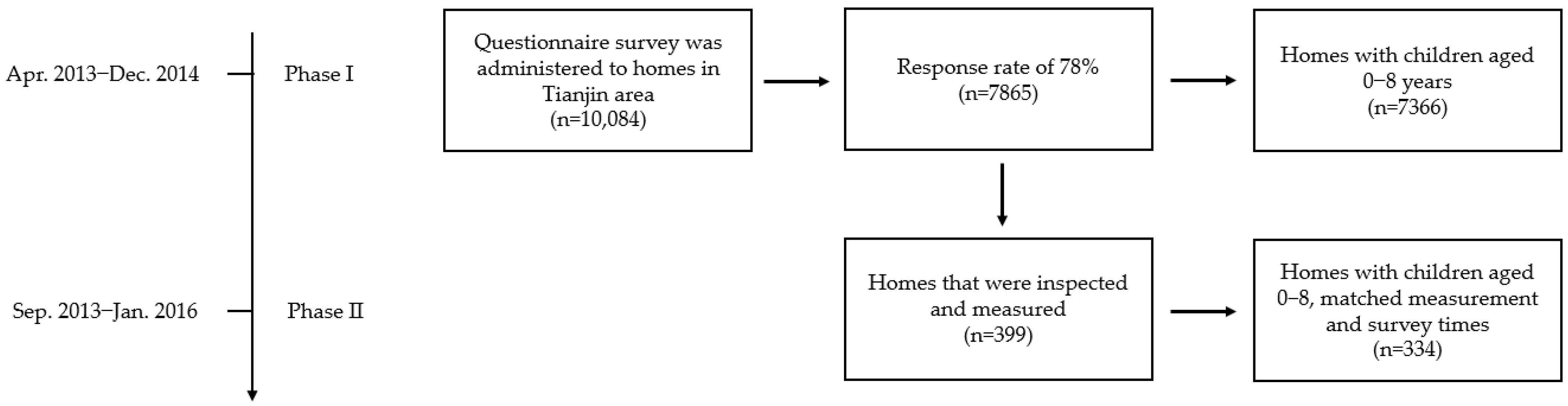
Figure 1). In the first phase (1 April 2013–31 December 2014), questionnaires were administered to 10084 families with children aged 0–8 years old in the Tianjin area. One parent per family was invited to answer the survey. In the second phase (1 September 2013–31 January 2016), 399 families participated in home inspections and measurements. Since February 2016, the data has been accessed for research purposes. However, the authors had no access to information that could identify individual participants.
2.3. Questionnaire Survey in the First Phase
The survey contained 99 questions covering family members’ demographic information; perceived dry air; children’s wheeze, rhinitis, eczema, and common cold infection; parents’ sick building syndrome symptoms; and environmental and living habit factors.
2.3.1. Questions on Demographic Information
Demographic data, including the children’s gender and age, the parents’ gender and age, family atopic history, and annual household income, were obtained from the questionnaire survey. Atopic history of the family was evaluated and reported as asthma/rhinitis/eczema among parents or siblings of the investigated children. Household incomes were classified as <RMB 50 thousand; RMB 50–100 thousand; >RMB 100 thousand.
2.3.2. Questions on Perceived Dry Air
The question on perceived dry air in the surveyed homes was “have you ever perceived dry air in the last three months?” The response was one of three options: (1) Yes, frequently; (2) Yes, occasionally; or (3) No, never.
In the analysis to identify factors affecting perceived dry air, the answers were classified as one of two categories: frequently or occasionally/never.
2.3.3. Questions on Children’s Wheeze, Rhinitis, Eczema, and Common Cold Infection
The questions on the children’s wheeze, rhinitis, eczema, and common cold infection were as follows:
Current wheeze: “has your child had wheezing or whistling in the chest in the last 12 months?” (options: Yes; No).
Current rhinitis: “has your child had a problem with sneezing, or a runny, or a blocked nose when he/she did not have a cold or the flu in the last 12 months?” (options: Yes; No).
Current eczema: “has your child had eczema symptoms at any time in the last 12 months?” (options: Yes; No).
Common cold infection frequency: “has your child had several colds in the last 12 months?” (options: 1–2 times; 3–5 times; 6 times).
2.3.4. Questions on Symptoms of Sick Building Syndrome (SBS)
The questions on the SBS symptoms of the parents were similar to those used in a previous Swedish office study [
31]. The questions were as follows: During the previous three months, have you had any symptoms of (1) fatigue; (2) feeling heavy headed; (3) headache; (4) nausea/dizziness; (5) difficulty concentrating; (6) itching, burning, or irritation of the eyes; (7) irritating, stuffy or runny nose; (8) hoarse, dry throat; (9) cough; (10) dry or flushed facial skin; (11) scaling/itching scalp or ears; and (12) dry hands, itching, or red skin. Each question had three possible responses: (1) Yes, frequently (weekly); (2) Yes, occasionally; or (3) No, never. The response “frequently” was compared to “occasionally/never” in the present study.
2.3.5. Questions on Building Characteristics, Dampness Indicators, and Lifestyle Factors
We asked about building characteristics (such as proximity of the home to a highway; house type; and floor covering, wall covering, and window type in bedrooms), dampness problems at home (visible mold/damp spots; suspected dampness; floor moisture; flooding; condensation on windowpane in winter), and lifestyles (frequency of room cleaning; window opening; sun-curing of bedding), as shown in
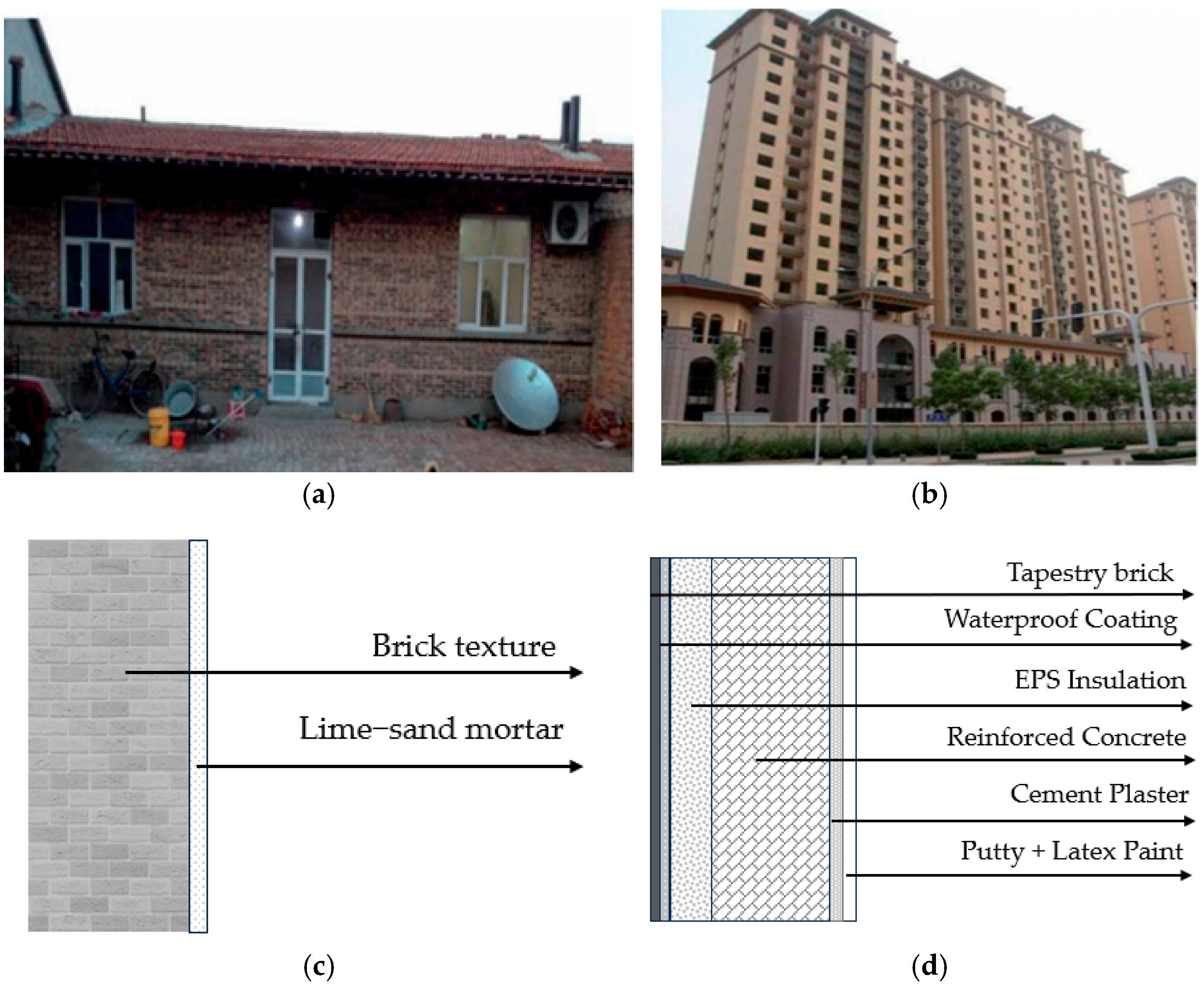
Appendix B Table A1. Sun-curing of bedding was defined as airing out bedding in the sun. The house types identified in the investigation included Pingfangs, which were characterized as single-story houses in Chinese villages with cement flooring and lime wall covering, and apartments, which were characterized by laminated wooden floors and painted indoor walls (see
Appendix C,
Figure A1).
2.4. Home Inspections and Measurements in the Second Phase
For the physical parameter assessment, we employed a portable indoor air quality monitor (AZ
®7798, Hengxin, Taiwan, China) to continuously measure temperature, relative humidity, and carbon dioxide (CO
2) concentrations in each home for 24 h, with a sampling frequency of once per minute. The CO
2 sensors had an accuracy of ±50 ppm, while the temperature and RH sensors maintained an accuracy of ±0.5 °C and ±3%, respectively. We calibrated the monitor prior to measurements, following the procedure recommended by the manufacturer (AZ
®7798, Reference Manual,
Section 4.2). The device was placed 1.0–1.5 m above the floor, away from occupants, doors, windows, and corners of the room. We used CO
2 produced by occupants as a tracer gas to calculate the air exchange rate in each home [
32]. We calculated the average value of temperature, relative humidity, and the air exchange rate in 24 h for each home.
To collect dust for measurement of chemical pollutants, we used household vacuum cleaners with filter socks (made of nylon) mounted on an aluminum suction device to collect dust samples (20–100 mg) from the upper parts of furniture, door frames, and windows. We avoided collecting samples from plastic surfaces. Subsequently, the collected dust samples were wrapped in aluminum foil bags and kept in a refrigerator at −20 °C until analysis. The dust was analyzed by gas chromatography–mass spectrometry (GC-MS) [
33] to measure the concentrations of phthalates, i.e., diethyl (DEP), di-isobutyl (DiBP), di-n-butyl (DnBP), benzyl butyl (BBzP), di-2-ethylhexyl (DEHP), and di-isononyl (DiNP), in the dust. Six blank filter socks without any dust were analyzed. The limits of quantification (LOQ) were calculated based on the levels of the compounds in the blanks, as 3 times standard deviation (3 × SD), which were DEP 0.004 μg, DiBP 0.230 μg, DnBP 0.184 μg, BBzP 0.012 μg, DEHP 0.581 μg, and DiNP 0.020 μg. For statistical analysis, any concentrations that fell below these LOQs were replaced with the LOQs/2.
For biological pollutants, we collected dust (100–150 mg) from the children’s beds for analysis of house dust mite allergens. We also collected dust (at least 100 mg) from 10 m
2 of the floor area in the children’s bedrooms for analysis of endotoxins. All dust samples were stored in a refrigerator at −20 °C until analysis. We used the enzyme-linked immunosorbent assay (ELISA) method to determine the concentration of dust mite allergens for Dermatophagoides pteronissinus (Der p1) and Der-matophagoides farinae (Der f1). The detection thresholds of Der p1 and Der f1 were 10 and 100 ng/g, respectively. Any concentration below this value was replaced by half of the threshold for statistical analysis. Limulus Amoebocyte Lysate (LAL) was used to quantify endotoxins in the dust samples, with a detection limit of 1000 endotoxin units (EUs) per gram. Details on the instruments, measurement locations, sampling intervals, and chemical analysis are described in
Appendix A: Methods for Sampling and Analysis of Dust.
2.5. Statistical Analysis
Chi-square tests were used to compare the prevalence of health outcomes among children and adults across different groups. Logistic regression models were used to investigate the associations between perceived dry air and health outcomes, adjusted for age, gender, atopic family history, and annual household income. A similar methodology was used to identify the factors affecting perceived dry air, including both self-reported factors and measured indoor environmental parameters. The results were expressed as adjusted odds ratios (AORs) with 95% confidence intervals (CIs), with an increment of per 1 °C for temperature, 10% for relative humidity, 1 g/m3 for absolute humidity, 0.1 h−1 for air exchange rate, and per interquartile range increase in the biological and chemical parameter.
All statistical analyses were conducted using IBM SPSS Statistics 25.0. We accepted p < 0.05 as statistically significant.
3. Results
In the first phase, parents representing 7865 homes answered the questionnaire survey, a response rate of 78% (with 2219 households not participating). Finally, 7366 families with children aged 0–8 years were included in the statistical analysis of the survey data. In the second phase, 399 homes were invited for home measurements and inspections. After matching measurement seasons and survey periods, there were 334 valid datasets for analysis of measured parameters, excluding 65 families (
Figure 1).
In the first-phase survey, 692 (10.3%) of the participating parents (one parent per home) reported frequent dry air perception, 2871 (42.8%) reported occasional dry air perception, and 3150 (46.9%) did not have any dry air perception. The recall period was the last 3 months.
3.1. Associations Between Dry Air Perception and Occupants’ Health
Associations between dry air perception at home, reported by the parents, and health outcomes in the children (i.e., respiratory symptoms) and in the parents (i.e., SBS symptoms) were analyzed in the first-phase questionnaire survey.
3.1.1. Associations Between Perceived Dry Air and Children’s Wheezing, Rhinitis, Eczema, and Common Cold Infection
Among the 7366 children (one per home), 4.9% had current wheezing, 29.8% had current rhinitis, and 14.9% had eczema. Regarding common cold infections in the children, 60.4% had such infections 1–2 times per year, 27.2% had infections 3–5 times, and 4.1% had more than six common cold infections per year.
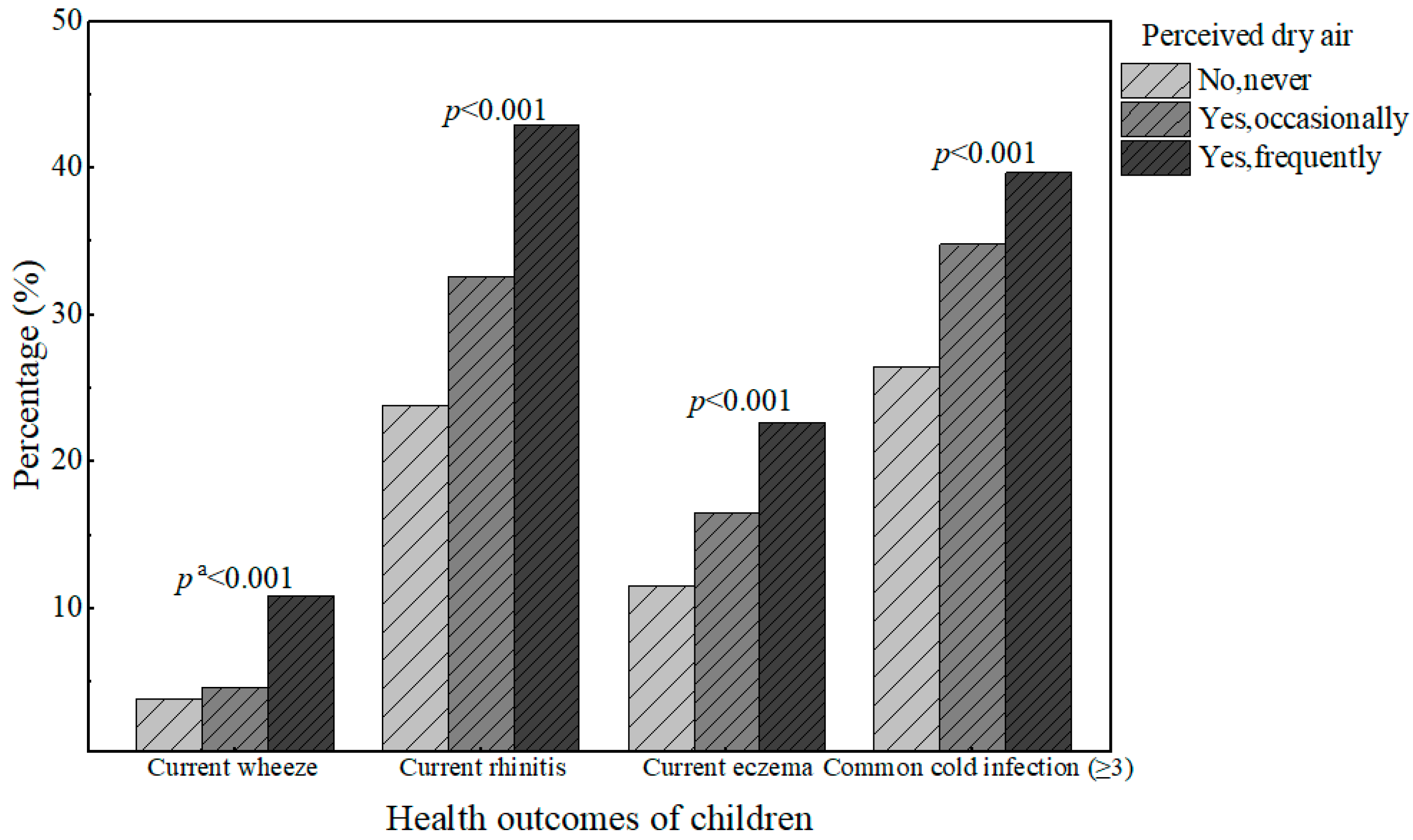
The distribution of the children’s health outcomes in homes stratified by perceived dry air is shown in
Appendix C,
Figure A2. In homes with parental reports of frequent perceived dry air, the prevalence of children’s wheeze, rhinitis, eczema, and common cold infections was higher (
p < 0.05). Perceived dry air was significantly associated with wheeze, rhinitis, eczema, and common cold among the children, and the associations were stronger for frequently perceived dry air (
Table 1).
3.1.2. Associations Between Perceived Dry Air and Parental SBS Symptoms
Appendix B,
Table A2 presents the prevalence of SBS symptoms among the parents in the surveyed homes. Fatigue (10.7%), scaling scalp or ears (5.6%), and dry throat (5.1%) were the most frequently reported SBS symptoms.
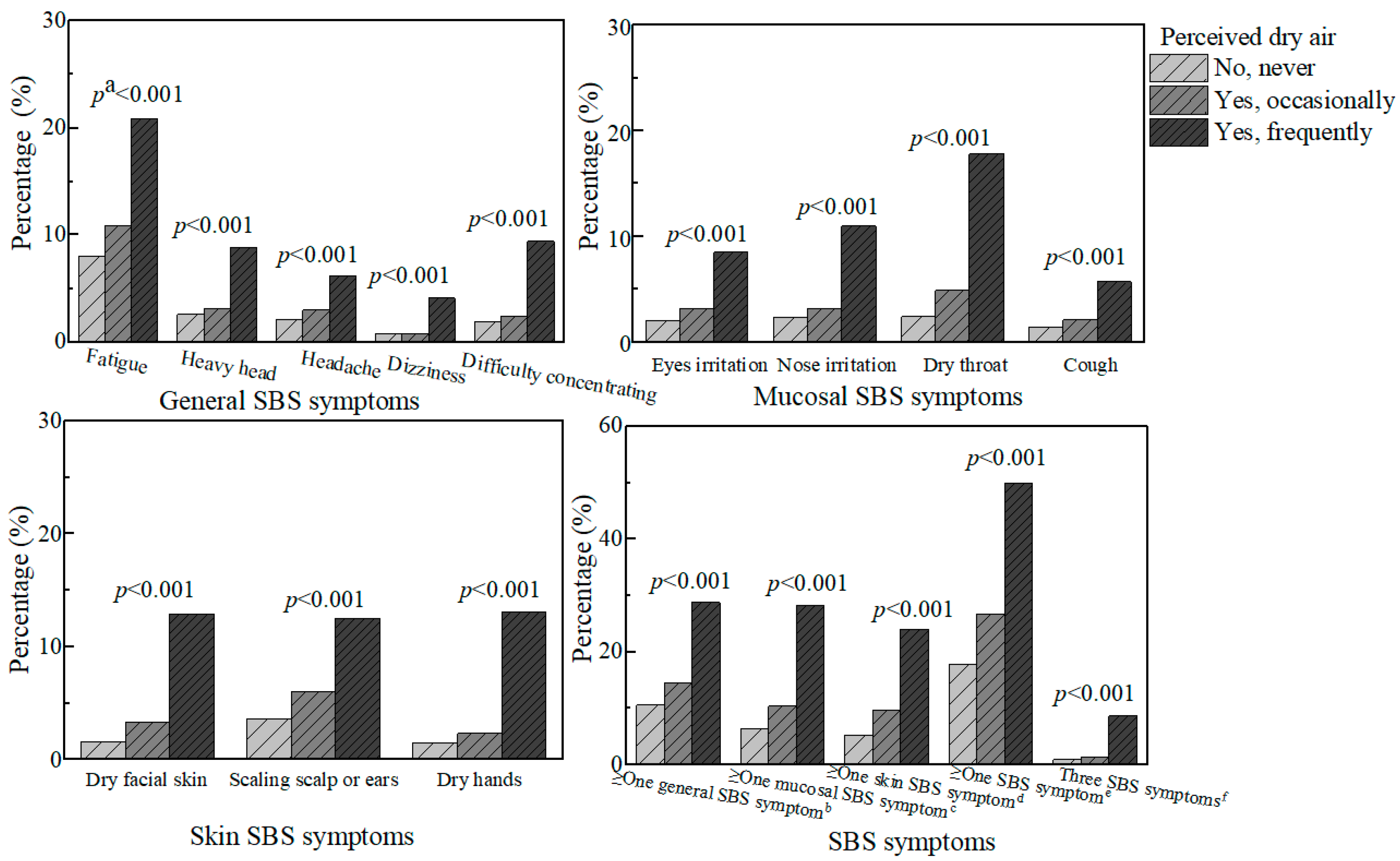
The distribution of SBS symptoms stratified by perceived dry air (frequently, occasionally, never) is shown in
Appendix C,
Figure A3. In homes with frequent complaints of dry air, the prevalence of general, mucosal, and skin SBS symptoms among the parents was higher (
p < 0.05). The associations between perceived dry air and parents’ SBS symptoms are shown in
Table 2. Occasionally perceived dry air was associated with fatigue, eye irritation, dry throat, dry facial skin, and scaling of the scalp or ears. Frequently perceived dry air was associated with all types of SBS symptoms. There was a clear dose–response relationship between the intensity of perceived dry air and SBS symptoms.
The sensitivity analysis of the associations between perceived dry air and the children’s health and the parents’ SBS symptoms, with stratification, with respect to eye irritation symptoms, is shown in
Appendix B,
Table A3 and
Table A4. Among the residents reporting no irritation of the eyes, frequent dry air perception remained significantly associated with wheezing, rhinitis, eczema, and common cold infections in the children, as well as SBS symptoms in the parents (
p < 0.05).
3.2. Home Environmental Factors in Association with Perceived Dry Air
The questionnaire data on the home environment (i.e., building characteristics, dampness indicator, lifestyle factors) and data from the home environment measurements (i.e., indoor air temperature, relative humidity, ventilation, concentration of phthalate, house dust mite allergens, and endotoxins) were analyzed for associations with perceived dry air in the home.
3.2.1. Self-Reported Building Characteristics, Dampness Indicators, and Lifestyle Factors
Frequently reported perceived dry air, stratified by subgroups with different building characteristics, dampness indicators, and living habits, is shown in
Appendix B,
Table A5. The adjusted odds ratios for frequently perceived dry air are shown in
Table 3. Frequent sun-curing of bedding (these beddings were not directly on the floor) and daily cleaning were negatively associated with frequently perceived dry air. Homes with modern decoration (i.e., laminated wood flooring and wallpaper) and dampness indicators were associated with frequently perceived dry air. Pingfang buildings had fewer complaints of dry air perception, as compared to apartments.
3.2.2. Measured Indoor Environmental Factors
The distribution of the measured indoor environmental factors is shown in
Appendix B,
Table A6. The measured physical factors included indoor air temperature (median 20.7 °C), relative humidity (median 45%), and the air exchange rate (median 0.5 h
−1).
The prevalence of frequently perceived dry air, stratified by subgroups of different physical parameters, is shown in
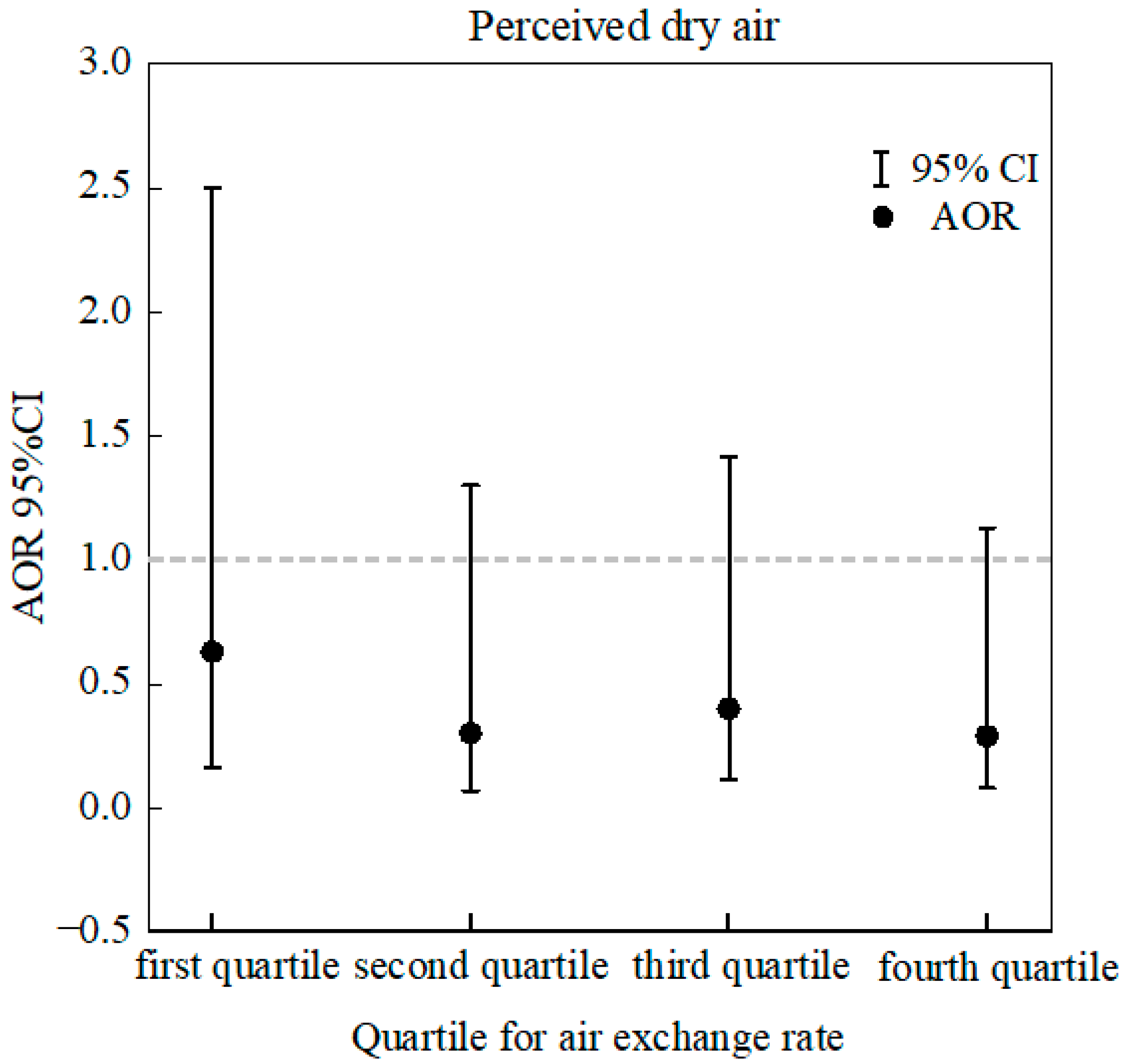
Table 4. With an increase in indoor air humidity and the air exchange rate, the prevalence of perceived dry air decreased. The associations between physical parameters and perceived dry air are shown in
Table 5. In rooms with a lower air exchange rate, the protective effect of higher RH for perceived dry air attenuated (
Appendix C,
Figure A4).
The biological and chemical factors included endotoxins, house dust mite allergens, and phthalate exposure in homes. The predominant allergen was Der f1, with a concentration 20–30 times higher than that of Der p1. The predominant phthalates were DEHP, DnBP, and DiBP (See
Appendix B,
Table A6). The prevalence of frequently perceived dry air, stratified by different subgroups of biological and chemical pollutants, is shown in
Table 6. Exposure to DiBP and BBzP seems to have a negative influence on dry air perception (
p < 0.0.5). The associations between biological pollutants, chemical pollutants, and perceived dry air are shown in
Table 7.
4. Discussion
In this study, we observed that homes with perceived dry air had a higher prevalence of asthma and allergies among children and a higher prevalence of SBS symptoms among adults. Modern construction technologies (e.g., laminated wood flooring, wallpaper covering, windows with PVC frames, and double-pane glass) and dampness indicators were associated with perceived dry air, while living habits, such as frequent sun-curing of bedding and daily cleaning, were negatively associated with perceived dry air. Higher indoor air humidity was significantly associated with a lower prevalence of dry air perception. However, lower air exchange rates, which can be associated with poorer indoor air quality, attenuated the beneficial effects of higher air humidity.
4.1. Associations Between Perceived Dry Air and Health Outcomes
We found that perceived dry air was related to asthma and allergies in children and SBS symptoms in adults. This result is consistent with findings from studies in other regions in China, such as Baotou [
10], Chongqing [
13], Nanjing [
34], and Urumqi [
11]. A study in Baotou revealed that perceived dry air in homes was associated with increased prevalence of asthma and allergy symptoms in children [
10]. A study in Urumqi demonstrated that perceived dry air was negatively associated with the remission of asthma allergy symptoms in children in the first two years of life [
11]. A study in urban, suburban, and industrial areas in Nanjing found that perceived dry air was associated with wheeze, dry cough, and rhinitis [
34]. Moreover, perceived dry air has been reported to be associated with the prevalence of all types of residents’ SBS symptoms [
13,
35]. Our study showed that in homes with perceived dry air, parents were more likely to have symptoms such as dry throat, dry facial skin, and dry hands. A previous large cohort study found that perceived dry air was an important predictor for general and mucosal SBS symptoms [
36]. Our results demonstrated that dry air perception is an important part of the perception of indoor air quality.
Our sensitivity analysis (see
Appendix B,
Table A3 and
Table A4) found that perceived dry air persisted as a prevalent concern even among individuals without eye irritation symptoms. This finding suggests that perceived dry air constitutes an independent environmental stressor rather than merely a secondary manifestation of ocular discomfort. These findings necessitate dedicated investigations to elucidate the multifactorial mechanisms underlying dry air perception, including potential contributions from non-ocular sensory pathways and environmental parameter interactions.
4.2. Home Characteristics and Environmental Factors in Association with Perceived Dry Air
We found that occupants living near a highway frequently perceived dry air. It has been reported that traffic pollutants enter into the indoor environment through infiltration [
37,
38,
39]. A previous study conducted in Chongqing discovered that occupants proximal to a highway often perceived unpleasant and pungent odors [
13]. Previous studies indicate that indoor pollutants, which stimulate mucous membranes/skin, might induce the perception of dry air [
40]. Thus, pollutants with original outdoor sources might be a contributing factor to the perceived dry air in homes.
We found that in rooms with laminated wood floorings, painted walls, or PVC window frames, the prevalence of dry air perception was more common. Laminated wood floors, painted walls, and PVC-framed windows can release volatile organic compounds (VOCs) and semi-VOCs (SVOCs) [
41]. The significant association between these modern decoration materials and perceived dry air in our study might be due to the pollutants emitted from these materials. This hypothesis was confirmed by our home inspections, which showed that SVOCs, such as DiBP and BBzP, were positively associated with perceived dry air (
Table 6). Moreover, modern construction technologies make buildings so tight that low ventilation may not dilute indoor pollutants effectively [
42,
43,
44]. We observed that the presence of double-glazed windowpanes, the use of air conditioners, and condensation on windowpanes, which indicate inadequate ventilation [
32,
45], were significantly associated with perceived dry air.
Damp buildings can be either buildings with demonstrable moisture damage or buildings with a low rate of ventilation accompanied by increased humidity. In our study, indoor humidity issues were self-reported by occupants and measured by inspectors. Self-reported visible mold spots and suspected moisture problems were significantly related to perceived dry air, consistent with a previous study [
46]. Building dampness is hypothesized to foster the proliferation of microorganisms, including mold, fungi, and bacteria, which can release irritating odors and elevate VOC emissions, thereby contributing to complaints of perceived dry air [
47,
48,
49]. Measured data shows that higher indoor air humidity is associated with alleviated dry air perception. However, in rooms with lower air exchange rates, the protective effect of higher relative humidity against dry air perception was diminished (
Appendix C,
Figure A3). This observation indicates that ventilation plays a moderating role in the association between indoor humidity and perceived dry air. This could be attributed to inadequate ventilation exacerbating indoor air pollution, thereby attenuating the protective effect of high humidity against perceived dry air. Our finding is consistent with previous studies, indicating that the benefits of increased humidity levels are offset by the increased concentrations of pollutants [
50,
51]. Caution is warranted with respect to humidifying air to protect people from dry air discomfort because of the inconsistent and even conflicting association between humidity and dry air perception in our study, as well as in previous investigations [
52,
53]. Additionally, improper operation [
54,
55,
56] and poor maintenance of humidifiers [
57,
58] may produce even more severe health hazards. A chemical catastrophe in South Korea in 2011 was linked to disinfectants used in household humidifiers [
54,
55,
56]. Poor maintenance of humidification units in ventilation systems may promote microbial growth and facilitate their dispersal throughout buildings [
57,
58]. Therefore, we suggest that dry air perception should be primarily tackled by methods other than air humidification.
4.3. Implication
Our study found that perceived dry air in the home environment was closely associated with occupants’ respiratory health and SBS symptoms. Objective assessments of the home environment in our study indicated that indoor pollutants and humidity can be determinants of dry air perception. Even though higher indoor humidity was linked to a lower perception of dry air, increased indoor moisture load might aggravate mold growth [
46] and house dust mite infestation [
59] and, consequently, lead to the risk of asthma and other respiratory diseases [
13], as well as sick building syndrome (SBS) symptoms [
49]. Improving ventilation may therefore be essential for enhancing overall indoor air quality and reducing dry air perception.
4.4. Strengths and Limitations
The key strengths of this study were the large sample size for the questionnaire survey (i.e., 7865 homes) and the high response rate (i.e., 78%), which should reduce the risk of selection bias. Second, we systematically measured various home environmental parameters, including physical, chemical, and biological factors, to identify environmental factors that can be related to dry air perception.
However, this study also has the limitations inherent in any cross-sectional design. The data on health outcomes and dry air perception was collected based on parental reporting, which could be subject to recall bias. The association between home environmental factors and the perceived dry air in a cross-sectional study cannot prove a causal relationship. Future studies are required to elucidate the mechanisms behind dry air perception.